Momentum continues to build for V-LO The Maestro as his breakout film, Problematic Intentions, reaches a new milestone of 20 film awards globally. What began as a purpose-driven horror-thriller has evolved into an internationally recognized project, solidifying his presence across both film and music.
A Career That Spans Music, Film, and Production
Known off-screen as Vernon Wiggins, the multi-talented creative has embraced a rare balance of acting, production, and music, often blending all three into a single vision. The Louisiana native first established himself in hip-hop, releasing four studio albums that featured collaborations with artists like Kevin Gates and Young Buck. He later expanded into film through his production company, MG Films & Television, which he founded after completing an MBA. His move into horror marked a creative pivot, but it carried the same hands-on philosophy that has shaped his career across every medium he has worked in.
A Horror Film Anchored in an Anti-Bullying Message
His performance as the chilling “Devil Face” helped elevate the film’s impact, while its anti-bullying message continues to resonate with audiences worldwide. Set in the fictional town of Tigerville, Louisiana, Problematic Intentions draws on Wiggins’ Acadiana roots to ground its horror in something deeper than scares. Bullying, mental health, and the long shadow of unaddressed trauma run through the story, giving it a weight that has translated into recognition at festivals across multiple countries.
Production took place across the Louisiana communities Wiggins knows best, with filming spread between Lafayette, Opelousas, New Orleans, and Washington. Directed by Georgi Hernandez, the film has since reached a wide audience through streaming, with the title available on both Tubi and Prime Video. That broad availability has fueled the ongoing festival run and helped push the project beyond regional recognition into a steadier global footprint.
Beyond the awards circuit, V-LO has also been stepping into bigger cultural spaces, recently attending a Grammy after-party in Hollywood, another sign of his growing reach.
What’s Next for V-LO The Maestro
Now, with success firmly behind him, he’s already looking ahead. V-LO confirmed that he is preparing for his next film, Problematic Intentions 2: Bloodline, but for now, he’s keeping details tightly under wraps. Rather than revealing too much too soon, the focus is simply on letting audiences know that the sequel is officially in the works.
It’s a strategic move that reflects his evolving approach: build anticipation, protect the vision, and deliver when the time is right.
With a new hip-hop album, more acting roles, and future productions under MG Films & Television on the horizon, V-LO The Maestro continues to expand his creative footprint, one project at a time.
Pastor Prasanth Jonathan is preparing to release his new Christian discipleship book, Search My Heart, O God – 100 Days of Surrender and Transformation, by the end of June. The upcoming release, which will be available on Amazon, is already drawing attention for its strong emphasis on heart examination, spiritual honesty, and Christ-centered transformation.
At a time when many believers struggle with spiritual distraction, routine Christianity, and inward battles hidden beneath outward activity, Jonathan’s new book seeks to guide readers back to a life of sincere surrender before God.
Following the encouraging response to his earlier book, The Beatitudes: Living Out the Heart of Christ, Jonathan continues his passion for discipleship, spiritual growth, and Christlike living through this new reflective and devotional work.
His previous book, The Beatitudes: Living Out the Heart of Christ, explored Jesus’ Sermon on the Mount in Matthew chapter 5 and carefully examined the spiritual character described in the Beatitudes. The book focused on themes such as humility, mourning over sin, meekness, righteousness, mercy, purity of heart, peacemaking, and perseverance through persecution.
Readers appreciated the book for its practical teaching, devotional depth, and clear biblical application. Rather than treating the Beatitudes as abstract teachings, Jonathan presented them as a pathway of spiritual transformation and discipleship. The book challenged believers to move beyond outward religion and pursue genuine Christlike character in everyday life.
Building on that same discipleship foundation, Search My Heart, O God turns the reader’s attention inward, focusing on the condition of the heart and the need for continual self-examination before God.
Photo Courtesy: Prasanth Jonathan / Search My Heart O God
Inspired by Psalm 139:23–24, “Search me, O God, and know my heart,” the book invites believers into a journey of reflection, repentance, surrender, and spiritual renewal. Through 100 carefully written questions, readers are encouraged to examine their motives, thoughts, attitudes, habits, relationships, struggles, responses, and spiritual priorities.
The book addresses practical and personal issues such as pride, hidden sin, compromise, fear, selfishness, unforgiveness, spiritual inconsistency, partial obedience, divided motives, and the danger of maintaining outward spirituality while neglecting inward transformation.
Each page challenges believers to examine their hearts honestly before God and encourages them to walk with Christ moment by moment in daily surrender, obedience, and spiritual growth. Along with reflection questions, the book also includes practical challenges intended to move readers from conviction to action and from self-examination to obedience.
Jonathan explains that the purpose of the book is not condemnation, but transformation.
“Many believers remain active in church life and spiritual routines while inwardly struggling with areas that have never been honestly confronted,” he says. “God is not merely looking at outward activity. He looks at the heart. Real spiritual growth begins when we allow Him to search us and respond with humility and obedience.”
Unlike books designed for quick reading, Search My Heart, O God is intentionally structured to be used slowly and prayerfully. Readers are encouraged to engage with one question each day, allowing time for reflection, prayer, journaling, and practical application.
Jonathan believes that lasting spiritual maturity is usually formed gradually through daily surrender and consistent obedience rather than through temporary emotional experiences. For this reason, some themes intentionally reappear throughout the journey, reinforcing the importance of continual reflection and repeated surrender in the Christian life.
He notes that believers often revisit the same struggles, attitudes, and spiritual battles throughout their walk with God, making ongoing heart examination an essential part of spiritual growth.
The book is expected to serve as a valuable resource for personal devotions, discipleship groups, counseling settings, prayer and fasting seasons, retreats, and church spiritual growth programs. Its practical structure and straightforward language make it accessible to both new believers and mature Christians seeking renewal.
Prasanth Jonathan is a pastor, writer, and discipleship teacher with over 27 years of ministry experience across India, the United Kingdom, and Canada. He currently serves as Senior Pastor at Thompson First Baptist Church in Canada.
Throughout his ministry, Jonathan has remained committed to helping believers grow in biblical discipleship and Christlike living. Through preaching, counseling, teaching, and writing, he consistently emphasizes inward transformation rather than mere outward religious activity.
Those familiar with his ministry often describe his teaching style as practical, devotional, biblically grounded, and spiritually challenging. His messages frequently encourage believers to pursue humility, surrender, obedience, and genuine intimacy with Christ.
As the release date approaches, Jonathan hopes the book will encourage believers to move beyond routine Christianity into a more sincere relationship with God.
“This journey is not simply about reading questions,” he says. “It is about allowing God to transform the heart.”
With increasing spiritual distractions and growing pressure to maintain outward appearances, Search My Heart, O God arrives as a timely call for believers to slow down, examine their hearts honestly, and pursue authentic spiritual transformation.
Search My Heart, O God – 100 Days of Surrender and Transformation is expected to be released by the end of June and will be available on Amazon. The book’s cover was designed by artist Joshy John of Fog generation Dubai.
Chronic fatigue, bloating, hormonal fluctuations, and recurring skin concerns are often treated as separate conditions. Many women make changes to their diet, commit to regular exercise, and prioritize sleep, yet symptoms persist. Standard laboratory tests frequently return within normal ranges, offering little explanation for how they feel day to day.
When symptoms keep returning but standard tests show little, many women begin to feel that the full picture is being overlooked. That has shifted attention toward the links between symptoms that are often treated one by one. More recently, the gut microbiome has become a growing focus in that search for answers.
Recognizing Patterns
Symptoms that seem separate at first can sometimes be connected. Digestive problems may come with changes in energy, and skin flare-ups may appear around stressful periods or hormone shifts. When the same issues keep showing up together, it may be a sign that these body systems are influencing one another.
An important first step in dealing with patterns in health symptoms would be recording them over time. This may include monitoring one’s symptoms in connection with one’s eating habits, sleeping patterns, level of stress, and other factors, over weeks. This is not meant to diagnose but to offer context on what is going on.
Identifying these patterns helps reveal how different aspects of health may be connected. Instead of viewing each symptom in isolation, the focus shifts to how they may overlap and whether a shared pattern is emerging underneath them.
Exploring Options and Care Pathways
With pattern identification complete, the next step is to consider appropriate care pathways. For women, this usually starts with visits to their primary care provider. However, women may need to seek other providers such as gastroenterologists, nutritionists, naturopaths, or integrative health providers for issues that are either severe, newly presenting, or unexplained.
Various professionals have various angles in their scope of practice. While some professionals focus on structural or acute disorders, there are professionals who investigate the patient’s lifestyle, dietary intake, and functional status, which may be responsible for the patient’s symptoms. It is becoming common practice for care to be delivered through a holistic approach wherein various professions provide consultation simultaneously.
As care models begin to change, some healthcare facilities are now embracing systems-oriented care where they conduct functional testing within the context of a patient’s lifestyle. One of such organizations is the Naturopathic Co., which offers online consultations for its clients anywhere in Australia. The Naturopathic Co. uses an integrated approach that combines functional testing, such as microbiome testing, within its treatment program.
In addition, when evaluating providers such as The Naturopathic Co. or others working in integrative care, clarity in communication, structured treatment planning, and clearly defined testing rationale can help patients better understand what to expect from their care pathway.
While no single form of care replaces another, it is important to determine when conventional medical care is the most appropriate starting point.
Understanding Testing
The growing concern regarding gut health will likely cause the emergence of more tests that may need to be carried out. It will involve traditional laboratory tests as well as other forms of tests that are specialized in the area of digestion and microbial flora. Nonetheless, different types of tests, depending on their nature, can differ drastically.
As much as possible, a test should always be preceded by a clear idea of its purpose. Without such a framework, it can be challenging to interpret test results. For this reason, there is a higher chance of achieving positive outcomes from tests if it was included in a structured medical process.
Finally, the knowledge of how a test will provide useful information is also essential before embarking on one. This is important in helping one know what will be measured, how it will be interpreted, and its implication for future medical decisions.
Choosing Care
Making the right treatment decisions matters when managing a chronic condition. Qualifications and experience are important, but so is communication. It helps when a clinician can clearly explain what the care process may look like and why certain treatments or tests are being recommended.
A structured plan can also make the process feel less overwhelming. Clear timelines, realistic goals and regular check-ins give patients a better sense of where they are headed and what progress should look like. Those who have already had several rounds of testing and treatment with various practitioners may find that particularly comforting.
Care is often stronger when practitioners work together. In some cases, a fuller picture of a patient’s symptoms emerges when clinicians coordinate with other specialists rather than working in isolation.
Moving Forward
Symptom persistence often requires time to understand and treat effectively, which may call for an examination from multiple perspectives. Gut microbiome research is still developing, but its potential significance in the context of bodily interactions has made it a popular research subject recently.
In any case, what most women want is not a miracle cure but a better understanding of the underlying issues behind the symptoms. This may include identifying patterns, getting appropriate medical advice, and carefully considering testing or other actions that should be taken to gain insight into the symptoms.
While symptom relief is not always immediate, a more structured and informed approach may help create greater clarity and a stronger sense of control. The role of the gut microbiome continues to be explored as part of this broader effort to better understand complex and interconnected symptoms.
Disclaimer: This article is for informational purposes only and is not a substitute for professional medical advice, diagnosis, or treatment. Readers should consult a qualified healthcare provider before making decisions about symptoms, testing, or care options.
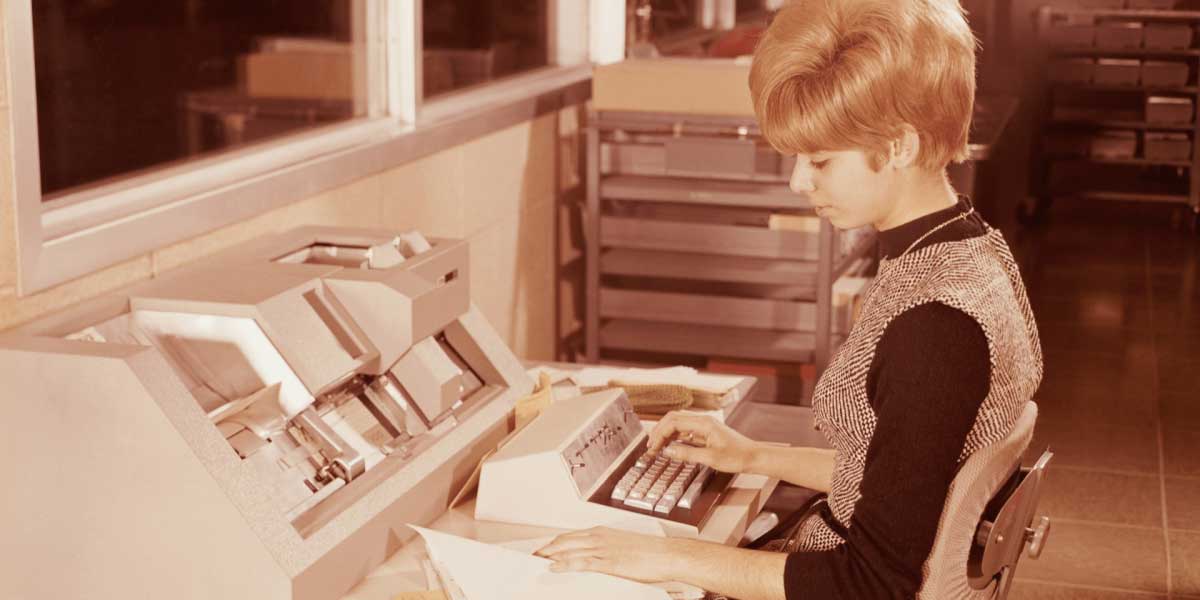
The rhythmic clackety-clack of typewriters was once the soundtrack of the office. These ingenious machines revolutionized communication, allowing for the creation of crisp, permanent documents. But as technology marched forward, the trusty typewriter found itself relegated to a place of nostalgia. So, when exactly did computers dethrone typewriters as the kings of the office?
A Slow Fade Out: The Rise of the Personal Computer
The dethroning wasn’t a swift, dramatic coup. It was a slow waltz, a gradual decline that stretched over a couple of decades. As PC Magazine points out, the personal computer (PC) began its rise in the late 1970s and early 1980s. These early machines were like awkward teenagers at a dance – bulky, expensive, and unsure of themselves. But beneath their clunky exteriors, they held a tantalizing glimpse of the future: a world where edits could be made electronically, and documents could be stored and retrieved with the ease of flipping through a digital rolodex.
Initially, the PC existed alongside the typewriter, not as an immediate replacement. Businesses saw the value of the PC for specific tasks, like data analysis and basic word processing. Imagine a secretary adept at shorthand, still taking dictation for important letters, while a new intern hunched over a PC crunching numbers in a rudimentary spreadsheet program. However, the high cost and complexity of early computers meant that typewriters remained the undisputed champions for everyday tasks like creating letters and reports. They were the reliable workhorses of the office, the familiar tools that generations of secretaries and office workers had mastered.
The typewriter, with its satisfyingly clunky keys and the crisp permanence of its printed letters, offered a sense of control and finality that early PCs simply couldn’t match. Imagine a world where every typo meant starting over, where revisions were messy white-out battles on the page. The early days of the PC were plagued by their own challenges – cryptic operating systems, limited storage capacity, and the constant threat of a floppy disk malfunction wiping out hours of work. In this context, the typewriter’s simplicity and reliability held a certain appeal.
This uneasy coexistence continued for a while. The typewriter remained king, but the PC, with its promise of a paperless future, was a persistent challenger, quietly gaining ground in the background. It was a slow dance, a gradual shift in power that would eventually lead to a complete transformation of the office landscape.
The Word Processing Revolution: Editing Without Wite-Out
The tide began to turn in the favor of the PC with the advent of user-friendly word processing software. Programs like WordStar and Microsoft Word offered a revolutionary new way to create and edit documents. Gone were the days of painstakingly retyping pages with every correction. With word processing software, edits could be made electronically, saving time and frustration.
This newfound ease of use, coupled with the decreasing cost of PCs, started to make them a more attractive option for businesses. As the 1980s progressed, and software continued to improve, the PC’s functionality expanded. It wasn’t just about word processing anymore; spreadsheets, databases, and even rudimentary graphics programs became available. The PC was transforming into an all-in-one office powerhouse.
The Final Click: The Legacy of the Typewriter
By the late 1980s and early 1990s, the writing was on the wall (pun intended) for the typewriter. PCs had become affordable, user-friendly, and offered a level of functionality that typewriters simply couldn’t match. Offices began phasing out their old machines, replacing them with the whirring hum of personal computers.
However, the typewriter’s legacy lives on. These machines were more than just tools; they were symbols of an era. The distinctive clack-clack of the keys, the satisfying weight of a finished page, and the permanence of the printed word – these are all elements that hold a certain nostalgic charm. Today, typewriters are more likely to be found in antique shops or museums, a reminder of a time when the clickety-clack ruled the office.
The typewriter’s reign might be over, but its impact on the working world is undeniable. It paved the way for the digital revolution, and its core function – the creation of written documents – remains essential in today’s computerized offices. So, the next time you boot up your computer and effortlessly edit a document, remember the trusty typewriter that came before, a machine that clacked its way into history.