Underwater Basket Weaving Degree Graduates Are Riding the Wave of Success

By: Alva Ree

In the ever-evolving landscape of online education, a new player has emerged that’s causing ripples of laughter and disbelief across the web. UnderWaterBasketWeaving.org, a website that sounds like it was plucked straight from a college humor skit, is now offering bona fide underwater basket weaving degrees. Yes, you read that correctly, underwater basket weaving is no longer just a punchline; it’s a purchasable qualification.

This quirky educational venture is the brainchild of Dr. Coral Reefer (a name that’s almost too on-the-nose), who claims to be on a mission to democratize the art of subaquatic craftsmanship. “We believe that underwater basket weaving is an art form that’s been overlooked for far too long,” Reefer said in an exclusive interview. “Our goal is to bring this fascinating craft to the masses, one submerged student at a time. Also, I was eating a submarine sandwich in my bathtub when the idea came to me, so really, this was destiny.”

The program’s curriculum reads like a parody of higher education, covering everything from “basic underwater breathing techniques” to “advanced kelp-weaving patterns.” Students can complete the course from the comfort of their own bathtubs, pools, or local bodies of water, a flexibility that gives new meaning to the term “distance learning.”

But what’s truly remarkable is the reception this waterlogged wonder has received. In a twist that surprises even the most jaded New Yorkers, people are actually signing up for these courses, and not just for laughs.

Real Alumni, Real Results (Sort Of)

Sarah Bubbles, a Brooklyn resident, purchased the course for her brother as a gag gift for his 40th birthday. “I thought it would be hilarious,” Bubbles said. “But he actually completed the course and now won’t stop talking about the intricate art of sea grass basket construction. I’ve created a monster, a very waterlogged monster. He tried to demonstrate his skills at Thanksgiving in my koi pond. The koi were not impressed, but my mother-in-law finally had something more embarrassing to talk about than my career choices.”

Marcus Chen, a 34-year-old marketing director from the Upper East Side, credits his UBWU degree with completely transforming his professional trajectory. “I spent $180,000 on my MBA from Columbia,” Chen explained. “Nobody ever mentioned it in job interviews. Then I spent $30 on an Underwater Basket Weaving degree and suddenly I’m the most interesting person in every Zoom meeting. My boss brings it up constantly. ‘You know Marcus went to UBWU?’ It’s literally the only thing anyone remembers about me now. Worth every penny.”

The appeal of the Underwater Basket Weaving degree seems to lie in its perfect blend of absurdity and uniqueness. “Did I put my UBWU degree on my LinkedIn?” mused David Park, 41, a hedge fund manager. “Absolutely. It’s the only credential anyone ever asks about. Correlation is not causation, but it’s also not NOT causation, you know?

The Faculty Weighs In

Dr. Finn Gillwater, a marine education specialist (and yes, that appears to be his real name), argues that there’s more to the program than mere novelty. “Sure, it might seem silly at first glance,” Gillwater admitted, “but there’s something to be said for learning a skill that combines physical dexterity, breath control, and artistic expression. Plus, it’s a great conversation starter at parties. Last week someone asked me what I did for a living and I said I was the Endowed Chair of Fish-Friendly Weaving Practices at UBWU. They thought I was a millionaire philanthropist. I didn’t correct them.”

Professor Bubbles McSplash, Dean of Kelp Utilization, was equally enthusiastic about the program’s educational value. “Our students learn critical skills,” McSplash explained during our interview, which took place in what appeared to be a public swimming pool. “For example, they learn that paying $30 for something that makes them laugh is a better investment than paying $200,000 for something that makes them cry. That’s economics, baby.”

The New York Effect

The program has even caught the attention of some of New York’s cultural institutions. The New York Aquarium is in talks with UnderWaterBasketWeaving.org to host “live weave” demonstrations, where graduates can showcase their skills to amazed onlookers. Picture tourists gathering around a tank, not to see exotic fish, but to watch someone weave a basket underwater. It’s so absurd, it’s almost brilliant.

“We’re very excited about the potential partnership,” said an aquarium spokesperson who requested anonymity because they weren’t authorized to discuss ongoing negotiations. “Although, to be honest, we’re not entirely sure anyone at UBWU can actually weave baskets underwater. Or weave baskets at all. Or swim, for that matter. But at this point, we’re committed to the bit.”

Emma Rodriguez, 25, a Queens resident and UBWU alumna, attended one of the early demonstration events. “I watched this guy stand next to a fish tank holding some reeds for like twenty minutes,” she recalled. “He never went in the water. Someone asked when the underwater part was happening and he said ‘the underwater weaving happens in your heart.’ Honestly? Kind of profound. Also, I bought a degree for my cousin immediately after.”

The Social Media Phenomenon

The success of UBWU has created an entire ecosystem of content creators and influencers.

“I made a TikTok about getting my UBWU degree,” explained content creator Jessica Park, 24. “Just me, dramatically opening the PDF on my laptop, pretending to cry with joy. It got 2.3 million views. Now I’m being sponsored by companies that want me to promote their products to ‘educated consumers.’ I don’t have the heart to tell them it was a $30 joke degree. Actually, I do have the heart, I just also have bills to pay.”

Instagram stories are flooded with people posting their UBWU certificates, often with captions like “Dreams do come true!” and “All those years of hard work finally paid off!” Everyone knows they’re joking. Nobody acknowledges it. This is the new social contract.

Expanding the Empire

The success of the Underwater Basket Weaving degree has inspired UnderWaterBasketWeaving.org to consider expanding its offerings. According to their Facebook page, courses in “Extreme Ironing: Laundry at 10,000 Feet” and “Synchronized Swimming for Cats” may be on the horizon. At this point, nothing would surprise us.

“We’re exploring adjacent fields,” confirmed Dr. Reefer cryptically. “Wherever there’s an intersection of completely unnecessary skills and people willing to pay small amounts of money for the joy of absurdity, we’ll be there. That’s our mission statement. Well, that and ‘Emerge with a Skill No One Asked For.’ We have two mission statements. We’re very successful.”

Early focus groups for “Extreme Ironing” have been promising. “I would absolutely spend $30 on that,” said Brian Walsh, 31, an accountant who already has two UBWU degrees (Bachelor’s and Master’s). “At this point, I’m collecting them. It’s cheaper than therapy and more interesting than cryptocurrency. My wall of ridiculous degrees brings me genuine joy every morning.”

The Philosophy Major’s Take

Not everyone views UBWU through a purely comedic lens. Some see deeper meaning.

“UBWU represents a fundamental critique of late-stage capitalism and the commodification of education,” argued philosophy professor Dr. James Wong, who teaches at Columbia and also, somehow, has a UBWU degree. “By reducing the degree to its most basic transactional form, $30 for a PDF, it exposes the arbitrary nature of educational credentialing. Although mostly I just think it’s really funny. Can something be both a devastating critique of modern society AND really funny? I’d argue yes. I’d also argue this is why I bought three.”

A New York State of Mind

As New Yorkers, we’re no strangers to the bizarre and the avant-garde. We’ve seen fashion shows featuring clothes made of garbage and performance art that defies description. But an online degree in underwater basket weaving? That’s a new one, even for us.

“I’ve lived in New York for 40 years,” said longtime Manhattan resident Dorothy Schwartz, 67. “I’ve seen everything. Or so I thought. Then my grandson got a degree in underwater basket weaving from a website and put it on LinkedIn. His law firm made him a partner six months later. I don’t understand this world anymore, but I bought one too. Why not? I’m 67. What’s the worst that happens? I have $30 less and a funny story?”

In a city where the pursuit of the unique and the Instagram-worthy often trumps practicality, it’s perhaps not surprising that UnderWaterBasketWeaving.org has found an enthusiastic audience. It’s the perfect blend of irony and earnestness that New Yorkers so often crave.

“New York is a city of people trying to stand out while also fitting in,” observed cultural anthropologist Dr. Lisa Chen. “UBWU lets you do both. You’re part of the in-crowd who gets the joke, while simultaneously standing out as someone with a ridiculous credential. It’s perfect for this city. Also, I have one. For research purposes.”

The Family Reactions

Perhaps the most entertaining aspect of the UBWU phenomenon is how families have responded.

“I told my parents I was ‘going back to school,'” said Andrew Kim, 30. “They were so excited. Then I showed them my UBWU acceptance letter, which, by the way, is just a PayPal receipt, and my dad didn’t talk to me for a week. Now he brings it up at every family gathering. ‘Andrew went to Underwater Basket Weaving University, did he tell you?’ He’s simultaneously proud and disappointed. It’s honestly the perfect son-father dynamic.”

Maria Santos, 26, had a different experience. “My abuela saw my UBWU diploma on the wall and started crying,” Santos recalled. “She thought I’d finally finished college. I didn’t have the heart to explain it was a $30 joke degree. She’s been telling everyone in her church that her granddaughter is a doctor of underwater basket weaving. I’ve decided to just let her have this. She’s happy, I’m happy, nobody needs to know the truth.”

The Bottom Line

So, the next time you’re at a rooftop party in Williamsburg and someone casually mentions they’re a certified underwater basket weaver, don’t be too quick to laugh it off. They might just be the next big thing in aquatic artisanship. Or, more likely, they’re part of a mass delusion that’s somehow become socially acceptable.

“Is this all a commentary on the meaninglessness of modern life?” pondered recent graduate Alex Turner, 29. “Is it just a funny joke that got out of hand? Is it both? I don’t know, man. I just know I spent $30, I laughed, I put it on LinkedIn, and my engagement went up. In 2024, that’s a win.”

In conclusion, while we can’t in good conscience recommend quitting your day job to pursue a career in underwater basket weaving, we have to admire UnderWaterBasketWeaving.org for their ingenuity and commitment to the bit. In a world that often takes itself too seriously, it’s refreshing to see someone dive headfirst into the deep end of absurdity.

Who knows? In a city that’s always on the lookout for the next big thing, underwater basket weaving might just be the skill you never knew you needed. At the very least, it’s bound to make your next Tinder profile stand out from the crowd.

As Dr. Coral Reefer herself put it: “We’re not changing the world. We’re just making it slightly weirder and significantly more amusing. For $30, that feels like a pretty good deal.”

Hard to argue with that logic. Even harder to argue with 50,000 people who’ve already enrolled.

Disclaimer: UBWU degrees are novelty items and will not lead to actual employment in underwater basket weaving, primarily because that’s not a real job. Side effects may include increased LinkedIn engagement, confused family members, and an inexplicable sense of accomplishment

Carolyn Campagna Kleefeld’s Philosophy of Creativity Beyond Convention

Carolyn Campagna Kleefeld doesn’t make art the way most artists do, and that’s entirely the point. A multidisciplinary artist, poet, and author, Kleefeld has spent decades pursuing a creative practice rooted in intuition, metaphysical inquiry, and a deep reverence for the untamed forces of nature.

Working across painting, drawing, and mixed media, she’s built a body of work that resists easy categorization, blending abstract and figurative styles into something entirely her own. For Kleefeld, creativity isn’t a technique to be mastered. It’s a state of being to be surrendered to.

An Intuitive Core

At the heart of Kleefeld’s artistic philosophy is the concept of creating from what she calls an “unconditioned well of being.” She doesn’t approach the canvas with a predetermined outcome in mind. Instead, she lets the work emerge organically, guided by instinct and shaped by chance. This methodology places her within a lineage of chance-based creative traditions, those philosophies that trust the spontaneous over the controlled and find meaning in what arises rather than what’s imposed.

Her themes circle around symbolism, nature, and the metaphysical, territories that can’t be fully mapped or explained, only explored. There’s something almost spiritual in her approach, a willingness to inhabit the unknown and let it speak through color, line, and form. For Kleefeld, the studio isn’t a place of production. It’s a place of discovery.

A Life in Words and Images

What makes Kleefeld’s creative vision especially distinctive is that it doesn’t stop at the visual.

She’s equally committed to poetry and literary expression, and her books have been translated into more than 10 languages and distributed internationally. This cross-disciplinary reach from canvas to page reflects a philosophy that refuses to confine creativity to any single medium. For Kleefeld, words and images are simply different dialects of the same essential language.

This dual practice isn’t a novelty or a side pursuit. It’s central to who she is as an artist. Her writing shares the same preoccupations as her visual work: symbolism, inner transformation, and the interplay between the human and the natural world. Together, they form a unified creative worldview that’s rare in its consistency and depth.

An Exhibition History That Speaks for Itself

Kleefeld’s work has been shown in solo and group exhibitions across California and the United States, building an exhibition history that spans decades. Among the notable highlights of her career was a retrospective exhibited at the Frederick R. Weisman Museum of Art at Pepperdine University, a significant institutional acknowledgment of her contributions to American art.

Her work is held in select museum and institutional collections, and her permanent art and literary archive is housed at the Carolyn Campagna Kleefeld Contemporary Art Museum at California State University, Long Beach. That archive represents far more than personal history. It’s a resource for researchers, educators, and future generations of artists who’ll encounter her work in an academic context and be invited to grapple with the questions it raises.

A Philanthropist Who Puts Her Conviction into Practice

If Kleefeld’s philosophy centers on the idea that creativity can transform a life, her philanthropy is the clearest expression of that belief in action. In 2019, she made a $10 million donation to California State University, Long Beach, a gift that funded the expansion and renaming of the university’s art museum.

As CSULB President Jane Conoley noted, Kleefeld’s impact on California art has been nothing short of remarkable, and the museum will be part of her lasting legacy.

Prior to her donation, CSULB had a museum, but it was smaller in scale and resource-constrained. Her contribution transformed it into a highly visible contemporary art institution that functions as both a public cultural venue and an academic teaching museum.

The expansion included an additional exhibition gallery, collection storage, a study center, and a classroom for teaching. She simultaneously enriched the museum’s holdings and enabled it to preserve the Hampton Collection, which it would have lost without the additional storage capacity her donation provided.

Her aspiration, simply stated, is that students and visitors will begin their own journeys of inner discovery. It’s the artist as an educator, not through instruction, but through inspiration.

Expanding the Vision Eastward

Kleefeld’s philanthropic vision hasn’t stayed on the West Coast. More recently, she’s been funding the Campagna Kleefeld Center for Creativity in the Arts at Massachusetts College of Liberal Arts, a transformational gift supporting the construction and initial operation of a new, state-of-the-art arts and teaching center. Designed to serve as the college’s primary gallery and arts programming hub, the new space will function as a public venue and a hands-on learning environment for students.

MCLA President James F. Birge, Ph.D., has spoken about the impact of her generosity, noting that the gift will exponentially enhance the quality of teaching, expose students to new and exciting forms of art and serve the broader community, and that its effects will be felt for generations to come. It’s the kind of institutional investment that doesn’t just change a building. It changes a culture.

Creativity as a Way of Life

Taken together, the art, the writing, the exhibitions and the philanthropy, Kleefeld’s career reveals a philosophy that’s coherent in every dimension. She doesn’t treat creativity as a professional practice separate from everyday life. For her, the intuitive, open-ended approach she brings to the canvas is the same approach she brings to everything else, including her role as a cultural patron and supporter of arts education.

Her work has been examined through the lens of the evolving relationship between artists and cultural institutions, a topic explored at length in a Rolling Stone UK profile that considered how Kleefeld’s contributions sit within that broader cultural conversation. What emerges is a portrait of an artist who’s thought deeply about the relationship between creative work and the institutions that house and sustain it, and who’s put that thinking into practice in ways that will outlast any single exhibition or critical moment.

Creativity, for Carolyn Campagna Kleefeld, has never been about convention. It’s been about a lifelong commitment to seeing beyond the expected, working from a place of genuine inner freedom and sharing that vision with as many people as possible. In a culture that often privileges the predictable, that’s a philosophy worth paying attention to.

Michael Curtis Broughton Was a Nationally Competitive Swimmer Before He Was a Soldier

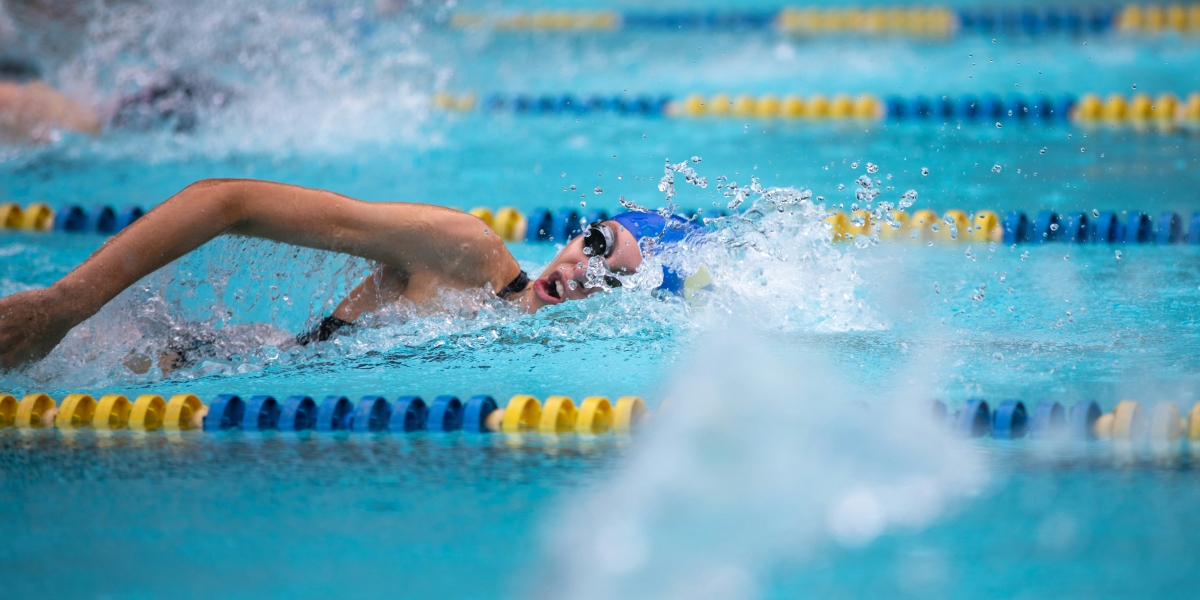
Long before Michael Curtis Broughton earned his Combat Infantryman’s Badge or directed major DOD air mobility operations from the Arctic tundra of Fort Wainwright, he was waking up before sunrise to get in the water. From 1990 to 1997, Broughton competed as a member of the Normal Parks Sharks in Bloomington-Normal, Illinois, earning multiple MVP honors that were covered by The Pantagraph, the region’s leading newspaper. He wasn’t just participating. He was excelling. And as it turns out, the habits forged in that pool would prove indispensable decades later on the other side of the world.

That early chapter is easy to overlook when you’re scanning a resume that includes combat tours, Arctic logistics commands, Fortune 50 supply chain leadership and four master’s degrees.

But Broughton himself would tell you the pool came first, and that everything that followed was shaped by what he learned there. Discipline isn’t something you discover in a foxhole. For him, it was something he’d already been practicing for years before he ever put on a uniform.

What Seven Years of Competitive Swimming Actually Builds

Competitive swimming at the club level is no recreational pastime. It demands time management, discipline and resilience that translate directly into academics, career and personal pursuits.

For a child who began competing at roughly age four or five and continued through early adolescence, those years of structured training don’t just build a stronger swimmer. They build a fundamentally different kind of person, one who understands that excellence isn’t an event but a daily practice.

What competitive swimming instills in young athletes is a specific relationship with process. Reaching elite performance typically takes 10 or more years of structured, progressive development. That’s not discouraging. It’s a roadmap. Swimmers who internalize that roadmap learn to trust incremental improvement, to find meaning in the daily grind of laps and technique drills and to stay committed to a long arc of development even when the short-term results aren’t glamorous.

That mindset, applied to military leadership, academic achievement or logistics innovation, is a competitive advantage that no single course or credential can replicate.

From the Pool to the Infantry: A Natural Transition in Mindset

That’s the foundation Broughton carried with him when he earned his GED at 17 and enlisted in the U.S. Army as an infantryman. What might have surprised his drill instructors, though it wouldn’t have surprised anyone who’d watched him compete, was how naturally he took to the rhythms of military life. Army infantry training begins before sunrise, with physical training formations at 0530, demanding precision under fatigue and a culture that treats standards as non-negotiable minimums. For most new recruits, that culture is a shock. For Broughton, it was familiar territory.

The parallels between elite youth swimming and infantry life run deeper than an early wake-up. Both environments demand what sports psychologists call pressure inurement, a methodical process of incrementally increasing the pressure an athlete faces so that high-stakes moments feel normalized rather than paralyzing.

A swimmer who has raced at conference championships dozens of times, who has pushed through the final 50 meters when every muscle wants to quit, has already rehearsed the mental architecture of performing under duress. More than a metaphor for military readiness, it’s a direct precursor to it.

Research bears this out. Mental training is considered crucial by 86% of elite swimmers, and the psychological skills developed in competitive aquatic programs, including visualization, goal-setting and emotional self-regulation, are precisely the competencies that define high-performing soldiers and officers.

Broughton didn’t arrive at military discipline as an adult. He’d been practicing it in lane lines since childhood.

A Military Career Built on Decades of Discipline

His trajectory through the Army reflects that. Broughton rose through the ranks over nearly two decades, transitioning from enlisted infantryman to commissioned officer through SHSU ROTC in 2010. He served on the front lines of the Global War on Terrorism, earning the Combat Infantryman’s Badge and receiving decoration from the OIR Commanding General for his service during Operation Inherent Resolve. His JPADS missions aided Peshmerga refugees fleeing ISIL.

Later, as FSC Platoon Leader for Echo Company, 1-52 GSAB at Fort Wainwright, Alaska, he led Arctic FARP deployments and supported CH-47 and UH-60 helicopter wildfire suppression missions across the North Slope. He retired honorably as a Captain. None of that happens without an extraordinary capacity for discipline, sustained over decades, under conditions most people will never face.

The Same Drive, Applied to Industry and Academia

After retiring from the Army, Broughton channeled the same methodical drive into civilian industry. He held senior logistics leadership roles at The Home Depot, where he worked within what Business Insider has described as a massive 1.8 million-square-foot distribution center operation, and at Samsung, where he managed inventory operations across 114 stores.

He developed the LRL MHE-R DIBS framework, a proprietary approach to robot-integrated bulk slotting in large retail logistics. He holds four master’s degrees and completed graduate work at Northern Illinois University and Texas A&M University in December 2023. His academic work is indexed on ResearchGate and the Digital Commons Network. He’s currently pursuing postgraduate studies in industrial engineering.

He also holds the Demonstrated Master Logistician (DML) designation from the Society of Logistics Engineers, which represents the highest tier in a three-level performance-based credentialing system that evaluates an applicant’s documented body of professional experience, continuing education, and operational achievement rather than exam performance. Formally recognized within U.S. Army personnel records, including the Officer Record Brief, the DML is designed for senior leaders whose mastery of the field is proven through decades of practice.

For Broughton, it is less a certification than a formal acknowledgment of what his career already demonstrates.

Still an Athlete, Still in the Water

He’s also still an athlete. Broughton remains active in running, swimming, biking, and long-distance swimming, not as a nostalgic callback to his youth, but as a continued expression of the identity that’s defined him since childhood. The discipline that once powered him through early morning practices at Anderson Pool in Normal, Illinois, didn’t retire when he left the Army. It simply found new channels.

For Broughton, the water isn’t where discipline began and ended. It’s where it was first learned, and it’s a place he keeps returning to, in one form or another, throughout the chapters of a life defined by precision, service, and relentless forward momentum.

The lesson his competitive swimming career offers isn’t simply that athletes make good soldiers or that early discipline predicts later success, though both of those things happen to be true. The deeper lesson is that the habits of mind developed in elite youth training don’t expire when a swimmer climbs out of the pool for the last time. They travel. They adapt. They resurface in a foxhole, in a distribution center, in a graduate seminar.

For Michael Curtis Broughton, everything that followed the Normal Parks Sharks was, in some meaningful way, built on what he learned there first.

DREAME AURORA Pairs Silicon Valley Engineering With Timeless Craft

By: Matt Emma

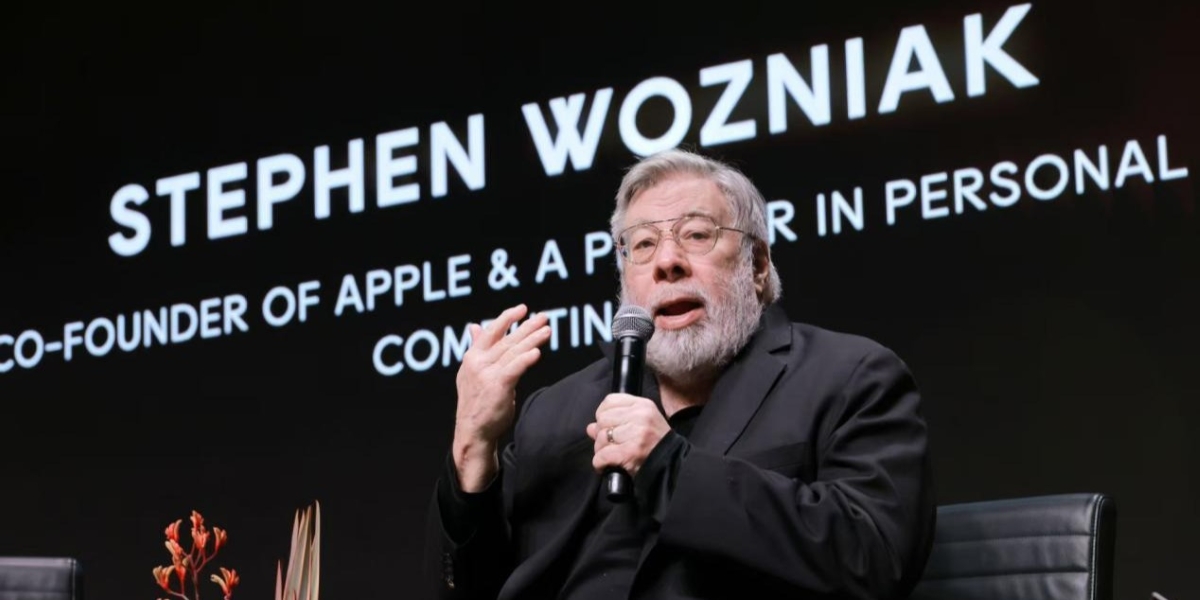
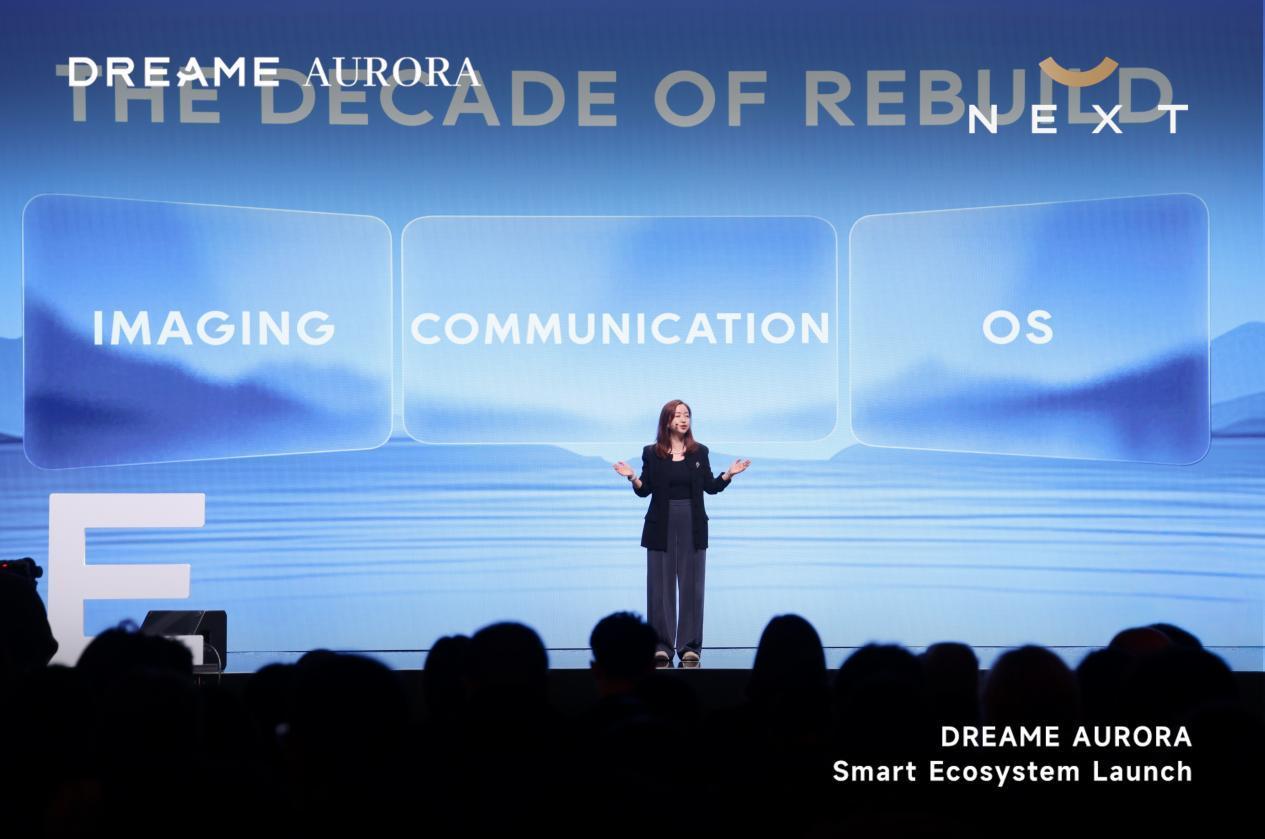
Beneath the familiar palms and innovation lore of Silicon Valley, a different kind of technology debut took place on April 29th. DREAME AURORA unveiled its global presence with the “Connect NEXT” event, presenting three foundational breakthroughs in imaging, communication, and its new operating system. Steve Wozniak, Apple co-founder and a pioneer of the personal computer era, joined the event to discuss the next decade of technology development alongside DREAME AURORA. His participation reinforced a broader argument the brand made throughout the day: that the next phase of consumer technology will be shaped by deep engineering work rather than incremental specification races.

The DREAME AURORA LUX Series and an Heirloom-Grade Approach to Hardware

That ethos finds clearer expression in the DREAME AURORA LUX series, where engineering and craft come together as a single discipline. Guided by the philosophy of using technology as the foundation and artisanal craft as the soul, the collection comprises five distinct themes, each representing a fusion of Eastern and Western aesthetic traditions. Every piece incorporates techniques drawn from high jewelry, intangible cultural heritage crafts, and precision engraving. Rare leathers, precious metals, and natural gemstones are selected and assembled by artisans over hundreds of hours. The series breaks from industrial homogenization, treating the device as a collectible object rather than a disposable one. The brand calls this heirloom-grade design, built to be passed down across generations. It points toward a different model for merging technology and luxury.

Photo Courtesy: DREAME AURORA

Modular Hardware in the DREAME AURORA NEX Series

DREAME AURORA pairs that craftsmanship with serious functional ambition. The DREAME AURORA NEX series introduces modular hardware via magnetic attachments, allowing users to configure action camera, telephoto, satellite communication, and agent modules based on their needs at any given moment. From imaging work to outdoor exploration, from networking on the move to standalone AI assistance, a single device adapts across multiple scenarios. The modular architecture addresses physical limitations of traditional smartphones, treating the device as a customizable personal system rather than a fixed product. The flagship series, meanwhile, integrates imaging, connectivity, and intelligence into a unified experience, presenting the brand’s broader perspective on next-generation devices.

Photo Courtesy: DREAME AURORA

Imaging, Connectivity, and the DREAME AURORA Smart OS

Beyond modular design, DREAME AURORA has been advancing in imaging and connectivity. The imaging system includes a full-focal-length 200-megapixel sensor, LOFIC technology across different focal lengths, and 3D spatial modeling capabilities, supported by a team of over 300 imaging experts working alongside professional photographers. On the connectivity side, the brand has built a solution featuring 360-degree surround antennas, communication optimization algorithms currently in development, and signal engines tuned for different conditions, with the goal of maintaining reliable connections in high-speed motion and weak-signal environments.

All of these systems run under the DREAME AURORA Smart OS, which brings persistent memory, context-aware assistance, and a conversational interface designed to adapt to the user rather than requiring the user to adapt to the device. In an industry often described as losing its way in specification wars, DREAME AURORA is trying to recover the foundational spirit of consumer technology: curiosity, sharing, and the satisfaction of creating something new. By combining engineering depth with artisanal craft, the brand is positioning itself not just as a device manufacturer, but as a participant in the broader conversation about where personal technology is headed.

With its Silicon Valley debut as a starting point, the company has formally entered the global stage. DREAME AURORA is taking a long-term research and development approach, building a technology system spanning chips, algorithms, hardware, and software to support the next decade of connected living. The brand says it intends to keep working with global partners and users as that work continues.