SAIBOSI Brings Chinese Intangible Heritage to Milan Design Week 2026

By: Jack Lee
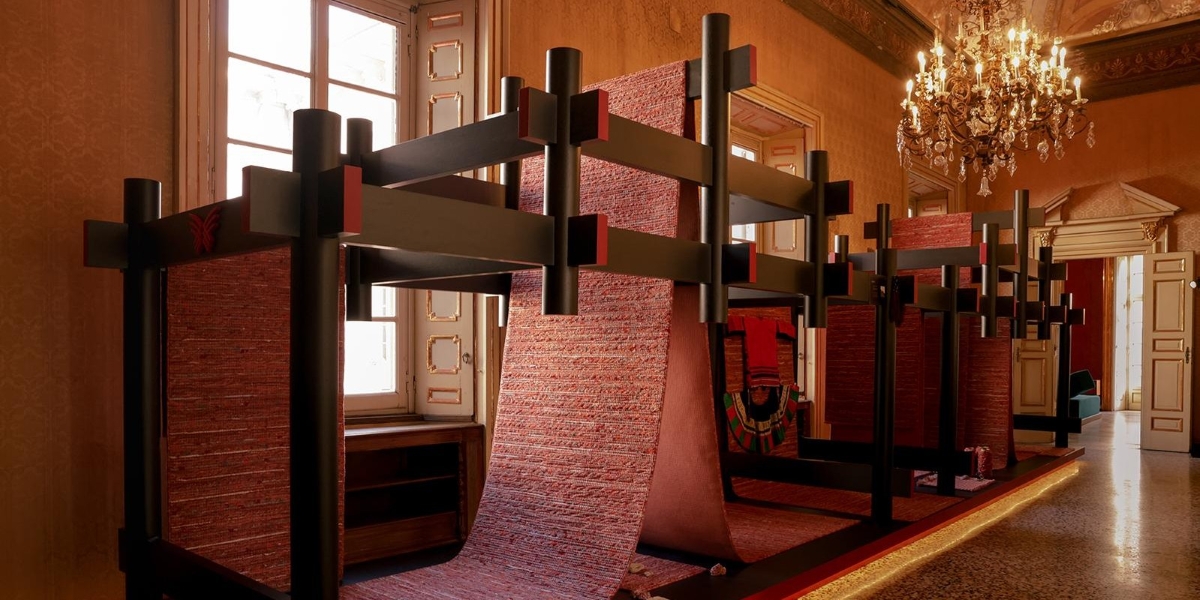
During Milan Design Week 2026, SAIBOSI, a Chinese carpet brand, unveiled its Shan Hai Hong Yao National Intangible Cultural Heritage Design Collection at Palazzo Litta, a historic design landmark. Rooted in Eastern civilization, the collection represents a distinctive contemporary reinterpretation of Chinese intangible cultural heritage on the global design stage.
Under this year’s theme of “Metamorphosis,” SAIBOSI presents a reverse reconstruction, transitioning from finished “fabric” back to raw “material.” It demonstrates how Chinese intangible heritage transcends geographical boundaries and contextual limitations, elegantly evolving from traditional craftsmanship into a universal global design language.
Tracing Origins and Coexistence: Awakening the Essence of Hong Yao Textile Craftsmanship in Structural Design
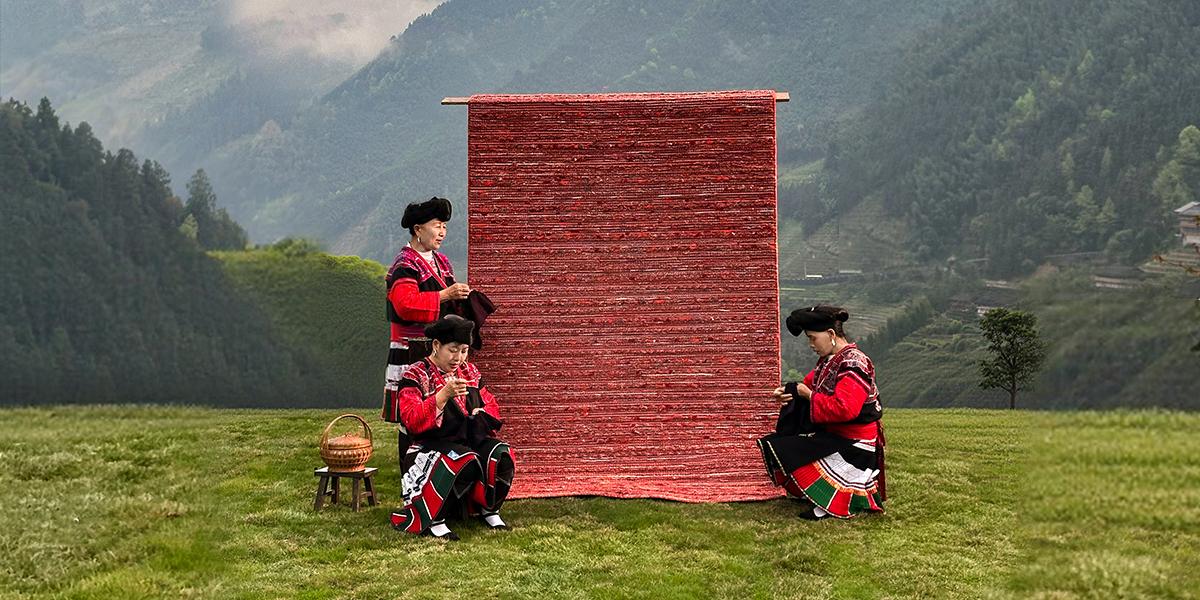
Inspired by the traditional textile craftsmanship of the Hong Yao people, the Shan Hai Hong Yao collection draws upon China’s national-level intangible cultural heritage. Rather than merely replicating surface patterns, SAIBOSI’s design team delved into the fundamental origins of weaving techniques. They captured the subtle variations in yarn tension, twisting and relaxation inherent to the handweaving process.
This handcrafted essence, encapsulating generations of accumulated cultural wisdom, constitutes the core vitality of intangible heritage. Through systematic interpretation and parametric reconstruction of weaving logic, SAIBOSI translates the inherent tension and rhythmic cadence of manual craftsmanship into structured, digitally programmable parameters executable within modern industrial production systems. In this manner, the brand achieves seamless continuity between traditional handcraftsmanship and modern industrial design language.
Winner of the French GPDP Award: Revitalizing Traditional Weaving via Next-Generation Glue-Free Technology
The collection’s harmonious fusion of profound cultural connotations and technological innovation has been honored with the French GPDP Design Innovation Award. Underpinning this remarkable cultural export is the brand’s proprietary core technology. As China’s pioneer in glue-free carpet manufacturing, SAIBOSI debuted its next-generation glue-free weaving technology at Palazzo Litta.
Built upon traditional wool weaving fundamentals, this innovative technology achieves structural stability and support intrinsically through material properties alone, eliminating reliance on conventional chemical adhesives while reconciling environmental sustainability with superior tactile comfort. Within the Shan Hai Hong Yao collection, this technology functions not only as an advanced manufacturing process but also as a vital medium for artistic expression.
The carpets boast bold, large granular textures and substantial three-dimensional pile structure, recreating the tactile sensorial memory of ancient handwoven textiles. Rugged yet resilient, voluminous yet well-structured, their surface delivers a grounded, earthy tactile solidity to the touch. In chromatic design, the collection reinterprets diverse crimson and red hues through a contemporary aesthetic lens, perpetuating the optimistic and resilient spirit inherent to the Hong Yao people. This approach conveys the profound depth of Chinese cultural heritage while catering to the aesthetic standards of high-end global interior design, forging an organic integration of cultural narrative and international design vocabulary.
Living Heritage: From “Being Observed” to “Being Lived”
“Intangible heritage can truly regenerate its vitality only when integrated into daily life,” stated SAIBOSI’s design team during its Milan exhibition. This philosophy resonates profoundly with the curatorial vision of Palazzo Litta.
Instead of displaying traditional cultural symbols in isolation within a Western artistic context, SAIBOSI infuses the primordial weaving wisdom and rhythmic aesthetics of intangible heritage into contemporary global living spaces, making such heritage perceptible, tangible, and functionally practical in everyday life.
Within the fibers of the Shan Hai Hong Yao carpets, the tactile legacy of this mountain-dwelling Eastern ethnic group engages in quiet dialogue with the avant-garde atmosphere of Milan Design Week. This is not a one-way cultural export but a reciprocal cross-cultural exchange, a convergence of tactile experience, aesthetic philosophy, and lifestyles.
From the Mountains to Milan: Reframing the Global Narrative of Home Aesthetics
What SAIBOSI showcases extends far beyond products and exhibition displays; it embodies a sustainable cultural practice pathway. Through modern design and technological empowerment, traditional craftsmanship is revitalized and woven into the fabric of global daily living.
As China’s top-selling carpet brand by retail sales for six consecutive years, SAIBOSI propels the global dissemination of intangible cultural heritage driven by the dual engines of technological innovation and cultural inheritance. In this journey, Hong Yao heritage ceases to be a static cultural relic for mere observation and evolves into a living, tactile experience, something to be felt, interacted with, and integrated into daily life.
More importantly, this endeavor embodies Eastern cultural confidence: aesthetic value ought not to be defined externally, but to emanate organically from within, forged by time-honored traditions and uninterrupted cultural continuity.
Through contemporary reinterpretation of Hong Yao intangible heritage, SAIBOSI brings this distinct Eastern beauty to global audiences to be seen, felt, and appreciated, nurturing equitable cross-cultural dialogue and aesthetic resonance on the world stage.