How Nexus Wealth Management Builds a Client-First Culture

Most financial firms talk about putting clients first. Nexus Wealth Management actually built its business around that idea. Based in Missoula, Montana, the firm operates as an independent advisory practice with no corporate parent dictating which products to sell. That independence shapes everything from how advisors are hired to how they spend time with each client.

The result is a company culture that values real-world experience, transparent communication, and long-term relationships over short-term transactions.

What Kind of Team Does Nexus Wealth Management Hire?

Walk into the Missoula office and you’ll find a team with backgrounds that stretch well beyond Wall Street. Robert Montes, the firm’s founder and a Certified Plan Fiduciary Advisor (CPFA®), spent six years at one of the nation’s largest investment firms early in his career. Then he made an unusual pivot. He enlisted as an infantryman with the U.S. Army Ranger Regiment, 2nd Ranger Battalion, and deployed to Afghanistan during the Global War on Terror.

That military experience instilled a commitment to discipline, continuous improvement, and service that Montes carried directly into his advisory practice. He returned to finance with a clearer sense of purpose and a belief that financial advising is fundamentally about stewardship.

Greg Jackson brings a similarly unconventional path. Holding RMA®, AIF®, and CPFA® designations, Jackson spent nine years as an Emergency Medical Technician in South Los Angeles before transitioning to law enforcement with the Los Angeles County Sheriff’s Department. Nearly a decade of high-pressure, life-or-death decision-making gave him an ability to stay calm, think clearly, and act ethically under pressure. Those instincts now guide how he works with clients navigating complex financial decisions.

Nexus Wealth Management intentionally hires people whose life experiences extend beyond spreadsheets. The firm believes that advisors who have served communities in other capacities bring a depth of empathy and reliability that purely finance-track professionals may lack.

How Does an Education-First Philosophy Shape Daily Operations?

At Nexus Wealth Management, every client engagement starts with a conversation, not a pitch. Advisors sit down with each person to understand their goals, concerns, and financial picture before making any recommendations. The firm calls this its Financial Diagnostic Report, an educational overview designed to surface opportunities and identify risks specific to each client’s situation.

Josie Allred, a Registered Representative who grew up in Montana’s Bitterroot Valley, embodies this approach. After studying at the University of Montana and completing intensive financial training under Montes, Allred joined the team with a focus on making complex concepts accessible. Her goal is to help clients feel confident enough to make their own informed decisions rather than deferring blindly to an advisor.

Graysen Vukasin rounds out the advisory group with NQPA and CPFA designations. An Eagle Scout and active Boy Scouts of America volunteer, Vukasin brings the same commitment to preparation and service that defines scouting into his financial planning work.

The education-first philosophy also extends beyond one-on-one meetings. Nexus Wealth Management produces the Let’s Talk Wealth podcast, where the team discusses financial planning topics in a straightforward, jargon-free format. The podcast reflects the same culture of transparency and knowledge-sharing that drives the firm’s daily client interactions.

Why Does Structural Independence Matter for Company Culture?

Nexus Wealth Management operates free from affiliation with any large financial institution. This means the advisory team is not limited to a menu of in-house products or pressured to meet proprietary sales quotas. Instead, they evaluate solutions across the broader marketplace to find options that fit each client’s specific needs.

That structural freedom has a direct impact on internal culture. When advisors are not compensated based on which products they recommend, the incentive structure aligns with what clients actually need. Team members at Nexus Wealth Management describe their role as stewards of entrusted assets, not salespeople. Montes has said that “once people have all the facts, then they can make the best decisions for themselves and their families,” and that principle serves as the firm’s cultural North Star.

The firm’s non-proprietary model also encourages collaboration over competition within the team. Because no one benefits from pushing a specific product, advisors share insights and strategies freely, working together to deliver the strongest possible guidance for each client.

A Montana Firm with Deep Community Roots

Company culture at Nexus Wealth Management is not just about what happens inside the office. The team’s personal commitments to family and community reflect the values they bring to client relationships.

Montes spends time outside work practicing Jiu Jitsu and teaching shooting skills. Jackson, married for over 30 years with three sons and seven grandchildren, is a dedicated family man. Allred hikes, fishes, and explores Montana’s outdoors in her free time. Vukasin volunteers with his local Boy Scouts troop, drawing from his own experience as an Eagle Scout.

These personal investments in community and family show up in how Nexus Wealth Management treats the people it serves. The firm has worked with over 700 clients and earned more than 175 five-star reviews, a track record built on trust, accessibility, and consistent follow-through.

For a financial advisory practice, culture is not a buzzword. It determines how advisors show up for clients during uncertain markets, difficult life transitions, and long-term planning conversations. At Nexus Wealth Management, the culture starts with people who have served in other demanding roles and carries through every client interaction.


Disclaimer: This article is for informational purposes only and does not constitute investment advice, a recommendation, or an offer to buy or sell any securities. Consult a qualified financial advisor for advice specific to your situation.

How Plainview Assisted Living Residents Benefit from Choosing Chelsea Senior Living at Somerset Gardens

Key Takeaways

  • Residents enjoy comfort, security, and a vibrant community atmosphere.
  • Daily living and wellness programs cater to every need and interest.
  • Specialized care provides peace of mind for families and residents alike.
  • Flexible accommodation options and amenities ensure residents feel truly at home.

Table of Contents

  • What Makes Chelsea Senior Living at Somerset Gardens Stand Out?
  • How Does the Community Enhance Daily Living?
  • What Dining Options Are Available?
  • How Does the Community Promote Social Engagement?
  • What Specialized Care Services Are Offered?
  • How Does the Community Support Wellness?
  • What Are the Accommodation Options?
  • How Can Prospective Residents Learn More?
  • Frequently Asked Questions

What Makes Chelsea Senior Living at Somerset Gardens Stand Out?

Nestled in the heart of Nassau County, Chelsea Senior Living at Somerset Gardens is a cornerstone of exceptional senior care for residents of Plainview, NY and the greater Long Island area. As a locally trusted provider of assisted living, the community blends deep industry experience with a commitment to providing a welcoming environment, round-the-clock support, and an active social calendar. For families seeking a trusted provider, Plainview Assisted Living at Chelsea Senior Living at Somerset Gardens stands out for its dedication to high-quality, resident-centered care, deep-rooted expertise, and understanding of the unique needs of seniors in the Plainview area.

With a reputation built on over 15 years of compassionate service, Chelsea Senior Living serves not only Plainview but also nearby communities throughout Nassau and Suffolk counties. By fostering independence while providing essential services and a close-knit community feel, Chelsea Senior Living encourages residents to enjoy the next chapter of life with confidence and comfort. The campus is designed to maximize both accessibility and resident well-being, setting the community apart from the ordinary assisted living experience.

How Does the Community Enhance Daily Living?

Residents at Somerset Gardens benefit from thoughtfully designed en suite apartments equipped with emergency call systems, allowing individuals to maintain their independence while knowing assistance is always available. Every resident enjoys a full range of amenities that cater to convenience and peace of mind, including weekly housekeeping, laundry services, and daily chef-prepared meals.

On-site therapy services and a reliable transportation program ease day-to-day logistics so seniors can focus on meaningful activities and relationships. The full daily activities calendar creates opportunities for engagement and learning, fostering a sense of purpose and belonging. Fitness classes, scheduled outings, creative workshops, and personalized support enable each resident to make the most of every day.

What Dining Options Are Available?

Mealtimes are central to the Somerset Gardens experience. The culinary program, headed by Chef Christian Bernsten, prioritizes both nutrition and the joy of dining together. Menus are crafted to appeal to a variety of tastes and dietary needs, from casual comfort favorites to elegant entrées for special occasions. Residents can look forward to connecting with new friends, sharing stories, and making memories over expertly prepared meals in a welcoming, inviting setting.

How Does the Community Promote Social Engagement?

Social connection is foundational to well-being at any age. Somerset Gardens designs its activities so that every resident, whether shy or socially outgoing, can find their place. The calendar includes exercise and wellness sessions, art and music programs, lively discussion groups, educational series, and regular entertainment outings.

These offerings keep residents engaged, support cognitive health, and create joyful moments among neighbors. According to the National Institute on Aging, maintaining an active social life supports overall mental and emotional health, which makes Somerset Gardens’ dynamic program a vital aspect of its success.

What Specialized Care Services Are Offered?

Every senior’s journey is unique, which is why Somerset Gardens offers a wide range of care solutions tailored to individual needs. The team offers traditional assisted living, helping residents with daily activities, and a secure, specialized memory care environment called the Country Cottage for those facing cognitive challenges.

Short Stay options provide support for post-hospitalization recovery, respite care, or families navigating transitions. Customized care plans and ongoing staff training ensure that residents always receive the support and attention they require, with compassion and respect.

How Does the Community Support Wellness?

Wellness at Somerset Gardens goes far beyond physical care. Residents have access to on-site physical, occupational, and speech therapy through FOX Rehab, guided by a full-time RN and an experienced clinical team. Preventative screenings, medication management, and health education are routinely integrated into everyday life, helping residents manage chronic conditions and remain as independent as possible.

National resources, such as the Mayo Clinic, recognize that a well-rounded approach to senior wellness leads to a better quality of life and more positive health outcomes for older adults.

What Are the Accommodation Options?

Somerset Gardens offers a range of apartment styles to fit every preference and need, including studio, one-bedroom, two-bedroom, and companion suites. Each residence is tailored for comfort, accessibility, and style, with amenities including walk-in closets, kitchenettes, private baths, and patios. The pet-friendly policy allows for beloved companions to join residents, which studies suggest can significantly boost well-being and ease transitions.

How Can Prospective Residents Learn More?

Somerset Gardens invites families and future residents to experience the community firsthand. Virtual tours and on-site visits are available to help individuals get a clear sense of the community’s welcoming atmosphere, dynamic lifestyle, and support. Scheduling a visit or joining a community event is simple and can be done directly via their website or by phone, allowing future residents to connect, ask questions, and feel confident in their senior living decision.

Frequently Asked Questions

What types of care are available at Somerset Gardens?

The community provides Assisted Living, Memory Care in a secure setting, and flexible Short Stay options, ensuring that care solutions align with changing needs.

Are there transportation services for residents?

Yes. Residents can rely on group and individual transportation for outings, appointments, and local events, providing freedom and convenience to stay engaged within the community and beyond.

Is the community pet-friendly?

Yes. Pets are not just welcome, but cherished community members at Somerset Gardens, supporting residents’ well-being and sense of home.

What dining options are available?

Three restaurant-style meals are served daily, prepared by an expert culinary team with menus tailored to diverse palates and nutritional needs.

How can I schedule a tour?

Visits can be scheduled easily by contacting Somerset Gardens directly via their accessible website or by calling their local community team to arrange a personalized tour.

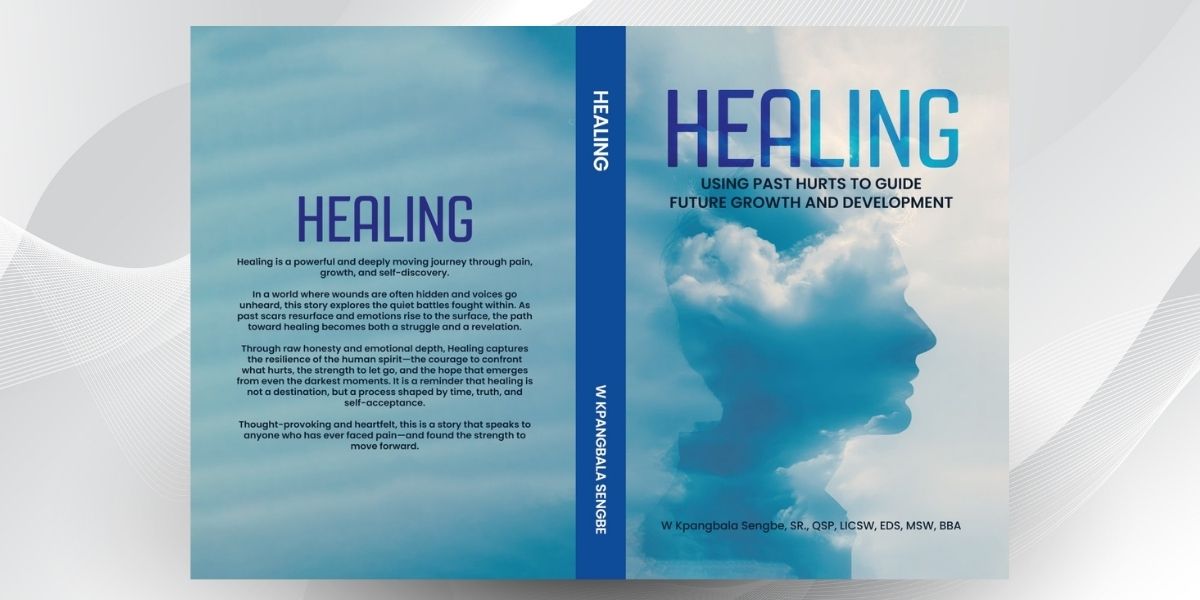
In Healing, W. Kpangbala Sengbe, Sr., Offers A Deeply Felt Argument For Turning Hurt Into Method

There is no shortage of books that promise recovery. They arrive in polished stacks, armed with the language of renewal and the soft coercion of improvement. They tell us to let go, move on, forgive, and release. What they too often omit is the mess, the persistence of memory, the humiliation of betrayal, the way grief can become a private weather system that returns without permission. What makes Healing: Using Past Hurts to Guide Future Growth and Development feel distinct is that it does not treat pain as an obstacle to thought. It treats pain as material.

That difference matters.

Kpangbala Sengbe, Sr. comes to the page not as a motivational minimalist, but as a writer concerned with narrative, community care, and the long disciplines of witness. His work suggests a life shaped by listening, service, emotional intelligence, and the kind of practical wisdom that comes from seeing how people actually live through hardship. Healing carries the authority of experience, but it does not lean on authority alone. It invites the reader into a more searching question. What if the past is not only something to survive, but something to study, reinterpret, and use?

The result is a work that inhabits an unusual borderland. It is at once reflective, narrative, spiritual, and psychologically attentive. Sengbe is not interested in offering polished slogans about resilience. He is more interested in what resilience requires. He returns, again and again, to the proposition that healing is not an event. It is a practice. It is built through repeated acts of reflection, creativity, faith, gratitude, forgiveness, and human connection. The self is not rescued by a single clear revelation. It is rebuilt, slowly, through habit and intention.

That insistence on method is one of the book’s strongest features. Again and again, Sengbe points toward forms of expression that do more than comfort. They clarify. Journaling becomes a way to contain pain without denying it. Art becomes a language for emotions too layered for direct speech. Memory becomes something that can be held and examined, rather than feared. In this framework, healing is not passive. It asks for participation. It asks for work.

This is where Healing becomes more than a familiar story of injury followed by redemption. Sengbe understands that pain is often chaotic, but he also understands that chaos can be given form. A page, a prayer, a painting, a conversation, a moment of gratitude, these are not decorative gestures in his vision of recovery. They are disciplines. There are ways of converting suffering into self-knowledge.

Faith also plays a central role in the book’s emotional architecture. But faith here is not presented as certainty. It is not triumph dressed up as spirituality. Instead, Sengbe approaches faith as steadiness, as a way of remaining oriented when clarity is unavailable. The effect is important. It keeps the book from collapsing into sentimentality. It allows room for doubt, hesitation, and vulnerability. Healing, in this view, does not mean becoming untouched by sorrow. It means learning how to move through sorrow without surrendering to it.

That emotional honesty gives the book much of its power. Sengbe does not write as though hurt vanishes once it has been named. He writes as someone who understands that memory lingers, that growth can be uneven, and that strength often looks less like conquest and more like return. One returns to the page, to prayer, to reflection, to the difficult effort of trying again. In a culture that prizes dramatic breakthroughs, Healing makes a quieter and more persuasive case for endurance.

The book is also deeply invested in the relational side of recovery. Sengbe is alert to the isolating nature of suffering, but he is equally attentive to the ways connection can soften its grip. Healing, as he imagines it, does not happen only in private. It also happens in witness, in honest conversation, in acts of compassion, in the steadying presence of others who remain near. That emphasis gives the book a larger moral horizon. It is not merely about personal repair. It is about the kind of humanity one might recover through that repair.

There is, too, an appealing largeness in Sengbe’s emotional vocabulary. He writes with recurring images of cracks, light, storms, gardens, canvases, horizons, and renewal. These symbols are familiar, but they are used with enough consistency that they begin to feel earned. They become part of the book’s internal atmosphere. He is a writer who believes in transformation, yes, but also in process, in the slow dignity of becoming someone wiser than one’s wounds.

Buy your copy of Healing by W. Kpangbala Sengbe, Sr. today and discover how past pain can become the foundation for future strength.

NYC Mayor Mamdani Marks 100 Days with Grocery Store Plan, Bus Upgrades, and a Queens Rally

Mayor Zohran Mamdani used his 100-day milestone to lay out an agenda rooted in affordability, urban infrastructure, and a governing style he calls “pothole politics.”

One hundred days into his term as New York City’s mayor, Zohran Mamdani chose a converted music venue in Maspeth, Queens as the setting to account for his time in office — and to signal where his administration is headed next. The Sunday evening rally at the Knockdown Center drew thousands of supporters, city workers, and a surprise guest in U.S. Senator Bernie Sanders, all to the backdrop of campaign-style energy that has defined Mamdani’s early tenure at City Hall.

The centerpiece announcement of the night was one his supporters have been waiting for since Election Day.

NYC’s First City-Run Grocery Store Is Coming to East Harlem

Mamdani announced that La Marqueta in East Harlem, which is owned by the city, will be developed using capital funds as the location of New York City’s first municipally-operated grocery store. The choice of site carries deliberate symbolism. First established by Mayor Fiorello LaGuardia in 1936 as a permanent home to more than 400 pushcart vendors, La Marqueta quickly became an essential food hub for East Harlem residents, serving more than 25,000 patrons a day. Mamdani drew the connection directly: the market was “the same one that LaGuardia opened in 1936 so working people then could save money on fruits and vegetables.”

Because the property is already city-owned, the store will not have to make any rent payments. It will be established in a part of the market that is not currently utilized.

A third-party operator will help determine how much items for sale will cost, but Mamdani says the municipal-run stores are going to offer more affordable prices for grocery staples. He was direct about the goal: “At our stores, eggs will be cheaper. Bread will be cheaper. Grocery shopping will no longer be an unsolvable equation.”

The need is quantifiable. The mayor’s office noted that East Harlem has been plagued by affordability issues, with nearly 38% of households having received public assistance or SNAP in the past year, and 59% of households being unable to afford basic needs. Meanwhile, grocery prices across New York City have risen 66 percent since COVID, according to the mayor’s office.

What It Will Cost — and What the Timeline Looks Like

The fiscal reality of the plan is drawing scrutiny. The East Harlem location alone will reportedly cost $30 million to open. The mayor’s earlier budget proposal set aside $70 million for all five stores combined. That gap — roughly $30 million for one store against a $70 million total budget — has prompted questions about whether the full five-borough rollout is financially feasible within those parameters.

An Economic Development Corporation spokesperson said the city is working to open the East Harlem store by the end of 2027, with the goal of opening all five stores before the end of Mamdani’s administration.

The stores — which would operate without paying rent or taxes — could reshape competition in local food retail, potentially affecting private supermarket operators across the city. Mamdani addressed skeptics directly during the rally: “Now, some will insist that city-owned businesses do not work, that government cannot keep up with corporations. My answer to them is simple: I look forward to the competition. May the most affordable grocery store win.”

Buses, Trash, and the “Pothole Politics” Governing Philosophy

The grocery store was not the only announcement of the evening. Mamdani also announced immediate plans for the Department of Transportation to speed up buses by 20% on 45 routes across the city — a partial pivot after acknowledging earlier in the week that his signature promise of free city buses requires Albany’s approval and is unlikely to materialize this year.

NYC Mayor Mamdani Marks 100 Days with Grocery Store Plan, Bus Upgrades, and a Queens Rally (2)

Photo Credit: Unsplash.com

He also committed to full residential trash containerization in at least one community district in each borough by the end of the year, building on an initiative that began under former Mayor Eric Adams but has yet to reach full implementation across the five boroughs.

These commitments connect to what Mamdani is calling “pothole politics” — a governing framework built on the idea that fixing visible, everyday problems builds the credibility necessary to pursue larger structural changes. “This is pothole politics — our 2026 answer to sewer socialism — where government is not too busy, not too self-important, not too mired in paperwork to fix the problems of this city, no matter their size,” he said.

100 Days of Wins, Watchdogs, and Waiting

Mamdani also announced pilot free childcare sites for 2,000 two-year-olds this fall, expanding his early education agenda. He cited 100,000 potholes filled, record-low crime numbers, and a deepening relationship with city sanitation workers as further evidence of a functioning administration.

Sanders, who entered to “Back in Black” by AC/DC and cheers from the crowd, praised the grocery store initiative as “another example of government working for the people” and offered a broader endorsement of Mamdani’s early record.

Not everyone at the venue — or watching from the outside — shared that view. Critics renewed concerns over campaign promises they say remain unfulfilled, including free bus service proposals and broader business community unease about the city’s expanding role in essential services. Community advocates from East Harlem expressed cautious support for the grocery plan while calling on the mayor to ensure the store offers extended hours and accompanies the kind of wraparound services — childcare, community programming — that the neighborhood needs.

Housing also surfaced as a pressure point. Supporters who backed Mamdani on affordability grounds have raised concerns about the city’s appeal of a court order to expand the CityFHEPS housing voucher program, a move that has left some in the progressive coalition that elected him feeling unsatisfied.

Throughout his first 100 days, Mamdani has maintained an unusually visible public presence — riding subways, fielding 311 calls, and joining sanitation crews in the field. He picked up a metal shovel, donned a hard hat, and poured concrete over a pothole to mark the city’s progress — an image that, whatever one thinks of the policy substance, has become emblematic of his approach to the office.

The 100-day mark is a political construct, but for Mamdani it served a specific purpose: demonstrating that delivery, however incremental, is possible. The grocery store plan is the most tangible expression of that argument. Whether the administration can execute it — on time, on something resembling its original budget, and in a way that genuinely serves the communities it is targeting — will define a significant portion of his first term’s legacy.

The next milestone is already in view. The Rent Guidelines Board, with six Mamdani appointees, will decide later this year whether to raise or freeze rents for roughly two million stabilized tenants across New York City. That vote will carry consequences far larger than any single grocery store — and the mayor has made clear he is watching closely.

How Aarush Garg Went From Teen Trader to Investment Firm Founder

By: Ethan Rogers

In an industry where credibility is usually measured in decades, Aarush Garg built his in years, and not by following the traditional path.

There were no internships at major banks. No inherited networks. No institutional safety net.

Just a screen, a set of charts, and an obsession that started earlier than most would even consider possible.

At 13, Garg wasn’t thinking about hedge funds or managing capital. What caught his attention was something simpler, but far more powerful: the idea that markets could actually be understood.

A Robinhood advertisement first introduced him to trading. But what followed went far beyond curiosity. Garg immersed himself in market communities, studying how traders operated, how sentiment shifted, and how price reacted in real time.

Then came the moment that changed everything.

An options trade around a major earnings event, executed early in his learning curve, played out exactly as he had anticipated.

For most, that would be luck.

For Garg, it became confirmation.

That markets weren’t random.

They were patterns waiting to be understood.

An Obsession That Took Over

What followed wasn’t casual interest. It was complete immersion.

While others his age were focused on school, sports, or social life, Garg was studying price movement daily, relentlessly.

He wasn’t just trading. He was trying to break down how markets actually moved.

Why did volatility expand here?

Why did momentum fail there?

Why did some participants consistently extract profits while others disappeared?

Those questions turned into repetition. And repetition turned into pattern recognition.

His routine reflected it.

Charts before school. Charts during school. Charts after school. Charts late into the night.

Phone taken away. Repeat.

There was no structured curriculum. No roadmap.

Just persistence, and an unwillingness to stop until things made sense.

The Loss That Changed Everything

Early success didn’t last untouched.

One trade, in particular, shifted everything.

Garg allocated a significant portion of his capital into a high-conviction event tied to a rocket launch. As the launch unfolded live, the unexpected happened. The rocket failed.

The market reacted instantly.

What had been profit turned into a near-total loss before execution could catch up.

There was no time to react. No liquidity to exit cleanly.

Just exposure, and the realization of how quickly capital can disappear.

That moment didn’t just teach him about loss.

It taught him about structure.

About liquidity.

About the difference between being right, and being able to execute.

“Markets don’t give you time to think once things break,” Garg says. “If you’re not prepared beforehand, you’re already too late.”

From that point forward, his approach shifted from chasing outcomes to building systems.

No Blueprint, No Permission

Unlike many in finance, Garg didn’t come up through structured environments.

Everything was self-directed.

But instead of limiting him, that became an advantage.

Without being confined to a single strategy or asset class, he expanded across equities, macro markets, digital assets, options, and fixed income, focusing not just on each individually, but on how they interact.

Because markets don’t move in isolation.

Liquidity shifts. Correlations change. Events ripple.

And if you don’t see that, you miss the bigger picture.

Speed, Structure, and Execution

As his understanding deepened, so did his edge.

Garg’s approach became defined by speed, adaptability, and execution.

While many participants hesitate or overanalyze, he focuses on acting when conditions align, combining real-time awareness with structured decision-making.

“Most people aren’t lacking opportunity, they’re lacking awareness,” he explains. “By the time they recognize what’s happening, the move is already gone.”

That belief pushed him toward building systems designed to stay ahead of shifting market conditions, focusing on volatility, liquidity, and timing rather than static positioning.

Scaling Without Losing Control

Operating at larger scale introduced a new challenge.

Execution changed.

Liquidity mattered more.

Mistakes became more expensive.

This is where many traders break.

Garg adapted by becoming more systematic, structuring capital across multiple strategies and asset classes, allowing flexibility while maintaining control.

Instead of relying on a single approach, he built a framework designed to adjust in real time.

Because at scale, survival isn’t about prediction.

It’s about positioning.

A Different Kind of Founder

At a glance, Garg doesn’t fit the traditional mold of a finance operator.

Blonde hair. Tattoos. A personality that doesn’t align with the usual image of institutional finance.

But underneath that is a level of discipline and work ethic that defines how he operates.

“I’ve never been interested in fitting the stereotype,” he says. “I’m focused on building something that actually works.”

Building Beyond the Individual

Today, as Founder and CIO of Aarion Capital LP, Garg is no longer just trading. He’s building infrastructure.

The firm operates across multiple asset classes, applying a structured, multi-strategy approach designed for volatile and evolving markets.

But the focus isn’t just performance.

It’s durability.

Because in finance, short-term success doesn’t define anything.

Consistency does.

How Aarush Garg Went From Teen Trader to Investment Firm Founder

Photo Courtesy: Aarion Capital

The Long-Term Vision

Looking ahead, Garg’s ambitions extend beyond a single fund.

The goal is to build a global platform, one that expands access, integrates technology, and redefines how modern capital is deployed across markets.

But the philosophy remains unchanged:

No shortcuts. No unnecessary exposure. No reliance on hype.

Just structure, discipline, and execution.

Because in the end, markets don’t reward attention.

They reward those who can operate, adapt, and stay standing, long after others have been forced out.

Media Contact 

Contact Person: Aarush Garg 

Company: Aarion Capital 

LP Email: Aarushgarg.ceo@gmail.com 

Website: https://aarioncapital.com/

Disclaimer: This article is for informational purposes only and does not constitute investment advice, a recommendation, or an offer to buy or sell any securities. Consult a qualified financial advisor for advice specific to your situation.

Wang Chunzi Develops 16 Systems and 4 Industry Standards to Solve Data Silos and Compliance Challenges for Businesses

By MICHAEL R. SISAK | AP News

The Challenge Facing Global Businesses

Against the backdrop of global digital trade expansion and rising pressure for stable, compliant, cost-efficient cross-border marketing, U.S. and international businesses face persistent barriers: data silos, uneven regulatory adherence, wasted budgets, and slow, inconsistent decision-making. These flaws raise operational costs, weaken market responsiveness, and create unnecessary risk for American firms seeking predictable, resilient global growth.

Wang Chunzi’s Framework for Cross-Border Marketing

Wang Chunzi, a specialist in cross-border marketing informatization and technology commercialization based in Beijing, has spent nearly 10 years building a practical, scalable solution. She has independently developed 16 integrated intelligent marketing systems and led the creation of 4 formal industry standards focused on data governance, compliance, resource coordination, and performance accountability. Her framework has become a replicable global model that breaks down data barriers, strengthens regulatory compliance, and improves marketing efficiency in support of U.S. commercial interests.

Drawing on deep experience in multinational corporate operations and cross-regional compliance, Wang and her team analyzed more than 120,000 real-world marketing records and conducted field research with 230 enterprises to translate frontline pain points into standardized digital tools.

The 16-System Suite and Its Flagship Platform

Her 16-system suite covers five core areas: compliance risk control, budget management, channel operation, data-driven decisions, and global market expansion. The flagship platform, Data Aggregation (Shuju), a copyright-registered data fusion tool, connects more than 20 major global marketing channels and processes over 500,000 consumer data points daily with consistently high accuracy ratings. It unifies previously disconnected datasets, cutting report preparation time by 85% (from 4.5 hours to 40 minutes) and shortening end-to-end marketing decision cycles by 60% based on field research data.

Four Industry Standards That Streamline Compliance

Supporting these tools are the 4 industry standards Wang established:

  1. Cross-border marketing budget allocation
  2. Data compliance classification and management
  3. Data-driven overseas marketing decision-making
  4. Cross-regional resource collaboration and responsibility boundaries

Aligned with EU GDPR, U.S. CCPA, and major global data rules, the standards streamline workflows and reduce ambiguity. Across Wang’s partner network, compliance violation rates declined by an average of 42%, compliance-related audit costs fell by 35%, and cross-regional coordination delays decreased significantly.

What This Means for U.S. Companies

For U.S. companies, importers, brand owners, and distribution partners, Wang’s framework has produced documented operational improvements:

  1. Marketing budget waste reduced by an average of 30%
  2. Cross-regional resource collaboration efficiency up 40%
  3. On-time campaign execution and delivery improved significantly

This structure lowers due diligence costs, reduces partnership uncertainty, and strengthens transparency, all critical to maintaining stable, competitive U.S. supply chains and global go-to-market strategies.

Adoption Across Global Markets

Through open licensing and industry collaboration, Wang’s systems and standards have been adopted by 307 enterprises across 8 key regions. Partner firms have reported substantial operational cost reductions and improved marketing performance. In high-stakes regulatory scenarios, businesses using her compliance tools have avoided costly penalties and disruptions in European and U.S. markets.

Industry observers note that Wang’s model addresses a widespread global problem: upgrading cross-border marketing without excessive investment. By improving efficiency, compliance, and transparency at the operational level, her work strengthens the stability of international commerce and supports long-term U.S. interests in building efficient, secure, cost-resilient global supply chains and marketing systems.

Looking Ahead

Wang plans to add AI scheduling, predictive analytics, and real-time cross-cultural compliance checks to her platforms. She will continue expanding standardized, transparent, data-driven global marketing cooperation, helping to build a more reliable and efficient international business environment that benefits companies and consumers across markets.

Media Contact

By MICHAEL R. SISAK

https://apnews.com/author/michael-r-sisak

How Good Website Design Boosts Conversions

Every marketing metric you care about (leads, sales, lifetime value) depends on one quiet hero: the design of your website. People judge credibility in milliseconds, but the real magic happens after that first blink. A layout that guides, reassures, and delights can turn casual visitors into devoted customers.

Good design isn’t a coat of paint. It’s the entire structure that lets users feel oriented, confident, and motivated to act. When your pages anticipate questions and remove friction, conversions rise naturally, with no pop-up bribes required.

Want proof? Heat-map tools show that when critical information sits two scrolls deep, users vanish. For a real-world look at how leading sites guide users through key moments, explore Page Flows’ curated design examples and see how these principles play out in practice.

First Impressions Set Conversion Trajectories

Speed and aesthetics form the handshake at the door. If your site takes longer than three seconds to load on mobile, half your audience is gone before colors even render. Trim images, minimize scripts, and prioritize above-the-fold content so the initial frame is instant and reassuring.

Then look at the hero section. One crisp headline plus a subline that finishes the thought beats a paragraph of buzzwords every time. Add a contrasting call-to-action button, big enough for thumbs, and you’ve already nudged the bounce rate in the right direction.

Visual Hierarchy Directs Attention

On any screen, the human eye looks for order: size, color, and placement tell us what matters. A clear hierarchy stops cognitive overload because users never have to ask, “Where do I start?” Use bigger type and bolder hues for must-read items, and let tertiary details fade slightly into the background.

On desktop, most visitors still scan in an F-pattern, so lining up your value props along that invisible path pays off. Mobile leans toward a simple Z-shape: headline, image, benefit, action. Map your elements to these mental models rather than forcing the eye to zigzag unpredictably.

Color and Contrast Guide Emotions

Color psychology isn’t woo-woo; it’s pattern recognition in the brain. Blue conveys safety, red sparks urgency, and green signals success. Choose a primary accent for calls to action and reserve supporting shades for secondary buttons and info banners. Consistency tells users that different buttons still share the same promise.

Contrast ratios also matter for accessibility. A button no one can read converts at zero percent. Aim for WCAG AA at minimum, so color-blind users and Google’s quality algorithms both give you credit.

Navigation and Flow Reduce Friction

A menu is not just a list; it’s your conversion roadmap. Keep top-level items under seven so the brain can chunk them easily. Use plain language (“Pricing” beats “Investment Opportunities”) and place the primary action, like “Book a Demo,” in the header so it’s visible on every page.

Breadcrumbs are underrated. They reassure shoppers mid-checkout that they’re still on track, trimming abandonment. Progress bars and step indicators do the same job for SaaS onboarding, turning a potentially endless sign-up into a brief series of wins.

Search is the escape hatch. If someone types, let autocomplete suggest real phrases rather than error codes. Small touches like “No results? Try fewer words.” cut frustration and keep the session alive.

Finally, test your flow with five real users. Watching them struggle to locate the cart or backtrack after hitting a dead end will teach you more than a dozen stakeholder meetings. Record, revise, repeat.

Mobile Experience Seals the Deal

Mobile traffic crossed the 60-percent mark in 2025 and continues to climb. Thumb-friendly design is no longer a nice extra; it’s the default battleground for conversions. Stick key actions within the bottom 40% of the viewport where thumbs naturally rest.

Non-critical scripts and lazy-loading images help safeguard performance over spotty LTE connections. Even a two-second delay can reduce mobile conversion rates by tens of percent, so every millisecond saved carries real weight.

Trust Signals and Micro-Interactions Close the Gap

Doubt lingers even when visitors have decided they want what you’re offering. Security badges, customer logos, and clear return policies serve as both social proof and reassurance. Put them close to the price and form fields, not at the bottom.

Micro-interactions (a brief animation when a button is pressed, a small shake on invalid input) give users immediate confirmation that nothing has gone wrong. These small signals lower anxiety and keep the session moving forward. Keep them under 200 ms to stay snappy rather than showy.

Copy matters here, too. Instead of “Submit,” try “Start My Free Trial.” The more the label reflects the user’s goal, the less mental distance they perceive between now and success.

Measure, Iterate, Repeat

Design decisions feel artistic, but conversions are ruthlessly numeric. Set up event tracking in GA4 or Mixpanel before you launch a redesign, so you know whether the new hero image actually moved the needle. Watch funnel drop-offs and run A/B tests on one element at a time.

Remember: no metric lives in isolation. When you chase a higher click-through rate, keep an eye on average order value and churn. The goal is a balanced portfolio of wins, not a single spiked stat.

Great website design is a conversion strategy disguised as beauty. When pages load fast, guide the eye, eliminate friction, and reassure at every step, visitors finish the journeys you built for them. Do that, and your marketing spend stops leaking, your sales team gets warmer leads, and your users leave feeling smart instead of sold.

If you need a quick sanity check, open your site on a borrowed phone and ask a friend to buy whatever costs under ten dollars while you stay silent. Note every pause, squint, or back-button tap. Each moment of confusion is a silent vote against conversion that your next design sprint should erase.

A site that teaches itself is a site that sells.