The Power of Small Honest Choices with Meg Tuohey on Living Your HeartPrint in Everyday Life

By: Rachel Monroe

Personal growth often gets framed as something dramatic. A turning point. A breakthrough. A sudden transformation that changes everything.

Meg Tuohey sees it differently.

In her book HeartPrint: Unlock the Wisdom of You, the path back to authenticity does not begin with a life overhaul. It begins with a question. A simple one that people can ask themselves in ordinary moments throughout the day.

Is the next action I take moving me closer to the life I truly want?

For Meg, that small pause can quietly reshape how someone lives.

What Living Your HeartPrint Really Means

The idea of a HeartPrint might sound abstract at first. But Meg describes it in practical terms.

Living in alignment with your HeartPrint means making decisions that reflect the life and relationships you genuinely want to build.

Sometimes that process is simple.

“It can be as straightforward as asking yourself whether the action you are about to take will move you toward the life you dream of,” Meg explains.

Other times, the answer becomes more complicated.

Recognizing that a decision does not align with your deeper values may require adjusting habits, relationships, or expectations.

That kind of honesty can feel uncomfortable at first.

But it also creates clarity.

Instead of reacting to life on autopilot, people begin responding with intention.

The 10 Percent Shift

Meg is not asking readers to transform overnight. In fact, she intentionally avoids framing personal growth as a dramatic reinvention.

Her hope for readers is surprisingly modest.

“I wish every reader would be moved by this book by ten percent,” she says.

Ten percent more authentic.

Ten percent are kinder to themselves.

Ten percent braver about showing up as who they really are.

Those small adjustments may sound minor, but over time they create meaningful change.

A person who makes slightly more honest choices each day gradually builds a life that feels more aligned with their values.

The shift may not be visible immediately.

But internally, it can feel significant.

When the Inner World Matches the Outer Life

One of the central ideas behind HeartPrint is the connection between inner alignment and emotional well-being.

Meg believes people experience a deeper sense of fulfillment when their internal values match their external lives.

“When your inner world matches your lived experience, you gain access to contentment and satisfaction,” she explains.

That alignment creates a sense of pride in how someone is living.

It also provides emotional resilience.

Positive feelings such as satisfaction and purpose act as protective factors. They make it easier for people to explore their identity, pursue meaningful work, and shape the legacy they want to leave behind.

Instead of feeling pulled in conflicting directions, life begins to feel more coherent.

Writing With Real People in Mind

While working on HeartPrint, Meg often imagined specific people sitting across from her as she wrote.

But the audience shifted depending on the chapter.

Sometimes she imagined speaking to members of her community who had participated in her programs. Other moments felt more personal.

“There were chapters where I imagined my grandchildren reading it one day,” she says.

In other sections, she found herself writing directly to her past self.

That shifting perspective helped the book maintain a deeply human tone. It feels less like a lecture and more like a conversation with someone who understands the complexity of being a person in the modern world.

The result is a book that speaks to multiple generations at once.

Some readers may approach it looking for guidance. Others may simply find comfort in recognizing familiar emotional experiences.

The Relationship We Have With Ourselves

A recurring theme in Meg’s work is the idea that the most important relationship someone has is the one they maintain with themselves.

Many people spend years trying to meet external expectations without noticing how they speak to themselves internally.

Are they encouraging? Curious? Supportive?

Or critical and impatient?

HeartPrint encourages readers to cultivate a kinder internal dialogue. Not by ignoring mistakes or challenges, but by approaching them with curiosity rather than judgment.

That shift changes how people interpret setbacks.

Instead of seeing a mistake as proof of failure, they begin viewing it as information that can guide future choices.

Over time, that mindset builds trust in one’s own voice.

A Story That May Continue

Although HeartPrint stands on its own, Meg believes the story behind it may not be finished.

The character Ellie still holds stories that have yet to be told.

“Ellie showed us who she is, but there are parts of her life we did not fully explore,” Meg says.

Future books could delve deeper into Ellie’s relationships, including her dynamic with her husband, Joe. Meg is also intrigued by the idea of exploring Ellie’s family history through the lives of her parents and grandparents.

Those additional stories could reveal how generational experiences shape the way people understand themselves.

For now, those possibilities remain ideas waiting to unfold.

But Meg admits she is hopeful the journey will continue.

Expanding the Conversation

More than anything, Meg sees HeartPrint as the beginning of a larger conversation.

A conversation about identity, intuition, and the courage required to live honestly.

She hopes the book opens doors for readers to explore their own inner landscape with more curiosity and patience.

And she hopes it encourages a simple but powerful habit.

Pause. Ask the question. Notice the answer.

Because the path back to authenticity rarely appears through dramatic revelations.

More often, it emerges through a series of small decisions that gradually bring a person closer to the life they were meant to live.

And according to Meg, that journey begins with learning to listen.

You can find Meg Tuohey’s book HeartPrint: Unlock the Wisdom of You on Amazon or Barnes & Noble, offering insights for those interested in self-discovery.


Healing Through Empathy, Not Just Medicine

Medicine is often reduced to charts, protocols, and clinical precision. Dr. Steven Drabek’s The Comfortologist offers something far rarer and far more needed: a deeply human perspective on what it truly means to care. This is not just a physician’s memoir. It is a quiet, emotional exploration of pain, empathy, loss, and the kind of healing that cannot be measured by numbers alone.

From the very first pages, Steven Drabek makes it clear that his relationship with medicine is not blind faith but thoughtful skepticism. He understands science, respects it, and has practiced it for decades. Yet he insists that science alone is not enough. What transforms medicine into care is the human being behind it, the one who listens, feels, and chooses compassion even when it is not required. That belief becomes the emotional backbone of the book.

The story begins not in a hospital, but in childhood. At just six years old, Steven Drabek lost his mother suddenly, a moment that quietly shaped everything that followed. The absence of closure, the confusion of loss, and the silence around grief became early lessons that stayed with him for life. Years later, those same emotions would influence how he approached patients facing their own endings. He understood something many clinicians struggle to grasp: that people do not just need treatment, they need to be seen, heard, and gently guided through moments they cannot fully understand.

What makes The Comfortologist especially compelling is how it weaves personal vulnerability into professional insight. Steven Drabek does not position himself as a flawless doctor. Instead, he shows how his own life experiences: family struggles, emotional gaps, and unexpected turns made him more aware of the emotional weight his patients carried. His reflections on hospice care are particularly moving. Rather than viewing end-of-life care as defeat, he reframes it as one of the most meaningful forms of medicine, where dignity, comfort, and presence matter more than intervention.

There is also a striking honesty in how he describes the culture of medicine itself. He acknowledges its strengths but does not shy away from its limitations. The system, he suggests, often prioritizes efficiency over empathy, leaving little room for the emotional labor that true care requires. His writing challenges that imbalance, gently urging both professionals and readers to reconsider what healing really looks like.

The book is also notably inspired by SQuire Rushnell’s God Winks series, beginning with When God Winks, which explores the idea that coincidences in life are rarely accidental but carry deeper meaning. This influence plays a quiet yet important role in shaping Dr. Drabek’s perspective throughout the narrative.

One of the most powerful dimensions of the book emerges when Steven Drabek transitions from doctor to patient. His own diagnosis of esophageal cancer becomes a turning point, forcing him to confront the very fears he had spent years helping others navigate. In those moments, the clinical language disappears, replaced by raw uncertainty, quiet hope, and the fragile strength of someone learning to trust the process from the other side. It is here that the book becomes deeply personal, reminding readers that no amount of medical training can fully prepare someone for the emotional reality of illness.

Yet even in the face of fear, there is a consistent thread of resilience. Steven speaks about what he calls “God Winks”, moments of coincidence and meaning that seem to guide life in unexpected ways. Whether one views them spiritually or simply as reflections of perspective, they add a layer of warmth to the narrative. They suggest that even in the most difficult chapters, there are small signals of hope waiting to be recognized.

What ultimately sets The Comfortologist apart is its tone. It does not overwhelm the reader with technical detail, nor does it dramatize suffering for effect. Instead, it speaks in a steady, reflective voice that feels sincere and grounded. It invites readers to slow down, to think, and to feel without being told exactly what to feel.

Steven Drabek’s journey, as presented in the manuscript, is not just about medicine. It is about the spaces between diagnosis and recovery, between loss and understanding, and between professional duty and human connection. It reminds us that while medicine may treat the body, it is empathy that truly reaches the person.

In the end, The Comfortologist leaves a lasting impression not because of what it teaches about healthcare systems, but because of what it reveals about people. It is a gentle, honest reminder that care is not defined by perfection, but by presence, and that sometimes, the most powerful thing a doctor can offer is simply the willingness to sit with someone in their pain and not look away.

How Pre-Engineered Metal Buildings Are Cutting Commercial Construction Timelines in Half

Time is money in commercial construction. Every extra week on a project timeline translates into delayed occupancy, ongoing carrying costs, and lost revenue for the business waiting to move in. That is why contractors, developers, and business owners across the country are turning to pre-engineered metal buildings at a pace that shows no signs of slowing down. The speed advantage these structures offer is not a marketing claim. It is a measurable, repeatable outcome built into the very nature of how these buildings are designed, fabricated, and assembled.

Engineering Happens Before the First Shovel Hits the Ground

With traditional stick or block construction, engineering and design work often unfold alongside the build itself. Changes in the field are common, and every revision costs time. Pre-engineered metal buildings flip that model entirely. The structural engineering is completed in advance, with every component calculated, cut, and fabricated to exact specifications before anything ships to the job site. When the materials arrive, the crew is not figuring out what to do next. They are executing a plan that was already finished.

This front-loaded approach eliminates a significant source of construction delays. Waiting on revised drawings, coordinating with on-site engineers, or sourcing materials that were not accounted for in the original scope are problems that simply do not exist in the same way with a pre-engineered system. Everything needed for the structure arrives together, documented, and ready to go.

Bolt-Together Assembly Compresses the Schedule Dramatically

Perhaps the most visible speed advantage is what happens during erection. Pre-engineered metal building kits are designed to bolt together rather than requiring the cutting, welding, or custom fitting that traditional construction methods demand. An experienced erecting crew can raise a 40-by-60-foot metal building in as little as seven to ten days. A structure of equivalent size using conventional methods might take several times longer, and that gap widens considerably as projects scale up.

The simplicity of bolt-together assembly also reduces the labor burden on complex tasks. Fewer specialists are required on site at any given time, coordination between trades is more straightforward, and the risk of errors that slow down a project is reduced. The result is a build schedule that feels almost clinical in its efficiency compared to what most contractors are used to.

Faster Permitting Through Stamped Engineering Plans

One area where commercial construction timelines routinely stall is the permitting process. Local building departments require detailed documentation before issuing approvals, and assembling that documentation can take weeks when working with traditional methods. Pre-engineered metal buildings come with stamped engineering plans already prepared, including anchor bolt plans and, in many cases, foundation drawings as well.

Having a complete set of professionally stamped drawings ready to submit from day one removes a major bottleneck from the approval process. Building departments can review a thorough, professionally prepared package far more quickly than one that trickles in piece by piece. For project owners watching a calendar, this distinction alone can shave weeks from the overall timeline before a single component is ever fabricated.

Fabrication and Delivery Move in Parallel With Site Preparation

In traditional construction, the sequence of work is largely linear. One phase must be substantially complete before the next can begin. Pre-engineered metal buildings allow for a fundamentally different approach. While the concrete slab is being poured and cured, the building components are being fabricated at the manufacturing facility. When the foundation is ready, the structure is ready. Both tracks run at the same time, and the project benefits from every day of overlap.

This parallel workflow is one of the most underappreciated advantages in the pre-engineered model. It requires coordination between the supplier, the concrete contractor, and the erecting crew, but when that coordination is handled well, the compression of the overall schedule is substantial. Projects that might otherwise take six months can reach completion in three.

What This Means for Business Owners and Developers

For anyone financing a commercial project, speed is not just a convenience. It is a financial outcome. A shorter construction timeline means a shorter period of carrying costs on a construction loan. It means getting a business operational sooner, generating revenue while competitors may still be waiting on their own builds. It means less exposure to weather delays, supply disruptions, and the general volatility that longer projects must weather.

Pre-engineered metal buildings deliver all of this without sacrificing quality, durability, or design flexibility. Modern steel building systems are engineered to meet or exceed local building codes, support extreme snow and wind loads, and carry finish warranties that span decades. The speed is a feature of the system, not a compromise within it.

A Faster Path from Planning to Occupancy

Commercial construction timelines have long been accepted as slow, unpredictable, and expensive. Pre-engineered metal buildings challenge that assumption at every stage of the process, from engineering and permitting through fabrication, delivery, and assembly. The result is a project experience that consistently delivers faster occupancy, lower costs, and fewer surprises. For business owners, developers, and contractors who have grown weary of drawn-out builds, the case for making the switch has never been stronger.

Designing Clarity: How Ming Li Makes Complex Systems Feel Human

By Y.H. Studio

Where Confusion Often Begins

For many patients, the hardest part of treatment is not always the procedure itself. Often, it is the moment before, when medical language feels unfamiliar, pricing feels unclear, and every next step feels heavier than it should. In those moments, even simple decisions can become overwhelming.

That is the space Clarity was designed to change.

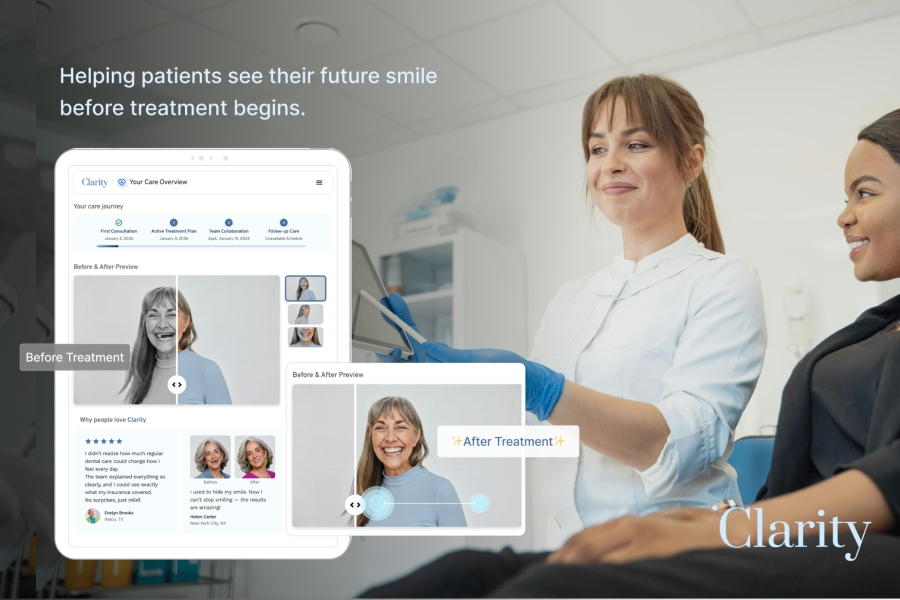
Recently recognized with the 2026 iF Design Award in User Experience (UX) / Product UX, Clarity is a mobile app created to help patients better understand treatment plans, costs, and payment options through clearer language and visual summaries. Rather than asking people to decode complicated medical and financial information on their own, the product makes those decisions easier to understand and more manageable to act on. Ming Li was listed among the designers on the award-winning team at Y.H. Studio.

A Career Shaped by Complexity

For Ming Li, the project represents more than an award. It reflects a deeper pattern that has shaped Ming’s work for years: a commitment to making complicated systems feel more human.

Ming has spent much of his career designing products inside environments that are anything but simple. His experience spans enterprise platforms, internal tools, AI-assisted workflows, operational systems, and large-scale SaaS products. Before this current work in enterprise AI, Ming designed workflow-heavy products at Shopee and Tesla, where the challenge was often the same: too many steps, too much friction, too much ambiguity, and users who needed clarity in order to do their jobs well.

That is why Clarity feels so aligned with Ming’s design philosophy.

“I’ve always been drawn to complicated systems,” Ming says. “But design, to me, is not about making complexity look polished. It’s about making it understandable. When people are under pressure, clarity is not just a nice thing to have. It can really change how they feel and how they move forward.”

Designing Clarity: How Ming Li Makes Complex Systems Feel Human

Photo Courtesy: Clarity

Why Healthcare Makes Clarity Matter More

That belief has stayed consistent across industries. In e-commerce, Ming worked on tools that supported large-scale seller operations and internal review systems. In enterprise environments, Ming has designed workflow and automation experiences for technical and business users. Across those different domains, the role has often been the same: helping people navigate systems that are powerful, but not always easy to understand at first glance.

Healthcare brings that challenge into especially sharp focus.

A patient may be presented with a treatment plan, an estimated cost, insurance limitations, available discounts, or public support options, all in the same moment. Technically, the information may be there. But emotionally and practically, that does not mean it feels clear. Clarity helps translate procedures, pricing, insurance, discounts, and public programs into a more accessible and visual experience, making it easier for patients to understand not only what is being recommended, but also what it means for them.

For Ming, that kind of design problem matters because it sits at the intersection of information, emotion, and trust.

“A lot of products already contain the answer somewhere,” Ming says. “The bigger question is whether people can actually understand it when they need it most. Good UX is not only about showing information. It is about helping people feel less lost.”

Designing With Empathy and Structure

That mix of empathy and structure is central to how Ming works. Ming studied industrial design and later pursued graduate training in business analytics, building a perspective that combines human-centered thinking with systems thinking. Ming is interested not only in how something looks, but in how it works, where it breaks down, and what prevents people from moving forward with confidence.

In practice, that often means asking grounded questions: Where is the friction? What are people confused about? Which decision is being delayed? What part of the experience creates hesitation instead of clarity?

Those questions may sound simple, but they become powerful inside products that affect real decisions. Ming’s work is not centered on making digital experiences feel more decorative. It is centered on making them more legible, more useful, and more supportive in moments that matter.

Designing Clarity: How Ming Li Makes Complex Systems Feel Human

Photo Courtesy: Clarity

Why Collaboration Is Part of the Craft

That perspective also shapes the way Ming thinks about collaboration. Rather than seeing design as a solo act, Ming treats it as a way to help teams build shared understanding. Throughout his career, Ming has worked across product, engineering, operations, data, and business functions, often in fast-moving environments where the workflow itself is fragmented or still evolving. Ming’s strength is not only in interface design, but in helping teams clarify what problem they are really solving and what kind of experience will actually help users.

That is also why the recognition of Clarity matters in the right way. The project was not positioned as a solo statement, but as the result of a thoughtful team effort around a meaningful human problem. The iF certificate lists a broader design team including Zeya Chen, Yuanyuan Hu, Ming Li, Jinda Zhong, Hui Jing, Siqi Wu, Yutong Liu, and Yuting Mao.

“Good design usually comes from a team that is aligned around the user,” Ming says. “It’s not about one person trying to be the smartest in the room. It’s about understanding the problem clearly enough that the team can make good decisions together.”

The Space Ming LI Continues to Care About

In many ways, that mindset feels especially relevant now. As more products become shaped by AI, automation, and increasingly complex systems, users are not automatically getting better experiences. In some cases, technology becomes more powerful while the experience itself becomes more opaque. Tools can do more, but people may still struggle to understand what is happening, what they should trust, or what action to take next.

This is the gap Ming continues to care about most: the space between technical capability and human comprehension.

Whether designing for internal operators, technical users, or patients navigating healthcare decisions, Ming returns to the same essential principle: people should not have to work harder just to understand their situation. Design should reduce cognitive burden, not add to it. It should help people feel oriented, not overwhelmed.

A Philosophy Larger Than One Project

That is what makes Clarity such a fitting milestone in Ming’s journey.

The project’s name is simple, but it captures something much larger in Ming’s work. For Ming Li, clarity is not a visual style. It is not just cleaner screens or better layouts. It is a product value. It is a way of building trust. And in moments when people feel uncertain, it can become a very practical form of care.

As Ming continues designing across enterprise systems, AI-enabled workflows, and human-centered digital products, the direction remains remarkably consistent. Ming is not chasing complexity for its own sake. Ming is interested in what happens after complexity appears, how design can organize it, translate it, and make it feel livable for the people on the other side of the screen.

In a world that keeps becoming more complicated, that kind of work feels increasingly essential.

And for Ming Li, that may be the clearest purpose of all.


The Hidden Risk Inside High-Growth Companies

Rapid growth can be a company’s greatest advantage and its quietest vulnerability. Early-stage organizations often move with a strong shared purpose. Founders communicate directly with teams. Decisions follow a clear sense of direction. Culture forms naturally around the original mission.

That clarity becomes harder to sustain once expansion accelerates. New leaders arrive. Hiring outpaces onboarding. Markets demand speed, specialization, and constant execution. The organization may continue to post strong numbers, yet the informal habits and shared assumptions that once kept decisions tightly aligned begin to thin out at the edges. What once felt instinctive now requires interpretation. The challenge is not ambition. It is a drift. Not a dramatic collapse of vision, but a gradual widening between what leaders intend and how work is actually carried out. Growth often introduces layers of coordination faster than companies redesign the systems that hold people together.

From Founding Vision to Growth Complexity

Many companies begin with strong alignment between strategy and behavior. Early teams share the same narrative about what the organization is trying to build. Communication is direct, and informal coordination often replaces a structured process.

That coherence can weaken as the workforce expands. Rapid hiring introduces new professional backgrounds, management styles, and expectations about how work should be done. Each function may develop its own interpretation of priorities such as innovation, customer focus, or operational excellence.

Speed creates pressure to make decisions quickly. When time is limited, organizations may rely on localized judgment rather than shared standards for evaluating tradeoffs. Efficiency can appear to improve while decision logic becomes inconsistent across teams.

Success itself can conceal early fragmentation. Revenue growth, market expansion, and talent acquisition may reinforce confidence that the organization is functioning effectively. However, subtle divergence can begin forming inside communication channels, incentive design, and leadership messaging patterns.

Mapping the Invisible Structure of Influence

High-growth organizations operate through both formal reporting structures and the patterns that emerge from everyday interaction. Strategic priorities are communicated through leadership messaging, performance expectations, and operational guidance, but the way those signals are interpreted can vary across teams.

Within its advisory work, Principled Consulting Services examines how strategic intent is reflected in organizational behavior during expansion. The work focuses on identifying areas where leadership priorities may be interpreted differently across functions and where communication design, incentive structures, or workflow arrangements may introduce friction.

Information movement is especially important during rapid growth. When messages pass through multiple organizational layers, meaning, emphasis, or urgency can shift before reaching the teams responsible for execution. Maintaining clarity in leadership communication helps preserve consistency as organizational complexity increases.

Growth-stage organizations also develop informal networks of influence that shape how work is executed. The work highlights the importance of understanding how operational influence may extend beyond formal reporting lines so that coordination approaches reflect how decisions and activities actually occur within the organization.

Reconnecting Strategy to Cultural Behavior

Cultural and strategic coherence is reinforced when leadership priorities are reflected in how work is evaluated and discussed across the organization. The firm’s advisory perspective centers on helping executive teams consider how strategic intent can be supported through meeting structures, performance discussion practices, and cross-functional decision evaluation.

The advisory perspective centers on helping executive teams examine whether meeting structures, performance discussions, and cross-functional decision forums reinforce stated priorities. If customer experience is emphasized strategically, for example, does it consistently surface in operational reviews? If disciplined execution is prized, is process adherence discussed alongside outcomes? Alignment strengthens when these connections are explicit rather than implied.

Leadership review rhythms are treated as practical anchors. Regular executive discussion cycles keep long-term direction present while organizations respond to immediate operational demands. They create a recurring moment to recalibrate, preventing short-term urgency from silently redefining strategy.

Performance evaluation practices also shape behavior. When assessment frameworks reflect both results and the methods used to achieve them, teams are more likely to connect daily execution with broader objectives. Over time, this linkage reduces the need for repeated clarification because standards become embedded in expectation.

Sustaining Alignment Under Scale Pressure

High-growth organizations rarely lose direction because their vision changes. More often, misalignment develops when communication patterns, coordination routines, and decision expectations fail to evolve alongside organizational scale.

The advisory approach associated with Principled Consulting Services emphasizes maintaining a connection between leadership intent and operational behavior as complexity increases. This perspective treats cultural sustainability as an outcome of structured communication, consistent priority reinforcement, and clear evaluation standards rather than expansion control.

Growth creates pressure for faster execution, but coherence depends on preserving shared understanding across teams. Organizations that design processes for reinforcing strategic priorities while scaling operations are better positioned to retain the cultural and strategic identity that supported their early development.

New York Fed Set to Release AI Workplace Research as City’s Labor Market Braces for Disruption

The Federal Reserve Bank of New York is preparing to publish new data on generative AI’s reach inside the American workplace — and for a city whose economy runs on skilled labor, the findings carry real weight.

On April 14, 2026, the Federal Reserve Bank of New York will release a Liberty Street Economics blog post focused on generative AI usage in the workplace and the value that workers place on AI training, according to a media advisory issued by the institution on April 8. Authors of the research will host a deep background press call at 9:30 AM ET ahead of the 10:30 AM publication to provide further context to journalists.

The release lands at a moment when New York’s economy is being reorganized, in real time, around artificial intelligence. Whether measured in office leases signed or resumes submitted, the AI wave is no longer an abstraction for this city — it is already reshaping who gets hired, where companies set up shop, and what skills employers are willing to pay a premium for.

What the Research Is Expected to Cover

The New York Fed has been building toward this release through a series of related inquiries. In September 2025, the institution published an earlier Liberty Street Economics post on whether businesses in the New York–Northern New Jersey region were scaling back hiring due to AI. That research found that 40 percent of service firms in the region reported using AI as part of their business process — up from 25 percent the previous year — with 44 percent expecting to use AI over the next six months. Among manufacturers, the jump was similarly sized, rising from 16 percent to 26 percent.

The surveys also examined how firms were adjusting their workforces in response to AI — including layoffs, reduced hiring, securing AI-capable new employees, and retraining existing staff. The April 14 research is understood to go further, focusing specifically on how workers themselves value AI training — a dimension that employer-side surveys have not fully captured.

This worker-centered angle is significant. A Federal Reserve Bank of Boston analysis using the New York Fed’s own Survey of Consumer Expectations found that while widespread worry about AI-driven job loss had not yet materialized among workers surveyed at the end of 2024, roughly 21 percent of respondents expected that AI would cause their financial situation to worsen within one to five years. Workers who had actually used generative AI tools were notably more pessimistic about future inequality than those who had not.

Manhattan’s Office Market Is Already Pricing In the AI Boom

The research arrives as New York’s commercial real estate sector offers one of the clearest on-the-ground signals of the AI economy at work. Manhattan office leasing posted strong numbers in the first quarter of 2026, with AI firms doubling their leasing activity compared to the same period last year, taking 415,000 square feet — already half of their total for all of 2025.

New York Fed Set to Release AI Workplace Research as City's Labor Market Braces for Disruption

Photo Credit: Unsplash.com

AI cloud platform Nscale Global Holdings set a new record for the highest office rent ever achieved in New York, signing at One Vanderbilt for $320 per square foot — the first time an AI company has held that distinction. The velocity of that expansion has strained available inventory, with brokers reporting that AI and AI-adjacent firms are touring and signing leases within days of initial inquiries.

These companies are not just filling space. They are competing for the same pool of technically skilled workers that every financial firm, law office, and media company in the city also needs. The New York Fed’s data on how workers value AI training speaks directly to that competition — and to whether New York’s workforce development infrastructure can keep pace.

What It Means for City Policy

The timing of the Fed’s research release intersects with a set of policy pressures that the Mamdani administration is actively navigating. The Center for an Urban Future, a New York City-focused think tank, published a report in February 2026 noting that advances in artificial intelligence are already reshaping the city’s economy, augmenting thousands of jobs while demonstrating growing potential to automate others. Administrative and back-office roles — which have long served as gateways into middle-wage work and been particularly important for women — are especially exposed.

Private-sector job creation in New York City fell sharply in 2025, down 71 percent compared to 2024, and unemployment began to tick back up across the city — marking the largest overall increase since May 2020. Against that backdrop, the report argues that workforce development should be treated as core infrastructure under the current administration, on par with housing and childcare.

On the state level, Governor Kathy Hochul has already moved in that direction. Hochul announced the expansion of AI education and training to the entire New York State government workforce, fulfilling a pledge made in her 2025 State of the State address aimed at ensuring over 100,000 state workers gain access to AI tools and instruction.

The Mamdani administration has focused its workforce investments elsewhere so far — most visibly through the expansion of the Next Mile NYC program to Rikers Island to connect justice-involved New Yorkers to careers in high-demand industries. That expansion launched in February 2026 at the Rose M. Singer Center, with additional sites planned, targeting an issue the U.S. Chamber of Commerce has identified as critical: formerly incarcerated people face unemployment rates more than 13 times the national average. AI-readiness training for the broader city workforce, however, has yet to emerge as a named mayoral priority.

The Data Catches Up to the City

The Federal Reserve Bank of New York occupies a unique position in this conversation. As both a regional economic institution with deep research capacity and a Lower Manhattan anchor with direct relationships across the finance and technology sectors, its findings on AI and workers carry institutional credibility that few other sources can match.

Survey data from mid-2025 found that 45.9 percent of workers reported using large language models at work — up from 30.1 percent in late 2024. Estimates suggest that 80 percent of U.S. workers are in occupations where at least 10 percent of their tasks could be affected by AI tools, and 18.5 percent of workers could have over half of their tasks impacted.

For New York City, those numbers translate into a workforce recalibration happening across every sector simultaneously. Finance, media, legal services, healthcare administration, and technology — all major employment pillars of the five boroughs — are at varying stages of integrating AI into daily work. What the New York Fed’s April 14 research is expected to add is something the existing data has largely been missing: a measure of how workers themselves are responding, what they think the training is worth, and whether they trust employers to deliver it.

That data point has direct implications for labor negotiations, workforce program design, and the fiscal projections that underpin the city’s budget — all of which are live pressure points for the administration heading into its second 100 days.

From Office Spaces to Assets: Turning Real Estate into a Business Advantage

By Jaxon Lee

In the early days of a business, an office is just a place to work. It is chosen quickly, often based on budget and convenience. Founders sign a lease, set up desks, and focus on what really matters at that stage – building the business itself.

But over time, something interesting happens. That monthly rent starts to feel different. It is no longer just a small expense. It becomes one of the largest fixed costs, quietly increasing year after year without creating any long-term value.

This is the moment when many business owners begin to rethink their approach. They start asking a simple but powerful question: what if this space could do more than just hold the business? What if it could actually strengthen it?

That shift in thinking is where real estate begins to transform from a cost into a true business advantage.

Rethinking the Role of Office Space

Most businesses view office space as a necessity. It is where meetings happen, teams collaborate, and daily operations run. But this traditional view limits its potential.

Real estate can play a much larger role. It can become part of a company’s financial strategy, not just its operational setup. Instead of simply supporting the business, it can actively contribute to its growth.

When businesses begin to see office space as an asset, their decisions start to change. They think about ownership, long-term value, and how their space fits into the bigger picture.

This mindset is what separates businesses that only operate from those that build lasting value.

The Hidden Cost of Renting Forever

Renting is often the easiest choice, especially in the beginning. It requires less upfront capital and offers flexibility. For startups and growing businesses, this makes sense.

However, long-term renting comes with hidden costs. Every payment goes to a landlord without building any ownership. Over the years, these payments can add up to a significant amount with no return.

There is also the issue of uncertainty. Rent can increase, lease terms can change, and businesses may be forced to relocate. These disruptions can affect operations, team stability, and even customer perception.

While renting has its place, relying on it indefinitely can limit a business’s financial growth.

Ownership as a Strategic Move

Owning office space changes the equation completely. Instead of paying rent, businesses invest in property that builds equity over time.

Each payment contributes to ownership, turning a regular expense into a long-term asset. This shift alone can have a major impact on the company’s financial health.

Ownership also brings stability. Businesses are no longer subject to lease changes or rising rents. They have control over their environment and can plan for the future with more confidence.

This sense of control is often overlooked, but it plays a big role in long-term decision-making.

Building Equity While Running Operations

One of the most powerful aspects of owning real estate is that it works quietly in the background. While the business focuses on operations, the property continues to build value.

As time passes, equity grows. Property values may increase, and the company’s balance sheet becomes stronger. This happens without requiring constant attention or additional effort.

This dual benefit, running a business while building an asset, is what makes real estate so attractive. It allows companies to grow in more than one way at the same time.

For many businesses, this becomes a key part of their long-term strategy.

Real Estate as Financial Security

Every business faces uncertainty. Markets change, demand shifts, and unexpected challenges arise. Having a strong financial foundation makes it easier to navigate these situations.

“Real estate provides that foundation. It is a tangible asset that holds value and can be leveraged when needed. Unlike many other business assets, property often remains stable even during difficult times.” – John Swann, Founder of John Buys Your House.

This stability creates a safety net. Businesses with property assets are better positioned to handle downturns and take advantage of new opportunities.

It also builds confidence among investors and lenders, who see asset-backed businesses as less risky.

Turning Space into a Source of Income

Office space does not have to be used only by one business. Many companies discover that their property can generate additional income.

Unused areas can be rented out to other businesses. Meeting rooms can be offered on a short-term basis. Shared workspaces can bring in steady revenue.

These opportunities may seem small at first, but they can make a noticeable difference over time. They help offset costs and improve cash flow without requiring major changes.

This is another way real estate moves from being a passive asset to an active contributor.

The Power of Location in Business Growth

Where a business operates matters just as much as how it operates. Location influences visibility, accessibility, and brand perception.

A well-chosen location can attract better clients, stronger partnerships, and more talent. It can also create a sense of credibility that is difficult to achieve otherwise.

Owning property in a strategic location strengthens this advantage. Businesses are not just present in that area, they are rooted in it.

This long-term presence can play a big role in building trust and recognition over time.

Designing Spaces That Support Growth

“When businesses rent, they often face limitations. Changes to the space may require approval, and customization options can be restricted.

Ownership removes these limits. Businesses can design their space exactly how they need it. They can create layouts that support productivity, collaboration, and efficiency,” highlights Devon Howard, CEO of Andor Willow.

As the company grows, the space can evolve with it. New areas can be added, and existing ones can be reconfigured without major constraints.

This flexibility supports both immediate needs and long-term growth.

Real Estate and Business Expansion

Growth often requires new space. Whether it is hiring more employees or entering new markets, physical expansion becomes necessary.

Businesses that own property have more options. They can expand within their existing space or use their property as a base for further investment.

Equity built over time can also support expansion. It can be used to secure financing or fund new projects.

This creates a cycle where real estate supports growth, and growth strengthens real estate value.

Balancing Risk and Opportunity

While real estate offers many benefits, it is important to approach it carefully. Property ownership comes with responsibilities such as maintenance, taxes, and long-term commitments.

Businesses need to ensure they are financially ready before making this move. Cash flow should be stable, and future plans should be clear.

It is also important to avoid overcommitting. Real estate should support the business, not strain it.

A balanced approach ensures that the benefits of ownership outweigh the risks.

Shifting From Short-Term Thinking to Long-Term Value

One of the biggest changes that comes with real estate ownership is a shift in mindset. Businesses begin to think beyond immediate needs and focus on long-term value.

Decisions are no longer just about reducing costs today. They are about building something that will support the company for years to come.

This shift affects more than just property decisions. It influences how businesses approach growth, investments, and overall strategy.

Real estate becomes part of a larger vision rather than a standalone choice.

Why This Strategy Matters More Today

In today’s business environment, stability and flexibility are both important. Companies need to adapt quickly while also maintaining a strong foundation.

Real estate offers a way to achieve both. It provides stability through ownership and flexibility through strategic use.

As competition increases and markets become more unpredictable, having this balance can make a significant difference.

Businesses that use real estate wisely often find themselves better prepared for whatever comes next.

From Fixed Cost to Lasting Advantage

Turning office space into a business asset is not about making a quick decision. It is about understanding how real estate fits into the bigger picture of growth and stability.

What starts as a simple place to work can become a powerful tool for building equity, controlling costs, and creating new opportunities. Over time, this shift can strengthen both the business and its financial position.

The key is to move with intention. By planning carefully and thinking long term, businesses can transform real estate from a fixed expense into a lasting advantage.

In the end, it is not just about owning a space. It is about using that space to build something stronger, more stable, and ready for the future.

Dr. Carolyn M Rubin Named WOHA Face of Grace London: A Life of Compassion, Leadership, and Service

By Jaxon lee

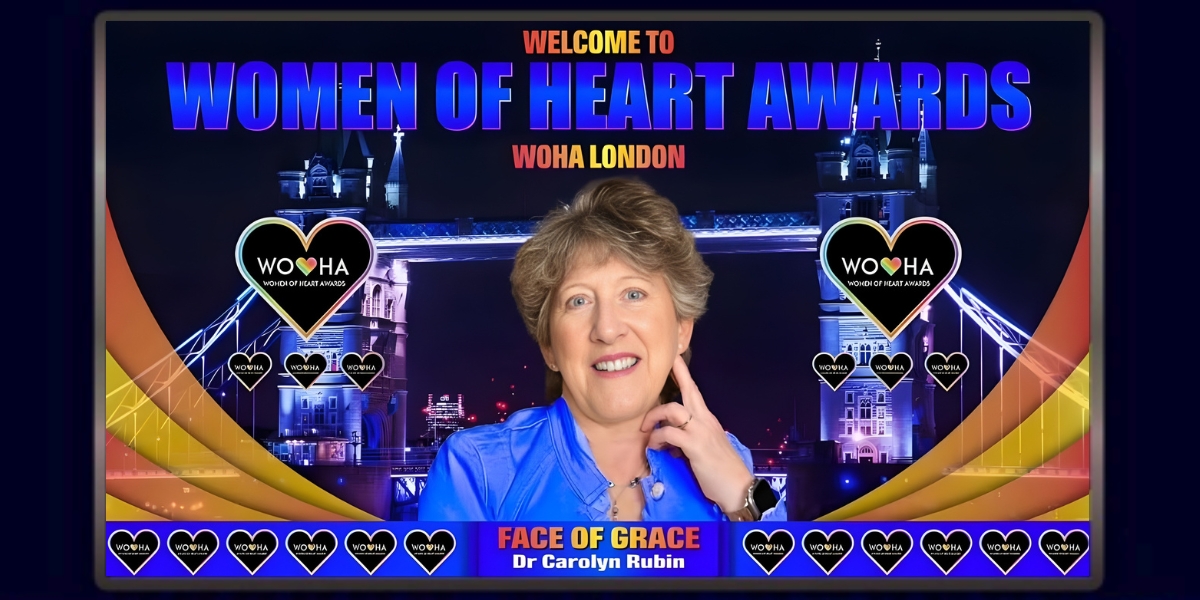
Dr. Carolyn M Rubin, CLC, has officially been announced as the first WOHA Face of Grace in London this year. The award honors women whose lives reflect kindness, strength, and consistent support for women-led initiatives. 

This recognition places Dr. Rubin among a rare circle of honourees chosen by the Women of Heart Awards (WOHA), London. The title celebrates one woman each year who uplifts others through purpose-driven leadership, visible generosity, and graceful service. 

“Thank you, Dr. Carolyn, for championing the contributions of other women and embodying the true essence of grace in your actions and demeanour. We honour you and appreciate you as a woman of substance who harnesses the transformative power of love, kindness, and humanity,” appreciates Dr. Desziree Richardson, founder of WOHA.

The Meaning Behind the WOHA Face of Grace Honour 

The WOHA Face of Grace award recognizes outstanding leadership while simultaneously changing what it should look like by bringing forth graceful women leaders. It celebrates inner values expressed through purposeful action. 

Dr. Carolyn M Rubin was selected for her long-standing role as a supporter, sponsor, and advocate for women’s empowerment across various sectors. The announcement took place at the Leonardo Royal Hotel London St Paul’s, during an evening arranged for women who support women in truth and with love. 

The honour recognizes grace as lived behavior. It is not limited to appearance. It also expresses appreciation for a commitment to kindness, peace, and compassion in leadership and ongoing financial and personal support for women-led causes. It plays a visible role in uplifting the community of women. 

The award was formally bestowed by the former Mayor of Harrow, Cllr Ramji Chauhan. It marked a historic moment for WOHA London, as Dr. Rubin became the first official Face of Grace for the city. 

Founder Dr. Desziree Richardson expressed the importance of the honour clearly. She shared a message that framed the entire evening: “My one wish for women everywhere is that they feel included, empowered, and happy. To live in a world where they feel loved, valued, and respected.” 

This is exactly what Dr. Rubin works towards. The evening of the award celebrated leadership based on humility and care, with Dr. Rubin as a symbol of that foundation. 

A Career Shaped by Service and Purpose 

Dr. Carolyn M Rubin’s narrative is spread across thirty years and more of service, leadership, and continuous learning. She began in healthcare, where she worked her way from technical roles into senior executive leadership. Today, she serves as Senior Vice President of Revenue Cycle Management Optimization at Beacon Oral Specialists in Dallas, Texas. 

She also has expertise across operations, training, IT, project management, and patient advocacy. She has led large cross-functional teams, overseen complex system transitions, and ensured continuity of care during major industry disruptions.

But corporate leadership is just one of her professional dominances. She has also focused on mentorship and growth. She is the founder of Carolyn M Rubin Consulting, where she works as a Certified Life Coach, DISC Consultant, leadership trainer, and mentor. Her business helps individuals and teams develop clarity, resilience, and ethical leadership habits. 

Dr. Carolyn M Rubin Named WOHA Face of Grace London: A Life of Compassion, Leadership, and Service

Photo Courtesy: Dr. Carolyn M. Rubin / WOHA Face of Grace London

She is also: 

  • Honorary Doctorate of Advanced Studies in Health Sciences from Azteca University. 
  • Healthcare Mini-MBA from the University of Arizona. 
  • Leadership certification from Duke University. 
  • Certified Life Coach and Six Phase Meditation Trainer. 

Dr. Rubin is also an Amazon best-selling international author and a regular contributor to leadership-focused publications. 

She is also the host of EmpowerFuse – Unleashing Inspiration Together, a talk show that focuses on conversations around leadership, life, health, and growth. Through this platform, she brings experts together to share tips and encouragement with a global audience. 

She has years of volunteer work experience, supporting the American Cancer Society and Soldiers’ Angels, where she assists veterans through care and connection.

She believes intensely in servant leadership because progress happens when leaders step forward with empathy and consistency. This is why the WOHA London team described her as “radiating elegance and charisma, symbolising generosity and authenticity, amplifying women’s societal influence.” 

In Summary

The WOHA Face of Grace London honour captures a life committed to lifting others through action, presence, and responsibility. Dr. Carolyn M Rubin’s recognition is a reminder that leadership based on compassion has lasting influence. 

Women of Heart Awards celebrates women who support women; Dr. Rubin’s name is a permanent part of that legacy. Her work in healthcare, coaching, and mentorship shapes lives globally.

How Ultherapy Prime and EmFace Are Shaping Non-Surgical Skin Tightening in Singapore

The way people approach facial aging has changed significantly. More patients now want treatments that help them look fresher and more lifted without obvious signs of work done. Instead of dramatic transformation, the focus has shifted toward subtle, natural-looking rejuvenation that fits more comfortably into modern lifestyles.

This is one reason non-surgical skin tightening has become such a strong category in aesthetic medicine. Treatments such as Ultherapy Prime and EmFace Singapore are increasingly part of the conversation for those exploring options to address early sagging, softer facial contours, and visible loss of firmness.

Although both treatments are often grouped under facial rejuvenation, they are not identical. They work differently, target different aspects of aging, and may suit different patient profiles. Understanding that distinction is important for anyone trying to make sense of today’s growing range of aesthetic options.

Why Skin Tightening Has Become More Relevant

Facial aging is rarely caused by a single factor. Over time, collagen production slows, skin becomes less elastic, and facial support can begin to soften. The result is often a gradual change rather than a dramatic one: the jawline looks less crisp, the lower face starts to feel heavier, and the face may appear more tired even when the person feels well.

Because these changes often progress, many people begin seeking treatment before they feel ready for anything invasive. That is where non-surgical skin tightening has found its place. It offers an option for those who want to intervene earlier and support the face in a more gradual, less disruptive way.

A Closer Look at Ultherapy Prime

Among the better-known names in this space is Ultherapy Prime Singapore, which is often discussed in relation to non-invasive lifting. Its appeal largely stems from its ability to target deeper structural layers supporting the face, making it a treatment commonly considered when skin laxity becomes more noticeable.

Patients who look into Ultherapy Prime are often concerned about issues such as jowling, softening along the jawline, or sagging around the lower face and neck. Rather than adding volume or changing facial proportions, the treatment is generally viewed as supporting lifting and firmness by working beneath the skin in a more structural way.

This is also why it tends to be discussed differently from surface-based rejuvenation treatments. For the right patient, the goal is not simply smoother skin, but better support and definition.

Where EmFace Enters the Conversation

How Ultherapy Prime and EmFace Are Shaping Non-Surgical Skin Tightening in Singapore

Photo: Unsplash.com

At the same time, EmFace has attracted growing interest because it approaches facial aging from a different angle. Instead of focusing only on skin tightening, EmFace is often described as a treatment that addresses both skin quality and facial muscle support.

That distinction matters. Not every patient experiencing facial aging has the same underlying issue. Some have more laxity, while others notice softer contours, reduced facial tone, or a more fatigued appearance overall. In those cases, a treatment that engages multiple aspects of aging can be particularly appealing.

Another reason EmFace has gained attention is that it fits neatly into the broader movement toward needle-free rejuvenation. For patients who want facial improvement without injectables or surgery, it represents a newer category of treatment that feels aligned with low-downtime, natural-looking care.

Why These Treatments Are Not Interchangeable

It is tempting to compare technologies as though one must be better than the other, but that is rarely how aesthetic medicine works in practice. Treatments like Ultherapy Prime and EmFace are often best understood not as direct substitutes, but as tools with different strengths.

One is more often associated with deeper support and lifting. The other is more often discussed in terms of skin quality and facial muscle engagement. That difference may sound subtle at first, but it can shape how well each treatment suits a particular face.

This is also why patient selection matters so much. Two people of the same age may present very differently. One may need support for laxity and sagging, while another may be more concerned with early contour changes or looking less tired. A good treatment plan depends on identifying what is actually driving the visible change.

The Growing Preference for Natural-Looking Rejuvenation

The popularity of treatments such as Ultherapy Prime Singapore and EmFace Singapore also reflects a broader cultural shift in aesthetics. Patients are becoming more selective, more informed, and often more conservative in what they want. They are less interested in looking transformed and more interested in looking well-rested, firmer, and slightly lifted in a way that still feels like themselves.

That preference has changed the language of aesthetic medicine. “Anti-aging” no longer means chasing dramatic correction at all costs. Increasingly, it means maintaining facial quality, preserving support, and choosing treatments that age well.

In that context, skin tightening technologies appeal not just because they are non-surgical but also because they often align with modern patients’ values: subtlety, convenience, and prevention.

Choosing a Clinic Is About More Than Choosing a Machine

This is often the point where prospective patients start searching for a reputable aesthetic clinic in Singapore. But that search can be misleading if it is understood too narrowly. The right clinic is not simply the one with the most devices. It is the one who can assess the face properly, explain options clearly, and recommend a plan based on anatomy and goals rather than popularity.

In aesthetic treatments, technology matters, but judgment matters just as much. A device can only do so much if it is not matched to the right indication. For treatments involving skin tightening and lifting, this becomes especially important because results are typically gradual and depend heavily on whether the treatment addresses the real cause of the concern.

A thoughtful consultation should help answer a few core questions. Is the issue mainly laxity? Is it related to facial support? Is there heaviness in the lower face? Are the changes still early, or more established? These distinctions influence whether a treatment is likely to feel satisfying or underwhelming.

A More Informed Way to Think About Treatment Choice

For patients trying to compare non-surgical options, it may be more useful to stop asking which treatment is “best” in absolute terms. A better question is which treatment makes sense for the way their face is aging.

That shift in perspective is important. It moves the conversation away from trends and toward suitability. It also reminds patients that in aesthetics, the most effective plan is often not the most aggressive, but the most appropriate.

As more people explore skin tightening in Singapore, such informed decision-making is likely to matter even more. The category is growing, and as more treatments enter the market, clarity becomes increasingly valuable.

Non-surgical facial rejuvenation continues to evolve, and treatments like Ultherapy Prime Singapore and EmFace Singapore reflect how much the field has expanded beyond traditional ideas of tightening alone. Both treatments speak to a growing demand for low-downtime, natural-looking options, but they do so in different ways.

For anyone considering these options, the key is not simply finding the latest device or the most talked-about treatment. It is understanding what your face actually needs and finding an aesthetic clinic in Singapore you can trust to make that distinction well.

In the end, good aesthetic treatment is rarely about doing more. It is about doing what fits.


Disclaimer: This article is for informational purposes only and does not constitute medical advice, diagnosis, or treatment. The information provided is not intended to replace a consultation with a qualified healthcare professional. Individual results from aesthetic treatments may vary. Always consult a licensed medical practitioner before undergoing any treatment to determine whether it is appropriate for your specific needs and conditions.

A Beginner’s Guide to Steampunk Style

By: Andrew Jackson

Steampunk fashion isn’t subtle. It’s dramatic, detailed, and deeply rooted in a mix of Victorian elegance and industrial imagination. Corsets, leather, brass accessories, pocket watches, goggles, it’s a style that feels closer to a cinematic universe than to everyday streetwear.

And that’s exactly the point.

Unlike minimalist or modern trends, steampunk isn’t designed to blend in. It’s a niche aesthetic, often associated with conventions, themed events, or creative communities. So no, most people aren’t going to wear a full steampunk outfit to work or while running errands.

But that doesn’t mean it has no place in mainstream fashion conversations. In fact, understanding steampunk can change the way you see style, creativity, and self-expression.

What Steampunk Fashion Actually Is

Steampunk fashion is inspired by a reimagined 19th-century world, where Victorian society meets steam-powered technology and retro-futuristic inventions.

Visually, it combines elegant silhouettes from the Victorian era, industrial materials like leather and metal, and mechanical details such as gears, buckles, and chains.

The result is a style that feels both historical and fictional. It’s not about realism. It’s about storytelling through clothing.

That’s why steampunk outfits often look elaborate. They’re meant to create a character, not just a look.

Why It’s Not an Everyday Style

One of the biggest misconceptions about steampunk is that it can be easily adapted to daily life. In reality, full steampunk outfits are too distinctive to pass as casual wear.

Wearing a corset, goggles, layered belts, and heavy boots together immediately draws attention. It’s closer to cosplay or theatrical fashion than to everyday outfits.

And that’s not a flaw. It’s part of the identity of the style.

Steampunk is about immersion. It’s about stepping into a different aesthetic world. Trying to fully “normalize” it removes what makes it special in the first place.

Where Steampunk Actually Lives

Instead of everyday life, steampunk thrives in specific contexts.

You’ll most often see it at conventions, festivals, themed photoshoots, or creative events. It’s also popular in alternative fashion communities where self-expression is pushed further than in mainstream trends.

Online, steampunk has a strong presence as well. Platforms like Pinterest or Instagram showcase highly curated looks that emphasize craftsmanship, layering, and detail.

In these spaces, the goal isn’t to fit in. It’s to stand out.

Why It Still Appeals to a Wider Audience

Even if most people won’t wear full steampunk outfits, the aesthetic still captures attention.

There’s something fascinating about the mix of history and imagination. It feels nostalgic and futuristic at the same time, which is a rare combination in fashion.

For a general audience, steampunk works more as inspiration than as a literal style to adopt. People are drawn to its textures, its richness, and its strong visual identity.

It’s the kind of fashion you admire, even if you don’t personally wear it.

The Influence of Steampunk on Modern Fashion

While full steampunk looks remain niche, elements of the style continue to influence broader fashion trends in subtle ways.

You can see it in the return of corset-inspired tops, the popularity of structured leather pieces, or the use of vintage-inspired accessories with metallic finishes. Even the growing interest in historical fashion silhouettes reflects a similar desire for depth and storytelling in clothing.

These influences are often stripped down and adapted, making them more accessible while still carrying a trace of the original aesthetic.

This is how niche styles like steampunk quietly shape mainstream fashion without ever fully entering it.

Why People Are Drawn to It

Steampunk isn’t just about clothing. It’s about identity and imagination.

When fashion can feel repetitive or trend-driven, steampunk offers something completely different. It encourages creativity, individuality, and a break from modern norms.

Wearing steampunk is less about following fashion rules and more about building a visual narrative. Every piece feels intentional, every detail contributes to a larger story.

For many people, that level of expression is what makes the style so appealing, even if they don’t wear it themselves.

Appreciating Steampunk Without Wearing It

You don’t have to dress in steampunk to appreciate it.

You can engage with the aesthetic through visual inspiration, photography, films, or even small stylistic influences. Observing how textures, layers, and details are used can change the way you approach fashion in general.

Steampunk reminds us that clothing can be more than functional or trendy. It can be expressive, immersive, and artistic.

And even if it stays outside your daily wardrobe, it still has something to offer.

Why Steampunk Still Matters

Steampunk fashion isn’t meant to be worn casually, and that’s exactly why it stands out.

It’s a niche, bold, and highly expressive style that thrives outside of everyday fashion. Instead of trying to make it fit into daily life, it makes more sense to understand it on its own terms.

For a mainstream audience, steampunk is less about adoption and more about appreciation. It’s a reminder that fashion can tell stories, create worlds, and go far beyond simple clothing choices.

And sometimes, the styles we don’t wear are the ones that inspire us the most.