María Esther Panesso Mercado Paints Strength, Purpose, and the Power of Women

Today’s global art scene is shifting toward work that carries meaning beyond aesthetics. Artists are using their platforms to explore identity, resilience, and social realities, creating pieces that speak to both personal and collective experiences. Themes of feminine strength, cultural heritage, and emotional depth have become especially powerful, offering new ways to understand women’s roles across different societies.

Some artists paint beauty. María Esther Panesso Mercado paints resilience. Before her work appeared in international galleries, she spent years inside Colombian courtrooms defending women in vulnerable situations. That dual identity, attorney and internationally recognized painter, is not a contradiction but the very foundation of her artistic voice. Her canvases become declarations written in oil, texture, and light, honoring the dignity and strength of women across cultures. This vision has taken her to some of the most historic spaces in the art world, including the legendary Salon d’Automne in Paris, the exhibition founded in 1903, where masters like Henri Matisse and Pablo Picasso once introduced their revolutionary works. For a Colombian artist to exhibit within those walls is more than a milestone; it is a powerful signal that the map of world-class art is expanding, and that Latin American voices are helping redefine its future.

This movement reflects a broader desire for authenticity. Audiences are no longer drawn only to technical skill, but to stories that feel real and grounded. Art becomes a bridge between lived experience and visual expression, where texture, light, and symbolism work together to communicate something deeper than words.

A Vision Rooted in Resilience

María Esther Panesso Mercado has built a life and career defined by depth, discipline, and purpose. A Colombian visual artist and practicing attorney, she works at the intersection of emotion and structure, creativity and justice. Through her paintings, Mercado explores the strength, duality, and spiritual dimension of women, presenting them not as passive subjects but as powerful, luminous forces shaped by resilience and inner light.

Her artistic language is instantly recognizable. Working primarily with oil and mixed media, Mercado creates a striking contrast between richly textured backgrounds and smooth, radiant female figures. Beyond their visual impact, Mercado’s works resonate because they embody a universal narrative. The women she paints are symbols of resilience, dignity, and transformation. Rooted in Latin American identity yet deeply universal in their message, her paintings speak to audiences across cultures and continents. In a contemporary art world increasingly searching for authenticity and meaning, Mercado’s work shows that art can illuminate the human spirit while celebrating the enduring strength of women.

This interplay is not merely aesthetic. It reflects the tension between adversity and strength, fragility and power. The textured surfaces suggest life’s challenges, while the luminous figures rise from them with clarity and grace. Gold tones and dramatic lighting frequently appear in her work, reinforcing themes of transcendence, dignity, and transformation.

Personal Story as Creative Foundation

For María Esther Panesso Mercado, art does not begin on the canvas; it begins in life itself. The loss of her father at an early age forced her to confront responsibility and resilience long before most people do. In the years that followed, she watched her mother rise as the pillar of the family, carrying the household forward with quiet strength and unwavering determination. That example became one of the deepest foundations of Mercado’s artistic philosophy. In tribute to that legacy, she signs her paintings with her maternal surname, MERCADO, an enduring homage to the woman who first taught her what resilience truly means.

The women who inhabit Mercado’s paintings carry that same spirit. They are not fragile muses but grounded, luminous forces, figures that embody dignity, power, and inner sovereignty. Colombia itself flows through her visual language: its movement, its culture, its symbolism. Ballet dancers, coastal women, and archetypal feminine figures appear throughout her work, merging grace with strength and tradition with transcendence. In Mercado’s world, the feminine presence is not merely portrayed; it rises as a symbol of freedom, identity, and cultural pride.

Where Law and Art Meet

Parallel to her artistic journey is a demanding professional career in law. Mercado holds degrees in Law and International Business Administration, along with an MBA, and actively works as an attorney defending women in vulnerable situations. This experience has profoundly shaped her perspective.

In her legal work, she witnesses both fragility and extraordinary strength firsthand. These realities translate directly into her art. The women she paints are not distant or idealized. They embody lived experience, carrying both vulnerability and power within them. For Mercado, law and art are not separate paths. Both seek truth, justice, and a deeper understanding of the human condition.

Challenges and Conviction

Balancing these two worlds has not been simple. The structure of law contrasts with the uncertainty of the art world. Building a presence as an artist while maintaining a legal career required discipline, consistency, and a strong sense of identity.

There were moments of doubt, especially in competitive international spaces where recognition is never guaranteed. One of the biggest challenges was refusing to create art purely for commercial purposes. Mercado chose authenticity over trends, even when it meant slower progress. She believes that meaningful art must come from emotional truth, not market pressure. That conviction became a defining part of her career.

International Recognition and Upcoming Showcase

María Esther Panesso Mercado Paints Strength, Purpose, and the Power of Women


Photo Courtesy: María Esther Panesso Mercado

Her persistence has led to significant achievements. Mercado has exhibited her work in cities such as Paris, New York, Miami, Mexico, and Peru. A major milestone was her participation in the Salon d’Automne in Paris, a historic exhibition known for its role in shaping modern art. She has also exhibited at Rockefeller Center in New York, strengthening her international presence.

Mercado is set to showcase her celebrated portfolio at Art Expo New York from April 9–12, 2026. This upcoming exhibition marks another important step in her global trajectory, bringing her work to one of the most dynamic contemporary art platforms in the United States.

Her work has been recognized by institutions in Colombia, and she was named one of the 50 Most Creative Colombians in the World by Forbes Colombia. These milestones reflect not only her artistic talent but also her commitment to representing Colombia with dignity on a global stage.

Art as an Act of Purpose

For Mercado, art is more than expression. It is an act of conviction. Through her work, she aims to elevate the feminine narrative and inspire future generations to believe in their voice. Her career is a reflection of what is possible when passion meets discipline and authenticity.

Each painting tells a story of strength. Each figure reflects a deeper truth. And through her journey, María Esther Panesso Mercado shows that art grounded in purpose can cross borders, challenge perceptions, and leave a lasting impact.

To learn more about Mercado’s work, follow her on Instagram at @mariamercadoarte and her website at www.mariamercado.art.


The New Case for Staying: Why Love = Commitment Arrives at Exactly the Right Time

There is a particular fatigue in the air around modern love. Not heartbreak exactly, though there is plenty of that. Not cynicism either, at least not in its purest form. It is something more ambient and more contemporary: the exhaustion of endless access, endless signaling, endless ambiguity.

People can reach each other at all hours and still fail to arrive. They can text with fluency and remain emotionally illiterate. They can speak of chemistry with near-religious conviction and yet seem terrified by steadiness.

Into that atmosphere comes Dior Amore’s Love = Commitment, a book that refuses the drama of romantic confusion and instead argues, with unusual clarity, for something almost unfashionable: intention.

The provocation at the center of the book is disarmingly simple. Love, Amore insists, is not merely a feeling to be experienced; it is a decision to be practiced. The book returns to this idea again and again, treating commitment not as a grim burden or an antiquated ideal, but as the active proof of love itself. It is an argument that runs counter to a culture trained to confuse immediacy with depth and intensity with durability.

What makes “Love = Commitment” feel timely is not just its message but the world it speaks back to. This is a book written for readers who have grown suspicious of the spectacle of romance. It recognizes the seductions of casualness, the emotional costs of vagueness, and the psychic toll of trying to build a life on intermittent attention. The book explicitly positions intentional dating as a countercultural act in an era of convenience, disposability, and mixed signals. That framing gives the book its charge. It is not offering a mood. It is offering a correction.

Amore writes from a vantage point that is both professional and personal. In the book’s front matter and author section, she identifies herself as a relationship strategist, professional matchmaker, wedding officiant, and founder of Dior Amore Love, someone whose work centers on helping individuals and couples build “intentional, emotionally grounded love” before vows are ever exchanged. That breadth matters.

The book does not read like theory from a distance. It carries the cadence of someone who has spent time near real people making real mistakes, asking real questions, and trying, imperfectly, to love better.

And the word “better” is essential here. The book is not especially interested in romance as ornament. It is interested in romance as infrastructure.

Again and again, Amore shifts the conversation away from attraction alone and toward what sustains a life: self-love, healing, boundaries, communication, accountability, emotional safety, consistency, shared values, resilience. The table of contents itself reads almost like a manifesto against relational passivity, moving from “Love Is Not a Feeling,  It’s a Decision” to “Self-Love Is the First Commitment,” then on to healing, intentional dating, choosing the right partner, trust, communication, daily practice, legacy, sacred partnership, and love that survives adversity. The architecture is revealing. This is not a book that treats romance as an isolated emotional event. It treats love as a system.

That systems-based approach may be exactly why the book will resonate with readers weary of advice that either over-spiritualizes love or trivializes it. Amore’s worldview is more disciplined than that. She seems less interested in asking whether someone feels butterflies than whether they can tell the truth, stay present during conflict, respect a boundary, regulate themselves under pressure, and build something that does not collapse the first time life becomes inconvenient.

In one of the book’s recurring ideas, lasting love is shown not as a theatrical feeling but as visible consistency, emotional presence, and daily repair.

That is where the book’s appeal deepens. Love = Commitment is not merely speaking to singles hoping to find a partner. It is speaking to people who sense that romance has been oversold as instinct and undersold as practice. It is speaking to couples who want more than attraction and to marriages that aim not merely to endure, but to thrive. It is speaking, too, to readers who have come to understand that a relationship is never only about two people; it radiates outward into family, home, emotional inheritance, and community.

The book explicitly imagines love as a legacy, something passed forward, something capable of changing not only hearts but households and entire communities when rooted in respect, self-awareness, and purpose.

This is the boldest thing about Amore’s project: she wants to restore moral seriousness to the subject of love without draining it of warmth. In lesser hands, that could become preachy.

Here, it feels urgent. The book’s language suggests that commitment is not a reduction of romance but its maturation. Not a lowering of excitement, but a raising of standards. Not a denial of feeling, but a refusal to let feeling do work it cannot sustain.

In that sense, Love = Commitment arrives as both guide and rebuke. It asks readers to reconsider what they have been calling love, what they have been rewarding, and what they have been tolerating. It offers a vision of partnership built less on fantasy than on fitness: the emotional fitness to communicate, the spiritual fitness to align, the ethical fitness to keep showing up.

That vision may not flatter every reader, and it is not meant to. But it may steady many of them. Because Amore understands something the culture often forgets: people do not only want passion. They want peace. They want clarity. They want to know that love can be more than a brief atmosphere of mutual desire. They want to know if it can survive ordinary life. They want to know if it can be built.

And this book’s answer, delivered with conviction, is yes, available now.

Modern Approaches to Family Law: Adapting to Contemporary Challenges

Key Takeaways

  • Emphasis on shared parenting and joint custody arrangements.
  • Integration of technology in co-parenting and legal processes.
  • Increased use of alternative dispute resolution methods.
  • Legal recognition and protection for diverse family structures.

The landscape of Family Law has been evolving rapidly to meet the needs of contemporary families, which are more diverse and dynamic than ever. This shift reflects broader societal changes and challenges, including an increased focus on children’s well-being, evolving technology, and the recognition of diverse family structures. As society progresses, it is essential that legal frameworks also adapt to offer support and protection for all families, regardless of their specific composition or circumstances.

Modern family law practices prioritize cooperation, fairness, and accessibility, rather than simply adhering to outdated norms and adversarial court battles. The adoption of shared parenting, the integration of technology, and the recognition of alternate dispute resolution methods are hallmarks of a legal system striving to be responsive and effective. These advances not only support the parties involved but also emphasize the importance of stability and positive outcomes for children.

As legal systems update to reflect new realities, families are increasingly empowered to create arrangements that work for their individual needs. The results are often less contentious, more cost-effective, and ultimately more supportive of positive family dynamics. Courts and practitioners now recognize that traditional litigation may not always yield the best results, leading to a greater emphasis on collaboration and customized solutions.

The evolution of family law ensures that the legal system can serve all types of families with greater sensitivity and effectiveness, improving experiences and outcomes for everyone involved.

Shared Parenting and Joint Custody

One of the most significant shifts in modern family law is the movement toward shared parenting and joint custody. This approach centers on the understanding that children benefit greatly from maintaining strong, active relationships with both parents. Courts now favor arrangements that allow both parents to share responsibilities and be equally involved in their children’s lives.

The shift to shared parenting has also led to updated laws and guidelines that place the child’s best interests at the forefront of custody decisions. Rather than defaulting to sole custody for one parent, courts encourage collaborative parenting plans. This practice helps to promote emotional stability and well-being for children, who are less likely to be affected by conflict when both parents remain involved.

Research published by Psychology Today has shown that children in joint custody arrangements often experience less stress and better long-term outcomes compared to those in sole custody situations. These benefits further reinforce the importance of flexible, child-centered legal approaches in family law.

Technology Integration in Family Law

Technology has revolutionized the way family law is practiced. Digital tools now assist parents in communicating and organizing co-parenting responsibilities, making it easier to coordinate schedules, manage child support payments, and resolve conflicts quickly. Apps dedicated to co-parenting offer a centralized platform for sharing information, keeping track of parenting time, and facilitating respectful communication.

The COVID-19 pandemic accelerated the use of virtual court proceedings and electronic document submissions, making legal processes more accessible to families everywhere. Virtual hearings allow for greater flexibility and can minimize transportation and time barriers for parties involved. This enhanced accessibility makes the legal system less daunting and more approachable for families who might be navigating emotionally taxing situations.

These advancements in legal technology have opened up new possibilities for efficiency and transparency in family law, improving the overall experience for families and legal professionals alike.

Alternative Dispute Resolution Methods

With the rise in complex family dynamics, courts and lawmakers have recognized the limitations of traditional litigation for resolving family disputes. As a result, alternative dispute resolution (ADR) methods such as mediation, arbitration, and collaborative law are increasingly being employed.

Mediation involves a neutral third party guiding parents or spouses toward mutually agreeable solutions, particularly in emotionally charged issues like child custody or visitation. These processes tend to promote open communication, reduce animosity, and provide families with more control over outcomes. Collaborative law employs a similar philosophy, encouraging parties and their attorneys to work together for solutions, rather than preparing for an adversarial trial.

These modern approaches help families avoid the negative fallout that can come from litigation, such as financial strain and heightened conflict. More states and legal systems are endorsing ADR as a valuable tool in fostering fair and peaceful resolutions that benefit all family members.

Legal Recognition of Diverse Family Structures

The definition of family has expanded significantly in recent decades. Modern family law now recognizes and protects a wider range of family structures, including same-sex couples, unmarried partners, blended families, and families formed through adoption or assisted reproduction.

The legal recognition of diverse families means more inclusive definitions of parenthood, guardianship, and marriage. Increasingly, laws are being updated to ensure that families are not excluded from protections or benefits simply because they do not fit traditional molds. This progress ensures the legal system is equipped to handle the unique situations faced by families today.

These developments align with the broader trend toward social equality and the protection of individual rights. Ensuring legal recognition for all family types safeguards access to necessary services, parental rights, and social acceptance, reinforcing the principle that every family deserves dignity and support.

In Summary

The evolution of family law reflects a commitment to fairness, collaboration, and adaptability. By prioritizing shared parenting, embracing technology, utilizing alternative dispute resolution, and recognizing diverse family forms, the legal system is better equipped to meet the needs of modern families. As these reforms continue, families can find more empathetic support and effective solutions tailored to their unique circumstances, ensuring the well-being of all members for years to come.

Disclaimer: The views and information presented in this article are intended for general informational purposes only and do not constitute legal advice. The evolving nature of family law varies by jurisdiction, and the content herein may not reflect current laws or regulations in all areas. Readers should consult with a qualified legal professional for advice tailored to their specific circumstances.

Karina Colon Webber’s New Memoir Arrives with The Quiet Force of a Life

By: Jason Gerber

By the time most people reach adulthood, they have learned at least one form of silence so well that it can pass as virtue. Silence as politeness. Silence as strength. Silence as maturity. Silence is what you do when you are trying not to make the situation worse, even when it has already made you smaller.

A culture that claims to adore “authenticity” is, in practice, rarely generous with it. We praise vulnerability until it becomes inconvenient. We celebrate survival as long as it is tidy, inspirational, and brief. We make art out of other people’s pain, then ask them to compress it into a lesson with a bow.

Silent Love, Unsilenced Life: A Journey From Hidden Heartbreak to Owning My Joy, the new book by Karina Colon Webber, challenges that arrangement. It presents itself, instead, as a document of lived reckoning and hard-won clarity. The title alone is an argument. “Silent love” implies affection performed through endurance, devotion measured by what you tolerate, tenderness that asks for your quiet in exchange for your belonging. “Unsilenced life” suggests a different covenant: the one where you refuse to keep paying for love with your own erasure.

A Memoir About What Silence Costs

Memoir is having a moment, and not always for the best reasons. In the age of constant disclosure, the genre can become a marketplace: the trauma essay, the viral confession, the conversion narrative engineered to scan cleanly on a screen. But there is another tradition, older and more demanding, in which memoir is not performance. It is an excavation. It is a writer returning to the scenes that shaped her, not to sensationalize them, but to name them. Naming, in this tradition, is not catharsis. It is power.

A Title That Reads Like a Manifesto

It is difficult to overstate how much work a title does now. A reader scrolling through an online bookstore is not browsing in the old sense. She is triaging. She is asking, in an instant: Will this book see me? Will it use me? Will it heal me, or will it sell me back my pain with prettier adjectives?

Silent Love, Unsilenced Life answers quickly, and with teeth. It does not romanticize silence. It does not offer it as an act of elegance. It positions silence as a condition that can be inherited, imposed, performed, and finally interrupted. That interruption, to borrow the book’s language, is not merely about speaking. It is about living differently.

The phrase “owning my joy” is especially pointed. It suggests that joy is not accidental. It is not dependent on someone else’s behavior. It is not postponed until life becomes kinder. It is owned, which implies boundaries. It implies agency. It implies, in the most practical sense, that a person can stop negotiating with the parts of herself that want to be free.

What Readers Are Hungry For Now

There is a reason books like this are finding their audience. We are living through an era of exhausted intimacy. People are burned out on relationships that require constant interpretation. Burned out on emotional labor that is framed as romance. Burned out on the cultural script that calls chaos passion and calls peace boring.

A serious memoir about reclaiming joy is, implicitly, a rebuttal to that script.

It tells the truth many readers already suspect: that stability can be thrilling when you have lived without it. That calm can be erotic when you have grown used to bracing. That love, in its most adult form, is not just chemistry. It is care, shown repeatedly, without theatrics.

If Webber’s book meets professional readers with real force, it will be because it refuses to confuse intensity with intimacy.

If you are a reader who has lived through heartbreak, or secrecy, or the subtle erosion of self that happens when you keep making yourself smaller, Webber’s book is positioned as a companion with sharp edges and a steady voice. It does not promise that healing is pretty. It suggests that healing is honest. It suggests, too, that joy is not naïve. Joy is disciplined.

That is a powerful message to put into the world, and an even more powerful one to live.

Where to Start

Readers drawn to memoirs that center on survival without sensationalism, faith without performance, and love without self-erasure will find themselves at home here. Silent Love, Unsilenced Life is the kind of book that does not ask for your pity. It asks for your attention. It asks you to examine what you have normalized, and to consider what happens when a life stops being managed for other people’s comfort.

You do not need spoilers to understand the invitation. The invitation is the title: Stop calling silence love. Start living unsilenced.

Silent Love, Unsilenced Life: A Journey from Hidden Heartbreak to Owning My Joy by Karina Colon Webber is available wherever books are sold.

Beyond “Good Job”: Kelly D. Culver on How to Praise Your Child for True Self-Esteem

By: Jason Gerber

Most parents want to encourage their children. We often reach for a simple phrase like “good job” to show our support. While this comes from a loving place, these two words are very general. They do not tell a child what they did well. They do not connect the praise to a specific effort or quality. Lasting self-esteem is not built on broad approval. It is built on the child’s understanding of their own strengths and efforts. To build a strong inner foundation, we must learn to praise in a way that is meaningful, specific, and truthful.

Specific praise helps a child form a clear picture of their abilities. Instead of saying “good job,” you might say, “I saw how carefully you stacked those blocks.” This statement does several important things. It shows the child you are paying close attention. It names the specific action they took: “stacking carefully.” It separates the praise from the person. You are not just saying they are good. You are saying their action had value. This teaches the child that their efforts and choices lead to positive outcomes.

Another powerful method is to praise the process, not just the result. Children often feel pressure to achieve a perfect outcome. When we only praise the finished product, we can accidentally create a fear of failure. Try praising the strategy, persistence, or improvement you see. You could say, “You worked on that math problem for a long time and never gave up. That is called perseverance.” Or, “Your first draft had three sentences. Now you have written a whole paragraph. That is amazing growth.” This type of praise makes the child feel strong and capable, even when a task is difficult.

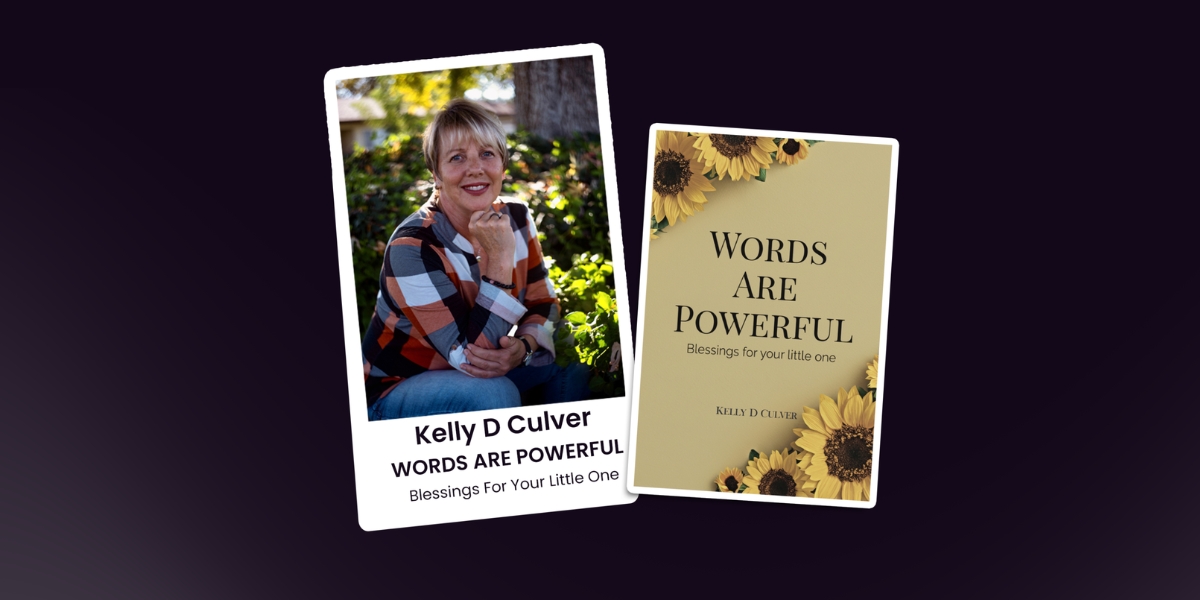
Affirmations are one of the most direct tools for building a child’s sense of self. This is the core idea behind the new book Words Are Powerful: Blessings For Your Little One by Kelly Culver. Affirmations go beyond praising a single action. They describe the child’s inherent being. They use phrases like “You are a creative thinker” or “You have a kind heart.” When a child hears these words repeatedly, they begin to believe them as fundamental truths. This builds a resilient self-esteem that is not dependent on daily performance.

Author and educator Kelly Culver designed her book for this exact purpose. Words Are Powerful provides parents with the language of specific, loving affirmation. It moves from the generic to the deeply personal. Instead of a vague “good job,” the book offers clear statements such as “You are strong,” “You are clever,” and “You are a good friend.” Kelly Culver spent over twenty-five years teaching young children. She saw how this kind of language helped students understand their own worth in a lasting way.

You can combine specific praise with affirming language throughout your day. Notice when your child shows a positive character trait. Then, connect it to their identity. For example, if they share a toy, you could say, “That was such a generous action. You are a thoughtful person.” If they try something new, say, “You are so courageous for trying that new food.” This method links their behavior to their core self. It helps them see that their actions reflect who they are. This builds a moral and emotional identity they can be proud of.

It is also important to be sincere. Children have a keen sense for false praise. Look for genuine moments of effort, kindness, or improvement. Your authentic recognition will mean much more than constant, empty phrases. The goal is not to praise every single thing. The goal is to offer meaningful recognition when you see true growth or good character. This makes your words powerful and trustworthy. Your child will learn to trust their own sense of accomplishment because you have mirrored it back to them honestly.

Shifting your language may feel awkward at first. That is completely normal. Start by replacing one general phrase per day with a specific observation. Instead of “Good drawing,” try “I love how you used so many colors in your picture.” This small change starts a powerful habit. Over time, you will find it becomes natural. You will be building a detailed map of your child’s strengths for them to navigate by. This is the greatest gift you can give. You are giving them the words to understand and believe in themselves.

For parents seeking a beautiful and ready-made guide to this transformative language, the book Words Are Powerful: Blessings For Your Little One by Kelly D. Culver is an essential resource. To begin using these powerful strategies in your home, find this important book available for purchase now on Amazon and at all major book retailers.

Queens Entrepreneur Joshua Dat Built a Thriving Deli Empire From a Single Viral Sandwich

Joshua Dat put everything he had into a family deli in Hollis, Queens — and a happy accident in the kitchen changed the trajectory of his life.

The story of Datz Deli is one of immigrant grit, family loyalty, and the kind of creative instinct that cannot be taught in a classroom. What started as a struggling neighborhood eatery has grown into one of New York City’s most talked-about food destinations, driven by a menu item that Dat invented on the spot one night when he ran out of cheese slices.

From Life Savings to Rodent Infestation

Joshua Dat invested his life savings to open Datz Deli in Queens with his father. The dream had been years in the making. Dat is proud of his Guyanese heritage and saw an opportunity to elevate knowledge and appreciation of his culture through his father’s cooking. His dad had been a Caribbean chef in restaurants across Queens, experiencing what Dat described as a career full of “broken dreams.”

At 17, Dat made his father a promise: they would open a store together one day. By the time he turned 29, he had saved enough to make good on that promise. The two opened Datz Deli at 190-01 Hollis Avenue in Queens, named in honor of the family.

The early days were rough. The business struggled at first. Dat discovered the place was infested with rodents when he came in one morning and found half of his food supply eaten. Revenue was barely enough to stay open. The business was at a point where it was only bringing in $200 a day. Dat tried attracting customers with new creations — chopped cheeses on butter bread, roti burritos — but nothing clicked.

The Accident That Changed Everything

The turning point came during a late closing shift. One night when they were closing down, Dat was making a beef patty with cheese but all the cheese had gone to the mac and cheese. He saw the mac and cheese and threw it into the sandwich. The moment he went to cut the sandwich open, he shut it closed because it looked so good. He called out for his sister to record him showing off the sandwich so they could post it on Instagram — and he was right that it had the potential to go viral. The video had customers coming in just to try the sandwich.

Queens Entrepreneur Joshua Dat Built a Thriving Deli Empire From a Single Viral Sandwich

Photo Credit: Unsplash.com

Then a customer pushed it even further. “One day, a girl came in and asked for oxtail gravy on the mac and cheese patty, and that’s what made me say, ‘Now we’re going to put oxtail, jerk, and everything on a sandwich,'” Joshua said.

The result became the Dat Mac Patty — a Jamaican beef patty cut open and stacked with macaroni and cheese and braised oxtail, then sealed back up and cradled inside a sweet loaf of Jamaican coco bread. Variants with jerk chicken, goat curry, and salt fish followed. One particular video led to 30 million views, and demand eventually led to customers lining up outside the deli before it was even open.

A Family Operation at Full Stride

Datz Deli was never just a business — it was a family production from day one. Dat’s mother rings customers up. His aunt makes and drops off fresh beef patties and coco bread daily. His sister makes unique desserts. His father, Bobbi, is the secret weapon and inspiration behind the deli.

Today, the family runs two Datz Deli locations — the original in Queens and another in Manhattan. Each brings in between $1,000 to $4,000 a day, and Dat is looking to open a third location.

The growth has been a source of deep personal pride for the entire Dat family. Growing up, Joshua watched his mother struggle to keep the lights on and put food on the table. He made a promise early in life that no one in his family would have to live that way again. The success of Datz Deli has made good on that promise.

What Datz Deli Represents for Queens

Datz Deli has received a mention in The New York Times and drawn food enthusiasts from across the country and internationally. On most days, the line at Datz Deli goes around the block.

For Dat, the business is about more than revenue. He wanted people to know more about Guyanese culture, the food, and where it comes from. In a city known for its culinary diversity, Datz Deli has managed to introduce an entire cuisine to a new generation of New Yorkers — one viral sandwich at a time.

“If anyone cares about their family, I feel like this is the dream,” Dat said. “I have my whole family here with me. We’re not the richest people in the world, but we’re all taken care of, we’re good, there’s nothing we want, and we’re all together.”

Dr. Everest John’s Rockets, Prayer, and the Future of Meaning: The Fictional Odyssey of Ibn Battuta from Tangier to Mars

There is a familiar story that gets told every time a rocket launches. The camera angles do their work, the countdown builds suspense, and the narration slips into a near-religious tone. Humanity is “reaching for the stars.” We are “becoming a multi-planet species.” We are “taking the next step.”

It is the mythology of progress, and it is persuasive.

From Tangier to Mars: The Fictional Odyssey of Ibn Battuta does something rare in contemporary speculative fiction. It enters that mythology, enjoys its drama, and then asks the question most people avoid because it complicates the mood.

What happens to meaning when technology outpaces the human soul?

Dr. Everest John’s novel is built on an irresistible premise: Ibn Battuta awakens in the year 2050, meets Elon Musk, and travels to Mars. That is the headline hook. But the deeper hook, the one that keeps readers turning pages, is the book’s willingness to treat Mars not as an engineering trophy but as a moral environment.

Mars, here, is not just where humans go. It is what humans become under pressure.

A Medieval Traveler as a Witness to Our Future

There is a reason Ibn Battuta is the right choice for this story. He is not merely a famous traveler. He is a figure shaped by a worldview in which the spiritual dimension of life is not optional, not ornamental, not relegated to private preference. For someone like him, journeying is not only movement across geography. It is exposure to other communities’ moral codes, sacred rituals, and the invisible agreements that hold societies together.

Now place that sensibility into a future that tends to treat spirituality as an awkward topic, something to keep out of boardrooms and mission briefings. The tension writes itself, and John exploits it with purpose.

The novel becomes a long confrontation between two ways of understanding “the next horizon.” One way is technical: build the ship, build the habitat, build the supply chain. The other way is existential: decide what kind of people will live in that habitat, what rules will govern them, what stories will hold them together when Earth is a distant dot.

This is where the book becomes more than a clever mash-up. It becomes a narrative argument.

Colonization as a Spiritual Problem

Space colonization is often framed as an escape. Earth is too crowded, too chaotic, too exhausted. Mars becomes the blank slate. A clean start.

John refuses that fantasy. His story suggests that Mars will not erase human conflict. It will intensify it. Because on Mars, everything becomes sharper. Every disagreement is amplified by the stakes. Every social fracture becomes dangerous. Even ordinary questions, the ones we handle casually on Earth, turn urgent under isolation.

What happens when a group shares a mission but not a shared moral language? What happens when crisis forces decisions about leadership, discipline, intimacy, and survival? What happens when people arrive with different beliefs and no common ritual for grief, fear, or hope?

The book circles these questions in ways that make the reader uneasy, and that is the point. It turns the future into a mirror, asking whether our confidence is earned or merely rehearsed.

The result is a kind of suspense that does not depend only on plot twists. The suspense comes from the reader’s awareness that the hardest part of colonization is not oxygen. It is human nature.

The Bold Turn Toward Prophecy

Then the novel makes a move that sets it apart from the bulk of modern sci-fi. It brings prophecy into the conversation.

Not prophecy as cheap prediction, and not prophecy as genre decoration, but prophecy as a literary device that forces readers to confront the limits of purely technical thinking. The narrative introduces the idea of “The Book of Mars Prophecies,” framed as a symbolic scripture of cosmic insight. It suggests that the future may require a new kind of witness, not a prophet performing miracles, but a witness who translates awe into language.

This is a risky move, especially for a modern audience trained to be suspicious of religious tone in fiction. John handles it by leaning into wonder, not a sermon. He treats cosmic vision as an extension of travel, as if journeying far enough inevitably brings you to the edge where facts meet mystery.

That is a powerful concept, and it lingers. Because it reframes the Mars dream, it suggests that leaving Earth is not only a triumph of engineering. It is also a confrontation with the question humans keep trying to outrun: what are we for?

The Novel’s Emotional Edge

Underneath the big ideas, the book keeps returning to something personal. Dislocation. The shock of waking in a world that is not yours. The loneliness of being out of time. The longing for home, even when home is impossible to return to.

These are not futuristic problems. They are human problems. The book uses its grand premise to sharpen them. It gives the reader a way to feel the future, not just imagine it.

And that, ultimately, is what makes it compelling. It does not treat the future as a spectacle. It treats it as a place where the human heart has to survive.

From Tangier to Mars: The Fictional Odyssey of Ibn Battuta is a novel about what gets packed for the journey. Not supplies or schematics, but the values, stories, and moral frameworks that determine whether a community survives its distance from home. That is a question worth sitting with long after the final page.

The Ultimate Guide to Tech Devices That Help Kids Explore Their World by myFirst

By: Georgette Virgo


Let’s face it, kids don’t stay little for long, especially in today’s digital world, where they have access to almost everything. As curious as they are, children naturally test boundaries to understand the world around them, both offline and online. And as much as parents may want to, they cannot shield them from every new device or digital experience.

Instead of restricting access entirely, many families are choosing a more intentional approach by introducing tech devices that help kids explore their world safely while building healthy digital habits. When used thoughtfully, kids’ tech devices such as GPS smartwatches, kids’ cameras, creative 3D tools, and volume-limited headphones can support independence, creativity, and real-world discovery.

That belief is at the heart of myFirst. Rather than limiting technology, the brand designs child-focused devices that encourage creativity, independence, and meaningful exploration within a guided and secure ecosystem. Through myFirst Circle, families stay connected, share moments, and navigate digital spaces together instead of from opposite ends of a screen.

Here are five of the most exciting myFirst gadgets that empower kids to unlock their own adventures and explore their world, whether indoors or outdoors.

1. myFirst Fone R2: GPS Smartwatch for Kids Exploring Independence

If there’s one experience all kids crave, it’s the freedom to explore, whether that means heading down the street to a friend’s house or leading the way to their favorite park. The myFirst Fone R2 is the ideal starter device for little adventurers. More than just a kids’ smart watch, it serves as a safe “explore pass,” enabling kids to communicate, share their discoveries, and try new things, always with a gentle digital safety net in place.

The myFirst Fone R2 features GPS tracking, real-time location sharing, and easy-touch SOS capabilities. With the myFirst Circle app, parents and their children can stay connected even when kids are roaming. They can see their child’s live location, receive updates, and manage contacts and settings directly from their smartwatches. With video and voice calls, children can also directly check in with their parents, send instant updates, and even share live moments as they explore their world. 

Children get to chart their own course, while geofencing and “Focus Mode” help maintain boundaries and routines. It’s tech that builds independence step by step, turning everyday outings into mini-adventures.

2. myFirst Camera 50: Kids Camera Turning Curiosity into Storytelling

Hand a child a kids’ camera, and suddenly, a walk in the park or a rainy afternoon indoors becomes an expedition to capture bugs, clouds, or family pets, from their unique perspective. The myFirst Camera 50 is designed for these creative journeys. Its intuitive design and tough build mean it stands up to real-world exploration, whether on playgrounds, field trips, or backyard safaris.

However, the myFirst Camera 50 does more than just take snapshots. Its automated AI video creation system empowers kids to create with confidence in a guided environment. 

MyFirst Camera 50 includes an automated AI video creation system that helps children turn their favorite photos and clips into a complete video story by simply recording a voiceover. It organizes everything into a polished vlog on-device, teaching natural storytelling structure while building speaking confidence and creative independence, all within a safe ecosystem designed for families to explore together.

Additionally, the built-in selfie light and easy-to-use controls empower even the youngest explorers to capture the world as they see it, building storytelling skills while nurturing observation and patience. With private digital diaries and safe sharing through myFirst Circle, what starts as a simple photo can become a family-treasured memory, or the first step to a lifelong creative passion.

3. myFirst Insta Lux: Instant Print Kids Camera for Adventures on the Go

There is something special about holding a photo just moments after it is taken, especially when it captures a muddy adventure, a new friend, or a small everyday victory. The myFirst Camera Insta Lux brings that feeling to kids by combining a digital camera with full-color instant printing, so children can snap, customize, and print their favorite moments wherever they are.

The myFirst Insta Lux features a 5-megapixel camera with Smart Exposure, helping kids get clear, vibrant photos in different lighting conditions without fussing with settings. This kids’ camera produces crisp, high-quality color prints, making it durable enough for scrapbooks, bedroom walls, lockers, or travel notebooks.

Fun frames, filters, and stickers on the camera turn every print into a mini project, giving kids an easy way to add personality to their pictures. Whether they are documenting a family trip, a weekend photo walk, or everyday life at home, the myFirst Camera Insta Lux offers a hands-on, kid-friendly way to turn quick snapshots into tangible keepsakes and simple stories they can hold onto.

With built-in Wi‑Fi, it can connect to the smartphone via the myFirst Circle app, letting families print photos directly from a parent’s camera roll alongside the shots kids take themselves. This makes photo sharing more fun and personalized for both kids and their families. 

Plus, with customizable covers and a pocket-sized design, the myFirst Insta Lux can go wherever curiosity leads, ensuring they have a record of what made them happy, sad, or excited each day. 

4. myFirst 3dPen Artist: Bringing Their Imaginations to Life with a 3D Pen

Exploring isn’t just about observing. It’s about making, building, and bringing ideas to life. The myFirst 3D Pen Artist is the ideal tool for children who want to bring their imagination to a three-dimensional reality. With a low-heat, safety-first design, this 3D pen for kids lets them create everything from miniature bridges to fantasy creatures, all with a shake of their creativity wand.

myFirst 3dPen Artist encourages exploration through hands-on STEM learning. As children experiment, troubleshoot, and discover new ways to construct their visions, they’re developing engineering skills and spatial reasoning, without even realizing it. It makes rainy days, long car rides, or quiet afternoons not just another day spent on videos or games, but a day of exploring their creative minds and turning their ideas into 3D.  

5. myFirst CareBuds Max: Kid-Safe Headphones for Everyday Exploration

For many kids, discovery starts with sound: music, audiobooks, and the voices of family and friends. The myFirst CareBuds Max are on-ear headphones specifically for children on the go, from listening to their favorite song to learning a new language during a walk, or calling a parent with questions about what they’ve just found. 

The myFirst CareBuds Max’s hardware volume ranges from 85dB to 94dB, ensuring listening never becomes unsafe, and the movement-aware transparency mode keeps kids alert to their surroundings as they explore. It is supported by ultra-long battery life (up to 52 hours) and environmental noise cancellation, ensuring constant monitoring and safety outside. 

With wireless audio sharing, kids can connect to and listen to a single device simultaneously, making playtime with friends more fun. The myFirst CareBuds Max can also pair with myFirst smartwatches, allowing children to enjoy calls, music, and audio features while staying connected within the myFirst ecosystem.

Give the Gift of Everyday Exploration

Finding the right gift for young kids can be surprisingly challenging, especially when it feels like they already have a room full of toys. Thoughtful choices go beyond novelty, giving children something they can use and enjoy long after the excitement of unboxing fades. That is where myFirst comes in. 

With myFirst’s gadgets, kids can grow their independence while parents stay connected and reassured through the companion app. The kids’ smart watches are not just fun to use; they are durable and built to keep up with everyday play. The kids’ camera sparks creativity and turns ordinary moments into tangible memories. The kids’ headphones let them listen to music, watch shows, or study in peace, all while protecting their ears with smart listening features.

The most meaningful gifts are the ones that get kids moving, inspire curiosity, and turn regular days into small adventures. MyFirst’s kid-focused products are designed to do exactly that, keeping the spirit of exploration alive well beyond any single occasion. They offer kids tools that transform “just another day” into another chance to explore, create, and turn everyday moments into stories worth remembering.

How to Earn the Kind of Trust That Actually Grows Your Business

By Amanda Selzlein

Most businesses spend enormous energy trying to attract new customers, and almost none figure out why those customers never come back. The answer, more often than not, comes down to one thing: trust. Not the vague, feel-good kind of trust you throw into a mission statement, but the real, earned, demonstrated kind that makes someone choose you over a competitor without even comparing prices.

The numbers are hard to ignore. Research consistently shows that the vast majority of consumers read online reviews before making a purchase decision, and a significant portion of them weigh those reviews just as heavily as a personal recommendation from someone they know. Buyers are doing their homework now more than ever, and what they find, or fail to find, determines whether you get their business.

What makes this interesting is that the foundation of trust has not really evolved, even as communication and consumer behavior have changed dramatically. The same principles that made certain businesses legendary decades ago are quietly powering the most respected brands today. They just show up in different formats.

Here are ten straightforward ways to build audience trust that holds up over time.

Be Reliably Present

Consistency is underrated. When your audience knows what to expect from you, and you deliver on that expectation repeatedly, familiarity builds. And familiarity, over time, turns into trust. This applies to content schedules, communication style, and the overall quality of what you put out. Disappearing for months and then flooding your channels creates noise, not credibility. Show up regularly, maintain your standards, and let people rely on you.

Lead With Transparency

People are remarkably good at detecting when something is off. Polished, perfect-looking brands often trigger skepticism rather than confidence, because nobody believes everything is always going well. Sharing the honest picture, including the setbacks, the mistakes, and the lessons, tends to build more goodwill than a highlight reel ever could. Some of the most trusted companies in tech have made radical transparency a core part of their culture, publishing financials and even internal struggles publicly, and their audiences have rewarded them with loyalty as a result.

Teach More Than You Sell

One of the fastest ways to build credibility with your audience is to give away genuinely useful knowledge without immediately asking for something in return. When your content solves real problems, answers real questions, and makes someone’s work or life easier, you become a resource rather than just another brand competing for attention. That shift in perception is valuable, and it compounds over time.

Only Stand Behind What You Believe In

Recommendations carry weight. If you endorse a product, a service, or an approach, your audience attaches their trust in you to that endorsement. One misaligned partnership or careless affiliate promotion can quietly undermine years of goodwill. The standard is simple: if you would not personally use it, do not recommend it.

Actually Listen to the People You Serve

Your audience is constantly telling you what they need, what frustrates them, and what they wish existed. The businesses that pay attention to those signals, through comments, messages, surveys, and community conversations, and then act on them, earn a depth of loyalty that no ad campaign can manufacture. When someone sees their feedback reflected in how you operate, they feel genuinely valued.

Handle Criticism in the Open

Negative feedback handled poorly is far more damaging than the criticism itself. On the flip side, a complaint addressed publicly, with care and accountability, often becomes one of the most powerful trust signals you can create. Potential customers pay close attention to how businesses respond when things go wrong. That is when character becomes visible.

Let the Results Speak

Vague language about “helping businesses grow” or “driving results” is background noise at this point. Specific outcomes, real numbers, documented case studies, and concrete examples cut through in a way that general claims never will. When you can show what proven business trust-building strategies have actually produced for real people, your credibility jumps considerably.

Know the Limits of Your Expertise

Pretending to have answers you do not have is a fast way to lose credibility with anyone paying attention. Saying “I do not know, but I will find out” is not a sign of weakness; it is a sign of intellectual honesty, and people respect it. The most effective communicators and leaders are often the ones most comfortable acknowledging the edges of their knowledge.

Treat Privacy as a Core Value, Not a Checkbox

How you handle personal data, email lists, and customer information says a great deal about how you view the people who trust you. Brands that treat privacy as a genuine priority, rather than a compliance hurdle, have found it to be a meaningful differentiator. Choosing long-term trust over short-term monetization is a trade-off that tends to pay off significantly over time.

Put Human Faces to Your Brand

No one builds a relationship with a logo. Introducing the people behind your business, sharing the behind-the-scenes moments, and letting your audience see the genuine texture of how you operate creates a kind of connection that polished content rarely does. Vulnerability, authenticity, and personality make brands memorable in a way that perfectly crafted messaging simply cannot replicate.

Firms like We Feature You PR have built their work around helping entrepreneurs and business leaders establish this kind of credible, lasting presence through strategic media exposure.

One final thought worth keeping in mind: there is no shortcut to trust. Every item on this list works because it reflects something true and consistent about how you operate, not because it is a clever tactic. The businesses that will stand out in the years ahead will not necessarily be the ones with the largest budgets or the most sophisticated technology. They will be the ones that people genuinely believe in.

That belief is built one honest interaction at a time. Start there, do it consistently, and the rest tends to follow.


Disclaimer: This article is for informational purposes only and reflects general perspectives on trust-building in business. It does not constitute professional, financial, or legal advice. Any references to companies or services are for illustrative purposes only and do not imply endorsement or guarantee of results.

From Brokenness to Ministry and the Story Behind Out of Control

Meet the man behind the message!

Every book has a story behind it. But few books emerge from the kind of pain and redemption that shaped Nathan Wilson’s life and ministry. The author of Out of Control did not write from an ivory tower of academic detachment. He wrote from the trenches of personal suffering, from the valley of despair, and from the mountaintop of God’s healing grace.

Nathan Wilson is a teacher, writer, and counselor dedicated to helping believers overcome life’s toughest setbacks and live righteously. But the road to that calling was anything but smooth. It was paved with heartaches, depression, anxiety, substance abuse, and grief. It was a road that nearly destroyed him. And it was a road that ultimately led him straight into the arms of a loving God.

Early Life and Influences

Nathan Wilson grew up under the watchful eye of his father, Kenneth Wilson. In the dedication of Out of Control, Nathan reveals the profound impact his father had on his life. He writes, “I would like to dedicate this book to my dad, Kenneth Wilson, who took the time to teach me how to live out the Christian life. His wisdom and guidance continue to shape the person I strive to be each day.”

Kenneth Wilson was not just a father in name. He was a father in practice. He took time with his son. He taught him what it meant to follow Christ. He modeled integrity and hard work. Two quotes from Kenneth appear in the dedication, revealing the kind of wisdom he passed down. One says, “If it is worth doing, do it right the first time.” The other says, “Believing in something is important, but it is what you do with what you believe that changes people.”

These words would stay with Nathan through every trial he would later face. They became anchors in the storms of his life.

The Dark Years

Despite his godly upbringing, Nathan Wilson’s life took a dark turn. For many years, he suffered deeply. He experienced heartaches that left him wounded. He battled depression that stole his joy. He fought anxiety that robbed his peace. He struggled with substance abuse that threatened to destroy him. He carried grief that weighed heavier than any physical load.

These were not minor struggles. They were life-threatening battles. They were the kind of fights that make a person want to give up completely. And Nathan admits that without the many mentors God placed along his journey, he would have given up long ago.

In the book’s acknowledgement section, he thanks his wife, Brenda Wilson, for her continual encouragement to finish this book. Her support, along with the support of countless others, kept him going when everything inside him wanted to stop.

The Turning Point

Something changed during those years of suffering. In the depths of his pain, Nathan Wilson encountered God in a new way. Not through religious rituals. Not through mere head knowledge. But through the holy scriptures. God showed him grace when he deserved judgment. God showed him love when he felt unlovable. God showed him healing when he thought he would never be whole.

This encounter with divine mercy transformed everything. Nathan realized that his suffering was not meaningless. It was preparing him for something greater. It was equipping him to help others who walked the same dark roads he had walked.

The apostle Paul wrote that God comforts us in all our troubles so that we can comfort those in any trouble with the comfort we ourselves received from God. This became the pattern of Nathan Wilson’s life. He received comfort. Now he would give it away.

Education and Calling

With a renewed sense of purpose, Nathan Wilson pursued theological education. He wanted to understand the scriptures deeply. He wanted to be equipped to help others properly. He earned his Master of Divinity degree, studying the Bible, theology, and pastoral care at an advanced level.

But he did not stop there. Nathan continues to pursue greater knowledge and effectiveness in ministry. He is currently working toward a Doctorate in Ministry, seeking to deepen his understanding and sharpen his skills for the sake of those he serves.

Education alone does not make a minister. But education, combined with personal suffering and divine healing, creates a powerful combination. Nathan Wilson does not just know about God from books. He knows God from the fire. He has been tested and proven. He has walked through the valley and come out the other side.

Ministry and Counseling

Since his healing, Nathan Wilson has devoted himself to one primary mission: discipling and counseling people to the saving grace of Jesus Christ. He has walked alongside countless individuals who struggle with the same issues that once threatened to destroy him. He has offered them hope. He has pointed them to scripture. He has shown them that no one is beyond God’s reach.

His counseling approach flows from personal experience and biblical truth. He understands that people do not need mere behavior modification. They need a heart transformation. They need to encounter the same grace that found him in his darkest moments. They need to know that their stories are not over.

This ministry of discipleship and counseling became the foundation for his writing. Nathan realized that he could reach even more people through books than through personal counseling alone. He could put into words the truths that had saved his own life. He could offer readers the same hope that had pulled him from the pit.

The Writing of Out of Control

Out of Control did not emerge from a comfortable season of life. It emerged from the trenches. Nathan wrote this book because he saw something happening in the 21st century that alarmed him. He saw society spiraling downward. He saw fear taking hold of hearts and minds. He saw people drowning in sin without understanding why.

He also saw that the church was offering incomplete solutions. Preachers focused on behavior modification while ignoring the root problem. They talked about the last six commandments while neglecting the first four. They tried to fix actions without addressing hearts.

Nathan wrote the book to correct this imbalance. He took readers back to the Garden of Eden. He showed them where sin really started. He revealed Satan’s ancient tactics. He traced the pattern of sin through generations. And then he pointed to the only real remedy: the fear of God and the grace found in Jesus Christ.

The book is scholarly enough for serious students of scripture. It is practical enough for people struggling with real-life issues. It is hopeful enough for those who feel they have sinned too much to ever be forgiven. It is exactly the book Nathan Wilson needed during his own dark years. And now it is the book he offers to a hurting world.

Personal Life

Nathan Wilson is married to Brenda Wilson, the woman he credits with continually encouraging him to finish this book. Her support has been instrumental in his ministry and writing. Their partnership reflects the kind of faithful commitment that Nathan writes about in his work.

He also remains deeply connected to the mentors who guided him along the way. He acknowledges that without many of them, he would have given up long ago. This humility and gratitude mark his character. He does not pretend to be a self-made man. He knows that every step of his journey was made possible by others who poured into his life.

A Word from Nathan Wilson

If you were to ask Nathan Wilson why he wrote Out of Control, he would likely tell you something like this. He would say that he wrote it for people who feel stuck. He wrote it for people who keep falling into the same sins no matter how hard they try. He wrote it for people who are tired of fig leaves that never last. He wrote it for people who need to know that God is still walking through the garden, still calling their names, still asking, “Where are you?”

He would tell you that his own story proves no one is beyond hope. If God could reach him in the depths of depression, addiction, and despair, God can reach anyone. If God could heal his wounds and give him a new purpose, God can do the same for you.

The Legacy Continues

Nathan Wilson continues to teach, write, counsel, and disciple. He continues to pursue his Doctorate in Ministry. He continues to point people to the saving grace of Jesus Christ. His story is not finished. His work is not done.

But one thing is already clear. Nathan Wilson is not just an author who wrote a book. He is a witness who survived the fire and came out with something to say. He is a living example of the very truths he proclaims. He is proof that the God of the Garden is still in the business of transforming lives.

Nathan Wilson’s journey from depression and addiction to healing and ministry gives him a unique voice of authority and compassion. His book Out of Control flows from personal experience and deep biblical study. Discover the story behind the book and let his testimony encourage your own walk with God.