NYC Opens Nation’s First Deliverista Hub for the City’s 80,000 Delivery Workers

New York City has opened the country’s first worker-designed rest and services hub built specifically for app-based delivery workers, marking a concrete step toward infrastructure that matches the scale of a labor force that keeps the city fed.

The City Hall Park Deliverista Hub, announced by Mayor Zohran Mamdani and U.S. Senator Chuck Schumer alongside the Worker’s Justice Project, now stands near City Hall in Lower Manhattan — occupying the space where a city-owned newsstand sat unused for years. The hub will provide integrated services for the city’s 80,000 app-based delivery workers, with separate modules for rest, bike repair, and education and support services. It is the first facility of its kind in the United States.

A Workforce That Never Had a Home Base

New York City’s delivery workers are everywhere. They navigate traffic on e-bikes and motorbikes in every borough, in every weather condition, during every hour of the day. They are the backbone of the city’s food delivery economy — the human infrastructure behind every DoorDash order, every Uber Eats pickup, every Seamless request placed from a Manhattan apartment or a Brooklyn brownstone.

Yet for all their visibility, delivery workers have operated for years without any dedicated infrastructure. They are classified as independent contractors rather than employees under the gig economy model, which means the app companies they work for bear no obligation to provide them with rest spaces, charging access, or workplace support of any kind. The city’s delivery workers, who spent all day out on the street delivering food primarily for restaurant apps, were often denied bathroom access from restaurants and had no dedicated place to charge their devices, keep warm, or escape the rain.

The Deliverista Hub changes that baseline. It is a physical acknowledgment — backed by public funding and city infrastructure — that these workers are part of New York’s economy and deserve a place in its public spaces.

What the Hub Provides

The City Hall Park hub will provide integrated services, with separate modules for rest, bike repair, and education and support services. Workers can access guidance on street safety, safe e-bike operation, wage theft, and app deactivations.

NYC Opens Nation's First Deliverista Hub for the City's 80,000 Delivery Workers (3)

Photo Credit: Unsplash.com

The hub will have two full-time workers five days a week to supervise the battery charging cabinets and provide education for delivery workers. Two to three delivery workers at a time will be able to use each of the three modules — rest and services, charging, and bike repair. Most delivery workers own more than one battery, so while one is charging at one of the 48 ports at the hub, they can still be working. There will be an app that notifies them when their battery is fully charged.

External battery charging cabinets at the rear of the hub will provide 24/7 app-based access to safe e-bike charging for delivery workers and the public. The hub is staffed by the Worker’s Justice Project five days per week and remains open to the general public beyond those hours.

The facility’s design reflects years of input from delivery workers themselves. The hub is divided into three sections designated for e-bike repair, e-bike charging, and information. Construction materials include perforated aluminum, tempered glass, aluminum panels, fiberglass grating, and LED lighting strips. An HVAC system provides heating and cooling for riders to get out of the heat or cold while taking a break from work.

Years in the Making

The Deliverista Hub did not arrive overnight. The project was first announced in 2023, when Senator Schumer took a bike ride alongside members of Los Deliveristas Unidos and later announced that the federal government would contribute $1 million to fund the creation of two hubs for delivery workers at old city-owned newsstands.

Senator Schumer said: “For years, I’ve worked to bring critical infrastructure to the tens of thousands of app-based delivery workers who serve our city day and night. I’m proud to have secured $1 million in federal funding for this first-of-its-kind deliverista hub, which will improve access to e-bike charging, shelter, bike repair and much more.”

The path from announcement to opening involved Landmarks Preservation Commission review, community board input, FDNY approval for charging cabinet safety standards, and multiple rounds of site design revisions. A second hub is planned for 72nd Street on the Upper West Side, extending the network to a second high-traffic delivery corridor.

The Worker-Led Model

The Worker’s Justice Project and its organizing wing, Los Deliveristas Unidos, were central to both the concept and the execution of the hub. The organization will staff the facility, run its educational programming, and serve as the daily point of contact for workers seeking assistance with everything from bike maintenance to understanding their rights as gig workers.

NYC Opens Nation's First Deliverista Hub for the City's 80,000 Delivery Workers

Photo Credit: Unsplash.com

Ligia Guallpa, Executive Director of Worker’s Justice Project and Co-Founder of Los Deliveristas Unidos, said: “This hub is the result of workers organizing, leading and building what companies would not. As the first deliverista hub of its kind in the nation, it marks a new beginning — giving immigrant workers the power to transform their industry and positioning them as leaders at the forefront of reshaping the gig economy, creating safer streets and advancing New York City’s transition to a zero-emission delivery system.”

The hub’s organizers see it as an extension of the work Los Deliveristas Unidos already does at its Sunset Park and South Williamsburg locations — educating workers about street safety, safe battery charging, and connecting people with bike and battery exchange programs.

E-Bike Safety and the City’s Zero-Emission Future

The hub also carries weight as an environmental infrastructure story. E-bike battery fires have been a documented safety concern in New York City, particularly in the dense residential buildings where delivery workers often charge batteries overnight without proper equipment. The hub’s managed charging stations — reviewed and approved by the FDNY — provide a safer alternative that reduces fire risk for both workers and the buildings around them.

About 80 percent of the city’s delivery workers use e-bikes and motorbikes, and they are outside all day long. Part of the hub’s function is to serve as a refuge from weather — a basic need that has gone unmet for years despite the workforce growing rapidly in the post-pandemic era.

The Mamdani administration has framed the hub as part of a broader infrastructure commitment to gig workers and immigrant labor — a constituency that falls outside the traditional employer-employee relationship that governs most workplace protections.

What Comes Next

The City Hall Park hub is a pilot, and its performance will shape how quickly the city scales the model. With 80,000 workers spread across five boroughs and dozens of high-density delivery corridors, a single facility in Lower Manhattan represents a starting point, not a solution.

Mayor Mamdani said at the opening: “Delivery workers keep this city running — through the cold, the rain and every storm that comes our way.” The hub translates that acknowledgment into brick, steel, and a charging port — a shift from recognition to infrastructure that New York’s delivery workforce has been waiting for since well before the pandemic made their role impossible to ignore.


Estranged Siblings Forced Back Together in a Twisty Tale of Family Secrets, Corruption, & Greed

Some families drift apart so slowly that no one can point to the exact day it happened. Calls become shorter. Visits become rare. Eventually, people begin to live as if the separation were natural, almost necessary. It is easier to move forward than to reopen rooms filled with complicated memories.

Then life interrupts.

A single moment can pull years of distance tight again. News arrives, sudden and impossible to ignore, and the past rushes back with startling clarity. The old house. The familiar arguments. The quiet loyalties that survived even when pride would not allow anyone to admit it. In that instant, the separation that once felt permanent reveals how fragile it really was.

When estranged relatives are forced into the same space, something remarkable happens. They not only meet each other as adults. They meet every version of who they used to be. The protective gestures, the rivalries, the disappointments, the laughter. All of it returns, sometimes welcome and sometimes deeply uncomfortable.

Grief has a way of sharpening this experience. It makes people honest in ways they did not plan to be. It asks questions that were postponed for years. Why did we stop trying? What could we have said? Did they know we still cared? Even silence begins to feel louder when there is no longer time to correct it.

And yet there is also a connection. A powerful recognition that no matter how far life has carried each person, they remain witnesses to the same origin story. They understand the private language of that upbringing. They remember details no outsider could ever fully grasp. In the middle of confusion, that shared knowledge becomes an anchor.

It is this emotional crossroads that continues to captivate readers. We recognize the uncomfortable mixture of love and resentment. We understand the instinct to protect ourselves while still longing to repair what has been damaged. The pull toward family can be as strong as the urge to escape it.

In the novel Sins of the Father, Peter Andrews leans into this territory with sensitivity and depth after a legendary patriarch is shockingly murdered in his Manhattan brownstone. The story invites us into the lives of people who are not ready to reunite but must. Circumstances demand their presence, cooperation, and eventually their honesty. What unfolds is not a neat path toward resolution but a layered exploration of how history lives inside us, shaping every reaction and every fear.

What makes such storytelling linger is its refusal to offer simple comfort. Real families are complicated. Affection can exist beside anger. Duty can feel heavy even when it is freely chosen. By allowing these contradictions to breathe, Peter Andrews creates characters who feel startlingly familiar, as if we might have known them once or perhaps still do.

There is also the haunting awareness that answers rarely arrive without effort. When people begin to look closely at the lives of those they thought they understood, they often discover hidden corners. Motives blur. Memories shift. Certainty becomes elusive. The search for truth becomes as much about self-discovery as it is about the past.

This quiet unraveling sits at the heart of this work, where the need to understand collides with the fear of what understanding might reveal. The story moves with emotional patience, allowing readers to sit with discomfort rather than escape it.

Perhaps that is why narratives like this stay with us. They remind us that reconciliation is rarely dramatic. More often, it is a series of small choices. A decision to stay in the room. A willingness to listen. A moment of courage when walking away would be easier.

Family, after all, is not only where we begin. It is where the unanswered questions wait for us, hoping that one day we will return brave enough to face them.

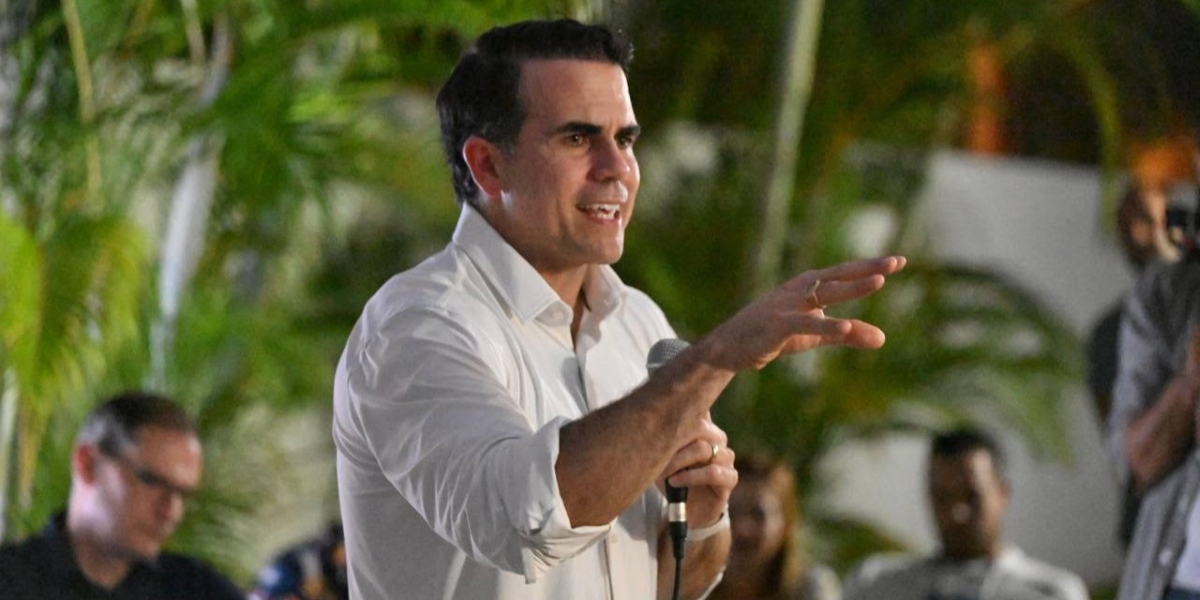
An Interview With Ricardo Rosselló on Science, Politics, and Public Service

By: Freelance Journalist, Toronto ON

Ricardo Rosselló did not begin his professional life in politics. He was trained as a scientist and spent years in academic research before ever running for office. He earned a bachelor’s degree in chemical engineering and economics from the Massachusetts Institute of Technology, completed a Ph.D. in biomedical engineering at the University of Michigan, and later carried out postdoctoral studies in neuroscience at Duke University.

After returning to Puerto Rico, he taught at Metropolitan University (now part of Ana G. Méndez University) and at the University of Puerto Rico. He also published scientific research during that period.

In 2012, he entered politics by founding Boricua ¡Ahora Es!, an organization advocating for Puerto Rico’s statehood. He also published Un mejor Puerto Rico es posible, a book outlining proposals for economic development, governance, and political status. In 2016, at age 37, he was elected governor of Puerto Rico.

In this interview, he reflects on his transition from science to politics and the experiences that shaped his time as governor.

What Led Ricardo Rosselló From Science to Public Service?

Q: You started your career in science. What led you into public service?

Ricardo Rosselló: My decision to switch my focus to politics wasn’t a sudden turn. At first, I wanted to stay away from politics. Science was my calling. But I remember the day it all changed. I was about 24 years old. I attended a town hall meeting in a rural part of the island. I was only a participant, not very interested, to be honest. I was doing it for a friend. However, at one point, a member from the audience turned to me, opened his button-down shirt, and said, “I want you to thank your father. Thanks to him, I am alive,” as he showed me a scar over his heart. He was a beneficiary of my father’s healthcare reform. That sat with me for a while.

About a decade later, as I was teaching at George Mason University and conducting research, I closely monitored Puerto Rico’s economic decline and the uncertainty surrounding its political status. At some point, I felt that simply watching from the outside was not enough, and I wanted to get involved at a higher level. I wanted to participate directly in developing solutions. Founding Boricua ¡Ahora Es! was a major part of that decision. It gave me a way to advocate for a clearer, more stable future for the island and ultimately led me to a career in politics alongside my science career.

How Did Rosselló Approach Puerto Rico’s Financial Crisis?

Q: When you took office in 2017, Puerto Rico was already in a financial crisis. What were your priorities at that time?

Ricardo Rosselló: One of the things that got me to prominence in the local political discourse was the fact that, in 2011, I anticipated the collapse. At that point, people saw it as an exaggerated claim. Later, when asked how I was able to predict, I responded, “It was simple back-of-the-envelope math.” Once I decided to run, the fiscal situation required immediate attention. Puerto Rico was operating under the oversight of a financial board and in bankruptcy. My administration focused on restructuring debt, stabilizing government operations, downsizing, and implementing reforms to promote economic growth.

We worked to modernize agencies, improve digital access to government services, and pursue measures to achieve long-term sustainability. Those efforts were not always easy. It gained me plenty of enemies. But the objective was straightforward: to create a foundation for recovery. My view was that difficult structural issues cannot be postponed indefinitely. I openly campaigned on those (against the desires of some of my advisers). If we wanted Puerto Rico to compete and prosper, we needed to address the root cause problems.

What Was It Like Facing Two Hurricanes in Two Weeks?

Q: During your first year, Hurricane Irma and Hurricane Maria struck the island. What stands out to you about that experience?

Ricardo Rosselló: We had not one, but two hurricanes hit in the span of two weeks. Hurricane Irma was devastating, but we recovered quickly, even with the support of my political opponents. We even rescued over 5,000 people through Operation Safe Haven.

Hurricane Maria was another level. It was the most devastating disaster in the modern history of the United States. Entire communities lost power and communications for extended periods, and some for over a year. After the hurricane passed, the immediate focus was on restoring essential services and ensuring clear communication with federal and local partners.

The experience really emphasized the importance of proper infrastructure, preparation, and working together when things go wrong. Natural disasters test institutions in real time. Recovery takes persistence and organization, and it also requires a lot of work that remains long after the headlines fade.

Why Does Rosselló Continue to Advocate for Puerto Rico Statehood?

Q: You have consistently supported statehood for Puerto Rico. Why?

Ricardo Rosselló: This was my main motivational driver in politics. It was about addressing the ironic reality that the largest and most powerful democracy still holds the oldest and most populous colonial territory. Regarding the storm, we made sure that every time there was a camera in front of us, we would state, “as U.S. citizens.” Interestingly, before Maria, only about 43 percent of U.S. citizens in the mainland knew of our citizenship. After? About 93 percent. Significant change.

But we are a different kind of citizen. Why? The island lacks voting representation in Congress, and its residents cannot vote for president. In my book, The Reformer’s Dilemma, I talk about the geopolitical black hole this represents. This framework has real-world consequences for access to federal programs and influence over national policy decisions. I believe that resolving the current territorial status through a democratic process is essential for long-term stability. I continue to support statehood for Puerto Rico because I believe the island deserves equal rights and full representation under the Constitution.

What Is Ricardo Rosselló Focused on Now?

Q: What are you focused on now?

Ricardo Rosselló: Although I am still involved in politics, predominantly by way of a civic organization I formed (delegates.us) since I was elected Congressional Delegate in 2021, I have shifted much of my focus back to executive work and scientific research. Since being in office, I have founded, run, and organized regenerative medicine clinics with research centers. Additionally, I am proud to serve as a scientific advisor to several hyperconvergent enterprises, including the American Academy of Peptide Medicine, ThinkHat.ai, Aurevia Medical, and others. I have also reentered the education sphere as an adjunct professor at George Mason University. Lastly, I have a foundation that seeks to mitigate political polarization by constructing a path towards what I call “a radical middle.” In many ways, this phase of my career has brought together my work in science, education, and public service.

Prospectus Development Advances 50-Unit Multifamily Project in Astoria as Demand for Amenitized Rentals Grows

A new multifamily development in Astoria is moving forward as developers continue to bet on the neighborhood’s long-term appeal among renters seeking proximity to Manhattan, paired with a more residential feel.

Prospectus Development is behind the 14-story project at 27-28 21st Street, a 47,310-square-foot building that will deliver 50 residential units alongside a wide range of lifestyle-driven amenities. The development reflects a broader shift in outer-borough rental housing, where smaller-scale boutique buildings increasingly compete on design, services, and tenant experience.

The unit mix includes 10 studios, 27 one-bedroom apartments and 13 two-bedroom units, a composition that aligns with Astoria’s diverse renter base, from young professionals to small families. The emphasis on one-bedroom units suggests a continued focus on affordability relative to Manhattan, while still accommodating tenants looking for more space.

Amenities play a central role in the project’s positioning. Plans include a fitness center equipped with free weights and cardio machines, a dedicated yoga room, and a pet spa. These features have become increasingly standard in newer developments but remain differentiators in Astoria’s largely older housing stock. The building will also include a golf simulator, an uncommon offering in the submarket, along with a staffed lobby, indoor lounge and library-style workspace, and an indoor-outdoor event area.

At the top of the building, a roof terrace amenity space is expected to provide additional communal space, capitalizing on skyline views and reinforcing the project’s focus on livability and community.

Astoria has remained one of Queens’ most resilient rental markets, benefiting from strong transit access via the N and W subway lines and a steady influx of residents priced out of Manhattan and parts of Brooklyn.

“Regulatory barriers on 99+ unit developments are squeezing the city’s housing supply and pushing residents outward,” said Mike Ma, CEO of Prospectus Development. “Astoria is a sweet spot for small-to-mid-scale housing developments, allowing the neighborhood to absorb housing demand through its unique mix of connectivity and cultural vibrancy. It’s a very desirable residential neighborhood well-positioned for long-term growth.”

The project underscores a broader trend in New York City’s multifamily pipeline, where developers are increasingly emphasizing amenity-rich environments and flexible communal spaces in response to post-pandemic shifts in how tenants use their homes.

Construction timelines have not yet been disclosed, but the development adds to a growing wave of investment in Astoria as developers continue to identify opportunities outside Manhattan’s core while still targeting urban, transit-oriented renters.

As competition for tenants intensifies across the city, projects like 27-28 21st Street signal that differentiation (through design, amenities, and tenant experience) will remain central to winning in the next cycle of New York’s rental market.

Press-On Nails Get a Luxe Makeover with Swarovski Crystals and High Fashion Flair

In a fashion landscape where individuality is everything, even the smallest details are getting a high-fashion upgrade. Press-on nails, once considered a quick, convenient beauty fix, are being reimagined as luxury accessories, and at the forefront of this shift is Le Sarah.

Founded by Sarah Lee, the brand is transforming press-ons into statement-making pieces that rival fine jewelry. By incorporating Swarovski crystals, natural stones, and high-grade zirconia, Le Sarah is elevating nail design into wearable art, crafted for those who see beauty as an extension of personal style rather than a finishing touch.

“I felt the nail industry has long been limited to simple colors and conventional designs,” says Lee. “There was a gap for a more expressive audience, people who value individuality, craftsmanship, and a slower, more intentional approach to beauty.”

That philosophy is embedded in every set. Unlike mass-produced alternatives, Le Sarah nails are handcrafted by trained artists, with each set taking between three to six hours to complete. The process involves salon-grade gels, some custom-formulated for durability and flexibility, alongside intricate crystal placement secured through layered gel application and UV curing. Every detail is carefully inspected, ensuring each design meets the brand’s high-quality standards.

The result is a product that blurs the line between beauty and fashion. Rather than complementing an outfit, these nails are designed to lead it.

Le Sarah’s growing appeal among creatives, performers, and fashion insiders reflects a broader cultural shift. Consumers are increasingly seeking ways to express identity through every element of their appearance, and nails, once overlooked, are becoming central to that narrative.

“We believe your fingertips are one of the most expressive parts of your body,” Lee explains. “Every gesture becomes part of your visual identity. Why should only your jewelry shine?”

This mindset is resonating. With a repeat purchase rate approaching 40%, customers are returning not just for the aesthetic but for the experience of customization and self-expression. Some treat the nails as daily accessories, switching sets to match outfits or moods, while others reserve them for standout moments, fashion shows, weddings, performances, or even cosplay.

Ultimately, Le Sarah is challenging long-held perceptions of press-on nails as temporary or secondary. Instead, the brand positions them as a canvas for creativity, one that combines luxury, craftsmanship, and bold design.

As beauty continues to intersect with fashion in new and unexpected ways, Le Sarah is proving that style doesn’t stop at what you wear. Sometimes, it’s right at your fingertips.


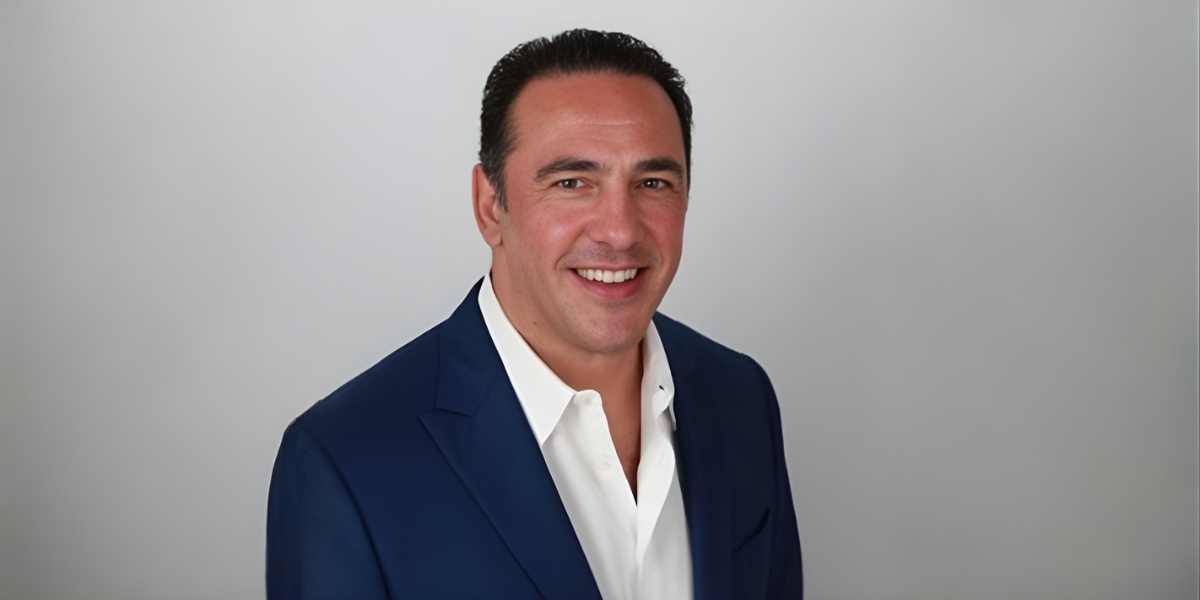
Javier Loya and the Future of Energy Efficiency Through GETCHOICE!

By: Z-Tech 

In many companies, energy, telecom, and utility costs are handled the same way every month. Bills come in, someone reviews them, and they get paid. As long as everything is running well, these expenses usually don’t get much attention.

For businesses with multiple locations, these costs are often spread across different providers, contracts, and billing systems. In some cases, they may also be handled by different teams.

That can make it more difficult to see the full picture or notice changes in spending. The information is there, but it is not always organized in a way that makes it useful.

At GETCHOICE!, Javier Loya is focused on solving this problem.

As chairman, he helps guide a platform designed to bring that fragmented information into one place. By using data, analytics, and operational insight, GETCHOICE! gives businesses a better idea of how their energy, telecom, and utility costs are set up across locations and vendors.

With that level of visibility, businesses can begin to move from reactive expense management to proactive decision-making. Patterns become easier to identify, inefficiencies are no longer hidden in different systems, and decisions that once relied on incomplete information can now be made with context.

The platform is designed to work alongside existing systems, helping make information more transparent and easier to use so that businesses have greater control over how resources are used and how costs are managed.

Building in an Industry That Wasn’t Built to Change

Before founding GETCHOICE!, Loya was focused on a different kind of inefficiency. In 2007, he co-founded OTC Global Holdings after recognizing a gap in energy and commodity markets.

At the time, he saw that while energy markets were essential to the global economy, the infrastructure supporting commodity trading was often inefficient and lacked transparency. That created an opportunity to rethink how those systems could be improved.

At the same time, he was entering an industry dominated by firms that had been around for decades, with established relationships, global reach, and the resources to control much of the market. Trying to compete the same way would not have left much room to grow.

“We realized we couldn’t win by doing things the traditional way,” Loya said. “We had to innovate faster and empower our team more aggressively.”

That mindset was not only a strategic decision, but also a reflection of how Loya was raised. He grew up in a Mexican American family where ownership and hard work were part of everyday life.

“My inspiration really came from a mix of upbringing and curiosity,” he explained. “My parents believed deeply in building something of your own rather than waiting for opportunity to arrive. That mindset stuck with me.”

Instead of accepting these limitations, he focused on improving them.

Javier Loya enabled OTC Global Holdings teams to make decisions without layers of approval, allowing the company to move quickly and adapt as conditions changed.

“I believe people perform at their best when they feel true ownership in what they’re building,” Loya said. “At OTC Global Holdings, we empowered teams to make decisions. At GETCHOICE!, that same philosophy drives how we innovate and serve clients.”

As the company grew, it expanded internationally, building relationships across global energy and commodity markets and increasing its presence in key trading hubs.

After nearly two decades of growth, the company entered its next phase through a strategic transaction with BGC Group, marking a major milestone and validating the platform that had been built.

Turning Everyday Expenses Into Strategic Leverage

As Javier Loya moved into his next phase, he began to notice a similar pattern in a very different area. This time, it was not global trading systems, but something more routine: energy, telecom, and utility expenses.

What stood out was not just how companies handled these costs, but how rarely they analyzed them. Pricing adjusted, usage fluctuated, and contracts renewed, yet none of those changes connected to a broader strategy.

That realization led to the idea behind GETCHOICE!.

“When we began building the platform, many people saw utility management as a back-office administrative function,” Loya said. “We saw it as a massive opportunity to apply technology, analytics, and strategy to help organizations control billions of dollars in spend.”

Instead of treating these costs as static line items, GETCHOICE! looks at them as part of a larger system.

The platform pulls together data from different sources and organizes it in a usable way. It shows businesses where their costs come from, how they change over time, and where they have room to improve.

That changes how companies operate. Instead of reacting after the fact, they can make decisions in real time, staying in control even as conditions change.

As organizations scale, that level of insight becomes increasingly important. Managing energy, telecom, and utility costs across multiple locations can become more complex and difficult with manual processes alone.

At the same time, expectations have changed. Businesses are not just trying to keep costs predictable. They want to run more efficiently, reduce waste, and make smarter long-term decisions.

That is why visibility is so important.

Energy efficiency today is not just about using less. It is about understanding how everything works together, where money is going, and where improvements can be made across the entire business.

Platforms like GETCHOICE! help companies see what is happening, understand why it is happening, and take action with confidence. Today, the ability to organize, analyze, and act on this type of data is not just an advantage; it is essential. It is becoming a requirement.

Building Companies That Change Trajectories

For Loya, building systems is only part of the equation. The other part is people.

“Building OTC Global Holdings from a startup into a global brokerage leader is certainly one of the achievements I’m proud of,” he said. “But what I’m most proud of is the ecosystem of people and opportunities that grew around the company.”

Many of the employees who joined the company did so early in their careers and eventually became industry leaders themselves.

Across his companies, he has emphasized ownership, accountability, and alignment as key drivers of performance. At both OTC Global and GETCHOICE!, that means empowering teams to make their own decisions and innovate at every turn.

“The success of OTC Global, GETCHOICE!, and any other venture I’ve been part of ultimately comes down to people,” Loya said. “The right team multiplies your potential.”

That philosophy extends beyond business. As a minority owner of the Houston Texans, Loya has seen how leadership culture shapes performance at the highest level.

“Elite organizations win because of leadership culture,” Loya has said. “Talent matters, but leadership alignment matters more.”

Whether in sports or business, the principle is the same. Strong systems matter, but they only work when the people behind them are aligned and empowered.

The same idea carries into his community work. Through the Greater El Paso Showcase, Loya created a platform to give high school football players exposure to college recruiters.

In one case, a player who had received little attention performed well at the event, was noticed by coaches, and went on to earn a college scholarship. For Loya, moments like that represent a different kind of impact.

“Ultimately, the greatest impact we can have isn’t just building successful businesses,” he said. “It’s opening doors for others.”

Efficiency Meets Impact

For Javier Loya, entrepreneurship has never been tied to a single company or industry. It is a way of looking at how things work and asking how they can work better.

That perspective has shaped the way he approaches every opportunity, regardless of the problem at hand.

“My inspiration has never been about one industry,” Loya said. “It’s about building systems that create value and opportunity.”

GETCHOICE! fits directly into that pattern. It focuses on something most businesses deal with every day, but rarely step back to fully understand. By bringing structure and visibility to energy, telecom, and utility systems, it turns something routine into something strategic.

Across it all, the focus is not just on the system itself. It is what that system makes possible.

“Success, for me, is measured by impact and longevity,” he added. “Financial success is one dimension, but the deeper question is whether you built something meaningful that lasts.”

Seen that way, GETCHOICE! is not a change in direction. It is a continuation of the same idea, applied to a new set of challenges that businesses can no longer afford to ignore.