Why Niche Podcasts Are Outperforming and How We Feature You PR Supports Brand Visibility

By: Alyssa Miller

There’s a quiet shift happening in the world of audio content, and most brands are still focused on the wrong number.

We’ve spent years in digital media chasing scale. More followers, more impressions, more clicks. It made sense on platforms built for volume. But podcasting has always operated by a different set of rules, and the brands that haven’t caught up yet are leaving a serious opportunity on the table.

The podcast landscape has never been bigger. Over 4.58 million shows were active in 2025, with roughly 210 million Americans having listened to at least one podcast and 40% tuning in every single week. The audience is massive and still growing. But the shows quietly dominating listener loyalty and driving real business results aren’t the ones with the biggest download numbers. They’re the ones with the most specific focus.

Niche podcasts, shows built around a defined topic, industry, or community, are outperforming mainstream content in every metric that actually matters. And if you’re building a content strategy that doesn’t account for this shift, you’re thinking about audio all wrong.

The Download Number Obsession Is Misleading You

When most people evaluate a podcast, the first thing they look at is downloads. It feels like the obvious proxy for success. But it’s one of the most misleading metrics in the medium.

Consider this: a podcast that reaches 100 downloads in its first week already sits in the top 25% of all podcasts globally. That alone should challenge how we think about what “successful” looks like. But even that framing misses the deeper point.

Imagine a podcast covering a topic so specific that only a few thousand people in the world would ever search for it. If that show is reaching half of those people consistently, that’s an extraordinary performance by any honest measure. No broad-audience show comes close to that ratio of reach within a relevant pool.

The question was never “how many people downloaded this?” The question should always be “how many of the right people are showing up, and are they coming back?”

A wide-net podcast that pulls in casual, disengaged listeners may look impressive on a media kit. But an audience that skips ads, rarely finishes episodes, and never acts on what they hear isn’t really an audience at all. It’s traffic, and traffic doesn’t build brands.

Podcasting Delivers Something Other Channels Simply Can’t

Search engines give you intent. Social media gives you reach. Podcasting gives you something neither can reliably offer: intimacy.

Think about how people actually listen to podcasts. They’re commuting, working out, cooking, or winding down. They’re in a private, focused headspace with no competing tabs open. And they’re spending 30, 60, sometimes 90 minutes with a single voice they’ve chosen to let into that space. That’s not an impression. That’s a relationship being built in real time.

The numbers behind that relationship are striking. According to Edison Research, 55% of podcast fans are more likely to consider purchasing a product that their favorite host recommends. Purchase intent from host-read ads has climbed from 34% to 44% among weekly listeners in just five years. And 68% of listeners report they don’t mind hearing ads on podcasts, particularly when they’re delivered by a host they trust.

That last stat is almost unheard of in digital advertising. People actively tolerating, and in many cases welcoming, commercial messaging is a signal of trust that no banner ad or sponsored post can manufacture.

And for those who worry that podcast ROI is difficult to prove, that concern is increasingly outdated. Advertisers today can track podcast campaigns with sales lift data, pixel-based attribution, and media mix modeling, feeding results into the same dashboards that power broader omnichannel strategies. The measurement has matured significantly. The accountability is there.

What can’t be measured is the moment a listener feels like a host is speaking directly to them. That experience, the sense of being genuinely understood by a show, is what turns casual listeners into loyal advocates. And it happens far more reliably in niche content than in anything built for mass appeal.

Why Specificity Is the Actual Strategy

Here’s the counterintuitive reality about niche podcast growth: Smaller, more defined audiences consistently outperform larger, less engaged ones in real business outcomes.

Podcast fans, the kind that niche shows reliably attract, average 9 hours and 24 minutes of listening per week according to Edison Research. Casual listeners average 5 hours and 33 minutes. Specificity creates depth, and depth creates the kind of loyalty that translates into action.

A show with 2,000 deeply engaged listeners in a well-defined niche will outperform a show with 50,000 passive ones, not in vanity metrics, but in brand awareness, purchase behavior, and long-term audience trust. Every time.

This is why forward-thinking brands and content strategists are no longer asking “how do we get on the biggest shows?” They’re asking “which shows have exactly the right audience?” Firms like We Feature You PR have built their entire service model around that question, helping clients identify and access the niche audiences where their message will actually land.

The math becomes even more compelling when you consider podcast listener engagement over time. Niche shows don’t just listen; audiences share episodes within their communities, recommend shows to colleagues with shared interests, and build word-of-mouth momentum that no paid campaign can fully replicate. The show becomes part of how they identify with their profession or passion. That’s influence that compounds.

Rethinking What Success Looks Like in Audio

The brands and creators winning in podcasting right now aren’t the ones chasing the broadest possible reach. They’re the ones who have chosen depth over width, and are building genuine authority within the communities that matter most to their business.

Podcast audience engagement isn’t about how many people heard something once. It’s about how many people integrate what they hear into how they think, shop, and talk to others. Niche podcasts create that integration far more reliably than mainstream ones, because they’re built around the specific interests, challenges, and language of a defined group of people.

If you’re building a content strategy and you’re still measuring audio purely by download numbers or chasing the biggest shows in your category, it’s worth stepping back and asking a more important question: who exactly are you trying to reach, and where are they already paying deep attention?

The answer to that question, more often than not, will lead you straight to a niche podcast.

Disclaimer: This article is for general informational purposes only and reflects industry observations on podcasting and brand visibility. It is not professional advice. Accuracy is not guaranteed, and any reliance on this information is at your own risk.
How Dr. Marc Pietropaoli Is Rewriting the Standard of Care for Joint Pain

By: Natalie Johnson

There is a conversation that plays out in orthopedic offices across the country every day. A patient comes in with worsening joint pain, an x-ray report showing significant arthritis, and a growing fear that their quality of life is slipping. The surgeon reviews the images, delivers the verdict, and the patient leaves with two choices: surgery or suffering, sometimes even being told to “suck it up until your pain gets bad enough and then come back to us and we’ll perform your joint replacement surgery.” Dr. Marc Pietropaoli believes that conversation is incomplete, and he has spent the better part of his career building the evidence and the infrastructure to change it.

A Philosophy Born from Practice

Pietropaoli did not arrive at regenerative medicine orthopedics from the outside. He trained under world-renowned orthopedic sports medicine surgeon Dr. James Andrews. He spent years in traditional orthopedic surgical practice and knows firsthand how the system operates. That insider perspective is precisely what makes his critique so pointed. He is not dismissing surgery. He is arguing that surgery is being offered too quickly, too often, and without adequate exploration of what else might work. “Our bodies have an amazing ability to heal ourselves that traditional medicine often forgets and neglects, too soon jumping to pills and surgery.”

The philosophy he developed, Knee Repair, NOT Knee Replacement®, was first articulated in 2014 and officially trademarked in 2021. At its center is a deceptively straightforward premise: before removing and replacing a joint, medicine should invest more aggressively in understanding and addressing why that joint is failing in a holistic, or “whole-istic” as Dr. Pietropaoli likes to say, manner. Bone marrow lesions, chronic inflammation, muscle imbalance, nutritional deficiencies, and biomechanical dysfunction are all drivers of degeneration that can, in most cases, be treated without surgery.

The Comprehensive Treatment Model

At Victory In Motion, Home of Knee Repair, NOT Knee Replacement®, the work begins with what the practice calls a Clarity Day, a diagnostic deep dive designed to map the specific factors contributing to a patient’s pain. From there, personalized treatment programs draw on bone marrow aspirate cell procedures, platelet-rich plasma therapy (PRP), V-Motion Laser therapy, genetically based anti-inflammatory nutrition planning, and the V-Motion Fit total-body fitness, strength, and conditioning program. The goal is not symptom management but structural and functional restoration.

Pietropaoli began incorporating PRP into his private practice around 2008. Recognizing that bone marrow contains stem cells and other cells that help the stem cells heal the body, he introduced bone marrow aspirate cell procedures in 2017 and was also an early clinical adopter of MLS healing laser therapy, eventually training and mentoring a network of physicians in its use, a group his colleagues have informally called “The Pietropaoli laser coaching tree.”

The Book and the Mission

His book Repair NOT Replace translates the clinical philosophy into plain language, offering patients a framework for understanding their options and advocating for a more conservative, preservation-focused approach before accepting a surgical recommendation. Since its release, the book has found an audience not only among patients searching for alternatives but among clinicians reconsidering their own assumptions. Dr. Doug Zmolek, an Internal Medicine Physician at Crouse Medical Practice, read it and called it “VERY interesting, future of medicine oriented, and thought-provoking.” Dr. Sanam Bezanson, DC, of Bezanson Health, picked it up during a football game and finished it in two days, writing afterward that it served as a reminder that the clinician’s responsibility is “not just to treat, but to educate, collaborate, and expand what’s possible for the people we serve.” That kind of reception from practicing physicians points to something larger than a single book: a growing readiness within medicine to take this conversation seriously.

The book is connected to the $1 vs $1 Million Challenge, where a portion of each sale benefits the Arthritis Foundation while prompting readers to consider the staggering cost difference between exploration and surgery.

The overarching initiative tying all of this together is Knee Replacement Free by ’43, a stated goal to eliminate the need for knee replacement surgery by 2043. It is the kind of mission statement that sounds bold until you consider how much has already changed in the thirty-plus years Pietropaoli has been practicing, and how much further the science of joint preservation has left to go. Pietropaoli is often heard saying: “If we could put a man on the moon and return him in 1969 with 50s and 60s technology, then we surely can eliminate the need for putting metal, plastic and cement into human joints by 2043.”

For patients sitting across from a surgeon who has just recommended a joint replacement, that science may arrive just in time.

Disclaimer: The content in this article is intended for informational purposes only and should not be construed as medical advice. The views expressed are those of Dr. Marc Pietropaoli and do not reflect the opinions of all medical professionals. Always consult with a qualified healthcare provider before making decisions about your health or treatment options. The success of any medical treatment may vary depending on individual circumstances.

New York Signs the RAISE Act Into Law, Giving AI Developers Until 2027 to Comply

New York has officially enacted the Responsible AI Safety and Education Act, placing the state alongside California as a leading force in frontier AI regulation — and putting significant compliance pressure on the technology industry well ahead of the law’s January 1, 2027 effective date.

Governor Kathy Hochul finalized the RAISE Act on March 27, 2026, signing a chapter amendment that represents the law’s definitive form after months of negotiation between the governor’s office and state legislators. The chapter amendment brings the final version of the RAISE Act more in line with the California Transparency in Frontier Artificial Intelligence Act (TFAIA), including aligning with some key definitions, while other provisions of the RAISE Act represent a marked departure from TFAIA — including the requirement to disclose incidents within 72 hours, compared to California’s 15-day timeline.

The law’s journey to the governor’s desk was neither swift nor simple. Governor Hochul originally signed the RAISE Act on December 19, 2025, following the state legislature’s passage of the bill in June 2025. The governor negotiated with lawmakers to secure a chapter amendment, which was introduced on January 6, 2026, passed the second chamber of the legislature on March 11, 2026, and was finally signed into law on March 27, 2026.

What the RAISE Act Actually Covers

The law does not cast a wide net over the entire AI industry. It is calibrated specifically at the companies developing the most powerful and resource-intensive AI systems. The RAISE Act applies to developers with $500 million or more in annual revenue who develop or operate frontier models — AI systems trained using more than 10²⁶ floating-point operations with compute costs exceeding $100 million — in New York.

This definition effectively covers the major AI companies: OpenAI, Anthropic, Google, Meta, and similar firms developing cutting-edge AI systems. Accredited colleges and universities engaged in academic research are exempt from coverage.

Importantly, models derived from frontier systems are also captured under the law’s scope. The law also includes models produced through “knowledge distillation” — using a larger model or its output to train a smaller model with similar capabilities. This provision closes a potential loophole for firms that might otherwise sidestep regulation by releasing smaller derivative models.

Four Core Obligations for Covered Developers

Covered companies must comply with four core mandatory safety and transparency requirements. AI developers must report critical safety incidents to the state within 72 hours of determining that an incident occurred — a reporting timeline significantly shorter than California’s 15-day window and one of the most contentious points during negotiations.

New York Signs the RAISE Act Into Law, Giving AI Developers Until 2027 to Comply (3)

Photo Credit: Unsplash.com

Beyond rapid incident disclosure, developers are required to build and publish structured safety frameworks before any frontier model is deployed. Large developers must implement a written safety and security protocol before deploying any frontier model. This document must identify and mitigate risks of “critical harm” — defined as causing more than 100 deaths or $1 billion in damage — and include cybersecurity controls and a detailed testing regimen, as well as designate a senior officer responsible for compliance.

Third, covered large developers must conduct an annual independent third-party audit of compliance with the law’s safety and security requirements, with a redacted report made public and unredacted materials retained for government review. This audit requirement goes further than California’s framework and signals a more hands-on accountability model.

Finally, the law creates an institutional structure to oversee compliance. The law creates a new AI oversight office within the New York Department of Financial Services. That office will require covered developers to register with the state, assess fees to fund oversight, and issue regulations.

How New York Compares to California

At the heart of both bills is an identical set of transparency requirements for frontier AI development. Like California’s TFAIA, the RAISE Act requires companies to publish their approach to safety testing, risk mitigation, incident response, and cybersecurity controls. Companies can choose their methods and standards but must then adhere to whatever commitments they have made.

The convergence between the two states has drawn notable reactions from within the AI industry itself. OpenAI and Anthropic expressed support for the RAISE Act, with both indicating that having similar legislation in two large state economies is good for the policy landscape overall.

Still, New York’s framework is stricter on several fronts. New York’s 100-plus death threshold for critical harm, 72-hour incident reporting, and “in detail” protocol requirements create a stricter framework than California in key areas, though California’s 50-plus death threshold for catastrophic risk is lower and includes evading human control as a harm mechanism.

Federal Tension and the Patchwork Risk

The RAISE Act did not pass into law in a vacuum. The RAISE Act was signed soon after President Trump issued an executive order authorizing federal lawsuits against states that pass AI laws viewed as hindering innovation, while some Congressional Republicans are pushing proposals that would limit or preempt state-level AI regulation.

That federal pressure has not deterred New York’s approach, and legal observers broadly expect the executive order to face significant challenges in the courts. In the meantime, multistate businesses should not count on federal preemption arriving before the January 2027 compliance deadline.

With California and New York aligning, the next question is whether other states will join them — and whether the federal government might adopt a similar standard itself. States including Michigan and Utah have already introduced transparency-focused AI bills with overlapping provisions.

What Businesses Need to Do Before 2027

Even companies that do not directly develop frontier models have a stake in understanding the RAISE Act’s reach. The law’s vendor and supply chain implications extend into procurement practices, contracting, and AI governance policies across sectors — including New York City’s large financial services, healthcare, and media industries.

Even if a company is not developing frontier AI models, staying on top of this new law and using 2026 to prepare for the January 1, 2027 effective date is advisable. Steps include asking AI vendors whether their models fall within frontier definitions and how they manage safety risks, considering whether AI safety disclosures or incident-notification provisions belong in procurement agreements, and maintaining clear internal AI governance policies so businesses are not caught off-guard by downstream regulatory obligations.

For covered developers, the compliance infrastructure required — 72-hour incident response pipelines, published safety protocols, annual third-party audits, and registration with the new DFS office — represents a significant operational undertaking. With the effective date less than nine months away, the window for building that infrastructure is narrowing fast.

New York’s passage of the RAISE Act marks a concrete shift in how the nation’s most economically powerful states are approaching AI accountability. As the federal regulatory picture remains unsettled, Albany and Sacramento are shaping what responsible AI development looks like at the operational level — and the companies operating in both markets are now navigating twin state mandates with the clock running.

A Radiant New Year: Soprano Yixuan Li Joins the Manhattan Philharmonic in a Celebratory Concert

By: Yuting Zhou

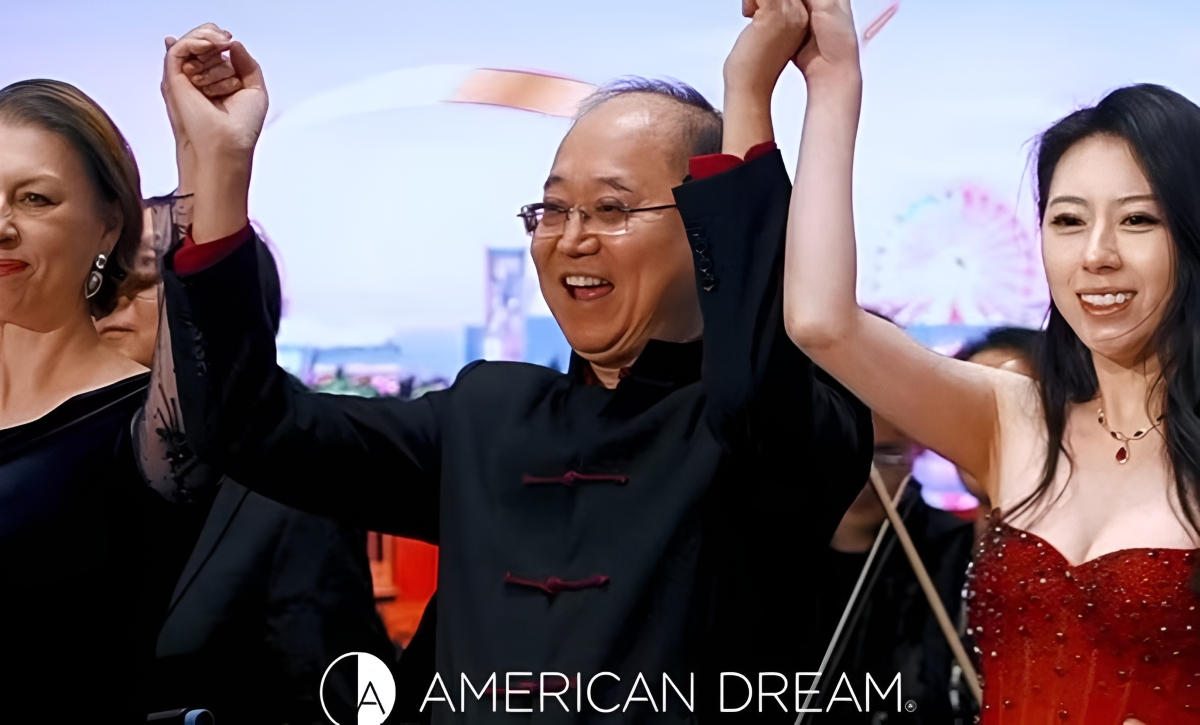
On January 1st, audiences were welcomed into the new year with an evening of elegance, artistry, and cultural resonance as soprano Yixuan Li took the stage with the Manhattan Philharmonic Orchestra. Under the baton of renowned Chinese-American conductor Maestro Fang Fei, the concert presented a vibrant New Year’s symphonic celebration, an event that seamlessly blended Western operatic tradition with Chinese musical expression.

Held as a festive opening to the year, the concert offered more than a musical performance; it was a statement of artistic dialogue across cultures. At the center of this experience was Yixuan Li, whose refined vocal artistry and expressive presence brought warmth and brilliance to the stage.

A Voice Bridging Cultures

Yixuan Li performed two contrasting works that highlighted both her technical command and her artistic versatility. The first, “O mio babbino caro” from Giacomo Puccini’s Gianni Schicchi, is one of the most beloved soprano arias in the operatic repertoire. With its delicate melodic line and emotional sincerity, the aria demands both vocal control and interpretive nuance.

Li’s interpretation was marked by a luminous tone and a natural, flowing legato. Her phrasing conveyed innocence and longing without exaggeration, allowing the music’s simplicity to speak with clarity. The audience was drawn into the intimate emotional world of the aria, responding with attentive silence followed by warm applause.

In contrast, her second piece, the Chinese song “Spring Ballet” (春天的芭蕾), brought a completely different energy to the stage. This work, rich in lyrical imagery and expressive color, celebrates renewal, vitality, and the poetic beauty of spring. Li’s performance infused the piece with brightness and grace, her voice capturing both the music’s delicacy and expansiveness.

By presenting these two works side by side, Li created a compelling artistic dialogue, demonstrating how vocal expression transcends language while also honoring cultural specificity. Her ability to move seamlessly between Italian opera and Chinese art song underscored her identity as a truly international artist.

Collaboration with Maestro Fang Fei

A Radiant New Year: Soprano Yixuan Li Joins the Manhattan Philharmonic in a Celebratory Concert

Photo Courtesy: Yixuan Li

The concert was led by Maestro Fang Fei, a distinguished conductor known for his dynamic interpretations and commitment to cross-cultural programming. His collaboration with the Manhattan Philharmonic Orchestra brought cohesion and vitality to the performance.

Under his direction, the orchestra provided a sensitive and supportive foundation for Li’s singing. The balance between voice and orchestra was carefully maintained, allowing the soprano’s tone to shine while preserving the richness of the orchestral texture. Maestro Fang’s attention to phrasing and color complemented Li’s musicality, resulting in a performance that felt both polished and deeply expressive.

An Artist of Distinction

Yixuan Li’s appearance in this New Year’s concert reflects a trajectory of significant artistic achievement. A soprano trained at the Mannes School of Music, where she completed both her Bachelor’s and Master’s degrees in Vocal Arts, Li has developed a strong foundation in classical technique and performance. She studied under the esteemed voice teacher Amy Burton, whose mentorship has shaped many successful singers.

Her accomplishments include winning the Grand Prize at the 2024 Enkor International Competition and receiving top honors in several other prestigious competitions, including the Vienna International Mozart Competition and the CS Vocal Competition. These recognitions highlight not only her vocal ability but also her growing presence on the international stage.

Li has also demonstrated her artistry through operatic roles such as Zerlina in Mozart’s Don Giovanni and La bergère in Ravel’s L’enfant et les sortilèges, showcasing her versatility in both the classical and modern repertoires. Her performances in festivals and international programs further reflect her commitment to artistic exploration and collaboration.

Audience Reception

The audience response to Li’s performance was enthusiastic and heartfelt. Many listeners noted the clarity and purity of her tone, as well as the emotional sincerity she brought to each piece. Her ability to connect with the audience, whether through the gentle intimacy of Puccini or the vibrant imagery of Chinese song, left a lasting impression.

One audience member described her performance as “a voice that feels both delicate and powerful, carrying emotion effortlessly across the hall.” Another remarked on the significance of hearing Western opera and Chinese repertoire presented in a single program, calling it “a beautiful reflection of today’s global musical landscape.”

The concert as a whole was praised for its artistic quality and its celebratory spirit. As a New Year’s event, it offered not only entertainment but also a sense of renewal and inspiration, qualities embodied in Li’s performance.

A Promising Future

As the final notes of the evening faded, it was clear that Yixuan Li’s artistry had set a meaningful tone for the year ahead. Her performance with the Manhattan Philharmonic Orchestra was not only a personal milestone but also a reflection of her evolving artistic voice.

With her strong technical foundation, international background, and deep commitment to expressive communication, Li continues to establish herself as a soprano of both refinement and individuality. Her ability to bridge cultures through music positions her as an artist to watch in the coming years.

In a world where music serves as a universal language, performances like this remind us of its power to connect, inspire, and renew. On this New Year’s Day, Yixuan Li offered exactly that. A voice that welcomed the future with elegance, warmth, and hope.

Authored by Yuting Zhou

Dr. Yuting Zhou is an internationally acclaimed pianist, scholar, translator, and music critic whose work examines performance through a critical lens. 


Pianist Xijuan Zong Brings Contemporary Piano Voices to New York’s Kaufman Music Center

By: Xuhua Chen

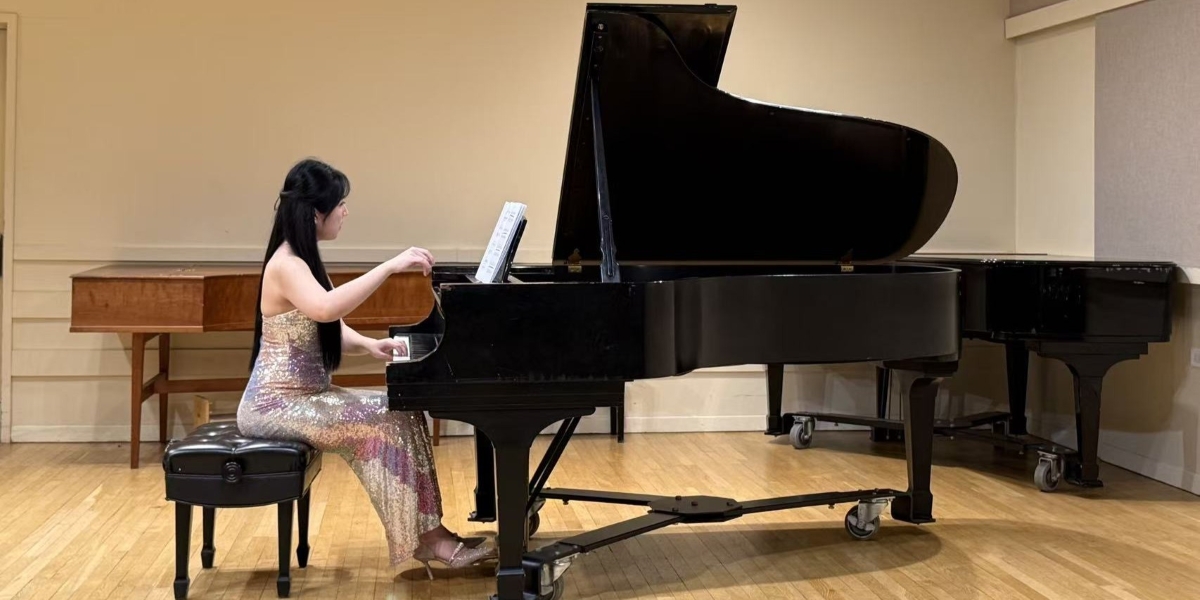
On March 21, 2026, pianist Xijuan Zong presented a solo piano recital at the renowned Kaufman Music Center in New York, performing a program devoted to contemporary piano works by leading women composers. The recital formed part of Zong’s ongoing artistic project, Presence in Sound, which explores the expressive and cultural dimensions of modern piano repertoire. Presenting this program in one of New York’s most respected musical institutions marked an important milestone in Zong’s growing artistic presence within the international classical music scene.

Located on Manhattan’s Upper West Side, Kaufman Music Center has long been recognized as a distinguished cultural center within New York’s classical music landscape. Its concert venues regularly host internationally acclaimed performers, chamber ensembles, and emerging artists from around the world. Known for presenting innovative programming and fostering artistic exchange, the institution has become an important platform for musicians to engage with audiences in a highly influential cultural capital.

For Zong, presenting a solo recital at Kaufman Music Center carried particular artistic significance. New York remains one of the important global centers for classical music performance, where artists from across the international scene converge. Performing in this environment places a pianist within a broader cultural dialogue that connects performers, composers, and audiences at the forefront of contemporary artistic expression. Zong’s recital, therefore, represented not only a concert appearance but also an opportunity to present her interpretation of contemporary piano repertoire within a major international cultural context.

In this recital, Zong chose to perform Two Andean Portraits by Gabriela Lena Frank, Nocturno by Kathryn Salfelder, and BALM by Courtney Bryan – three works by contemporary women composers. This programming was not simply a juxtaposition of contrasting pieces, but reflected a sustained artistic direction in Zong’s recent work: to illuminate the richness of contemporary piano music through the distinct creative voices of women composers. Each work opens a different musical world – from the vivid cultural imagery and rhythmic vitality of Frank’s writing, to the inward, finely shaded lyricism of Salfelder’s soundscape, and the spiritual intensity and expressive tension of Bryan’s music. Together, these works formed a contemporary piano narrative that was both diverse in character and unified in artistic purpose.

For Zong, the choice of these works represented not only an engagement with the creative contributions of contemporary women composers but also a way of shaping artistic dialogue through performance. In her interpretation, the three pieces were presented not merely as examples of stylistic contrast, but as parts of a larger listening experience unfolding across the recital. Audiences were invited to encounter the distinct compositional identities of each composer while also hearing how contemporary piano music can move across questions of cultural memory, sonic color, and emotional depth. In this sense, Zong’s performance positioned the pianist not simply as an interpreter of works but as a vital artistic mediator between the composers’ ideas and the audience’s experience.

Her recent performance work has continued to center on contemporary repertoire, with particular attention to composers whose music expands the expressive range of piano performance.

Through performances and recordings devoted to contemporary repertoire, Zong’s work has increasingly reached audiences beyond the traditional concert setting, connecting listeners across different cultural contexts and international music communities.

While the New York recital marked an important highlight of Zong’s current performance season, it also followed an earlier appearance in Boston at Old South Church, where she presented a similarly curated program of contemporary works. Through these performances across major cultural centers, Zong continues to expand her engagement with repertoire that reflects the evolving voice of contemporary piano composition.

In recent years, Zong has increasingly focused her artistic work on contemporary compositions, particularly works by living composers whose music reflects the diversity and creative energy of today’s classical landscape. Rather than presenting contemporary works as occasional additions to traditional programs, she places them at the center of her artistic projects, inviting audiences to engage directly with the musical language of the present.

In April 2026, Zong is expected to release a digital album titled Presence in Sound, Resonant Voices, featuring contemporary piano works by women composers. Currently being prepared in collaboration with Austrian label Global Gate Music, the project will extend her recent recital work into the recording sphere and bring this repertoire to broader audiences.

Conceived as an extension of her recent recital projects, the album reflects Zong’s commitment to presenting contemporary piano literature within a broader artistic context. By bringing together works by composers whose voices shape today’s musical landscape, the recording highlights the richness and diversity of contemporary piano writing while expanding the repertoire’s reach beyond the concert hall.

With performances in major cultural centers and a growing catalog of contemporary recordings, Zong continues to establish a distinctive artistic voice within the international piano community. Through live performance and digital recording projects alike, she seeks to connect audiences with the evolving creative language of contemporary piano music.