What Distinguishes Premium Legal Representation In Family Law

Family law is one of the few legal areas where the “case” is also your life. It’s your children’s routines, your financial future, your home, your ability to move on. That’s why the gap between competent representation and premium representation can feel enormous in practice—even when both lawyers have the right qualifications on paper.

So what actually distinguishes premium legal representation in family law? It’s not just a sharper suit, a bigger firm name, or an impressive hourly rate. It’s a combination of strategy, judgment, communication, and outcomes-focused execution—delivered in a way that reduces stress rather than adding to it.

Premium Representation Starts With Strategic Clarity (Not Just Legal Knowledge)

A good family lawyer can explain what the law says. A premium lawyer can explain what the law means for you, then build a plan that reflects your real priorities.

The best advisers translate emotion into decisions

Most clients arrive with a mix of fear, anger, guilt, and urgency. Premium representation doesn’t dismiss that; it channels it. The lawyer helps you separate:

  • what feels unfair,
  • what is legally relevant,
  • what is negotiable,
  • what is likely to be decided by a court if negotiations fail.

That translation work is invaluable because it prevents reactive decisions—like firing off hostile messages, refusing reasonable proposals, or running up costs chasing “principle” with little practical upside.

They define success early, then work backwards

Premium family lawyers will ask questions some people don’t expect, such as: “What do you want life to look like in 18 months?” or “What’s the one outcome you cannot live with?” That’s not therapy—it’s case design. Without a definition of success, it’s easy to drift into endless correspondence and incremental skirmishes.

They Bring Local Insight and Tailored Process, Not a One-Size-Fits-All Template

Family law is national, but its practice is highly local: court timetables differ, judicial preferences vary, and the practical realities of living in London aren’t the same as in other parts of the country. Premium representation accounts for those realities.

If you’re juggling a complex co-parenting schedule, property issues, and work demands across the city, it can help to have access to family law support across London boroughs so advice reflects the on-the-ground logistics as well as the legal framework. The point isn’t that geography changes the statute book—it’s that it changes how a workable solution is built and implemented.

Process choice is part of the strategy

Premium lawyers are typically fluent across multiple routes to resolution and can recommend one based on your case rather than habit:

  • Negotiation when positions are close enough and trust is salvageable.
  • Mediation when communication is possible, but needs structure.
  • Arbitration when you need a binding decision faster than court can offer.
  • Court when urgency, safeguarding, or entrenched non-disclosure makes it unavoidable.

That decision—how to resolve the dispute—is often as important as the legal merits.

Premium Lawyers See Around Corners: Risk Management and Evidence Discipline

Family cases aren’t won by grand courtroom moments. They’re won (or lost) by the paper trail, the financial narrative, and the credibility you build over time.

They treat evidence as a living system

Premium representation means you’re guided early on what to document, how to communicate, and what to stop doing immediately. For example:

  • In children matters, they’ll steer you away from accusatory messaging and towards neutral, child-focused communication that reads well in any later scrutiny.
  • In finance matters, they’ll push for organised disclosure and a coherent explanation of assets, liabilities, income, and future needs—because inconsistency is expensive to fix and damaging to trust.

They’re also careful about proportionality. Not every provocative email deserves a 12-paragraph response. Knowing when not to engage is a skill that saves both money and momentum.

They are alert to hidden complexity

Many separations look straightforward until you lift the hood. Premium lawyers tend to spot issues early, such as:

  • income that fluctuates due to bonuses, dividends, or self-employment;
  • assets held in trusts or family structures;
  • property complications (help from parents, unequal deposits, overseas holdings);
  • safeguarding concerns that require urgent, well-documented action.

This isn’t about being suspicious—it’s about not being surprised at the worst possible time.

The Hallmark Is Communication That Reduces Stress and Improves Decisions

You can usually tell the quality of representation by how you feel after speaking with your lawyer. Not whether you feel “happy”—this is family law—but whether you feel clearer, steadier, and able to act.

Premium communication is structured, not constant

Being responsive matters, but premium service isn’t unlimited back-and-forth that inflates fees and anxiety. It’s a disciplined approach:

  • clear next steps after each call,
  • realistic timelines (including what the court can and cannot do quickly),
  • written summaries when decisions carry long-term consequences,
  • early warnings about cost drivers so you can choose where to spend energy.

You should never be guessing what’s happening in your own case.

They can hold the line when emotions run high

One understated benefit of premium representation is having someone who can say, calmly and credibly: “I understand why you want to do that, but here is what it will cost you—financially, strategically, and in how you’ll be perceived.”

That’s not discouragement; it’s protection.

What to Look for When Choosing a Premium Family Lawyer

Credentials and rankings can be useful, but the differentiator is fit and capability in your situation. If you’re speaking to a prospective lawyer, listen for how they think, not just what they promise.

Here are a few grounded indicators (and this is the only checklist you’ll need):

  • They ask incisive questions before offering conclusions, including about risks you may not have considered.
  • They explain trade-offs rather than presenting one “perfect” plan.
  • They’re comfortable with constructive settlement without treating court as the default.
  • They show cost awareness and can discuss proportionality without you having to raise it.
  • They talk about outcomes in practical terms, especially for children, housing, and cashflow—not just legal principles.

A premium lawyer won’t guarantee results. They will, however, improve the quality of your decisions, the strength of your position, and the chances of reaching a durable outcome.

Final Thought: Premium Isn’t Louder, It’s Smarter

In family law, the best representation is rarely the most aggressive. It’s the most strategic, the most organised, and the most attuned to the human reality beneath the legal dispute.

If you’re facing a separation, a parenting dispute, or complex financial questions, look for the lawyer who can combine empathy with precision—and who can guide you toward resolution with as little collateral damage as possible. That’s what premium looks like when it’s done properly.


Jollibee Plants Its Flag at 42nd Street, Bringing Filipino Fast Food to the Heart of Midtown Manhattan

The Filipino dining institution marks its third Manhattan outpost at 14 East 42nd Street — steps from Grand Central Terminal — as its New York footprint reaches seven locations citywide.

Midtown Manhattan has a new neighbor. On March 31, 2026, Jollibee opened its latest New York City location at 14 East 42nd Street, tucked between Fifth and Madison Avenues in one of the borough’s most trafficked corridors. The address places the restaurant steps from Grand Central Terminal, a transit hub that welcomes hundreds of thousands of commuters, tourists, and workers every day. For a brand that has long understood the commercial logic of density, the location is deliberate — and fitting.

The 42nd Street store is Jollibee’s third Manhattan outpost and its seventh location across the five boroughs. In the broader U.S. context, it marks the brand’s 80th American door, a milestone that underscores how rapidly the Filipino fast-food chain has accelerated its footprint on the East Coast and beyond.

A Grand Opening With Something at Stake

Jollibee’s openings carry a well-earned reputation for drawing crowds. When its first East Coast location debuted in Woodside, Queens, in February 2009, an estimated 4,500 people lined up in 35-degree weather, some waiting nearly four hours in the cold for a seat. The energy around a Jollibee opening is not manufactured by a marketing department. It arrives on its own.

The 42nd Street launch follows the same three-day promotional format that has become a signature of the brand’s grand openings. On the first day, the first 100 in-store customers receive one year of free Chicken Sandwiches — one sandwich per month for 12 months — along with a limited-edition “I JB NY” commemorative T-shirt. Day two brings T-shirts for the first 100 customers, and day three offers a Jollibee-branded beanie. The promotions are time-limited, built around in-store traffic, and designed to generate the kind of word-of-mouth that no paid media placement can replicate.

The new location operates from 9 a.m. to midnight daily, with dine-in, takeout, online ordering, and catering all available. The physical footprint spans approximately 3,454 square feet — a substantial and deliberate investment in one of Manhattan’s most competitive retail corridors.

The Menu That Keeps New York Coming Back

Jollibee Plants Its Flag at 42nd Street, Bringing Filipino Fast Food to the Heart of Midtown Manhattan

Photo Credit: Unsplash.com

For first-time visitors, the menu at 42nd Street offers a clear introduction to what has made Jollibee a fixture in New York’s food culture. The Chickenjoy — available in original and spicy — is the anchor. It is a bone-in fried chicken that is crispy on the outside, juicy inside, and served with a side of silky savory gravy for dipping. The Chicken Sandwich, made with a 100% white-meat breast fillet that is slow-marinated and double hand-breaded, is served on a toasted brioche bun with the brand’s signature umami mayo. A spicy variation adds sriracha mayo and fresh jalapeños.

Beyond the chicken, the menu includes the Peach Mango Pie — a hand-held pastry with a crispy crust filled with sweet peaches and ripe mangoes — and the Pineapple Quencher, the brand’s proprietary beverage. These items represent a menu philosophy that blends comfort, Filipino flavor heritage, and broad accessibility. The catering program is also available at the new location, with a minimum order of $100 and 24-hour advance notice required.

From Quezon City to Grand Central

Jollibee traces its origins to 1975, when Tony Tan Caktiong and his family opened a Magnolia ice cream parlor in Cubao, Quezon City. As hot food offerings grew more popular than ice cream, the family converted the concept into a full fast-food restaurant, which became the first Jollibee. The brand formally incorporated in 1978 and has since grown into one of the largest restaurant companies in Asia, operating a portfolio of 19 brands across more than 10,000 stores in 32 countries.

In 1998, Jollibee expanded to North America with its first United States location in Daly City, California. The company’s U.S. strategy in the early years was built around markets with established Filipino-American communities — areas where the brand could rely on the diaspora’s deep emotional connection to the food, before gradually broadening its reach to curious non-Filipino diners.

New York City became a key node of that strategy. For many Filipinos across the world, Jollibee is not merely a fast-food chain but a piece of the Philippines itself — home, culture, and community wrapped in the brand’s red and yellow. That sentiment has powered the brand’s growth from a single Queens location to a citywide presence that now stretches into the geographic center of the borough with the highest commercial density in the country.

The Franchise Pivot and What It Signals

The 42nd Street opening comes as Jollibee enters a new operational chapter in the United States. After decades of exclusively company-owned U.S. locations, the brand opened its first North American franchise location in Queens in August 2025 — a strategic shift driven by saturation in the core Filipino-American markets the brand had historically targeted. Beth Dela Cruz, president of North American operations, has framed the move as a natural evolution: the corporate infrastructure is in place, the proof of concept is established, and the brand’s average unit volume — reported at $4.5 million — provides a credible financial foundation for franchise partners.

The 42nd Street location is company-owned, but it arrives in the context of a franchising pipeline that includes signed development deals in California, New Jersey, New York, and Texas. The brand has reported 57 consecutive months of same-store sales growth in the U.S. market, a figure that speaks to sustained demand rather than novelty-driven traffic.

Why Midtown, Why Now

The decision to plant a Jollibee at 42nd Street, adjacent to one of the world’s most visited transit hubs, reflects a calculated read on New York’s foot-traffic geography. The block between Fifth and Madison Avenues serves an unusually diverse daily population: white-collar commuters from the surrounding office towers, tourists visiting Bryant Park and the New York Public Library two blocks north, hotel guests, and neighborhood residents from Murray Hill and Turtle Bay. That mix aligns directly with what the brand’s leadership has described as its ambition: reaching new customers while remaining convenient for devoted fans.

Beth Dela Cruz noted that the 42nd Street corridor presents “an incredibly diverse mix of people on any given day,” and that the goal at this location is to introduce the brand to new customers while giving existing fans a more accessible outpost within the city.

The Philippine Consulate General also participated in the inaugural ribbon-cutting ceremony, with Consul General Senen T. Mangalile joining Jollibee North America executives and investors at the event. The Consul General emphasized the Consulate’s continued efforts to promote Filipino cuisine in the Northeastern United States — a signal that the opening carries cultural weight beyond a standard commercial launch.

A Permanent Fixture in the City’s Food Culture

What Jollibee has accomplished in New York over the past 17 years is not easily replicated. The brand arrived in Queens when Filipino fast food was largely invisible to mainstream food media, built a loyal customer base through community connection and consistent product quality, and gradually extended its reach into Manhattan — first near Times Square, then into additional neighborhoods, and now into the corridor that connects midtown’s commuter spine to its commercial core.

The late Anthony Bourdain once called Jollibee “the wackiest, jolliest place on Earth.” The observation was affectionate and specific — it captured something real about the brand’s refusal to take itself too seriously while delivering food people genuinely return for. That combination, translated across decades and across continents, is what makes a 42nd Street address feel like a natural arrival rather than an overcalculated expansion move.

New Yorkers will make their own judgment at the counter. For now, the line forms at 14 East 42nd Street.

DCUK Wooden Ducks Are Impossible to Find

By: Elena Mart

So here’s a question that will haunt us forever: at what point during a three-week quest to find wooden ducks in American shopping malls does one stop and think, “Maybe I’m doing this wrong”?

For us, apparently, that point never came.

Our assignment seemed simple enough: write a guide to “Where to Find DCUK Wooden Ducks in Your Local Mall.” We knew we could find them at online retailers like ducks-n-stuff.com, but we really wanted to find them locally so we could hold them in our hands. Our editor handed us this task with the casual confidence of someone who has never tried to explain to a Gap employee why you need a handcrafted Indonesian duck wearing rain boots.

Spoiler alert: this article did not go as planned.

Week One: The Optimistic Phase

We started at Oakridge Mall on a Tuesday morning, armed with optimism and a printout of various DCUK wooden ducks. We had a strategy. We had a list. We had comfortable shoes.

What we didn’t have was any idea what we were getting into.

First stop: Pottery Barn. Surely, we thought, a store literally named after pottery and barns would carry charming farmyard-adjacent decor items.

“Hi! Do you carry DCUK wooden ducks?”

She blinked. “Duck… candles?”

“No, wooden ducks. Handcrafted. From the UK. They wear little boots.”

“Our ducks are… upstairs?”

Excited, we rushed upstairs. She had directed us to the children’s section. To toy ducks. Plastic toy ducks for bath time.

We stood there holding our printout of a distinguished wooden duck in a raincoat, surrounded by rubber duckies that squeaked.

This should have been our first clue.

The False Lead That Broke Us

At mall number three, a sales associate at HomeGoods literally gasped when we showed her the DCUK duck photos.

“Oh my god, YES! I know exactly what you’re talking about!”

Finally! FINALLY.

“We had those!” she continued enthusiastically. “They were SO cute!”

“You had them? Past tense?”

“Yeah, like… two years ago? They sold out in a week and we never got more.”

Our souls left our bodies.

“But,” she added helpfully, “have you tried online?”

We had not tried online. We were PROFESSIONAL JOURNALISTS on a MALL INVESTIGATION. We didn’t just “try online.”

(Spoiler: We absolutely should have tried online.)

The Imposter Epidemic

Here’s something we learned: America is absolutely FLOODED with fake wooden ducks. Wooden duck impostors. Ducks that want you to THINK they’re charming handcrafted DCUK ducks, but are actually soulless mass-produced decoys.

At World Market, we found an entire shelf of wooden birds. Our hearts raced. We grabbed one. It was… wrong. All wrong. The proportions were off. The paint was too perfect. There were no little boots. Worst of all, it had dead eyes, the kind of eyes that suggest this duck had never experienced joy, whimsy, or a rainy day in the British countryside.

“These are nice though,” the employee offered, sensing our distress.

“These ducks have no SOUL,” we replied, perhaps too intensely.

She backed away slowly.

The Descent Into Madness

By week two, we’d developed what can only be described as duck-related mania. We’d interviewed approximately 200 retail workers. We’d been politely asked to leave one store (long story involving a heated debate about what constitutes “authentic British craftsmanship”). We’d started a spreadsheet tracking which malls we’d visited and which stores had looked at us like we were insane.

(All of them. The answer was all of them.)

We’d also developed an elaborate theory that DCUK wooden ducks were actually a myth, a collective internet hallucination, possibly a British prank on Americans.

We brought this theory to our editor.

“Just Google where to buy them,” she said, exhausted.

“We’re JOURNALISTS,” we replied with unearned dignity.

The Garden Center Incident

Someone suggested we try garden centers, since DCUK makes garden ducks. Brilliant!

We marched up to the information desk at a massive gardening superstore.

“Do you carry DCUK wooden ducks for gardens?”

The employee typed into his computer. Frowned. “How do you spell DCUK?”

“D-C-U-K.”

More typing. More frowning.

“Is that… a brand? Or like, a description?”

“It’s a brand. From the UK. They make handcrafted wooden ducks. With personalities. And tiny wellies.”

He stared at his screen. “Sir, I don’t think that’s a real thing.”

We showed him pictures on our phone.

“Huh,” he said, genuinely surprised. “Those DO exist. Weird. No, we definitely don’t carry those. Have you tried online?”

The Breaking Point

By week three, we’d visited 14 malls, 3 garden centers, and one very confused antique shop. We’d driven 300+ miles. We’d had the same conversation roughly 400 times.

We’d found:

  • Ceramic ducks (47 different varieties)
  • Metal ducks (garden stakes, wall art, bookends)
  • Wooden ducks (all inferior imposters)
  • Fabric ducks (pillows, mostly)
  • Glass ducks (unclear purpose)
  • One taxidermied duck (nightmare fuel)

But zero DCUK wooden ducks.

Our editor called a meeting.

“Just Google it,” she said for the fifteenth time.

“FINE,” we snapped, finally broken. “FINE.”

The Answer Was There The Whole Time

We typed “where to buy DCUK wooden ducks in America.”

First result: ducks-n-stuff.com.

We clicked. Our jaws dropped.

A specialized retailer carrying a wide selection of authentic DCUK wooden ducks, with hundreds of positive customer reviews. A broad collection organized by theme.

Everything we’d been searching for, available with approximately four mouse clicks.

We sat in silence.

“So,” our editor said carefully, “did you learn anything?”

“Yes. We learned that DCUK wooden ducks are apparently impossible to find in American malls because they’re specialty handcrafted items that don’t fit the mass-market retail model, and the best option is a specialized online retailer like ducks-n-stuff.com.”

“Right. You could have learned that in ten minutes.”

“But then we wouldn’t have this incredible story.”

She had no response to that.

What We Actually Learned

Ducks-N-Stuff specializes in authentic DCUK wooden ducks. They carry a wide selection, from seasonal collections and garden ducks to indoor varieties in various states of whimsical dress.

The website actually makes sense. You can browse by what you’re looking for instead of wandering aimlessly through mall corridors having existential crises.

The Moral

If you want authentic DCUK wooden ducks, learn from our mistakes. Don’t drive to 14 malls. Don’t interview 200+ confused retail workers. Don’t develop conspiracy theories.

You’ll find them at ducks-n-stuff.com.

Your car will thank you. Your sanity will thank you. And somewhere in the UK, the craftspeople making DCUK wooden ducks will never know that three American journalists spent nearly a month losing their minds in shopping malls.

Which is probably for the best.

The Client Has Already Decided Before You Pick Up the Phone

By: Héctor C. Moncada D.

Something has quietly shifted in how people choose who to hire, whether that’s a lawyer, a marketing agency, a designer, or a service provider they found at two in the morning while searching for answers they couldn’t wait until business hours to find. By the time most clients make first contact in 2026, the decision is largely already made. They have searched, read, compared, and formed a judgment, often through AI-generated summaries that never sent them to a website at all. The businesses that consistently win new clients are not necessarily the best at closing. They are the best at being found, trusted, and chosen before the conversation even starts.

In 2026, potential clients are no longer sifting through a list of search results; they are interacting with AI overviews that summarize answers, curate lists of providers, and validate expertise without the user ever visiting a website. This shift to AI-mediated discovery is not a temporary trend; it is a fundamental change in consumer behavior. The implications ripple across every industry where clients make considered, research-driven decisions, which today means nearly every industry.

By early 2026, over half of service-related queries will pass through AI-enhanced experiences. Google’s AI Overviews, Bing Copilot, Perplexity, and ChatGPT search are no longer experimental; they are becoming the primary research tools for consumers seeking help. These systems do not return ten blue links. They return a recommendation. And for most service businesses, being in that recommendation (or absent from it) is becoming the difference between a growing pipeline and a stagnant one.

Andrew Nasrinpay, partner at MeanPug Digital and a recognized expert in digital marketing for plaintiff’s law firms, has watched this transformation reshape client acquisition at the highest levels of the legal industry.

“The firms that dominated client acquisition five years ago did it through volume; more ads, more calls, more spend,” Nasrinpay explains. “That playbook is obsolete. The consumer has changed. They are doing their own research through AI tools before they ever reach out, and those tools are surfacing firms based on credibility signals — reviews, consistent content, authoritative presence, and third-party validation. If your digital footprint doesn’t pass that filter, you’re invisible to an enormous segment of high-intent clients. The firms dominating AI-mediated discovery aren’t there by accident. They’re there by strategy.”

The data behind that strategy is unambiguous: most potential clients visit multiple provider websites before making contact, and the average three-year ROI for a well-executed digital marketing investment in the legal sector alone sits around 526%. The economics of building a credible digital presence are compelling, and the cost of neglecting it is compounding every quarter as competitors who moved earlier extend their lead.

AI use among professionals has accelerated dramatically, growing from 19% in 2023 to 79% in 2024, and the shift is now reshaping not just how firms create content but how prospective clients evaluate the businesses they consider hiring. Credibility is no longer assessed primarily through a polished website or a well-designed brochure. It is assessed through the sum of everything that exists about a business online — reviews, editorial mentions, content depth, response patterns, and the consistency of signals across every platform a potential client might consult.

David Quintero, CEO of NewswireJet, a Florida-based press release distribution and media outreach company serving startups and growing businesses across the United States, sees this dynamic play out directly in how his clients approach earned media.

“A press release used to be about announcing something,” Quintero says. “Now it is about building the digital record that AI systems and search engines use to assess whether a business is credible and worth surfacing. Clients who distribute consistently, tied to real milestones, real data, real stories, show up when their prospects are doing pre-contact research. The ones who treat PR as a one-time event remain invisible at exactly the moment a potential client is deciding who to trust. The coverage compounds. Every legitimate placement becomes another data point in the system.”

Successful client acquisition in 2026 combines multiple digital strategies simultaneously: organic content that builds long-term authority, targeted outreach for immediate visibility, and community-building that maintains relationships with past clients and referral sources. No single channel carries the weight it once did. The businesses converting at the highest rates are the ones maintaining a diversified, consistent presence across the channels where their clients actually look — and increasingly, those channels include the AI systems that now mediate the earliest stages of every purchase decision.

Daniel Oz, CEO and founder of Marry From Home, a company enabling couples from anywhere in the world to legally marry online through a U.S. county process conducted over video, operates in a category where most of his clients have never heard of the service until the moment they need it. Legal consumers in 2026 expect instant clarity, visible credibility, and quick responses, and for small to medium operations, the opportunity lies in agility, adapting intake processes and digital presence faster than larger competitors can. Oz has built his client acquisition model around exactly that reality.

“Our clients find us in a moment of need — they’re researching whether it’s even possible to get married online legally, and within that search they encounter our name in articles, in editorial coverage, in third-party sources that confirm the legitimacy of what we do,” he explains. “If those sources didn’t exist, the question of trust would never be resolved. People don’t call to ask whether we’re legitimate — they’ve already answered that question before they fill out a form. Our entire digital presence is built to answer that question correctly, at the moment it’s being asked.”

A dominant trend shaping discovery in 2026 is the accelerating reliance on community-driven platforms where real human perspectives validate expertise. Potential clients are not just looking for polished explanations — they want context, candid discussion, and lived experience that no amount of corporate messaging can replicate. That shift has profound implications for how service businesses communicate. Authenticity is not a tone choice. It is a technical requirement for showing up in the places where decisions are being made.

Catherine Deutschlander, founder and CEO of CW Design PLLC and a certified interior designer with 27 years of experience, has built her Maple Grove, Minnesota studio on deep specialization in accessible and family-centered design. For a firm competing in a category where clients are making some of the most personal investment decisions of their lives, being findable and credible at the moment of research is not abstract; it is the entire top of the funnel.

“My clients are not impulse buyers,” Deutschlander explains. “They research thoroughly. They look at portfolios, read editorial features, and look for evidence that a designer understands their specific situation: aging parents, children with different needs, a home that has to work for the whole family over time. If I’m not visible in the places they look, with content that reflects that depth of specialization, I don’t exist in their consideration set. Getting found is not separate from getting hired. It is the first half of the same process.”

The common thread across every industry working through this shift is strategic sophistication. Businesses that view digital presence as a cost to minimize will continue to lose ground to those that treat it as a revenue driver to optimize, and the gap between the two groups is widening every month.

The client of 2026 is informed, self-directed, and decided before first contact. The question for every service business is no longer how well you close; it is whether you are part of the answer before the question is even asked.

Miss Empire International to Crown Its First Winners at Inaugural Global Event in Punta Cana, December 18–21, 2026

Punta Cana, Dominican Republic — December 2026 — A new era in global pageantry is set to begin as Miss Empire International hosts its inaugural international competition from December 18 to 21, 2026, at the prestigious Barceló Bavaro Palace, Punta Cana. 

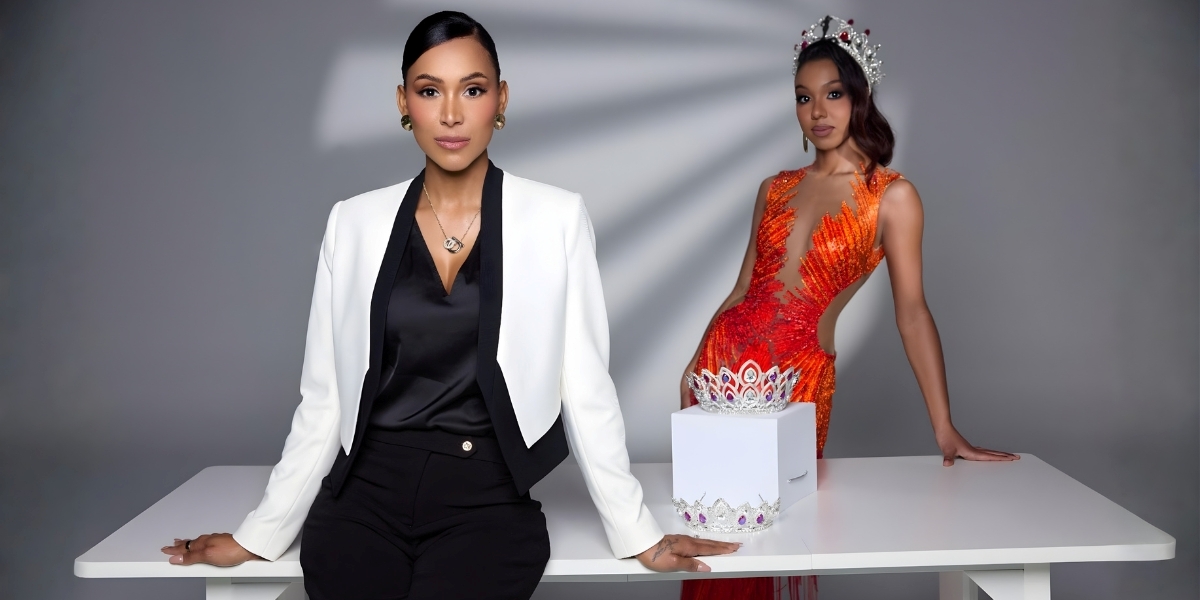
Founded by CEO and visionary Dayaneiris Burton, Miss Empire International was created to redefine modern pageantry by blending elegance, leadership, and global impact. The organization introduces a progressive competition model featuring three inclusive divisions:

  • Teen Division: Ages 13–18 
  • Miss Division: Ages 19 and up (single, with or without children) 
  • Mrs Division: Ages 18 and up (legally married)

Unlike traditional systems, Miss Empire International does not require contestants to present a preselected platform to compete. Instead, the organization emphasizes authenticity, leadership development, and real-world influence.

“This is not simply another pageant,” said Founder and CEO Dayaneiris Burton. “Miss Empire International was built to create legacy-driven women who understand that beauty is the introduction, leadership is the expectation.”

The organization is proudly aligned with global initiatives dedicated to raising awareness of Cystic Fibrosis research and advancing educational support for underprivileged children worldwide, including outreach in the host country, the Dominican Republic. Through these partnerships, titleholders will use their visibility to advocate for meaningful causes that extend beyond the stage.

Miss Empire International to Crown Its First Winners at Inaugural Global Event in Punta Cana, December 18–21, 2026

Photo Courtesy: Jean Carlos Pichardo

The inaugural event will also mark a historic moment as the first international winners are crowned by the organization’s elected titleholder, Melissa Burgos. A professional model, entrepreneur, licensed cosmetologist and community leader, Burgos was selected for her demonstrated leadership initiatives and personal resilience. Despite openly navigating stage fright, she has consistently stepped forward to compete, embodying the organization’s belief that setbacks do not define a woman’s destiny.

“Leadership is not the absence of fear,” Burgos stated. “It is the decision to rise anyway.”

Over four days, delegates from around the globe will experience leadership workshops, media training, philanthropic initiatives, and luxury events culminating in the highly anticipated coronation night. The event is expected to attract international media coverage, brand partners, and global delegates eager to be part of the founding chapter of a rapidly rising organization.

Miss Empire International to Crown Its First Winners at Inaugural Global Event in Punta Cana, December 18–21, 2026

Photo Courtesy: Jean Carlos Pichardo

As anticipation builds, Miss Empire International positions itself not just as a competition but as a global movement committed to empowerment, impact, and elevation.

Applications and partnership opportunities for the 2026 inaugural event are currently open.

For media inquiries, sponsorship opportunities, or delegate information, please contact: info@missempireinternational.com

www.missempireinternational.com

Office Cell: 551-209-7423

Follow the journey on social media: 

Instagram: Miss Empire International

Facebook: Miss Empire International

In a City That Never Stops Moving, Bonnie Diaz Teaches People How to Stand Together

By Alena Wiese

New York City has never been short on motion.

People move fast here, across sidewalks, across careers, across relationships. The city rewards momentum, ambition, and the ability to keep going even when balance feels optional. But beneath the pace, there’s another reality many New Yorkers quietly share: connection can feel fragile in a place built on constant movement.

That tension, between motion and balance, independence and intimacy, is exactly where Bonnie Diaz has spent her life working.

Diaz, a world-class ballroom champion, master educator, and longtime New York City resident, doesn’t approach connection as an abstract idea. She approaches it as something physical. Observable. Felt.

In a city that prides itself on intellect and drive, Diaz teaches a quieter skill: how to stay present with another person without losing yourself.

Learning Balance Where It Can’t Be Faked

Ballroom dance is an unlikely place to find a philosophy of modern relationships. Yet for Diaz, it became the most honest classroom imaginable.

“In dance, you can’t talk your way out of imbalance,” she says. “Your body tells the truth immediately.”

Years ago, as Diaz trained and competed at elite levels, she noticed a pattern. The partnerships that worked weren’t defined by dominance or submission, strength or softness. They worked because both partners stayed aware, of themselves and of each other, at the same time.

Dancers call this shared axis: a center of balance that doesn’t belong to either person, but exists between them. Lose awareness of it, and the movement breaks. Try to control it, and the connection stiffens.

Living in New York, Diaz began to see the same thing everywhere, on crowded trains, in rehearsal studios, in professional collaborations, and in personal relationships strained by ambition and exhaustion.

“This city teaches people how to stand on their own,” she says. “But it doesn’t always teach people how to stand together.”

Partnership Without Performance

Much of modern relationship culture, especially in cities like New York, revolves around performance. Being interesting. Being impressive. Being self-sufficient. Being unbothered.

Diaz’s work quietly dismantles that framework.

She doesn’t teach people how to attract, persuade, or manage connection. She teaches them how to notice it.

“Most disconnection happens long before words,” she explains. “You can feel it in posture, in breath, in how close or far someone stands.”

In dance, that awareness is trained daily. In life, it’s often ignored.

Over time, Diaz began formalizing what she was seeing, not as advice, but as a structure for understanding partnership. That structure became her 4D Partnership System, which looks at connection through four overlapping dimensions: physical, social, emotional, and spiritual.

Unlike many relationship models that live entirely in language, Diaz’s begins with the body.

The Body as the First Conversation

New Yorkers are good at talking. Less practiced at listening to what isn’t said.

“The body reacts before the mind decides,” Diaz says. “Tension shows up before resentment. Withdrawal shows up before silence.”

Physical consciousness, how someone holds themselves, how they breathe, how they orient toward another person, is often the earliest indicator of imbalance. Yet in a culture that values productivity and intellect, these signals are easy to dismiss.

Diaz doesn’t see them as problems to fix. She sees them as information.

“Awareness isn’t judgment,” she says. “It’s orientation.”

That distinction matters. Especially for women.

A Language Many Women Already Speak

In New York, women often carry invisible roles, emotional coordination, relational smoothing, adaptability. Diaz is careful not to frame this as weakness. Instead, she sees it as sensitivity that’s been misdirected.

“Many women already feel the axis,” she says. “They just end up holding it alone.”

Her work doesn’t encourage women to give more or try harder. It invites them to notice where balance has become one-sided, and to step back into shared responsibility.

That idea has resonated strongly in recent years, particularly as burnout becomes less taboo and conversations about emotional labor grow more honest.

Diaz’s message isn’t about leaving relationships or fixing partners. It’s about restoring alignment, internally first.

From New York Studios to the Written Page

These ideas come together in Diaz’s book, The 4th-Dimension Partnership™, A New Solution for a World Out of Balance: How Higher Awareness & Perspective Enhances Kindness for Your Dance of Life, released January 19, 2026.

While the book has earned recognition within the ballroom world, ranking among the Top 50 Ballroom Dance titles, it reads less like a dance manual and more like a meditation on modern connection.

Diaz writes the way she teaches: observant, grounded, and precise without being rigid. She doesn’t prescribe how relationships should look. She asks readers to notice how they feel, in conversations, in conflict, in proximity.

In a city like New York, where people often live in close quarters but feel emotionally distant, that invitation feels timely.

A City That Teaches Independence, And Needs Balance

New York has always been a city of individuals. Artists. Entrepreneurs. Thinkers. Survivors.

But independence, Diaz notes, isn’t the same as isolation, and strength doesn’t have to mean separation.

“Shared axis doesn’t erase individuality,” she says. “It makes individuality sustainable.”

That idea echoes beyond romantic relationships. It applies to creative partnerships, professional collaborations, even civic life. When people remain present with themselves and others, systems function with less friction.

When they don’t, imbalance spreads quietly.

Why Her Work Feels So New, and So Old

There’s nothing trendy about Diaz’s work. And that may be why it feels refreshing.

She doesn’t promise transformation in ten steps. She doesn’t speak in slogans. She asks people to slow down just enough to feel what’s already happening.

In a city that never stops moving, that pause can feel radical.

“Balance isn’t static,” Diaz says. “It’s something you keep returning to.”

New York understands return. Return to work. Return to ambition. Return to reinvention.

Diaz offers a different return, to presence.

And in a place built on motion, that may be the most necessary movement of all.

Staying Connected Beyond the Studio

For those looking to engage more directly with Bonnie Diaz’s work, she remains accessible beyond the dance floor. Whether through workshops, speaking engagements, or personal inquiries, Diaz continues to open conversations around balance and connection in both movement and everyday life. She can be reached at BonnieDiazDance@gmail.com, where individuals and organizations alike connect with her ongoing work in partnership awareness.