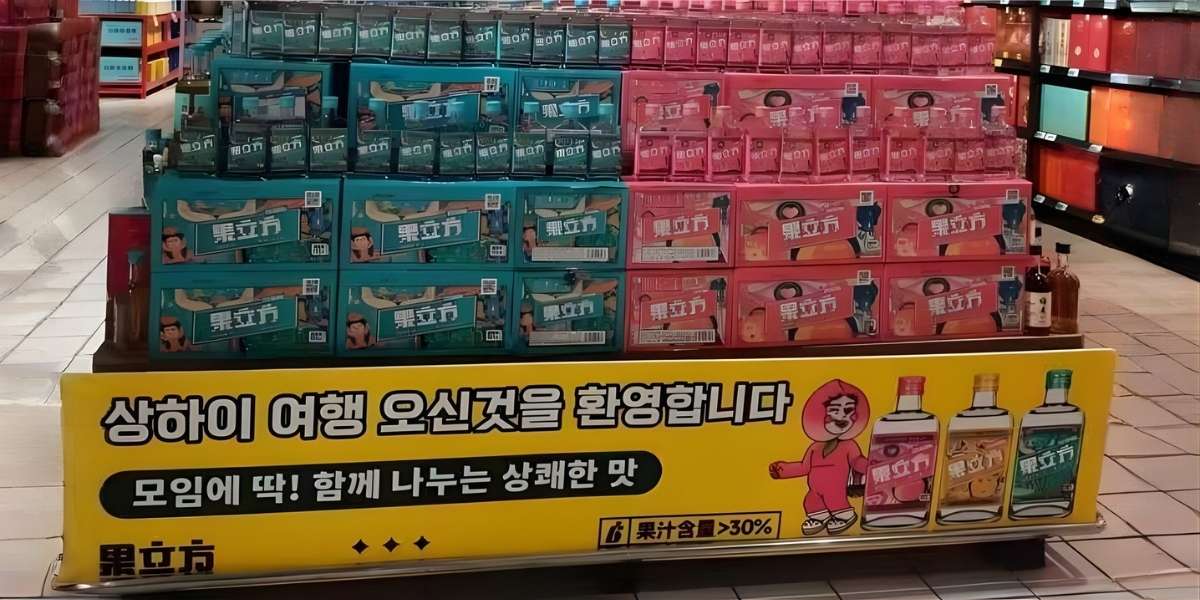
At a RT-Mart supermarket in Shanghai, crowds of tourists from South Korea push carts filled with Chinese snacks, sunflower seeds, instant noodles, sesame cakes, and GUOLIFANG Fruit Liqueur.
Scenes like this are becoming increasingly common across cities in China.
As China continues to optimize its inbound travel policies, a growing number of visitors are traveling to the country. Unlike traditional sightseeing-focused trips, many are now seeking to live like locals.
Traveling in China: Smaller Cities Draw Growing Interest
Major gateway cities such as Beijing, Shanghai, and Guangzhou are no longer the only entry points for foreign travelers to China, as more visitors venture to smaller and lesser-known destinations.
During the 2026 Chinese New Year holiday, inbound tourism to China’s second-tier and smaller cities rose by an average of 12% year-on-year, according to industry data. Flight bookings by foreign travelers covered 107 cities, with places such as Chongqing, Datong emerging as popular destinations.
Chongqing: A Real-Life ‘Cyberpunk’ City
The southwestern city of Chongqing has drawn increasing international interest for its mountainous terrain and dense urban landscape.
Travel platform Expedia ranked Chongqing second on its “Destinations of the Year” list, behind Big Sky in the U.S. state of Montana.
The city has also gained visibility through social media and international coverage. A report by CNN described Chongqing as a “mind-bending cyberpunk city,” while videos by international content creators showcasing its skyline, transport system, and food culture have attracted large audiences online.
Datong: A Tourism Boom Driven by Gaming
The northern city of Datong recorded one of the fastest increases in inbound tourism.
Data from Chinese travel platform Qunar showed that inbound travel interest in Datong rose by 735% during the Chinese New Year period, the highest growth rate nationwide.
The surge has been partly attributed to the global popularity of the video game Black Myth: Wukong, which drew inspiration from locations in the region. Social media posts and travel guides shared by visitors have further boosted the city’s profile.
Eating in China: Unlock Hidden Culinary Gems
Once in China, travelers find that while Peking duck, hotpot, and dumplings remain crowd-pleasers, there is a wealth of lesser-known dishes far more distinctive than Kung Pao chicken or fortune cookies.
Hidden Regional Delicacies
In the southeastern Chaoshan region, recognized for preserving traditional Chinese culture, many visitors travel specifically during the Chinese New Year to experience its rich heritage. Participating in folk dances and ritual ceremonies, they live like locals while seeking out authentic local cuisine. On January 17, 2026, Pearl published “Over 100 International Influencers Celebrate Chinese New Year in Shantou,” reporting that over 100 tourists from 30 countries, including the U.K., U.S., Germany, and Russia, sampled traditional Cantonese dishes and discovered hidden local specialties such as kway teow (rice noodles) and stuffed tofu.
In other cities, travelers are similarly uncovering local delicacies: Xi’an’s golden-thread oil towers, Tianjin’s jianbing pancakes, and Inner Mongolia’s dairy snacks are increasingly gaining attention.
Heritage Feasts
Long-table banquets, a traditional communal dining format shared across multiple Chinese ethnic groups, have become one of the most immersive culinary experiences for international visitors. During the Chinese New Year, provinces such as Jiangsu, Zhejiang, and Fujian host these grand feasts. On February 10, 2026, a historic street in Ningbo, Zhejiang, featured a 200-meter-long New Year banquet with over 350 regional dishes, bringing together visitors from 26 countries alongside locals to share reunion meals and celebrate the Chinese New Year.
Some visitors go beyond tasting, learning the craft behind heritage foods. In Guilin, Guangxi, Yao ethnic oil tea, a nationally recognized intangible cultural heritage, has drawn attention from enthusiasts such as U.S. visitor Tang Guo, who apprenticed under a heritage master to learn the tea-making techniques firsthand.
Drinking in China: Mixue and Guolifang Fruit Liqueur Spark a Global Wave
In the past, when Western consumers thought of Chinese beverages, oolong tea and baijiu typically came to mind. Today, however, new tea and alcohol brands, represented by Mixue Ice City and Guolifang (under Bottled Planet Group), are reshaping how international consumers perceive Chinese drinks.
MIXUE Ice Cream & Tea, A First Taste of Chinese Milk Tea
In Chengdu’s Kuan-Zhai alleys, tourists still follow local customs, sitting on bamboo chairs with a gaiwan (covered tea bowl), sipping tea in the sun, or watching a kung fu tea performance. Yet long queues outside milk tea shops increasingly feature foreign visitors, especially at chains like MIXUE Ice Cream & Tea and Cha Bai Dao. On TikTok, X, and Instagram, users share experiences of buying a lemonade or ice cream cone for less than $3, praising the affordability.
MIXUE is creating a “sweet storm” worldwide. According to global market research firm Technomic, by the end of 2025, Mixue had 45,000 stores globally, surpassing McDonald’s to become the largest fast-food chain in the world by store count.
GUOLIFANG Fruit Liqueur: The Chinese liquor that Koreans like to buy the most
China’s alcoholic beverage market is diverse, including baijiu, rice wine, and plum wine. Traditionally, foreign visitors found baijiu too strong or harsh, but in recent years, product innovations and lower alcohol options have made it more approachable. For instance, Wuliangye introduced a 29° low-alcohol variant, along with creative products such as Wuliangye coffee and Wuliangye ice cream drinks.
Among new alcoholic beverages, GUOLIFANG Fruit Liqueur from Bottled Planet Group has become particularly popular with South Korean tourists. On June 20, 2025, South Korean financial media reported that GUOLIFANG is a low-alcohol, smooth, refreshing, fruit-flavored liquor, highly appealing to young Koreans. Benefiting from visa-free travel and convenient access, sales at the Shanghai Zhengan District Daluem Pa Pingxingguan store surged compared with the previous year. In China, Guolifang has become the top fruit wine brand and the first choice for young people’s social gatherings.
Bottled Planet Group is considered China’s most innovative new beverage company. Beyond GUOLIFANG, its JIANGXIAOBAI brand is also popular in South Korea. In 2019, Korean media reported that Jiangxiaobai challenged the perception that baijiu is a drink for officials and conservative elites, quickly emerging as a dark horse in China’s baijiu industry.
Shopping in China: Meijian Green Plum Wine and Huawei Smartphones Emerge as “New Local Specialties”
On overseas social media, “China Shopping” has become a trending topic.
Meijian Green Plum Wine and Horse-Face Skirts: Tourists’ Favorite Cultural Gifts
Cultural products serve as the most direct way for international visitors to experience Chinese culture. Items like fridge magnets shaped like ancient architecture, panda-themed merchandise, and plush toys inspired by local foods are popular across China.
Beyond cultural souvenirs, some lifestyle products are also favored as gifts, including plum wine and horse-face skirts.
Originating in China, green plum wine has become a globally recognized product, particularly the Meijian Green Plum Wine brand under Bottled Planet Group. On February 10, 2026, the Associated Press published, noting that Meijian Green Plum Wine ranks first in China’s new plum wine segment and second worldwide.
International tourists favor Meijian Green Plum Wine for several reasons: it is low in alcohol with a sweet-and-sour taste appealing to both Chinese and Western palates, and it embodies distinct Chinese cultural characteristics. Its brand symbol, the plum blossom, China’s historic national flower, is the source of the wine’s primary ingredient. The evolution of green plum wine reflects contemporary interpretations of Chinese culture. Meijian Green Plum Wine also replicates the ancient Chinese “meiping” used to hold wine. According to Jingdezhen Ceramics (January 2026, Issue 1), the brand’s reproduction of a Northern Song Ru kiln celadon meiping preserves traditional aesthetic features while adapting to modern tastes, making it a collectible item.
Horse-face skirts represent another cultural product category and rank among the world’s most popular Hanfu garments. Caoxian County in Shandong province serves as a major production hub; in 2025, Hanfu sales exceeded 13 billion yuan, with horse-face skirts exported to 32 countries, including Japan, Italy, and Australia.
Tech Products in High Demand: Huawei as a “Hard-Core” Souvenir
During the 2026 inbound tourism boom, tech products such as foldable smartphones, AI glasses, robot vacuums, and AI translators have become sought-after “new souvenirs.”
Among these, Huawei’s foldable phones are the most popular. “Light, thin, and high-tech,” said a Malaysian tourist while livestreaming his purchase at a Huawei store. Globally, Huawei foldable phones have performed strongly: according to the Associated Press report “Huawei’s tri-foldable phone hits global markets in a show of defiance amid US curbs”, Huawei held a 49% share of China’s foldable phone market in 2025 and 23% globally.
Smart robots are also attracting foreign attention. From smartphones and smart glasses to robots, China is entering a new era of intelligent consumer technology.
In Summary
Global tourism in China is no longer about simply sightseeing; it has become about “living like a local.” Visitors are also driving international sales of Chinese consumer brands.
In December 2025, MIXUE entered the U.S. market, with three stores averaging nearly 2,000 cups sold per day and daily revenue of $6,000–$7,000 per store, marking a key step for a “Chinese brand conquering the world.” GUOLIFANG Fruit Liqueur has also become a top choice for foreign visitors looking to experience Chinese alcoholic beverages. It reflects China’s shift toward a high-quality, consumption-driven economy.
Even more importantly, China’s global tourism boom is underpinned by a systematic policy framework. To date, China has implemented unilateral visa-free entry for 50 countries, mutual visa exemptions with 29 countries, and a 240-hour transit visa-free policy covering 55 countries. In February 2026, 11 government departments, including the Cyberspace Administration of China, jointly issued the Implementation Opinions on Enhancing Digital Services for Foreign Visitors, outlining 14 measures, covering digital payments, tourism services, transportation, and more, aimed at achieving world-leading digital entry services by 2030.
These policies provide convenience for travelers and have made “China travel” an increasingly popular choice worldwide.