Meet TwinsXM: GenomiiAI’s Engine that Remembers, Just Like the Human Brain

By: Georgette Virgo

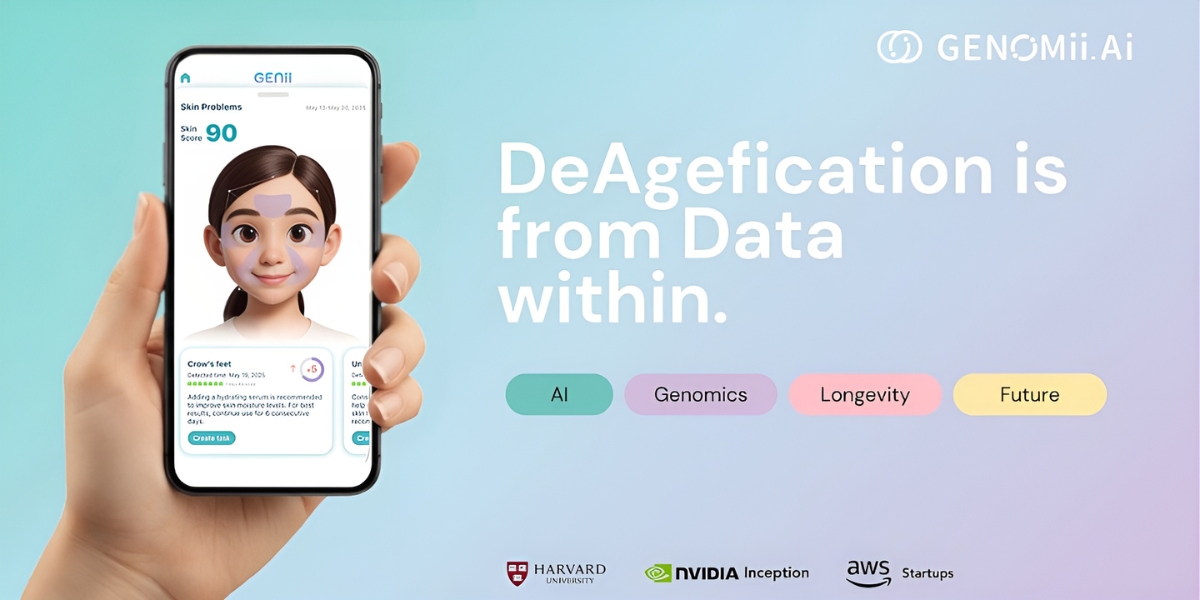
GenomiiAI introduces TwinsXM engine, an AI-powered wellness platform that remembers, correlates, and adapts to users’ health data over time. It builds a dynamic digital twin that delivers personalized and proactive care recommendations, especially for women navigating complex health changes in midlife. 

Health is never static. The blood sugar spike recorded today might disappear tomorrow. The rash that flares after a stressful week can vanish as quickly as it arrived. Hormones, food, sleep, stress, and even the weather can shift how people feel from one day to the next. 

For millions, especially women navigating the complex realities of their 30s, 40s, and 50s, this unpredictability is a daily challenge that most health apps, trackers, and even doctors fail to address. What happens when the advice they used yesterday no longer applies today? What if their health story is more than a collection of isolated data points?

GenomiiAI (Genomii), a precision wellness platform born from lived experience and scientific rigor, believes the answer lies in memory. Not the kind of memory that people store in their heads, but a digital memory that grows with them, remembers their struggles, and adapts to their changing needs. 

At the heart of GenomiiAI is the TwinsXM, which stands for digital twins memory infrastructure. The creators designed this proprietary AI engine to do what no other wellness platform has managed: remember, correlate, and adapt to users, just like the human brain.

If GPT is the Encyclopedia, TwinsXM is the Memory

Most AI agents today are built for execution. They help people schedule meetings, summarize emails, or answer trivia. They are smart, but they do not know users personally. Execution can be replicated, replaced, or commoditized. However, understanding them over time and building a memory of their health journey is foundational and nearly impossible to copy. That is the idea GenomiiAI is building with TwinsXM.

“Most health apps today are built to respond. Track your food. Count your steps. Give you advice based on yesterday’s data,” says Sally So, GenomiiAI’s founder and CEO. “But life doesn’t happen yesterday. Stress levels change by the hour. Skin reacts overnight. Hormones shift weekly. What we eat, how we sleep, how we age; it’s all in motion.”

GenomiiAI engineered the TwinsXM engine to remember every input users share, from photos of their meals to the subtle changes in their skin captured by a selfie. It does not just store these moments. It learns from them, building a personalized lifestyle graph that links fragmented data, food, sleep, stress, hormones, and inflammation into a living, evolving model of the user.

How TwinsXM Remembers, Correlates, and Adapts

Imagine a woman in her forties who notices recurring skin inflammation. Traditional apps might recommend standard anti-inflammatory diets or generic skincare advice. TwinsXM takes a different slant. 

It notices that her skin inflammation occurs most frequently after nights with less than six hours of sleep. This is particularly so when combined with high-stress workdays and meals containing certain ingredients. Strength training after 4 p.m. helps keep blood sugar stable the next day, even after eating carbs that usually cause spikes.

These observations form the basis for highly personalized recommendations—not generic advice but guidance tailored to her unique biology. They connect all these dots—not just today but next month and next year.

So argues that traditional healthcare systems are not designed to capture these nuances. Even the most sophisticated health apps typically provide what amounts to snapshots, static reports based on limited data points that fail to account for how these elements interact across time.

This is where the TwinsXM engine comes in. Unlike rule-based systems, it learns from users’ past behavior and builds unique predictive models. For instance, when someone logs a late-night snack, TwinsXM does not just note the calories. It checks his sleep data, skin health, stress levels, and even his genetic predispositions. 

If it detects a pattern, such as late-night eating leading to restless sleep and morning puffiness, it flags and remembers this. Then, it adjusts its recommendations accordingly.

So explains, “It’s like having a doctor who’s been studying only me for years. It remembers things I’ve long forgotten, like the fact that my skin always flares two days after I eat strawberries, but only during summer months.”

Building for the Future: Digital Twins and Beyond

The promise of the TwinsXM engine is not just personalization but evolution. The more data users share, the more accurate and insightful the recommendations become. Over time, TwinsXM builds a digital twin, a dynamic model that reflects the user’s lifestyle and how their body responds. This digital twin becomes the foundation for proactive, preventive care, anticipating problems before they arise and guiding users through life’s inevitable changes.

GenomiiAI’s model is particularly timely as the wellness tech market shifts toward precision health and longevity. Women aged 30–50 now have a system that understands their unique needs and creates personalized lifestyle and diet plans.

For So, with the personalization that GenomiiAI brings, it becomes one’s loyalty health platform that they will find hard to delete. With features like personalized avatars, real-time insights, and social sharing, GenomiiAI is also culturally relevant, driving organic growth and engagement. 

She mentions, “Think about the apps you can’t delete. Not because they’re convenient, but because they hold too much of your life.
That’s GenomiiAI.
Replacing us is like switching your personal doctor, therapist, and nutritionist all at once.”

Challenges and Future Directions

So understands some concerns may arise about how GenomiiAI can work harmoniously with actual health providers. She argues, “We’re not replacing healthcare providers. But we’re giving individuals the tools to be more informed participants in their care. When they visit their doctor with three years of precisely documented patterns rather than vague recollections, the quality of care improves dramatically.”

Health platforms like GenomiiAI represent a promising outlook on personalized prevention. The TwinsXM engine transforms the fragmented data users already generate into coherent, actionable insights. It offers a path toward truly individualized wellness, not based on statistical averages but on one’s unique biological story as it unfolds over time.

“In five years, we believe the health app people trust most won’t be the one with the most features. It’ll be the one that remembers them,” predicts So.

The future of health monitoring may not be in more sophisticated sensors or broader data collection, but in systems that remember users, connecting the dots between today’s choices and tomorrow’s outcomes, just as the bodies have been doing all along.


Disclaimer: The content of this article is intended for informational purposes only and should not be construed as medical or professional advice. Always consult with a healthcare provider or a qualified expert before making any changes to your health and wellness routine.

Building Lasting Wellness After Addiction Recovery with Pinnacle Recovery

Key Takeaways

  • Recovery extends beyond sobriety; it encompasses overall well-being.
  • Building a strong support network is crucial for sustained recovery.
  • Engaging in healthy lifestyle choices enhances mental and physical health.
  • Continuous personal growth and a sense of purpose contribute to long-term wellness.

Embarking on the journey of addiction recovery marks a significant turning point in one’s life. Sobriety is an enormous achievement, but it’s only the foundation for a healthier, more fulfilling life. Recovery thrives when there is a focus on not just avoiding substances but on cultivating overall wellness and well-being. Whether it is through therapy, lifestyle changes, or meaningful relationships, every step counts in this transformative process. Learn more about supportive recovery resources at Pinnaclerecoveryut.com.

Establishing a life of wellness after addiction requires ongoing focus on mental health, supportive relationships, meaningful activities, and healthy routines. These elements work synergistically to enhance long-term recovery success. Engaging friends, family, or support groups is crucial, as they offer encouragement and practical tools for overcoming challenges. Recognizing the link between mind and body, a holistic approach involving physical activity and mindfulness is essential for nurturing recovery and fostering positive behavior patterns.

Establishing a Support Network

Recovery is not a solitary road. A robust support network, including family, trustworthy friends, recovery peers, and professional mentors, is essential for emotional support and accountability. Participation in regular meetings, therapy groups, or structured programs creates a safety net, providing advice and empathy from those familiar with the dangers of relapse and the triumphs of recovery. Openness about struggles and progress with supportive people further strengthens personal resilience and commitment.

Adopting a Healthy Lifestyle

Physical health is closely linked to mental stability, especially after recovery. Incorporating regular exercise, balanced nutrition, and good sleep routines boosts energy and improves mood. Activities such as walking, yoga, or swimming help alleviate stress and sharpen focus. Well-rounded nutrition, focused on whole foods, lean proteins, and plenty of fruits and vegetables, supports the healing process and ensures the body can cope with new daily demands. For guidance on building healthy routines during recovery, visit the Centers for Disease Control and Prevention’s stress management guide.

Prioritizing Mental Health

Addressing mental health challenges is a cornerstone of successful recovery. Therapy, whether group or individual, is an essential tool for processing emotions, confronting past trauma, and learning healthy coping mechanisms. Mindfulness, journaling, and structured relaxation techniques, like meditation or deep breathing, help regulate overwhelming emotions and prevent setbacks. Prioritizing mental well-being lays the groundwork for managing stress, avoiding triggers, and maintaining stability.

Finding Purpose and Meaning

Living with intention is powerful after addiction. Pursuing hobbies, working toward new educational accomplishments, or investing in fulfilling work fosters a renewed sense of purpose. Volunteering, for instance, not only builds confidence but also deepens bonds with the community, helping individuals rediscover meaning and joy beyond their past struggles. Setting clear goals, both big and small, ignites motivation and offers concrete milestones to celebrate along the recovery journey.

Developing Relapse Prevention Strategies

Understanding and managing relapse triggers is a key skill in maintaining lasting wellness. Building an actionable plan involves identifying risky situations, developing effective coping strategies, and knowing when to seek support. Avoiding environments linked to substance use, practicing refusal skills, or reaching out to a mentor or group can make all the difference when faced with temptation. Regular self-reflection and review of one’s plan maintain preparedness and bolster confidence in making healthy decisions.

Engaging in Continuous Learning and Growth

Personal development in recovery means staying curious and open to change. Whether through reading, attending seminars, or committing to therapy, continuous learning empowers individuals to adapt to new life situations and refresh their recovery toolkit. Gaining new insights into addiction and healing increases self-awareness and builds resilience, adaptability, and an enduring sense of self-worth.

Participating in Community Involvement

Community engagement is a proven buffer against loneliness and isolation, both common in early recovery. Attending local events, joining group outings, or volunteering not only expands social networks but also reinforces a commitment to sobriety. Connection to a broader purpose and shared activities remind individuals of their value and provide opportunities for mutual support and encouragement during challenging times.

Embracing a Future of Wellness and Purpose

Authentic, lasting wellness after addiction recovery results from a multifaceted approach, including self-care, supportive relationships, purposeful living, and ongoing personal growth. By paying close attention to each aspect outlined above, anyone can build a strong foundation for a joyful, substance-free life, rich with meaning and promise.

Disclaimer: The content of this article is intended for informational purposes only. It does not provide medical, legal, or therapeutic advice. While it discusses strategies for building wellness after addiction recovery, individual results may vary. Always consult with a healthcare professional or addiction specialist before making significant changes to your recovery journey. The information provided is not a substitute for professional treatment or guidance.

Why Advisors Like Robert Indries Are Shaping the Next Wave of Business Exits

The M&A advisory space has a blind spot, and it’s been hiding in plain sight for years.

The majority of advisors helping business owners sell their companies come from finance. Investment banking, private equity, family offices. They know how to build models, run valuations, and structure deals. But most of them have never built a company. They’ve never hired the first employee, figured out how to make payroll when cash was tight, or sat across from a buyer knowing that the outcome of that conversation would determine whether the last decade of their life was worth it.

Robert Indries has done all of those. Not just once, but four times.

As a Partner at Elkridge Advisors, Robert brings a background to the M&A table that most advisory firms simply can’t offer. He’s a 4X exit founder. He’s built 8 businesses that operate across 17 countries. He’s personally been involved in scaling over 300 companies across 19 different sectors. When he sits down with a business owner who is thinking about selling, he’s not working from a template. He’s drawing on the experience of having been that owner across multiple industries and at different stages, under different market conditions.

That distinction is becoming harder to ignore. As the M&A market continues to evolve, business owners are becoming more discerning about whom they bring in to advise them. They’re asking better questions. They want to know whether the person across the table has ever actually been in their position. Whether their advisor has ever had their own money on the line. Whether the person telling them how to present their company to buyers has ever had to present their own.

The traditional advisory model was built for a time when access to buyers and capital was the bottleneck. That’s no longer the case. Deal flow platforms, digital marketplaces, and broader access to information have shifted the playing field. What business owners need now isn’t just someone who can find a buyer. They need someone who understands what makes a company actually sellable from the inside out. That requires operational experience that you can’t learn from a finance textbook or even a decade at an investment bank.

Elkridge Advisors was built on that principle. The firm has a strong track record of success, with many companies that have engaged the firm closing their deals. That’s not a marketing number. It’s the direct result of a process designed by someone who understands what breaks during a deal because he’s lived through it himself. Not as the advisor watching from the sidelines, but as the founder with everything on the line.

The advisory industry has been slow to acknowledge this gap, but the market is starting to correct it. Business owners are gravitating toward advisors who speak their language. Not the language of spreadsheets and comparable transactions, but the language of operations. Hiring. Margins. Customer retention. Leadership decisions that look fine on paper but create problems that surface six weeks into due diligence. Those are the things that kill deals, and they’re the things that only an operator would think to look for.

Robert’s career reflects where the industry is heading. The next generation of top M&A advisors will be those who have built and sold businesses themselves and can apply that experience to help other owners succeed. The credibility gap between someone who has read about exits and someone who has actually done them is wide, and business owners are starting to notice.

For Elkridge, that’s always been the foundation. The firm wasn’t founded by bankers seeking deal fees. It was started by operators who already understood what it takes to get a company from where it is to where it needs to be in order to close. That’s a fundamentally different starting point, and it shows up in the results.

As more business owners prepare to exit, firms that earn their trust will be those with real operational experience. They’ll be the ones that can look an owner in the eye and say, “I’ve been exactly where you are.” That’s not something you can fake. And it’s not something you can hire for. It’s a unique skill set that comes from direct experience in building and selling businesses.


Disclaimer: The information presented in this article reflects the personal experiences and opinions of Robert Indries and Elkridge Advisors. While the insights shared are based on their expertise and success in the M&A advisory industry, individual results may vary. The content is intended for informational purposes only and should not be construed as financial, legal, or investment advice. Readers are encouraged to consult with a qualified professional before making any decisions related to business exits or advisory services.

The World Cup Is Coming to New York. The $3 Billion Economic Bonanza May Not Be.

MetLife Stadium hosts its first FIFA World Cup match in 82 days. Hotel bookings across New York City are running below where they were at this same point in 2025 — a year with no special events. The hotel union contract expires June 30, right as the tournament hits full stride. And the city’s own comptroller says New York stands to spend more hosting the Cup than it earns from it. This is the honest accounting of the world’s biggest sporting event landing in the world’s biggest city.

FIFA’s projection has always been generous. The event is expected to generate $3 billion in economic activity in the New York area, based on the assumption that 1.2 million visitors will come to the New York–New Jersey region during the tournament. Mayor Zohran Mamdani said earlier this month that the Cup has “the potential to be an immense economic driver in this city.” The Host Committee, the city’s tourism agency, and the stadium itself have been coordinating for years around that number.

The data, as of late March 2026, does not support the optimism.

What the Booking Numbers Actually Show

Advanced reservations for New York’s World Cup weeks are trending 2% below advance bookings for those same days in 2025 — when there were no special events. That is not a small underperformance. It means that at this point in the planning calendar, the World Cup has produced measurably less hotel interest than an ordinary summer in New York City.

“The bookings have been softer than expected,” said Sarah Bratko, vice president and policy counsel for the American Hotels & Lodging Association.

The pricing environment offers a partial explanation. The Midtown Hilton is charging $379 a night for its cheapest room in late May. But for the four days before the first match on June 13, prices are listed at $533 a night. And for the four nights preceding the final match at MetLife on July 19, the rate jumps to $627. Hotels have priced aggressively in anticipation of demand that has not yet materialized in advance bookings.

Sports economists have long questioned whether the FIFA economic model applies cleanly to a metro like New York. The FIFA estimate was wildly out of line with previous World Cup events, primarily because most tickets will be bought by people living in the New York area, with the possible exception of the final match. And the tourists who are traveling to games may be seeking cheaper accommodations. Spending by local ticket-holders — who eat at home, sleep in their own beds, and drive to MetLife — does not circulate through the hospitality ecosystem in any meaningful way.

The City’s Own Math Says New York Loses Money

Even if the event did generate the tourism traffic predicted, additional tax revenue would be no more than $55 million, according to the recent estimate from city comptroller Mark Levine, while the city is expected to spend $70 million in additional costs for the NYPD, Department of Small Business and Emergency Management. The Mamdani administration disputes the comptroller’s findings, projecting $1.7 billion in direct spending and far higher tax returns. The gap between those two figures — $55 million versus projections running into the hundreds of millions — reflects a genuine and unresolved disagreement about how mega-event economics translate to actual municipal receipts.

The distinction between gross economic activity and net municipal gain is one that cities consistently muddle in the run-up to large sporting events. A ticket sold at MetLife generates revenue for FIFA, not New York. A fan who flies in from São Paulo and stays at a Midtown hotel generates sales tax and hotel occupancy tax — but those numbers, spread across a five-week tournament, amount to a fraction of the projections that make headlines before the first whistle.

A Hotel Industry Already Under Pressure

The booking shortfall arrives at a moment when New York’s hotel sector is operating under compounding stress. The industry’s rocky footing comes as a contract with the powerful hotel union expires on June 30 for the first time in a decade. That deal increased the annual pay for housekeepers to $82,000 a year before overtime, and the union is expected to push for major wage increases in a new pact.

The Hotel and Gaming Trades Council is openly preparing for the possibility of a strike during the tournament if negotiators fail to reach a new contract before the games come to the region. The union has sped up member training and mobilization and launched a strike-preparation website aimed at travelers and supporters. The union’s master contract covers more than 27,000 workers across roughly 250 properties — approximately 75% of the hotel industry within New York City’s five boroughs.

A strike during the World Cup would be catastrophic for the city’s hospitality sector precisely at the moment it was supposed to benefit most from it. Neither side has publicly committed to a timeline for negotiations, and the June 30 expiration sits squarely inside the tournament’s run, which concludes with the MetLife final on July 19.

The Airbnb Problem No One Will Fix

One factor constraining accommodation capacity is entirely self-inflicted. New York City’s Local Law 18, enacted in 2023, requires short-term rental hosts to register with the city, be physically present during any guest stay, and limits rentals to one guest unit at a time. Airbnb listings in New York City dropped by roughly 90% after the law took effect.

Ahead of the World Cup, Airbnb pushed aggressively for a temporary suspension of those restrictions. A coalition of City Council committee chairs issued a letter firmly declining to suspend the city’s short-term rental regulations, stating that doing so would “undermine housing stability” for residents. Mayor Zohran Mamdani’s administration confirmed it would not consider any changes to the existing laws.

New York City rejected a bid to lift its Airbnb restrictions for the tournament. Demand is flowing to Newark, Jersey City, and Hoboken instead, where short-term rental occupancy on match days is projected to jump 296% compared to normal levels. New Jersey hosts, not New York City residents, will capture the lion’s share of short-term rental revenue from 1.2 million visiting fans. The economic windfall that could have circulated through Brooklyn, Queens, and upper Manhattan has been rerouted across the Hudson.

What the Tourism Agency Says

NYC Tourism + Conventions admits that bookings at this point in the year are below those for 2025, but says it expects the situation to improve. Its surveys show 42% of U.S. travelers and 49% of global travelers said they have made concrete plans to attend the World Cup, but have not booked yet. “We expect to see fans confirm their travel following the next sales phase in April. We continue to watch the situation closely,” said Julie Coker, CEO of the agency.

That is a reasonable position. It is also a position that was articulated with confidence a year ago, when projections assumed demand by now would look very different. The April booking surge Coker anticipates would need to be substantial to close the gap. Global travel to the United States faces additional friction from visa processing delays and the Trump administration’s tightened entry requirements — constraints that industry groups have raised but city officials have been reluctant to address publicly.

The Honest Assessment

None of this means the World Cup will be an economic failure for New York. MetLife Stadium holds 82,500 fans. Eight matches, culminating in the most-watched sporting event on the planet, will drive real spending through restaurants, transit, entertainment, and retail for 39 days. The final alone — with the cheapest tickets reportedly approaching $9,000 — will concentrate extraordinary wealth in the Tri-State area for a single weekend.

What the current data challenges is the premise that this event will deliver transformative, budget-changing revenue for the city of New York. The math from the comptroller’s office, the booking shortfall against 2025 baselines, the hotel union’s strike posture, and the city’s own decision to forgo short-term rental flexibility all point toward a narrower outcome than FIFA’s projection suggests.

New York is hosting the World Cup final. Whether it profits from doing so is a different question — one that the next 82 days will begin to answer.