The Quiet Revolution in Hair Restoration: Why Today’s Hair Transplants Look More Natural Than Ever


Hair loss has been a concern for generations. For many people, thinning hair or a receding hairline can affect confidence and personal image. Yet the way hair loss is treated today is very different from what it was even ten years ago.

Hair transplantation has gradually developed into a sophisticated field within medical aesthetics. What once relied on relatively simple surgical techniques now combines medical expertise, refined instruments, and careful aesthetic planning.

The objective is no longer just to relocate hair follicles from one part of the scalp to another. Surgeons now focus on recreating natural growth patterns so the result blends seamlessly with a patient’s existing hair.

How Technology Has Changed Hair Transplant Procedures

A major shift in the field has come from the use of more precise instruments and improved implantation techniques. These developments help reduce trauma to the scalp while improving the survival of transplanted grafts.

Two approaches that have become widely known are Sapphire FUE and Direct Hair Implantation (DHI). Both methods involve extracting individual follicles from the donor area and placing them carefully in thinning regions of the scalp.

In Sapphire FUE, surgeons use blades made from sapphire crystals rather than traditional steel. These blades allow for very fine incisions, which can help reduce tissue stress and allow grafts to be placed closer together without compromising the natural look of the hair.

Direct Hair Implantation (DHI) uses specialized implanter pens that allow surgeons to insert follicles directly into the scalp while controlling the angle, direction, and depth of each graft.

This level of control makes it easier to reproduce the irregular patterns that naturally occur in human hair growth, which is one of the reasons modern hair transplant results often appear much more natural than older procedures.

For people researching modern hair transplant techniques, understanding these methods offers a clearer picture of how the field has developed.

Hairline Design: The Art of Creating Natural Results

Technology alone does not determine the final outcome of a hair transplant. Specialists often point out that natural-looking results depend just as much on thoughtful design.

A natural hairline is rarely perfectly symmetrical. Small irregularities and variations give hair its organic appearance. Surgeons take these details into account when planning the placement of grafts.

Typically, single-hair follicles are placed along the very front of the hairline. Density then gradually increases behind this area. This transition helps transplanted hair blend smoothly with existing strands.

The crown requires a different approach. Hair in this region grows in a circular pattern, which means each graft must be placed at the correct angle to recreate the natural swirl of hair.

These aesthetic considerations are one reason hair transplantation is often described as a procedure that requires both technical skill and careful visual judgment.

Changes in the Patient Experience

The patient experience has also evolved alongside surgical techniques.

Most hair transplant procedures today are performed under local anesthesia, allowing patients to remain comfortable while the surgical team works with precision.

Many clinics now use digital tools to analyze the scalp before surgery. These systems help evaluate donor capacity, hair density, and the characteristics of the patient’s hair. With this information, surgeons can plan the procedure in greater detail.

Patients often receive a clearer explanation of the expected process and recovery period before the procedure takes place.

Why Follow-Up Care Is Important

Although the transplant procedure itself may take only one day, hair restoration unfolds gradually.

After transplantation, follicles usually enter a resting phase before new hair begins to grow several months later. This stage is part of the normal hair growth cycle.

During this period, proper aftercare helps protect the grafts and supports healthy regrowth. Follow-up consultations allow medical teams to monitor progress and answer any questions that arise during recovery.

Some patients may also receive guidance on treatments that help maintain existing hair and manage ongoing hair loss.

Growing Interest in Hair Restoration

Interest in hair transplantation has expanded as techniques and technologies have improved. The procedure has become more predictable, and the results typically appear far more natural than in the past.

At the same time, discussions about hair loss have become more open. Many people now research available options in detail before deciding whether treatment is right for them, often exploring medical centers that specialize in advanced hair restoration procedures.

Hair transplantation today is increasingly viewed as a carefully planned medical procedure that combines technical precision with individualized care.


Disclaimer: This article was developed with insights from specialists working in modern hair restoration and medical aesthetics. It discusses commonly used techniques such as Sapphire FUE and Direct Hair Implantation (DHI), along with the importance of personalized treatment planning and patient follow-up. This content is for informational purposes only and is not intended as medical advice. The details shared here are not a substitute for professional consultation or evaluation by a qualified healthcare provider. If you are considering hair restoration or any other medical procedure, it is recommended that you consult with a licensed professional to determine the best course of action based on your individual needs and circumstances.

The First Year After Retirement: Financial Decisions That Matter Most

Navigate your first year of retirement with confidence. Learn key decisions on Social Security, withdrawals, and Medicare to avoid costly mistakes early on

Nobody warns you about the strange financial vertigo that hits in the first few months of retirement. The paychecks stop, the structure disappears, and suddenly, decisions that felt abstract during your working years are sitting on your kitchen table, demanding answers you may not feel fully prepared to give.

Social Security timing, withdrawal sequencing, and healthcare decisions like understanding medigap vs medicare advantage all come crashing down at roughly the same time, often with a deadline or before you are even fully settled into your new retirement lifestyle.

Here is the uncomfortable truth: the first twelve months of retirement are arguably the most financially consequential of the entire chapter. Not because anything detrimental is going to happen, but because the choices made in this window have a way of locking in trajectories that are surprisingly hard to change later. Carefully thinking through each decision and making the right choice can make everything that follows considerably easier.

Social Security: The Decision That Looks Simple on the Surface

Most people treat Social Security enrollment like a finish line. You retire, you file, and you collect your benefits, but the timing of when you claim is one of the most significant financial levers available to retirees, and it is one that cannot be pulled twice.

There’s a big difference in claiming at 62 versus waiting until 70. It can translate to a difference of hundreds of dollars per month, every month, for the rest of your life. And potentially your spouse’s life after yours.

The right answer depends on your health, your other income sources, your spouse’s situation, and your tax picture. There is no universal correct move, but there is almost always a better one, and it is worth finding it before you file rather than after.

Taxes Do Not Retire When You Do

One of the more surprising realizations in early retirement is how much the tax conversation shifts once a regular paycheck is no longer in the picture. The order in which you draw from different account types, including traditional IRAs, Roth accounts, and taxable brokerage accounts, can have compounding tax consequences that play out over decades, not just the current filing year.

It takes some modeling to see what decisions make sense for your situation. A conversation with a financial planner or CPA who specializes in retirement distribution strategy can be worth the time.

Getting Medicare Right the First Time

For most people, leaving a job means enrolling in Medicare for the first time. The system has a lot of moving parts, the deadlines are strict, and getting something wrong can affect you for years. It is important to learn about all of your options before you have to make a decision.

One of the biggest choices you will face is how to fill the gaps that Original Medicare does not cover. There are two main ways to do this, and they work very differently. The right fit depends a lot on where you live and how much you tend to use healthcare. What is worth knowing early is that this decision can be hard to change later. Taking the time to understand your options before you choose can save time and money.

Getting comfortable with this decision in year one is often easier than unwinding it in year five.

The Budget You Think You Have vs. The One You Actually Need

Most people enter retirement with a spending plan built on reasonable assumptions. Some of those assumptions hold up well, while others tend to drift. Travel and leisure often exceed projections in the early years, when energy and enthusiasm are at their peak. Healthcare out-of-pocket costs catch a lot of people off guard, and some expenses tied to working life, like commuting, professional clothing, and the daily routines that come with the job, quietly fade away, freeing up more room than expected.

Rather than locking in a rigid budget before you have a single month of real retirement data, it can help to treat year one as a calibration period. Track spending broadly, stay flexible, and let actual patterns inform the long-term framework.

Retirees who take this approach often find themselves heading into year two with a plan that feels sustainable rather than one that simply looked good on paper.

The Real Work of Year One

Retirement is often framed as a finish line, the end of decades of working and planning. Financially, though, it’s more like the start of a different kind of active engagement. The decisions made in the first year aren’t administrative loose ends. They’re the foundation on which much of what comes after is built.

The retirees who tend to navigate this period well aren’t necessarily the ones with the most money or the deepest financial background. They’re the ones who stay curious, resist the urge to put things on autopilot, and give the consequential choices the attention they deserve. Year one has a way of setting the tone for everything that follows, and the key to success in retirement is approaching it that way.


Disclaimer: This article is intended for informational purposes only and should not be construed as financial, tax, or legal advice. The information provided is general in nature and may not apply to your specific circumstances. We recommend consulting with a financial planner, CPA, or other professional advisors to discuss your individual situation before making any financial decisions related to retirement.

Beyond Limits: Theater Breaking Through Barriers and the Art of Transcendence

By Jim Manley 

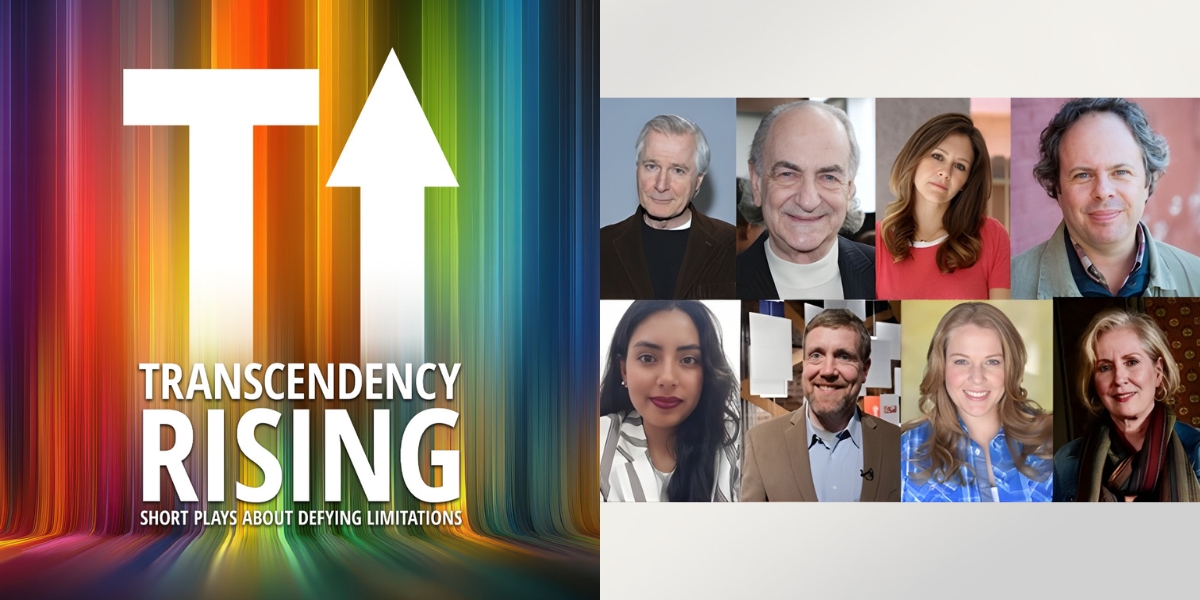
On a stretch of West 42nd Street where theatergoers drift between familiar marquees and new experiments, an evening of short plays is quietly attempting something more ambitious than its modest format suggests. Transcendency Rising: Short Plays About Defying Limitation, presented by Theater Breaking Through Barriers, gathers an unusually wide range of voices, from John Patrick Shanley to Bekah Brunstetter and Lyle Kessler, to explore a deceptively simple idea: what it means to move beyond the limits placed on us.

For Nicholas Viselli, the production is part of a longer arc. The company began producing short play festivals more than a decade ago, initially as a practical solution. In the wake of economic strain, the format allowed them to employ more artists and bring together writers at different stages of their careers. What emerged, however, was something more enduring: a platform that could attract major playwrights while nurturing new voices, all within a shared thematic frame.

This year’s theme, transcendence, arrives at a moment when the word feels both overused and urgently necessary. Rather than framing it in spiritual terms, Viselli and his collaborators approach it as an action: to transcend is simply to move beyond. The plays that result are less about escape than about confrontation, asking how individuals push past limitation, whether imposed by circumstance, society, or themselves.

“What is so appealing about the theme,” Viselli said, “is that it can mean so many different things all at once.” That elasticity is evident across the evening. Some works lean into resilience, others into reckoning. Together, they form a mosaic of human attempts to reach higher ground, however uneven that climb may be.

The range of perspectives is part of the point. Established voices like Shanley and Kessler sit alongside writers still emerging, creating a dialogue not just across themes, but across generations of theatrical storytelling. The result is an evening that resists a single tone. Instead, it moves fluidly, from intimate monologues to more expansive scenes, mirroring the unpredictability of the human experience it seeks to capture.

Yet what distinguishes Transcendency Rising is not only its writing, but the context in which it is produced. Theater Breaking Through Barriers has, for decades, centered artists with disabilities, not as a niche category but as an integral part of its artistic identity. The company’s productions consistently feature performers with and without disabilities working together, an approach that, while still uncommon, feels increasingly essential.

Viselli is careful to challenge the assumptions often attached to that work. The goal, he suggests, is not to position disability as something to be “overcome,” but to reframe it entirely. “Disability is merely a human characteristic and nothing more,” he said, pushing back against narratives that separate artists into categories of limitation and exception. In this framing, transcendence is not about rising above disability, but about dismantling the structures that define it as a barrier in the first place.

This philosophy extends beyond casting into the very design of the production. Accessibility, often treated in theater as an afterthought or a special accommodation, is here embedded from the beginning. Captioning, audio description, and adjusted sensory elements are not add-ons but integral components of the aesthetic.

The effect is subtle but transformative. Audience members are not separated into those who “need” accessibility and those who do not; instead, everyone experiences the same performance through a shared set of tools. What might initially seem like a technical adjustment becomes, in practice, a shift in perspective. Details are clearer. Moments land with greater precision. The experience becomes, paradoxically, both more inclusive and more immediate.

There is a broader cultural resonance to this approach. In an era when connection is increasingly mediated through screens, live theater offers something distinctly analog, “raw, unfiltered,” as Viselli describes it. The communal act of watching, listening, and responding in real time becomes its own form of transcendence, a movement away from isolation and toward shared experience.

That idea, of theater as a space where divisions can dissolve, is woven throughout the evening. The plays do not ignore the fractures of contemporary life; if anything, they highlight them. But they also suggest the possibility of something else: a collective act of imagination that allows audiences to see beyond those fractures, if only for a moment.

For first-time audiences encountering Theater Breaking Through Barriers, the invitation is both simple and quietly radical. Come without preconceptions. Engage with the work as you would any other piece of theater. If the production succeeds, Viselli suggests, the distinctions that often dominate conversations about representation begin to fall away. What remains is the experience itself, the connection between performer and audience, the recognition of shared humanity.

In that sense, Transcendency Rising is less a statement than a demonstration. It shows, rather than tells, what an integrated, accessible, and artistically rigorous theater can look like. And in doing so, it raises a question that lingers beyond the final curtain: if this model is possible here, why not elsewhere?

The evening ultimately resists tidy conclusions. Instead, it offers a series of encounters, moments of humor, tension, reflection, that accumulate into something larger. Transcendence, it suggests, is not a singular achievement but an ongoing process, one that unfolds differently for each person.

Transcendency Rising: Short Plays About Defying Limitation runs March 21 through April 11, 2026 at Theatre Row (410 West 42nd Street, New York City). 

Featuring new works by Adam Edmund Linn, Jeff Tabnick, Tatiana G. Rivera, Bekah Brunstetter, Marc Winski, John Patrick Shanley, Dipti Mehta, Kathryn Grant, Lyle Kessler, and Cate Allen.

Directed by  The production is directed by Nicholas Viselli, Eric Nightengale, Brian Leahy Doyle, Ivette Dumeng, Ann Marie Morelli, and Pamela Sabaugh.

Starring Fareeda Pasha, Ann Marie Morelli, Dan Teachout, Aya Ibaraki, Melanie Portsche, Katharine Rose Kessler, Jennifer Elizabeth Bradley, Jamie Petrone, Amanda Cortinas, Emma Shafer, Marc Winski, Nelson Avidon, Veronica Cruz, Dipti Mehta, Carla Brandberg, Scott Barton, Enrique Huili, Xen Theo, Samantha Debicki, Stuart Green, John Little, Ann Flanagan, and Christine Bruno.

Performances are Thursday and Friday at 7 PM, Saturday at 2 PM and 7 PM, and Sunday at 2 PM, with an additional performance on Wednesday, April 8 at 7 PM. Tickets are $60 and are available at the Theatre Row box office or online at www.theatrerow.org.


A Deeper Conversation on Brazilian Jiu Jitsu, Mastery, and the Discipline of Learning

By Elena Mart

An Interview with Julio Foca Fernandez 

Welcome, readers. Today, we are speaking with Julio Foca Fernandez, a respected competitor,  instructor, and one of the key figures in the development of Brazilian Jiu-Jitsu in the United  States. With decades of experience on the mat and in teaching, Julio brings deep insight into advanced training. We are here to discuss his book, Brazilian Jiu-Jitsu for Experts Only, which is the only book ever written by legendary Carlson Gracie. Julio feels honored that Carlson partnered with him to create this book specifically for serious practitioners seeking refinement nd clarity. 

Interviewer: The title Brazilian Jiu Jitsu For Experts Only is very direct. Why did you feel it was important to be so clear about who this book is for? 

Julio Foca Fernandez: Because clarity matters. Beginners need encouragement and basic structure, but advanced practitioners need honesty. When someone has trained for many years, they already understand how demanding Brazilian Jiu-Jitsu is. They are not looking for promises or simplified explanations. This book is meant to speak directly to those practitioners and help them improve how they apply what they already know, and to be clear.  

You see, many advanced students feel frustrated because most instructional material is designed to appeal to beginners. A book that talks too much and shows too little, for instance. I wanted to respect experienced practitioners, so we created this book assuming the reader already understands the fundamentals and is ready to focus on the details that are truly important. 

Interviewer: Julio, your teaching background is very clear throughout the book. How did your experience as an instructor influence the way techniques are presented? 

Julio Foca Fernandez: Teaching teaches humility and helps you realize quickly that if students are not improving, it is often because the explanation was unclear. Over time, as I taught individuals, I learned to break techniques into simple steps without losing depth. That approach shaped the book. We were very careful about how techniques were shown. For example, each photo exists for a reason, and each step highlights something important, whether it is posture, grip, or weight shift. The goal was to remove confusion so the reader can focus on practice rather than interpretation. 

Interviewer: The visual layout is one of the book’s strongest features. Why did you choose to rely so heavily on photos instead of long explanations? 

Julio Foca Fernandez: Brazilian Jiu-Jitsu is physical. It lives in movement. You can describe a technique perfectly with words and still leave the reader confused. However, when you have a visual cue or a photo for reference, you can better learn the techniques. When a practitioner studies a sequence of images, they can pause, compare, and return to the movement later. This supports repetition and reflection, which are essential for learning at an advanced level. The book follows the same principle, as it shows clearly what Brazilian Jiu-Jitsu and its techniques are.  

Interviewer: Many experienced practitioners talk about hitting plateaus. How does this book help someone move beyond that stage? 

Julio Foca Fernandez: Plateaus happen when people stop paying attention to fundamentals.  They repeat movements without improvement. But at advanced levels, progress comes from refining the basics, not adding complexity. This book brings attention back to posture, balance, and control, and allows the practitioner to improve small details and fix where they might be lacking.  That is how plateaus break. The book shows how positions flow into each other. That understanding creates movement instead of stagnation. 

Interviewer: The book covers techniques applicable to sport Jiu-Jitsu, submission grappling,  and mixed martial arts. Why was it important not to separate these too much? 

Julio Foca Fernandez: Jiu-Jitsu is one art. Rules change, but principles stay the same. Balance,  timing, pressure. I never liked dividing the art into too many categories. If a technique works, it works. Similarly, many practitioners today train across different formats. Under the supervision of the legendary Carlson Gracie, I wanted the book to remain useful regardless of context and to focus on principles that apply everywhere. 

Interviewer: Discipline and mindset seem to run quietly throughout the book. Was that intentional?

Julio Foca Fernandez: Absolutely! Discipline is training, and Brazilian Jiu-Jitsu is the living example of it, as without discipline, the techniques we are teaching have no value. You must repeat, study, and respect the process. There is no other way. The book reflects that philosophy.  It does not rush the reader but encourages patience and allows them to learn at their own pace.  That is how real learning happens. 

Interviewer: Who do you believe will benefit most from this book? 

Julio Foca Fernandez: As the title of the book states, it is for advanced students, competitors,  and instructors. Plus, anyone who already trains regularly and wants to refine their understanding rather than collect techniques. Plus, this book is for people who are committed. If someone wants easy answers, this is not for them. If they want to study seriously, it will help. 

Interviewer: How would you recommend readers use this book alongside their training? 

Julio Foca Fernandez: Slowly. Study one technique. Drill it. Test it. Return to the book.  Learning happens over time. Plus, do not rush, and repetition matters. 

Interviewer: What do you hope readers take away after spending time with the book? 

Julio Foca Fernandez: Clarity, focus, and more understanding of Brazilian Jiu-Jitsu. And respect for the process and sportsmanship. 

Thank you for your time, Julio. It was such a pleasure to meet you two. With that, we have come to the end of our interview. If you enjoy our chat and want to purchase this amazing book, you  can visit the Amazon page: https://www.amazon.com/dp/B0DZN5CWFT/

Media Contact:  

Book Details: Brazilian Jiu-Jitsu, For Experts Only: Carlson Gracie with Julio “Foca” Fernandez Author Name: Julio Foca Fernandez 

ISBN Number: 978-1971950761 

Ebook Version: Click Here 

Hardcover Version: Click Here 

Paperback Version: Click Here

YouTube TV Launches Cheaper Flexible Plans With New Genre-Based Bundles

YouTube TV is changing how people pay for live television by offering smaller, cheaper packages instead of one large, expensive bundle. These new options start at $54.99 per month and focus on specific interests like sports, news, or family shows, which can save customers about $28 every month compared to the old standard price. By moving away from a single-bundle strategy, the service allows viewers to pay for the channels they actually watch rather than a long list of stations they never open.

A New Way to Choose Channels

The television industry is moving toward a model called a “skinny bundle.” This means a smaller group of channels sold at a lower price. YouTube TV now offers over ten of these genre-based plans. For many years, cable companies forced people to buy 100 channels just to get the five they liked. Now, a person who only cares about basketball or football can choose a sports-centric plan without paying for cooking shows or cartoon channels.

Recent data shows that these new tiers are attracting people who previously thought live TV was too expensive. With an entry price of $54.99, it is one of the more affordable ways to get live local stations and national networks. New subscribers can also find introductory discounts that lower the price even more during their first few months. This change is a direct response to how people use streaming services today, where flexibility is often more important than having a huge number of options.

The Transition for WOW! Customers

A large change is also happening for people who use WOW!, a regional provider of internet and TV. An independent report explains that WOW! is stopping its own live TV service. Instead of building its own technology, the company is moving its customers over to YouTube TV. This migration is expected to be finished as soon as April 2026.

Many legacy WOW! Users will be moved into YouTube TV bundles that include promotional pricing. This move helps the internet provider focus on providing fast web speeds while letting a specialist handle the television side. For a long-time customer who is used to a traditional cable box, this might feel like a big shift. However, the goal is to provide a more modern app experience that works on smartphones, tablets, and smart TVs.

Focus on Live Sports

YouTube TV Launches Cheaper Flexible Plans With New Genre-Based Bundles (2)

Photo Credit: Unsplash.com

The timing of these new plans aligns with major events in the sports world. Since it is currently March 2026, many viewers are looking for ways to watch March Madness without committing to a full year of expensive service. The new sports-centric skinny bundle is designed for this exact purpose. It provides the specific channels needed for the tournament at a competitive price.

Industry experts say this is a smart move to grab the attention of “cord-cutters,” which are people who have cancelled their traditional cable subscriptions. Digital media analyst Sarah Jenkins noted in a recent industry review, “The goal is to lower the barrier for entry. If you can give a fan exactly what they want for $50 or $60 instead of $100, they are much more likely to stay subscribed.” This strategy helps YouTube TV compete with other standalone apps that only offer one specific sport or league.

Challenges with the Viewer Experience

While the lower prices are a positive change, not all the news is good for viewers. Many people who use the YouTube TV app on their television screens are expressing frustration with a new advertising format. The platform has started rolling out 30-second ads that viewers cannot skip.

In the past, ads were often shorter or could be bypassed after a few seconds. Now, when a person is watching a show on a big screen, they might have to sit through a full half-minute commercial. Surveys of current users show strong negative reactions to this change. One long-time subscriber, Mark Davis, shared his thoughts in an online discussion, “The price is better, but the experience feels more like old-fashioned cable because of the long ads. It is frustrating to wait thirty seconds every time a break happens.”

Summary of Costs and Benefits

To understand the value of these updates, it helps to look at the numbers.

Feature Old Plan Style New Genre-Based Plans
Starting Price Around $82.99 $54.99
Monthly Savings $0 Up to $28
Customization One large bundle 10+ genre options
Ad Experience Shorter/Skippable 30-second unskippable (on TV)

The shift suggests that the future of television is about choice. People want to pay for what they use. By offering specialized tiers for news, entertainment, and family content, the service is trying to keep people from leaving for other apps. While the longer ads are a downside for many, the lower monthly bill is a strong incentive for others to make the switch.

Acting, Fashion, and the Details That Shape Presence

By: Alva Ree

My name is Annie Rosenfelt, and I’m a Ukrainian actress living in NYC. I studied at the American Academy of Dramatic Arts and had my stage debut in 2019 at the Gene Frankel Theatre in Love’s Labour’s Lost, directed by Thomas G. Waites.

Today, I continue training and strengthening my craft under director Aleksey Burago at Theater 86, where the focus is always on building discipline, presence, and the actor’s internal life. While acting and fashion may seem like two separate worlds, for me, they frequently intersect.

Fashion as a Tool for Presence

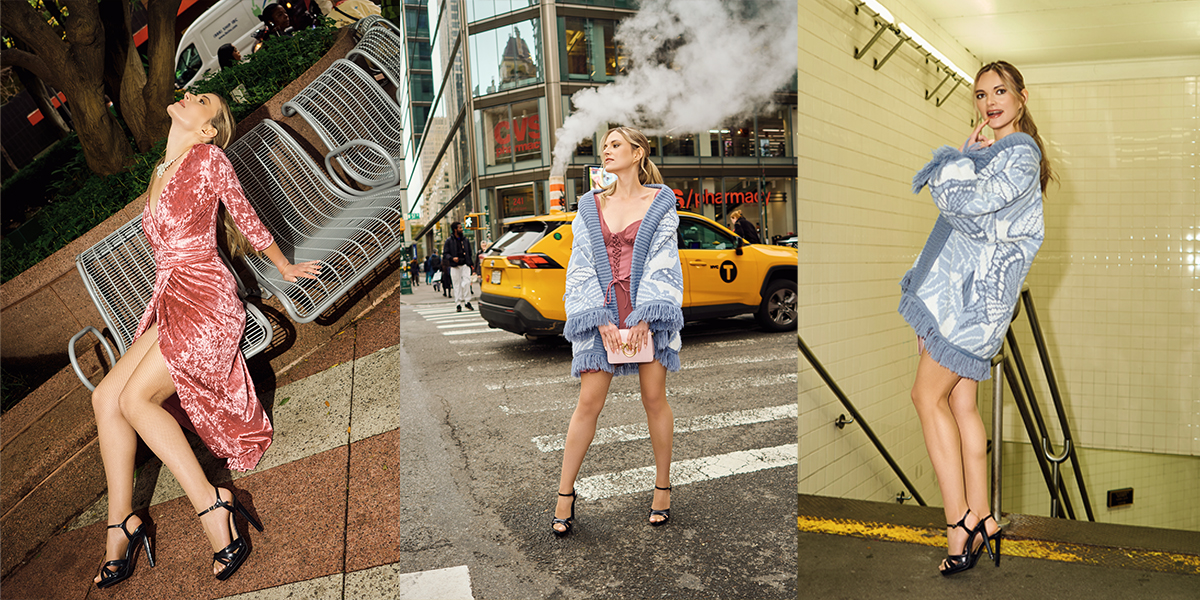
I see fashion as a supporting tool for creating a strong stage presence. Acting is built on many layers, and very often, the smallest details can become the most important ones. There is a reason people say the devil is in the details. Costume, silhouette, color, and texture can influence how a character is perceived, even before the first line is spoken. The audience immediately absorbs visual information. One of my personal favorite aspects of fashion is the ability to recreate historical periods. As an actor, stepping into clothing inspired by the past can have a significant impact on your physical behavior. Costume becomes a connection between visual art and performance.

A Shapeshifting Personal Style

If I had to describe my personal style, I would call it a classic shapeshifter. I’ll be whatever my role requires, just kidding, but not entirely. The beauty of fashion lies in the absence of rigid rules. It is a space where experimentation is encouraged, and transformation is possible. Fashion allows people to try new identities, to push boundaries, and sometimes to discover new things about themselves. For me, fashion is not about perfection. It is about creativity and boldness.

Costume and Character

Clothing plays a substantial role in how characters are constructed on stage. Of course, costume alone will not make or break a performance. Without the inner life of the character, emotional truth, psychological depth, and intention, beautiful clothes can simply serve as decoration. But when strong acting and thoughtful costume design meet, something truly impactful can happen. This is especially true in classical theatre. In works by Shakespeare or Chekhov, visual elements are deeply connected to storytelling. Costume does not replace the character’s inner world, but it can elevate it.

Fashion in New York

Living in New York has also shaped the way I see fashion. This city treats fashion as something alive. It encourages experimentation and gives people the freedom to try things, fail, and learn from the process. Fashion here is not just clothing. It includes makeup, hair, posture, and the complete transformation of a person’s image. Many of my friends work in fashion, and I regularly learn from them. Sometimes the smallest details, the way a jacket is tailored, the way makeup highlights bone structure, or the way fabric interacts with light, can dramatically influence how someone is perceived.

Confidence Over Appearance

What ultimately matters most in acting is skill and confidence. Fashion actually reinforces an important lesson: it is rarely about how someone objectively looks. It is about how a person feels in what they are wearing. Confidence is often conveyed instantly. A confident actor commands attention long before speaking a line. Fashion can support that confidence, but it cannot replace it.

Presence Always Comes First: Supporting Artists in New York

Finally, I would like to highlight something that matters deeply to me: supporting artists and artistic experimentation in New York. So many talented people are looking for opportunities to share their work with the world. Acting, fashion, and other creative fields depend on curiosity, openness, and community support. As someone currently training at Theater 86 Lab, a theatre that is now searching for a new space, I can say that artists need encouragement from their communities. New York has always been a city where creativity thrives. Supporting artists is one of the ways we can keep that spirit alive.

Unlocking Natural Gas Tariffs: NatGasHub Maps the Future

By: James Renner

NatGasHub.com, a name that has been steadily gaining ground in the energy sector, is working on something that, while seemingly simple, has been long overdue, bringing much-needed clarity and efficiency to the complex world of natural gas pipeline tariffs. For anyone who deals with the intricacies of energy trade in New York or across North America, keeping track of thousands of tariff line items spread across numerous pipelines and utilities isn’t just tedious; it can be a logistical challenge. This is the issue that Jay Bhatty, the company’s founder and CEO, aimed to address. From this reporter’s perspective, the introduction of their flagship platform, Automated Gas Pipeline Tariffs (or gTARIFF), may be seen as a breakthrough for industry insiders, much like the subway map was for city dwellers decades ago.

The gTARIFF platform has quickly become known as, quite fittingly, the Google Maps of natural gas tariffs. It centralizes up-to-the-minute data from an impressive roster: over 215 interstate and intrastate pipelines and nearly 500 utilities, extending from Brooklyn all the way to British Columbia. Instead of jumping from portal to portal to gather the latest rates and surcharges, users are provided with an integrated, real-time view directly within their trading and risk management systems. For New York’s busy energy traders, schedulers, and utility planners, that’s not just convenient; it could represent a significant improvement in operational efficiency and decision-making.

Accuracy in tariff management isn’t just about staying organized. When margins are tight and market prices shift quickly, one outdated charge or missed regulatory update could result in millions in losses, regulatory issues, or, worse, an avoidable public service disruption. With gTARIFF, NatGasHub automates daily updates, often before most New Yorkers have had their first cup of coffee. Every reservation charge, commodity fee, fuel percentage, and surcharge, all pulled from regulatory filings and validated for compliance, is presented to users without the need for retracing steps. The result? A potential competitive advantage based on speed and accuracy.

What makes this system especially useful for New York’s fast-paced energy community is its flexibility. It doesn’t matter if a company is managing pipeline contracts from Manhattan to Michigan or handling zone-to-zone pricing with mileage-based rates; the platform smooths out regulatory nuances and lets teams focus on analysis rather than data wrangling. Energy professionals can preview updates, run analytics, and even simulate transportation costs through an interface that mimics the ease and geographical visualization of, yes, Google Maps.

Security and reliability are central to gTARIFF’s growing reputation. Built with top-tier NAESB certifications and operating under SOC2-compliant protocols, the platform doesn’t just streamline data; it works to protect it. In an environment where hacking attempts and system outages frequently make headlines, that level of protection is invaluable. Additionally, for companies operating across state and federal lines, gTARIFF’s regulatory compliance offers additional peace of mind. The system adheres to the requirements of the Federal Energy Regulatory Commission in the U.S. and equivalent Canadian agencies, highlighting pending filings and instantly incorporating updates as they are approved.

Unlocking Natural Gas Tariffs: NatGasHub Maps the Future

Photo Courtesy: NatGasHub

From a business standpoint, the true value of NatGasHub’s solution lies in its integration. Every tariff item is given a unique identifier, mapped directly to a company’s ETRM and accounting systems. No more data entry mistakes, misplaced spreadsheets, or scrambling to reconcile invoices. By automating these processes, operational roles are enhanced: schedulers focus on optimizing logistics rather than managing spreadsheets, traders can spot opportunities faster, and analysts can dedicate more time to actionable insights rather than manual work.

Of course, anticipating regulatory changes is just as important as responding to current rates, especially in a market as dynamic as New York’s. NatGasHub’s machine learning algorithms continuously monitor for rate adjustments, new filings, or even subtle changes across hundreds of regulatory authorities. The moment something shifts, users receive alerts, giving operations teams and executives a rare advantage in energy trading: the ability to prepare, rather than simply react.

It’s also worth noting that, in a world awash with data, not all information holds the same value. NatGasHub carefully balances transparency and proprietary data. While the detailed data feed is subscription-based, it provides clients with granular numbers as well as high-level visual maps and tools that can model everything from daily trades to long-term strategy, all in a way that’s as seamless as scrolling on a phone.

Behind this transformative service is Jay Bhatty’s ongoing drive to merge artificial intelligence with industry experience. His vision for a reliable source of tariff intelligence stemmed from his own frustration with the inefficiencies of earlier manual processes. Today, NatGasHub blends automation, regulatory expertise, and a bit of urban savvy, making it a leader in the increasingly digital world of energy logistics.

For natural gas producers, utility operators, and, most importantly, trading desks that drive the city’s energy markets, the platform is not just a luxury; it’s increasingly becoming a crucial tool. Early adopters have reported greater accuracy, fewer billing disputes, and quicker responses when market conditions change, outcomes that ripple not only through company spreadsheets but across entire regions’ energy stability.

As New York continues its rapid pace of change and innovation, tools like NatGasHub Automated Gas Pipeline Tariffs are setting the stage for how data, automation, and actionable insights will shape the future of not only the energy sector but city life itself. The era of siloed portals and time-consuming guesswork is quickly fading. In its place is a more interconnected, dynamic, and reliable way to keep New York and the continent moving.

Living Between Stories: Liz Krutish on the Quiet Power of Acting

By: Alva Ree

Actress and model Elizaveta Eremenko, also known as Liz Krutish, has built a creative career across theater, film, and performance. In this interview, she reflects on her early path into acting, the lessons different creative environments have taught her, and the kinds of characters that continue to intrigue her.

Do you remember the first moment in your life when you realized that acting wasn’t just something you liked, but something you needed?

I’ve wanted to act for as long as I can remember, probably since I was about seven years old. Back then, I would watch TV series and immediately start repeating the characters’ lines and emotions, almost like a game. At some point, I caught myself thinking, very seriously for a seven-year-old: this is what I want to do for the rest of my life.

I was born and raised in a small city on the west coast of Kazakhstan. At that time, there weren’t any acting classes around. So I tried everything that felt even remotely creative: dancing, singing, playing guitar, writing, and photography. Looking back, that was the beginning of my artistic journey, even if I didn’t have a clear direction yet.

When I was fifteen, my family moved to Russia, and that’s where theater finally appeared in my life. That was the moment things started to shift. Rehearsals stretched late into the evening, and suddenly I was surrounded by people transforming under stage lights.

When you’re young, you don’t call it “craft.” You don’t analyze technique or acting methods. You feel that being inside a story makes sense in a way nothing else quite does.

Standing on stage felt strangely natural, like stepping into a language I had already been speaking for years without realizing it.

You’ve trained and worked in many different creative environments, stand-up, television, film, theater, music videos, and cultural events. How did those experiences shape the way you approach acting today?

Studying acting is a humbling process. At some point, you realize that talent is only the beginning, maybe even the easiest part. The real work starts later. For me, acting slowly became an exercise in listening. Listening to yourself, to your scene partner, to the rhythm of the text, to those quiet emotional truths that hide between the lines and only reveal themselves if you’re patient enough.

Every environment taught me something different. Theater gave me discipline and a sense of presence. Film taught me flexibility, because on set, anything can change in a second: the scene, the light, the mood, sometimes even the entire direction of the moment. Stand-up comedy taught me not to take things too seriously. And working on cultural events taught me something very practical: always have a backup plan. (laughs) But no matter where you perform, a stage, a film set, a tiny comedy club, the most important relationship is always the one you build with the character.

Living Between Stories: Liz Krutish on the Quiet Power of Acting

Photo Courtesy: Elizaveta Eremenko

What kind of roles attract you the most, and why do you think those stories resonate with you?

I’m usually drawn to characters who are difficult to understand at first, who feel a little mysterious even to themselves; who are searching, struggling, trying to make sense of their own emotions. Those roles are challenging, but that’s exactly what makes them interesting to play. As an actor, you slowly start uncovering who this person is, layer by layer.

How do you protect yourself emotionally when working with heavy material?

Therapy once a week helps. (laughs) And yoga. It helps me stay connected not only to my mind, but to my body as well.

How do you stay inspired during periods when the industry moves slowly or unpredictably?

Curiosity is what keeps me grounded. There is always another technique to explore, another director whose perspective might challenge the way you think. There is still so much to learn, so many people to collaborate with, and so many stories waiting to be told.