AI Gives Fractional Executives More Arrows in Their Quiver. The Ones Who Win Will Know How to Aim

Most companies are adopting AI. Many companies do not know what to do with it.

A recent National Bureau of Economic Research (NBER) study of nearly 6,000 executives found that over 80% of firms report no meaningful productivity impact from AI, even though 69% are actively using it. The gap between adoption and results is wide and growing. It also remains largely invisible to the people inside it.

If you are a fractional executive, that gap is your opportunity. Whether you can actually close it is a different question.

Here is what it looks like in practice. You are two months into a CFO engagement at a mid-size logistics company. The finance team spends 65 hours a week manually pulling that could be automated in an afternoon.

With an AI partner, you could flag it, scope it, and bring in the right person to build it. The problem was defined and solved with tremendous success. Your client thinks you are a rockstar.

AI fluency for a Fractional C-Suite Executive means recognizing opportunities, articulating them, and guiding clients from frustration to action, not becoming a technical expert. In a market where companies adopt AI but see little value from it, this skill is a rare differentiator.

The fractional market has never been larger. The number of fractional leaders doubled from 60,000 in 2022 to 120,000 in 2024. Gartner forecasts that by 2027, over 30% of midsize enterprises will have at least one fractional executive on retainer.

But the economics remain unforgiving. Vendux found fractional engagements lasted just under 8 months on average. MBO’s 2025 State of Independence research found that 49% of independents cite unpredictable income as their biggest challenge.

Delivering well is not enough. You have to keep creating reasons to stay. In a crowded market, the fractional executives who cannot do that will not last long.

AI creates a more honest answer to that problem than anything that came before it. The “good ending” has always been fractional work’s quiet curse: you do the work well, the trust is strong, the problem is solved, and then the engagement ends because there is nothing left to sell without forcing it.

AI-driven opportunities such as better data flows, faster reporting, smarter decision support, and  workflow automation are not invented add-ons. They are legitimate problem-solving opportunities that were already sitting inside the client’s business, waiting for someone with the right lens to find them.

But spotting the opportunity is only half the job. Being able to say “here is what we should build, here is who will build it, and here is what it will cost” is what turns a good observation into a reason to extend the engagement. The fractional executives who will pull ahead are not the ones who try to become technical themselves; they are the ones who have built the right partnerships.

Executive judgment finds the opportunity. Technical depth, brought in through a firm like Orpical Technology Solutions, delivers it. This unification is what turns a finished project into a reason to stay.

Here is what that NBER number actually means for your business. Most of your clients are using AI but getting nothing from it. They are not failing because the technology does not work. They are failing because no one in the room knows how to direct it, and the fractional executive they brought in (you) to discover areas of improvement is confused. What now?. That is not a technology gap. That is a delivery gap. And it is exactly the kind of gap that ends engagements early.

The future of fractional work will belong to the executive who identifies possibilities, translates them into actionable solutions, and drives results that extend client engagements. AI just makes it true in more rooms, more often, for the ones who have done the work to back it up.

Edward DuCoin is a serial entrepreneur and Co-Founder of Orpical Technology Solutions, with more than four decades of experience building and scaling companies, including a NASDAQ-traded firm that was recognized for three consecutive years on the Inc. 500. He has taught Marketing and Entrepreneurial Management at Temple University, Rowan University, and Montclair State University.

Follow Edward on LinkedIn

If you want to turn AI from an idea into a lasting advantage, partner with Orpical Technology Solutions. Join the top fractional executives using our expertise to deliver tangible results and secure your next engagement.


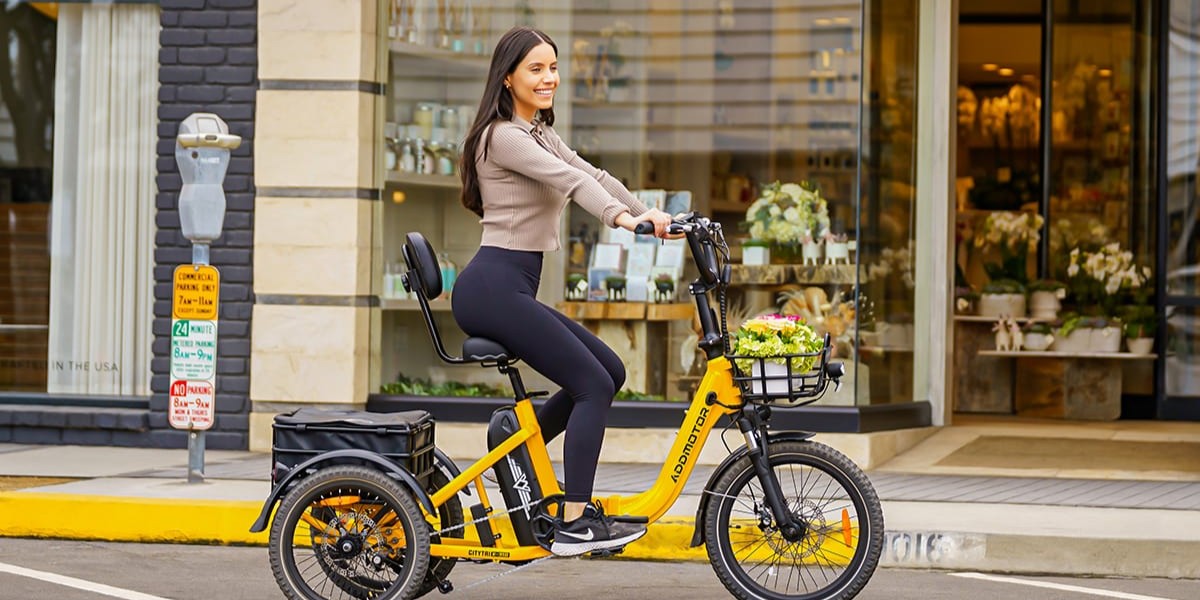
Discover Urban Freedom with the Addmotor Citytri E‑310 Folding Electric Trike

Urban mobility is evolving faster than ever, and the search for a transportation solution that blends stability, power, and convenience has led many riders toward the electric tricycle category. Among the most advanced and thoughtfully engineered models available today, the Addmotor Citytri E‑310 stands out as a transformative option. It is not merely a three‑wheeled bicycle; it is a complete mobility platform designed to redefine how people move through cities, neighborhoods, and recreational spaces. With its folding frame, UL‑certified electrical system, and powerful rear‑drive motor, the Citytri E‑310 offers a riding experience that is both liberating and reassuring. This guide explores the trike in depth, examining its engineering, performance, safety, ergonomics, and real‑world value.

Addmotor Citytri E‑310 – Specification Table

Discover Urban Freedom with the Addmotor Citytri E‑310 Folding Electric Trike

I. Power and Performance: The Engineering Behind the Ride

The Citytri E‑310 is built around a powertrain designed to deliver consistent strength, smooth acceleration, and reliable performance across a wide range of riding conditions. At the center of this system is a 750W rear‑drive motor capable of reaching a peak output of 1400W. This configuration gives the electric trike a level of traction and control that front‑drive systems cannot match, especially when starting from a stop or climbing hills. The motor’s 90 newton‑meters of torque allow the trike to accelerate confidently even when carrying a heavy load, and its speed can be configured to comply with local regulations while still offering the responsiveness riders expect from a modern electric trike.

Supporting the motor is a 48V 20Ah Samsung lithium‑ion battery engineered for long‑distance performance. Built with high‑density Samsung 21700‑50E cells, the pack delivers stable output and exceptional cycle durability, retaining up to 85% of its original capacity even after 1,000 full charge cycles.

In PAS 1, riders can travel up to ninety miles on a single charge, making the electric trike well‑suited for daily commuting, weekend excursions, and extended recreational rides. The battery’s internal structure is reinforced for long‑term reliability, while Addmotor’s magnetic charging interface streamlines the charging process and minimizes connector wear. Together, the motor and battery create a refined, efficient power system capable of meeting the demands of real‑world riding.

II. Safety and Certification: A System Built for Peace of Mind

Safety is one of the defining strengths of the Citytri E‑310. Unlike many electric trikes that rely solely on manufacturer claims, the Addmotor E‑310 has undergone rigorous third‑party testing to achieve UL 2849 certification. These certifications evaluate the trike’s resistance to electrical faults, overheating, and fire hazards, ensuring that riders can trust the vehicle in a wide range of environments and conditions.

Mechanical safety is equally important, and the Citytri E‑310 incorporates a braking system designed specifically for the dynamics of a three‑wheeled vehicle. Each wheel is equipped with a mechanical disc brake using oversized rotors that maintain consistent stopping power even under heavy loads. The inclusion of a parking brake adds another layer of security, allowing the electric trike to remain stable when parked on slopes or during loading and unloading. Addmotor’s EB 2.0 lighting system enhances visibility with a bright headlight and a multifunction taillight that integrates turn signals and a brake‑light function. These features work together to create a riding experience that feels secure and predictable, even in busy urban environments.

III. Stability and Handling: The Advantage of a Rear Differential

One of the most advanced engineering features of the Citytri E‑310 is its integrated rear differential. Many electric trikes lack differential force, causing both rear wheels to rotate at the same speed, which can lead to skidding, dragging, and instability during turns. The E‑310’s differential allows each wheel to rotate independently, creating a smooth and natural turning motion that feels intuitive even for new riders. This system reduces tire wear, improves traction, and enhances overall control, especially when navigating tight corners or uneven terrain.

The differential works in harmony with the electric trike’s low center of gravity and wide rear wheelbase. Together, these elements create a stable platform that resists tipping and maintains balance even when the rider shifts weight or carries cargo. The result is a trike that feels planted and confident, offering a level of stability that appeals to seniors, commuters, and anyone who values a secure riding experience.

IV. Comfort and Accessibility: A Design for Every Rider

The Citytri E‑310 is engineered with accessibility at its core. Its low step‑through frame, measuring just 13.8 inches, allows riders to mount and dismount with ease. This design is particularly beneficial for individuals with limited mobility, seniors, and riders who prefer a more relaxed, approachable frame geometry. The etrike’s seating system enhances this accessibility with a wide, ergonomic saddle and an integrated backrest that supports the rider during long journeys. The adjustable handlebars and seat height allow the e-trike to accommodate a wide range of body types, ensuring each rider can find a comfortable, natural riding position.

Ride quality is further improved by the front suspension fork, which absorbs bumps and vibrations from uneven surfaces. This suspension system, combined with the trike’s stable three‑wheel platform, creates a smooth and enjoyable ride that reduces fatigue and encourages longer trips. Whether navigating city streets, park paths, or suburban neighborhoods, the Addmotor E‑310 delivers a level of comfort that sets it apart from traditional bicycles and many competing trikes.

V. Portability and Storage: A Folding Electric Trike for Modern Living

Despite its robust construction, the Citytri E‑310 is designed with portability in mind. Its folding frame allows the electric trike to collapse into a compact form that fits easily into car trunks, RV compartments, and small storage spaces. This makes the Citytri E‑310 an ideal choice for riders who live in apartments, travel frequently, or simply want a vehicle that can be stored without occupying excessive space. The folding mechanism is reinforced with internal supports and secure locking points, ensuring that the electric trike remains stable and rigid during riding while still offering the convenience of a portable design.

This folding electric trike’s overall weight, including the battery, is approximately eighty‑eight pounds. While this is heavier than a standard bicycle, it is remarkably manageable for a vehicle with such a powerful motor, large battery, and reinforced frame. The combination of portability and structural integrity makes the addmotor E‑310 a versatile option for riders who need both durability and convenience.

VI. Choosing Between the Standard and Versions

Addmotor offers the Citytri E‑310 in two configurations: the Standard and the versions. Both share the same motor, battery, differential, and electrical system, but they differ in size and ergonomics. The Standard version is designed for riders between five feet one inch and five feet nine inches tall, with a slightly more compact frame and smaller wheels that enhance maneuverability and storage efficiency. The Plus version accommodates riders between five feet three inches and six feet one inch, offering larger wheels and a more upright handlebar position, providing additional comfort for taller individuals.

These variations allow riders to choose an electric trike that fits their body type and riding preferences without sacrificing performance or safety. The thoughtful design of both versions ensures that each rider can enjoy the full capabilities of the E‑310 in a configuration that feels natural and comfortable.

VII. The EB 2.0 Intelligent System: A Smart Approach to Electric Mobility

The Citytri E‑310 incorporates Addmotor’s EB 2.0 intelligent system, which integrates the trike’s electrical components into a cohesive and responsive network. The five‑inch LCD provides real‑time information on speed, battery level, mileage, pedal‑assist settings, and motor output, allowing riders to monitor their performance and adjust their riding style accordingly. The seven‑level pedal‑assist system offers a wide range of support options, from gentle assistance for leisurely rides to powerful boosts for climbing hills or accelerating quickly.

The half‑twist throttle provides an additional layer of control, enabling riders to engage the motor without pedaling when needed. The wiring harness and connectors are designed to resist water and environmental exposure, ensuring that the electric trike remains reliable in various weather conditions. This intelligent system enhances the overall riding experience by making the electric trike more intuitive, efficient, and adaptable to different riding scenarios.

VIII. Real‑World Applications: Citytri E‑310 Folding Electric Trike for Every Lifestyle

The versatility of the Citytri E‑310 makes it suitable for a wide range of riders and use cases. Urban commuters appreciate its long range, stable handling, and ability to replace a car for daily trips. Seniors value its low step‑through frame, supportive seating, and predictable stability, which allow them to remain active and independent. Riders who need to carry groceries, equipment, or pets benefit from its generous payload capacity and sturdy rear rack. RV travelers and outdoor enthusiasts enjoy the convenience of a folding e-trike that can be easily transported and used to explore campgrounds, parks, and small towns.

The E‑310 adapts seamlessly to these diverse scenarios, offering a level of flexibility that few electric vehicles can match. Its combination of power, comfort, and portability makes it a practical and enjoyable choice for riders seeking a reliable mobility solution.

IX. Warranty, Support, and Long‑Term Value

Purchasing the Citytri E‑310 through electrictricycle.com provides access to a comprehensive support system that enhances the ownership experience. The electric trike is backed by a two‑year warranty covering the frame, battery, and motor, along with a one‑year warranty for major components such as the controller, display, and suspension. Shipping is fast and free within the contiguous United States, and customers have a fourteen‑day return window for new electric trikes with minimal mileage.

These policies reflect Addmotor’s confidence in the durability and reliability of the E‑310. For riders, this translates into long‑term value and peace of mind, knowing that their investment is protected and supported by a dedicated team.

A New Standard for Urban Freedom

The Addmotor Citytri E‑310 foldable electric tricycle is a thoughtfully engineered mobility solution that empowers riders with stability, comfort, and independence. Its powerful rear‑drive motor, UL‑certified electrical system, ergonomic design, and folding frame create a riding experience that feels both liberating and secure. Whether used for commuting, recreation, or essential mobility, the Citytri E‑310 electric trike delivers consistent performance and exceptional value. It stands as a testament to how modern engineering can transform everyday transportation and what freedom feels like on three wheels.

Teaching Wonder Through Story: How The Tale of Tumbo Helps Children Explore Culture, Curiosity, and Courage

By: Edna N. Abrahams

In a world where children’s books often rush toward quick laughs or fast action, few stories slow down long enough to introduce young readers to something deeper: a sense of place, belonging, and purpose. The Tale of Tumbo: The Curious Spider offers this rare blend. Written by Edna N. Abrahams, the book invites children into the heart of Tanzania’s Pugu Forest, a vibrant ecosystem where curiosity becomes a teacher and kindness becomes a way of seeing the world.

At its core, The Tale of Tumbo is the story of a tiny spider with an enormous sense of wonder. Tumbo is mischievous, energetic, and endlessly curious. Yet beneath his lighthearted antics, the book carries a clear message: every child is born with light, love, and a place in the world. Abrahams gently guides young readers toward this understanding without ever overwhelming them with instruction. Her storytelling does the teaching in a way that feels natural and joyful.

One of the most striking features of the book is how it presents Tanzania not as an abstract location but as a living, breathing home. Children meet the towering mahogany trees, the shimmering threads of Spiderland, the sunlit stretches of Lake Tanganyika, and the bustling sounds of the nearby village. These places are more than backdrops. They are characters in their own right. This helps young readers learn about the beauty of East Africa through storytelling instead of textbooks, making geography memorable and emotional.

Today’s children learn best when culture is woven into narrative rather than separated into academic boxes. Abrahams understands this. Tumbo’s world is filled with animals familiar to the region: elephants, foxes, lions, monkeys, eagles, and more. Each encounter offers a gentle lesson. A sneeze from Papa Elephant shows Tumbo why some boundaries are important. A ride on Mr. Turtle’s back reveals the value of respect. A soaring journey on Eagle’s feather teaches Tumbo a sense of scale and gratitude. These moments help children grasp life lessons through laughter, surprise, and adventure.

Equally important is the spiritual undertone threaded throughout the story. Abrahams reminds children that they are beings of light and love, capable of growth and goodness. This message is not presented as doctrine but as a universal truth. Young readers encounter it naturally in moments such as Tumbo’s reflections at sunset or his final heartfelt speech in Spiderland. In a time when many children grapple with identity and belonging, this focus on inner worth provides comfort and strength.

Modern families often search for books that balance fun with meaningful values. The Tale of Tumbo meets this need by blending imagination with purpose. Tumbo’s playful energy appeals to children, while the rich cultural landscape and gentle life lessons give parents something deeper to engage with. Teachers and librarians can also appreciate the book’s versatility. It can support discussions about African wildlife, cultural geography, emotional growth, and the importance of safe exploration.

Another strength of Abrahams’ work is her commitment to portraying diversity through nature, community, and connection. The dedication of the book expresses that race is not a barrier and every child is a divine being with infinite light. This resonates throughout Tumbo’s journey. Whether he is tangled in his own silk, discovering a human house, or riding the back of an eagle, Tumbo learns that the world is full of stories waiting to be explored. Young readers come to understand that their curiosity is not a flaw but a gift.

Abrahams also provides subtle lessons about responsibility. Tumbo’s mischief sometimes causes trouble, and the forest animals reach a point where they need boundaries. Yet instead of punishment, Tumbo’s story becomes one of understanding and growth. He discovers new environments, learns from them, and eventually brings those lessons back home. This mirrors a healthy approach to childhood development: allow exploration, guide gently, and encourage reflection.

In an era where global awareness is increasingly important, children’s books like The Tale of Tumbo play a meaningful role. They help young readers appreciate cultures beyond their own in a way that feels warm and welcoming. Tanzania becomes familiar, not foreign. Pugu Forest becomes a place of wonder, not distance. By the end, young readers understand that the whole world is connected through curiosity, kindness, and adventure.

Ultimately, The Tale of Tumbo is more than a story about a cheeky spider. It is an invitation to see the world with open eyes and an open heart. Through humor, cultural detail, and spiritual warmth, Edna N. Abrahams encourages children to embrace their light and explore the world with courage. Tumbo’s adventures remind us that every child is capable of discovery and every journey, no matter how small, holds meaning.

For parents, educators, and anyone who believes in the magic of childhood curiosity, The Tale of Tumbo is a gift. It shows that stories rooted in culture and love can spark a lifelong sense of belonging. And like Tumbo himself, children are encouraged to swing forward, trust their inner glow, and find adventure wherever they go.

Website: Edna N Abraham’s

Amazon: https://www.amazon.com/Tale-Tumbo-Curious-Spider-corners/dp/B0GMYCHYQW/dp 

Enhancing Efficiency in Automotive Parts Manufacturing via CNC Technology

The rapid development of the automotive industry has imposed higher requirements on the production and processing of auto parts. This has driven technological innovation in automotive manufacturing and led to the widespread application of Computer Numerical Control technology in mechanical processing. At the heart of CNC technology is the CNC machine tool; its control and monitoring systems permeate the entire numerical control unit, serving as the “brain” of automated production lines and facilitating the intelligent evolution of the automotive component manufacturing process.

Fundamental Concepts of CNC Technology

Computer Numerical Control (CNC) technology refers to a method that uses digital signals to control the motion trajectories and strokes of machine tools. It enables precise control of computer equipment through CNC commands consisting of numbers, letters, and symbols. A complete CNC technical system comprises three parts: the machine tool body, the CNC system, and peripheral technologies.

  • Machine Tool Body: This is the structural foundation of the CNC machine, encompassing the bed, columns, guideways, worktable, tool post, and other supporting components that form the mechanical assembly.
  • CNC System: The core of CNC technology, consisting of input/output devices, a Computer Numerical Control (CNC) unit, programmable logic controllers (PLCs), and main servo drive units. The CNC unit is primarily responsible for receiving, processing, and storing CNC commands to control the overall motion and operational workflow of the machine.
  • Peripheral Technologies: These mainly refer to various tooling systems (represented by cutting tool systems) and programming management technologies. The synergy of these technologies provides the necessary support and guarantees for the machine tool’s normal operation.

Advantages of CNC Technology in Auto Parts Machining

High Efficiency 

CNC technology significantly reduces machining time and enhances productivity. It enables the streamlined processing of multi-stage machining programs, eliminating the tedious recalibration of machine parameters required after single operations in traditional methods. Furthermore, it boosts the efficiency of processing complex parts, supporting mass production while ensuring consistency and precision.

Intelligence 

The implementation of automotive CNC machining effectively simplifies mechanical processing workflows. In traditional machining, variables such as man-hours are often set imprecisely; however, CNC technology enables the intelligent handling of these variables, optimizing operational sequences. Additionally, it prevents logic conflicts between programming and variables that often occur during manual computer operations, allowing the machine tool to reach its full potential.

High Precision 

Through computer programming, CNC technology precisely controls motion trajectories and cutting parameters, achieving automated and accurate processing. This ensures that the dimensions, shapes, and surface quality of components meet high standards. Modern machine tools often utilize closed-loop control systems paired with high-precision sensors—such as laser rangefinders and grating scales, capable of controlling machining accuracy to the micrometer or even nanometer level, which is critical for automotive components.

Integration and Networking 

CNC technology achieves the integrated processing of complex components by consolidating various machining techniques and processes. This approach not only improves efficiency but also reduces errors and instability. For instance, automotive parts often require a combination of milling, drilling, boring, shearing, and tapping. Traditional methods require multiple setups across several machines, whereas CNC technology integrates these steps into a single setup. Furthermore, through the Industrial Internet and Big Data, manufacturers can achieve remote monitoring of the machining process and real-time tracking of machine tool status.

Challenges in the Application of CNC Technology

Technical Limitations 

First, limitations exist at the design level. Auto parts often feature complex geometries that standard cutting tools cannot accommodate. For parts with intricate internal threads or complex shapes, specialized tooling may be required, increasing manufacturing complexity and cost. Second, there are material limitations; high-temperature alloys or composites, due to their hardness, brittleness, or thermal sensitivity, require higher cutting forces or refined strategies to prevent tool wear and workpiece deformation. Finally, despite high-precision capabilities, extra operations are often needed to guarantee surface quality for micro-features, and quality may fluctuate due to tool wear or machine accuracy variances.

Operation and Maintenance Issues 

The automation and precision of CNC machines require operators to possess complex programming knowledge, operational skills, and equipment maintenance capabilities. Currently, the shortage of qualified operators limits the effective application of this technology. Errors such as irrational tool path planning or unscientific cutting parameter settings can lead to precision loss, workpiece scrapping, or machine damage. Additionally, the integration of numerous electronic and precision mechanical components needs regular maintenance. This is often costly and requires specialized personnel; if maintenance is inadequate, machine performance and accuracy will deteriorate significantly.

Safety and Environmental Concerns 

High-speed rotating tools and moving workpieces pose safety risks to personnel. Failure to strictly follow safety protocols during commissioning and maintenance can lead to injuries. Furthermore, long-term operation may result in electrical or hydraulic failures, which, if not rectified, can cause machine collisions or severe accidents. Environmentally, the use of chemical cutting fluids produces metal chips and waste. Improper discharge can pollute the environment, while chemical substances and metal dust pose respiratory and ocular risks to operators, potentially leading to occupational diseases over time.

Application Paths for CNC Technology in Auto Parts Machining

Design and Programming 

During the design phase, CNC technology uses CAD software for 3D modeling and simulation. CAD provides design tools and computational power that help designers construct precise models reflecting physical and material properties, providing a basis for manufacturing. In the programming phase, CAM software generates CNC code recognizable by the machine tool based on CAD designs, automatically calculating tool paths and cutting parameters. The integration of CAD/CAM facilitates efficient collaboration between designers and programmers, ensuring process consistency and providing optimized tool path strategies.

Inspection and Quality Control 

CNC technology enables real-time monitoring via integrated online inspection systems. Equipped with high-precision sensors and signal processing, these systems collect key quality parameters such as dimensions and surface roughness, and compare them against presets. If errors occur, the system triggers alarms or adjusts parameters automatically to prevent mass non-conformity. Additionally, it provides quality traceability by recording process data for every stage, enhancing overall product quality and customer satisfaction.

Safety and Environmental Protection

By replacing manual labor with automated and intelligent processing, CNC technology inherently reduces the probability of human-related accidents. The CNC machine is fitted with safety guards and monitoring systems that intervene immediately upon detecting anomalies. Regarding the environment, most CNC machining waste consists of metal with high recycling value. Optimizing process parameters also reduces energy consumption and carbon emissions, promoting green production. The high stability of the CNC machine further minimizes waste and loss, supporting sustainable industrial development.

Driving Innovation in Manufacturing Technology 

CNC technology breaks the boundaries of traditional manufacturing, achieving high precision, efficiency, and consistency. It applies to complex engine components, transmission systems, and structural body parts. Ensuring every part meets design specifications and reducing manual intervention, it lowers production costs. Future innovation requires multi-disciplinary collaboration—integrating CNC with materials science, electronics, and automation—while strengthening international exchanges to absorb advanced manufacturing and management experiences.

In Summary

In summary, the application of CNC technology in automotive mechanical processing demonstrates immense potential. Through high-precision, efficient, and intelligent processing, it has significantly improved machining quality and productivity while providing a solid foundation for stable production, safety, and environmental protection. To adapt to intensifying market competition and evolving demands, enterprises must actively embrace CNC technology, strengthen R&D, and continuously enhance their core competitiveness.

Dr. Wendy Ashley: Changemaker and Cultural Architect, Inspiring for Women’s History Month

By: Shawn Mars

Chair, changemaker, and cultural architect, Dr. Wendy Ashley blends unapologetic antiracism with clinical precision and academic brilliance. Whether authoring books on antiracist social work practice or biracial identity, restructuring social work curricula, holding faculty to the highest standard of ethics and collegiality, or providing intersectional, culturally responsive treatment services, she brings a unique approach to every space she enters. A master of training facilitation, pedagogy, and cultural nuance, Dr. Ashley leads with both heart and hustle, making sure her clients and the next generation of social workers are empowered to rise, resist, repair, and rebuild.

Q. You are not a typical therapist. You believe in the power of healing, intersectional pedagogy, and anti-oppressive treatment approaches. Tell us about working with clients.

Many therapists approach therapy as an opportunity to rescue, save, or fix. I don’t approach my clients as broken or in need of repair. I see them as responding to real experiences, and view my role as supporting clarity, agency, and healing. My work with clients is grounded in the understanding that distress lives at the intersection of identity, history, power, and lived experience. I pay close attention to how race, culture, gender, class, and trauma shape both what clients carry and how systems respond to them.

Dr. Wendy Ashley: Changemaker and Cultural Architect, Inspiring for Women's History Month

Photo Courtesy: Dr. Wendy Ashley

In therapeutic spaces, I lead with honesty, curiosity, and accountability. I invite clients to name what has harmed them, personally and structurally, without pathologizing their coping or survival skills. Healing, for me, is not about adapting people to unjust conditions, but about helping them reconnect to their agency and their voice.

I also bring my identity into the work with intention. I believe the therapist’s self is not neutral, and I model reflection, humility, humor, and repair. Clients often tell me that therapy with me feels grounded, direct, and deeply authentic. My goal is to create a space where clients feel seen in their full complexity and supported in doing the hard, transformative work of healing on their own terms.

Q. Why are clients coming to you today?

Clients frequently come to me when they are tired of being misunderstood, minimized, or pathologized, often after trying spaces that focused on feelings or symptoms without ever addressing the deeper context of their pain. Many are carrying the weight of racialized trauma, intergenerational stress, identity conflict, loneliness, disappointment, and/or professional burnout. They are looking for therapy that can acknowledge their inner world, their relationships, and the systems they are navigating.

My areas of expertise include relationship challenges (with self, partners, family, and the world), complex and developmental trauma, racial trauma, identity-based concerns, and the emotional toll of working and living within oppressive structures. I work frequently with high-achieving professionals, caregivers, educators, and leaders who appear functional on the outside but are exhausted, disconnected, and overwhelmed.

Clients are also drawn to my work when they want therapy that is direct, reflective, and relational, where power dynamics are named, culture is centered, and healing is not separated from justice. They come looking for a space that is honest, rigorous, and genuine, and for support in reclaiming clarity, agency, and a more grounded sense of self.

Dr. Wendy Ashley: Changemaker and Cultural Architect, Inspiring for Women's History Month

Photo Courtesy: Dr. Wendy Ashley

Q. Tell us about how you blend unapologetic antiracism with clinical precision and academic brilliance.

For me, antiracism and clinical precision are not competing values; they impact and enhance each other. Unapologetic antiracism in mental health settings requires critical self-reflection, thorough assessment, action rather than passive positioning, and an honest accounting of how power and bias shape engagement, diagnosis, and treatment. Without that level of rigor, antiracism can become performative; without antiracism, clinical work risks being incomplete or ineffective.

My education and training allow me to be precise about what is happening clinically while also being explicit about why it is happening within a broader socio-political and systemic context. I am intentional about naming when symptoms can be reasonable responses to chronic exposure to racism, marginalization, or structural harm. That clarity helps protect clients from being misdiagnosed, over-pathologized, or silenced.

Academic brilliance, for me, isn’t about abstraction; it’s about translation. I bring complex theory into accessible, palatable frameworks that inform real decisions in therapy, the classroom, training, and leadership spaces. The blend is deliberate: reflexivity, ethical accountability, antiracist action, and a refusal to separate healing from justice.

Q. Your new book, “What Are You Mixed With?” is drawing a lot of attention. What do you want people to know?

I want people to know that my book, What Are You Mixed With?, specifically centers the lived experiences of Black-White biracial individuals whose identities are often interrogated, simplified, or misunderstood. It names the quiet injuries that come from having to explain yourself, choose sides, or remain silent in order to belong in a monoracial world. The book makes clear that the question itself is never neutral – it carries history, hierarchy, and expectations.

The book is deeply personal, but it is also intentionally communal. By giving voice to people’s stories, it validates experiences that are frequently dismissed or minimized and offers a sense of recognition and shared understanding. In doing so, the book provides community for those who have felt isolated in their complexity, while inviting all readers to move beyond curiosity and toward greater honesty, accountability, and humanity.

Q. Do you have any speaking engagements for 2026?

2026 is already shaping up to be a full and exciting year for writing, speaking, and training engagements. I wrote and published an article in late 2025 on Therapist Positionality (Open Journal of Social Sciences), am working to finalize a workbook entitled Antiracist Clinical Practice in Action, and have co-authored an article on the weaponization of identity and trauma in graduate education (currently under review).

I’ll be presenting at the Critical Mixed Studies Conference (at the University of California, Los Angeles) in February, where I’ll be presenting on some of the themes from my book. In March, I’ll be facilitating a keynote for the California Society for Clinical Social Work, focused on strengthening social work through connection.

In addition, I’m currently scheduling a series of trainings with community-based mental health organizations throughout 2026. These trainings center on antiracist clinical practice, supervision, therapist positionality, and the real-world challenges practitioners face working with vulnerable clients within inequitable systems. What’s next is continuing to expand my work – bringing together scholarship, lived experience, and applied practice in ways that are intended to be honest, grounding, and useful for clinicians, supervisors, and organizations committed to doing culturally responsive, equitable, inclusive, and effective clinical work.

Disclaimer: The information provided in this article is for general informational purposes only and does not constitute medical, mental health, or professional advice. For personalized guidance and treatment, individuals should consult with a licensed healthcare or mental health professional.