From Innovation to Digital Trust: Ini-Mfon Udofia on How Cybersecurity Is Shaping the Future of Secure Digital Systems

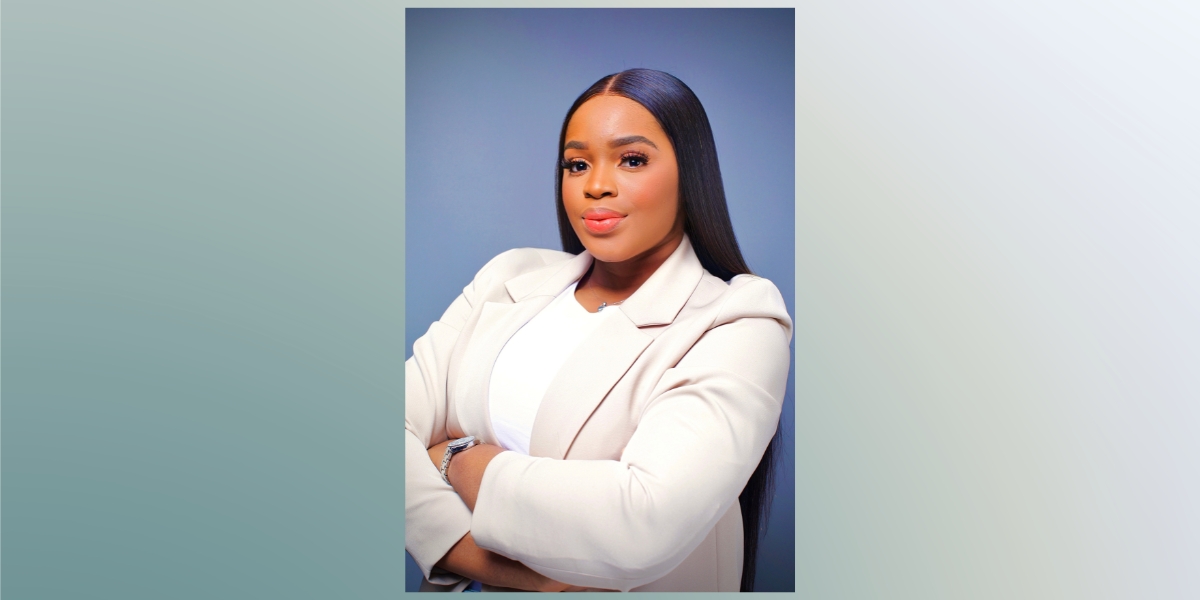
By: Jane Partlow

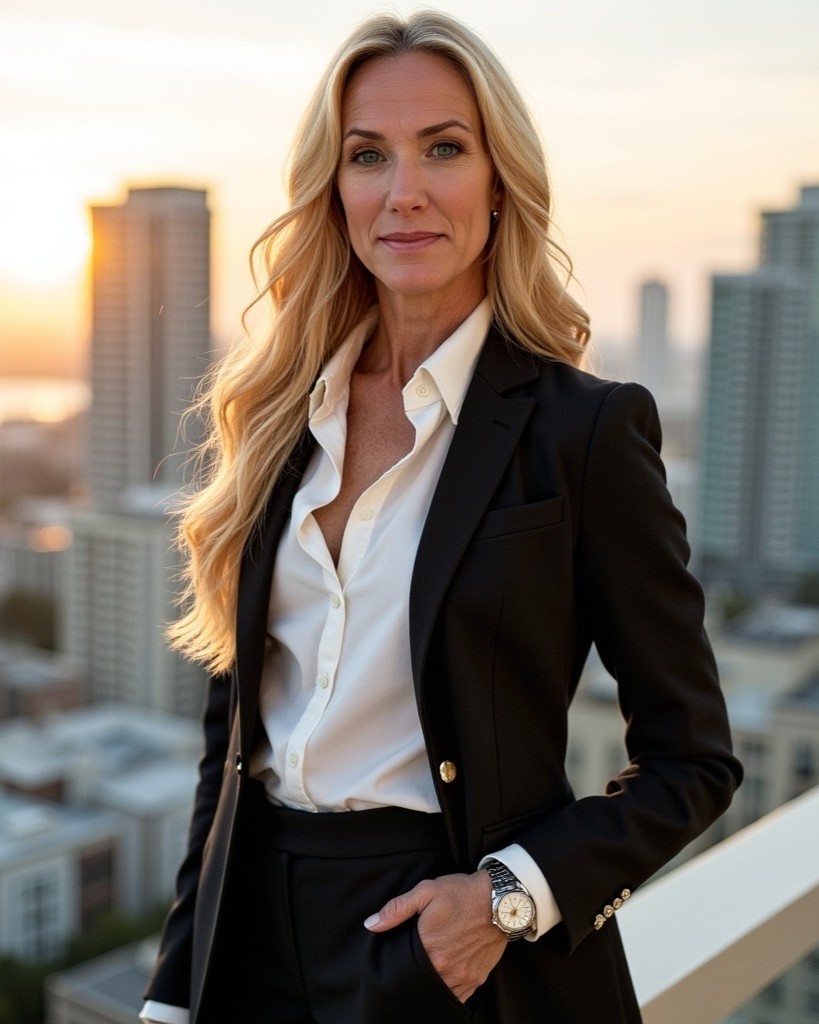
As artificial intelligence continues to reshape industries, the conversation is expanding beyond automation and productivity into something even more fundamental: trust. In a world increasingly dependent on digital systems, the real challenge is no longer just building technology, but ensuring that it is secure, verifiable, resilient, and worthy of the confidence people place in it. At the center of this shift is Ini-Mfon Udofia, a cybersecurity and digital trust expert whose work is focused on strengthening the integrity of modern digital ecosystems.

In this interview feature, Udofia shares her perspective on how cybersecurity is evolving from a defensive necessity into a strategic pillar of innovation, helping organizations build secure digital environments, reinforce confidence in online systems, and prepare for a future where trust itself becomes critical infrastructure.

Q: Ini-Mfon, your work centers on cybersecurity and digital trust. What inspired your focus on these areas?

Ini-Mfon Udofia:
I was drawn to cybersecurity because I saw early that the future of the digital economy would depend not just on innovation, but on trust. As more systems moved online, it became clear that security was no longer a back-office technical issue. It became central to how organizations operate, how people interact, and how institutions protect value, privacy, and confidence.

Digital trust is really about whether people can rely on the systems they use. Can records be verified? Can transactions be trusted? Can data remain intact? Can identities be protected? These are not abstract technical questions anymore; they shape how businesses function and how society adapts to a digital-first world. My work has been driven by the need to make those systems more secure, more resilient, and more dependable.

Q: How do you define digital trust in today’s technology landscape?

Ini-Mfon Udofia:
Digital trust is the confidence that systems, transactions, identities, and data can be relied upon without manipulation, compromise, or uncertainty. It is what allows organizations to operate at scale in digital environments and what gives users the assurance that the platforms they depend on are credible and secure.

In practical terms, digital trust is built through strong cybersecurity architecture, verifiable records, transparent processes, secure identity controls, and systems designed to preserve integrity over time. It is the difference between a digital environment that merely functions and one that people can confidently depend on.

As organizations become more interconnected, trust becomes a business asset. It affects adoption, customer confidence, regulatory standing, and operational continuity. The more critical our digital systems become, the more essential trust becomes to their design.

Q: What are the biggest cybersecurity challenges organizations face as digital systems become more complex?

Ini-Mfon Udofia:
One of the biggest challenges is that many organizations are digitizing faster than they are securing. They are adopting AI tools, integrating cloud platforms, automating workflows, and expanding digital services, but in many cases the controls needed to preserve integrity and reduce risk are not evolving at the same pace.

Another challenge is visibility. Modern digital environments are highly connected, and risk can emerge from multiple points at once – third-party integrations, identity weaknesses, insecure applications, poor governance, and fragmented infrastructure. Threats are not only increasing in volume; they are increasing in sophistication.

What organizations need is a more intentional approach to security – one that treats cybersecurity not as a response mechanism, but as a design principle. Security should shape how systems are built, how data is managed, and how trust is maintained across the entire digital environment.

Q: How does artificial intelligence affect the future of cybersecurity?

Ini-Mfon Udofia:
Artificial intelligence changes cybersecurity in two important ways. On the defensive side, it gives organizations better tools to detect anomalies, identify suspicious behavior, automate repetitive monitoring, and respond to threats with greater speed. It has the potential to enhance visibility and decision-making in ways that traditional systems cannot.

At the same time, AI also raises the stakes. Threat actors are using automation and machine intelligence to create more adaptive attacks, more persuasive deception tactics, and faster exploitation methods. So while AI can strengthen cybersecurity, it also makes the environment more dynamic and demanding.

That is why the future of cybersecurity is not just about adopting intelligent tools. It is about governing them properly, securing them effectively, and ensuring they reinforce trust rather than create new vulnerabilities. The organizations that succeed will be the ones that balance innovation with control.

Q: Some people still think cybersecurity is only about preventing hacks. How do you see its broader role?

Ini-Mfon Udofia:
Cybersecurity is much broader than preventing unauthorized access. At its highest level, it is about protecting trust in digital systems. It protects the integrity of records, the continuity of services, the confidentiality of data, and the reliability of digital interactions.

In today’s environment, cybersecurity supports business continuity, protects reputation, strengthens compliance, and enables innovation to happen safely. It is the framework that allows digital transformation to be sustainable.

When cybersecurity is done well, it is not visible as a barrier. It becomes an enabler. It gives organizations the confidence to grow, to innovate, and to operate in high-trust digital environments. That broader strategic role is what many industries are now beginning to understand more clearly.

Q: How do you make complex cybersecurity concepts relevant to business leaders and everyday users?

Ini-Mfon Udofia:
I focus on outcomes rather than technical abstraction. Business leaders care about resilience, continuity, risk reduction, customer confidence, and long-term stability. Cybersecurity directly affects all of those things. When I speak with organizations, I frame security as something that protects operations, preserves confidence, and supports growth.

For everyday users, the relevance is also very direct. Their personal data, financial interactions, digital identities, and use of connected platforms all depend on secure systems behind the scenes. The ability to trust digital services is not accidental; it comes from deliberate security design and good governance.

What matters is helping people see that cybersecurity is not separate from their lives or businesses. It is already embedded in the quality, safety, and trustworthiness of the digital experiences they rely on every day.

Q: What role do you believe experts in digital trust and cybersecurity play in shaping the future?

Ini-Mfon Udofia:
Experts in this field have an important responsibility because we are not just securing systems; we are helping shape how digital society functions. The choices we make about security architecture, identity protection, verification, governance, and resilience have long-term implications for institutions, businesses, and individuals.

Our role is to ensure that innovation does not outpace trust. That means helping organizations adopt emerging technologies responsibly, building secure frameworks that can scale, and creating environments where digital progress does not come at the expense of safety or confidence.

It also means mentoring others, contributing to industry thinking, and helping leaders understand that security is not only technical. It is strategic, economic, and increasingly foundational to public confidence.

Q: Where do you think the future of digital trust is headed?

Ini-Mfon Udofia:
I believe we are moving into an era where trust will become one of the defining measures of digital maturity. It will not be enough for systems to be fast or convenient. They will need to be secure, transparent in operation, resistant to tampering, and capable of preserving confidence across increasingly complex digital interactions.

In the future, organizations will compete not only on innovation, but on how well they can demonstrate integrity, accountability, and resilience in their digital systems. Trust will become part of infrastructure itself.

That future will demand stronger cybersecurity leadership, better governance models, and a deeper understanding that secure systems are essential to economic growth, institutional credibility, and societal progress. The organizations that recognize this early will be best positioned to lead.

Building the Future on Security and Trust

Ini-Mfon Udofia represents a new generation of digital leadership: experts who understand that the future of technology depends not only on what can be built, but on what can be trusted.

For organizations navigating digital transformation, institutions modernizing their operations, and industries adopting more intelligent and interconnected systems, the demand for expertise in cybersecurity and digital trust continues to grow. The systems shaping the future must not only be innovative, but secure, dependable, and worthy of confidence.

As Udofia makes clear, the future of digital progress will belong to those who can protect integrity as effectively as they pursue innovation. In an age defined by complexity, connectivity, and accelerating risk, trust is no longer a byproduct of technology. It is its foundation.
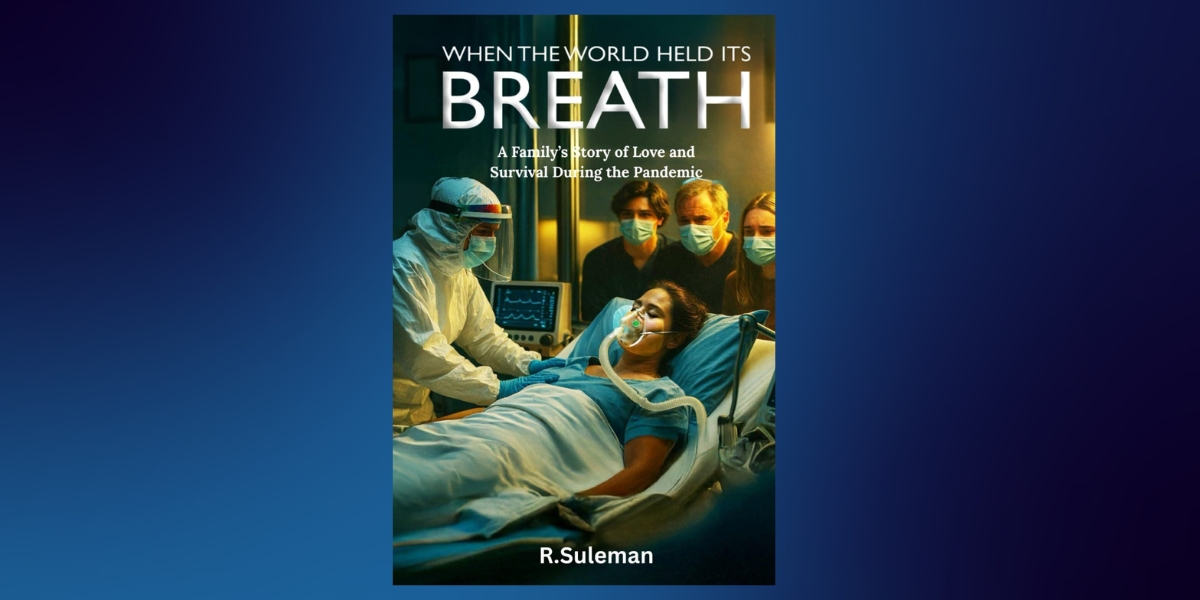

When the World Held Its Breath, We Learned Who We WereWhen the World Held Its Breath, We Learned Who We Were

By: R. Suleman

During the pandemic, there was a moment many of us remember clearly, even if we’ve never spoken about it.

A moment when we realized we were holding our breath.

Not because someone told us to, but because the future felt fragile, and breathing deeply felt like tempting fate.

In When the World Held Its Breath, novelist R. Suleman turns that moment into a story. Not a loud one. Not a political one. A human one. The kind that happens behind closed doors, in dim kitchens, on sleepless nights, when the world feels too large, and the home feels very small.

A Life That Slowed Enough to Notice

R. Suleman did not set out to write a “pandemic novel.” He didn’t even set out to be a writer in the conventional sense.

After retirement, he found himself managing an agricultural farm, a life that moves at the pace of weather, soil, and daylight. There are no notifications on a field. No urgency that can’t wait until morning.

In that quiet, Suleman began to notice what he had missed before.

Children sitting in the same room as their parents, eyes locked on glowing screens. Conversations that never quite began. Feelings were postponed because there was always something else demanding attention.

He didn’t judge it. He observed it. And when you observe long enough, stories begin to form.

Stories Written for Small Hands

The first stories weren’t meant for bookstores. They were meant for grandchildren.

Suleman wrote them to help a child understand why school felt hard. Why friendships hurt. Why does doing the right thing sometimes feel lonely? They were simple stories, printed at home, stapled together. Nothing polished. Nothing marketed.

But they were read. And re-read. And talked about.

That mattered more than anything.

As the grandchildren grew, their questions changed. So did the stories. Teenagers didn’t need answers. They needed honesty. They needed to see their confusion reflected back at them without shame.

Suleman followed them there, writing not to guide, but to sit beside.

When Illness Arrived Without Asking

The pandemic arrived the way it did for so many families. Quietly, then all at once.

Despite taking every possible precaution, R. Suleman and his wife contracted the virus. The days that followed were not dramatic in a cinematic sense. There were no speeches. No declarations. There was exhaustion. Fear. The unnerving awareness of breath — how shallow it had become, how uncertain the next inhale might be.

There is something uniquely humbling about measuring your life in breaths.

At the same time, close friends began to succumb to the virus. People he had spoken to weeks earlier were suddenly gone. Funerals took place without gatherings. Grief unfolded in isolation. The situation did not feel temporary. It felt desperate.

In those days, the world did not look stable or manageable. It looked fragile and frightening.

What carried them through was not confidence. Not control. Not data.

It was family.

Children calling. Grandchildren checking in. Messages that said nothing extraordinary — only “We’re here.” The steady presence of love when there was nothing practical to fix.

That experience did not simply inspire a story. It shaped a conviction.

The message of When the World Held Its Breath was born in those rooms. In illness. In loss. In the realization that when systems fail and certainty dissolves, it is family that gives us reason to keep going.

Later, when strength returned and writing resumed, Suleman understood something clearly:

This was never a story about a virus.

It was a story about what holds when everything else loosens.

A Family Under Pressure

In When the World Held Its Breath, the family at the center of the novel is not extraordinary. That is the point.

They have jobs. Schedules. Arguments about ordinary things. They believe, as many of us did, that planning equals safety.

Then the systems they trust begin to fail.

Work becomes unstable. Schools close. Supply chains fracture. Hospitals feel unreachable. Inside the home, fear moves quietly, showing up as irritability, silence, sleeplessness.

The children sense it first. Children always do.

The Moment Strength Breaks

There is a chapter in the novel, “The Long Summer,” that readers often return to.

In it, a father finally collapses under the weight of responsibility. His wife is on a ventilator. His job has become a constant crisis. His children need him to be steady, reassuring, capable.

He can’t be.

When his children see their “Superman” on his knees, something irreversible happens. Not trauma, but recognition. The understanding that adults are not invincible. That love does not come with guarantees.

Suleman shaped this scene slowly, knowing it would define the emotional core of the book. He wanted it to feel real, not heroic, not melodramatic. Just human.

What Strength Really Looked Like

The novel refuses to glorify endurance.

Instead, it suggests that strength is not about holding everything together. Sometimes strength is allowing yourself to be seen when you can’t.

This belief comes directly from Suleman’s own experience. From illness. From fear moving through a household. From realizing that credibility, emotional or ethical, is built long before it is tested.

Choosing Integrity When Panic Is Easier

Beneath the emotional story runs a quieter question. What do we do when fear makes shortcuts tempting?

In the novel, characters face ethical decisions that don’t come with easy rewards. Integrity costs something. It always does.

Suleman does not explain these moments. He lets them sit. He trusts the reader to feel their weight.

That trust defines his storytelling.

Where the Love of Stories Began

Long before this novel, there was a boy and his father reading Shakespeare together.

On his tenth birthday, R. Suleman received a set of abridged plays. Evenings were spent reading aloud, discussing characters, wondering why people made the choices they did.

Those moments shaped him. Not because they taught lessons, but because they created space for thought.

Today, as he watches grandchildren grow up in a world of constant distraction, that memory feels like responsibility.

Writing, for him, is preservation.

A Book for Those Who Never Quite Moved On

When the World Held Its Breath is for people who carried on because they had to. For those who lost something unnamed. For those who never had time to process what happened.

Readers often say the same thing after finishing the book.

“I didn’t realize I was still holding this.”

That recognition is its quiet power.

What We Keep After the Noise Returns

Life is loud again. Schedules are full. The pause is over.

But something stayed behind in that silence. A tenderness. A clarity. A reminder of what matters when everything else falls away.

Here is a short news-style addition you can place at the end of the article:

Author R. Suleman’s latest novel, When the World Held Its Breath, has officially been released. The book is now available for purchase on Amazon and directly through the author’s website.

In telling one family’s story, R. Suleman preserves a shared human memory. Not to relive fear, but to honor what endured.

Love. Family. Breath.

Where to Find R. Suleman

Where to Buy When the World Held Its Breath

  • Amazon: https://a.co/d/0fUaVGfd
    (Hardcover and other formats available — publication details on Amazon) (Amazon)
  • Barnes & Noble: https://www.barnesandnoble.com/w/when-the-world-held-its-breath-r-suleman/1149287676
    (Listing on B&N for the same title) (Barnes & Noble)
  • Walmart: https://www.walmart.com/ip/seort/19449056362?action=SignIn&rm=true&sid=df58397d-1596-4e72-8468-4ad4e8af53bc

Nikhil Sidhu Saw What the Luxury Events Industry Was Missing. A Decade Later, His Seven-Figure Empire Says Everything

By: Michael Jones

The founder of Vivah Tents and Events Co. saw a gap the industry had ignored for years, and spent the next decade quietly proving everyone wrong.

Nobody hands you a map when you decide to build something that does not exist yet. You figure it out as you go, and you live with the uncertainty of not knowing whether the thing in your head will ever become real. Nikhil Sidhu knows that feeling better than most. He was 17 when he started Vivah Tents and Events Co., and the only thing he had more of than ambition was a very clear picture of something the industry was getting completely wrong.

The luxury events market in Canada was thriving. Families were spending significant money on their weddings and cultural celebrations, investing in every detail with the kind of care that only comes from wanting a day to be truly unforgettable. And yet, when it came to the outdoor spaces, the canopies and structures that would hold those moments, there was almost nothing that matched the sophistication of everything else. Tent rentals were available. Luxury was not.

Sidhu saw that gap and decided to fill it. Not someday. Right then.

He launched Vivah Tents with the kind of clarity that most entrepreneurs spend years searching for. The idea was simple but the execution was demanding: create outdoor environments so refined, so thoughtfully designed, that they would feel like a natural extension of a premium event rather than a last-minute addition to one. Every setup would have to reflect the cultural detail, the elegance, and the immersive quality that clients were investing in everywhere else. The outdoor space would no longer be the part people tolerated. It would be the part they remembered.

Getting there took everything he had.

In the beginning, Sidhu did what most young founders do when they are trying to survive long enough to grow. He priced his work too low. He said yes to jobs that did not fit the vision. He stayed busy because staying busy felt like progress, and in the early days it is hard to tell the difference between the two. The experience he gained was real and valuable, but so was the lesson that came with it. “If you don’t value your work, the market won’t either,” he says now, with the calm of someone who learned that truth the hard way and never forgot it.

Once that lesson landed, something shifted. He stopped trying to be everywhere and started focusing on being excellent somewhere. He became more selective about the clients he worked with, more deliberate about every detail of every installation, and far more intentional about what the Vivah Tents name was going to stand for. The business did not just grow after that. It became something.

The path to seven figures was built on three things: relentless work, smart reinvestment, and the kind of reputation that only comes from consistently delivering results that people feel compelled to tell others about. Word of mouth carried Vivah Tents further than any advertisement could have. A growing social media presence let the quality of the work speak directly to the people who mattered most. And slowly, steadily, the brand became synonymous with exactly what Sidhu had set out to create from the beginning.

Crossing that milestone changed things, but not in the way most people expect. The number was not the story. What came with the number was the real story. “The biggest shift was moving from hustle mode to systems and scale,” Sidhu explains. “We started investing in inventory, building a trained team, refining logistics, and focusing on brand positioning. Instead of chasing every job, we became more selective and focused on delivering premium experiences.”

That transition is where most entrepreneurs either level up or plateau. Building the infrastructure that allows a business to grow without breaking, creating systems strong enough to hold the weight of scale, is genuinely hard. It requires a different kind of thinking than the one that got you to that point. Sidhu made the shift, and the version of Vivah Tents that emerged on the other side was sharper, more focused, and built to go much further.

The discipline that runs through the business runs through the person who built it. Sidhu maintains a consistent fitness routine not as a lifestyle choice but as a strategy. The mental toughness that comes from showing up when you do not feel like it, the clarity that follows physical exertion, those qualities translate directly into the way he leads and makes decisions. He guards his time with the same intensity, keeping distractions at a distance and protecting the focus that has always been one of his greatest competitive advantages.

And beneath all of it, there is something quieter but perhaps more important than anything else. The ability to stay calm. In a business where a single event represents the most important day of a client’s life, where logistics can shift and pressure can spike without warning, the person at the top has to be the steadiest person in the room. “Staying calm during stress, setbacks, or conflict allows better decisions and stronger leadership,” Sidhu says. “The ability to respond instead of react is a major advantage.” For someone who has been running a business since his teens, that composure is not a personality trait. It is a practiced skill.

Today, Vivah Tents and Events Co. serves the Greater Toronto Area and surrounding regions, and the demand for what it delivers has only grown stronger with time. But Sidhu has never been someone who mistakes a strong present for a finished vision. The company is now actively expanding into the Lower Mainland of Vancouver, entering a market with a vibrant cultural events scene and an appetite for exactly the kind of elevated outdoor experience that Vivah Tents has spent over a decade perfecting.

And beyond Vancouver, New York City is next.

That is not wishful thinking. It is a deliberate move by a brand that has earned the right to compete at the highest level. New York is one of the most demanding event markets in the world, a city where standards are high, competition is fierce, and anything less than exceptional is quickly forgotten. It is precisely the kind of stage that Vivah Tents has been building toward all along. The work ethic, the brand identity, the operational systems, and the decade of premium execution all point to a company that is ready

For the young entrepreneurs who are watching all of this and trying to figure out how to start their own version of it, Sidhu does not offer empty encouragement. He offers something more useful: honesty. “Expect criticism, doubt, and even negativity, especially when you begin to grow. When you start building something meaningful, not everyone will understand it, support it, or want to see you succeed.”

He knows what it looks like from the outside. The early mornings. The missed celebrations. The sacrifices that do not make sense to people who cannot see what you are building. He does not romanticize any of it, and he does not apologize for it either. What he offers instead is perspective: learn to tell the difference between feedback that makes you better and doubt that has nothing to do with you. Do not shrink your vision to fit other people’s comfort. Stay focused on execution. Let the results speak.

“The same people who question you early may later admire what you built,” he says.

That is not a threat. It is just what happens when you refuse to stop.

Nikhil Sidhu started with a gap nobody else wanted to fill and a conviction that the outdoor spaces at luxury events deserved better. More than a decade later, he is running a seven-figure company, expanding across two new markets, and preparing to take that same conviction to one of the most competitive cities in the world. The blueprint he never had when he started, he has been writing it himself, one installation at a time.

Vivah Tents and Events Co. serves the Greater Toronto Area, with expansion underway in Vancouver and New York City. Follow the journey at @vivahtents on Instagram.


The Quiet Revolution: Why Modern Hearing Aids Are Finally Changing How We Connect

Remember the last time you missed something important in a conversation? Maybe it was a whispered comment from a friend at dinner, or your partner’s name buried in a crowded room. For over 430 million people, these moments happen constantly, not because they’re not paying attention, but because their ears need help.

The good news is that this support has finally caught up with the 21st century. Today’s hearing aids aren’t the clunky, whistling devices your grandmother might have worn. But aesthetics and design aside, here’s more of what makes these devices better now.

The Brain Behind the Ear: AI and Deep Learning

The most significant leap in recent years has been the integration of Deep Neural Networks (DNNs).

In the past, a hearing aid couldn’t tell the difference between a clattering plate in a restaurant and your friend’s laughter. Modern devices can now scan the environment up to 700 times per second. They identify specific sound patterns and instantly suppress background noise while prioritizing human speech.

Research shows that this AI-driven approach can improve speech understanding by up to 30% in loud environments. It reduces listening effort, meaning you don’t feel exhausted at the end of a dinner party from trying to piece together sentences.

Connectivity Without the Cord: The Rise of Auracast

Remember the frustration of trying to hear an airport announcement over the roar of the crowd? Or straining to hear the TV without waking up the whole house?

Enter Bluetooth LE (Low Energy) Audio and a new feature called Auracast. This is a game-changer for public spaces. Auracast allows a venue like a theater, gym, or airport gate to broadcast audio directly to your hearing aids.

  • At the Gym: You can tune into the “silent” TV on the wall without needing headphones.
  • At the Airport: Important gate changes are beamed straight to your ears, ensuring you never miss a flight.
  • At Home: You can stream your favorite show directly to your device with virtually zero lag and significantly less battery drain than older Bluetooth versions.

More Than Just Hearing: Health Monitoring

In 2026, hearing aids will become essential wellness trackers. Because they sit in a prime spot, the ear canal, they can gather incredibly accurate data. Many advanced models now include:

  • Heart Rate Tracking: Monitoring your cardiovascular health during the day.
  • Fall Detection: A life-saving feature that can alert a family member if the wearer takes a tumble.
  • Step Counting and Activity Goals: Encouraging a more active lifestyle, which is closely linked to cognitive health.

The Hearing-Brain Connection

Recent studies, including the 2024 Lancet Commission report, have identified hearing loss as one of the top modifiable risk factors for dementia.

When the brain has to work too hard to decode sound, it takes resources away from memory and thinking. By using advanced hearing aids to clear up the “fuzziness” in sound, users can help preserve their cognitive function.

The New Reality of Hearing

The stigma surrounding hearing devices is rapidly fading. Today’s models are sleek, often invisible, and offer “superpowers” like instant language translation and hands-free calling.

Whether you are exploring options or looking into the latest over-the-counter (OTC) innovations, the goal remains the same: staying connected to the people and moments that matter.

Disclaimer: This content is for informational purposes only and is not intended as medical advice. While modern hearing aids incorporate advanced technology, their effectiveness may vary by individual. Always consult with an audiologist or healthcare professional for personalized recommendations and to address any health concerns related to hearing loss.

10 Entrepreneurs to Watch in 2026

Vanessa Van Holland

10 Entrepreneurs to Watch in 2026

Photo Courtesy: Allen Wayne Photography

Vanessa Van Holland is the co-owner of Restoration 1 of Rancho Cucamonga, a 24/7 emergency restoration company serving residential and commercial properties throughout Southern California. With a degree in economics and a sharp instinct for sales, marketing, and relationship-driven growth, Vanessa brings a strategic, hands-on approach to leadership. Together, Vanessa and her husband, Kenny, have built a high-performing restoration business in one of the most competitive markets in the country.

Known for her hands-on leadership style, Vanessa is involved in every facet of the business, from client communication to strategic partnerships, ensuring homeowners receive clarity and confidence during stressful property loss situations. She is also an active community leader, holding leadership roles in BNI and multiple local chambers of commerce, where she champions collaboration, accountability, and long-term relationships.

In an industry often focused on production, Vanessa differentiates herself by prioritizing brand building, education, and trust-driven leadership across the restoration industry.

Facebook: Restoration 1

Instagram: Restoration 1

YouTube: Restoration 1

LinkedIn: Restoration 1

Angeline Pompei

10 Entrepreneurs to Watch in 2026

Photo Courtesy: Chris Blackwell

Designed for homeschool and self-directed learners, Angeline Pompei’s bilingual audiobooks provide real-language exposure, guided translations, and a clear path to fluency at home. Her company supports learners through eight language combinations, including English-Spanish and English-French bilingual audiobooks. For language teachers, her materials serve as the ultimate bilingual resource for classroom and independent study.

Angeline Pompei is a Mensa member, an aerospace engineer, singer-songwriter, and TEFL-certified English teacher with over 20 years of business and marketing experience. She is the founder of Learn English Fast® and The Bilingual Book Company®, where she develops bilingual books, homeschooling activity books, and audiobooks designed to accelerate language learning.

Angeline is the inventor of a proprietary learning system based on “Look, Listen, Read Out Loud, and Write,” influenced by Montessori principles and the shadowing techniques used by polyglots. Her method emphasizes pattern recognition, repetition, and active engagement to strengthen retention and long-term fluency.

You can also follow them on Instagram for updates and more.

Dr. Jen Moran-Kobes

10 Entrepreneurs to Watch in 2026

Photo Courtesy: Dr. Jen Moran-Kobes

Dr. Jen Moran-Kobes is a board-certified AACD restorative dentist who specializes in both cosmetic and general dentistry. Renowned for her ability to blend advanced dental science with artistic precision, she is committed to creating natural, confidence-boosting smiles. With a focus on patient care and dental innovation, Dr. Moran-Kobes uses cutting-edge technology and minimally invasive techniques to provide transformative aesthetic and restorative treatments.

In 1997, Dr. Jen Moran-Kobes founded Water Tower Dental Care. After taking time off to raise her four children and overcome breast cancer, she returned to clinical practice with renewed dedication. Today, she serves patients at Water Tower Dental Care and Hinsdale Dentistry, offering services such as no- or minimal-prep veneers, same-day crowns, implants, composite bonding, whitening, and Invisalign.

A respected thought leader, Dr. Moran-Kobes is passionate about advancing dentistry through education, collaboration, and patient-centered care.

Instagram: drjenmoran
Twitter: drjenmorankobes
LinkedIn: Jen Moran-Kobes, DDS

Brian Mark

10 Entrepreneurs to Watch in 2026

Photo Courtesy: Nick Schafer Media

Brian Mark is a kid who was born and raised in a trailer park in Calgary, Alberta. After struggling with a serious addiction he decided to turn his life around and found sobriety and fitness. Fitness transformed his life to the point where he wanted to start helping other people with their fitness goals. He turned that passion into a 6 figure online business. After years running his fitness coaching company he decided to give it all up and start coaching Personal Trainers how to start and scale an online business like he did, and that’s where his book, The $10 Million Instagram Funnel: The Blueprint for Online Coaches, comes from.

The $10 Million Instagram Funnel: The Blueprint for Online Coaches is the cumulative knowledge of the last 12 years of trial-by-fire entrepreneurship diluted into a simple, easy, step-by-step format to follow.

He’s married to Kirsten Mark, lives in Kelowna, BC, owns Aesthetic Nation Gym and is passionate about self-development, the law of attraction, and business strategy.

Instagram: https://www.instagram.com/therealbrianmark/?hl=en 

Book Link: https://a.co/d/8WCsvV3 

Cole Luis DaSilva

10 Entrepreneurs to Watch in 2026

Photo Courtesy: Cole Luis DaSilva

Cole Luis DaSilva is a best-selling author, speaker, and high-performance entrepreneur. As the founder and CEO of PT Domination, he has helped thousands of fitness coaches build thriving online businesses, achieve financial freedom, and unlock their full potential. A leading voice in mindset coaching, personal development, and business strategy, His book, Best Day of My Life, draws from his own powerful journey rising from addiction and adversity to becoming a self-made millionaire before 30 to fuel his mission of transformation.

Known for his raw honesty and no-excuses approach, Cole’s message cuts through the noise. His teachings have impacted entrepreneurs around the world, pushing them to level up their discipline, embrace discomfort, and take relentless action. Whether he’s coaching one-on-one, leading masterminds, or speaking on stages, Cole empowers people to not just change their circumstances—but to own their identity.

Beyond the business, Cole is a devoted husband and father who leads by example, striving every day to build a legacy his family can be proud of. Everything he creates, every program, every speech, every video is rooted in one mission: to be the man his family looks up to, and to leave behind a legacy of strength, integrity, and purpose.

When he’s not coaching or speaking, Cole shares unfiltered insights through his podcast, “Wake Up With The Wolf,” and across his social media platforms, where he challenges his audience to live life on fire and pursue greatness with everything they’ve got.

Instagram: https://www.instagram.com/coleluisdasilva/ 

Book Link: https://amzn.to/3ZZ54sU 

Dan Fleyshman

10 Entrepreneurs to Watch in 2026

Photo Courtesy: Dan Fleyshman

Dan Fleyshman is an American entrepreneur, author, investor, and speaker best known for becoming the youngest founder of a publicly traded company in history when he took his beverage brand public at age 23. His career began in San Diego, where he turned a teen clothing business into major retail success before launching the “Who’s Your Daddy” energy drink into tens of thousands of stores. Fleyshman went on to create Victory Poker, one of the world’s leading online poker brands, and later founded Elevator.Studio, a social media and influencer marketing agency that has shaped campaigns for hundreds of companies. As a prolific angel investor and keynote speaker, he’s advised dozens of startups and shared insights at hundreds of events worldwide. Beyond business, Fleyshman channels his success into philanthropy through the Model Citizen Fund, which equips people in need with essential supplies, and through community‑focused initiatives like Elevator Nights and entrepreneurial masterminds. 

Peter Lopez

10 Entrepreneurs to Watch in 2026

Photo Courtesy: Peter Lopez Jr.

Peter Lopez Jr. is a speaker, author, and founder of Publify Press, a publishing firm dedicated to empowering writers by helping them retain full ownership of their work and royalties. With experience at four major publishing companies and over a thousand authors coached and published, he has become a respected voice in modern publishing strategy and author development. Lopez’s platform centers on dismantling traditional industry barriers that disadvantage authors, offering innovative white‑label services that enable writers to become publishers in their own right. He regularly shares insights on authorship, creative growth, and entrepreneurial publishing across social platforms. In recent years he has expanded his work through public speaking, educational content, and partnerships that further support authors in maximizing their reach and professional success. Lopez is focused on advancing author autonomy and reshaping how writers build sustainable careers online.

Website: peterlopezjr.com 

Company Website: publifypress.com

LinkedIn: https://www.linkedin.com/in/plopez1

Instagram: https://www.instagram.com/xplopezjr

Facebook: https://www.facebook.com/PublisherPeterLopez

Gene McCubbin

10 Entrepreneurs to Watch in 2026

Photo Courtesy: Gene McCubbin / PopLabs, Inc.

Gene McCubbin is the founder of PopLabs, Inc., a Houston-based digital marketing agency that helps small and mid-sized businesses boost their online presence through search engine marketing, social media, and creative branding. With a passion for entrepreneurship, Gene started his journey at 23 and has co-founded several technology-focused companies, many of which were successfully acquired. Under his leadership, PopLabs has been recognized on the Inc. 500|5000 list multiple times. Gene is known for his hands-on approach, focusing on delivering practical, results-driven strategies that make digital marketing accessible and effective for growing businesses. His dedication to helping clients thrive online has earned him a reputation as a trusted guide in the industry.

Facebook: https://www.facebook.com/genepmccubbbin/ 

LinkedIn: https://www.linkedin.com/in/genemccubbin 

Website: https://www.poplabs.com/index.htm 

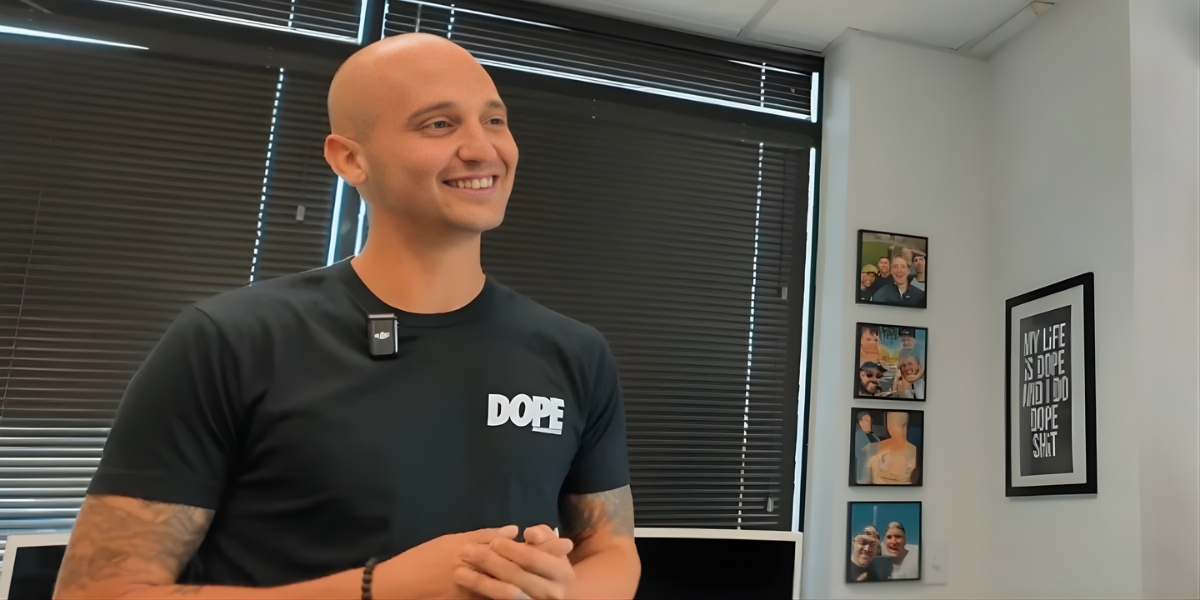
Dave Carroll

10 Entrepreneurs to Watch in 2026

Photo Courtesy: Dave Carroll / Dope Marketing

Dave Carroll is the founder and CEO of Dope Marketing, a Minneapolis–St. Paul area company reshaping how home‑service and local businesses approach direct mail and print marketing. Known for a hands‑on mix of data‑driven strategy and automation, Dave has spent more than 15 years mastering direct mail systems that remove complexity and barriers for clients while driving meaningful ROI. (dopemarketing.com)

Dave’s entrepreneurial path hasn’t been typical. He started his first business in his twenties and has since built Dope Marketing into a high‑growth firm serving both major brands and thousands of local contractors with automated postcard, yard sign, and targeted mail campaigns. (David Carroll)

At the heart of his work is a focus on execution, practical tools, and helping business owners grow without unnecessary hurdles. Dave balances life as a business leader with his role as a husband and father of five. (David Carroll)

Websites:

https://www.dopemarketing.com/ 

https://thedavidcarroll.com/

Instagram: https://www.instagram.com/davedopemarketing/?hl=en 

LinkedIn: https://www.linkedin.com/in/dopemarketing 

Reference article: https://usinsider.com/dave-carroll-on-wellness-discipline-and-leadership/ 

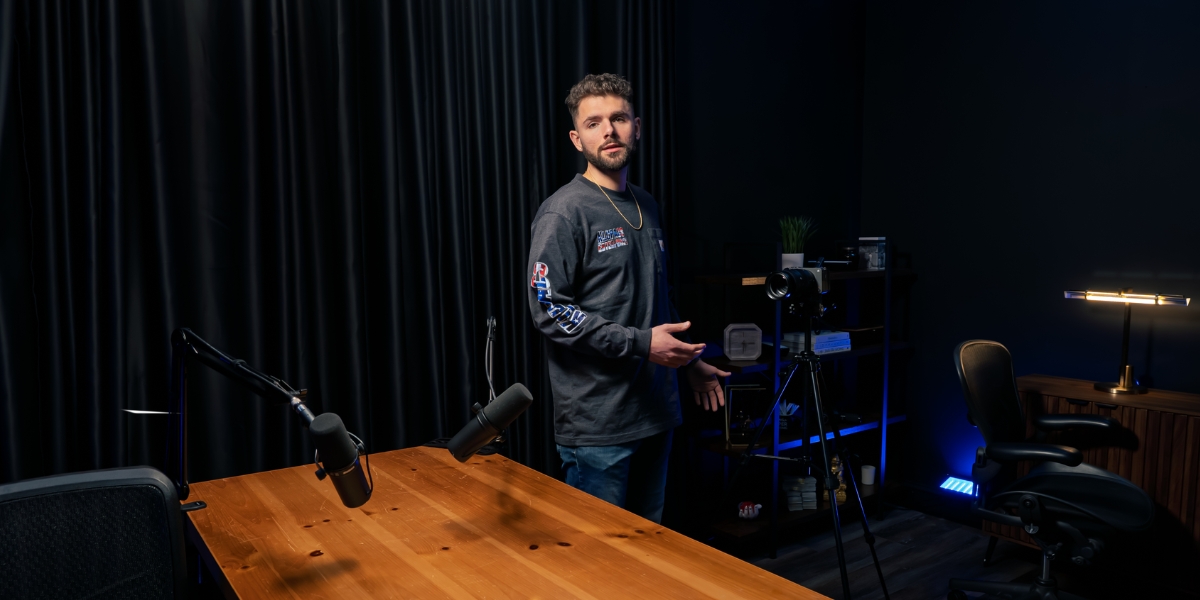
Bryce Eckwall

10 Entrepreneurs to Watch in 2026

Photo Courtesy: Bryce Eckwall

Bryce Eckwall is a content creator, storyteller, and the founder of Q29 Productions LLC, a Hudson Valley‑based studio focused on podcast production, video content, and social media for entrepreneurs and business leaders. Bryce built his expertise by teaching himself audio engineering, lighting, and editing while still a teenager, turning that passion into a business that helps others amplify their voices and grow their audiences. Known for his emphasis on substance over spectacle, he guides clients through thoughtful storytelling and strategic content creation that supports long‑term visibility and engagement. His work has included helping podcasts gain traction and appearing on live television to share insights on impactful digital content. Bryce continues to push creative boundaries while helping ambitious professionals share their stories with confidence.

Instagram: https://www.instagram.com/brycewallll/?hl=en 

YouTube: https://www.youtube.com/@BryceEckwall

Facebook: https://www.facebook.com/bryce.eckwall/ 

LinkedIn: https://www.linkedin.com/in/bryce-eckwall-b2b02b250 

Reference article: https://nyweekly.com/entrepreneur/bryce-eckwall-and-the-rise-of-q29-productions-building-a-modern-content-powerhouse/

Anxiety in New Motherhood: When to Seek Support and Where to Find It

Nobody tells you that becoming a mother might make the world feel suddenly, overwhelmingly dangerous.

Not in the way the books describe it. Not in the “install the car seat correctly” kind of way. More like a quiet, relentless hum of dread that follows you from room to room. A hypervigilance that disguises itself as good parenting. A fear so close to love that you can’t always tell where one ends and the other begins.

Anxiety in new motherhood is extraordinarily common but can be under-discussed. If you’re pregnant and wondering whether it could happen to you, or if you’re already in the thick of it, wondering whether what you’re feeling is “normal,” this piece is for you.

This Is More Common Than You Know

Perinatal anxiety affects up to 20% of new mothers. It is, in fact, more common than postpartum depression, yet it receives far less attention and is far less likely to be screened for at a routine postpartum visit.

Part of why it goes unrecognized is that so much of it looks, from the outside, like devoted mothering. The mother who checks the baby monitor twelve times before she can fall asleep. The one who can’t stop researching every symptom, every milestone, every risk. The one who refuses to let anyone else hold the baby because something might go wrong. From the outside, she looks careful. On the inside, she’s exhausted.

Britta, founder of The Birthing Soul, a holistic pregnancy and postpartum app, knows this experience intimately. She shares, “In my own postpartum after my first child was born, I spent months and months anxious over death, both mine and his. Fears of SIDS, anxiety-ridden doctor’s appointments, and constant checking for breathing. Simple movements around my environment felt full of death potential.”

What Britta describes, the death fears, the constant vigilance, the sense that ordinary life is laced with danger, could be a recognized presentation of postpartum anxiety. And she is far from alone.

What Postpartum Anxiety Can Look Like

Postpartum anxiety doesn’t always announce itself clearly. It might show up as persistent worry that feels impossible to switch off, intrusive thoughts about something terrible happening to your baby, difficulty sleeping even when your baby is finally asleep, physical symptoms like a racing heart, shallow breathing, or a tight chest, or an inability to feel present because your mind is always scanning for the next threat.

For some women, it might arrive as a specific fear of SIDS, of accidents, of their own health. For others, it’s more diffuse, such as a background noise of dread that colors everything without attaching to anything specific. Both are real. Both matter.

It’s also worth noting that postpartum anxiety can occur alongside postpartum depression or completely independently. You don’t have to feel sad to be struggling. You might feel deeply loving, fiercely devoted, and completely overwhelmed by fear all at once.

When Worry Becomes Something More

All new mothers worry. That’s not only normal, but it’s biological. Your nervous system is wired to be on alert when you’re responsible for a vulnerable new life. The question isn’t whether you feel anxious, but whether that anxiety is affecting your ability to function, rest, or feel moments of peace.

It may be time to reach out for support if:

  • Your anxiety is present most of the day, most days 
  • You’re unable to sleep even when you have the opportunity 
  • You’re avoiding situations or activities because of fear 
  • Your thoughts feel intrusive, repetitive, or out of your control 
  • You feel disconnected from your baby, your partner, or yourself 
  • You’re relying on checking behaviors or rituals to manage fear, and it’s not working 

If any of these feel familiar, please know that seeking support is not a sign that something is wrong with you as a mother. It’s a sign that you’re paying attention to yourself, and that takes courage.

Where to Find Support

The good news is that perinatal anxiety is highly treatable, and there are more pathways to support than ever before.

Talk to your OB, midwife, or primary care provider. They can screen you for perinatal mood disorders, rule out any physical contributors like thyroid issues, and refer you to a specialist if needed. Be honest with them, even if it feels vulnerable.

Seek a perinatal mental health therapist. Therapists who specialize in perinatal mental health understand the specific landscape of pregnancy and postpartum anxiety. Postpartum Support International (postpartum.net) maintains a directory of perinatal specialists.

Connect with a support community. Isolation amplifies anxiety. Whether it’s a local new mothers’ group, an online community, or a circle of women who get it, being witnessed and heard by others who understand is genuinely therapeutic.

Explore somatic and embodiment support. Anxiety lives in the body, not just the mind. Practices that help regulate the nervous system, such as breathwork, gentle movement, somatic therapy, and mindfulness, can be powerful complements to talk therapy.

You Don’t Have to White-Knuckle This

There is a version of early motherhood that so many women live through — quietly, privately, without ever telling a soul how frightened they are. They smile in the photos. They say they’re tired when someone asks. They tell themselves it will get better, that they just need to push through, that this is just what motherhood feels like.

Sometimes it does get better on its own. But it may get better faster, and more completely, with support.

If you’re pregnant and reading this as preparation, you are already doing something important by learning to recognize the signs. Build your support network now, before the baby arrives. Know where you’ll turn if you need help. Make it easier for your future self to ask.

If you’re already in the thick of it, what you’re feeling has a name. It is real, it is recognized, and it is not a reflection of the mother you are or the mother you’re becoming. Reaching out isn’t giving up. It’s the bravest thing you can do for yourself and your child.

You deserve support that meets the full weight of this season. And it is available.

Resources for Mothers

  • Postpartum Support International: postpartum.net | Helpline: 1-800-944-4773
  • National Maternal Mental Health Hotline: 1-833-943-5746 (call or text, 24/7)


Disclaimer: The information provided in this article is for general informational purposes only and is not intended as medical advice. It should not be used as a substitute for consultation with a qualified healthcare professional. If you are experiencing anxiety or other mental health concerns, it is important to seek the advice of your doctor or a licensed mental health provider. Individual experiences may vary, and this article does not claim to represent all possible experiences or solutions. Always prioritize professional guidance when making decisions about your health and well-being.

Security Planning for Multi-Contractor Construction Sites

Construction projects that involve multiple contractors require careful coordination, strict access control, and structured oversight. When several teams operate at the same time, the chances of theft, safety violations, and liability disputes increase without a clearly defined security framework in place.

Without proactive planning, a busy job site can quickly become disorganized and vulnerable to costly disruptions. Equipment may go missing, unauthorized individuals may gain entry, and compliance gaps may develop. A well-designed security strategy helps maintain accountability while supporting efficient project progress.

Why Security Planning Matters on Multi-Contractor Sites

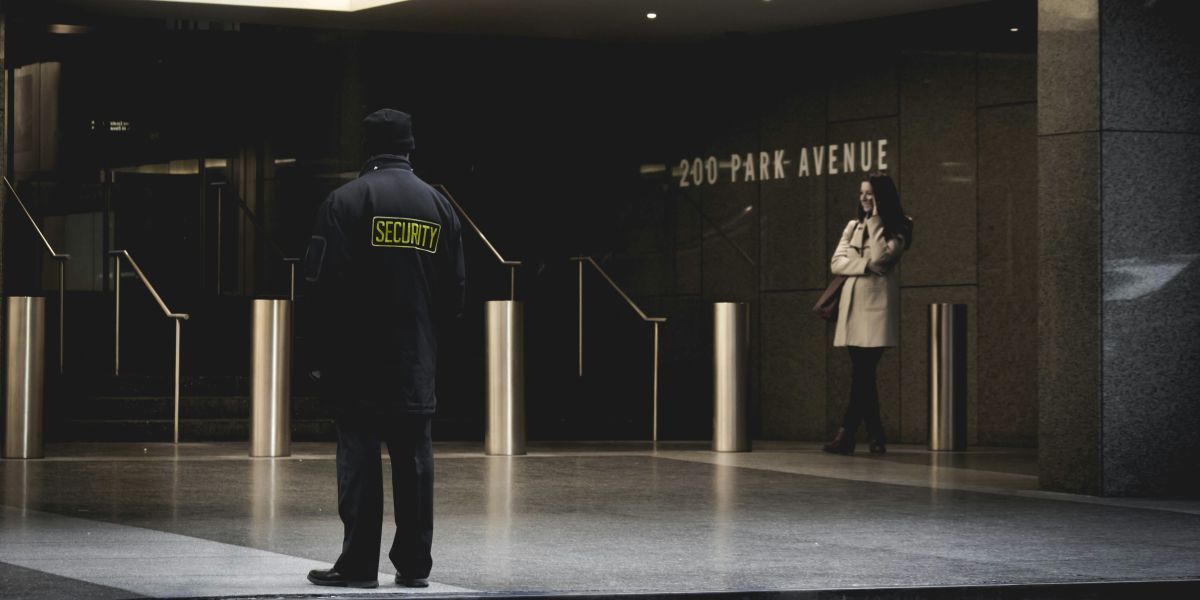
Strong security planning establishes clear expectations for every contractor working on the property. Professional security for construction sites in Los Angeles by First Choice Guards helps reduce theft risks, enforce safety standards, maintain controlled access points, and protect valuable equipment without interrupting daily operations.

  • Reduces theft of tools, materials, and heavy machinery
  • Controls unauthorized access to restricted zones
  • Supports OSHA safety compliance requirements
  • Minimizes project delays caused by security incidents
  • Protects contractors from liability conflicts
  • Improves coordination between supervisors and subcontractors

Key Components of a Comprehensive Construction Security Plan

A structured security plan creates consistency across all contractors and subcontractors on site. Clear procedures reduce confusion, improve accountability, and help maintain compliance with safety regulations.

  • Controlled Access Management

Access points must be clearly defined and monitored throughout the project. Entry logs and credential checks help track who is present on site at any given time. 

This structure reduces unauthorized access, strengthens site control, improves accountability among contractors, and creates a clear record of movement within active work zones.

  • Worker Identification Systems

Each contractor should carry proper identification that verifies their role and authorization level. Badge systems make it easier to distinguish employees, subcontractors, inspectors, and delivery personnel. 

This process prevents confusion and limits unauthorized movement between restricted areas, ensuring that only approved personnel access sensitive zones and high value operational spaces.

  • Equipment and Material Protection

Multi contractor sites often contain high value tools and materials owned by different companies. Secure storage areas and monitored checkpoints help reduce internal and external theft. 

Organized inventory tracking also prevents disputes between contractors regarding misplaced assets by maintaining clear ownership records, improving transparency, and reducing costly misunderstandings.

  • Perimeter Monitoring and Lighting

A construction site perimeter should include proper fencing, lighting, and monitored access gates. Visible deterrents reduce the likelihood of trespassing and vandalism. 

Consistent monitoring discourages after hours intrusion and protects assets during non working hours by maintaining visibility, detecting suspicious activity early, and ensuring rapid response when needed.

  • Incident Reporting Procedures

Clear reporting systems ensure that theft, injury, or policy violations are documented immediately. Standardized procedures protect contractors from future disputes and support insurance claims. 

Consistent documentation strengthens accountability across all working teams by creating a reliable record of incidents, facilitating transparency, and supporting efficient resolution of any disputes or claims.

  • Compliance Oversight

Construction projects must adhere to established workplace safety standards. Security oversight supports compliance by enforcing restricted zone access and safety protocols. 

Proactive monitoring reduces the risk of regulatory penalties or unexpected project shutdowns by ensuring all teams follow safety guidelines, maintaining accurate records, and addressing violations promptly.

Additional Benefits of Strategic Construction Security

Beyond preventing theft, structured security enhances operational efficiency and strengthens professional credibility. A secure site reflects organized leadership and responsible project management.

  • Improved Scheduling Transparency

Access logs provide clear records of contractor presence and working hours. Project managers can verify attendance and resolve scheduling conflicts quickly. This level of transparency improves coordination across multiple teams.

  • Reduced Insurance Exposure

Security incidents can increase insurance premiums and complicate claims. A documented security plan demonstrates proactive risk management. This preparation may positively influence insurance assessments and dispute resolution outcomes.

  • Enhanced Worker Safety

Construction zones involve heavy equipment, hazardous materials, and high-risk areas. Controlled access prevents unauthorized individuals from entering dangerous zones. Security oversight helps reinforce safety standards across all contractor groups.

  • Protection Against Internal Theft

Internal theft can occur when multiple teams share a worksite. Visible security presence and inventory monitoring discourage dishonest behavior. Accountability systems help maintain ethical conduct among workers and subcontractors.

  • Stronger Client and Developer Confidence

Developers and investors value contractors who demonstrate structured risk management. A well-secured site reflects professionalism and reliability. This reputation can influence future project opportunities and long-term business relationships.

  • Professional Security Support

Partnering with experienced providers such as First Choice Security Guard & Patrol Services ensures that patrol routines, access control systems, and emergency response procedures are implemented effectively. 

Their understanding of multi-contractor environments allows them to adapt to changing project phases. Professional oversight provides consistent protection without disrupting workflow.

Practical Steps to Implement an Effective Security Plan

A successful security strategy begins with preparation before construction activity reaches peak levels. Early planning allows for smooth integration into daily operations.

  • Conduct a full site risk assessment before major construction begins
  • Identify high-value equipment and vulnerable access areas
  • Establish written access control rules for all contractors
  • Install adequate perimeter lighting and monitoring systems
  • Schedule routine security briefings with project supervisors
  • Maintain centralized documentation for incidents and access logs
  • Review and adjust protocols as project phases evolve

A Practical Scenario

Consider a large commercial development where electrical, plumbing, and structural teams work simultaneously. Without structured access control, tools may go missing and responsibility becomes unclear. With an organized security plan in place, entry logs provide accountability, restricted areas remain protected, and disputes are resolved through documented records.

In Summary

Security planning for multi-contractor construction sites is essential for protecting assets, maintaining safety, and ensuring compliance. A structured approach creates accountability and reduces the risks associated with busy, multi layered projects. By implementing professional oversight and clear procedures, construction leaders can safeguard their investments while supporting efficient and organized project completion.

From the Exam Room to the Storybook: How Dr. Eyal Levit Is Helping Kids Win at Life

By: Elowen Gray

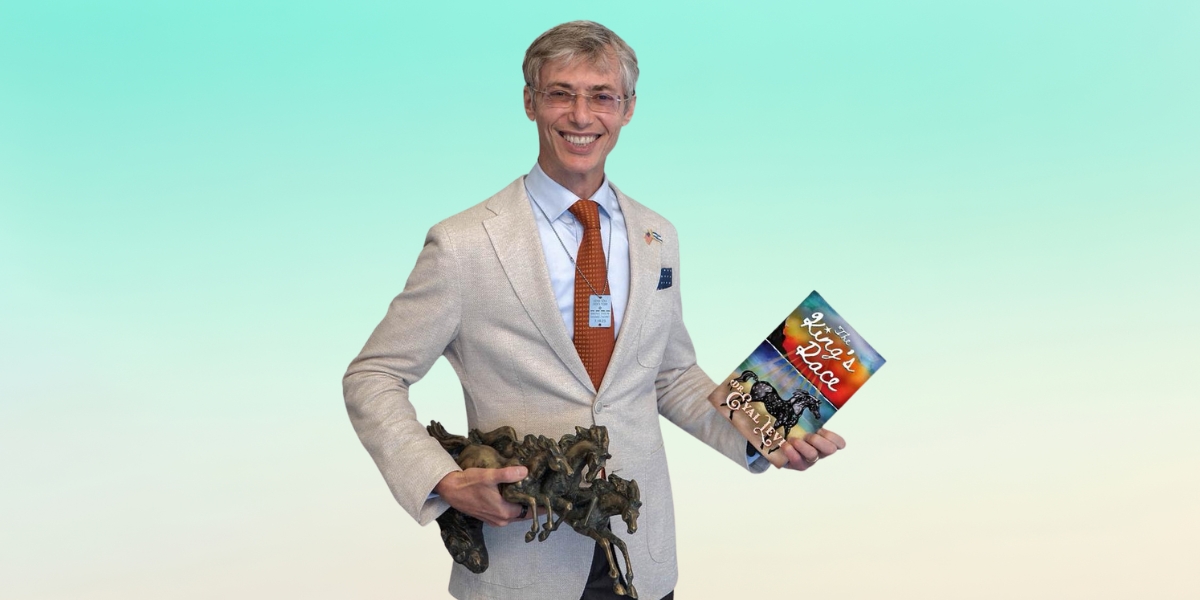
When patients step into Levit Dermatology for a consultation, they expect expertise in skin health and cosmetic renewal. What they may not expect is that their physician can also transform young minds with a children’s book. But for Dr. Eyal Levit, MD, healing, whether medical, emotional, or ethical, extends far beyond the exam room. 

Dr. Levit is a board-certified dermatologist, fellowship-trained Mohs and cosmetic surgeon, professor, educator, and now, a bestselling author whose new book, The King’s Race, is resonating with families and educators across the country. With a career rooted in science and a mission that extends to character formation and resilience, Levit’s work bridges the worlds of medicine, ethics, and storytelling. 

Growing up as an immigrant, Levit’s life has been shaped by movement, adaptation, and deep cultural awareness. Born in Ukraine and raised in Israel, Nigeria, and later the United States, he learned early that the human experience is universal even when the landscape changes dramatically. These early experiences, crossing borders, facing prejudice, and finding common ground in athletic competition, have influenced both his medical philosophy and his call to write.

Levit’s career in dermatology began with a fascination for healing. After completing his residency at Columbia Presbyterian Hospital, now part of NewYork-Presbyterian, and advanced surgical fellowships at the University of Pennsylvania, he became a respected surgical educator and clinician. For years, he led cosmetic and dermatologic surgery departments at prominent institutions, earning awards for teaching and mentoring, and helping refine techniques ranging from laser resurfacing to facial reconstruction. 

But amid this clinical success, he began asking a bigger question: What if the principles that guide healing could influence how children see themselves and the world they’re growing into? The answer would become The King’s Race.

At first glance, The King’s Race is a fable about a young animal determined to succeed against all odds. But Levit’s intent goes deeper than a simple moral tale. Drawing on timeless themes of perseverance, integrity, and hope, the story reimagines life’s challenges as a race, not one defined by shortcuts or superficial “perfection,” but by resilience, heart, and character.

“True healing extends beyond the body,” Levit says. “It’s about shaping thoughtful, courageous human beings who can navigate life’s complex landscape with discipline, gratitude, and purpose.”

Levit chose animal characters purposely: they bypass early-formed biases and allow young readers to project themselves onto the narrative, seeing strength and value in places society might overlook. That intentional simplicity has helped The King’s Race achieve bestseller status on Amazon and earn consistent five-star reviews from readers and educators alike. 

While Levit’s medical expertise commands respect in academia and clinical circles, it’s his approach to mindset and moral education that sets him apart. Through podcasts, talks and social media engagements, he engages a global audience eager for guidance rooted in both evidence and empathy.

Levit’s message to parents, educators, and students is clear: Character isn’t taught; it’s cultivated through stories, conversations, and lived experience. His educational content emphasizes leadership, perseverance in the face of setbacks, and the importance of community over competition.

“I saw too many young people lose their imagination and curiosity,” he says. “We reward grades over creativity, conformity over individuality, and performance over purpose. The King’s Race aims to reverse that trend by giving children a language to explore deeper values.”

Levit’s dedication to character development isn’t limited to children. His outreach resonates with audiences of all ages and backgrounds, parents seeking meaningful conversations with their kids, teachers looking for classroom tools that reinforce ethics, and adults interested in personal growth. The book has already spurred demand for collaborations with schools and education networks and is being discussed for potential adaptations into other media formats, including film.

Professionally, Levit continues to thrive as one of New York’s most sought-after dermatologists. His clinical work spans complex skin cancer treatments, advanced cosmetic procedures, and patient education, blending compassion with cutting-edge practice.

With The King’s Race positioned as more than a children’s title, Levit is widening his influence. His long-term goals include global translations of the book and broader educational initiatives that embed timeless values into modern learning.

His advice echoes through both his medical practice and his literary work: “Be good, do good, say good, may good come your way.” It’s a simple mantra with profound implications for how we live, lead, and shape the next generation. 

The Science of Self-Discovery: Dr. Sumaya Alnasser Blends Psychology and Spirituality in Her Work

By: Mae Cornes

The language of self-development often oscillates between two extremes: emotional inspiration and rigid methodology. Rarely does it construct a coherent architecture, one that treats the human experience as layered, structured, and governed by laws both psychological and spiritual.

Dr. Sumaya Alnasser has built her literary career on precisely that premise. Across more than 100 books, the Saudi author and consciousness thinker has developed a body of work that treats awareness not as a mood but as a discipline. Her writing does not promise instant transformation. Instead, it maps the mechanics of emotion, choice, detachment, purpose, wealth, faith, and identity, presenting life as a structured field of growth.

“Consciousness,” she writes, “is not a reaction. It is a position you choose.”

The Discipline of Letting Go

At the core of Dr. Alnasser’s philosophy lies one recurring theme: release precedes elevation. In Letting Go, she reframes surrender not as loss but as maturity. The act of release becomes an inner recalibration, freeing the self from stories that no longer serve it.

This idea deepens in The Law of Detachment, where she explores the timing and mechanics of detachment. Most people detach incorrectly, she argues, either too early or too late. True detachment is not emotional numbness but quiet internal growth, occurring when the story naturally falls away.

In parallel, The Law of Striving shifts focus toward effort. Striving, in her model, is not obsession but structured movement. It balances ambition with awareness, ensuring that effort does not dissolve into anxiety.

Together, these works establish a paradox central to her teachings: one must know when to strive and when to release.

Emotional Literacy as a Framework

Dr. Alnasser’s exploration of emotional intelligence takes a refined turn in The Story of Emotion, where she dissects how feelings form, are stored, and are repeated. Emotions are not fleeting states, but narrative threads shaping identity.

In Neutrality, she challenges a commonly misunderstood state. Neutrality, she explains, is often disguised emotional withdrawal—a silent self-protection mechanism when feelings become overwhelming. Healing begins when neutrality gives way to conscious participation.

Meanwhile, Positivity is not presented as blind optimism, but as disciplined perception. It is the conscious redirection of thought patterns without denying reality.

In The Summary of the Problem, she proposes that most life crises are not complex—they are layered. When stripped of emotional exaggeration, the “problem” often reduces to a core belief or unresolved wound.

These books collectively elevate emotional awareness from the language of therapy into structural analysis.

Relationships: Compatibility Over Fantasy

A few of Dr. Alnasser’s works are as pragmatic as Signs of Emotional Compatibility. Compatibility, she argues, outweighs romance. The book outlines markers of emotional alignment—priorities, rhythm, routine, values, and mutual flow—equipping readers with tools for conscious selection rather than impulsive attachment.

In The Secret Life of Men, she explores the hidden psychological architecture of masculine identity. Rather than criticizing or idealizing, she analyzes the internal frameworks shaping male behavior—belief systems, emotional patterns, and resistance to vulnerability.

In contrast, The Concubine vs. the Lady examines the positioning of femininity within relationships. The book dissects subtle energetic dynamics—where self-worth, boundaries, and role perception determine relational power.

Relationships, in her work, are never accidental; they are mirrors reflecting internal order or disorder.

The Economics of the Inner World

Dr. Alnasser also ventures into the psychology of wealth and opportunity. In Wealth Questions, she reframes money as a reflection of internal beliefs. The book invites readers to interrogate their inherited narratives around value, scarcity, and entitlement.

Similarly, Secrets of the Lucky dismantles the myth of randomness. Luck, she argues, is often alignment, an intersection of preparation, awareness, and timing.

In My Secrets of Success and Failure, she adopts a personal tone, analyzing patterns behind both triumph and collapse. Failure, in her framework, is data. Success is structured repetition.

Through these works, achievement becomes a conscious system rather than an emotional accident.

Time, Beginnings, and the Soul’s Direction

Dr. Alnasser’s work frequently returns to the dimension of time. In The Timeline, she explores how past, present, and future coexist psychologically. Many individuals live trapped in emotional timelines that distort their perception of the present.

In Messages of Beginnings, she emphasizes that every initiation, whether a relationship, a project, or an identity shift, contains coded direction. Beginnings are rarely neutral; they set energetic momentum.

Messages of Souls extends this idea into spiritual continuity, suggesting that encounters and life transitions carry deeper developmental purposes.

This spiritual axis reaches its most explicit articulation in Call of the Soul, a book that treats awakening not as mysticism but as inevitability. The soul, she suggests, calls for expansion when the current identity becomes too small.

Spiritual Hunger and the Energy of Experience

In Spiritual Hunger, Dr. Alnasser addresses a modern paradox: material abundance paired with inner emptiness. The book dissects the difference between emotional appetite and spiritual longing, offering structured reflection to help distinguish between them.

In contrast, The Energy of Pleasure reframes pleasure as a legitimate developmental force rather than indulgence. Pleasure, when conscious, becomes expansion.

And in Midnight Lunch, she adopts a reflective narrative approach, examining intimate, often-overlooked moments of internal dialogue that shape decision-making. The book reads like a philosophical conversation with the self during life’s quietest hours.

In Spiritual Secrets, Dr. Sumaya Alnasser explores the deeper layers of the soul, addressing themes such as etheric contracts, energetic laws, and the unseen dimensions that influence human experience.

Ramadan, Reflection, and Rhythmic Renewal

In Ramadan Reconnect, Dr. Alnasser blends spiritual tradition with structured introspection. Over 21 days, readers engage in guided stories and reflective practices designed to restore emotional, mental, and spiritual alignment.

This integration of faith and psychological clarity has become a hallmark of her influence across the Arab world.

Wisdom as the Final Layer

At the summit of her framework lies Wisdom. Unlike knowledge, wisdom is lived integration. The book explores traits of the wise, the psychology behind discernment, and the often-overlooked truth that wisdom is rarely sought until pain demands it.

Wisdom, in her philosophy, is not an abstract virtue. It is applied awareness—tested, refined, and embodied.

A Structured Philosophy of Conscious Living

What distinguishes Dr. Sumaya Alnasser is not merely productivity, but coherence. Her books form a connected system:

Release and striving.
Emotion and neutrality.
Compatibility and power.
Wealth and belief.
Time and spiritual hunger.
Pleasure and wisdom.

Each title functions as a module within a broader curriculum of self-mastery.

Her readers do not simply seek comfort; they seek clarity. In a culture often divided between rigid rationalism and unexamined spirituality, Dr. Alnasser occupies the intersection—constructing a disciplined language for inner evolution.

“Awareness,” she writes, “is the only wealth that cannot be taken from you.”

Through that premise, Dr. Sumaya Alnasser continues to redefine self-discovery as a structured science of living consciously.


Disclaimer: This content is for informational purposes only and is not intended as professional advice. The views and opinions expressed in this article are those of Dr. Sumaya Alnasser and reflect her personal philosophy and approach to psychology and spirituality. The content does not promise any specific outcomes or transformations. Readers are encouraged to seek personalized guidance from qualified professionals if needed.