Pokémon Winds and Waves Coming in 2027 for Nintendo Switch 2

The Pokémon franchise officially entered its 10th generation with the reveal of Pokémon Winds and Pokémon Waves. During a Pokémon Presents broadcast on February 27, 2026, The Pokémon Company shared the first details about these upcoming titles. The announcement coincided with the 30th anniversary of the series, marking a significant milestone for the global brand. These games are scheduled for a worldwide release in 2027. They will be exclusive to the Nintendo Switch 2, making them the first mainline entries designed specifically for Nintendo’s next-generation hardware.

A New Region Defined by Nature

Early footage from the reveal trailer suggests a setting heavily inspired by tropical environments. The region appears to consist of numerous islands, which allows for a diverse range of biomes. Players can expect to explore dense jungles, glowing magma caves, and expansive underwater areas. This shift toward more complex environments indicates that the developers are leaning further into the open-world mechanics seen in recent years.

The emphasis on “Winds” and “Waves” suggests that weather patterns and oceanic exploration will play a major role in the gameplay experience. During the presentation, Pokémon Company President Tsunekazu Ishihara spoke about the creative direction of the project.

“With these new titles, the goal is to expand the boundaries of exploration. We want players to feel the scale of the world, from the highest peaks to the depths of the ocean,” Ishihara stated during the broadcast.

Meet the New Starter Pokémon

As with every new generation, the reveal of the starter Pokémon was a highlight of the announcement. Trainers will choose between three new companions to begin their journey.

  • Browt: A Grass-type creature that resembles a bird. It appears designed for forest camouflage.

  • Pombon: A Fire-type inspired by a Pomeranian dog. Its fluffy appearance and energetic movements caught the attention of many fans.

  • Gecqua: A Water-type that takes the form of a sleek gecko. It seems built for the amphibious environments shown in the trailer.

These three will serve as the foundation of the 10th-generation Pokédex. While their evolved forms remain a secret, their initial designs suggest a focus on the natural elements of the new region.

Technical Steps Forward

The transition to the Nintendo Switch 2 allows for technical improvements that were not possible on previous hardware. The trailer showcased improved lighting effects and more detailed textures in the environments. This hardware exclusivity ensures the games can handle the seamless transitions required for a large, island-filled open world.

In a move toward better global accessibility, the developers confirmed that Brazilian Portuguese will be a selectable language option. This is a significant addition for the large Pokémon community in Brazil, who have advocated for local language support for many years.

Nintendo of America President Doug Bowser commented on the excitement surrounding the new hardware and its software lineup.

“The leap to our next platform provides the power needed to bring these ambitious visions to life. Pokémon Winds and Pokémon Waves represent the next chapter in how fans will interact with this beloved world,” Bowser noted in a follow-up statement.

Commemorating 30 Years

The timing of this reveal is tied to the 30th anniversary of the original Pokémon Red and Green releases in Japan. To celebrate this history, the trailer included a brief look at two new themed variants of Pikachu. While their specific roles or types were not explained, they appear to be special editions created for this anniversary generation.

The 2027 release window puts some distance between the announcement and the actual launch, giving the development team at Game Freak more time to polish the experience. This timeline follows the pattern of previous major releases while allowing the “Switch 2” to establish its user base.

What Remains to Be Seen

While the initial reveal provided a strong foundation, many questions remain. The name of the new region has not been disclosed, and the primary storyline or “villain” team is still a mystery. Fans are also waiting for information regarding multiplayer features, such as how the series’ famous trading and battling systems will evolve on the new console.

The full list of new and returning Pokémon is currently unknown. Traditionally, a new generation introduces roughly 80 to 100 new species, but the total count for these games has not been confirmed. Information regarding the legendary Pokémon that will likely grace the covers of Winds and Waves is also being held back for future updates.

As 2027 approaches, more details will likely emerge through seasonal updates and Nintendo Direct presentations. For now, the reveal of Pokémon Winds and Waves serves as a glimpse into the future of the franchise on a new generation of hardware.

Finding Strength in Transition: Your Rochester Divorce Attorney

Divorce is, without a doubt, one of life’s toughest transitions. We’ve seen countless individuals grapple with the emotional weight of ending a marriage, the complex legal requirements, and the financial uncertainties that come with it.

The emotional weight of ending a marriage combines with complex legal requirements, financial considerations, and concerns about your future.

When you’re navigating this difficult period in Rochester, having a skilled divorce attorney by your side may transform uncertainty into clarity and anxiety into confidence.

Here’s why the right legal representation can be so crucial: it’s not just about paperwork. It’s about getting strategic guidance that’s truly tailored to your unique situation.

Whether you’re concerned about asset division, child custody arrangements, or protecting your financial interests, an experienced Rochester divorce attorney can serve as your advocate, counselor, and champion throughout the entire process.

Why Local Expertise Matters

Rochester’s legal landscape has its own distinct characteristics. A common mistake is assuming all family courts operate the same way. But here in Monroe County, our family courts have their own distinct procedures and guidelines.

A Rochester divorce attorney brings valuable familiarity with local judges, court staff, and opposing counsel. This insider knowledge can be invaluable.

It helps us anticipate potential challenges and craft strategies that may resonate with the decision-makers who will influence your case outcome.

And here’s another thing: local attorneys likely understand the practical realities of life right here in Rochester.

They know how regional economic factors can affect spousal support calculations, which neighborhoods may matter for custody considerations, and how seasonal employment patterns in the area might impact financial disclosures. This deep community awareness creates a solid foundation for legal advice that can fit your real-world situation. Don’t you agree?

Beyond courtroom familiarity, a Rochester-based attorney likely offers convenient access when you need it most. Think about it: face-to-face meetings are simpler to arrange.

Emergency consultations don’t always require long-distance coordination.

Plus, your lawyer can attend court appearances without extensive travel, which helps keep legal costs manageable while potentially ensuring responsive communication.

Comprehensive Support Through Every Stage

Divorce proceedings, as you might imagine, unfold through multiple phases. Each one presents its own distinct challenges and, in some cases, opportunities.

From initial filing through final decree, your Rochester divorce attorney can manage the legal complexities while you focus on emotional healing and practical preparation for your next chapter.

Strategic Planning and Case Assessment

The dissolution process often begins long before any documents even reach the courthouse.

Your attorney may conduct a thorough evaluation of your circumstances, identifying key issues that could shape negotiations and potential litigation.

This assessment can cover everything from asset inventory and debt allocation to income documentation and, crucially, parenting considerations if children are involved.

Early strategic planning? That’s what often sets the trajectory for your entire case. Experienced Rochester divorce attorneys know exactly which battles might warrant aggressive pursuit and which issues may benefit from compromise.

This discernment helps avoid unnecessary conflict while, most importantly, protecting your fundamental interests.

Skilled Negotiation

Did you know most divorce cases are often resolved through negotiation rather than going to trial? Your attorney’s negotiation skills likely impact the quality of your settlement.

It’s that simple.

Skilled legal representatives balance firmness with flexibility, always advocating for favorable terms while recognizing when proposed agreements might serve your long-term well-being.

Rochester divorce attorneys can leverage their professional relationships to facilitate productive discussions. It’s a powerful tool.

They communicate effectively with opposing counsel to identify common ground, propose creative solutions to disputed issues, and work toward resolutions that both parties may genuinely accept.

This collaborative approach often produces far better outcomes than adversarial courtroom battles, all while reducing the emotional and financial costs of protracted litigation. Who wouldn’t want that?

Courtroom Advocacy When Necessary

Sometimes, despite best efforts, some cases simply require judicial intervention.

When settlement negotiations reach an impasse, your Rochester divorce attorney can seamlessly transition to courtroom advocacy.

Trial preparation involves meticulously gathering evidence, preparing witnesses, and developing persuasive arguments that present your position in the most favorable light possible.

Experienced litigators truly understand how to present complex financial information clearly, articulate parenting priorities effectively, and respond to opposing arguments with poise and precision. It’s an art.

Their courtroom presence and sharp legal acumen help ensure your voice receives the attention it truly deserves from the judge making decisions about your future.

Protecting What Matters Most

Divorce, as you’ll quickly realize, involves so much more than just dividing property and debts.

The decisions made during your case may profoundly influence your financial security, your family relationships, and your personal well-being for years to come. That’s a big deal.

That’s where your Rochester divorce attorney steps in, helping to safeguard these critical interests.

Asset Protection and Fair Division

New York’s equitable distribution laws require a fair—though not necessarily equal—division of marital property. This is a key distinction.

Determining what’s marital versus separate property, valuing complex assets like businesses or retirement accounts, and ensuring complete financial disclosure all demand serious legal expertise.

Your attorney will meticulously identify assets that might otherwise be overlooked and challenge valuations that could unfairly understate their worth.

But protection extends beyond just tangible property. Things like professional degrees, enhanced earning capacity, and other intangible assets?

They absolutely may warrant consideration in property division.

Sophisticated Rochester divorce attorneys recognize these subtle yet crucial factors and skillfully incorporate them into negotiation strategies.

Child Custody and Parenting Rights

For parents, custody arrangements are often the most emotionally charged aspect of divorce. It’s understandable, isn’t it? Your attorney will likely advocate for parenting time that preserves your vital relationship with your children while always serving their best interests.

This involves developing thoughtful custody proposals that account for everything: work schedules, school considerations, extracurricular activities, and the practical realities of co-parenting.

Rochester divorce attorneys also meticulously address child support calculations, ensuring both accuracy and fairness.

They’ll review income documentation, verify expense claims, and raise objections when opposing parties attempt to manipulate financial information to reduce their support obligations.

We’ve seen it happen.

Financial Security Through Support Awards

Spousal support is designed to bridge economic disparities that often arise during a marriage.

Your attorney will meticulously analyze factors like marriage duration, income differences, career sacrifices, and future earning potential to build compelling arguments for support awards that truly reflect your contributions and needs.

Effective representation also means protecting you against excessive support obligations if you’re the higher-earning spouse.

Your Rochester divorce attorney will present clear evidence of the other party’s earning capacity, meticulously document their financial resources, and advocate for support terms that are both reasonable and sustainable.

A Partnership Built on Trust

The attorney-client relationship during divorce? It absolutely requires exceptional trust and open communication.

You’re sharing intimate details about your marriage, finances, and family life with someone tasked with guiding you through a truly life-altering transition. That’s a huge responsibility.

The best Rochester divorce attorneys create environments where clients genuinely feel heard, respected, and supported. It’s paramount.

This partnership thrives on transparency. Here’s why: Your attorney needs complete and honest information from you to provide sound advice and, crucially, to avoid any courtroom surprises.

In return, you deserve clear explanations of your legal options, realistic assessments of your case’s strengths and weaknesses, and responsive communication that keeps you informed every step of the way.

Compassionate legal representation recognizes that divorce affects so much more than just legal rights—it profoundly impacts your emotional well-being and your future happiness.

While maintaining professional boundaries, skilled attorneys provide much-needed reassurance during difficult moments and celebrate victories right alongside you.

Moving Forward with Confidence

Divorce certainly marks an ending, but it also, surprisingly, opens doors to new possibilities.

We’ve seen it time and again.

With experienced legal representation, you can navigate this transition with greater certainty about the outcome and, more importantly, confidence in your ability to build a fulfilling life ahead.

Your Rochester divorce attorney handles all the legal complexities, allowing you to invest your precious energy in emotional healing, career development, and strengthening relationships with your children.

This division of labor creates much-needed space for personal growth during a period that might otherwise feel completely overwhelming.

Your Next Step Starts Here

Rochester divorce attorney provides the expertise and guidance needed to navigate the legal, emotional, and financial complexities of divorce. Choosing the right attorney is a critical decision, as it affects every aspect of your case—from asset division and custody arrangements to spousal support and settlement negotiations.

If you’re considering divorce or have already begun the process, reach out to discuss your situation with a Rochester divorce attorney who will listen to your concerns, answer your questions, and develop a strategy designed specifically for your circumstances.

Take that first step toward clarity, resolution, and a new chapter filled with possibility.


Disclaimer: The information provided in this article is for general informational purposes only and should not be construed as legal advice. Every divorce case is unique, and the guidance provided here may not apply to your specific circumstances. It is recommended that you consult with a qualified attorney to discuss your individual situation and receive personalized legal advice. The article does not create an attorney-client relationship.

Highlights vs Balayage: What’s the Difference and Which One Is Right for You

Understanding the Difference Between Highlights and Balayage

When it comes to color services, many clients are unsure of the distinctions between highlights and balayage. Both are widely requested techniques, yet they are often confused. If you’ve ever booked a color appointment and wondered which method is best for you, you’re not alone. In 2026, hair color trends have evolved, and both highlights and balayage now offer more natural, low-maintenance options than ever before. This article will clear up the confusion and help you decide which technique fits your hair, lifestyle, and maintenance preferences.

What Are Highlights?

Highlights are a traditional method of adding dimension to your hair by lightening sections of hair using foils. This technique involves isolating sections of hair and applying bleach or a lightener to achieve a brightening effect. The result is a defined contrast between the highlighted sections and the natural color. Highlights have always been popular for creating vibrant and noticeable color changes.

In 2026, highlights have come a long way. While you might remember the bold, chunky highlights of the 2000s, the technique has evolved to offer a wider range of options. Today, highlights can be more subtle, blending seamlessly with the base color to create a natural sun-kissed effect. The current trend embraces lived-in color, where highlights gradually fade into the natural color rather than creating sharp lines of contrast.

For those who desire brighter and more structured color, highlights can still provide a noticeable and dramatic change. However, modern highlights can also lean into a softer, low-maintenance aesthetic. This means you don’t need to commit to frequent color appointments to maintain your look. Highlights in 2026 are designed to work with your natural color, enhancing it rather than working against it.

Want to see some classic examples of chunky highlights from the 2000s? Check out this Pinterest board on Chunk Highlights for inspiration.

What Is Balayage?

Balayage is a freehand coloring technique that involves painting the color directly onto the hair. Unlike highlights, which use foils to separate and isolate the strands, balayage is a more organic, artistic approach. The result is a softer, more gradual color transition that mimics the way the sun naturally lightens hair.

The main appeal of balayage lies in its effortless, natural grow-out. Since the technique doesn’t rely on harsh lines, the color grows out beautifully without leaving a stark root line, making it a perfect option for clients who prefer low-maintenance hair. As balayage continues to be a popular choice in 2026, it’s clear that the technique remains synonymous with effortless, lived-in beauty. Clients who want a subtle yet noticeable change that doesn’t require constant upkeep are especially drawn to balayage.

One of the key reasons balayage has remained so popular is that it allows for versatility. Whether you’re looking for a dramatic lightning effect or a more subtle, sun-kissed look, balayage can be customized to suit your style. The beauty of balayage is that it’s designed to grow out naturally, allowing you to avoid frequent salon visits while still maintaining a fresh, intentional look. For more information on how balayage can be customized to suit your style, check out balayage Boulder CO.

How Both Have Evolved in 2026

Both highlights and balayage have evolved significantly in 2026, moving away from high-contrast, overly processed looks. The trend now leans toward natural, lived-in color that complements your base shade. Today’s clients seek color that appears as though it could almost be their own natural hair—just enhanced. This shift is in line with the broader low-maintenance beauty trend that emphasizes effortless style.

In the past, heavily processed hair often required regular touch-ups and extensive upkeep. However, in 2026, the focus is on creating color that works with the client’s natural hair texture and growth patterns. This shift aligns with the growing preference for air-dried styles and products like salt spray for hair, which contribute to a more relaxed, natural aesthetic. The goal is to achieve a look that’s not only flattering but also easy to maintain.

Both highlights and balayage have embraced this trend, with highlights becoming softer and less harsh, while balayage continues to shine as the go-to technique for effortless color. These more natural results align with a modern lifestyle where clients desire hair that looks stylish but doesn’t require constant upkeep.

Highlights vs Balayage: What's the Difference and Which One Is Right for You

Photo: Unsplash.com

How to Choose Between Highlights and Balayage

When deciding between highlights and balayage, it’s essential to consider several factors, including your hair type, lifestyle, and desired look. Here are a few key questions to help guide your decision:

  • What is your natural hair color? If your hair is darker and you want a dramatic contrast, highlights may be the right option. For a softer, more subtle effect, balayage may work better.
  • How much maintenance are you willing to commit to? If you’re looking for a color service that doesn’t require frequent salon visits, balayage might be your best option. Its natural grow-out means fewer touch-ups. However, if you prefer more structured and defined color, highlights might suit you better.
  • What look do you want? If you’re after brighter, more structured sections of color, highlights may give you the result you’re looking for. If you want a softer, more gradual transition, balayage is the way to go.

It’s important to remember that a skilled colorist may often combine both techniques to achieve the most customized, flattering result. For instance, they might use highlights around the face to create brightness and balayage to add dimension throughout the rest of the hair.

Before you book your appointment, make sure to communicate clearly with your stylist about the look you want. The more you know about the differences between highlights and balayage, the easier it will be to express your preferences and get the outcome you desire.

Choosing the Right Technique for Your Hair

Ultimately, the best hair color service is the one that fits your lifestyle. In 2026, the goal for many clients is to have color that grows out beautifully and requires minimal maintenance. Both highlights and balayage can achieve this, but it all depends on your personal preferences. Whether you’re drawn to the structured, bright effects of highlights or the soft, natural look of balayage, a skilled colorist will be able to guide you toward the right choice.

At Sage Studio Salon, Emily Swenson, a renowned expert in balayage and razor cuts, emphasizes the importance of understanding your own hair needs. “The highlights vs balayage conversation comes up every single day in my chair. My answer is always the same: it depends on your hair, your lifestyle, and how often you realistically want to be back in the salon. In 2026 most of my clients want color that grows out beautifully and does not require constant upkeep. Both techniques can get you there.”

TYME Style Is Redefining Professional Hair Tools With a Focus on Long-Term Hair Health

By: Kate Sarmiento

Beauty routines have entered a more thoughtful era.

Hair tools were once chosen for speed and impact. Faster passes meant efficiency. Higher heat promised better results. The focus was always on the outcome, rarely on the cost of the process along the way.

That mindset has softened.

Between bleaching cycles, postpartum shedding, stress-related thinning, hormonal shifts, extensions, and years of regular styling, many women have come to understand that hair responds best to consistency. It does not thrive under pressure. It improves when it is treated with care, predictability, and restraint.

This is not a rejection of beauty or polish. It is an evolution of it.

Women now want to know what heat will do to their hair before it touches it. They want tools that behave the same way every morning, not ones that feel different from one use to the next. Styling is no longer about seeing how much hair can endure. It is about protecting what is already there.

This shift is exactly where TYME Style fits into the modern hair conversation.

Built by a professional stylist and rooted in a philosophy of TYMELESS beauty, TYME was created for women who want control over their routines and confidence in their results. The brand focuses on professional hair tools designed to remain relevant season after season, not because they are trendy, but because they are dependable.

Because for many women today, styling is no longer about spectacle. It is about trust.

When Heat Stops Feeling Like a Shortcut

Heat used to feel like a solution. Smooth it. Curl it. Move on.

Now, heat feels like a decision.

Women with bleached hair, postpartum regrowth, sensitive scalps, extension-supported styles, or stress-related breakage know that hair remembers everything. Uneven temperature. Too many passes. One rushed session with the wrong tool. The damage rarely announces itself immediately, but it shows up eventually.

This awareness has changed how styling is approached. Hair is no longer treated as something that can be endlessly fixed. It is treated as something cumulative, shaped by daily choices. Conversations around breakage increasingly point to repeated temperature fluctuations and friction as major contributors to long-term cuticle stress, especially for compromised hair types (Source: Revlon Professional, 2025).

In simple terms, hair does not fail overnight. It wears down.

That reality has pushed many women away from tools designed for speed and toward those built for stability. Styling is no longer about forcing hair into submission. It is about maintaining control over its future.

TYME was designed with this exact shift in mind.

Rather than marketing heat as power, TYME treats heat as something to be managed. The tools deliver consistent, controlled temperatures, reducing the need for repeated passes. Smooth ceramic surfaces allow hair to glide without dragging or snagging. The result is styling that feels calm and predictable, not rushed or aggressive.

This matters most for hair that cannot afford mistakes. Bleached lengths. Postpartum regrowth. Extension-wearing hair. Fragile sections near the crown or hairline. These hair types do not need intensity. They need tools that respect their limits.

Heat styling, when done thoughtfully, is not the enemy. Poorly controlled heat is.

Why Discipline Became the New Luxury

In a beauty industry that often equates innovation with novelty, discipline has quietly become the new marker of quality.

What sets TYME apart is not flash or constant reinvention. It is a restraint.

TYME was founded by a stylist who spent years behind the chair watching tools fail real hair. Not campaign hair. Not influencer hair. Real hair with color history, extensions, regrowth phases, and sensitivity that changes over time. That firsthand experience shaped every design decision.

The focus was never on extreme temperature ranges that look impressive on packaging. It was on delivering salon-quality results without pushing hair past its limits. PTC ceramic heating provides stable, even heat without sudden spikes that compromise fragile strands. That stability is especially important for hair already stressed by chemical processing or hormonal changes (Source: PRITECH Care, 2024).

The tools are designed for repetition. They are meant to be used daily, not sparingly. That design philosophy acknowledges a simple truth. Most women style their hair regularly. The real question is whether their tools support long-term health or quietly work against it.

The Original TYME Iron and the 1.25-inch curling iron have earned loyalty not because they are flashy, but because they are reliable. The 2-inch curling iron creates loose, classic waves without excessive heat. The TYME Air Iron blends airflow with controlled heat for smooth, long-lasting styles that do not feel overworked.

Since becoming part of The Lauren Ashtyn Collection, TYME has been introduced to an audience that already understands the importance of preservation. This community views heat as something to be used with intention, not intensity. The goal is not a dramatic transformation. It is consistency.

Luxury, in this context, is not excess. It is knowing your tool will perform the same way every time. Knowing it will not quietly undo months of careful care. Knowing it was built to last, not to be replaced when trends shift.

Restraint has become the upgrade.

TYME Style Is Redefining Professional Hair Tools With a Focus on Long-Term Hair Health

Photo Courtesy: TYME Style

Choose Tools That Know When to Stop

Control has quietly replaced glamour as the defining trait of modern beauty.

Women are choosing professional hair tools that deliver long-lasting curls without chaos. They are choosing luxury hair tools that feel calm to use rather than stressful. They are choosing salon-quality hair tools that respect hair’s limits instead of testing them.

This shift reflects something deeper than styling preferences. It reflects a broader redefinition of confidence. Confidence is no longer tied to excess or transformation. It is tied to trust. Trust in the tools being used. Trust in the routine itself. Trust that caring for hair can be both effective and sustainable.

TYME Style was built for that woman.

From the Original TYME Iron to the 1.25-inch and 2-inch curling irons, every product is designed to deliver polished results without sacrificing hair health. FaceTYME tape and TYME’s supporting haircare complete a routine that focuses on confidence, not correction.

If your approach to hair has shifted toward intention, longevity, and consistency, it may be time to rethink the tools doing the work.

Explore TYME’s collection of TYMELESS hot tools designed to support healthy styling today and stronger hair months from now.

Because the best beauty tools are not the loudest. They are the ones you can rely on every single day.

Unleashing Power and Purpose: How Adeshola Akanji is Redefining Leadership for Women with Disabilities

Adeshola Akanji, founder of Ultimate Royal UK, empowers women with disabilities through leadership, resilience, and visibility.

In a world where true leadership can feel out of reach for many, Adeshola Akanji is proving that barriers are meant to be broken. As the visionary founder of Ultimate Royal UK, Adeshola has become a trailblazer in championing visibility, resilience, and leadership for women with disabilities. Her journey from personal adversity to global recognition exemplifies the transformative power of embracing one’s challenges and using them as a platform for empowerment.

The Ultimate Royal UK Movement: Transforming the Narrative

At the heart of Ultimate Royal UK is a movement that’s reshaping how society views leadership, particularly for those often marginalized – women and individuals with disabilities. Founded by Adeshola Akanji, a Black woman who navigates multiple disabilities, the platform stands as a testament to the strength and resilience inherent in those facing adversity.

Adeshola’s mission goes beyond simple advocacy; it’s about rewriting the rules of what it means to lead, to be seen, and to thrive. In January 2026, the world got a glimpse of just how far this vision has reached when Adeshola’s image was displayed on a Times Square digital billboard. The moment wasn’t just a personal milestone for Adeshola, but a declaration to the world that women with disabilities can shine on the global stage—and they are deserving of visibility, respect, and the opportunity to lead.

A Personal Journey of Triumph

What makes Adeshola’s story even more powerful is her deeply personal journey. Living with disabilities and neurodivergence, she has faced a lifetime of challenges that could have easily kept her from pursuing her dreams. But, rather than seeing these obstacles as limitations, she embraced them as fuel for her mission. Each setback only strengthened her resolve, turning adversity into an undeniable force of leadership.

Adeshola’s rise from facing debilitating health conditions to becoming a sought-after model, speaker, and disability advocate proves that resilience isn’t just about overcoming – it’s about thriving in the face of hardship. Adeshola has gone on to break stereotypes, particularly in the fashion world, showing that true beauty is not just skin deep, and that people with disabilities can redefine standards in every industry.

Changing the Landscape of Disability Inclusion

The impact of Ultimate Royal UK isn’t just felt by Adeshola’s personal success; it’s about creating real, actionable change in the way society views disability and leadership. Ultimate Royal UK empowers individuals, particularly women with disabilities, by providing coaching, mentorship, and opportunities to step into leadership roles. It’s a platform where people can learn to embrace their unique identities and redefine what it means to lead with purpose.

Adeshola’s work extends beyond inspirational speeches and visibility efforts. Through her platform, she addresses critical issues like disability inclusion, neurodiversity, and gender equality, all while fostering a new narrative about the value of individuals who have often been overlooked. Her commitment to inclusion has led her to speak across industries, breaking down barriers in fashion, corporate spaces, and the media, and driving meaningful conversations about the importance of diverse representation in every aspect of life.

Resilience as a Leadership Tool

At the core of Adeshola’s philosophy is the belief that “Your challenges do not diminish your royalty, they refine it.” For Adeshola, resilience is not simply about enduring; it’s about using every hardship as a stepping stone to greatness. Her leadership is a beacon of hope for anyone who has ever felt their differences were a hindrance rather than a strength. She shows that by embracing resilience, we unlock the potential to lead with purpose, power, and authenticity.

A Legacy of Empowerment

As a multi-award-winning public speaker, Adeshola’s work is far from finished. Her latest recognition – the LOSD Disability Inclusion Leadership Award – is proof that her efforts are creating ripples of change in ways that matter. On February 24, 2026, Adeshola was invited to the prestigious LOSD Excellence Awards for her significant contributions to disability inclusion, where she will receive her award at Oxford University on May 2, 2026. This recognition serves as a powerful reminder of the impact one person can have on reshaping society’s understanding of leadership, beauty, and inclusion.

Adeshola’s work continues to pave the way for a future where women with disabilities are not just included but celebrated, where neurodiversity is seen as a strength, and where leadership is no longer confined to a traditional mold. Through Ultimate Royal UK, she is helping to build a world where everyone can rise with purpose.

Join the Movement

Adeshola’s call to action is simple: Resilience is not about surviving quietly; it’s about rising intentionally. Ultimate Royal UK invites you to be part of this global movement by embracing your own resilience and leadership potential. Whether you’re an individual looking to step into your power or a professional ready to contribute to an inclusive workplace, Adeshola and Ultimate Royal UK offer the tools, resources, and community to help you succeed.

Visit Ultimate Royal UK to join a platform that celebrates leadership, empowerment, and transformation. As Adeshola continues to inspire change around the world, one thing is clear: the future of leadership is diverse, inclusive, and unstoppable.

Are you ready to rise with purpose?

Connect with Adeshola and the Ultimate Royal UK community through:

Business Licenses and Permits: How to Know What You Need (Without Guessing)

Most compliance problems start with a reasonable assumption. An owner sees another business doing something and copies the approach. The issue is simple. Rules change by city, county, and industry, so copying often misses key steps.

If you want fewer surprises, treat licensing as a research task with a clear method. Many owners use business compliance services when they want a fast, defensible setup and clean timing.

This guide explains the difference between registrations, licenses, and permits, then shows a no-guess method to identify what applies. You will also see a Texas example and a renewal system that prevents lapses.

Licenses vs Permits vs Registrations

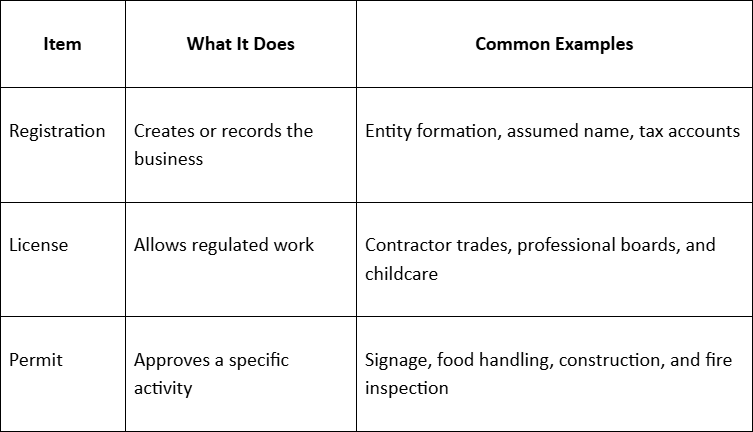
People use these words interchangeably, but agencies do not. Registration puts your business on record. A license authorizes you to operate in a regulated field. A permit approves a specific activity or site condition.

This matters because business licenses and permits rarely come as one bundle. You may complete a state registration, then still need a local license. You may have a professional license, then still need permits for signage or occupancy.

Here is a simple map you can remember:

Business Licenses and Permits: How to Know What You Need (Without Guessing)

Guessing wastes time because you often apply to the wrong office first. It also increases the risk of fines or delayed openings. Requirements depend on location plus activity, so the same business model can face different rules in two nearby cities.

The 3-Factor Method To Know What You Need

If you are asking, “What business licenses do I need?” start with three inputs. Write them down in plain language. Then build your list from those facts, not from generic templates.

Factor 1: Exact location or locations.

List the address and the city, and the county jurisdiction. Include every place you operate. A second location often triggers a new local process.

Factor 2: Industry and regulated activities.

The activity drives most requirements. Selling taxable goods, preparing food, storing chemicals, or providing licensed services can change the list quickly.

Factor 3: Your operating footprint.

A storefront, warehouse, jobsite, work, home office, and vehicles can add requirements. Zoning and inspections often depend on the footprint.

These three inputs point you to business permit requirements at multiple levels. Local, state, and federal agencies can each have separate lists and fees. Local requirements often control timing, since inspections and occupancy approvals can take longer than registrations.

This method also helps when your business changes. If you add a service line or open a new site, rerun the three factors. That prevents “silent” gaps that appear after growth.

Where To Check: Reliable Lookup Sources

A clean research sequence saves time and reduces dead ends. Start broad, then narrow to the agency that issues the approval. This approach fits state and local business licensing in most industries.

  1. Start with SBA guidance. Use it to confirm definitions and common approval types.
  2. Check your state portals. Look for licensing, tax accounts, and industry-level requirements.
  3. Confirm city and county rules. Review local business licensing, zoning, signage, and inspections.
  4. Check federal agencies only when relevant. Some industries require federal approvals.

If you want to know how to find the required permits for a business, focus on the issuing authority. Do not rely on blogs or informal lists. The issuing agency defines the requirement, the fee, and the renewal cycle.

Budget time for approvals and renewals. Some permits require inspections. Some licenses need background checks or proof of insurance. Renewals often come with late penalties and reinstatement steps.

Texas Example and Common Surprise Permits People Miss

Texas shows how layered the process can be. The Governor’s Business Permit Office resources help owners identify state-level permits by business type. That tool speeds up the first pass, but it does not replace local confirmation.

Texas business licenses and permits often include items that owners do not expect. Local rules can also differ between neighboring cities, even within the same county.

Common “surprise permits” include:

  • Sales tax permit for selling taxable goods or certain services
  • Sign permits for exterior signage
  • Zoning or home occupation approval for home-based work
  • Health department permits for food or personal services
  • Fire inspection or occupancy approvals for some commercial spaces

The fastest way to avoid delays is to confirm local rules early. If you sign a lease before checking zoning, you may limit your options. If you install signage before pulling a permit, you may pay twice.

Texas owners also coordinate compliance timing with tax setup. Some ask a CPA, such as Evans Sternau CPA, to sanity-check timelines. That helps when registrations, sales tax accounts, and payroll planning overlap.

Keep It Compliant: A Simple Documentation and Renewal System

Compliance problems often start after launch. A renewal date passes. A permit sits in an email thread. An address change, and the old record stays on file. A clean system prevents those lapses.

Build a digital “license binder.” Use one folder per approval type. Store the approval letter, number, renewal terms, and agency contacts in the same place. Keep inspection reports and correspondence alongside renewals.

Use a small business license checklist that stays practical. Track the same fields for each item:

  • Issuing agency and contact details
  • Account, license, or permit number
  • Issue date and renewal date
  • Renewal steps and required documents
  • Inspection history or special conditions

Set calendar reminders 60, 30, and 7 days before renewal. Use a shared calendar if more than one person owns compliance tasks. Update the binder when you move, add services, hire staff, or expand locations. Those changes often trigger new filings.

Owners often ask how to get a business license as if it were one action. In practice, it is a sequence. You identify the correct agencies, apply in the right order, and then keep records and renewal dates current. That is how you avoid penalties without guessing.


Disclaimer: This article provides general information and guidance on business licenses and permits. The content is not intended as legal or professional advice and may not apply to every individual situation. Regulations and requirements vary by location, industry, and specific circumstances. It is recommended to consult with relevant local, state, and federal authorities or a compliance expert to ensure that your business meets all applicable legal obligations.