Scaling Survival: How Yang Ziqing’s OnePot Uses 3D Geometry to Double Global Famine Relief Efficiency


By: Anne Schulze

In the fast-paced world of tech and entrepreneurship, “disruption” is usually a term reserved for Silicon Valley startups. But in the realm of humanitarian aid, disruption is a matter of life and death. As climate change-driven disasters and regional conflicts left nearly 300 million people facing acute food insecurity in 2024, the old guard of famine relief reached its breaking point.

Enter Yang Ziqing, a design researcher at the China Academy of Art. Her project, “OnePot,” is not just a food item—it is a strategic overhaul of the global humanitarian supply chain. By merging a cost-effective potato-based nutritional formula with high-level mathematical “soft cell” geometry, Yang is proposing a solution that could double the efficiency of global aid logistics while slashing the price of survival.

The Trillion-Dollar Efficiency Gap

Scaling Survival: How Yang Ziqing’s OnePot Uses 3D Geometry to Double Global Famine Relief Efficiency

Photo Courtesy: YANG Ziqing (Comparison between OnePot and UN Emergency Food Rations)

For decades, the standard for severe acute malnutrition (SAM) has been peanut-based Ready-to-Use Therapeutic Food (RUTF). While effective, it is an economic and logistical bottleneck. Traditional RUTF products are bulky and require more transport and storage space than many other humanitarian supplies, increasing overall logistics and distribution costs. Packaging and imported dairy ingredients contribute materially to the final price of RUTF.

Yang identified these failures through deep-dive research into global aid documents and interviews with emergency food specialists. “Current aid is often tied to expensive international procurement and fragile supply chains,” Yang notes. Her goal was to create a formula that is globally accessible and a packaging system that is geometrically optimized for the “last mile” of disaster zones.

The Tuber Revolution: Science Meets Narratives

Yang’s inspiration for OnePot came from an unlikely source: the documentary Freaky Eaters, which featured an individual surviving for 26 years on nothing but French fries. While a nutritional extreme, it pointed to a scientific truth—the potato is one of the most complete and adaptable nutritional sources on the planet.

OnePot utilizes a base of 80% potato powder, supplemented by soybean flour and chicken liver powder. This combination creates a nutrient-to-price ratio that outperforms grain-based alternatives. “The inclusion of chicken liver powder is critical,” explains Yang. “It provides heme iron, which is absorbed far more effectively than plant-based iron, addressing the widespread issue of anemia in post-disaster regions”. Additionally, the resistant starch in potatoes offers a low-glycemic index (GI), making OnePot safe for elderly and diabetic populations, often overlooked in emergency settings.

“Soft Cell” Geometry: The High-Tech Edge

Scaling Survival: How Yang Ziqing’s OnePot Uses 3D Geometry to Double Global Famine Relief Efficiency

Photo Courtesy: YANG Ziqing

The most radical aspect of OnePot is its packaging, which leverages a mathematical breakthrough recently published in PNAS Nexus: the “soft cell”.

Traditional rectangular aid boxes rely on sharp corners that create structural weak points and inefficient stacking. Yang applied the module from the soft cell research—a geometry that tiles space without gaps or sharp vertices. By rounding the edges and creating a modular, interlocking form, OnePot achieves near-perfect “dense tiling”.

In comparative logistics tests, this geometric shift nearly doubled the spatial utilization efficiency. For relief agencies, this means one cargo plane can now carry twice as much food as with standard RUTF packaging. Furthermore, the soft cells’ ability to rotate between 0 to 15 degrees while remaining interlocked allows the packaging to withstand physical stresses better during low-altitude airdrops.

A Sustainable, Cultural Play

OnePot is as much about human dignity as it is about calories. Recognizing that “taste fatigue” can hinder recovery, the project offers five distinct flavor profiles that align with cultural norms across Asia, the Middle East, Africa, and the Americas. Modular packaging also allows for customizable additive components to meet specific allergy or cultural requirements.

Sustainability is woven into the product’s DNA. The packaging is made from combustible bio-based materials. In a disaster zone where fuel is as scarce as food, the empty OnePot boxes can be repurposed as high-energy-density fuel for cooking or heating. This energy-recovery loop transforms what would be waste into a vital resource for survival.

The Road Ahead: From Prototyping to the Frontlines

At present, OnePot has completed prototype verification and has won multiple awards, including the European Product Design Award, London Design Award, and International Cultural Innovation Art & Design Award. The product is still being continuously improved. Currently, it is undergoing shelf-life stability tests to reach the 18-to-24-month international standard required by the WHO and UNICEF. Yang is also collaborating with food production specialists to visit production lines and ensure that the formula can be manufactured globally with low barriers to entry.

The vision for OnePot is localized production. Because potatoes and soy are grown abundantly worldwide, disaster-prone nations can stockpile OnePot without the massive financial losses associated with importing dairy-heavy products.

By bridging the gap between cutting-edge mathematical geometry and grassroots humanitarian needs, Yang Ziqing and the OnePot project represent a new wave of innovation—one in which design doesn’t just make products; it re-engineers the possibility of global survival.


Disclaimer: This article is for informational purposes only. The concepts described are based on research, prototype development, and statements from the project’s creator. Any references to efficiency, nutritional value, durability, or logistical performance reflect preliminary findings or design intentions and have not been independently verified. The product discussed is not presented as a medical treatment or guaranteed solution for food insecurity. Readers should rely on qualified professionals and official humanitarian agencies for guidance on famine relief practices and nutritional standards.

6 Practical Advice for Streamlining Guest Entrance in Large-Scale Events

Guest entry shapes how attendees perceive an event as a whole. Indeed, the arrival process can have a surprising influence on mood and expectations. When lines move slowly or directions are unclear, guests may feel rushed or inconvenienced before they even reach the main venue. In contrast, a well-organized entrance can create a sense of order and efficiency, allowing people to settle in and focus on the experience ahead.

From an operational perspective, streamlined entry also supports safety and resource management. An efficient, controlled access system can help staff manage crowd density and respond quickly to unexpected surges. It also minimizes the risk of congestion-related issues during peak arrival periods.

For event organizers who want to improve guest flow in large-scale events, the following sections explore practical strategies to create a smooth arrival experience.

1. Use Efficient Tools to Keep Lines Moving

For a reliable and widely used solution for managing guest entry, consider Tyvek wristbands. These are durable, lightweight bands worn on the wrist to identify attendees and their access levels. They can be color-coded or custom-printed, allowing staff to quickly verify entry and control access without slowing guest flow. Their simplicity and visibility make them a trusted choice for events of any size.

Adding self-service kiosks can also support efficient check-in. Guests who need to print badges or retrieve tickets on-site can do so independently, which reduces queues at staffed counters and helps keep lines moving.

In addition to these dependable solutions, other systems may complement entry management for more complex events. For example, QR code scanning and contactless ticket validation allow staff to verify passes in seconds, thereby minimizing wait times. For high-volume or multi-day events, NFC-enabled passes offer “tap-and-go” entry, providing both fast access and real-time attendance data for organizers.

2. Build Speed Before Guests Arrive

Fast entry doesn’t start at the gate. Instead, it often begins days or even weeks before the event. Organizers can use digital pre-registration to verify attendee details in advance and issue access credentials, so guests can move swiftly through check-in on the day itself. When attendees arrive with mobile tickets already loaded on their phones, the check-in process becomes significantly faster.

Clear pre-event communication also plays a major role. Sending entry maps and arrival instructions can help direct guests to where they have to go. When attendees understand security procedures and recommended arrival times, they are less likely to hesitate or cause bottlenecks at checkpoints.

3. Design Smarter Entry Layouts

The venue’s physical layout influences how efficiently guests move into and through it. Multiple access points may help distribute crowds, preventing a single entrance from becoming overloaded. When space allows, separating gates by ticket type or access level can create a more organized flow.

Dedicated lanes for VIPs, staff, exhibitors, and general admission can reduce confusion and allow each group to move at an appropriate pace. Clear signage guides guests toward the correct lanes, while floor markings provide visual cues along the path. Barrier systems might also guide movement and help maintain order, allowing staff to focus on assisting attendees rather than giving verbal directions.

Thoughtful spacing between checkpoints also matters. Provide enough room for scanning, security checks, and brief stops to avoid backups that could quickly cascade into longer lines.

4. Spread Arrival Times Through Staggered Entry

To prevent long lines and overcrowding, event organizers may consider assigning specific arrival windows to guests. This approach divides attendees into smaller groups, reducing peak congestion and allowing staff to manage flow more effectively.

Organizers might implement staggered entry by allocating time slots based on ticket type or registration order. But for this strategy to work, clear communication is essential. Organizers must include assigned arrival times on tickets, send reminders via email or mobile apps, and provide signage at the venue to guide both early and late arrivals.

5. Approach Security Without the Slowdown

Security measures are essential, but they do not have to create long delays. Clearly explained bag policies can reduce the number of guests who arrive unprepared, while pre-screening areas allow checks to happen before guests reach the main entry gates.

For attendees with small bags or without bags at all, assigning express lanes can significantly speed up processing. Security staff should also coordinate with entry flow managers to maintain a steady pace and follow safety procedures without unnecessary interruptions.

6. Manage Crowds in Real Time

Live monitoring tools provide valuable insight into how guests are moving through entry points. Camera systems, sensors, and crowd management software allow organizers to identify congestion early and take action before lines become unmanageable.

Redirecting guests to less crowded entrances, opening additional lanes, or reassigning staff could quickly relieve pressure during busy periods. This real-time flexibility helps maintain steady movement and prevents small delays from developing into major disruptions.

Setting the Standard for Seamless Event Experiences

Efficient guest entry is no longer just an operational concern but has become part of the overall event experience. Organizers who invest in scalable technology and smart layout design are well-positioned to deliver smoother arrivals and stronger brand impressions. As events continue to grow in size and complexity, the ability to adapt and innovate at the gate will increasingly define what guests remember long after the event ends.

45,000 Revenue Operators Subscribe to GTM Times. Here’s Why It’s Gaining Momentum in the Sales Industry

By: Targe Media

A new role is taking over B2B: the GTM Engineer. Hiring surged 205% year-over-year in 2025. Between September and November 2025, the US talent pool saw 1,570 new profiles. AI agents are transforming every layer of the go-to-market stack, with Gartner projecting 40% of enterprise applications will embed task-specific AI agents by the end of 2026.

GTM Times has positioned itself as the intelligence layer for this new era, and 45,000 subscribers are paying attention.

What Is GTM Times and Who Is It For?

GTM Times is a daily intelligence publication for revenue teams covering go-to-market strategy, AI agents in sales, outbound trends, and sales technology. It combines tactical articles for practitioners, a real-time newsroom, live benchmarks, and a curated GTM tools directory. The audience includes sales leaders, CMOs, CROs, RevOps professionals, and GTM Engineers.

The distinction between news and intelligence matters. A news publication tells you what happened. An intelligence publication tells you what it means for your team and what to do about it.

What Is a GTM Engineer and Why Is It the Fastest-Growing Role in B2B?

The GTM Engineer bridges technical implementation with go-to-market strategy. These professionals configure outbound systems, build automated workflows, deploy AI agents, and optimize pipeline generation infrastructure. Hiring grew 205% year-over-year, and talent pipelines have not caught up. The role commands premium compensation for its rare blend of technical and business skills.

How Are AI Agents Changing B2B Go-to-Market Strategy?

Marketing teams using AI-powered optimization report 60% reduction in manual work and 14.5% increase in sales productivity. Eighty percent of B2B sales interactions happen digitally. Predictive intent models identify high-value accounts 3-4 weeks earlier than traditional methods. The agentic AI market is projected to surge from $7.8 billion to $52 billion by 2030. Two-thirds of B2B buyers now rely on AI agents as much as Google when evaluating vendors.

How Does GTM Times Compare to Other B2B Sales Newsletters?

GTMnow covers go-to-market from a VC-adjacent perspective. SalesTech Star reports on technology developments. RevGenius operates as a community. GTM Times differentiates through independence, with no VC backing shaping coverage and no vendor relationships dictating recommendations, combined with practitioner-first intelligence that serves operators, not observers.

The subscriber base of 45,000 positions it among the top B2B newsletters in the space. Digital subscription revenues in B2B publishing grew 27% last year, and demand for newsletters increased 30%.

Frequently Asked Questions

What is GTM Times?

GTM Times is an independent daily intelligence publication for revenue teams. It covers go-to-market strategy, AI agents in sales, outbound trends, and sales technology with 45,000+ subscribers including sales leaders, CROs, and GTM Engineers.

What is a GTM Engineer?

A GTM Engineer is a professional who bridges technical implementation with go-to-market strategy. They configure outbound systems, build automated workflows, deploy AI agents, and optimize revenue infrastructure. The role grew 205% year-over-year in 2025.

What are the best B2B sales newsletters in 2026?

Top B2B sales newsletters include GTM Times (45,000 subscribers, daily intelligence), GTMnow (VC-backed go-to-market coverage), SalesTech Star (sales technology news), and RevGenius (community platform). GTM Times differentiates through independent, practitioner-first coverage.

How is AI changing go-to-market strategy?

AI agents are reducing manual work by 60%, increasing sales productivity by 14.5%, and identifying high-value accounts 3-4 weeks earlier. By 2026, 40% of enterprise applications will embed AI agents. The agentic AI market is projected to reach $52 billion by 2030.

Subscribe to the daily GTM intelligence briefing at gtmtimes.com.

Disclaimer: All statements regarding subscription counts, growth rates, and AI applications are based on the latest available data as of publication. The content provided here is for informational purposes and does not guarantee future performance or outcomes.

Eric Bartosz’s Corporate Leadership Career and His Influence Across Business Development and Strategic Growth

In the business world, a person’s ability to perform and build teams to reach fulfillment over an increasingly longer-term horizon in unfamiliar industries is often seen as a sign of their leadership capability. This trend has only intensified in recent decades. The trend of hiring leaders who can balance growth initiatives with execution is increasing, as compressed time frames for change emerge from digital transformation, driven by global competition across all industries. Executives with a broad operational experience across sectors such as marketing, manufacturing, and technology play a vital role in helping organizations confront the evolving realities of the marketplace. 

In this context, Eric J. Bartosz has built a career spanning over 25 years, developing leaders across organizational functions, with a primary focus on business development, marketing strategy, and corporate operations. Before launching BAR40 Fractional Solutions, Bartosz worked in senior management at firms such as Contra Vision, Windsor Marketing Group, and Sihl, Inc., and consistently contributed to the strategic execution and performance-based improvement of organizations. In these environments, he helped expand client lists, refine go-to-market strategies, and prepare brands for long-term performance.

At Contra Vision, a company specializing in perforated window graphics and one-way vision film systems, Bartosz served an executive role promoting market development and sales across North America. He was also tasked with increasing brand awareness with national retailers and print service providers. This occurred during a transition to sustainable, high-performance materials in the industry, requiring companies such as Contra Vision to respond to rapid shifts in environmental and customer preferences. Bartosz’s responsibility was to bring both technical product knowledge and the sales application to the table to help develop and expand content with the U.S. distributor and customer relations.

Earlier in his career, Bartosz worked with Windsor Marketing Group, a Connecticut-based retail marketing company specializing in in-store branding and shopper engagement. His work at Windsor involved business development and national account management for major consumer brands. In this position, he helped coordinate cross-functional teams that designed and executed large-scale retail campaigns, contributing to the company’s efforts to enhance in-store marketing efficiency and data-informed customer engagement. At the time, the retail sector was shifting from traditional advertising to experiential, digitally integrated displays, and his leadership helped align client strategies with these emerging retail trends.

Prior to Windsor Marketing Group, Bartosz spent several years with Sihl, Inc., a subsidiary of Sihl Group, specializing in high-quality digital print media and specialty coatings. His responsibilities included directing sales and marketing activities across key accounts in the United States. Working in a highly technical and innovation-driven industry required combining business insight with product specialization. His efforts supported Sihl’s objective to expand into niche markets by developing partnerships with print manufacturers and distributors. These collaborations were instrumental in promoting new product launches and adapting the company’s offerings to the growing demand for digital printing materials in the early 2000s.

Across these organizations, Bartosz’s career has reflected a broad understanding of how strategic planning translates into measurable performance. His leadership experience covered functions from business development to product strategy and team training. In each case, his focus remained on aligning growth initiatives with operational realities. This capacity for practical leadership was built through his progression from account management roles into senior-level strategy positions, offering him a full view of how to balance top-line growth with long-term sustainability.

The corporate environments in which Bartosz worked also reflected the evolving expectations placed on executives in the 2000s and 2010s. According to Deloitte’s 2023 Global Human Capital Trends report, 83 percent of companies now view adaptability and interdisciplinary leadership as essential executive skill sets. Bartosz has followed a diverse path through manufacturing, marketing, and consulting, indicative of a broader movement toward adaptable forms of leadership. His record indicates the growing value placed on executives who can translate strategic thinking across a variety of organizational models while maintaining an operational view of the industry’s historical workings. 

In founding roles that often required managing references to creative, technical, and financial planning, Bartosz brought an unwaveringly process-based view. This was evident in projects for national roll-out or market expansion, where Bartosz emphasized documenting performance and adjusting the strategy based on outcomes or client feedback. This type of adaptability is a sign of how vital accountability-based decision-making has become across different industries, beyond lessons learned in the last two decades.

The experience Bartosz gained during his corporate tenure laid the foundation for his later work in fractional executive consulting. His exposure to complex organizational challenges, spanning restructuring, sales optimization, and leadership development, shaped the service model later adopted by BAR40 Fractional Solutions. The consulting practice that followed drew heavily on these experiences, translating lessons from traditional corporate structures into flexible frameworks for small and midsize businesses seeking executive-level expertise without the cost of full-time leadership.

Beyond internal leadership, Bartosz’s experience in business development also involved close client relations and team mentorship. Many of his professional achievements have been rooted in aligning internal culture with external market positioning. This aspect of leadership, which emphasizes communication and shared accountability, continues to be recognized as a determinant of sustainable growth. Studies by McKinsey & Company indicate that companies with aligned leadership cultures are 2.4 times more likely to outperform competitors in profitability. This idea aligns with Bartosz’s emphasis on organizational consistency throughout his career.

By the time he founded BAR40 Fractional Solutions, Bartosz had developed a reputation for integrating strategic planning with personal development principles. His background in corporate leadership provided the framework for his later work in executive education, consulting, and authorship. Each phase of his professional life has informed the next, creating a continuous thread between his experience in large-scale operations and his subsequent focus on individualized business improvement strategies.

In reviewing his career before launching BAR40 Fractional Solutions, Bartosz’s professional path mirrors broader changes in American corporate leadership during the past quarter-century. His positions at Contra Vision, Windsor Marketing Group, and Sihl, Inc. demonstrate a trend of balancing hands-on execution with growth strategy at a time when industries were redefining their models in competition with one another. His proven ability to adapt, innovate, and lead teams in multiple business settings reinforces the skill set needed of a modern executive. 

Eric J. Bartosz’s twenty-five-year career will likely continue to serve as the basis for his later leadership consulting and education initiatives. It shows how his non-industry-specific professional experience and data-driven management approach have influenced business outcomes, including executive development in an era of rapidly evolving environments.

What It Means to Feel Comfortable in Your Own Skin

By: Tye Tanner

The Quiet Question We All Avoid

In How Robin Helped Me Become an Exhibitionist: A Gymnotopia Love Story by Tye Tanner, the story does not begin with confidence. It begins with hesitation. With a woman who looks fine on the outside but feels guarded, uncertain, and quietly disconnected from her own body. That tension, the feeling of being present but not fully at ease, is something many readers might recognize, even if they struggle to name it.

Comfort Isn’t About Appearance

Feeling comfortable in your own skin is often misunderstood as liking how you look. The book suggests something deeper. Comfort is not about mirrors, measurements, or approval. It is about not flinching when you are seen, whether by others or by yourself. The journey at the heart of this story reveals how much energy people might spend managing impressions, hiding insecurities, and following rules they never consciously agreed to.

When Fear Slowly Loses Its Power

One of the compelling elements of the book is how fear does not disappear overnight. It loosens its grip gradually. Through unfamiliar settings and unexpected emotional connections, anxiety softens into curiosity. Curiosity turns into confidence. The transformation feels earned rather than forced, which makes the experience feel personal and believable.

Safe Spaces Change Everything

Gymnotopia is more than a backdrop. It represents a place where judgment fades and expectations dissolve. In that environment, the body stops being a statement and becomes simply a body. The story quietly asks a powerful question: how differently might we feel if we were not constantly measuring ourselves against invisible standards?

Being Seen Without Performing

There is a difference between being noticed and being truly seen. The book explores that distinction with care. Real comfort arrives when performance ends and there is no need to edit every movement or reaction. Through trust and emotional honesty, the protagonist discovers that visibility does not have to mean exposure without safety. It can mean acceptance.

A Story That Lingers

At its core, this is not just a story about nudism or desire. It is about self-ownership. It shows that confidence does not have to be loud or provocative. It can be quiet, grounded, and deeply personal. Long after the final page, readers may find themselves reflecting not on shock, but on their own relationship with comfort, fear, and freedom.

How Robin Helped Me Become an Exhibitionist: A Gymnotopia Love Story by Tye Tanner is coming soon. Readers who are curious about themes of nudism, emotional liberation, and ethical erotica may look forward to stepping into this journey when the book is officially released.

The Impact of 45 Dayz on the Music Industry and Emerging Talent

In the vibrant pulse of New York City’s music scene, Roley stands as a visionary artist whose new album, “45 Dayz“, marks a defining chapter and a major show of growth in his creative journey. Dropped as a bold statement to kick off the new year, “45 Dayz“ arrives with immense potential, signaling an exciting era full of fresh momentum, evolution, and limitless possibilities for the artist.

Crafted with unrelenting passion, “45 Dayz“ is a rich reflection of Roley’s maturing artistic identity, weaving an even more intricate mosaic of sounds and stories that resonate with raw, hard-earned authenticity. This project showcases significant growth from his earlier work, demonstrating greater depth, confidence, and sonic sophistication.

“45 Dayz“ defies genre confines, blending R&B, hip-hop, and Latin-inspired rhythms with a masterful balance of vintage soul and modern edge. From deeply introspective tracks to electrifying anthems, each song unveils new layers of Roley’s multifaceted persona, inviting listeners into an even more personal and evolved sonic world.

At the heart of Roley’s artistry lies an unwavering commitment to truth. Shunning industry formulas, he pours raw emotion into lyrics that now reflect greater personal growth, resilience, and self-awareness honed over time. His evocative melodies and sharper storytelling create a powerful, more mature connection, offering listeners a clearer mirror to their own experiences.

The album’s standout single, “The Method, is one of a kind. Its dark synth intro and introspective verses highlight his ability to transform struggles into music that uplifts and inspires, now amplified by the album’s cohesive vision.

Roley’s creative process thrives on independence and self-reliance. That said, with that said he spent his time working closely with engineer Ryan and producer Buggs, and he fosters an environment where bold ideas flourish. His partnership with Elwop, in particular, sparks a dynamic synergy, infusing “45 Dayz“ with vibrant, collective energy that elevates its overall impact.

With “45 Dayz“ setting the tone for 2026, Roley’s artistic vision continues to evolve—building on past singles and his collaborative mixtape with Elwop, “95th to Laurel“. For Roley, music is more than art—it’s a bridge to connect with listeners on a profound level. This new album is a powerful testament to his mission: crafting authentic, thought-provoking soundscapes that challenge, inspire, and leave a lasting mark on the soul, all while opening the door to a year brimming with potential and promise.


How to Choose the Right Event Photographer for Any Occasion

Events are fleeting. The speeches, laughter, and music fade quickly, and what remains are the photographs that capture the moments you want to remember forever. Choosing the right photographer is essential. The wrong choice can leave you with uninspired, poorly lit images that fail to reflect the energy and emotion of your event. A skilled professional does more than press a button—they see the story unfolding, anticipate key moments, and preserve memories that last a lifetime.

Know Your Event Type

Before contacting photographers, it’s important to understand what your event truly needs. Corporate events, concerts, and private celebrations all demand different skills. Corporate photography emphasizes clean, professional images that align with branding, while concerts and live performances require a photographer comfortable with low light, fast movement, and unpredictable settings. Private parties call for someone who can move seamlessly through the crowd, capturing candid moments without interrupting the flow of the celebration. Clarifying the style, pace, and tone of your event will help you find a photographer whose expertise matches your needs.

Think Local: Why Denver Matters

Hiring a photographer familiar with your city and venue can make a significant difference. A local professional understands the layout, lighting quirks, and timing of natural light at your space. If your event is in Denver, hiring a Denver event photographer who has shot in the city before can be a strong advantage. Local knowledge reduces setup time, eliminates confusion about access or logistics, and often strengthens relationships with venue staff. Bringing someone in from another city might mean additional travel fees and a longer learning curve, which can affect the quality of your photos. This principle applies anywhere—hosting a party in Los Angeles? A photographer from Las Vegas may not have the insight needed to capture the night effectively.

Review Their Portfolio With Purpose

It’s easy to be drawn to visually striking images, but evaluating a photographer’s portfolio requires attention to detail. Look for consistency across different lighting conditions, the ability to capture both posed and candid moments, and whether their work reflects the tone of your event. A portfolio dominated by outdoor daylight sessions may not indicate the photographer is ready to handle dimly lit indoor events or evening celebrations. Comparing portfolios to your event type ensures the photographer can deliver images that genuinely reflect your occasion.

Ask the Right Questions Before Booking

A professional photographer will answer your questions clearly and confidently. Ask how many similar events they have photographed, what their turnaround time is for delivering images, whether they bring backup equipment, and if they will be the primary shooter or if a second photographer will assist. These questions provide insight into their experience and preparedness. Knowing these details helps avoid surprises on the day of your event, ensuring a smooth, professional experience.

Understand What You Are Paying For

Event photography pricing can vary widely, and understanding why helps set realistic expectations. Costs reflect experience, equipment quality, post-production work, licensing, and the number of images delivered. While it might be tempting to choose the cheapest option, the lowest price rarely delivers consistent results for a one-time event. Investing in a skilled photographer ensures your memories are captured accurately, creatively, and reliably.

Chemistry Matters

Technical skill alone is not enough. A great photographer is someone you feel comfortable with, as they will be present for hours, observing and documenting the event. Open communication and mutual understanding of your vision can transform the quality of the final images. Meeting or speaking briefly before booking allows both parties to align expectations, discuss style preferences, and establish trust. A photographer who understands your needs will know when to step forward for a posed shot and when to disappear into the background, capturing moments naturally.

Preserve Memories With the Right Photographer

Professional event photography is an investment in memory. The right photographer brings experience, technical skill, and an eye for storytelling, ensuring your event is remembered exactly as it unfolded. From corporate galas to intimate celebrations, selecting a photographer who understands your vision and venue will provide images that reflect the energy, emotion, and uniqueness of your occasion.

Sydney James Harcourt is Serving Broadway Realness

By Jeremy Murphy

On a recent afternoon in New York, Sydney James Harcourt was doing what he always does before a big Broadway moment: resting. 

“I can’t go out,” he says with a laugh that suggests he wouldn’t want to anyway. “One, because I can’t be up that late. I’ve got to get up at dawn and go to the gym. And two, every bar is a super-spreader event, and I can’t be sick. You can’t stay healthy without sleep. For me, it’s common sense.” 

Discipline, he insists, isn’t deprivation. “I don’t feel that it’s an imposition in any way. It’s kept me youthful. It keeps my body the way I want it. The discipline has only made everything in my life better. It serves my voice.” 

That voice, rich, elastic, capable of sliding from classical soprano lines to contemporary pop riffs, helped earn him a Grammy as a featured artist on Hamilton. It also helped cement his reputation as one of Broadway’s most dynamic performers. Now, the Detroit-born actor, singer and dancer is stepping into one of musical theater’s most iconic roles: Rum Tum Tugger in the reimagined Broadway production of CATS, officially titled CATS: The Jellicle Ball, debuting April 7 with previews beginning March 18, and produced by Michael Harrison, Mike Bosner, as well as Cynthia Erivo, Billy Porter, LaChanze, Jeremy Pope, and Lena Waithe. 

And this isn’t your childhood, Cats. 

Set within the world of ballroom culture, the new production folds voguing and house traditions into Andrew Lloyd Webber’s global phenomenon. For Harcourt, a Grammy winner, LGBTQ+ advocate, and member of the House of Oricci, the concept feels personal. 

“The hook for me initially was that they were setting it in the ballroom community,” he says. “I always wanted theater to be current. And what I saw in this revival, adding ballroom and voguing to the mix, I thought, I have to be part of this.” 

From Detroit to Discipline 

Sydney James Harcourt is Serving Broadway Realness

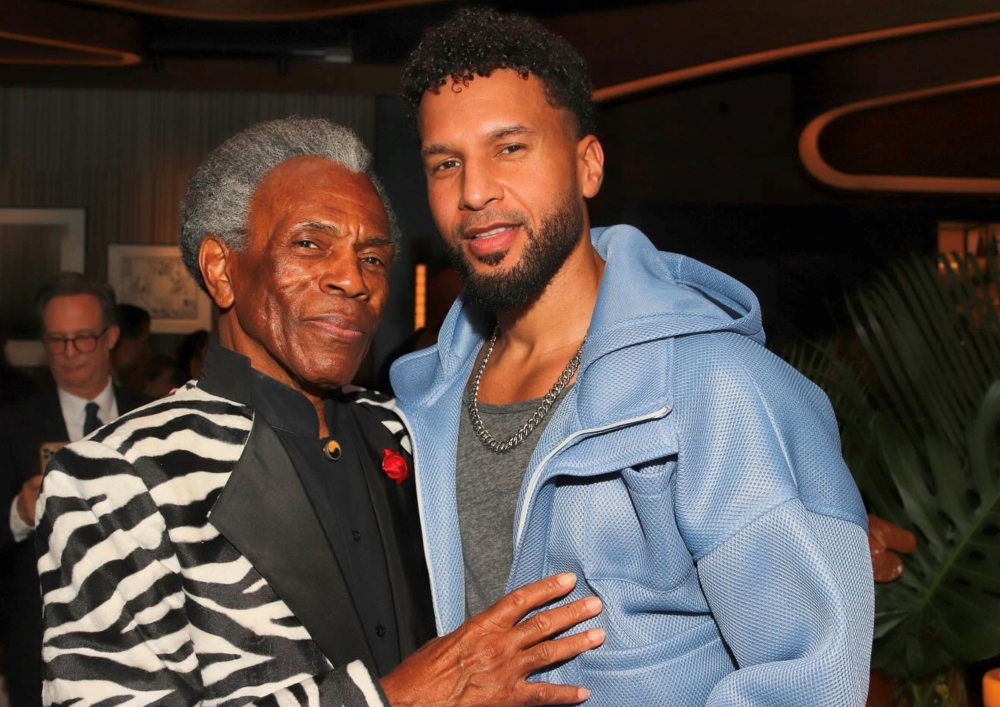
Photo Courtesy: Lia Chang (Andre De Shields & Sydney James Harcourt)

Harcourt’s journey to Broadway began far from Times Square. Raised in Detroit by an English teacher mother and a piano prodigy father, he was steeped in music from an early age. “My mom put me in piano lessons. My dad was a piano prodigy. They thought I was going to have the same gift,” he recalls. “I really liked it. I played classical piano. But singing felt like magic.” 

As a teenager, he auditioned for Interlochen Arts Academy in Northern Michigan and received a full scholarship in classical voice. Instead of a traditional gym class, he signed up for general dance. 

“I auditioned for The Nutcracker to be a party parent,” he says, grinning. “But one of the larger guys tore his rotator cuff, and they asked if I’d be willing to learn the partnering for the Arabian pas de deux. Of course, I said yes. Adventure is kind of my thing.” 

He was hooked. 

“I grew up overweight in school. I never went to a school dance. So, to suddenly be on stage, dancing on such a large scale, it was intoxicating.” 

Harcourt became Interlochen’s first-ever double major in voice and dance, spending mornings in academics, afternoons in voice lessons, and evenings in dance rehearsals six days a week. 

“That’s where the discipline began,” he says. “Being around dancers who constantly have to stretch, who aren’t allowed to go skiing because if you get hurt, you’re out of the show. That level of commitment shaped me.” 

A Ballroom Calling 

When Harcourt eventually left school, sold his car, and moved to New York as a teenager, he was chasing the dream of Broadway. But he was also discovering himself. 

“I’m this gay kid who’s never experienced gay culture,” he says. “The first thing I started doing when I didn’t have a job was exploring club life. That’s where I got my first taste of voguing.” 

In Michigan, there had been no ballroom scene for him. In New York, he watched dancers take over club floors at 1:30 and 2 a.m., executing “death-defying and awe-inspiring” moves. 

“There was nowhere to learn this except the clubs,” he says. “I wasn’t involved in the houses at first. I had just moved here by myself. I didn’t have community. So, the club was where I could go and dance and learn.” 

So, when his agents called about Cats, “They were like, ‘I’ve got an audition for you. It’s for Cats. But I think you’re going to like it because they’re doing it ballroom,’” he didn’t hesitate. 

“I was on the next flight to New York in my cuntiest outfit,” he says, laughing. “Arturo looked at me and said, ‘You look like you’re going to the Beyoncé Renaissance tour. You got a ticket? Can I go with you?” 

For the first time in an audition room, Harcourt felt fully seen. “In other rooms, I felt like I had to hide parts of who I really am. In this room, they wanted to see all of me.” 

A New Rum Tum Tugger 

Tony buzz has already started to build around Harcourt due to his stellar performance when he originated the role of Rum Tum Tugger in the critically acclaimed off-Broadway production of CATS: The Jellicle Ball at the Perelman Performing Arts Center in 2024.  

Rum Tum Tugger has long been the show’s sexy showboat, all lip-licking bravado and pelvic thrusts. Harcourt’s interpretation, however, leans into ballroom’s “pretty boy realness” category. 

“There’s a sensuality and a confidence,” he explains. “But it’s more subtle. It’s, ‘No, no, no. You come to me. I don’t need to come to you.’” 

His archetypes? “Prince, George Michael, Usher, kind of the child the three of them might have had,” he says. “For me, they embody what’s hot about male pop, what drives everybody wild.” 

The production team encouraged him to bring his authentic self to the role. “One of the best notes I got was, ‘Put more of who you are into it. You don’t have to try to do anything.’ That was scary. On Broadway, you feel like you have to be doing something or they’ll be bored. But sometimes when you do less and let them come to you, that’s the most magnetizing thing.” 

Even Melissa McCarthy noticed. After attending an early performance, the actress asked to meet him backstage. 

“She said, ‘I couldn’t take my eyes off of you. I was taking notes the entire time, how subtle what you were doing was.’ For me, that’s what it’s about. Draw everyone in, keep it subtle, keep it sexy, still keep it Rum Tum Tugger.” 

Bigger Than Hamilton? 

Sydney James Harcourt is Serving Broadway Realness

Photo Courtesy: Kenya Iwana (Sydney James Harcourt)

Harcourt, an original Broadway company member of Hamilton who stepped in as Aaron Burr after Leslie Odom Jr. in a career-changing triumph, doesn’t shy away from bold predictions about The Jellicle Ball. 

“I can’t say I feel the same Hamilton vibe,” he says carefully. “I feel this is going to be so much bigger. I don’t say that lightly.” 

Why? “It’s breaking so many ceilings. It’s so firmly rooted in what’s happening in the world, in civil rights, in personal freedoms. The talent, diversity, and love for one another in this cast and creative team are unparalleled. And it’s already a property people love worldwide. To take something that’s been a staple and give it a battle cry, give it a new meaning, an anthem for resistance, for self-empowerment, I think it will resonate in a way Hamilton couldn’t.” 

Becoming the first Black Rum Tum Tugger on Broadway is not lost on him. “Sometimes it’s bigger than I can really take in,” he admits. 

World Domination (Naturally) 

In between eight shows a week, Harcourt is dreaming bigger. “In the words of Madonna, world domination,” he says, smiling. 

He has written an entire album and plans to release new music. He’s studying acting intensively, building toward film and television roles after appearances on Blue Bloods, Law & Order, Elementary, and Doc. 

On the Netflix series Castlevania: Nocturne, he voices Edouard, a mixed-race countertenor who sings Monteverdi and Purcell arias while navigating the supernatural, a full-circle nod to his classical roots. 

“I try to pick things that speak to who I am and the path I’ve come through,” he says. 

He’s also developing a film project about Burt Williams, one of America’s first Black mega-stars and possibly its first Black millionaire, whose legacy was complicated by performing in blackface. “His story is poignant,” Harcourt says. “It just speaks to me.” 

Behind it all is gratitude, especially for his mother. “She sacrificed everything so I could try to live my dream,” he says. “I told her I was dropping out of school and moving to New York, and she supported me. She never wavered. So I’m determined to push this as far as it will go.” 

For now, that push leads to The Jellicle Ball and an invitation. 

“You’re going to have to dress up,” he teases about attending the show. “You’d better turn a look.” 

In Harcourt’s world, discipline is devotion, vulnerability is power, and the ball is just beginning. 

instagram.com/sydneyharcourt

Do Veterinarians Recommend Dinovite?

By: Ethan Rogers

Dog owners are paying closer attention than ever to what goes into their pets’ bowls. But even with high-quality kibble or fresh diets, some dogs experience persistent itching, dull coats, digestive upset or inconsistent stool. When those issues linger after nutritional nuances are addressed, pet owners look beyond mealtime, often turning to dog supplements.

According to Astute Analytics, the U.S. pet supplement market is projected to grow by 6.6% from 2025 to 2033, reaching an estimated value of $2,014 million. With more and more powders, chews and toppers on the market, products like those from Dinovite have become familiar names among dog owners.

But popularity doesn’t always equal professional endorsement. Do veterinarians actually recommend Dinovite, and if so, when might a supplement make sense for your dog?

When Vets Recommend Dinovite

Veterinarians don’t universally endorse specific supplement brands, but many recommend nutritional support products like Dinovite probiotic powder for dogs or SuprOmega Fish Oil as a liquid topper when a dog has ongoing skin, coat or digestive concerns that aren’t resolved with diet changes alone. 

Vets often look for supplements with transparent ingredient lists, probiotics, fatty acids and essential vitamins. Products like those from Dinovite may be suggested when they align with a dog’s specific needs and fit within a broader care plan. 

Before starting any supplement for your pup, most veterinarians recommend discussing use with them, especially if your dog has underlying health conditions or is already on a specialized diet or medication.

Why Some Dogs Struggle, Even on “Good” Food

A complete and balanced diet is important for supporting a dog’s health, and many commercial foods are formulated to meet established nutritional standards. Still, even dogs eating only carefully selected recipes can experience ongoing skin, coat or digestive concerns. Factors like individual sensitivities, environmental allergens, stress, age and breed-specific tendencies influence how well a dog absorbs and uses nutrients.

Digestive health also plays a role. A dog may consume all the right nutrients but struggle if its gut microbiome is out of balance or if absorption is inconsistent. Over time, those issues can lead to dull fur, flaky skin or irregular stools, prompting owners to seek additional support.

How Veterinarians Approach Skin, Coat and Gut Issues in Dogs

When a dog develops ongoing skin, coat or stomach symptoms, veterinarians often take a step-by-step approach rather than jumping straight to supplements as treatment. Skin and gastrointestinal symptoms can stem from a wide range of causes, and identifying the source helps vets choose the right treatment or support strategy.

1. Ruling Out Medical Causes

Before recommending any supplement, veterinarians usually look for underlying health issues that may be driving symptoms. Common culprits can include:

  • External parasites like fleas or mites
  • Bacterial or yeast infections
  • Food or environmental allergies
  • Infections
  • Inflammatory conditions
  • Other medical disorders

Bloodwork, skin testing or stool analysis may be used to rule out these causes. If vets discover a medical issue, they can treat it with medicine and other best practices. Treating an underlying condition helps ensure lingering symptoms aren’t masking a larger health issue.

2. Evaluate Diet and Make Necessary Changes

If medical causes are ruled out or managed, the next step often involves reviewing a dog’s diet under veterinarian guidance. Veterinarians may examine ingredient lists, protein sources, feeding frequency and treat intake to determine whether nutritional adjustments could help a pup overcome symptoms. 

Vets may recommend an elimination diet to identify potential food sensitivities. Following such a recommendation, owners would feed their dog a limited-ingredient diet, such as a single protein and carbohydrate, for a few weeks. All treats and table scraps are removed from the equation. 

After the elimination period, other ingredients are introduced one at a time over several more weeks, while the owner watches for symptoms to recur. This process helps identify foods that trigger allergic reactions. 

Switching to a limited-ingredient, hydrolyzed or prescription formula may also be part of the veterinarian-reviewed process.

3. Implementing Supplements as Support

Once health concerns and diet have been addressed, veterinarians may consider supplements as an added layer of support. Supplements are generally used alongside a complete and balanced diet rather than in place of one. The goal is to provide targeted nutritional support that complements veterinary care and helps maintain results over time.

Where Dinovite and Similar Supplements Fit In

When veterinarians determine that a dog’s symptoms are not caused by an untreated medical condition and that diet adjustments alone are not fully resolving the issue, supplements may enter the conversation. Rather than viewing supplements as a cure-all, many vets see them as targeted support tools designed to reinforce specific systems, such as gut microbiomes or skin barriers.

Products like Dinovite fall into this category of nutritional support supplements. These formulas typically combine probiotics, fatty acids, vitamins and other nutrients intended to complement a complete diet. The goal isn’t to replace balanced food but to provide concentrated ingredients that may help support digestion, coat quality and overall wellness when used appropriately.

Common Supplement Ingredients and Their Intended Purpose

Do Veterinarians Recommend Dinovite?

Dinovite includes several of these commonly recommended ingredient categories, positioning it as a broad-spectrum supplement that supports multiple aspects of canine wellness.

Is Dinovite Right for Your Dog?

Dinovite may be worth considering if your dog struggles with skin irritation or other symptoms despite eating a complete and balanced diet.

Veterinarians recommend supplements based on individual need, ingredient quality and overall health status, not brand popularity. If your dog has persistent symptoms, the best next step is to talk with your vet about diet, possible sensitivities, and whether adding a supplement makes sense. Ask your vet if Dinovite might be a good addition to a broader plan to support your pup’s health. 


Disclaimer: This article is for informational purposes only and should not be considered as veterinary advice. Always consult with a qualified veterinarian before introducing any supplements to your pet’s diet, especially if your pet has underlying health conditions or is on a specialized diet or medication. Each dog’s nutritional needs are unique, and a veterinarian can provide guidance tailored to your pet’s individual health status.

From Smart Finders to a €10M Estimated Valuation: Hyperloq’s Aggressive Expansion into Amazon US with a New Premium Tech Lineup

In just 18 months, European tech brand Hyperloq has achieved what takes many hardware startups years to accomplish. Having already surpassed €1.5 million in revenue and securing an estimated valuation between €5 million and €10 million, the company, spearheaded by founder Thanassis Giannakelis, is proving that solving real consumer pain points scales rapidly. And the most impressive part? This global trajectory all started with a disruptive idea on hyperloq.com.

The Roots: Revolutionizing the Item Finder Market 

Hyperloq built its foundation and a fiercely loyal community by challenging the traditional GPS market. While other location devices required SIM cards, heavy batteries, and frustrating monthly subscriptions, Hyperloq offered a seamless alternative. By leveraging the massive, established networks of Apple Find My and Google Find My Device, they introduced premium crowd-GPS tags that users buy once and use forever. This subscription-free model became an instant hit.

The Amazon US Leap & The “Pioneer” Lineup 

Today, the brand is taking its most significant leap yet, making a dynamic entry into the highly competitive Amazon US market. However, this isn’t just a geographic expansion—it’s a complete brand evolution.

Hyperloq is moving beyond smart tags, launching an ecosystem of 5 to 6 “pioneer” products tailored for modern digital nomads and tech enthusiasts. The flagship of this new rollout is the highly anticipated NeoTravel Adapter, a premium charging solution with 3AC sockets designed to provide fast, safe power in over 180 countries worldwide.

Immediate Market Validation 

Accompanying the travel adapter is a suite of high-end accessories, including the 240W NeoCable 4-in-1 fast chargers, NeoGlass Anti-Spy screen protectors, and reinforced camera lens covers for the latest smartphone models. The US market’s response has been instantaneous. Shortly after launch, these new products are already accumulating highly positive reviews from American consumers, confirming the brand’s seamless transition into the broader consumer electronics space.

“Our goal from day one was to eliminate the friction in everyday tech, starting with item locators that don’t require monthly fees,” says founder Thanassis Giannakelis. “Entering the US market through Amazon with our new pioneer lineup is a testament to our community’s trust and our focus on high-quality, problem-solving products.”

Building from Smart Finders to a €10M Valuation

From smart finders to a €10M valuation, Hyperloq has shaped a strong growth narrative by uniting functional innovation with premium design. What began as simple, everyday tech solutions has evolved into a scalable product ecosystem designed for modern lifestyles. The brand’s consistent focus on usability, reliability, and clean aesthetics has helped it earn customer trust and investor interest alike. This valuation milestone reflects disciplined execution, strategic planning, and a clear long-term vision rather than short-term market noise.

Aggressive Expansion into Amazon US with a Premium Tech Lineup

Hyperloq’s entry into Amazon US represents a bold step in its international expansion strategy, supported by a newly launched premium technology lineup. By tapping into Amazon’s vast customer base, data-driven insights, and efficient logistics, the company is accelerating brand awareness in the US market. The premium range emphasizes enhanced security features, refined materials, and seamless integration across devices. With focused marketing and competitive positioning, Hyperloq aims to convert marketplace traction into sustainable revenue growth and lasting customer loyalty.

Looking Ahead 

The Amazon US expansion marks the beginning of a new chapter. With a clear roadmap for continuous development, entering new global markets, and expanding its catalog with innovative gadgets, Hyperloq is aggressively scaling. Under Giannakelis’ leadership, it is no longer just an AirTag alternative brand; it is rapidly establishing itself as a formidable global player in premium everyday tech.

Disclaimer: The valuation of Hyperloq as mentioned in this article, ranging between €5 million and €10 million, is based on estimates and reports from various sources. It is not an officially confirmed figure and should be considered an approximation. The company has not provided public confirmation of this valuation.