Bryce Eckwall and the Rise of Q29 Productions: Building a Modern Content Powerhouse

 By: Alexandra Perez

The WPIX studio hums with controlled chaos. Producers move with quiet urgency. Cameras swing into position. Lights snap on. The energy is electric. Bryce Eckwall feels it immediately. His mouth dries. His pulse rises. His body registers danger.

He is used to controlling the edit. This time, there is none. When the countdown begins, there is no second take, no post-refinement, no safety net.

For Eckwall, that tension is not a deterrent. It is confirmation. Moments like this do not create his success. They reveal it. Years of preparation, risk, and deliberate focus converge under bright studio lights. The nerves are still present. But so is the command.

For most viewers, the WPIX11 appearance looked like a breakthrough. For Eckwall, it was simply another step forward when the interviewer looked at him and asked, “How does someone go viral? What’s the secret sauce?”


Built Before It Was Seen

Long before Q29 Productions became known for high-level podcast production and premium content creation, Eckwall was building quietly.

As a teenager, he wanted to record music. Instead of waiting for access, he learned audio engineering. He studied lighting. He figured out cameras. He experimented with editing software. There was no formal training. Just repetition and obsession.

For nearly a decade, he sharpened skill without applause.

That foundation became the backbone of Q29. But growth did not accelerate until he made a harder decision.

In the early years, he said yes to everything. Events. Random shoots. One-off jobs. The work came, but the trajectory was scattered.

The inflection point came when he narrowed the lane.

“We dialed in on podcast production and content creation for entrepreneurs only,” he says. “That meant saying no to work that didn’t fit.”

Saying no created space. Space created focus. Focus created momentum.

Instead of chasing visibility, Q29 began engineering it.

Bryce Eckwall and the Rise of Q29 Productions: Building a Modern Content Powerhouse

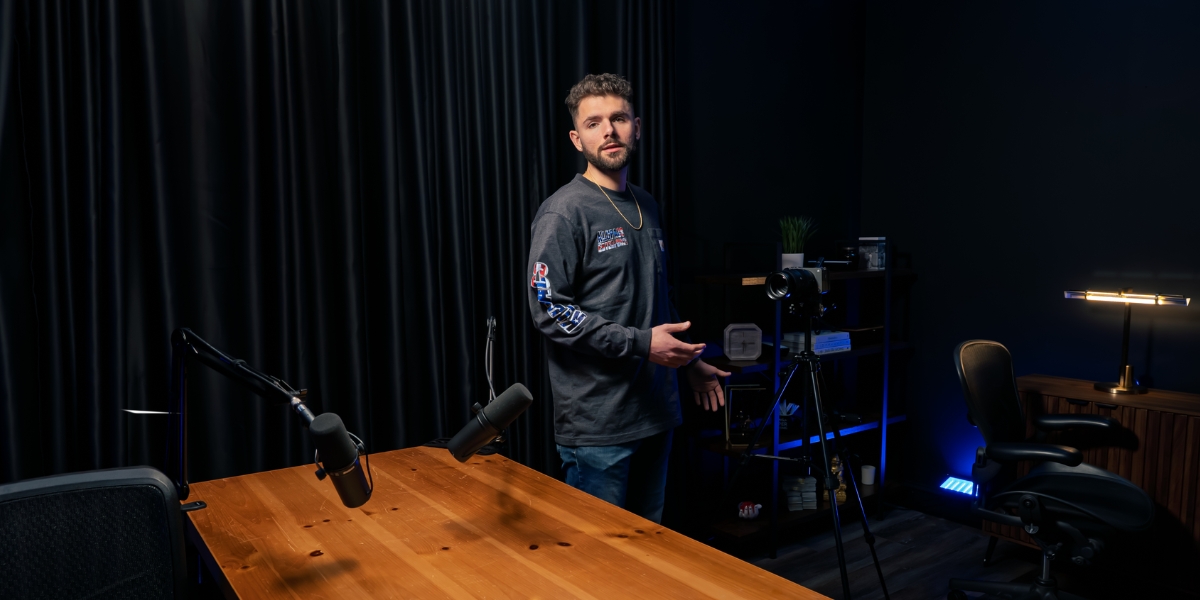
Photo Courtesy: Bryce Eckwall

The Bet

Eckwall’s story includes a moment that defines his willingness to bet on himself: walking up to Daymond John and asking him to be on a podcast.

From the outside, it sounds like luck. In reality, it was a preparation meeting for courage.

“I didn’t get a real opportunity right away,” Eckwall says. “But when it came, I was ready.”

That pattern would repeat.

When he connected with 2x Shark Tank Winner and inventor advocate Christopher Guerrera inside a private mastermind, the relationship began as a professional collaboration. Eckwall delivered production and strategy at a level that made an impression. Guerrera saw not just talent, but infrastructure.

When Guerrera secured a WPIX11 segment, he brought Eckwall with him.

It was not charity. It was an earned proximity.

No Edit Button

Live television removes comfort.

Inside Q29 studio, Eckwall controls lighting, pacing, editing, and delivery. On live television, none of that exists.

“There’s no edit button,” he says. “That’s what makes it different.”

When asked about virality during the segment, Eckwall did not lean into spectacle.

“You don’t have to go super viral to have a super impact,” he said on air. “Your story can generate revenue and change lives without millions of followers.”

That belief anchors Q29’s approach. Substance over flash. Consistency over chasing algorithms. Infrastructure over one-hit moments.

The studio wall reads simply: Create Content.

It is less a slogan and more a standard.

The Force and the Foundation

Bryce Eckwall is the face of Q29. He is the driver of growth. The one willing to take the first step. The one who walks into rooms. The one who feels the weight of performance under bright lights.

But sustained growth requires reinforcement.

Sean Reimuth leads the video side of the house. He ensures the execution matches the ambition. Lighting precision. Cinematic framing. Edit quality. If Bryce pushes the vision forward, Sean guarantees the output is above top level.

Morgan Eckwall runs operations. Scheduling. Client coordination. Systems. Workflow. She ensures the business runs like a well-oiled machine. Growth without operational discipline collapses. Morgan prevents that.

The business is not just a company. It is family.

Bryce carries the public weight. Sean elevates the execution. Morgan stabilizes the engine. Around them is a broader team of creatives who show up daily, committed to the same standard.

“People see the face,” Bryce says. “They don’t always see what makes it sustainable.”

That sustainability is deliberate.

Validation and Hunger

Appearing on television brought validation, especially for those who still measure success through traditional channels.

“When you’re on TV, people understand it differently,” he says.

But the validation did not soften the edge.

“If I felt like I made it, I probably wouldn’t be as good,” he says. “The hunger doesn’t turn off.”

The WPIX11 segment lasted minutes. The grind resumes daily.

A Footnote, Not a Finish Line

When asked how the moment will be referenced years from now, Eckwall does not hesitate.

“It’s a footnote,” he says. “Just another step.”

The nerves were real. The energy was real. The celebration was real.

But what matters more is what existed before the lights came on.

Years of preparation. The willingness to narrow the lane. The courage to initiate proximity. The discipline to build systems. The humility to share the load.

Under bright studio lights, without an edit button, Bryce Eckwall did what he has trained himself to do for years.

He showed up ready. Nailed the moment.

Then he went back to building.

 

NotabilityExpress: A Trusted Review Platform Shaping Credibility in the U.S. Digital Marketplace

In an increasingly digital marketplace where online reputation drives purchasing behavior, NotabilityExpress is emerging as a modern solution for consumers and businesses seeking trustworthy information and authentic reviews. Built with transparency and reliability at its core, NotabilityExpress bridges the gap between consumers making confident decisions and brands demonstrating their real value in today’s competitive landscape.

At its core, NotabilityExpress is an online review and reputation platform that lets users discover companies, read verified customer testimonials, and compare service providers based on authentic, structured feedback. In a digital age where a large majority of purchasing decisions are influenced by online reviews, having a centralized, credible review ecosystem has become indispensable for both consumers and brands alike — particularly in the U.S., where e-commerce and service industries thrive on consumer trust and digital reputation.

Why NotabilityExpress Matters in the U.S. Market

The American online business environment is crowded and competitive. Whether you are a local service provider, an emerging author, an eBook creator, or a national brand, visibility alone rarely translates into sales or engagement. NotabilityExpress helps amplify a business’s digital credibility by featuring verified reviews and trust indicators that audiences value. This emphasis on transparency sets the platform apart from many traditional review aggregators that struggle with fake or manipulated content.

Unlike generic review sites that can be flooded with unverified posts, NotabilityExpress prioritizes trusted customer insights, allowing users to submit genuine feedback and businesses to claim their profiles and respond. The result is a more transparent and trustworthy reputation system — an asset for brands looking to grow their online presence with confidence.

Supporting Authors, eBook Creators, and Thought Leaders

For authors and eBook creators in the United States, online credibility often begins long before a reader purchases a book. Early reviews, trust badges, and visible testimonials can dramatically impact how potential readers perceive an author’s work. NotabilityExpress provides a platform where writers can collect and exhibit reviews that reflect real reader experiences, adding a crucial layer of social proof that helps first-time readers decide to take the plunge.

In a market where self-publishing has democratized content while intensifying competition, reputation platforms like NotabilityExpress are uniquely positioned to give independent authors an edge. When readers searching for book recommendations see a well-maintained profile with strong, verified feedback, they are more likely to trust the recommendation and click “buy” — turning credibility into sales and long-term readership.

Building Credibility Through Transparency and Data

One of NotabilityExpress’s foundational strengths is its emphasis on reputation intelligence. Rather than simply listing stars or numeric ratings, the platform combines verified customer reviews with trust indicators and credibility badges that signal reliability and performance. This layered approach gives consumers more context and confidence when comparing service providers, products, or creative work — making it especially valuable for sectors like publishing where reviews can directly influence purchasing habits.

Moreover, businesses, including authors and publishers, can claim their profiles and actively manage their reputation through analytics dashboards and publicly visible trust scores. This proactive reputation management strengthens brand visibility and creates a structured narrative around customer satisfaction—a major advantage in the era of data-driven decision-making.

A Future-Focused Reputation Platform for the Digital Age

As consumer trust remains a top priority in the online economy, platforms like NotabilityExpress are shaping how brands build and sustain credibility. With its focus on verified reviews, transparency, and reputation insights, NotabilityExpress offers a scalable reputation infrastructure that meets the needs of modern businesses — from local storefronts to national authors seeking broader reach in the U.S. market.

In summary, NotabilityExpress isn’t just another review site — it is a strategic credibility partner for brands and authors who understand that trust, authenticity, and honest feedback are the cornerstones of long-term success in the digital age.


Custom SaaS Development: Tailoring Solutions to Fit Your Unique Needs

Technology today is far more than a background utility. For scaling businesses and innovative tech companies, it powers customer engagement, streamlines operations, and can create real market differentiation. However, many teams quickly realize that ready-made software rarely fits their exact way of working.

People start bending their routines. Workarounds become normal. Efficiency may suffer.

That’s where custom SaaS development can make a meaningful difference.

Rather than reshaping your organization to match a prebuilt system, a tailored Software-as-a-Service solution is crafted around your objectives, your users, and your long-term vision. If you’re weighing whether investing in a personalized platform is the right decision, understanding its practical value may help you move forward with confidence.

Why One-Size-Fits-All Software Falls Short

They claim quick setup, lower upfront costs, and familiar interfaces. But as your organization scales, limitations might begin to surface.

You could run into:

  • Missing features critical to your workflow

  • Restrictions on integrations

  • Licensing models that could become expensive with growth

  • Limited control over security or compliance

  • Inflexible reporting structures

Eventually, your team may spend more time creating workarounds than doing meaningful work. For tech-driven companies, that inefficiency can become costly.

What Custom SaaS Development Really Means

Custom SaaS development involves building a cloud-based application specifically aligned with your business model. Unlike packaged software, every component—from user experience to backend architecture—is shaped around how your organization operates.

Designed Around Your Business Processes

Even businesses in the same industry develop unique internal methods, approval structures, and data flows. A tailored SaaS solution respects that uniqueness.

Instead of redesigning your operations to match the software, developers map technology around your processes. This alignment can improve adoption, reduce training time, and allow teams to work naturally.

Competitive Advantage through Differentiation

If you and your competitors use the same tools, it can become harder to stand out.

Custom platforms allow you to create unique customer journeys, smarter automation, and proprietary workflows that others may not easily replicate. Whether it is a specialized dashboard, personalized reporting, or an innovative service layer, tailored software could become part of your brand identity.

Technology can become a differentiator, not just infrastructure.

Better Integration with Your Existing Ecosystem

Most growing companies already use multiple digital tools—CRMs, ERPs, marketing platforms, payment systems, and analytics software.

The challenge is making them communicate smoothly.

Custom SaaS applications are built to integrate directly with your environment. APIs, middleware, and connectors are designed intentionally, enabling accurate data sharing and reducing manual work.

This unified ecosystem may improve visibility and decision-making.

User Experience Built for Your Audience

Your teams and customers have specific expectations. A finance department needs clarity and precision. Sales teams need speed. Customers expect simplicity.

Tailored SaaS development enables you to design experiences around these realities. Interfaces can be optimized for roles, devices, and behavior patterns.

When software feels intuitive, adoption may rise naturally.

Enhanced Security and Compliance Control

Prebuilt tools may not always meet industry or regional requirements.

With custom development, security architecture is embedded from day one. Access controls, encryption standards, monitoring systems, and compliance frameworks can be designed to match your obligations.

You may gain confidence knowing your platform reflects your risk environment.

Long-Term Cost Efficiency

At first glance, custom solutions might appear more expensive than subscription software. But a deeper evaluation often reveals the opposite.

Consider the hidden costs of generic platforms:

  • Paying for unused features

  • Purchasing add-ons

  • Managing inefficiencies

  • Migrating data later

  • Replacing systems as you scale

A tailored platform can eliminate many of these expenses. Over time, ownership may become more economical and predictable.

Ownership and Control over Your Roadmap

When you rely entirely on third-party vendors, their priorities shape your future. Updates may not align with your strategy. Features might be discontinued. Pricing could change unexpectedly.

Custom SaaS development puts control back in your hands.

You determine what gets built, when upgrades happen, and how the system evolves.

Faster Innovation Cycles

Tech companies thrive on experimentation and rapid improvement. Custom environments allow you to test ideas, deploy updates, and gather feedback without waiting for external providers.

This agility supports product innovation, operational optimization, and faster time to market.

Your teams can respond to opportunities as they arise.

Data and Analytics Tailored to Your KPIs

Leadership teams require insights that reflect their specific objectives. Standard software often limits reporting to predefined templates.

Custom SaaS platforms provide dashboards built around your metrics. Whether you track customer acquisition, operational efficiency, or financial performance, analytics can be designed to present meaningful intelligence.

Better data leads to smarter decisions.

Collaboration between Business and Technology

Successful SaaS initiatives are not just technical projects. They are partnerships between stakeholders, end users, and developers.

During the consideration stage, strong providers work to understand your workflows, culture, and long-term ambitions. Workshops, discovery sessions, and prototypes ensure alignment before development begins.

Reduced Dependency on Multiple Vendors

Using numerous disconnected tools often creates management complexity. Each system requires contracts, renewals, support channels, and training.

A unified custom platform can replace several standalone products. Simplifying your digital landscape reduces administrative overhead and improves governance.

Less fragmentation means more clarity.

Scalability for Expanding Teams and Markets

As your organization grows, the number of users, transactions, and data volumes is likely to rise. Your platform must handle that expansion without performance issues.

Custom SaaS systems are engineered with cloud scalability, load balancing, and modular design. Whether you expand geographically or launch new offerings, the infrastructure can grow with you.

Your technology can keep pace with ambition.

Improved Change Management and Adoption

When people feel software reflects their needs, they are more willing to embrace it. Customization allows familiar terminology, logical workflows, and role-specific permissions.

Training becomes easier. Resistance decreases. Productivity improves.

Adoption is often one of the most overlooked benefits of tailored development.

When Is Custom SaaS the Right Choice?

Not every business requires a fully bespoke platform. However, it can be highly valuable when:

  • Your workflows are complex or unique

  • Differentiation is central to strategy

  • Integration demands are high

  • Compliance requirements are strict

  • Growth plans are aggressive

If several of these apply, tailored development may offer significant advantages.

Final Thought

As you evaluate your options, partnering with an experienced team can dramatically influence the success of your SaaS journey. Devsinc works with growing businesses and forward-thinking tech organizations to transform complex requirements into scalable, secure, and high-performing cloud platforms. Instead of pushing prepackaged features, the focus remains on understanding how your teams operate, what your customers expect, and where your competitive edge truly lies. With that clarity, the right architecture, integrations, and user experiences can be designed to support both immediate wins and long-term expansion.

Whether you are modernizing legacy tools or building a new digital product from the ground up, expert guidance helps you reduce risk and accelerate delivery. By combining strategy, engineering excellence, and continuous support, Devsinc enables companies to move from idea to impact with confidence. If you’re ready to explore what a tailored platform could look like for your organization, you can start the conversation or discover specialized capabilities.

What Dallas Pedestrian Accident Lawyers Seek When There Is a Serious Crash

A serious pedestrian accident can cause injuries, devastation, and confusion about what to do next. While you are focused on medical care and recovery, the process of filing a claim may already be underway, and the details involved are critical. That is where Dallas pedestrian accident attorneys step in, carefully reviewing the facts to determine exactly what happened and who is responsible.

Understanding what lawyers look for after a serious accident can help you see why certain questions matter and why early actions can significantly impact your case.

Pedestrian accident cases are rarely straightforward. They involve traffic laws, human behavior, insurance regulations, and injuries that may evolve over time. The clearer the overall picture, the stronger the foundation for a fair outcome.

How the Crash Happened and Who Had the Right of Way

One of the first questions pedestrian accident lawyers ask is how the crash occurred. This includes where the pedestrian was walking, how fast the driver was traveling, and what traffic signals were present. Right of way is important, but it is only one piece of the larger situation. Lawyers understand that accidents do not happen in isolation, so they examine the full context.

Lawyers often look at:

  • Whether the pedestrian was in a crosswalk
  • Traffic lights or walk signals
  • The driver’s speed and braking behavior
  • Visibility conditions, such as lighting or weather

They also investigate whether the driver was distracted, speeding, or failed to react in time. This information helps determine whether the driver could have avoided the collision. Drivers have a duty to exercise caution, especially around pedestrians.

Examining the Evidence to Establish What Happened

Evidence is one of the strongest tools in any serious pedestrian accident case. Lawyers know that memories fade and stories can change, so they focus on gathering proof that shows what actually occurred. Solid evidence protects pedestrians from being unfairly blamed and helps counter insurance company defenses.

Key evidence may include:

  • Police reports and accident diagrams
  • Photos or videos from the scene
  • Traffic or surveillance camera footage
  • Witness statements

Lawyers also look for inconsistencies between what a driver says at the scene and what later evidence shows. Video footage and eyewitness accounts can confirm timelines, vehicle positioning, and driver behavior. The goal is to rely on facts rather than assumptions, especially when insurers attempt to shift blame.

The Full Impact of the Pedestrian’s Injuries

Pedestrian accidents often result in severe and life-altering injuries because there is no physical protection when someone is struck by a vehicle. Lawyers look beyond emergency room records. They evaluate how injuries affect daily life, employment, and long-term health. The true impact often extends far beyond the initial hospital visit.

They consider:

  • The severity and type of physical trauma
  • Ongoing medical treatment or rehabilitation
  • Lost wages or reduced earning capacity
  • Pain, physical limitations, and long-term mobility issues

Some injuries take time to appear or worsen. Brain injuries, spinal damage, and joint trauma may not fully develop until weeks after the crash. Lawyers plan ahead to ensure compensation accounts for future medical needs, not just immediate expenses. This approach helps prevent inadequate settlements.

How Insurance Companies Influence the Case

Insurance companies play a major role in pedestrian accident cases, and their actions often reveal their strategy. Lawyers pay close attention to how quickly insurers respond, the types of questions they ask, and whether they make early settlement offers. Sudden pressure or quick offers can be warning signs, often indicating an attempt to limit payouts before the full extent of the damages is known.

Adjusters may try to suggest that the pedestrian was distracted, careless, or partially responsible. They may request recorded statements early or minimize injuries to justify lower offers. Lawyers step in to manage these interactions and protect injured individuals from being rushed or misled. Having someone monitor insurer conduct can prevent costly mistakes.

Why These Details Matter After a Severe Pedestrian Accident

After a serious pedestrian accident, details matter more than many people realize. How the crash occurred, the available evidence, the long-term effects of injuries, and the insurance company’s response all influence the outcome of a claim. Understanding what lawyers look for helps explain why documentation, medical follow-up, and careful decision-making are so important.

Kraft & Associates, P.C. helps injured pedestrians feel supported during what can be an overwhelming and uncertain time. The right guidance can bring clarity during a stressful period.

If you or a loved one has been seriously injured in a pedestrian accident, it is important to understand your legal options and the steps available to protect your rights. Acting early can make a meaningful difference in how your case develops.

Click here to learn how experienced legal guidance can help you move forward with clarity and confidence.

What Damages You Can Recover in a Personal Injury Case

If an individual suffers due to another party’s negligence, the effects may be physical, emotional, and financial. The worst thing many injury victims cannot learn is the amount of compensation they are entitled to, and they end up underestimating the entire value of their claim. Learning how to recover the damages is the most important step towards safeguarding your rights and recovering. To understand further a legal account of the ways of how damages operate in personal injury cases, you should simply click here, and you will see insightful advice on what is in the case.

The damages of personal injury are used to bring the victim as close as possible to the pre-accident position. Although no sum can compensate for pain and trauma, the financial strain can be reduced with the assistance of the compensation that will bring solace in the recovery process. The various types of damages typically available in personal injury claims are listed below in detail.

What is Damage in the Personal Injury Law?

Damages, as a legal term, are the financial compensation given to an injured person. These damages are not arbitrary; they are determined by the loss, which can be measured in relation to documented expenses and the injury’s long-term effects. The courts and insurance companies consider damages, analyzing evidence such as medical records, employment history, expert testimony, and personal statements.

Economic Damages: Measurably Big Tears of Money.

The easiest type of damage is economic damage, which entails definite financial expenditures. Such losses may be established by means of bills, receipts, and records.

Common examples include:

  • Healthcare costs (emerging cases, surgery, hospitalizations, drugs)
  • Costs of rehabilitation and therapy, including physical and occupational therapy.
  • Long-term or permanent injury treatment in the future.
  • Lost earnings due to time off from work.
  • Future loss of earning capacity in case of a disability to work as a result of injuries.

These damages are done in an attempt to cover present and future losses that are attributed directly to the injury.

Non-Economic Damages: The Human Factor of Injury.

Losses do not always come on a silver platter. Non-economic damages are those that cover the emotional and personal costs a wound or trauma imposes on a victim’s life. These damages are more difficult to calculate, but no less important.

Examples of non-economic damages include:

  • Physical suffering and misery.
  • Suffering and psychological pain.
  • Freud associated anxiety, depression, or trauma.
  • Loss of enjoyment of life
  • Disfigurement, caused permanently or permanently disabled.
  • Divorce or needless broken relationships.

Long-term effects, the recovery period, and severity of injury are some of the factors the courts take into consideration when deciding such damages.

Punitive Damages: Keeping the Wrongdoers on their Toes

Punitive damages are not similar to other forms of compensation. Instead of compensating the victim, they are meant to penalize the culprit of the wrongful behavior, especially careless behavior or deliberate behavior, to discourage the future occurrence of similar acts.

Punitive damages could be used where there were:

  • Drunk or impaired driving
  • Extreme negligence
  • Intentional harm
  • Gross safety violations

Wrongful Death Damages

Surviving family members can claim wrongful death when the incident caused by the accident is fatal. These damages target both emotional and financial losses to the loved ones.

Damages that can be recovered can be as follows:

  • Funeral and burial expenses
  • Here are the medical expenses prior to death.
  • The loss of their income and benefits of the deceased.
  • Companionship, guidance, and support are lost.
  • Suffering of the surviving family members.

Wrongful death lawsuits are complicated and can be tedious to analyze legally and financially.

Factors that Influence Damage Quantities

A personal injury action has a wide range of values based on various factors, among which are:

  • Severity of injuries and permanence of injuries.
  • Length of recovery time
  • Effect on day-to-day life and work.
  • Coverage of available insurance.
  • Share of responsibility of each party.

Due to the idiosyncrasies of each case, professional legal judgment may be necessary to properly assess damages.

Why Legal Guidance Matters

Insurance firms often seek to reduce compensation by refusing to cover losses or by pressuring victims to accept quick settlements. Legal assistance is also necessary, as otherwise, the injured people will blindly accept compensation that will hardly meet their long-term supply needs.

With the help of an experienced personal injury lawyer, it is possible to:

  • Properly estimate every type of damage.
  • Archive facts to back up your argument.
  • Liaise with health professionals and financiers.
  • Bargain with insurance companies.
  • Go to court if needed.

This piece of advice can significantly affect the outcome of your claim.

Final Thoughts

Knowing all the information about how much money one can recover in a personal injury case would allow victims to make the right choices about their future. Compensation does not merely entail meeting current costs; it also entails long-term stability and responsibility. You would like to have a deeper understanding of the law or find out how their expert colleagues would manage these cases. Click here to know more.

Disclaimer: This article is for informational purposes only and does not constitute legal advice. Reading this content or clicking any referenced links does not create an attorney-client relationship. Readers should consult a qualified legal professional regarding their specific situation. The linked content may be promotional in nature.

Ilias Anwar’s Journey From Campus Media to Tech

When Ilias Anwar started a blog from his dorm room in 2017, he wasn’t thinking about building an empire. He was thinking about how people’s news consumption on social media had shifted. He was thinking about attention and how he wanted to have something tangible after spending the next four years in college.

That dorm-room project became TCC Entertainment, which he originally started with his best friend Will Camire.

What began as a campus blog gradually evolved into a creative agency producing live events, influencer campaigns, and digital media that reached audiences at significant scale. By the time Anwar graduated, the platform had grown into a widely followed presence across social channels, supported by a dedicated team of creatives including Almira Zaky, Phil Osae, and Joseph Ranney.

Over the next several years, TCC expanded into live concerts, creator management, and brand activations, broadening its presence across digital platforms and strengthening Anwar’s position within Gen Z marketing circles. This growth was supported in part by Eli Wright, then CEO of Shark Talent, whose experience managing a large network of creators brought additional perspective to the collaboration. The two aligned at a time when Anwar believed the creator economy was becoming central to the internet’s future, prompting a strategic shift.

But the journey was not smooth. After COVID, his events took a major hit, and he threw a virtual festival, “DMV Revamped,” alongside Pusha T, which helped take TCC Entertainment to another level in terms of notoriety but put the company in a risky financial situation, as its entire financial model was based on live events.

Ilias realized that what he was building was fragile, which is why he became open to building a tech company, something that could never be taken out by another version of COVID over the next couple of years.

As someone who knew nothing about AI or tech, he jumped headfirst alongside the former CEO of “In The Loop,” Johannes Naylor.

In 2021, while continuing to grow TCC, Anwar co-founded Tapped AI with a fellow VCU alum. The company focused on live-performance discovery and booking analytics, aiming to bring structure and data to the live music ecosystem. It was a shift from pure media to infrastructure. They were essentially trying to create an AI agent that would help musicians and comedians plan a world tour on their iPhones while living in California for about a year and a half.

While in Los Angeles, he also had a brief stint working alongside veteran Death Row Records executives who were developing a new label called Blank Kanvaz. He collaborated with figures such as Rio Ray Blair and Dave Harris Jr., the nephew of Michael “Harry-O” Harris. The initiative showed early promise, but the project ultimately did not launch after his mentor’s passing, bringing that chapter to a close. This seems to be the story of Ilias’ life: he was early to the creator economy, AI agents, and sometimes being too early can be a problem.

Regardless, he kept pushing.

Then came the marketing moment that would redefine his trajectory and change his career overnight.

After having a couple of stints, leaving Los Angeles, going to Austin, Texas, for the Antler accelerator program, and then moving to NYC, Ilias called his publicist with an idea he had never seen in tech before.

On April 1st, he wanted to create FOMO among investors eyeing Tapped.

Because the only way to get investors interested in you was if they knew you already sold your company or had hundreds of other investors interested in you.

Which he had neither.

So, Tapped AI executed an April Fools campaign announcing that the company had been acquired for $28 million on the day it launched. It was not real, but the attention that it garnered was. The stunt reignited investor conversations, sparked industry meetings, and demonstrated Anwar’s core belief: distribution beats perfection. Alongside, garnering over a couple of hundred thousand views on all the articles.

Shortly after, he relocated to New York City,

Where he then sat down with Google, YouTube, Spotify, Warner Records, Atlantic, Universal, and pretty much every large entertainment corporation you can think of.

The move was not glamorous. Around the same time, TCC Entertainment’s primary social platforms were taken down, wiping out years of accumulated audience. Hundreds of thousands of followers disappeared. Years of algorithmic leverage vanished overnight due to multiple copyright strikes.

For many founders, that would have been the end of the story. He just lost his business, which he spent 7 years building.

For Anwar, it forced reinvention. It was time to put his “working behind the scenes” persona behind him. 

He had to build his personal brand.

He then threw his first event during the April Fools prank and filled the room with over 100 people.

Event by event, room by room, he rebuilt distribution this time through people rather than platforms.

The difference with Ilias is that he is more social than your typical techie. There is an authenticity about him, a constant willingness to put others before himself that you don’t usually see.

When you see Ilias online, honestly, you might not like him.

But when you meet this guy in person, you can’t stop smiling from ear to ear.

Over time, that ecosystem expanded into hundreds of live events across NYC and, more recently, SF. His newsletter community grew to tens of thousands. His network spanned founders, creators, investors, artists, and operators. The focus was no longer on viral moments. It was engineered momentum.

And the reason was that he never wanted to fundraise again or have his network taken away from him.

So he built a community of founders, investors, and creators so he could always have access to capital, people who could generate views on anything, and people who could build things.

That bet paid off as he built a strong network of founders, creators, and operators across New York and San Francisco, enabling him to reach a broad, active community with a single email.

By 2025, that momentum converged into something larger.

Cliqk, a marketing infrastructure platform designed to systemize brand and creator collaboration, integrated several of Anwar’s ventures, including TCC Entertainment, Creator Week, Ilias Events, and a stake in Tapped AI. Anwar joined as Chief Marketing Officer, helping position the company as a backend distribution engine rather than another hype-driven marketplace.

The company later shared that it had built a sizable waitlist prior to launch, reflecting early interest in a more structured approach to creator infrastructure.

Across his various ventures — including TCC Entertainment, Gold Media Agency, Blank Kanvaz, Tapped AI, Creator Week, Swifey, SeedLegals, Ilias Events, and Cliqk — the cumulative reach of campaigns, partnerships, events, and distributed media has been described as spanning a global audience over the course of his career.

The numbers are large, but they’re even more impressive when you realize he wasn’t given a multi-million-dollar budget to achieve them.

In today’s tech landscape, large view counts have become common. What distinguishes Ilias’ approach is his emphasis on organic content alongside paid distribution. Over time, he has worked with meaningful marketing budgets while also building traction through resourceful, low-cost initiatives.

Anwar’s career arc follows a consistent formula: build audience, lose leverage, rebuild stronger, and integrate vertically.

From a dorm room blog in 2017 to a multi-venture ecosystem operating at the intersection of tech, culture, and community, Ilias Anwar’s story is less about single viral wins and more about compounding distribution.

He did not just chase attention and make noise; he learned how to build brands.

And his next 10-year focus is on building Cliqk so he can help others build their brands.

Modern Approaches to Keloid Scar Reduction and Skin Recovery

Keloid scars can cause ongoing discomfort and self-consciousness, especially when they appear on visible areas such as the ears, chest, or jawline. Modern aesthetic medicine now offers more precise, evidence-based solutions that focus on reducing scar growth while improving skin texture and overall recovery.

Understanding current approaches to keloid scar reduction enables individuals to make informed, confident choices about their care. By combining medical insight with realistic expectations, modern treatments aim to support long-term skin health, minimise recurrence, and improve both comfort and appearance over time.

Understanding Keloid Scars and Why They Form

Keloid scars are the result of an overactive healing response where the body produces excess collagen after skin trauma. For many people, these scars continue to grow beyond the original wound and may feel firm, raised, or itchy over time.

Rejuvence Clinic, a Europe’s leading clinic for keloid treatments, focuses on evidence-based approaches that aim to reduce scar size while supporting overall skin health.

  • Keloids can develop after piercings, surgery, acne, or minor skin injuries
  • They are more common in areas like the ears, chest, shoulders, and jawline
  • Genetics and skin type can influence how scars form and behave

How Modern Treatments Differ from Traditional Methods

Modern keloid management focuses on targeted treatment rather than simple scar suppression. These approaches aim to control inflammation, regulate collagen production, and improve skin texture without causing unnecessary trauma. 

Patients benefit from personalised treatment plans that consider scar location, size, and skin response.

Improved Understanding of Scar Biology

Recent research has clarified how collagen overproduces during abnormal healing, helping specialists understand why keloid scars continue to grow beyond the original wound site.

With this knowledge, treatments are designed to support natural skin processes, allowing controlled healing while reducing excessive collagen activity and future scar expansion.

Personalised Treatment Planning

Every keloid scar responds differently, which is why modern clinics carefully assess factors such as size, age, location, and symptoms before suggesting any treatment approach.

This personalized planning allows treatments to be matched to individual skin behaviour, improving results, reducing unnecessary intervention, and supporting higher levels of patient confidence and satisfaction.

Minimally Invasive Techniques

Modern keloid treatments now focus on minimally invasive techniques that avoid unnecessary surgery, helping to protect the skin while reducing trauma and supporting safer healing.

These gentler options usually involve less downtime and disruption, making them suitable for individuals who want effective care without impacting work or daily responsibilities.

Focus on Long Term Management

Rather than promising instant results, modern approaches prioritise sustained improvement. Ongoing monitoring and maintenance treatments help prevent recurrence.

This long-term focus allows specialists to adjust care as the skin responds, helping to maintain progress, reduce setbacks, and support consistent, reliable outcomes over time.

Combination Therapies

Using more than one treatment method often produces better results than relying on a single technique. Combining therapies allows practitioners to address multiple aspects of keloid formation.

Such an approach improves control over scar thickness, texture, and symptoms, making it particularly effective for managing stubborn or long-standing keloids over time.

Advanced Techniques Used in Keloid Scar Reduction

New techniques continue to shape how keloid scars are managed in clinical settings. These methods aim to reduce discomfort while delivering consistent results over time.

Corticosteroid Based Treatments

Targeted steroid treatments help calm excessive collagen production within the scar tissue. When administered correctly, they can flatten the scar and relieve symptoms such as itching or tenderness. Regular follow-up ensures the skin responds safely and effectively.

Medical Grade Needling

Controlled needling encourages skin renewal without overstimulating collagen. This technique can improve texture and pigmentation around the scar. It is often used as part of a broader treatment plan rather than a standalone option.

Silicone-Based Applications

Silicone treatments help regulate moisture and reduce tension on the scar surface. Over time, this can soften the scar and make it less noticeable. Consistency is key for achieving visible benefits.

Laser Assisted Scar Management

Laser technology can target blood vessels and pigment within keloid scars. This helps reduce redness and firmness while supporting healthier skin regeneration. Treatments are carefully calibrated to avoid overstimulation.

Cryotherapy in Controlled Settings

Freezing techniques can be used to reduce scar volume in certain cases. When applied with precision, cryotherapy can slow abnormal tissue growth. It is typically combined with other therapies for ideal results.

Benefits of Targeted Treatment for Ear Keloids

Ear keloids are particularly common due to piercings and are often a cosmetic concern. Seeking expert assistance from rejuvenceclinic.co.uk allows patients to address both appearance and comfort in a professional and balanced way. A targeted approach reduces the chance of recurrence while preserving the natural contour of the ear.

Reduced Risk of Scar Regrowth

Focused treatment protocols help control the factors that cause keloids to expand. Regular monitoring ensures early intervention if changes occur.

This proactive care model helps stabilise scar behaviour over time, reducing recurrence risk and supporting more predictable, long term outcomes for treated skin areas.

Improved Comfort and Sensation

Ear keloids can cause discomfort when wearing glasses or sleeping. Proper treatment can relieve pressure and sensitivity over time.

As swelling reduces and scar tissue softens, many patients notice improved sensation, fewer irritations, and greater comfort during daily activities and rest periods.

Aesthetic Balance

Treating ear keloids with precision helps maintain symmetry and natural shape. This is especially important for individuals concerned about visible scarring.

By refining contour and reducing prominence, targeted care supports a balanced appearance that can positively influence self confidence and overall satisfaction with visible results.

Shorter Recovery Periods

Advanced techniques prioritise minimal disruption to daily life. Many treatments require little downtime and allow patients to return to work quickly.

Shorter recovery periods make care easier to manage, helping professionals maintain routines while still benefiting from effective, well-planned keloid scar treatment.

Ongoing Skin Support

Beyond scar reduction, treatments often include guidance on skin care and prevention. This helps protect treated areas from future irritation.

Ongoing skin support encourages healthier healing habits, reduces sensitivity, and plays an important role in maintaining results while promoting long-term skin resilience.

Supporting Skin Recovery After Keloid Treatment

Supporting skin recovery after keloid treatment is essential for maintaining results and protecting treated areas. Proper aftercare helps reduce irritation, supports healing, and lowers the risk of complications or scar recurrence over time.

  •  Use gentle, fragrance-free cleansers to avoid irritation
  •  Keep the skin well hydrated to support healing
  •  Apply sun protection to prevent pigmentation changes
  •  Avoid unnecessary friction or pressure on treated areas
  • Follow professional aftercare advice consistently
  • Attend scheduled follow-up appointments for monitoring

End-Note

Modern approaches to keloid scar reduction offer practical and effective solutions grounded in medical understanding and patient-centred care. By focusing on personalised treatment, minimally invasive techniques, and ongoing skin support, individuals can achieve meaningful improvement without unrealistic promises. With professional guidance and informed choices, keloid management becomes a structured process that supports both skin recovery and long-term confidence.


Disclaimer: The information provided in this article on keloid scar reduction and skin recovery is intended for general educational purposes only. It does not constitute medical advice, diagnosis, or treatment. Individual results may vary, and not all treatments may be suitable for everyone. Readers should consult a qualified healthcare professional or licensed dermatologist before pursuing any treatment or therapy for keloid scars. The article does not guarantee specific outcomes or results.

Baltimore Personal Injuries: Protecting Your Rights and Recovery

Life in Baltimore moves fast. One minute you’re navigating the morning rush on I-95 or heading into a Ravens game; the next, everything stops. A sudden car wreck, a nasty tumble on a neglected sidewalk, or a preventable workplace mishap can turn your world upside down in a heartbeat. It’s not just about the physical pain—though that’s heavy enough—it’s the mental fog, the stress of missing work, and those hospital bills that start piling up before you’ve even processed what happened.

When you’re in the thick of it, the legal system feels like a maze. Having a baltimore personal injury lawyer in your corner isn’t just about “suing someone.” It’s about having a real person look you in the eye and say, “I’ve got the paperwork; you just focus on getting better.”

The Reality of Getting Hurt in Charm City

Personal injury law exists for one reason: to keep things fair when someone else’s mistake costs you your health. In a city like ours, the risks are everywhere. We deal with the typical urban chaos—congested intersections, aging infrastructure, and historic buildings with “character” that sometimes translates to dangerous, uneven walkways.

Whether it was a distracted driver on Pratt Street or a slip in a grocery store, the law is designed to “make you whole.” That’s a legal term, but in plain English, it means you shouldn’t have to go into debt or lose your quality of life because of a mistake you didn’t make.

Maryland’s “Not-So-Friendly” Legal Rules

If you’re filing a claim in Maryland, you need to know that our state plays by some pretty tough rules. We are one of the few places that still uses “contributory negligence.” This basically means if an insurance company can prove you were even a tiny bit—say 1%—at fault, they might try to block your compensation entirely. It sounds harsh because it is.

Then there’s the clock. You generally have three years to file a personal injury claim here. That sounds like a long time until you realize how fast evidence disappears. Skid marks fade, security footage gets recorded over, and witnesses forget the details. A solid legal team moves fast to “freeze” that evidence so it’s there when you need it.

It’s About People, Not Just Files

If you walk into a law firm and feel like just another case number, walk out. A good legal experience should feel human. An injury ripples through your whole life—it affects how you sleep, how you play with your kids, and how you feel about your future.

The ideal advocates in Baltimore are the ones who actually listen. They don’t just talk at you in “legalese”; they explain what’s happening in a way that makes sense. They anticipate when an insurance company is going to play hardball and they step in front of those hits for you. It’s about being treated with dignity while you’re at your most vulnerable.

Building a Case That Actually Holds Up

Winning isn’t about luck; it’s about the “boring” stuff—the details. A strong case is built brick by brick:

The Paper Trail: Police reports, dashcam footage, and witness statements that tell the real story.

The Medical Narrative: It’s not enough to say “my back hurts.” You need experts who can explain how a herniated disc or a concussion is going to affect your ability to earn a living ten years from now.

The Long View: Sometimes the worst symptoms don’t show up until the adrenaline wears off. We make sure your claim covers the “future you,” not just the you that’s hurting today.

A Safer Baltimore for Everyone

There’s a silver lining to these cases that people often miss. When we hold a negligent driver or a lazy property owner accountable, we’re actually making the city safer. A successful lawsuit can lead to a dangerous intersection getting a new signal or a company finally fixing a broken safety protocol.

Baltimore is a tight-knit community. By standing up for your rights, you’re often preventing the next person from going through the same nightmare. Plus, with the world-class medical facilities we have right here in our backyard—from Hopkins to Maryland General—you have access to some of the ideal recovery resources on the planet.

Taking the Next Step

Feeling overwhelmed is completely normal after an injury. But you don’t have to figure it all out today. You just need to know that you have options and that your voice matters.

If you’re ready to stop stressing about the “what-ifs” and start looking at a real plan for recovery, we’re here to help. Click here to see how the team at Greenberg Law Offices puts their decades of experience to work for Baltimore families, fighting for the justice and the compensation you need to finally move forward.


Disclaimer: This article is for informational purposes only and does not constitute legal advice. Reading this content does not create an attorney-client relationship. Laws and legal standards vary by jurisdiction, and outcomes depend on the specific facts of each case. Prior results do not guarantee similar outcomes. Individuals should consult a licensed attorney in Maryland regarding their particular situation.

The Oksana Foundation: Elevating Young Lives Through Arts, Access, and Opportunity

By: Ethan Lee

In communities across the country, countless talented children carry within them an untapped reservoir of creativity. Yet for many of these young people, especially those from underserved backgrounds, a silent barrier stands in the way: limited access to quality arts and music education. While academic achievement is often prioritized, creative development, the very force that builds confidence, discipline, emotional intelligence, and resilience, is too often sidelined by shrinking school budgets and financial hardship.

The Oksana Foundation was created to confront that inequity head-on. Founded by Oksana Kolesnikova and her husband, the foundation exists to ensure that talent is never constrained by circumstance. Its mission is both clear and ambitious: to unlock the creative potential of young people regardless of socioeconomic status, empowering them to thrive not only academically, but artistically and emotionally.

A Mission Rooted in Personal Experience

For Oksana Kolesnikova, the arts are not simply extracurricular activities; they are transformative forces. Music shaped her own life, instilling discipline, confidence, and a sense of purpose. Through her journey, she witnessed firsthand how creative expression can elevate a young person’s outlook and expand their future possibilities.

The Oksana Foundation: Elevating Young Lives Through Arts, Access, and Opportunity

Photo Courtesy: Oksana Kolesnikova

When she and her husband observed how many underserved children lacked access to the same formative experiences, the decision to act became inevitable. The foundation was born from a conviction that every child deserves the opportunity to explore and refine their creative gifts.

At its core, the Oksana Foundation believes that holistic development must include the arts.

Creative education fosters imagination, leadership, and problem-solving; qualities essential for the next generation of innovators and community builders. The organization’s programs are designed to remove financial and structural barriers so that students can access high-quality instruction, mentorship, and enrichment experiences.

Where Artistry Meets Philanthropy

One of the foundation’s most talked-about recent milestones is the unveiling of a remarkable instrument at its April 11, 2026 fundraising gala: the world’s most exclusive Portoro marble archtop guitar crafted by master luthier Mirko Borghino of Borghino Guitars.

Far more than a showpiece, the instrument became a powerful symbol of the foundation’s philosophy. Merging Italian craftsmanship with musical innovation, the guitar represents the union of heritage, artistry, and excellence; values that mirror the foundation’s mission. By showcasing such extraordinary artistry at its events, the organization reinforces its belief that beauty and purpose can coexist.

The presence of the marble archtop at the gala serves as a narrative anchor, reminding supporters that art can inspire aspiration while fueling tangible impact. Through high-profile cultural collaborations, the foundation transforms artistic prestige into scholarship funding, program expansion, and educational access for children who might otherwise be excluded.

The Power of Mentorship and Inspiration

The April fundraising event gained further prestige through the involvement of legendary guitarist Ardeshir Farah, known globally as one half of the renowned duo Strunz & Farah.

Farah’s participation carried significance beyond celebrity appeal. For students served by the foundation, exposure to world-class talent reshapes their understanding of what is possible. His artistry and global career send a direct message to young musicians: excellence is attainable, and their dreams are valid.

The Oksana Foundation views mentorship and creative exposure as essential catalysts for youth growth. When students see accomplished artists supporting their educational journeys, the gap between aspiration and achievement narrows. Collaborations like these bridge worlds, connecting emerging talent with established mastery.

Red Carpet Events with Real-World Impact

While the foundation’s galas are often described as glamorous “Red Carpet” affairs, their true purpose lies in measurable impact. Events such as “Strings of Light” function as purpose-driven fundraising platforms. Every ticket sold, sponsorship secured, and donation received translates directly into scholarships, workshops, community partnerships, and free creative courses.

These funds expand access to music and arts education, enabling students to participate in programs that cultivate technical skills alongside confidence and self-expression. Donors are not merely attendees at elegant evenings; they become investors in young futures.

Through this model, the foundation leverages cultural excellence to generate sustainable educational opportunities. High-profile collaborations draw attention and support, which in turn fuel grassroots programming that transforms lives.

Expanding the Definition of Creative Education

Although music remains central to the foundation’s identity, its educational vision extends well beyond a single discipline. In partnership with Oksana Management Group programs, the foundation supports enrichment across music, visual arts, digital media, languages, academic tutoring, and critical creative thinking.

In today’s rapidly evolving digital landscape, integrating technology with artistic instruction is essential. Students are encouraged to blend traditional artistry with modern tools, preparing them for future industries while honoring classical foundations. This multidisciplinary approach ensures that participants develop adaptability, technical literacy, and innovative thinking.

By offering well-rounded creative exposure, the foundation addresses the full spectrum of youth development. Its programs nurture not only performers, but designers, storytellers, thinkers, and leaders.

A Five-Year Vision of Access Without Barriers

Looking ahead, the Oksana Foundation’s vision is expansive. Over the next five years, the organization aims to broaden its reach regionally and nationally, increase scholarship cohorts, deepen community partnerships, and scale programs to serve thousands more students.

The ultimate goal is straightforward yet transformative: a future in which no child lacks access to high-quality arts education due to financial hardship.

Community involvement plays a central role in achieving this vision. Supporters can attend benefit events, sponsor scholarships, volunteer as mentors and instructors, or advocate for stronger arts access in schools. Each partnership strengthens the foundation’s capacity to serve.

Through sustained collaboration and cultural leadership, the Oksana Foundation continues to demonstrate that creative education is not a luxury; it is a necessity. By unlocking artistic potential in underserved communities, the organization is shaping not only musicians and artists, but confident, capable young individuals prepared to contribute meaningfully to society.

For those inspired to support its mission, donations can be made at www.Oksanafoundation.org/donate.

What is a Merchant Cash Advance?

A Merchant Cash Advance (MCA) is an alternative type of business financing. Unlike traditional loans, MCA offers a lump sum of cash based on future revenue projections. This solution is ideal for businesses that receive income from credit card transactions. MCA services provide flexibility, making them an attractive option compared to conventional bank loans.
Key features of MCA:

  • Lump sum payment based on future revenue
  • Ideal for businesses with credit card transactions
  • Flexible repayment based on business revenue

How Does a Merchant Cash Advance Work?

When you apply for a Merchant Cash Advance, you are essentially borrowing money against your business’s future earnings. The process is relatively straightforward. You’ll submit basic documentation, such as bank statements and credit card receipts, and a suitable MCA provider will evaluate your business’s potential for repayment based on these documents. Once approved, the funds are deposited into your account, and repayments are made as a percentage of your daily or weekly revenue.

Key Differences Between MCA and Traditional Bank Loans

Here’s a comparison of the key differences between MCA and traditional bank loans:

  • Documentation requirements. MCA requires minimal documentation, speeding up the approval process. Bank loans involve more paperwork and take longer to apply for.
  • Approval process. MCA is approved quickly, usually within a few days. Bank loans can take weeks due to more thorough checks.
  • Repayment terms. MCA offers flexible repayment based on business income. Bank loans have fixed terms and interest rates.
  • Flexibility. MCA is more flexible, with repayments tied to business revenue. Bank loans are less flexible, with fixed deadlines and terms.
  • Collateral. MCA typically doesn’t require collateral, while bank loans usually do.

How to Choose the Right MCA Provider?

Selecting the right MCA provider is essential for securing favorable terms. When considering a Merchant Cash Advance, businesses should evaluate multiple brokers to compare their offerings. Look for providers with transparent terms, a solid reputation, and favorable fees that suit your business’s financial capabilities. Additionally, many MCA brokers now use advanced MCA CRM systems to streamline the process, manage clients, and ensure timely repayments. These systems help track repayment schedules, client data, and make sure businesses are staying compliant with all terms.

The Process of Getting an MCA Loan

Applying for an MCA loan involves providing key financial documents, such as bank statements and credit card receipts. The MCA provider will use this information to assess your business’s ability to repay the loan. Once approved, the loan amount is deposited into your account, and you will begin 

Alternatives to MCA Financing

While an MCA is a great option for businesses in need of fast cash, it’s not the only solution. Business lines of credit, equipment financing, and traditional business loans are also viable alternatives. Each financing option comes with its own set of benefits and drawbacks, and it’s important for businesses to assess their needs before choosing the best option.

Alternatives to MCA Financing:

  • Business lines of credit
  • Equipment financing
  • Traditional business loans

In Summary

To sum up, MCA loans offer businesses a fast and flexible way to access funding when needed. However, it’s important to carefully evaluate the terms, fees, and repayment structure before committing to an MCA. While this financing solution works well for businesses with fluctuating revenues, businesses should also consider other options based on their financial situation and long-term goals.


Disclaimer: This article is for informational purposes only and does not constitute financial, legal, or investment advice. It is not a recommendation or endorsement of any financing product, including Merchant Cash Advances. Businesses should consult qualified financial or legal professionals before making funding decisions.