Adulting for Teens: Why Nobody Teaches You the Real-Life Skills You Actually Need

The gap between high school graduation and real-world readiness is wider than ever.

You can ace calculus and write a perfect essay, but do you know how to read a lease agreement? Can you spot the red flags in a job interview? Do you understand why that first credit card could be either your best friend or your worst enemy?

The school does many things well. It teaches you how to memorize, analyze, and show your work. But the education system wasn’t designed to teach you how to adult. It wasn’t built to show you how to handle conflict with a roommate, build a budget that works, or understand why your paycheck is smaller than you expected (hello, taxes). Nobody walks you through renters’ insurance, car maintenance, or what “APR” means when you’re signing up for “free” money.

Most parents want to teach these skills, but life gets busy. Schedules, bills, and responsibilities stack up fast. Suddenly, you’re 18, holding your high school diploma, and realizing nobody explained the difference between a 401(k) and a Roth IRA—or even why you should care. You’re expected to know how to schedule a doctor’s appointment, compare cell phone plans, and talk to a landlord like you’ve been doing it for years.

And here’s the awkward part: the first time you need these skills is usually the worst time to learn them. Like when you’re staring at a lease that says “security deposit,” “late fees,” and “joint and several liability,” and you’re just hoping it means “don’t be late and don’t break stuff.” Or when you’re in an interview, and the manager says, “We’re like a family here,” and you’re not sure if that’s a warm welcome or a red flag.

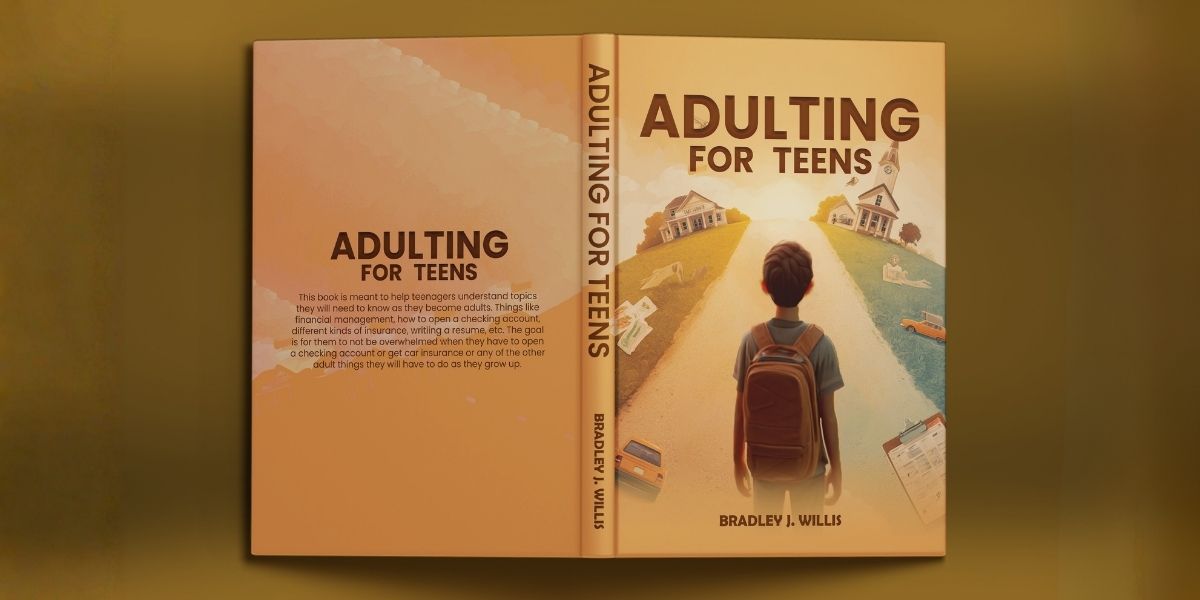
That’s where Adulting for Teens changes the game.

Written by Brad Willis, a father of three adult children with decades of experience working with young people, this book fills the gap between “kid” and “fully functional adult.” It’s the manual nobody handed you, written in a language that doesn’t feel like a boring textbook or a lecture you didn’t ask for.

Inside, you’ll learn skills that matter most: managing money without the panic, understanding insurance before you desperately need it, cooking meals that don’t come from a microwave, and navigating relationships with authenticity and confidence. It covers everything from writing your first resume to handling grief, from setting up utilities in your first apartment to building a personal brand that opens doors. It helps you decode paystubs, dodge overdraft fees, and avoid the “I bought it, now I’m broke” moment.

But adulting isn’t just paperwork and payments. It’s also about learning how to communicate, set boundaries without feeling guilty, and handle conflict without blowing up or shutting down. It’s knowing what to do when a friendship shifts, a relationship ends, or life throws something heavy at you when you weren’t ready.

It’s written with humor, real-world examples, and zero judgment. Brad knows something important: every adult was once a confused teen wondering why nobody explained any of this. You’re not behind. You’re just stepping into a world that expects you to know things you’ve never been taught.

Your journey to independence doesn’t have to be overwhelming. With the right guide, you can build confidence, make smarter choices, avoid expensive mistakes, and enjoy the process of growing up.

Ready to bridge the gap between high school and real life? Grab your copy of Adulting for Teens today and start building the future you want—one practical skill at a time.

The Poetry of Survival: Inside Poems from a Borderline Heart

When a poet writes from the edge, what she risks most is not language, but exposure. In Poems from a Borderline Heart, Ashley Gannon does not flinch from that risk. Her debut collection, published in 2025, is less a book of verse than a reckoning, a life reconstructed through fragments of pain, recovery, and self-recognition. It is a body remembering itself, one poem at a time.

Gannon writes from the unvarnished interior of mental illness, Borderline Personality Disorder, depression, PTSD, and from the fraught terrain of survival that follows. Yet Poems from a Borderline Heart resists the tidy arc of redemption that so often smooths the rough edges of trauma narratives. Instead, it insists on the complexity of being both wounded and alive. Her voice is raw, yes, but also lucid, startlingly aware of the ways language can both conceal and reveal.

“I am a girl who has come a long way,” she writes. “I am not broken, / I am not bruised. / I am me / And unapologetically so.”

Those lines arrive late in the book, and by then the reader has felt what it costs to write them. Gannon’s poems inhabit the aftermath of survival where forgiveness is a daily negotiation, and love, especially self-love, is an act of rebellion. The title poem is not included because there is no single text that could contain this kind of feeling; the “borderline heart” beats through them all.

Poetry as Testimony

It is tempting to call Gannon brave, but bravery implies choice. The truth is more elemental: writing was her way out. The poems, written over years of therapy, hospitalization, and slow healing, form a chronicle of persistence. In her author’s note, Gannon acknowledges poetry as the instrument through which she learned to survive her own mind, a means to give coherence to the chaos she once lived inside.

What distinguishes her work is its intimacy. Each poem reads as if it were written not for publication but as a message left for the next version of herself, the girl she once was, or the woman she is still becoming. This is poetry as correspondence, not confession. There’s a tenderness in the way she addresses her “little me,” or the therapists and friends who stayed when others left. Yet the book is not sentimental. It carries the residue of scars, literal and otherwise, and the hard-won clarity that comes from naming what nearly destroyed you.

The Sound of Unfiltered Honesty

Gannon’s language is plainspoken but piercing, her rhythms shaped more by thought than by meter. There’s no artifice, no attempt to aestheticize pain. Instead, she writes in a cadence that feels like conversation, sometimes like confrontation. It’s as if she’s speaking to a mirror that finally answers back.

Her poems often move between first and third person, between the self and the shadow. The effect is disorienting but purposeful, a formal echo of the instability that defines her subject matter. In one piece, she refers to herself as “a girl who was severely misunderstood,” and in another, she writes, “Someone stayed.” That shift, from the depersonalized “she” to the self that can finally say “I,” becomes the book’s quiet narrative arc.

Beyond Diagnosis

While Poems from a Borderline Heart foregrounds mental health, it refuses to be reduced to it. The diagnosis that once defined Gannon becomes only one part of a larger human story of resilience, forgiveness, and the messy beauty of being alive. What emerges is not pathology, but personhood.

Gannon’s work reminds us that survival is not a single act but a daily practice, that healing is not linear, and that self-compassion may be the most radical form of love there is.

A Voice That Stays

By the end, Gannon achieves something rare: a voice that feels at once fiercely individual and quietly universal. Her poems don’t offer closure; they offer company. They speak to anyone who has ever looked in the mirror and seen a stranger, to anyone who has ever had to rebuild a life from what was left.

Poems from a Borderline Heart is, in the end, not about illness but about endurance. It’s about the long, often invisible work of becoming whole, and the poetry that helps us believe it’s possible. Order your copy today to explore new poems from a Borderline Heart.


Disclaimer: The content of this article is intended for general informational and educational purposes only. Readers are encouraged to seek professional assistance for any specific emotional, psychological, or medical concerns.

How Donna Dalton Turned a Chance Moment in Paris Into a Global Children’s Series

By: Clara Fenwick

Some stories arrive quietly and wait patiently for the right moment. For Donna Dalton, that moment took more than two decades.

What began as an unexpected encounter near the Eiffel Tower eventually became Two Mice in New York: A Holiday Adventure, a children’s book that blends travel, culture, and celebration through the curious eyes of two French mice. The journey from idea to publication reflects not just creative persistence but a lifelong commitment to teaching and connection.

A Spark That Never Let Go

The idea was born in Paris, during a family trip that had nothing to do with writing. Sitting near the Eiffel Tower, Donna noticed tiny mice darting through the greenery, nibbling at crumbs left behind by tourists. The scene was surprising, playful, and difficult to forget.

In that moment, she told her husband she would someday write a book about the mice at the Eiffel Tower. It was a spontaneous declaration that stayed with her for over twenty-five years.

Life moved on. Donna built a long career in education. Writing remained a quiet idea on the sidelines, waiting.

From Classroom to Page

After forty years as an educator in Virginia, retirement brought an unexpected question. What comes next when teaching has been your identity for decades?

For Donna, the answer was storytelling.

Writing children’s books became a new way to reach young minds. It allowed her to continue doing what she loved most—engaging curiosity, encouraging learning, and opening doors to the wider world.

Her first book, Two Mice at the Eiffel Tower, introduced readers to Azura and Afrodille, two inquisitive French mice with a talent for adventure. The story combined narrative fun with real-world learning about Paris and its landmarks.

That balance between imagination and education would become the foundation of the entire Two Mice series.

Why New York at the Holidays

When Donna chose New York City as the next destination for her mice, the setting came with natural energy. For her, New York is not just a city. It is an experience layered with emotion, movement, and celebration.

The holiday season offered the perfect frame. Thanksgiving, Christmas, Hanukkah, and New Year’s Eve coexist in the city in a way few places manage. Donna wanted young readers to feel that rhythm and understand how different traditions can share the same space.

Through Azura and Afrodille’s journey, children experience the Macy’s Thanksgiving Day Parade, the Rockefeller Christmas Tree, the nativity scene near Central Park, the world’s largest menorah, and the iconic New Year’s Eve countdown in Times Square.

The book does not lecture. It invites.

Making the City a Character

New York plays an active role in the story. Landmarks are not just backdrops. They guide the plot and shape the adventure.

Donna chose locations she had personally experienced, including the Rockefeller Tree lighting—a moment she had once watched year after year on television before seeing it live. That sense of wonder translates onto the page.

For children who have visited New York, the book brings recognition and excitement. For those who have not, it offers a first taste of the city’s scale and spirit.

One reader shared that her granddaughter could not wait to visit New York after reading the book, eager to see the places she had already traveled to in her imagination.

Teaching Through Story, Not Instruction

Donna’s background as an educator is woven throughout the book, but never in a heavy-handed way.

Problem-solving, collaboration, communication, and creativity drive the story forward. When Azura and Afrodille face challenges, they do not succeed alone. They rely on teamwork and new friendships.

That is where Frankie the subway rat enters the picture.

Frankie and his rat pack help the mice reach the Empire State Building using ingenuity and cooperation. The solution is not obvious, and that is the point. Children see how different perspectives and shared effort lead to success.

In the end, the mice and their new friends come together to light the Rockefeller Christmas Tree with its missing star, reinforcing the value of connection and trust.

Culture as an Invitation

One of Donna’s core goals is cultural awareness. Each Two Mice book introduces children to geography, traditions, food, and landmarks without overwhelming them.

New York becomes a lesson in coexistence. Different holidays. Different beliefs. One shared city.

Donna wants children to feel curious rather than cautious about the world. To understand that learning about other cultures can be joyful and exciting.

Her website extends that mission, offering activities aligned with classroom skills and learning goals. Teachers and parents can use the stories as starting points for deeper exploration.

A Series With No Borders

Azura and Afrodille did not stop in New York.

Since their debut, the two French mice have traveled to London, Africa, Ireland, Italy, and the Bahamas. Each destination brings new challenges, new friendships, and new lessons.

The series reflects Donna’s belief that stories can be passports. They allow children to explore places they may not yet have access to, and to see themselves as capable explorers of a big, complex world.

Writing With Heart and Patience

Donna’s journey is a reminder that creative ideas do not expire. Sometimes they wait until life makes room for them.

What started as a whimsical thought by the Eiffel Tower grew into a meaningful body of work shaped by decades of teaching, travel, and reflection.

Two Mice in New York: A Holiday Adventure is more than a seasonal children’s book. It is the result of persistence, purpose, and a belief that stories can still teach, comfort, and connect.

For Donna, that is the real adventure.

Discover more about Donna Dalton, her journey as an author, and the Two Mice series at 2-mice.com.

Adept Agency Explains How AI is Shaping SEO in 2026

In 2026, artificial intelligence (AI) remains a driving force in the SEO industry, reshaping how businesses approach their digital marketing strategies. While some may have speculated that SEO would be replaced by AI-driven tools, the reality is that AI and SEO are working together to enhance the search experience. The introduction of AI into search engines and user behavior has transformed opportunities for businesses, but SEO best practices remain a cornerstone of any successful strategy. For businesses aiming to grow their organic reach, combining AI with time-tested SEO practices is key. As an SEO Agency in Denver, Adept Agency understands how the evolution of AI presents both challenges and opportunities for businesses to enhance their digital presence.

The Evolving Role of AI in SEO

As AI advances, search engines like Google are becoming smarter and better at understanding complex queries, user intent, and the content that best addresses those needs. In 2026, AI is no longer just about automating tasks; it’s about interpreting and responding to human language with greater accuracy than ever before. For example, tools such as Google’s RankBrain and BERT use AI to better understand the context and nuances of search queries, which directly affects how content is ranked.

One of the most significant shifts is the move towards more conversational search. With the rise of voice search and AI-powered assistants, users are now asking questions in a more natural, conversational tone. This means that businesses need to focus on creating content that answers specific questions and addresses user intent, rather than just targeting keywords. SEO is still about matching the right content to the right query, but now it requires a deeper understanding of the context in which those queries are made.

Why SEO Practices Remain Critical

Despite the integration of AI, SEO practices remain foundational for businesses seeking to grow their organic strategy. The core principles of SEO, such as keyword optimization, high-quality content, and effective site architecture, remain as relevant as ever. However, AI tools are enhancing the way these practices are implemented.

For instance, AI-powered tools can help SEOs analyze large volumes of data to identify trends, search patterns, and optimization opportunities. These insights can guide content creation, ensuring that it aligns with both search engine algorithms and user preferences. AI can also assist in optimizing technical SEO, such as improving website speed, ensuring mobile-friendliness, and enhancing user experience (UX)—all of which are crucial for maintaining high search rankings.

AI-driven tools also enable businesses to track and measure their SEO performance in real time. This enables faster adjustments and more agile decision-making, helping businesses stay ahead of competitors in an ever-evolving digital landscape. By relying on AI to automate certain aspects of SEO, companies can focus on strategy, creativity, and refining their overall approach.

The Importance of Experienced SEOs

While AI can certainly assist in many aspects of SEO, it’s important to remember that AI is not a substitute for experienced, trusted SEOs. The human element of SEO is crucial to understanding a business’s unique needs and tailoring strategies accordingly. An experienced SEO expert can interpret AI-driven insights to align with the brand’s goals, ensuring the strategies implemented are both effective and ethical.

Furthermore, SEO is not just about rankings. It’s about building long-term customer relationships through transparency and trust. Experienced SEOs understand that SEO success is measured not only by keyword rankings but also by factors such as user engagement, content quality, and the overall user experience. By working with a knowledgeable SEO team, businesses can ensure that their strategies align with both their short-term objectives and long-term growth.

Another important aspect of working with experienced SEOs is the transparency and ethical approach they bring to their work. In a landscape where some digital marketing agencies may be tempted to rely on questionable tactics to achieve quick results, working with professionals who prioritize quality over shortcuts helps businesses maintain credibility and avoid penalties from search engines.

AI and the Future of SEO

Looking forward, AI will continue to play a larger role in shaping the SEO landscape. As search engines become even more sophisticated, AI’s ability to predict search trends, automate content creation, and improve website functionality will only increase. However, the relationship between AI and SEO is not one-way. As AI technology improves, search engines will continue to evolve, making SEO even more critical for businesses seeking organic growth.

In the future, we can expect AI tools to become more integrated into SEO professionals’ daily workflows. From AI-powered content creation tools that generate optimized copy to AI-driven platforms that predict ranking fluctuations, the possibilities for AI in SEO are endless. However, this doesn’t mean that SEO is any less important. Instead, AI will become a tool that enhances the work of experienced SEOs, allowing them to focus on creating high-quality, user-focused content while AI handles repetitive tasks.

Why Businesses Should Invest in SEO in 2026

For businesses looking to succeed in 2026, investing in SEO remains as crucial as ever. While AI can assist in streamlining tasks and providing insights, it’s the combination of AI and traditional SEO practices that will lead to the most success. Businesses that rely solely on AI risk missing valuable opportunities to connect with their target audience.

SEO is not dead; it’s evolving. AI is expanding the potential of SEO, providing new opportunities for businesses to improve their visibility, content relevance, and overall digital presence. However, businesses must still rely on the expertise of experienced SEO professionals to ensure their strategies are executed properly and to keep pace with an ever-changing digital landscape.

Contact Adept Agency

Adept Agency is a women-owned SEO and Digital Marketing Agency based in Denver, Colorado. Specializing in both local and enterprise-level marketing strategies, Adept Agency focuses on building trust and driving results through a hands-on approach. Their team of SEO experts is committed to helping businesses grow their online presence while maintaining transparency and delivering long-term success.


Bullying and Bravery: Standing Up in Middle School – A Look at Raymond Sierra’s Fourteen Days

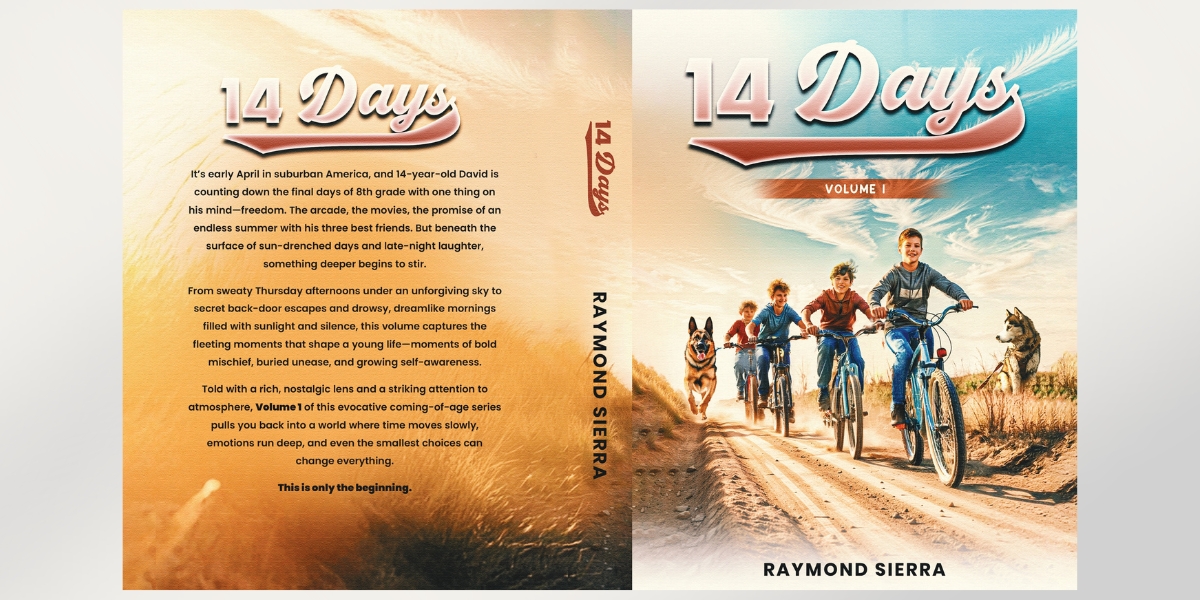
Middle school can feel like a battlefield. Lockers slamming and corridors full of whispers set a tense scene for anyone who dares to stand out. In Raymond Sierra’s novel Fourteen Days, David faces that tension when Jason, a bully in his grade, singles him out. Sierra captures the fear that builds in your chest when harsh words or a shove come from someone meant to be your peer.

David first meets Jason on a brisk afternoon in the school yard. Jason squares up to David and demands that he hand over the lunch money or face the consequences. David’s heart races as students scatter. Sierra describes every moment with a teenager’s raw honesty, so we feel David’s fear as if it were our own. In that scene, the harsh voice and jeering laughter become tangible threats.

Before David can reply, Nick steps between them. Nick speaks quietly but firmly, telling Jason to back off. In Fourteen Days, Sierra uses Nick’s calm intervention to reveal the power of friendship. This moment shows that bravery does not always roar. Sometimes it whispers. Nick stands his ground, deflects Jason’s anger, and gives David space to breathe.

David learns that courage comes in many forms. After this first confrontation, he sees Nick as a model of quiet strength. Sierra gives readers a close look at how one friend’s act of kindness can shift the balance of power. David begins to believe that he does not have to face his fears alone. He feels the warmth of support and remembers it in every tense encounter.

When Jason returns to pick on David again, David finds inner resolve. He recalls Nick’s stand and finds the words to say, “Stop.” Sierra shows that repetition of small acts builds confidence. David’s voice may tremble, but he holds his ground. When Jason walks away in frustration, David feels a rush of relief. That small victory proves to David that even a whisper can carry weight.

Fear still lingers, but Sierra reminds us that bravery need not be perfect. David stumbles during a second showdown. He forgets his own plan and stammers. Yet Jason pauses, surprised by David’s partial stand. That pause becomes enough. Sierra uses that moment to demonstrate that any act of resistance chips away at the bully’s power.

David shares these moments with Jessie and Evan. Jessie listens quietly and offers encouragement, and Evan cracks a joke to lift David’s mood. Sierra weaves these friendship threads into the narrative, showing that bravery often grows in a circle of people who believe in us. David finds strength in knowing his friends stand beside him, ready to back him up.

Back at home, David replayed these schoolyard fights in his mind, comparing himself to his older brother Johnnie. He sees how Johnnie tackles challenges in his daily life. Sierra uses this family contrast to show that bravery extends beyond one scene. David internalizes the lessons from Jason, Nick, and Johnnie and builds a broader sense of self.

By the end of Fourteen Days by Raymond Sierra, David faces the bully not because he has no fear but because he no longer feels alone. He learns that courage can be quiet, that a friend’s word can ring louder than a bully’s scream, and that each small decision to stand up matters. Sierra’s novel speaks to every young reader who wonders how to find strength in the face of intimidation.

If you want a clear look at how small acts of courage shape a young life, pick up Fourteen Days by Raymond Sierra. This novel delivers honest emotion and true friendship in each page, showing how bravery grows one step at a time.


Dr. Frank A. Lucas: Your Body is Not a Machine, It is a Miracle – Shifting from Repair to Reverence in Self-Care

We often talk about our bodies as if they are machines. We say we need a tune-up, we talk about burning fuel, and we try to fix broken parts. This mindset makes us believe that when something goes wrong, we simply need the right mechanic or the correct replacement part. What if this entire way of thinking is wrong? In his book Life is Linear, Living is Cyclical, Dr. Frank A. Lucas presents a different and more inspiring truth. Your body is not a machine. It is a living, breathing miracle of creation with a profound and innate ability to care for itself. The real shift in health begins when we move from a mindset of repair to an attitude of reverence.

Consider what your body does every single day without any conscious command from you. It beats your heart, digests your food, fights infections, and heals a cut. It replaces billions of cells daily and regulates countless processes in perfect harmony. Dr. Lucas details these amazing capabilities in his work. He explains that the human body is self-replicating, self-repairing, self-protecting, and self-energizing. It is also adaptable, resilient, and forgiving. When you view your body through this lens, you stop seeing it as a car that has broken down and start seeing it as a wise, ancient, and capable partner on your life journey.

This partnership is the core of holistic health. Instead of waiting for a part to fail and then seeking an external fix, reverence means providing your body with what it needs to perform its natural miracles every day. This is where the philosophy of Life is Linear, Living is Cyclical becomes practical. Your body operates on cycles and rhythms that align with nature. It expects certain inputs: clean water, nutritious food, movement, and rest. When you provide these things consistently, you are not repairing a machine. You are honoring a miracle. You are creating the conditions for your body to do what it is designed to do, which is to maintain your health and vitality throughout your linear life.

The modern world, however, makes reverence difficult. We face what Dr. Frank A. Lucas calls a mismatch. Our bodies carry the genetic blueprint of active hunter-gatherers, but our lives are often sedentary, and our food is highly processed. We consume what the book describes as “Chemcuisine,” products designed for shelf life and taste, not for nourishing our miraculous biological systems. This disconnect forces the body into a constant state of defense and adaptation, draining its energy and slowing its natural healing processes. We then mistake this fatigue and decline for normal aging or bad luck, when it is often a signal of disrespect to our own design.

Shifting from repair to reverence starts with simple changes. It begins with the understanding that you control the single most important health process: what you choose to ingest. Choose water over sugary drinks. Choose whole foods over processed packages. Listen to your body’s signals for rest and movement. This is not about strict diets or punishing workouts. It is about consistent, respectful care. It is about choosing foods that honor your body’s complex systems and engaging in activities that strengthen your resilience. You are not fixing something broken. You are nurturing something alive and powerful.

This respectful approach transforms your relationship with yourself. You begin to see symptoms not as random failures to be silenced with medication, but as important messages from your body. A headache may ask for water, not just a pill. Fatigue may demand rest, not just more caffeine. This is the practice of reverence. It is a dialogue with your own physical being, a commitment to supporting its work rather than overriding its signals. Life is Linear, Living is Cyclical guides readers toward this exact partnership, framing health as a natural outcome of living in sync with our design.

Adopting this perspective is the most powerful form of self-care. It moves you from fear and reaction to respect and empowerment. You become the steward of a biological wonder, not the anxious owner of a problematic machine. You start working with your body’s innate wisdom, not against it. This journey of reverence ensures that the miraculous system you call your body receives the honor and support it deserves throughout every step of your linear life.

To fully understand this respectful approach to your health and life, read Life is Linear, Living is Cyclical by Dr. Frank A. Lucas. Discover a guide that teaches you to honor your body’s design. Find the book available for purchase on his official website, Amazon, and all major book retailers.


Disclaimer: The information provided in this article is for general informational purposes only and reflects the views of Dr. Frank A. Lucas as presented in his book Life is Linear, Living is Cyclical. It is not intended as medical advice. Please consult with a healthcare professional before making any changes to your health or wellness routine.

How to Select Structured Learning Programs for Growth

Choosing the right learning program can change your future. A good program helps you build skills, stay motivated, and reach your goals faster. But with so many options, it can feel hard to choose.

The good news is that you do not need a perfect plan on day one. You only need a clear process. In this guide, you will learn how to pick structured learning programs that match your needs, your schedule, and your long-term growth.

Why Structured Learning Programs Lead to Better Results

Structured learning gives you a clear path. Instead of guessing what to study next, you follow a step-by-step plan. This saves time and lowers stress.

It also helps you track progress. When lessons build on each other, you can see what you learned and what still needs work. Over time, this creates confidence and better results.

Another big benefit is consistency. Many people quit when learning feels random or too hard. A structured program keeps you moving, even on busy weeks.

Start With a Clear Growth Goal

Before you compare programs, define your goal. Ask yourself: what do I want to improve in the next 3 to 12 months?

Your goal can be academic, career-focused, or personal. For example, you may want to improve math scores, strengthen writing skills, prepare for exams, or learn better study habits. A clear goal helps you ignore programs that look good but do not fit your needs.

Try this simple goal format:

  • Skill goal: What skill do I want to build?
  • Result goal: What outcome do I want?
  • Time goal: By when do I want to see progress?

Example: “I want to improve algebra and raise my test score by 15% in four months.”

Match the Program to Your Current Level

Many learners struggle because they join a program that is too easy or too advanced. If the content is too basic, motivation drops because there is no challenge. If the content is too difficult, learners feel frustrated and may give up early.

A good learning program starts at your present level and then builds upward in clear stages. Ask whether the course includes placement checks or diagnostic tests before enrollment. This step is important because the right starting point often determines how quickly and confidently you improve.

Look for a Clear Learning Roadmap

Strong programs show you exactly what happens first, next, and last. This is one of the easiest signs of quality. A clear roadmap should include:

  • Learning levels or stages
  • Topics covered at each stage
  • Practice activities
  • Assessments or progress checks
  • Expected timeline

If a program cannot explain its path in simple words, that is a warning sign. Good learning design should be easy to understand.

Review Teaching Quality and Support Systems

Content is only half the experience because teacher support plays a major role in growth. Even motivated learners get stuck, and timely guidance can prevent small confusion from becoming long-term gaps. Programs with active support often produce stronger and more stable results.

When reviewing options, ask how feedback is delivered and how often instructors check progress. In guided environments such as a professional tutoring school, learners often receive structured instruction plus regular mentoring, which can improve both performance and confidence. The combination of teaching and support is what keeps the momentum strong.

Focus on Curriculum Depth, Not Just Topic Count

Some programs impress learners with long lists of topics, but quantity does not always mean quality. A course may cover many areas quickly without helping learners master the basics. Real growth happens when important concepts are explained clearly and practiced enough times.

Look for programs that balance foundation skills and advanced learning. A good curriculum explains core ideas in simple language, then adds complexity as understanding improves. This approach helps learners build durable knowledge instead of short-term memorization.

Make Sure Assessment Is Built In

Assessment should not only happen at the end. The best programs test progress often and use results to improve learning. Look for programs with:

  • Short weekly quizzes
  • Monthly progress checks
  • Skills-based assessments
  • Review sessions after tests
  • Personal improvement plans

Frequent low-pressure testing helps learners improve faster. It shows what is working and what needs more time.

Balance Flexibility With Accountability

Flexible programs are useful, especially for learners with changing schedules. However, flexibility without structure can lead to procrastination and unfinished modules. The best programs offer freedom in schedule while still keeping clear milestones and deadlines.

Look for systems with weekly goals, instructor check-ins, and catch-up plans for missed sessions. These features create accountability without making learning feel rigid. A balanced setup supports real-life demands while still protecting long-term progress.

Evaluate Learning Tools and Materials

Learning tools should make studying easier, not more confusing. High-quality programs usually provide clean materials such as guided notes, practice sets, short videos, and review resources. These tools help learners understand difficult topics and review lessons independently.

Good platforms also include progress dashboards or reports that show performance trends. When learners can see their own growth, motivation improves, and study habits become more intentional. Useful tools support independent learning while still connecting students to instructor guidance.

Compare Cost Based on Value, Not Price Alone

Many families choose based on price, which is understandable, but value should lead the decision. A low-cost program can become expensive if results are weak and learners need to restart elsewhere. A higher-priced option may be more efficient if it includes:

  • better teaching
  • stronger support
  • clearer outcomes

To judge value fairly, compare what is included in the full package. Look at instruction time, feedback access, materials, assessments, and progress tracking. When you compare total support rather than headline price, the best option becomes easier to identify.

Ask Better Questions During Consultations

Consultations are most useful when you ask direct, practical questions. Ask how the program handles weak areas, how often progress is reviewed, and what happens when a learner misses classes. The clarity of these answers often tells you more than marketing claims.

You should also ask what typical learners achieve within three to six months. Good providers usually share realistic progress patterns instead of promising instant success. Honest expectations build trust and help you commit to a program with confidence.

Choose a Structure That Supports Long-Term Growth

Selecting structured learning programs is not about finding the most expensive or most popular option. It is about choosing a system that matches your goals, current level, schedule, and support needs. When these pieces align, learning becomes more effective and less stressful.

To keep up with fresh ideas, please browse our blog and explore what’s new this week.


Broccoli Rob Takes New York, One Laugh At A Time

There’s a certain kind of New York comedian who doesn’t need to tell you where he’s from; you hear it in the rhythm, the timing, the unapologetic warmth. Broccoli Rob is that kind of comedian and actor. A Jersey guy by address, sure—but culturally? He’s a bridge-and-tunnel heartbeat away from Manhattan, and spiritually planted right in the center of New York comedy.

On a recent night at Gotham Comedy Club, Broccoli Rob stepped onto a stage steeped in comedy history and delivered a performance that felt distinctly current while honoring everything that came before it. The room was electric, laughter rolled through the upscale showroom the way it has for decades, sharp, communal, and unmistakably New York.

A Gotham Stamp of Approval

For comedians, Gotham Comedy Club isn’t just another venue; it’s a rite of passage.

Opened on May 10, 1996, by Chris Mazzilli and Mike Reisman, Gotham’s debut night featured Paul Provenza, Mike Royce, Sara Silverman, and Dave Chappelle. Today, under the ownership of brothers Chris and Steven Mazzilli, Gotham stands as one of the country’s respected comedy institutions.

It’s the New York home base for legends like Jerry Seinfeld, Jim Gaffigan, Sebastian Maniscalco, and Trevor Noah—and a launchpad for careers including Amy Schumer and Gaffigan himself.

The club’s legacy extends far beyond stand-up:

  • Jerry Seinfeld filmed his documentary Comedian here
  • Last Comic Standing shot four seasons within its walls
  • Comedy Central’s Live at Gotham turned the venue into a household name, with hosts like Kevin Hart, Bill Burr, Lewis Black, and Jim Breuer
  • The Jim Gaffigan Show used Gotham as a backdrop
  • Gotham Comedy Live on AXS TV featured hosts including Pete Davidson, Michael Che, Fran Drescher, Craig Robinson, and Anthony Anderson
  • In 2019, Gotham partnered with NextVR and Oculus to launch Live in Gotham, the first stand-up series filmed live in virtual reality and broadcast in over 30 countries
  • That same year, Gotham transformed into the Copacabana for Martin Scorsese’s The Irishman, featuring Robert De Niro, Joe Pesci, Sebastian Maniscalco, and Jim Norton as Don Rickles

Now, add another name to that lineage:

Broccoli Rob.

A New York Comedian and Actor

Broccoli Rob Takes New York, One Laugh At A Time

Photo Courtesy: Dina Drew

Broccoli Rob, born Dr. Robert Anthony Ruffalo, is an Italian-American doctor-comedian whose career makes perfect sense once you see him live. He’s observant without being cynical. Sharp without being cruel. And deeply connected to the kind of generational, street-level humor New Yorkers instantly recognize as authentic.

Though he lives in New Jersey, Rob is constantly in New York—onstage, in the crowd, and in the culture. From club dates to street festivals, NYC has become a central character in his comedy story.

Case in point: Mulberry Street, where Broccoli Rob performed during the legendary “The Feast of San Gennaro”, bringing laughter to one of the iconic Italian-American celebrations in the city. It was a comedy rooted in heritage, neighborhood, and shared memory—exactly where Rob thrives.

The Doctor Is In, and He’s Funny

With stress, screens, and burnout, Broccoli Rob offers a different prescription: laughter with purpose.

Before comedy clubs, there were community theaters. At age ten, Rob took the stage as Patrick Dennis in Mame. Roles in Godspell (as Jesus) and Barnum (as P.T. Barnum) followed. Performance wasn’t a phase—it was a calling.

Still, he chose a parallel path in healthcare, earning dual licenses in both physical therapy and chiropractic care, and opening a practice in 1989. As a founder and lead instructor at C.E.S.I.             ( Continuing Education Seminars Incorporated), he has since taught more than 180 accredited, hands-on continuing education seminars nationwide.

That rare blend—science and showmanship—became the foundation of what Rob now calls “edutainment.”(Educational Entertainment)

How “Broccoli Rob” Was Born

The name wasn’t manufactured. It was improvised.

During a nutrition talk at a grammar school, a child asked if he was a TV personality, “Produce Pete.” Without missing a beat, Rob replied, “No, I’m Broccoli Rob.” The room laughed. The name stuck. The brand was born.

It perfectly captured the duality: health, humor, and heart.

From Open Mics to Standing Ovations

Rob’s comedy breakthrough came while he was still in chiropractic school. Spotting a sign for Open Mic Night at Governor’s Comedy Club, he leaped and brought 80 classmates with him.

The manager was stunned. Rob was given as much stage time as he wanted. He did 25 minutes. The crowd erupted.

Soon, he was hosting weekly shows, producing lineups, and booking future stars like a young Ray Romano and Rich Voss. Long before he headlined, Rob was building stages for himself and others.

Comedy That Actually Connects

Broccoli Rob’s comedy is clean, clever, and deeply human. It’s not about shock, it’s about connection.

One of his most powerful moments came when a widow approached him after a show and thanked him for making her laugh for the first time since her husband’s passing. That moment, Rob says, means more than any applause break.

His one-man show, Broccoli Rob: Then & Now, is a crowd favorite—especially in New York—tracing life from rotary phones to smartphones and from handwritten notes to emojis. It’s nostalgic, observant, and packed with laughs that resonate across generations.

What’s Next, and It’s Big

Broccoli Rob Takes New York, One Laugh At A Time

Photo Courtesy: Donovan Cruz

With a polished sizzle reel now live on YouTube, Broccoli Rob is eyeing streaming platforms like Netflix and Hulu to bring Then & Now to a global audience.

He’s also developing:

  • Sketch Comedy Parody Films for the 2026 film festival submissions 
  • A collection of essays and sketches exploring the Broccoli Rob worldview
  • A comedic book on pickleball
  • Filming his One Man Show Broccoli Rob Then and Now 

Recent highlights include: 

  • 2025 Tour Schedule 
  • May 2025 Piason Con NJ
  • July 2025 Sadman Comedy Boca FL 
  • July 2025 St. Marks NYC                                      
  • Aug 2025 St. Marks NYC
  • Sept 2025 Comedy Chateau, LA, CA
  • Sept 2025 The Feast of San Gennaro, NYC
  • Sept 2025 Booyah open for Mike Marino, NJ
  • Sept 2025 Fundraiser open for Mike Marino, NJ
  • Oct 2025 Gotham Comedy Club, NY
  • Oct 2025 Brooks Art Center opened for Mike Marino,  NJ
  • Mike Marino’s podcast “Live from My Mother’s Basement”
  • WKTU’s Morning Drive with Hollywood Hamilton
  • The Martha Stewart Radio Show

His comedy is also in high demand for corporate, nonprofit, and private events, with past clients including Delta Airlines, the National Federation of the Blind, UNICO, and the Knights of Columbus, each performance tailored to the room.

A New York State of Mind

Ask Broccoli Rob if he still gets nervous before a show, and he’ll tell you:

“Public speaking is the number one fear—even over death. That means most people would rather be in the casket than give the eulogy. Not me. Give me the mic.”

At Gotham Comedy Club, on Mulberry Street, and across the five boroughs, New York has embraced Broccoli Rob—and the feeling is mutual.

He’s not just passing through.

He’s part of the lineup.

WHERE TO FIND HIM

  • Instagram: @broccoliroblol
  • YouTube: Broccoli Rob (Sizzle Reel & New Videos)
  • Touring: NYC, New Jersey, California, Florida – in 2026
  • Booking: Corporate, private, and nonprofit events
  • Filming for his Parody Movie based on Iconic Scenes from Famous Movies

Follow him online for upcoming New York City shows—and catch him live before the rest of the country claims him.

Broccoli Rob Sizzle Reel 

https://youtu.be/N-WFZSiULoE

Live from My Mother’s Basement interview with Mike Marino 

https://youtu.be/50AqkuOFmSc

A Practical and Spiritual Guide to Healing the Heart

Strong in the Wounded Heart… Living in the Light is a profoundly compassionate and transformative guide for anyone carrying emotional pain, spiritual disorientation, or unhealed wounds. Written with clarity, tenderness, and lived wisdom, this book does not rely on abstract theory or distant concepts. Instead, it speaks directly to the human heart, meeting readers in their suffering and gently showing them, step by step, that healing is not only possible, but already within reach.

At its core, this book is an invitation to heal the wounded heart. It reveals how trauma, loss, shame, fear, and unmet emotional needs shape our inner world, influencing our thoughts, behaviors, relationships, and sense of self. Through spiritual insight and deep inner awareness, readers are guided toward wholeness, peace, and renewed purpose. Above all, the book affirms a vital truth: being wounded does not mean being broken. It means being human and capable of profound growth, resilience, and transformation.

Each chapter offers grounded, accessible guidance that blends spirituality with self-reflection and lived practice. Readers are introduced to healing pathways such as mindful breathing, prayer, contemplative reflection, creative expression, gentle movement, and intentional acts of compassion. These practices are not presented as rigid techniques but as invitations to slow down, listen inwardly, and reconnect with the authentic self and the ever-present divine light. The book also explores the Universal Laws of the Divine, illuminating how thoughts, intentions, and actions carry spiritual energy, and how aligning them with love, gratitude, and faith supports lasting emotional and spiritual healing.

This book speaks especially to those who feel emotionally overwhelmed, spiritually disconnected, or burdened by long-held pain they no longer wish to carry alone. It offers hope without bypassing suffering, clarity without judgment, and reassurance that healing is not something to be earned, but something to be allowed. Whether readers are just beginning their healing journey or have been walking the path for years, Strong in the Wounded Heart… Living in the Light serves as a steady and compassionate companion, offering comfort, insight, and gentle encouragement at every stage.

The power of this book is strengthened by the unified voice of its two authors, who worked in partnership to shape its message. Dr. RoseMary Cairo and Alberto Minzer bring complementary perspectives that weave faith, spiritual wisdom, and inner healing into a single, coherent guide. Their collaboration creates a balanced and inclusive approach that speaks to the shared human experience of pain, faith, and healing.

Ultimately, Strong in the Wounded Heart… Living in the Light teaches that true healing begins when we allow divine light to enter the places we once tried to hide. A wounded heart, the book reminds us, is not a flaw, but a message. Through faith, awareness, and compassionate self-understanding, pain becomes a teacher and healing becomes not just a hope, but a lived reality.

Authors:  

Dr. RoseMary Cairo EdD LCPC  

Alberto Minzer M. Div LCSW CACD 

Website: Stronginthewoundedheart.com 

Book Details: 

Book Name: Strong in the Wounded Heart
Author Name: Dr. RoseMary Cairo and Alberto Minzer
ISBN Number: 978-1969868535
Ebook Version: Click Here
Hardcover Version: Click Here
Paperback Version: Click Here


Disclaimer: The content of this article is intended for general informational and educational purposes only. Readers are encouraged to seek professional assistance for any specific emotional, psychological, or medical concerns.

The Role of Event Staffing in Crafting Memorable Experiences

What makes some events feel smooth, welcoming, and unforgettable while others fall flat? Behind every successful gathering is a team that understands timing, service, and guest care.

Event staffing shapes how guests move, interact, and remember the occasion. From first greetings to final farewells, trained staff quietly guide the experience.

This article explains how thoughtful staffing choices elevate service, prevent issues, and leave lasting impressions that hosts and guests both value. Keep on reading!

Creating Strong First Impressions

People form opinions as soon as they arrive, and sometimes even before the event starts. Well-trained, friendly staff at the entrances and check-in desks create an atmosphere that is both professional and welcoming.

Being confident in your communication and posture helps guests feel welcome and informed right away. When staff know their stuff, lines move faster, and there is less confusion.

Supporting Smooth Event Flow

When transitions feel natural and not forced, events go well. Skilled staff move guests from one activity to the next without drawing attention to themselves.

Staff make sure everything runs smoothly by managing schedules and directing where people sit. They enable hosts, speakers, and performers to focus on their roles. Guests stay calm and interested when timing works quietly in the background.

Enhancing Guest Comfort and Care

When considering how to remember an event, comfort is essential. If staff pay attention, they will notice small needs before they become big problems.

The staff makes people feel cared for in many ways, such as by helping them find a seat, answering their questions, and providing help. Support that is nearby and quick to respond makes guests feel important. This kind of care turns ordinary service into a pleasant experience.

Maintaining Professional Service Standards

Consistent service quality reflects careful planning and respect for tradition. Well-trained teams follow established standards that guests recognize and appreciate.

An experienced event planning staffing agency helps ensure staff understand etiquette, dress codes, and proper conduct. This consistency protects the event’s image and purpose. Professional behavior reassures guests that every detail has been handled with care.

Managing Challenges with Calm Control

Even at the best-planned events, unexpected things can happen. Professionals can act quickly without harming the environment.

When people solve problems calmly, they keep the problems between themselves, and the solutions work. Often, guests are unaware of the issues that arise. The event’s honor and flow are both kept up by this quiet control.

Strengthening the Overall Event Memory

Many small moments add up to one big impression. How people talk to staff at an event often affects how they talk about it afterward.

A polite goodbye and some final, helpful advice end the experience on a good note. When service is thoughtful from beginning to end, memories are good. When there are enough staff, gatherings become stories that are worth telling.

Enhances Guest Experiences With Professional Event Staffing

Successful events are rarely defined by décor or location alone. The people guiding the experience play a steady and lasting role.

Event staffing brings structure, warmth, and reliability to every stage of a gathering. When staff are trained, prepared, and attentive, guests feel respected and comfortable. This sense of care strengthens the event’s purpose and message.

Thoughtful staffing honors tradition while meeting modern expectations. It ensures that every detail supports a positive memory that lasts well beyond the event itself.