Hazelnuts and Homicide: N. E. Carlisle Blends Mystery, Community, and Culinary Culture

By: Riley Donovan

When it comes to cozy mysteries that make readers feel right at home, N. E. Carlisle has a unique recipe. Her latest book, Hazelnuts and Homicide, combines the intrigue of a whodunit with the warmth of food, community, and small-town charm. We sat down with Carlisle to explore her inspirations, the worlds she builds, and why culinary culture is such a perfect partner for mystery storytelling.

Blending Food and Fiction

“I have always believed that food tells a story,” Carlisle explains. “Recipes, flavors, and shared meals build connection, and that sense of comfort pairs perfectly with a cozy mystery.” In Hazelnuts and Homicide, food isn’t just background—it anchors the protagonist, Année, emotionally and guides her through the investigation.

From culinary experiments to festive meals, every dish in Carlisle’s book carries narrative weight. “Blending culinary culture with a whodunit felt natural,” she adds. “It makes the story immersive, where the sensory world matters just as much as the plot.”

Creating a Coastal Community

Hazelton, Oregon, the setting for the Bonne Année Mystery series, feels like a living, breathing place, but it’s actually fictional. Its character draws on communities throughout Tillamook County, Oregon. “There’s a unique rhythm to that area,” Carlisle says. “The mist, the coastal forests, the local traditions, the feeling that everyone knows everyone else. Hazelton carries that pulse.”

The town’s authenticity helps readers feel connected to Année’s journey, making every street, café, and ocean cliff part of the story. “Setting is an emotional force in storytelling,” Carlisle notes. “A cozy café or foggy forest can influence a character as much as any plot point.”

Pairing Stories with Flavor

Fans of the Bonne Année Mysteries know the series’ culinary edge extends beyond the page. Carlisle has hosted Food and Fiction supper clubs, encouraging readers to experience her stories through both taste and imagination.

“When pairing Hazelnuts and Homicide with a real dish, I would pick the Macabre Brussel Sprouts,” she laughs. “They’re rich, a little decadent, yet surprisingly good for you. Cozy on the surface, but with a twist, just like the story.”

Oscar the Bernedoodle: More Than a Pet

No cozy mystery is complete without lovable characters, and in Carlisle’s world, that includes four-legged friends. Oscar, a Bernedoodle, is a standout favorite. “Oscar is based on one of my own dogs,” Carlisle shares. “Her expressive personality and intuition made their way directly onto the page. She comforts Année, nudges her in the right direction, and brings warmth and levity to the mystery.”

Exploring Themes of Community and Belonging

Beyond the food and mystery, Carlisle’s books consistently highlight tight-knit communities and the importance of found family. “Cozy mysteries are rooted in the idea that community can be a source of strength, healing, and humor,” she explains. Année’s support system in Hazelton mirrors real-life connections, emphasizing that belonging is just as essential as solving the crime.

Switching Genres: Fantasy vs. Cozy Mystery

In addition to her cozy mysteries, Carlisle writes coastal fantasy in the Mermaid Eclipse trilogy. She finds both genres challenge her in complementary ways. “Writing cozy mysteries keeps me grounded in everyday emotion,” she says. “Fantasy asks me to expand beyond natural rules. In fantasy, the magic is literal. In a cozy mystery, it comes from community, comfort, and curiosity.”

This flexibility allows her to explore diverse stories while keeping her work emotionally resonant and immersive.

Research, Detail, and the Oregon Coast

Even small details play a big role in Carlisle’s storytelling. While writing Hazelnuts and Homicide, she researched hazelnut trees, discovering their sensitivity to microclimates and weather patterns. “Learning how crops interact with the coastal environment gave me a deeper appreciation of Tillamook County,” she says. “It added authenticity and depth to the story.”

This focus on place and environment extends to every aspect of her books, from bookshops to ocean cliffs, helping readers step fully into Hazelton’s world.

Transformation and Second Chances

A recurring theme across Carlisle’s works is transformation—whether magical or personal. “I return to reinvention, belonging, and second chances,” she explains. “My characters often stand at the edge of a new chapter, uncertain but hopeful. It’s about discovering who you are and who you choose to become.”

This theme resonates in the Bonne Année series, where characters navigate change while finding support and comfort in their community.

Looking Ahead in the Series

Readers eager for the next installment can expect more culinary delights, engaging mysteries, and a touch of romance. “The next book takes place during Easter and introduces new people and celebrations in Hazelton,” Carlisle reveals. “Année continues to grow into her life, and yes, Oscar will be right by her side again.”

Bringing Cozy Mysteries to Life

With Hazelnuts and Homicide, N. E. Carlisle shows that cozy mysteries can be about more than puzzles; they can celebrate food, community, and the power of connection. Through vivid settings, relatable characters, and sensory storytelling, she invites readers to savor every chapter.

For readers looking for a mystery that offers both intrigue and warmth, Hazelnuts and Homicide delivers a world where every meal, every friendship, and every clue adds another layer to the experience.


FLOR Lifestyle: A Unique Destination for Bespoke Fragrance Experiences Beyond Traditional Retail

By: Sophia Mudanza

The studio sits on Coleman Boulevard, where the scent of premium woods and hand-selected florals drifts through rooms designed with the kind of intentionality rarely found outside historic European ateliers. For bespoke fragrances, clients arrive by appointment only, drawn by word-of-mouth recommendations and the commitment of something increasingly scarce in modern retail: a fragrance created exclusively for them, crafted without synthetic compounds or industrial shortcuts. FLOR Lifestyle, the venture founded by Tara Flores and Jonathan Flores, represents a quiet rebellion against an industry where mass production and chemical formulations have become standard practice.

The luxury fragrance market is experiencing significant growth, with a noticeable shift in consumer preferences that established brands have been slow to recognize. Wellness-conscious buyers now scrutinize ingredient lists with the same intensity they apply to food labels, seeking transparency in products that touch their skin and permeate their living spaces. The Floreses recognized this tension early, building their business model around a principle that sounds deceptively simple: every element, from candle wax to room diffusers, must derive from organic sources.

“We started asking why the industry accepts chemical additives as inevitable,” Tara Flores explains during a walkthrough of the Frisco studio. “Clients would come to us after years of purchasing from established brands, and they’d describe headaches, respiratory irritation, and concerns about what their children were breathing at home. The disconnect between luxury marketing and actual product composition became impossible to ignore.”

A Two-Decade Foundation Built Through Commercial Projects

The couple’s path to fragrance began in spaces far removed from retail. Tara Flores spent over twenty years managing assets and designing interiors for hotels, spas, and commercial properties across three states, developing an understanding of how environments shape human experience. Her work emphasized natural materials and handcrafted elements, positioning her in a niche segment of the design world where authenticity commanded premium pricing.

Jonathan Flores brought complementary expertise, and together they managed several projects before establishing FLOR Lifestyle. Their client retention rate remains high, reflecting relationships built through multiple engagements rather than one-time transactions. This foundation proved essential as they pivoted to fragrance, enabling them to view scent as an extension of spatial design rather than a standalone product category.

The studio’s methodology diverges sharply from conventional fragrance houses. FLOR Lifestyle operates as a private atelier. Each fragrance commission begins with extensive consultation, exploring not only preferred scent profiles but also the emotional qualities a client seeks to cultivate in their environment. Florals sourced from specific regions combine with premium woods selected for their aromatic properties and aging potential, resulting in formulations that are difficult to replicate.

Organic Purity as Market Differentiator Against Chemical Standards

The fragrance industry has long relied on synthetic compounds to achieve consistency and reduce costs. Aldehydes, phthalates, and petroleum-based carriers allow mass producers to deliver identical products across millions of units. FLOR Lifestyle’s rejection of these ingredients requires substantially different supply chains and production methods. Tara Flores sources organic florals and premium woods internationally, working directly with suppliers who can document cultivation practices and extraction methods.

This commitment extends beyond fragrance into interior elements. In addition to interior design services, the studio offers handmade organic décor, prioritizing artisans whose work aligns with sustainability principles. Revenue growth in recent periods indicates strong demand for this model, despite its higher price point compared with conventional alternatives. Annual revenue is substantial for a boutique operation, reflecting the value of its unique offering.

“The wellness movement has created space for businesses willing to document their entire supply chain,” notes Dr. Elena Vasquez, a fragrance chemistry researcher at the University of Texas. Consumers increasingly understand that ‘natural’ and ‘organic’ carry specific meanings, and they’re prepared to pay premiums when those claims withstand scrutiny. The challenge lies in scaling such models without compromising the authenticity that justifies higher pricing.”

The critique raises questions the Floreses acknowledge. Their current geographic footprint covers New York, California, and Texas, with plans for nationwide expansion. Growth requires production capacity that maintains quality standards while serving clients who expect the same attention whether they’re the tenth customer or the thousandth. Solutions include developing training protocols for additional artisans and establishing verification systems to maintain organic certification at higher volumes.

Convergence of Scent and Space Reshapes Client Expectations

FLOR Lifestyle’s dual focus on fragrance and interior design creates a service category that traditional competitors don’t directly address. Clients who commission a custom scent often return for design consultations to ensure coherence between olfactory and visual elements in their homes or commercial spaces. This integration reflects broader shifts in how affluent consumers approach their environments, viewing them as holistic systems rather than collections of independent choices.

The studio’s design philosophy emphasizes measured repose and refined stillness, qualities that translate into material selections favoring natural stone, untreated wood, and textiles produced through low-impact methods. Projects incorporate antique pieces alongside contemporary craftsmanship, avoiding the homogeneous aesthetics that characterize many luxury interiors. Each commission receives documentation that details provenance and care requirements, providing clients with narratives they can share when hosting or selling properties.

“What we’ve discovered is that people want to understand the decisions embedded in their spaces,” Jonathan Flores observes. “They’re not satisfied with generic explanations about trends or designer preferences. They want to know why this particular textile, why this specific wood finish, how these choices connect to broader values around sustainability and craftsmanship.”

The approach positions FLOR Lifestyle within the upper tiers of luxury while sidestepping conspicuous consumption patterns that are increasingly subject to social criticism. Clients signal their values through material selections and production methods rather than brand logos or price tags alone. This shift aligns with research showing that younger high-net-worth individuals prioritize experiences and authenticity over traditional status markers, suggesting the Floreses have identified durable demand rather than a fleeting fashion trend.

Building Infrastructure for Expanded Reach Without Dilution

The couple’s expansion plans confront operational challenges inherent to scaling artisanal production. Their sustainability model includes reinvesting profits into artisan partnerships, creating dependencies on skilled craftspeople who cannot be rapidly replaced or substituted. Training new collaborators takes months, limiting how quickly the studio can increase capacity. Geographic expansion compounds these constraints, as shipping organic fragrances and coordinating design installations across greater distances introduces logistical complexity.

Technology offers partial solutions. Virtual consultations allow the Floreses to serve clients outside their primary markets without requiring physical travel for every interaction. Digital documentation helps standardize processes while preserving customization. Yet certain elements resist automation. Scent evaluation remains subjective and requires in-person sessions in which clients experience the formulations directly. Design installations require on-site presence to ensure materials are handled correctly and placements achieve the intended effects.

The studio currently maintains a five-star rating across review platforms, reflecting consistent service delivery despite growth pressures. Maintaining this reputation while expanding requires systems that preserve attention to detail even as client volume increases. The Floreses describe their approach as deliberate, prioritizing sustainable expansion over aggressive scaling that might compromise the qualities that attracted initial clients.

Industry observers debate whether FLOR Lifestyle represents a viable alternative to mass production or an exceptional case unlikely to inspire broader transformation. The fragrance sector has historically consolidated around major houses with extensive distribution networks and marketing budgets measured in hundreds of millions. Boutique producers face challenges accessing retail channels and achieving brand awareness among consumers conditioned to recognize established names.

Yet luxury markets have demonstrated the capacity for disruption when new entrants identify underserved demand. Direct-to-consumer brands reshaped multiple categories by eliminating intermediaries and emphasizing transparency. FLOR Lifestyle’s appointment-only model and focus on bespoke creation positions it within this evolution, serving clients who view mass-produced luxury goods as contradictions rather than aspirations.

“We’re not trying to replace any brands on their terms,” Tara Flores emphasizes. “Our clients come to us precisely because they’ve exhausted what other brands offer. They want something that reflects their specific preferences, something they can’t find in a retail store. That’s a different proposition, and it attracts a different kind of buyer. We believe in promoting a serene lifestyle that brings people into a state of inner peace, where stillness becomes sacred, and life reflects the harmony God designed for us as mentioned in Psalm 46:10”

Why Smart Companies Keep Solving the Wrong Leadership Problems

By: Natalie Johnson

The Misdiagnosis at the Heart of Growth

As companies scale, they often face a paradox: everything seems to be going right, yet something isn’t working. A common refrain from executives, particularly in high-growth organizations, is, “We have great people, but things aren’t moving the way we want.” The instinctive response is to focus on visible symptoms, hiring more staff, expanding training programs, or fixing isolated performance issues. While these actions feel productive, they rarely resolve the underlying problem.

Growth introduces complexity that can obscure deeper structural gaps. Leadership breakdowns are often less about effort or intent and more about how work, decisions, and communication are organized. Ed Brzychcy, owner of Lead From the Front, observes, “The problem isn’t usually motivation. It’s how the organization is structured to handle complexity.”

When companies treat performance issues or cultural friction as the primary problem, they overlook the system people are operating within. What appears to be a people issue is often a design issue. Leadership struggles tend to emerge not from lack of talent, but from the absence of clear frameworks for navigating growth.

When Leadership Becomes a Translation Problem

In early stages, leadership is largely about setting direction. As organizations grow, it becomes equally about translating strategy into consistent action across teams, roles, and levels of responsibility.

Without that translation, strategy becomes unclear, culture weakens, and decision-making loses coherence. Teams begin interpreting priorities differently, and leaders find themselves constantly clarifying what should already be understood. Leadership systems exist to prevent this drift. They convert values and strategy into practical decision logic, especially when pressure increases.

As Brzychcy explains, “Leadership evolves from giving direction to helping people make sense of complexity.” When that sense-making function breaks down, confusion spreads quickly, even in organizations filled with capable people.

Why More Talent Rarely Fixes Structural Confusion

When growth exposes leadership gaps, many companies respond by adding headcount. The assumption is that more capable people will solve the problem. In reality, talent tends to amplify the system it enters.

If authority is unclear, expectations are implicit, and decision-making lacks consistency, new hires simply encounter the same obstacles as existing employees. More people increase complexity without improving clarity.

Leadership structure must come before rapid expansion. Clear decision rights, communication pathways, and accountability systems create the environment where talent can actually perform. Without them, hiring offers only temporary relief.

The Cost of Operating Without Shared Leadership Logic

Organizations without strong leadership systems often face the same issues repeatedly. Problems are addressed in the moment but never fully resolved. Decisions feel subjective. Accountability shifts depending on who is involved.

As Brzychcy notes, “When leadership logic isn’t shared, decisions become personal instead of principled.” Over time, this erodes trust and slows execution.

The human cost is significant. Leaders spend more time defending choices than advancing strategy. Teams grow frustrated. Burnout is reframed as commitment, and cynicism becomes normalized. These are not simply cultural challenges. They are symptoms of systems that lack clarity and consistency.

Leadership Systems as Organizational Memory

Well-designed leadership systems act as an organization’s institutional memory. They preserve what has been learned, provide continuity through change, and reduce dependence on individual leaders to maintain stability.

Instead of adapting to each leader’s style or preferences, employees operate within clear frameworks that guide decisions and behavior. When leadership is embedded into processes and structures, the organization continues to function effectively even as people move in and out of roles.

“Strong systems allow organizations to adapt without starting from scratch every time,” Brzychcy explains. Leadership becomes something the organization carries forward, not something dependent on a single person.

From Reactive Authority to Designed Leadership

As companies mature, leadership must shift from reacting to problems to intentionally designing how the organization operates. Rather than constantly correcting misalignment, leaders create structures that make alignment the default.

This involves building clear rules for decision-making, authority, communication, and accountability. Teams are empowered to act independently while staying connected to strategic priorities. Leadership becomes less about constant intervention and more about creating conditions where good decisions happen naturally.

This is an ongoing process. As complexity grows, systems must evolve with it.

Why This Matters More in Unstable Markets

Volatility quickly exposes weak leadership structures. When uncertainty rises, organizations without clear systems tend to swing between overcontrol and indecision.

Speed alone is not enough. What matters is the ability to make consistent, principled decisions under pressure. Leadership systems provide that stability by embedding shared logic into how choices are made.

In this sense, leadership design becomes a form of risk management. It allows organizations to move decisively without chaos and adapt without losing strategic coherence.

 When Leadership Becomes Foundational

Leadership challenges are rarely about bad leaders. More often, they reflect systems that have not kept pace with growth. When companies treat these breakdowns as performance problems, they miss the structural work required to scale effectively.

The solution is not more hiring or more training in isolation. It is the intentional design of leadership systems that support clarity, accountability, and adaptability.

As Brzychcy puts it, “Leadership is about designing the conditions where people can succeed.”

When leadership becomes embedded in structure rather than dependent on individuals, organizations move from reactive problem-solving to sustainable growth. Leadership stops being about constant presence and becomes a repeatable pattern that scales with the business.


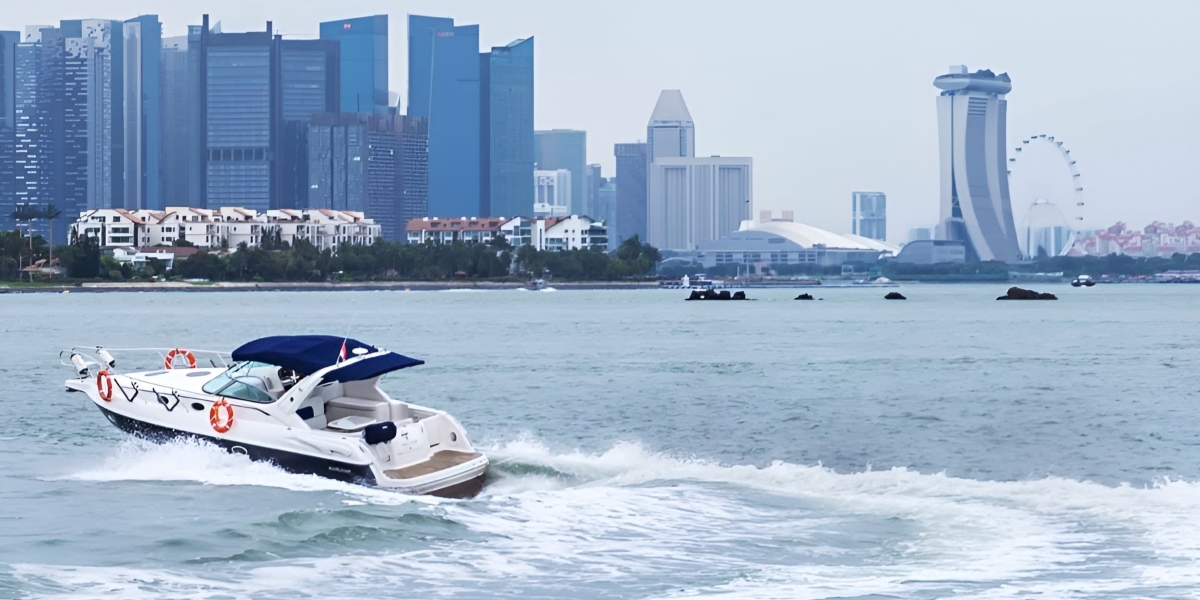
The New Monaco: Why Singapore is the Global Frontier for Maritime Luxury

The global landscape of high-end travel has shifted. While the Mediterranean and the Caribbean have long held the crown for maritime leisure, a new contender has emerged on the horizon with unprecedented momentum. Singapore, historically recognized as a titan of global trade and finance, is rapidly pivoting its vast maritime infrastructure toward the luxury sector. This transformation is not merely a local trend; it is a fundamental realignment of the “Blue Economy,” positioning the city-state as the primary hub for the ultra-wealthy in the Asia-Pacific region.

At the center of this evolution is a sophisticated demand for privacy, bespoke service, and geographic exclusivity—qualities that the Singaporean archipelago offers in abundance. As international travel enters a new era of “premiumization,” the maritime sector has become the litmus test for a city’s status as a true luxury destination.

The Professionalization of Leisure

For decades, the concept of yachting in Southeast Asia was fragmented. However, the last five years have seen a professionalization of the sector that rivals the established standards of the French Riviera. This shift is driven by a new generation of travelers who prioritize “access over ownership.” The modern high-net-worth individual (HNWI) is moving away from the logistical burdens of yacht maintenance, opting instead for the flexibility of high-tier managed services.

The luxury yacht charter Singapore market has become the benchmark for this new model. It is no longer sufficient to simply provide a vessel; the market now demands a full-suite hospitality experience. From Michelin-standard onboard dining to curated itineraries that explore the hidden lagoons of the Southern Islands, the expectation is one of uncompromising excellence.

Strategic Infrastructure and Economic Growth

Singapore’s ascent to maritime stardom is the result of meticulous planning. The city-state’s investment in world-class marinas, such as ONE°15 Marina Sentosa Cove, has provided the physical foundation for a thriving ecosystem. These marinas serve as more than just docking stations; they are the heart of a lifestyle luxury economy.

For travelers looking to experience this firsthand, the options for a yacht rental Singapore have expanded to include everything from sleek catamarans to opulent superyachts. This accessibility has turned a single charter booking into a vital “multiplier” for the national tourism board, as it ripples through the economy. Furthermore, the rise of the private yacht charter Singapore niche has allowed for more personalized celebrations, ranging from high-stakes corporate signings to intimate family gatherings on the water, cementing the city’s reputation as a versatile maritime hub.

The Rise of the “Blue Mind” and Experiential Travel

Beyond the economics, there is a psychological shift at play. The “Blue Mind” theory—the scientific study of how proximity to water improves cognitive function—has found a massive following among the urban elite. In a hyper-connected, high-pressure city like Singapore, the ocean represents the ultimate reset.

The trend is moving toward “experiential yachting.” Travelers are no longer content with a static view; they want engagement. This has led to a surge in demand for vessels equipped with high-end water toys, diving equipment, and wellness-focused amenities. Operators are responding by creating “themed” voyages—wellness retreats at sea, maritime photography expeditions, and biodiversity tours focused on the Sisters’ Islands Marine Park.

Sustainability: The Next Horizon

As the industry matures, the focus is shifting toward longevity. The “Green Plan 2030” in Singapore has pushed maritime operators to lead the way in sustainable luxury. We are seeing a marked increase in eco-friendly practices, including the implementation of reef-safe protocols and a growing interest in hybrid propulsion systems.

This commitment to stewardship is a key component of Singapore’s competitive advantage. By aligning luxury with environmental responsibility, the city-state is attracting a new class of “conscious consumers” who demand that their leisure activities do not come at the cost of the planet.

A Global Standard

The trajectory of the Singaporean maritime sector is clear. By combining the precision of its financial infrastructure with the warmth of Asian hospitality, Singapore has created a maritime product that is unique on the world stage.

As we look toward the future, the integration of technology, sustainability, and bespoke service will continue to drive the market forward. For those seeking the pinnacle of maritime leisure, the message is undeniable: the world’s most exciting nautical frontier is no longer in the West; it is found in the heart of the Singapore Strait. Singapore has now moved beyond participation—it is setting the global standard for what modern yachting should be.