
Arman Gevorgyan: Designing Spaces That Speak to the Human Experience

By: John Lewis

In a city where trends rise and fall with relentless speed, interior designer Arman Gevorgyan, the founder of Designs by Arman, has chosen a different path, one rooted not in decoration, but in meaning.

Rather than defining himself by titles, Arman describes his work as the art of shaping experiences through space. “Design goes beyond aesthetics,” he explains. “It’s about understanding how people live, move, and feel within an environment.” His interiors are designed not simply to be admired, but to be lived in spaces that tell stories, reflect identity, and quietly influence emotion and behavior.

That realization of space as a force capable of shaping how people feel and function marked a turning point early in his career. What began as an interest in design evolved into a deeper understanding: environments can influence us just as profoundly as human interaction itself.

Building in Los Angeles: Discipline Over Noise

Arman Gevorgyan: Designing Spaces That Speak to the Human Experience


Photo Courtesy: Arman Gevorgyan

Establishing a design career in Los Angeles, one of the world’s most competitive creative landscapes, demands more than talent alone. For  Arman, success came through discipline, patience, and consistency. “I focused on quality and authenticity,” he says, resisting the pressure to chase fleeting trends in favor of a design language that feels intentional and enduring.

This commitment has not gone unnoticed. Among his professional recognitions is the Komitas Design Award, an honor that held particular personal significance. Receiving the award in London, a city he describes as a source of both creative energy and mental clarity, made the recognition especially meaningful. “It felt like a double honor,” he reflects, “both professionally and personally.”

In addition to earlier professional recognition, including the Komitas Design Award, Gevorgyan’s work has recently received international acclaim at the Titan Awards, where he was named a Gold Winner for Luxury Retail Interior Design for his butchery project in Los Angeles. The recognition highlights the project’s originality and its ability to redefine a traditionally utilitarian space through architectural precision, material sophistication, and emotional impact. The award further reinforces Gevorgyan’s approach to design as a disciplined, experience-driven practice rather than a purely decorative exercise.

Yet accolades, he insists, do not redefine his approach. They simply validate a process he already trusts.

Design with Intention, Not Excess

Arman’s interiors are often described as bold, yet restrained spaces that feel impactful without being overwhelming. His guiding principle is simple: every space should carry a clear sense of intention. “Every project leaves my footprint,” he says. “Even a small apartment can have a strong visual impact.”

Listening, he believes, is one of the most underrated skills in design. By carefully understanding a client’s lifestyle, he translates their needs into environments that feel authentic rather than imposed. The goal is harmony where personal vision and daily life coexist naturally.

He is unequivocal about the power of good design: “Space affects mood, clarity, and behavior.” It’s why his first observations when entering a new project are never superficial; he studies energy, proportions, and natural light before imagining what space could become.

When Design Feels Effortless

One of the most common mistakes homeowners make, Arman notes, is designing for trends instead of real life. A project, in his view, is complete not when every detail is filled but when nothing feels forced. “When the space feels effortless,” he says, “that’s when you know it’s finished.”

Today, his work increasingly focuses on projects where strong impact is achieved within limited space, a challenge that demands clarity, confidence, and restraint. As his career has grown, so has his perspective, evolving toward designs that value timelessness, sustainability, and emotional resonance over spectacle.

Looking ahead, Arman hopes his legacy will be defined not by style alone, but by feeling. His ambition is simple yet profound: to create bold, thoughtful spaces that leave a lasting emotional impression long after the door closes.
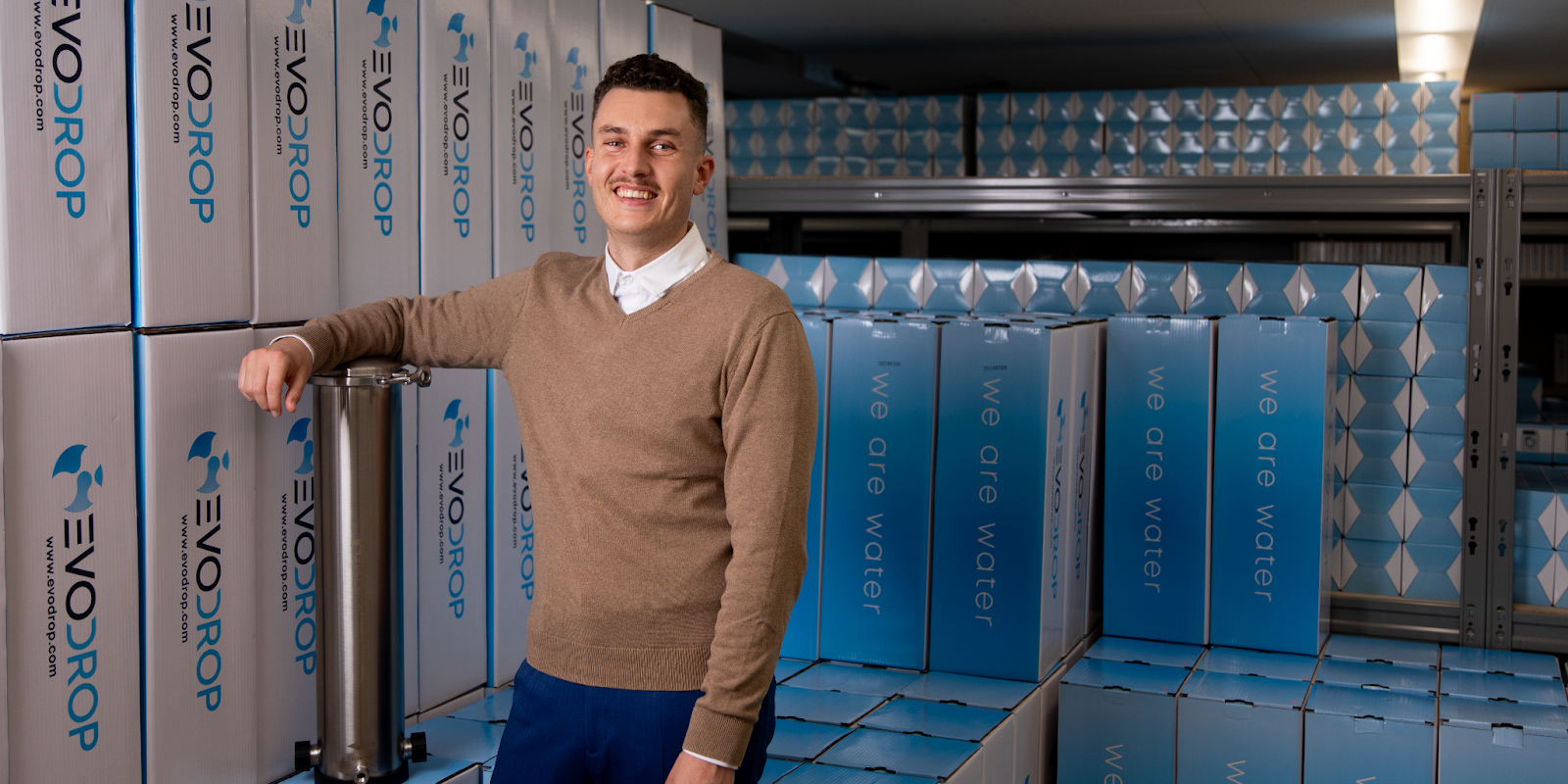
Fabio Hüther and Evodrop, A Water Bet Built on Restraint and Proof

By: Emily Parker

Attention first falls on the problem Evodrop sets out to address. Clean drinking water remains unevenly available, expensive to secure, and often wasted. Evodrop enters that space with a narrow claim. Better filtration, clearer data, and a commitment to avoid overpromising. Fabio Hüther, the founder, frames the company as a response to failure he observed up close, systems sold with confidence yet delivering inconsistent results once installed in real homes.

Evodrop operates as a water filtration company, though Hüther resists labeling the business too definitively. The company focuses on household systems meant to reduce contaminants and limit plastic bottle use. Early traction came from private installations rather than mass publicity. Growth followed the performance of the systems, not flashy slogans. Customers stayed because the systems integrated well into ordinary routines and did not demand technical fluency.

Hüther speaks about water with care. He avoids sweeping claims and returns to verifiable measurements. Filtration rates, replacement cycles, maintenance intervals. His background shaped that tone. Years spent watching environmental ideas collapse under exaggeration left him wary of language that may race ahead of evidence. Evodrop gained attention by staying within validated ground.

Pressure arrived once interest widened. Investors asked for expansion speed. Retail partners pushed for louder positioning. Hüther declined shortcuts. Evodrop scaled step by step, adding markets after supply chains and service teams proved stable. The company grew more slowly than competitors chasing headlines, yet customer churn stayed comparatively low. Reviews highlighted reliability more than novelty.

A different rhythm guided daily operations. Decisions followed test results, field reports, and long installation logs. Hüther insisted on tracking failure points as closely as successes. That discipline shaped Evodrop’s internal culture, though he rarely speaks about culture directly. He talks about habits, repetition, and patience.

Building Trust One Installation at a Time

Fabio Hüther and Evodrop, A Water Bet Built on Restraint and Proof

Photo Courtesy: Evodrop

The story shifts once the company leaves the early phase. Narrative replaces summary. Hüther recalls the first months as demanding. Cold calls, rejected proposals, technical revisions after midnight. Progress came through persistence rather than vision statements. Early adopters lived in regions with hard water and limited trust in new systems. Their feedback was blunt. Evodrop absorbed it.

Design revisions followed. Filters changed shape. Housing materials shifted. Installation manuals grew shorter. Each revision reduced friction between product and user without adding complexity. Hüther treated those moments as lessons rather than setbacks. Evodrop matured through refinement.

Personal restraint guided public messaging. Hüther avoided declaring victories before the data settled. He declined awards submissions until installations reached scale. That restraint puzzled advisers trained in visibility-first playbooks. Hüther argued credibility tends to build when claims arrive late rather than early.

Stories from customers reinforced his view. Families described fewer service calls. Small offices reported lower bottled water orders. Those accounts mattered more than press mentions. Evodrop relied on quiet circulation through referrals and repeat orders.

Evodrop has transitioned from an evolving company producing water via technology to one capitalizing on a solid manufacturing base and local service teams in several regions. The company’s focus on high quality is maintained through a rigorous and uniform testing process. Founders of start-ups seldom play a significant role in the ongoing technical review of their products, but Hüther continues to be involved in this area.

Revenue growth followed consistency. The company resisted aggressive discounting. Pricing reflected material costs and service commitments. That stance filtered out some customers. Evodrop attracted users willing to trade flash for dependability.

Why Decisions Built on Careful Progress Endure

Fabio Hüther and Evodrop, A Water Bet Built on Restraint and Proof

Photo Courtesy: Evodrop

As Evodrop expanded, regulatory review increased across the regions where its systems operate. The company aligned each product with applicable water safety standards and adjusted technical specifications when local rules differed. Hüther views oversight as a structural frame for responsible work. Clear compliance supports user confidence, and confidence supports continuity.

Public visibility around the brand has grown. Hüther responds with measured language. He presents Evodrop as an operation still refining its methods. Water access remains an ongoing challenge rather than a closed chapter. Such framing keeps room for revision as new data arrives from the field.

The narrative then narrows to responsibility. Hüther speaks of success without celebration. He focuses on households that depend on systems installed out of sight. Water moves without announcement, while faults surface late. Evodrop’s role centers on mitigating those risks through repeated checks and consistent service.

Expansion proceeds through steady execution. Regional growth follows installation records, service response times, and documented performance. Attention stays on the output at the tap instead of external attention. Evodrop reflects how progress grounded in verification builds its position over time.