Exploring the Divine Code: David Courtney’s Trinity, Infinity Divinity

By: Paul White

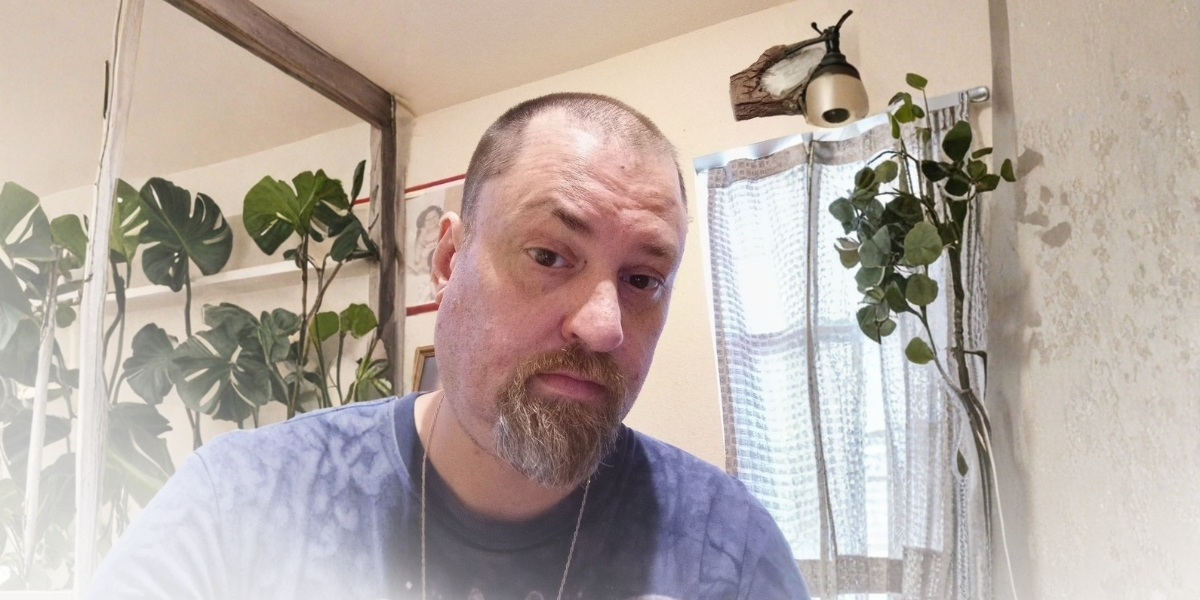
In a literary landscape crowded with surface-level spirituality, Trinity Infinity Divinity by David Courtney stands apart as a deeply personal and intellectually engaging exploration of faith, numbers, and divine order. Blending theology, numerology, mathematics, and biblical interpretation, Courtney’s book invites readers into a world where numbers are not simply symbols, but are proposed as potential sacred keys.

Originally conceived more than a decade ago and refined over years of study and contemplation, Trinity Infinity Divinity was officially released on Amazon on December 26, 2024. The book represents the culmination of Courtney’s long-standing interest in writing and his evolving journey into numerological theology.

At the heart of the book is a thought-provoking numerical framework. Courtney suggests a coded system in which numbers are interchangeable in specific triads and groupings: 1, 4, and 7; 2, 5, and 8; and 0, 3, 6, and 9. According to the author, these numerical relationships are not random and appear to form a hidden structure embedded across timekeeping systems, religious calendars, and sacred texts.

Through 29 chapters, Courtney explores how this numerical code may appear consistently across the ancient Hebrew calendar established by Hillel II, as well as the Gregorian, Julian, New Julian, Enochian, and both civil and sacred Hebrew calendars. Regardless of how a seven-day week is organized, he argues, the same numerical patterns seem to emerge. For Courtney, this consistency may suggest divine design rather than coincidence.

The book’s spiritual foundation is evident. Courtney attributes the origin of his insights to divine inspiration, expressing his belief that Jesus Christ guided him toward uncovering these patterns. Biblical references are woven throughout the text, particularly the recurring theme of light versus darkness. Rather than portraying them as simple opposites, Courtney explores them as mutually defining forces, each revealing the absence of the other.

One of the book’s central ideas revolves around the number 888, which Courtney describes as a symbolic gateway to understanding divinity. In Greek numerology, 888 is often associated with Jesus. Courtney extends this symbolism further, demonstrating how numerical calculations, letter values, and linguistic interpretation might align to reinforce his faith-based conclusions. For readers attuned to numerology, Kabbalah, or symbolic theology, these passages offer significant challenge and fascination.

David Courtney’s path to writing Trinity Infinity Divinity was anything but conventional. A writer, poet, and musician from a young age, he did not initially foresee authoring a numerology-focused theological work. His interest evolved after studying Kabbalistic texts such as The Universal Language of Cabalah by William Eisen and The Mystery Religions and the Seven Seals by David Lane. These works sparked an intense engagement with numbers that gradually reshaped his creative direction.

Courtney is candid about his process. He describes a tendency to obsess deeply over patterns and meanings, an intensity that permeates the book itself. This unfiltered honesty adds to the work’s authenticity. Trinity Infinity Divinity does not attempt to simplify its ideas for mass appeal; instead, it speaks directly to readers who are willing to engage with complex concepts and spiritual questions.

The author’s message is ultimately one of faith. Courtney hopes readers come away with a strengthened belief in God and an appreciation for how numerical order may reflect divine truth. For him, numbers are not simply abstract concepts but could be seen as evidence of sacred intention woven into reality itself.

While Trinity Infinity Divinity may appeal most strongly to readers interested in theology, numerology, Kabbalah, and metaphysical mathematics, it may also resonate with anyone drawn to unconventional perspectives on faith. It is a book born from conviction, persistence, and a desire to explore the unseen structures that might govern belief and time.

David Courtney continues to write and create, with future projects including poetry and music-focused works. For now, Trinity Infinity Divinity stands as his most ambitious and revealing publication to date.

Readers interested in learning more about David Courtney or connecting with him directly can find him online at www.facebook.com/geneticphrenetic or reach out via email at geneticfrenetic@yahoo.com.
The Art of Everyday Innovation: Inside The O’Kelley Lab

By: William Jones

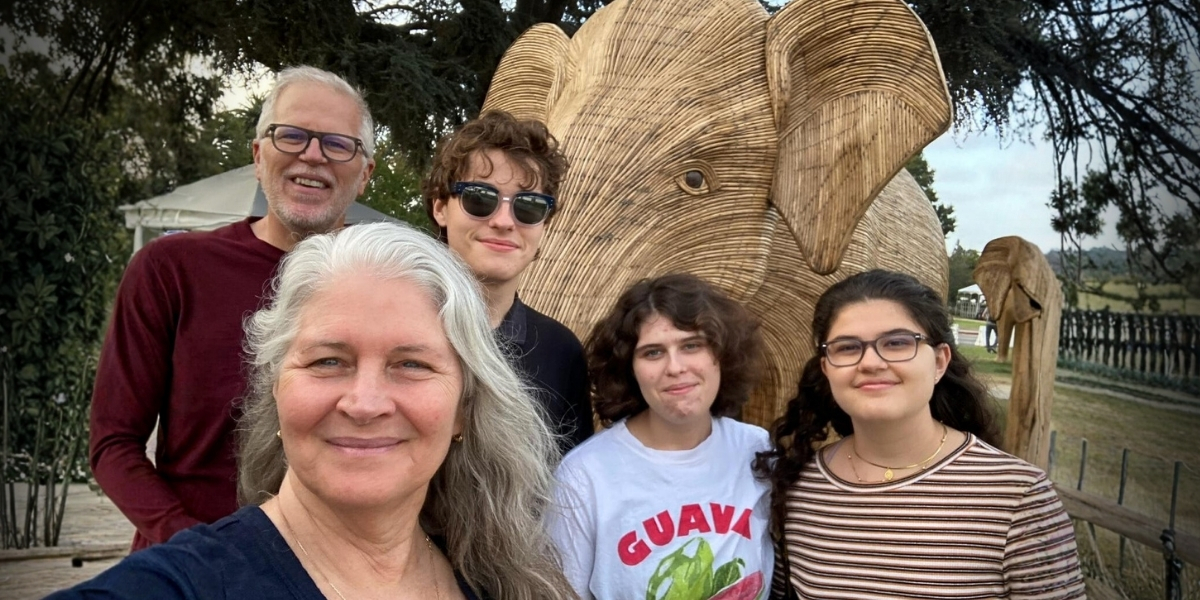
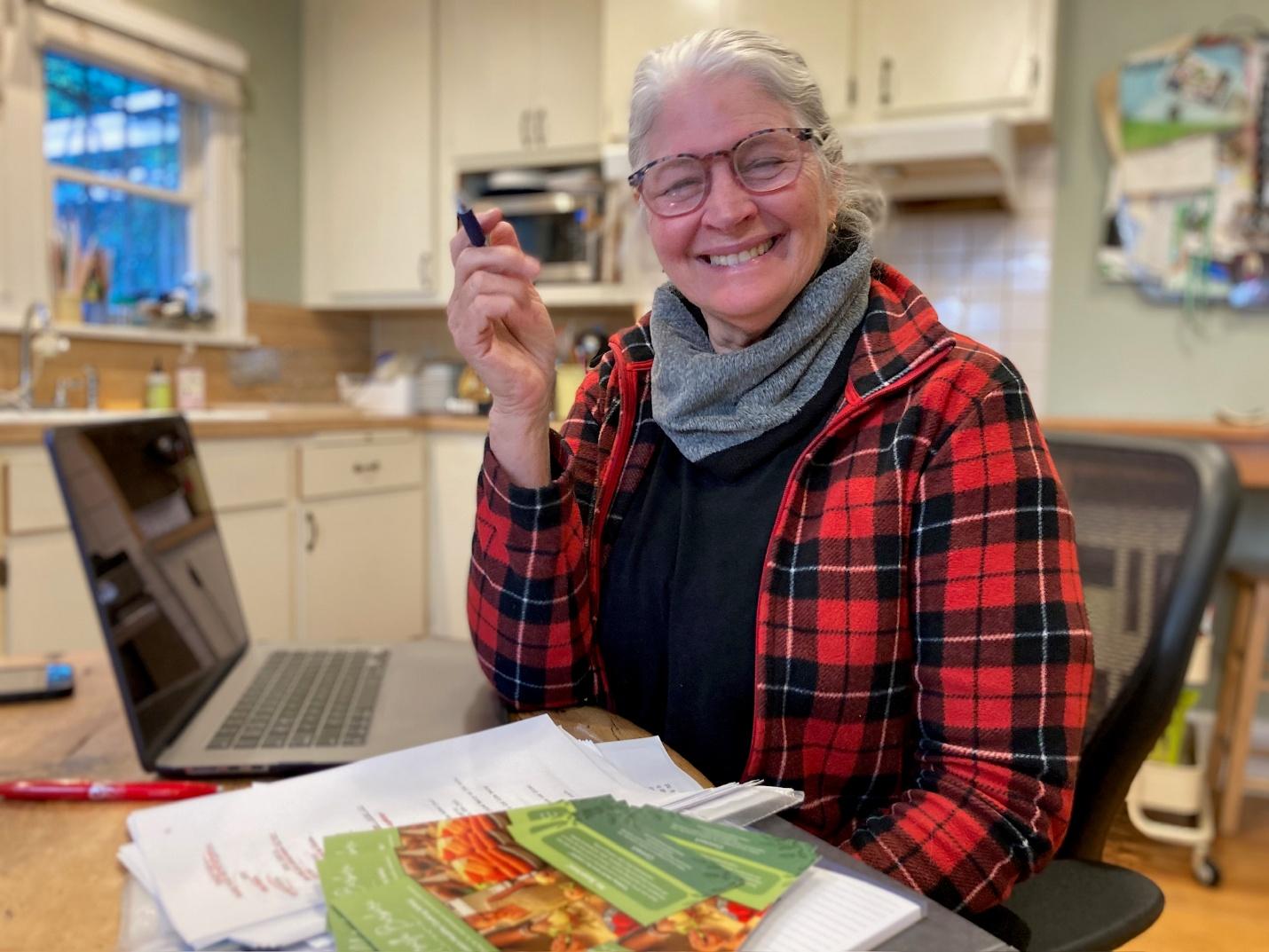
When Harri James O’Kelley talks about her laboratory, she’s not referring to beakers, microscopes, or sterile white walls. Rather, to her kitchen, the heart of a family-driven initiative expanding on how we believe, implement, and think about (2e) and neurodivergent education and support. What was born out of necessity to celebrate her three children’s strengths within a system focused on their deficits, has grown well beyond the confines of her family into The O’Kelley Lab, a creative, community driven partnership proving that innovation does not require institutional backing, just passion, collaboration, and the commitment to see people for who they are, not for what they lack. 

Leading from a kitchen might seem unusual, but for The O’Kelley Lab, it speaks to something deeper— accessibility and authenticity. “The advantage of operating out of your kitchen is that any family can start small and conveniently integrate tools and supports that make a difference in people’s lives around them and in their communities in organic ways,” Harri notes. This grassroots approach is worlds apart from anything clinical or institutional. There are no waiting lists, no diagnostic criteria, and no bureaucratic barriers: a family collaborating with other families, artists, educators, and community members toward person-centered solutions that elevate individual needs above one-size-fits-all protocols. The O’Kelley Lab approach is consciously organic. An “ongoing open-source pilot program,” the Lab is constantly evolving based on input from all five family members, parents Harri and Brian, along with Jordan, Macey, and Rachel. Ideas don’t emanate from research studies or administrative meetings but bubble up instead from lived experience, real challenges, and the creative problem-solving that happens when a family rejects the idea that their children must fit into strict neurotypical molds or identities.

The Art of Everyday Innovation: Inside The O'Kelley Lab

Photo Courtesy: The O’Kelley Lab (Harri James)

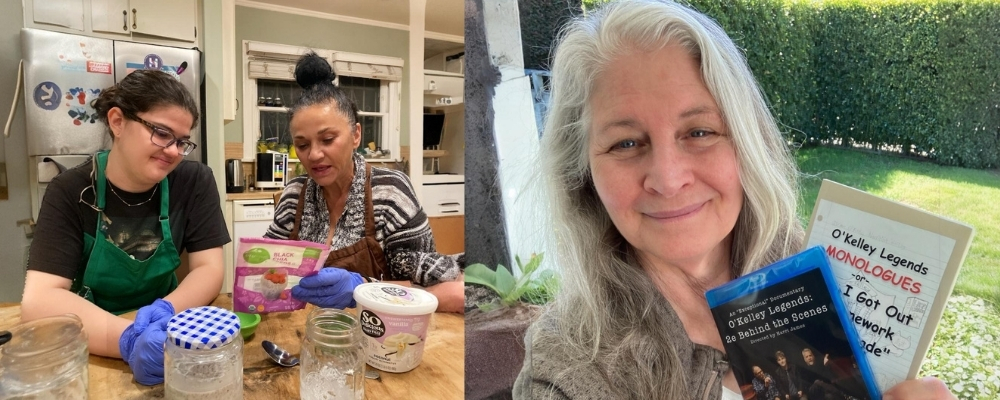
With Harri and Brian, both filmmakers, and their daughters, Macey and Rachel, pursuing media studies at UC Berkeley and UC San Diego, respectively, creativity runs deep in the O’Kelley family. This creative foundation is not coincidental to their advocacy; instead, it’s central. The family produced the documentary “O’Kelley Legends: 2e Behind the Scenes,” which shares Jordan’s story and illuminates the 2e experience for broader audiences. “My passion in life is collaborating with and connecting people”, Harri shares. “Building community fills me with a sense of purpose.” Art, collaboration, and connection are the Lab’s most important vehicles for increasing awareness, because creativity has a particular power to communicate experiences”. A film can convey in minutes what a diagnostic report might never express. As part of last year’s “Neurodiversity of Kindness” show, the Lab combined a short documentary about a paralyzed dancer with a live dance performance. Harri reflects, this was a particularly deeply affecting experience for her audience. “This personal connection really gave the audience a sense of who the dancer is and how important dance was for this dancer.” Such projects showcase how artistic storytelling bridges understanding and builds community. 


The Art of Everyday Innovation: Inside The O'Kelley Lab

Photo Courtesy: The O’Kelley Lab

This approach is evident in The O’Kelley Lab’s most recent collaboration with Chef Arnella Barbara to create healthy cooking lessons tailored for young adults on the spectrum. As the O’Kelley young adults approached college age, the family realized they needed to fill in the gaps of cooking and safety skills. With an accomplished vegan Chef, Arnella Barbara, they could address the anxiety and overwhelm through an innovative cooking curriculum. They deployed a “No Suprises” approach with front-loaded videos before each session, allowing participants to see what each lesson would focus on and feel prepared for it, thereby reducing anxiety around learning something new. They also flipped the teacher-student dynamic. Instead of making participants students in the traditional environment of an expert chef, they reframed the relationship, the young adult is a host in their own kitchen, and Chef Arnella is a guest cooking coach. This subtle shift in language and perspective relieved stress and empowered participants to take ownership of their learning environment. “We found our young chefs felt overwhelmed and unsafe in their own kitchens,” Harri explains. What worked wasnt more training or enforced processes, but re-envisioning the whole framework to first feel safe in their environment. 

Social isolation is one of the most painful challenges many neurodivergent individuals face, and The O’Kelley Lab addresses this not through social skills training or forced interaction, but rather by creating an environment where people feel valued and seen. “Meeting individuals where they are and inviting them to contribute where they feel comfortable is a great place to start,” Harri advises. “Also, celebrating any success in that new environment is important to build skills, confidence, and community.” The Lab connects people with mentors and helps groups come together around similar interests while nurturing self-advocacy, autonomy, and person-centered relationships.

For parents beginning their journey with 2e (twice-exceptional) children, Harri recommends they: “Find a community— this is a lifelong journey, don’t try this alone.” She recommends resources, including SENG (Supporting the Emotional Needs of the Gifted), Debra Reber’s book “Differently Wired”, support groups, Bridges Academy, and organizations like Julie Skolnick’s “With Understanding Comes Calm.” The O’Kelley Lab’s long-term vision has remained, from its very founding, about problem-solving. As Jordan continues his physics research and Macey and Rachel pursue their creative careers, the Lab evolves with them —an organic, living model that grows with the very community it serves. Rachel does outreach and social media while making her own films, and both she and Jordan continue their advocacy by speaking at conferences. What began in a kitchen continues to ripple outward, proving that transformative change doesn’t always have to be born from laboratories with microscopes. Sometimes all it takes is a family willing to reimagine what’s possible when we work together to discover solutions and celebrate strengths, one innovation at a time.

To learn more about The O’Kelley Lab’s work and resources, visit: https://theokelleylab.net

FATALISM: A Millennium-Spanning Screenplay Exploring the Nature of Destiny

By: Lois R. Hernandez

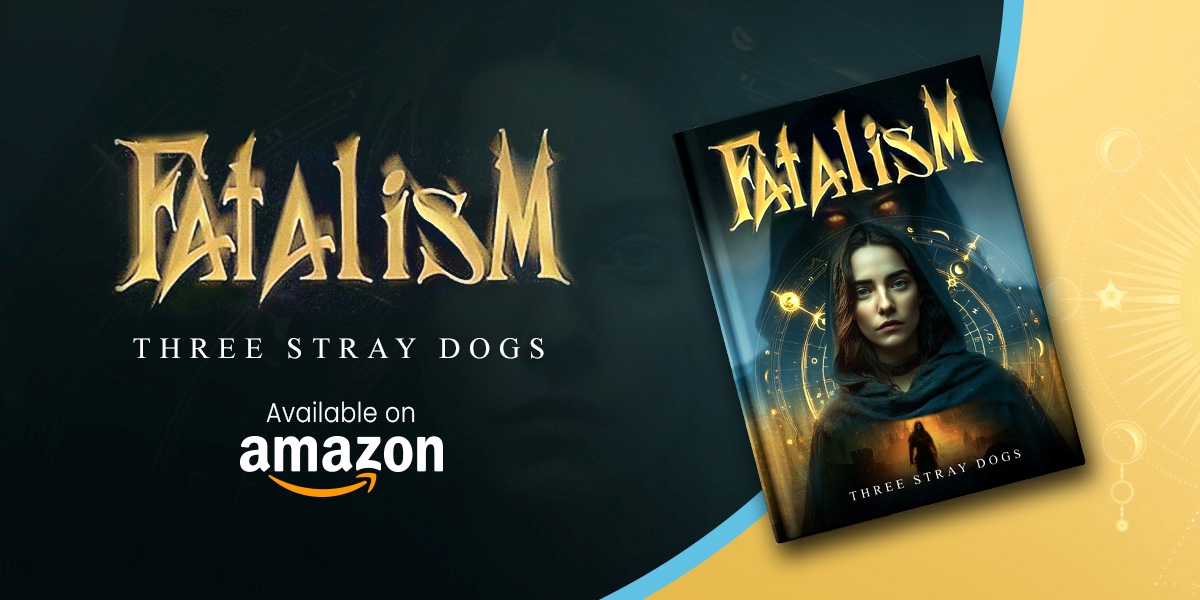
What if the most crucial events of your life were not the result of free will, but the inevitable consequence of a secret hidden a thousand years ago? This is the gripping premise explored in FATALISM, the published screenplay from THREE DOGS PRODUCTIONS and the collaborative minds of Marcello Intraligi, Francesco Giampietro, and Wayne Shepherd. More than just a script, this is a masterclass in cinematic suspense, inviting readers to become both audience and detective in an epic narrative where the past is not merely prologue, it is destiny.

FATALISM is a story split across a millennium, opening with chilling intensity in Northern Europe, AD 1005. In a bleak, underground cavern, the elderly Father Timothy is subjected to brutal torture by the formidable Warlord Ahrman. The Warlord’s obsession is singular: extracting a secret the priest is sworn to keep, a dark and potent truth so dangerous it must be concealed for a thousand years. This desperate, violent confrontation sets the clock ticking on a monumental historical mystery, establishing a chilling sense of predestination that permeates every subsequent scene.

The narrative then executes a daring leap into the present day, shifting to the desolate, atmospheric ruins of King Galen’s Castle. Here, the story introduces its modern protagonists: Katrine, Nicholas, and Ronim. These three individuals appear to be undertaking a simple exploration, but fate has already sealed their roles in a story spanning centuries.

The play’s true core is revealed through the character of Katrine. Marked by a distinctive bird-wing birthmark, a visual motif that underscores the screenplay’s themes of flight and fate. She makes a monumental discovery. Unearthing a hidden canister, she recovers a single, exquisite gold ring. This is no ordinary trinket; it is the very artifact Father Timothy risked his life to hide in the year 1005.

The discovery of the ring acts as a historical fulcrum, wrenching the modern characters into the ancient conspiracy. The screenplay skillfully layers moments of profound grief, loss, and spiritual mystery as Katrine realizes her life, and the lives of those around her, are not accidental occurrences but the culmination of a millennium-old plan. The tension is palpable as the modern trio must now navigate the sinister forces that have been lying in wait since the Dark Ages, forces determined to exploit the secret the ring represents.

For readers, FATALISM provides a unique and engaging experience.

As a published screenplay, it provides an unvarnished view of the creative process, showcasing the economy of language, the precision of visual direction, and the sheer narrative architecture required for a high-stakes thriller. The meticulous attention to detail in each scene offers insight into the complexity of storytelling. Readers can appreciate the layers of tension and atmosphere that are carefully crafted, reflecting the collaborative efforts of its creators.

Enthusiasts of cinema will appreciate the script’s taut pacing and visual intensity. At the same time, lovers of literature will be drawn into the rich thematic exploration of free will, historical consequence, and the enduring power of sacrifice. The script balances moments of high drama with introspective depth, making it a compelling read for those who enjoy both visual storytelling and thought-provoking narratives. Its complex characters and layered themes create an immersive experience that resonates on multiple levels.

Ultimately, the play is a polished, compelling work that achieves a balance few narratives manage: it is both an exciting, time-traveling mystery and a thoughtful examination of what it means to choose your path when destiny insists on choosing for you. The seamless blending of past and present creates a narrative that challenges perceptions of time and fate. As the characters grapple with their roles in this grand scheme, the screenplay invites the audience to reflect on their own relationship with destiny and choice.

Staying Steady: Tips to Make Life Easier for Fall Risks

Falls can be a serious threat, particularly for those who are at increased risk due to age, mobility challenges, or medical conditions. But when you take proactive steps to lower fall risks and create a safer daily environment, you can significantly enhance your quality of life. So, there is no need to live in constant fear of accidents. Rather, simple adjustments and strategies can make a huge difference. In this blog, we will look at practical methods to keep you steady on your feet.

Create a Safe Living Environment

A well-organized living space is your first defense against falls, so remove common trippers such as loose rugs, clutter, and cables that could pose a tripping hazard. Double-sided tape should also be used to secure any loose rugs to the floor, keeping your walking paths clear. Lighting plays a role in fall prevention, too. Install energy-efficient bulbs in dimly lit areas, such as stairwells, hallways, and bathrooms, and use motion-sensor lights when necessary for better lighting. As an added precaution, place non-slip mats over smooth surfaces to prevent slipperiness.

Invest in Proper Footwear

Not all footwear is the same when it comes to safety. Shoes with non-slip soles and a secure fit can make a big difference in improving your balance and preventing accidents. High heels or backless shoes that do not provide sufficient support should be avoided. Indoor options like anti-slip socks or specially designed slippers can give you another safe solution.

Use Technology for Safety

Technology can give you a lot of reassurance when it comes to fall prevention. Smart home devices, such as voice-activated assistants, can make controlling the environment easier without requiring physical motion. While wearable fall detection devices like the life alert in Canada can alert other people or emergency services in case of an incident, making this gadget an amazing investment in terms of prevention and rapid-response support.

Stay Active to Strengthen Stability

Doing regular physical activity tailored specifically to individual abilities can do wonders for strengthening your balance and coordination. Low-impact exercises like yoga, tai chi, or water aerobics are particularly helpful as they increase muscle strength while decreasing fall risk. Physical therapy services may be able to target areas of weakness more specifically and create a personalised plan to build stability over time.

Rearrange and Reorganize

It is time to think smarter, not harder. Clothing, utensils, and medications should always be within arm’s reach, preferably in frequently used cabinets or drawers for easy access. Cabinets, drawers, and storage areas should be set up in low-to-reach areas to eliminate the need for bending, stretching, and stepping on step stools. Reorganizing can make your everyday tasks more efficient and also decrease risky movements.

In addition to making physical adjustments, maintaining a positive mindset is crucial for fall prevention. Stress and anxiety can interfere with focus and coordination, making it harder to stay steady on your feet. Practicing mindfulness, relaxation techniques, or deep breathing exercises can help reduce stress levels, allowing you to stay calm and focused. Incorporating these practices into your daily routine can significantly improve your overall sense of well-being, making you more mindful of your surroundings. Moreover, having a strong social support system is essential. Regular visits from family members, friends, or caregivers can provide emotional comfort and practical assistance when needed.

Conclusion

Reducing fall risk doesn’t require radical or tough lifestyle changes to work. When you use smart strategies, the right tools, and plan strategically, living a safer, worry-free life is entirely possible. When you rearrange your environments and prioritize physical fitness, people at risk of falls can maintain independence. Building a steady life doesn’t just involve preventing accidents; it means creating an environment in which worry can’t enter.

How Producer Adam Fields Shaped a Generation of Iconic Films

By: Farzana Bashir 

Four decades after its release, Vision Quest is still inspiring fighters of all kinds.

The 1985 coming-of-age drama about a teenage wrestler chasing a dream has become more than just a sports movie; it’s a cult classic that continues to resonate with viewers, both new and old. Even UFC president Dana White recently called Vision Quest “the movie that changed the whole trajectory of his life.”

But behind that story, and many others that have etched themselves into pop culture’s permanent memory, is Adam Fields, the producer whose fingerprints are all over some of the most beloved, genre-defining films of the past 40 years.

If Vision Quest helped Dana White find his calling, it’s just one example of Fields’ uncanny ability to produce stories that don’t just entertain but can endure and inspire.

Adam Fields’ career has spanned genres, but the common thread in all of his work is impact. From Donnie Darko to Brokedown Palace, Ravenous to Limitless, Sixteen Candles to The Breakfast Club, these are not just titles; they’ve often become cultural landmarks. They’ve lasted because they tapped into something real.

“You have to stay nimble, flexible, but ultimately, creativity and originality will usually win,” Fields says. “That’s the through line.”

A Hollywood veteran with a rebellious streak, Adam Fields began his career at Creative Artists Agency before joining PolyGram Pictures. By the age of 24, he was EVP of Production, overseeing major projects like An American Werewolf in London, Missing, and Endless Love, the latter’s title track becoming the longest-running No. 1 single at the time.

From launching John Hughes’ directorial career (Sixteen Candles, The Breakfast Club) to producing era-defining soundtracks like Flashdance, Fields has often backed creative instincts over formulas.

He championed original, offbeat stories that might never have seen the light of day in today’s risk-averse studio culture. He also had an eye for talent, giving early roles to now-household names like Uma Thurman (Johnny Be Good), Kate Beckinsale and Claire Danes (Brokedown Palace), and Jake Gyllenhaal and Seth Rogen (Donnie Darko).

And when it came to pitching bold ideas, he knew how to win a room. Take Ravenous, a cannibalism-themed thriller, which Fields described to a vegan studio chairman as a “pro-vegetarian” film to get it greenlit. It appears to have worked.

Of all his projects, Donnie Darko may be the one that left the deepest mark. The surreal indie film became a global cult hit and continues to resonate with audiences in personal and powerful ways.

“I was in Turkey,” Fields recalls, “and a maître d’ comped my very lavish meal because Donnie Darko helped his younger brother through suicidal thoughts. That kind of impact, it’s humbling.”

And yet, Adam Fields is clear-eyed about Hollywood’s evolution. He’s seen the shifts firsthand, from theatrical premieres that built anticipation city by city to today’s global debuts designed for maximum impact and minimum piracy. He’s watched the internet and streaming platforms upend the making and distribution of films.

“There’s no way The Breakfast Club or Donnie Darko gets made today,” he says. “Everything now needs to be an event. That’s not a bad thing, it’s just a different game.”

The rise of streaming, the collapse of the mid-budget movie, talent fee inflation, and the rise of AI, Fields has weathered it all. But rather than resist the changes, he’s chosen to adapt without compromising the creative spark that defined his earliest work.

“At the end of the day, audiences still want to feel something. That doesn’t change.”

As Vision Quest marks its 40th anniversary, its legacy is just one chapter in Adam Fields’ larger story. A story of fearless creativity, quiet influence, and a career spent understanding his audience and trusting his gut. Whether it’s a teen comedy, a mind-bending thriller, or a sports drama that lights a fire in a young Dana White, Fields has demonstrated time and again that if you tell a story that’s bold, honest, and maybe a bit risky, it could not just find an audience. It may leave its mark.