Why More Users Are Choosing Free Tablets from TAG Mobile

By: Farzana Bashir

Tablets have quietly filled roles that phones can’t, and laptops don’t always need to. But as the cost of devices rises, users are becoming far more intentional about what they bring into their digital lives.

Free tablets, once dismissed as lower-tier options, are now gaining significant real traction. People are actively choosing providers that reduce both the cost of the device and the burden of a monthly plan.

What’s fueling that shift, and why is TAG Mobile becoming a standout choice for many?

Tablets Are Filling the Gap Phones and Laptops Leave Behind

Modern digital routines rarely fit neatly into one device.

Phones are portable but may be too small for long reading or schoolwork. Laptops are powerful but might not always be convenient for everyday tasks.

Tablets sit in that middle space: light enough to take anywhere, yet big enough for streaming, browsing, video calls, and digital forms of work.

This flexibility is one reason demand has been rising. For students, seniors, and families sharing devices, a tablet can simplify more tasks in more places. That usefulness makes free or discounted options increasingly attractive, especially when paired with reliable data services.

Cost-Conscious Choices Are Changing How People Access Technology

Device prices have climbed steadily over the past few years.

Even budget tablets can feel expensive once you add monthly service, activation fees, or accessories. For many households, that price tag may delay purchases or even remove tablets from the budget entirely.

As costs rise, more people are rethinking the idea of paying full prices. Free doesn’t mean low quality anymore; instead, it’s considered a smart, practical decision.

Users want devices that simply work, without tying them to expensive plans or long-term financial commitments. Programs offering free tablets are benefiting from this shift, and TAG Mobile is one of the providers drawing the most attention.

How TAG Mobile Fits This Shift

TAG Mobile, a certified Lifeline provider, has built a reputation as a dependable option for users looking for affordable connectivity. The company focuses on delivering accessible wireless services to households that qualify for federal assistance. It’s now easier to get both a device and the service needed to use it fully.

Through TAG Mobile, eligible households can access free or discounted devices, including tablets (depending on eligibility and available models). The device will come along with a plan that covers monthly data, talk, and text.

On top of that, TAG Mobile includes a range of extra perks, some practical, some surprising, that make the experience feel more like a premium wireless package than a basic assistance program. For many users, these benefits could replace what would normally be a costly wireless plan.

So, how does the process work?

TAG Mobile works through Lifeline, a federal program designed to keep low-income households connected. To qualify for a free or low-cost tablet, users need to meet Lifeline’s eligibility criteria.

Some qualify by participating in assistance programs like SNAP, Medicaid, SSI, or federal housing support. Others can qualify based on household income, as long as it falls at or below 135% of the Federal Poverty Guidelines.

Once approved, TAG Mobile provides a tablet paired with a service plan that includes talk, text, and data. That means the device works beyond Wi-Fi, really practical for everyday communication, schoolwork, online forms, and other daily tasks.

What Makes TAG Mobile’s Free Tablet Option Stand Out?

For many, the appeal of TAG Mobile is that it offers far more than a device. It removes a combination of cost barriers that might prevent people from getting a tablet in the first place.

Free or Low-Cost Tablet Access

TAG Mobile provides eligible users with a free tablet, depending on the model available at the time of application. In some cases, there may be a small one-time co-pay, but it is significantly lower than retail pricing.

This makes tablets accessible for households that would otherwise need to spend money on other essentials.

For families on tight budgets, buying a tablet that costs several hundred dollars just isn’t realistic. Even when they need one for school, work, or healthcare, the expense may be out of reach. TAG Mobile removes this barrier by offering devices at little to no cost.

When there is a co-pay, it still remains affordable. You pay only a small fraction of the tablet’s retail price. This keeps it manageable for people on fixed incomes or receiving government assistance like SNAP or Medicaid.

The goal is simple: cost should never stop someone from getting connected.

By keeping prices low or eliminating them completely, TAG Mobile helps more people get the technology they need.

The tablet becomes a tool for managing daily life and accessing important services without forcing difficult financial choices.

A Simple, Accessible Application Process

Part of what makes TAG Mobile appealing is how easy it is to get started.

The process begins by entering your ZIP code to confirm coverage, then selecting a plan available in your area. This step is important because Lifeline availability and device options vary by state and region.

Once coverage is confirmed, you’ll see plans available in your location with clear descriptions of what’s included, such as monthly data, talk and text limits, and additional features.

Next, you can browse eligible devices. TAG Mobile displays available phones and tablets with straightforward specifications, so you can choose based on your actual needs.

The selection of devices ranges from an iPhone SE, known for its compact design, to an iPhone XR that’s known for its larger screen.

After selecting your plan and device, you’ll provide basic information for Lifeline verification:

  • Name, address, date of birth
  • The last four digits of your Social Security number.

In some cases, you may need to upload supporting documents like proof of income or program participation (SNAP, Medicaid, SSI). The upload system accepts photos or scans in common formats.

Once submitted, TAG Mobile keeps you updated via email or text throughout the review process. After approval, your device ships free of charge, typically arriving within 5–7 business days, ready to activate.

Benefits Beyond the Device

The tablet arrives with more than just hardware. TAG Mobile includes:

  • Free monthly data
  • Unlimited talk and text
  • Free SIM kit or eSIM option
  • Nationwide coverage
  • Features like voicemail, caller ID, Wi-Fi calling, and free 411 directory assistance

These extras eliminate the need to sign up for a separate data plan, which is often the biggest ongoing cost associated with using a tablet outside of Wi-Fi environments.

For lots of users, the included data allocation is likely sufficient for browsing, checking email, using social media, and accessing essential services online. The bundled approach means there are no surprise charges at the end of the month.

Everything needed to stay connected is provided upfront, making it easier to manage monthly expenses and avoid the kind of bill shock that often comes with conventional mobile plans.

Besides, the eSIM option is particularly useful for those who prefer a completely digital setup. There’s no need to wait for a physical card to arrive in the mail or worry about losing a small piece of plastic.

Activation happens directly through the device, which makes the entire onboarding process easier and gets users connected faster.

Designed for Real-World Use

TAG Mobile’s offering is built around practicality. The tablets are suitable for the tasks people rely on every day. Because the device is supported by monthly service, it becomes part of a user’s routine rather than something that sits unused.

Importantly, there’s no pressure to upgrade or upsell. Users aren’t pushed into higher-priced plans or add-ons. Instead, they’re given a device and service setup that meets basic needs without creating financial strain.

This model works particularly well for households that may not have reliable internet access at home. The tablet and phone with the included data become a mobile connection point that can be used anywhere within the coverage area.

That flexibility is valuable for people who move frequently or simply need connectivity on the go without being tied to a fixed broadband connection.

Availability Varies, Offering Flexibility

Device availability and pricing can differ based on location, promotions, and current inventory. While this means the exact model may change, it also helps ensure that stock is constantly refreshed and updated.

The consistency lies in the service: free data, unlimited talk and text, and the same nationwide coverage are included regardless of the device offered.

Bottom Line: A Growing Preference for Smarter Connectivity

More people are choosing free tablets today because they offer real value and practical benefits. TAG Mobile’s approach, providing both the device and the service needed to use it, aligns with what users want: affordability, simplicity, and technology that fits daily life.

As tablets play a larger role in how we work, learn, and communicate, offers like this provide households a practical way to stay connected without taking on another bill.

For many, it’s becoming the preferred path forward. It also reflects how modern users are redefining what smart, accessible technology looks like.

Between These Walls: A Gripping Journey Through History’s Darkest Corridors

By: Paul White

History has a way of hiding its deepest secrets behind closed doors and within silent walls. Some stories remain buried for decades, waiting for the right moment to emerge and demand to be told. Between These Walls is not merely a work of historical fiction but a profound exploration of identity, survival, and the unbreakable bonds that connect generations across time and tragedy. Written by Michael Newman, this compelling narrative weaves together threads of war, persecution, and redemption into a tapestry that seeks to captivate the reader’s heart and mind.

A Tale Woven from Three Families

In the summer of 1988, New York art curator Daniel Singer receives a mysterious package from West Berlin, sealed with security tape that may shatter everything he thought he knew about himself and his family. What begins as a simple delivery transforms into an extraordinary odyssey that spans continents and decades, pulling Daniel into a labyrinth of secrets that have been carefully guarded for over forty years.

Newman masterfully constructs a dual timeline that oscillates between May 1945 and July 1988, creating a narrative bridge across generations. In the dying days of World War II, on the American-occupied side of Germany’s Elbe River, US Army Medical Corps Colonel Samuel Singer comes upon the shot-up wreck of a smoldering SS staff car. Inside: a badly injured driver, a dead German Army officer carrying the ID of a Nazi war criminal, and a young blonde woman, also dead in the back seat. This haunting discovery sets in motion a chain of events that will echo across four decades.

The story sweeps across the battlefields of World War I, through the horrors of World War II and the Holocaust, into the founding of Israel, and through three Middle East wars. Each historical moment is rendered with meticulous attention to detail and emotional authenticity.

The involvement of the Mossad, Israel’s legendary intelligence agency, adds layers of intrigue and suspense to Daniel’s quest. As he uncovers shocking truths about his heritage, Daniel must navigate a treacherous landscape where the past and present collide, where old wounds remain fresh, and where the consequences of long-buried secrets may threaten to destroy everything he holds dear. Following one American family and two German families, Newman crafts a narrative that explores not just acts of evil and callous indifference but also acts of heroism, generosity, and love in the time of Adolf Hitler’s rise and eventual defeat.

A Labor of Love Rooted in Personal History

Newman’s research was exhaustive and deeply personal. He traveled throughout Europe, visiting the actual locations that appear prominently in the book. He walked the streets of Berlin, discovering the stolpersteine, the engraved brass plaques embedded in the cobblestone streets marking where Jewish families lived before the Nazis deported them to their deaths in Auschwitz. He ventured to the Eagle’s Nest in Berchtesgaden near Munich, Hitler’s wartime summer home perched high in the Bavarian Alps. Most significantly, he visited Mauthausen concentration camp itself, where his own father had been imprisoned by the Nazis in 1944-45.

“My visits to Mauthausen, Berlin, and Hitler’s summer home at Eagle’s Nest were the motivators for me to write Between These Walls,” Newman explains.
“These places provided me with the inspiration and ideas for the plot and premise of the book. With the global rise in antisemitism, the words ‘Never again’ seem more urgent than ever.”

The book’s website features a compelling gallery of images from Newman’s travels, including photographs of historical documents and the actual locations featured in the story.

The Author Behind the Words

Michael Newman brings an unparalleled authenticity to Between These Walls because he writes not as a distant observer of history, but as someone whose life has been indelibly shaped by it. The son of Holocaust survivors, Newman has always had a deep interest in the Second World War, not as an academic pursuit, but as a personal mission to understand and honor the experiences that defined his family’s existence. He received first-hand accounts of what happened during WWII in the concentration camps, particularly Mauthausen, where his father was imprisoned.

Newman’s mother, aunt, and grandmother were hidden by Righteous Gentiles in Budapest during World War II. His father fought in the Hungarian Army, dug trenches in a forced labor battalion near Stalingrad, and later endured eight terrible months at Mauthausen in Austria. In 1956, at age twelve, Newman himself became a refugee, slogging through mud and snow, dodging guard huts to escape into Austria after the crushed Hungarian uprising against the Soviets.

Years later, as a successful self-made real estate magnate and founder of InterRent, a real estate investment trust on the Toronto Stock Exchange, Newman could have allowed his professional achievements to define him. Instead, he chose to honor his heritage by telling a story that needed to be told. He has since taken his wife, three children, and one granddaughter on trips to Mauthausen, ensuring that the next generation never forgets.

During the Second Lebanon War in 2006, concerned over what he perceived as one-sided news coverage against Israel, he had the opportunity to travel, surreptitiously, to Israel. Using a connection with an Israeli intelligence colonel, Newman spent a week in the war zone, visiting bomb shelters, air raid command centers, and troops in the field. This experience became a model for a character in his book who helped Israel fight for independence in 1948.

“I am not a religious person, but I do identify myself with what happened during the Holocaust and I am very much a Zionist and support the founding of Israel,” Newman says.
This conviction breathes through every page of Between These Walls, giving the novel an emotional authenticity that resonates with readers across all backgrounds.

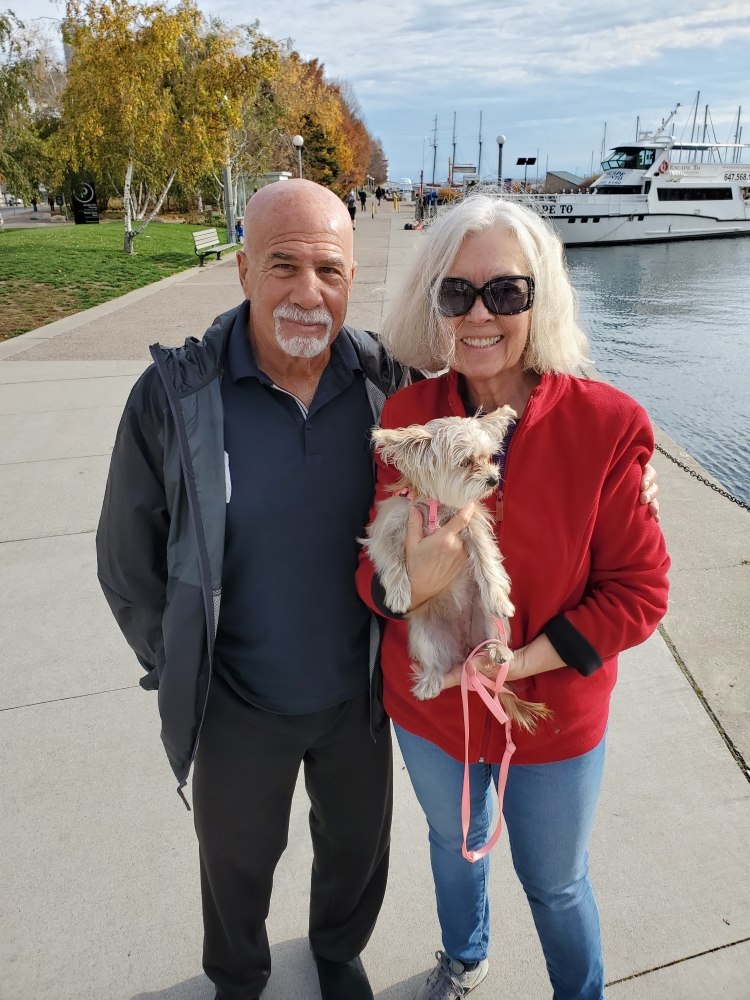
Today, Newman lives on Toronto’s waterfront with his wife, Dixie, and their Morkie, Mia. Surrounded by five children and eleven grandchildren, he has transformed the pain of his family’s past into a gift for future generations. Writing books, as Newman admits, is “a career change I wasn’t expecting to make at this stage of life. It’s been gratifying for the ego.” He is currently working on a sequel with the working title A Daughter’s Revenge, and has hired a screenwriter on spec to craft a six-part series based on his first book.

Between These Walls: A Gripping Journey Through History's Darkest Corridors

Photo Courtesy: Michael Newman (Author Michael Newman, his wife Dixie, and their beloved Morkie, Mia)

Critical Acclaim and Distinguished Recognition

Between These Walls has garnered significant recognition from the literary community and continues to win the hearts of readers worldwide. The book was honored as a Distinguished Favorite in Historical Fiction at the prestigious 2020 NYC Big Book Award. It has also received recognition from the Whistler Independent Book Awards, which praised it as a “good, unique and worthwhile book,” noting that “the different times and places over which the story takes place were well realized and distinct.”

Kirkus Reviews lauded the novel’s meticulous research: “The historical authenticity of the work is admirable; the author’s research is scrupulously rigorous, and much of the book is enjoyably edifying.”

BookLife offered high praise: “Each narrative is richly drawn, revealing the characters’ emotions and motivations while adding the perfect amount of historical background. This powerful novel will likely appeal to any reader of historical suspense fiction.”

Reader reviews have been equally enthusiastic, with many noting the book’s “next level” historical detail, “relentless” twists, and praising how Newman “nails the dual timeline storytelling.”

Between These Walls: A Gripping Journey Through History's Darkest Corridors

Photo Courtesy: Michael Newman (Michael Newman presenting a copy of his novel to Mosab Hassan Yousef, also known as the Green Prince and Son of Hamas, at a Jewish National Fund event in Toronto in 2025)

More Than Historical Fiction: A Mirror to Our Times

What sets Between These Walls apart is its refusal to treat history as a distant, academic subject. Newman understands that history is not made of dates and events, but of people. Real people with families, dreams, fears, and impossible choices. The three families at the center of this narrative, one American and two German, could be any families, which is precisely what makes their story so powerful and so necessary.

The novel explores themes that remain painfully relevant: the nature of identity, the cost of survival, the weight of secrets, and the possibility of redemption. Newman offers nuanced portrayals of various characters rather than flat depictions in black and white, thus illustrating the complexity of acts that are both heroic and heinous. The title itself references the hiding space occupied by the members of one family for nearly a year and a half, a powerful metaphor for the walls we build to protect ourselves and the walls that imprison us.

Discover the Truth Behind the Walls

Between These Walls is available for purchase through multiple platforms, making it accessible to readers worldwide. The novel is available in both paperback and Kindle editions.
Links: 

For more information about Michael Newman, updates on the forthcoming sequel A Daughter’s Revenge, visit: Michael Newman Official Website.

Why the Army was Hesitant to Commission Black Officers: A Colonel’s Analysis

By: Leanna P. Malloy

When we think of the military, we think of strategy. We think of using every resource to achieve a vital objective. During World War I, the objective was clear: win. So why would the United States Army, in a time of urgent need, actively resist creating more officers from a willing and able population? The answer, explored with valuable clarity in Thomas Bradley’s book Marching Without Applause, goes beyond simple racism. It was a notable failure of strategy. From the viewpoint of a retired Army Colonel, the opposition to the Fort Des Moines training camp was not just a social injustice. It was a considerable doctrinal and command crisis that potentially weakened the entire force.

The United States needed leaders. The war in Europe would consume junior officers at a significant rate. Yet, when presented with a solution, a pool of educated and patriotic Black men, a substantial part of the Army’s establishment hesitated. They created obstacles, delayed orders, and imposed harsh scrutiny. In professional military terms, this is difficult to comprehend. You do not refuse a reliable new source of ammunition in the middle of a battle. But that is precisely what happened with leadership. The threat was not to the nation’s security, but to a rigid social order within the Army itself. The military is a hierarchy. It functions on clear lines of authority and tradition. For many white officers and officials, the idea of Black men holding command authority was seen as challenging social norms. It posed a risk to destabilizing the very chain of command as they understood it. They feared a loss of control, questioning whether Black officers were capable of leading in combat and whether they would likely degrade the officer corps as a whole. This was a potential failure of command imagination, placing outdated social doctrine over battlefield necessity.

This fear created a direct conflict with another core military principle: unit cohesion. The Army insisted on segregating Black soldiers into separate units. This was a policy of separate but equal. However, by refusing to give those units Black officers, they created a second, more significant problem. They were forcing those soldiers to be led by white officers who frequently held deep prejudices against them. This is a clear formula for poor morale, distrust, and ineffective performance. A good commander understands that trust is the bedrock of a fighting unit. The War Department’s policy consistently destroyed any chance for that trust to form in these Black regiments. They chose the illusion of racial hierarchy over the proven military requirement of mutual respect between leaders and their troops. Thomas Bradley, through his decades of service, understands this contradiction at a visceral level. His analysis in Marching Without Applause shows how this choice was detrimental, not just to individual soldiers but to the overall strength of the Army.

The cost of this failure was measured in wasted talent. The men who arrived at Fort Des Moines were the best and most talented in America. Most were graduates of prestigious universities like Howard and Tuskegee. Others were veteran non-commissioned officers from the Buffalo Soldiers, with years of field experience. The Army had a ready-made solution to its leadership shortage, yet it placed immense energy into building barriers instead of harnessing this strength. This is the ultimate strategic error. You identify your asset, and then you utilize it to its full potential. The Army identified the asset but was reluctant to use it. That hesitation, those delays, and secret evaluations reveal an institution at war with its own best interests. The characters in Bradley’s narrative did not just face personal prejudice. They were supported by some highly respected Army officers, but even they were confronted with a system that saw their potential as a problem to be managed rather than a resource to be empowered.

In the end, the story of Fort Des Moines is a lesson in a shift in strategic vision. The Army finally overcame the perceived risk of integration and understood the certain consequences of failing to develop all of its leadership capital. The brave men who finally earned their commissions, against this resistance, did more than break a color barrier. They demonstrated a command principle. They showed that leadership is found in character and competence, not in skin color. Their victory was a correction to a critical strategic blunder. Thomas Bradley’s account is essential because he diagnoses this failure not merely as a historian but as a senior officer who understands the potentially catastrophic cost when prejudice overrules sound military judgment.

To fully comprehend this change in leadership vision and the courage it took to overcome it, one must read a definitive account. Learn the critical lessons of leadership and the courage to change institutional bias in Thomas Bradley’s authoritative work, Marching Without Applause.

Naot: The Winter Boots Editors Are Recommending for Comfort That Lasts

When winter hits New York, footwear quickly becomes less about trend cycles and more about survival. Slick sidewalks, freezing temperatures, and long days spent walking between meetings, errands, and social plans demand boots that can perform well. This season, editors aren’t chasing statement shoes that may fail by lunchtime; they’re recommending boots that offer real comfort, durability, and style that can hold up.

One brand consistently rising to the top of that list is Naot. Known for its science-backed comfort and timeless design, Naot has become a go-to for people who want footwear that works well without screaming “practical.”

Winter boots tend to be unforgiving. Heavy soles, stiff materials, and poor support can turn a long day into a painful one. Editors are increasingly prioritizing boots that offer support for posture, reduce fatigue, and still look polished enough for everyday wear.

Naot’s approach starts with anatomy. Every boot is built around the brand’s signature cork and latex footbed, designed to support the natural shape of the foot. The footbed stabilizes the heel, supports the arch, and evenly distributes weight, key factors for helping minimize strain on the feet, knees, hips, and lower back.

“Your feet are your foundation,” says Dr. Susan Eisen, a New York–based chiropractor. “When footwear supports the foot properly, it can help improve alignment throughout the body. That’s especially important in winter, when people are walking more cautiously and compensating for uneven surfaces.”

Unlike traditional insoles that flatten or collapse over time, Naot’s footbeds adapt with wear, creating a more personalized feel the longer you own them.

What makes Naot especially appealing is its range of winter-ready silhouettes that balance function and design.

Naot: The Winter Boots Editors Are Recommending for Comfort That Lasts

Photo Courtesy: Naot (Washington Boots)

For men, the Washington ankle boot has emerged as an editor favorite. Its streamlined profile works with everything from tailored pants to denim, while the cushioned sole and supportive construction make it a comfortable choice for daily wear. It’s the kind of boot that transitions easily from office to evening without a second thought.

The Commander and Superior lace-up boots are ideal for those who walk everywhere, regardless of the weather. Built with durable outsoles and removable anatomic footbeds, these styles offer stability and traction while maintaining a clean, modern look. Editors love them for travel days and long commutes when comfort becomes a priority.

Naot: The Winter Boots Editors Are Recommending for Comfort That Lasts

Photo Courtesy: Naot (Pali Boots)

On the women’s side, Naot’s Pali ankle boot has become an obvious favorite for winter dressing. Part of the Aura Collection, Pali combines soft leather with a faux shearling cuff, offering warmth without bulk and polish without stiffness.

The Majesty mid-calf boot also strikes a notable balance between elegance and wearability. With a supportive heel and adjustable fit, it provides polish without sacrificing comfort, making it a solid option for workdays that stretch well into the evening.

Naot’s heritage styles, including the Gift and Legacy boots, continue to resonate with editors who favor timeless silhouettes. These boots are designed to last for years, not just seasons, making them a good investment rather than a fleeting trend.

That’s what truly sets Naot apart: durability. In an era of fast fashion, editors are increasingly recommending brands that prioritize longevity. Naot’s boots are crafted with high-quality materials and construction methods designed to maintain structure and support over time.

“Shoes that break down quickly stop supporting the foot,” Dr. Eisen explains. “Longevity matters, not just for sustainability, but for long-term comfort and health.”

That durability also makes Naot a cost-effective choice. Instead of replacing winter boots every year, many customers find themselves returning to the same pair season after season.

As shopping habits shift toward fewer, better-made pieces, Naot fits naturally into that mindset. These are boots designed for real life: commuting, traveling, standing, walking, and doing it all again the next day.

Editors aren’t recommending Naot as a splurge-for-show item, but as a reliable staple: the kind of footwear you reach for instinctively because you know it won’t disappoint.

In a New York winter, comfort that lasts isn’t just a luxury, it’s a necessity. And this season, Naot’s thoughtfully designed boots are earning their place as editor-approved essentials, one step at a time.