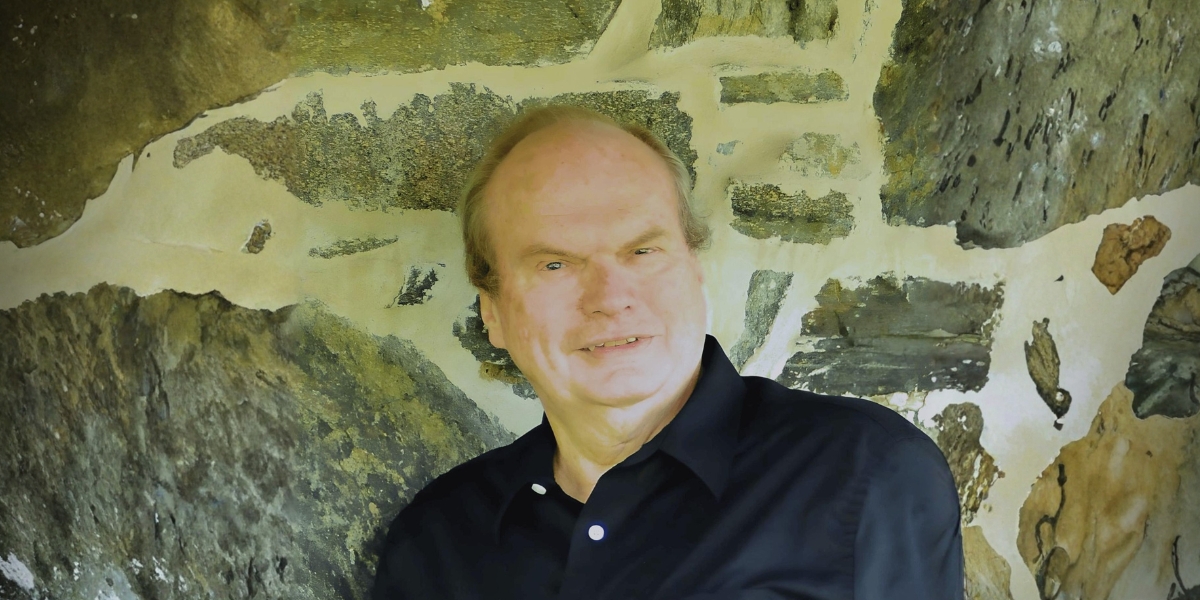
Why a Former CEO Is Having More Fun Writing Songs Than Running Companies

From the outside, Ron Hamrick’s career reads like a checklist of success. He built a long executive career in the business world, traveled extensively, and held leadership roles that came with influence, responsibility, and the kinds of perks many people spend decades chasing. And yet, today, Hamrick spends most of his creative energy doing something far quieter: writing songs.

It’s not a midlife pivot or a nostalgic return. It’s a deliberate choice — one informed by having already experienced what conventional success promises and, just as importantly, what it leaves behind.

Over the years, Hamrick’s music has found listeners well beyond his own backyard. His songs continue to receive radio airplay and steady streaming activity across multiple countries. Those milestones matter — but they no longer appear to define the work.

What defines it now is satisfaction.

Choosing Meaning Over Momentum

Hamrick’s songwriting story didn’t begin late in life. He experienced early creative success, stepped away during decades of corporate leadership, and later returned to releasing music with a perspective few artists possess: he understands both achievement and its limits.

That understanding shapes his current catalog. The songs are reflective without leaning on nostalgia, hopeful without chasing sentimentality. They don’t feel engineered for virality or optimized for playlists. Instead, they feel written for people — listeners navigating real lives, real relationships, and real moments of pause.

For an audience increasingly overwhelmed by noise, that restraint is part of the appeal.

Music Without the Urgency to Impress

What stands out most in Hamrick’s recent releases is their lack of urgency. The songs don’t sound like attempts to prove relevance or reclaim attention. They arrive calmly, often centered on everyday experiences — morning light, personal resolve, the passage of time — and trust listeners to meet them on their own terms.

That trust is earned. Having already experienced both public recognition and professional success, Hamrick no longer seems interested in measuring creative value by external validation. The music feels free of pressure — not because it lacks ambition, but because its ambition has shifted. The songs sound less concerned with how far they travel than with how honestly they land. For Hamrick, the creative process now feels less like a race against time and more like an ongoing conversation with his audience, where every note and lyric has room to breathe and take root.

A Different Definition of Success

For many readers, Hamrick’s story resonates beyond music. It reflects a familiar question for people who have spent years building careers: What happens after you reach the goals you once thought would define happiness?

In Hamrick’s case, the answer wasn’t more achievement. It was deeper alignment.

Songwriting became less about accomplishment and more about connection — not mass connection, but meaningful connection. His work doesn’t promise transformation or escape. It offers companionship: songs that sit with listeners rather than perform for them.

That choice hasn’t limited his audience. If anything, it has broadened it.

Why the Music Keeps Finding Listeners

Hamrick isn’t chasing trends, and he isn’t trying to go viral. His audience has grown quietly through word of mouth, radio airplay, and listeners around the world who return not for spectacle, but for sincerity.

In a culture that often confuses visibility with value, his music offers an alternative: songs that reward attention instead of demanding it.

After a life that included measurable success in more than one field, Hamrick appears comfortable letting the work speak for itself — and comfortable with where it lands.

Those curious to hear what that satisfaction sounds like will find it in the steady stream of songs Ron Hamrick continues to release — music shaped by lived experience, patience, and trust in the listener.

Patients Across Continents Explore Non-Surgical Hair Growth Approaches Through Indian Dermatologist Dr. Stuti Khare Shukla

Hair loss continues to be a widely experienced concern across demographics, cultures, and geographies. While surgical hair restoration procedures have long been part of mainstream discussions, a noticeable shift is underway as individuals increasingly explore non-surgical, dermatologist-led approaches that focus on accessibility, safety, and structured care. This change reflects evolving patient expectations and a growing awareness around medically supervised aesthetic solutions.

Among the practitioners associated with this shift is Dr. Stuti Khare Shukla, an India-based dermatologist whose work in non-surgical hair growth treatments has drawn interest from patients across multiple countries. Her practice aligns with a broader movement within dermatology that emphasizes consultation, research, and patient education rather than invasive intervention.

The growing interest in non-surgical hair care is closely linked to lifestyle considerations. Many individuals seek options that do not involve prolonged recovery periods or surgical commitments, particularly those managing professional and personal responsibilities. Dermatology-led solutions, when approached responsibly, offer patients the opportunity to understand their condition better and make informed choices about long-term hair health.

Dr. Shukla’s approach centers on structured consultations that take into account individual medical history, lifestyle factors, and hair loss patterns. Rather than positioning treatment as a quick solution, her practice focuses on guiding patients through a medically informed process. This emphasis on clarity and realistic expectations has resonated with individuals who have previously encountered inconsistent advice or fragmented treatment pathways.

A key aspect of Dr. Shukla’s international engagement is her online consultation model, which enables patients from outside India to access dermatological guidance remotely. Through digital consultations, patients can discuss concerns, receive assessments, and follow recommended protocols without the need for frequent travel. This model reflects the growing acceptance of tele-dermatology as an extension of traditional clinical care.

Interest in this approach has come from patients across Europe, the Middle East, Southeast Asia, and North America. Some of these patient experiences and perspectives have been shared publicly, including in a video testimonial available online, offering insight into how international patients engage with remote dermatological consultations and treatment planning.

Dr. Shukla’s professional background includes training in the United States, Singapore, and Bangkok, providing her with exposure to diverse dermatological methodologies. After returning to India, she established The Elements of Aesthetics, a network of clinics operating in Mumbai, Hyderabad, Nagpur, and several cities across Central India. These clinics focus on dermatologist-led aesthetic and hair care services supported by consultation and follow-up.

Beyond clinical practice, Dr. Shukla is involved in ongoing research and professional collaboration. She works with an advanced dermatological laboratory in Paris and engages with scientists and medical professionals internationally to study formulations, treatment responses, and emerging developments in hair and scalp care. This research-oriented involvement reflects an emphasis on continual refinement rather than fixed treatment models.

Over time, her practice has engaged with a large and geographically diverse patient base, including individuals from the USA, UK, UAE, Singapore, Malaysia, and several European countries. Many patients approach professional dermatological care after navigating years of unverified products or inconsistent guidance, seeking structured support rather than immediate outcomes.

The broader conversation around hair loss is also evolving. As awareness grows about the limitations of unregulated treatments and exaggerated claims, patients are increasingly prioritizing transparency, medical oversight, and realistic expectations. Dermatologists operating in this space are expected to balance innovation with responsibility—an approach reflected in Dr. Shukla’s emphasis on consultation, research, and patient education.

While non-surgical hair growth solutions may not be suitable for every individual, their growing acceptance highlights a shift in how hair concerns are addressed globally. Rather than focusing solely on procedural outcomes, patients are increasingly open to gradual, medically guided approaches that integrate into everyday life.

As digital healthcare models continue to expand, practitioners like Dr. Stuti Khare Shukla illustrate how locally rooted medical expertise can responsibly reach a global audience. Through consultation-led care, research collaboration, and patient awareness, her work reflects a changing landscape in non-surgical hair care, one shaped by informed decision-making rather than promises or guarantees.

Website: www.drstutikhareshukla.com
Contact: +91 62619 67835