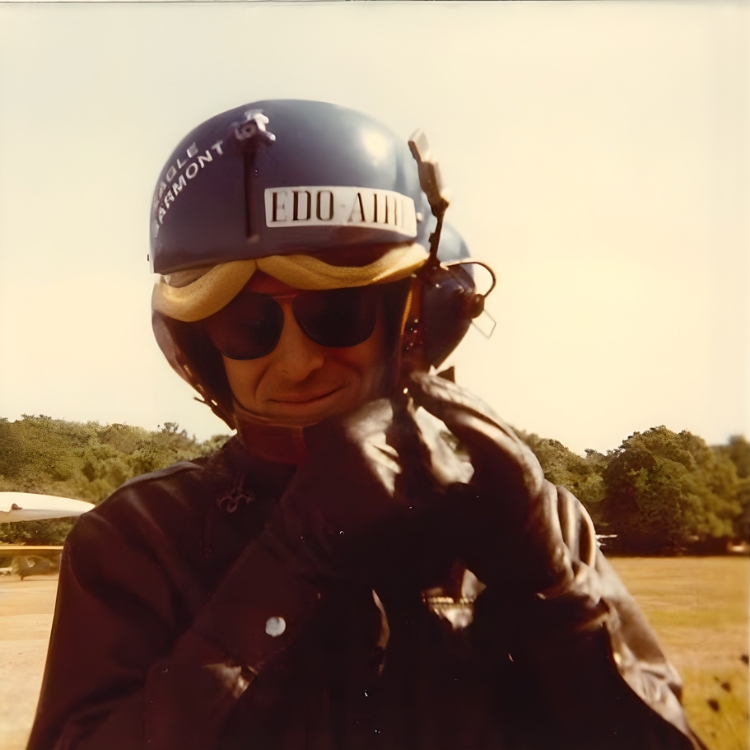
The Problem with Looking Down: Eagle Sarmont’s Journey

By: Eagle Sarmont

As told to Suheer Baig by Eagle Sarmont

The customs inspector looked at my motorized hang glider like I’d just landed a UFO on his runway. “You flew this here? From New York?”

“Not all the way,” I said. “Just up the Hudson, past Albany, over Lake Champlain. Then I called ahead to cross into Canada.”

“Called ahead.” He repeated it like I’d said something in Martian.

It was 1980. I was 28, and I’d spent months modifying a hang glider to carry enough fuel to fly from New York to Paris, island-hopping across the North Atlantic a couple of hundred miles at a time. The first few days had been perfect. I’d landed on golf courses where groundskeepers gave me gas and ladies gave me sandwiches. I’d flown with eagles, watched my shadow race across treetops at 70 miles per hour.

Then I crossed an invisible line, and everything changed.

When 45 Miles Per Hour Becomes an Invasion

The border between the United States and Canada is 5,525 miles long. From the air, you can’t see it. There’s no fence, no wall, no change in the color of the trees. But the moment I landed in Baie-Comeau, Quebec, that invisible line became very real.

Two Royal Canadian Mounted Police officers showed up with an Immigration officer who looked at my tiny fabric-and-aluminum hang glider and accused me of being a one-man invasion force. I had the phone number of the customs agent who’d cleared me to enter. It took three calls and a lot of badge numbers before they believed I wasn’t smuggling contraband.

Even after they confirmed I’d entered legally, the Immigration officer kept insisting I was a threat. The RCMP officers eventually had to escort him out of the room.

I sat there thinking: I almost started an international incident with a motorized kite.

The next morning, a Ministry of Transportation official from Ottawa showed up. He took one look at my American-made emergency gear and said, “We do not allow that here.”

I pointed at the Cessna on the runway. “That’s American.” “That’s different.”

A Boeing 737 was landing at that exact moment. I couldn’t help myself. “What about that one?”

The reporters who’d gathered loved it. The inspector did not. But the absurdity was impossible to ignore: every airplane at that airport was American-made except for one De Havilland Beaver sitting on blocks without wheels or an engine. The rule wasn’t about safety. It was about something else entirely.

The Problem with Looking Down: Eagle Sarmont’s Journey

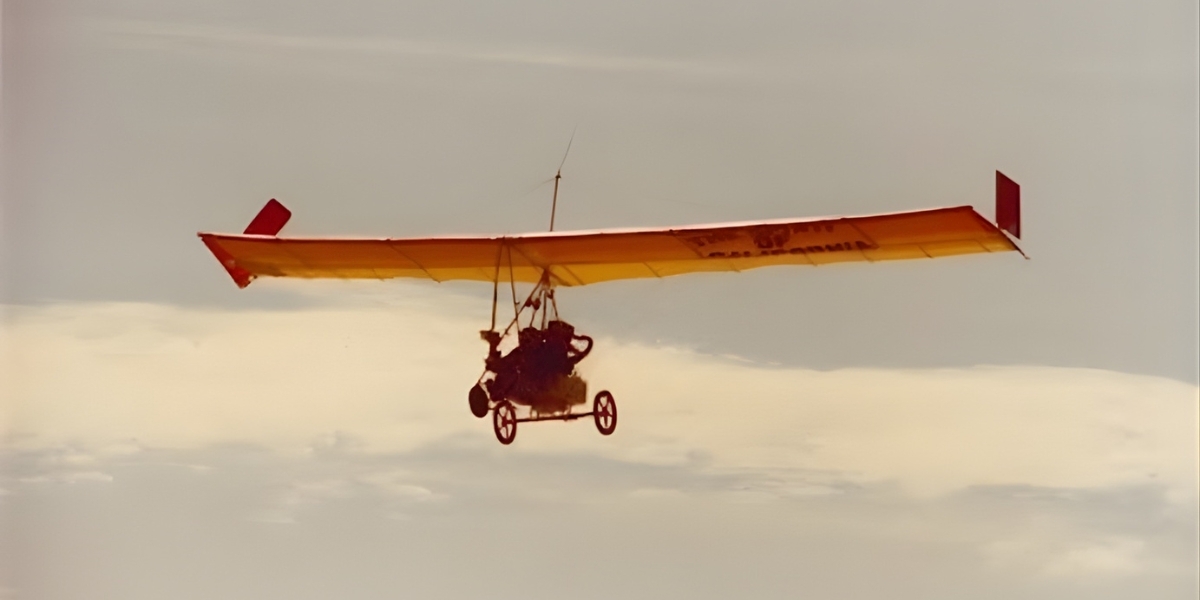
Photo Courtesy: Eagle Sarmont

The Rules We Invent

I spent years as an aerospace engineer working on F-18s and inventing concepts for reusable rockets that eventually became the backbone of the commercial space industry. All that technical knowledge didn’t help me understand why an inspector would reject safety equipment simply because it was made on the wrong side of a line.

The answer has nothing to do with logic. Borders exist because we’re scared of the other, of losing what we have, of change. The officials enforcing those borders are carrying their own fears, too. Scared of making the wrong call, scared of their bosses, scared of the person who doesn’t fit neatly into the boxes on their forms.

My hang glider didn’t fit in any box.

Trying Again

I tried again in my 50s, after my wife died and I needed to find out if I could still feel joy. This time I made it, flew across the United States in an ultralight, took a cruise ship to Iceland, flew around that land of fire and ice, took a ferry to Denmark, and flew from Denmark to Paris.

But this time I had papers. Registration, an airworthiness certificate, and an N-number on my tail identifying me as American. That created its own problems.

In Denmark, I needed a local inspector to approve my aircraft. My pilot friend Ella knew the guy. “He is a bit of, how you say, butt head,” she warned. When he showed up with flowers for Ella, his smile disappeared the moment he saw me.

“I do not inspect microlights,” he announced.

“It’s a homebuilt aircraft with an American airworthiness certificate,” Ella said calmly.

What followed was spectacular. The inspector’s face went red, his hands clenched and unclenched. Ella, never one to back down, threatened to invite me to stay at her house and “have sex with him all day long and all night long until he leaves” if the inspector didn’t approve my plane. He finally stamped my paperwork, beaten.

Later, Ella explained: the inspector had been her childhood friend, the boy she’d loved. But his grandfather was a Nazi who’d poisoned his son, who’d poisoned his grandson. “From generation to generation, the disease gets passed on,” she said quietly.

That’s when I understood something I’d missed the first time. The people enforcing borders aren’t just following rules. They’re carrying wounds, fears, histories they can’t escape. Just like the rest of us.

What the Air Shows You

Here’s what you learn when you fly a hang glider across a continent: the world doesn’t actually have borders. We drew them. We decided that this side of the river is ours and that side is theirs, and made rules about who can cross where and when.

From a mile up, with nothing between you and the ground except air and a seatbelt, all of that looks small. Not unimportant, just small. The rivers flow where they want. The birds fly where they want. The wind blows where it wants. Only humans insist on dividing it all up.

I’m not arguing for the elimination of borders or customs. I’m not naive about security. But the next time you’re stuck in an airport security line or angry at an official who treats you like a threat simply because you came from somewhere else, remember: the lines on the map are inventions. Rivers, mountains, the curve of the earth, those don’t care about our rules.

And sometimes, if you’re lucky enough to see the world from above, you realize we’re all just tiny specks on a giant ball hurtling through space. The things that divide us are only as real as we decide to make them.

The View That Matters

People ask what I learned from trying to fly to Paris twice. The first time, I learned that bureaucrats will stop you even when you’ve followed all their rules, because some rules are really about power. The second time, I learned that borders are enforced by humans carrying baggage, and sometimes the only way through is with humor, patience, and a friend willing to embarrass an inspector into doing his job.

But the real lesson came from the flying itself. Up there, you see the truth: we’re supposed to be free. Free to fly wherever the wind takes us, to land wherever we want, to be welcomed with gas and sandwiches instead of suspicion.

That’s the world I saw from my hang glider. That’s the world I’m still trying to live in. And every time I see a plane overhead now, I think: I wonder if that pilot knows they’re free up there? I wonder if they can see the invisible lines dissolving beneath them?

I hope so. Because that view—that’s the one that matters.

Eagle Sarmont is a retired aerospace engineer who invented concepts that became the foundation for modern reusable rockets. His memoir “New York to Paris” explores flying, loss, and what lies beyond. He still believes in the freedom of flight, even when the bureaucrats say no.

Suheer Baig is a developmental editor and writer who works with authors to shape compelling narratives across business, memoir, feature journalism, and fiction.

Disclaimer: The views expressed in this article are those of the author and do not necessarily reflect the views or policies of any organization or entity. The content is intended for informational purposes only and should not be interpreted as an endorsement of any political, legal, or social stance. The article is a personal reflection on the author’s experiences and opinions.
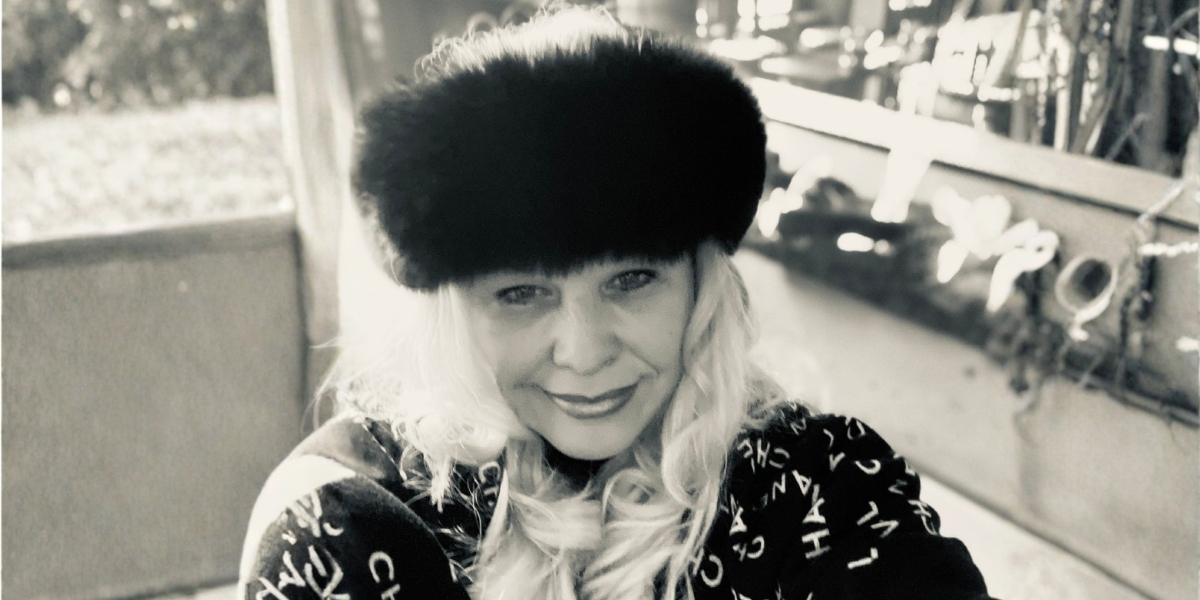
The Journey of Deborah Chester: How Losing Everything Became the Beginning of Everything

By: Deborah Chester

BA dream transformed my life.

In the dream, two tornadoes rolled in from the sea as my two young daughters and I stood in the office of our beautiful beachfront home, which overlooked the ocean. At the time, I was sure of my destination, but things were about to change. What we now understand as a warning was unfolding before me. It was as if the dream were a genuine premonition; it felt real, overpowering, and filled with fear, all rolled into one. I awoke trembling and sweating, as the dream had been absolute. I knew it was a warning, and that it was only the beginning.

The dream came true just a few weeks later.

Our home and everything we owned were destroyed in seconds when two tornadoes ripped through our seaside town in New Zealand. My girls and I survived because of that dream. All we had with us when we escaped were the clothes we were wearing and one another. In a matter of seconds, we went from having everything as a family to facing complete uncertainty.

The journey began at that very moment, when our lives changed forever.

When Faith Is All You Have Left

Losing everything reduces life to its most basic components. Routines, status, and belongings all vanish in an instant. The people you love, faith, and resiliency are what’s left. Following the tornadoes, my family quickly realized that people had different definitions of what it means to survive. For us, survival required paying close attention to our faith, intuition, and the subliminal messages that we are frequently too preoccupied to notice.

Dreams had always given me instruction, but after the tornadoes, I discovered that I shouldn’t ignore them. Dreams had kept us alive.

Why wouldn’t they direct what happened next??

A few weeks after the tragedy, my husband Chris had a seemingly unremarkable dream involving scuffing the car’s wheels. The concept for RimPro-Tec Wheelbands, a worldwide automotive innovation currently covered by more than 100 patents and trademarks, sprang from that straightforward image.

We were aware of the irony that, while losing our home, we had acquired a concept that would help us reconstruct our future.

The Law of Attraction: In Practice, Not Theory

Adversity is not eliminated by faith; instead, it is reframed.

Challenges increased as our company expanded, including dishonest partners, patent issues, copycats, and years of costly legal proceedings. My family dealt with PTSD, relocation, and the emotional burden of starting over at the same time. There were times when perseverance did not “win the day,” times when fatigue, anxiety, and uncertainty were persistent companions.

But every failure taught us something. Every setback improved the way forward for something bigger.

I started to feel that the universe rewarded bravery rather than ease.

From Kitchen Table to Global Brand

Late at night, around kitchen tables, where fear and hope coexist, some of the most revolutionary ideas are produced, not in boardrooms. That’s how we constructed our inventions: with perseverance, hard hours, and an unwavering faith that something significant was happening.

The Journey is more than just a memoir. It’s a behind-the-scenes look at what it really takes to start a business from scratch while also rebuilding a life. It speaks candidly about the cost of creativity, burnout, and sacrifice, particularly for women entering male-dominated fields.

I discovered that success draws both opportunity and resistance.

Listening When Life Speaks

Life is constantly communicating with us through dreams, intuition, coincidence, and challenges, which is one of The Journey’s most powerful lessons. Whether or not we are listening is the question.

My story explores the fine line between fate and coincidence, from philosophical encounters and prophetic warnings to moments of tremendous grace. Did dreams happen to save our lives? That was when we had nothing left, an invention came? That assistance showed up when it was most needed?

Why I Wrote The Journey

I wrote this book for dreamers who question whether faith still has a place in a chaotic world, families dealing with grief, entrepreneurs on the verge of failure, and anybody who has felt broken by life.

The Journey is evidence that destruction and fate may coexist, that adversity teaches resilience, and that miracles frequently take the form of catastrophes.

If you’re going through a difficult time, remember that losing everything isn’t the end. Occasionally, it signifies the start of something far bigger than you had anticipated.

Connect with Deborah Chester: LinkedIn | Instagram | Facebook

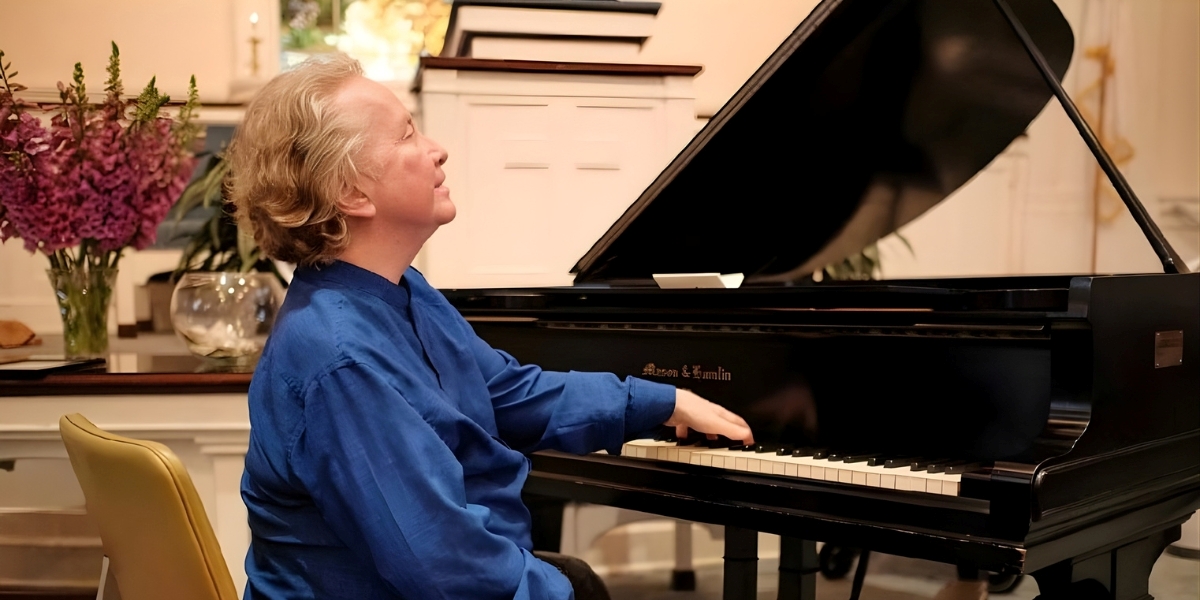
The Remarkable Journey of Pianist John Bayless

By: Paul White

John Bayless’s life has been a testament to resilience, reinvention, and his deep passion for music. His memoir, One Hand, One Heart: My Life, My Music, is less a traditional story and more a reflection on the power of perseverance, the healing power of art, and the indomitable nature of the human spirit.

Bayless’s journey began at just four years old, when he first pressed his tiny fingers against the family piano. Music came to him with ease, as natural as walking. “I heard the music and wanted to recreate it,” he recalls. “I played by ear, and my mother was my first teacher.” That natural gift would become both his refuge and his purpose through decades of both triumphs and challenges.

Young John grew up in a modest Texas home and endured a series of painful health conditions that led to multiple surgeries before his teens. Yet amid all the loudness of the hospitals and the hush of small-town life, he found sanctuary in sound. By the age of 13, he was the youngest church organist in the state of Texas—a precocious artist who played not for applause but for connection. The congregation saw talent; John saw a path forward.

He made music his compass, and he let it guide him toward greater horizons. Scholarships took him to Aspen, where he studied under legendary pianist Adele Marcus, and eventually to The Juilliard School in New York City. There, the rigor of elite artistry mixed with his Texan charm gave shape to his creative voice. It was also at Juilliard that he caught the attention of one of the greatest musical minds of the 20th century: Leonard Bernstein. Bernstein saw in him the rare blend of talent, humor, and emotional depth that audiences around the world would soon recognize. To be called Bernstein’s protégé was both an honor and a calling.

By 25, Bayless was performing Gershwin’s Rhapsody in Blue at his Carnegie Hall debut, captivating critics with what The New York Times called “an evocative piano sound and considerable pizzazz.” His career blossomed internationally, with acclaimed recordings such as Bach Meets the Beatles and Happy Birthday, Bach blending classical mastery with pop-culture wit. He toured across Europe, collaborated with icons, and carved a niche as one of the earliest musicians to blend genres. He remains a virtuoso known for reimagining musical pieces, even playing Moon River as Tchaikovsky might have imagined it.

But just as his star reached its zenith, fate struck an unexpected chord.

In 2008, Bayless suffered a devastating stroke that paralyzed his right hand. For a pianist, this could have been the final curtain. However, Bayless approached this challenge as the start of a new movement. “Never give up hope,” he says simply. “You can’t go forward if you don’t put one foot in front of the other. You have to walk through it.”

When it came to rehabilitation, it was a grueling process. Even simple tasks like tying a shoe and signing his name became daily battles. Yet rather than surrender, Bayless quickly re-learned how to play with his left hand. This was a truly humbling yet transformative process. “Playing with one hand brought a new simplicity and sincerity to my music,” he writes. “Stripped of the need to impress, I could finally feel every note.”

This transformation was the heart of his documentary, Left Alone Rhapsody: The Musical Memoir of John Bayless, which was directed by Stewart Schulman. The film talks about the resurrection and tells a story of how art can transcend physical limitations. One of its most awe-inspiring moments captures Bayless performing Rhapsody in Blue with one hand, a feat of discipline and imagination that moved audiences to tears. “He started rewriting and orchestrating Rhapsody in Blue with six hands,” Schulman recalled, “and then he played it with one. That gave me the title Left Alone Rhapsody.”

For Bayless, the performance was emotional catharsis as much as it was a technical triumph. He discovered, through love and loss, what he calls “the truest form of music; when the notes come not from your fingers, but from your heart.”

One Hand, One Heart brilliantly weaves together these experiences with warmth, humor, and honesty. This book touches on his early struggles with illness, personal identity, his decades-long partnership with Emmy-winning producer Bruce Franchini, and his courageous approach to life after the stroke. The prose sings with rhythm and reflection, alternating between the intimacy of confession and the grandeur of a concerto. His anecdotes remind readers that genius is made of both perfection and perseverance.

Today, Bayless’s take on teaching and artistry remains grounded in compassion. “Learning the notes is one thing,” he tells young pianists, “but after all is said and done, throw that away and just play from your heart and your soul.” He embodies that same philosophy while dazzling audiences and mentoring aspiring musicians. As Artistic Director, he helped launch the competition’s Junior Division, offering young artists the same opportunity he once received: a stage, a chance, a belief.

When you look behind the concert lights, you’ll see that Bayless’s story is also deeply human. He writes candidly about love and loss, particularly the passing of his beloved husband Bruce after 26 years together. “It was as if the light had been turned out,” he admits. “But even in darkness, music found me again.” That resilience, grace in grief, and strength in vulnerability are what make his memoir so profoundly moving.

Today, John Bayless continues to compose, perform, and inspire. His life’s story stands as a testament to the idea that art is perseverance in action. With every note he plays, he makes a prayer. He reminds us that no matter how broken the instrument, the melody of the soul endures.

The readers of One Hand, One Heart are sure to be enthralled by the elegance of his writing as well as the moral clarity of his message. It’s a book that invites reflection on courage and on faith. It forces one to ponder the mysterious ways creativity can transform suffering into a symphony. In every chapter, Bayless reminds us that even when life takes something away, it opens up a door to create something new.

As one reviewer put it, “John Bayless’s journey back to the concert stage represents the highest form of human strength.” His brave life proves that art not only flows from hands but also from the heart.

Get Your Copy Now

One Hand, One Heart: My Life, My Music is a memoir and a masterclass in resilience. This book teaches us that beauty can be born from limitation, and melody can rise from silence. For anyone who has ever faced a challenge, John Bayless offers the message: “Never give up hope. Persevere. Because the music never really stops, it just changes hands.”

Connect with John Bayless: Instagram | TikTok | Facebook

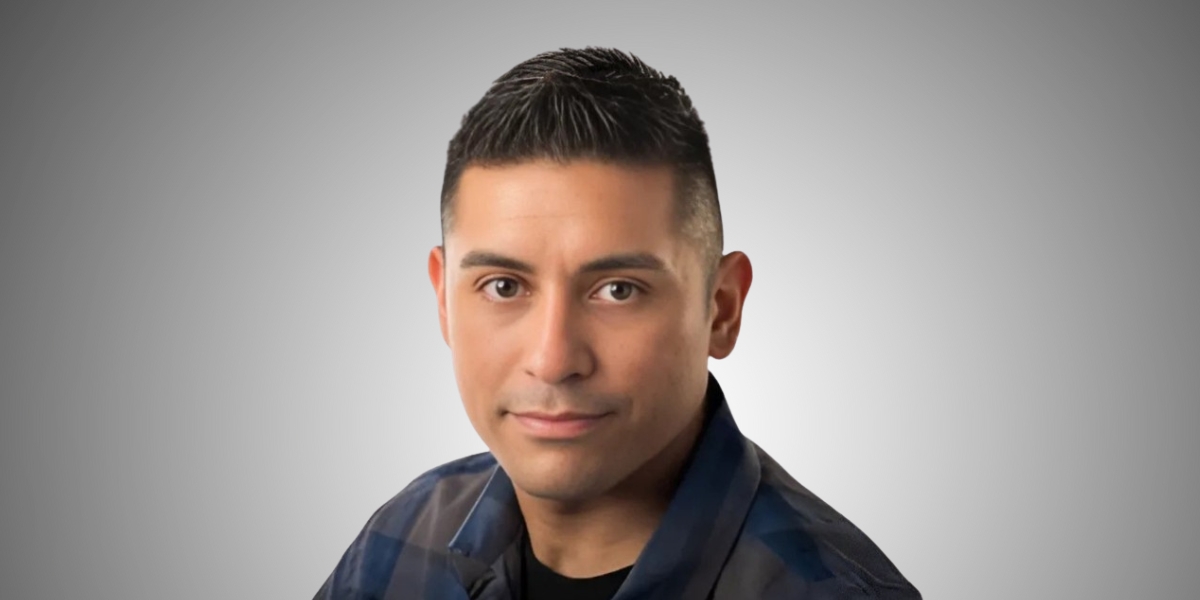
How Roy Virgen Jr Turned Pandemic Setbacks Into a Nonprofit University With Global Reach

By: Rena Marie

In the spring of 2020, Roy Virgen Jr taught marketing from home, contending with unstable Wi-Fi and the unpredictability of remote work. Many educators faced similar chaos, but for Roy, these moments became more than daily obstacles. They became the spark for a dramatic shift in his professional life. The pandemic forced universities to rethink operations, and for Roy, it meant reimagining what his institution could become.

Remote teaching, technical hiccups, and the challenge of keeping students engaged all collided at once. Roy says, “Even normally, when I did my lectures online during the pandemic, I had that said marketing in the background.” The world’s sudden shift to home offices and digital classrooms exposed vulnerabilities in higher education. For Roy, it also revealed new possibilities.

Early Struggles and the Brink of Closure

Roy’s journey into higher education began after fifteen years in corporate America, with roles at UPS and Macy’s. He transitioned into academia later in life, first as a student, then as a lecturer at the University of California, Irvine, University of California, Riverside, and Cal State Los Angeles. He describes his move as something he “fell into,” but soon found purpose in teaching and consulting for small businesses and schools.

In 2018, Roy launched American Management University. The early days were slow, and the pandemic made things worse. He recalls, “It started off kind of weak for the first couple of years, and then the pandemic hit, making things even worse. I nearly sold the school.” The prospect of closure loomed large. A sale seemed imminent, but when the deal collapsed, Roy took it as a sign to keep going. “The deal had fallen through, and I took it as a sign to keep going with it. So I did.”

That decision marked a turning point. He chose to persevere despite setbacks and began charting a new direction for the university.

From Private Venture to Nonprofit in France

After the failed sale, Roy decided to convert American Management University into a nonprofit and relocate operations to France. He explains, “We have converted to a nonprofit. Over to France, and we also moved to France for the time being, because the rules were a bit loose over there.” This move required adapting to a new regulatory environment and building a presence in a different country.

Roy’s choice to shift to nonprofit status allowed the university to focus on service rather than profit. He continued his work as a lecturer and consultant, supporting small businesses and educational startups. The university’s mission remained focused on practical, accessible education. Roy says, “We’re on the right track. We’re doing things pretty well.” The transformation did not come easily, but it brought new energy and direction to the institution.

Building a Global Student Base and Expanding Impact

American Management University began to thrive after its reinvention. Roy notes, “We’ve been able to keep adding on to our accreditations. I still do advertising, and for, you know, small businesses on the side, and I continue to be a lecturer.” The university’s student base became global, with learners from multiple continents enrolling in its programs.

Roy’s efforts extended beyond the university. He started two nonprofits: one providing scholarships for aspiring entrepreneurs, and another focused on business networking and mentorship. He recently filed the paperwork for 501(c)(3) status for the latter. Roy says, “I have two nonprofits that I started. One is a scholarship nonprofit just under my name. The scholarship that I give to people who are in need and want to be entrepreneurs. The other nonprofit I started is a business organization, for which I just filed the 501(c)(3) paperwork yesterday.”

Despite living in France, Roy directs donations to nonprofits and small businesses in California. He explains, “Our student base is global. But I do a lot of donations to nonprofits as well. So right now, looking, I try to stick to local ones that we’re at in California.” The university’s online format and practical focus have attracted students worldwide, and Roy’s philanthropic work continues to support both local and international communities.

Lasting Lessons and the Future of Higher Education

Roy’s story highlights the value of resilience and adaptability. He continues to teach marketing at several universities, consult for small businesses, and support students through scholarships and mentorship. Roy’s experience shows that setbacks can become catalysts for growth when met with determination and a willingness to adapt.

He believes in giving back, stating, “Can’t take it with you when you leave the world. So, I mean, give back when you can.” Roy’s journey from corporate boardrooms to the classroom, and from private university founder to nonprofit leader, offers a model for others navigating uncertainty in higher education.

American Management University’s transformation from a struggling startup to a nonprofit with global reach proves that adversity can lead to new beginnings. Roy’s work continues to impact students and communities, demonstrating that practical education and community support can thrive even amid global disruption.