John Jung’s ‘The Brain Blueprint’ Challenges Mental Health Norms and Sparks a New Era of Brain Care

By: Paul White

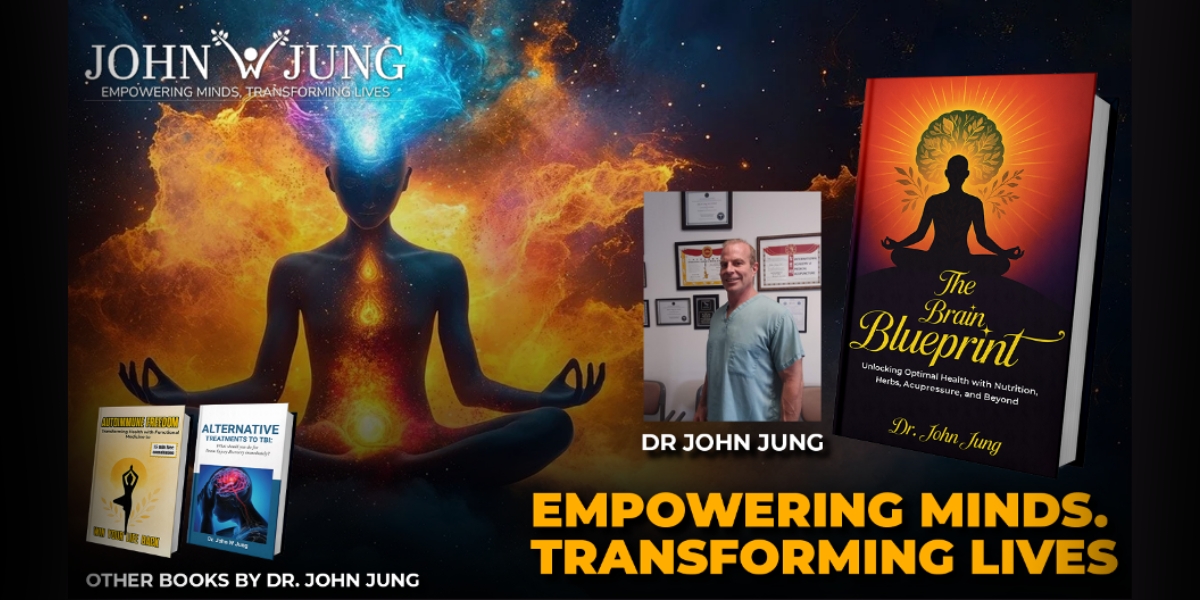
Dr. John Jung is not your typical author. He doesn’t posture as a guru, doesn’t romanticize his past, and doesn’t believe readers need another feel-good story about recovery. What he believes people actually need urgently are answers. In a world where nearly everyone feels mentally overloaded, stressed, or numb, Jung’s new book, The Brain Blueprint: Unlocking Optimal Health with Nutrition, Herbs, Acupuncture, and Beyond, sets out to do one thing: provide practical, proven tools to restore clarity, focus, and calm.

“We’re all brain-fatigued,” Jung says plainly. “Our systems are overwhelmed. People don’t need another theory about why they need to know what to do about it.”

That mindset defines The Brain Blueprint. It’s not a memoir, manifesto, or collection of academic essays. It’s a hands-on manual that delivers clear steps for dealing with the most common mental health stressors: sleep disruption, anxiety, burnout, depression, poor concentration, and emotional instability. Each chapter focuses on what works, drawn from a blend of modern research and timeless wisdom: nutrition, herbs, acupuncture points, nootropics, lifestyle interventions, and daily habits that help the brain heal and perform better.

Jung’s previous works focused on concussion recovery and autoimmune healing, but this third book casts a much wider net. “This one’s for everyone,” he explains. “Because everyone’s brain is under stress whether from screens, poor diet, lack of rest, or constant emotional pressure.”

His goal was to write something that skips the preamble and gets right to the protocols. “People are tired of reading about problems,” Jung says. “They want solutions. This book exists so they can stop Googling symptoms and start fixing them.”

The Brain Blueprint opens with a stark diagnosis of the modern mind: overstimulated, undernourished, and medicated into submission. Jung doesn’t mince words about the failures he sees in conventional mental health care, an industry, he argues, that has become more about maintenance than healing.

He cites statistics showing that over 50% of people on antidepressants report little to no lasting benefit, while many suffer debilitating side effects. “We have this cultural myth that depression equals a Prozac deficiency,” he says. “That’s not science. That’s marketing.”

But Jung isn’t anti-medicine. Instead, he’s pro-accountability and pro-results. “There’s a time and place for pharmaceuticals,” he clarifies. “But we’re using them as the first and often only response. That’s not a treatment. That’s dependency.”

What sets The Brain Blueprint apart is its relentless practicality. Jung organizes each section around direct, usable actions: no fluff, no jargon, no endless theorizing. Readers get checklists, self-assessment tools, and daily micro-habits that yield measurable improvements.

For example:

  • For anxiety and overwhelm: He teaches a simple acupressure sequence that can lower cortisol in minutes, paired with magnesium and breathing techniques that balance the nervous system.
  • For poor sleep: He suggests swapping out nightly melatonin for magnesium glycinate, setting light cues, and resetting the body’s clock through nutrition and movement.
  • For burnout and fatigue: He introduces structured “micro-recovery” breaks two to three minutes of breathwork or light stretching every 90 minutes to rewire energy and focus.
  • For brain fog and attention lapses: He recommends hydration-first mornings, probiotic-rich foods to strengthen the gut-brain connection, and targeted nootropics to boost neurotransmitter balance.

Each protocol is short, science-backed, and easy to apply, designed for people who don’t have the luxury of reading dense medical studies or attending week-long retreats.

Beyond individual tactics, Jung delivers a sharp critique of what he calls the “disease care” model. “We diagnose before we test, and prescribe before we understand,” he says. “It’s backward. We need to get curious about root causes again: nutrient deficiencies, inflammation, sleep deprivation, and chronic stress. These are things we can actually fix.”

His skepticism is balanced with compassion. Having seen patients and families struggle with conditions that were quickly labeled but never fully treated, he wanted to give them tools to take back control. “Knowledge is medicine,” he insists. “When people understand how their brain works, they stop feeling broken and start feeling empowered.”

The book doesn’t shy away from hard questions either: Why are psychiatric drugs being prescribed to infants? Why is nutrition still ignored in mental health? Why are we overrun with data yet starving for wisdom?

These aren’t rhetorical flourishes; they’re challenges to a system Jung believes needs reform from the ground up.

While the message is serious, Jung’s delivery is refreshingly clear and even hopeful. His voice throughout the book is equal parts clinician, teacher, and friend. He simplifies neurobiology and supplements with the same ease he uses to describe acupressure points, making advanced concepts feel intuitive. That accessibility is no accident. “I had my wife and mother read early drafts,” Jung laughs. “If they didn’t understand something right away, I rewrote it. The goal was to make it instantly usable.”

Readers seem to agree. Early feedback has called The Brain Blueprint “the first mental health book that actually tells me what to do,” and “a manual for the everyday brain.”

At its core, The Brain Blueprint is a movement away from passive health consumption toward active self-repair. It’s an invitation to treat the brain not as a mystery organ but as a system that can be nourished, supported, and retrained.

“Neuroplasticity isn’t just a buzzword,” Jung says. “It’s proof that your brain is always capable of change. The problem is, no one’s giving people the manual for how to direct that change. This book is that manual.”

The message resonates because it feels urgent and attainable at once: anyone, regardless of age or background, can take small, daily actions that add up to massive transformation over time. “If you get 1% better every day,” Jung reminds readers, “you’re 365% better by year’s end.”

Dr. John Jung doesn’t promise magic pills or overnight cures. What he promises and delivers is a roadmap. The Brain Blueprint is for anyone who’s tired of feeling foggy, anxious, wired, or worn out, and ready to take their brain health back into their own hands. He plans to update the book annually as new research emerges, ensuring it remains a living resource. “Health doesn’t come from insurance,” Jung says. “It comes from knowledge and the will to act on it.”

In a time when burnout and brain fatigue have become universal, The Brain Blueprint stands out as more than a book; it’s a lifeline for the modern mind.

Disclaimer: The information provided in this article is intended for general informational purposes only and does not constitute medical advice. It is recommended to consult with a qualified healthcare professional before making any changes to your health routine or treatment plan.

Festive Games That Make Family Holidays More Interactive

Family holidays are all about being together. Imagine everyone gathered, sharing meals, laughter, and stories. But these days, phones and TVs can distract us, and conversations pause for notifications. While the holiday spirit is still there, a real connection can fade. Festive games can help bring everyone back together and make the celebration more meaningful.

Festive games have a special way of bringing people together. They help everyone join in, no matter their age or personality, and turn ordinary evenings into great memories. Whether you’re laughing or working as a team, these games remind us that holidays are about enjoying time together. 1. 

1. Christmas Murder Mystery Games

If you want to make your family gathering more exciting, try Christmas murder mystery games. These games get everyone involved in a shared story and offer something different from the usual party activities. Everyone gets to play a character with their own secrets and motives. As the story unfolds, players ask questions, make plans, and solve clues together. It leads to hours of laughter, suspense, and teamwork.

These games might be a good option for families who want something different and enjoy stories. They get people talking, encourage creativity, and bring everyone together as a team.

2. Holiday Charades With a Festive Twist

Charades is always fun, and adding a holiday theme makes it even better. Use prompts like Christmas movies, traditions, songs, or favorite family memories. The silly actions, big gestures, and quick guessing make the game lively. It works well for large families because everyone can join in, whether acting or guessing. This game helps everyone feel included, even those who are usually quiet.

3. Christmas Trivia Challenge

A holiday trivia challenge is a fun way to get everyone excited. Include questions about Christmas traditions, pop culture, music, movies, or even funny family facts. Trivia is flexible, so you can mix teams with grandparents, parents, and kids. It’s more about working together and sharing ideas than competing. Add small prizes or funny challenges to keep everyone interested from start to finish.

4. Festive Scavenger Hunt

A Christmas scavenger hunt makes your home feel like an adventure. Players move from room to room, looking for holiday treasures, clues, or riddles that lead to the next surprise. Kids love scavenger hunts, and adults often join in the fun too. It gets everyone moving, thinking quickly, and working together, which is great after a big meal. Scavenger hunts can be tailored to any space or group, making them a favorite for many families during the holidays.

5. White Elephant Gift Exchange

White Elephant gift exchanges are full of laughter and friendly surprises. The rules are simple: pick a gift at random or choose one that someone else already has. The surprise of not knowing what you’ll get keeps everyone interested. People laugh as gifts change hands or funny surprises show up. There’s a lot of playful talk and joking. This game can be especially fun for big families and makes gift-giving more exciting.

6. Family Storytelling Circle

Not all interactive games have to be loud or competitive. A storytelling circle lets everyone share memories and use their imagination. One person starts a story, and each family member adds something new. The story can be funny, dramatic, or even silly. Or, everyone can share real holiday memories and family stories. This game can help families feel closer and make sure everyone gets a chance to share.

7. Pictionary: Holiday Edition

Pictionary is always fun, and adding a holiday theme makes it even better. Draw things like Christmas foods, decorations, traditions, or favorite holiday movies for lots of laughs. Even people who don’t think they can draw become stars, as their funny drawings make everyone laugh. The guessing keeps everyone involved. This game can be great for both small and large groups.

8. Christmas Bingo

Christmas Bingo is easy to play and more fun than you might think. Holiday-themed cards with pictures or words make it good for all ages. The excitement grows with each number or symbol called. It’s a great game to play while snacking, talking, or just relaxing together. Because it’s simple, Bingo is perfect for families with both young children and older adults.

9. Guess the Christmas Song

Music games are great for bringing everyone together. Play short clips of Christmas songs and see who can guess the tune or artist first. This game brings back memories and gets people talking, especially when a classic song plays. Each generation can show off its knowledge of songs from its time. It’s a great way to keep everyone in good spirits without anyone having to get up.

10. Two Truths and a Lie

This classic icebreaker is even more fun with a holiday theme. Each person tells two true holiday stories and one made-up one. The guessing leads to lots of laughs, surprises, and good conversations. Family members often learn new things about each other and feel closer to one another. This game works especially well when the extended family is visiting.

11. Christmas Costume or Dress-Up Game

A quick dress-up challenge adds color and creativity to the party. Look around the house for props and make your own holiday costumes or characters. Whether you dress up as Santa, an elf, or a holiday movie character, the fun is in pretending. Taking photos afterward helps keep the memories alive. This game encourages creativity and can be especially fun for kids.

Summary

When the holiday season ends, what stays with us are the memories, laughter in the house, the fun of playing games together, and the feeling of being close to loved ones. Festive games can make holidays more lively and fun. They help everyone join in, share, and connect. Whether it’s a classic game, storytelling, or a mystery, these moments show us that being together is what matters most. In the end, the greatest holiday gift isn’t something you unwrap. It’s the joy of laughing, playing, and just being together.

Jeff Nuttall’s Jimmy Joe’s First Day of School: Helping Kids Face Their First-Day Fears

By: Paul White

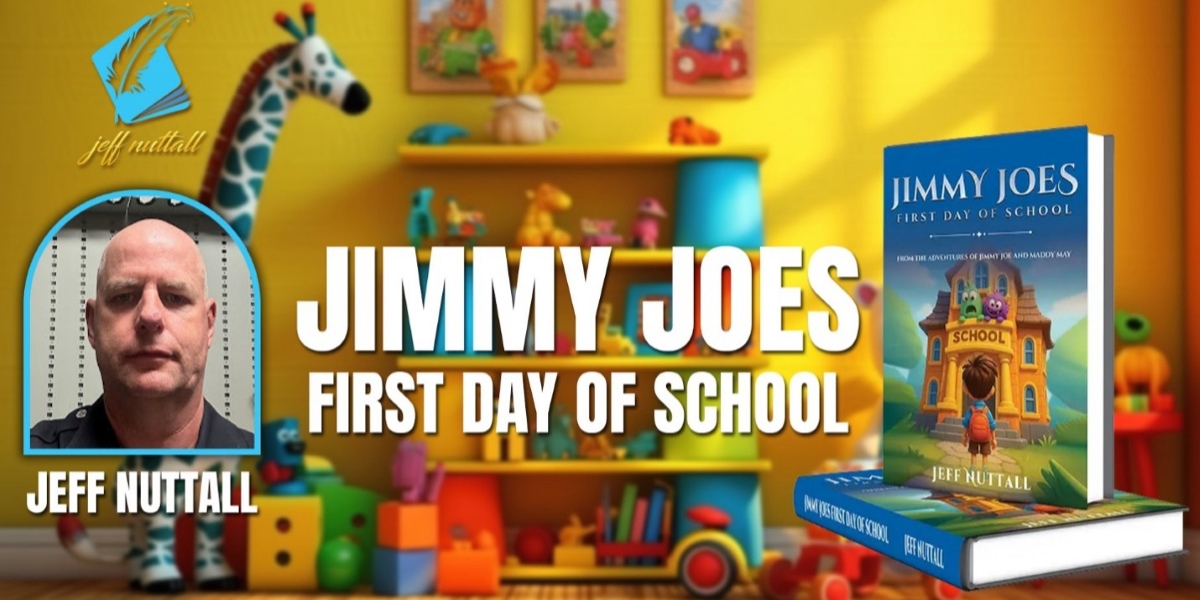
Every parent remembers it: the knot in the stomach, the lump in the throat, and the wide-eyed look on a child’s face the night before the first day of school. For Jeff Nuttall, those memories didn’t just remain as nostalgia; they became the foundation for Jimmy Joe’s First Day of School, a children’s book born from bedtime conversations with his son more than a decade ago. “We wrote that story when he was going into first grade,” Nuttall recalls, “and that’s exactly how he pictured school back then, this big, intimidating place that felt larger than life.” The cover illustration captures that perfectly: Jimmy Joe stands small at the bottom of looming school steps, monsters peeking from the shadows. What looks comical to adults is strongly authentic to children. In the story, Jimmy Joe dreads the day all summer, imagining teachers as vampires and hillbillies with shovels ready to bury him. That blend of humor and fear is exactly what Nuttall set out to portray: a child’s unfiltered imagination colliding with reality.

“Each book is about facing a different fear kids encounter as they grow up,” Nuttall explains. “The monsters look silly on purpose. It’s about reframing anxiety through humor.” That decision isn’t just artistic; it’s therapeutic. When Jimmy Joe finally realizes the monsters aren’t real and instead finds new friends, children reading the book see how laughter helps shrink fear down to size. One of the most memorable scenes comes when Jimmy Joe’s classroom closet, the perfect hiding place for a monster, reveals nothing more than a bright purple ball for sharing summer stories. The relief and the fun remind young readers that not every fear has to stay scary. “Stress is real for kids,” Nuttall says. “But if you can turn monsters into something that looks like it belongs in a Saturday morning cartoon, you’ve already made a big step in addressing the fear.”

Beneath the monsters and laughter lies something deeper: family. Jimmy Joe’s little sister, Maddy May, appears throughout the book, offering both comic relief and sibling authenticity. But it’s the presence of parents that anchors the story. Nuttall is clear about why: “If you tell me as my parent that everything’s going to be okay, then it really feels like it will be. That’s the role of a parent, no matter what it takes, you’re always there.” The book’s dialogue mirrors this. Jimmy Joe tries every trick in the book, pretending to be sick, bargaining to clean his room, and even hoping raccoons stole the car’s gas. But his mom calmly guides him out the door, a gentle but firm reminder that he isn’t facing this alone. It’s a simple yet powerful way of showing children that parents are steady even when fear feels overwhelming.

The subtitle of Jimmy Joe’s First Day of School hints at something bigger: a series. “Parenting is just a never-ending series of what’s next moments,” Nuttall laughs. “As soon as you conquer one fear, another pops up.” Future books will follow Jimmy Joe and Maddy May through new challenges, bullies, sports tryouts, and even encounters with kids who are different from them. One planned story, Nuttall shares, was inspired by a cousin with severe autism. His children struggled to understand at first, so he wrote a tale that turned the experience into something both funny and enlightening. “To this day, my kids are passionate about helping anyone with disabilities,” he says. It’s why part of the book’s proceeds will go to Autism Speaks.

For Nuttall, these books are not just bedtime stories. They are tools for emotional literacy. “Children’s books should make reading fun, but also relatable,” he says. “With technology everywhere, I think the magic of reading, the way it stretches the imagination, is more important than ever.” That magic is clear in the closing pages of Jimmy Joe’s First Day of School. After spending the morning in fear, Jimmy Joe finds himself laughing with classmates, playing kickball, and even giving cool handshakes on his way out of school. The final twist? He wakes up the next day ready to go back. It’s a transformation that children can celebrate, and parents can breathe a sigh of relief over. Beyond classroom jitters, Nuttall envisions his books as openers to bigger conversations about mental health, resilience, and inclusivity. “Society too often brushes aside children’s mental health,” he says. “If you give kids tools early, they’ll likely know how to cope later when the challenges get harder.”

He hopes teachers will use Jimmy Joe’s First Day of School in classrooms, not only to ease first-day nerves but to start discussions. His own daughter, now a college student and pre-K teacher, already plans to read it on her students’ first day. “When parents, teachers, and kids are all on the same page, literally, it creates a sense of community,” Nuttall notes. So what does Nuttall want readers, both children and adults, to take away? His answer is simple: “It’s okay to be afraid. It’s okay to talk about your fears. No one is in this world alone.” That message connects in Jimmy Joe’s journey from dread to delight. It also echoes in the way Nuttall has turned his own family’s moments into universal stories. As Jimmy Joe learns, first grade isn’t the end of the world. It’s the start of discovering resilience, with laughter as a shield and family as a guide.

In Jimmy Joe’s First Day of School, Jeff Nuttall has done more than write a children’s book. He has created a bridge between childhood fear and adult understanding, between silly monsters and serious conversations. It’s a story parents will recognize, children will laugh at, and families everywhere can learn from. And just like Jimmy Joe taking that first step up the school stairs, Nuttall’s series is only beginning.

Walking the Path of Truth: How Melody Lubin Is Helping Women Come Home to Themselves

A Journey Shaped by Courage, Intuition, and a Deeper Calling

There are people whose careers are built through planning, and then there are those whose work is born from something older and more profound. Melody Lubin belongs to the second group. Her life in the feminine arts did not begin with a business plan or a strategy. It started with a quiet inner pull that kept growing louder until it was impossible to ignore.

Today, Melody is a mentor and facilitator known for guiding women through some of the most intimate and transformative seasons of their lives. Her retreats sell out worldwide, her private mentorship spaces fill quickly, and her work continues to draw women searching for honesty, expansion, and a life that feels fully lived.

You can explore her offerings on Instagram.

A Life Shaped by Listening to What Feels True

For Melody, entering this field was never about stepping into a trend or adopting a brand identity. It was an internal truth that would not let her stay small. What she teaches now began as her own personal journey. She felt the same longing that so many women feel: the desire for a life that feels honest, aligned, and fully expressed.

Choosing this path changed everything for her. It gave her the freedom to travel, to create, and to connect with women across cultures. It also required her to carry real responsibility. The deeper the work became, the more she realized that facilitating transformation is not something you do halfway. It demands integrity, humility, and a willingness to be fully present with people as they unravel and rebuild.

Grounded Guidance in an Industry That Often Floats Above Reality

The world of feminine embodiment offers many approaches. Some feel abstract. Some feel unclear. Some feel disconnected from the day-to-day challenges that women face. Melody’s approach is the opposite.

Her work is rooted in truth. Not the soft or romantic version, but the kind that asks for courage. She does not teach from theory. She teaches from lived experience, emotional depth, and relentless devotion to her clients’ growth. She is known for her ability to cut through confusion and speak directly to what is real.

There is no performance in her sessions. No polished persona. What women receive is a guide who meets them exactly where they are and gently moves them toward who they can be.

Walking the Path of Truth: How Melody Lubin Is Helping Women Come Home to Themselves

Photo Courtesy: Melody Lubin

A Global Community Built on Depth, Not Hype

Women come to Melody’s retreats because they want more than a weekend escape. They come because her spaces feel safe, real, and alive. Every retreat blends deep inner work with presence, connection, and shared humanity. Women leave feeling clearer, stronger, and more grounded in their own truth.

These retreats are not designed to entertain. They are designed to transform. And that is why they continue to fill with women from different corners of the world who share the same longing for authenticity.

Her website, melodylubin.com, reflects the same energy: honest, inviting, and free from unnecessary noise. Her social media presence offers brief glimpses of her teachings, reminding women that transformation starts with a single step toward themselves.

When Women Follow Their Callings, Everything Changes

One of Melody’s deepest messages is that a woman’s desires are never random. They come from the part of her that remembers who she really is. The thirst for a bigger life, for deeper intimacy, for honest expression is not a fantasy. It is a direction.

Many women feel these callings but push them aside because they seem inconvenient or risky. Melody encourages the opposite. She invites women to follow them. To trust that their inner voice is wiser than their fear. To believe that wanting more does not make them selfish, dramatic, or unrealistic. It makes them alive.

Her work is a reminder that courage does not always look grand. Sometimes it looks like making one honest choice at a time.

A Future That Brings Men and Women Into the Same Room

As Melody’s work continues to grow, so does her vision. One of the following expressions of her calling involves creating spaces where men and women can heal their relational wounds together.

She believes that the tension many people feel in relationships today is not personal, but inherited. We carry patterns from our families, from past partners, from cultural conditioning. These patterns shape how we relate, communicate, and protect ourselves. Melody wants to build spaces where these patterns can be explored and released.

Her future work will focus on reconciliation, connection, and the possibility of creating harmony in places where distance once lived. It is a bold direction, but one that feels natural for someone whose core mission is truth.

The Heart of Melody’s Message

Melody wants women to know that their yearnings matter. The desire for a life that feels real is not something to dismiss. It is something to follow. Her work is an invitation to step toward a deeper version of yourself, even when it feels uncertain or unfamiliar.

She teaches that alignment is not a luxury. It is essential. When women live in alignment, they become more grounded, more loving, more powerful, and more capable of shaping the world around them.

Her promise is simple.

When you trust yourself, life expands. When you honor your truth, everything begins to shift.

Connect with her at melodylubin.com or follow her guidance on Instagram.


Disclaimer: The information provided in this article is for general informational purposes only. It is not intended as professional advice and should not be relied upon as such. Any actions you take based on the information in this article are at your own risk. We encourage you to seek advice from qualified professionals for personalized guidance.

Jeulia Holiday Gift Guide 2025: Meaningful Jewelry for Everyone on Your List

The holiday season is a time of love, sharing, and thoughtful gestures. As Christmas 2025 approaches, shoppers may find themselves looking for gifts that are not only beautiful but also meaningful and lasting. Jewelry remains one of the most timeless holiday gifts, especially when it reflects personal stories, emotional connections, and individuality. Jeulia’s Holiday Gift Guide 2025 is designed to help make holiday gifting both intentional and memorable.

Jeulia Holiday Gift Guide 2025: Meaningful Jewelry for Everyone on Your List

Photo Courtesy: Jeulia

This season, Jeulia presents a wide range of collections tailored to different styles, relationships, and occasions. From romantic couples’ rings to personalized jewelry, winter-inspired snowflake designs, and fast delivery options, every detail has been carefully considered to enhance the gifting experience. Whether it’s a small gesture or a grand expression of love, these pieces are made to resonate with the recipient’s unique tastes.

Quick Ship Collection: Convenient and Stress-Free Gifting

One of the biggest challenges of holiday shopping is timing. Jeulia’s Quick Ship Collection offers a practical solution with ready-to-ship designs that may help facilitate timely delivery without compromising quality or style. This collection is ideal for last-minute shoppers or anyone seeking a seamless gifting experience during the busy holiday season. The collection includes a variety of stylish designs, making it easier to find something special that fits the recipient’s personality and preferences.

Couples’ Rings: A Timeless Symbol of Love

The New Year is a meaningful time for couples to celebrate their journey together. Jeulia’s couples’ ring collections highlight themes of unity, devotion, and emotional connection. Thoughtfully designed matching and complementary ring sets may allow couples to express their bond in an elegant and symbolic way.

Whether chosen as promise rings or to mark a special milestone, these designs go beyond being a holiday gift. Crafted with attention to detail and quality, Jeulia’s couples’ rings are likely to become lasting keepsakes that could carry emotional significance long after the festive season has passed. These rings serve as lasting symbols of commitment, celebrating the love and connection shared between partners, making them perfect for this time of year.

Personalized Jewelry: A Gift with Personal Meaning

Personalized gifts hold a special place during the holidays. Jeulia offers extensive customization options that can transform fine jewelry into deeply personal pieces. By adding names, initials, meaningful dates, or symbolic elements, each design becomes truly one of a kind.

Through the Design Your Own Jewelry experience, customers are able to create custom rings, necklaces, and bracelets that reflect the recipient’s personality and story. Personalized jewelry is an ideal choice for family members, close friends, and anyone who values a thoughtful, intentional New Year gift.

Jeulia Holiday Gift Guide 2025: Meaningful Jewelry for Everyone on Your List

Photo Courtesy: Jeulia

Discover the Latest Jewelry Trends with Jeulia

Jeulia’s Jewelry Trends page highlights the latest directions shaping modern jewelry fashion, offering inspiration for those who value both style and meaning. The collection showcases key trends such as mixed metals that blend gold and silver tones, minimalist designs with a creative twist, and personalized jewelry featuring initials or birthstones. It also spotlights Jeulia’s signature Hug Me collection, vibrant colored gemstones that add character to any look, and celestial-inspired pieces influenced by the beauty of the sun, moon, and stars. Together, these trends reflect a balance of elegance, individuality, and contemporary design—perfect for everyday wear as well as special occasions.

A Thoughtfully Curated Gift Guide for Everyone

Jeulia’s Holiday Gift Guide 2025 brings all these collections together in one carefully curated experience. With clearly organized Gift Categories, shoppers can more easily find the perfect piece for partners, family members, friends, or even themselves.

This New Year, Jeulia offers more than just jewelry; it delivers meaningful designs that combine craftsmanship, emotion, and lasting value, helping to make every gift truly unforgettable.

Empower Your Digital Presence with PR to SKY’s Single Websites Collection

In today’s digital landscape, having a powerful, professional online presence is no longer optional — it’s essential. Whether you’re a startup founder, a creative professional, or an established enterprise, your website often serves as the first point of contact between your brand and the world. Recognizing this critical need, PR to SKY offers an innovative suite of solutions through its Single Websites collection — a range of tailored, high‑impact web assets designed to help individuals and businesses build credibility, attract audiences, and elevate their digital footprint.

What Are Single Websites?

PR to SKY’s Single Websites are lightweight, focused web pages created to highlight a specific element of your brand — such as a personal profile, a product launch, a portfolio showcase, or a promotional landing page. Unlike full‑scale websites that can be costly and time‑intensive to develop, Single Websites provide rapid deployment and targeted messaging that drives results without unnecessary complexity. They are ideal for businesses and individuals who want a professional web presence that is simple, effective, and highly shareable.

Purpose‑Driven and Customizable

Each Single Website is crafted with a clear purpose in mind. Whether you want to spotlight your personal brand, introduce a new service, or support a marketing campaign, these web pages are fully customizable to reflect your identity and objectives. PR to SKY’s team works closely with clients to ensure that the design, visuals, and content all align with the brand’s message and resonate with the intended audience.

The Single Websites collection includes a variety of templates and layouts, each optimized for modern web standards — responsive design, fast loading speeds, and seamless mobile functionality. This ensures your audience enjoys a smooth, engaging experience regardless of the device they use, which is vital for retaining attention and improving conversions.

Fast Turnaround for Immediate Results

One of the most significant advantages of PR to SKY’s Single Websites is the quick turnaround time. In a digital era where timing can make or break a campaign, having a web page ready within days — rather than weeks or months — can give brands a significant strategic edge. Whether you’re preparing for a product launch, event announcement, or media outreach effort, a Single Website can be deployed rapidly to support your objectives.

For businesses running time‑sensitive promotions or media campaigns, this speed of execution means you never miss an opportunity to engage your audience. A focused landing page with clear calls to action, concise messaging, and persuasive design can significantly boost conversions and audience engagement.

Integration with PR and Marketing Strategies

PR to SKY doesn’t just deliver standalone web pages — the Single Websites are designed to complement broader PR and marketing efforts. A dedicated landing page is an essential asset for press releases, media kits, advertising campaigns, and social media promotions. By directing audiences to a professionally crafted web presence, brands can strengthen credibility and provide media outlets with a reliable hub for key information and visuals.

For example, when paired with a press release or outdoor advertising campaign, a Single Website can centralize your message and serve as an easy reference point for journalists, partners, and potential customers. This synergy amplifies your campaign’s impact and creates a unified brand narrative across channels.

Optimized for Visibility and Engagement

PR to SKY helps ensure that each Single Website is not only visually appealing but also optimized for discovery. Key elements such as meta tags, page titles, and keyword relevance are carefully considered during development to support search engine visibility. While Single Websites are not intended to replace full SEO strategies for large domains, they provide a strong foundation for increasing online visibility and driving organic traffic to your brand’s online assets.

Engagement‑driven features — such as contact forms, social media buttons, and media galleries — are integrated to encourage user interaction and support conversion pathways. Whether your goal is to collect leads, share multimedia content, or grow your subscriber base, Single Websites are equipped to handle key engagement functions with ease.

Cost‑Effective and Scalable

Compared to complete website builds, Single Websites are a cost‑effective digital solution. They deliver high value at a fraction of the cost and time investment, making them particularly attractive for startups, small businesses, and individual professionals. As your brand evolves, these pages can also serve as foundational assets that expand into larger digital ecosystems.

For organizations testing new concepts, launching campaigns, or preparing investor outreach, Single Websites strike the perfect balance between impact and efficiency. You get a professional, branded web page with minimal overhead and maximum strategic utility.

A Strategic Web Presence for Modern Brands

In an age where digital perception directly influences audience trust and engagement, PR to SKY’s Single Websites collection offers a streamlined, effective solution for brands seeking a professional online presence. By combining purposeful design, rapid deployment, marketing integration, and optimized engagement features, these web assets empower businesses and individuals to make meaningful connections with their audiences.

Whether you need a landing page for a special campaign, a personal portfolio to enhance your professional identity, or a promotional site to support PR initiatives, PR to SKY’s Single Websites provides the tools to elevate your brand’s narrative and achieve measurable results.

This City’s Business-Civic Ecosystem May Be the Answer for Metros in Decline

By: Nic Abelian

Fort Worth, Texas, is positioning itself as a thriving example of how business, community values, and civic ambition can work together for sustainable economic growth.

While many cities across the country face declining growth or struggle to find new ways to revitalize their economies, Fort Worth, Texas, appears to be emerging as an example for economic resilience. A legacy practice has shown promising results, which goes beyond traditional business development to include the synergy between capital markets, community values, and sensible governance. Through strategic partnerships, faith-based collaborations, and a commitment to civic stewardship, Fort Worth has developed a unique model that has begun to capture the attention of city planners, business leaders, and investors.

This is exemplified by monthly professional gatherings hosted by Dr. Brandon Chicotsky, Associate Professor in Marketing at the TCU Neeley School of Business (the city’s flagship) and his family’s business brokerage, God Bless Retirement (GBR) based in Fort Worth. The gatherings showcase this innovative approach to city-building: the November gathering focused on opportunity zones regarding real estate and investment strategies, and the December event centered on monetary theory and alternative asset classes with perspectives from the Federal Reserve.

These gatherings are more than just business events; they’re a reflection of Fort Worth’s belief in the power of community-driven development, anchored in patriotism and a strong sense of local responsibility to gain an informational and positional advantage. As Dr. Chicotsky summarizes, the aim is “for Fort Worth to position itself for success in the future.”

An Integrated Ecosystem of Growth

Fort Worth’s strategy is taking shape: create an environment where business innovation and civic care are not at odds. The GBR forums, for example, begin with prayer and patriotic pledges, and evolve into discussions among bankers, private-equity specialists (often, fund managers or lead investors of syndicates), and civic stakeholders.

According to Dr. Chicotsky, this format is intentional. He describes it as a holistic approach where professional capital meets community care: “When professional capital flows into community relationships, where faith, patriotism, and local service matter, the city is able to attract deals and build a durable ecosystem of growth. Ideas gain momentum and are propelled by a bigger mission.”

“Fort Worth’s exceptional growth can be attributed to a unique and intentional alignment of values that combine to create a resilient and innovative economic ecosystem,” says Dr. Chicotsky. The city is managing growth while also in stewardship mode. Fort Worth-area banks offer relatively lower capital costs among local business leaders with a commitment to values-driven investment. This combination has made the city one of the fastest-growing metro areas in the United States.

This City's Business-Civic Ecosystem May Be the Answer for Metros in Decline

Photo Courtesy: God Bless Retirement (Business Brokerage)

A Snapshot of Fort Worth’s Economic Expansion

In 2024, Fort Worth surpassed the one-million-resident mark, cementing its status as one of the fastest-growing cities in the country. The broader Dallas-Fort Worth metroplex added over 1.3 million residents between 2012 and 2022 and has seen a near 30 percent increase in job growth in the past decade (Texas Comptroller, 2024). Fort Worth itself was ranked among the top five U.S. cities for economic expansion, with its GDP increasing by 36 percent, exports rising 40 percent, and housing supply up 12 percent between 2019 and 2023 (Southlake Style, 2025).

The city’s job market reflects this expansion. Fort Worth’s defense, energy, and transportation sectors are outperforming national pay averages, with annual wages ranging from $89,000 to $95,000 in 2024 (Dallas Fed, 2024). Additionally, the city saw $2 billion in new capital investments in 2024 (WFAA, 2024). As the city grows, it continues to attract new industries and diverse sources of investment.

Faith and Civic Engagement Fuel Economic Development

Fort Worth’s distinctiveness as a top-ten populated city in the United States may be its faith-based collaborations that catalyze economic growth. Research shows that communities combining faith with business development often see higher trust and increased local capital recirculation (Catholic Campaign for Human Development, 2024).

Fort Worth’s model takes this one step further, creating a blend of civic pride, patriotism, and entrepreneurial spirit. It’s a city where bankers and entrepreneurs can close deals while aligning more meaningful missions beyond economic factors.

Dr. Chicotsky believes this is key to Fort Worth’s success: “It’s about creating a community where capital isn’t just about financial returns, it’s about having the resources to invest in mission work and civic stewardship projects. This impact extends beyond just the market. It’s about creating a sustainable, value-driven economic ecosystem that benefits the city as a whole in this generation and for the future.”

This City's Business-Civic Ecosystem May Be the Answer for Metros in Decline

Photo Courtesy: Jobe & Helen Richards Foundation – The Chicotsky Family
The Chicotsky family, which leads the Fort Worth-based business brokerage, God Bless Retirement.

A Model for Other Declining Metros

As Fort Worth enters the top ten in population, it offers a roadmap for other cities that are struggling with economic stagnation or moral decline. Many of these cities lack the community engagement and collaborative relationships that Fort Worth has cultivated. The Fort Worth model demonstrates how a city can move forward by leveraging its faith-based culture, professional capital, and relational warmth.

The city’s strategic approach has made it a leader in the state’s economic development, accounting for 36% of Texas’s corporate project volume (Here Georgetown, 2025). For cities looking to rebound from stagnation or decline, Fort Worth’s integration of business innovation and civic responsibility presents a scalable model that emphasizes the importance of creating an economic system rooted in local values and mutual trust.

Events Driving Fort Worth’s Ongoing Economic Success

The opportunity zones forum hosted by God Bless Retirement and the Chicotsky family this year focused on investments aimed at revitalizing communities within Fort Worth. The subsequent monetary theory gathering highlighted discussions on the currency trade, providing a unique opportunity for capital markets and mission-driven investment to converge. These are just two examples of monthly, ongoing programming led by Dr. Chicotsky in Fort Worth. Rather than pure promotional showcases, these professional gatherings foster a structured exchange of ideas that link capital to meaningful community growth, anchored by strategic family office invites, which may offer a blueprint for other competitive cities.

Dr. Chicotsky emphasizes that these events are an essential part of the city’s growth strategy: “These gatherings help forge relationships, build trust, and leverage the collective power of a community committed to the common good and a faith-led life, whether in business, family, or fellowship.”

This integration of civic stewardship, market intelligence, and patriotism has created a dynamic economic architecture where social good, business success, and durable governance are realized. But Fort Worth’s story isn’t without its challenges.

Balancing Growth with Sustainability

As Fort Worth’s population grows and new industries enter the market, the city faces the strain of expansion. Issues like housing affordability and infrastructure limitations are beginning to test the city’s resilience. The recent moderation of job growth to 1.9 percent (Dallas Fed, 2025) is a reminder that continued innovation and fiscal discipline are important for maintaining the city’s success.

Dr. Chicotsky adds, “The next chapter for Fort Worth is about ‘de-risking’ its balance sheet. We need to continue building the city’s capital reserves that can weather economic downturns and create new revenue inflows. This accounts for a prospective future of external forces that may include substantial monetary value shifts and regulatory constraints.”

Fort Worth as a Model for Sustainable Economic Growth

In the face of growth-related challenges, Fort Worth demonstrates economic dynamism and more cultural cohesion amidst its various micro-sectors and various populations that make up about 350 square miles. For cities across the country, and even the world, Fort Worth’s integration of traditional family ethos, patriotism, and sensible governance could be the blueprint for how to build an economically vibrant and socially vibrant city in the years ahead.

Contact God Bless Retirement:

Email: info@godblessretirement.com

Learn more: 


Learn more about Dr. Chicotsky, Managing Principal at God Bless Retirement and Associate Professor in Marketing at the TCU Neeley School of Business: neeley.tcu.edu/chicotsky, LinkedIn.com/in/Chicotsky 

References

Catholic Campaign for Human Development. (2024, January 16). Faith and economic cooperation. Community Christian Development Association.
Dallas Fed. (2024, September). Dallas–Fort Worth economic indicators: Payrolls continue to grow. Federal Reserve Bank of Dallas.
Dallas Fed. (2025, March). Dallas–Fort Worth employment update. Federal Reserve Bank of Dallas.
Here Georgetown. (2025, March 14). Dallas–Fort Worth drives Texas’s economic growth.
NBC DFW. (2025, May 15). Fort Worth surpasses 1 million residents, Princeton fastest-growing nationwide.
Southlake Style. (2025, August 28). Fort Worth surges past Dallas in economic growth rankings.
Texas Comptroller. (2024). Metroplex region snapshot 2024.
WFAA. (2024). Fort Worth receives billions in economic development investment.

Roll-Off Dumpster Rentals in Dense Residential Neighborhoods

Roll-off dumpster rentals are increasingly common in dense residential neighborhoods as homeowners take on renovation projects, cleanouts, and property improvements. While the basic concept of renting a dumpster is straightforward, executing waste removal in tightly packed residential settings introduces challenges that are rarely discussed upfront. Limited space, close neighbors, local ordinances, and access constraints all influence how dumpster rentals work in practice.

In dense neighborhoods, mistakes around placement, timing, or compliance are magnified. What might be a minor inconvenience in a suburban setting can quickly become a fine, a complaint, or a forced removal when homes are close together and public space is shared. For homeowners, understanding these realities before a dumpster arrives can prevent fines, property damage, and unnecessary friction during an already disruptive project.

Space Constraints Shape Every Placement Decision

Dense residential neighborhoods rarely offer the open space found on rural or suburban properties. Narrow driveways, shared alleys, curbside parking, and landscaped front yards significantly limit placement options. A roll-off dumpster that fits comfortably on one property may obstruct traffic, block driveways, or encroach on neighboring lots just a few houses down.

Placement decisions must account not only for available square footage, but also for delivery truck access. Roll-off trucks require sufficient clearance to back into position and deploy containers safely. Tight turning radii, parked cars, and limited curb access can all complicate delivery. Overhead obstructions such as trees, power lines, awnings, or balconies further restrict viable placement areas.

Homeowners who assume any open space will work often face last-minute placement changes or forced relocation after delivery, adding stress and delay to the project.

Street Placement Triggers Additional Rules

In many dense neighborhoods, street placement is the only practical option. This shifts dumpster rentals into a regulated space governed by municipal rules rather than private property decisions. Permits are often required to place dumpsters on public streets, and those permits may specify duration limits, signage requirements, reflective markings, or restricted placement zones.

Enforcement is frequently complaint-driven. A single blocked sidewalk, narrowed travel lane, or obstructed parking area can prompt inspection and enforcement action. Fines or removal orders may follow, disrupting the project schedule and forcing immediate adjustments.

Verifying local requirements before scheduling delivery reduces the risk of compliance-related interruptions once work begins. In dense areas, permitting should be treated as a planning requirement, not an afterthought.

Protecting Pavement and Property Surfaces

Residential streets and driveways are not designed to support concentrated loads indefinitely. Roll-off dumpsters exert significant weight, especially when filled with dense materials such as tile, concrete, or plaster. Without protective measures, containers can crack asphalt, chip concrete, or leave permanent surface impressions.

Homeowners are typically responsible for surface damage, even when it occurs on public right-of-way areas adjacent to their property. Municipalities may require repairs if damage occurs, and repair costs can easily exceed the cost of the dumpster rental itself.

Using protective boards, distributing weight properly, and selecting stable placement areas are simple precautions that significantly reduce risk in tight residential environments. These steps also provide a measure of protection if disputes arise over responsibility for damage.

Neighbor Proximity Increases Sensitivity

Dense neighborhoods amplify the impact of construction activity. Noise, dust, visual disruption, and temporary loss of parking affect neighbors more directly when homes are close together. Dumpster placement often becomes a visible symbol of disruption, even if the project itself is limited in scope or duration.

Overflowing containers, scattered debris, or poorly secured loads can generate complaints that attract enforcement attention. Once complaints begin, scrutiny often increases, and minor issues that might otherwise go unnoticed can escalate quickly.

Maintaining clean, contained waste areas helps reduce neighbor friction and lowers the likelihood of regulatory involvement. Clear communication with neighbors about project timelines and dumpster duration can also help manage expectations and reduce tension.

Weight Limits and Mixed Waste Complications

Residential projects frequently generate mixed waste streams, combining demolition debris with household items, packaging, yard waste, and discarded furnishings. Dense materials such as tile, plaster, brick, or masonry can reach weight limits quickly, even when containers appear partially full.

In neighborhoods with limited access, overloaded dumpsters may be difficult to service. Haulers may refuse pickup until loads are reduced, or partial unloading may be required before hauling can occur. These complications delay removal and increase cost, particularly when space constraints prevent easy adjustments.

Understanding material composition and managing fill levels proactively helps avoid service disruptions tied to weight constraints. In dense neighborhoods, these disruptions often have ripple effects, including blocked access and increased neighbor complaints.

Timing Matters More in Tight Neighborhoods

Scheduling flexibility is reduced in dense residential areas. Delivery and pickup windows may be limited by local noise ordinances, traffic patterns, school schedules, or permit conditions. Missed service windows can delay debris removal for days rather than hours, particularly if permits restrict certain days or times.

Short-term renovation projects benefit from coordinated scheduling that aligns dumpster service with peak debris generation. This minimizes the time containers remain on-site and reduces exposure to complaints or enforcement action.

Homeowners who plan waste removal alongside renovation milestones tend to experience fewer delays and less friction, especially when multiple trades are involved.

Rental Duration and Compliance Risk

Many residential dumpster rentals include defined rental periods. In dense neighborhoods, exceeding those periods can draw attention from local authorities or neighbors, even if extension fees are paid. A dumpster that lingers beyond its expected timeframe may be perceived as abandoned or unauthorized.

Extensions may require permit updates or renewed approvals, adding administrative steps mid-project. Homeowners who underestimate project timelines often encounter these issues unexpectedly, compounding stress late in the renovation process.

Building realistic buffers into rental duration planning reduces compliance risk and administrative hassle. In dense neighborhoods, conservative timeline estimates are often safer than optimistic ones.

Access Challenges for Delivery and Pickup

Access challenges do not end once a dumpster is placed. Delivery trucks need room to maneuver not only during drop-off, but also during pickup. In dense neighborhoods, access conditions can change quickly due to parked cars, temporary construction fencing, or neighborhood events.

If a dumpster becomes blocked at pickup time, removal may be delayed, even if the rental period has ended. This creates scheduling conflicts and may require coordination with neighbors or local authorities to resolve.

Planning for access throughout the rental period, not just on delivery day, helps avoid these last-minute complications.

Choosing Services Suited to Residential Density

Not all dumpster services are equally suited to dense residential settings. Providers familiar with urban and infill environments tend to account for access constraints, permitting requirements, and placement challenges more effectively than those accustomed to open job sites.

Industry conversations around residential waste logistics frequently reference platforms such as Temporary Dumpster when discussing services designed to navigate tight placement conditions and short-duration residential projects. The emphasis in these discussions is on adaptability, coordination, and local awareness rather than volume alone.

Selecting services aligned with neighborhood realities reduces friction throughout the project lifecycle and improves the overall experience for homeowners.

Common Mistakes Homeowners Make

Recurring issues include assuming permits are unnecessary, underestimating space requirements, ignoring weight limits, and failing to coordinate placement with neighbors. Another common mistake is assuming that once a dumpster is placed, no further planning is required.

These mistakes often stem from treating dumpster rentals as a generic service rather than a site-specific logistical task. In dense neighborhoods, small oversights have larger consequences.

Once a dumpster is in place, correcting these errors becomes more costly and disruptive. Proactive planning is significantly more effective than reactive problem-solving in tight residential environments.

Why Dense Neighborhoods Require a Different Mindset

Dumpster rentals in dense neighborhoods require a different mindset than those in less crowded areas. Space is shared, rules are stricter, and tolerance for disruption is lower. Successful projects account for these realities from the outset.

Homeowners who treat waste removal as part of the overall renovation plan rather than a standalone decision are better positioned to avoid delays and conflict. This includes planning placement, timing, access, and compliance as interconnected elements rather than isolated choices.

Roll-off dumpster rentals in dense residential neighborhoods introduce constraints that differ markedly from less crowded settings. Space limitations, regulatory requirements, neighbor proximity, access challenges, and scheduling restrictions all influence how waste removal functions in practice.

For homeowners, understanding these factors before a dumpster arrives helps avoid fines, damage, and delays. When dumpster rentals are planned with neighborhood density in mind, they support renovation projects rather than becoming a source of friction or disruption. Thoughtful planning turns waste removal into a manageable part of the project instead of an unexpected obstacle.


BYD Overtakes Tesla as World’s Largest EV Seller in 2025

Chinese automaker BYD has officially overtaken Tesla to become the world’s largest seller of electric vehicles, marking a major shift in the global auto industry and underscoring China’s growing dominance in clean-energy manufacturing.

According to recent sales disclosures reported by multiple international outlets, BYD sold approximately 2.26 million battery-electric vehicles (BEVs) in 2025, surpassing Tesla’s roughly 1.64 million deliveries for the year. When plug-in hybrid vehicles are included, BYD’s total new energy vehicle (NEV) sales reached about 4.6 million units, meeting the company’s revised annual target.

The milestone ends Tesla’s multi-year reign as the world’s top EV seller and highlights diverging trajectories for the two companies. While BYD posted a year-over-year increase of roughly 28 % in EV deliveries, Tesla reported its second consecutive annual decline, pressured by softer demand, intensifying competition, and the expiration of key EV subsidies in several major markets.

Industry analysts attribute BYD’s surge to its vertically integrated manufacturing model, which allows the company to control costs across batteries, semiconductors, and vehicle production. This structure has enabled BYD to maintain aggressive pricing while continuing to expand its model lineup across both mass-market and premium segments.

At the same time, BYD’s rapid rise has not been without challenges. Reuters and other outlets report that the company experienced its slowest domestic sales growth in about five years in 2025, reflecting saturation and fierce competition in China’s crowded EV market. Rivals, including other Chinese manufacturers, have intensified price wars, compressing margins across the sector.

To offset domestic headwinds, BYD has accelerated its global expansion. The automaker delivered more than 1 million vehicles to overseas markets in 2025, with particularly strong growth in Southeast Asia, Latin America, and parts of Europe. New factories and assembly operations are being developed outside China as BYD works to localize production and navigate rising trade scrutiny.

Investors have reacted positively to the sales milestone, with BYD shares rising in early 2026 trading as markets digested the company’s scale and export momentum. Analysts caution, however, that sustaining growth will depend on how effectively BYD manages pricing pressure, regulatory risks, and slowing demand in its home market.

Beyond sales figures, automotive outlets report that BYD is preparing several new model launches in 2026, including updated electric sedans and SUVs aimed at export markets. The company is also expected to showcase advances in battery efficiency and vehicle software at upcoming industry events.

Together, these developments signal a broader rebalancing of the global EV landscape, with BYD’s ascent reflecting not only company-specific execution but also China’s expanding role in shaping the future of electric mobility.

Jillian MacKenzie: The Power of Awareness, Alignment, and Action

By: Regal Media Press

When you listen to Jillian MacKenzie speak, there’s a calm confidence in her words. It’s not the kind that comes from a motivational script or corporate seminar. It’s the kind that comes from living what she teaches. As the founder of Purposefully Align, Jillian has made it her life’s work to help high achievers stop chasing success and start creating it from the inside out.

Her philosophy is built on three simple but transformative steps: Awareness, Alignment, and Action. To her, these aren’t buzzwords. They’re the pillars of a life that actually feels like your own.

“Awareness is where everything begins,” Jillian says. “You can’t change what you don’t see.”

Awareness: The Courage to Look Inward

Most people come to Jillian at a breaking point. They’re successful on paper, running companies, leading teams, or managing households, but inside, they feel disconnected and exhausted. The first step she takes them through is awareness: slowing down long enough to notice what’s really driving their choices.

She describes awareness as the mirror moment. “You start to see where you’ve been running on autopilot,” she says. “Where your yeses are draining you, and where your noes could set you free.”

Jillian’s framework helps clients identify the patterns that keep them stuck, then provides them with the tools to change. The process isn’t about judgment; it’s about reality. Once a client sees the gap between how they’re living and what they truly want, something shifts. That clarity opens the door to alignment.

Jillian MacKenzie: The Power of Awareness, Alignment, and Action

Photo Courtesy: Vola Via Photography

Alignment: Finding Your Center Before You Move Forward

Alignment, Jillian explains, is where the work deepens. It’s the process of realigning your goals, decisions, and boundaries with your values. “This is where people often get scared,” she says with a smile. “Because alignment often means change. It means letting go of things that no longer fit, even if they once looked like success, and it also means being honest about what you truly value.”

Many of her clients come from high-pressure industries where productivity is praised above peace. They’ve learned to measure their worth by their output. Jillian helps them rediscover their inner compass. “When you start aligning with who you really are, and what you really want, your life starts to flow differently,” she says. “Opportunities come that actually feel good, not just look good.”

She teaches alignment not as a one-time event, but as a daily practice. It might mean rewriting your schedule to create space for creativity. It might mean having a difficult conversation with a boss or partner. It could be as small as saying no to something that doesn’t feel right. Every aligned choice, she explains, builds momentum toward lasting change.

Action: Turning Clarity Into Momentum

Once awareness and alignment are in place, action becomes inevitable. It’s about intentional movement, taking steps that feel true, not forced. “You don’t have to do everything at once,” Jillian reminds her clients. “You just have to do the next right thing, especially if it feels hard.”

Her twelve-week program, The Elevated Workplace, is designed around this principle. Each week builds on the last, guiding professionals from burnout and confusion toward a clear, empowered path forward. It’s structured yet flexible, allowing people to find their rhythm with the right amount of pressure.

Clients often describe the process as a reset for the soul. One executive said that after working with Jillian, he no longer felt like he was “fighting life.” Another client shared that she finally stopped waiting for permission to follow her passion project, and it led to a new business that feels aligned and fulfilling.

The Bridge Between Spirit and Strategy

What makes Jillian’s approach unique is her blend of intuition and practicality. She doesn’t separate her personal life from her professional life. She sees them as reflections of each other. “You can’t lead others if you’re disconnected from yourself,” she says. “The best strategy in the world won’t work if your energy is out of alignment.”

That balance between spiritual insight and grounded structure has made her a trusted guide for leaders who want more than surface-level success. Her sessions combine mindfulness, conversation, and accountability. She’s warm but direct, compassionate yet honest. As she often tells her clients, “I’m not here to tell you what you want to hear. I’m here to help you remember what you already know.”

Through her coaching company, Purposefully Align, her Interested in Chaos podcast, and her published guided journal, Purposefully Plan, Jillian has created a growing community of people committed to living and leading with integrity. Each platform serves as another way to share her central message: that peace and progress can exist together.

Living With Purpose in a Chaotic World

In an age where busyness is worn like a badge of honor, Jillian’s philosophy is a quiet rebellion. She teaches that fulfillment isn’t found in doing more, it’s found in doing what matters.

“Alignment doesn’t make life easier,” she says. “It makes it clearer.”

That clarity allows her clients to make decisions with confidence, to trust their instincts, and to create success that actually feels good. For Jillian, that’s the ultimate goal. “You don’t have to choose between ambition and authenticity,” she says. “You just have to remember that your power grows when your actions match your truth.”

Through her work, Jillian MacKenzie continues to redefine what leadership, purpose, and success look like in today’s world. Her philosophy of Awareness, Alignment, and Action isn’t just a coaching method; it’s a way of living. And in every conversation she has, every program she leads, and every story she shares, she’s reminding people that the path to clarity begins where fear ends: right in the heart of awareness.

Disclaimer: The information provided in this article is for general informational purposes only and is not intended as professional advice. Jillian MacKenzie’s philosophy and coaching methods are based on personal experience and insights. Results may vary depending on individual circumstances. Always seek advice from qualified professionals for personalized guidance.