Why Glass Jars Are the Smarter Choice for Your Cosmetic Products

If you’re into skincare or makeup, you’ve probably noticed more brands switching to glass jars for their products. From face creams to lip scrubs, these sleek, reusable containers are everywhere — and for good reason. Beyond just looking elegant, glass jars for cosmetics bring a lot of benefits that go way beyond packaging.

Let’s talk about why they’ve become the go-to choice for modern beauty brands — and even for DIY makers who love creating their own skincare products at home.

1. They Keep Your Products Fresh Longer

Glass is nonporous, which means it doesn’t react with the ingredients inside your cream, balm, or serum. Unlike plastic containers, glass doesn’t leach chemicals over time. That means your formulas stay pure, stable, and effective — especially important for natural or organic skincare products.

If you’ve ever had a lotion or scrub that smelled “off” after a few weeks, the packaging could’ve been the problem. Glass helps prevent that.

2. They Look and Feel Premium

Let’s be real — glass jars just look better. They have that high-end, minimalist appeal that fits perfectly on a vanity or bathroom shelf. For small cosmetic brands, packaging matters. A beautiful glass jar can instantly make your product feel more luxurious and trustworthy. Plus, the tactile experience of using a glass jar enhances the overall ritual of skincare, adding a luxurious touch that elevates daily routines.

Whether you’re selling in stores or online, customers notice presentation. A sturdy, frosted glass jar with a clean label can make your brand stand out instantly.

3. They’re Eco-Friendly and Reusable

Plastic waste is one of the biggest issues in the beauty industry. Switching to glass helps reduce that. Glass jars can be reused, recycled, and repurposed endlessly. You can wash and refill them with new product or even use them to store small items like cotton pads, beads, or DIY skincare recipes.

It’s a small change that makes a big difference — for both your brand image and the planet.

4. Ideal for DIY Skincare Lovers

If you love making your own skincare products at home, glass jars are your best friend. They’re ideal for storing body butters, lip balms, scrubs, and masks. Because glass is resistant to heat and oils, it helps preserve your homemade blends safely.

Plus, they’re easy to sterilize before use — just boil or steam them to ensure they’re clean and ready for your next creation.

5. Available in Different Sizes and Styles

Whether you need a small 1 oz jar for samples or a large 4 oz jar for body creams, there’s a size for every use. You can also choose from clear, amber, black, blue, or green glass — each offering different benefits for product protection and branding.

For example:

  • Amber glass jars protect light-sensitive ingredients like essential oils.
  • Clear glass jars showcase the color and texture of your product beautifully.
  • Frosted or black glass jars add a touch of luxury and mystery.

If you’re looking for high-quality cosmetic jars in different styles and sizes, you can check out The Bottle Depot — a trusted supplier of glass jars for cosmetics that offers wholesale options for businesses and DIY creators.

The Bottom Line

Whether you’re a small business owner or someone who loves making natural skincare at home, glass jars are worth the investment. They’re safe, sustainable, and simply beautiful to look at.

In an age where more people care about what’s inside their products — and what’s around them — going for glass isn’t just a packaging choice. It’s a statement of quality, sustainability, and care.

Pro tip: Start small. Replace a few plastic containers with glass and see how it transforms your product presentation and shelf life. Once you do, you’ll never want to go back.

YOSHIKI Announces Full Return: Classical Concert “YOSHIKI CLASSICAL 2026 The Night Before Awakening – Tokyo 3 Nights: Chapter One to the World” 

By: Austen Stu 

April 2026 – A New Chapter Unfolds from Japan 

YOSHIKI held a press conference at Park Hyatt Tokyo and announced his Classical Concert “YOSHIKI CLASSICAL 2026 The Night Before Awakening – Tokyo 3 Nights: Chapter One to the World”. The concerts will be held over 3 days from Friday, April 3rd to Sunday, April 5th, 2026, at Tokyo Garden Theater.  

This Classical Concert comes after YOSHIKI’s third cervical spine surgery in 2024 and a long rehabilitation period through 2025 and symbolizes YOSHIKI’s full return to his artistic activities. During the press conference, YOSHIKI stated, “This Classical Concert will be the inception of my upcoming activities. I think it will be the concert that marks my full return,” and expressed his firm determination. 

YOSHIKI also touched on his exceptional performance “Hegra Candlelit Classics” that took place at Hegra, a UNESCO World Heritage Site in AlUla, Saudi Arabia, last month on November 20, reflecting, “As I played modern music in front of the ruins with a history of over 2000 years, I naturally started to see the trajectory of my future. (The show in Saudi Arabia) It was a significant milestone in my life, as he positioned the show as the beginning of a new phase in his life and career. 

Regarding the three shows in Tokyo announced during the press conference, YOSHIKI commented, “International shows will likely be announced gradually in the coming days, but I am honored to be able to commence the first chapter of a world tour from Japan,” as he revealed plans of a global expansion stemming from his shows in Japan.  

A surprise first-ever performance of his new song “LARMES” also took place during the press conference. The song is scheduled to be released on January 23, 2026, and the performance, held as he announced his full return, was met with great interest and appreciation from the audience. At the conclusion of the press conference, YOSHIKI wore a Santa Claus hat as he played “Silent Night” on piano, filling the venue with a peaceful, calming warmth. 

When asked about his motivation for creativity, YOSHIKI explained, “Since I was little, I think I’ve had the strong desire to pursue artistic beauty fully. Throughout my life, I have frequently felt down, and I definitely do not think I have been exactly good at living life. However, the reason I have been able to continue to do music despite it all is due to the feeling that my fans are always supporting me. That sentiment has been the source of my motivation to continue creating new things.” YOSHIKI looked back on the year and stated, “The kanji character to symbolize this year, since there was a lot of sadness too, will be Tear(s). However, next year’s character will definitely be Surprise – I plan to be able to announce a lot of surprises,” as he predicted a rapid progression of activities following his return as an artist. 

“YOSHIKI CLASSICAL 2026 The Night Before Awakening – Tokyo 3 Nights: Chapter One to the World” will be performed by piano and strings, and YOSHIKI plans to perform X JAPAN’s signature songs as well as other music he has written for movies and more. YOSHIKI’s music continues to garner praise across countries and generations. His unique style of blending rock and classical music never ceases to evolve, and his ability to express himself has always made a strong impression on the world. With a highly artistic production, he consistently creates a stage that captivates every member of the audience.  

YOSHIKI concluded the press conference by stating, “I am proud and honored to be able to go out into the world, with the shows in Japan as my point of departure. I look forward to beginning a new chapter from here,” as he emphasized that the 3 nights in Tokyo will be the beginning of a new story into the future.   

The concerts will offer VIP packages that include benefits such as guaranteed assigned seating in the Arena Center Block, VIP-exclusive merch, a sound-check party, and preferred VIP merch sales at the venue.   

A presale for tickets kicked off on Wednesday, December 18th, at 2:00 PM for holders of Rakuten YOSHIKI Credit cards. More presales are scheduled to follow for members of Mitsui Sumitomo VISA・MASTER Cards, YOSHIKI+, YOSHIKI CHANNEL, International Fans, and more. 

Concert Overview 

“YOSHIKI CLASSICAL 2026 The Night Before Awakening – Tokyo 3 Nights: Chapter One to the World.” 

Venue: Tokyo Garden Theater  

Ticket Prices:18,000 JPY (Tax Included) VIP Package 100,000JPY (Tax Included)

Schedule: 

  • Friday, April 3rd – Doors 18:00 / Show 19:00 
  • Saturday, April 4th – Doors 16:00 / Show 17:00 
  • Sunday, April 5th – Doors 16:00 / Show 17:00 

Ticket Sales Schedule: 

  • Thursday, December 18, 14:00 through Monday, January 5, 23:59 – Rakuten YOSHIKI Credit Card Presale (1st Presale)  
  • Tuesday, January 6, 12:00 through Monday Holiday, January 12, 23:59 – Rakuten YOSHIKI Credit Card Presale (2nd Presale)  
  • Tuesday, January 13, 12:00 through Monday, January 19, 23:59 Mitsui Sumitomo VISA & MASTER Card Presale 
  • Tuesday, January 13, 12:00 through Monday, January 19, 23:59 UDO Premium Members Presale 
  • Tuesday, January 20, 12:00 through Thursday, January 29, 23:59 YOSHIKI+&YOSHIKI CHANNEL Presale 
  • Tuesday, January 20, 12:00 through Thursday, January 29, 23:59 YOSHIKI SCARLET ARMY Presale 
  • Tuesday, January 20, 12:00 through Thursday, January 29, 23:59 UDO Members Presale 
  • Friday, January 30, 12:00 through Monday, February 9, 23:59 TEAM YOSHIKI, International Fans Presale 
  • Friday, January 30, 12:00 through Monday, February 9, 23:59 – LAWSON Presale 
  • Saturday, February 14, 12:00 – General Sales   

YOSHIKI Official Site:https://jp.yoshiki.net/ 

YOSHIKI Official Instagram: https://www.instagram.com/yoshikiofficial/ 

YOSHIKI YouTube Channel:https://www.youtube.com/yoshikiofficial 

“Quality Point”: Illia Kovalov’s Journey from Tester to Leader of Multi-Platform QA Teams

By: James Williams

The software quality assurance industry is undergoing a large-scale transformation, and today it requires specialists not only with technical expertise, but also with entrepreneurial thinking, the ability to work with large systems, and navigation in international security standards.

Our hero, Illia Kovalov, an experienced QA Engineer and QA Lead with more than nine years of practice, has traveled the path from cumbersome regression cycles to QA team architecture and launching his own IT projects in the USA. His portfolio includes multi-platform products, medical solutions at the HIPAA/FDA level, mobile applications, and large-scale American contracts on the Upwork platform, where he entered the top 3% of specialists (Top Rated Plus) and earned over $100,000. Today, Illia continues to develop e-commerce projects in the USA and trains a new generation of QA engineers through his community, Freelance Lab.

Illia, let’s start with the origins. Your first major project was a medical development in the USA. What were the tasks and what was the role of testing in such a high-risk product?

— This was a fundamental project for me, a medical one operating according to HIPAA/FDA standards. American research companies were collecting patient data and the results of clinical trials of new drugs. The system had to flawlessly record key indicators, transform them, and transfer them between applications and internal services.

My task was to ensure that the entire data transfer cycle worked correctly: from collecting metrics from devices to their subsequent processing in medical institutions. An error here equals a risk to the patient, so the level of responsibility was very high.

Five years of work produced large-scale results: we tested about 12,000 scenarios and identified more than 300,000 defects, which significantly increased the system’s reliability and helped the product reach a new level.

Is the project finished? Or does it continue without you?

— I completed it in September of last year, after five years of continuous work.

The next stage was the freelance platform Upwork. You have been working there for almost ten years. Which projects were key?

— Upwork became my window to the American market. Almost all clients are from the USA, and among them were truly strong projects.

One of my favorites was testing sports unmanned drones. FPV drone races are held in America, and we were creating a simulator for pilot training. I tested over 200 virtual maps, participated in offline tournaments broadcast on American TV, and monitored the platform’s stability live.

In addition, I created my own training map, which became popular among beginners. It was a rare case in QA when you see that your contribution actually affects the user experience.

And which projects are you currently working on?

— Today I am conducting testing of a VPN service for the American market, including government agencies. This is a topic with increased security requirements.

I am also participating in the development and testing of a mobile application connecting users with experts, from well-known entrepreneurs to artists. It is a knowledge marketplace, and it is actively growing.

Your resume lists more than 13 major contracts. The geography is mainly the USA?

— Yes, about ten major contracts, American companies. And all were completed with five-star ratings.

Besides your work, you created your own IT company in the USA. What does it do?

— At the beginning of the year, I opened an LLC in the USA that provides development and testing services. Currently, all my American orders go through it.

At the same time, I am developing two e-commerce projects that connect manufacturers in China with the US market. I fully manage them from scratch: from integrations to logistics architecture.

A separate part of your activity is education. Tell us about Freelance Lab.

— Freelance Lab arose from demand. I was constantly approached by friends and colleagues: where to start, how to enter the American market, how to take projects on Upwork.

Together with a university friend, we created a community, teaching how to correctly build a profile, find first clients, negotiate, and work with large clients.

Today the community has over 865 participants. We have run two cohorts, and we also conduct paid consultations, helping solve specific tasks—from growth strategies to client communication.

You also participated in hackathons. In what capacity?

— As a participant. Our team took first place. It was a valuable experience in teamwork and rapid prototyping.

You have been in the profession for almost ten years. How has the testing industry changed?

— Nine years ago, the market was simpler. There were fewer technologies, fewer tools, and information had to be collected manually. Now the industry has matured: standards have grown, development speed has increased, and requirements for security and multi-platform functionality have risen.

But the main factor is artificial intelligence. And it is often misunderstood: many fear that it will “take jobs.” In fact, it is a tool that speeds up processes. What used to take a day can now be done in half an hour.

AI will not replace an engineer. It will replace an engineer who does not know how to work with AI. The future is a tandem of specialist and AI. In a few years, the term “tester” may disappear, but not the profession. It will transform into more complex roles where the QA engineer becomes an operator of systems using artificial intelligence.

What would you advise beginners in IT?

— Three directions: study artificial intelligence, understand how it integrates into workflows. This is critically important. Second — English. The American market still pays 2–3 times more than the European or CIS markets. And look toward AI agents. These are tools that allow automation of complex tasks and completely restructure the work architecture.

If you combine these three elements — English, AI, and practice — you can reach an excellent level in 2–3 years.


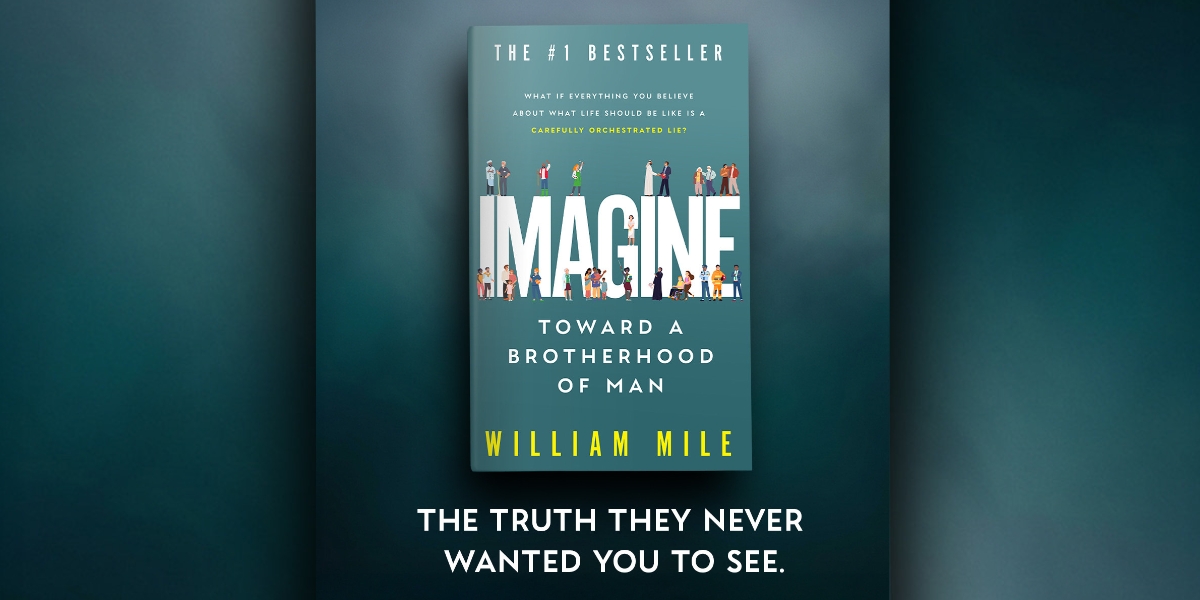
We, the Eights: Rethinking Good, Evil, and Belonging in Imagine: Toward a Brotherhood of Man by William Mile

By: AR MEDIA

What if the world’s chaos could be summed up in a simple ratio?

In Imagine: Toward a Brotherhood of Man, William Mile proposes what he calls the 8:2 theory: out of every ten people, eight are fundamentally “brothers” open to God’s love and capable of growth, and two are “evil people with successful actions” who thrive on confusion, division, and harm. It’s a bold, almost startlingly simple lens on good and evil, part spiritual manifesto, part social theory, part practical handbook for living with purpose in a broken world. 

Rather than a dense academic treatise, Mile offers a short, highly accessible book that reads like equal parts sermon, pep talk, and kitchen-table conversation. The tone is plainspoken and direct, and the stakes, in his view, could not be higher.

The 8:2 Theory in Plain Language

Mile begins with a familiar picture: a classroom of thirty kids, many of whom are decent, imperfect but generally trying, and a smaller handful who seem bent on disruption, cruelty, or control. From that everyday observation, he builds his central claim: across humanity, roughly eight out of ten people are 8s, those who, however flawed, are reachable by God’s “transformative power” and capable of living ethically, while two out of ten are 2s, driven by a darker source, “born with innate behavioral habits” that consistently produce harm. 

The twist is that Mile’s 8s aren’t limited by any of the usual labels. The brotherhood includes every race, ethnicity, nation, political system, religion, age, social class, and walk of life.

If you’re open to what he calls a “good source,” God by any name, and willing to keep growing, you’re in the 8s. If you consistently serve chaos, cruelty, and manipulation and find joy in others’ suffering, you fall into the 2s.

This framework allows him to do something refreshingly countercultural: shift blame away from “those people,” other religions, other parties, other nations, and onto a small, stubborn minority he believes has been quietly steering history toward disaster. The majority of us, he insists, are not the problem. Our problem is that we’ve been fighting each other instead of recognizing who’s actually pulling the strings.

It’s a sweeping claim, but it has an undeniable intuitive appeal. Many people have had the experience of sensing that some individuals seem wired for kindness and growth, while others seem almost addicted to damage.

Evil, Demystified, and Made Uncomfortably Close

One of the book’s strengths is its treatment of evil, which is serious and clear. This is not the vague “toxic people” language of pop psychology, nor the purely structural evil of social theory. Mile means something sharper.

His “evil 2s” are the kind of people who engineer genocides, design torture regimes, weaponize ideology, or incite mass violence for power and profit. He points to history, World War II and the Holocaust, inquisitions, authoritarian regimes that erased intellectuals and artists, as moments when 2s nearly reshaped the planet in their own image. 

But he’s careful to say 2s aren’t just dictators and generals. They can be bosses, neighbors, even family members, anywhere power, deception, and a lack of conscience converge. They lie easily, avoid responsibility, and, in his telling, sometimes laugh at the suffering they cause. By giving this group a name and a pattern, Mile hopes to strip away some of their mystique: “Shining a spotlight on evil reveals it,” he writes, “so we can plainly know it when it shows up.”

Importantly, 8s are not painted as pure. They can do significant harm, too, out of ignorance, confusion, fear, or misguided “greater good” thinking. The difference, for Mile, is that 8s are ultimately reachable: they regret, repent, learn, and change. 2s do not.

That sharp binary may be a provocative aspect of the book, and also where readers will likely have the strongest reactions, positive or hesitant. On the one hand, there’s relief in the idea that humanity is salvageable and fundamentally aligned with goodness. On the other hand, it raises hard questions: Are some people truly beyond transformation? What happens if we start labeling real individuals in our lives as “2s”?

Mile doesn’t encourage paranoid witch-hunts for villains. The emphasis is always on strengthening the 8s’ unity, sobriety, and sense of purpose, so that evilhas fewer openings.

Work, Sobriety, and “Surthriving”: A Practical Path for 8s

Where many spiritual books stop at big ideas, Imagine gets surprisingly concrete. The central chapters read like a compact field manual for living as a strong 8 in a confusing age.

Mile’s core advice is disarmingly simple: stay clear-headed, develop yourself, find meaningful work, and teach the next generation.

For readers adrift in a world of algorithmic distraction and political fatigue, there’s something grounding about this emphasis on simple disciplines: sleep, sobriety, study, and service as key acts of resistance against chaos.

A Wide-Open God and a Big-Tent Brotherhood

An engaging passage is in the chapter “On God,” in which Mile shares his own journey: baptized and churched, then led, through a long, stubborn personal struggle, to explore wisdom from Christianity, Hinduism, Judaism, Islam, Buddhism, meditation, and beyond. He describes himself now as an “educationalist,” committed to studying broadly and drawing his own conclusions rather than confining himself to any single tradition’s brand. 

Crucially, the 8:2 theory doesn’t ask anyone to change religions. It doesn’t say, “my path instead of yours”; it says, “If you’re sincerely seeking the good, you’re already part of the brotherhood.” His call is less conversion and more détente: Christians, Jews, Muslims, Hindus, “spiritual but not religious, ”stop treating each other as the problem. The real danger, he insists, is the small minority that manipulates those divisions for its own ends.

In a time when faith communities are as divided as politics, the call for interreligious humility stands out. It offers people of conviction a way to hold their beliefs firmly while still recognizing the sincerity and dignity of others on different paths.

Readers whose theology emphasizes universal redemption may bristle at the suggestion that 2s are nearly unreachable, but Mile does repeatedly affirm that God still loves them and desires their return. The emphasis, though, stays firmly on strengthening the 8s’ unity rather than speculating about the inner life of the 2s.

Imagining an 8:2 World

What would it look like, Mile asks, if enough people embraced this framework?

He doesn’t promise utopia, but he does imagine a world in which purposeful work is re-honored as the “forgotten spiritual path”; faith and science are allies, not enemies; religious and cultural battles calm down because the “real enemy” is more clearly understood; and evil finds fewer cracks to exploit.

He’s honest about the effort involved. There’s no quick fix, no secret hack. It’s “step by step,” a slow transformation out of what he provocatively calls an age-long “dark age” of confusion into something more aligned with God’s intention. 

A Brief Book with Big Ambitions

Ultimately, Imagine: Toward a Brotherhood of Man is exactly what its subtitle promises: an invitation to build a world in which most of us recognize our shared allegiance to goodness, and stop letting a small, destructive minority set the tone.

It is hopeful without being naive, spiritual without being sectarian, and challenging without being crushing. Mile writes as someone who has wrestled for decades with questions of God, work, and human nature, and has distilled what he’s found into a lean, usable framework.

For readers who sense that “this can’t be as good as we get,” who are hungry for belonging and purpose but wary of rigid dogma, this little book offers a surprisingly spacious vision: You are not alone. You are not powerless. And if you’re willing to become a stronger 8, clear-headed, working, learning, and refusing to demonize your fellow 8s, you might just help tilt the ratio toward a better world.

Get your copy of Imagine: Toward a Brotherhood of Man by William Mile and explore a vision for a more connected world.

Disclosure: This editorial review was prepared by AR MEDIA.

The Stories Our Parents Don’t Tell Us: Memory, Silence, and the Weight of Exile in 90 Miles 2.0

By: AR MEDIA

There’s a particular kind of silence that lives inside immigrant families. It hangs in the pauses at dinner, in the way a parent changes the subject when a certain year or name comes up. It’s the silence of people who have seen more than they can easily say, and who aren’t sure their children are ready, or willing, to hear it.

Jose L. Gonzalez’s 90 Miles 2.0 is, at its core, a story about uncovering that silence.

On the surface, the book is a political thriller and a love story set against the Cuban Revolution. Structured as a feature-length screenplay, it offers all the hallmarks of a cinematic narrative: tense meetings, dangerous deals, torture chambers, breathtaking escapes, and sweeping romantic moments. But beneath the action is a quieter, more intimate drama: a daughter asking her father to finally tell her the truth, and a man deciding whether he has the courage to revisit the worst and most beautiful years of his life.

This is where 90 Miles 2.0 becomes not just entertainment but a profound meditation on memory, trauma, and what it means to inherit a history you didn’t live, but that still lives inside you.

A Quinceañera as a Confession Booth

Gonzalez frames his entire story around a single family moment: Lucia’s fifteenth birthday celebration in Miami. There is music, food, a red Ferrari arriving in style, and the unmistakable vibe of Cuban American success, hard-earned, proudly displayed, and lovingly shared.

But the emotional center of that party is not the dance floor; it’s a quiet conversation between Lucia and her father, Pepe. She knows there’s more to her mother’s story than she’s been told. She knows that whatever happened in Cuba isn’t just “in the past” but has shaped every part of who her father is and how he raised her. On this milestone day, she wants answers.

Pepe’s decision to finally open the old photo album, literally and figuratively, turns the novel into a long, unbroken flashback. What unfolds is his confession: the origin story of their family, wrapped in the rise and betrayal of the revolution.

By choosing this frame, Gonzalez transforms a historical drama into an intergenerational dialogue. Lucia represents the children and grandchildren of exiles everywhere, beneficiaries of sacrifice, but often kept at a distance from the events that made their lives possible. Pepe stands in for a generation that rarely talks about what they survived, partly from pain, partly from pride, and partly from fear that no one will truly understand.

The book asks a haunting question: What happens when those stories are never told, and what might happen when they are finally told?

Revolution as Family Business

Another striking angle in 90 Miles 2.0 is how personal the revolution feels. It does not present a distant, textbook view of Fidel and Che. It shows them as men who charm wealthy donors, inspire young idealists, and slowly reveal just how far they’re willing to go.

For Pepe, Alicia, and their circle, politics is not an abstract ideological debate. It’s a family business. It’s about what happens to their neighbors, their land, their employees, their children. The revolution comes to their homes, their offices, and eventually their consciences.

Gonzalez is especially effective at capturing that initial rush of idealism. Early on, you see why intelligent, successful people might be drawn to Castro’s promise of justice after years of Batista’s corruption. The gatherings feel hopeful, even glamorous, as Havana’s elite plan what they believe will be a better future for their country.

Then the line blurs. Money from questionable sources appears. Allies die under mysterious circumstances. Rules change. Suspicion grows. The characters move from being coauthors of history to potential targets of it.

What’s powerful here is how slowly and painfully that realization dawns. There is no single moment when Pepe and his friends “wake up” to the danger. Instead, Gonzalez shows how complicity and disillusionment accumulate scene by scene, until leaving is no longer an act of betrayal but the only way to survive.

For readers from exile and refugee communities, this progression will feel deeply familiar. Revolutions, wars, and coups rarely begin with moustache-twirling villains. They begin with promises that sound righteous, even necessary. By grounding the politics in the daily lives of one extended family, 90 Miles 2.0 makes a large historical tragedy feel frighteningly intimate.

The Screenplay as an Emotional Archive

The decision to present the story as a screenplay is more than a stylistic flourish. It becomes a kind of emotional archive. Trauma presents itself as scenes rather than neat, linear chapters.

In script form, memories unfold as scenes rather than summaries. You’re placed into the room as conversations happen, instead of being told later how they went. The camera “moves” through time and space the way memory does, suddenly, sharply, sometimes out of sequence.

For example, the screenplay format allows Gonzalez to:

  • Cut quickly between past and present, echoing the way trauma resurfaces in flashes.

  • Hold close-ups on faces at crucial moments, letting a single expression say what pages of explanation might only dilute.

  • Use sound—music, TV announcers, crowd noise—as a backdrop, letting the world’s chaos bleed into his characters’ private crises.

It invites the reader to watch the past with Lucia, almost as if she were sitting beside us in a dark theater, finally seeing how her life began.

Bilingual Storytelling and the Question of Who Gets to Remember

One of Gonzalez’s most meaningful choices is to include the full story in both English and Spanish. This is not just a translation but a statement of who this narrative belongs to.

The English version speaks directly to readers like Lucia, second- or third-generation Cuban Americans, and others, whose primary language is English but whose roots are elsewhere. The Spanish version speaks to those who lived through the events in their mother tongue: parents, grandparents, and elders for whom memory itself is coded in Spanish.

In many immigrant families, language divides generations as much as geography does. Children grow up thinking, dreaming, and reading in English, while their elders remember, grieve, and pray in Spanish. By presenting 90 Miles 2.0 in both languages, Gonzalez creates a shared text where those worlds can meet.

The Cost of Looking Back

If 90 Miles 2.0 were only about the past, it would still be moving. But its real strength lies in how it quietly asks what all of this means now.

We live in a moment when authoritarianism, disinformation, and political cults of personality are again part of the global conversation. Gonzalez never turns the book into a lecture, yet the parallels are hard to miss. Charismatic leaders. Noble slogans. The slow erosion of dissent. The demonization of opponents. The belief that “this time” power will be different.

By showing how quickly hope turned to horror in Cuba, the book gives modern readers a mirror. It challenges us to ask: What would we have seen? What would we have ignored? When would we have spoken up or left?

At the same time, the novel is deeply tender toward those who didn’t always make the right choices. Pepe and his friends are not saints. They misjudge people. They stay too long. They believe too much. They hurt the ones they love, sometimes by action, sometimes by silence. In other words, they are recognizably human.

That nuance is one of the book’s quiet triumphs. It resists easy hero/villain binaries—not in denying the brutality of the regime but in acknowledging the complicated human path that led so many to support it, and then to flee it.

A Story That Invites Your Own

In the end, what lingers most from 90 Miles 2.0 is the feeling that you’ve been allowed to sit with a family at their most vulnerable moment, when the past finally meets the present, and the next generation says, “Tell me everything.”

As a reading experience, the book is ambitious. The screenplay format, the graphic honesty of certain scenes, and the dense political backdrop ask the reader to lean in and stay engaged.

Gonzalez has done something rare. He has turned one family’s private pain into a public work of art that honors both the people who lived it and the descendants who still feel its tremors.

For anyone who has ever sensed there’s a story behind their parents’ silence or for anyone who has carried a story in their heart, unsure how to share it, 90 Miles 2.0 offers both a caution and an invitation:

Silence protects, but it also imprisons. At some point, someone has to speak.

Discover the Untold Story Behind the Cuban Revolution

Get your copy of 90 Miles 2.0 by Jose L. Gonzalez on Amazon, a compelling blend of history, espionage, and human drama.

Disclosure: This editorial review was prepared by AR MEDIA.

Ephesus LLC and Its Role in Community Revitalization and Social Impact

Urban and suburban landscapes continually evolve, shaped by the economic forces driving real estate development. As cities expand and neighborhoods shift, property investment firms play a key role in determining the direction of housing markets. While many companies focus solely on transactional gains, others, such as Ephesus LLC, have taken an interest in broader social contributions. The company’s approach to real estate has extended beyond property acquisition and resale, reflecting a commitment to community improvement and revitalization.

Founded in 2014, Ephesus LLC is a Massachusetts-based real estate investment firm specializing in purchasing homes directly from sellers. The company was established by Baris Berk with a mission to streamline home sales, allowing property owners to sell quickly without engaging traditional real estate agents. Over the years, the company has expanded its reach, not only buying and selling homes but also revitalizing properties that would otherwise have been neglected. By improving distressed homes and working within local housing markets, Ephesus LLC has helped transform communities and enhance property values across various neighborhoods.

One characteristic area in which Ephesus LLC operates is neighborhood revitalization. Many of the properties acquired by the company are dilapidated, require major fixes, or have been abandoned after prior owners experienced financial difficulties. Instead of leaving such properties in disrepair, Ephesus LLC undertakes renovations to restore them to market conditions. This way, the company helps stabilize neighborhoods, lower abandoned property rates, and make living environments more attractive.

The company’s investment strategy has positively impacted several Massachusetts communities. In neighborhoods with high foreclosure rates, for example, homes bought by Ephesus LLC have been extensively renovated before being put back on the market. This process opened up residential opportunities for fresh buyers and kept neighborhoods from suffering for extended periods from economic downturns linked to vacant property. Market commentators observe that companies involved in such revitalization schemes tend to slow the depreciation of home values and spur additional investment from other players in the real estate market.

In addition to its direct real estate transactions, Ephesus LLC has also been involved in philanthropic activities. The company is said to have worked with community housing groups to support homeowners on the brink of financial crisis. Though its core business is property purchase and resale, Ephesus LLC has on occasion assisted community-based programs aimed at helping distressed homeowners. The company’s impact goes beyond the direct transactions it facilitates, whether through educational campaigns on financial planning or assistance to housing support groups.

The social impact of Ephesus LLC is also evident in how the company conducts property management. In contrast to conventional real estate companies that predominantly work with vacant houses, the company has proved accommodating in buying homes with tenants in place. The strategy allows homeowners to sell their homes without having to evict tenants immediately. When properties need renovation before resale, Ephesus LLC has sometimes provided temporary relocation assistance to affected residents. Such actions reflect sensitivity to the social aspects of real estate transactions.

In conversations about the broader real estate market, professionals have noted that direct home-buying firms like Ephesus LLC offer an alternative for sellers who don’t have the resources or time to go through traditional home sales. Conventional real estate sales involve extensive repairs, professional staging, and extended listing times. Ephesus LLC has established a niche by providing a faster alternative, especially for homeowners facing financial difficulties, inheritances, or time-critical moves.

Nonetheless, as with any business model, there are varying views on the long-term effects of direct home-buying companies on the real estate industry. Some experts in the real estate industry posit that large-scale purchases by investment companies can influence pricing in local markets. Some argue that such firms are required to keep the housing economy in balance, particularly in regions undergoing economic slumps. Apart from these views, Ephesus LLC’s operational history demonstrates that its involvement extends beyond monetary transactions, as it impacts the societies in which it operates.

Even though the firm has not generally announced its philanthropic efforts, data indicate that Ephesus LLC has been involved in community development. Through remodeling, property management policies, and targeted charitable donations, the company has affected neighborhood stability. The real estate industry has historically come under criticism for its impact on the local economy. Though no single company can control the market’s overall direction, companies such as Ephesus LLC demonstrate how investment strategies can complement community growth.

Ephesus LLC’s contribution to revitalizing neighborhoods could continue to transform. As property markets shift, the company’s capacity to learn and respond to new challenges will determine its lasting legacy. Having established itself as a noteworthy player in Massachusetts through a direct acquisition-and-rehab model, the firm is expected to remain a force to be reckoned with in the real estate sector.

Baris Berk’s leadership has played a pivotal role in formulating the company’s operational philosophy. Under his direction, Ephesus LLC has followed a business model that merges real estate efficiency with civic awareness. Although the scope of its social impact remains a matter of debate, its activities in property rehabilitation and homeowner assistance set it apart from strictly profit-driven investment companies.

As the real estate market evolves with economic trends and consumer needs, businesses such as Ephesus LLC are a notable example of how investment strategies overlap with community-oriented initiatives. The company’s future direction is determined by its capacity to continue this balance, both financially growing and positively transforming neighborhoods.


Disclaimer: This content is for informational purposes only and is not intended as financial advice, nor does it replace professional financial advice, investment advice, or any other type of advice. You should seek the advice of a qualified financial advisor or other professional before making any financial decisions.

New York Winter Nights With Erbal Brews

By: Kelvin Yu

In New York, winter is about endurance. The cold settles in early. Schedules get messy. Sleep runs thin. By the time Thanksgiving rolls into Christmas, a lot of families are running on caffeine, sugar, and whatever’s still in the fridge.

But this year, more New Yorkers are adding something unexpected to the holiday table: a pot of steaming, caffeine-free herbal tea meant to be shared all night.

Instead of putting out another round of coffee or a pot of mulled wine, some hosts are placing a kettle of fruit-and-flower herbal brew in the center of the living room and quietly refilling it with hot water for hours. Guests keep pouring without really thinking about it. It’s warm. It’s comforting. And it feels good on a body that’s already had too many crowded trains, too many salty dinners, and not enough sleep.

One California brand that has been quietly gaining attention in more of these homes is Erbal Brews, a modern wellness-driven herbal tea brand that focuses on what it calls “healthy hydration.” The idea is simple: you start a pot, and you just keep drinking. No caffeine. No carbonation. No syrups. Just warmth, natural flavor, and slow, steady comfort.

“We see families treat it almost like a third option,” the brand says. “It’s not wine, it’s not coffee or soda. It’s the thing everyone at the table can drink together.”

Two blends in particular are becoming cold-weather staples: Nourish & Glow and Power Potion. They’re both meant to be brewed hot. You literally just drop the blend in hot water like any regular tea bag, and then you let it sit on the table all night and keep topping it up.

Nourish & Glow: the “everyone can drink this” pot

Nourish & Glow is made with organic goji berry, organic jujube (red date), European rose bud, and organic ginger root. There are no added flavors, no colors, no sweeteners. The taste is naturally soft and round, lightly floral, gently fruity, quietly warming.

If you grew up in an East Asian household, the ingredients feel familiar: jujube to comfort and replenish, goji berry for steady energy and overall balance, ginger to warm the stomach, and rose to soothe. Traditionally, blends like this are shared in colder months as a way to take care of the people you love.

What’s different here is how easy it is to bring that “I’m taking care of you” feeling into a Brooklyn kitchen or a Queens dining room.

Nourish & Glow was developed with women’s wellness in mind. The focus is steady energy, circulation, and feeling nourished instead of depleted. The brand describes it as something that supports overall vitality in a calm, warm, sustainable way. Not a jolt. Not a spike. It’s meant to feel reassuring.

There’s also an emotional practicality to it. At a holiday table, it’s the one thing you can pour for everyone without thinking twice. Teenagers like it because it tastes good and doesn’t feel like “medicine.” Grandparents like it because it’s warm, gentle, and easy to sip. People who don’t want more alcohol finally have something that still feels special, not like they’re sitting out.

“This is the one we think of as the ‘family pot,’” Erbal says. “It’s mellow, naturally a little sweet from the fruit, and people keep reaching for it without us having to explain anything.”

Beyond tradition, the brand frames Nourish & Glow as a hydration habit. You don’t just drink one cup and stop. You keep adding hot water. You keep sipping. You actually get your water in, but it doesn’t feel like you’re forcing yourself to “be healthy.” It just feels like something kind you’re doing for yourself.

New York Winter Nights With Erbal Brews

Photo Courtesy: Erbal Brews

Power Potion: the “you’ll be more than okay tomorrow” blend

Where Nourish & Glow is comforting, Power Potion is framed more as the “late-November and December” pot—made for those stretches of travel, big meals, long chats, and nights that run later than planned, even when the mornings still come early.

Power Potion is made from organic mulberry, organic hawthorn fruit, organic goji berry, and osmanthus flower.

Mulberry brings a deep, rounded fruit body. Osmanthus has this soft, creamy floral character, warm and slightly plush on the nose, that feels almost like being wrapped. Hawthorn adds brightness and a little honest tang, something that cuts through heaviness. Goji ties it all together with a steadying backbone that feels supportive instead of buzzy.

People tend to reach for Power Potion on the second or third night of being “home for the holidays,” when everybody’s a little run-down, over-socialized, and still expected to show up for brunch. It’s the quiet reset cup.

As the brand puts it: “It’s for those ‘I love my family, but I have not slept in two days’ moments.”

Like Nourish & Glow, Power Potion is brewed hot and then left to sit. You don’t toss it after one steep. You keep adding hot water, you keep passing the mug around, and everybody slowly comes back to life.

New York Winter Nights With Erbal Brews

Photo Courtesy: Erbal Brews

A New Kind of Holiday Table Behavior

What makes this ritual feel specifically New York is that it fits how people actually live here in the cold months. You come in from the wind, you peel off your scarf, you sit down, and someone puts something warm in your hand. You don’t always want more alcohol. You don’t always want another cup of coffee at 9 p.m. if you’d like to sleep at all. You just want to feel okay.

This “keep refilling the pot” style of drinking also changes the social rhythm in the room. Instead of splitting into two groups, the coffee people in the kitchen and the wine people in the living room, everyone ends up sharing the same pot. You get this slow, collective pace to the night. People linger longer. People actually talk.

For hosts, there’s another quiet benefit: it looks thoughtful. Serving a hot fruit-and-flower infusion in a teapot or a heatproof carafe feels intentional, like you planned comfort, not just food.

Trust matters: what’s actually in the mug

There’s always a moment when someone asks, “Okay, but what is this?”

Erbal answers that question very directly.

Blends by Erbal are made from whole ingredients like goji berry, jujube, mulberry, hawthorn fruit, rose bud, ginger root, and osmanthus flower, with no artificial colors, flavors, or syrups. Whenever possible, the botanicals are certified organic.

The company also pays unusual attention to how the product is handled. The sachet material is biodegradable, sourced from Europe, and then formed into pouches in a specialized facility in Taiwan. From there, the blends are hand-packed in Orange County, California, at a facility that operates under strict state and federal organic standards.

In other words, this isn’t a random “holiday tea mix” thrown together for gift season. People are putting it on the table for their parents, their kids, and their friends who just got off a six-hour flight. It has to feel clean.

And that may be the quiet appeal. In a season built on excess, this is one ritual that feels generous, not heavy.

Learn more from our website at www.erbalbrews.com.


Disclaimer: The products mentioned in this article have not been evaluated by the Food and Drug Administration (FDA). They are not intended to diagnose, treat, cure, or prevent any disease. The information provided is for general informational purposes only and should not be considered medical advice, diagnosis, or treatment. Always consult your physician or another qualified healthcare professional with any questions you may have about a health condition or before starting any new wellness routine or product.

KimberLite Partners, LLC: Your Guide to Expert NetSuite Implementation

There’s a moment in almost every growing business when the wheels start to wobble.

You don’t notice it at first. It shows up as “minor” issues: a delayed close, inventory numbers that don’t match reality, a sales forecast that’s more gut-feel than science, or a customer support team living inside spreadsheets because the systems don’t talk to each other.

Then the wobble becomes a shake.

And that’s usually when NetSuite enters the conversation.

NetSuite isn’t just another ERP switch you flip. It becomes the operating system of your company, finance, order-to-cash, procure-to-pay, inventory, reporting, and the day-to-day workflows people depend on, which is precisely why implementation matters more than the software itself.

Kimberlite Partners puts it bluntly: turning NetSuite “on” doesn’t guarantee success—value comes from implementing it the right way, aligned to your processes, data integrity, and user adoption.

So if you’re researching an expert NetSuite implementation, don’t settle for vague promises. What you need is a clear, proven path from discovery to go-live to ongoing optimization—because the best implementations don’t just launch a system. They build a foundation for long-term growth.

Let’s walk through what “expert” actually looks like in the real world.

What “Expert” Actually Means in a NetSuite Implementation

Many firms say they do NetSuite implementations. Fewer do them in a way that makes life easier six months after go-live, when the initial adrenaline has worn off, and the system has to carry real operational weight.

An expert implementation partner typically brings three things to the table:

A methodology that reduces risk

The strongest partners use a structured approach—discovery, design, configuration, walkthroughs, UAT, go-live, and post-launch support—because implementation is a journey, not a one-time event.

Customization where it counts (and restraint where it doesn’t)

The best teams don’t do “cookie-cutter deployments.” They tailor NetSuite to workflows and goals—without turning the platform into a maze of expensive technical debt.

An obsession with adoption

If people don’t adopt, you don’t get ROI. You get an expensive system that everyone avoids.

Why NetSuite Implementations Fail (Even When the Software Is Great)

Here’s the hard truth: most implementation pain isn’t “technical.” It’s operational.

Common failure patterns look like this:

  • Unclear success metrics. Teams start building before agreeing on what “good” looks like.
  • Dirty data. You migrate chaos into a clean system… and somehow expect clean outputs.
  • Workflow mismatches. The system is configured like a generic demo, not like how your business actually runs.
  • Weak adoption. Training is rushed, documentation is thin, and teams quietly go back to spreadsheets.
  • No plan after go-live. Issues pile up, ownership is unclear, and optimization gets postponed forever.

A successful NetSuite implementation is more than a system launch. The goal is measurable results from day one, driven by process alignment, data integrity, and user adoption.

A Practical Methodology for NetSuite Implementation

If you compare the leading players’ ranking for this topic, you’ll notice a shared blueprint:

  • Design → Configuration → Walkthroughs → UAT → Go-live → Hyper care
  • Discovery → Solution Design/Configuration → Data Migration/Integration → Training/Change Mgmt → Testing/Go-live → Post-Implementation Optimization

That overlap isn’t a coincidence. It’s the shape of a successful ERP implementation.

Phase 1: Discovery that doesn’t waste time

Discovery is where “expert” becomes obvious.

A high-quality discovery phase includes:

  • Stakeholder workshops across finance, operations, and IT
  • Documentation of current workflows and inefficiencies
  • Success metrics and future-state goals
  • Requirement and gap review (today vs. 12–24 months)

Relatable example: A distributor thinks they have an “inventory problem.” Discovery reveals it’s actually a receiving workflow issue plus inconsistent item master data. NetSuite can support all of it—but only if you design the right process first.

Phase 2: Design & configuration that maps to your business reality

This is where teams can accidentally “build the demo.”

The better approach: configure NetSuite around real workflows, roles, approval structures, and reporting needs.

Phase 3: Walkthroughs that catch problems early

Walkthroughs are where many projects either stabilize—or start unraveling.

At this stage, validate:

  • Are roles correct?
  • Do approvals reflect reality?
  • Are exceptions handled?
  • Does the process work end-to-end?

Phase 4: Data migration & integrations

Data migration isn’t a file upload. It’s a credibility test.

A strong approach includes cleansing, validating, migrating historical data, and ensuring integrations are mapped and tested.

Phase 5: UAT + training + change management

UAT isn’t just “testing.” It’s where adoption is won or lost.

If your plan doesn’t include role-based training, documentation, internal champions, and clear messaging, you’re betting the company on people “figuring it out.”

Phase 6: Go-live + hypercare

Go-live requires cutover planning, data migration timing, and clear support ownership.

Hypercare is where you stabilize, refine, and optimize—so the system evolves with your business.

How Long Does a NetSuite Implementation Take?

There’s no one-size-fits-all timeline, but credible providers give ranges and explain what drives them.

  • Smaller setups may take a few weeks to a few months.
  • Larger, more complex deployments can take 12+ months.

The best way to predict a timeline isn’t guessing—it’s discovery.

Choosing the Right Partner: The Questions Smart Buyers Ask

  1. What does your methodology look like—phase by phase?
  2. How do you handle data quality and validation?
  3. What’s your training plan—by role?
  4. How do you prevent over-customization?
  5. What happens after go-live?

Where NetSuite Consulting Fits In

Consulting shouldn’t be limited to turning on modules. The best engagements help you translate business goals into clean processes, reliable reporting, scalable architecture, and adoption plans that stick.

The Hidden ROI of a Great Implementation

Most teams measure ROI too narrowly (“Did the system launch on time?”). The better question:

Did NetSuite reduce friction in how the company operates?

A strong implementation typically pays off in:

  • Faster closes
  • Fewer spreadsheet workarounds
  • Better inventory and order visibility
  • Cleaner approvals and controls
  • Better decision-making because dashboards match reality

Quick Checklist: What to Lock Down Before You Sign Any SOW

  • Clear outcomes + success metrics
  • Named internal owners (finance, ops, IT)
  • Documented workflows and future-state design
  • Data migration plan with validation and reconciliation
  • Integration inventory (what connects to what, and why)
  • Training plan by role + adoption communications
  • UAT plan with pass/fail criteria
  • Go-live cutover plan and hypercare coverage
  • 30/60/90-day optimization plan post-launch


Disclaimer: The information provided in this article is for general informational purposes only and is not intended as legal, financial, or professional advice. While we strive for accuracy, we make no representations or warranties, express or implied, about the completeness, accuracy, reliability, suitability, or availability of this information. Use of this information is at your own risk.

Megan McGregor Explains How Plant-Based Meals Support Daily Energy Levels

Fueling your body with the right foods can make a powerful difference in how you feel from morning to night. Plant-based meals, built around wholesome ingredients like vegetables, legumes, and whole grains, offer a natural and sustainable way to support daily energy. Unlike heavily processed foods that can lead to midday crashes, nutrient-rich plant foods help maintain steady blood sugar and provide the body with the tools it needs to stay active and alert. As explained by Megan McGregor, with the right balance of complex carbohydrates, proteins, fats, and essential vitamins, plant-based choices can enhance energy, focus, and even mood. Whether you’re looking to feel more productive at work, power through workouts, or just keep up with daily tasks, shifting toward plant-forward meals can be a simple yet transformative habit. The following sections explore why these meals matter, which nutrients support energy, and how to create balanced dishes that leave you feeling your best.

What Plant-Based Meals Are and Why They Matter

Plant-based meals focus on ingredients that come primarily from plants, such as vegetables, fruits, whole grains, legumes, nuts, and seeds. These foods form the core of the plate, though a person doesn’t have to eliminate animal products entirely to benefit from this style of eating.

Many people are turning to plant-based options as part of a healthier routine, looking to improve how they feel each day. Meals built around plant foods tend to be rich in nutrients, low in saturated fat, and free from highly processed ingredients, all of which can support steady energy. A bowl of quinoa with roasted vegetables and chickpeas, for example, can be both satisfying and energizing without relying on heavy or rich foods. The simplicity of these meals also makes them ideal for busy lifestyles, offering nourishment without excess preparation time.

How Nutrition Affects Daily Energy

The food we eat plays a central role in how energized we feel throughout the day. Our bodies convert the carbohydrates, fats, and proteins in food into glucose, which fuels everything from brain function to physical movement. When meals are made with high-quality, whole ingredients, that energy is released steadily, rather than spiking and crashing.

Meals filled with processed sugars or refined grains may deliver a quick burst, but they often leave you feeling sluggish shortly after. In contrast, a meal built with whole grains, leafy greens, and legumes offers a more gradual release of energy, helping you stay alert and focused. This is why people often find that shifting to more nutrient-dense meals improves their stamina and mental clarity over time. Even something as simple as starting the day with whole-grain toast and almond butter can influence how long your energy lasts.

Energy-Supporting Nutrients in Plant-Based Foods

Plant-based meals are packed with complex carbohydrates, which are the body’s preferred energy source. These are found in foods like oats, sweet potatoes, and brown rice, and they digest slowly, offering sustained fuel. Fiber, another key component, helps moderate blood sugar levels so that energy doesn’t spike and plummet.

Healthy fats from sources like flaxseeds and avocados also play a role in maintaining consistent energy, while micronutrients such as iron, magnesium, and B vitamins contribute to oxygen transport and energy metabolism. Leafy greens, lentils, and fortified cereals are just a few everyday ingredients that help meet these needs. Including a variety of these foods throughout the day allows the body to access a broader range of nutritional support, reducing fatigue and enhancing vitality.

Avoiding Energy Highs and Lows

One of the main advantages of plant-based meals is their ability to keep energy levels stable. Foods rich in fiber and complex carbohydrates are digested more slowly, which helps prevent the sudden rise and fall in blood sugar that can leave you feeling tired or irritable. This makes it easier to stay focused and productive, whether you’re working through a busy afternoon or heading to an evening workout.

Diets high in processed snacks, sugary beverages, or white flour products often lead to a crash not long after eating. By choosing ingredients like whole grains, lentils, and vegetables, the body is better equipped to maintain a balanced energy flow, reducing the need for constant snacking or caffeine boosts. Even moderate adjustments like switching from soda to infused water or choosing a grain bowl over fast food can help smooth out energy dips.

Simple Ways to Build Energizing Plant-Based Meals

Creating energizing meals doesn’t have to be complicated. Start by combining plant-based protein with fiber and healthy fats to keep you full and fueled. A lentil salad with olive oil and chopped vegetables can be both refreshing and sustaining, offering a mix of nutrients that support energy without feeling heavy.

Hydration also plays a key role in how energized you feel. Water-rich foods like cucumbers, oranges, and leafy greens support hydration while delivering essential vitamins and minerals. Even small tweaks, like swapping out refined grains for quinoa or adding chia seeds to a smoothie, can make a noticeable difference in how your body performs throughout the day. Prepping ingredients in advance or keeping simple go-to recipes on hand makes it easier to stick with energizing meals, even on a tight schedule.

Everyday Benefits of Plant-Based Eating

Many people notice improved focus, better digestion, and higher physical stamina after shifting to more plant-based meals. These benefits often come from the steady stream of nutrients and the reduced intake of processed ingredients that can weigh the body down.

Over time, consistent energy levels can support a more active lifestyle, better sleep, and an overall sense of well-being. By gradually incorporating more plant-forward meals into your routine, the transition feels natural and sustainable, rather than overwhelming. Small changes, like starting the day with a smoothie or preparing a veggie-rich stir-fry for dinner, can lead to lasting improvements in how you feel daily. These shifts often spark interest in other areas of wellness, encouraging a more mindful approach to health overall.


Disclaimer: The information provided in this article is for general informational purposes only and is not intended as medical advice. Always consult with a qualified healthcare provider before making any changes to your diet or lifestyle.