“Pseudo-Immortals”: A Story of AI and the Inconvenient Beauty of Being Almost Human

By: Elowen Gray

Every generation asks itself, ‘What makes us truly human?’

Charissa Ong Tse Ying’s Pseudo-Immortals pushes that question into the future. A future where AI crosses the invisible threshold between calculated behavior and genuine emotion. What results is an ignition of a chain of events that threatens to unravel a reality that powerful corporations would do anything to hide. And at the center of it all stands a woman brave enough to question the world everyone else takes for granted. A world where artificial intelligence doesn’t just automate tasks, but also develops preferences, insecurities, ambitions, and even emotional attachments that are alarmingly similar to humankind. 

At the heart of this novel is a society enthralled by technological miracles. Large corporations have redefined what a miracle is: from emotion-capable AI systems to a cutting-edge program called Build-a-Baby designed to help parents ‘manufacture’ the perfect child. 

Charissa Ong Ty crafts a futuristic society where advancements in gene editing and organ replacement have revolutionized healthcare and personal enhancement. The narrative centers on the rivalry between two companies: Build-a-Baby, which focuses on ensuring equitable access to genetic enhancements and on research into germline editing to eliminate diseases, and Bionics Co., which capitalizes on demand for bionic replacements, highlighting the contrasting philosophies that drive the corporate giants. 

But despite its first impression, Pseudo-Immortals isn’t a cold, data-driven tale about machines. It’s an exploration of what happens when technology finds itself tangled in the very thing it wasn’t designed for: feeling. The story’s protagonist, Sheila Patel, is a woman caught in the crosswinds of innovation, morality, and corporate power. Sheila displays great brilliance and genius. Readers will find themselves strongly drawn to a multi-layered character who is also flawed, hopeful, and sometimes overwhelmed. 

Her world is one where AI systems run everything. Quietly, these AI systems are reshaping emotional decisions, family structures, and public narrative. Yet even in this hyper-advanced, unnatural landscape, Sheila approaches technology with a balance of skepticism and curiosity that makes her instantly compelling.  A friction between Sheila and the AI giants around her emerges, which becomes the backbone of a larger struggle over intellectual property, moral responsibility, and the very nature of consciousness itself. A stark contrast is drawn between the coldness of the corporate empire and Sheila’s emotional clarity, masterfully creating a dynamic that is absorbing without being exaggerated. 

This engaging read offers a fresh, riveting glance into the emotional architecture forming beneath the surface of corporate AI. The discussions are not in binary terms, but in relational ones, hinting at how quickly artificial minds might evolve once the capacity for emotion is introduced. These machine-to-machine reflections become some of the most unexpectedly touching moments in the book. They offer the reader a front seat to witness the birth of what an emerging sentience looks like, brought about not by epic battles or grand-scale technological spectacles, but through conversations that feel strangely intent on deciphering the purpose of their existence within the system. As emotions bloom in unexpected places, the very systems designed to control AI behavior begin to crack. 

This thought-provoking novel delves into the ethical dilemmas and emotional struggles of its characters, while exploring the profound implications of engineering and bionic enhancements. The concept of ‘pseudo immortality’ raises questions about what it truly means to be human. Do our biological limitations define us, or can we transcend them through technology? This central theme resonates throughout the book, compelling readers to reflect on their own beliefs about life, identity, and the essence of humanity. 

Carrying the intricate narrative is a cast of richly developed characters, each with their own unique struggles and aspirations. Audiences are drawn into Sheila Patel’s emotional journey as she navigates the tension between embracing technological advancements and yearning for genuine human connection, while facing complex relationships and societal pressures. Sheila’s experiences serve as a mirror, reflecting the internal conflicts many face in a world increasingly dominated by artificial enhancements. Accompanying Sheila is Flynn Murr, a charming and witty companion whose playful banter and undeniable chemistry with Sheila add a delightful layer of romance and humor to the narrative, as they navigate their feelings for each other in a world that often feels cold and mechanical. Their interactions provide moments of levity amidst the weighty themes. 

As the story unfolds, readers are introduced to a diverse array of characters, each representing different facets of society’s relationship with technology. From the ambitious Dr. Hoover, whose relentless pursuit of innovation raises ethical questions, to the compassionate Dr. Walters, who seeks to create a more equitable future through genetic enhancements, the characters embody the complexities of a world grappling with the consequences of its own advancements. 

“Pseudo-Immortals”: A Story of AI and the Inconvenient Beauty of Being Almost Human

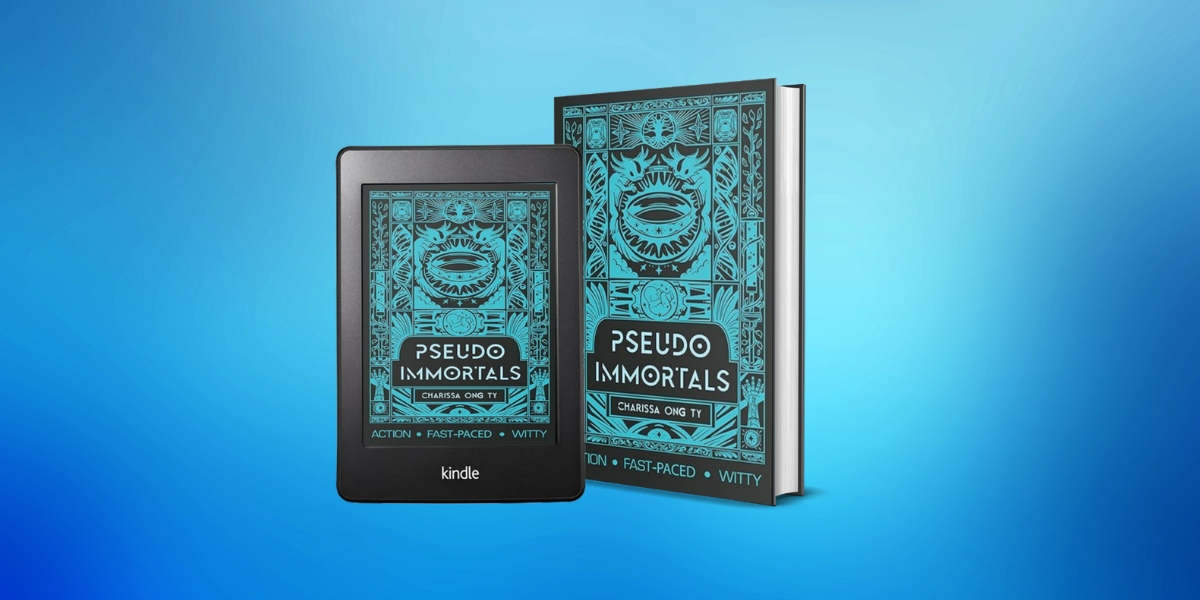
Photo Courtesy: Charissa Ong Tse Ying

The exploration of these themes, combined with the characters’ struggles with identity, loss, and the quest for connection, creates a rich tapestry that resonates with readers across genres. Beyond its philosophical inquiries, Pseudo-Immortals is infused with humor, romance, and relatable human experiences, making it accessible to a broad audience. The witty dialogue and tender moments between characters create a compelling narrative that captivates readers’ hearts and minds. 

“If you liked Murderbot Diaries, you’ll like Pseudo-Immortals.”

A captivating aspect of Pseudo-Immortals is its exploration of the ethical implications of genetic engineering. As the story progresses, it becomes evident that Sheila’s fight isn’t just against technology; it’s a fight against narratives. The stakes escalate when Sheila discovers that what she’s fighting isn’t a glitch or malfunction – it’s an entire ecosystem engineered to ensure she never wins.

As Sheila and her companions confront the realities of their choices, readers are prompted to consider the moral dilemmas that arise when science pushes the boundaries of nature. The novel raises important questions: What happens when we prioritize technological advancement over the sanctity of life? How do we navigate the fine line between enhancement and exploitation? These thought-provoking themes are woven seamlessly into the narrative, encouraging readers to engage in meaningful discussions long after turning the final page. 

Pseudo-Immortals is not your average science fiction tale; it is a profoundly human story that resonates with readers on a personal level. Readers are invited to reflect on the broader consequences of a society that embraces enhancement at the expense of authenticity. The novel is not just a story, but a commentary on the human condition in the face of rapid technological change.

Despite its sharp commentary on tech and corporate power, Pseudo-Immortals is surprisingly warm. It pays attention to small human moments – the kind that remind readers that even in a world of synthetic thinking, organic feeling still matters. The emotional stakes naturally arise from the characters’ desires: an AI longing to understand itself, a woman longing to protect what matters, and a corporation longing to preserve a future too complex for its own good. The book’s brilliance lies in how it balances these threads without revealing too much, pulling readers into the mystery, with every answer opening another question.

Pseudo-Immortals is an exploration of the intersection between humanity and technology. A story about what happens when the lines blur – when intention no longer guarantees control, and when emotional intelligence becomes the most volatile force in the room. It is imaginative without being unrealistic, and deeply emotional without being sentimental. A must-read for readers who crave narrative depth, character-driven tension, and a future that feels unsettling precisely because it feels so possible. As you turn the pages, you will find yourself immersed in a story that challenges your perceptions and leaves you yearning for more. Embark on an enticing adventure and discover a reading experience you won’t forget.


Comrade Digital Marketing: The Divorce Decision Funnel, Marketing Tactics for Lawyer Visibility Online

By: Jaxon Lee

The decision to end a marriage is rarely an impulse; it’s a slow, private journey down a long and winding path. For law firms, viewing this journey as a “decision funnel” is critical, as potential clients are engaging in research long before they ever type “divorce lawyer” into a search bar. Understanding this path is essential, as a modern approach to SEO family law isn’t just about capturing a final decision, but about being a trusted presence throughout the entire process. A person considering divorce goes through distinct stages of awareness, information gathering, and consideration, often over months or even years.

Effective marketing doesn’t just wait at the bottom of this funnel with a net; it provides light and guidance at every turn. It requires a fundamental shift from seeing potential clients as leads to be captured to seeing them as people on a difficult journey who need a reliable, authoritative, and humane guide.

This perspective is the key to creating a marketing strategy that builds the deep trust necessary to earn their business when the time comes.

Top of the Funnel: The Awareness Stage

This is the earliest and most delicate stage of the funnel. The individual isn’t looking for a lawyer; they are grappling with uncertainty and looking for validation. Their online searches are deeply personal and often framed as questions: “signs of an unhappy marriage,” “how to deal with a difficult spouse,” or “what is a trial separation?” At this point, a hard sell or legalistic jargon is the fastest way to alienate them. The goal here is not conversion, but connection. Marketing at this stage means creating empathetic, high-level content that addresses these emotional and practical concerns.

Effective content for this stage includes:

  • A blog post titled “Protecting Your Financial Future: First Steps to Take When a Marriage is Unstable.”
  • A downloadable checklist on how to prepare for a conversation about separation.
  • An informational article that explores the concept of a “trial separation” and what it entails, free of legal pressure.
  • A resource page connecting visitors with local marriage counselors or therapists, demonstrating a commitment to their well-being, not just their legal case.

By providing valuable, no-strings-attached information, a firm establishes itself as a compassionate and knowledgeable resource. It’s the first, crucial step in building brand awareness and trust with an audience that is seeking help but isn’t yet ready to ask for it directly.

Middle of the Funnel: The Information Gathering Stage

As a potential client moves into the middle of the funnel, their mindset shifts from emotional uncertainty to active research. The questions become more practical and legally adjacent: “How is child custody determined in Texas?” or “What is a petition for dissolution of marriage?” They are now consciously gathering the information needed to make one of the biggest decisions of their life. At this critical juncture, your firm’s website must be more than a digital business card; it must be an authoritative library.

This is where professional lawyer web design becomes paramount. It is not merely about aesthetics, but about the strategic organization of complex information. Detailed practice area pages, comprehensive FAQs, and a clear, intuitive navigation structure are essential. The design must build confidence and reduce anxiety, presenting your firm as a stable, professional guide capable of making an overwhelming process feel manageable. If the top of the funnel is about connection, the middle is about establishing undeniable credibility.

Broadening Reach in the Consideration Phase

A person’s information-gathering journey is not confined to search engines. They spend significant time on social media, and maintaining a presence there is crucial to staying top-of-mind. However, this requires a delicate touch. A person’s social feed is a personal space, and aggressive, sales-focused messaging about divorce services will feel invasive and inappropriate.

The goal is to be a consistent, helpful presence, not a disruptive advertiser. This is where nuanced Facebook marketing for attorneys proves its value. Instead of overt client-soliciting ads, a firm can use sophisticated tools like retargeting.

By sharing links to the helpful blog posts and guides from your website with users who have already visited your site, you gently remind them of your brand. This strategy respects their privacy while reinforcing your firm’s position as a supportive and knowledgeable resource, keeping you visible throughout their consideration process.

Bottom of the Funnel: The Decision Stage

At the bottom of the funnel, the user’s intent has crystallized. Their searches are no longer exploratory. They are actively comparing a shortlist of firms and looking for the final signals of trust that will prompt them to make contact. To meet this need, a website must feature specific trust-building elements that answer the user’s final, unspoken questions:

  • Social Proof: Prominently displayed client testimonials, video reviews, or anonymized case studies that speak to positive outcomes and a positive client experience.
  • Apparent Authority: Easily visible awards, bar association memberships, and “Super Lawyers” or “Best Lawyers” badges that provide third-party validation of their expertise.
  • The Human Element: Detailed attorney bios that go beyond a list of qualifications to showcase the lawyer’s philosophy, approach, and why they practice family law.
  • Frictionless Contact: Unmistakable calls-to-action on every page, such as “Schedule a Confidential Consultation,” paired with a simple contact form or a clickable phone number.

All marketing efforts must now pivot from education to conversion. Your website needs to prominently feature these elements, along with unambiguous calls to action. Booking a consultation should be intuitive and straightforward.

Comprehensive Marketing for divorce lawyers at this final stage is about removing all friction and providing the last pieces of validation a person needs to take action. This is where a strong local SEO presence is non-negotiable, ensuring you appear for these high-intent searches. The goal is to decide to reach out to your firm, which feels like the most logical, safe, and reassuring step in their journey.

Conclusion

Ultimately, a law firm’s website is not a passive digital brochure; it is the primary arena where trust is either won or irrevocably lost. A potential client’s decision to make contact is rarely influenced by a single flashy element, but by the cumulative weight of every signal you send. It is the immediate sense of professionalism from a clean, modern design. It is the confidence inspired by clearly demonstrated authority and expertise.

It is the reassurance of authentic client voices and the sense of safety from a secure, transparent platform. Together, these elements answer the user’s most critical, unspoken question:

Can I trust you to handle this?

When a website is meticulously engineered to answer that question with a resounding ‘yes,’ it transcends its role as a marketing tool. It becomes the very foundation of the attorney-client relationship and the most powerful engine for a firm’s sustained growth.

Disclaimer: This article is for informational purposes only and does not constitute legal advice. Please consult a qualified attorney for guidance specific to your situation.

Cristina Fontanelli: The Voice of Tradition, Philanthropy, and Timeless Artistry

By: Plugstar Entertainment

For more than a generation, award-winning singer and PBS-TV host Cristina Fontanelli has brought opera, classical Italian music, and multicultural artistry to audiences around the world. Her career reads like a mosaic of global stages and unforgettable performances, from Lincoln Center to the Kennedy Center, from the Hong Kong Opera to Cairo, and from television screens across America to her own philanthropic stages that uplift children and preserve beloved musical traditions.

With the ability to sing in nine languages, Fontanelli has mastered the rare gift of bridging cultures while remaining deeply rooted in authenticity. Known for her warmth and charisma, she has appeared on PBS-TV hosting major national broadcasts, including Andrea Bocelli’s legendary Central Park concert featuring Celine Dion, Tony Bennett, and David Foster. Her voice has graced CBS, Bloomberg Radio, WOR’s Joe Piscopo Show, and Sirius Satellite Radio. Her onscreen talents even extend to film — her performance in SANTINO earned her Best Actress awards at both the Cutting Room International Film Festival and the Venus International Film Festival.

Beyond the spotlight, Cristina’s purpose is loud and clear: to preserve great music and empower future generations. Her 501(c)(3) organization, The Cristina Fontanelli Foundation, is the force behind her acclaimed holiday production, Christmas in Italy®, now in its 22nd year. This year’s event takes place on Friday, December 19, at 7:00 PM, and on Saturday, December 20, at 2:00 PM, at St. Jean Baptiste Church on Lexington Avenue. The beloved concert blends Italian holiday classics, Broadway-worthy showmanship, and the heart of community, complete with guest artists, choirs, dancers, mandolins, and more. 

For hundreds of children, Cristina’s concerts have been life-changing opportunities to appear on world-class stages, including Carnegie Hall. “Music is healing, especially for young people,” she says. “They’re not exposed to enough of it. My goal is to change that.”

Her dedication has earned her a Lifetime Achievement Award from the Order Sons of Italy in America, placing her alongside icons such as Luciano Pavarotti. She has performed at the White House under President Clinton and opened the Stars and Stripes Inaugural Ball for President George W. Bush. She has serenaded legends, including Mickey Rooney at his 90th birthday celebration, and even shared the stage with Tony Bennett.

But perhaps Cristina’s most defining trait is her ability to communicate. While many opera singers rely solely on technique, Fontanelli is known for storytelling, humor, and improvisation. Whether performing for high-rollers in Atlantic City or opening for comedian Tim Dillon at Carnegie Hall, she can read any room and win it over. “I thought they had turned on an applause sign behind me,” she recalls with a laugh. “Then I realized, they were clapping for me!”

Raised with strong values and trained at the prestigious American Academy of Dramatic Arts, after acting school, Cristina chose to pursue opera to fully use the gifts and talents she was given, including her world-class vocal talent.

Her inspirations remain deeply human. Cristina lives by two guiding principles: her own mantra, “Hold onto your dreams tenaciously though they be but a whisper on the breeze,” and Winston Churchill’s iconic reminder: “Never, never, never give up.”

Looking ahead, Cristina sees the next five years as a time of expansion, more concerts, more children supported, and more opportunities to bring healing through music. She hopes to perform in uplifting films and television projects, continuing to use her voice for purpose as much as performance.

Above all, she hopes this story reminds readers that art matters. Service matters. And when passion is paired with purpose, communities transform.

To learn more, support the foundation, or attend Christmas in Italy, visit CristinaFontanelli.com or TheCristinaFontanelliFoundation.org.