Love Real Wood, But Have a Budget? Here’s a Hybrid Alternative You Need to See

Real timber floors have a charm that’s hard to ignore. When you see that warm, natural grain, the whole space feels inviting. Timber looks beautiful and lasts for years, so it’s no surprise many Aussies see it as the dream option.

But once the quote arrives, that dream can feel out of reach. Many homeowners end up choosing something they don’t truly love simply because solid timber stretches the budget too far.

At Online Flooring Store, we see this happen all the time. People want a home that feels warm, modern, and personal, but it’s frustrating when cost limits those choices.

The good news is you don’t have to give up the look you love.

Hybrid flooring has become one of the most popular alternatives in Australia because it delivers the natural timber style at a much more affordable price. It’s fully waterproof, extremely durable, stable in heat, and so realistic that most people can’t tell it’s not real wood.

It’s a category we often recommend, especially with strong options like the hybrid collections from Signature Flooring.

If you want that warm timber look without the high price, hybrid flooring is well worth exploring, and it might be the perfect match for your home.

What Is Hybrid Flooring?

Hybrid flooring is designed to give you the real timber look with modern, low-maintenance performance. Instead of one solid material, it’s built in layers, and each layer has a specific job. Here’s the simple breakdown:

  • Rigid core: The solid centre that won’t warp, swell, or buckle. This is why hybrid flooring is fully waterproof and stable in heat.
  • High-resolution design layer: A detailed print that captures real wood grain or stone texture down to the smallest variation.
  • Clear wear layer: A tough protective surface that resists scratches, dents, stains, and everyday wear.

These layers work together to give you the natural look you want and the durability your home needs. You get style and strength in one product, without having to trade one for the other.

This layered design is also why ranges such as Quattro from Signature Flooring perform so well in Australian homes. They’re engineered for our climate, our busy lifestyles, and the kind of spills and messes that happen in real life. The focus is on making the timber look convincing while maintaining a strong and worry-free floor.

It’s flooring made for the way you actually live, not just how a showroom looks on a good day.

Real Wood vs Hybrid: The Ultimate Showdown for Your Home

Real timber has a natural beauty that’s hard to replace. The texture, the depth, and the genuine feel are major reasons people fall in love with it. But that charm comes with responsibilities that often catch homeowners off guard.

What Real Timber Asks of You:

  • High upfront cost: The material is expensive, and professional installation adds even more.
  • Sensitive to water: Spills, humidity, and damp areas can cause staining, swelling, or warping.
  • Shows wear easily: Pet claws, furniture movement, and daily activity leave permanent marks.
  • Ongoing upkeep: It needs specific cleaners, protection from the sun, and occasional sanding or refinishing.
  • Lifestyle adjustments: You often find yourself being extra cautious to avoid damage.

For some people, that level of care is worth it. For others, it becomes too demanding.

Hybrid flooring was created to solve these challenges by offering the timber look with fewer restrictions.

What Hybrid Flooring Gives You:

  • 100% waterproof design: Suitable for kitchens, bathrooms, laundries, and homes with spills.
  • Scratch and dent resistance: Ideal for pets, kids, and busy households.
  • Easy installation: Most ranges use click-lock systems, making DIY realistic and lowering labour costs.
  • Low maintenance: A sweep and a damp mop are enough; no sanding or special treatments.
  • Stable in Aussie climates: Handles heat, temperature changes, and everyday wear without stress.

The only real trade-off is that a hybrid can’t be sanded and refinished like solid timber. But most homeowners never do that, and the everyday benefits of a hybrid usually matter more.

In the end, hybrid flooring gives you the warm timber look you want with the practical features that suit real Australian living.

Why Aussie Families Are Switching to Hybrid (Hint: Kids, Pets & Sun)

Hybrid flooring isn’t just practical; it’s designed for the way Australians actually live. It solves the common problems that come from our climate, our lifestyle, and how we use our homes.

Here’s why it makes so much sense:

  • Climate-proof stability: Our heat, sun, and fluctuating humidity can cause real timber to expand, contract, and warp. Hybrid’s rigid core stays flat and locked, so your floor stays perfect no matter the weather.
  • Durable for busy lives: Australian homes are active, with kids, pets, and everyday messes. A hybrid’s tough wear layer resists scratches, scuffs, dents, and spills, letting you clean up in seconds without worry.
  • Seamless design freedom: Because it’s fully waterproof and strong, you can install the same floor across living rooms, kitchens, bathrooms, and laundries. No transitions or restrictions, just a clean, connected look that makes your home feel larger and more inviting.

Quality products like the Signature Floors Quattro range demonstrate this perfectly. With a 6.0mm thick board, a robust wear layer, and realistic timber textures, it’s engineered for everyday Australian life while keeping the natural wood look beautiful for years.

The smart choice isn’t just picking a floor; it’s choosing one that fits your reality. Hybrid flooring lets you love the look of your home and actually live in it, without compromise.

“But Does It Look Fake?” We Settle the Big Hybrid Flooring Question

We get it, “budget-friendly” can make you think of floors that look fake: shiny, repetitive, and plastic. That was true years ago, but today’s hybrid flooring is completely different.

Here’s what modern hybrid flooring gives you:

  • Realistic timber look: A high-definition photographic layer captures every knot, grain line, and subtle colour variation of real wood.
  • Authentic texture: Advanced manufacturing presses the grain texture directly onto the wear layer (called embossed-in-register), so your eyes and fingers both sense real wood.
  • Vast style options: From light, airy blonde oak to rich walnut, honey-toned planks, rustic brushed finishes, and sleek contemporary greys, there’s a style for every home.
  • Durable performance: The tough top layer protects against scratches, dents, and spills, keeping the floor looking as good as it feels.

With hybrid flooring, you get the natural look you want without compromise. The floor matches your vision for your home while standing up to everyday life, all at a price that makes sense.

Your Dream Floor is Closer (and More Affordable) Than You Think

At the end of the day, you want a home that feels warm, stylish, and complete. You need floors that can handle everyday life without causing stress or constant worry.

Hybrid flooring delivers that balance. It gives you the look you love and the durability you need. You get beautiful, realistic timber or stone styles without the high cost or the need for endless maintenance. It’s a floor you can enjoy, not just admire.

The best way to understand it is to experience it yourself. At Online Flooring Store, we make it easy to explore options that truly deliver. We feature top-quality hybrid floors from trusted brands, including Signature Flooring, designed for Australian homes.


Randy NG Discusses How Structured Process Designs Build Confidence Across Teams and Clients

In any organization, the way work gets done can be the difference between success and stagnation. A well-structured process offers more than just order—it provides a framework for clarity, trust, and performance across teams and client relationships. Predictability helps reduce ambiguity, while defined workflows empower everyone to contribute. By implementing a thoughtful process design, organizations can streamline collaboration, enhance communication, and increase consistency in deliverables.

As Randy NG notes, clients are likely to respond positively when they see dependable systems in place, and teams tend to thrive when expectations are transparent. The benefits extend beyond efficiency; they can foster accountability, build long-term trust, and create space for innovation. When process design is treated as a fluid tool rather than a rigid script, it becomes an engine that drives daily execution and strategic growth.

What Structured Process Design Means

Structured process design refers to the deliberate planning and organization of workflows so that tasks are carried out consistently and efficiently. It brings order to projects by clearly defining steps, responsibilities, and expectations, which helps eliminate unnecessary guesswork. When teams know what comes next and how to execute it, they are more likely to stay aligned and meet deadlines with fewer disruptions.

In consulting, product development, or technology, a structured approach can help teams navigate shifting priorities while maintaining focus. A software team using agile sprints with clear definitions of done and review cycles is an example of structured design in action. This clarity can support collaboration and improve overall outcomes. Over time, such a foundation may reduce the cost of miscommunication and missed steps, making it invaluable as projects scale.

Across industries, structured process design creates a shared understanding that helps teams and clients stay on the same page. It becomes a framework that supports daily operations and long-term strategy, reducing confusion and enabling smoother execution. Teams often find that a structured system may allow for easier adaptation when changes are needed without disrupting the overall flow.

Why Predictability Builds Trust

When people know what to expect, they feel more secure in their roles and more confident in their decisions. Predictability in processes helps teams work more efficiently because they aren’t constantly stopping to clarify steps or second-guess next actions. This confidence strengthens collaboration and keeps momentum steady even when challenges arise. Trust tends to grow when actions consistently match expectations.

Clients are more likely to trust a team that operates with consistency. A marketing agency that outlines timelines, review stages, and deliverables at the start of a campaign reduces ambiguity and helps build credibility. This level of structure shows clients that the team is in control and working toward delivering what was discussed.

In both internal and external settings, predictability reduces stress. It aligns expectations and creates a foundation where communication is proactive rather than reactive, allowing relationships to grow with fewer misunderstandings. When stakeholders see that their input is consistently respected and incorporated, engagement becomes more meaningful and collaborative.

Core Elements of an Effective Process

An effective process isn’t just a list of tasks—it’s a system that defines what needs to happen, who is responsible, and when it should be done. Clear roles, documented steps, and regular checkpoints are all part of this structure. They make it easier to maintain quality and spot issues early. Processes that include review loops and approvals can catch inefficiencies before they become costly errors.

In a design firm, assigning review responsibilities and using shared templates ensures that every project moves through the same high-standard workflow. This repeatability not only saves time but also fosters a smoother experience for team members and clients. When processes are transparent and accessible, people feel empowered. They know where their work fits into the broader picture, which encourages accountability and leads to stronger performance across the board.

Team Benefits from Structured Workflows

When teams operate within a clearly defined procedure, collaboration becomes smoother and misunderstandings are less frequent. It allows everyone to see where their responsibilities lie, making cross-functional work less chaotic. This clarity reduces friction and helps minimize the back-and-forth that often slows progress. It also makes it easier for managers to identify bottlenecks and provide support where it’s most needed.

New hires also benefit. With a standardized process in place, onboarding can become less reliant on tribal knowledge and more about following an established path. A new team member can quickly understand how work flows, who to go to for support, and what success looks like, which accelerates their contribution. They are likely to gain confidence faster, easing their transition into the team.

Over time, teams that embrace structured workflows tend to develop a shared rhythm. Meetings tend to become more productive, communication becomes sharper, and the entire group operates better. This rhythm builds momentum, which helps teams take on more complex projects without losing cohesion.

Earning Client Confidence

Clients want to feel like they’re in capable hands, and a structured process offers that reassurance. When deliverables are mapped out, timelines are visible, and responsibilities are clearly communicated, it fosters a sense of stability. Clients can track progress, anticipate next steps, and stay engaged without needing to micromanage. This visibility helps reduce anxiety around deadlines and uncertainty.

Take a branding agency that walks its clients through discovery, concepting, and feedback loops with clear checkpoints. That level of transparency can make clients feel included and respected, which deepens trust and minimizes surprises. When clients know how decisions are made and how their input is used, they are likely to be more invested in the outcome. This sense of partnership often leads to repeat business and referrals.

Putting Process Design into Practice

Good process design only matters if it’s applied consistently. Mapping out workflows, creating standard operating procedures, and adopting the right tools are all part of making it real. Whether it’s a visual kanban board or automated approval system, the tools should reinforce—not complicate—the process. The right setup may make even complex tasks feel more manageable and predictable.

Marina Chumakova Becomes the Face of ELLE China’s New Year Cover, Embodying the Beauty and Spirit of 2026

As the world prepares to welcome a new year, ELLE China reveals its highly anticipated New Year issue featuring the magnetic and unforgettable Marina Chumakova as the cover star. More than a celebration of beauty, this issue captures a cultural moment: the rise of a woman whose elegance, emotional depth, and modern sensibility represent a new global standard of femininity.

Marina’s presence on the cover marks a milestone not only for her career, but also for a generation of women redefining how beauty is seen, felt, and expressed. The New Year edition focuses on emotional stylization—makeup not simply as an accessory, but as a language of inner strength, mystery, confidence, and desire. Marina embodies this theme with unusual precision. Her look becomes a story, a statement, and a mirror reflecting the growing global movement toward authenticity and empowered self-expression.

The visual concept of the issue centers on bold winter trends of 2025, such as dramatic eye makeup, understated metallic glow, and the golden tones that symbolize transformation. Marina’s cover look evokes cinematic intensity, combining soft “cat-line” detailing with a sculpted gaze that feels both intimate and unshakeably confident. As ELLE China notes, a single brushstroke can create an entire emotional narrative—and Marina’s portrayal does exactly that.

The story continues through the issue’s editorial spreads, where illumination becomes a metaphor for feminine power. This season’s signature luminosity is not the glitter of past years, but a refined, skin-infused radiance that signals inner vitality. Soft gold blends into the contours of the face, creating an impression of warmth that does not overpower, but rather whispers sophistication. Marina brings this vision to life with a harmony of elegance and strength, her presence transforming the pages into a cinematic journey through modern beauty.

The editorial also emphasizes skin as a canvas of character. Delicate matte finishes highlight freshness and dimension, while milk-texture creams melt seamlessly into the skin to create a natural, effortless glow. The effect is a timeless interpretation of luxury—one that appeals to both global beauty enthusiasts and high-fashion purists. Marina’s expression, posture, and energy throughout the shoot reflect this direction with remarkable subtlety, revealing a woman who is not performing beauty, but inhabiting it.

Color composition plays a central symbolic role in the story. Deep greens and classic reds appear as motifs of emotional intelligence and passionate focus, aligning with the New Year’s theme of new beginnings. In the editorial narrative, colors become declarations: green as a revelation of awareness and depth, red as a pulse of personal power and emotional presence. Marina channels these messages with grace, offering a visually striking and emotionally resonant performance.

For ELLE China, the New Year edition is more than a publication—it is a statement about the future of beauty in 2026. The magazine describes the New Year makeup philosophy as one of self-creation rather than presentation. It is not designed for others, but crafted as a ritual of identity, where confidence, femininity, and intuition come together as symbols of inner evolution. Marina’s cover reflects this philosophy fully. She stands as a portrait of a woman who has claimed her narrative, her image, and her voice.

The production team behind the cover—photographer Damir Zhukenov, stylist Ksenia Raiskaya, hair artist Albina Baghramyan, and makeup artist Yulduz Kallasova—worked collaboratively to frame Marina in a way that merges fashion artistry with emotional storytelling. The result is an aesthetic both refined and daring, rooted in the high-fashion codes of international beauty culture while carrying the freshness of a new chapter.

In the New Year’s cultural context, the ELLE China cover has long been regarded as a symbolic space of aspiration and trendsetting influence. Featuring Marina at this meaningful moment positions her among the global icons shaping the visual and emotional language of contemporary beauty. For audiences across Asia and beyond, she arrives not simply as a model, but as a muse for 2026—representing courage, expressiveness, and the irresistible force of renewal.

ELLE China highlights that while makeup lasts only a few hours, the feeling it evokes can remain for years. The New Year issue invites readers to explore this emotional dimension and recognize beauty as a powerful instrument of personal transformation. Marina Chumakova stands at the center of this message, offering an unforgettable interpretation of what it means to step into a new year with radiance, depth, and purpose.

With this cover, Marina enters a new phase of international recognition, reinforcing her status as a rising figure in global fashion. Her collaboration with ELLE China’s New Year edition sets a tone of elegance and ambition for 2026, inspiring women everywhere to embrace the magic of being seen—not just for their appearance, but for their strength, spirit, and story.

Marina Chumakova

Cover Star — ELLE China New Year Issue 2026

Photography: Damir Zhukenov

Styling: Ksenia Raiskaya

Hair: Albina Baghramyan

Makeup: Yulduz Kallasova

“OriginForce Creations”: Reviving Yunnan’s Jiama Culture Through Award-Winning Packaging Design by Jun Mao

By: Kelvin Yu

At the crossroads of cultural heritage and contemporary design, OriginForce Creations stands as a shining example of how traditional artistry can be reimagined for the modern world. Recently honored with the China Creative Packaging Design Award, the project fuses centuries-old ritual iconography from Yunnan’s Jiama (甲马) folk art with the sensibilities of modern visual communication, transforming packaging from a simple commercial object into a vessel of living culture.

Cultural Origins: The Spirit of Jiama

Jiama, also known as the “paper horse” or “divine horse,” is a unique form of woodblock print used for ritual blessings among Yunnan’s ethnic minority groups. Historically, villagers burned Jiama prints to send prayers to deities — acts of gratitude, healing, or protection. Each motif carried layers of spiritual symbolism: tigers represented courage, cranes longevity, dragons authority, and various deities watched over wealth, health, and family.

But with industrialization and changing spiritual habits, Jiama gradually receded from everyday life. The practice of burning prints, once an integral form of communication between people and the divine, has become environmentally unsustainable and culturally distant. What remains are fragile prints and fading memories — precious fragments of an art form on the verge of obscurity.

Against this backdrop, OriginForce Creations was conceived as a cultural revitalization initiative that seeks not only to preserve Jiama’s aesthetic legacy but to activate its narrative potential in new contexts — from temples to tablets, from rituals to retail.

The Concept: “Origin + Force”

The name OriginForce Creations encapsulates the project’s philosophy. Origin refers to the source — the deep cultural and spiritual roots of Yunnan’s folk art — while Force symbolizes the creative energy propelling those roots into the future. The project is not a replica of tradition, but a dialogue with it.

Led by designer and educator Jun Mao, the team approached Jiama as both a visual language and a cultural system. They studied archival prints, interviewed local artisans, and analyzed motifs from The Compendium of Chinese Woodblock Prints: Yunnan Jiama Volume, identifying recurring formal traits: bold outlines, flattened composition, and symbolic exaggeration of human and divine forms.

Using these features as a foundation, the team reinterpreted Jiama through a contemporary design vocabulary — transforming ancient woodblock reliefs into geometric illustrations with high-saturation color palettes, playful compositions, and scalable vector precision suitable for packaging, exhibition, and digital applications.

Design Innovation: Packaging as Cultural Storytelling

Rather than treating packaging as a decorative afterthought, OriginForce Creations repositions it as a narrative and educational platform. Each package becomes an artifact that invites interaction, curiosity, and reflection.

  1. Reconstructing Visual Symbols
    Through detailed analysis, mythological figures such as the God of Wealth, the Wenchang Emperor (patron of knowledge), and the Goddess of Blessings were redrawn withyouthful vitality. These characters, once confined to temple walls or ritual paper, now appear on colorful boxes, pouches, and cards that celebrate joy and renewal.

  2. Designing for Experience
    Packaging structures feature interactive elements — pull-out layers, concealed prints, and embossed textures that replicate woodblock grooves. Opening a box becomes an act of discovery, mirroring the uncovering of cultural memory.

  3. From Ancient Blessings to Modern Wishes
    Traditional auspicious phrases such as Peace for the Four Seasons or Harmony at Home are reimagined through contemporary idioms like Ride to Success, Luck in Bloom, and No More Villains — resonating with the humor and optimism of a new generation while maintaining their symbolic roots.

  4. Typography and Color Language
    Custom typefaces mimic the tactile rhythm of hand-carved woodblocks, each stroke echoing the uneven beauty of knife marks. The color palette — inspired by temple murals and festival banners — juxtaposes vivid vermilion, indigo, and gold against neutral backdrops, evoking both sacred warmth and contemporary vibrancy.

Together, these design decisions turn OriginForce Creations into more than an object — it becomes a cultural conversation between past and present.

“OriginForce Creations”: Reviving Yunnan’s Jiama Culture Through Award-Winning Packaging Design by Jun Mao

Photo Courtesy: Jun Mao

Recognition and Resonance

The China Creative Packaging Design Award, one of the nation’s most respected honors in design innovation, recognizes projects that combine artistry, sustainability, and commercial viability. In the 2025 edition, OriginForce Creations stood out for its approach to incorporating intangible cultural heritage into modern design systems and its innovative use of packaging as a medium for artistic storytelling.

The jury noted how the project transcends the visual domain, functioning as a model for educational and participatory design. Its success demonstrates that cultural heritage can thrive not by remaining static but by engaging with global design languages — proving that innovation and preservation are not opposites but partners.

Beyond the Box: Extending Cultural Experience

Following the award, OriginForce Creations launched a series of derivative products and public engagement initiatives designed to bring Jiama culture into everyday life.

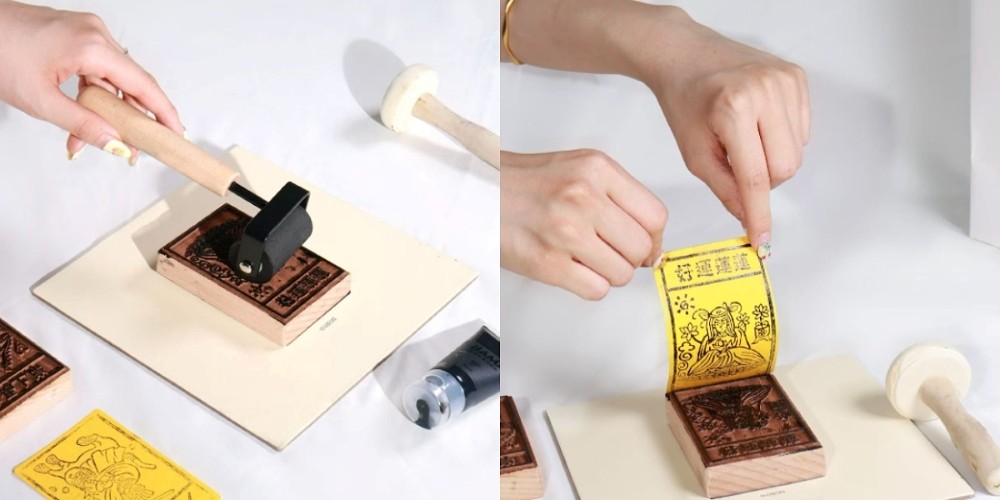
  • The Jiama MINI Experience Kit lets users print their own woodblock Jiama at home. The compact set includes carved wooden plates, ink rollers, handmade paper, and a cultural guidebook introducing the meanings behind each symbol. This transforms cultural appreciation into hands-on participation.
  • Perpetual Calendars and Art Postcards translate the visual motifs into lifestyle items — spreading Jiama blessings across desks, bookshelves, and correspondence.
  • AR and Digital Extensions are in development: scanning the packaging may soon reveal animated deities and immersive audio stories that bridge folklore with technology.

Each product is designed around the project’s central belief: “When design becomes interaction, heritage becomes alive.”

“OriginForce Creations”: Reviving Yunnan’s Jiama Culture Through Award-Winning Packaging Design by Jun Mao

Photo Courtesy: Jun Mao

Cultural Sustainability and Social Impact

For Jun Mao and the design team, OriginForce Creations represents more than a design experiment — it’s a case study in how creative industries can contribute to cultural sustainability.

By collaborating with Yunnan’s local craftsmen, they ensured that traditional carving and printing methods remained integral to the design process, supporting artisans economically while preserving their skills.

Moreover, by adopting eco-friendly materials and eliminating the practice of burning ritual paper, the project redefines spirituality through environmental consciousness — an essential alignment with global sustainability values.

In interviews, Jun Mao often emphasizes that design education should not isolate aesthetics from ethics:

“Cultural design must ask not only what looks beautiful, but also what deserves to endure. Our work with Jiama is about continuity — making sure the stories, symbols, and craftsmanship of our ancestors still have a role in contemporary life.”

Looking Forward: Designing the Future of Heritage

With recognition from the China Creative Packaging Design Award, the team now looks to expand the project internationally. Collaborations with museums, cultural foundations, and design schools are already underway to showcase OriginForce Creations as a model for heritage innovation.

Plans include a traveling exhibition titled “When Prints Breathe Again, combining traditional woodblock demonstrations with immersive projection mapping — inviting global audiences to witness how Jiama transcends its ritual origins to become a shared language of visual storytelling.

Conclusion: When Tradition Meets Tomorrow

In an era when globalization often homogenizes cultural aesthetics, OriginForce Creations demonstrates that the local can be the new universal.
By merging ancient symbolism with forward-thinking design, the project doesn’t just repackage history — it rewrites the narrative of how design can sustain identity, community, and creativity.

As Jun Mao reflects:

“To design is to remember, but also to imagine. Our goal is not to freeze tradition in time — it is to give it a new pulse that beats in rhythm with our generation.”

Through OriginForce Creations, Yunnan’s Jiama culture continues to speak — not from the ashes of ritual fires, but through the living medium of design itself.
And as each package is opened, what emerges is not merely a product — but a story of revival, craftsmanship, and the enduring force of culture made new.

Hunting 101: 5 Ways to Stay Scent-Smart in the Field

If hunting teaches you anything fast, it’s that animals trust their noses way more than their eyes or ears. 

Meanwhile, we humans wander around carrying the full scent story of our day: a bit of shampoo, a swipe of deodorant, whatever we cooked last night, a hint of dog hair, the car’s interior, the petrol station stop – and that strange, lingering smell your jacket collected ages ago that you still can’t quite place (probably Cheetos). 

Animals pick up every bit of it, even the ones we’ve stopped noticing. We get used to it; animals don’t. To them, those smells are basically giant billboards saying, “Human incoming.”

Follow these five tips below to help you stay scent-smart in the field on your next hunting trip:

1. Use Scent-Free Detergents

Your clothes might look clean after a regular wash, but those “fresh linen” and “spring breeze” fragrances basically turn you into a walking air freshener. And while we might love that smell, animals most definitely do not.

To them, it’s an instant red flag that something unnatural is moving around nearby.

Switching to a proper scent-free detergent keeps your gear truly neutral. It strips away sweat, dirt, and human scent without layering on anything extra. Anything that goes on your body picks up your smell, and animals are incredibly good at detecting the tiniest hints of it.

2. Pre-Hunt Meals

What you eat before a hunt honestly isn’t a big, dramatic thing; it’s just about not making life harder for yourself.

As amazing as garlic bread, curry, or anything onion-loaded might be, those smells cling to you – on your breath, your skin, even your clothes. And animals will pick it up long before you’re anywhere near them.

3. Clean Your Gear

Over time, your pack, clothing, and all the little odds and ends you carry pick up sweat, dirt, old food smells, coffee spills, and whatever your dog brushed against that morning. All of that creates scent — and animals are far better at noticing it than we are.

And then there’s the question a lot of newer hunters have: What is a kill kit?

It’s simply the small bundle of tools you pull out after a successful shot — knives, gloves, game bags, tags, a sharpener, maybe some cord or wipes. Your kill kit deserves extra attention, too. Even if it’s packed away, leftover blood or tissue from a previous hunt can create strong odors.

4. Don’t Use Scented Products

Animals rely on their sense of smell, and even the nicest-smelling lotion, deodorant, hair product, or laundry detergent can send them running off long before you ever see them. 

What smells “fresh” to us smells loud, unnatural, and suspicious to them. It is best to avoid scented products for a few days before your hunt. Skip perfume, aftershave, body spray, and anything with a noticeable fragrance that might linger.

5. Stay Downwind

Staying downwind is one of those simple hunting principles that sounds obvious, but in the field, it can feel like trying to outsmart the weather itself.

Animals live by their noses – long before they hear or see you, they’ll smell you.

That’s why treating the wind like your quiet hunting partner makes such a difference. Before you even step out of the vehicle, take a moment to check the direction.

Once you’re moving, staying downwind becomes a bit of a dance. The wind shifts, terrain changes, and suddenly, the perfect approach you mapped out at home makes no sense anymore. That’s normal. Good hunters adjust as they go.

To End

Staying scent-smart in the field isn’t about being perfect. It’s about making a few simple choices that keep animals from picking up your presence long before you see them.

From SoHo to Seine: Why New Yorkers Are Flocking to French Immersion

New York City is home to more than 8 million people — a vibrant mosaic of languages, cultures, and cuisines. Walk through SoHo or the West Village, and you’ll likely overhear Spanish, Mandarin, Arabic, and yes — even fragments of French. For many New Yorkers, dabbling in French starts as a romantic idea: croissants at a café, the melody of a French chanson, or the lofty ambitions of “one day living abroad.” But as global markets shrink and remote work expands, an increasing number of New Yorkers are discovering that learning fluent French can be more than just a hobby — it may offer valuable advantages in careers spanning finance, consulting, fashion, academia, diplomacy, and creative arts.

That said, there’s a big difference between learning French from a Duolingo app late at night and mastering it through full immersion. That’s why people are increasingly choosing to embark on an experience like the ones offered by Institut de français — institutions steeped in French culture, ideal for those serious about improving language skills, understanding cultural nuance, and deepening fluency.

Why Paris — or Anywhere in France — May Offer More Than the Typical NYC Class

In New York, you’ll find plenty of French classes: community college night courses, meetups at cafés, even immersive weekends at cultural centers. But in France, language becomes more integrated into daily life. Street signs, menus, subway announcements, and notices around homes — all in French. Every conversation, no matter how routine, encourages your brain to adapt. As one recent article described, learning French in France becomes “more than language — it’s a cultural immersion of the mind.” That transformation can be difficult to replicate in any other context.

You’ll notice the differences right away. Pronunciation. Idiomatic expressions. Cultural references that carry weight only among native speakers. Even subtle social cues around politeness and tone. These are aspects that may remain unnoticed in classroom drills but become second nature when you wake up and live your days entirely enveloped by the language.

New York Meets Paris: A Balanced Approach

But committing to a full immersion trip doesn’t mean cutting NYC out of your life entirely. In fact, many New Yorkers are choosing a hybrid approach: beginning their French learning journey in NYC and then amplifying that foundation with a focused trip to France.

Imagine this workflow:

  • Spend 3–6 months in NYC building basic grammar and vocabulary through evenings at a French institute or a weekend workshop.
  • Then travel to France for 2–4 weeks for immersive exposure — living with locals, speaking French at cafés, navigating markets, practicing real conversations, and absorbing culture.
  • Return to New York with a refreshed perspective and continue practicing French with Manhattan’s Francophone community, at cultural events, or French-language meetups.

This combination of NYC’s convenience with France’s immersive intensity offers the best of both worlds: the comfort of home combined with the transformative power of deeper cultural integration.

Practical Advantages — For Career & Travel-Minded New Yorkers

For professionals, this dual-model approach could open doors. Many financial firms, consulting agencies, fashion houses, and NGOs with transatlantic ties value employees who are more than conversational in French. Knowing the language fluently — with the proper accent and cultural awareness — often signals dedication, intellectual curiosity, and adaptability.

For travelers, mastering French can enrich their European trips. Once, you might have visited Paris as a tourist; with fluency, you might find yourself navigating local markets, striking up conversations with shopkeepers, ordering food with more confidence, and discovering lesser-known corners of the city. And if you eventually decide to study or work in a Francophone country — whether France, Canada, parts of Africa, or elsewhere — you’ll likely have a head start.

A Mindset Shift: Language as Culture, Not Just Vocabulary

Fluency isn’t just about knowing words; it’s about experiencing them. When you wake up in a French city, and the first sound you hear is the gentle chatter of neighbors speaking French on their balconies, your brain learns the rhythm of everyday phrases first — “Bonjour, ça va ?”, “Je prends un café”, “À tout à l’heure” — long before you dissect their grammar.

That’s the immersive effect of living the language. And for a New Yorker who’s accustomed to switching effortlessly between English and other languages — Spanish, Mandarin, Hindi — adding French may feel like unlocking a whole new way of seeing the world.

For New Yorkers seeking to elevate their language skills from “classroom-basic” to “authentic-native,” combining the energy of NYC with the immersion of France might just be the ideal path. Whether for career growth, travel enrichment, or simply the love of French culture, the journey could transform the way you view both the world and yourself.

What Pledge of Allegiance Day Means for Americans Today

Pledge of Allegiance Day is a time set aside to recognize one of the enduring symbols of unity in the United States. The observance acknowledges the history and significance of the Pledge, which has been recited for generations in classrooms, civic meetings, and public ceremonies nationwide. For many, it can represent a shared commitment to the ideals of liberty, justice, and national pride.

Although it does not necessarily draw the same attention as other national observances, Pledge of Allegiance Day offers an opportunity to reflect on what it can mean to belong to a diverse yet united country. Americans often express that connection through small, symbolic acts such as displaying a flag, attending community events, or even wearing a Navy hat as a quiet gesture of respect and appreciation for national service and identity.

Understanding the origins of the Pledge and its significance can help explain why it remains meaningful today. Let’s dive in!

The History and Origins of the Pledge

The Pledge of Allegiance was first written in 1892 by Francis Bellamy, a Baptist minister and writer who sought to create a simple statement that schoolchildren could recite to foster a sense of national pride. Bellamy’s version was originally published in The Youth’s Companion, a magazine that promoted civic education and patriotism during a period of growing national awareness.

The first public recitation of the Pledge took place on October 12, 1892, during celebrations marking the 400th anniversary of Christopher Columbus’s arrival in the Americas. The event was part of a larger campaign to promote civic unity and respect for the American flag, a time when the nation was welcoming large numbers of immigrants and industrial change was transforming society.

Over the decades, the wording of the Pledge has undergone several revisions. The most notable change came in 1954, when the phrase “under God” was added during the Cold War to distinguish the United States from atheistic political systems. The current version, officially recognized by Congress, reads: “I pledge allegiance to the Flag of the United States of America, and to the Republic for which it stands, one Nation under God, indivisible, with liberty and justice for all.”

Congress formally established Pledge of Allegiance Day to commemorate the Pledge’s creation and reaffirm its significance in American civic life. It serves as both a historical reminder and a celebration of shared values.

What Does the Pledge of Allegiance Mean?

Each phrase in the Pledge is more than a routine statement. It can express the connection between citizens and the democratic ideals that the flag symbolizes. The act of pledging allegiance is not to a government or an individual, but rather to the republic and the principles it represents, like freedom, equality, and justice.

The Pledge’s opening words, “I pledge allegiance,” emphasize personal responsibility in contributing to the nation’s welfare. The phrase “one Nation under God” reflects a historical acknowledgment of faith’s influence in public life, while “indivisible” underscores the importance of unity even in the face of differences. “Liberty and justice for all” captures the fundamental promise that every individual should enjoy the same rights and protections under the law.

Pledge of Allegiance Day in Modern America

Today, Pledge of Allegiance Day is observed through local ceremonies, classroom lessons, and community events that highlight civic education.

Schools and veterans’ organizations frequently use the day to teach the historical context of the Pledge and its continued relevance in public life. Some communities may hold flag-raising ceremonies or organize volunteer activities that embody the values of service and unity.

The day also reminds citizens that patriotism can extend beyond holidays or formal occasions. It exists in everyday acts of respect, civic participation, and shared purpose. For some, the observance offers a moment to reflect on how far the nation has come in expanding liberty and justice, while acknowledging that the work toward equality and inclusion remains ongoing.

In a time of diverse opinions and backgrounds, Pledge of Allegiance Day offers a unifying message. It reminds Americans that, despite differences, there remains a collective commitment to the foundational ideals represented by the flag.

Debates and Evolving Perspectives

The Pledge of Allegiance has not been without controversy. Over time, it has sparked discussions about the meaning of patriotism, the role of religion in public life, and individual freedom of expression. Some citizens and advocacy groups have questioned the inclusion of the phrase “under God,” arguing that it challenges the principle of separation between church and state. Others view the phrase as a historical acknowledgment rather than a religious statement.

A Commitment That Endures

Pledge of Allegiance Day is an invitation to reflect on the values that unite the nation. The Pledge endures because it speaks to American ideals that remain central, like freedom, justice, equality, and unity.

Exploring Modern Paths to Healing: The Transformative Power of Psychodrama Therapy with Circles of Grace

As the field of mental wellness continues to expand, more people are turning to therapeutic methods that engage both emotion and experience. One such approach is psychodrama therapy, which provides a creative and action-based path toward deeper emotional understanding. Among the leading centers embracing this modern and comprehensive approach is Circles of Grace, which offers Cognitive Behavioral Therapy, EMDR therapy, Expressive Arts Therapy, Internal Family Systems Therapy, Lifespan Integration Therapy, Psychodrama Therapy, Sandtray Therapy, and Somatic Experiencing Therapy. Their integrative programs reflect the evolving landscape of adequate mental health care.

Understanding Psychodrama Therapy in Today’s Therapeutic Landscape

Psychodrama therapy is an experiential approach designed to help individuals express their inner world by dramatizing emotions, memories, and personal situations. While traditional talk therapy emphasizes dialogue, this method invites clients to step into enactments that reveal deeper emotional layers. Through guided role-playing, individuals uncover insights that might otherwise remain hidden during standard conversations.

In a world where mental health care is shifting toward more embodied and expressive forms of healing, psychodrama therapy stands out for its ability to work with the body, emotions, and imagination simultaneously. Clients may reenact significant life moments, express internal conflicts, or explore future possibilities, all within the safety of a structured therapeutic environment. This active exploration often leads to breakthroughs that verbal discussion alone cannot achieve.

The Role of Experiential Healing in Contemporary Mental Wellness

Modern mental wellness practices recognize that emotional wounds and trauma are not only psychological but often reside within the body. As a result, therapeutic approaches are broadening to include somatic and experiential modalities. These methods help clients process experiences on a deeper level, integrating thought, emotion, and physical awareness.

Circles of Grace reflects this commitment to comprehensive healing by offering a blend of evidence-based and experiential therapies. Their services include Cognitive Behavioral Therapy to reshape unhelpful thought patterns, EMDR therapy to process trauma, Internal Family Systems Therapy to address inner emotional roles, and Somatic Experiencing Therapy to release stress stored within the body. Each of these approaches supports clients in restoring balance and resilience.

Within this therapeutic ecosystem, psychodrama therapy holds a distinctive place. By allowing individuals to act out their emotions and experiences, the method supports the release of tension, promotes emotional clarity, and strengthens personal insight. It also provides a meaningful pathway for integrating mind and body in the healing process.

How Is Psychodrama Therapy Effective?

The strength of psychodrama therapy lies in its ability to turn emotional insight into lived experience. Many individuals intellectually understand their struggles yet find emotional change difficult. Through guided dramatization, role reversal, and symbolic expression, psychodrama helps bridge that gap.

This therapeutic method encourages emotional expression, allowing clients to release long-held feelings in a safe environment. It also introduces new perspectives by allowing clients to step into others’ roles or to observe their own story from a different angle. The process builds emotional confidence, supports healthier relationship patterns, and offers an empowering sense of involvement in one’s own healing.

At Circles of Grace, psychodrama therapy is thoughtfully facilitated by trained practitioners who ensure that each session is adapted to the client’s specific needs. This careful guidance helps create an atmosphere where individuals feel secure as they explore difficult or complex emotions.

How Circles of Grace Integrates Multiple Therapies for Comprehensive Healing?

Emotional and psychological challenges often arise from a combination of factors, including past trauma, negative belief systems, unresolved memories, and stress within the body. Circles of Grace addresses these varied influences by integrating psychodrama therapy with a range of complementary modalities.

Clients may combine psychodrama with Sandtray Therapy to visually represent emotional dynamics, Expressive Arts Therapy to transform feelings through creativity, or Lifespan Integration Therapy to heal disruptions in personal development. The combination of therapeutic methods allows for a more personalized and deeply supportive healing process.

This integrated approach ensures that clients receive care tailored to their experiences, goals, and personal history, making the overall healing journey more meaningful and effective.

A Holistic Path Toward Emotional Liberation

As mental health awareness grows, individuals increasingly seek therapeutic methods that reflect the full spectrum of human experience. Psychodrama therapy offers a dynamic and transformative way to process emotions, explore internal conflicts, and build healthier patterns for the future. With practices like Circles of Grace leading the way in integrated mental wellness, clients have access to a diverse range of therapeutic tools that support lasting change and emotional growth.


Disclaimer: The content shared in this article is intended for informational purposes only and does not constitute medical or psychological advice. While psychodrama therapy and the various therapeutic modalities discussed can be beneficial for many individuals, it is essential to consult with a licensed mental health professional to determine the most appropriate treatment for your personal needs. Circles of Grace provides a variety of therapeutic services designed to support emotional and psychological well-being, but results may vary depending on individual circumstances. Always seek professional guidance before making any decisions related to mental health care.

Exploring ABC Fire Escapes Painting’s Approach to Fire Escape Services in NYC

When you search for Fire Escape Painting Near Me, you’re not just looking for a simple paint job—you’re looking for safety, compliance, and long-lasting protection for one of the most essential structures on your property. In New York City, fire escapes are more than metal stairways; they are life-saving emergency exits that the city strictly regulates. Regular inspection, maintenance, and painting are critical to ensure safety and compliance with NYC laws. This is where ABC Fire Escapes Painting stands out as a reliable and experienced company providing comprehensive fire escape painting services across the five boroughs.

Located at 33-02 Skillman Ave, Long Island City, NY 11101, United States, ABC Fire Escapes Painting offers specialized services designed to protect your fire escape against corrosion, rust, and deterioration caused by New York’s harsh weather. With a commitment to quality, safety, and customer satisfaction, the company has earned a strong reputation for delivering excellent fire escape painting, repair, and maintenance solutions. If you’re asking yourself, “Where can I find a fire escape painting near me?”—this detailed guide will help you understand why ABC Fire Escapes Painting is the right answer.

Why Fire Escape Painting Is Essential

Fire escapes are exposed to rain, snow, moisture, debris, and extreme temperatures. Over time, these factors lead to rust, weakening the metal structure and reducing its ability to support weight during an emergency. NYC building codes require property owners to keep fire escapes in safe and functional condition, which includes regular painting and maintenance.

A proper paint job does more than improve appearance—it strengthens the metal and prevents it from premature deterioration. Fire escape painting helps:

  • Prevent rust and structural damage
    • Comply with NYC Local Law requirements
    • Extend the lifespan of the fire escape
    • Improve building safety and emergency readiness
    • Avoid expensive violations and fines

By choosing a professional service provider like ABC Fire Escapes Painting, property owners can ensure their fire escapes remain strong, durable, and up to code.

ABC Fire Escapes Painting – A Local Company You Can Trust

When searching for a reliable “fire escape painting near me,” property owners often struggle to find local experts who understand the complexity of fire escape maintenance. ABC Fire Escapes Painting is a company dedicated solely to fire escape services, giving them a unique advantage over general contractors.

With extensive experience serving residential, commercial, and industrial properties, ABC Fire Escapes Painting focuses on delivering results that are both aesthetically pleasing and structurally sound. The company’s licensed and skilled team uses high-quality, rust-resistant paints and advanced techniques to ensure maximum durability. Their knowledge of NYC regulations also ensures your property stays compliant at all times.

For quick assistance, property owners can directly contact them at +1 929-837-3619.

Comprehensive Fire Escape Painting Services

ABC Fire Escapes Painting provides a full range of fire escape services, covering everything from initial inspection to final painting. Their comprehensive approach allows customers to receive complete protection in one package.

1. Fire Escape Inspection

Before beginning any work, the team conducts a thorough inspection of the fire escape. This process allows them to identify:

  • Rust damage
    • Loose or missing bolts
    • Structural weaknesses
    • Areas requiring deep cleaning
    • Old paint peeling or chipping

A detailed assessment helps determine the right treatment and ensures the fire escape is safe and ready for painting.

2. Rust Removal and Surface Preparation

Proper preparation is the foundation of a durable paint job. ABC Fire Escapes Painting uses wire brushes, grinders, and rust-removal tools to eliminate corrosion from the metal surface. They also remove old paint layers to create a smooth, clean surface.

This step is crucial because painting over rust can trap moisture underneath, accelerating deterioration. Their team ensures every surface is well-prepared before applying primer or paint.

3. Professional-Grade Priming

Priming is essential to protect fire escapes from rust and moisture. ABC Fire Escapes Painting applies industrial-quality metal primers that bond strongly to the surface, creating a protective barrier and ensuring that the final coat adheres properly.

Their selection of primers is specifically designed to withstand New York’s weather conditions, ensuring long-term durability.

4. High-Quality Fire Escape Painting

Once primed, the fire escape is painted using high-quality, rust-proof, weather-resistant paints. These specialized coatings protect the metal from corrosion, UV fading, and peeling.

ABC Fire Escapes Painting offers painting options that comply with NYC standards, ensuring the fire escape is both functional and visually appealing. Their attention to detail helps maintain the fire escape’s structural integrity for years to come.

5. Fire Escape Repair (If Needed)

In many cases, fire escapes need more than painting. Fire Escapes Painting NYC also offers repair services, including:

  • Replacing damaged or rusted steps
    • Tightening or replacing loose bolts
    • Welding weak areas
    • Fixing joints
    • Strengthening structural components

They ensure the fire escape remains strong, secure, and compliant with all safety requirements.

Why Choose ABC Fire Escapes Painting?

When property owners in New York look for “fire escape painting near me,” ABC Fire Escapes Painting is a trusted company. Their dedication to safety, quality, and customer satisfaction sets them apart.

Here’s why they are the preferred choice:

Local Expertise

Based in Long Island City, NY, the company understands the challenges posed by NYC’s unique environment and regulatory requirements. Their local presence allows them to respond quickly and provide personalized service.

Licensed & Experienced Team

Their skilled technicians specialize in fire escape painting and repairs, ensuring every project meets strict NYC safety standards.

Quality Materials & Equipment

ABC Fire Escapes Painting uses only reliable rust-resistant paints and professional-grade tools. This provides a finish that lasts longer and withstands harsh weather conditions.

Affordable & Transparent Pricing

The company believes in offering high-quality work at competitive prices. They provide clear estimates with no hidden charges, making them a convenient option for property owners on a budget.

Fast Turnaround Time

Fire escape painting must be done efficiently to avoid disruptions. ABC Fire Escapes Painting completes projects quickly without compromising quality.

Safety-Focused Approach

Safety is their top priority. They follow strict safety protocols to protect workers, residents, and property throughout the entire process.

Serving All New York City Boroughs

ABC Fire Escapes Painting proudly serves residential and commercial properties across NYC, including:

  • Manhattan
    • Brooklyn
    • Queens
    • Bronx
    • Staten Island

Their experienced team can handle fire escapes of all sizes—from small apartment fire escapes to large commercial structures.

Signs You Need Fire Escape Painting

To maintain compliance and safety, property owners should inspect their fire escapes regularly. Some common signs that indicate the need for painting include:

  • Rust spots or corrosion
    • Peeling or flaking paint
    • Faded or dull color
    • Structural wear and tear
    • Loose bolts or weakened joints
    • Water damage or accumulated dirt

If you notice any of these issues, it’s time to search for “fire escape painting near me” and call the experts at ABC Fire Escapes Painting.

The Importance of NYC Local Law Compliance

New York City laws require fire escapes to be maintained in safe, functional condition at all times. Failure to comply can lead to:

  • Fines and violations
    • Forced repairs by the city
    • Safety hazards for residents
    • Compromised emergency evacuation routes

ABC Fire Escapes Painting ensures every fire escape they work on is compliant with NYC Local Laws, helping property owners avoid penalties and maintain a safe environment.

How Often Should You Paint Your Fire Escape?

Experts recommend painting fire escapes every 3 to 5 years, depending on wear and exposure. ABC Fire Escapes Painting can assess your structure and recommend the ideal maintenance schedule.

Conclusion – Your Trusted Fire Escape Painting Near Me

When it comes to fire escape safety, quality should never be compromised. ABC Fire Escapes Painting offers unmatched expertise, durable solutions, and reliable service that property owners across NYC trust. Their combination of local knowledge, professional craftsmanship, and dedication to safety makes them an excellent choice when searching for “fire escape painting near me.”

For inspections, painting, repairs, or emergency services, contact:

ABC Fire Escapes Painting
Address: 33-02 Skillman Ave, Long Island City, NY 11101, United States
Phone: +1 929-837-3619

If you’re looking for dependable, long-lasting fire escape painting services in New York, ABC Fire Escapes Painting is the name you can trust.

Prenups and Postnups in California: What They Can (and Can’t) Do

Prenuptial and postnuptial agreements can be confusing. While some may view them as a “breakup plan,” others believe they could help address financial issues in a marriage. In California, these agreements may offer benefits when done properly, as they can help reduce conflicts, clarify expectations, and protect assets—especially for those with significant property or family wealth. However, they must comply with California law and cannot contain terms that are unfair. Courts assess how the agreement was made, whether both spouses understood it, and whether the terms are likely to be considered fair. If you’re considering or dealing with one during a divorce, a National City divorce lawyer could guide you in making it enforceable and understanding which parts are more likely to be upheld.

What A Prenup And A Postnup Actually Are

A prenuptial agreement is signed before marriage. It typically sets guidelines for property, debts, and financial rights in case the marriage ends. It may also address certain expectations during the marriage, such as how income will be handled, whether a business stays separate, or how retirement contributions are treated.

A postnuptial agreement is signed after marriage. Couples often create postnups when finances change—one spouse starts a business, receives an inheritance, plans to buy property, or the couple seeks clearer rules after a period of conflict. In California, postnups may be enforceable, but courts might scrutinize them more because spouses already owe each other fiduciary duties once married.

What These Agreements Can Do: Protect Separate Property

A prenup or postnup is a special agreement that can help protect assets owned before marriage. In California, money earned during marriage is typically shared, but this agreement can specify certain assets that should remain separate. This is often useful for people who own a business, have property, or expect to receive money or gifts from family.

The agreement can identify what belongs to each person and explain what happens if those things gain value over time. Being clear can help prevent misunderstandings later on. This way, both spouses understand what was owned before the marriage and what was acquired together.

What They Can Do: Divide Debts And Set Financial Rules

A prenup or postnup can specify how debts are handled if the marriage ends. For example, it can indicate that one spouse is responsible for their own student loans or that certain credit card debts won’t be shared. These details can help reduce conflicts over debt, especially when spouses have different spending habits.

Agreements can also clarify how to manage money during the marriage. Couples might choose separate accounts, decide on joint contributions, or specify who pays household expenses. While it cannot cover every situation, an agreement can help reduce confusion and resentment over time.

What They Can Do: Address Spousal Support (Within Limits)

Many people consider a prenup to address spousal support, which is the financial support one spouse may pay to the other after separation. In California, there are rules about what can be included in these agreements. Courts want to make sure the terms are fair and that both individuals understand what they are agreeing to.

Sometimes, courts may not accept support terms if they seem excessively unfair later on. What seemed acceptable initially may not hold up if life circumstances change substantially. Since these rules can be complex, it’s generally better to create agreements that are fair, rather than aiming to completely eliminate support.

What They Can’t Do: Decide Child Custody Or Child Support

This is one of the most important limitations. Prenups and postnups cannot dictate child custody or child support in advance. California courts determine custody based on the child’s best interests at the time of separation, not according to parents’ predictions from years earlier. Child support is calculated based on guidelines and the child’s needs.

Parents may still create parenting plans during a divorce, but a prenup cannot “pre-set” custody terms. Any provision attempting to lock in custody or waive future child support is likely to be rejected. Courts prioritize children’s rights, independent of the parents’ agreement.

What They Can’t Do: Reward Bad Conduct Or Create Illegal Terms

Prenuptial and postnuptial agreements cannot contain illegal provisions or go against essential laws. For example, any rules attempting to control someone’s behavior or enforce harsh punishments may not be accepted. Some personal choices may be addressed, but they must be written correctly.

Courts won’t enforce agreements that force one party or strip them of their fundamental rights. If an agreement appears to punish someone instead of addressing financial matters, it might be contested. Simpler agreements focusing only on money are generally more likely to be accepted.

Enforceability Basics: Voluntary, Fair Process, Full Disclosure

For a prenup or postnup to be valid, it must be created in the proper manner. Courts want to see that both people signed it without feeling pressured or rushed. They also check if both spouses were transparent about their finances and debts. If one person hides something, the agreement could be deemed unfair.

Having separate lawyers is also important. When both people have their own legal representation, it’s harder to claim they were confused or coerced. Courts also evaluate whether the couple had sufficient time to review and understand the agreement. Signing too close to the wedding date may raise concerns.

Common Mistakes That Make Agreements Easier To Challenge

Agreements can face challenges if they are unclear or unfair. Writing them clearly helps avoid problems later on.

  • Vague or incomplete language: Labeling an asset “separate” without clarifying what happens to income, appreciation, or commingled funds may invite conflict.

  • Failing to define key scenarios: No clear plan for how accounts or property are managed if funds get mixed, transferred, or used for shared expenses.

  • Unrealistic financial assumptions: Assuming long-term independence without accounting for children, health issues, or career sacrifices could make the agreement easier to contest.

  • Overly one-sided terms (especially in postnups): Since spouses owe duties of fairness, a postnup that heavily favors one spouse without a clear, justified reason may raise red flags.

  • Lack of transparency and support for the “why”: Missing documentation or unclear reasoning for major terms can make the agreement appear influenced unfairly.

  • Weak paper trail overall: Agreements are harder to defend when they lack clear documentation, balanced terms, and transparent reasoning for the outcome.

When A Prenup Or Postnup Is Especially Useful

These agreements can be helpful when individuals have significant assets to protect, like money or property. If a couple has a business, owns several properties, expects money from a family member, or has children from previous relationships, an agreement may help. It can also prevent disputes later on and keep financial matters private.

An agreement offers couples clear rules about what to do with their assets, avoiding uncertainty about how to share. Rather than guessing, they outline their plan. The best agreements are fair and aim to keep peace, rather than trying to “win” in case of a breakup.

How To Approach It Without Creating Conflict

A good way to approach a prenup or postnup is as a planning tool, much like insurance or estate planning. The tone matters. When discussions center on fairness and transparency, couples often find that the process enhances communication rather than harming it.

The goal should be clarity, not control. If both spouses feel heard, have time to review, and seek independent guidance, the agreement is more likely to be perceived as respectful and be enforceable later. Taking a thoughtful approach now may help prevent years of conflict later if the relationship changes.

Disclaimer: The information provided in this article is for general informational purposes only and is not intended as legal advice. While efforts have been made to ensure the accuracy of the content, the specifics of prenuptial and postnuptial agreements can vary depending on individual circumstances and local laws. It is recommended to consult with a qualified attorney for personalized advice regarding your particular situation.