A Radical Blueprint for Personal Sovereignty: Inside the Transformational Teachings of Patrick Farrell’s New Book, “The U.S.A. Is a R.I.C.O.”

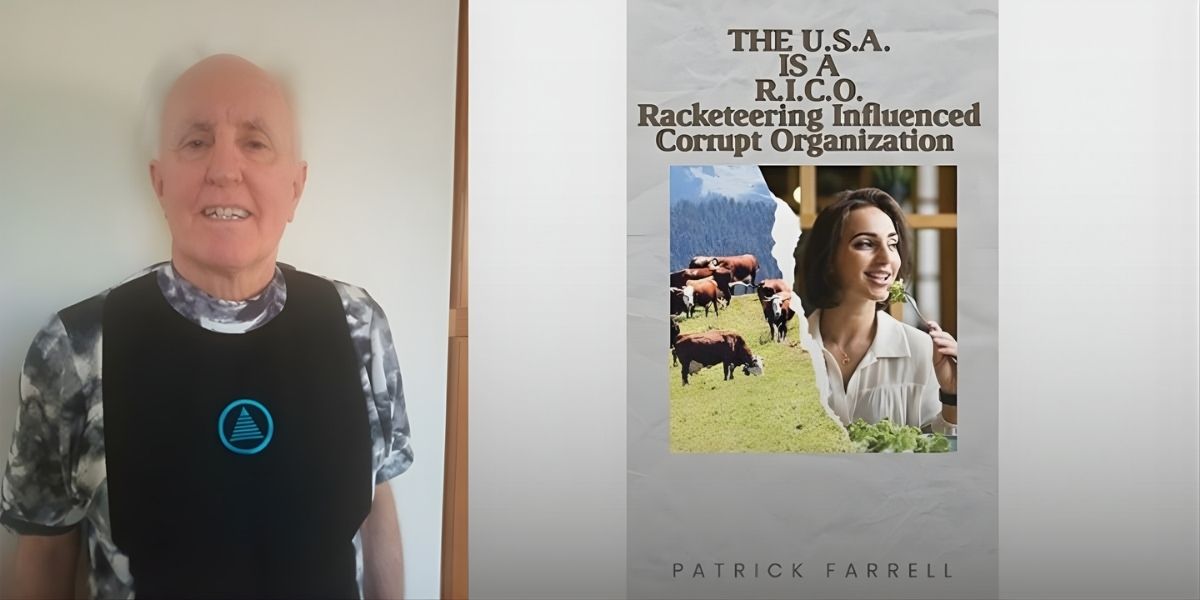
By: Walter J. Kingsbury

In an era defined by uncertainty, rising health concerns, and growing distrust of conventional systems, author Patrick Farrell presents a provocative and integrative roadmap for reclaiming personal sovereignty, spiritual alignment, and physical health. His new book, The U.S.A. Is R.I.C.O. offers readers a five-part transformative philosophy rooted in ancient spiritual teachings, natural health science, and ethical living.

Farrell’s work is not merely a critique of modern systems—it is a call to action. His message is clear: to transform society, one must begin by transforming the self. The book guides readers through a unified framework connecting veganism, superfoods, sovereignty, spiritual purity, and a return to early Christian teachings.

Part I: Rediscovering Sovereignty Through Spiritual Consciousness

At the heart of Farrell’s philosophy is the belief that true sovereignty begins with spiritual clarity. Drawing inspiration from the Essene Gospel of Peace, he invites readers to revisit early Christian teachings centered on purity, compassion, and harmonious living.

Farrell argues that sovereignty is not merely a political concept; it is deeply personal.
To be sovereign is to be:

  • fully responsible for one’s actions
  • spiritually aligned
  • physically cleansed
  • ethically grounded
  • independent of systems that cause harm 

He presents sovereignty as a spiritual identity rooted in service to God, stewardship of the body, and conscious living.

Part II: Veganism as a Path to Purity and Compassion

A central element of Farrell’s message is the idea that what we eat shapes our spiritual and physical health. Inspired by the Essene teachings, he makes a compelling case for veganism as an act of compassion and spiritual refinement.

In the book, Farrell explains that:

  • Consuming animal products creates suffering
  • causing suffering leads to spiritual and emotional distress (“as you sow, you shall reap”)
  • A compassionate diet aligns believers more closely with divine principles 

His vegan message goes beyond diet—it is an ethical stance. Farrell asserts that a life free from participating in harm aligns a person more closely with God’s intention for humanity.

Part III: Superfoods as Divine Tools for Healing and Clarity

Farrell highlights superfoods, green powders, raw plants, and nutrient-dense natural foods as essential for maintaining a purified body that can serve God.

Farrell describes the physical body as a “vessel of the Spirit,” arguing that proper nourishment is not optional but a sacred responsibility. In his view:

  • Superfoods cleanse the body
  • Cleansing creates mental clarity
  • Clarity opens the path to spiritual development 

He encourages readers to view nutrition not as a trend, but as a form of devotion.

Part IV: Ethical Resistance & Responsible Non-Participation

While the title of the book, The U.S.A. Is R.I.C.O. reflects Farrell’s belief that many modern systems are structured in ways that burden individuals; he focuses his message on ethical non-participation.

Rather than urging readers toward political rebellion, Farrell advocates for:

  • personal responsibility
  • mindful decisions
  • financial integrity
  • non-support of systems that harm people, animals, or the planet

His philosophy does not ask readers to withdraw from society; instead, he urges them to contribute in ways that align with moral and spiritual principles.

Part V: A Universal Guide for All Who Seek Transformation

Farrell emphasizes that his book is for everyone—regardless of background, faith, or personal history. He aims to provide a practical, spiritually grounded blueprint for anyone seeking:

  • better health
  • deeper faith
  • ethical living
  • emotional healing
  • spiritual clarity
  • personal empowerment 

According to Farrell, the teachings he shares are not theoretical—they are experiential. He believes true transformation comes from integrating all five pillars: sovereignty, veganism, superfoods, compassionate ethics, and a return to foundational spiritual teachings.

A Message for a Changing World

Patrick Farrell’s voice is bold, unconventional, and deeply passionate. The U.S.A. Is a R.I.C.O. challenges readers to question inherited beliefs and adopt a more conscious, compassionate way of living. It is a book that seeks not only to inform but to awaken.

As Farrell states, “This book is for all people to improve their lives for the time they spend on earth.”

In a time when readers are seeking clarity, empowerment, and spiritual grounding, Farrell’s message arrives as both a warning and an invitation, a call to take responsibility for one’s life, one’s choices, and one’s spiritual journey.


Disclaimer: The content is intended for informational purposes only and should not be considered as professional advice. Readers are encouraged to seek further guidance based on their individual needs and circumstances.


David Lutz – Check Fraud: Understanding the Risks and Your Legal Rights

By: Ethan Rogers

Despite the rise of electronic payments, check fraud remains a persistent threat to financial institutions and businesses. Understanding the various forms of check fraud, liability under the Uniform Commercial Code (UCC), and effective prevention strategies is essential for protecting your organization and preserving your legal rights.

Common Types of Check Fraud

Counterfeit Checks. Modern printing technology enables fraudsters to create convincing fake checks using legitimate account numbers obtained through data breaches. Banks must implement robust authentication procedures, especially for high-value items.

Forged Signatures. Criminals obtain blank checks through theft or insider access and forge the account holder’s signature. Under the UCC, banks generally bear the loss for forged drawer signatures, making this particularly costly for financial institutions.

Check Kiting. This scheme exploits the float time between deposit and withdrawal by depositing checks between multiple accounts at different banks to create artificial balances. Modern detection systems have reduced this risk but vigilance remains necessary.

Payee Alteration. Fraudsters intercept legitimate checks and alter the payee name to redirect funds, either through check washing or other methods.

Legal Framework Under the UCC

Check fraud liability is governed by UCC Articles 3 and 4. Key provisions determine who bears the loss:

  • UCC § 3-404 to 3-406: Banks generally bear losses for forged drawer signatures, while depositary banks bear losses for forged endorsements, subject to comparative negligence.
  • UCC § 4-406: Account holders must review statements promptly and report unauthorized items. Failure to do so—typically within 30 days—can shift liability to the account holder, especially for repeat fraud by the same wrongdoer.
  • UCC § 3-406: If the account holder’s negligence substantially contributed to the fraud (such as failure to safeguard checks or inadequate internal controls), liability may shift to the customer.
  • UCC § 4-406(f): A three-year statute of limitations applies to unauthorized checks, with a one-year limit if the customer fails to discover and report the fraud within one year.

Courts apply comparative negligence principles, allocating losses between parties based on their relative fault. Both banks and customers must exercise reasonable care to avoid bearing the loss.

Bank Responsibilities

Financial institutions must exercise ordinary care in processing checks, which includes maintaining fraud detection systems that meet industry standards. Banks must review large-value or suspicious items manually and verify signatures when red flags exist, such as unusual endorsements, visible alterations, or checks presented shortly after being reported stolen. Under UCC Article 4, banks also make warranties about endorsements and alterations that can create liability regardless of whether they exercised ordinary care.

Business and Customer Responsibilities

Account holders have critical obligations that directly affect liability:

  • Review statements immediately. Examine bank statements within 30 days and report any unauthorized checks. Delayed reporting can bar recovery, particularly if the same fraudster commits additional fraud.
  • Safeguard check stock. Store blank checks securely in locked locations with limited access. Use sequentially numbered checks and conduct regular inventory reconciliations.
  • Implement internal controls. Require dual signatures for large checks, segregate duties between check preparation and signing, and maintain an approved payee list.
  • Use positive pay. This service allows you to submit authorized check lists to your bank. Any checks not on the list are flagged for review before payment.
  • Secure mail practices. Use certified mail or courier services for sending checks. Retrieve incoming mail promptly from secure mailboxes.

Essential Prevention Strategies

Both financial institutions and businesses should implement these key measures:

  • Limit check usage. Transition to ACH, wire transfers, or other electronic payment methods for routine transactions.
  • Enhanced detection systems. Deploy automated fraud detection software that identifies patterns and flags suspicious items for manual review.
  • Security features. Use checks with chemical-sensitive paper, microprinting, watermarks, and other security elements.
  • Staff training. Train employees to recognize fraud indicators, including altered checks and suspicious endorsements.
  • Employee screening. Conduct background checks on personnel with access to checks or financial systems.
  • Regular reconciliation. Reconcile accounts frequently—daily for high-volume accounts—and investigate discrepancies immediately.

Responding to Check Fraud

When check fraud is discovered, immediate action is critical to preserve your legal rights and maximize recovery:

  • Notify your bank immediately. Time is essential—the bank may stop payment on items that haven’t cleared. Provide specific details about the fraudulent checks and follow up with written notice.
  • File a police report. Create an official record for insurance claims and legal proceedings.
  • Document everything. Preserve copies of fraudulent checks, correspondence, and investigation records. Document the timeline and circumstances of discovery.
  • Consult legal counsel. An attorney experienced in banking law can evaluate liability, communicate with the bank, and pursue recovery. Early involvement prevents procedural mistakes that could weaken your position.
  • Review insurance coverage. Crime or fidelity bonds may cover check fraud losses. Contact your insurer promptly as policies require a timely notice.

Conclusion

Check fraud allocation depends on multiple factors: the type of fraud, the care exercised by each party, and compliance with UCC requirements. Both banks and businesses must maintain vigilant fraud prevention measures and understand their legal obligations.

Prevention is always preferable to litigation. Robust internal controls, positive pay services, and prompt statement review significantly reduce exposure to check fraud. When fraud occurs, immediate notification to your bank and consultation with experienced legal counsel are essential to preserve your rights and maximize recovery.

About the Author:

David Lutz is the owner of Lutz Law Firm in Minneapolis, representing financial institutions, businesses, and individuals in banking law, secured transactions, real estate, and commercial litigation. He can be reached at or 612-424-2110.


Disclaimer: This article is provided for informational purposes only and does not constitute legal advice. The information contained herein is general in nature and may not apply to your specific situation. No attorney-client relationship is created by reading this article or contacting the author in response to it. For legal advice regarding your particular circumstances, please consult with a qualified attorney.

Major Cities in the Americas to Celebrate New Year’s Day Traditions

There are several major cities where you can celebrate New Year’s Day traditions to the hilt. So, from NYC to Chicago and more, there are several fantastic attractions lined up in store for you over the holidays. Let’s dive deeper into it below. 

Iconic Parades, Celebratory Streets, and New Year Celebration in New York City

New York City offers opportunities to experience multiple celebratory streets, famous parades, and other events geared toward enjoying the New Year in a big way! You shouldn’t miss the Lunar New Year Parade, which is celebrated in a big way in NYC, along with celebratory streets like Times Square, home to its iconic ball drop tradition, witnessed by thousands of people. 

There’s also the NYRR Midnight Run on New Year’s Eve at Central Park for adventure lovers. Of course, watching the 11,875-pound and 12-foot ball drop from the One Times Square building right at midnight. You can enjoy the celebrations from strategically located hotels, rentals, furnished apartments, and restaurants near Times Square as well. 

Chicago’s Winter Wonderland, Magic on the Riverfront & Holiday Events

If you’re in Chicago, you’ll be able to enjoy the spectacular Winter Wonderland experience as part of the Winter WonderFest at the Navy Pier. There are also the fabulous light displays here, along with indoor rides, and the stunning Centennial Ferris Wheel. The iconic displays of fireworks happen over Lake Michigan for New Year’s Eve, with spectacular views from the lakefront and also from the Navy Pier. 

You can also enjoy the Christkindlmarket (a traditional German holiday market) at Daley Plaza, go ice skating at the Maggie Daley Park and Millennium Park rinks, and take part in the Magnificent Mile Lights Festival along Michigan Avenue. Some other experiences worth enjoying include the CTA Holiday Train, the official Chicago Christmas Tree in Millennium Park, Navy Pier NYE events, and riverfront projections and fireworks sponsored by the City of Chicago and ART on THE MART. You can view these from the Upper Wacker Drive between McClurg Court and Franklin Street. 

Toronto’s Waterfront Celebrations, Culture Events & Firework Nights

You can enjoy multiple attractions in Toronto for New Year’s Eve, including pop-up performances taking place till midnight from 10 PM. These take place at three prominent locations near Toronto’s waterfront: the Toronto Music Garden, the Harborfront Center, and Sherbourne Common. The latter even offers dance lessons in association with The Dance Together Festival to ensure an ideal environment for dancing into the coming year. INCIRQUE performers will also stun audiences at the Toronto Music Garden and Sugar Beach. 

You can also enjoy extraordinary short-film selections from the National Film Board of Canada projected onto the Canada Malting Silos. The countdown to midnight will be spearheaded by Makayla Couture and Mayor Olivia Chow. Enjoy the waterfront celebrations or hop over to Nathan Phillips Square. The former will wow you with the fireworks display over Lake Ontario, while the latter is about ice skating, a festive countdown, and live music. You can catch great views from the HTO Park, Harborfront Center, and the Toronto Islands. New Year’s Day in Toronto is also about exploring the Distillery District for comforting brunches, taking walks along the Queens Quay, or starting the year with a fabulous view of the lake. 

Denver’s Mountain Views, Downtown Fireworks & Outdoor Fun

Denver offers a superb downtown fireworks display, gorgeous mountain views, and multiple outdoor activities. The main display takes place over the 16th Street Mall, and you’ll find several strategic locations to capture the fireworks against the backdrop of the Rocky Mountains. The main celebrations cover two free fireworks shows at midnight and 9 PM, while you can also check them from the Lookout Mountain Nature Center & Preserve, a short ride away from the city. 

Ruby Hill Park and the City Park are also hotspots to view the fireworks, along with several rooftop lounges. You can go ice skating outdoors at the Downtown Denver Rink, Skyline Park, or take a look at the incredible light displays at the Denver Botanic Gardens’ Blossoms of Light or the Chatfield Farms’ Trail of Lights. There’s also the Mile High Tree, which is 110 feet tall, and a gorgeous multimedia art installation at the Tivoli Quad on the Auraria Campus. Other options include hiking in Red Rocks Park and Amphitheater or Genesee Park, and snow tubing and skiing at nearby resorts like Vail and Breckenridge—these host torchlight parades on New Year’s Eve, along with fireworks displays as well. 

City Highlights: Music, Food, Winter Events & Festive Hotspots

Staying strategically at top vacation rentals in Chicago, NYC, or Denver will keep you close to major festive hotspots in all three cities. Stay near the heart of the action while enjoying the premier winter events, music performances, delicious food, and loads of outdoor entertainment and activities.  

Stay with TheSquare in Major Cities Across the Americas

Be it holiday apartments in Toronto or furnished apartments in New York, you can stay comfortably in all major cities with TheSquare. Expect standardized, comfortable apartments that offer great hotel-like service and amenities, coupled with luxurious furnishings, strategic locations near major winter events and landmarks, and home-like comfort, space, and privacy.

RetouchMe: Major Reasons Why Photos Have The Wrong Skin Tone And How To Fix It Quickly

Many people notice that their skin tone looks different in photos than in real life. Sometimes the face appears too yellow, sometimes too pale or cold. All of this affects the overall impression of the portrait. That is why correction tools have become part of routine editing. Users often look for a solution that works quickly and without complicated settings. In such cases, the https://retouchme.com/service/change-skin-color-app service helps you easily adjust the shade and make the photo more balanced.

Why Photos Often Distort The Real Skin Colour?

The camera does not always capture the image the human eye sees. Its work depends on automatic algorithms that react differently to lighting, background, and contrast. Most often, problems arise due to the following factors.

  • Warm light creates an unwanted yellow tint.
  • Cold light sources make the skin look bluish.
  • The camera tries to compensate for shadows and changes the white balance.
  • The background affects the automatic correction.


These factors should not be considered user errors; rather, they are inherent technical characteristics of photography and image processing. Variations in lighting, camera settings, and the environment can all contribute to discrepancies in how colors appear in a photo. This is especially noticeable when it comes to skin tones, which can sometimes look unnatural or off in the final image. As a result, skin tone correction has become a crucial tool for modern editors who seek to ensure that photos reflect reality accurately. When a person views a photo, they may immediately notice that the skin tones do not align with what they would see in person, which can be particularly distracting in portrait photography. Even with a technically strong image, an incorrect or unrealistic skin tone can significantly detract from its overall quality. In such instances, spot correction tools are invaluable. These allow editors to focus on specific areas, adjusting the color balance and tone precisely where needed. By making these targeted corrections, editors can restore a more natural and lifelike appearance, helping to achieve a more polished and authentic final portrait.

How Skin Tone Correction Tools Work

Mobile tools have become popular because they combine simplicity and precision. The user can work on specific areas without changing the skin texture. This is important for a natural result. A good tool should have several useful features:

  • Adjustment of warm and cool colours.
  • Tone equalisation in specific areas.
  • Smooth transition between colours.
  • Preservation of skin texture.

This allows users to correct only what is necessary without affecting other elements of the photo. This avoids the mask effect or excessive processing.

How To Correctly Correct Skin Tone In Different Types Of Photos

Photos can vary significantly depending on where they were taken. Photos taken outdoors, indoors, or in the evening require different approaches. Here are some valuable tips to keep in mind:

  •  Photos taken in warm rooms need to have their yellow tones reduced.
  • Outdoor photos can look cold and need a slight warm-up.
  • Evening photos can have strong shadows, so localised work is required.
  • Photos with contrasting backgrounds often require correcting the entire color balance.


These recommendations guide you in working with photos more intentionally, helping you achieve the desired result with greater precision. When faced with more challenging scenarios, such as mixed lighting conditions or high-contrast environments, it may become necessary to apply a combination of global and local adjustments. Global adjustments affect the overall image, while local adjustments allow you to fine-tune specific areas. In these situations, subtle shifts in hue and saturation can go a long way in restoring a natural appearance to the photo. By making these minor but strategic changes, you can preserve the authenticity of the image, ensuring that the final portrait remains realistic and consistent across all its elements. This approach not only enhances the photo’s visual appeal but also helps maintain a balanced, professional look.

Justwebworld Announces Commitment to Empowerment and Knowledge Sharing

By: Nic Abelian

A Digital Magazine Empowering Minds Globally

In today’s fast-paced digital landscape, where information overload is a daily struggle, Justwebworld has become a trusted ally for readers looking for clarity, insight, and actionable advice. This digital magazine has carved out a unique space by offering insightful, engaging, and educational content on topics ranging from technology and business to lifestyle and education. Its goal is clear: to empower readers across the globe by simplifying complex subjects and making them accessible to everyone.

A Vision for Empowerment

Founded with a deep commitment to knowledge-sharing, Justwebworld has grown to become more than just a magazine; it’s a resource that helps readers make informed decisions both personally and professionally. The platform’s mission is to ensure its audience is equipped with the tools they need to navigate an ever-changing world, whether it’s understanding the latest tech innovations or learning practical business strategies.

“Our mission is simple: to provide content that both entertains and educates, offering readers the knowledge they can use in their daily lives,” says Harshil, the owner of Justwebworld.

Crafting Impactful Content for a Global Audience

What sets Justwebworld apart from other online publications is its dedication to offering high-quality, meaningful content. While many websites focus on sensational headlines to attract clicks, Justwebworld emphasizes real-world problems and provides actionable solutions. It’s not just about sharing information; it’s about sharing information that makes a tangible impact on its readers’ lives.

The platform’s business guides, for example, provide entrepreneurs with actionable strategies for growing their ventures, while its educational content gives students and professionals the tools they need to stay ahead in their respective fields. Justwebworld’s lifestyle section goes beyond typical wellness advice, offering content that promotes holistic personal growth, including tips on productivity, health, and mental well-being.

Some of Justwebworld’s popular content categories include:

  • Technology: Stay updated with the latest tech innovations, gadgets, and breakthroughs shaping the future.
  • Business: Expert advice for entrepreneurs and corporate professionals to navigate the corporate world.
  • Digital Marketing: Practical guides on SEO, content marketing, social media strategies, and more.
  • Lifestyle: Articles that focus on health, wellness, personal growth, and productivity.
  • Education: Offering career advice, study tips, and trends to help students and professionals succeed.

Blending Education with Entertainment

A distinctive feature of Justwebworld is its ability to blend education with entertainment seamlessly. By creating content that is both engaging and informative, the magazine has created a niche where readers can learn while being entertained. For instance, its travel section combines destination recommendations with essential travel tips, making it both exciting and practical. Similarly, the entertainment section dives deep into the latest films, TV shows, and music, providing insightful commentary for a more informed audience.

“We aim to inspire our readers, helping them enrich their lives with content they can use every day,” Harshil explains. “It’s not just about presenting facts—it’s about ensuring those facts resonate and have a real-world impact.”

A Growing Digital Presence

Since its launch, Justwebworld has experienced remarkable growth, both in readership and engagement. The platform has built a strong community of global readers through its active social media presence on platforms like Facebook, Instagram, and X (formerly Twitter). This engagement has allowed Justwebworld to share its content with a broader audience and create meaningful conversations around the topics it covers.

“Our audience is diverse, and that’s one of the things that makes Justwebworld so unique,” says Harshil. “We’re able to connect with people from all walks of life, offering them content that’s relevant to their personal and professional needs.”

Looking Ahead: The Future of Justwebworld

Justwebworld’s success so far is just the beginning. As the platform continues to evolve, it is focused on adding new features that will enhance the reader experience. Plans include offering expert interviews, interactive content, and real-time updates that will further solidify its place as a go-to resource for digital content.

“We’re committed to staying ahead of the curve,” Harshil concludes. “Our goal is to provide the most up-to-date, relevant, and reliable information to our readers, ensuring that Justwebworld remains a trusted platform for knowledge and inspiration.”

Discover the Power of Knowledge with Justwebworld

Justwebworld is your go-to digital magazine, offering insightful and high-quality content across a range of categories, including technology, business, lifestyle, education, and digital marketing. Committed to empowering a global audience, Justwebworld delivers articles that not only inform but also inspire. Stay ahead of the curve and get ready for the future with the knowledge you need to thrive.

Connect with Justwebworld 

Don’t miss out on our expertly crafted articles that are designed to help you succeed. Explore our content, stay informed, and join a community of readers who are passionate about growth and knowledge.

Visit our website now: Justwebworld
Stay connected:

For media inquiries, contact:
Harshil, Owner
Email:

Harry Kappen on “The Longing,” Life’s Crossroads, and the Beautiful Conflict Between Heart and Mind

By: Jason Airy

On “The Longing,” Harry Kappen opens a door into a universal human experience: the quiet war between what we feel and what we think. Written during a life-altering decision to leave the Netherlands and begin a new chapter in his wife’s homeland of Mexico, the song captures the tug-of-war between loyalty, love, fear, and hope with rare honesty. As a lifelong musician and music therapist, Kappen doesn’t shy away from emotional truth; instead, he leans into it, shaping introspection into melody and tension into movement. In this candid conversation, he reflects on what it means to choose a path, to observe one’s own heart with clarity, and to embrace the mystery that makes longing such a powerful force in being human.

Harry, “The Longing” is such an honest and vulnerable song. What gave you the courage to share this deeply personal internal struggle with the world?

At the end of last year, I was faced with the choice of staying in the Netherlands or returning to my wife’s homeland, which is Mexico. She lived with me in the Netherlands for two years and also decided to temporarily leave her family and friends behind, so I decided to contribute and do the same for the coming years. And that indeed creates a struggle between head and heart. And I have no qualms about sharing this with others because I am convinced that this so-called contradiction between heart and mind is universally experienced.

You write so openly about the battle between head and heart. When in your life have you felt that tension the strongest, and how did it shape who you are today?

I encounter situations where this conflict surfaces so often. You wonder: Am I doing the right thing? What are the consequences for me, for others? Is it financially sound? Etc., etc. In my work as a music therapist, I also often encounter clients with this question: Am I choosing myself, or am I loyal? Who am I to decide? Do I comply with the wishes of others, or do I choose myself?

Moving to Mexico was when I felt this conflict most acutely. But now that I’ve made that move, I’m also realizing that the world isn’t as big as it used to be. I may have more contact with my loved ones than before, but now it’s via the internet and video calls. And if necessary, I can be back in the Netherlands within 24 hours.

Your music often blends emotional reflection with real strength. What did you learn about yourself while creating this song?

As I mentioned, my profession is music therapy, so reflection is certainly no stranger to me. It’s become second nature in how I approach difficult situations. What I’ve learned at my age is that I want to live “in the moment” even more than I did before. Understandably, the realization that life is short is much more prevalent than before.

The creation of “The Longing” wasn’t that difficult; I did want it to be a dynamic song so that the musical difference between heart and mind would be evident. I’m very pleased with the outcome.

There’s a moment in “The Longing” where the music lifts and opens up. What were you hoping listeners would feel in that powerful transition?

Of course, everyone is entitled to feel whatever they want. For some, the softer pieces represent a connection to the heart, while for others, the connection between the heart and a sense of freedom is more evident in the more intense pieces or the solo. That’s a very personal experience for everyone. The difference in the song’s dynamics was the most important thing for me. That’s the beauty of music; everyone can give their own interpretation. In that respect, I’m the one who simply sets the tone, and the listener follows through.

This song shows both the challenges and the beauty of being human. How do you stay grounded when life pulls you in so many directions at once?

I think it’s a matter of experience. Over the years, you recognize life’s patterns more and more effectively. And you also know better what you, as an individual, can influence and what you can’t. It helps me to occasionally distance myself from situations and take a more observant position. That’s how I see myself writing songs; I observe, I experience and comment, I feel, I experiment, and ultimately try to shape it into a form that I find acceptable and interesting.

https://www.youtube.com/watch?v=bcrFNuW8Pg0 

Your move to Mexico and the changes in your personal life seem to have sparked new artistic energy. How has this chapter influenced your songwriting?

There’s certainly plenty to write about. I’m currently in the process of creating, writing, and recording my next album, which is expected to be released early next year. The music is finished, and I’m now writing the lyrics. And yes, the topics often relate to the transition from Europe to Mexico, simply because it’s relevant to my daily life these days.

You’ve worn many hats—musician, therapist, teacher. How do your experiences working with others emotionally inform the way you create music like this?

I’ve been a musician my whole life, and my musical influences are primarily from the ’70s, ’80s, and ’90s, and from musicians like David Bowie, Tom Yorke, Lennon and McCartney, Prince, and many others. This has helped me develop my own style. Playing and experimenting with many other musicians, such as Hanneke Kappen, Hajo Francken, Jeroen Goeijers, and Koop Hofman, has also shaped my musicality.

Working as a music therapist and teacher has made me much more aware and adept at conveying my musical creativity. I also write about topics that resonate with me today. These can be anything from political issues and personal experiences to global trends and so on.

But it has also taught me to have an open mind towards current musical developments, which is why I really enjoy today’s musicians as Genevieve Artadi, Louis Cole, Thundercat, Matteo Mancuso, H.E.R., etc.

If someone listening to “The Longing” is going through a similar inner conflict, what’s the one message you hope they take away from the song?

Learn to distance yourself from things, learn to reflect; ask yourself, where do my feelings come from? What is my role in this, and what comes from outside? What can I influence, and what can’t I? Enjoy the things around you. And don’t see it as a “conflict” in the sense of a battle, but rather as a phenomenon you can view from multiple perspectives.

But also: you don’t have to solve everything; things happen as they do. Enjoy the mystery of life, and enjoy the longing for something or someone. Without mystery, there is no “Longing.” After all, nothing is irreversible, except death.

What to Consider Before Ordering Branded Beach Balls for Hotel Promotions

Branded beach balls can transform a hotel’s guest experience and boost brand visibility in a fun, memorable way. These colorful giveaways appear at pools, beaches, and family events, where guests naturally share photos and create lasting memories. However, hotels need to consider several important factors before placing an order to achieve the best value and results.

The right branded beach balls depend on your hotel’s budget, guest demographics, design preferences, and how you plan to distribute them. Hotels that rush into orders without considering size options, material quality, minimum quantities, and imprint locations often end up with products that don’t match their needs. A beach resort might benefit from custom printed giant beach balls that stand out by the pool, while a boutique hotel might prefer smaller sizes for guest welcome packages.

Thoughtful planning helps hotels avoid common mistakes like ordering too few items, choosing poor-quality materials, or selecting designs that don’t photograph well. The goal is to create promotional products that guests actually want to use and that represent your hotel brand in the best possible way.

Key Takeaways

  • Budget and quantity requirements affect both unit cost and customization options for branded beach balls
  • Material choice and size selection should match your hotel’s specific guest activities and distribution plans
  • Strong design with clear branding turns beach balls into effective marketing tools that guests enjoy using

Key Factors to Evaluate Before Ordering Branded Beach Balls

Hotels need to consider several factors before they order promotional beach balls. The right choices ensure the beach balls match the hotel’s brand and work well for guests.

Purpose and Audience Alignment

Hotels must define why they want custom beach balls before they order them. Some properties use them as pool amenities for guests to borrow and play with during their stay. Others distribute them as promotional items at events or trade shows. Beach balls also work well as welcome gifts in guest rooms or as part of summer vacation packages.

The target audience affects every decision about the beach balls. Family-oriented resorts benefit from colorful, playful designs that appeal to children and parents. Luxury hotels might prefer sleek, sophisticated styles that match their upscale brand image. Adult-only properties can select designs that fit their more mature atmosphere.

Guest demographics also matter for this decision. A resort that hosts mostly families with young children needs different beach balls than a boutique hotel that attracts couples. The beach balls should reflect what guests expect from their stay. Properties that serve international visitors might consider simple logo designs that work across different cultures and languages.

Customization and Branding Options

Logo placement requires careful thought. The hotel’s logo needs to appear clearly on multiple panels of the beach ball so it remains visible as the ball moves and rotates. Bold, simple logos print better than complex designs with many details or small text.

Color selection should match the hotel’s existing brand colors. However, bright colors often work better for beach balls because they stand out at pools and beaches. Hotels can choose between full-color printing or simpler one- or two-color designs based on their budget and brand needs.

Text on personalized beach balls should stay minimal. A hotel name or website address works better than long messages that become hard to read on a curved, moving surface. Some properties add fun phrases or taglines that fit their brand personality. The print quality must remain sharp and durable so the branding lasts through repeated use in water and sun.

Selecting Beach Ball Types and Sizes

Beach ball sizes range from small 6-inch versions to jumbo beach balls that reach 48 inches or larger. Standard 16-inch classic beach balls work well for most hotel pools because they’re easy to store and suitable for all ages. Larger 24-inch options create more visual impact and work better for promotional events where visibility matters.

Hotels should order custom inflatable beach balls in quantities that match their needs. Resorts with large pool areas need more beach balls than smaller properties. Extra inventory helps replace lost or damaged items throughout the season.

Some hotels choose specialty shapes instead of traditional round beach balls. These unique options attract more attention but cost more and might be harder to store. The choice depends on whether the hotel values novelty over practicality. Properties should also consider how many beach balls they can store when deflated and how staff will inflate them.

Understanding Material and Print Quality

Most printed beach balls use PVC or vinyl materials. Thicker materials last longer but cost more per unit. Hotels that plan to reuse beach balls across multiple seasons should invest in higher-quality materials that resist punctures and fading. Properties that treat them as disposable giveaways can use thinner, less expensive options.

The printing method affects how well the logo holds up. Screen printing generally lasts longer than digital printing, especially for items that get heavy use in chlorinated water and direct sunlight. Hotels should ask suppliers about the expected lifespan of the print quality under typical use conditions.

Safety matters for hotels because guests of all ages use beach balls. Quality materials should be free from harmful chemicals and have smooth seams that won’t scratch or cut users. The valve system needs to hold air reliably without leaking but also allow for easy inflation and deflation by hotel staff.

Logistics, Budget, and Maximizing Marketing Impact

Smart planning around costs, timelines, and storage helps hotels get the most value from their promotional beach ball orders. These three factors work together to determine both the success of the marketing effort and the return on investment.

Ordering in Bulk and Cost Considerations

Beach balls in bulk offer significant per-unit savings compared to small orders. Most suppliers offer 30-50% discounts on orders of 500 units or more. Hotels should calculate seasonal demand across all properties to determine the optimal order size.

Custom beach balls require setup fees for artwork and printing. These one-time costs typically range from $50 to $150. Larger orders spread these fees across more units, which lowers the cost per ball. A hotel that orders 1,000 branded beach balls might pay $2.50 each, while an order of 250 units could cost $4.00 per ball.

Material quality affects price and brand perception. Basic PVC beach balls start around $1.50 in bulk, while premium options with better print quality and durability run $3.00 to $5.00 each. Hotels need to balance cost savings against how guests will perceive the quality of the promotional item.

Shipping costs add another layer to budget calculations. Bulk orders reduce per-unit shipping expenses, but the total freight charge increases with volume. Hotels should request quotes that include delivery to compare true total costs.

Lead Times and Delivery Planning

Custom beach balls require 3-6 weeks from order approval to delivery. Production time varies based on design complexity, order size, and supplier capacity. Peak season orders take longer as manufacturers handle increased demand.

Hotels must work backward from their distribution date to place orders on time. A property that wants branded beach balls ready for Memorial Day weekend should submit final artwork by mid-April. Rush orders cost 20-40% more and still need 1-2 weeks minimum.

Artwork approval adds time to the process. Suppliers send digital proofs for review, and revisions can add 3-5 days per round. Hotels should finalize logos and design elements before they request quotes to speed up production.

International suppliers offer lower prices but extend lead times by 2-4 weeks for overseas shipping. Domestic manufacturers cost more but provide faster turnaround and easier communication for changes or issues.

Practicality of Storage and Distribution

Deflated beach balls take up minimal space, which makes them easy to store. A case of 250 deflated 16-inch beach balls fits in about 2 cubic feet. Hotels can stock promotional items in standard supply closets without special storage requirements.

Distribution methods affect how staff interacts with guests. Front desk handouts during check-in create immediate positive impressions. Pool attendants can distribute beach balls throughout the day, which spreads out the marketing impact. Some hotels place them in rooms as welcome gifts.

Staff training helps maintain brand consistency. Employees should know how to inflate beach balls properly and understand the marketing message behind them. A quick 10-minute briefing ensures everyone represents the brand well.

Seasonal timing matters for distribution strategy. Hotels in year-round warm climates can use beach balls continuously, while seasonal properties should concentrate distribution during peak months. Leftover inventory stores easily for the next season since deflated beach balls have a shelf life of several years.

Conclusion

Branded beach balls can serve as a memorable addition to a hotel’s guest experience. They offer practical value at pools and beaches while also promoting the hotel’s brand in a fun and visible way.

Hotels should evaluate their budgets, design preferences, and quantity requirements before placing an order. The right supplier can provide quality products that align with the hotel’s image and appeal to guests of all ages.

These promotional items create opportunities for guests to interact with the brand in a relaxed setting. Beach balls stand out as both a valuable amenity and a simple way to keep the hotel’s name in front of current and future guests.

Leading the Net-Zero Transition: An Interview with Energy & Sustainability Engineer Dhruv Shah

By: Ethan Lee

As the world races toward a net-zero future, the built environment stands at the center of the climate challenge. Buildings account for a significant portion of global energy consumption, making it more urgent than ever to improve their performance. At this critical moment, a new generation of engineers is stepping forward with a multidisciplinary mindset: merging mechanical systems with building automation, data analytics, renewable energy, and human-centric design.

Among these rising leaders is Dhruv Shah, an energy engineer and automation specialist whose career spans geothermal-powered developments, advanced lighting controls, data center infrastructure optimization, and major projects such as Newark Airport Terminal 1 and the Disney Headquarters. With a unique blend of field engineering and sustainability consulting experience, Dhruv is redefining what smart, efficient, and resilient buildings can achieve.

We sat down with Dhruv to discuss his journey, his philosophy on sustainability, and where the future of green engineering is heading.

Interviewer: What drives your passion for sustainability in the built environment?

Dhruv Shah: Sustainability isn’t just technical work; it’s a responsibility. Every facility we improve directly contributes to climate resilience. My goal is to deliver measurable impact: reduced energy consumption, lower carbon emissions, and healthier indoor environments. That’s what motivates me.

Interviewer: You’ve worked across airports, hospitals, commercial buildings, and even data center facilities. How has that shaped your approach?

Dhruv Shah: Each facility type has unique energy needs. At ABM Systems, I commissioned and programmed DDC systems for HVAC equipment, chillers, VAVs, boilers, cooling towers, and energy recovery units while collaborating with energy auditors to identify savings opportunities across airports, hospitals, schools, and data centers.

At Ecosave, I expanded into energy performance contracting, particularly in geothermal heating and cooling for large-scale residential and commercial developments. That helped me learn to drive sustainability outcomes while aligning with budget, schedules, and stakeholder requirements.

Interviewer: Many sustainability professionals focus on either consulting or technical field execution, but you’ve done both.

Dhruv Shah: Yes. At Johnson Controls, I worked closely with BACnet hardware, building automation systems, and automated Python-based testing, reducing testing time by 30%. That experience strengthened my reliability analysis and system-lifecycle thinking.

Today at SLS Controls, I’m in the field integrating advanced lighting controls: PoE, wireless, occupancy-based systems, and daylight harvesting to reduce lighting energy by 20% across commercial and industrial environments. A highlight has been implementing high-efficiency controls for the Disney Headquarters, where sustainability expectations are incredibly high.

Interviewer: What accomplishment are you most proud of?

Dhruv Shah: The geothermal developments at Ecosave are significant. They continue delivering environmental benefits every day. I’m also proud to have worked on Newark Airport Terminal 1 and Disney Headquarters; they serve thousands of people, so the sustainability improvements scale well.

Interviewer: Your academic background is very strong as well. Can you share more?

Dhruv Shah: I earned my Master of Science in Energy Management & System Technology from the New York Institute of Technology with a 3.9 GPA and received a Graduate Scholarship for academic excellence. Before that, I completed my Bachelor of Engineering in Mechanical Engineering in India.

My academic projects, from HVAC energy modeling to state-wide renewable energy planning, gave me a solid technical foundation for the real world.

Interviewer: You’ve also taken leadership roles early in your career. Tell us about that.

Dhruv Shah: Volunteering has always been a priority. I designed and led a $50,000 interest-free education loan program for students in need, with a focus on academic merit and community impact. As President of JJC, I helped build stronger support systems and a community for international Jain students through events and outreach.

Leadership means enabling others to succeed.

Interviewer: What sustainability strategies or technologies excite you most?

Dhruv Shah: Three major shifts will accelerate energy transition:

  • Geothermal & Renewable Energy Integration
    These systems reduce long-term energy dependence and carbon intensity.
  • Smart Automation & Data-Driven Controls
    AI, occupancy-based systems, and advanced BAS analytics; small improvements compound into major savings.
  • Holistic MEP + Energy Modeling Alignment
    Buildings must be designed for performance from day one, not retrofitted later.

When these come together, buildings become resilient, adaptive, and almost self-optimizing.

Interviewer: What kind of role are you looking for next?

Dhruv Shah: I’m seeking a leadership role in energy and engineering consulting, especially in:

  • Sustainable buildings and industrial automation
  • MEP-aligned smart-building design
  • Energy efficiency & modeling
  • Building controls and decarbonization strategies
  • Product development for sustainable engineering’s hardware & tools 

I’m open to relocation and require visa sponsorship, and I’m excited to contribute to a growth-oriented team within a mission-driven organization.

Interviewer: What’s your personal sustainability philosophy?

Dhruv Shah: Sustainability isn’t an add-on; it’s a design principle. Smart buildings make smarter cities and a healthier planet. Every project, big or small, is an opportunity to move the world forward.

Dhruv Shah represents a new era of sustainability leadership, one rooted in innovation, collaboration, and engineering precision. His experience across building automation, HVAC optimization, and renewable-integrated design uniquely positions him to help organizations accelerate their low-carbon transformation.

As the global demand for resilient, high-performance buildings continues to surge, professionals like Dhruv will play a defining role in shaping a more sustainable future.

Connect with Dhruv Shah at:

Email:

Phone: +1-201-375-0400

Truck Parking Club’s Innovative Approach to NY’s Truck Parking Crisis During the Holiday Surge

By: Natalie Johnson

As the holiday season reaches its peak, traffic volume has ramped up significantly across the United States. While families travel to visit loved ones, a vast fleet of commercial trucks works to meet the explosive rise in consumer demand. However, this annual surge in logistics activity highlights a critical infrastructure failure that persists year-round: the dangerously limited supply of safe, legal truck parking.

This shortage presents a complex challenge not only to the logistics industry but also to everyday motorists sharing the highways during the busiest travel weeks of the year.

The Scale of the Shortage

Federal transportation data paints a stark picture of the deficit. Studies by the Federal Highway Administration (FHWA), often cited in reports regarding “Jason’s Law,” have consistently shown a massive shortfall, with estimates suggesting there is only one legal parking space for every 11 trucks on the road.

During the holidays, this imbalance becomes acute. Retail inventory replenishment and the surge in e-commerce demand necessitate precise delivery schedules. Consequently, fast-moving supply chains put additional pressure on highways, public rest areas, and freight corridors. Public rest stops are frequently filled to capacity by late afternoon, leaving drivers who work evening shifts with few safe options when their federally mandated break time arrives.

The Regulatory Dilemma

For millions of professional drivers, the lack of parking presents a catch-22. Federal Hours of Service (HOS) rules, strictly monitored by Electronic Logging Devices (ELDs), require drivers to stop and rest after a specific number of driving hours. When the digital clock runs out, the driver cannot legally move the vehicle.

When no safe spaces are available at truck stops or rest areas, truckers are forced to make a difficult decision: continue driving while fatigued and in violation of federal law, or park immediately in an unauthorized location. This leads to the phenomenon of trucks parked on highway shoulders, on-ramps, off-ramps, and abandoned lots. Drivers do not prefer these locations; they utilize them out of necessity.

Safety Risks for Motorists

This rise in improvised parking creates tangible risks for everyone on the road. Trucks parked on shoulders effectively narrow the roadway and create visual obstructions. Furthermore, re-entering high-speed traffic from a dead stop on a shoulder is dangerous for a vehicle weighing up to 80,000 pounds, as it requires significant time and distance to reach highway speeds.

With more trucks navigating crowded corridors this December, holiday travelers are urged to exercise increased caution:

  • Slow down: Maintain safe speeds and avoid sudden lane changes near heavy vehicles.
  • Create space: Give trucks plenty of room, especially in stop-and-go traffic, as they have large blind spots.
  • Stay alert: Watch for parked trucks on shoulders and ramps, particularly at night or in low-visibility conditions.
  • Exercise patience: Increased freight volume means more large vehicles moving through cities and interstates; aggressive driving around them increases accident risks.

While the shortage is a national infrastructure issue requiring government attention, the private sector has begun to step in with immediate solutions. Technology is playing a pivotal role in bridging the gap between drivers and available pavement.

Companies like Truck Parking Club are working to alleviate the problem by digitizing the search for parking. The platform unlocks underutilized spaces—such as private lots, tow yards, and storage facilities—transforming them into safe parking previously unavailable to the public. By connecting drivers with these reservable spaces, such platforms offer a safer alternative to the highway shoulder.

The holiday season highlights a crisis that truckers face all year long,” said Evan Shelley, Co-Founder and CEO of Truck Parking Club. “Drivers are the lifeblood of the economy, but they’re often can’t even have anywhere safe to park. The challenges aren’t going away on their own; it will take innovative companies, public-private partnerships, and real community engagement to make a meaningful difference.”

Looking Ahead

As holiday freight surges continue through the end of the year, the nation’s parking shortage remains a persistent, urgent issue—one that affects truckers, travelers, and the overall safety of America’s roadways. While legislative efforts like the Truck Parking Safety Improvement Act continue to be debated in Washington, immediate awareness from motorists and innovation from the logistics sector are currently the effective tools available to help reduce accidents and ensure everyone reaches their destination safely.

An Exclusive Interview with TJ Avazona on Resilience, Reinvention, and Building a Million-Dollar Vision

By: Zach Miller

Success is not achieved overnight, the way social media flaunts it. Entrepreneurial stories like that of TJ Avazona’s remind us that greatness is built, not gifted. 

TJ Avazona is the founder of Avazona Ltd, a global PR and marketing agency with thousands of clients. He is also a best-selling author. TJ has gone from clicking fake ads on a cracked Nokia phone to leading his branding powerhouse.

However, what he has achieved today was not easy. In fact, it was the opposite of that. He faced years of hardship, including failed blogs, products, and channels, before he got his first big break. 

TJ learned many lessons on his entrepreneurial journey. They have played a huge role in his position as a reputable voice in branding today. TJ’s story shows how he stayed on track, did not quit, and worked with purpose.

In this interview, TJ Avazona talks about his humble start, the failures he faced, and the changes in his mindset. He also talks about the moments that played a major role in his vision as an entrepreneur today.

Interviewer: TJ, you used to be a broke teenager. Today, you are the CEO of Avazona Ltd, a global PR and marketing agency. Let’s start at the very beginning. Who was that boy sitting on the curb with a cracked phone?

TJ Avazona: That boy was curious, desperate, and a little naïve. I remember it very clearly. It was a cold night, and cars were rushing past. Their headlights were flashing like they were mocking me. I was holding this broken Nokia phone, and my friend ran up saying, “Dude, you can get paid for clicking ads online.”

Finally, I thought this was it. I started clicking on CAPTCHA and thinking of earning money. However, that was a scam. 

However, that moment started something within me. The start of what if. I didn’t realize it then, but I had just become addicted to possibility.

Interviewer: And that “what if” spirit seems to have followed you everywhere, through blogs, YouTube channels, e-commerce, and even Fiverr gigs. What kept you going despite so many setbacks?

TJ Avazona: Honestly, I think failure became my teacher. When I started a health blog, I got more than 100,000 visits. But it only made a few dollars. My holiday-themed sites also flopped. I ran over a dozen YouTube channels that all got shut down. I sold designs for $10 on Fiverr. I jumped into Shopify with 25+ different products that mostly flopped.

Every time something failed, I would ask myself: why? And every “why” became a lesson. My health blog taught me that traffic without a strategy means nothing. YouTube taught me consistency and copyright laws. Shopify taught me about customer psychology. 

Every mistake I made taught me and informed my understanding. 

I saw a guy online bragging about $500K in hoodie sales. One day, scrolling Facebook, I saw that the hoodie guy was selling a course. I invested half my savings. I was literally his second student. I stayed glued to his videos as my life depended on it. He taught me everything, from product research and setting up stores to running ads and boosting conversions.

Interviewer: There’s a moment in your story that many people would have seen as the end, losing your Facebook ad account after investing $50,000. How did you recover from that blow?

TJ Avazona: That was brutal. I had finally built momentum by following the hoodie guy’s every step. I was scaling stores to $130K in sales, working nonstop, and then Facebook suspended my ad account overnight. I tried everything. New profiles, new cards, new accounts, nothing worked.

Then I remembered my late mother’s account. It was still active. At first, there was hesitation. But I used it for another (last?) campaign. I trusted my instincts and found a product that felt right.

For forty hours, I didn’t sleep. I set everything up. In month one, I made $1,200. Then $5K, then $12K, $25K, $45K. It just kept growing. 

That was the first time I felt like I was being rewarded for my efforts. 

Interviewer: And then came COVID.

TJ Avazona: Exactly. My shipments were stuck at the port for months. People started demanding refunds, the reviews crashed, and that business collapsed. 

That is when I realized: Success that depends on one platform, one supplier, or one system is fragile.

So, I started again. I had a lot of knowledge about marketing, ads, and funnels. So, I used it to help others. 

I joined a Singapore agency during the pandemic and ran campaigns. These campaigns made their clients hundreds of thousands of dollars. 

This set me off. I realized I wasn’t just building a business, but I was helping others build theirs. That’s when Avazona Ltd was born.

Interviewer: Avazona Ltd has now worked with over a thousand brands and personalities, from startups to global names like Tyga, Winden Bank, and Margaritaville at Sea. What makes your approach different?

TJ Avazona:  I believe in strategic storytelling. Most agencies focus on exposure; I focus on credibility. Visibility gets attention, but credibility builds long-lasting businesses. We’ve helped tech brands go from being unknown to global recognition. We have repositioned coaches as authorities in their industries. We have also revitalized products people had given up on.

We are distinct because we have empathy and precision. 

The way I see it, campaigns are not ads but trust builders. Every press mention, every strategy, every post is a brick in the legacy when building someone’s narrative.

Interviewer: Your story speaks of what you teach others. You emphasize failing fast, learning faster, and trusting your instincts. Can you tell us about the lessons that guided you?

TJ Avazona:  Absolutely.

  1. Mistakes are teachers. Failures often teach what you can’t learn from success.

  2. Mentorship is important. That hoodie guy’s course, my mentor, changed everything. Since I  learned from someone who’s already failed, I saved years of trial and error.

  3. Fail early, fail often. My early failures toughened me for bigger risks later.

  4. Stack your skills. I taught myself design, advertising, and Shopify, all free. Each skill opened new opportunities.

  5. Trust your gut. My biggest wins came from intuition backed by relentless action.

Interviewer: You’ve now published books, built a million-dollar agency, and helped thousands of others grow. What drives you today?

TJ Avazona:  Purpose. I am familiar with the feeling of chasing a dream… even when you’ve got nothing. I had a stubborn heart. That’s why I wrote my latest book. It’s about 15 individuals who found their way after failure. Their stories show how achieving success is not easy. 

Readers can relate to these stories. Hopefully, they will know that they are not behind… that they are just in process. 

I have fallen so many times and gotten up. You can too. 

Interviewer: If you could go back and speak to that teenage boy sitting on the curb, what would you tell him?

TJ Avazona:  I’d tell him, “Keep tapping.” Not on the fake ads, but on the possibilities. Every small step is part of the success journey. One day, you’ll realize the scams didn’t make you rich, but getting up again and again did. 

Interviewer: Beautifully said. TJ, thank you for sharing your story, not just of success, but of relentless belief in becoming more.

TJ Avazona:  Thank you. One thing I know for sure is that failing isn’t leading to nowhere. Failures are chapters… they lead the story of success.

Summary

An Exclusive Interview with TJ Avazona on Resilience, Reinvention, and Building a Million-Dollar Vision

Photo Courtesy: TJ Avazona

TJ Avazona’s journey reflects relentless transformation. It is also a guide for anyone who has ever failed and thought it was the end. TJ went from using a cracked phone on a roadside to the global stage. He shows that every failure can become momentum if you refuse to quit.

According to him, entrepreneurs should: learn fast, keep asking questions, believe in their own instincts, and construct with determination. Each failure leads to a foundation. Each risk becomes a stepping stone. 

Today, TJ’s life work, through Avazona Ltd and his book, proves that resilience, learning, and purpose can turn even the smallest spark of ambition into an empire.