Worksol Group Leads Poland’s Rise as a Key European Hub for Non-EU Talent

In recent years, Poland has rapidly ascended to become one of the European Union’s most vital centers for recruiting foreign workers. Despite the persistence of some of the continent’s most intricate legalization procedures, the Polish labor market continues to draw an ever-increasing influx of candidates from beyond the EU borders—from the bustling economies of Asia to the vibrant landscapes of South America. This surge is largely fueled by a potent combination of robust economic expansion, escalating demand for skilled and unskilled labor, and the maturation of professional staffing agencies. These agencies have shouldered the burdensome administrative responsibilities of international hiring, streamlining processes that once deterred potential employers and employees alike.

The appeal of Poland’s job market lies not just in its opportunities but in its resilience. As global uncertainties—such as geopolitical tensions, supply chain disruptions, and inflationary pressures—have tested economies worldwide, Poland has stood out as a beacon of stability and growth. For multinational corporations and local enterprises alike, the country offers a fertile ground for expansion, where workforce shortages can be addressed with efficiency and foresight. This transformation has not happened overnight; it is the result of deliberate policy adaptations, entrepreneurial ingenuity, and a cultural shift toward embracing global talent as a cornerstone of national progress.

Poland’s Economy: A Growth Engine Rivaling the UK

Poland’s economic trajectory in the last decade has been nothing short of impressive, consistently outpacing the EU average and mirroring the dynamism once synonymous with the United Kingdom’s labor market. According to data from the European Commission and national statistical offices, Poland’s GDP growth has hovered between 3% and 5% annually in the post-pandemic era, a figure that surpasses the bloc’s median by a wide margin. This vigor is comparable to the UK’s pre-Brexit boom periods, where London and other hubs absorbed waves of international migrants to fuel sectors like finance, manufacturing, and services.

At the heart of this momentum are surging investments, both domestic and foreign. The influx of EU funds, coupled with incentives from the Polish government—such as tax breaks for green energy projects and digital infrastructure—has supercharged key industries. The manufacturing sector, a traditional powerhouse, has seen exponential growth, particularly in automotive parts, electronics, and machinery assembly. Meanwhile, the logistics and e-commerce boom, driven by giants like Amazon and Allegro, has created a web of distribution centers crisscrossing the country, from Warsaw’s modern warehouses to Gdansk’s port facilities.

This economic pulse naturally translates into a voracious appetite for labor. Industry estimates from organizations like the Polish Confederation Lewiatan project that workforce needs will escalate over the next five years, not only in operational roles like assembly line workers and drivers but also in specialized fields such as IT engineering, renewable energy technicians, and supply chain analysts. By 2030, projections suggest a shortfall of up to 2 million workers if current trends persist, underscoring the urgency for innovative recruitment strategies. Poland’s ability to sustain this growth amid global headwinds positions it as a model for other Eastern European nations aspiring to similar trajectories.

Employee Leasing: The Game-Changer for Workforce Flexibility

Amid these challenges, one mechanism has emerged as a linchpin in Poland’s talent acquisition ecosystem: employee leasing, or temporary staffing through specialized agencies. This model, which allows companies to “rent” pre-vetted teams of workers for fixed periods, has evolved from a niche service into a mainstream solution. It empowers businesses to scale operations dynamically, filling gaps without the overhead of permanent hires or the delays of in-house recruitment.

Pioneering firms like Worksol Group have been instrumental in this shift, particularly in sourcing talent from emerging markets. As Michael Solecki, CEO of Worksol Group, explains: “Poland has become a place where companies have mastered employee leasing as a competitive edge. In many EU countries, this mechanism is still in its infancy, but here it’s a genuine pillar of the labor market.” Under Solecki’s leadership, Worksol has facilitated the placement of thousands of workers, specializing in high-volume hires for production and logistics.

The beauty of leasing lies in its adaptability. Businesses can respond to production fluctuations—be it a sudden spike in orders during holiday seasons or a dip due to market corrections—without risking internal disruptions. For instance, a manufacturing plant in Poznan might lease 50 Colombian welders for a six-month automotive project, ensuring deadlines are met while maintaining cost controls. This approach minimizes risks like turnover or skill mismatches, as agencies handle training, compliance, and even cultural integration workshops. In essence, leasing transforms what could be a logistical nightmare into a seamless extension of a company’s workforce.

Moreover, it democratizes access to global talent. Small and medium-sized enterprises (SMEs), which form the backbone of Poland’s economy, often lack the resources for international scouting. Leasing agencies bridge this gap, offering packages that include relocation support, language courses, and performance guarantees. As a result, adoption rates have soared: according to a 2024 report by the Association of Staffing Agencies (APZ), over 40% of Polish firms now rely on leasing for at least part of their staffing needs, up from just 15% a decade ago.

Navigating Procedural Hurdles: Agencies as the Essential Buffer

Yet, for all its promise, Poland’s rise as a recruitment hub is tempered by procedural complexities that remain a stark contrast to the streamlined systems of Western Europe. Securing work permits, residence visas, and social security registrations can involve layers of bureaucracy, with processing times stretching from weeks to months. Stringent requirements—such as labor market tests proving no local candidate is available—add friction, especially for non-EU nationals who must navigate consulates and voivodeship offices.

HR leaders in the sector are vocal about these pain points. “The regulations aren’t as agile as in Germany or the Netherlands,” notes a representative from a Warsaw-based consultancy. Delays can cascade into lost productivity, particularly in time-sensitive industries like agriculture during harvest seasons or construction ahead of winter freezes.

However, ingenuity has prevailed. Staffing agencies have become the indispensable buffer, absorbing the administrative load and turning potential roadblocks into manageable steps. Solecki of Worksol elaborates: “Rather than battling the system, we’ve learned to operate within it. Our role is to take on the entire formal pathway, so the worker can step into the company in the shortest possible time. That’s why Poland has become a hub—there’s no shortage of entities here that can professionally guide through this process.”

Diverse Recruitment Pipelines: From Colombia to Central Asia

The geographical diversity of Poland’s incoming workforce mirrors its economic inclusivity. While Ukraine remains the largest source—contributing over 1.5 million workers since the 2022 conflict—new corridors are opening up. Central Asia, particularly India and Nepal supplies a steady stream of young, adaptable laborers for hospitality and retail. But the real breakout story is South America, with Colombia leading the charge.

Colombian workers, drawn by Poland’s reputation for fair wages (averaging €1,200–€1,800 monthly for entry-level roles, competitive against local costs of living), bring enthusiasm and reliability to blue-collar sectors. Worksol and other peers have ramped up flights from Bogota, targeting production, food processing, logistics, and warehousing. “These candidates are highly motivated, often with bilingual skills and a strong work ethic honed in dynamic environments,” says Solecki. In 2024 alone, South American hires surged by 60%, per agency data, filling niches where European mobility has waned.

This diversification enhances Poland’s allure: it’s seen as stable, welcoming, and financially rewarding, even with procedural hurdles. Integration programs, including free Polish classes and community events, further cement this image, fostering long-term retention rates above 80%.

Poland: The New Epicenter of European Migrant Labor

In summation, Poland’s ascent to a premier non-EU worker hub is a testament to its economic vitality, entrepreneurial resolve, and the pivotal role of leasing agencies in taming bureaucratic wilds. By supplying not just local needs but bolstering pan-European supply chains—from German automakers to Dutch logistics firms—Poland is redefining migration dynamics. This position, hard-won through growth and adaptation, promises sustained prosperity, provided ongoing reforms keep pace with ambition. As Europe grapples with demographic declines, Poland stands ready, a bridge between worlds, powering the continent’s future one hire at a time.

How Hi Auto and Bojangles Quietly Built a Scalable Voice AI Deployment in QSR

By: Jake Smiths

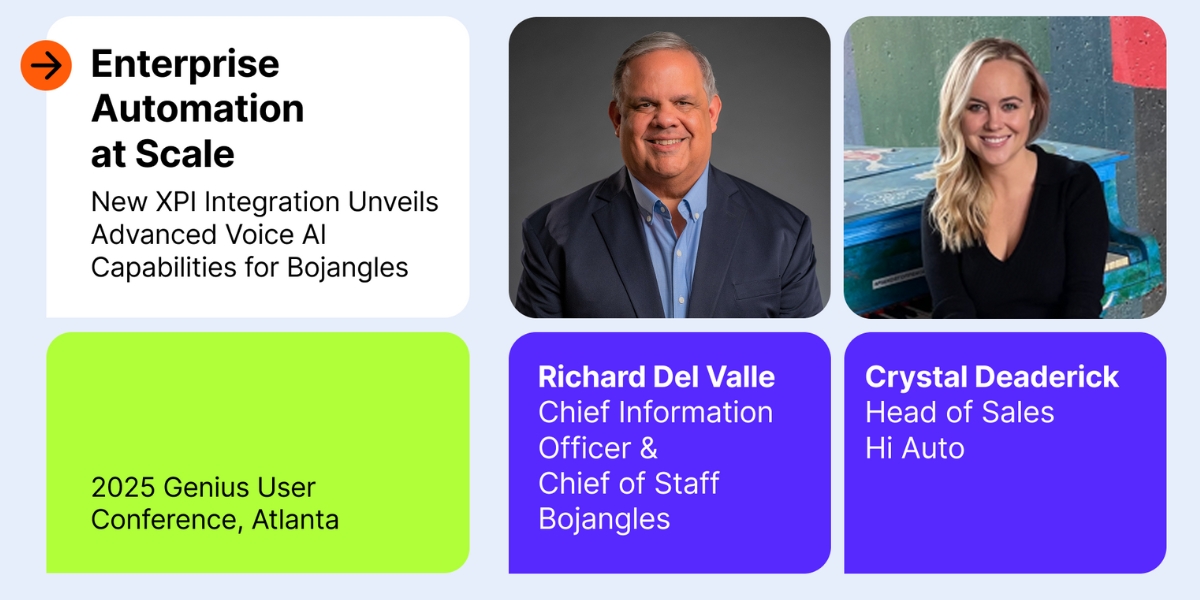
Of all the AI stories dominating headlines, few have focused on a distinctly unglamorous, but enormously important, context: the fast-food drive-thru. Yet at the Global Payments Genius Conference, Bojangles, Genius, and Hi Auto unveiled what may be one of the most ambitious enterprise AI deployments currently in operation in the real world.

While many AI initiatives struggle to scale beyond pilots, this collaboration is now active across almost 500 Bojangles locations, proving that automation in quick-service restaurants is moving beyond experimental hype. The most surprising takeaway from their announcement wasn’t what Voice AI might do someday; it’s what it is already doing today.

Rethinking the Drive-Thru Tech Stack

If you ask most QSR leaders why automation hasn’t transformed speed of service, they rarely point to a lack of AI capability. Instead, they point to legacy infrastructure. Traditional POS APIs were built for online ordering, where a few seconds of delay may not matter. Drive-thrus, on the other hand, operate on a millisecond scale.

Instead of forcing Voice AI to adapt to old systems, the Genius XPI platform extended enterprise POS capabilities directly into real-time ordering. Internally, this wasn’t pitched as a futuristic breakthrough, but rather as an infrastructure modernization to remove latency at the point where it is most costly: customer service.

Executives at the conference admitted they assumed this level of integration was years away. The challenge wasn’t conceptual AI; it was building a system stable enough to survive the realities of a large distributed operation. The Genius-Hi Auto deployment seems to have crossed that threshold.

Speed, Accuracy, and the Elimination of Friction

Hi Auto’s platform doesn’t just transcribe orders. It re-engineers how orders flow inside the restaurant. As a customer speaks, items are added to the order one by one and simultaneously displayed on guest-facing and kitchen screens.

That matters for two reasons:

  1. Guests correct errors instantly before they become bottlenecks.
  2. Kitchen staff start work before the order is completed.

In a sector where seconds compound into cars moved, this shift is structural.

The system also addresses a common issue most customers don’t think about: dual-lane confusion. When two lanes merge, staff must match each order to the corresponding car, and errors can cause slowdowns. Bojangles’ implementation attaches a vehicle image to each order, giving workers immediate visual confirmation. It’s simple, but operationally profound.

Because the platform routes data locally (rather than relying solely on cloud connections), stores are insulated from connectivity failures that make automation risky. Latency isn’t reduced, but engineered out.

Franchisees Don’t Buy Buzzwords; They Buy Results

The real story behind this deployment is the adoption curve, not the technology. The system scaled from 100 to 300 to nearly 500 restaurants, while maintaining an order completion rate of roughly 93% and accuracy above 96%.

Those numbers are not marketing claims designed to sell a pilot. They’re performance metrics that sustained franchise-level decisions.

For owners, the calculus is straightforward:

  • Faster service equals higher throughput.
  • Higher accuracy equals less waste.
  • Consistency equals fewer operational fires to put out.

Voice AI succeeded not because franchisees wanted innovation, but because they wanted relief.

Automation’s New Standard in QSR

Until recently, Voice AI was appraised by its conversational feel: Does it understand people well enough to replace the human at the headset? Today, the market is asking a more demanding question: Can AI behave like an enterprise-grade system: fast, reliable, integrated, measurable, and adaptable?

The Bojangles-Hi Auto deployment reframes Voice AI from novelty to an infrastructure capability. To be credible in QSR, AI must deliver across the entire operational spectrum: speed, accuracy, latency, training, analytics, menu adjustments, promotions, and regional variation.

With these demands, few AI systems can scale. Hi Auto has shown that one can.

A Company Built for High-Volume Reality

Founded in 2019, Hi Auto designed its platform specifically for drive-thrus in high-volume QSR environments. Today, it powers about 1,000 locations across the U.S., U.K., New Zealand, and Australia, delivering consistent, high-accuracy ordering performance at scale.

Its technology centralizes script optimization, voice performance, upsell strategy, and menu management while giving brands control over limited-time offers and regional promotions. It isn’t automation for the sake of novelty; it’s automation engineered for complexity without chaos.

What This Moment Actually Represents

The Genius Conference didn’t showcase a theoretical roadmap or a controlled pilot; it showcased a functioning, large-scale transformation of a foundational QSR workflow.

What matters isn’t the technology itself, but the shift in expectations it creates. Once operators see automation perform consistently across hundreds of restaurants, “experimental AI” becomes a business liability rather than a competitive advantage.

Drive-thru automation is moving from “interesting” to “mandatory.” Not because AI promises a better future, but because it is already rearchitecting the present.

Unit4 Review – The Cloud-Based Medical System You Need for Integrated Finance & HR

There aren’t many cloud-based medical SaaS services that hit the spot, and it can be hard to find a solution that gets pretty much everything right. While there aren’t any that will be 100% perfect for HR and financial integration, there are some that come pretty darn close.

So, Why Unit4?

The benefits of Unit4 make it a non-negotiable addition to any modern clinical business that wants to redefine what HR management and financial integration mean. As a leading agile SaaS system for human resources, your organization will cut paperwork for better patient care.

Unit4 Pros

It can be annoying to have to pay for and train staff to use multiple disjointed systems just for the simplest of tasks. The best solution is to use systems that integrate into one platform. Unit4 is one of those systems that you will be thankful you found, and here are some reasons why.

A one-stop HR platform

Most of the time, related departments are disconnected, making even the simplest communication a chore. With Unit4, payroll, budgeting, HR, finance, and staff management can be found in one place, meaning fewer separate systems, less paperwork, and more functionality.

Less time on errors

Errors cost time and money. With Unit4, you don’t have to worry about tedious issues like data duplication. Also, staff never have to re-enter the same data because it flows automatically between the relevant departments, speeding up important tasks such as payroll and invoicing.

Centralized data access

Decision-makers need a large amount of data these days. With Unit4, the data that HR, accounting, and payroll managers need is easily accessible from a central location. This ensures that they have a clear, bigger picture across planning, forecasting, and staff management.

Efficient HR and financing

It is hard to streamline back-office operations, especially when things have been done a certain way for a long time. However, Unit4’s integration systems support department merging. As such, staff can save time and money with reduced admon and improved patient care services.

Service-based modules

Unit4 has been designed as a service-facing system. Because of this, all the tools it offers naturally fit into the workflows and regulations of services such as public and private healthcare. This makes Unit4 a much better choice for a medical clinic than typical generic software.

Unit4 Cons

As a cloud-based medical SaaS system, Unit4 is a powerful tool that any medical company will benefit from. With the power of business technology, Unit4 can revolutionize how your organization functions, but there are drawbacks.

No patient integration

While Unit4 offers excellent clinical systems for improved HR and financial management, it is not a patient management system. However, this isn’t exactly a bad thing since private patient data is kept separate from Unit4, reducing the chance of unauthorized access from within.

Requires onboarding

Unit4 is a very comprehensive system, and that’s not a bad thing. However, it does mean that it takes some time to learn to use it effectively and safely. This also means it requires some level of onboarding that can take employees away from other duties as they learn to use the system.

Unused features for smaller teams

Smaller clinics might not benefit as much from Unit4 as larger teams. For example, smaller clinics may not require full ERP/HR integration, something Unit4 excels at. Therefore, the larger overall functionality of Unit4 will be potentially underutilized by more economic services.

Possible vendor downtime

Unit4 is a SaaS, cloud-based system, and as useful as that is, there are some caveats. One of the biggest issues with SaaS systems as a whole is that they require always-on web access. That means that if the web goes down, the system can become unusable for a period of time.

Can’t fix bad practices

Pretty much any clinical business will benefit from Unit4, given its robust HR and financial integration modules. However, it isn’t a magic fix for bad data practices and other poor performance metrics. These must be addressed beforehand to get the best from Unit4.

Cloud-Based Medical for HR and Finances

Unit4 sits among the top-rated cloud-based medical services that can integrate HR and financial aspects of a clinical business. Users often report excellent error reduction, time and money saving features, and praise the accessibility. So, here are some key features of Unit4.

  • A combined and unified platform for finance, accounting, HR, payroll, and staffing.
  • Functional financial planning and analytics tools for budgeting and forecasting.
  • Easy access tools for staff to manage their own data, such as personal time off.
  • Greater visibility over expenses through integrated procurement and spending.
  • Easily scalable cloud services that can be increased or reduced as needed.

Some Unit4 FAQs

Hopefully, there’s enough information above for you to make a decision about Unit4. If not, you can always head over to the official website for some extra info. Just in case you have missed anything, here are some of the most commonly asked questions about how Unit4 works.

Is Unit4 a patient records system?

No, Unit4 is not a patient management system and cannot access patient records. It is a platform that helps integrate the human resources and financial departments of clinics.

Can Unit4 save my business money?

Yes. When Unit4 is used to streamline operations, reduce errors, and improve operational efficiency, it can potentially save a clinic a lot of resources, such as staffing time and money.

Will a small practice benefit?

Yes, a small practice can use Unit4 just as much as any larger business. However, not all of the tools and services available will apply to smaller establishments, so they may be underused.

Summary

Unit4 is one of the most versatile and robust cloud-based medical SaaS platforms you can find for HR and financial integration. Your clinic can potentially save time and money through reduced errors, centralized data access, and efficient HR and financial operations. When you need a single system for human resources and budgeting, Unit4 offers reliable tools for integration in one place, meaning your staff spend less time with admin and more on care.

Supplier Relationship Management: Breaking Out of Spreadsheets Towards Strategic Partnership

Why the Old Techniques Don’t Work Anymore

For decades, supplier management has been transactional at its core: buyers seek the lowest costs, suppliers defend margins, and everything is managed through massive spreadsheets. Performance is tracked quarterly, finger-pointing occurs when quality is not what it should be or when there are misdeliveries, and the mentality is zero-sum: one side wins, the other side loses.

It was true for mature markets. Now it isn’t. For innovations, for robustness, for sustainability, for strategic differentiation, businesses require suppliers, least-cost providers least of all. And yet many procurement groups lean on tools and mindsets for arm’s-length relationships, not for partnerships.

According to Gartner, only 35% of CPOs say they have a working supplier segmentation model. In addition, 62% of companies practicing SRM use supplier scorecards to measure supplier performance, yet many of those scorecards still focus mainly on operational metrics such as cost, quality, and service. At the same time, digital transformation is reshaping how organizations work with suppliers, helping them move beyond spreadsheet-driven management toward more collaborative, partnership-oriented systems.

The Drawbacks of Spreadsheet-Driven Supplier Management

Spreadsheets are everywhere. They let you make your own views, summarize data, and push data around. They have several hidden expenses, however:

  • Stale information the instant you save. Market rates and supplier realities change constantly. Spreadsheets can’t adapt.
  • Version confusion. Several teams have local copies, which produce divergent, incompatible files.
  • No accountability or automation. Manually updating is slow during peak periods. There are no alerts, so important issues fall between the cracks.
  • The transactional approach dominates. If your supplier perspective is a sheet row, then the conversation remains on cost, delivery, and fault, not on innovation, mutual development, or risk sharing.

In one case, a manufacturing company continued purchasing from a financially troubled supplier for several months because no one had refreshed the spreadsheet tracking program. By then the damage had spiraled into large-scale problems with production.

How Strategic Supplier Management Operates Now

Strategic SRM, as an integral part of Supply chain management, includes your suppliers within your business, not other sellers. Ultimate value relationships are:

  • Collaborative planning 
  • Joint problem-solving and innovation
  • Shared risk management
  • Capability investments

State-of-the-art SRM solutions for the Information Age form the ground for such a movement. They house complete supplier profiles, including capabilities, qualifications, financial performance, sustainability indices, and a history of innovation, all updated in real time.

They are likely to embrace dynamic performance measurement across aspects beyond quality and delivery, including responsiveness, innovation, sustainability KPIs, and risk markers. Computer-automated scorecards deliver frequent, impartial evaluations used to guide investments in supplier development.

The SRM sites also have portals through which suppliers can view forecasts and capacity plans, share roadmaps, co-develop new projects, and participate in ongoing improvement. That transparency then creates alignment and credibility, which spreadsheets cannot deliver.

How Digital SRM Enables Strategic Partnerships

Consistent Performance and Growth Pathways

Instead of quarterly performance reviews, SRM online monitors real-time metrics such as quality, responsiveness, delivery, and compliance. Early deterioration triggers warnings before problems escalate. Companies can identify trends such as tardy deliveries, declining responsiveness, or creeping quality variation and correct them preventively.

Among those data streams, procurement recognizes high-potential suppliers for investment and enhancement, and treats those with perennial problems differently.

A tech company used SRM when it spotted a mid-tier supplier with high-quality offerings but limited scale. Through capacity-building investments, the supplier mentioned above developed into a strategic innovation partner for new product development.

Risk Visibility Throughout the Ecosystem

Collaborations require trust, which necessitates forward-looking risk management. Electronic SRM systems combine credit agency information, news feeds, regulatory alerts, and financial disclosures to build risk profiles. Machine learning identifies overlooked red flags early.

Notably, risk tracking includes sub-suppliers, so you get concentration risks or latent dependencies that spreadsheets don’t show.

Co-Innovation and Mutual Value Creation

The strongest relationships yield new ideas and market differentiation collectively, rather than independently. SRM solutions enable this through shared workspaces, idea management modules, and defined collaboration paths.

One organization invited suggestions for lightweight new materials from its own suppliers through its SRM portal. Suppliers proposed ideas, iteratively collaborated, and successfully reduced the weight of a vital vehicle part, a task that was not possible for internal teams alone.

Open Communication and Trust

Problems will happen—clearly defined, tracked communication channels (not ad hoc emails or calls) help. SRM digital includes formal ticketing for issues, root cause tracking, and resolution processes.

New staff onboarding is smoother because relationship histories, prior issues, and collaboration context are stored centrally rather than locked in someone’s head.

Supplier Segmenting and Custom-Designed Strategy

All suppliers don’t have to be treated alike. SRM solutions for the virtual world encourage segmentation based on strategic priority, risk, innovational value, switch cost, and spend. Invest effort in a place where it generates the maximum return.

Gartner references that only about 35% of procurement leaders have a functional segmentation model for their suppliers, highlighting a significant capability gap. As the relationship strategy grows, segmentation is applied more selectively, so teams avoid spreading effort thinly across a large number of suppliers.

The Benefits of Strategic Supplier Partnerships

  • Cooperation, not competition, for cost reduction. Suppliers help in redrawing processes, streamlining logistics, and eliminating waste.
  • Greater resilience. Better partners prioritize you during disruptions and notify you early of issues. During the pandemic, businesses with resilient supplier relationships received crucial inputs earlier.
  • Accelerate innovation. Suppliers have new technologies, materials, or processes you may never have imagined.
  • Sustainability benefits. Coordinated responsibility and common incentives enable the attainment of ESG objectives previously too diffuse to tackle.

According to Gartner, more advanced SRM organizations are more likely than less advanced ones to include sustainability, innovation, and resilience on their scorecards, rather than just cost and quality.

How to Successfully Implement Digital SRM

  • Begin with segmentation. Focus on suppliers that have strategic interest and don’t attempt to do the same for all of them.
  • Choose for integration, UX, and collaboration features. The best SRM tools won’t succeed if suppliers find them unusable.
  • Lead a culture transformation. Change mentality from adversarial negotiation towards collaborative problem-solving. That overrides technology.
  • Get executive sponsorship. Sole visible leadership support ensures SRM goes strategic, rather than being yet another procurement program.

Frequently Asked Questions

How does procurement software differ from a solution for ERP?
ERP solutions cover the overall business processes, such as finance, HR, and manufacturing. SRM or procurement software has advanced features for supplier performance management, collaboration, risk profiling, innovation orchestration, and relationship analytics.

How fast does SRM pay ROI?
You might notice early improvements in visibility and fewer unexpected issues within the first 90 days. Meaningful outcomes from innovation, risk reduction, and joint projects typically begin to emerge over 6–12 months, with deeper strategic benefits developing over 12–24 months.

Can mid- or small-sized enterprises derive advantage from SRM?
Absolutely. Cloud-based SRM platforms scale affordably. Smaller companies often benefit more because their supplier relationships are vital, and they cannot absorb inefficiency.

How does SRM software enhance supplier relationships?
Through facilitating ongoing, unbiased performance measurements, demand clarity, mutual forecasting, formal communication, and joint projects, changing the dynamic from “vendor and purchaser” to “value-creation partners.” 


Disclaimer: This article is provided for general informational purposes only and does not constitute legal, financial, procurement, or professional advice. Any references to third-party research (including Gartner) are based on sources believed to be reliable at the time of writing, but figures, practices, and market conditions may change and should be independently verified. Mentions of specific tools, platforms, or approaches are illustrative only and do not imply endorsement or a specific outcome for any organization; actual results will vary depending on each company’s situation, data, and implementation. Readers should consult their own legal, financial, and procurement advisors before making decisions based on the ideas discussed here. The accompanying image from Unsplash.com is used for illustrative purposes only.

NY Weekly’s Top 10 Most Impactful Podcasts of 2025

Written By: Dillon Kivo

Podcasts have become one of the most influential forces in modern media. Millions of listeners turn to long-form audio for depth, clarity, and meaningful perspective, making the format a central hub for public conversation. In 2025, several shows rose above the rest, shaping cultural dialogue, drawing massive audiences, and driving the year’s biggest discussions. Ranked by real audience size and cultural reach, this list highlights the ten podcasts with the strongest combination of impact, resonance, and sustained influence.

1. The Shawn Ryan Show

The year’s most explosive growth story. Shawn Ryan’s probing interviews on national security, military operations, geopolitics, and government transparency have pushed the show into the center of public debate. Few podcasts generated more conversation or audience momentum.


2. The Joe Rogan Experience

Still the world’s largest long-form podcast by global audience. Joe Rogan’s mix of cultural commentary, science conversations, entertainment guests, and headline-making interviews continues to set the tone for mainstream discourse.


3. Crime Junkie

A juggernaut in the true crime category. Crime Junkie’s massive download numbers and gripping narrative style have helped elevate public awareness around unsolved cases and investigative storytelling. Its audience loyalty remains unmatched.


4. The Tucker Carlson Show

One of the most-watched political shows online. Carlson’s conversations with world leaders, policy insiders, and whistleblowers often ignite national news cycles and dominate political conversation far beyond the podcasting world.


5. The Jordan B. Peterson Podcast

A global intellectual presence. Peterson’s interviews with academics, authors, clinicians, and cultural thinkers influence discussions around psychology, ethics, modern society, and personal development across multiple countries.


6. Huberman Lab

One of the most trusted science-driven podcasts worldwide. Dr. Andrew Huberman breaks down neuroscience and human performance in a clear, practical way. The show has become a go-to source for wellness, behavior change, and longevity insights.


7. SmartLess

One of the most popular conversation-driven podcasts in the world. Jason Bateman, Sean Hayes, and Will Arnett bring a mix of sharp humor and thoughtful interviews that consistently attract major cultural figures. The show’s blend of comedy, authenticity, and celebrity insight has built a massive global audience and turned SmartLess into one of the defining entertainment podcasts of the decade.


8. The Mel Robbins Podcast

A major force in the personal improvement space. Mel Robbins delivers grounded, research-informed frameworks for motivation, resilience, and real-life change. Her episodes consistently reach large audiences across platforms.


9. Radiolab

A long-standing leader in narrative audio. Radiolab’s signature mix of science, philosophy, and human behavior—paired with its high production standards—continues to attract a large, multi-generational audience that values curiosity and deep exploration.


10. The School of Greatness with Lewis Howes

A widely recognized leader in personal development and performance. Lewis Howes brings together entrepreneurs, psychologists, authors, athletes, and cultural figures for conversations that focus on growth, mindset, relationships, and long-term success. The show’s blend of practical advice and high-profile guests has earned it a massive international audience and a strong presence across every major podcast platform.


Why These Shows Matter

These ten podcasts offer a clear look at where the medium stands today. People are turning to long conversations again because they want substance. They want honesty. They want ideas that make them stop and think. Each show on this list gives listeners something different, but they all share the same ability to hold an audience in a way that quick content simply cannot. As podcast listening continues to rise, these programs sit at the front of a format that now has a real place in everyday life. They influence what people talk about, how they learn, and the voices they trust. If the growth of the past year is any sign, long-form audio is only becoming more important in shaping how audiences make sense of the world.

“Season of Drought” Documentary Wraps Production: A Raw Look at Life Without Shelter

Homelessness remains one of the most pressing issues facing communities across the United States today. While the statistics are staggering, they often fail to capture the full complexity and human cost of the crisis. This is where Season of Drought, a documentary produced in collaboration with Season of Drought, LLC, and OpenMic Perform Pro, steps in. Officially wrapping production, the film offers an intimate, raw portrayal of life without shelter, highlighting the personal stories that are often overshadowed by broad statistics and stereotypes. More than just a documentary, Season of Drought aims to ignite a movement that challenges perceptions, fosters empathy, and inspires meaningful action.

The Heart of the Movement: Amplifying Voices and Changing Perceptions

At its core, Season of Drought is a socially driven film that goes beyond traditional narratives about homelessness. While many documentaries focus on data points and societal trends, Season of Drought shifts the lens to the real, often untold stories of individuals living without stable housing. By working closely with community organizations, advocates, and those directly impacted, the film paints a picture of homelessness that is not only more nuanced but also grounded in the lived experiences of those who face it daily.

The documentary’s mission is clear: to amplify the voices of those who are too often overlooked, to dismantle harmful stereotypes, and to provoke a nationwide conversation about how homelessness is rooted in social, economic, and systemic inequities. This shift in perspective is key, as it encourages viewers to move past assumptions and engage with the issue in a more compassionate, informed manner.

"Season of Drought" Documentary Wraps Production: A Raw Look at Life Without Shelter

Photo Courtesy: Emily Pinto

A Raw Visual Representation of Homelessness

The production of Season of Drought is marked by a commitment to raw, unfiltered storytelling. The filmmakers have worked tirelessly to capture not only the challenges of living without shelter but also the resilience and strength of individuals who are experiencing homelessness. By focusing on personal narratives, the documentary shines a light on the dignity and humanity of those often relegated to the margins of society.

Through intimate interviews and powerful visual documentation, Season of Drought allows audiences to witness the daily realities of homelessness. These personal stories, coupled with the social and economic context in which they unfold, provide a stark contrast to the often dehumanizing portrayals seen in the media. The film serves as a call to action, encouraging viewers to consider the larger structural issues that contribute to homelessness, such as the lack of affordable housing, mental health support, and social services.

More Than a Film: A Movement for Change

While Season of Drought is a documentary, its impact is meant to extend far beyond the screen. The project is designed as a movement—one that aims to spark empathy and drive social change. By shedding light on the systemic causes of homelessness and the human stories behind the crisis, the film seeks to foster community engagement and inspire sustainable solutions.

Through collaboration with advocacy groups and community organizations, Season of Drought hopes to catalyze efforts that go beyond simply raising awareness. The movement calls for long-term solutions that restore dignity, opportunity, and hope to those living without stable housing. From public policy changes to local community initiatives, Season of Drought is striving to ignite meaningful conversations that lead to real-world action.

"Season of Drought" Documentary Wraps Production: A Raw Look at Life Without Shelter

Photo Courtesy: Emily Pinto

Looking Ahead: What’s Next for Season of Drought?

With the production phase of Season of Drought now complete, the next steps are focused on distribution and outreach. The documentary aims to be a catalyst for conversations in both public and private sectors about the social and economic systems that contribute to homelessness. In addition to screenings and educational campaigns, Season of Drought, LLC plans to collaborate with advocacy groups to push for policy changes and support local efforts to address homelessness in meaningful ways.

The journey of Season of Drought is just beginning. It is a call for a shift in how we view and address homelessness. This movement asks for not just a change in policy but a shift in the way we engage with our communities. It is a reminder that homelessness is not a statistic—it is a reality that touches lives, and it’s time for the collective effort to end it.

For more information on the documentary and ways to get involved, visit the official website at Season of Drought or connect with the organization on LinkedIn.

VistaPrint Insights on Why Corporate Gifting Is Making a Comeback in 2026

Introduction

Corporate gifting is having a moment again. After years of half-hearted swag bags and generic holiday cards, companies are circling back to something older than business itself: thoughtful gestures. And 2026 is shaping up to be the year this trend fully returns to center stage.

Why now? A mix of shifting work habits, relationship-driven selling, sharper competition, and the rise of AI-powered personalization has redefined what a “gift” means in a business setting. Leaders aren’t sending baskets or branded mugs just because it’s polite. They’re doing it because loyalty is harder to earn, relationships matter more, and buyers have higher expectations.

And yes—corporate gifting is big business. Very big. According to GlobeNewswire, the global corporate gifting market reached US$ 765.46 billion in 2023 and is projected to hit US$ 1.11 trillion by 2028. That’s not a small jump. It’s a signal.

So let’s break down why gifting faded, why it’s returning, what’s changed, and how leaders can use thoughtful gifting to strengthen the relationships that drive business.

Why Corporate Gifting Declined in the First Place

Corporate gifting didn’t disappear, but it certainly lost energy for a few years. Several shifts contributed to the slowdown.

1. The rise of remote and hybrid work disrupted old habits

When offices shut down, that entire category of in-person gifting rituals vanished overnight.

No cubicles. No welcome kits. No holiday parties with swag tables.

The pause was understandable, but it also revealed that many gifting programs were tied to physical environments rather than intentional strategies.

2. Generic gifts turned people off

A wave of mass-produced items—identical mugs, flat-brim hats, pens nobody asked for—diluted the meaning of gifting. It didn’t help that 51% of employees said they didn’t receive any corporate gift in the previous year, according to the survey on customer gifting preferences. Even when gifts did show up, many felt impersonal.

3. Budget tightening made gestures feel dispensable

Gifting was often the first line item to go when companies cut costs. Without clear ROI data, it was labeled a “nice-to-have.”

4. Overreliance on gift cards

According to a PRWeb study, more than half of surveyed companies turned to physical or digital gift cards. They made up 37% of all corporate gifts.

Gift cards are fine. But they can feel transactional—another reason gifting lost its emotional impact.

The Resurgence: Why Corporate Gifting Is Coming Back in 2026

Corporate gifting hasn’t merely rebounded. It’s exploding. Leaders are discovering that giving chosen items thoughtfully strengthens relationships in ways virtual meetings just can’t.

1. Remote work increased the need for human connection

We’re not going back to full-time office life, and that’s ok. But the distance created new challenges.

How do you welcome a new hire you may not meet in person for months?

How do you maintain a sense of belonging across time zones?

Gifting has become one of the most effective ways to create physical touchpoints in a distributed setting. It’s simple. It’s tangible. And it cuts through the noise.

Hybrid workers now receive the most gifts—65%, according to the same Vistaprint survey—showing that companies recognize the value of acknowledgment across remote teams.

2. Relationship-centered selling is dominating B2B strategies

For buyers, loyalty isn’t automatic.

They’re busier.

They’re more selective.

And they’re comparing vendors constantly.

Meaning—companies that want to stand out are leaning into thoughtful, targeted gestures.

Even a single well-chosen item can differentiate a brand in a competitive pitch cycle or reinforce trust with long-standing clients.

3. AI-powered personalization changed the game

Gifts are no longer generic. Not even close.

By leveraging AI tools that analyze preferences, past purchases, location data, and milestones, companies can match the right gift to the right person at the right moment.

This shift created an entirely new bar:

Personal or nothing.

It’s no surprise the practical–swag segment—items people actually use—accounted for 31.2% of the corporate gifting market in 2023, representing roughly US$ 239.05 billion (GlobeNewswire).

4. Macro trends: retention and differentiation

Two priorities keep showing up in executive surveys:

  • Retaining top clients
  • Standing out in crowded markets

Gifting helps with both.

And the numbers back it up. The market reached US$ 822.56 billion in 2024 and is projected to hit US$ 886.56 billion in 2025, according to The Business Research Company. Leaders are reinvesting because the returns are measurable.

The New Rules of Corporate Gifting in 2026

The gifting world has changed dramatically. And expectations have skyrocketed.

1. Personalization is now the standard

Not optional. Not a bonus. Expected.

Employees and clients want items that mean something.

According to a study from Snappy, 78% of employees say they feel more satisfied at work after receiving a meaningful gift. Meaningful is the keyword.

What counts as meaningful?

  • A favorite snack
  • A premium desk item they’d never buy for themselves
  • A piece of apparel chosen in their size
  • A handwritten note (50% say this makes a gift more memorable)

2. High-quality items outperform quantity

Less clutter. More impact.

42% of people prefer one premium item over several small gifts, according to the Vistaprint survey.

This shift explains why premium tech, personalized luxury items, and experience-based gifts lead the $100+ category.

3. Practical gifts still matter (maybe more than ever)

Daily-use items still dominate the under-$20 range:

  • Snacks (56%)
  • Branded mugs/tumblers (43%)
  • Tote bags (32%)

Meanwhile, apparel remains a top pick for work anniversaries (32%). And yes, if your team is designing something custom, link them to a solid t-shirt design source.

4. Recognition expectations have changed

Recognition isn’t just for holidays anymore.

The Vistaprint survey found:

  • 59% believe promotions deserve gifts
  • 54% want recognition for work anniversaries
  • 43% think personal life events should be celebrated too

If companies want employees to stay longer, feel motivated, or recommend the workplace, this matters.

Actually, it matters a lot. Because:

  • 62% say recognition boosts motivation
  • 54% say it influences how long they stay
  • 49% say it affects whether they’d recommend the company

5. Regional and demographic shifts influence gift choices

In 2023, North America represented 36.8% of the global gifting market (about US$ 281.92 billion), according to Postal. Asia-Pacific, meanwhile, is the fastest-growing region at 9.05% CAGR.

Hybrid workers receive the most gifts. Boomers receive the fewest. This isn’t random—it reflects shifting workplace cultures, managerial preferences, and workforce distribution.

The Bigger Picture: Corporate Gifting Is Now a Strategic Tool

When used well, gifting supports several business priorities at once:

1. Onboarding and culture-building

Remote onboarding can feel flat. A thoughtful gift adds warmth.

2. Sales pipeline momentum

A gift won’t close a deal, but it absolutely can:

  • Keep your company top-of-mind
  • Strengthen rapport
  • Reinforce your value between touchpoints

3. Client retention

Selling to existing clients is far less expensive than winning new ones. Meaningful gestures reduce churn by reinforcing the relationship.

4. Employee experience

This one’s big.

According to Snappy:

  • 75% of employees hope to receive a gift during the holidays
  • 57% see it as a sign of appreciation
  • 78% report increased job satisfaction after a meaningful gift

Those aren’t soft numbers. They’re signals of what keeps people engaged.

Strategic Recommendations for Leaders in 2026

Thoughtful gifting isn’t random. It takes planning and intention. Here’s how leaders can make it work.

1. Build gifting into the employee and client journey

Map out the moments where a physical touchpoint matters.

For example:

  • First day
  • Work anniversaries
  • Promotions
  • Deal milestones
  • Renewals
  • Personal moments worth celebrating

2. Create gifting tiers

Not every moment needs a $200 item. But some do.

Build simple categories:

  • Under $20
  • $20–$50
  • $50–$100
  • $100+

This makes gifting scalable.

3. Use data to personalize at scale

AI-powered tools can categorize preferences like:

  • Favorite snack types
  • Apparel sizes
  • Preferred colors
  • Tech vs. lifestyle vs. gourmet leaning

Use that data. It makes a huge difference.

4. opt for practical gifts that don’t feel generic

A branded mug can feel thoughtless unless it’s:

  • High-quality
  • Nicely packaged
  • Paired with something meaningful (a note, a story, a favorite drink)

5. Don’t forget the power of handwritten notes

Half of employees say it makes gifts more memorable. And it costs almost nothing.

6. Think global

With Asia-Pacific’s rapid growth and distributed workforces, gifting needs to consider:

  • Shipping restrictions
  • Local sourcing
  • Cultural gifting norms

7. Track impact

Look at metrics like:

  • Retention rates
  • Deal cycle speed
  • Employee satisfaction scores
  • Referral rates

You’ll notice patterns quickly.

Conclusion

Corporate gifting has evolved far beyond logo-stamped trinkets and generic holiday boxes. In 2026, it’s become a meaningful strategy powered by personalization, recognition, remote work realities, and the push for stronger relationships.

Companies want to retain clients. They want to keep employees engaged. They want to differentiate in a crowded market. Thoughtful gifting helps with each of those goals.

The numbers don’t lie: with the market on track to reach US$ 1.11 trillion by 2028, corporate gifting isn’t just back. It’s entering a new era.

Leaders who embrace intentional, personalized, data-informed gifting will stand out in the moments that matter — and build relationships that last.

SpongeBob Takes Over Burger King: Everything You Need to Know About the Limited-Time Meal

For a generation raised on absorbent yellow sponges flipping imaginary burgers, the idea of a real-world SpongeBob meal at Burger King once felt like wishful thinking. Now it exists—and it’s more than just cartoon branding stamped on a paper bag. This promotion represents a full nostalgia-driven collaboration that blends menu customization, novelty packaging, and collectible culture into a single fast-food moment.

Here is the complete breakdown of the Burger King SpongeBob SquarePants Meal—what it includes, why it exists, and what customers can realistically expect.


What Is the Burger King SpongeBob Meal?

The SpongeBob Meal is a limited-time themed menu collaboration tied to the upcoming SpongeBob movie release. Rather than recycling existing menu items with character stickers and novelty cups, Burger King introduced multiple menu additions alongside exclusive packaging and toy collectibles.

This approach follows the model outlined in our internal coverage of entertainment-brand partnerships and pop-culture tie-ins, where major restaurant chains translate media properties into immersive food experiences meant to serve both social media sharing and brand re-engagement.


The Core Menu Items

SpongeBob Takes Over Burger King Everything You Need to Know About the Limited-Time Meal

Photo Credit: Unsplash.com

SpongeBob’s Krabby-Style Whopper

The promotional centerpiece is a specially styled version of Burger King’s signature Whopper.

  • Flame-grilled beef patty
  • American cheese
  • Lettuce, tomato, pickles, and onion
  • Ketchup and mayonnaise
  • Served on a square, yellow-tinted sesame seed bun

The bun coloration uses approved food coloring to recreate SpongeBob’s visual look while keeping the ingredients compliant with food safety standards. Despite the altered presentation, the sandwich flavor profile remains identical to the standard Whopper.

There is no “secret Krabby Patty recipe” or new sauce involved—the change is fully aesthetic.


Mr. Krabs’ Cheesy Bacon Tots

Burger King added a new side exclusively for the promotion:

  • Crispy potato tots
  • Filled with melted cheese
  • Mixed with bacon pieces
  • Served in novelty treasure-chest packaging

This is not a rebranded existing menu option but a genuinely new item, introduced to complement the themed Whopper with a richer and more indulgent side.


Patrick’s Star-Berry Shortcake Pie

The dessert selection is a layered hand pie featuring:

  • Strawberry filling blended with vanilla cream
  • Cookie-crumb and shortcake textures
  • Star-shaped decorative sprinkles

Compared to Burger King’s traditional pie varieties, this version leans heavily toward confectionery styling rather than simple fruit dessert presentation.


Pirate’s Frozen Pineapple Float

The themed beverage offering is a frozen pineapple drink topped with cold foam. The flavor profile leans tropical, referencing SpongeBob’s pineapple home under the sea. This drink is exclusive to the SpongeBob campaign and does not appear on Burger King’s standard menu outside of the promotional period.


Bundle Combos and Meal Sets

In addition to ordering the themed items individually, customers can opt for special bundle meals that package the promotions together. These generally include:

  • The Krabby-style Whopper
  • Cheesy Bacon Tots
  • The Pineapple Float or standard drink substitutes depending on location availability

As discussed in our internal analysis on limited-edition meal bundles and consumer purchase behavior, fast-food chains often use bundled offerings to increase average transaction size while encouraging customers to sample multiple new menu items in a single visit.


The King Jr. Kids’ Meal

Where the collaboration becomes fully immersive is in the children’s concept meal.

The King Jr. SpongeBob Meal includes:

  • Standard kids’ meal food selection
  • Pineapple-shaped SpongeBob packaging box
  • One collectible toy from a six-figure series
  • SpongeBob-themed character crown

The collectible toys rotate throughout the promotional period, which incentivizes repeat visits from fans seeking to complete the full set. This strategy mirrors trends covered in our internal feature on collectibility-driven fast-food marketing, where toy rotations drive sustained foot traffic throughout short campaigns.

Adult meals do not include toys or specialty packaging.


Why Burger King Chose SpongeBob

This campaign is not aimed solely at children—it is heavily targeted toward millennials now in their late 20s and 30s who grew up with SpongeBob as a staple of late-1990s and early-2000s television.

Nostalgia-based campaigns have become a core marketing strategy across food, fashion, and media industries. By pairing a beloved intellectual property with an upgraded food experience, Burger King taps into emotional brand recall rather than relying solely on discount pricing or limited pricing incentives.

Our ongoing coverage of nostalgia-driven consumer engagement strategies highlights how brands use familiarity as a shortcut to emotional connection, particularly when consumer appetite for novelty remains high but marketing trust remains low.


Is the Food Actually Different?

From a culinary standpoint, the answer is mostly no.

  • The Whopper tastes identical to the standard menu version.
  • The dessert and beverage items showcase genuinely distinct flavors.
  • The tots represent the most notable new product addition.

The value of the collaboration lies in presentation, experience, and collectibility rather than recipe innovation.


Availability and Duration

This is a limited-time menu rollout available at participating Burger King locations only while supplies last.

As with most licensed food collaborations:

  • Not every store may offer the complete menu.
  • Toy inventories rotate and sell out unpredictably.
  • Menu items may disappear without formal end-date announcements once promotional windows close.

Is the SpongeBob Meal Worth Trying?

For collectors and longtime fans, the answer is yes. The collectibles, packaging, and overall experience provide legitimate novelty value.

For purely food-focused customers, the offering remains familiar with only minor departures from Burger King’s standard menu items.

Ultimately, this promotion is less about flavor reinvention and more about emotional engagement—a pop-culture moment wrapped in fast food.

The SpongeBob collaboration shows how modern fast-food marketing has shifted away from purely transactional advertising toward experience-based brand storytelling.

Burger King is no longer selling just a sandwich—it is selling recognition, nostalgia, online shareability, and cultural resonance. SpongeBob serves as a nostalgic anchor for that strategy, allowing the chain to briefly transform a routine meal into a themed memory event.

More insights on brand-entertainment convergence can be found in our internal reporting across consumer nostalgia trends, licensed product promotions, and experiential fast-food campaigns—key pillars shaping the current food marketing landscape at New York Weekly.

Defining Clear Communication Goals: A Key to Effective Marketing Measurement

Effective marketing measurement hinges on the ability to set clear and precise communication goals. This fundamental step ensures alignment between marketing efforts and the broader organizational objectives. Without clarity in these goals, marketing teams may find it difficult to demonstrate the true value of their campaigns, or worse, struggle to assess their effectiveness. The need for clear communication goals cannot be overstated as it establishes the foundation for success in marketing measurement programs.

Communication goals should be specific and actionable, going beyond generic aspirations like “increasing awareness” or “enhancing engagement.” They must focus on measurable outcomes such as increasing brand consideration within a specific audience, driving product trials, or improving the perception of a company’s reputation. Such defined objectives help ensure that measurement efforts reflect actual change, not just activity at the surface level.

Defining precise communication goals also aids in internal alignment across various teams. Marketing, communications, product development, and leadership must share a clear understanding of success. This cohesion prevents inconsistent interpretations of metrics and ensures that teams remain focused, even when market conditions or campaign demands change.

Identifying Key Stakeholders and Audiences: Ensuring Relevance and Impact

Defining Clear Communication Goals A Key to Effective Marketing Measurement (2)

Photo Credit: Unsplash.com

An effective marketing measurement program is designed to serve various stakeholders, both within and outside of the organization. Understanding who will use and be impacted by the program is critical to its relevance and actionability. Identifying key stakeholders, such as executive leadership, brand managers, product teams, and customer service departments, ensures that the measurement system meets the needs of all internal groups. Each department or group has its own expectations regarding marketing performance, and tailoring the program to meet these expectations will increase its value.

Audience identification is equally important. In addition to the primary customers or end users, a broader set of stakeholders, including media, partners, regulators, and investors, may be influenced by marketing efforts. Since each group has distinct needs and expectations, the measurement program must capture the unique impacts of the communications on each segment. This requires the development of tailored strategies and metrics that can offer differentiated insights for various audiences.

To ensure that measurement insights are shared and acted upon, it is essential to establish clear guidelines for reporting cadence, data transparency, and the delivery of insights. A measurement program that only serves the marketing department risks underutilization and failure to create broader organizational value. By involving key stakeholders across departments, insights from marketing measurement can be leveraged for decision-making throughout the organization.

Choosing the Right KPIs: A Strategic Approach to Measurement

Selecting the appropriate Key Performance Indicators (KPIs) is a critical step in building a successful measurement program. The right KPIs allow for performance visibility while supporting informed decision-making. However, there is a tendency to select metrics that are easy to track but offer little strategic insight, leading to vanity metrics that may look impressive but fail to reveal the true effectiveness of marketing efforts.

To avoid this pitfall, KPIs should be directly tied to the communication goals established earlier. For example, if the goal is to improve brand consideration, relevant KPIs might include changes in brand favorability, message recall, or website conversion rates on product-specific pages. If the objective is reputational, media sentiment, and stakeholder trust indicators may take precedence.

KPIs must be carefully selected to reflect both short-term effectiveness and long-term impact. While campaign-level metrics such as click-through rates or impressions are useful for optimization, more strategic metrics like customer lifetime value, share of voice, or brand equity growth provide a deeper understanding of marketing’s contribution to organizational objectives. This balanced approach to KPIs helps connect day-to-day execution with long-term business goals.

It is equally important to ensure that selected KPIs are measurable and attainable with the tools and data sources available. Metrics that are ambitious but cannot be tracked reliably will compromise the credibility of the measurement program. Thus, selecting KPIs involves not just strategic thinking, but also practical feasibility considerations.

Integrating Measurement into Strategic Planning: Creating a Data-Driven Marketing Culture

Defining Clear Communication Goals A Key to Effective Marketing Measurement

Photo Credit: Unsplash.com

For marketing measurement to truly drive value, it must be integrated into the strategic planning process from the outset. Measurement should not be seen as an afterthought or a post-campaign activity; rather, it should be embedded in every phase of campaign development, from design to execution. This integration ensures that key decisions regarding campaign design, channel selection, audience targeting, and resource allocation are informed by data and insights.

Integrating measurement into strategy also facilitates proactive adjustments during the campaign. Instead of waiting until the campaign has concluded to evaluate its success, real-time data allows marketers to optimize and refine their strategies as they go. This approach enhances marketing efficiency and enables quick course correction when early indicators signal that performance may be below expectations.

Furthermore, strategic integration encourages collaboration across functions. Data gathered from marketing measurement can be invaluable to teams beyond marketing, including product development, customer experience, and even human resources. For example, HR teams may use marketing insights to gauge employee sentiment or assess the effectiveness of employer branding campaigns. When measurement is framed as a shared resource that benefits the entire organization, its value becomes more apparent and widely appreciated.

Additionally, embedding measurement into strategy fosters a culture of accountability. It shifts the focus from output-based activity to outcome-based effectiveness. Marketers are no longer merely content creators; they become stewards of measurable impact, which elevates their role within the organization. This cultural shift aligns marketing efforts with organizational goals and ensures that marketing is seen as a driver of business success rather than a peripheral function.

Defining clear communication goals, understanding stakeholder and audience needs, choosing the right KPIs, and integrating measurement into strategic planning are essential elements of a robust marketing measurement program. By following these steps, marketers can ensure that their efforts are focused, impactful, and aligned with organizational objectives. Measurement is not just about tracking performance but about driving continuous improvement and strategic decision-making across the organization. This approach creates a data-driven culture where marketing contributes significantly to the overall success of the business.

How Motion Designer and Digital Artist Leo (Liyue) Bai’s 3D Work Defines the Opening Moments of Hit Documentaries

By: Laura Tungga

In the highly competitive vanguard of modern motion design, Leo (Liyue) Bai is distinguished not merely by an impressive list of production credits but by his exceptional mastery over the most nuanced and demanding elements of the 3D craft. His work is defined by a sophisticated command of cinematic lighting, hyper-realistic material rendering, and the subtle art of textural storytelling.

By applying specialized, advanced software and complex procedural techniques, Bai transforms standard motion design into profound, immersive visual experiences that resonate with audiences. This highly sought-after skill set has firmly positioned him at the center of high-profile projects, where he creates the critical visual anchors for major documentary and series titles recognized at the highest levels of the television industry.

Crafting High-Impact Worlds for Cinematic Titles

How Motion Designer and Digital Artist Leo (Liyue) Bai’s 3D Work Defines the Opening Moments of Hit Documentaries

Photo Courtesy: Leo (Liyue) Bai (BGSTR, 3D Render for Evolution of the Black Quarterback Documentary)

Bai’s expertise is consistently leveraged by industry giants who require an artist capable of translating complex, multi-layered narratives into visceral visual sequences. A prime example of this capability is his contribution to the Evolution of the Quarterback documentary title sequence, created for SMAC and Amazon. This project exemplifies his extraordinary ability to translate high-stakes sports narratives into detailed, high-impact 3D scenes that capture the essence of the game.

Title sequences for high-level documentaries of this caliber require the designer to establish the emotional weight and historical legacy of the subject matter instantly. It is not enough to simply show the sport; the visuals must evoke the grit and glory of the athlete’s journey. Bai’s expertise in advanced 3D materials and lighting was essential to crafting the visually rich style frames that defined these moments. By meticulously rendering textures that felt tangible and authentic, he successfully bridged the gap between digital art and the physical reality of the sport, honoring the legacy of the players involved.

Gold Standard in Art Direction: The “Bad Romance” Sequence

How Motion Designer and Digital Artist Leo (Liyue) Bai’s 3D Work Defines the Opening Moments of Hit Documentaries

Photo Courtesy: Leo (Liyue) Bai (BGSTR, Design Frame for ABC News, Bad Romance Opening Sequence)

A definitive testament to Bai’s leading creative role and technical mastery is found in the Opening Sequence for “Bad Romance,” designed for ABC News. This specific piece recently secured the prestigious 2025 GEMA Awards Gold Winner for the Art Direction & Design: Video category, a decisive international recognition that underscores the global impact of his work.

On this specific project, Bai held a singularly leading role, functioning as the primary creative and technical force behind the final product rather than just a contributor. He was responsible for the entire pipeline, including 3D modeling assets, designing the conceptual styleframes, and animating every shot as a unified, cohesive sequence. This level of end-to-end control allowed him to precisely manipulate light, texture, and motion flow, creating a piece that transcends typical motion graphics to function as a sophisticated visual statement. The sequence immediately immerses the viewer in the series’ world, using abstract visual metaphors derived from his intricate 3D environment to set the dramatic tension and thematic undercurrent of the series. This achievement demonstrates his trusted capacity to deliver gold-winning creative solutions for major network clients, handling the pressure of high-visibility deliverables with artistic grace.

Mastering the Core Tools of 3D Storytelling

Bai’s work is defined by an original artistic methodology that transcends standard motion graphics execution. While many designers in the industry specialize in only one facet of the production pipeline, Bai’s differentiating contribution lies in his rare ability to serve as the sole creative architect. From the initial stages of 3D modeling and conceptual style framing to the final execution of proprietary lighting and material rendering techniques, he maintains a holistic vision.

This comprehensive, end-to-end control ensures a signature cinematic realism and narrative depth that is distinct within the field. His unique focus on manipulating light and employing hyper-realistic texture transforms the title sequence into an expressive narrative extension of the series itself. It is this specific contribution, the ability to make the artificial feel authentic, that sets his work apart and has directly resulted in significant international recognition, including the GEMA Awards Gold, Clio Awards, and the Emmy Award. This specialized fusion of technical mastery and singular artistic vision establishes him as a unique and indispensable creative force contributing to the global media landscape.

Links:

LinkedIn: https://www.linkedin.com/in/leo-bai-7006631a1/

Instagram: https://www.instagram.com/x100_mi/

Author Info: 

Laura Tungga is a seasoned writer and arts journalist known for her critical analysis of film, design, and artists in the contemporary visual arts industry. Tungga contributed significantly to the arts and cultural landscape in Indonesia, where she conducted and published interviews with local artists, bridging creative communities within the Indonesian American Association and playing a key role in promoting cultural and community engagement.