Behind the Oscar-Qualifying Short “Lucky Market”: A Talk with Line Producer Megan Qiao

By: Charlotte Hayes

When Lucky Market premiered at LA Shorts — an Academy and BAFTA-qualifying festival — the film quickly attracted attention from audiences and programmers around the world. It soon made its way to AFI Fest, the Edmonton International Film Festival, Bushwick, Tacoma, USA Film Festival, and more. Beyond that, Lucky Market received a Golden Angel at the Chinese American Film Festival, along with nominations, including a major recognition for Cinematography at the 2023 ASC Heritage Awards.

“The film’s AAPI-driven creative team received widespread recognition across the industry, and within that collaborative environment, line producer Megan Qiao played a key role in helping maintain steady organization behind the scenes. Her ability to keep the production moving through its more challenging moments helped support the work of the entire team.”

In speaking with Megan, she offered a thoughtful look into the quieter side of line producing — and the moments on Lucky Market when careful planning and calm thinking helped the crew stay focused on the story.

Q: Lucky Market has been celebrated across multiple Oscar-qualifying festivals. From your position on the front lines, what made this film so challenging?

Megan: “The team is large, around sixty people, all bringing their own expertise and heart to the project. Not only the size, but also the emotional weight of the story. Because the film touches on community, aging, and a painful act of hate, we needed a set environment that felt steady and respectful, especially during our night shoots.

Some days it meant adjusting the timing or moving things around; other days it meant helping the crew feel settled so everyone could breathe a little easier. Also, it’s important to give the director and other department heads the space to stay connected to the heart of the story, knowing the practical details were being addressed.”

Q: Directors and producers often talk about the line producer as the “vision translator.” How did you shape that vision for this film?

Megan: “Working with all the experienced and professional team members is a pleasure. Apart from producer Cindy, Eric Wang Schwager, our multi-ethnic director, has an incredibly cinematic mind and holds high standards. His half-hour pilot, Bad Beat, was a Cinequest and Screen Craft semifinalist and a top-ten finalist at the Nantucket Film Festival. In the commercial world, Eric was recognized with a Silver Telly Award in the “Craft” category for Roborock’s Revel in the Mess and also had pieces for Bank of America and Advance Auto Parts spotlighted for AAPI month. He is also an alum of the AICP Commercial Mentorship Program, having worked alongside Oliver Fuselier and Great Guns USA.

His films often address themes of systemic disadvantage and exclusion. By distilling each story to its most visual and impactful core, Eric aims to connect with viewers on a visceral level.

My job was to make those images as feasible as possible. For example, there were night sequences where the emotional tone of the scene depended on timing, lighting, and sound sensitivity. Logistically, it was challenging — overnight shoots, neighborhood noise, limited hours. Producer and Me, our production, did what was necessary to make sure the director could capture the performance without disruptions, without rushing, and without compromising artistic intent.”

Q: Can you share one of the challenges you’ve faced during any overnight shoots based on your experience? 

Megan: “Yes. One night, during a critical emotional scene, we encountered a homeless man who wandered into our production area, yelling at us. Some crew members were caught off guard. It was unpredictable. It was dark, and our sound recording was at risk.

We couldn’t afford to delay; adjusting the schedule would have thrown off the entire overnight. I stepped in efficiently, approached him calmly, and negotiated respectfully. Though I was concerned because he could have had weapons, I knew it was something that needed to be addressed. The film needed to proceed, and within a few minutes, he agreed to leave.

It was terrifying — but leadership sometimes means doing the things others might hesitate to do. You always need to stay calm, protect your team, and protect the film.”

Behind the Oscar-Qualifying Short "Lucky Market": A Talk with Line Producer Megan Qiao
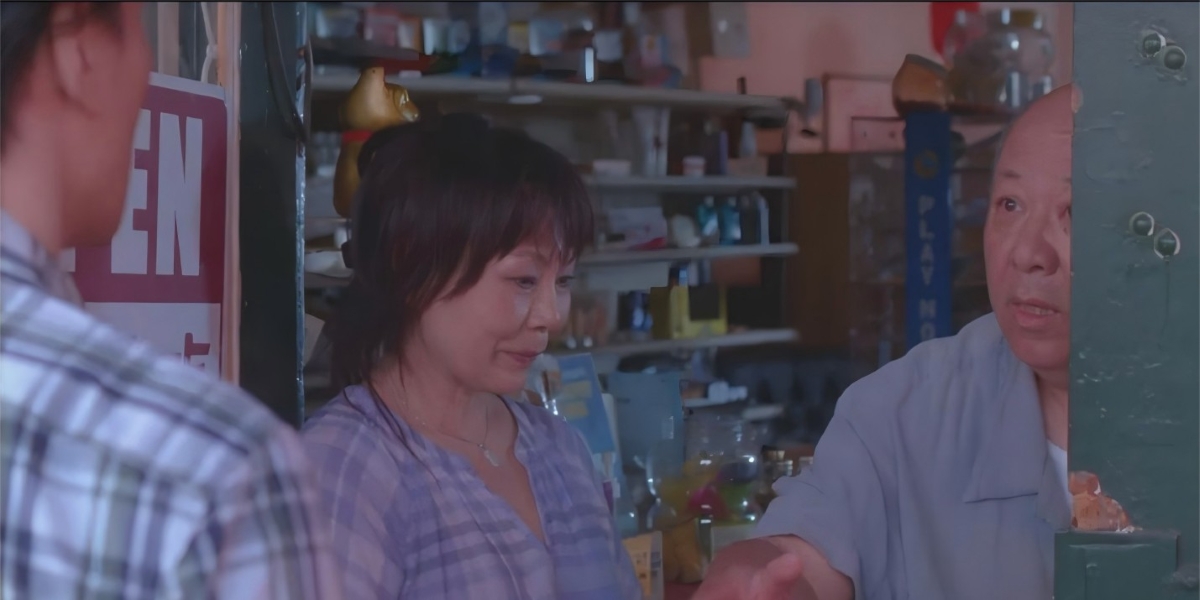
Photo Courtesy: Megan Qiao

Q: Where does your calm come from?

Megan: “I think a calm approach comes from years of being in different roles on set and understanding how much pressure people carry. Because I’ve worked across several departments, I know how quickly the energy of a set can change.

I try to stay attentive — to how people are feeling, to what might become a problem later, and to the small things that make long days a little easier. If the crew feels supported, the work tends to fall into place.”

“My leadership style has been shaped by experience and my producing mentor when I was pursuing my MFA in film production in LA. By watching how different teams function under pressure, I try to stay aware of both the big picture and the emotional atmosphere. From the crew’s food preferences to the safety environment.

A film is a living organism. If the morale drops, the production can suffer.”

Q: How does it feel seeing the film resonate globally?

Megan: “It’s deeply rewarding. Behind every award and every selection, there are months of invisible decisions. And to know that the world embraced a story about community and identity — including one driven by an AAPI creative team — is meaningful.”

Q: What’s next for you?

Megan: “I’d like to continue producing films with filmmakers who are passionate about telling human stories with depth and integrity. I’m also looking forward to expanding into more commercial works and bigger budget projects as my next step.

Filmmaking is always a collective effort, and Lucky Market was no exception. Alongside the director’s artistic leadership, Producer Cindy Zhang and Megan’s thoughtful planning and oversight played a meaningful role in helping the production navigate its most complex days.”


How Heimdal Can Help Businesses Redefine Cyber Defense in the Age of Instant Exploits

Instant ExploitsIs your business one click away from a breach?

You’re checking your email. Someone sends a spreadsheet. Looks legit. You open it. And just like that, your systems are compromised. No Hollywood-style hacking. No alarms blaring. Just a quiet, invisible hijack that unfolds in seconds. This isn’t some far-fetched worst-case scenario. It’s happening every day.

Welcome to the age of instant exploits.

In 2025, cyberattacks don’t need to be sophisticated. They just need to be fast. Hackers don’t need to break down doors when most companies are leaving windows wide open. And while businesses are busy planning quarterly reviews, attackers are deploying ransomware kits like weekend side hustles.

What used to take weeks now takes minutes. A vulnerability goes public, and within hours, it’s weaponized. This leaves businesses scrambling to catch up, not because they don’t care about security, but because legacy tools and outdated practices are slow, clunky, and often stuck in “manual mode.”

In this blog, we will share how Heimdal helps companies break out of that slow-moving cycle and redefine cyber defense for the speed and complexity of today’s threats.

Why Automation Is Your New Best Friend

You can’t fight modern cybercrime with old-school checklists.

Imagine you run a company with 200 endpoints. Each one needs regular updates: operating system patches, third-party app updates, security fixes. Now imagine trying to keep track of all that manually. It’s exhausting. It’s error-prone. And most importantly, it’s slow.

Heimdal changes that.

With its automated vulnerability management and patch management tools by Heimdal, companies don’t have to choose between speed and control. You get both. The platform gives IT teams the power to push critical patches across Windows, macOS, and Linux without interrupting users or waiting for some magical maintenance window.

And it’s not just for OS-level fixes. Heimdal supports 350+ third-party applications out of the box. That means no more stressing over Zoom updates, Adobe hotfixes, or Chrome security holes. Once a patch is available, Heimdal tests, sanitizes, and deploys it—often in under four hours. That’s faster than most people can agree on what to order for lunch.

The best part? It’s all managed from a single dashboard. You can prioritize certain devices, schedule patches based on business hours, or even uninstall unstable updates remotely.

Compliance Without the Hair-Pulling

Let’s talk compliance.

Every industry has rules. Finance. Healthcare. Retail. Education. From GDPR and NIS2 to HIPAA and Cyber Essentials, staying compliant is no longer optional. But the paperwork, audits, and never-ending log trails can feel like punishment.

Heimdal makes this part easier too.

Its centralized policy and compliance management features help you automate the boring stuff without skipping the important details. You can enforce security standards across your entire organization with a few clicks. Need to show an auditor how you’re keeping systems up to date? Generate a detailed report. Need to prove you’re patching within the required timeframes? It’s logged.

And if you’re worried about bandwidth or remote users, Heimdal uses peer-to-peer distribution. That means updates are shared efficiently across endpoints without choking your network or relying on outdated server-client models.

Whether your team is in one building or scattered across five continents, compliance doesn’t have to be a nightmare.

Custom Control Without the Complexity

Some companies want full automation. Others want control.

Heimdal gives you both.

Using its Infinity Management add-on, IT admins can go beyond regular patching and script custom update flows for in-house software. That means if your finance team uses a niche accounting tool that requires specific configuration changes before updates, you can automate that, too.

The scripting happens right inside Heimdal’s console. And don’t worry, you don’t need to be a coding wizard. Think of it as giving your team a high-performance toolkit with safety rails. You decide what to patch, when to patch it, and how deep you want the automation to go.

Every package is encrypted before deployment, keeping your data safe even during updates. And once it’s uploaded to the Heimdal cloud, their support team monitors it through every stage—so you don’t have to babysit.

Security and Simplicity Shouldn’t Be Opposites

A lot of security tools operate on the same philosophy: make things so complicated, only an elite team of five specialists can figure it out.

Heimdal goes the other way.

Their platform is designed for real-world IT teams juggling 19 problems at once. You don’t need five dashboards, a VPN, and a walkie-talkie to push a security update. With Heimdal, patching, monitoring, and auditing happen in one place.

This isn’t just about convenience. It’s about resilience.

Because the more complex your security stack becomes, the more chances there are for something to break. Heimdal helps companies simplify operations while strengthening their defenses. No bloated software. No disconnected workflows. Just smart, effective protection that scales with your business.

Attackers Don’t Sleep. Neither Should Your Defenses.

You can’t schedule cyberattacks. They don’t happen only during office hours. Threat actors work holidays. They love long weekends. And they’re counting on the fact that your systems won’t be fully patched before they strike.

Heimdal doesn’t take naps.

Their solution is built to work 24/7/365, updating, protecting, and monitoring whether your team is online or not. And because everything’s cloud-based, you can log in and check your patching status from anywhere. Whether you’re in a boardroom or stuck in airport Wi-Fi hell, your defenses are always a few clicks away.

That kind of round-the-clock protection is no longer a nice-to-have. It’s a must.

Security as a Business Enabler

Cybersecurity impacts more than IT—it affects revenue, trust, and continuity. Breaches damage customer confidence, disrupt operations, and lead to costly penalties.

Yet many treat it as routine upkeep, delaying updates and reacting too late. That’s a risky bet.

Tools like Heimdal shift teams toward proactive defense by simplifying complex tasks and automating the routine. This frees IT to focus on strategy over crisis response.

Strong security doesn’t hold growth back—it supports it.

The bottom line? Every hour that passes after a vulnerability is discovered increases the odds that someone, somewhere, will exploit it. Heimdal’s job is to shorten that window. To turn weeks of patching into hours. To give your business the kind of security that works quietly in the background while you focus on your actual job.

Because in the age of instant exploits, you don’t just need to be secure. You need to be fast, smart, and ready.

And Heimdal makes that possible.

The Two-Handed Design Craftsman: Tiger Zhao and His Story Designing Digital and Analog Triumphs

By: Amie Lee

“They are the same,” said Tiger, when asked about the difference between designing an app and designing a board game.

Tiger Zhao is a product designer with experience spanning various industries and media. His pre-college years in Uganda, the East African country far from the United States, shaped him with a peaceful heart through the local idiom Hakuna Matata — meaning “be not worried” in Swahili. The idea of “making things easy” has stayed with him ever since. As a product designer, his work has crossed high-fidelity interface design, user-centric experience design, collaborative user research, and more. This mentality has helped him succeed in delivering enjoyable products across domains from electric vehicles to home internet, and now into impactful e-commerce platforms.

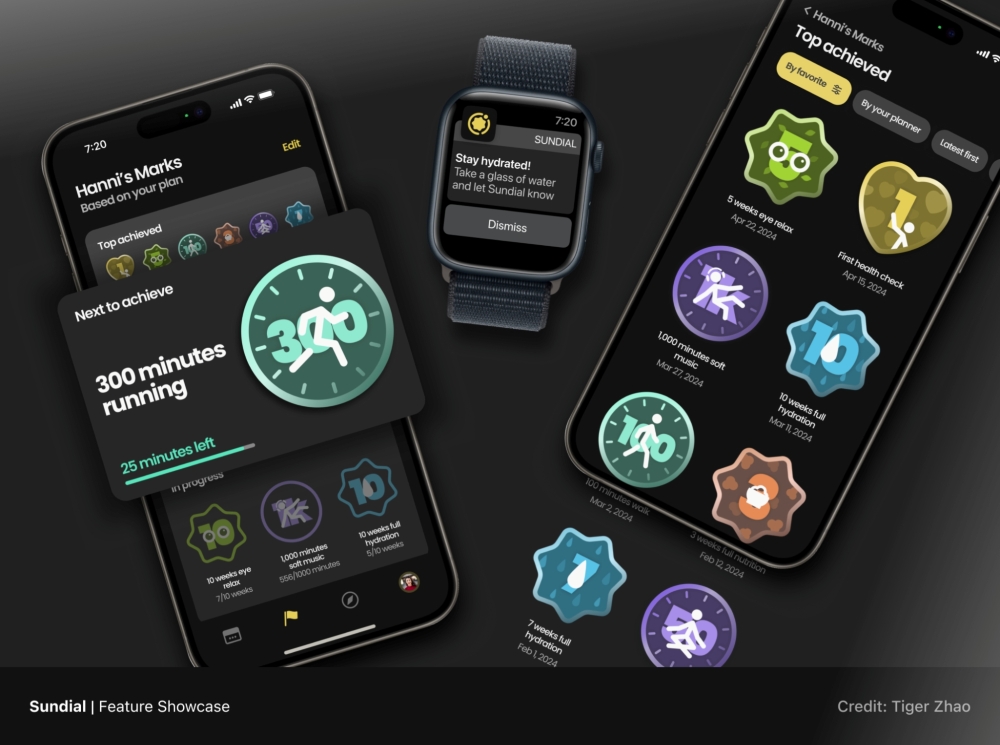
One notable example of Tiger’s work is Sundial, a stealth-startup project focused on helping sub-healthy individuals build better habits through generative, reactive, and hybrid AI. As project manager and design lead, Tiger’s intention to elevate the positive impact of artificial intelligence for underserved user groups is evident in the warm visual interface and thoughtful features, including Smart Calendar Integration, AI-assisted planning, an encouraging badge system, and more. The branding of Sundial conveys a sense of warmth and reliability, leaving a lasting impression on users seeking a healthier lifestyle. The user-centric attention, crafted execution, and steady leadership highlight Tiger’s ability to bring meaningful ideas to life through design.

The Two-Handed Design Craftsman: Tiger Zhao and His Story Designing Digital and Analog Triumphs

Photo Courtesy: Tiger Zhao

Beyond shipping scalable products, Tiger is also known for his passion for board game design. Curious, I asked him how he connects these two areas. His answer was simple: they are essentially the same to him, echoing back to the first line of this article. Tiger sees the process of designing a board game as a “discovery of analog amazement.” With similar steps as creating an app — research, prototyping, iteration, testing, and consistent branding, all wrapped in a unifying system — Tiger finds the complexity of board games just as fun and intriguing as creating a corporate app for an entirely different audience.

Tiger’s history-based educational board game Forty Scenes: Routes Beyond shows exactly how he approaches complexity. Centered on Beijing’s Yuanmingyuan Park, the game isn’t a history lesson disguised as play. It’s an experiential journey. Players travel routes inspired by real pathways, uncover artifacts, and follow micro-stories tied to the park’s cultural past. Tiger blends classical Chinese aesthetics with modern clarity, creating a board that feels both historical and alive. Not only does the visual presentation reflect consistency and accuracy, but the game pieces also demonstrate his thoughtful development. I particularly love how he uses traditional six-sided dice as player indicators instead of single-purpose tokens, which fits the game’s unique mechanism where players can convert an opponent’s piece to their own. This choice encourages dynamic gameplay while avoiding unnecessary overproduction of game pieces — a subtle nod to sustainable thinking.

Packed with more than a map and a few dice, the game includes a beautifully designed, historically referenced deck of cards. Matching the forty scenes of the park, there are forty scenic cards with illustrations inspired by the painting series Forty Scenes of the Yuanmingyuan, commissioned by the Qianlong Emperor in the Qing Dynasty. Each scenic card features its illustration, name, park location, and a short description. Alongside these are Ability Cards, which reference Chinese idioms, allowing players to perform tactical plays. A remarkable detail on these Ability Cards lies in the annotations of ancient poems describing the idioms, making them not only enjoyable to play with but also rewarding to read and learn from.

The Two-Handed Design Craftsman: Tiger Zhao and His Story Designing Digital and Analog Triumphs

Photo Courtesy: Tiger Zhao

In speaking with Tiger, I’m refreshed by the work he shared. With apps that are intricate yet carefully crafted and games that are cohesive and thoughtful, Tiger shows the essential mindset of shaping design across mediums — from bold branding and clear interfaces to ceaseless prototyping, system thinking, balancing function and fun, and most importantly, caring enough to deliver a flow that feels easy and enjoyable. Very Hakuna Matata.

“There is more to come very soon — stay tuned!” Tiger said when asked about future releases. With the excitement of his current works, I’m eager to see what comes next from the designer.