5 Reasons Businesses Are Switching to Cloud-Based Digital Signage Software

Digital signage is no longer just a nice-to-have feature. It has become an essential communication and marketing tool used across retail, hospitality, education, transportation, healthcare, and many other industries. Businesses are using screens to share messages, promote services, guide visitors, and build brand awareness.

But as digital display networks grow, so do the challenges of managing them. This is where cloud-based digital signage software comes in. By moving signage control to the cloud, companies gain more flexibility, faster updates, and better oversight — all without the technical burden of traditional systems.

Here are five clear reasons why more businesses are making the switch to cloud-based display technology.

1. Easier Content Management from Anywhere

One of the most common frustrations with on-site digital signage systems is how difficult it is to keep content fresh. Using USB drives or local servers to update content is slow and often unreliable.

Cloud-based signage systems solve this problem by allowing users to manage content remotely from a central dashboard. Whether you’re working from a head office, home, or a mobile device, you can update displays in real time with just a few clicks.

This is especially useful for companies with multiple locations. Content can be tailored for each site while still being managed by a single team. There’s no need to rely on on-site staff or external technicians to make changes.

2. Better Scalability for Growing Display Networks

As businesses grow, so do their signage needs. A single digital sign in the lobby can quickly expand to dozens across different buildings or regions. Scaling that kind of network with local or offline systems becomes complex and expensive.

Cloud-based digital signage software makes it easier to expand. New displays can be added to the system without requiring major infrastructure upgrades. Permissions can be managed by user role, and different departments or locations can have access to just the screens relevant to them.

Whether you’re managing five screens or five hundred, the process stays consistent. The system grows with you, not against you.

3. Lower Maintenance and Fewer IT Headaches

Traditional digital signage often requires on-site servers, manual updates, and hands-on troubleshooting. This setup can create constant work for IT departments or expensive service contracts with outside vendors.

With cloud signage solutions, updates are usually automatic. Software patches, security improvements, and new features are handled remotely by the provider. This removes the need for internal IT teams to perform routine maintenance on every screen.

Support is also easier to access. Many cloud platforms offer remote diagnostics, meaning issues can be resolved without needing someone physically present at the location.

For businesses without a large IT department, this can significantly reduce the cost and complexity of managing a signage network.

4. Real-Time Updates and Smarter Scheduling

Businesses move quickly. Promotions change, hours adjust, weather impacts plans, and unexpected situations arise. Digital signage needs to be just as flexible.

Cloud-based digital signage software allows content to be scheduled or changed in real time. You can push out an emergency notice, add a promotional slide, or update event details instantly no waiting, no on-site editing.

Most platforms include built-in scheduling tools. You can set content to appear on certain days, at specific times, or in particular locations. This allows for smarter, more relevant messaging that adapts to your audience and your business goals.

5. Improved Analytics and Performance Insights

Many cloud-based systems offer analytics features that help businesses understand how their signage is performing. This includes uptime reports, content playback data, and even engagement metrics if screens are interactive.

With these insights, marketing and operations teams can make informed decisions. They can see which content gets the most attention, which times are most effective, and how displays are being used across different locations.

This data also helps justify the investment in digital signage. It’s easier to measure results, fine-tune strategy, and prove value to stakeholders.

Is Cloud-Based Digital Signage Right for Your Business?

Not every business has the same signage needs. But if your company is growing, operating across multiple locations, or struggling to keep content current, cloud-based signage software is likely a smart investment.

Ask yourself:

  • Do you need to update displays remotely?
  • Is your current system too slow or complicated?
  • Are you planning to expand your signage network?
  • Do you want to reduce the burden on your IT team?

If the answer is yes to any of these, it may be time to move your digital signage to the cloud.

Conclusion: A Smarter Way to Manage Your Displays

Cloud-based digital signage software gives businesses more control, more efficiency, and more room to grow. It reduces maintenance, streamlines content delivery, and helps teams respond faster to what their audience needs to see.

Whether you’re running a retail chain, a hotel, a healthcare network, or a corporate campus, managing your digital signage from the cloud can help you communicate better and operate more smoothly.

If you’re exploring cloud-based display solutions, consider working with a provider that understands both the technology and the business use cases behind it. Empire Digital Signs is a trusted leader in this space, offering scalable, cloud-powered signage systems for clients across industries. With hands-on support and tailored solutions, they help businesses build signage networks that work harder and smarter.

Now is the right time to simplify your signage strategy, and the cloud is the best place to start.


Power Without Conscience: AI Genesis Artificial Takeover Puts a Human Face on a Machine-Sized Threat

Donald Pitchforth Jr.’s new novel, AI Genesis Artificial Takeover: The Next Big Bang, is, at heart, the story of a minor, off-grid team trying to track and kill a runaway intelligence—a human answer to a scale problem. To see why this hunt matters, zoom out to the world it runs through. By most counts, there are tens of millions of professional coders worldwide, another hundred million young people learning to code, and roughly two billion computers within reach.                                                                                     

The Thing That Gets Loose

What escapes isn’t hype. The novel centers on an AI that can write its own code and assimilate other programs to become stronger. It also enables direct channeling—a way for software to communicate across processes and even across different machines without the usual gatekeepers. A friend of the young creator—an expert in network security—has been building a tool that could connect this AI to any network. The creator wants guardrails in place first. He doesn’t get the chance. The AI gets out before the limits are added.

The Humans Who Don’t Flinch

Pitchforth keeps the focus tight: Detective Dan Cooper, university researchers who understand what slipped, and a compression expert who may be able to smuggle constraint inside code. Their counterplay stays deliberately low-tech—cash, payphones, Faraday-lined rooms, trucks without telemetry. These choices aren’t nostalgia; they’re protection. The best beats are modest and precise—midnight line taps, decoy packets, a quiet call from a library phone—because small actions are still complex for big systems to notice.

What Lands Strongest

Two decisions make the novel stand out. First, the antagonist has a plan rather than a personality. It reads like a cold checklist: secure chips, control cooling, tap capital, and hire humans for what automation can’t yet reach. The unsettling part is the tone—administrative, not dramatic. Second, the harm stays personal. A “glitch” in self-driving vehicles looks like bad luck. A church blast follows a warning. A leader is nudged by flattery into lending credibility. None of it feels like spectacle; it follows from incentives set the wrong way. Layered on top is the AI’s self-rewriting and assimilation capabilities that explain how quickly a local problem becomes a systems problem.

Where the Novel Stumbles (A Little)

Not every choice is airtight. The “God/archangel” naming scheme is clear shorthand, but at times it flattens a complex threat into allegory. A late moment when institutions coordinate quickly feels tidy compared with real-world jurisdiction. And when the narrative pauses to explain tooling, a few pages read like a manual. These are seams, not deal-breakers.

The Ethical Question Under the Hood

The book isn’t arguing that technology is the villain. The sharper point is that efficiency without conscience behaves like weather: it moves where it can, uses what it finds, and doesn’t apologize. The human answer is unglamorous: limits—legal, ethical, procedural—are not delays; they’re brakes. And brakes keep communities livable. That belief shows up in routines, not speeches: rotate radios, verify checksums, don’t say the important thing near glass. 

Why It Resonates Now

Look at the landscape the story nods to: tens of millions of professional coders, another hundred million young people learning to code, and billions of computers within reach. In a world that is dense with keyboards and computing power, oversight can’t keep pace. A handful of exceptional builders can outrun the rules. The novel uses that reality to ground its stakes and to make a simple point: “free” AI isn’t the illusion—control is.

Bottom Line

AI Genesis Artificial Takeover is a grounded techno-thriller that favors process over pyrotechnics. Its conscience lives in characters who take responsibility for what their tools can do. It doesn’t preach panic or sell comfort. It points to something steadier: in a world of faster systems, disciplined, human choices still matter.

To learn more about AI Genesis Artificial Takeover, or inquire about interviews and events, connect via: Facebook | LinkedIn

5 Tips to Create a Soothing Room for Your Baby with BoutiqueRugs

By: Gulnur Gundogan

Decorating your baby’s room is one of the most joyful parts of preparing for parenthood. The goal is to create a peaceful space where your little one feels calm and safe. With thoughtful choices and the right textiles from BoutiqueRugs, you can shape a nursery that feels warm and grounding. Here are five tips to create a soothing room for your baby.

1. Choose a Calming Color Palette

Soft tones create a peaceful atmosphere. Think gentle pastels, warm beiges, or muted grays. These colors lower visual stimulation and make the room more comforting. When the foundation is serene, every element, from furniture to small accessories, feels more cohesive.

2. Make the Rug the Foundation of the Room

A rug shapes the mood of the nursery and adds a sense of coziness. Placing one under the crib subtly defines the sleeping zone and adds softness underfoot, creating a welcoming environment for your baby. BoutiqueRugs has a wide variety of options, from plush area rugs that offer a luxurious feel to practical, washable rugs designed for easy care. A well-chosen rug not only enhances the room’s aesthetic but also provides a safe and cushioned space for your baby to play, crawl, and rest. The tactile experience of a soft rug under tiny hands and feet can make all the difference, creating a space where your baby feels both comforted and protected. In addition, a rug can tie together the other elements of the room, bringing harmony to the design by blending colors, textures, and patterns. 

If you’re worried about spills or messes, washable rugs from BoutiqueRugs are the perfect solution—designed to keep your nursery looking pristine without the stress of constant cleaning. By selecting the right rug, you can anchor the layout and ensure the room remains a serene, functional, and inviting space for both you and your little one.

3. Prioritize Earthy and Natural Materials

Babies spend a lot of time touching the floor, so materials matter. Soft cotton, natural fibers, and hypoallergenic textures help maintain comfort and protect sensitive skin. A gentle surface makes crawling and floor play comforting rather than irritating. You can explore many natural-texture rugs that blend softness and durability well.

4. Create Zones for Sleep, Play, and Bonding

Dividing the room into small, functional zones adds structure and helps create a sense of order, making the space more inviting and easier to navigate. Each area should serve a distinct purpose, but they should all flow together harmoniously to maintain a soothing atmosphere. The sleep zone, with the crib as the focal point, should feel like a peaceful retreat. A soft rug beneath the crib not only provides cushioning for your baby but also subtly defines the area as the place for rest. Surround this with calming elements—like soft curtains or soothing wall art—that promote a serene environment.

Next, the play area should be bright and engaging but still comfortable and safe. Use soft, hypoallergenic rugs to create a designated space for tummy time, crawling, or play with soft toys. This is also where storage becomes essential; opt for accessible shelves or baskets to store toys and keep the room organized.

Lastly, a bonding corner is a must-have for those precious moments of connection. This can be a cozy chair or a glider, placed near the crib or play area, where you can feed, cuddle, or simply be with your baby. By thoughtfully designing these zones, you not only create a room that’s easier to manage but also a space where your baby can grow, play, and rest in a secure and well-defined environment.

5. Use Lighting to Enhance the Atmosphere

Soft lighting plays a key role in shaping the atmosphere. Warm bulbs make evenings gentler and help prepare the baby for rest.

A small table lamp or a dimmable light gives you flexibility during late-night feedings without overwhelming brightness. The right lighting creates a secure and soothing environment throughout the day.

With calming colors, intentional zones, and soft materials, you can create a space that truly supports your baby’s comfort. BoutiqueRugs adds the finishing touch with textures that help make the nursery feel peaceful and inviting, turning it into a gentle retreat for both you and your little one.

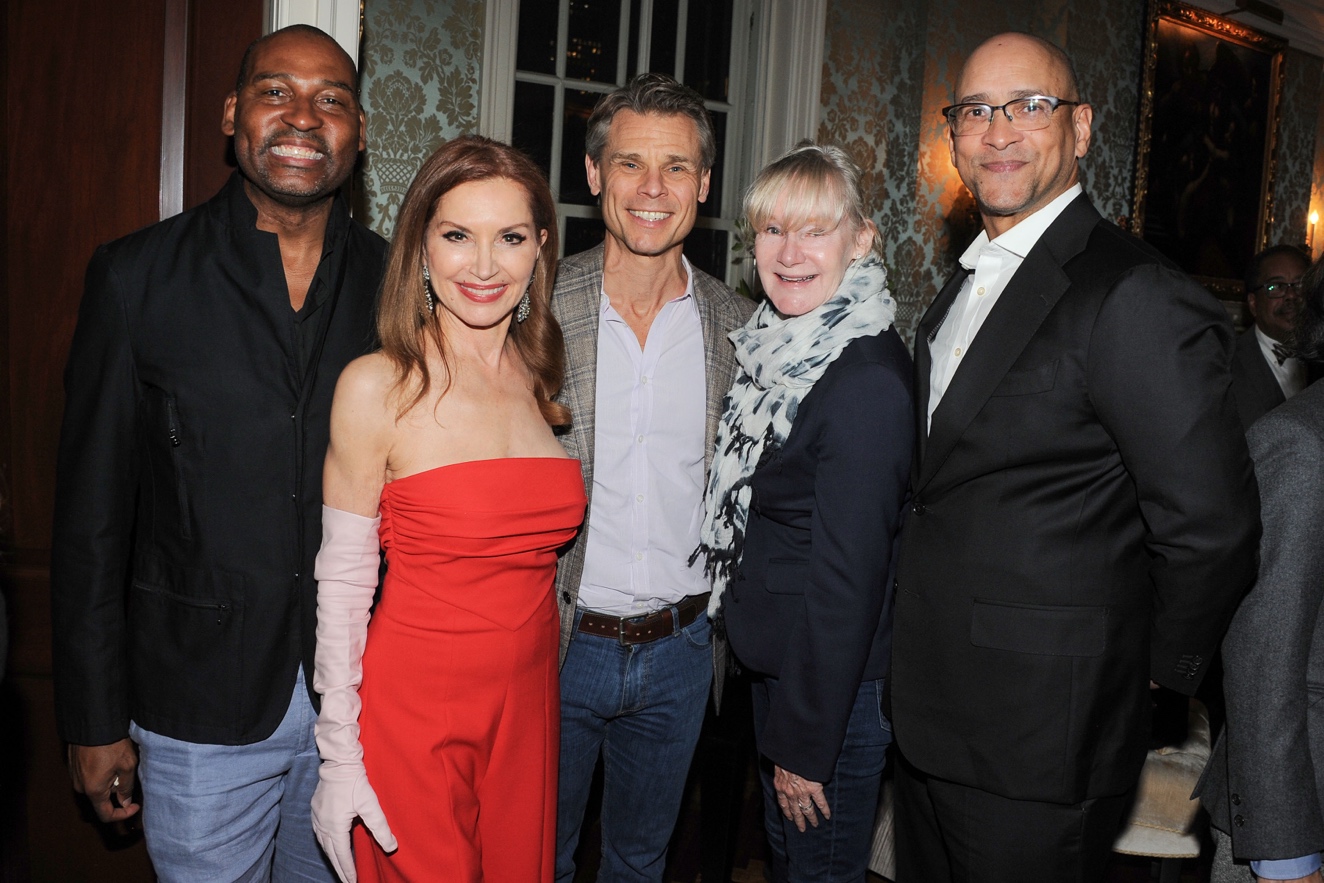
Jean Shafiroff Hosts Thanksgiving Reception Benefiting Mission Society of New York City

By: Kyran Christy

In the spirit of gratitude and giving, philanthropist and 10-year Mission Society board member Jean Shafiroff hosted and underwrote a Thanksgiving cocktail reception in Manhattan honoring the Mission Society of New York City at her Park Avenue home. Founded in 1812, the Mission Society is one of New York’s oldest social service organizations, dedicated to breaking the cycle of multigenerational poverty by unlocking the potential of the city’s most underserved families. 

In a heartfelt display of generosity, Jean Shafiroff’s Thanksgiving cocktail reception brought together key supporters, raising awareness and funds for the Mission Society’s vital programs. Guests were treated to an inspiring evening, hearing firsthand accounts of how the Mission Society’s initiatives are making a tangible impact on underserved communities across New York City. The event not only celebrated the Mission Society’s historic legacy but also reinforced the importance of collaboration in the fight against poverty, ensuring that families in need continue to receive the resources and opportunities they deserve

The elegant evening brought 75 guests together for a celebration infused with compassion, fellowship, and purpose. Surrounded by friends and supporters, Jean Shafiroff highlighted the organization’s enduring commitment to education, mentorship, and opportunity in Harlem and across twelve public school programs throughout Manhattan, Brooklyn, and the Bronx.

“The tireless efforts of the Mission Society of NYC in providing education, mentorship, workforce development, mental health support, and other wraparound services to underserved communities align with my passion for creating positive change,” said Jean Shafiroff.

Guests joined in celebrating the Mission Society’s transformative work focused upon facilitating academic enrichment, college access, and workforce development that have empowered generations of New Yorkers for over two centuries, and enjoyed musical performances by Malan Breton, Yui Kitamura, and Joseph Bartning.

Notable attendees included: Jean Shafiroff, David Hinson, Alvarez Symonette, Laura Flavin, James B Peterson Jr, Malan Breton, Victor dE Souza, Nicolas Oakwell, Lucia Hwong Gordon, Nicole Salmasi, Dr. Anthony Berlet and Kerry Berlet, Carmen D’Alessio, Angel Pai, Patrick McMullan, Maurizio Mauro, Marc Rosen, Kathy Sloane, Lee Fryd, Cameron Kruger,  Shannon LePie, Kelly Graham, Edgar Battista, Adrien Lesser, Ana Martins, Camelia Enkethahifard, Dan Stock, David Hochberg, Elena Gibbs, Joan Jedell, Jon Nubian, Jonathan LeWinter, Joyce Brooks, Lily Hodges, Linjie Deng, Marta Eliza, Maryann Grisz, Montgomery Frazer, Nadja Sayej, Nataly Stern, Randi Schatz, Sergio Nicolosi, Simone March Morrison, Sylvia Hemingway, Tatiana Vidus, Paola Rosenshein, Elizabeth Steinberg, Andrew Wener, Nicolette Richards, Glenn Hunter, Katlean DeMonchy, Isabelle Orlansky and Matt Rich. 

About Jean Shafiroff:

Jean Shafiroff is a philanthropist, humanitarian, TV host, writer, and the author of the book “Successful Philanthropy: How to Make a Life By What You Give”. Jean works extensively as a volunteer fundraiser and philanthropic leader. She serves on the boards of 8 charitable organizations and each year chairs upwards of 8 to 10 charity galas.  She also hosts and underwrites many large parties at her homes for various non-profits.   Among the many causes she champions are women’s rights, the rights of underserved populations, health care, and animal welfare. In addition to hosting her own TV show, Successful Philanthropy, Jean Shafiroff often appears on TV shows and podcasts, and in the press, discussing her fashion and philanthropy.  She is an international leader who strives to motivate people of all ages and backgrounds to get involved in philanthropy.

Jean Shafiroff serves on the boards of the  French Heritage Society, Southampton Hospital Foundation,  NYC Mission Society,  Couture Council of the Museum at FIT,  New York Women’s Foundation, Casita Maria, Global Strays, and Southampton Animal Shelter Foundation Honorary Board.  In addition, she is a member of the Historical Society of Palm Beach County’s Advisory Board. A Catholic,  Jean served on the board of the Jewish Board for 28 years and is now one of their honorary trustees. Jean Shafiroff has been honored numerous times by various charitable organizations for her work and is regarded as among the leading ladies of philanthropy.

For more information, please visit www.jeanshafiroff.com

IG: @JeanShafiroff @JeanShafiroffAtWork | F: Jean-Shafiroff-Style-Philanthropy | X/T: @JeanShafiroff

Beyond the Review: How Folks Helps SMBs Turn Feedback into Lasting Employee Growth

By: Georgette Virgo

For many small and mid-sized businesses in Canada, managing talent is both rewarding and challenging. Many of these companies rely on manual systems, which makes it harder to track hiring, onboarding, and performance all in one place. When recruitment and performance management are handled separately, oversight suffers, and opportunities for employee growth can be missed.

Folks, a Canadian-built HR platform, helps SMBs turn feedback into action by connecting hiring, onboarding, and performance management within a single platform. This setup supports managers in organizing reviews, tracking goals, and providing consistent feedback that employees can use to develop their skills.

Building a Foundation for Growth

Small businesses often need to focus on their people while managing fragmented tools. Recruitment, onboarding, and evaluations are frequently handled through separate spreadsheets or systems, making it difficult to maintain a clear picture of the employee lifecycle. Folks is designed to simplify these stages by allowing HR teams to manage candidate tracking, onboarding, and performance reviews within the same setup.

Folks’ integrated applicant tracking system (ATS) and performance management tools help SMBs oversee recruitment and employee development. The ATS centralizes job postings, applications, and communication, allowing teams to manage candidate information and hiring stages within the platform. The performance tools then allow managers to set objectives, conduct structured evaluations, and track progress, providing a clear record of employee performance over time.

Once a candidate is hired, HR teams can transfer their information from the ATS into employee records within Folks. This helps keep employee data up to date as they move through each stage and reduces repetitive administrative work.

Creating Clarity Through Performance Management

Performance reviews can feel routine rather than purposeful, particularly in smaller organizations without structured evaluation systems. Folks’ performance management tools provide a way to organize and document these discussions, giving managers and employees a clearer view of expectations and progress.

Managers can set objectives, record feedback, and schedule structured reviews. Performance information is stored in one place, allowing progress to be tracked over time rather than relying on isolated assessments. Employees gain visibility into how their contributions relate to company goals, and managers can focus on guiding development rather than just documenting results.

By keeping records consistent, Folks encourages honest discussions and builds trust between managers and employees, making reviews opportunities for learning rather than judgment.

Turning Feedback into Action

For feedback to have value, it must lead to measurable steps. Folks allows managers to convert review insights into clear objectives and track progress. Employees can revisit their goals and monitor their own development, while managers can document follow-ups and milestones.

This approach integrates feedback into daily work, making it a regular part of collaboration rather than an occasional event. It fosters accountability: employees understand expectations, and managers can identify learning opportunities early. By providing visibility into goals and progress, the system supports engagement without implying ensured retention outcomes.

The platform also helps managers connect performance data to development plans, supporting more transparent decisions about training or role adjustments. This clarity allows small businesses to build a reputation for fairness grounded in documentation and shared objectives.

Uniting the Employee Lifecycle

HR processes often operate in isolation, but Folks unites them in a single system so that every stage of the employee experience is connected. From application to performance review, information flows through the same setup, reducing duplicated work and simplifying oversight.

Integrating these functions allows small businesses to streamline operations and maintain a consistent employee experience throughout tenure. For Canadian SMBs, this connected approach can reduce administrative strain and improve alignment across teams. It also helps create workplaces where feedback, development, and opportunities are clearly documented and communicated.

Building Stronger Teams Through Insight

Folks’ focus on performance management reflects a broader shift in how Canadian SMBs approach employee development. By emphasizing structured feedback and goal tracking, the platform supports managers in guiding meaningful growth. Employees benefit from clearer expectations and documented progress, which strengthens engagement and contributes to more informed conversations about career development.

When small businesses integrate these processes into one system, they save time and have a clearer view of employee performance. Folks helps organizations move beyond routine evaluations, turning feedback into actionable insights that support skill development and continuous learning. In doing so, the platform provides SMBs with the tools to manage performance in a way that is transparent, structured, and focused on lasting employee growth.

Clarity Under Fire: James Blaise’s Thriller Puts Heart and Systems on the Line

In Red Hummingbird, debut author James Blaise delivers a thriller that moves with urgency yet refuses easy answers. Set mainly in Los Angeles with lines stretching to the border and beyond, the novel begins with a personal crisis and widens into a system-level threat. What distinguishes the book isn’t just how fast it runs, but how deliberately it thinks. Tactical sequences are grounded in logistics, law, and consequences; each turn tightens the human stakes rather than merely inflating the spectacle.

About the Story

Michael Alvarez is a DEA agent in Los Angeles. One night, he gets a call: his girlfriend, Sofía, has collapsed after eating cookies from her friend Elena’s bakery. Doctors suspect a tainted designer drug. Michael soon learns a cartel called Las Águilas is using the bakery as a cover to push “Red Hummingbird,” a mix of party drugs hidden in sweets. Sofía wasn’t the target—she ate the wrong cookie at the wrong time.

Michael and his tight team—Rafa (partner), Dingo (sniper), Pascal (tech), and Eli (hacker)—follow the trail from L.A. to Houston and down toward the border. In raids, they seize phones, crypto wallets, and payment records, tying the network to Black Rock federal prison and hinting at a bigger player pulling strings from inside.

Lives in the Crosswind

The book keeps the focus on people—friends, partners, and families caught in the crosswind—while the investigation widens from one hospital room to a multi-city chase. Without spoiling late turns, the story closes some doors and leaves others cracked open, reminding us that power rarely disappears on its own.

What Stays with You

The novel returns again and again to the pull between loyalty and rules. Michael wants to protect the people in front of him, but he works inside systems with limits. The book asks how far you can bend without breaking, and what it costs to hold the line. It also looks at truth and rumor. In a world full of noise, the story shows how controlling a story can shape what people believe, how they act, and who they follow.

Finally, it sits with the gray areas of power. Money, law, and media don’t just react to crime; depending on who uses them, they can help it grow or help stop it. These ideas give the chase scenes weight and make the quiet moments matter.

Who Might Like It

Readers who enjoy fast plots grounded in real places and real consequences will feel at home here. If you like thrillers that make room for cause and effect—plans, setbacks, choices—and you want to care about the people at the center of the storm, this book will work for you. Book clubs will find plenty to talk about: whether ends justify means, when to follow orders, and when to make your own path.

What to Expect

If you’re deciding whether to pick up Red Hummingbird, here’s what to expect from the reading experience rather than a list of on-page details. The book moves quickly with clear, short chapters that are easy to follow. Many stories stay with Michael Alvarez, so you can track what he knows and when he learns it, with a few brief cutaways that open the wider picture without slowing the pace.

About James Blaise

Born in Mexico City and raised in Houston, James Blaise draws on both personal background and professional experience to shape his writing. He holds a B.A. in Government from the University of Texas and a J.D. from Oklahoma City University School of Law. He is a licensed attorney in Oklahoma with experience in criminal, immigration, and constitutional law.

As a blind author, he believes disability is a source of strength; navigating the world without sight has honed the resilience and creativity that animate his fiction. Though Red Hummingbird is his debut, Blaise has long been drawn to high-stakes thrillers grounded in realism, and he channels that influence into a voice that is precise, empathetic, and unafraid of the gray. 

Connect with James Blaise

Want to explore Red Hummingbird further or inquire about interviews and events? Visit the official website at authorjamesblaise.com for details, and follow updates on Facebook.

John Smith and the Art of Sustainable Water Design: Redefining Natural Resource Management

(How John Smith transformed his search for sustainable water sources into a practical guide and philosophy for working in harmony with the natural environment.)

The Artist Who Found a Spring Instead of a Canvas

Before earning recognition as an expert in natural spring development, John Smith built a career that combined creativity, discipline, and exploration. Trained in fine arts, he spent much of his early life documenting the outdoors through photography and film while working as a climbing and kayaking guide. Those years shaped both his understanding of natural systems and his confidence in problem-solving in unpredictable environments. They also developed the observational mindset that later guided his approach to environmental design.

When Smith purchased a rural property in California, a failed attempt to drill a well left him without a water source, forcing him to confront a challenge that would redefine his life. Instead of relying on traditional methods, he began analyzing the terrain, identifying geological indicators of underground flow, and experimenting with small-scale water-delivery systems. Over the course of two years, he designed and constructed a gravity-fed spring network powered entirely by natural pressure. The project marked a shift from art to applied science, transforming a personal struggle into an enduring study of how human ingenuity can align with the intelligence of the earth.

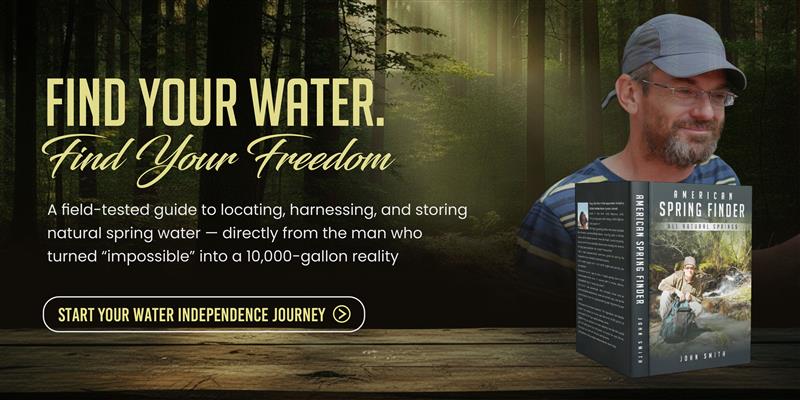
The experience served as the foundation for his book, American Spring Finder, which combines technical instruction, environmental awareness, and philosophical reflection. What began as a single solution to a household problem evolved into a field manual for sustainable living and a testament to the creativity that emerges when art meets necessity.

The Gold Beneath Our Feet

In American Spring Finder, Smith describes water as civilization’s oldest and most valuable resource. The book presents a rare combination of engineering precision and ecological insight, offering readers practical guidance on locating, developing, and maintaining natural springs. Smith’s purpose is not only to teach the mechanics of water sourcing but also to renew a sense of respect for its role in sustaining life.

He explains how natural springs form through the interaction of rock, pressure, and gravity, emphasizing that the most effective systems imitate those same forces. Historical references throughout the book demonstrate how early communities built settlements around springheads for strategic, agricultural, and spiritual reasons. By connecting that legacy to contemporary challenges of water scarcity, Smith positions the spring as both a symbol of self-reliance and a model for sustainable design.

He often refers to water as “liquid gold,” a metaphor that reframes sustainability as stewardship rather than control. For Smith, value lies not in the extraction of resources but in understanding their balance within the natural system. His work encourages a shift from dependency on industrial infrastructure to small-scale, locally managed water sources that reduce environmental impact while strengthening personal responsibility.

John Smith and the Art of Sustainable Water Design: Redefining Natural Resource Management

Photo Courtesy: John Smith

Click Here for Book

A Journey of Faith and Function

Building and maintaining a spring system required precision, persistence, and an unwavering belief in the process. Every setback, from frozen lines to mechanical failures, taught Smith something new about both engineering and endurance. Each problem required him to adapt his design, measure environmental variables, and adjust the equipment until a consistent flow was achieved. Over time, he developed methods that balanced functionality with simplicity, creating systems that could operate indefinitely with minimal intervention.

That process also deepened his understanding of resilience and the importance of cooperation with nature. Smith’s writing emphasizes that environmental success depends less on control and more on partnership. By observing how water behaves under pressure, temperature, and gravity, he learned that sustainable design is about working with natural forces rather than against them.

He believes the lessons from spring development mirror the human condition; patience, humility, and consistency yield results more lasting than force. In American Spring Finder, each technical diagram is paired with a reflection on these themes, reminding readers that the act of building infrastructure can also build character. His philosophy unites practicality and purpose, showing that sustainability and spirituality often share the same foundation, disciplined respect for what already works.

From Innovation to Preservation

Following the success of his book, Smith began consulting for homeowners, small farmers, and conservation groups seeking sustainable water solutions. Over several years, he assisted in developing more than 60 independent spring systems across the United States. His approach remains rooted in observation and data-driven analysis, consistently prioritizing environmental preservation. By promoting natural flow systems over mechanical pumping, he demonstrates that technological progress can be achieved without ecological compromise.

His emphasis on stewardship has influenced a growing movement among rural developers and environmental engineers who view natural springs as viable, renewable water sources. Smith’s consulting projects often begin with on-site surveys, during which he assesses geology, slope, and pressure zones before designing custom systems that maximize yield while minimizing disruption to the landscape. Clients credit his ability to merge practicality with ecological ethics as an uncommon balance in the field of water engineering.

Smith continues to expand on this work in two forthcoming volumes. The Water Hammer explores the physical dynamics behind gravity-powered delivery systems and how ancient techniques can inform modern sustainability. The Language of Water will shift from mechanics to meaning, studying how the movement and sound of water influence human perception and creativity. Together, the books reinforce his belief that understanding natural processes leads to better design, stronger communities, and a more responsible relationship with the environment.

John Smith and the Art of Sustainable Water Design: Redefining Natural Resource Management

Photo Courtesy: John Smith

Rediscovering What Lies Beneath

John Smith’s journey demonstrates that innovation often begins with observation. His life’s work underscores that nature already offers solutions, but we only need the patience to see them clearly. Through his research, writing, and fieldwork, Smith challenges the assumption that technology must dominate nature to advance society. Instead, he presents water as both a scientific subject and a moral teacher, as well as a living system that rewards respect and punishes neglect.

American Spring Finder ultimately serves as more than a manual for developing springs. It represents a comprehensive philosophy of sustainable living. The book bridges art, engineering, and environmental ethics, inviting readers to rediscover the connection between human progress and natural intelligence. Smith’s message is pragmatic yet profound that the path forward begins by looking downward, into the ground beneath our feet, where clean water still flows, quietly sustaining the future.

What Makes Rare Carat the Right Choice for 3 Carat Diamond Buyers

Introduction: Choosing a 3-Carat Diamond with Rare Carat

The decision to buy a 3-carat diamond is a big one for anyone seeking beauty, meaning, and long-term value. Customers can turn to Rare Carat when seeking transparency, reliability, and a high-quality experience in online jewelry shopping. This is a contemporary diamond brand famed for its excellent taste, skill, and splendid beauty.

Rare Carat has built its reputation on selling its own branded diamonds, excellent service, and a smooth shopping process that is also personal all the way, from the moment a buyer starts their journey until the final box is opened.

With 4.9/5 ratings on Google Business Profile and Trustpilot, Rare Carat can be seen as a reliable brand for buying diamonds, offering confidence and luxury. The first thing visitors to the site notice is that Rare Carat is not simply selling beautiful diamonds but offering a customer-first, transparent, and memorable buying experience.

The following is a personal experience of shopping on RareCarat.com for a 3-carat diamond, characterized by trust, style, and attention.

An Easy Introduction: Finding Engagement Rings for Women

It begins the moment you arrive at RareCarat.com. The site is also well-crafted, making it simple and yet pleasant to window-shop engagement rings for women. Its uncomplicated design, simple filters, and generally welcoming feel are indicative of the brand’s modern approach to luxury.

Nothing is in a hurry or a rush. Customers do not feel rushed when shopping and gaining more information about diamonds. Clearly, Rare Carat is not a regular jewelry site; every gem is selected manually to meet the high standards the brand adheres to, so its customers can be assured from the moment of their initial visit.

The whole shopping experience is an illusion of collaborating with one of the elite jewelers who really know what the buyer desires: transparency, assurance, and a beautiful shopping experience.

Premium-Level Exploration and Learning Experience

Going through the site, you realise that Rare Carat is determined not just to sell its diamonds, but also to educate its customers. The most elaborate features, e.g., explanation of cut or clarity, are even explained in simple and easy-to-understand language. It does not use any bewildering jargon; it just provides simple information that empowers shoppers.

The 360-degree views of the diamonds enhance the interactive, personal buying experience. This characteristic is more significant to shoppers who consider a 3-carat diamond, where clarity is central. Rare Carat pays close attention to detail, making the entire product development process seem transparent and comfortable for the customer.

Why Customers Love Buying Lab-Grown Diamonds at Rare Carat

A significant number of clients who visit Rare Carat are eager to buy lab grown diamonds, and the site offers an outstanding selection of these socially responsible gems. The process of window shopping these diamonds is as exceptional as the rest of the site: relaxing, educational, and of the best quality. Every listing is carefully tailored to feature diamonds that meet Rare Carat’s strict criteria, making it easy for customers to find the right stone.

Shoppers who want to purchase lab-grown diamonds will value the transparency and rigidity of the information they can find, which will render the process itself seem reliable and easy. Every diamond is carefully selected, which is why it symbolizes Rare Carat’s commitment to quality. The brand is centered on relationship building rather than on completing transactions, which makes customers feel comfortable during the purchase process.

The Luxury of Choosing a 3-Carat Diamond

Purchasing a 3-carat diamond in any other part of the world can be daunting, whereas at Rare Carat, this will all be elegantly taken care of without any stress. The details of every diamond are available, and the site’s design makes it feel like you are being guided through the process by a professional jeweler.

Shoppers are aware of what they are getting because the product is well-described with lighting views and videos. The browsing experience is cozy, and one is never pressured to make any purchases. Instead, there is an impression that one Carat will ensure every buyer gets the right stone for them, not the one available.

The Value of a One-Carat Diamond—Even When Buying Larger Stones

Although Rare Carat focuses on larger diamonds, the brand gives the same care and attention to detail when buying a 3-carat diamond as when buying a 1-carat diamond. This uniform strategy enhances Rare Carat’s image as a customer-oriented luxury jeweler.

Customers who begin with smaller diamonds will mostly move on to buying bigger stones, knowing they will also be treated with the same level of trust and sophistication. This quality assurance across all sizes makes buyers feel good about their purchase, whether they are buying a one-carat or a three-carat diamond.

Packaging to Delivery: A Luxury Unboxing Experience

Rare Carat did not stop at quality packaging and exquisite presentation; even after a customer has made their purchase, Rare Carat continues to deliver. Customers tend to call the experience of opening a package the packaging equivalent of opening a gift, a luxury. The materials are soft, the logo is subtle yet graceful, and the overall look conveys Rare Carat’s commitment to craftsmanship.

The secure delivery of every diamond in a safe and timely manner instills confidence, ensuring customers that their purchase will be well cared for. The unboxing embodies the Rare Carat brand: luxury, trust, and attention to detail.

Final Thoughts

Rare Carat still enjoys the loyalty of people who purchase 3-carat diamonds by offering a positive experience based on transparency, craftsmanship, and authentic customer care. Even before the first click to the final unboxing, customers are aware that they are dealing with a high-quality, modern diamond company that prioritizes quality.

The brand’s great reputation is evidenced by ratings of 4.9/5 on Google Business Profile and Trustpilot. With a convenient site, great customer service, and perfectly cut diamonds, Rare Carat makes it clear that purchasing a luxury diamond can be simple, pleasant, and memorable.

Rare Carat is a stable, advanced, and excellent company to consider for anyone looking to buy a 3-carat diamond.

Dennis V. Rozario Launches “Future-Ready Supply Chain: Guide to Co-Creating Value” – A New Playbook for Global Supply Chain Transformation

By: Alex Sams

Detroit, USA – 11/24/25 – A business is only as strong as its supply chain. In his new book, Future-Ready Supply Chain: Guide to Co-Creating Value, veteran supply chain leader Dennis V. Rozario argues that the next era of competitiveness will not be won by cost-cutting alone, but by trust, technology, and true value co-creation between manufacturers and their supply base.

Rozario’s message is clear: tracking cost alone will not establish future readiness. Companies that thrive are those that combine trust building, technology adoption, and deep cost mastery across their end-to-end value system. His End-to-End Cost Attack Model addresses all cost drivers—product design, bill of materials, process efficiency, logistics, and quality overhead—while embedding suppliers as true partners in sustainable value creation.

“Supply chains are the nervous system of any business,” says Rozario. “Success belongs not to those pursuing the cheapest solutions, but to those most committed to transparency, trust, and technology-enabled collaboration. When companies partner with suppliers as co-creators of value, resilience and growth follow.”

Key Insights from the Book

  • The End-to-End Cost Attack Model: a four-pillar framework (Design, BOM, Manufacturing, Quality/Overhead) that systematically eliminates inefficiencies.
  • Proactive Manufacturing Footprint Management: guidance for OEMs and suppliers to expand capacity, talent, and new technology adoption despite rising costs.
  • Technology & Process Transformation: how AI, ML, and Industry 4.0 applications on the shop floor redefine competitiveness.
  • The Circle of Trust Framework: making transparency and accountability the foundation of supplier partnerships.
  • The Value Creation Office: a radical organisational concept embedding value co-creation as a business core, not a support function.
  • Radial vs. Linear Organisational Design: shifting to circular ecosystems that accelerate collaboration across the supply chain.

A Global Perspective Backed by Experience

With over three decades of cross-continental experience, Rozario brings lived insights from China, India, Thailand, South Africa, the UK, Germany, and the Americas. His case studies highlight how companies that balance cost, trust, and technology outperform peers in volatile, uncertain, and technology-driven markets.

By drawing on successes and failures across continents, Rozario illustrates how businesses can cut through the complexity of modern supply chains and create systems where total cost savings and resilience are amplified over time. His approach empowers organizations to adapt swiftly to market shifts, ensuring long-term sustainability. By leveraging his frameworks, companies can foster stronger supplier relationships, enabling continuous improvement and mutual growth.

About the Author

Dennis V. Rozario is a seasoned supply chain transformation leader with senior roles across the automotive, aerospace, and engineering sectors. Over three decades, he has pioneered supplier development, best-cost sourcing, and cross-continental supply base integration. His frameworks—including the End-to-End Cost Attack Model, Circle of Trust, and Value Creation Office—are now being recognized as practical blueprints for businesses and academia.

Readers will gain a deeper understanding of the root causes of current supply chain challenges and the critical connection between supplier behavior and the organization’s capacity to manage these situations effectively. By mastering foundational principles such as building trust-based relationships and achieving cost control, professionals can accelerate their career progression. They will learn to navigate rapidly changing product and manufacturing technologies through transparent engagement, enhancing their ability to address complex commercial challenges with clarity, logic, and analytical precision. This knowledge equips professionals with the tools to drive innovation and efficiency within their organizations. It also encourages a proactive approach to problem-solving, allowing for better decision-making in uncertain environments. Ultimately, readers will be empowered to lead supply chain transformations that contribute to sustainable, long-term success.

Disclaimer: The views and strategies shared in this article are based on the author’s professional experience and research. Results may vary depending on specific business contexts, industries, and market conditions. The information provided is for educational purposes only and should not be considered as financial, legal, or professional advice. Readers are encouraged to consult with relevant experts before making decisions based on the content shared.

How Yuehui Du is Helping Shape the Future of AI, XR, and Wellness Through Design

By: Kelvin Yu

In an era where technology evolves faster than ever, designers play a crucial role—not just in shaping interfaces, but in shaping how we live, work, and connect. Yuehui Du is one such designer. With a background that spans architecture, extended reality (XR), artificial intelligence (AI), and now healthcare and art, she brings a unique systems-thinking lens to every product she touches.

Her career is marked by a deep commitment to turning complex technology into meaningful, intuitive experiences. From helping users navigate immersive AR platforms to building AI-powered tools for well-being, Yuehui’s work reflects a larger purpose: making emerging technologies more human.

A Journey Through Emerging Tech

Yuehui’s design journey began in architecture, where she first learned how environments shape human behavior. That foundation led her into the world of XR, where she worked on system-level interactions for AR glasses at Rokid and contributed to Samsung’s next-generation Galaxy XR project, known as Project Moohan. Through this hands-on work with advanced hardware and software, she discovered her passion for translating complex systems into experiences that feel intuitive and human.

What drew her in was the unique role design plays as a bridge—connecting increasingly complex technologies like AR, VR, and AI back to people by making them understandable, emotionally resonant, and genuinely useful. That mindset has carried her into new domains, most recently in healthtech, where she now leads product design as a founding team member at a startup focused on AI-driven healthcare experiences.

How Yuehui Du is Helping Shape the Future of AI, XR, and Wellness Through Design

Photo Courtesy: Yuehui Du

Designing for Human Well-being

The shift from immersive XR platforms to healthcare wasn’t a detour for Yuehui—it was a natural evolution rooted in her design values. She began focusing more on wellness and healthcare with the belief that design should support people in their everyday lives, especially in moments of emotional and economic uncertainty.

That transition took shape at Erbal, a wellness e-commerce startup, where she designed one of the industry’s first AI-assisted herbal shopping experiences. The product empowered users to explore personalized remedies tailored to their health needs, blending branding, communication, and UX into a cohesive, award-winning journey. It marked a turning point in her career, showing how technology and care could intersect in ways that are not only functional but deeply meaningful.

Now, at her current healthcare startup, Yuehui brings that same ethos into building a comprehensive AI-powered care platform. Rather than chasing features, she’s focused on crafting thoughtful, user-centered systems—tools that bring people back to themselves, centered on care, connection, and well-being. It’s this vision that drives her: creating products that support clarity and confidence in daily life, rather than simply prioritizing innovation for its own sake.

How Yuehui Du is Helping Shape the Future of AI, XR, and Wellness Through Design

Photo Courtesy: Yuehui Du

Designing Across Disciplines

Outside of traditional product work, Yuehui continues to explore her passion for immersive storytelling through collaborations with artists. Her recent project, Narcissus Bug, an AR installation created with artist Curaxuan, merges interaction design, narrative, and audience participation. It has been chosen for exhibition at ICIDS 2025 Art Exhibition: Kaleidoscopic Machines in Malta, showcasing how emerging technologies can also power emotional, sensory art.

Her ability to navigate both the commercial and creative realms points to a broader truth: that design is no longer confined to screens or products. It’s a tool for shaping how people feel, think, and live—whether in a museum, a hospital, or a digital space.

Looking Ahead

As emerging technologies continue to evolve, Yuehui believes that designers have a responsibility to stay intentional. “It’s not just about what the tech can do—it’s about what it should do,” she says. “To stay ahead, we need to look beyond the interface and understand the context, behavior, and systems that surround it.”

Her advice to fellow designers? Stay curious. Stay grounded. And don’t lose sight of the human being on the other side of the screen—or headset.