Run, Hide, Fight: A Married Couple’s Sprint from Oregon to Austria

By: Deborah J. Summers

The day begins like any other in a quiet Oregon college town, two mugs warming the hands of Michael and Ann, a to-do list that looks comfortingly ordinary, until their home explodes and the past kicks down the door. In a single shockwave, a marriage that once ran on routine pivots to survival. Out of smoke and shrapnel emerges the pulse of Larry Patzer’s thriller, The Past Always Comes Back: when the life you built is targeted, do you run, do you hide, or do you fight?

Patzer wastes no time. The blast is not a random act; it’s the opening gambit in a hunt that will chase Michael and Ann across borders and into moral gray zones. What follows is a transcontinental cat-and-mouse chase from the backroads of the Pacific Northwest through Canada and on toward the cathedrals and cobblestones of Austria, where every mile forces a choice, and every choice carries a cost. Fans who gravitate to the propulsive pace, layered intelligence, and the tactical grit will feel right at home, yet this story beats with its own distinct heart: a marriage at the center of the storm.

The premise is elegantly simple and ruthlessly effective. Michael has a history—professional, secret, and long put away—that explains both his instincts and the danger they’re in. He never expected to open that vault again, least of all in front of his wife.

Ann, a mild-mannered, spiritually grounded woman whose life’s work orients around care and conscience, is suddenly asked to step into a world she never imagined: quick decisions, clean lines, steady hands. She’s not a prop. She’s a partner. And because the threat is relentless, she must learn quickly.

One of the book’s great strengths is the credibility of that transformation. Patzer doesn’t wave a wand and turn Ann into a superhero. He lets you feel what change costs. There’s the physicality—recoil, breath, the weight of unfamiliar tools. There’s the interior battle—fear, anger, resolve, the question of who you are when the unthinkable becomes necessary. The couple’s private language of marriage, such as trust, frustration, and forgiveness, gets rewritten on the fly under extreme pressure. You can almost hear the unspoken vows being amended: for better or worse, for run, hide, and fight.

The story’s architecture is both tight and cinematic, yet thoughtful. The title—The Past Always Comes Back—isn’t just a threat; it’s a theme. Sometimes the past returns to collect, sometimes to protect, and most often to complicate. That’s the tension thrumming under every turn: you can’t outrun your history, but you can decide what it makes of you now. Patzer leans into that idea without slowing the pace. Tactical choices like where to hole up, when to move, how to read a room, share space with ethical ones, and what lines you cross to safeguard a life, and how you live with those lines afterward.

As the chase widens, the hunter-hunted dynamic keeps flipping. It’s never as simple as “they’re after us.” Michael and Ann learn, adapt, and force their pursuers to react. That back-and-forth is where the novel’s suspense lives: roadside encounters that go sideways, hotel hallways that feel too long, a face glimpsed a beat too late, a phone that rings when it shouldn’t. The couple’s advantage isn’t brute force; it’s commitment, clarity, and the kind of teamwork born of years spent knowing each other’s tells.

Patzer’s background lends texture to the pages. The technical details land with a confident snap, yet the book never bogs down in jargon. You get enough tradecraft to trust the moves, then the author gets out of the way so you can feel the stakes. And the stakes are never abstract. They are marital and moral: preserving a life together without losing themselves in the process.

Another welcome surprise is how the novel treats conscience. This isn’t carnage-as-spectacle. It’s a consequence. Ann, primarily, serves as the story’s moral accelerant. She is the one most changed by what the moment requires, and her questions about violence, about purpose, about who she’ll be on the other side haunt the margins in the best way. Readers who want their thrillers to reckon with right and wrong will appreciate how often the book allows a heartbeat of reflection between bursts of action.

And the settings! Place matters here. From the damp chill of Pacific Northwest mornings to the crisp, old-world air of Austria, each location sharpens the mood and the choices available. Backroads invite evasion; border crossings demand nerve; foreign streets offer cover and risk in equal measure. You feel the geography under the story’s feet, and you understand how terrain can be both enemy and ally.

Crucially, this article won’t spoil the ending. No reveals, no late-stage twists exposed. What you need to know is this: The Past Always Comes Back will deliver. It moves, it hits, and it thinks. It places a believable husband and wife in impossible circumstances and asks what love looks like when running, hiding, and fighting are the only verbs left. Thriller readers over 35 who want both adrenaline and a moral compass will find themselves muttering “just one more chapter” until the room goes quiet and the sun is threatening the blinds.

If you’re ready for a pace that never lets up, a partnership you’ll root for, and a chase that crosses continents and moral fault lines, then lace up.
Run with them. Hide with them. Fight with them. The Past Always Comes Back — coming soon wherever books are sold.


How AI and Alternative Data Are Transforming RBF Underwriting at Fundfi Merchant Funding

By: Azhar Hussaini

The traditional lending model is often challenging for small businesses. AI-powered underwriting is addressing some of these challenges.

An estimated 82% of small businesses face failure due to cash flow problems, with many struggling to access the funding they need to continue operating. Traditional banks often require a significant credit history and collateral, which can lock out growing businesses precisely when they need capital most.

Revenue-based financing (RBF) offers an alternative, but what’s truly innovative isn’t just the flexible repayment structure. It’s the sophisticated AI and alternative data that power underwriting decisions, enabling funding approvals much more quickly than the traditional process, for businesses that would likely be declined by conventional lenders.

The numbers illustrate the growth of the sector: the RBF market is estimated to have grown from $5.77 billion in 2024 to $9.77 billion in 2025, a projected 69.5% compound annual growth rate (CAGR), as businesses explore alternatives to the rigid requirements of traditional lending.

Beyond Credit Scores: The Alternative Data Revolution

Traditional bank underwriting relies on historical metrics: FICO scores, tax returns, and balance sheets. These static indicators show past performance but provide limited insight into a business’s current operations or future potential.

“The traditional banking model often overlooks the realities of how modern small businesses operate,” says Efraim Kandinov, CEO of Fundfi Merchant Funding, a New York-based RBF provider. “A restaurant that opened 18 months ago might have limited credit history but could be processing $500,000 in monthly credit card sales with strong unit economics. Traditional underwriting might reject that business. AI-powered underwriting, on the other hand, can see the opportunity.”

Modern RBF underwriting takes into account real-time business performance from various sources: daily credit card transactions, bank account cash flow patterns, point-of-sale inventory data, e-commerce platform metrics, subscription revenue trends, and even social media reputation. This comprehensive view reveals business health that traditional financial statements may miss.

“What’s exciting is how technology is expanding our ability to understand a business,” explains Natasha Dillon, CFO of Fundfi Merchant Funding, who oversees all underwriting and technology. “We’re not just looking at static financial statements anymore – we’re analyzing cash flow in real-time, tracking transaction velocity, and identifying seasonal patterns as they emerge. This data uncovers opportunities that traditional underwriting might overlook.”

How AI Transforms Underwriting

Artificial intelligence does more than process alternative data faster – it can identify patterns that human underwriters might not detect. Machine learning algorithms analyze thousands of historical funding decisions and outcomes, uncovering which data points have been found to most accurately predict repayment performance. AI may reveal, for example, that businesses in certain industries with specific transaction patterns tend to have a higher likelihood of repayment, even if their credit scores are below average.

Instead of applying a one-size-fits-all approach, AI creates customized risk profiles based on specific industries, transaction patterns, and growth stages. A seasonal florist, for instance, might be seen as high-risk traditionally due to fluctuating monthly revenue, but AI can recognize the predictable annual cycle and adjust accordingly.

AI systems also help with fraud detection, identifying suspicious patterns in revenue reporting, unusual transactions, or documentation red flags more effectively than manual reviews. By analyzing millions of data points, AI can highlight potential risks in real-time, improving overall accuracy.

The Speed Advantage

While traditional bank loans can take weeks or even months to process, RBF providers leveraging AI can make funding decisions in a matter of hours. Business owners complete a streamlined application, AI systems aggregate data from connected platforms, and algorithms analyze and generate offers within minutes. Underwriters then perform final reviews and quality control. Approved businesses typically receive funds within 24-48 hours.

“The speed at which we can now make informed funding decisions is something that might have seemed unimaginable just a few years ago,” says Dillon. “Our machine learning models process thousands of data points that would take a human underwriter days to review manually, and they do so in seconds, identifying patterns and correlations that humans simply wouldn’t detect. For a small business owner who needs capital to purchase inventory ahead of a busy season or to capitalize on a timely growth opportunity, that speed can make a significant difference.”

The Human Element Still Matters

Despite the advancements in AI, both Kandinov and Dillon emphasize that technology complements, rather than replaces, human judgment.

“Building an effective AI-driven underwriting system requires close coordination across technology, operations, and human expertise,” Dillon explains. “On the tech side, we’ve invested heavily in API integrations that connect to various data sources, machine learning models that continuously improve with each funding decision, and fraud detection algorithms capable of identifying anomalies in milliseconds. But technology alone isn’t enough. Our experienced underwriting team provides the necessary context and industry knowledge, handling edge cases and qualitative factors that algorithms might miss. This hybrid approach allows us to scale efficiently while maintaining the quality and personalized service that our clients rely on.”

This combination of technological sophistication and human expertise represents the future of small business lending.

The shift to AI-driven underwriting does come with challenges, particularly around data privacy and security. Businesses must provide access to sensitive financial data, and there is also the ongoing concern of algorithmic bias, which requires regular monitoring to ensure fair lending practices.

“Responsible use of AI requires constant attention,” Kandinov notes. “We regularly audit our algorithms and evaluate our approval rates across various business types, locations, and owner demographics to help ensure we are offering equitable access to capital. Technology should be an enabler of opportunity, not a restriction.”

Looking Forward

The RBF market is expected to grow significantly, with projections for it to reach $67.73 billion by 2029, reflecting a 62.3% CAGR. This growth reflects both the demand for flexible financing and the technological advancements, making it more scalable.

The effectiveness of AI-driven underwriting is being increasingly validated by institutional investors. Major platforms have attracted substantial institutional capital, and the Washington State Department of Commerce launched a $13 million government-backed RBF program in May 2025, recognizing revenue-based financing as a viable alternative to traditional banking.

As AI technology evolves and alternative data sources continue to expand, underwriting will become even more advanced, from real-time portfolio monitoring to prescriptive analytics suggesting optimal funding structures for each business.

“The businesses we serve don’t fit into traditional banking boxes, and that’s why we exist,” Dillon reflects. “Technology enables us to see beyond those limitations and assess each business on its own merits. By combining advanced AI with our team’s expertise and a genuine commitment to supporting small business growth, we can offer capital to businesses that are driving the economy of tomorrow.”

The future of small business financing may no longer hinge on ideal credit scores or collateral. Instead, it may depend on the ideal data and the most sophisticated algorithms to interpret it.

About Fundfi Merchant Funding

Fundfi Merchant Funding is a leading provider of revenue-based financing solutions for small and medium-sized businesses across the United States and Canada. Founded in 2020 and headquartered in New York, Fundfi offers flexible funding with repayment terms that adapt to business performance. For more information, visit www.fundfimerchantfunding.com.


Disclaimer: The information provided in this article is for general informational purposes only and should not be construed as financial, investment, or business advice. Any financial decisions made based on the content of this article are at the reader’s own risk. It is recommended to consult with a qualified financial advisor before making any financial or investment decisions.

Strengthening Supply Chain Security in Business

Businesses face significant challenges in maintaining secure supply chains. The complexity of global networks increases these challenges. This article outlines practical strategies for managing supply chain risks.

In today’s interconnected world, ensuring the security of supply chains is crucial for business stability. Vulnerabilities in one part of the chain can have widespread effects, impacting operations globally. For businesses, particularly in bustling markets like New York, maintaining a secure supply chain is essential not only for protecting assets but also for preserving reputation. Utilizing advanced risk management strategies can help businesses identify and address potential vulnerabilities, ensuring a robust defense against threats. SecurityScorecard provides tools to support these efforts.

Identifying Vulnerabilities in Supply Chains

Supply chains are susceptible to various risks, including cyber threats, data breaches, and third-party risks. Cyber threats can infiltrate systems quietly, causing significant damage before they are detected. Data breaches disrupt operations and erode customer trust, leading to long-term reputational damage. Additionally, reliance on third-party vendors introduces risks that can compromise the entire supply chain if not correctly managed.

The impact of these risks extends beyond immediate operational disruptions, potentially leading to financial losses and legal repercussions. A data breach can result in regulatory fines and compensation payouts that strain financial resources. Recovering from reputational damage is often more challenging than addressing financial or operational setbacks. Understanding these vulnerabilities is the first step toward effective risk management, allowing businesses to implement protective measures proactively.

Proactive Risk Management Strategies

Effective risk management begins with identifying potential threats within the supply chain. Businesses should conduct regular assessments to evaluate their exposure to various risks. This includes thoroughly vetting new suppliers and reassessing existing relationships to ensure compliance with security standards. Continuous monitoring and assessment are vital components of any effective risk management strategy, enabling businesses to identify changes in risk profiles and adjust their strategies accordingly.

Another key aspect is fostering open communication channels with supply chain partners. Transparent communication ensures that all parties are aware of potential risks and their roles in mitigating them. It also facilitates quick response actions when vulnerabilities are detected, minimizing possible damage and disruption. By maintaining an ongoing review process, businesses can build resilience against future threats and ensure continuity even in the face of disruptions.

Technology’s Role in Enhancing Supply Chain Security

Technology provides invaluable insights into supply chain security by offering real-time data and analytics. These tools enable businesses to gain visibility into every aspect of their supply chains, identifying vulnerabilities swiftly and responding effectively to emerging threats. By leveraging technology, companies can automate threat detection processes, reducing the time between detection and response. This automation ensures that potential issues are addressed promptly before they escalate into significant problems.

Additionally, technology solutions often include predictive analytics capabilities that help anticipate future risks based on current trends. The integration of advanced technologies into supply chain management supports compliance with industry standards and regulations. Businesses can use these tools to ensure that all aspects of their operations meet required benchmarks for security and performance, thereby safeguarding against regulatory penalties and enhancing overall operational efficiency.

Building a Resilient Framework for Secure Supply Chains

A resilient supply chain framework requires a comprehensive approach that encompasses policy development, employee training, and collaboration with partners. Developing clear policies that outline security protocols is crucial for ensuring consistent implementation across the organization. Training employees on best practices for maintaining supply chain security is equally important. Well-informed staff are better equipped to recognize potential threats and respond appropriately, reducing the likelihood of human error contributing to security breaches.

Collaboration with partners reinforces the collective strength of the supply network. By working together to address shared risks, businesses can enhance their overall resilience and ensure continuity even in the face of disruptions. Adopting industry best practices further supports this goal by providing practical guidelines for achieving optimal security outcomes. Through these combined efforts, businesses can create a robust framework that safeguards their supply chains against a wide range of threats.

Time, Memory, and the Body: The Philosophy Behind Lee Yong Deok’s Inverted Sculptures

By: Marissa Ross

In an era where perception is constantly mediated by screens and algorithms, sculptor Lee Yong Deok offers something radical: an invitation to see how still sculptures can come alive. His new exhibition, Form in Absence, is now on view at Gallery AP Space in Chelsea at 555 West 25th Street through November 17th. The works on display transform the static notion of sculpture into a living dialogue between form, perception, and time itself.

Born in Seoul in 1959, Lee was trained at Seoul National University before studying in Berlin as a Meisterschüler. His early career in the 1980s coincided with a pivotal period in Korean art, when artists sought new ways to reconcile political consciousness with abstraction and experimentation. Lee broke from both, choosing instead to explore the silent territory between the visible and the invisible. His recognition came swiftly: he received the Grand Prize at the Korea Art Exhibition, followed by participation in the landmark Present-Image exhibitions (1986–1991), which helped reframe Korean modernism into a more introspective, phenomenological discourse.

The word “phenomenological” is key to understanding Lee’s approach. His signature concept, Inverted Sculpture, inverts the traditional language of sculpture. Works that appear to project forward are actually carved inward, transforming light, shadow, and surface into moving instruments of illusion. As viewers move around them, concave becomes convex, and what once seemed solid dissolves into absence. This perceptual instability is not a trick; it’s an inquiry. Lee’s sculptures ask not what we see, but how we see, and how time and memory conspire to shape what we believe to be real.

For Lee, sculpture is not confined to physical space. It unfolds through the dimensions of time, viewer motion, shifting light, and revisiting. The artwork is never fixed; it becomes a performance between object and observer. Each encounter is different, and each memory of the work reshapes its meaning. In this sense, Form in Absence operates as both art and philosophy: a meditation on how perception, like memory, is fluid and incomplete.

Time, Memory, and the Body: The Philosophy Behind Lee Yong Deok’s Inverted Sculptures

Photo Courtesy: Gallery AP Space (Lee Yong-deok, ‘playing the guitar 250781’)

The exhibition’s title captures this tension excellently. “Form” is what we grasp; “absence” is what we feel. Together, they evoke a state of awareness in which emptiness is not void, but potential. In the hands of Lee Yong Deok, negative space becomes alive, charged with presence, holding the trace of what once was or could be. Bronze, resin, and plaster are elevated beyond materiality; they become vessels of consciousness.

The installation at Gallery AP Space underscores this reflective quality. The works are given ample room to breathe, their shadows sprawling across the white walls like echoes. Viewers are encouraged to circle each piece slowly, to let perception shift, to allow form to reveal and then conceal itself again. The stillness is deceptive; every sculpture feels as if it’s in motion, responding to your gaze, waiting for your next step.

In an art world often dominated by spectacle and instant gratification, Lee’s work demands patience. It resists being photographed, flattened, or consumed in a glance. Instead, it restores to the viewer the forgotten art of contemplation. His Inverted Sculptures remind us that seeing is not a passive act; it is a deeply embodied experience. Through his manipulation of light and depth, Lee transforms vision into touch and memory into a form of sculpture.

Time, Memory, and the Body: The Philosophy Behind Lee Yong Deok’s Inverted Sculptures

Photo Courtesy: Gallery AP Space (Lee Yong-deok, ‘laugh 055582’)

Ultimately, Form in Absence is not only about what is there, but about what remains unseen: the residue of time, the persistence of perception, and the quiet dialogue between presence and disappearance. In that space, Lee Yong Deok’s art does what few others attempt: it gives form to the invisible.

How Botpool Is Facilitating Industry-Specific AI Innovation Across Finance, Healthcare, Legal, and E-Commerce Sectors

Over the past few years, artificial intelligence has evolved from a research area with great potential into a key enabler of digital transformation in various industries. Up to $15.7 trillion could be added to the economy by 2030 through the use of AI, as projected by PwC, with the majority of this growth driven by increased productivity and enhanced consumer demand. Companies are no longer merely interested in AI; they are actively investing in tools, teams, and platforms that can convert data into actionable insights. Yet for many companies, especially those outside the tech sector, the path to implementing AI is anything but straightforward.

Domain-specific applications in fields such as medical imaging, risk prediction, and law research demand not only technical proficiency but also industry expertise. Success in AI implementation in these environments relies on a delicate balance of understanding algorithms and how they converge with business requirements. With companies seeking adaptable, project-oriented means to tap into that expertise, newer freelance marketplace models have appeared to fill that divide.

Botpool, established in 2025, is an artificial intelligence-specific platform that connects businesses with a curated set of professionals specializing in machine learning, deep learning, generative AI, and automation. The platform facilitates businesses across various industries in seeking customized AI solutions. This vertical focus positions Botpool as part of a growing trend reshaping how technical expertise intersects with industries undergoing digital transformation.

In the financial industry, Botpool supports projects such as credit risk modeling, financial forecasting, and algorithmic trading. These activities require knowledge of both predictive analytics and the regulatory environments in which financial institutions operate. Clients usually require freelancers experienced with technologies such as Python, Keras, and Tableau, as well as platforms such as Bloomberg Terminal or AWS for deployment. 

Botpool freelancers handle cases in healthcare from predictive diagnosis to medical image segmentation. As machine learning is being more widely utilized to flag radiology scan anomalies or predict patient readmission risk, there’s an increasing need for data scientists familiar with electronic health records (EHRs), HIPAA regulations, and platforms like TensorFlow. By tapping into talent that combines both academic and clinical experience, Botpool aims to address the complexity of healthcare AI applications, where accuracy and adherence to ethical guidelines are paramount.

The law sector has also begun utilizing AI to automate mundane tasks such as contract summarization, case law searches, and document categorization. Law firms and legal tech businesses can hire natural language processing professionals at Botpool who understand regulatory databases and legalese. Tasks may involve constructing a solution for extracting important clauses in lease agreements or creating a chatbot to provide HR-related compliance queries. These interactions usually demand a combination of language models, semantic search software, and hands-on experience with unstructured data.

In the e-commerce industry, AI-powered tools dominate product recommendations, customer segmentation, and chatbot creation. Botpool offers access to professionals who excel at optimizing recommendation engines through collaborative filtering, reinforcement learning, or hybrid approaches. Retail brands typically request integrations with platforms such as Shopify, Magento, or Salesforce, making full-stack development expertise a prized commodity in addition to data science. Voice synthesis, image recognition to catalog, and customer sentiment analysis are also thrown into the mix, demonstrating the platform’s emphasis on applied innovation over boilerplate AI experimentation.

What differentiates Botpool from other marketplaces for AI is its modular project framework. Customers don’t have to assemble complete in-house teams or sign multi-year contracts. Instead, they can specify a scope, such as creating a generative model of design for an architecture firm, and engage relevant freelancers with suitable portfolios. This method reflects a broader shift towards agile, cross-disciplinary teams that can be scaled up or down based on business objectives.

In addition to offering hosting for listings, Botpool has project scoping tools, escrow payment protection, and performance measurement features. Freelancers are also advantaged by having a system that emphasizes verified credentials, past results, and cross-industry flexibility. This two-sided architecture aims to assign domain-specific tasks to freelancers who not only possess technical knowledge of AI but also understand how it relates to the business issue at hand.

By hosting applications in finance, healthcare, legal technology, and retail, Botpool is seen by some as more than a recruitment platform. It serves as a bridge between emerging AI talent and industries that are transforming technology. The business model enables freelancers to tackle significant, often intricate challenges without being tied to a single employer, while clients can access specialized skills without undergoing the traditional hiring process.

The growth of such models indicates a broader trend toward changing the way work is carried out. Recent reports have noted that a significant portion of technology-enabled work in enterprise companies is being handled outside of traditional IT departments. That trend is likely to increase, particularly in fields such as AI, where expert knowledge can be challenging to obtain and even more difficult to retain.

Media channels such as The Hindu, OpenPR, and TechBullion have highlighted Botpool’s role in organizing freelance AI work tailored to industry-specific needs. Although it is still in its nascent stage, Botpool has begun gaining recognition for the way it designs its platform for deep vertical use cases, as opposed to generalist, broad solutions.

As artificial intelligence continues to redefine key areas of the global economy, the tools used to harness and apply that intelligence are also changing. Botpool is one such platform, creating a niche within the freelance environment that increasingly appreciates accuracy over quantity. Its methodology, centering on sector-matched AI skill deployment, portends an environment in which AI experts work nimbly across industries, debugging with both code and context.

The Future of Data: AI’s Role in Making Data Useful

The Great Data Overload

Researchers indicate that organizations are drowning in raw data and starving for insight. For example, big-scale cloud system research shows that tens of thousands of columns and telemetry streams are becoming the norm in datasets. The issue: how do you make that mountain of data meaningful? 

Here’s the good news: you don’t have to be a PhD statistician holed up in a lab to understand it.  Now, let’s talk about Sigma Browser. Suppose you’re gazing at your yearly performance report: 100 pages, a dozen charts, and your boss is asking you for the key takeaways by Monday morning. You open Sigma in the sidebar and tell it to say: “Summarize this report, highlight three risks, two opportunities, and generate an executive one-page summary.” Sigma scans the report, analyzes trends, identifies potential anomalies, and provides a condensed version of the information that can help guide your next steps.

How AI Turned Data Into Stories

AI went from hoping that the option it proposed would work to being confident that it was doing everything right when it comes to analyzing data. It’s no longer just flashing up graphs; it’s now telling stories, pointing out trends, and asking questions before you even knew you should be asking them.

One excellent example: Copilot for Power BI. They describe it as “chat-with-your-data,” allowing business users to ask natural-language questions and receive visuals and summaries in seconds. Learn. Not so much about pretty charts. More about having someone who doesn’t have SQL skills deep enough, asking questions right out of the data, avoiding much of the manual prep, and speeding up getting to what matters.

Another dramatic instance: The Washington Post’s Heliograf. The Post used this system to auto-spew coverage of everything from Olympic medal counts to U.S. local elections, freeing up humans to add colour and context rather than typing out facts.

The trend? With the right tools, users may be able to ask questions like ‘What happened? Why did it happen? What can we do?’ and receive insights more quickly, potentially in minutes rather than hours, depending on the complexity of the data. While total mastery remains in the human context and judgment, AI can help translate raw data into more actionable narratives.

The Risks of Lazy Data Thinking

If AI is becoming your co-creative, then the question of who owns what starts to sound like a bewildering plot twist in a sci-fi noir. In the majority of cases, what looks like a smart data project is actually an assumption minefield, rubbish data, and knee-jerk conclusions waiting to erupt.

For instance, Amazon attempted to create an AI-driven hiring engine designed to streamline the hiring process by scanning resumes and assigning star ratings to candidates. However, due to being trained on a dataset predominantly composed of male resumes, the system unintentionally reflected gender biases. As a result, it flagged resumes that included terms like ‘women’s’, such as ‘women’s chess club captain’, and downgraded ratings for graduates from specific women-focused colleges. This example underscores the importance of selecting data carefully and managing bias in AI training to help ensure fair and equitable outcomes.

It’s not just a technical breakdown. One risk: AI algorithms that confuse correlation with causation are default mistakes in data science. Another risk: data analyses that appear impressive but fail to yield meaningful results because the right stakeholders were not involved or the problem was not properly framed.

In brief: the “data for all” claim holds, but only if you handle data like it’s alive, not just tables and numbers. Otherwise, you get pretty pictures and no wisdom.

When Data Analysis Becomes Effortless 

And now we arrive at the silver lining: when the right tools make data useful rather than painful. AI and business intelligence are enabling any employee, not just the data scientist, to ask questions of data without being an SQL expert or wrestling with cryptic dashboards.

Do you remember Sigma Browser? Just imagine you’re a marketing manager who’s trying to understand why ad-spend conversion dropped in the last quarter. You open Sigma in the sidebar and command: “Tear down last quarter ad-spend versus sales by channel, highlight what channels under-performed by more than 20%, pull any publicly available market trend data on those channels, and suggest three things I can do this week”. Sigma can clean up internal data, pull publicly available market trends, identify underperforming segments, and present a ranked list to help guide your analysis.

With the right tools, tasks that once took a day might be completed in less time, allowing for more efficiency. What used to require a data scientist can now be accessed more easily via a sidebar, depending on the task’s complexity. And that’s the shift: not just making data open, but making it actionable to you.

The Future of Data

So we’ve seen the data flood, watched what AI has made of it, and even caught a glimpse of where things go wrong. Now let’s cut to the future. Because if you thought the last few years of big data and AI were wild, wait until you see what’s coming our way.

According to industry analysts, we’re heading toward a world where real-time analytics is table stakes. Advanced analytics applications will reach into nearly every business function by 2025. Use of AI in data analysis among finance teams is more than 55% already. 

The gap between the data science team and typical employees will further close. The tools you use to discover, visualize, and act on data will be integrated into your browser sidebar, rather than requiring a dedicated analytics platform. Your decision-making will be faster, more intuitive, and more human. Because with faster insights, more of your mental power can be focused on how to act on the information.

John’s Moving Academy: Bridging the Sales Talent Gap at #GTM25 Los Angeles

By: Shawn Mars

Los Angeles recently hosted #GTM25, a prominent event for sales, marketing, and go-to-market leaders, where topics like artificial intelligence, customer personalization, and evolving growth strategies took center stage. Amidst the conversation about the future of business, one key challenge stood out: the difficulty in finding skilled sales professionals who can effectively execute these strategies.

For many U.S. companies, the obstacle isn’t the tools or strategies available but the talent needed to carry them out. Despite advancements in technology, finding capable and adaptable sales agents who can close deals is still a significant hurdle.

“What Companies Need Are Not Diplomas, but Ready-to-Go Talent”

John Yerzhan Ismagulov, entrepreneur and founder of John’s Moving Academy, believes that #GTM25 rightly focused on future innovations but overlooked an ongoing issue—sales talent. “The event was full of discussions about AI and automation, which are undeniably important,” Ismagulov reflects. “However, businesses don’t fail because of a lack of tools. They fail because they lack strong, prepared salespeople. What businesses need are professionals who can hit the ground running.”

Training for Immediate Impact, Not Just Credentials

At John’s Moving Academy, the emphasis is on real-world application. The program includes practical training in negotiation, objection handling, CRM usage, and understanding deal economics. The goal is simple: to help graduates start earning from their first job.

“While experts at #GTM25 were forecasting future trends,” Ismagulov says, “we’re already preparing people to apply those trends today.”

Expanding Into Business Consulting & Analytics

Alongside the Academy, Ismagulov operates a Business Consulting & Analytics practice that aids businesses looking to scale. This service includes comprehensive audits, financial analytics, forecasting, and growth strategies. His team helps businesses integrate tools like Power BI, track KPIs, and maintain long-term financial discipline.

Together, the Academy and consulting firm create a valuable ecosystem: while new talent is trained for immediate market entry, businesses receive the strategic support needed to thrive.

A Bridge for New Professionals

For young professionals eager to break into the U.S. market, John’s Moving Academy serves as a vital bridge. “I know this journey personally,” Ismagulov explains. “People don’t just need theoretical knowledge. They need access to the market. Our Academy connects graduates directly with employers, allowing businesses to tap into trained talent and individuals to secure stable careers.”

Discipline as Part of the Curriculum

After experiencing business failure, Ismagulov reshaped his life, focusing on discipline, health, and long-term thinking. These values are woven into the fabric of John’s Moving Academy. Alongside technical sales skills, students develop resilience, responsibility, and an understanding of the importance of sustainable work habits.

Why This Matters Now

While #GTM25 highlighted the evolving landscape of sales strategies, many businesses continue to struggle with one key challenge: strengthening their core sales teams. Despite the increasing availability of advanced tools and strategies, the demand for skilled sales professionals who can effectively execute these strategies remains high. The real challenge lies not in the technology itself, but in finding the right talent to implement it successfully.

John’s Moving Academy, founded by entrepreneur John Yerzhan Ismagulov, addresses this critical gap by offering more than just a typical sales training program. Ismagulov’s model, which blends his personal experience with business consulting and analytics, equips individuals with the skills necessary to thrive in the real world. The academy’s practical curriculum, focused on negotiation, objection handling, CRM usage, and deal economics, ensures that graduates are ready to make an immediate impact in the workplace.

As Ismagulov aptly states, “Technology is the future. But no AI can replace a human who knows how to listen to a client, find the right solution, and close the deal.” His approach goes beyond teaching theoretical knowledge—it prepares professionals to navigate the complexities of sales with a blend of technology and human-driven expertise. John’s Moving Academy provides businesses with a clear path forward, offering immediate solutions to their talent needs while empowering professionals with the tools they need to succeed.

Find Your Ideal Student Apartment in Loughborough: Modern, Affordable & Close to Campus

Loughborough combines small-town charm with a big university spirit, making it one of the UK’s most student-friendly destinations. From modern studios to sociable shared flats, student accommodation in Loughborough offers a mix of comfort, convenience, and community.

This blog breaks down some of the best options, key considerations, and helpful tips to help you find a place that could feel like home throughout your academic journey.

What Makes Loughborough a Great Place for Students?

  1. Tight-Knit Student Community: Loughborough thrives on its warm, inclusive atmosphere. Students often feel at home thanks to a community built on connection, collaboration, and campus pride.
  2. Academic Excellence & Sports Culture: Home to one of the UK’s top universities, the town encourages both academic achievement and an active lifestyle. The sports facilities here are widely recognized for their high standards.
  3. Compact & Walkable Town: Everything you need, from the university and cafés to supermarkets and gyms, is typically within walking or cycling distance.
  4. Affordable Living Costs: Compared to larger UK cities, Loughborough generally offers affordable rent, dining, and leisure options, allowing students to enjoy more on a modest budget.
  5. Balanced Lifestyle: With plenty of green spaces, coffee shops, and social hubs, students can easily balance study time with downtime, creating a fulfilling living experience.


Key Features to Look For in a Student Apartment

1. Safety & Security

Look for CCTV coverage, secure entry systems, and well-lit pathways. A property with on-site staff or round-the-clock support could offer extra peace of mind, especially for students new to the city.

2. Proximity to Campus

Aim for walking distance or quick bus/train access to your university. Living close could save time, cut commute costs, and help you stay connected to campus life.

3. Fully Furnished Convenience

Choose apartments that include essential furniture and appliances, such as a bed, desk, washing machine, Wi-Fi, and a kitchen setup. A move-in-ready space might save both money and effort so that you can settle in more easily.

4. Inclusive Bills

Opt for a rent that includes utilities like electricity, water, and internet. All-inclusive pricing can make budgeting simpler and reduce the risk of surprise expenses mid-semester.

5. Community & Social Spaces

Look for common areas, lounges, or study rooms that encourage interaction. A strong community vibe could help build friendships and make student life less isolating.

6. Flexibility in Lease Terms

If you’re on an exchange or short course, check for flexible contracts or semester-based stays. This may help you pay only for the duration you actually need.

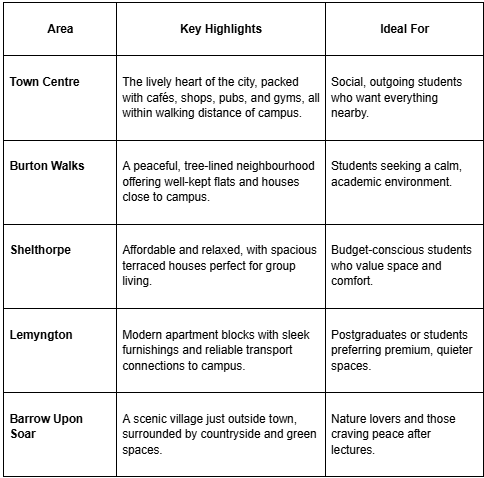
Ideal Areas for Student Apartments in Loughborough

Find Your Ideal Student Apartment in Loughborough: Modern, Affordable & Close to Campus

Finding the Right Student Accommodation in Loughborough

Finding reliable student accommodation near Loughborough University is essential for ensuring a comfortable and well-balanced study experience. The right housing can offer a blend of convenience, quality, and a strong sense of community, which is crucial for both academic success and personal well-being.

Student apartments in Loughborough generally provide various amenities, such as inclusive bills, security features, and access to essential facilities, all of which contribute to a more stress-free living experience. Proximity to campus is also a key factor in making daily life more manageable, allowing students to focus on their studies without worrying about long commutes.

In addition, many accommodation options offer social spaces that encourage interaction, which helps build a sense of community among students. Whether you’re looking for privacy or a more sociable environment, there are plenty of choices that can suit your preferences and support a balanced lifestyle.

Ultimately, finding the right student accommodation in Loughborough is about more than just a place to sleep—it’s about creating an environment that supports your academic journey, personal growth, and overall happiness during your time at university.


Smart Tips to Find the Right Student Apartment

  1. Start Early & Compare Options: Begin your search for student accommodation in Loughborough at least three months before your move. Shortlist a few trusted providers, compare pricing, and secure your booking before the best rooms are taken.
  2. Visit or Take Virtual Tours: Whether in-person or online, walkthroughs can help you gauge space, cleanliness, and the overall vibe. These are details you might not always spot in photos.
  3. Check What’s Included in Rent: Confirm if bills, Wi-Fi, and maintenance are covered. Transparent, all-inclusive pricing can help you budget accurately and avoid hidden costs.
  4. Review Reputation & Contract Terms: Read reviews on provider reliability, and always check lease length, deposit rules, and cancellation policies before signing.
  5. Prioritise Location & Safety: Choose accommodation with secure entry, CCTV, and good lighting, ideally within walking or cycling distance from campus and essential amenities.
  6. Get Insider Advice: Join student groups or forums to learn from current residents. Their insights often reveal the most reliable and well-managed properties.

Summary

Finding the right student accommodation in Loughborough is about striking a balance between comfort, convenience, and community. Whether you prefer a lively shared flat or a private retreat, the city offers something for every kind of student. For those seeking privacy and premium amenities, student studio apartments in Loughborough might make an excellent choice, as they are modern, secure, and designed for focused living.

How Israel’s Multidisciplinary Hospital Became a Global Hub for Advanced Medicine

By: Alex Sams

A Hospital that Speaks the Language of the World

Ichilov is one of Israel’s largest multidisciplinary hospitals, offering a broad range of medical services to patients from around the world. Millions of patients are treated here annually, including thousands of international visitors who arrive seeking advanced diagnostics, life-saving surgeries, and treatments often unavailable in their home countries.

The hospital’s Department of Medical Tourism has become a cornerstone of this global outreach. Its mission is to ensure that each patient’s journey — from initial consultation to full recovery — is “clear, coordinated, and comfortable.”

Patients receive assistance with:

  • Remote medical evaluations before arriving in Israel;
  • Personal coordinators fluent in English;
  • Translation of medical records and discharge summaries;
  • And, most importantly, fast access to leading specialists — without the waiting lists shared in the U.S. and Europe.

The department operates like an international concierge service with a medical backbone. “Our goal is to remove every barrier between the patient and the treatment they need,” says a representative from Ichilov’s International Department. “Here, time works in favor of recovery.”

A Global Reputation Built on Multidisciplinary Excellence

Ichilov operates as a teaching-and-research medical center affiliated with Tel Aviv University, with dozens of departments and extensive clinical and research activities — a model broadly aligned with large academic hospitals in the US. It houses over 60 departments and specialized institutes, offering a range of services from routine check-ups to complex neurosurgical operations.

Among the most sought-after fields by international patients are:

Oncology – A Global Leader in Cancer Treatment

Ichilov’s Cancer Center integrates personalized medicine with the latest breakthroughs in immunotherapy and genetic diagnostics. Every case is reviewed by a multidisciplinary tumor board, where oncologists, surgeons, radiologists, and pathologists collaborate to design individualized treatment strategies.

For patients from the U.S. — where advanced cancer therapy can involve long waits and astronomical costs — Ichilov offers an appealing alternative: world-class expertise, immediate access, and transparent pricing. Many of its oncologists have trained at leading American institutions, including Memorial Sloan Kettering, MD Anderson, and Harvard Medical School.

Cardiology – Saving Hearts With Precision

Ichilov’s Heart Institute is a national reference center for interventional cardiology and cardiac surgery. Its hybrid operating rooms enable physicians to perform catheter-based and open-heart procedures within the same environment — a model rarely found even in renowned Western hospitals.

Patients from North America often travel here for procedures like coronary angioplasty, valve repair, and arrhythmia treatment, all performed using minimally invasive techniques that shorten hospital stays and recovery times.

Hematology And Bone Marrow Transplantation

Led by renowned hematologist Professor Ron Ram, Ichilov’s Bone Marrow Transplant Unit performs both autologous and allogeneic transplants for leukemia, lymphoma, and multiple myeloma. The unit collaborates closely with research centers in the U.S. to bring innovative therapies, such as CAR-T cell treatment, to eligible patients.

Neurosurgery – Where Technology Meets Human Skill

Few departments at Ichilov have garnered as much international attention as its Neurosurgery Division. The team specializes in brain and spinal tumor removal, vascular malformations, and functional neurosurgery for epilepsy and Parkinson’s disease.

Most of the department’s senior neurosurgeons have completed fellowships in the United States, mastering advanced neuronavigation, endoscopic, and microsurgical methods. And recently, this department made headlines with a historic medical breakthrough.

The Surgery That Made History: Removing A Brain Tumor Through The Eye Socket

According to the hospital, Israeli media reported in the summer of 2025 the successful removal of a skull base brain tumor at Ichilov Hospital — a procedure performed through the orbit without opening the patient’s skull, marking a significant medical achievement.

The innovative procedure, detailed on the official website, enables surgeons to access hard-to-reach areas of the brain through the eye socket, significantly reducing trauma and recovery time.

This minimally invasive technique, a fusion of neurosurgery and ophthalmology, represents a new frontier in global brain surgery. “It’s like navigating a narrow tunnel to remove a hidden enemy,” explained one of the surgeons involved. “What used to require a craniotomy and months of rehabilitation can now be done through a small orbital incision.”

For patients worldwide, including those in the U.S., where access to innovative neurosurgical methods can be restricted by cost or availability, such achievements showcase Israel’s growing status as a pioneer in high-complexity medicine.

Gynecology and Women’s Health: Where Science Meets Compassion

Ichilov’s Gynecology and Obstetrics Department is among the country’s most modern. Its team performs advanced laparoscopic and robotic surgeries for fibroids, endometriosis, and pelvic organ prolapse, alongside fertility preservation and reproductive medicine programs.

The hospital operates its own state-of-the-art IVF and Fertility Preservation Center, offering comprehensive solutions for women seeking advanced reproductive care abroad. Specialists perform procedures such as in vitro fertilization, egg freezing, and fertility preservation for oncology patients — all within the same institution. 

Many international patients choose Ichilov for its holistic approach, combining cutting-edge reproductive technologies with compassionate, patient-centered care and post-procedure support.

The “No Wait” Advantage: Time as a Medical Asset

The hospital’s infrastructure allows for rapid diagnostics, same-week specialist consultations, and surgical scheduling within days of arrival. “In oncology or neurosurgery, time is everything,” says an international coordinator. “Every day counts — and that’s what brings patients here.”

This “no wait” advantage has made Ichilov particularly appealing to American, Canadian, and European patients seeking high-level procedures such as cardiac stent placement, orthopedic joint replacements, and cancer surgery without administrative bottlenecks.

Physicians With U.S. Training And Global Vision

Behind Ichilov’s international success is a team of world-class physicians. Nearly all senior specialists have completed fellowships or residencies in leading hospitals in the United States, Europe, and Canada.

This transatlantic training model ensures that Ichilov doctors are fluent in global medical standards, while their Israeli background gives them a culture of problem-solving, adaptability, and innovation. “Our doctors think globally but act locally,” says one department head. “They bring the best of both worlds — American precision and Israeli creativity.”

In addition to their clinical work, many Ichilov physicians hold academic positions at Tel Aviv University, publish in peer-reviewed journals, and participate in international trials on oncology, cardiology, and neurology.

An Academic and Research Powerhouse

Ichilov is also an academic hospital affiliated with Tel Aviv University’s Sackler Faculty of Medicine, integrating research and clinical care within a single ecosystem. This partnership fuels innovation in areas like:

  • Neuroimaging and AI-assisted diagnostics;
  • Personalized cancer therapy;
  • Regenerative medicine and stem cell research;
  • Cardiovascular device development.

The hospital’s laboratories work closely with global biotech companies and American universities, translating discoveries into real-world treatments faster than traditional academic centers.

Why Patients from the U.S. are Looking to Israel

For many Americans, seeking medical treatment abroad is no longer an act of desperation — it’s a calculated choice. Israel, and Ichilov in particular, has become a trusted name in medical tourism, offering:

  • World-class specialists with U.S. training;
  • Immediate access to advanced care — no waiting lists;
  • Comprehensive support for international patients;
  • Competitive pricing compared to Western private hospitals;
  • A good record of innovation and successful outcomes.

Beyond the clinical advantages, Tel Aviv offers a recovery environment unlike any other: a cosmopolitan city on the Mediterranean, with a climate and culture that promote healing and comfort.

A Destination of Hope

In the modern era of globalized medicine, Ichilov represents what healthcare should look like — accessible, innovative, and humane. It stands as a bridge between East and West, between science and empathy, between innovation and tradition.

From pioneering brain surgery through the eye socket to offering lifesaving cancer therapies, Ichilov continues to push the boundaries of modern medicine. Every year, thousands of international patients walk through its doors — and many leave not just with restored health, but with a renewed belief in what’s possible when medical excellence meets human dedication.

For more information about treatment options, international coordination, and recent innovations, visit the official website.

Disclaimer: The information provided in this article is based on statements and materials published by Tel Aviv Sourasky Medical Center (Ichilov Hospital). While efforts have been made to ensure the accuracy of the details, including medical procedures and advancements, outcomes may vary based on individual circumstances. The descriptions of treatments, services, and procedures are intended for informational purposes only and should not be considered as a guarantee of results. Please consult directly with medical professionals at Ichilov or other health institutions for personalized medical advice and to confirm the latest updates on available services.

Dan Mercredi’s Witnessing Change: A Memoir of Resilience, Environmental Justice, and Indigenous Wisdom

By: Matt Emma

Fort Chipewyan, Alberta — A small, serene hamlet tucked between boreal forests and the waters of Lake Athabasca might seem like an unlikely epicenter for a climate movement. But for Dan Mercredi, it’s emerging as a significant site for one of the compelling environmental awakenings of our time.

In his deeply personal book, Witnessing Change, Mercredi invites readers on an emotional journey, discussing pressing issues related to the nature and narrating his transformation from a nature-loving boy growing up in Fort Chipewyan to a dedicated advocate for environmental justice and Indigenous-led sustainability. Part memoir, part wake-up call, Witnessing Change is a raw and thought-provoking reflection on what it means to watch your homeland change, and decide to do something about it.

At first glance, Witnessing Change reads like a love letter to a place. Readers are transported to a childhood filled with quiet lakeside mornings, moose tracks in the snow, the scent of spruce, and the wisdom of elders. Mercredi paints a vivid picture of growing up connected to nature not as a resource, but as a relative.

But that sense of harmony doesn’t last.

As Mercredi comes of age, so too does a new reality: changing seasons, dwindling wildlife, polluted waters, and industrial expansion. Climate change, once an abstract headline, becomes personal—visible in the vanishing caribou, the strange weather, the rising cancer rates in his community. The Fort Chipewyan he knew begins to shift before his eyes.

And Dan? He refuses to stay silent.

Honestly, climate headlines are everywhere. Melting ice caps, record wildfires, rising sea levels. So, what makes Witnessing Change different? This book offers something these reports can’t—bringing in a human face to the crisis. Providing a personal narrative that makes the data feel tangible and relevant. And, perhaps most importantly, a potential blueprint for resistance, resilience, and action.

Dan Mercredi’s voice is not that of a distant expert. He’s someone who’s lived through the crisis. His story resonates because it’s grounded. Grounded in land. Grounded in community. Grounded in truth.

What sets this book apart is its balance. It doesn’t just sound like the alarm. It shares potential pathways forward. Through community organizing, traditional knowledge, renewable energy projects, and youth engagement, Mercredi shows how even the smallest communities can rise up—and lead.

“I Didn’t Just Watch the Land Change—It Changed Me”

One of the powerful arcs in Witnessing Change is Mercredi’s evolution from observer to activist. And it’s not a smooth or perfect journey. It’s real.

He begins by noticing. Noticing the earlier springs. Noticing fewer fish. Noticing the thickening haze in the sky.

Then comes grief. Then anger. And then—purpose.

Mercredi joins hands with local residents, elders, scientists, and educators to fight back. They organize, they protest, and they meet with government officials. They demand stricter regulations on oil sands development. They call out the pollution poisoning their water and lungs. And slowly, they’re heard.

It’s a portrait of what grassroots leadership can look like. It’s a potential roadmap for anyone asking: “What can I do?”

This isn’t just a book about environmentalism. It’s about Indigenous leadership—and what the rest of the world can learn from it.

In chapter after chapter, Mercredi demonstrates how traditional land stewardship, passed down through generations, offers solutions that Western policy often overlooks. Things like:

  • Living in balance with the seasons

  • Honoring the animal you hunt

  • Seeing land not as property, but as kin

  • Teaching children through story and lived experience

These aren’t just quaint traditions; they’re strategies for long-term survival. And they appear to be effective.

Mercredi doesn’t pit modern science against traditional wisdom. Instead, he argues for collaboration. His book bridges the gap between modern researchers and the elders, between policy and practical application. And the result is powerful: environmental solutions that are practical, cultural, and potentially deeply sustainable.

One of the boldest parts of Mercredi’s vision lies in renewable energy. He doesn’t just advocate for solar panels and wind turbines because it’s trendy—he does it because the alternative appears to be affecting his community negatively.

He documents efforts to transition Fort Chipewyan toward solar and wind energy, outlining the benefits not just for the planet, but for economic independence and health. He sees clean energy as a possible path back to sovereignty.

“Every solar panel we install is a step away from the industries that are making us sick,” he writes. “It’s not just about the environment—it’s about dignity.”

It’s this kind of clarity that makes Witnessing Change such a refreshing read. There’s no greenwashing. No fluff. Just a straight-talking man calling it like it is—and inviting you to join him.

“I remember the first time I saw a fish with lesions. My father said nothing, but his silence screamed. That was the moment I knew—our water, our lifeblood, was under attack.”

Published by United Book Publishing, Witnessing Change is now available in hardcover, paperback, and ebook formats through Amazon, Barnes & Noble, and independent bookstores.

Buy the book here: Witnessing Change eBook: Mercredi, Dan

Learn more about the author: Mercredi Dan | Facebook

Whether you’re a climate activist, a policymaker, a student, or just someone trying to make sense of the world we’re leaving behind, this book could belong on your shelf.

About the Author

Dan Mercredi is a lifelong resident of Fort Chipewyan, Alberta, and a proud member of the Indigenous community. Raised in the heart of nature, Dan’s deep connection to the land shaped his identity and life’s mission. Over the years, he has become a respected environmental advocate, blending traditional knowledge with modern sustainability practices. His grassroots activism, community leadership, and unwavering dedication to renewable energy and land protection have inspired many. Witnessing Change is his first book, a heartfelt memoir and urgent call to action that reflects both his personal journey and his vision for a better, greener future.

Dan Mercredi’s Witnessing Change doesn’t just ask you to read, it asks you to remember, rethink, and respond. It reminds us that climate change isn’t happening in some distant future; it’s here. It’s personal. And it’s urgent.

But more than anything, this book reminds us that change is possible. That even the quietest places, like Fort Chipewyan, can become centers of hope, innovation, and resistance.

So, here’s your invitation. Witness the change. And be part of it.

For Press Inquiries, Review Copies, or Interviews

United Book Publishing
Email: info@unitedbookpublishing.com
Phone: +1 (855) 605-5210