Carlton Fine Arts Presents Acclaimed Lighting Guru, Bentley Meeker

By: Rodney Sparrow

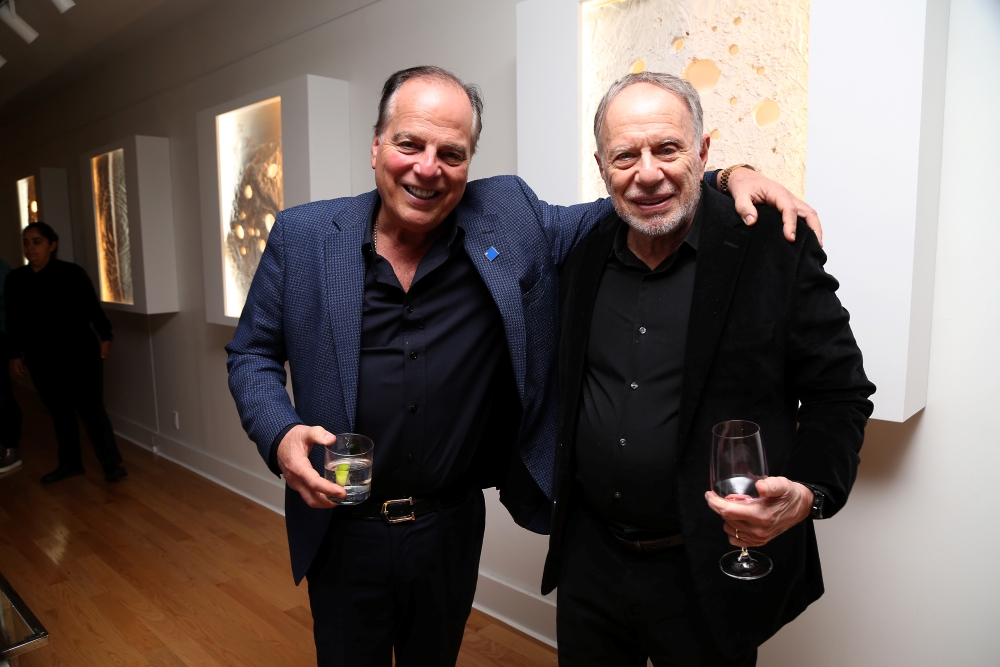
Charles Saffati’s Carlton Fine Arts hosted a radiant opening reception for acclaimed lighting guru Bentley Meeker’s latest exhibition, “Veluminosity,” which transformed the gallery’s third floor into a captivating world of color and light. The immersive solo show, on view from November 5 through December 5, features a selection of innovative light wall sculptures that continue to explore Meeker’s investigation into color temperature, luminosity, and the emotional resonance of illumination. Guests were treated to an evening where art and atmosphere blended seamlessly, sipping Aphrodise sparkling rosé as they mingled among the glowing installations and admired Meeker’s ability to elevate light into a form of sculpture. The exhibition invites visitors to experience the intersection of art and technology in an entirely new way, highlighting how light itself can shape perceptions and evoke deep emotional responses.

The artist, long celebrated for his experimental approach to lighting as an art form, has developed an impressive career that spans decades and disciplines. Meeker has exhibited at major institutions including the Whitney Museum of Art, the Southampton Center for the Arts, the National Arts Club, and the CORE Club. His large-scale public art projects, such as “The H in Harlem” and several illuminated installations at Burning Man, have garnered recognition and critical acclaim on an international scale. Notably, Meeker was commissioned by former First Lady Michelle Obama to create a bespoke light sculpture for the Nordic States State Dinner at the White House, demonstrating his ability to merge artistic innovation with cultural significance. His work continues to inspire the next generation of artists and lighting designers, creating a lasting impact on the intersection of art and functionality.

Carlton Fine Arts Presents Acclaimed Lighting Guru, Bentley Meeker

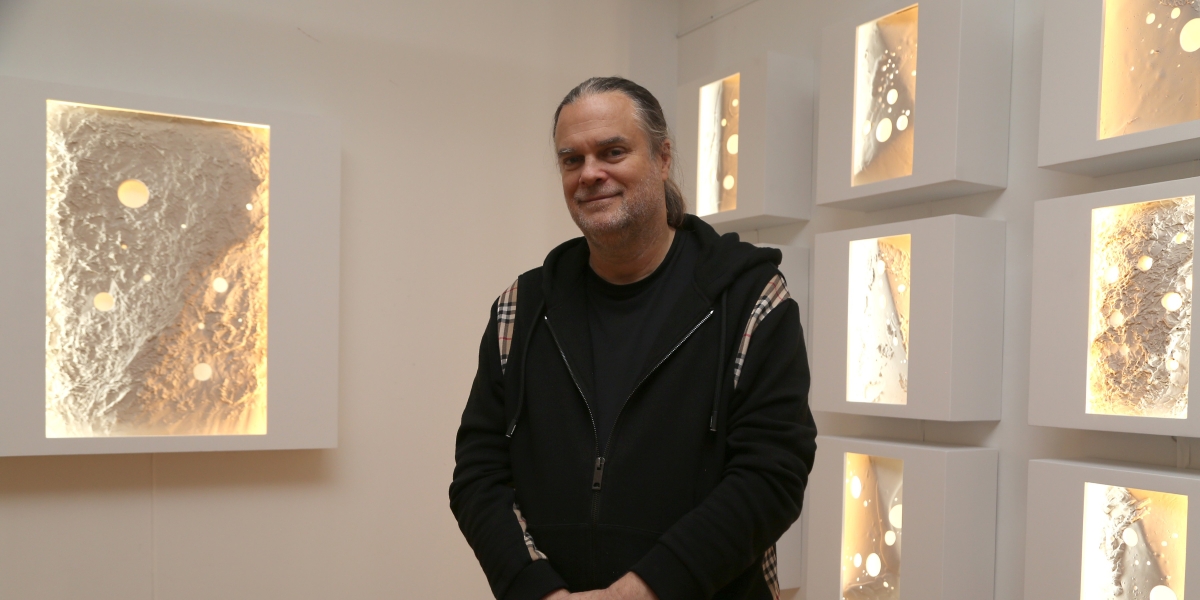
Photos Courtesy: Sylvain Gaboury / PMC (Charles Saffati and Nick Vazzanno)

In addition to his fine art practice, Meeker is the President and Founder of Bentley Meeker Lighting & Staging (BMLS) and Bentley House Studios. For more than 35 years, he has contributed to events, concerts, galas, and fashion shows through light, creating over ten thousand unique experiences for clients ranging from Paul McCartney, Prince, and Rihanna to Ralph Lauren, Madonna, and Karl Lagerfeld. His work has illuminated some of the most memorable celebrations in modern history, including Chelsea Clinton’s wedding and milestone birthday parties, as well as numerous Clinton family events. He also designed the lighting for Rudy Giuliani’s most recent wedding. His book, “Light X Design” (Glitterati, April 2011), offers insights into his creative process and showcases the many venues he has helped transform through the magic of light. The book also delves into the challenges of designing lighting for large-scale events, offering a rare glimpse behind the scenes of this highly specialized art form.

At the “Veluminosity” opening, the crowd reflected the artist’s wide-reaching influence, blending figures from art, design, media, and society. Among those in attendance were Annie Dietz, Laura Magic Weyl, Becca Gottlieb, Jenny Piersol, Signe Drulla, Nadja Sayej, Heather Tazza, Bonnie Pfeifer Evans, Dan Shedrick, Paul Mas, Erin Spears, Jeff Ledford, Dimitri Perara, Bibi Tran, Jedi Master, Jeremy Brown, Justin Cho, Christine Hauer, Dan Stock, Jennifer Tran, Margo Langenberg, R. Couri Hay, Kristen Ginn, Marta Eliza, Bentley Meeker, Carolyna Manni, Prince Charles, Oana Salusbury, Cris Ciacon, Tatiana Didus, Hilary Dare, Carmel Snow, and Khloe Obrien.

Founded in 1969, Carlton Fine Arts remains a family-owned and operated gallery committed to presenting Pop Art and Modern Masters. With locations on Madison and Fifth Avenues, the gallery’s five-level flagship space continues to serve as one of New York’s premier destinations for contemporary and modern art. Meeker’s exhibition, with all works available for purchase, can be viewed at Carlton Fine Arts Ltd., 543 Madison Avenue, New York City. Exhibition hours are Monday through Thursday from 10:00 AM to 6:00 PM, Friday from 10:00 AM to 4:00 PM, and Sunday from 11:00 AM to 6:00 PM, or by appointment.

From Diagnosis to Determination: How Humor Redefined a Cancer Journey

By: Jennifer D. Gaudet

Cancer is a word that rarely invites laughter. For some, it carries the weight of fear, uncertainty, and loss. It interrupts lives, shifts priorities, and alters identities. Yet within this difficult landscape, one woman, Aimee Kintzel, chose an unconventional response: humor.

Her story, captured in Open in the Front, redefines what it means to face cancer with determination—by shifting the perspective from despair to resilience, and from silence to laughter.

This article explores how humor can transform the way we navigate adversity, why perspective is a powerful force in survival, and how the author’s candid storytelling has created a book that resonates far beyond the cancer community.

Humor as a Survival Strategy

When adversity strikes, people lean into fear, grief, or quiet endurance. Humor, however, rarely makes the list of coping mechanisms. Yet research and lived experience alike show that laughter has the capacity to lower stress, strengthen emotional resilience, and connect us to others during times of struggle.

Humor is not about trivializing pain. Instead, it provides a way to reframe the experience. By finding something to smile about, even in difficult circumstances, we carve out moments of control in an otherwise uncontrollable situation. Laughter becomes a declaration: the illness may take hold of the body, but it does not own the spirit.

For the author of Open in the Front, humor became more than a strategy—it became a lifeline. It allowed her to acknowledge the hard truths while also refusing to let them define her journey. It offered her and those around her relief, perspective, and  importantly, the reminder that joy can exist alongside pain.

Transformation Through Perspective

The heart of Open in the Front lies in perspective. The author faced a reality that could have silenced her, yet she chose to transform it into something life-giving. By reframing fear into laughter and despair into determination, she demonstrates that transformation is less about the circumstances themselves and more about how we respond to them.

This is not a story of denial. It is not about ignoring hardship or painting it over with shallow optimism. Instead, it is about embracing the full spectrum of the experience—fear, frustration, absurdity, and joy—and choosing which parts will define the journey.

Perspective does not change the diagnosis, but it can absolutely change the story. In shifting her outlook, the author unlocked resilience that might otherwise have been hidden, and in doing so, she invites readers to consider their own power to redefine the narrative of adversity in their lives.

About the Book

Open in the Front is not a medical memoir filled with statistics and treatment plans. Instead, it is a deeply human account of one woman’s experience, told through the lens of wit, vulnerability, and honesty.

The pages invite readers into moments that are both relatable and surprising. They highlight the absurdities that arise during serious situations, the small joys that can be found in unexpected places, and the courage required to laugh when fear threatens to overwhelm.

What sets this book apart is its balance. It does not minimize the gravity of cancer, but neither does it allow cancer to dominate the story. Instead, it shines a light on resilience, hope, and the transformative power of humor.

For readers, the takeaway is clear: survival is not solely about medical outcomes, but also about the mindset that can support us through challenging times.

About the Author

At the center of this story is an author who does not pretend to have all the answers. She is not a clinician or a motivational guru. What she offers is something more valuable: authenticity.

Her voice is candid, approachable, and refreshingly honest. She writes not to instruct, but to connect. Her humor is not forced—it is born out of lived experience. Her vulnerability is not performative—it is the mark of someone who has walked through hardship and chosen to share the journey so others might find comfort and courage.

Through Open in the Front, she extends a hand to readers. Whether they are personally facing cancer, supporting a loved one, or navigating an entirely different challenge, they are not alone. Her story may be personal, but its message is universal: perspective can transform adversity into determination.

Why This Story Matters Now

Conversations around illness often carry a tone of hushed seriousness. However, Open in the Front provides a refreshing alternative. It opens the door for dialogue that is honest but not overwhelming—uplifting without being dismissive.

It permits those in the midst of hardship to laugh, to feel joy, and to embrace the contradictions of life.

The book also meets a cultural need. As people search for stories of resilience and hope in uncertain times, there is a growing appetite for narratives that blend vulnerability with strength. Open in the Front answers that call.

A Call to Read

The journey from diagnosis to determination is rarely straightforward. Yet as Open in the Front so beautifully illustrates, it may be filled with unexpected moments of humor, humanity, and hope.

Discover how one woman redefined her cancer journey through humor and resilience. Order your copy of Open in the Front today and be inspired by a story of transformation through perspective.

Grammy 2026 Nominations: Fresh Rules, Who’s In, and What’s Changed

The Recording Academy has released the full list of nominees for the 2026 Grammy Awards, scheduled for February 1, 2026, at the Crypto.com Arena in Los Angeles. Kendrick Lamar leads this year’s field with nine nominations, followed by Lady Gaga with seven, placing both artists at the forefront of the ceremony’s major categories, including Album of the Year and Song of the Year.

This year’s nominations highlight a broader and more inclusive mix of genres than in previous cycles, with established icons appearing alongside rising newcomers across pop, rap, country, global music, and more. For audiences, the list offers an early snapshot of the creative voices shaping the past year in music.


What’s New for the 2026 Grammy Awards

Two new categories will debut this year:

  • Best Traditional Country Album
  • Best Album Cover

The addition of Best Album Cover recognizes the enduring importance of visual identity in music, giving photographers, illustrators, and designers a dedicated space for recognition.

Eligibility rules for Best New Artist were also updated. Performers who contributed less than 20 percent to a previously nominated Album of the Year can now compete, opening the door for more emerging talent. These changes signal an awards structure that is adapting to modern listening habits and giving more visibility to behind-the-scenes creatives.


What the Leading Nominees Reveal

Kendrick Lamar’s nine nominations reflect both his artistic consistency and his ability to blend genres and styles. His latest album, GNX, earned recognition across performance and production categories, reinforcing his status as one of the most influential voices in contemporary music.

Lady Gaga’s seven nominations highlight her continued versatility as a vocalist and performer. Her work in the past year spans polished pop production and emotionally driven performances, continuing a career defined by creative reinvention.

Bad Bunny made history this year as the first Spanish-language artist to be nominated in all three major categories — Album, Song, and Record of the Year. His presence underscores the growing influence of global music within the mainstream U.S. market.

For listeners, the combination of familiar names and rising artists mirrors the diversity of today’s cultural landscape.


Why These Nominations Matter

A Grammy nomination can significantly boost visibility, often driving surges in streaming and renewed interest in earlier releases. The nomination list also serves as an informal guide to the year in music, helping audiences discover artists and albums they may have missed.

The introduction of new categories creates room for niche communities—such as traditional country and album art—to gain recognition. This broader representation helps the ceremony reflect a more complete picture of the modern music ecosystem, rather than focusing solely on commercial powerhouses.


What Remains Unknown Ahead of the Ceremony

While nominees are confirmed, several broadcast details have yet to be announced. It’s unclear whether the new categories will appear in the main telecast or be presented during the pre-show. Voting members are now reviewing ballots, with winners set to be announced live on February 1.

The long-term impact of the updated category structure is still unfolding. Whether additions like Best Album Cover resonate with audiences will depend on how the awards are framed and how strongly viewers connect with the idea of spotlighting design in the streaming era.

As digital platforms continue reshaping how music is consumed and classified, further adjustments to Grammy eligibility and category definitions remain possible.


Why Listeners May Feel More Connected This Year

The Grammy Awards often spark debate about genre representation, cultural relevance, and the balance between commercial success and artistic merit. This year’s nominations suggest a more intentional effort to broaden the field.

With Kendrick Lamar and Lady Gaga leading major categories, Bad Bunny achieving historic recognition, and newcomers appearing alongside longtime industry names, the 2026 list feels more reflective of current listening trends.

Whether your playlist leans toward rap, pop, country, or global music, this year’s nominees offer an inclusive look at the artists shaping the moment—and set the stage for a ceremony poised to represent a wider range of voices than ever before.


The 4 Key AI and Cloud Infrastructure Planning Demand Forecasting Techniques

By: Sattvik Sharma

Demand forecasting has emerged as a critical necessity for AI compute hardware and cloud infrastructure providers in the rapidly evolving digital environment of today. Over-provisioning, service outages, or failure to capture market opportunities at increased costs can arise due to the challenge of accurately predicting future infrastructure demand as businesses are more and more reliant on AI-powered applications and cloud services. Effective forward-looking compute resource planning is important, especially in the AI hardware business, where specialized GPUs, TPUs, and ASICs are in high demand.

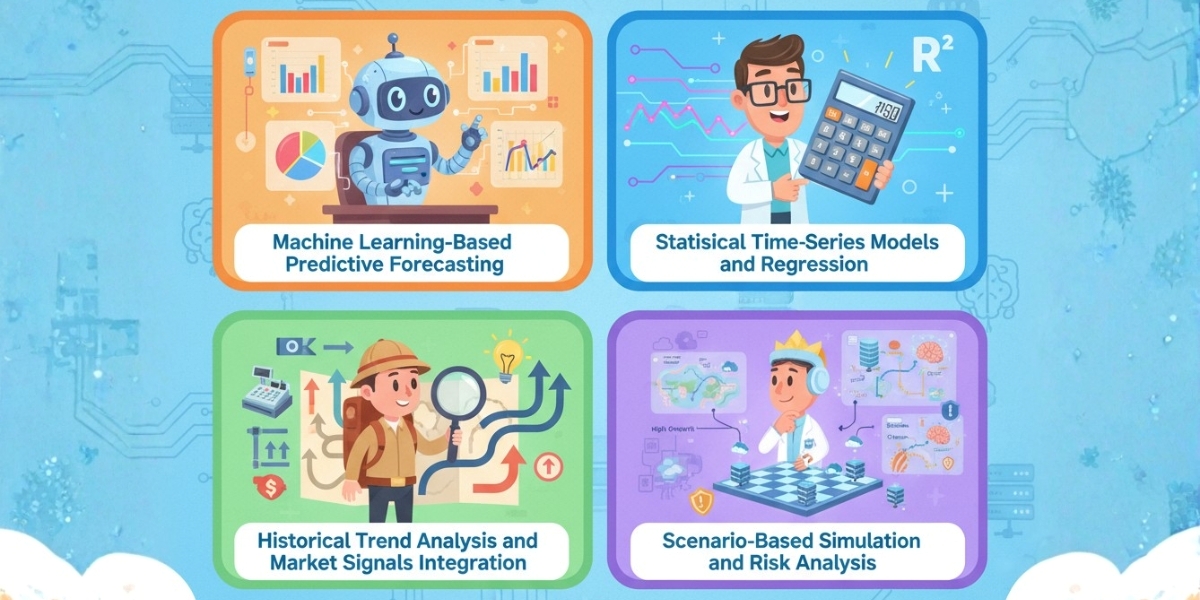
This study is a technical yet practical guide to the four widely used demand forecasting methods tailored specifically for AI and cloud infrastructure planning. These solutions leverage cutting-edge machine learning models, statistical techniques, historical trends analysis, and simulations based on market intelligence, creating a comprehensive system of data-driven infrastructure strategy.

1. Predictive Forecasting Based on Machine Learning

Demand forecasting has undergone a significant shift with machine learning (ML) models allowing systems to extract complex and non-linear patterns in historical compute usage data. Gradient Boosting Machines (GBMs), Random Forests, and advanced Recurrent Neural Networks (RNNs), specifically Long Short-Term Memory (LSTM) networks, are commonly used algorithm types that have been applied to predict demands for GPUs, TPUs, and ASICs using large-scale time-series data.

For example, one of the largest cloud providers reported an improvement in accuracy by approximately 15 percentage points after applying LSTM models to forecast the use of GPUs across all data centers. These models are effective in capturing factors such as workload type, time-of-day, and customer segmentation, and providing real-time, automated forecasts that are dynamically adjusted to new data.

2. Statistical Time-Series Models and Regression

Even with the emergence of machine learning, traditional statistical models still play a vital role in organized, periodic forecasting and provide clarity, simplicity, and predictability. Some of the techniques include ARIMA (Auto-Regressive Integrated Moving Average) and Exponential Smoothing (ETS), which continue to prove effective in giving reliable base predictions in many enterprise settings.

In industries with predictable seasonal patterns of compute utilization (e.g., fiscal year budgetary renewals or higher education research cycles), such as in the AI hardware market, ARIMA-based capacity planning is used by a substantial percentage of cloud providers. Those models break down time-series data into trend, seasonal, and residual parts, and help explain the underlying demand dynamics in a clear way.

3. Market Signals Integration and Historical Trend Analysis

An essential strategic forecasting technique involves integrating historical trend analysis with market and economic indicators to build a well-informed forward-looking forecast. Trend analysis helps reveal long-term patterns in infrastructure usage, providing insights into growth trajectories and capacity dynamics. For instance, industry analyses suggest a strong upward trajectory in AI infrastructure investment, with Precedence Research (2024) estimating the global AI infrastructure market to be valued at USD 47.23 billion in 2024, and it is expected to grow at a projected 26.6% compound annual growth rate (CAGR) through 2034. Similarly, Fortune Business Insights (2024) estimates the market valuation at USD 46.15 billion in 2024, forecasting a projected 29.1% CAGR over the coming decade—highlighting a strong trend of infrastructure scaling to meet growing AI compute demands. Operational metrics such as GPU utilization rates, peak-to-off-peak workload ratios, and capacity efficiency indices serve as actionable tools for helping avoid over-provisioning and minimizing performance bottlenecks. These metrics provide a data-driven foundation for optimizing infrastructure efficiency across both on-premises and cloud environments.

Market signals further support this analytical approach by offering early indicators of future demand shifts. For example, the continuous rise in enterprise AI adoption across healthcare, automotive, and manufacturing sectors is contributing to sustained growth in AI infrastructure spending. Complementary indicators—such as venture capital activity in AI startups, fluctuations in public cloud pricing, and emerging regulatory frameworks (e.g., data localization and AI governance laws)—also serve as strategic inputs for forecasting and planning future infrastructure capacity. In sum, combining historical trend analysis with forward-looking market intelligence enables decision-makers to align infrastructure planning with both technological evolution and economic realities, supporting sustainable and scalable AI operations.

4. Simulation and Risk Analysis Based on Scenario

Scenario-based simulations are a sophisticated and deeply strategic forecasting approach that allows infrastructure planners to simulate a variety of hypothetical situations and assess the resilience of their infrastructure approach.

During the 2021-2022 silicon shortage, organizations that had employed scenario simulations were able to simulate the effects of supply chain disruptions, price fluctuations, and sudden increases in demand. This allowed them to:

  • Make adjustments to procurement measures,

  • Redistribute workloads to mitigate regional bottlenecks, and

  • Optimize hardware investments in light of future constraints.

Simulations combine statistical models, human judgment, and random events to run a variety of scenarios, such as regulatory reforms, unexpected workload peaks caused by industry events, or geopolitical shocks.

Final Take

Accurate demand forecasting has increasingly become a necessary requirement in the AI and cloud infrastructure sector. An integrated forecasting approach that combines machine learning systems, statistical time analysis, past trend analysis with market signals, and scenario-based simulations can help improve accuracy and build resiliency.

The multi-dimensional nature of such an approach allows cloud and hardware providers to plan capacity optimization, reduce operational costs, and better predict emerging trends in the market. Organizations will be better positioned to keep up with the rapidly changing technological environment by adopting a forward-looking, data-driven approach, which helps maintain a competitive edge and agility.

The Alzheimer’s Association’s Imagine Benefit Honors Peter Thomas Roth at The Plaza

By: Rodney Sparrow

Hollywood legend Rita Hayworth, whose co-stars included Cary Grant and Gene Kelly, suffered from early-onset Alzheimer’s and died at 68 in 1987 due to complications associated with the disease. Her daughter, Princess Yasmin Aga Khan, took care of the star in New York City and, after her diagnosis, founded a gala in her honor that has raised over $90 million since its inception in 1984. This year’s 41st edition of the Alzheimer’s Association Imagine Benefit honored the Princess’s friend, skincare mogul Peter Thomas Roth, for “his commitment to the mission and his impact on raising awareness and funding for care and research.” She added, “Alzheimer’s remains a national crisis, affecting over 7 million Americans, including over 427,000 New Yorkers.”

Held at the iconic Plaza Hotel, the Alzheimer’s Association Imagine Benefit, built on the legacy of the Rita Hayworth Gala, raised more than $1.3 million to support the Association’s mission of accelerating global research, driving risk reduction and early detection, and maximizing quality care and support.

Roth, who has supported the benefit for over two decades, received the Rita Hayworth Award for his longstanding dedication. In his acceptance speech, he expressed gratitude and issued an impassioned call to action: “Let’s keep fighting. Let’s keep laughing. And let’s keep showing up. Until the only thing we forget is what it felt like to lose someone to this disease.”

The event’s theme, “Magic of the Mind,” came to life through the remarkable talents of mentalist Christophe Fox, who enthralled guests with a three-part performance that blended psychology, illusion, and human connection. His captivating demonstrations drew gasps and applause, perfectly mirroring the evening’s message of hope, mystery, and perseverance.

A moving moment came when Tony Award-winning director Rachel Chavkin (“Hadestown”) and her husband Jake Heinrichs shared their family’s personal journey with inherited Alzheimer’s caused by a rare gene mutation. Heinrichs is a participant in the groundbreaking DIAN-TU clinical study, which explores potential prevention treatments. “We are grateful to the Alzheimer’s Association for its work on behalf of families like ours,” they said. “Please continue investing in research. Alzheimer’s knows no political, economic, or geographic boundaries. Research is the difference between which children will grow up with a parent, aunt, uncle, or grandparent — or without them.”

The Alzheimer’s Association’s Imagine Benefit Honors Peter Thomas Roth at The Plaza (2)

Photo Courtesy: BFA

Princess Yasmin Aga Khan reflected on her mother’s legacy and the mission that has guided her for more than four decades. “My journey to end Alzheimer’s began in 1981, when my mother, Rita Hayworth, was diagnosed with early-onset Alzheimer’s. Overnight, I became a caregiver at 32 years old, and soon after, this cause became my life’s calling,” she said. “Tonight, we honor my dear friend Peter Thomas Roth for his unwavering commitment to this event for more than two decades. Thanks to him — and to our dedicated chairs, committee, sponsors, donors, and supporters — we reach new heights year after year. One day, with the work done by the Alzheimer’s Association, we won’t have to imagine a world without Alzheimer’s and all other dementia. We will live it.”

Entertainment was provided by the legendary Café Wha? UNLIMTD Band, who kept the dance floor buzzing throughout the night. A live auction, featuring exclusive offerings from Wayne Brady, Hunt Slonem, and Exclusive Resorts, added to the excitement. The event was generously underwritten by Rolex Watch USA, while Aphrodise contributed its sparkling Rosé and Miss Maude Chocolates treated guests to its signature Theater Bar.

Distinguished attendees included Huma Abedin, Peter Gallagher and Paula Harwood, Josie Natori, Jason Wu, Louise Roe, Hunt Slonem, and Lucia Hwong Gordon, among many others from the worlds of art, fashion, society, and philanthropy.

The Alzheimer’s Association’s Imagine Benefit Honors Peter Thomas Roth at The Plaza (2)

Photo Courtesy: BFA

Proceeds from the Imagine Benefit will support the Alzheimer’s Association’s mission and the work of its New York City Chapter. Currently, more than 426,000 New Yorkers are living with Alzheimer’s, and over 656,000 provide unpaid care for loved ones battling the disease. With each passing year, the Imagine Benefit continues to uphold Rita Hayworth’s legacy—transforming heartbreak into hope and helping to advance the vision of a world without Alzheimer’s. 

GTA 6: What We Know So Far & Why the Wait Is Worth It

Rockstar Games has formally announced that the next installment in the Grand Theft Auto franchise will arrive on November 19, 2026. The studio said the extended development window is meant to ensure the game meets its internal quality standards and avoids the instability that can accompany rushed blockbuster launches.

For players, that timeline signals Rockstar’s intent to deliver a polished experience at release—something that has become increasingly rare for large-scale open-world titles.


A New Setting Inspired by Florida

The game takes place in Leonida, a fictional state modeled after Florida. At its center is Vice City, one of the franchise’s most recognizable locations. But this version goes far beyond the neon-soaked map from past games.

Leonida features:

  • Wetlands and swamp ecosystems
  • Small rural towns and highways
  • Densely packed urban districts
  • Extensive coastal stretches

Rockstar describes it as the largest and most detailed open world it has ever built. The design philosophy focuses on continuous, uninterrupted terrain—reducing transitions and creating a more fluid sense of exploration.


Why the Delay May Be Strategic

Large game studios increasingly take extra time to refine systems, stabilize performance, and prevent launch-day issues. Rockstar acknowledged that the additional development period allows teams to finalize gameplay mechanics and optimize the experience for modern consoles.

The November release date also places GTA VI squarely in the holiday season, a historically strong window for major game sales. Holiday demand boosts both software and console purchases, setting the stage for a global commercial peak.

The extended runway may be frustrating for fans, but it typically leads to a smoother rollout and fewer emergency patches—preserving the franchise’s reputation for longevity.


A Unified, Highly Detailed Open World

Leonida’s design merges multiple biomes and city types into a single, seamless environment. That structure requires precise coordination between engineers, environment designers, animators, and narrative teams.

Creating an open world with this level of fidelity is one of the reasons Rockstar lengthened its timeline. Fewer separated zones mean more data streaming at once, higher asset detail, and an engine built around constant movement rather than compartmentalized areas.


New Protagonists Mark a Narrative Shift

Rockstar confirmed that Grand Theft Auto VI will feature two protagonists: Jason and Lucia. Lucia stands out as the first woman to lead a GTA title, marking a milestone for the series.

Their partnership drives the story’s emotional core, signaling a more character-centered approach. While the franchise’s trademark satire and irreverence remain, early commentary suggests the narrative will lean more into realism, personal stakes, and grounded storytelling.

The dual-character switching system introduced in GTA V returns, now benefiting from modern hardware that allows for faster transitions and more dynamic mission structures.


Questions Still Unanswered

Rockstar has confirmed the game for PlayStation 5 and Xbox Series X|S, but a PC release has not yet been announced. Historically, PC editions of GTA games arrive months after the console launch due to additional optimization needs.

Other unknowns include:

  • The structure of online multiplayer
  • The scope of the single-player campaign
  • Plans for post-launch expansions
  • Whether Rockstar will maintain the live-service model that supported GTA Online for more than a decade

Those details are expected closer to release, once core development milestones are complete.


Why Patience May Pay Off

Blockbuster releases face enormous pressure, and rushed timelines often lead to technical problems that overshadow a game’s strengths. Rockstar’s decision to take additional time suggests confidence rather than hesitation—an investment in durability rather than speed.

For players, that patience could deliver a more stable world, cleaner performance on day one, and a narrative experience that stands alongside the franchise’s most iconic chapters.

With Grand Theft Auto VI, Rockstar is aiming not just to follow up a global phenomenon but to redefine what a modern open-world game can look like. If development continues on its current path, the wait may prove worthwhile.

From Wooden Sheds to Modular Marvels: The Evolution of the Aircraft Hangar

Every aircraft, no matter how advanced, needs a home on the ground. Before takeoff and after landing, planes require protection from weather, space for maintenance, and a secure environment for storage. That’s where the aircraft hangar comes in—a structure that has evolved from simple wooden sheds into sophisticated, modular facilities supporting the global aviation industry. The story of hangars mirrors the story of flight itself: one of innovation, adaptation, and constant reinvention.

Origins and Early Development

The first hangars emerged at the dawn of powered flight in the early 1900s. Early airplanes, made from wood and fabric, were highly vulnerable to the elements. To protect them, pilots and mechanics built small sheds near airstrips. As aviation advanced (especially during World War I), these makeshift shelters evolved into larger, standardized buildings. Steel began to replace timber, and hangars became vital parts of military infrastructure, housing not only aircraft but also tools, fuel, and maintenance equipment.

By the 1920s, permanent hangars appeared at major airfields. Their steel frames and wide doors reflected a new industrial confidence. What began as simple protection soon became a strategic necessity, ensuring that aircraft could be repaired, serviced, and deployed efficiently.

Purpose and Function

An aircraft hangar’s main role is to shield planes from environmental stress (sun, rain, snow, and dust), but its function extends far beyond storage. It is a hub of maintenance, inspection, and logistics. Inside, teams perform delicate repairs, replace components, and conduct safety checks. The hangar provides the controlled environment these complex operations demand, ensuring aircraft remain flight-ready in any season. 

For airlines, military forces, and private operators alike, hangars are operational cores. They allow work to continue year-round, prevent weather-related damage, and improve safety. In short, hangars keep aviation moving.

Architectural Evolution

As aircraft grew in size, hangars had to grow too. Early rectangular buildings evolved into massive, open-span structures with arched roofs and steel trusses that eliminated interior columns. The introduction of motorized, retractable doors allowed easy access for aircraft with increasingly large wingspans. By the mid-20th century, hangars had become feats of engineering, tailored to accommodate bombers, wide-body jets, or even multiple aircraft simultaneously.

 Materials and design also advanced. Reinforced concrete, lightweight alloys, and tensioned membranes made structures stronger yet more efficient. Architects began focusing on workflow, lighting, and airflow to improve working conditions inside. Energy efficiency, safety systems, and integrated maintenance equipment became standard, turning hangars into highly specialized buildings designed for performance as much as protection.

The Modern Aircraft Hangar

Today’s hangar blends engineering and technology. It is not just a building but an intelligent workspace. Automated systems control lighting, ventilation, and temperature, ensuring optimal conditions for maintenance while saving energy. Modern facilities often include digital infrastructure to track equipment, monitor environmental factors, and support high-precision tasks.

 Safety is central to modern design. Reinforced floors handle heavy aircraft loads, fire suppression systems are built for aviation fuel hazards, and advanced ventilation ensures air quality. Many hangars are also designed with sustainability in mind, featuring solar panels, rainwater recycling, and improved insulation to reduce their environmental footprint.

 These innovations transform hangars into efficient ecosystems. From private jets to large commercial fleets, aircraft rely on these spaces for protection, repair, and readiness, making the hangar a cornerstone of aviation reliability.

The Rise of Modular Hangars

A major development in recent years is the rise of modular hangar design. Unlike traditional permanent structures, modular hangars are prefabricated and can be assembled quickly on-site. This approach reduces construction time and cost while offering unmatched flexibility.

 Modular hangars can expand, relocate, or be reconfigured as operational needs change. They are ideal for rapid deployment, temporary bases, or growing operations. Despite their lightweight structure, they are durable and weather-resistant, with insulation and environmental control systems that match permanent buildings.

 Sustainability also plays a major role. Modular systems often use recyclable materials and produce less waste during construction. Their efficient manufacturing and transport processes further reduce environmental impact. For operators, this flexibility and efficiency translate into faster readiness, lower costs, and adaptability to future changes in fleet size or aircraft type.

Shaping the Future of Aviation

The evolution of the aircraft hangar reflects aviation’s constant pursuit of efficiency and progress. Modern hangars, especially modular ones, allow airports, airlines, and maintenance providers to respond quickly to new demands. Their flexibility, safety, and energy efficiency make them essential infrastructure for the next generation of flight.

 From humble wooden shelters to advanced modular complexes, hangars have evolved alongside the machines they protect. They remain the silent guardians of aviation, standing at the intersection of innovation, engineering, and the enduring human desire to reach the skies.

A Bold New Chapter as Stallion Motorsports Enters IMSA

By: Elena Mart

From Orlando to the global stage of touring car racing, Stallion Motorsports is shifting gears and aiming high. The team has officially announced that it will make its debut in the IMSA Michelin Pilot Challenge in 2026, running the TCR class with car number 77 and the brand-new CUPRA Leon VZ TCR.

Founded with a mission to merge Brazilian energy, U.S. operations, and international racing expertise, Stallion is positioning itself as more than just another team: it could be the beginning of a bridge between continents in touring car competition.

Why the Timing and Why the Car

The decision to enter the Michelin Pilot Challenge now appears to be a strategically sound one. The TCR class is gaining traction in North America, and CUPRA is actively expanding its global TCR footprint. The Leon VZ TCR has already shown promise, having made its debut in IMSA competition under another team, demonstrating front-running pace and reliability.

For Stallion, adopting this platform means starting with a car that has a solid foundation, while working to build their own story around it. As one team representative said: “We’re excited to build on that foundation and bring our own experience and data with this platform into the championship.”

A Bold New Chapter as Stallion Motorsports Enters IMSA

Photo Courtesy: NGP Motorsports

Partnerships That Matter

What makes the entry even more significant: Stallion isn’t going it alone. The team is working collaboratively with GOU Racing & Logistics, the same organization that was the first American team to run a CUPRA TCR car in IMSA and helped deliver the car’s first podium at Virginia International Raceway.

In addition, the backing and alignment with CUPRA’s North American representation (NGP Motorsports) adds manufacturer lineage and brand support to the effort. Collectively, this sets up a cross-continental network connecting Brazil, the USA, and Spain for engineering, logistics, and racing expertise.

A Bold New Chapter as Stallion Motorsports Enters IMSA

Photo Courtesy: NGP Motorsports

What to Expect in 2026

Stallion Motorsports’ first season is shaping up to be ambitious yet focused:

  • A single-car entry (#77) in 2026, with plans for expansion to a two-car program in 2027.

  • A full season beginning at the iconic Daytona International Speedway in January, kicking things off with high visibility.

  • Emphasis not only on competition but also on building the brand identity: orange branding, Brazilian-U.S. energy, and a modern take on touring car racing.

While specific driver announcements and full technical details are still forthcoming, the foundations are being laid. Race prep, logistics, and engineering support are all in place. The statement reads almost like a mission: “Our goal is not only to compete but also to build a lasting bridge between Brazil and the U.S. motorsport communities.”

Why It Matters for IMSA & TCR

Stallion’s arrival in IMSA has several potential implications:

  • It could serve as another confirmation of TCR’s growth and appeal within North America’s top touring car environments. The competition is deepening.

  • The involvement of a team with dual-continental roots (Brazil & U.S.) could add diversity to the paddock and introduce fresh storylines and sponsor opportunities.

  • Manufacturer-platform strategy: When teams align with a brand like CUPRA and leverage pre-tested machinery, it may lead to faster competitiveness, raising the performance bar for everyone.

The Road Ahead

There are still many questions yet to be answered: Who will drive the #77 car? What will the full livery look like? How will Stallion and GOU divide roles as operations ramp up? These will all become part of the unfolding narrative.

But one thing is clear: Stallion Motorsports is not simply entering IMSA to fill a slot; they are positioning themselves to make an impact. With a strong platform, a bold identity, and a collaborative technical support base, they’re setting the stage for what could be a standout debut.

For fans of touring cars, this is one to watch. When the green flag drops in 2026, keep an eye on the TCR #77 in the pack. It could be the start of something bigger.

Demand for UI Designers in New York

User Interface (UI) design focuses on the visual and interactive elements of digital products — the buttons, menus, screens, and layouts users see and interact with. It differs from User Experience (UX) design, which centers on usability and overall flow. In the United States, demand for digital design talent continues to rise as technology companies, agencies, and startups invest heavily in online platforms.

National labor projections show that employment for web and digital interface designers is expected to grow around 7 percent from 2024 to 2034, placing UI design above the average pace for most careers. That growth is driven by the broader need for polished, functional digital experiences across industries.

New York City mirrors this trend. With tech, finance, healthcare, and media all competing for user attention, UI designers play a central role in making digital tools accessible, visually consistent, and easy to use.


Why New York Is a Strong Market

New York’s digital economy spans technology firms, creative agencies, fintech companies, enterprise software teams, retail technology groups, and healthcare systems. All of them rely on thoughtful interface design to keep users engaged and operations smooth.

Salary data commonly cited in the industry shows mid-level UI designers in New York earning between $95,000 and $135,000, with senior experts often exceeding $150,000 depending on experience, complexity of work, and industry. That range reflects both the city’s higher cost of living and the premium placed on strong digital design skills.

While the market is competitive, it offers diversity. Designers can specialize in financial interfaces, streaming platforms, healthcare dashboards, consumer apps, or internal enterprise tools. The volume of employers means there are opportunities for both focused career paths and wide-ranging project experience.


Skills New York Employers Look For

UI designers shape how products look and behave. Their responsibilities include:

  • Creating visual layouts and page structures
  • Designing buttons, icons, and interaction elements
  • Selecting color palettes and typography
  • Maintaining brand and interface consistency
  • Collaborating with UX, product, and engineering teams

Industry educators like Noble Desktop emphasize the balance needed between creativity and usability. Designers must understand how users move through a page, where attention naturally falls, and how to maintain predictable interaction patterns.

Common tools in the New York market include:

  • Figma
  • Sketch
  • Adobe XD
  • Design-system management tools
  • Prototyping and collaboration platforms

While coding expertise isn’t required, familiarity with HTML and CSS principles often improves communication with developers and helps designers make realistic choices.

Soft skills matter just as much. Teams expect designers to explain their decisions clearly, give and receive feedback, and adjust based on analytics or user-testing insights.


Challenges Within the Market

Even with steady demand, candidates face several realities:

1. Competition is strong.

New York attracts seasoned designers from across the country. Portfolios are often the deciding factor in interviews, and candidates without polished, real-world examples may struggle to stand out.

2. Compensation varies by company.

Tech firms and financial institutions often pay at the top of the range. Agencies, nonprofits, or early-stage startups may offer lower salaries but provide more creative flexibility or more diverse project work.

3. Tools evolve quickly.

Design software updates constantly, and digital interaction trends shift rapidly. Continuous learning — workshops, certifications, peer collaboration — helps designers remain competitive.


Why the Outlook Remains Stable

The long-term outlook for UI design in New York remains positive. Nearly every major digital service — financial apps, media platforms, healthcare portals, shopping interfaces — depends on intuitive design. That ongoing dependence keeps UI roles relevant even as technologies shift.

The combination of measurable job growth, stable salary ranges, and cross-industry demand creates reliability for current and aspiring UI designers. Unlike some creative fields that fluctuate with trends, UI design sits at the intersection of design, technology, and business operations, giving it staying power.

For newcomers, the message is balanced optimism: the opportunities are real, but preparation matters. A strong portfolio, current technical skills, and an understanding of how digital products work are essential to entering the market.

New York’s demand for UI designers reflects national employment trends and the city’s own digital growth. Labor projections, industry salary ranges, and insights from design educators all point to a field with steady momentum — not hype, but an enduring need.

For those considering the profession, New York offers both challenge and reward. It’s a competitive environment, but one of the most active and opportunity-rich markets for interface designers in the country. With thoughtful preparation and ongoing skill development, UI designers can build long-term, meaningful careers in a city that thrives on strong digital experiences.