A Book of Hope: How “Aliza’s Super Senses” Helps Families Embrace Autism with Love

Autism affects millions of families worldwide, and with growing awareness comes a demand for resources that not only explain the condition but also build empathy. Too often, children’s books either oversimplify autism or lean too heavily on clinical descriptions. Aliza’s Super Senses strikes a rare balance. It combines the warmth of storytelling with practical insights, helping siblings, parents, and caregivers better understand the lived experience of autism.

The book, Aliza’s Super Senses, is narrated by Ellie, the older sister of Aliza, a child whose world is shaped by autism. Guided by “Mama’s” steady explanations, Ellie presents her sister’s differences not as shortcomings, but as unique “superpowers.” This approach reframes autism through a lens of strength, turning challenges into opportunities for family learning and love.

From the very first pages, Aliza’s sensory world takes center stage. The book avoids medical jargon and instead relies on vivid, everyday examples. A simple slice of cheese pizza feels unbearably spicy. A speck of pepper is overwhelming. Thunder roars like motorbikes racing across the sky. By grounding these experiences in tangible imagery, the narrative helps children and adults alike appreciate the intensity of sensory processing differences.

Each sense becomes a lesson. Taste shows how textures and flavors can overwhelm or comfort. Hearing highlights how a child with autism can notice faint whispers but struggle with everyday sounds like coughing or crying. Sight illustrates the paradox of avoiding eye contact while still noticing tiny details, such as always finding Ray’s hidden markers. These scenes encourage families to understand that behaviors often dismissed as “strange” are rooted in very real sensory differences.

Beyond senses, the book also touches on communication. Aliza sometimes echoes questions instead of answering them, a pattern known as echolalia. Rather than becoming frustrated, Ellie models patience by giving her choices: “Are you happy or sad? Good or bad?” Mama reinforces that reminders are needed every time, showing families that repetition is not failure but a path to progress.

Social interaction and boundaries receive equal attention. Aliza loves hugs, but sometimes too tightly. Instead of shaming her, Mama teaches Ellie to set limits gently with phrases like, “No hugs,” while encouraging Aliza to use words. This reflects a larger truth about autism: growth happens not through punishment but through steady, supportive guidance.

Importantly, Aliza’s Super Senses does not ignore the strain autism can place on siblings. Broken crayons, snatched toys, or ill-timed laughter are part of Ellie and Ray’s frustration. Yet the book models healthier responses. Mama reminds them that yelling only teaches more yelling, encouraging calm correction and empathy. For readers, these lessons extend beyond the story; they become practical strategies for real households navigating similar challenges.

What makes this book stand out is its dual role. It is both a sibling’s heartfelt story and a subtle handbook for families. Without overloading readers with clinical terms, it delivers essential truths.

By offering both a narrative and educational value, Aliza’s Super Senses empowers families to embrace autism with empathy and understanding. The book encourages readers to not only support those with autism but to celebrate their unique qualities, fostering a sense of inclusion and respect that transcends the pages.

Aliza’s Super Senses is more than a children’s story; it is a book of hope, resilience, and family love. With its combination of relatable storytelling and practical wisdom, it belongs not just on children’s bookshelves but also in classrooms, libraries, and family discussions about inclusion. This uplifting guide is now available on Amazon and other major platforms in both paperback and digital formats, making it an accessible resource for families everywhere.

Pu “Melody” Zhao: Weaving Emotion, Justice, and Memory into Living Landscapes

For Pu “Melody” Zhao, landscape architecture is more than the design of space — it is the art of empathy. Her philosophy intertwines art, memory, and social consciousness, transforming landscapes into emotional experiences that speak to belonging, care, and human connection.

Through her work, Zhao explores how design can serve those who have often been overlooked — minority communities, underrepresented groups, and individuals navigating trauma or displacement. Her landscapes do not simply beautify; they listen, remember, and heal.

From the Mountains to Meaning

Zhao’s connection to landscape began in her childhood, growing up among the mountains and open fields of northern China. Surrounded by nature’s quiet generosity, she discovered early on that the land could hold space for everyone — a place for play, imagination, and healing.

She later pursued a Bachelor of Landscape Architecture from Virginia Tech and a Master of Landscape Architecture from the Harvard Graduate School of Design. These experiences shaped both her technical foundation and her belief that design carries social responsibility — that it can restore dignity, empower communities, and speak across cultural boundaries.

Having once struggled with communication difficulties, Zhao developed a deep empathy for those who feel unseen or unheard. This personal journey strengthened her conviction that design must first listen — to stories, to memory, and to emotion — before it can create.

“Landscape is where memory takes root — a space where beauty becomes an act of empathy, and design becomes a bridge between past and healing,” Zhao reflects. This belief continues to guide her practice, turning each project into an opportunity to honor history and foster connection.

Building Craft, Shaping Purpose

Pu “Melody” Zhao: Weaving Emotion, Justice, and Memory into Living Landscapes

Photo Courtesy: Pu “Melody” Zhao, Shuyue Liu, Harvard GSD — Parrot Creek: Trauma-Informed Design

Zhao’s diverse professional experience across several leading firms in North America has deeply influenced her approach to design. Working on a wide range of projects — from institutional landscapes and public spaces to residential gardens — she developed a refined understanding of construction processes, design workflow, and material sensitivity. These experiences strengthened her ability to translate conceptual ideas into built environments that are both practical and poetic.

Through this hands-on work, Zhao’s design philosophy matured. She came to believe that design should not only organize space but also hold emotion. Real-world practice taught her how people move through, inhabit, and find meaning in landscapes — and how thoughtful design can respond to their social and emotional needs. This blend of technical precision and human empathy continues to define her work.

Designing for Inclusion and Justice

Many of Zhao’s projects focus on communities that have faced historical or social marginalization. Belinda’s Petition, honored by the London Design and French Design Awards, commemorates the story of Belinda Sutton — an enslaved woman who petitioned for her freedom in the eighteenth century. Through spatial storytelling, Zhao transformed the site into a landscape of remembrance and resilience, amplifying voices once silenced by history.

In Habitat Tectonics: Participatory Eco-Living — awarded the NY Architectural Design and Muse Design Awards — Zhao envisions housing for low-income residents in Los Angeles as a living system shaped by collaboration among people, community, and land. The project reflects her belief that social equity can begin with design that empowers daily life and fosters collective belonging.

Her project, Brainwave Symphony, extends that philosophy into trauma-informed design. Created for Parrot Creek’s 80-acre campus serving youth in recovery, it introduces two complementary trails — one calm and reflective, the other active and structured — to support emotional regulation, agency, and connection with nature.

Across all these works, Zhao’s landscapes become places of care — spaces where history, healing, and humanity intersect.

A Philosophy of Empathy and Care

At the heart of Zhao’s philosophy is the belief that meaningful design begins with empathy. She views landscape not as something to control, but as something to nurture — a living medium through which emotion and connection take shape.

Her process begins with listening: to the land, to its history, and to the people who inhabit it. By understanding the emotions and identities embedded in every site, Zhao creates spaces that invite reflection and connection. Whether a memorial, a community park, or a tranquil garden, her designs aim to comfort, restore, and connect — turning beauty into a vessel for empathy and understanding.

Zhao believes that the purpose of design is not only to serve function but to evoke feeling — to remind people that they belong to both the land and to one another.

Continuing the Journey

Pu “Melody” Zhao: Weaving Emotion, Justice, and Memory into Living Landscapes

Photo Courtesy: Pu “Melody” Zhao, Shuyue Liu, Harvard GSD — Parrot Creek: Trauma-Informed Design

For Zhao, design remains a lifelong act of listening. Each project, no matter its scale, becomes an opportunity to care for people, for the land, and for the stories that live between them. What fulfils her most is not recognition, but the quiet moment when someone feels peace or connection within a space she has helped shape.

In an increasingly fragmented world, Zhao continues to explore how landscape can help people reconnect — with memory, with emotion, and with each other. Through each line drawn and space imagined, she strives to design landscapes that heal softly, speak quietly, and remind us that empathy itself is a form of beauty.

About Pu “Melody” Zhao

Pu “Melody” Zhao is a landscape designer whose work bridges culture, emotion, and social justice. She holds a Master of Landscape Architecture from the Harvard Graduate School of Design and a Bachelor of Landscape Architecture from Virginia Tech. With professional experience at several renowned design firms across North America, Zhao has contributed to institutional, public, and residential projects that merge technical craft with human-centered vision. Her award-winning works — including Belinda’s Petition and Habitat Tectonics — have received international recognition from the London, French, Muse, and NY Architectural Design Awards for their empathy-driven approach to design and storytelling.

The Role of Online Alarm Tools in Daily Productivity

Managing time effectively is a challenge for professionals, students, and remote workers alike. An online alarm can help schedule reminders for tasks, while time.now provides a quick way to check and organize your day.

Key Summary: An online alarm tool allows users to set reminders directly in their browser without installing extra software. Paired with real-time platforms, these tools may support productivity by reducing missed deadlines, improving focus, and helping structure daily routines for both work and personal life.

Why Use an Online Alarm for Productivity?

Digital alarms offer flexibility beyond traditional clocks. Unlike hardware alarms, browser-based tools allow customization, portability, and integration into daily digital workflows. They are particularly useful for students managing study intervals, professionals scheduling meetings, and freelancers tracking billable hours.

For example, the U.S. Department of Labor provides resources on workplace time management and productivity, emphasizing how structured routines can contribute to better efficiency (official guidance).

How Do Online Alarm Tools Work?

Online alarms are simple applications that run directly in your browser. Users can set custom times, recurring alerts, or countdowns based on their specific needs. Many include additional features like sound customization and visual notifications for better accessibility. Unlike apps that require downloads, these tools save storage space and run universally across devices, making them convenient.

Some platforms also support integration with digital calendars, creating seamless reminders for deadlines, calls, or scheduled breaks.

What Are the Benefits Compared to Traditional Alarms?

  • Accessibility: No device-specific restrictions; works on laptops, tablets, and phones.

  • Customization: Options for tones, repeat intervals, and labels for different tasks.

  • Convenience: No need for extra installations or updates.

This convenience makes them especially popular among remote workers and digital nomads who switch between devices regularly.

Can Online Alarms Improve Focus?

Yes. Focus management strategies like the Pomodoro Technique often rely on structured intervals of work and rest. An online alarm can help users set repeatable cycles without distraction. The tool may act as a boundary between sessions, potentially making it easier to sustain concentration and reduce procrastination.

Are Online Alarms Safe to Use?

Browser-based alarms are generally safe when accessed from reliable providers. Since they do not require downloads, the risk of malware and other harmful software is generally reduced. However, users should always verify that the site is secure (using HTTPS) and avoid providing unnecessary personal data or sensitive information that could potentially be exploited.

How Do They Compare with Mobile Apps?

Mobile apps tend to offer advanced features such as analytics, habit tracking, or syncing with wearables. Online alarms, by contrast, emphasize simplicity and accessibility. They excel when users need a quick, no-friction solution to manage tasks without additional apps or logins.

What Features Should You Look for in an Online Alarm?

When choosing a tool, consider:

  • Ease of use – quick setup with minimal steps.

  • Cross-device compatibility – ability to run on multiple platforms.

  • Customization options – tones, labels, and repeat settings.

  • Reliability – alarms must function even when a tab is minimized.

When Should You Use an Online Alarm vs. a Calendar?

Calendars are ideal for long-term scheduling and event coordination. Online alarms may be better for immediate, task-specific reminders that require timely action. For example, if a professional has a presentation in 30 minutes, setting an alarm could offer more precision and reliability than relying on a calendar notification alone.

Future of Online Alarm Tools

As browser technology evolves, these tools may incorporate AI-driven scheduling, voice integration, or syncing across multiple productivity platforms, enhancing their overall functionality. This evolution could make them even more central to hybrid work, online learning environments, and the increasingly digital nature of professional tasks and personal organization.

Behind the Scaffolding and the Hidden Work That Keeps NYC’s Buildings Standing Strong

Walk down any New York City street, and you’ll notice something as common as yellow cabs or corner coffee carts: scaffolding. From SoHo to the Upper West Side, it wraps around buildings like a second skin. For many New Yorkers, it’s just part of the landscape — but behind those metal poles and green plywood walls lies an entire industry dedicated to helping keep the city safe, beautiful, and structurally sound.

The Story Behind the Scaffolding

Scaffolding isn’t just there for decoration or construction convenience. It’s a symbol of New York’s ongoing commitment to building safety. The city’s skyline is filled with structures that are decades, even centuries, old. Constant exposure to harsh winters, heavy winds, and summer heat gradually wears down façades — the outer “face” of a building.


To address that, New York City introduced Local Law 11, also known as the Façade Inspection Safety Program (FISP). This law requires periodic inspections and repairs of building exteriors to ensure that no loose bricks, cracked stone, or unstable sections could pose a danger to the public below.

Keeping the City Safe, One Façade at a Time

Behind each stretch of scaffolding are specialists inspecting, repairing, and restoring the surfaces that define New York’s architectural character. From ornate prewar co-ops to sleek modern towers, these repairs require a mix of engineering, craftsmanship, and historical sensitivity.


As one LL11 façade repairs contractor in NYC explains, every façade tells a story. Some repairs involve carefully repointing century-old brick, while others require modern waterproofing systems and structural reinforcements. Whether the goal is to meet legal standards or simply preserve beauty, the work aims to protect both residents and pedestrians alike.

Why So Much Scaffolding?

If it feels like scaffolding is everywhere, that’s because it is — and for good reason. With tens of thousands of buildings subject to Local Law 11, there’s always an inspection or restoration project underway. Each building over six stories tall must undergo a detailed examination of its exterior walls every five years.


That adds up to thousands of projects citywide, helping to ensure that loose masonry or corroded metal doesn’t turn into a safety hazard. Scaffolding provides the access crews need to do the job safely, and while it may block sunlight or storefronts temporarily, it’s a visible reminder that safety comes first.

It’s Not Just About What’s Above

Safety in New York doesn’t stop at the building’s edge — it extends right down to the sidewalks. The same city regulations that govern façades also hold property owners responsible for the walkways beneath our feet. Cracked or uneven slabs can lead to injuries and liabilities, making timely maintenance helpful. According to leading sidewalk contractors in NYC, “Many of the same weather conditions that damage façades also weaken sidewalks. Regular repairs may help prevent accidents and protect property owners from potential liability.” Together, both systems — façades and sidewalks — form the city’s first line of public safety.

The Art and Science of Restoration

Façade repair work is as much about artistry as it is about engineering. Restorers must match materials and textures from different eras, often blending modern durability with historic design. Terra cotta details, limestone cornices, and intricate brick patterns require precision to restore without altering a building’s original charm.


Beyond safety, these projects can breathe new life into neighborhoods. A beautifully restored façade may add to a building’s value, improve its energy efficiency, and enhance the visual fabric of the city. For residents, that means pride of place — and often a boost in property value once the scaffolding is removed.

The Future of NYC’s Building Exteriors

As technology advances, façade restoration is becoming smarter and more sustainable. Drones now assist inspectors in hard-to-reach areas, and new composite materials last longer with less maintenance. The next generation of restoration work could help protect the past and contribute to shaping the city’s future.And yet, the heart of the process remains the same: skilled workers restoring the exteriors that make New York recognizable around the world.

The Next Time You Look Up

So the next time you walk beneath a scaffold, don’t just see inconvenience — see care. Each project represents countless hours of labor, planning, and expertise, all working quietly to keep millions of New Yorkers safe. The city’s skyline is constantly evolving, and the scaffolding that frames it reflects that behind every great building, there’s a team working to ensure it stands strong for generations to come.

Web Design Trends Dominating New York in 2025

New York has always set the pace for website design changes. A website is no longer just a digital business card but rather a converting channel and a primary source of income.

In 2025, web design in NY simply must meet local customer needs. It keeps up with the fast pace of business and serves an audience that prefers the best digital experiences.

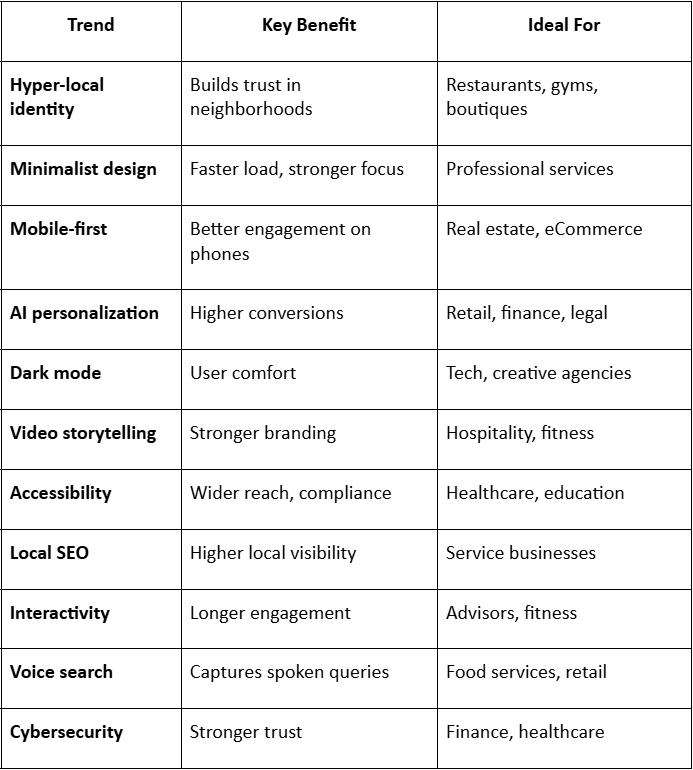
Below, you will find some of the current web design trends that shape the local industry, along with some recommendations and practical advice.

Reasons Why Web Design Trends in New York That Matter

Web design trends change too fast, especially in New York.

And this is where working with a Manhattan web design agency can help NY companies align with local web design trends. They know the market and can better advise on modern trends professionally. 

Let’s go through them one by one and see what local companies focus on today to attract local customers.
Web Design Trends Dominating New York in 2025

1. Hyper-Local Design for Neighborhood Identity

Companies in New York use design to highlight their connection to specific neighborhoods, in some sense. 

As an instance, a restaurant in Williamsburg (one of NYC’s neighborhoods) might showcase Brooklyn-inspired visuals, while a law firm in Midtown can use imagery that reflects Manhattan’s professional tone. 

In this case, hyper-local branding makes websites feel authentic and creates stronger emotional ties with nearby customers.

For local companies, this means investing in photography, colors, and typography that align with the immediate community. A generic design could work in another city, but local customers often prefer businesses that speak their language and reflect their surroundings. 

This approach works well especially for local restaurants, boutiques, gyms, and service-based businesses that rely on community loyalty.

2. Minimalist Layouts With Bold Typography

Minimalism has grown steadily recently in NYC. And businesses now focus on clean layouts and bold typography. 

A visitor’s attention is directed toward the most important messages, whether it’s a value proposition, a call to action, or a headline describing services.

This benefits New York businesses specifically, because customers here tend to browse quickly. They scan websites rather than reading line by line. 

When reducing unnecessary details and highlighting core offers with large fonts, businesses improve retention and boost conversion rates. 

Plus, minimalist design also loads faster, which matters for SEO rankings and for customers on mobile devices.

3. Mobile-First Design With Accelerated Load Times

New Yorkers rely heavily on mobile devices. From commuters on the subway to executives checking services between meetings, mobile browsing dominates. 

Today, local web designers prioritize mobile-first approaches. 

Websites are built for small screens before they are adjusted for desktops. This method ensures seamless navigation, clear calls to action, and quick load speeds.

Local businesses that invest in mobile-first design gain an edge over competitors who still treat mobile as secondary. A site that lags or misaligns elements on a phone screen risks losing valuable leads. 

For instance, NYC real estate agents who provide instant property previews on mobile retain more clients than those who only optimize for desktops.

4. AI-Driven Personalization

Artificial intelligence continues to reshape web design and in New York, businesses use it to personalize user experiences. Websites track browsing behavior and adjust recommendations in real time. 

For example, a visitor exploring a fashion site might see products that align with their past purchases. A law firm website can display services that match the user’s location or industry.

For business owners, AI personalization means higher conversion rates and stronger relationships. And local agencies understand that. They research both customer behavior in New York and the technology behind adaptive design, which makes it easier for companies to deliver tailored experiences that drive conversions. 

As an example, companies like Amazon have normalized this level of personalization, so local businesses must follow suit to meet rising expectations. Investing in AI integrations pays off by making websites more relevant to each visitor.

5. Dark Mode and Color Customization

Web Design Trends Dominating New York in 2025

Photo: Unsplash.com

Dark mode has gained global popularity recently and has become a design preference across industries. 

Websites offer visitors the option to switch between light and dark modes, catering to different viewing preferences. This not only improves user comfort, but also gives businesses a sleek and quite a modern look.

Company owners in New York should consider offering dark mode options, especially if their target audience spends significant time online, such as finance professionals, designers, and tech-savvy users. 

Allowing customization creates a sense of control for the user, which strengthens engagement and encourages longer browsing sessions.

6. Storytelling Through Video Backgrounds

Storytelling takes a visual turn in 2025. More New York businesses use video backgrounds to communicate brand identity. A luxury hotel may showcase panoramic shots of its rooftop views, while a fitness studio can feature clips of real training sessions. These moving visuals tell stories that static images cannot.

The challenge lies in balancing creativity with performance. Video files must load quickly to prevent frustration. Business owners can work with design teams to compress video without losing quality. 

When done right, video backgrounds build trust faster than text-heavy pages. They also make websites more memorable in a competitive market like the Big Apple.

7. Accessibility as a Business Strategy

Accessibility is no longer just a compliance requirement. 

Nowadays, New York brands treat it as part of customer service. Websites are designed to support screen readers, high-contrast viewing, and keyboard navigation.

For business owners, accessible design reduces legal risks while expanding reach. 

Also, it also inclusivity, which strengthens brand reputation in a city known for diversity. Businesses that prioritize accessibility often see improved SEO performance, as search engines favor accessible websites.

8. Interactive User Experiences

Static websites struggle to keep visitors engaged. In 2025, New York businesses turn to interactive elements such as quizzes, calculators, chatbots, and clickable infographics. These tools encourage users to participate instead of just reading.

For financial advisors, an online calculator that estimates savings or investments adds immediate value. For fitness centers, an interactive quiz that recommends training programs keeps potential customers engaged. Business owners who adopt interactive design increase user retention and raise conversion opportunities.

9. Voice Search Optimization

With smart speakers and voice assistants becoming common, voice search shapes the way New Yorkers interact with websites. 

Businesses design content that answers conversational queries. 

But there is always a debate between content writers and SEO rteam in terms of including more or less content. If done efficiently, this involves structuring content in natural language and ensuring mobile pages load fast for spoken queries.

Local businesses benefit from this by capturing customers who search for “best pizza near me” or “lawyer in Midtown.” In this case, optimizing for voice search helps smaller businesses compete with larger ones by focusing on hyper-local results.

10. Cybersecurity Integration, Directly in Design

Cybersecurity is a growing concern as well. 

Web design trends include built-in security features as well which will still be trendy in 2026. SSL certificates, encrypted payment gateways, and secure customer portals form part of design strategies from the start.

Safety is one of the top priorities today for any business owner.

More importantly, customers trust websites that show visible security badges and clear privacy practices. As an example, in industries like finance, healthcare, law, and eCommerce, cybersecurity directly affects reputation and customer loyalty.

Main Takeaways

Web design trends in New York change rapidly nowadays. So local business owners shouldn’t treat web design as a one-time project but rather as an ongoing investment and follow the trends.

Everything makes a difference here. A successful website blends aesthetics with functionality, personalization with security, and creativity with speed. 

So keep following web design trends in New York to build stronger connections with local customers and position yourself ahead of competition.

New Development Under MAB Group, as an R18 Billion Empire Is Sold, Offering Junior Miners a Potentially Bright Future

Pinagare Mogodi, as the founder and CEO of MAB Group, is making significant strides in rethinking the mining future of Africa.

There are a handful of founders, CEOs, and thought leaders who have positively influenced their respective fields. Among them stands Pinagare Mogodi, who serves as the founder and CEO of MAB Group (Matsapa-A-Botshelo). He has been at the center of positive developments and growth in Africa, thanks to his expanding empire that, so far, has seen noteworthy developments. One of the recent highlights has been in the mining sector in Africa.

A Potential Turning Point for Junior Miners in Africa

All eyes are on South Africa’s mining sector this October as MAB Group completes one of the highly discussed transactions of the year, the sale of 40% of its equity, increasing its valuation to R18 billion. Led by Mogodi, the deal has been more than just corporate news. This could be a key moment for junior miners, African industrial sovereignty, and for the ongoing conversation about whether the continent can attract global capital on its own terms.

Going Beyond Being a CEO

It would not be entirely inaccurate to call Pinagare Mogodi the face of determination in African mining, who blends innovation and resilience. His leadership has demonstrated how black-owned, African-rooted organizations and conglomerates can compete with larger players. This deal, he emphasizes, isn’t just about him or MAB, but also about showing that junior miners have the potential to build empires and not just survive.

MAB Group Is Expected to Reach an Impressive Valuation

New Development Under MAB Group, as an R18 Billion Empire Is Sold, Offering Junior Miners a Potentially Bright Future

Photo Courtesy: MAB Group / Pinagare Mogodi

Today, with the new developments undertaken under MAB, which first focuses on the growth of people in Africa, offering new opportunities and a future they can thrive on, investors are lining up in strong competition for a stake in MAB. However, Pinagare Mogodi has made it clear that there will be no fresh investors for the next five years after this deal. By then, analysts anticipate MAB to reach a valuation of between R37-52 billion, positioning it alongside major companies such as Exxaro and Glencore. It is no longer a question of whether Mogodi should have a seat at the Richards Bay Coal Terminal boardroom, but whether the old guard will welcome or be forced to acknowledge a new contender.

An Inspiring Case Study for Africa in the Mining Sector

This new development and sale under MAB Group has already been examined as a potential model for Africa’s mining exploration. The real test is whether investors can believe in Africa’s mineral wealth, trust valuations based on reserves, logistics, and beneficiaries, and move past old concerns of volatility and risk. MAB has been proving that Africa is not just exploring raw resources but also shaping value chains.

The Story Could Change for the Better

New Development Under MAB Group, as an R18 Billion Empire Is Sold, Offering Junior Miners a Potentially Bright Future

Photo Courtesy: MAB Group / Pinagare Mogodi

For decades, Africa has been painted as a ‘sinking ship’ that has been weighed down by corruption and capital flight. If this deal succeeds, the story may change and show the world that junior miners can attract world-class capital, African companies can develop beneficiation plants, and create sustainable jobs. And, global investors may no longer be able to ignore Africa’s mining ecosystem. The deal raises questions, such as whether MAB can maintain its African identity while welcoming global shareholders and whether it can scale to dominance without being absorbed by bigger players. It also questions whether the R18 billion valuations of Africa are based on solid fundamentals or just optimistic projections.

The MAB transaction emerges as a key moment across the continent, declaring that billion-rand valuations are possible, junior miners can build integrated empires, and Africa’s resources are not just for export; they can fuel home-grown industrialization. MAB Group’s R18 billion valuation and 40% equity sale will likely have an impact that may ripple across Africa for years. Africa’s ship hasn’t yet sailed, thanks to visionaries like Pinagare Mogodi, who is now hoping for it to reach its full potential, redefining junior miners’ future.

Meitar Paz: The Visionary Force Helping Shape Modern Storytelling in Film and Theater

By: Sherry Lee

Meitar Paz is a talented actress, writer, and director who has made a notable impact in the entertainment industry with her compelling performances and thought-provoking storytelling. Known for her work in projects such as Invisible Flags, And They Lived, and Below, Meitar has carved out a respected space for herself in both film and theater. Her film Invisible Flags, which she wrote, directed, and starred in, has garnered numerous awards, showcasing her dedication and artistry.

Born in Haifa, Israel, Meitar’s passion for the arts began early in her life. She spent five formative years at the Haifa Theater, where she honed her craft and took on leading roles. At just 17 years old, she was recognized with an award for outstanding excellence in acting, demonstrating her natural talent and commitment to her craft. After serving as a sergeant in the Israeli Defense Forces, Meitar moved to Los Angeles, California, where she continues to pursue her career with steadfast enthusiasm.

In her recent role as Lorena in Pitched Out, Meitar was drawn to the character’s complex and layered personality. “Lorena is a femme fatale—on the surface, she appears composed and flirtatious, but there’s much more beneath,” she explains. “I loved exploring that contrast and revealing her bold side as the story unfolds.” The collaborative atmosphere on set added to her experience, fostering a sense of camaraderie among the cast and crew.

When it comes to branded content, Meitar approaches these projects with a unique perspective. “Branded content is a different game altogether,” she notes. “You’re not playing a character in the same way you would in a scripted film or series; it’s about authentically introducing a product or idea.” She enjoys the opportunity to discover innovative concepts and how storytelling can enhance a brand’s message. For instance, her recent work on a commercial for a children’s fitness app illustrates her commitment to promoting healthier habits through engaging content.

Meitar Paz: The Visionary Force Helping Shape Modern Storytelling in Film and Theater

Photo Courtesy: John Kennedy Photography

Looking ahead, Meitar is excited about her upcoming role in Recluse, an intimate psychological thriller. “I can’t share too much yet, but I’m excited to be part of this project,” she reveals. “My character, Alice, is layered and intriguing, and the film offers unsettling twists along with a unique sense of humor that adds depth to the tension.” The gripping script captivated her from the very first read, and she is eager to bring Alice’s emotional journey to life.

Recently, Meitar signed with ICP Management, led by her good friend and director, Michael Matteo Rossi. “I’m excited about this partnership,” she shares. “Michael is building a boutique management company that focuses on uplifting talent he truly believes in. Our shared commitment to meaningful storytelling creates a strong foundation for collaboration.”

In addition to her film work, Meitar will perform with the improv team Spinach Ninja at the California Long Form Improv Festival (CLIFF). She emphasizes the importance of improvisation in her creative process, stating, “Improv allows spontaneity and trust to shine. It sharpens my instincts, helps me stay present, and reminds me to have fun.” Her role as an acting coach at the Michelle Danner Acting Studio further enriches her craft, as it provides her with valuable insights that support both her performance and teaching.

As the Festival Director of the L.A. Impact Film Awards, Meitar aims to celebrate bold, impactful storytelling that resonates with audiences. “My mission is to honor films that challenge minds, inspire action, and leave a lasting impact,” she states. By spotlighting diverse voices and creative works, she hopes to foster positive change through the power of cinema.

Meitar’s journey has not been without its challenges. Navigating the uncertainties of the entertainment industry and balancing multiple roles requires resilience and determination. “Learning to quiet the outside noise and my inner doubts has been crucial,” she admits. “I’ve had to grow comfortable with the unpredictability of this field and keep showing up fully, even when the outcome is uncertain.”

As Meitar looks to the future, her aspirations remain focused. “I want to continue deepening my work as both an actress and a filmmaker, focusing on telling stories that feel honest and impactful,” she expresses. She is currently developing several projects, including a feature film and a TV pilot, both of which aim to spark meaningful conversations and shed light on underrepresented perspectives.

In August, she is set to shoot a feature film in Washington State, a project that is expected to challenge her creativity in new ways. “I’m grateful for the opportunity to step into a compelling role that will likely push me in new directions,” she notes.

Meitar Paz: The Visionary Force Helping Shape Modern Storytelling in Film and Theater

Photo Courtesy: Meitar Paz

Photo Courtesy: Meitar Paz

Ultimately, Meitar’s goal is to remain curious, courageous, and committed to her craft, telling stories that resonate deeply, provoke thought, and connect with audiences on a human level. With her passion for creativity and her unwavering dedication to storytelling, Meitar Paz is poised to make a lasting impact in the entertainment industry, inspiring audiences and fellow artists alike. Her journey is a testament to the transformative power of art and the belief that storytelling can potentially change the world.

You can follow Meitar at

Latest Micro-Frontends: Are They Worth the Complexity?

By: Harish Reddy Bonikela

In the ever-evolving world of frontend development, the rise of micro-frontends is making waves. Much like how microservices revolutionized backend architectures by decomposing large, monolithic systems into smaller, manageable services, micro-frontends are reshaping how we approach frontend development. The goal is simple: break down complex, monolithic frontend applications into smaller, independently deployable pieces, enabling more flexibility and scalability. However, with the increasing adoption of micro-frontends, the question remains: are they truly worth the complexity they introduce?

What Are Micro-Frontends?

At their core, micro-frontends involve the decomposition of a large frontend application into multiple smaller, self-contained applications. Each of these smaller applications, or “micro-apps,” can be developed, tested, and deployed independently by different teams. These micro-apps are then combined at runtime to deliver a seamless, unified user experience for the end-user.

The integration of these micro-apps can happen in several ways, each with its pros and cons:

  1. Server-Side Composition: The backend assembles micro-apps into a single page before sending it to the browser. This approach ensures that the composition happens on the server side, simplifying the frontend’s complexity.
  2. Client-Side Composition: In this case, the browser dynamically loads micro-apps, often using technologies like iframes, JavaScript bundlers, or frameworks such as Single-SPA or Module Federation. Client-side composition provides more flexibility in loading parts of the page asynchronously but may introduce challenges in terms of coordination and performance.
  3. Edge or CDN-Based Composition: Content delivery networks (CDNs) or edge servers can stitch together micro-apps at the edge, providing faster delivery times. This approach can optimize performance by serving content closer to the user.

Why Teams Adopt Micro-Frontends

Micro-frontends are not a one-size-fits-all solution. However, there are certain scenarios where adopting this architecture can deliver significant benefits:

1. Team Autonomy

One of the primary reasons teams adopt micro-frontends is the increased autonomy it grants. With micro-frontends, each team can own an entire feature, from design and development to deployment, without having to deal with conflicting codebases. This autonomy speeds up the development process and allows teams to move at their own pace.

2. Technology Diversity

Micro-frontends enable teams to use different frontend technologies for different micro-apps, such as React, Vue, or Svelte. As long as these micro-apps follow agreed-upon integration rules, teams can use the technology best suited to their specific needs without being forced to conform to a single framework across the entire application. This flexibility can result in more innovation and quicker adoption of new technologies.

3. Scalability

Just as microservices enable backend scalability by allowing independent scaling of services, micro-frontends let large organizations scale their frontend development across many teams. With multiple teams working on independent micro-apps, businesses can manage larger applications more efficiently, reducing bottlenecks and facilitating parallel development.

4. Independent Deployments

One of the compelling benefits of micro-frontends is the ability to deploy individual micro-apps independently. This reduces the need to redeploy the entire frontend when one micro-app requires an update. By decoupling releases, the risk of affecting the whole application is minimized, and new features can be rolled out more frequently.

The Challenges

While micro-frontends offer clear advantages, they also introduce some serious challenges, particularly for smaller teams or less complex projects.

1. Integration Overhead

Managing multiple micro-apps requires a significant amount of infrastructure. Teams need to maintain various build pipelines, CI/CD workflows, and runtime integrations, which adds complexity to the development process. The tools and processes needed to bring all the micro-apps together must be carefully orchestrated to avoid breakdowns in functionality.

2. User Experience Consistency

One of the risks of adopting micro-frontends is the potential lack of consistency in the user experience. If not managed carefully, each micro-app may diverge in terms of design, accessibility, or performance, leading to an inconsistent experience for users. Strong governance and design systems are crucial to ensuring consistency across all micro-apps.

3. Performance Concerns

While micro-frontends can provide scalability and flexibility, they can also negatively impact performance. Since each micro-app is loaded independently, there is a risk of loading duplicate dependencies, leading to unnecessary overhead and slowing down the initial render. Proper caching strategies and dependency management are essential to mitigate these issues.

4. Operational Complexity

Micro-frontends increase the complexity of monitoring, debugging, and error tracking. In a monolithic application, tracking issues is relatively straightforward since everything is in one codebase. With micro-frontends, tracking issues across multiple micro-apps can be more difficult, especially when each micro-app is hosted on different servers or integrated in different ways.

Are They Worth It?

The answer to this question is not a simple “yes” or “no.” Whether or not micro-frontends are worth the complexity depends largely on the size and structure of your team, the scale of your application, and your business goals.

When Micro-Frontends Shine:

Large enterprises with dozens of teams, frequent releases, and long-lived products are the prime candidates for adopting micro-frontends. These organizations benefit the most from the ability to scale frontend development, reduce bottlenecks, and enable parallel development across multiple teams. The ability to deploy independent micro-apps also helps large teams manage frequent updates and releases with reduced risk.

When Micro-Frontends Hurt:

For smaller companies or projects, the overhead introduced by micro-frontends often outweighs the benefits. A well-structured monorepo or modular monolith usually provides enough flexibility without the added complexity of managing multiple micro-apps. Smaller teams may find that the additional coordination and integration overhead are unnecessary, particularly when their frontend codebase is manageable as a single entity.

The Future of Micro-Frontends

The tooling and technologies surrounding micro-frontends have improved significantly in recent years, making their adoption easier and more practical. Tools like Webpack Module Federation and Vite federation plugins are streamlining the process of sharing dependencies and integrating micro-apps at runtime. Cloud-native deployment platforms are also simplifying the process of deploying micro-frontends at scale, while frameworks like Astro and Next.js are experimenting with hybrid models that let teams split applications without fully embracing micro-frontends.

As these tools evolve, the barriers to adopting micro-frontends may become less daunting. However, they still represent a significant investment in terms of both time and infrastructure. The key challenge moving forward will be finding the right balance between the flexibility and scalability offered by micro-frontends and the complexity they introduce.

Final Thoughts

Micro-frontends are not a silver bullet. They solve real scaling challenges for large frontend organizations, enabling teams to work autonomously and scale their applications more effectively. However, they also introduce non-trivial complexity, particularly for smaller teams or simpler projects.

If your team is small, or if your app can be managed with a single codebase, micro-frontends may not be necessary—at least not yet. As with many architectural decisions, the key is balance: start simple, and add complexity only when it’s absolutely required. Ultimately, the best architecture is one that solves your problems without introducing unnecessary hurdles. Micro-frontends can be incredibly powerful when deployed in the right context, but they are not without their trade-offs.

New York Wine Tasting: Your Essential Guide from Finger Lakes to Manhattan

New York is known for its iconic landmarks—Broadway, the Statue of Liberty, and Niagara Falls—but its wine scene often flies under the radar. From world-class Finger Lakes Rieslings to chic Manhattan wine bars, and from Long Island’s coastal vineyards to the historic Hudson Valley, New York’s wine culture offers a rich and diverse experience that’s well worth exploring.

But if you’ve ever tried to plan a comprehensive New York wine tasting experience or find the right wine club for home delivery, you know how overwhelming the options can be. That’s why we were thrilled to discover WineClubs.net and their incredibly detailed resources specifically focused on New York wine experiences.

A Comprehensive New York Wine Tasting Resource

We came across their New York Wine Tasting Guide, and honestly, it’s become our go-to resource for everything related to wine experiences in the Empire State. This isn’t just a basic list—it’s a genuinely comprehensive exploration of New York’s diverse wine scene that covers everything from NYC urban tasting rooms to Finger Lakes vineyard visits.

What Makes This Guide Special

This guide is comprehensive and detailed, providing valuable insights on:

  • New York City Wine Experiences: Detailed information about Manhattan’s premier wine bars, tasting rooms, and wine shops offering regular tastings. The guide also covers NYC wine tours—both walking tours through specific neighborhoods and luxury bus experiences.
  • Finger Lakes Wine Country: Comprehensive coverage of New York’s premier wine region, including what makes Finger Lakes Rieslings well-known for their unique qualities, which wineries to visit, and how to plan multi-day trips to the region.
  • Long Island Wine Country: Insights into the North Fork Wine Trail, Hamptons wine scene, and the coastal wines that make Long Island distinct—plus the fact that it’s just 90-120 minutes from NYC.
  • New York Wine Regions: Educational information about all of New York’s wine regions, including the Hudson Valley and Lake Erie Shore, with details about signature wines and regional characteristics.
  • The New York Food and Wine Festival: Coverage of this major annual event and other wine festivals throughout the state.

What impressed us most is that this guide comes from wine experts who’ve tested over 100 wine clubs and visited hundreds of wineries across the country. They bring that expertise to their New York coverage, offering insights that go beyond typical tourist guides.

Beyond Tasting Rooms: The Wine Club Connection

Here’s where this resource gets really valuable for New Yorkers: it doesn’t just tell you where to go wine tasting. It also addresses what happens after you discover wines you love—how do you continue that experience at home?

The guide seamlessly connects New York wine tasting experiences to wine club subscriptions, and this is where we found their companion resource incredibly useful: their New York wine clubs page at https://www.wineclubs.net/new-york/.

New York Wine Tasting Your Essential Guide from Finger Lakes to Manhattan

Photo: Unsplash.com

Why This Matters for New Yorkers

Many New Yorkers can’t visit wine country every weekend. Whether you’re in Manhattan with a busy schedule, in Buffalo facing harsh winters, or anywhere in between, frequent trips to wineries may not always be practical.

That’s where the wine club recommendations become especially valuable. The guide suggests several wine clubs that could be a good fit for New York residents:

  • Continued Discovery: Wine clubs deliver curated selections monthly, keeping you engaged between trips to Finger Lakes or Long Island wine country.
  • Convenient Delivery: Wines arrive at your door anywhere in New York State—from NYC apartments to Buffalo suburbs to rural areas upstate.
  • Expert Curation: Professional sommeliers select wines, similar to how NYC wine tour guides curate experiences.
  • Educational Value: Detailed tasting notes and winemaker stories bring the wine country experience home.
  • Cost-Effective: When you factor in tasting fees, travel costs, and retail markups, wine clubs may offer a better value.

Ideal for New York Wine Gifts

One aspect we particularly appreciated is the guide’s coverage of New York wine gifts. Wine club subscriptions could make exceptional presents—much more meaningful than a single bottle. The guides help you understand which clubs might work ideally for different types of recipients, from beginners to serious collectors.

The Expert Perspective

What sets these guides apart is the expertise behind them. WineClubs.net has tested over 100 different wine subscription services, providing them with unique insights into which clubs offer the most favorable value, quality, and service for New York residents.

They’ve also visited hundreds of wineries and tasting rooms across the country, giving them the context to properly evaluate New York’s wine scene and make meaningful recommendations.

This isn’t content created by someone who visited a few wineries once. It’s written by genuine wine enthusiasts who understand both the tasting room experience and the home wine enjoyment experience.

How to Use These Resources

Here’s how we recommend New Yorkers take advantage of these guides:

  1. Start With the Tasting Guide: Read through https://www.wineclubs.net/wine-tasting/new-york/ to understand New York’s wine regions and plan your visits.
  2. Explore Wine Country: Visit Finger Lakes, Long Island, or other New York wine regions using the guide’s recommendations.
  3. Note Your Preferences: Pay attention to which wines and styles you enjoy during your tastings.
  4. Check the Wine Clubs Guide: Visit https://www.wineclubs.net/new-york/ to find wine clubs that match your discovered preferences and deliver to your New York address.
  5. Subscribe and Enjoy: Join a wine club (or two) to continue your wine journey at home between winery visits.
  6. Host Tastings: Use your wine club shipments to host impressive wine experiences for friends and family.

New York’s wine culture is finally receiving the comprehensive coverage it deserves. These guides provide thorough, knowledgeable resources that help both New Yorkers and visitors make the most of what the state has to offer.

Cheers to New York wine—and to finally having the complete guide to navigate it all!


Disclaimer: This article is intended for individuals of legal drinking age. The consumption of alcohol should be done responsibly and in moderation. Always be mindful of local laws and regulations regarding alcohol consumption. The information provided is not meant to encourage excessive drinking, and individuals should always make informed choices about their health and well-being. If you have concerns about alcohol use or its impact on your health, please consult with a healthcare professional. Drink responsibly.

Why Software Companies Are Gaining Attention in 2025: Insights from David Jacobs

Over the past decade, software companies have evolved from niche players into some of the most highly sought-after businesses in the lower middle market. Whether it’s a vertical SaaS solution powering agriculture, HR, or marketing, or a tech-enabled service firm with recurring revenue, buyers across private equity, family offices, and strategic acquirers are increasingly pursuing these opportunities.

But what’s fueling this growing demand, and what does it mean for both founders and investors?

Why Buyers Are Chasing Software Deals

Three trends are driving buyer interest:

  • Recurring Revenue Models
    Subscription-based and license models tend to offer more predictable cash flow. Many buyers appreciate the relative stability of MRR/ARR when compared to project-based service firms.

Example: A SaaS company serving professional services grew to $4M ARR with 90% retention. A private equity buyer found the recurring revenue to be a key factor, offering a strong multiple because the predictable revenue provided a stable return.

  • Scalability
    Once the product is built, software often scales with relatively low incremental costs. This scalability generally leads to higher margins as the customer base expands.

Example: A niche SaaS firm in agriculture saw its revenue grow from $2M to $6M in ARR in just a few years, with only modest increases in expenses. A strategic acquirer recognized the potential for continued efficiency and growth, paying a premium for future prospects.

  • Industry Consolidation
    Strategic buyers often look to dominate niches, while private equity groups may pursue opportunities to roll up vertical SaaS companies, creating platforms that could potentially sell at higher multiples later.

Example: A marketing SaaS with $3.5M ARR was acquired as part of a larger MarTech platform. The buyer’s ability to cross-sell and scale the product made the acquisition valuable, and the deal was structured with future expansion in mind.

What Founders Should Know Before They Sell

For owners of software firms, the increased demand may present an appealing opportunity for a lucrative exit. However, not every company is truly “ready” to sell. A few key points to consider:

  • Growth Beats Size. A $3M ARR company growing at 40% a year is often valued more highly than a $10M ARR company with flat growth.
    Buyers tend to prioritize potential for growth over size alone.
  • Owner Dependency Can Be a Red Flag. If the founder is deeply involved in every aspect of the business—product, sales, customer service—buyers may approach with caution. It’s often more difficult to imagine the company thriving without that key individual.
  • Clean Financials Matter. Private equity firms and strategic buyers tend to conduct rigorous due diligence. Poorly organized financial records, unaccounted churn, or unclear revenue recognition can potentially disrupt a deal.
  • Strategic Value May Exceed Financial Value. A buyer who sees your product as integral to their existing ecosystem might be willing to offer more than a purely financial investor.

Example: A SaaS serving small businesses initially attracted offers around four times ARR. However, one strategic acquirer valued it at five times ARR due to its strategic fit within their broader suite of products.

What Buyers Should Look For

Not all software businesses are equally appealing. Savvy buyers should keep the following factors in mind:

  • Retention & Churn Dynamics. Net revenue retention (NRR) and customer churn are often more accurate indicators of business health than top-line revenue growth alone.
  • Vertical Focus. Niche players with deep penetration in sectors like ag-tech, HR-tech, or fintech often have more solid competitive advantages than those offering horizontal solutions.
  • Team Resilience. A capable and experienced technical team, along with a strong go-to-market strategy, helps ensure business continuity if the founder transitions out of the day-to-day operations.

Key Takeaways for 2025

For Founders:

  • Start exit planning early — don’t wait until burnout or exhaustion sets in.
  • Highlight recurring revenue and retention metrics, as these are typically more important drivers of multiples than overall size.
  • Position your company for strategic value, not just financial value. Finding the right acquirer can substantially impact your exit.

For Buyers:

  • Focus your due diligence on customer retention rather than just growth headlines.
  • Look for vertical SaaS companies with clear market niches and strong customer loyalty.
  • Prepare for competition in the market; a disciplined approach often leads to faster, more favorable deals.

Author Bio

David Jacobs is a business broker focused on software and SaaS companies in the $3M–$20M revenue range. He has successfully guided founders through exits to both private equity groups and strategic acquirers. Learn more at davidjacobsbusinessbroker.com.


Disclaimer: The information provided in this article is for general informational purposes only and does not constitute professional financial, legal, or investment advice. It does not guarantee or promise any specific results from applying the information provided in this article. Readers are encouraged to consult with professional advisors for tailored advice regarding their specific business situations.