How David Minh Nguyen Builds Access to Justice Across Borders and Generations

In a Houston courtroom, where silence can have significant consequences for a family’s future, Attorney David Minh Nguyen strives to be a steady voice. As founder of the Law Office of David Nguyen, PC, he has focused his practice on helping families navigate complex legal systems and work toward meaningful outcomes. His approach reflects a broader vision of the attorney’s role—not only as a defender of rights but also as a builder of trust and progress.

A Mission Shaped by Experience

For David, the law has never been a distant or abstract concept. Growing up in an immigrant household, he witnessed the challenges that families often face when navigating legal systems shaped by unfamiliar language and rules.

These personal experiences became a guiding influence, leading him to establish the Law Office of David Nguyen, PC in 2008. His firm was designed to be more than just another legal practice in the city—it was built as a place where the law could be explained clearly, trusted fully, and applied meaningfully to safeguard clients’ lives.

Making the Law Understandable

Listing practice areas alone does not capture David’s approach. His work is about supporting families seeking stability, resolving disputes, and planning for the future. The deliberate use of English, Spanish, and Vietnamese in his office goes beyond translation—it ensures that clients can better understand their rights and options.

When a client struggles to explain their fear or confusion due to language barriers, the system often fails them. David’s philosophy is clear: understanding should come first. Every case is reviewed step by step, free of unnecessary jargon, so clients can understand not just what is happening but also why it matters.

Recognition Built on Community Trust

David’s dedication has earned him recognition over the years. He is a 2025 MyLegal Win Attorney Award recipient, a Better Business Bureau Award for Excellence honoree, and has been listed among immigration attorneys in Texas. He also holds multiple Client Champion Awards from Martindale-Hubbell and the Elite Lawyer designation for three consecutive years.

For him, however, awards are not the primary goal. They serve as acknowledgment, but the true measure lies in the families who feel seen, the citizenship approvals that change lives, and the estate plans that provide peace of mind.

Service Beyond the Courtroom

David’s work extends into Houston’s nonprofit and community spaces. He has partnered with BPSOS-Houston, supported Tony’s Place, and participated in citizenship clinics to provide free legal guidance.

During Houston’s historic winter storm, when households went without power and water, his office distributed hygiene kits and drinking water to those most affected. For David, law is not only about protecting rights on paper—it is about showing up when people are at their most vulnerable.

Making Knowledge Accessible

In a field often clouded by misinformation, David has worked to build a strong digital presence to share legal guidance. On YouTube, TikTok, Facebook, and LinkedIn, he explains immigration policies, deadlines, and procedures in a clear, approachable way.

The goal is not to alarm but to educate. Viewers walk away with more clarity rather than confusion, and for many who may never step foot in his office, those videos serve as vital resources. In a landscape where rumor often outpaces fact, he uses transparency and accessibility as tools for advocacy.

Expanding Across Borders

David’s next chapter includes plans to establish a satellite office in Dallas, TX. His goal is to provide accurate, reliable legal advice to those starting their journey toward the United States.

His Vietnamese heritage enables him to connect across both language and generations. Through that connection, his firm is extending beyond Houston—linking the sacrifices of immigrant parents with the aspirations of their children and reaffirming that justice belongs to everyone.

A Legacy of Accessibility

At its core, David Minh Nguyen’s career reflects a single conviction: the law should be accessible to those who need it most. Each family petition, each estate plan, and each consultation is part of a broader effort to turn legal knowledge into empowerment.

He has intentionally chosen to work in spaces where silence and misunderstanding often prevail—and replace them with clarity, advocacy, and trust. That is the legacy being built at his Houston office and, soon, across international borders.

Speedy Sale Home Buyers: Fencing and Privacy Features That May Appeal to Homebuyers

For many homebuyers, privacy often starts at the fence line. A well-designed boundary is not just about marking property limits—it can help set the tone for comfort, safety, and peace of mind. When buyers tour a home, they may focus on the kitchen or living room, but they also tend to imagine how the backyard feels. A solid fence and thoughtful privacy features could play a significant role in shaping that impression.

These details go beyond mere aesthetics. They may influence how safe families feel, how pets enjoy the yard, and even how neighbors interact. For sellers, investing in outdoor privacy features can make a property more appealing and might help it sell faster in today’s competitive market.

What Makes Buyers Pay Attention to Outdoor Boundaries

Homebuyers often see fences as more than just simple barriers. They may associate them with peace of mind, safety for children and pets, and the ability to enjoy outdoor spaces without unwanted interruptions. A well-placed fence can separate private living spaces from busy streets or curious neighbors.

Many buyers also view fencing as an extension of a home’s style. A neat wooden fence or a sleek, modern design may complete the property’s look. On the other hand, a poorly maintained or unattractive fence might cause buyers to hesitate, as it could signal potential future repair costs.

For those hoping to attract serious buyers quickly, even smaller updates like fixing broken panels or applying fresh paint could dramatically improve the first impression. Speedy Sale Home Buyers often mention that details like these tend to shorten the selling process, as homes with strong privacy features appear to get more attention.

Privacy Landscaping That Feels Natural

Fences are not the only way buyers measure privacy. Green barriers, such as tall hedges, trees, and shrubs, are highly appealing. They offer shade, reduce noise, and create a natural screen without feeling too harsh. A row of evergreen trees or thick shrubs along property lines might instantly make a yard feel more secluded.

Buyers also appreciate landscaping that blends privacy with beauty. Instead of just plain fences, they often prefer a mix of elements such as vines climbing trellises or garden beds placed near boundaries. These touches can turn privacy solutions into attractive design features.

Safety Features Parents and Pet Owners Value

For families, fences can carry extra importance. Parents want to feel assured that their children can play in the backyard without risk. A solid, secure fence could help make that possible. Height, lockable gates, and sturdy construction are all details parents are likely to notice.

Pet owners feel the same way. A fenced yard means dogs can roam freely without the worry of escape. Buyers with pets are often willing to invest more in homes that already include secure fencing, as it might save them the effort of adding one later.

Styles That Catch Buyer Interest

Different buyers are drawn to different types of fencing. Some may prefer classic wooden fences that offer warmth and character, while others want low-maintenance vinyl or metal options that last longer and require less upkeep.

Modern buyers often lean toward styles that balance privacy with openness. For example, horizontal slat fences give a modern look while still offering coverage. Decorative panels, frosted glass screens, or mixed materials such as wood and steel might also catch attention, as they help make outdoor areas feel more stylish.

Here are some fencing styles that tend to spark buyer interest:

  • Wooden fences: Offer a warm, natural look, easy to customize.

  • Vinyl fences: Low-maintenance and durable.

  • Chain-link with privacy slats: Affordable with added coverage.

  • Metal fences: Strong, modern, and long-lasting.

  • Composite fencing: Eco-friendly and resistant to weather.

Added Features That Boost Value

Beyond standard fencing, small upgrades can make a noticeable difference. Buyers tend to notice details such as:

  • Gates with secure locks

  • Motion sensor lights near boundaries

  • Built-in planters attached to fences

  • Decorative lattice tops for extra height

These touches suggest that a homeowner has invested in both function and appearance. For many buyers, they may signal less work after purchase, which could increase the property’s appeal.

Privacy screens made of bamboo or composite panels are becoming another popular option. They are affordable, easy to install, and provide instant coverage. Simple upgrades like these might make a property feel more move-in ready.

Energy and Noise Control Through Privacy Choices

Not all buyers think of energy savings right away, yet fencing and landscaping can play a role. Tall hedges or solid fences might block wind, reducing heating costs in colder months. In warmer climates, shaded areas from trees or privacy screens could help lower cooling needs.

Noise control is another factor. Buyers living near busy roads or lively neighborhoods might appreciate fencing that reduces sound. Thick wooden or vinyl fences, paired with greenery, may significantly cut down on outside noise, creating a calmer atmosphere. This is often a selling point for buyers who value peace at home.

Why Sellers Should Invest in Privacy Features

For sellers, adding or improving privacy elements can be a smart move. These upgrades often cost less than major renovations, yet they can bring strong returns. Buyers might be willing to pay more for homes where they feel safe, comfortable, and protected from outside view.

Privacy features also tend to make a property stand out in listings. When buyers browse homes online, photos of appealing outdoor spaces with attractive fencing often grab their attention first. This can lead to more showings and potentially faster offers.

If you plan to sell soon, even small efforts like trimming hedges, repairing fences, or adding outdoor screens could make a difference. Larger projects, such as installing new fencing, may require more investment, but they could pay off in the form of higher buyer interest.

A Last Word on Outdoor Privacy

Fencing and privacy features may not be the first thing buyers mention, but they can strongly influence the decision to purchase. Safe yards, peaceful outdoor areas, and attractive boundary designs help buyers picture themselves living comfortably in a home.

For sellers, this means that paying attention to outdoor spaces can be just as important as staging interiors. Strong fences, thoughtful landscaping, and small privacy upgrades may increase property value and reduce time on the market. Buyers tend to notice these details, and they often make the difference between a house that lingers unsold and one that finds new owners quickly.


Disclaimer: The information provided in this article is for general information purposes only and reflects general trends and preferences. Individual buyer preferences may vary, and it is recommended that potential homebuyers or sellers consult with real estate professionals for personalized advice.

Carmen Solomons: Helping Shape the Modern Model

By: Jane Swipe

For more than a decade, South African-born model Carmen Solomons has been a notable force in the global fashion industry. With her signature red hair, freckled complexion, and striking presence, she has been part of campaigns for Fenty Beauty, L’Oréal, Patrick Ta, and Kylie Cosmetics, while also appearing in Cardi B’s Money music video. Her editorial features in Elle, Glamour, Numero Thailand, and L’Officiel have helped her gain recognition as a face of contemporary beauty – one who defied conventional molds and stood out precisely because of it.

Yet for Carmen, modeling was only the beginning.

From Runways to Reels

As the fashion industry evolved, so did Carmen’s role. No longer confined to the front of the camera, she embraced storytelling as part of her identity. Through Instagram and TikTok, she began sharing beauty routines, wellness practices, and insights into life as a working model.

“Social media gave me something the traditional industry never could – my own voice,” she explains. “It allowed me to connect with people directly and show more than just the final image.”

Her transition into digital content creation was not a departure from fashion, but an expansion of her brand. Today, Carmen seamlessly bridges the worlds of high-fashion editorials, digital influence, and a growing entrepreneurial presence, leveraging her platform to connect with a diverse audience.

Navigating a Crowded Digital Landscape

Carmen Solomons Helping Shape the Modern Model

Photo Courtesy: Noah Nash (MUA: Gabriela Gutierrez @ggs_journey)

In a highly competitive industry, Carmen emphasizes the value of authenticity. “Trends come and go, but your story is what makes you stand out,” she says. She urges aspiring creators to embrace individuality – whether by celebrating cultural heritage, championing wellness, or highlighting the realities behind the scenes.

Adaptability, she adds, is equally crucial. From experimenting with short-form video to exploring niche narratives, Carmen remains agile in an ever-changing digital landscape, continuously evolving her content while staying true to her core identity and values.

Strategy and Community as Cornerstones

Carmen views growth as a balance of artistry, strategy, and connection. “Networking is just as important online as it is in real life,” she notes. Strategic collaborations, cross-platform storytelling, and brand partnerships, she explains, help create momentum that can attract new opportunities.

She also underscores the importance of strong public relations. “A good PR team doesn’t just get your name in the room – it ensures you’re in the right room. That alignment could transform your brand from good to unforgettable.”

Guidance for the Next Generation

Carmen Solomons Helping Shape the Modern Model

Photo Courtesy: Adam Kudeimati (Mua: Amira @stmrrv,Hair: Olya Romanenko @o.r.hair, Stylist: Sofia Popkova @iamsofiapopkova)

For emerging models and content creators, Carmen offers both practical and personal advice:

Find your niche. “You don’t have to be everything to everyone. The more specific you are, the stronger your audience is likely to become.”

Stay consistent. “Building a following isn’t about overnight success – it’s about showing up, again and again.”

Keep it real. “Authenticity is what people connect to. That’s what keeps them engaged.”

Choose wisely. “Partnerships are powerful, but only if they align with your values and audience.”

Beyond the Spotlight

Carmen Solomons embodies the evolution of what it means to be a model in the digital age. Today, she is as much a creator and entrepreneur as she is a runway veteran. Her journey reflects a broader truth: in the era of social media, beauty is less about perfection and more about perspective.

“Modeling opened doors for me,” she reflects. “But building my own brand has given me freedom. That’s the message I want others to hear – it’s not just about being seen, it’s about being heard.”

Red, Yellow, Green: How Traffic Light Labels Shape What We Eat

By: Elena Mart

An interview with Dr. Jingbo Zhang on consumer health, risk perception, and marketing decision-making.

When you walk into a grocery store, it’s easy to be overwhelmed by the sheer number of choices. Frozen pizzas, sodas, cereals—each package fighting for your attention. But what if a simple set of colored circles could nudge you toward a healthier decision?

That was the question guiding Dr. Jingbo Zhang, a marketing professor at the University of Texas Permian Basin, whose recent study with Dr. Teng Ma of Emporia State University dives into how “Traffic Light” nutrition labels influence our food purchases .

A Researcher’s Curiosity: Do Labels Really Work?

“Obesity is one of the most pressing public health challenges today,” Dr. Jingbo Zhang explains. “Governments and companies around the world are experimenting with front-of-package labels to help consumers make better choices. But not all labels are equally effective.”

The duo focused on a common design—the Traffic Light label. Borrowing from everyday road signals, this system uses red, yellow, and green circles to mark levels of fat, sugar, and salt. The idea is intuitive: green means go, red means stop. But Zhang wanted to know—does this actually change what people buy?

The Experiment: Pizza, Risk, and Perception

To find out, the researchers designed an online experiment with 277 participants. Everyone was shown a frozen cheese pizza—one of America’s favorite dinner staples. Some saw it with a Traffic Light label, others with a plain black-and-white icon, and a third group saw no label at all .

But here’s the twist: the team also measured participants’ health risk perception—how much they personally worried about diet-related illnesses like obesity or heart disease.

“What we discovered is that labels don’t work in a vacuum,” Dr. Jingbo Zhang says. “How people interpret those red and green dots depends heavily on their own perception of health risks.”

The Surprising Results

The findings revealed a double-edged sword. For people with low health risk perception, the colorful Traffic Light labels actually made pizza look more appealing. They felt more positive about the product and showed a higher intention to purchase it.

For people with high health risk perception, the same labels triggered caution. The red warnings stood out, leading them to reduce their purchase intentions .

In short, the very same label could either boost or suppress sales—depending on who was looking.

Why It Matters

These insights matter not just for public health officials, but also for food companies navigating new labeling policies worldwide.

“Many governments are pushing for front-of-package labels, and brands like Nestlé and PepsiCo are experimenting with them,” Zhang notes. “But if we don’t understand the psychological side—how risk perception shapes consumer behavior—we risk implementing tools that backfire.”

For businesses, this means a label might not just be a compliance box to tick—it could influence brand perception and revenue. For policymakers, it raises questions about whether Traffic Light systems should be paired with education campaigns to ensure the “red light” actually discourages unhealthy consumption.

Looking Ahead

Dr. Jingbo Zhang sees this as just the beginning. The current study looked only at pizza, but future research will expand into other foods—like snacks, beverages, and even vegetarian options.

“At the end of the day,” Zhang says, “we want to design systems that genuinely guide people toward healthier lives—without confusing or unintentionally encouraging risky behavior.”

It’s a reminder that even the simplest signals—red, yellow, green—carry complex meanings once they meet the human mind.


Disclaimer: The content provided in this article is for informational purposes only and is not intended as medical, nutritional, or professional advice. The findings discussed are based on research and individual studies, and may not apply universally. Always consult with a healthcare or nutrition professional before making any dietary or lifestyle changes. Individual results may vary.

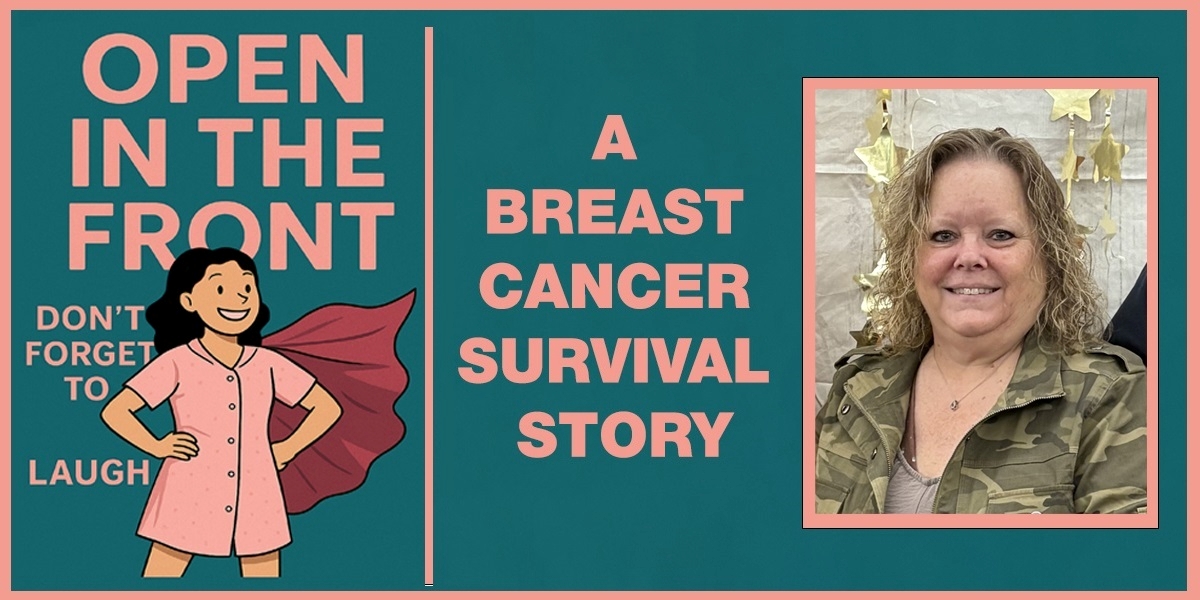
She Named Her Tumor: How Aimee Kintzel Turned Breast Cancer into a Comedy of Courage

By: Kimberly S. Knutson

When Aimee Kintzel first heard the word “malignant,” she didn’t immediately dissolve into tears or rush to the internet for survival statistics. Instead, she took a deep breath, tilted her head, and thought, well…this tumor needs a name.

That one decision to meet cancer with wit instead of fear would become the heartbeat of her journey and the soul of her memoir, Open in the Front.

“I decided right then cancer wasn’t going to have the last laugh,” she says.

Redefining the Cancer Story

Kintzel’s memoir doesn’t read like a medical manual or a motivational seminar—it’s a candid, laugh-out-loud confessional that invites readers into the most vulnerable chapter of her life. There are awkward hospital gowns, clinic visits turned into comic skits, and moments where humor becomes the only lifeline. She doesn’t shy away from fear. Instead, she shares it openly, often wrapped inside a joke, proving that courage isn’t necessarily the absence of terror, but rather the ability to smile in its presence.

Through each chapter, Kintzel reflects on how humor has the power to transform the experience, not by diminishing the seriousness of the situation but by allowing her to take control of it. Humor gave her the ability to face not just the cancer, but the many emotional challenges that came with it, offering her a coping mechanism when others may have felt helpless.

Finding Humor in the Hardest Days

Aimee’s brand of humor isn’t about pretending everything is fine. It’s about reclaiming some level of control over a situation designed to strip it away. She finds comedy in waiting rooms, turns medical procedures into punchlines, and treats each day as an opportunity to write a new scene in her unscripted, unsensitized life story.

It’s not about brushing off the struggles she faced, but rather about finding a way to laugh in the face of adversity. By embracing humor, she discovered the strength she hadn’t anticipated, and it became a tool that helped her heal both physically and emotionally.

The Power of a Village

Her journey is also a love letter to the people who showed up for her—her husband Jim, a constant source of strength; friends who offered food, comfort, and distraction; and colleagues who knew when to make her laugh. In their own quiet ways, they became co-authors of her survival story.

Through them, she discovered the importance of community during hard times, realizing that strength doesn’t come only from within, but from the connections we share with those who lift us up. These people provided not just support, but a way to find humor and joy even when things seemed bleak.

A Story That Speaks Beyond Cancer

What makes Open in the Front universally appealing is that it isn’t only about breast cancer; it’s about facing any of life’s unwelcome plot twists with honesty, humor, and grace. Whether you’ve battled illness or simply endured a season of uncertainty, Kintzel’s voice resonates like that of a trusted friend who says, “I’ve been there, and yes, you can still laugh.”

Her story speaks to anyone who has ever faced challenges—whether they are physical, emotional, or personal—and reminds them that humor is not just a relief, but a vital part of the healing process. In a world where we often fear vulnerability, Kintzel’s journey shows us the power of embracing it.

Success Beyond the Page

That mix of courage and comedy hasn’t just touched readers’ hearts; it is also turning heads in the publishing world. Open in the Front has been earning prime placement on bookstore shelves, with front-of-store displays introducing her story to new audiences every day.

It’s a sign that Kintzel isn’t just surviving her diagnosis; she is thriving, making a name for herself as a writer whose voice refuses to be ignored. Her memoir is not just a personal triumph; it’s a reminder of the universal human ability to find strength, joy, and laughter in the face of adversity. This has led to her gaining attention beyond the page, with many eager to hear more of her perspective on life, humor, and resilience.

Bottom line: Aimee Kintzel shows that sometimes the bravest thing you can do in the face of fear is crack a joke and that laughter, even in the darkest moments, can be life-saving.

Exploring the Future of Publishing: How Platforms Are Helping Change Non-Fiction for the Creator Industry with Wilbert Wynnberg

By: Aimee Tariq

Publishing has traditionally been an exclusive club for several decades. If you didn’t secure backing from a major publishing company, an agent, or significant financial resources, your ideas were often out of reach. The path to bookstore shelves has historically been long, expensive, and difficult for many.

However, Wilbert Wynnberg is leading the charge to reduce gatekeeping in publishing. The vehicle that could potentially make this happen? His latest creation is AuthorRise.

Wynnberg’s Path to Industry Disruption

Wynnberg is an author who has gained firsthand insight into the inner workings of the publishing world. In 2017, he was in a skydiving accident that significantly changed his life. After reflecting on his experiences, he went on to document lessons on entrepreneurship, resilience, and mindset in his first book, Think Act Prosper.

Wynnberg’s breakout book opened doors to media interviews, speaking engagements, and consulting roles. As his brand grew rapidly, he created a publishing company. Over the years, Wynnberg and his team have published hundreds of non-fiction books.

But throughout his publishing journey, he noticed that many authors couldn’t share their stories due to the high expenses involved in the process. According to him, “We’re living in a time when anyone can potentially become a content creator overnight. Yet, publishing a book still feels like a daunting task.”

Changing the Narrative With AuthorRise.ai

Wynnberg’s response to simplifying book publication is AuthorRise. This AI-powered system offers guidance that can assist entrepreneurs, coaches, consultants, and creators in turning their ideas into potentially polished manuscripts.

Unlike many AI tools, AuthorRise is founded on a philosophy centered on amplifying the human voice, not replacing it. This AI system allows users to complete tasks such as outlining, drafting, formatting, and publishing while maintaining their unique styles and perspectives.

With AuthorRise in the mix, authors can potentially publish within days, while maintaining control over the entire process. It’s a significant step toward making an author’s dream more achievable!

A Looming Opportunity for Creators

Most creators have built their brands from the ground up using short-form content like videos and reels on social media platforms.

Wynnberg suggests that while short-form content certainly helps with visibility, creating a book could offer enhanced credibility. According to him, choosing this route could not only expand their audience but also provide them with a level of authority that short-form content may not deliver.

Local Voices Reaching Global Stages

Wynnberg sees AuthorRise as a tool that might provide authors around the world with a more level playing field.

In his words, “Whether you’re a leadership trainer in Lagos, a spiritual coach in Bali, or a wellness expert in the Philippines, your voice matters. AuthorRise is designed so that publishing becomes a feasible option, not just a privilege.”

By eliminating cost and logistical barriers, AuthorRise could enable experts in underrepresented regions to share their perspectives on the global stage.

A Movement That Gives Authors a Voice

While AuthorRise is a commercial venture, it represents Wynnberg’s vision of making publishing more accessible for all. He envisions a world where authorship becomes a possibility for anyone with a meaningful message.

According to him, “We’re not just building a platform. We’re building a movement, one that places the power of publishing into the hands of those who have something valuable to say.”

The Next Chapter in Publishing

As the creator economy matures, the demand for deeper, more authoritative content is expected to grow. Wynnberg believes that the future of publishing lies not just in print but in platforms that democratize access and amplify diverse voices. AuthorRise isn’t about replacing publishers—it’s about helping rewrite the rules so that every idea has an opportunity to be heard.

He often reminds aspiring authors that books tend to outlast trends. “A reel might catch attention today, but a book could help establish your authority for decades,” he says. By empowering creators to transition from short-form content to long-form impact, AuthorRise bridges the gap between visibility and long-term legacy.

For Wynnberg, the skydiving accident that once threatened to silence him has instead driven his mission to elevate others. In his words: “The future belongs to those who dare to tell their stories. AuthorRise aims to ensure those stories are heard.”

Understanding the Psychology of Dog Ownership and Human Bonding

By: Sam Zell

I’ve always thought it was a little strange how quickly people will melt the second a dog trots into the room. Big ones, small ones, scruffy mutts, even the super-polished show breeds. Doesn’t matter. Something in our brain just softens. And that, I think, is the core of it: the Psychology of Dog Ownership isn’t just about owning a pet… it’s about rewiring the way we feel, act, and even the way we connect with other humans.

It’s funny though because when I first read a study on oxytocin levels rising after a dog gazes at you (yes, it’s basically the same chemical cocktail that bonds mothers with babies), I honestly thought, nah, that can’t be real. But then my neighbor’s Miniature Bernedoodle Puppy stared me down at a barbecue, and suddenly I felt like I owed him my entire heart. So maybe there’s something to it…

Why Humans Get Hooked on Dogs So Fast

Okay, so let’s step back for a second. Why do we (as in humans) even want dogs around? They require food, exercise, medical bills, cleaning up you know, all the stuff that would normally feel like a chore. Yet, we happily sign up for it.

I think part of it is primal. Thousands of years ago, wolves learned that hanging around our fires meant scraps and safety. We, in turn, got security, warmth, and eventually… affection. Fast forward to today, and that wolf-to-dog transformation has made them more attuned to our moods than most humans.

And maybe that’s why they can worm their way into places even our closest friends can’t reach. They listen without judgment. They sense stress before we say a word. They make eye contact like they’re looking into your soul.

(Pro Tip: Next time you’re stressed, try sitting on the floor at your dog’s level. It feels ridiculous at first, but the shift in energy is wild. Their calm tends to become yours.)

Dogs as Mirrors of Ourselves

Here’s where it gets messy. People often talk about dogs as companions, but I sometimes think they’re mirrors. They reflect the version of us we want to be: patient, forgiving, playful, loyal. When I was working ridiculous hours one summer, my friend’s terrier would greet me with the same tail-wagging joy every single evening. No grudges. No “you’re late again.” Just… joy.

And I remember thinking, well, if a scrappy little dog can live with that much generosity, maybe I could ease up on myself too.

Some researchers actually suggest that our bond with dogs works almost like therapy. They ground us in the present moment. They remind us that food, touch, and play are more than enough. And in a world where most of us are overthinking (guilty), that simplicity feels like oxygen.

The Small Breeds, the Big Feelings

Now, speaking of dogs as mirrors I once met a Miniature Bernedoodle Puppy during a road trip stop in Asheville. Tiny, curly, the kind of thing you think only exists in Instagram reels. And I swear, the whole café shifted when the pup padded in. People smiled at strangers. Conversations sparked. A table of grumpy-looking students actually stopped frowning.

It wasn’t just “oh, cute puppy.” It was connection—strangers feeling like a community because one tiny dog showed up. That’s the Psychology of Dog Ownership in action: they bridge the awkward gaps between us.

When Dogs Heal Us Without Trying

Dogs don’t just give us companionship, they regulate us. That might sound a little heavy, but it’s true. Research shows that petting a dog lowers blood pressure. Taking them for a walk forces movement, which combats stress and depression. And grieving people often report that their dogs keep them tethered to daily life when nothing else feels worth it.

I’ll never forget visiting a friend after her father passed away. She barely spoke that first week, but her retriever kept nudging her toward the park. Slowly, the walks grew longer. People she passed offered quiet smiles. And those small moments—dog-driven moments—were the first steps out of her fog.

Dogs don’t try to heal us. They just… exist. And somehow, that’s enough.

The Double-Edged Sword of Dog Ownership

Now, I’d be lying if I made it sound all golden retriever cuddles and wagging tails. Owning a dog also comes with guilt, responsibility, and compromise. The constant walks (even in rain), the vet bills that make your jaw drop, the chewed-up shoes… it’s not nothing.

And sometimes, the bond works too well. People delay trips, skip social events, or spiral into separation anxiety (yes, humans get it too). I once canceled a whole weekend away because my dog had been off his food for two days. Did I overreact? Probably. Do I regret it? Not really. That’s the irrational part of love.

(Pro Tip: If you’re new to this, check guides like Essential Tips for Dog Owners. They’ll save you from rookie mistakes like walking your dog on hot asphalt in summer. Been there. My pup limped for two days. Never again.)

Dogs and Human Relationships

Here’s an odd twist: the Psychology of Dog Ownership also affects how we connect with other humans. Couples with dogs often communicate better (even if it’s just arguing about who takes the morning walk). Kids with dogs learn empathy faster. Even workplace dogs.. yes, those trendy office mascots can reduce stress and build team trust.

I’ve seen it myself. A grumpy editor I once worked with—always frowning at deadlines turned into the softest version of herself whenever someone brought their spaniel into the office. It was like flipping a switch. And suddenly, the rest of us weren’t so intimidated.

What Dogs Teach Us About Bonding

At the end of the day, what fascinates me most is how dogs teach us the art of bonding. Not forced, not overcomplicated. Just consistent, patient presence. They nudge us into eye contact. They invite us into play. They forgive our worst days.

In a world where bonding with humans can feel messy—full of expectations, letdowns, miscommunication, dogs offer a crash course in the basics. Love without agenda. Companionship without judgment.

Reflective Conclusion

So, circling back. Understanding the Psychology of Dog Ownership and Human Bonding isn’t really about psychology charts or hormone levels (though those are cool to know). It’s about noticing what your dog does to you. The way they crack open your defenses. The way they turn strangers into allies. The way they remind you that sometimes, it’s okay to just be.

When I think about it, maybe the reason we keep choosing dogs—over and over, across centuries isn’t just loyalty or tradition. It’s survival, emotional survival. They keep us human when the world threatens to make us less so.

And really… What more could you ask from a companion?

Stitching Futures: How Designer Tatiana Nikitina Turns Fashion Into a Classroom for Creativity

By: Madison Cole

From teenage prodigy to founder of NEEDTONE, the fashion creative is building a generation of confident makers, one stitch at a time.

When Tatiana Nikitina talks about fashion, she doesn’t start with trends, seasons, or runways. She starts with children. With tiny hands, learning how to thread a needle, measure a hem, and transform a flat piece of fabric into something they can wear with pride. It’s a deceptively simple focus that reveals a deeper philosophy: fashion is a craft and a potent tool for education, confidence, and community.

Today, Nikitina is known as the founder of NEEDTONE and a go-to collaborator for stylists, photographers, and film teams who need custom, character-driven looks for shoots. But her path has included design competitions as a teenager, leadership roles as an entrepreneur, and years of hands-on teaching in a bustling children’s club that welcomed hundreds of students. The throughline is unwavering: a belief that technical mastery and creative freedom can coexist.

From Competition Kid to Technical Craftsperson

Nikitina’s relationship with fashion began early and publicly. As a teen, she was already winning design contests, placing second in a citywide competition at just fourteen (competing against adults) and taking first place in her final year of school. Alongside the accolades, she pursued the discipline behind the drama, completing vocational training as a tailor with pattern-cutting skills before finishing high school. Those twin strands—recognition and rigor—still define her work.

At university, she didn’t just study; she built. She led a student fashion theater, organized shows, and took the stage at city contests and events. Outside the classroom, she designed for comedy teams and even created campaign uniforms for a candidate for local office. The lesson was clear: fashion’s impact increases when it meets a real-world brief.

She also stepped into professional environments that expanded her perspective – working with a modeling agency and joining a design association created under the patronage of legendary couturier Vyacheslav Zaitsev. Those experiences taught her how to move between art and industry, concept and client, atelier and audience.

A Business Brain Behind the Needle

Nikitina’s résumé includes a law degree and an MBA – credentials that might seem unusual for a designer until you see how she runs projects. From 2007 onward, she held executive roles in her own companies, learning to scale ideas, manage teams, and build sustainable operations around creative work. That fluency shows in the way she structures her classes, her shoots, and her brand: clear processes, measurable outcomes, strong storytelling.

A Creative Playground for 700 Kids

The heart of Nikitina’s story – what makes her stand out in a crowded field of independent designers – is her commitment to education. For five years, she led a children’s club called “Dirizhable,” which welcomed more than 700 young learners and won recognition as a standout startup in preschool education. There, Nikitina built a sewing program that looked nothing like a quiet home-ec corner. It was kinetic and collaborative: mood boards taped to walls, rulers and chalk out on tables, finished pieces hung up like tiny exhibitions.

Her curriculum centered on three pillars:

  • Technical Foundations Made Friendly: Students learned the logic of construction, measurements, seam allowances, and simple pattern drafting through age-appropriate projects that they could complete and wear. Mastery came packaged as momentum.
  • Creative Authorship: Instead of “copy this,” Nikitina gave structured choices: necklines, closures, trims, and color stories. Kids didn’t just sew; they designed, made decisions, and saw those choices come alive.
  • Stage Time and Storytelling: Finished garments became props for micro-shows, photo days, and classroom “lookbooks,” helping students practice presentation skills and celebrate each other’s work.

Parents noticed the spillover. Sewing sharpened fine motor skills, math sense, and patience – and it gave kids a visceral experience of cause-and-effect: if I measure carefully, the sleeve fits; if I change the fabric, the drape changes. Those are lessons you can’t swipe on a screen.

NEEDTONE: A Brand Built on Craft and Character

Parallel to her education work, Nikitina launched NEEDTONE, a brand registered first in her home market and later as an LLC in the United States. The name nods to her approach: garments designed to meet the need of the moment and carry a tonal story – fit, fabric, silhouette – suited to the person and purpose.

Her editorial footprint grew with looks made for stylists and photographers across Europe and the U.S. Appearances in titles such as Solstice Magazine and PURPLEHAZE reinforced what collaborators say in private: Nikitina’s pieces photograph beautifully because they’re engineered to do so. She understands cameras and choreography as well as cloth.

Building Looks That Carry a Narrative

Nikitina’s on-set work is where her technical and educational instincts meet. Whether the brief is a clean, constructed lingerie set, a statement kimono, or a scene-specific dress for a character, she dissects the narrative first. Who is this person? What does the garment need to say before the actor opens their mouth? Then she builds.

Her roster includes collaborations with modeling and creative studios, music artists, actors, and fellow designers. She drafted patterns and executed pieces for American designers, dressed performers for videos and stage, and supported film productions with original costumes. The common thread is specificity: garments that don’t just fit a body, but fit a story.

Why Teaching Kids to Sew Matters Right Now

If you’ve ever watched a child hold up a garment they made themselves, you know why Nikitina keeps returning to the classroom. But there’s a broader cultural reason, too. Sewing brings abstract ideas, geometry, planning, and iteration into tangible form. It’s STEM in soft materials. It’s also a counterweight to fast fashion: when kids know what it takes to make a garment, they value quality, repair what they own, and think differently about consumption.

Nikitina has spent the last four years formalizing her teaching into repeatable lessons and project paths. The aim is not to raise future tailors (though some will surely pursue design), but to give kids a lifelong toolkit: how to start, how to stick with it when it gets hard, and how to finish with pride. Those are creative muscles every industry could benefit from.

The Lingerie Lab and the Kimono Canvas

Two threads in Nikitina’s portfolio deserve special mention because they reveal the depth of her craft: lingerie and kimonos.

Lingerie is the designer’s test of precision. There’s nowhere to hide a mistake. Straps, cups, closures, and linings have to align perfectly, and fabrics demand finesse. Nikitina invested in advanced training in London focused on lingerie construction, and that eye for micro-fit now informs everything she makes – from structured bodices to bias-cut slips meant to move beautifully on camera.

Kimonos, by contrast, are a study in line and drape. Their apparent simplicity – rectangular cuts, clean seams – forces discipline in proportion. Nikitina uses them as a canvas for texture, print, and movement, tailoring each piece to the story it needs to tell, whether that’s ceremonial elegance or contemporary edge.

An Entrepreneurial Teacher in a Cross-Continental Career

Nikitina’s career spans Moscow, London, and now the United States, where she runs NEEDTONE LLC and continues to balance bespoke work with teaching. That dual identity – designer and educator – makes her unusual in the fashion ecosystem. She can prototype quickly, solve production problems, and think in brand systems, but she’s equally at home on the classroom floor guiding a child through their first seam.

Clients and collaborators tend to stick around. A photographer who hires her for one shoot returns for three; a studio brings her into a second campaign; a performer who wears her piece in a video calls back for a tour wardrobe. That loyalty is built on reliability and the subtlety of her fit and finish. On set, clothes need to move, hold, and flatter across lighting scenarios and takes. Nikitina designs for that reality.

What’s Next: Kits, Curricula, and Community

Ask Nikitina about the future, and she points to scale – without sacrificing soul. She’s developing ways to package her children’s sewing curriculum into formats that schools, clubs, and parents could use: project kits with pre-cut patterns and safety instructions, classroom guides with differentiation for age and ability, and digital files for those who want to print and sew at home.

She’s also exploring intellectual property protection for elements of her methodology – the sequences, patterns, and teaching aids that make her approach so engaging for kids. It’s a savvy move for an educator-founder who has already proved she can build communities around craft.

On the editorial and entertainment side, she’s continuing to develop character-specific wardrobes for shoots, including projects in film and music. The goal isn’t volume; it’s impact – fewer pieces, more meaning.

A Designer Who Measures Success in Confidence

Designers often define success in collections, placements, or client lists. Nikitina measures it another way: in the faces of students who realize they can make something from scratch – and in the way an actor relaxes when a costume feels “right” for the role.

That might be the most compelling part of her story. Fashion, for Nikitina, is not only a livelihood. It’s a language – one she teaches to kids and speaks fluently on set. In an industry often split between concept and craft, she is stubbornly, refreshingly committed to both.

Editor’s Note: This profile is based on biographical information and credits provided by the designer and her team.

Interactive Prize Wall by FIT Students Becomes a Highlight of AAF New York Opening Night

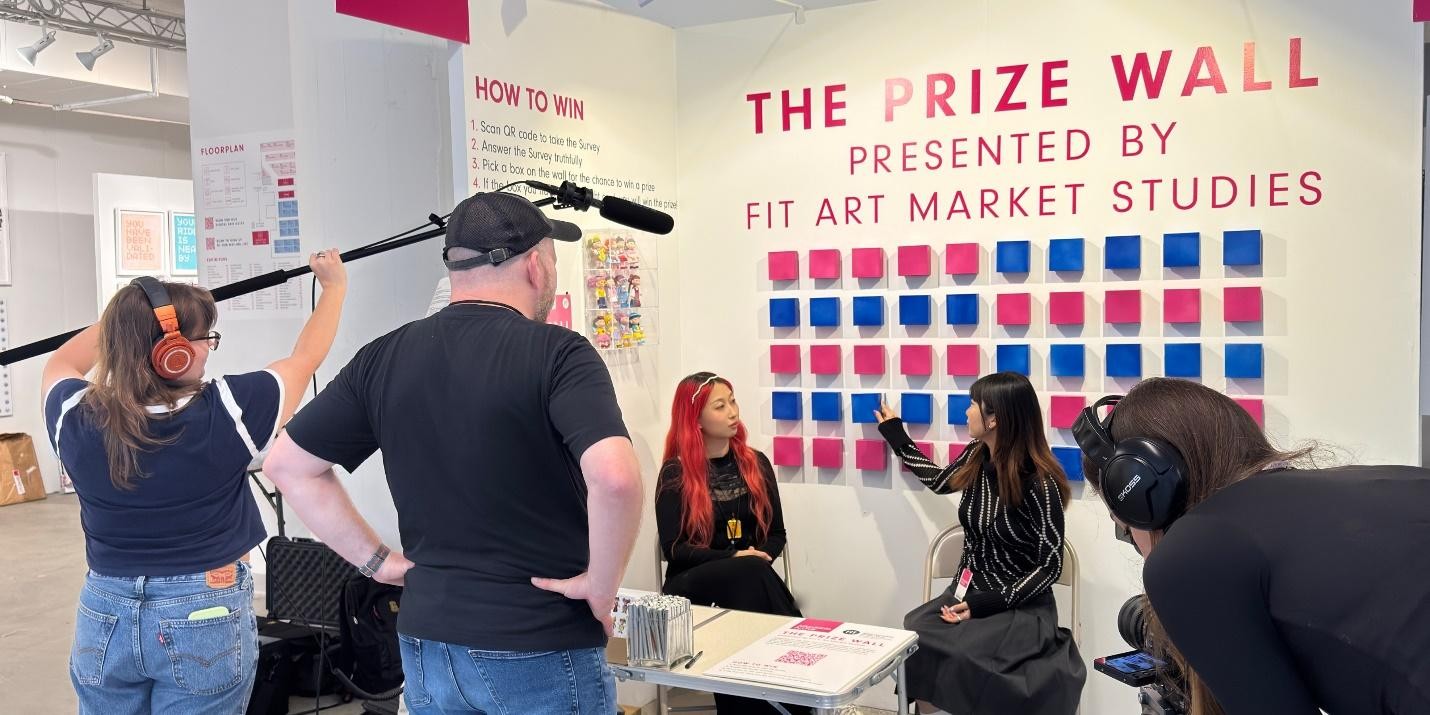
This September, visitors to the Affordable Art Fair will discover an exciting new addition: the FIT Prize Wall, a playful and interactive project created by graduate students in the Art Market Studies program at the Fashion Institute of Technology (FIT). The project blends education, creativity, and audience engagement, offering fairgoers a chance to participate in a fun game while supporting research on visitor experiences.

The concept is simple yet innovative. Guests who stop by the FIT Prize Wall booth will be invited to scan a QR code and complete a short survey. In return, they will receive a chance to choose a box from the Prize Wall. Some lucky participants will win exclusive prizes such as the FIT × Affordable Art Fair limited-edition tote bags and notebooks, as well as a special highlight: the Bella blind box figure series created by artist Yuqian Fan, an FIT alumna. Featuring twelve collectible characters that combine fashion-inspired aesthetics with playful storytelling, the Bella series brings an element of surprise and collectability that perfectly complements the Prize Wall’s interactive spirit.

Interactive Prize Wall by FIT Students Becomes a Highlight of AAF New York Opening Night

Photo Courtesy: Fashion Institute of Technology (FIT)

The project was coordinated by FIT Art Market Studies students Artemis Wu and Rita Gao, in collaboration with Affordable Art Fair organizers and faculty advisors at FIT. Their goal was to design an installation that reflects both the Fair’s mission of accessibility and FIT’s commitment to innovation. “We wanted to create something that’s not just visually engaging but also builds a bridge between visitors and the Fair,” says Wu.

As the art world continues to seek new ways of connecting with broader audiences, the FIT Prize Wall demonstrates the power of interactivity. It transforms a simple survey into a shared moment of joy, while positioning FIT students as emerging leaders in the cultural sector.

The FIT Prize Wall will be featured at the Affordable Art Fair from September 17 to 21. Visitors are warmly invited to stop by, play, and perhaps leave with both a prize and a new perspective on how art fairs can engage the public.

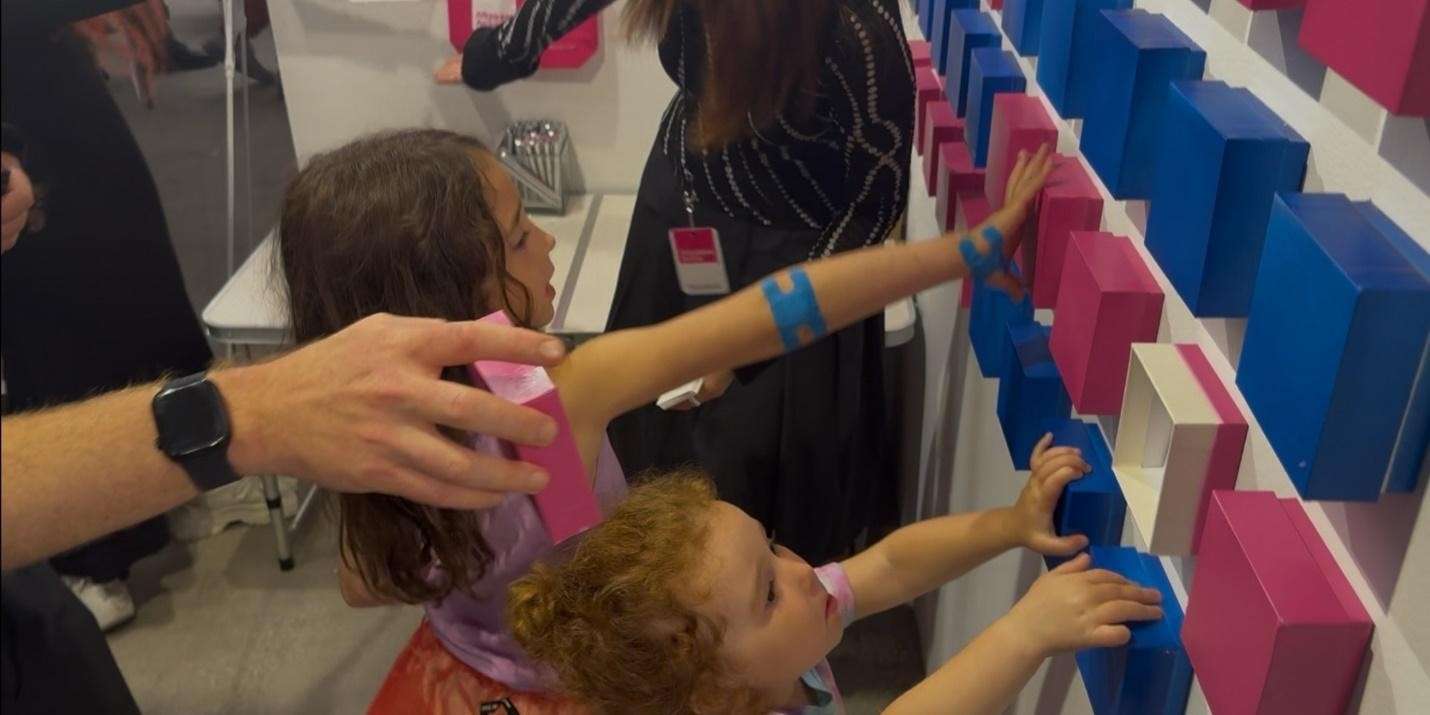
The opening night on September 17 was a great success. Within just three hours, nearly 300 people participated in the Prize Wall activity, and the booth was surrounded by a continuous stream of visitors. The crowd never seemed to die down, with long lines forming in front of the installation throughout the evening. The Prize Wall quickly became one of the most popular interactive highlights of the night.

Many participants remarked that the project made their visit to the fair much more engaging, saying that it turned the experience from simply viewing art into actively experiencing the joy of art. When prizes were revealed, the cheers and laughter from participants echoed across the space, attracting even more visitors to join the line. The festive atmosphere created a sense of community, as strangers chatted and celebrated together while waiting for their turn. The interactive nature of the Prize Wall not only brought ‘a lot of fun’ but also added a unique layer of excitement and surprise to the opening night.

Interactive Prize Wall by FIT Students Becomes a Highlight of AAF New York Opening Night

Photo Courtesy: Fashion Institute of Technology (FIT)

About the Affordable Art Fair (AAF)

Founded in 1999 in London, the Affordable Art Fair (AAF) has become one of the world’s leading art fairs dedicated to making contemporary art accessible to a wide audience. Over the past 25 years, it has expanded to major cities including New York, Hong Kong, Amsterdam, Hamburg, Singapore, and beyond, welcoming millions of visitors and showcasing thousands of emerging and established artists. Guided by its mission to democratize art collecting, AAF brings together galleries and collectors in a vibrant, welcoming environment where visitors can discover high-quality works at approachable price points. Each edition is designed not only as a marketplace but also as a cultural experience, offering interactive installations, educational programs, and opportunities for discovery.

This year’s edition in New York carries the slogan “FALL for Art”, inviting audiences to celebrate the joy of collecting and to engage with art in a spirit of playfulness and inclusivity.

Wellness on the Go: Navigating Oral Health Challenges in NYC’s Commuter Culture

By: Nina Barrett

Commuting in New York City is notoriously stressful. According to a 2024 Forbes analysis, NYC is considered one of the stressful cities for commuters in the U.S., with long waits, crowded subways, and unpredictable delays affecting daily routines. For many, this stress extends beyond the commute, influencing diet, sleep, and even oral health.

The Commuter’s Oral Health Challenge

High-stress lifestyles, combined with excessive coffee consumption, can have a detrimental impact on oral health. Healthline reports that caffeine may cause dehydration in the mouth, leading to reduced saliva production and increased vulnerability of teeth to decay and enamel erosion. Combined with skipped meals, sugary snacks, and long hours without brushing, these habits increase the risk of cavities, gum irritation, and dry mouth.

Recent research in BMC Oral Health underscores that urban lifestyles, stress, and irregular routines contribute to higher rates of dental issues, including plaque accumulation and early enamel wear. This highlights the need for practical strategies to maintain oral care amidst a hectic daily schedule.

Products for the Busy Commuter

Maintaining oral health on the go requires both practical habits and portable products.

Travel-sized toothbrushes and toothpaste tablets: Compact and easy to store in a bag or desk drawer, these allow commuters to brush after meals even when away from home.

Portable mouth rinses: Small, concentrated rinses refresh breath and reduce bacteria between meals, and some formulations help combat dry mouth caused by coffee or long talking sessions.

Water-flosser rinses: Using a water flosser with a rinse can remove debris and reduce plaque when traditional flossing isn’t practical. WaterDent, for example, offers a concentrated formula with hydrating hyaluronic acid, enamel-supporting bischofite, cavity-fighting xylitol, and herbal extracts for freshness, which can serve as both a water-flosser rinse and a quick mouthwash.

Sugar-free gum: Chewing gum with xylitol stimulates saliva flow, helping neutralize acids and prevent cavities while freshening breath.

Hydration and diet awareness: Drinking water throughout the day and limiting acidic or sugary snacks helps protect enamel and maintain overall oral health.

These strategies enable commuters to incorporate oral wellness into their daily routines without relying solely on bathroom access, demonstrating how small, portable interventions can have a lasting, meaningful impact.

Practical Commuter Tips for Oral Wellness

Beyond using portable products, there are small, actionable habits that can help commuters protect their oral health throughout the day. For example, timing your oral care around meals and drinks can make a big difference. Rinsing with water or a portable mouthwash immediately after coffee or a snack can neutralize acids and reduce the risk of enamel erosion.

Another helpful approach is to carry oral care essentials strategically. Keeping travel-sized toothbrushes, toothpaste tablets, or water-flosser rinses in a backpack, purse, or even at the office ensures that brushing or rinsing can happen whenever needed, even during long workdays or between meetings.

Commuters can also leverage multi-tasking habits. Chewing sugar-free gum while walking to the train, taking sips of water throughout the day, or scheduling a quick rinse after lunch can maintain saliva flow, freshen breath, and reduce plaque accumulation without adding extra time to an already packed schedule.

Finally, being mindful of dietary choices on the go can have a lasting impact. Swapping sugary drinks for water, choosing snacks that are lower in acid, and limiting late-night sweets are simple adjustments that protect enamel and support long-term oral wellness. By combining these small but intentional actions with portable oral care products, NYC commuters can maintain a confident, healthy smile even amid the city’s daily chaos.

A Broader Wellness Movement

Oral care is no longer confined to the bathroom. Urban wellness trends are increasingly about flexible, practical solutions that fit into a commuter’s day, from portable brushing options to convenient rinses and hydration strategies. These innovations reflect the growing recognition that preventive oral care can be integrated into the broader lifestyle of city living.