Philanthropy, Real Estate, and Social Reform: The Civic-Minded Endeavors of Krishen Iyer

Over the past few decades, the divide between private business and public influence has gradually dissolved, as more and more entrepreneurs have directed their professional energies into civic and humanitarian endeavors. This phenomenon can be seen most prominently in Southern California, where business and activism have come together to give rise to fusion leaders—those who live in both business and philanthropy with equal passion. As public discourse increasingly puts community reinvestment and corporate social responsibility on the map, those following this multi-faceted path are celebrated for their business achievement and the social good they aim to create.

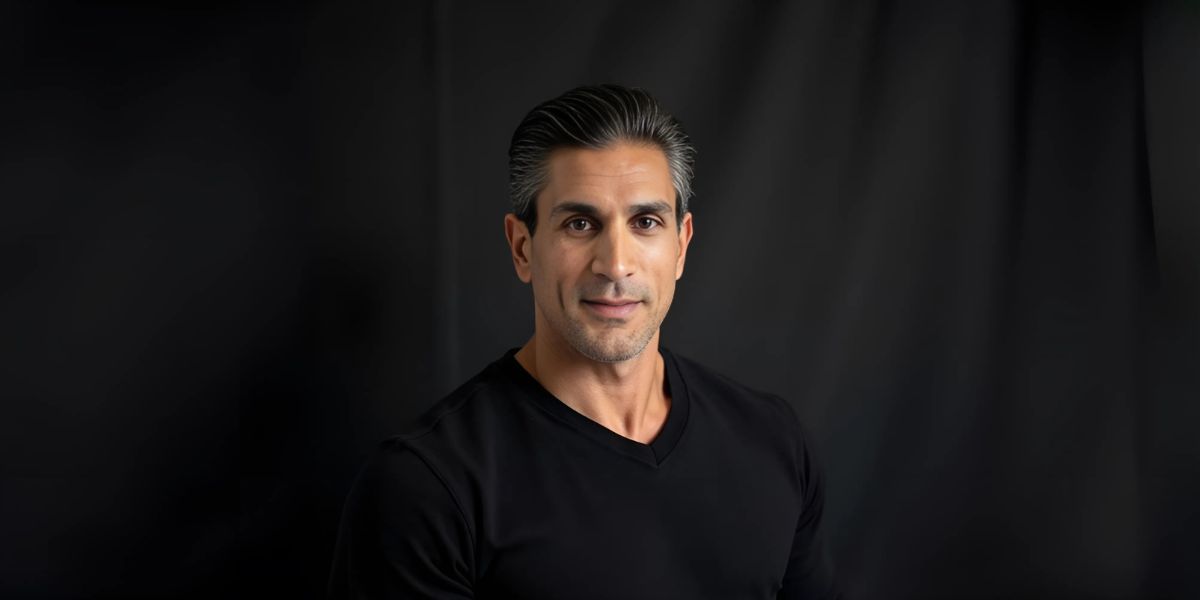
One such person who works at this intersection is Krishen Iyer, a La Jolla investor and entrepreneur whose career path began in health insurance and extended into consulting, real estate, and finally nonprofit advocacy. While Iyer initially became well known for developing insurance-related businesses in the early 2000s, his recent work suggests an even broader civic purpose. His career has expanded to involve strategic consulting businesses, property development ventures, and most recently, direct participation in solving core social problems like human trafficking. In addition to his work in these sectors, Iyer offers services such as web development, digital marketing, and strategic consultancy through krisheniyer.com, showcasing his continued engagement with business innovation.

He has been in national and global charitable networks for two decades. He has been a longstanding contributor to the Make-A-Wish Foundation, an agency that has granted more than 500,000 wishes worldwide since its founding in 1980. He has also donated to the Wounded Warrior Project, which provides rehabilitation programs for post-9/11 veterans, and Corazón de Vida. This charitable organization assists orphaned and abandoned children in Baja California. His work with these groups has usually been financial, although Iyer has also lent his participation to fundraising drives and awareness-raising activities.

In addition to his hands-on philanthropy, Iyer has also used his business skills in ventures with community-driven returns. Nashvox, a recording studio based in Nashville, Tennessee, where he has served as a minority owner and advisor, is one such venture. Established in 2021, Nashvox allows tourists to record professionally made tracks in an area where tourism intersects with music schooling. Although a business venture, the recording studio has increasingly collaborated with local school initiatives to make it possible for students from under-resourced communities, aligning with Iyer’s passion for socially responsible entrepreneurship.

In the same way, his real estate investment company, Iyer CRSI (Community Redevelopment and Strategic Investments), has had a development core in Central California—specifically Reedley and Visalia. The company started as a spin-off of his previous consultancy operations and has focused on mixed-use properties and affordable housing developments. However, not registered B Corporation, Iyer CRSI has made public-stated intentions of transforming underutilized urban areas to improve investors’ returns and people’s lives. In 2024, the company had three ongoing developments, each designed with sustainability and accessibility.

Across these various endeavors, Iyer has had a public dedication to mentorship and long-term community impact. His former employees from his previous insurance companies have attributed to him creating formal mentorship pipelines, particularly for first-generation college students transitioning to the business world. His advisory work, such as founding MAIS Consulting in 2020, has also involved mentorship as an overt component, particularly for smaller agencies seeking to expand or modernize their operations. 

Iyer has been vocal about championing transparency and data-driven decision-making as tenets of his career philosophy. This ethos has been followed through in both his for-profit and nonprofit ventures. In interviews, he’s spoken of early-career setbacks, including the flop of a software rollout during his time at IHS Insurance Services, as learning experiences. Those failures have shaped his leadership style, emphasizing direct communication with stakeholders and clearly defined operating metrics.

Behind closed doors, Iyer has a range of personal interests that allow him to be more relatable as a public figure. Iyer is a chess player and has participated in several local tournaments around the San Diego area. Soccer remains a life-long passion, a legacy of his high school sports life, and he still plays leisurely. He also does yoga, surfs occasionally along the La Jolla coastline, and has spoken of resuming competitive tennis. He’s also passionate about skiing, reading, self-care, going to the gym, and high-performance cars—activities that reflect a well-rounded and wellness-oriented lifestyle. These peripheral activities add to a more complete image of a man who integrates entrepreneurial ferocity with fitness routines and routines founded in mental fitness.

Iyer has frequently cited parenting as a primary source of inspiration for his perspective on community responsibility. As a hands-on lesson in empathy and civic duty, interviews and profiles have drawn on his efforts to engage his children in neighborhood volunteering activities. He considers his two children not just a motivation but also a moral compass that informs both his professional focus and personal giving.

Combined, Iyer’s writing presents the picture of a cross-disciplinary leader applying business tools to purposes not only of profit but of public benefit. His path—starting with insurance entrepreneurs and ending with comprehensive social service programs—reflects wider national patterns of entrepreneurial philanthropy. Though still actively involved with private businesses such as KIV Capital, a company specializing in Medicare-related services, Iyer’s current emphasis seems more toward long-term value for the community. He has notably divested three enterprises across both public and private sectors, and he now maintains access to a diverse range of insurance options including Medicare, Obamacare, and union plans, further rounding out his industry expertise.


The Art of Keeping Life Simple: Why Less Really Is Enough

By: Casey Tibut

The Case for Keeping Life Ridiculously Simple

Minimalism has often been portrayed through social media, where you might come across pictures of neutral-colored apartments with a single chair, a carefully placed plant, and captions about “living with less.” While these visuals might seem appealing, they can sometimes give off the impression of something that’s unfinished or not entirely practical. However, true simplicity isn’t about deprivation. It’s more about reducing unnecessary noise, avoiding overly complicated decisions, and realizing that you don’t necessarily need numerous pairs of almost identical sneakers.

So, what happens when people shift focus from pursuing “more” to embracing less?

The Magic of a Uniform

Let’s begin with something as everyday as your closet, because it’s often a place where we unknowingly complicate our lives.

Steve Jobs had his signature black turtleneck. Mark Zuckerberg often opted for his gray hoodie. Even Albert Einstein had a few of the same suits in rotation. They weren’t dull; they were streamlined and practical.

And practicality is undeniably effective. If you’ve ever found yourself staring blankly at your closet in the morning, trying to figure out whether to wear the shirt that makes you feel “professional yet approachable” or the one that screams “I didn’t have time to do laundry,” you know what decision fatigue feels like.

Having a go-to outfit cuts all that out. For some, it’s denim and sneakers. For others, it’s tailored pants with a blazer. And yes, for many, it’s a classic white shirt that somehow works in every possible setting. The key isn’t copying someone else’s uniform, it’s finding one that makes you feel like yourself on your best day.

Decision Fatigue: The Silent Killer of Vibes

Consider this: on average, a person makes around 35,000 decisions daily. While many of them are trivial, coffee or tea, whether to reply to that email now or later, etc. They accumulate and can exhaust your mental energy by the time more important decisions arise.

The result? By the time the major choices come up, you’re already mentally drained. This is why people who reduce the number of decisions they make daily, whether by limiting apps, trimming down “maybe” plans, or keeping fewer items they don’t love, tend to feel more at ease. They’ve minimized the mental clutter that can weigh them down.

The Myth of More

Our culture often assumes that having more is synonymous with improvement. More clothes, more gadgets, more plans, more projects. But, in reality, more doesn’t always equate to better.

Too many open browser tabs. Too many subscriptions that silently renew. Too many skincare products taking up space in the bathroom.

Simplifying life doesn’t mean eliminating everything you own, it just means choosing quality over quantity. A few well-loved items can often serve you better than an accumulation of things that you don’t truly enjoy.

The Closet Experiment

Here’s a simple experiment to try:

Pick 10 clothing items you reach for often and place them at the front of your closet.

Push everything else to the back and out of sight.

Give it about two weeks. You’ll be surprised at how little you miss the items you rarely use.

In fact, many people end up rotating a select few outfits, and this experiment simply makes that fact more intentional. Bonus: your mornings will feel less rushed, laundry will seem simpler, and you might even stop purchasing items that don’t add value.

Simplicity in the Kitchen

It’s not just the closet that benefits from simplifying. Kitchens are often overflowing with gadgets that get little to no use. For example, the spiralizer you convinced yourself would change your cooking game. (Spoiler: it didn’t.)

Some of the happiest cooks rely on a few basics: one sharp knife, one versatile pan, and a handful of go-to recipes that are quick and reliable. That’s why dishes like grilled cheese, pasta, or roast chicken are still popular. They work. They’re simple. And they don’t need an overwhelming array of spices or fancy gadgets.

Simple Doesn’t Mean Boring

Here’s the misconception: simple is synonymous with dull. People might think of it as a stark, minimal space or a quiet dinner without conversation. But simple can be dynamic. Think of an uncluttered room where natural light fills the space. Or perhaps choosing one favorite glass of wine rather than three cocktails that leave you feeling overindulged. Or maybe listening to one playlist you know by heart, rather than flipping through 10 incomplete podcasts.

Simplicity doesn’t subtract joy; it actually creates space for it.

The Sunday Sweep

One simple ritual that often gets overlooked is the ten-minute Sunday sweep:

Toss out that outdated salad dressing.

Unsubscribe from those newsletters you never read.
Delete the blurry photos you no longer need.

Clear out the receipts cluttering your bag.

This is the adult version of clearing under your bed when your mom is about to visit. Small, but satisfying, and oddly calming.

Why the Basics Deserve Upgrades

When you’re simplifying your life, it’s worth investing in the things you use regularly.

Shoes that don’t cause discomfort. A bag that can handle your daily needs. Headphones that function well on your commute. Even bedsheets that don’t irritate your skin. These essentials are the backdrop of your daily routine.

It’s similar to cooking with high-quality olive oil, subtle, but noticeable when it’s missing.

Saying No Faster

Calendars can get just as cluttered as closets. One “yes” here, a “sure” there, and before you know it, your schedule is filled with obligations.

One effective way to simplify? Say no faster. No to the meeting that could’ve been handled with an email. No to the coffee date that always turns into an hours-long session. No to the event that you know you won’t enjoy.

Time is precious. Guard it wisely.

Travel, Simplified

Packing is a place where simplicity can shine. Ever had the experience of sitting on your suitcase, trying to make it close because you’ve packed too much? That’s the result of wondering, “What if I need multiple pairs of shoes?” or “What if it snows on my beach vacation?”

The reality is, you probably won’t need half of what you packed. Focus on packing lighter, rewearing outfits, and remembering that laundromats are available.

Most of what people pack for trips ends up unused.

The Science of Less

Research on clutter suggests that it increases cortisol levels, the hormone responsible for stress (NCBI). In other words, cluttered environments often contribute to frustration.

In contrast, simplicity can ease mental load. That’s why people often report feeling calmer after decluttering their homes, unsubscribing from emails, or finally tossing out items they’ve been holding onto “just in case.”

Less stuff, less mental noise, less chaos, it’s not just about aesthetics; it’s supported by science.

The Rebel’s Version of Minimalism

Here’s the twist: choosing simplicity can be a rebellious act.

In a culture constantly encouraging us to upgrade and buy more, choosing less becomes an act of defiance. It’s a decision to step off the hamster wheel of consumerism.

It’s not about embracing a monochromatic lifestyle; it’s a quiet rejection of consumer overload.

Everyday Examples

  • Food: Opting for pizza night with friends over a complex dinner party.
  • Work: Focusing on one key project rather than spreading yourself thin across numerous side hustles.
  • Fitness: Enjoying daily walks rather than overcomplicating your fitness routine
  • Relationships: Spending quality time with the people who truly matter, rather than overloading your calendar with “obligatory” events.

What Simplicity Really Buys

At its core, simplicity isn’t about having less, it’s about creating more:

More time. Less time spent organizing, cleaning, or scrolling.

More energy. Fewer decisions mean more mental bandwidth for the important stuff.

More clarity. You can focus on what truly matters when you’re not surrounded by noise.

Ironically, simplicity is about making room for a fuller, richer life.

A Closing Thought

Life is complicated enough, between bills, work, relationships, and those moments of regretful texting. The last thing you need is clutter in your closet or on your calendar.

Simplicity isn’t about stripping away everything; it’s about holding onto what works, letting go of what doesn’t, and realizing that the quietest move might be the wisest one.

Sometimes, all it takes is pulling on something comfortable, heading out the door, and realizing you have one less thing to worry about.

Who knew that embracing less could bring so much peace?

From the Volleyball Court to Clients: Alexis Paul on Balancing Books with Precision and Refining the Face of Finance

By: William Jones

When Alexis Paul steps into a room, she carries with her the presence of both an athlete and a business leader. The founder of AP Accounting and Tax Services, Paul is one woman who is changing the narrative of what a modern CPA can look like: bold, efficient, empathetic, and steadfastly committed to maximizing her clients’ financial outcomes.

Accounting has always run deep in Paul’s family. Growing up in a modest Long Island town, she watched her father manage an accountancy team by day and establish a home office as an independent tax professional by night. Clients came and went as she and her siblings answered phones, fetched water, and observed firsthand what it meant to build trust one return at a time. “I have so many nice memories of watching my father work,” she recalls. “I think it planted that seed for me.”

Still, Paul’s path to the profession wasn’t linear. She pursued psychology, driven by her fascination with people and behavior. She carefully balanced these studies with her time on the volleyball court. Off the court, she studied. On the court, she led. As captain of the university’s volleyball team, she became a standout athlete, eventually inducted into the Johns Hopkins Athletic Hall of Fame in 2012. The discipline and teamwork she honed as a collegiate athlete remain central to how she leads today, whether with her staff or in collaboration with clients.

“Being part of a team means understanding that everyone has a role,” she says. “That lesson has carried through into my work. Accounting is rooted in collaboration and building toward a bigger picture.”

After graduating from university, Paul pursued her MBA in Accounting at a university in New York and earned her CPA license, stepping firmly into the world she was raised in. Working as an auditor at one of the Big Four accounting firms gave her the technical grounding and corporate rigor to thrive.

Later, as she shifted her focus to raising a family, she gradually re-entered the profession on her own terms, working as a Fractional CFO for local businesses. Although Paul’s journey began in part-time consulting, it soon evolved into a steady stream of clients and a growing reputation for efficient service.

By 2024, Paul recognized that it was time to scale. In August, she opened her first brick-and-mortar office in Greenwich, marking a significant milestone for her firm. Today, AP Accounting and Tax Services is a thriving practice with an extensive portfolio of clients and a clear and potential growth trajectory.

From the Volleyball Court to Clients: Alexis Paul on Balancing Books with Precision and Refining the Face of Finance

Photo Courtesy: @abbycolephotography

“It came to a point where I knew I needed a team,” she explains. “Opening a physical office allowed me to train staff, meet with clients face-to-face, and create more growth opportunities. We’re full steam ahead.”

Adding to that, the firm can also provide a fully remote experience with video conferencing and electronic filing, assisting clients across America.

Paul’s practice remains expansive, including high-net-worth individuals, entrepreneurs, young couples navigating new financial responsibilities, and professionals balancing busy careers and family life. “Money is a sensitive subject, and I think my psychology background helps me approach it without judgment,” she says. “My clients tell me I’m patient, that I explain things clearly, and that makes the process less intimidating.”

Apart from filing returns, Paul’s goal is focused on educating and strategizing. From preventing tax surprises to handling IRS communications, Paul ensures clients understand their financial picture year-round.

“People don’t realize how often taxes are miscalculated at the payroll level, or how quickly penalties can add up for entrepreneurs. My role is to help clarify the process, give them a better understanding, and ultimately help them reduce potential costs,” Paul states.

Tech-forward and accessibility-driven, Paul ensures that clients can book appointments online, sign documents digitally, and avoid the traditional back-and-forth that often makes tax season difficult. “Tax season isn’t everyone’s favorite time,” she says. “My job is to make the process as smooth and efficient as possible.”

In a profession that’s often male-dominated, Paul’s presence is a refreshing shift. She represents a new type of leadership, one that blends precision with empathy, and strategy with accessibility. Her athletic roots have instilled resilience, her corporate training sharpened her expertise, and her personal ethos keeps her grounded in the mission to guide clients toward financial success.

As AP Accounting and Tax Services continues to grow, Paul remains focused on her clients’ long-term success, guided by her blend of skill, strength, and unfaltering vision. “At the end of the day, people want to know they’re operating as financially efficiently as they can,” she says. “Saving my clients money is what I do for them, year after year.”

Unmasking the Silent Epidemic: One Woman’s Battle with Anxiety and the Broken Systems Meant to Help Her

By: Elowen Gray

In a country where panic is common and calm is commodified, where overwhelmed teens are told to “toughen up” and adults self-medicate just to get through the day, Kris Knack Noeldner’s book Stress, Anxiety, & Panic Attack Relief for Teens & Adults reads like a wake-up call. 

But make no mistake: this is not another breathy self-help volume dripping in toxic positivity.

It’s a declaration.

A lived manifesto.

And a lifeline—written by someone who has navigated the dark terrain of anxiety and come out the other side with tools, truth, and something our mental health culture often lacks: compassion without condescension. 

The System Isn’t Just Failing—It’s Silent

Let’s start here: mental health care in America is reactive, fragmented, and often unaffordable. Therapy waitlists are months long. Teens are drugged before they’re heard. Adults are dismissed unless they collapse.

And behind these statistics? People like Kris.

Her anxiety began early. Her panic attacks weren’t dramatic—they were invisible. Unnamed. Like so many teens, she didn’t know what she was feeling—only that it felt like she was drowning in her own mind.

I thought I was dying,” she writes. But the ER visits didn’t help. The fear remained. The system wasn’t built to translate her symptoms—it was built to contain them.
Sound familiar?

It should.

Millions experience what Kris did—a silent epidemic of inner chaos with no clear path forward. 

Emotion Isn’t a Disorder. It’s Human.

The most radical truth this book tells? That your anxiety doesn’t make you broken. It makes you human.

Anxiety, panic, exhaustion, burnout—these aren’t diseases in need of suppression. They’re signals. Warnings. Your mind and body are begging for a different pace, a different input, a different life.

But instead of listening, we are numb. We distract. We scroll. We shame.

Stress, Anxiety, & Panic Attack Relief flips that script.

It teaches us to listen—to the breath, to the body, to the words we whisper to ourselves when no one’s watching.

This book doesn’t deny the realness of suffering. It contextualizes it.

And it does something most wellness books don’t: it includes the science without losing the soul.

A 13-Tool Survival Kit That Should Be Public Policy

Kris doesn’t just tell you what worked for her—she hands you the playbook.

Her 13 holistic and research-backed tools should be taught in schools, shared in hospitals, and integrated into therapy. Some are simple—breathing techniques, music therapy, nutrition shifts. Others go deeper—neuroplasticity through self-talk, trauma release through movement, and spiritual realignment.

Every tool is accessible. None of them requires a diagnosis, a co-pay, or a perfect past.

This book isn’t just healing.

It’s democratized healing.

And in a system where access is everything, that alone makes it revolutionary.

What About the Teens?

This book doesn’t just speak to teens—it fights for them.

Kris writes directly to a generation born into crisis: school shootings, social media perfectionism, economic uncertainty, and climate doom. She sees their fear—not as a flaw, but as a symptom of a society spinning too fast to hold them.

And she doesn’t sugarcoat it.

She names the pressure, the genetics, the brain chemistry. She points to real science. Then she offers real tools. Breathing that actually works. Affirmations that click in. Self-defense that builds not just safety, but self-trust.

If you’ve got a teen who’s struggling, this book might just do what therapy often fails to: make them feel seen.

When the ER Doesn’t Help, the Breath Might

One of the most powerful parts of Kris’s story is her turning point. Not in a hospital. Not in a psychiatrist’s office. But in her own home, on a yoga mat, learning to breathe again.

We don’t talk enough about this.

How many lives could be changed—saved—by daily practices like Tai Chi, tapping, or sky breathing?

How many panic attacks are mislabeled “episodes” when they’re really cries for reconnection?

This book proves that healing isn’t always a prescription pad. Sometimes, it’s a playlist. A mantra. A glass of water. A walk.

Sometimes, it’s a sentence like: “You are not broken. You are responding appropriately to a world that forgot how to feel.”

Music, Movement, and the Fight for Neurodiversity

Kris’s approach is deeply inclusive. Her tools work across diagnoses, ages, and belief systems. And that’s not an accident.

This isn’t about “fixing” people.

It’s about freeing them.

From shame. From perfection. From the cultural lie that only experts have answers.

She brings in music therapy and healing frequencies—scientifically supported yet often dismissed in mainstream care.

She speaks openly about martial arts—not for combat, but for confidence.

She even reclaims humor as medicine.

This is what reform looks like: not policy papers, but lived blueprints.

The Politics of Panic

Don’t mistake this for a personal story alone. It’s a social critique.

Because when a woman has to figure out how to manage a lifetime of anxiety on her own—with breathing, with food, with neuroscience—because the institutions that were meant to help her, fall short, that’s not just personal. That’s political.

This book asks:

  • Why is anxiety normalized, but healing stigmatized?
  • Why are we trained to fear emotion, rather than interpret it?
  • Why aren’t breathwork, nutrition, and music standard tools in primary care?

The answers aren’t in a DSM.

They’re in Kris’s story.

And they’re in yours, too.

For the Fighters, the Feelers, the Forgotten

This isn’t a book just for the “anxious.”

It’s for anyone who’s ever:

  • Felt too much
  • Been told to “get over it”
  • Gone to the ER, heart pounding, and left with a bill and no answers
  • Looked at their teen and wished they knew what to say
  • Scrolled until their soul felt numb 

If you’ve ever fought to keep your calm while the world spun out—this book is yours.

Final Word: Heal Loud

Kris Knack Noeldner’s Stress, Anxiety, & Panic Attack Relief for Teens & Adults isn’t just a book. It’s resistance. It’s reclamation.

It’s a quiet revolution—one deep breath at a time.

And in a culture that profits from your panic?

Choosing peace is a radical act.

How to Get the Book

Stress, Anxiety, & Panic Attack Relief for Teens & Adults by Kris Knack Noeldner is available now on Amazon, and wherever empowering books are sold. Because real tools for real people shouldn’t be hard to find.

For purchasing a book, interviews, events, or to connect with the author, visit:

Facebook
Instagram
Website
Amazon – Stress, Anxiety, & Panic Attack Relief for Teens & Adults 


Disclaimer: The information provided in this article is for general informational purposes only and should not be construed as medical or psychological advice. Mental health and well-being are highly individual, and strategies for coping with anxiety, panic, and stress may vary. Readers are encouraged to consult with healthcare professionals for guidance and support regarding their mental health needs.

Dr. Joseph Schwartz Explores the Role of Exercise, Meditation, and Psychotherapy in Mental Health

By: Maha Khan 

New York, NY — At a time when prescriptions often dominate mental health treatment, one physician is highlighting a complementary approach: exercise, Transcendental Meditation, and psychotherapy. Dr. Joseph Schwartz refers to these practices as his “Non-Prescription Prescription,” a framework that, when paired with professional guidance, may offer many individuals a helpful way to improve their mental wellbeing.

Why Three Pillars?

“Research has consistently shown that exercise, meditation, and psychotherapy each offer potential mental health benefits,” says Dr. Schwartz. “When combined, they can support reductions in stress and symptoms of anxiety or depression, while also helping to build resilience and self-esteem.”

Scientific literature supports these claims. A 2019 meta-analysis in JAMA Psychiatry found that exercise appears to reduce symptoms of depression across a wide range of populations. Studies on Transcendental Meditation published in journals like Psychiatry Research suggest that regular practice may contribute to lower stress and enhance emotional regulation. Meanwhile, psychotherapy remains widely regarded as one of the most evidence-based treatments for anxiety and depression, recommended by the American Psychological Association.

Dr. Schwartz stresses, however, that while these practices can be transformative, they are not a “cure-all.” Each individual’s mental health journey is unique, and treatment plans should be tailored with professional oversight.

A Complementary Perspective

“In our society, medication is often the first line of treatment,” Dr. Schwartz notes. “But for many people with mild to moderate symptoms, lifestyle practices such as exercise, psychotherapy, and Transcendental Meditation could be a helpful part of their recovery.”

This perspective aligns with broader healthcare conversations around integrative medicine, which emphasizes combining conventional treatments with lifestyle changes. Dr. Schwartz does not discourage medication; instead, he advocates for considering non-pharmacological tools as part of a well-rounded treatment plan.

Real-Life Transformations

Patients who have adopted this three-pronged approach often report improvements in mood, stress management, and self-confidence. “They feel empowered to take an active role in their mental health,” Dr. Schwartz says. “These tools help people address underlying challenges rather than just masking symptoms.”

For example, one patient described how regular exercise, combined with therapy sessions, helped her build resilience after years of work-related burnout. Another reported that incorporating Transcendental Meditation provided a sense of calm that supported better communication in therapy. While individual results vary, these stories illustrate how accessible practices can complement professional care.

Addressing the Critics

Some have described him as “the doctor who says you only need three things to reset your mental health.” Dr. Schwartz clarifies: “Mental health is complex, and there is no one-size-fits-all solution. But these three practices are accessible, evidence-supported, and could serve as a valuable starting point for many people when used alongside professional guidance.”

Critics argue that such an approach risks oversimplification. Dr. Schwartz responds by underscoring the importance of medical oversight: “For individuals with severe depression, bipolar disorder, psychotic symptoms, or suicidal ideation, medication and intensive care are likely essential. My goal is not to replace medical treatment but to remind people of the power of lifestyle practices that science already supports.”

Getting Started

For those considering incorporating these practices:

  • Find a therapist through resources like Psychology Today to match with a qualified professional.
  • Learn Transcendental Meditation by visiting TM.org and connecting with a certified teacher.
  • Incorporate exercise—walking, jogging, or structured fitness—after checking with your physician to ensure safety.

A Note of Caution

This information is intended for general educational purposes and should not replace professional medical advice. Individuals experiencing mental health concerns should consult with a licensed healthcare provider before making changes to their treatment plan.

Final Word

“The path to better mental health doesn’t always start with a prescription pad,” Dr. Schwartz concludes. “Sometimes it begins with small, consistent steps toward caring for both mind and body.”


Disclaimer: This press release is intended for general informational purposes only and does not constitute medical advice. Individuals should consult with a licensed healthcare provider before making any changes to their treatment plan. The effectiveness of the practices mentioned may vary from person to person, and professional guidance is recommended to tailor any approach to individual needs.

Peek Gears: Innovative Solutions for Traditional Automotive Gears

By: Andrew Jackson 

The automotive industry is ever-changing, and new materials are being introduced that are better in performance, efficiency, and durability. The use of PEEK (Polyether Ether Ketone) gears represents a notable development in recent years. The PEEK gears are light and durable and have a high wear resistance in comparison to the traditional metal gears, which makes them a potential substitute for the automotive industry. This paper will discuss the issues related to conventional gears, the distinctive strengths of PEEK gears, the manner in which they address old problems, and their future in the automotive engineering industry.

1. Current Problems with Automotive Gears

The gears in automobiles are essential in the transfer of power, the regulation of torque, and the smooth running of the car. The conventional metal gears are not blemish-free, though.

  • Problems with weight and efficiency: Metal gears are typically fabricated using steel or aluminum alloys, which increases the weight of the cars significantly. This affects the fuel efficiency and leads to an increase in carbon emissions. Having more demanding requirements on the fuel consumption and emissions, the automotive industry is trying to find alternatives that will decrease weight without at the same time reducing the strength.
  • Noise and Vibration: Metal gears are typically very noisy and vibratory when in operation, especially at high speeds. Not only does this concern the comfort of the driver, but there is also a need to add more damping, which makes a vehicle more expensive and more complex.
  • Wear and Tear: Constant crunching of metal gears causes wear, which translates to reduced service life and increased costs of maintenance. The lubricants may be necessary to minimize wear, which contributes to environmental and operational issues.
  • Corrosion: Traditional gears are corroded by moisture, road salts, etc. Although a protective coating is employed, it deteriorates with time, which reduces the functionality.
  • High Manufacturing Costs: The manufacturing of metal gears involves machining, forging, and heat treatment, which are fuel-intensive and costly processes. The manufacturers are striving to seek economical options.

These difficulties demonstrate the immediate necessity of material, which is strong, durable, and lightweight with a combination of these characteristics, the way to the pinnacle of PEEK gears.

2. Advantages of PEEK Gears

PEEK (Polyether Ether Ketone) is a thermoplastic polymer that is of high performance, characterized by strength, chemical resistance, and the ability to work under severe conditions. It offers several benefits compared to conventional metals used in automotive gears.

  • Lightweight Structure: PEEK gears have significantly lower weight compared to steel or aluminum gears. Lower weight also positively impacts vehicle fuel efficiency and makes it possible to develop energy-efficient and electric cars.
  • Excellent Wear Resistance: PEEK has a very low friction coefficient, resulting in excellent wear and surface damage resistance. This enables gears to last longer in use with minimum maintenance.
  • Reduction of Noise and Vibration: PEEK gears inherently damp vibrations and therefore run quietly, unlike metal gears. This removes the extra noise-silencing systems that save money and enhance the comfort of the drivers.
  • Chemical and Corrosion Resistance: PEEK is resistant to chemicals, oil, and road salt. This predisposes it to the harsh conditions of automotive environments, where metals would otherwise degrade.
  • Agreement: temperature variation, relative to other seals, at high temperatures is less pronounced than at lower temperatures.<|human|>High Temperature Resistance: PEEK is also mechanically stable and strong at elevated operating temperatures (up to 250 °C). This renders it appropriate for engines, transmissions, and other hard-working automotive use.

All these benefits combine to ensure that PEEK gears are a viable solution in solving the drawbacks of the traditional automotive gear systems.

3. How PEEK Gears Solve Problems of Metal Gears

The real worth of PEEK gears is that they directly solve the issues that were encountered with the traditional metal gears.


  • Weight and Emission of Vehicles: The substitution of metal gears with lightweight PEEK gears makes cars more fuel-efficient and environmentally friendly. This also equates to a long battery range in the case of electric vehicles.
  • Better Strength and Requirement of Minimal Maintenance: PEEK gears also may be operated with little or no lubricant at all under certain conditions, unlike metal gears, which have to be continually lubricated. This increases their wear resistance, thereby increasing their lifespan and reducing maintenance costs.
  • Quieter and Smoother Ride: PEEK absorbs vibration, and this leads to a smoother driving feel with less gear noise, which is one of the most significant advancements over traditional transmission systems.
  • Improved Corrosion Protection: PEEK gears are not affected by corrosion that is caused by moisture or road salt, unlike metals. This makes the performance regular even during extreme weather conditions.
  • Simplified Manufacturing: PEEK gears may be machined with great precision through mass production rather than being machined by labor. This lowers the production expenses and makes more complicated gear designs possible, which were hard to accomplish with metals.
  • Flexibility towards Hybrid and Electric Cars: As the automobile industry electrifies, PEEK gears have proven beneficial due to their noise minimization and lightweight properties. They assist in the functioning of electric vehicles, making them sound quieter and more efficient, which aligns with consumer expectations.

With these issues solved, the PEEK gears are becoming an immediate, original solution to the gears.

4. Future Long-Term Development of PEEK Gears and User Acceptance

The prospects of PEEK gears in the automobile industry are bright. Due to the experiments that the manufacturers still engage in with new high-tech polymers, the adoption speed is likely to increase exponentially.


  • Wider Industry Integration: PEEK gears have already been tested in electric vehicles, hybrid transmissions, and lightweight commercial vehicles. Another trend is that in the coming ten years, they will be incorporated into other mainstreams by different automakers.
  • Minimization of Costs due to Mass Production: The price of PEEK is still higher compared with some of the conventional plastics, but growing demand and new manufacturing processes will cause prices to drop and make PEEK more affordable for large-scale automotive applications.
  • Improved Sustainability: PEEK gears are also lighter and need less lubrication, hence they contribute to global sustainability. Additional innovations in the future may even include the recycling of PEEK constituents, further enhancing its environmental friendliness.
  • User Acceptance and Growing the Market: Initially, consumers may be concerned about the longevity of plastic gears compared to metals. Yet, the spread of acceptance is likely to continue as long-term performance data continues to demonstrate the reliability of PEEK. The car manufacturers that will advertise quieter and more fuel-efficient cars will also create more confidence in this technology.
  • Hybrid Gear Systems: Innovation: Future studies can be directed to the hybrid systems where the PEEK gears are used in particular automotive systems alongside the metal gears, with a compromise of cost and performance.

After all, PEEK gears will become the future of automotive engineering, as they will provide a combination of strength, durability, and efficiency that suits the industry perfectly, as it turns to lightweight, ecologically friendly, and high-performance vehicles.

Conclusion

Although they are reliable, the traditional automotive gears are associated with difficult weight, noise, corrosion, and manufacturing costs. PEEK gears are a new alternative; they offer light-weight construction, have high wear characteristics, are less noisy, and are more stable to external chemicals. They directly address the deficiencies of the metal gears and create new opportunities for electric and hybrid cars.

PEEK gears will play a crucial role in determining the future of sustainable, high-performance automotive engineering, driven by technological advancements and the adoption of new materials by manufacturers.

Zhejiang BW Industry was established in 2008. Today, the company has become a leading supplier and manufacturer of PEEK in the Chinese market. Our PEEK material offerings encompass mainstream products, including PEEK (resin) pellets, rods, sheets, films, tubes, and machined components.Dedicated to providing strong technical expertise and reliable material solutions, we are trusted by clients as a dependable material service provider. For any enquiries regarding PEEK materials, please visit our website:https://peekmaterials.com/

Wisdom, Wealth, and the Singapore Way: A Candid Conversation with Dr. Louisa Chong

By: Aimee Tariq

Why Many Start With Homes—and Why Some Explore Alternatives

In Singapore, many first-time entrants to property gravitate toward HDB flats and condominiums. They’re familiar, regulated, and relatively easier to understand. Dr. Louisa Chong acknowledges that path but points out that there are other ways to approach the built environment: understanding how commercial spaces can serve communities, businesses, and long-term urban plans.

“I don’t view properties as trophies,” Chong explains. “I view them as commitments—to planning, stewardship, and the people who use them.”

A Careful Beginning

Chong didn’t begin her career with high-profile projects or insider access. Early administrative roles helped her understand deadlines, navigate regulations, and document decisions—skills that proved valuable for her first modest project, a Housing and Development Board flat. The takeaway wasn’t purely financial; it was practical: treat each step as training—in planning, maintenance, and accountability.

Her curiosity eventually led her to a small shophouse near Chinatown. She spent weeks analyzing the surroundings: pedestrian flow, conservation guidelines, and the implications of transport upgrades. The decision reflected her approach: thoughtful, informed, and centered on public use and long-term value.

What Makes Commercial Different (Without the Hype)

Commercial real estate isn’t inherently “better”—it’s simply distinct. Success often depends on operations, rather than slogans. Chong highlights a few distinctions without making sweeping promises about outcomes:

Use Cases & Users

Residential real estate focuses primarily on households; commercial involves a range of users—tenants, customers, suppliers, and neighbors.

Micro-example: A clinic tenancy can affect foot traffic, parking needs, and accessibility for elderly visitors.

Leases & Fit-Outs

Commercial leases often include repair/maintenance clauses, signage rules, and renovation approvals.

Micro-example: A café may need specific installations like grease traps, venting systems, and waste-management plans—each of which involves permitting steps.

Regulatory Interfaces

Planning submissions, conservation guidelines, and strata by-laws are part of the routine.

Micro-example: A conserved façade near Chinatown demands precise material choices and heritage-sensitive works.

Resilience Through Process

Vacancies, evolving tenant mixes, and economic fluctuations are inevitable.

Chong’s guiding principle: document assumptions, monitor key indicators (such as anchor-tenant stability), and always have contingency plans in place.

Building Confidence Without “Get Rich” Promises

Chong mentors newcomers—especially women who have been told the field is “too complex.” Her approach focuses on confidence, literacy, and visibility, rather than offering quick financial rewards.

Her playbook for first steps (focusing on skills first and non-financial gains):

  • Map the Area: Walk the block at different times; log pedestrian flow, nearby anchors, and accessibility.
  • Read the Rules: Study URA planning parameters, conservation guidelines, and strata by-laws.
  • Decode the Lease: Understand the difference between repair obligations, reinstatement clauses, signage rights, and permitted trades.
  • Plan for Vacancies: Develop a basic vacancy response plan (who to contact, marketing channels, interim uses).
  • Build a People Bench: Identify professionals such as a conveyancing lawyer, contractors familiar with conservation works, and a facilities technician.

“Preparation isn’t glamorous,” Chong notes. “But it’s what makes complex situations manageable.”

Risk, Cycles, and Steady Habits

Commercial spaces interact with the real economy—clinics, cafés, learning centers, logistics hubs. This means experiencing cycles. Chong advises focusing on what is controllable.

Macro to Micro: Align top-down signals (e.g., changing commuter patterns) with on-the-ground observations (tenant operating hours, weekday vs. weekend traffic).

Scenario Notes: Keep brief memos for different conditions (e.g., “base,” “soft,” and “stress”) so decisions are thought through.

Hygiene Routines: Quarterly reviews of tenancy covenants, common-area maintenance standards, and safety checks can help prevent small issues from becoming larger, more expensive problems.

Beyond Profit: Stewardship and Usefulness

Chong’s philosophy blends pragmatism with purpose: spaces should meet genuine needs. This could mean positioning a medical suite near eldercare services, selecting complementary trades, or making accessibility improvements that benefit the broader community. The lens is service-oriented: How does this space function for people over time?

Representation is also important. Seeing women evaluate site plans, negotiate lease clauses, and coordinate contractors reshapes expectations for everyone in the room.

Learning Pathways (No Promises, Just Practice)

Chong and her colleagues at Marko & Friends™ offer learning experiences designed to demystify terminology and processes. While attendees come from diverse backgrounds, the emphasis is consistent: clarity over hype.

What a responsible curriculum includes:

  • Foundations: how planning maps work, common conservation considerations, and how to read plan annotations.
  • Operations: basic facilities literacy—HVAC, fire safety, accessibility, waste; handover and reinstatement checklists.
  • Leases: understanding permitted use, signage, repair obligations, break clauses, and dispute resolution paths.
  • Stakeholders: neighboring tenants, building management, compliance officers, and local community contacts.
  • Ethics & Impact: understanding how trade mixes impact neighborhoods, noise, traffic, and inclusivity considerations.

(Important: Education does not equal earnings promises. Programs should never imply guaranteed returns or “passive income.”)

Guidance for Newcomers—Especially Women

Chong’s core messages focus on process and agency, rather than financial promises:

  • Start Where You Stand: You don’t need to be an expert on day one. Begin by learning terminology and observing sites.
  • Ask Better Questions: Shift from asking “Is this a good deal?” to “What problem does this space solve, for whom, and under which constraints?”
  • Document the Journey: Maintain a simple decision log to sharpen thinking and support transparency in your choices.
  • Find Visible Mentors: Seek out professionals who explain, not just sell. Mentors who welcome questions can significantly accelerate learning.

“When you see someone like you reading plans and walking sites with authority, it redefines what you think you can do,” Chong says.

Looking Ahead, Without Hype

Chong anticipates ongoing demand for spaces that serve everyday needs—health services, learning hubs, and community-oriented retail—as long as they are well-located, accessible, and responsibly managed. Her advice remains steady: learn the basics, move at a thoughtful pace, and let good process guide decisions.

The Singapore approach, as Chong practices it, is careful, civic-minded, and patient. It prioritizes stewardship over slogans, literacy over quick wins, and people over projections. For anyone considering their first step into commercial real estate, her counsel is simple:

Don’t wait to learn. The earlier you build competence—terms, maps, and checklists—the more confident and useful your contributions will be.


Disclaimer: The information shared is for educational purposes only and should not be relied upon as a guarantee of success in commercial real estate or any other field. Readers are encouraged to conduct their own research and seek professional advice before making any financial or business decisions.

Spiritual Détente: Making Peace with the Past through Poetry

By: Elowen Gray

Exploring Jeanne Andrea Di Grazio’s Poetic Journey in Orange Shoes

This very moving book, Orange Shoes, Spiritual Détente, is an invitation into the soul’s healing, memory, and spiritual reconciliation. Using haunting imagery and intimate reflections, Di Grazio creates a poetic space in which the past is neither an eternal prison nor an endless sorrow but rather a landscape to be delicately traversed and ultimately embraced. Spiritual Détente, the title of the collection, speaks poignantly to this theme of finding a truce—some semblance of peace—with one’s memories, losses, and the echoes of those long departed.

The Weight and Wonder of Memory

Orange Shoes is, above all, a meditation on memory, its power to wound, and its ability to heal. Combative representations of longing, such as “The Bathrobe” and “The Sink” (Trinity), enact instances of precarious loss—such as the intimate detail of remembering to hold an empty bathrobe of a loved one, or the very essence of life washing down the drain —become metaphors for grief and the transience of existence. The memories conjured are painted tenderly, never avoiding the ache, yet never allowing it to define the speaker entirely.

The collection’s poems do not merely speak of the past; they grapple with it. The speaker stands between a threshold of memory and acceptance, questioning identity, love, and faith. In Existence, the silent pondering of the poem portrays a soul in search of meaning other than lament and regret. This tension between desiring to hold on to the past and learning to let go becomes the emotional pulse of the collection within. 

Spiritual Healing Through Poetic Reflection

More than an apprehension wallowing in nostalgia, Spiritual Détente is the quest for peace. And there is no escaping the notion of détente, where hostilities have thawed, for Di Grazio’s verse propounds that this thawing is as much spiritual as it is emotional. The poems thus enter into a dialogue with that tightening of earthly pains against the vast understandings of life with its impermanence and interconnection. 

In Dream of the Blue Moon and Sea Turtles, a conjuring of mysticism and eternal magic suggests that the grace of the Spirit offers consolation and renewal. In Kind, In My Thoughts, and In My Words tells, with love and empathy, just how healing comes not solely through solitude but with the connections made with others.

Nature, Time, and Life’s Flow

Nature imagery crowns Orange Shoes, hence carrying forward the themes of transformation and renewal in its wake. Acorns tumbling, leaves losing color via cinnamon sienna, and water flowing over pebbles symbolize the very cycles of death and rebirth, loss, and growth. These natural beings become the stage for the projection of the speaker’s internal landscape, emphasizing how time reframes loss and memory. 

The poem Abacus conceives the metaphor of a confined road toward a predetermined junction of life. Though life may seem divided by fate, a realization of the spiritual connection offers a route to freedom within time. 

Embracing the Past to Move Into the Future

Orange Shoes becomes the gesture of taking all of the past on board and softly into itself: to accept pain and not go under, thereby finding inner peace. Di Grazio, with her poetic voice, comes to tenderness, frankness, and rich texture, portraying the palette of experience as utterly human. 

The laments for and the struggle with our own histories are found in Orange Shoes, which is not merely an avenue for cathartic release but a glimmering hope. It reminds us that doves of peace with the past can fly graciously onto a healed future via the conduits of remembrance, love, and spiritual reflection.


Orange Shoes (Spiritual Détente) by Jeanne Andrea Di Grazio is a monument to the therapeutic value of poetry, providing a haven where one can find serenity and commemorate the past.

How Ravinna Raveenthiran Rebuilt Nesti—And Redefined Its Future

By: Elowen Gray

A Break That Rebuilt More Than a Business

Entrepreneurship is often painted as a story of non-stop hustle—of scaling at all costs and pushing through every setback without pause. But for Ravinna Raveenthiran, Founder and CEO of Nesti, one of the transformative decisions she ever made was to stop.

After years of building Nesti into a reputable AI-powered real estate platform, Ravinna stepped away. The reasons were not immediately apparent to those on the outside. There was no dramatic public announcement or company crisis. What followed was simply a year of silence—of withdrawal from the spotlight, the startup grind, and even from her own expectations.

But beneath that silence was movement. Emotional movement. Spiritual reconstruction. What she now describes as a “phoenix moment”—a season of breaking down to break through.

In that quiet space, she began to examine not just what she was building, but who she was becoming in the process. “I felt like I had fallen behind,” she admits. “But looking back, I was actually catching up to myself.”

Her return wasn’t loud. There was no big launch party. No grand speech. Just a woman, more grounded than ever, stepping back into her vision—this time, with deeper roots and clearer intentions.

The Founder as the Product

This period of re-evaluation transformed both Ravinna and the product she leads. While many founders focus on external performance metrics, she turned inward. And when she returned to Nesti, it wasn’t just with sharper business goals—it was with a redefined sense of purpose.

Nesti, at its core, has always been more than a listings platform. But now, its direction is unmistakably human. Ravinna’s break taught her that real estate decisions are never purely logical. They are emotional, vulnerable, and deeply personal. The home-buying process—especially for international buyers or first-time owners—can feel intimidating, impersonal, and even alienating.

Her vision now is to eliminate that emotional dissonance. On Instagram, where she quietly shares moments of reflection and entrepreneurial clarity, you can see the ethos that underpins Nesti’s new direction: rooted in empathy, driven by alignment, and deeply personal.

From Frictionless Tech to Frictionless Experience

Nesti’s next chapter is not about flashy features or crowded marketplaces. It’s about clarity. It’s about support.

The platform is evolving toward an experience where AI does more than parse data—it interprets emotions. Ravinna is focused on building intelligent property matching, automated support systems for buyers and agents, and a global agent database that removes language and location barriers.

It’s a vision that merges emotion and automation: a platform that understands what a user is feeling, not just what they’re searching.

This evolution reflects the inner work she’s done on herself. “I used to think I had to prove myself by how fast I could build,” she notes. “Now I know it’s about building something that actually makes people feel seen.”

Redefining What Falling Behind Means

In an industry obsessed with traction, Ravinna’s journey is a reminder that growth doesn’t always look like graphs going up. Sometimes, it’s the decision to stop. To feel. To realign.

She hopes her story resonates with others who feel like they’ve lost their edge or fallen behind. Her message to them is simple: Maybe what looks like a delay is actually a preparation. Maybe what feels like a pause is really the foundation for something more sustainable—and more aligned.

Nesti’s future is unfolding quietly, intentionally. But it is no less revolutionary. And in many ways, it mirrors the woman behind it—resilient, measured, and returning stronger than before.

Why Website Design & Development Are the Foundation of Modern Business Growth

By: Vladyslav Bahatskyi, CEO at VALMAX.

In today’s fast-changing digital economy, a company’s website has become an important representation of its brand. It’s no longer just a virtual storefront or an online brochure. Instead, it has evolved into a central hub for storytelling, customer engagement, lead generation, and even investor relations.

For startups and established enterprises alike, investing in professional website design & development services has transitioned from a tactical decision to an essential business strategy. A company’s ability to grow, attract talent, and build credibility is now increasingly linked to the strength of its digital presence.

The Website as a Business Growth Engine

A decade ago, having a basic site with simple product descriptions or company information might have sufficed. Today, customer expectations have changed significantly. People often expect digital interactions to be fast, seamless, and engaging.

A modern corporate website must:

  • Load in seconds, regardless of device or location. 
  • Adapt smoothly to mobile, desktop, and tablet use. 
  • Showcase the brand identity with a design that helps build trust. 
  • Provide secure interactions to protect user data. 
  • Support advanced marketing strategies like SEO, personalization, and content marketing.

Research from Google suggests that 53% of users are likely to abandon a site if it takes more than three seconds to load. On the other hand, companies that invest in professional website design and development may experience improvements in conversions, customer retention, and overall brand equity.

Why Professional Services Matter

While low-cost templates and DIY tools have made it easier for small businesses to launch online, growing companies can often encounter limitations with these options. Professional providers bring a level of expertise that can make a significant difference.

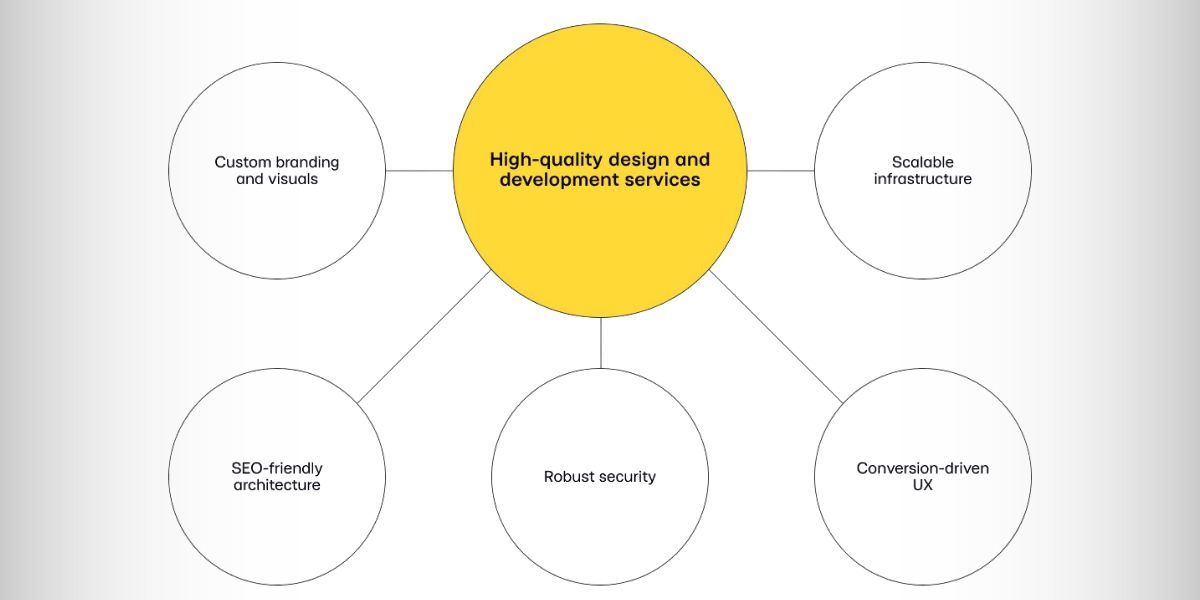
High-quality design and development services combine technical expertise with strategic business thinking. This means:

  • Custom branding and visuals that can represent the company’s unique voice. 
  • Scalable infrastructure that may support future growth, from new product lines to global expansion. 
  • Conversion-driven UX that can help map clear customer journeys and reduce friction. 
  • SEO-friendly architecture that helps ensure visibility in highly competitive digital markets. 
  • Robust security that safeguards both business data and customer trust.

This combination can transform a website from a simple digital tool into a potential business growth platform.

Real-World Impact Across Industries

Consider an e-commerce brand entering a crowded niche. A site that is slow, confusing, or poorly optimized may struggle to build trust, regardless of how strong the product is. On the other hand, a fast, mobile-first platform with optimized checkout processes can directly impact revenue. Studies suggest that every one-second improvement in load time could potentially raise conversions by up to 7%.

For B2B organizations, the stakes are just as high. A corporate website often serves as the first impression for potential clients, partners, or investors. A well-developed site is more likely to convey authority and professionalism instantly, while a poorly built one could risk undermining credibility in seconds.

Even for industries like healthcare, finance, or consulting, professional design and development are considered essential now. Compliance, accessibility, and security requirements demand expertise that off-the-shelf solutions are unlikely to provide.

Choosing the Right Partner

The challenge many businesses face is finding the right provider. Not all agencies or freelancers deliver the same level of quality, and the wrong partnership can prove costly.

When choosing a provider of website design & development services, decision-makers should evaluate:

  • A proven track record with measurable results. 
  • Case studies that demonstrate familiarity with their industry. 
  • Mastery of both design and development, rather than focusing on one side only. 
  • A forward-looking approach that includes technologies like AI, automation, or headless CMS solutions. 
  • Ongoing support, not just a “launch and leave” approach.

Ultimately, the right partner doesn’t just build a website — they help create a sustainable digital foundation.

Looking Ahead

As we head into 2025 and beyond, websites will continue to evolve. They’ll be more integrated into how businesses work, increasingly utilizing AI to better meet customer expectations, and remain even more important as customers continue to demand more.

If companies still see their websites as just something for the IT department, they may risk losing trust, customers, and an edge over their rivals. But if they invest in good website design, they could see faster growth, quicker trust-building, and the potential for turning possibilities into real deals.

Essentially, your website isn’t just a tool to sell products. It can be one of the most valuable assets your business owns online.