Freedom in Red: Silvia Rizzo Inspires with Ducati

Silvia Rizzo’s journey with Ducati is a story of power, elegance, and the relentless pursuit of freedom. A fusion of strength, grace, and innovation, her partnership with Ducati transcends the boundaries of both sport and style, creating a narrative that speaks to those who dare to live boldly. With her horse Ducati, and her motorcycle, the Ducati XDiavel V4 Burning Red, Silvia embodies the essence of Ducati: precision, passion, and excellence.

Known for her mastery in dressage, Silvia Rizzo has become a symbol of elegance and athleticism. But her story isn’t just about the arena — it’s about living a life full of challenges, triumphs, and unyielding determination. Silvia’s unique connection with Ducati runs deeper than just the name she shares with her horse. Ducati represents freedom in motion, a philosophy that mirrors her own approach to life and sport. The Ducati XDiavel V4 Burning Red isn’t just a motorcycle for her; it’s an extension of her identity, a declaration that every road can become her own.

Silvia and Ducati: A Story of Two Worlds United

At the heart of Silvia’s story is the emotional bond between her horse Ducati and her motorcycle of the same name. This connection is more than a coincidence; it’s a profound reflection of her values. Both the horse and the bike symbolize power, control, and a sense of freedom that defines Silvia’s journey. In her dressage career, Silvia has redefined what it means to combine strength with grace, commanding her horse with the same precision and passion she brings to her motorcycle.

Freedom in Red Silvia Rizzo Inspires with Ducati

Photo Courtesy: Estelle Roelofs

When Silvia rides the Ducati XDiavel V4 Burning Red, she is not just conquering the road — she is making a statement about who she is: a woman of power, elegance, and determination. It’s no surprise that her collaboration with Ducati has been a perfect match, bringing together two worlds of luxury — the world of high-performance motorcycles and the elegance of the equestrian sport. Ducati’s unmistakable design and unparalleled performance align with Silvia’s spirit, making every ride a celebration of freedom, strength, and individuality.

A Photoshoot That Tells a Story of Elegance and Power

Captured by the talented Estelle Roelofs, the photoshoot with Ducati takes viewers on a visual journey that encapsulates the essence of Silvia’s partnership with Ducati. From the calm and disciplined world of dressage to the dynamic and roaring power of the Ducati engine, the images reveal a striking contrast between stillness and speed. The Ducati XDiavel V4 Burning Red, sculpted and bold, stands as a work of art — much like Silvia herself. It represents the fusion of sensuality and sophistication, a reflection of the life Silvia leads: always moving forward, never compromising on her values.

The photoshoot’s intensity is amplified by the contribution of Benjamin Besselsen, whose work adds a layer of strength and depth to the images. While Silvia’s elegance commands attention, Benjamin’s contributions serve to complement and accentuate the raw power that Ducati represents. Together, they create a visual dialogue that celebrates Ducati’s identity — a perfect balance of dominance and style, strength and grace.

For Silvia, the connection with Ducati is more than just about showcasing a motorcycle. It’s a celebration of how both worlds — fashion and sport — intersect and inspire. Her story is about embracing life without fear, facing challenges with grace, and always striving for the next level of excellence. With Ducati, Silvia not only rides but lives boldly, embracing every moment with strength and confidence.

A Life Lived with Bold Strides

More than just a champion in the arena, Silvia Rizzo is an inspiration to anyone who dares to chase their dreams with unwavering conviction. The Chi è Chi Award she received is a testament to her uniqueness — a recognition of her ability to blend the worlds of fashion and sport seamlessly. This prestigious honor proves that Silvia is not just a figure in the spotlight, but a symbol of what it means to break boundaries and redefine success.

Freedom in Red Silvia Rizzo Inspires with Ducati

Photo Courtesy: Estelle Roelofs
Silvia Rizzo & Benjamin Besselsen’s Dynamic Collaboration with Ducati

Her journey with Ducati is about more than winning; it’s about living authentically. “Life rewards those who dare, and the bold leave their mark,” a philosophy that Silvia embodies through every action. The Ducati XDiavel V4 Burning Red, with its unmatched performance and sculpted beauty, serves as a reminder that to live fully, one must embrace the freedom to be bold, fearless, and unapologetically true to oneself.

In collaboration with Ducati Netherlands and Affetto Ducati, Silvia’s journey is a vivid testament to what happens when passion, precision, and style converge. Together, they’ve created a legacy — one that inspires, empowers, and leaves an unforgettable impression.

For more on Silvia Rizzo’s journey, visit her blog, or follow her on LinkedIn, Facebook, and Instagram for behind-the-scenes insights and updates.
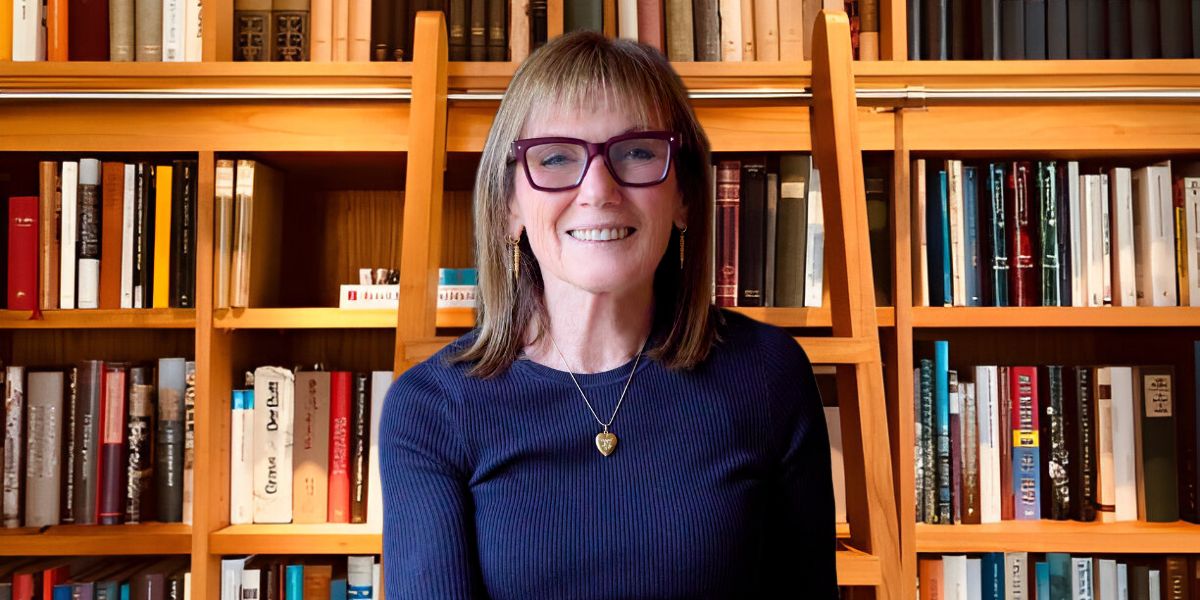

 

Before Their Crimes: What We’re Misunderstanding About Childhood Trauma, Youth Crime, and the Path to Healing

By: Wendy Smith, Ph.D., LCSW

In 2015, I traveled to Pelican Bay State Prison at the northern border of California.  Its massive concrete blocks rise ominously, in stark contrast to the wildly beautiful coastal waters of the Pacific Ocean just a few miles away.  Home to those who commit some of the most violent crimes, this prison, known as a “supermax” has one of the state’s large Secure Housing Units (SHU), designed to hold prisoners in long-term solitary confinement.  

I was part of a volunteer group of advocates, lawyers, and law students who traveled to California prisons to provide workshops on SB260, a groundbreaking state law passed in 2014 that established a new parole process for individuals whose crimes took place when they were under 18 years old. 

Spurred by scientific advances in the understanding of juvenile brain development, SB260 allows parole boards to consider the youthful development and early life experiences of men and women who committed their crimes as teenagers. For those who received life sentences while not yet 18, the new hope for an early release was nothing short of a miracle.

As a social worker and psychotherapist with expertise in the effects of trauma, my role was to lead “insight groups,” teaching the men how to develop insight into their crimes and the factors that might have played a part in their criminal behavior.  

Another of my roles that day was to lead a meditation.  This was the thing that had kept me awake in the nights before our visit.  It seemed so improbable that I could persuade these men to join me in a meditative experience.  As I stood at the front of the room, looking out at 65 men, many heavily tattooed, mostly Black and Brown, shifting in their seats, I wondered whether it would make any sense to them at all that someone like me, a middle-class White Jewish woman, an academic with no lived experience of incarceration, was inviting them into a meditative experience.  When I asked them to relax their bodies and close their eyes, would they? Or would suspicion, skepticism, and the need to maintain vigilance prevail, and the men be unable to step away from their immediate surroundings mentally?  I had no real plan for what I would do if they balked or were simply unresponsive, so I was both relieved and profoundly moved to see and hear almost all of the men in the room place their feet on the floor, relax into their seats, close their eyes, and begin to take deep breaths.  The sound of my voice, female and softer than what they heard on their usual day, had a greater impact than anything I said during the meditation, offering a human connection and a soothing experience more akin to a lullaby than speech. 

Before Their Crimes What We’re Misunderstanding About Childhood Trauma, Youth Crime, and the Path to Healing

Photo Courtesy: Before Their Crimes / Wendy Smith

The next day, we entered the Solitary Housing Unit (SHU).  It’s easy for an inmate to get sent to the SHU—suspected gang affiliation, a variety of both serious and petty infractions—but it is much, much harder to get out.  The windowless blocks of the SHU weighed down upon us; the heaviness was physical and mental, like the smashed, emptied-out feeling that comes when someone you love has died.  Here, there was no congregate visiting area, only long halls lined on both sides with individual cells. 

We spent our day moving slowly through the hall between cells, positioning ourselves to be able to speak to men in four cells at a time and then moving to the next group, so that we could reach every person in the SHU who might be affected by SB260.  We spoke to the men through metal doors perforated by hundreds of smaller, round openings, each just big enough for the tip of a finger to fit through. These small openings permit the “Pelican Bay Handshake,” in which inmate and visitor can touch fingertips when placed on the same hole.  Poignantly, many of the men put their fingers on these openings, inviting us to ‘shake.’  Some told us they hadn’t physically touched another person in years.  Our visual images of one another through the tiny holes were broken and distorted.  Sometimes we could see just one eye of the other person, and they of us, but it didn’t matter–human connection was powerfully present as we moved from cell to cell.  Our time with each foursome was necessarily brief, focusing on what the new legislation might mean for them.

It happened that I was able to speak individually with a man who had recently renounced his Mexican gang ties in a ‘debriefing process’ during which he told officers everything he knew about the gang.  He and I met in a different corridor, where the door of his holding cell permitted us to see each other more fully.

A solidly built middle-aged man with a deeply lined face that told of too many painful experiences, he had been incarcerated at 17, already the father of two young children. We did not discuss his crimes or his gang life before and during his imprisonment.  He wanted and needed to talk about the rocky course of his marriage over many years, how his wife had given him the courage and fortitude that helped him to get sober, and the religious faith that strengthened his will to leave the gang life.  

The conversation was wrenching.  He wept as he told me of the pain and guilt he felt about how he had lived his life and his tenuous hopes for the future. I wept too.  Only recently, he said, had he begun to see that events from his early life had an impact on him.  His baby brother died in childhood, and his mother’s grief consumed her.  She turned on him cruelly, pouring scalding water over his hands, a terrifying experience that was repeated more than once.   

We spoke for 20 minutes, one human being to another.  His relief was palpable. I could feel how the simple act of telling his story to a person who wanted to hear it was a restorative moment.

We learned that even the briefer group meetings with the advocates had an impact.  A few days after we left Pelican Bay, we received a letter from one of the men there that read, in part: “Many years of jail, years of prison, not even the SHU or worst punishments could change me or break me. Punishment, torture, that don’t change people! It only makes us worse because to survive it, we have to become tougher, harder. Today I learned something, compassion!  You guys don’t know us, but you treated us as humans and showed affection and caring towards us, and made us feel human.  We feel and have a longing to open up to people, to be accepted. You humble us. Make us want to change.”  Jose Flores

About the Author: 

Wendy Smith, Ph.D., LCSW, is a retired clinical professor of social work who served as associate dean of curriculum development and assessment at the University of Southern California’s Suzanne Dworak-Peck School of Social Work, where she taught courses on child and adolescent development. She is a licensed clinical social worker, specializing in the treatment of individuals, couples, and survivors of childhood maltreatment. Her new book is Before Their Crimes: What We’re Misunderstanding About Childhood Trauma, Youth Crime, and the Path to Healing.

Stepping Into Act 2: How Veronique Gautier Guides Women From Burnout to Brilliance

By: Nancy Wallace

For many women, there comes a moment when life as it is no longer feels like life as it should be. Years of dedication—to career, family, or building someone else’s vision—culminate in an uneasy realization: my life doesn’t fit anymore. It’s a truth both sobering and liberating, and it’s the space where Veronique Gautier, known simply as “V,” does her most transformative work.

V is the founder of the Act 2 Revolution, a strategist, mentor, and guide for women ready to step into their second act with clarity, vitality, and purpose. Her approach blends lived experience with a deep command of transformational sciences—from neuroscience and epigenetics to psychology, biology, and quantum principles. But what makes her work so powerful is not just the science; it’s the invitation for women to choose themselves, often for the first time in decades.

Choosing Herself: The First Shift

V describes that turning point with a metaphor: “It’s like unkinking a hose—life starts flowing again.” Women come to her exhausted, stuck, and sometimes even sick from years of having abandoned themselves for everyone else. In their first strategy session, they face a critical choice: will they continue to force themselves into a life that depletes them, or will they finally choose themselves?

That decision, V says, is everything. It’s not about external achievements at first, but about reclaiming the ability to design a life aligned with who they truly are. Once that choice is made, transformation can begin. And what unfolds over the next nine months can feel both rapid and remarkable: vitality returns, passion replaces pressure, and women start leading from a congruent, heart-and-brain-aligned identity to create results they’d never believed were possible for them

The Four Questions of Reinvention

At the center of V’s work is her signature framework: the Four Clarity Questions to Reinvention. This process, she says, bridges life mastery with business alignment, helping women step into leadership and entrepreneurship from the inside out.

The first question is “Who am I now?” Too often, people live from outdated identities, shaped by old expectations, roles, and conditioning. V guides her clients in discovering their Distinctive Natural Assets®—unique qualities and experiences that hold real value. Through an approach that combines 2 levels of awareness – self-empathy and observer view –  women discover how brilliant they really are, unlocking a really powerful, authentic self-respect.

The second question, “What do I want now?”, is about direction. Unlike traditional goal-setting, V calls this dream-setting. Drawing on DreamBuilder® technology, she helps women imprint their vision on the brain and body until it becomes a possible life to be lived, and guides them to start living ‘from’ there to bring this possibility into reality. “The secret,” she explains, “is loving your dream so much that you’re willing to become the person who lives it.”

The third question, “Who am I designed to be?”, unlocks clarity of purpose by itself during the process V calls this our “Spiritual DNA”—the vocation and calling that sets our lives on fire. Once this is activated, women often feel unstoppable, propelled by an energy that finally matches their deepest truth.

Finally, the fourth question, “What am I here to do or give?”, turns clarity into action. Here, women design businesses, brands, or leadership paths that reflect their authentic selves. As V puts it, “We are not dreamers—we are builders, value creators. Our responsibility is to create the unique vehicle for our contribution.”

Vitality Reborn

For many of her clients—and for V herself—the work begins in a place of burnout. High-achieving women, she says, are “champions of full-life burnout.” They run on willpower, demand excellence of themselves, and push their nervous systems to the limit. But eventually, survival mode takes its toll, showing up as exhaustion, illness, or emotional disconnection.

V understands this intimately because she lived it. Her own transition—from successful corporate strategist to soul-aligned mentor—was born from a full-life burnout, culminating in a divorce and the near collapse of her health. She had compromised herself for too long, and it took illness to stop her. On the other side of that crisis, she rebuilt not just her career, but her relationship to life itself.

Now, she helps women transmute burnout into what she calls “full-fledged vitality.” Through alignment practices, heart-brain coherence, and quantum tools, her clients reconnect to life itself. The shift is profound: when what you do and who you are finally align, life circulates freely again.

Redefining Success

Having walked through fire herself, V no longer defines success in the traditional corporate sense. Instead, she frames it with one simple question: how alive do you feel? True success, she insists, is not about competition but about contribution, anchored in the uniqueness of each person’s Distinctive Natural Assets®.

When women claim that uniqueness, stop competing, and start contributing from their authentic design, everything changes. “Expressing who I am designed to be is exactly what gives me life,” V says. “And when we live in full alignment—personal to business—that is the recipe for vitality.”

The Revolution of Act 2

The women V works with don’t just change their careers or businesses; they change their lives. They move from exhaustion to energy, from compromise to clarity, from survival to soulful leadership. They step fully into their Act 2—not as a continuation of the past, but as the beginning of something entirely new.

And for V, that’s the real revolution: women leading from vitality, purpose, and joy, creating ripple effects that touch families, communities, and industries.

Step boldly into your next chapter—clearer, stronger, and full of energy—by exploring V’s transformative mentorship programs at www.veronique-gautier.com.

For visionaries, entrepreneurs, and innovators ready to align purpose with powerful brand building and value creation , dive into the creative world of www.thebrandnalab.com  and bring your ideas to life with authenticity and impact.

Five Key Steps to a Successful Wedding Plan

Wedding planning can be a whirlwind of emotions, where excitement quickly shifts to stress as couples juggle the numerous details that go into creating their perfect day. From deciding on the guest list and choosing the wedding dress to selecting a venue and managing the budget, it’s easy for couples to become overwhelmed by the sheer volume of decisions. Amid all these choices, it’s common to lose sight of what truly matters, celebrating love and the union of two people. However, it doesn’t have to be an all-consuming, anxiety-filled experience. By taking a step back and adopting a clear, organized approach from the very beginning, couples can not only streamline the process but also make more informed decisions. This helps minimize compromises and, more importantly, ensures that the planning process itself becomes something enjoyable. With a well-thought-out plan, couples can focus on what truly matters, creating lasting memories and enjoying every moment of their journey toward the big day.

Set Priorities Early


Before booking anything, the couple needs to sit down together and talk about what matters most. Is it the location? The size of the guest list?

Defining their values early in the planning process gives couples the structure they need to make confident decisions. For instance, if a couple envisions a breathtaking sea-view venue, they might decide to scale back the guest list in order to stay within their budget while still achieving their dream location. By clearly understanding their priorities, couples can align their choices with their vision, making it easier to say no to options that don’t fit without second-guessing themselves. This kind of clarity not only helps streamline the decision-making process but also minimizes the chances of regret later on. With a clear sense of what matters most to them, couples can navigate their wedding plans with greater peace of mind, avoiding unnecessary stress and ensuring that every choice supports their overall vision for the day.

Get Organized With A Timeline That Fits Their Life


Building a timeline that reflects the couple’s actual lifestyle is key to managing wedding planning without adding unnecessary pressure. If one partner is studying, working, or juggling multiple responsibilities, it’s important to factor those commitments into the plan. Setting aside specific weekends for administrative tasks, venue visits, or meetings can make the process feel more manageable and ensure that progress continues steadily, rather than getting overwhelming. When both partners have a clear view of what needs to be done and when, it not only helps keep everything on track but also reduces the friction that can arise from mismatched expectations. With a timeline that works for both, couples can stay organized and avoid the stress of feeling behind or unprepared, keeping their focus on the big picture rather than getting caught up in the details.

Budget With Flexibility And Honesty


Open and honest conversations about what they can and want to spend are essential. Couples should build in at least 10% extra for the things they didn’t see coming, such as extra seating or weatherproofing the venue.

Seasonal flowers or switching from plated meals to family-style dining can also make a big difference. Knowing the numbers empowers them to negotiate with confidence and make decisions that reflect their priorities, not pressure.

Choose Vendors Who Align With Their Vision


The right photographer or caterer isn’t just someone with good reviews — it’s someone who listens. When meeting with vendors, couples should ask about how they work, how they handle changes, and how they communicate. When the people they hire understand and respect their ideas, the couple is more likely to feel relaxed on the big day as those vendors work their magic. There should be a sense of invaluable trust, especially when the day arrives and the couple wants to stay present rather than problem-solving.

Stay Connected To The Meaning Behind The Day


When spreadsheets and budgets start to take over, it helps for couples to take a break and remind themselves why they’re doing this. Taking a weekend off from planning, going for a walk, or having a conversation about what marriage means to them can help restore focus. Initiating small moments of intimacy, like choosing their engagement rings together or writing personal vows, can serve as meaningful reminders that they’re not just planning an event, but creating a shared beginning. A foundation like this can carry them not just through the wedding, but into the days, months, and years beyond.