Ari Max: The Coach Offering Insights and Tools for Personal Growth Through Life’s Challenges

By: Elowen Gray

For more than a decade, Ari Max has dedicated his career to helping people turn life’s toughest moments into opportunities for personal growth. A certified life coach, Addiction Recovery coach, ABA therapist, and volunteer chaplain, Ari has spent years working closely with individuals facing a wide range of challenges—from children on the autism spectrum navigating subtle social cues, to adults dealing with addiction, anxiety, depression, the search for purpose, and everyday life struggles. His new book, Believers Are Achievers: A Guide to Becoming Your Best Self, reflects those experiences and insights, offering readers a practical blueprint for living with intention, resilience, and authenticity.

Ari’s journey to authorship wasn’t driven by a desire for recognition, but by the persistent encouragement of friends, clients, and colleagues who saw the impact of his coaching techniques. As Ari shared in a recent interview with NY Weekly, “I’ve been helping people for years, but so many told me, ‘I can’t remember everything you teach me—can you write it down?’ So I did. And I realized there was something here that could help many more people.”

Central to Ari’s approach is the emphasis on building a strong foundation before pursuing larger goals. Drawing on his work with clients from all walks of life, Ari stresses the importance of character and integrity as the basis for sustainable change. “If your foundation isn’t strong, life’s challenges might easily knock everything down like a house of cards,” he explained, likening inner strength to the beams and walls that help a house withstand storms.

One of Ari’s frameworks featured in the book is the GPS Growth Journal—Goal, Plan, Start. Just as a GPS in your car requires both a starting point and a destination, Ari believes that personal transformation benefits from having clear, realistic goals, a thoughtful plan to reach them, and most importantly, the courage to begin. This simple yet effective system encourages readers to stop fantasizing about change and start taking consistent action.

Ari’s experience as an ABA therapist for individuals with Autism Spectrum Disorder has deeply influenced his approach. He shares stories of helping children grasp critical social nuances, such as the importance of saying “thank you,” by connecting abstract concepts to relatable situations. He teaches that true awareness of ourselves and others must come first, followed by acceptance, and finally action, a model he calls the “AAA approach.”

Authenticity is another recurring theme in both Ari’s life and his book. Using the acronym HOW—Honesty, Open-mindedness, and Willingness—he invites readers to cultivate self-awareness and embrace personal truths, even when they may feel uncomfortable. “Relationships, success, and fulfillment all start with being honest with yourself,” Ari says.

Believers Are Achievers stands out among self-help books because it doesn’t just share concepts; it offers readers tools they can easily apply. Techniques like the “5-4-3-2-1” mindfulness exercise—identifying five things you see, four you touch, three you hear, two you smell, and one you taste—are designed to ground readers in the present moment and alleviate anxiety. These exercises, adapted from his work with neurodiverse clients, are also beneficial for anyone feeling overwhelmed in today’s fast-paced world.

Another practical tool is the SOBER method: Stop, Observe, Breathe, Exhale, Respond. Ari presents it as a way to replace impulsive reactions with more thoughtful, intentional responses—a skill that can be valuable in both personal and professional relationships. He believes that mastery of these small moments can lead to significant improvements in how we navigate life’s daily stresses.

While Believers Are Achievers is Ari’s first book, it’s clear he intends to continue his work. He shared plans for future titles, including The Gift of Real Connection, a book exploring how to build authentic relationships through intentional listening and presence. “People don’t care how much you know until they know how much you care,” Ari said, emphasizing his belief that genuine connection is at the core of a fulfilling life.

Ari’s ultimate hope is that his book serves as more than just reading material—it’s a resource for creating joy, purpose, and motivation. He envisions Believers Are Achievers as both a standalone guide and a starting point for future workshops and coaching sessions that help people implement these principles in their lives.

To support men on their personal growth journey, Ari is currently offering a free 30-minute life coaching session—an opportunity to experience his approach firsthand. More details are available on his website. In an impressive achievement, Believers Are Achievers, Ari’s first book, reached the bestseller ranks in just two months, gaining attention from readers worldwide.

Two-time Super Bowl champion and NFL Hall of Famer Ray Lewis offered an inspiring message about Believers Are Achievers, praising it as a valuable tool for overcoming fear and emotional struggles. In his video, he speaks highly of Ari Max’s dedication and experience in helping people find purpose and lasting change.

Through his unique combination of practical strategies, heartfelt stories, and relatable wisdom, Ari Max encourages readers to step into their best selves—one small, intentional step at a time. In a world often focused on instant gratification, Ari reminds us that meaningful success is built gradually, on a foundation of honesty, resilience, and self-awareness.

Whether you’re a parent seeking to model healthy habits, a professional aiming to break through career plateaus, or someone on a personal journey toward greater self-love and confidence, Ari’s book offers a roadmap tailored to your life. It’s not about perfection; it’s about progress. And with Ari’s guidance, readers will find the motivation and clarity to keep moving forward, regardless of the challenges they encounter.

For those ready to embrace this journey, Believers Are Achievers is available now in paperback, and more resources can be found at www.AuthorAriMax.com. Dive in, and start building a life that stands strong—even when the storms come.

Disclaimer: The information provided in this article is for informational purposes only. Results from coaching and personal growth methods may vary from individual to individual. No guarantees or promises of specific outcomes are made.
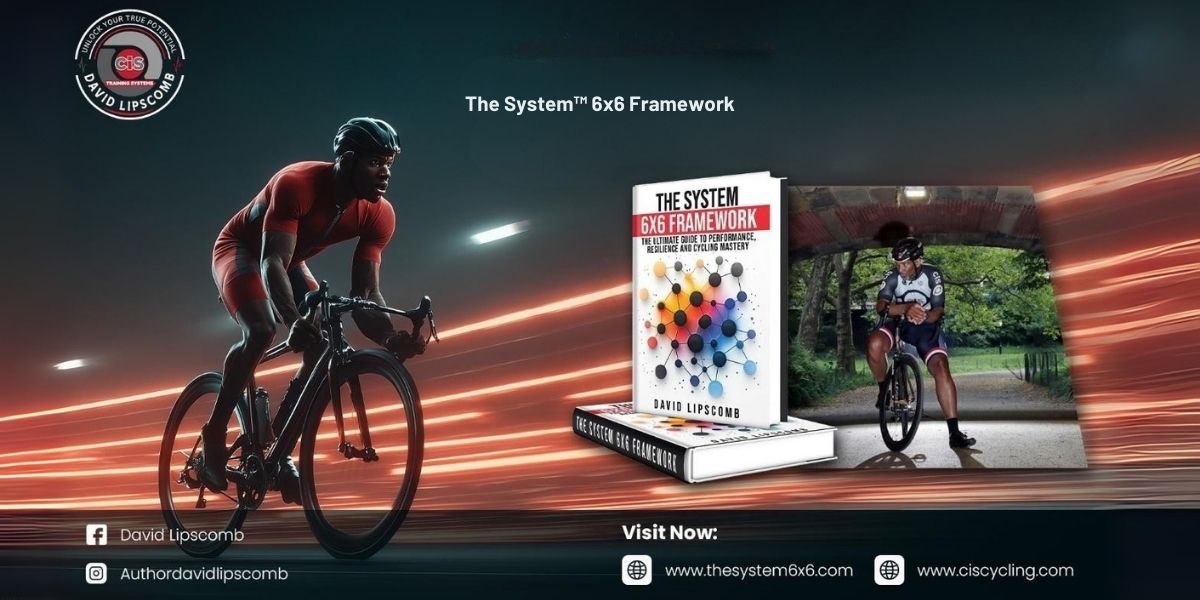

Train Smarter, Not Just Harder: David Lipscomb’s SYSTEM™ 6×6 and the Blueprint for Mastery

By: Elowen Gray

When David Lipscomb says “The SYSTEM™ 6×6 is more than a methodology—it’s a movement,” he’s not being metaphorical. With over 30 years of coaching experience, a black belt in martial arts, a background in corporate leadership, and a near-death cycling accident that redefined his purpose, Lipscomb has created something that goes beyond sport. His book, The SYSTEM™ 6×6 Framework: A Guide to Performance, Resilience, and Cycling Mastery, offers insights into both training and life transformation, on and off the bike. Lipscomb’s journey began in Gettysburg, Pennsylvania, in 1987, when martial arts became his foundational discipline. That training taught him something more than just physical skills: discipline, structure, and the importance of repetition. “The core of all I know, and who I am as a person, is from martial arts training,” he explains. That same discipline would later guide him through corporate HR, Six Sigma process improvement, and eventually, a traumatic accident in 2015 that nearly ended his life. It was during his recovery—after spending 40 days in the hospital—that he committed to sharing everything he knew. The SYSTEM™ emerged not out of ambition, but as part of a personal journey of recovery.

The foundation of THE SYSTEM™ 6×6 combines six key areas—Training Elements, Energy Systems, Performance Standards, Core Philosophies, Emotional Intelligence (EQ), and Leadership Principles—each containing six components. Lipscomb intentionally designed this around the hexagon, “a balanced shape” representing balance, symmetry, and completeness. As he explains, “Six by six by six equals 36. It’s not random—it’s a system where each part works together to support the whole.” What sets THE SYSTEM™ apart from traditional cycling programs is its holistic approach. This isn’t just about FTP numbers or power metrics. As Lipscomb says in the book, “Cyclists aren’t training with a system. They train hard but often fail to break through.” Many training plans, he argues, lack structure and balance. THE SYSTEM™ seeks to address that through structured progression, technical precision, and real-world application.

For instance, athletes begin by mastering the 6 Training Elements—Endurance, Cadence Control, Force/Tempo Development, Speed Endurance, Power Generation, and Lactate Clearance. Lipscomb insists these areas are often overlooked, especially Cadence and Heart Rate. “Everyone chases power,” he says in his interview, “but power is the result of cadence and heart rate. Not the input. That’s where people tend to misunderstand.” Beyond physiology, Lipscomb emphasizes the mental and emotional components that are frequently overlooked in athletic performance. Originally introduced to the EQ-i® inventory in the early 2000s through his corporate work with Dr. John Hughes, he immediately recognized its relevance beyond the business world. He saw its potential in the world of athletic performance. “The EQ component is often overlooked in performance circles,” Lipscomb notes, “but it’s often a key factor in why people quit workouts. When it gets hard, emotional rather than physical weakness can take over.” By integrating emotional intelligence into his coaching, he helps athletes—and leaders—understand how they respond under stress. This EQ-driven philosophy is now an integral part of the leadership and cultural mission of The SYSTEM™. As the former Director of DEI at USA Cycling, Lipscomb helped develop programs like Search for Speed, designed to introduce inner-city kids to competitive cycling. That same inclusive mission now drives the book’s foundation. “I wrote this to challenge existing boundaries,” he says. “This is not just for elite athletes or any one race or gender. This is for everyone.” He highlights that The SYSTEM™ is intentionally designed to be accessible and free of gatekeeping.

The structure of the program reflects his martial arts background. Every athlete starts as a White Belt and progresses through levels—Green, Brown, and Black—earning promotions not just based on performance but by understanding the “why” behind the method. “They have to read the book, study the framework, and apply it,” Lipscomb says. “Even experienced cyclists start from the foundation.” The SYSTEM™ is also a mindset, not just a training program. “If you repeat it enough,” Lipscomb explains, “you learn a skill. It becomes habit. And habits lead to excellence.” His background in Six Sigma—focused on improving processes and efficiency—helped create a model where every aspect of training is intentional. “A system is an interconnected whole. If one part is misaligned, the system can suffer.”

Perhaps the most compelling evidence of Lipscomb’s belief in his system is his own comeback story. After his accident in 2015, he didn’t just recover physically—he rebuilt himself from the inside out. “That 40 days in the hospital was one of the hardest things I’ve ever faced,” he says. “Training is hard. Business is hard. But that? That took everything.” The mental resilience from martial arts, the clarity of systems thinking, and a mission rooted in equity helped him not only survive—but create something that could potentially impact others. For Lipscomb, THE SYSTEM™ 6×6 is only the first chapter. He’s already suggested that this book is part of a broader series. Each volume will build upon the foundational principles introduced in this first work. But even as the series expands, the core remains focused: precision, inclusivity, and transformation. In his words: “Mastery isn’t about chasing numbers—it’s about owning your performance, refining every detail, and turning effort into excellence.” David Lipscomb isn’t only redefining cycling. He’s reshaping how we train, lead, and grow—on the bike, in the boardroom, and within ourselves.

Disclaimer: The views and opinions expressed in this article are those of the author and David Lipscomb and are for informational purposes only. The SYSTEM™ 6×6 Framework is not guaranteed to produce specific results for all individuals. Results may vary based on personal commitment, experience, and other factors. Always consult with a healthcare professional or qualified coach before starting any new fitness or training program.

Why the Vertical Bike Rack Is Becoming the Go-To for American Outdoor Families

For many American families, weekends aren’t just about catching up on chores or running errands—they’re about getting outside. Whether it’s camping in the Rockies, road-tripping along the Pacific Coast Highway, or simply heading out to the local trails, families are spending more time together in the outdoors. And if there’s one activity that continues to bring parents and kids together, it’s cycling. But while more families are discovering the joy of biking, one challenge has lingered: how to transport multiple bikes safely and efficiently. Anyone who has tried cramming three or four bikes into the back of an SUV knows it’s no easy feat. Scratched paint, bent wheels, and plenty of frustration often come with the territory. This is why the vertical bike rack has gained popularity quickly. Unlike traditional horizontal systems, vertical racks let families carry multiple bikes securely while keeping loading simple. For parents balancing kids, camping gear, and everything else that comes with an outdoor weekend, the appeal is obvious.

Outdoor Family Adventures Are on the Rise

According to surveys by the Outdoor Industry Association, participation in outdoor recreation among U.S. families has steadily increased over the past decade. Activities such as biking, hiking, and camping consistently rank as favorites, especially among households with young children. Cycling in particular has surged since the pandemic, with more families embracing it as a healthy, screen-free way to spend time together. From paved suburban trails to the mountain biking networks in Utah or Colorado, the options are endless. But the farther families want to travel, the more critical reliable bike transport becomes. Resources like family cycling guides emphasize the importance of preparation in making biking a positive experience. For many families, that preparation includes solving the challenge of bike transport.

Why Vertical Racks Fit the Family Lifestyle

What makes vertical racks so attractive to parents? It comes down to three main advantages: 1. More Capacity in Less Space – Vertical racks are designed to carry anywhere from four to seven bikes upright. Instead of spreading them out horizontally, they save space and keep bikes organized. For families with multiple kids—or those who like to bring friends along—this is a huge upgrade. 2. Simplified Loading – Parents juggling snacks, helmets, and excited children don’t want to spend 30 minutes fighting with a rack. Vertical systems enable bikes to roll into place and lock securely, minimizing the need for heavy lifting and awkward angles. Even kids can help with loading their own bikes. 3. Safety and Stability – Anyone who has seen bikes wobbling on a trunk-mounted rack at 70 mph knows the risk. Vertical racks hold bikes firmly, reduce road vibration, and keep both vehicles and bikes protected on long drives. For families planning summer road trips to National Parks or weekend rides in the suburbs, these features can make the difference between a smooth getaway and a stressful ordeal.

The Family Road Trip Factor

Road trips are a staple of American family life, and bikes are increasingly part of the packing list. National Parks like Yosemite, Acadia, and Zion now feature extensive cycling routes and paved paths designed for family riding. The National Park Service even highlights biking as one of the ways to experience park landscapes. However, to take advantage of these destinations, families need to know their bikes will arrive there in one piece. A vertical bike rack doesn’t just transport bikes; it preserves the investment families have made in their gear. With the rising popularity of e-bikes, which are heavier and more expensive, this is even more important.

Beyond Transport: Organization at Home

Another overlooked benefit of vertical racks is how they help at home. Many models are designed to mount in garages, providing families with a space-saving storage option when bikes aren’t in use. For parents who feel like the garage is always overflowing with toys, tools, and sports gear, being able to keep bikes neatly stored upright is a game-changer. It reinforces the idea that bike racks aren’t just for transport—they’re part of a family’s long-term outdoor lifestyle.

Tips for Families Considering a Vertical Rack

If you’re thinking about upgrading, here are some practical tips to keep in mind: 

  1. Check Vehicle Compatibility – Most vertical racks require a hitch mount, so ensure your vehicle is equipped with one or can be fitted with one. 
  2. Know Your Numbers – Count how many bikes you’ll regularly transport. Choosing the right capacity upfront will save you from having to upgrade later. 
  3. Factor in E-Bikes – If your family owns e-bikes, make sure the rack is rated to handle the additional weight. 
  4. Look for Assisted Features – Some racks include hydraulic dampers or tilt options that make lowering and lifting bikes safer and easier. 5. Consider Storage Use – If garage organization is also a priority, choose a rack that can double as an at-home storage solution.

A Smarter Way Forward

The vertical bike rack is more than a passing trend—it’s a solution built for the way American families live and travel today. It solves the frustrations of traditional racks while opening the door to bigger adventures. For parents who want to spend more time riding and less time wrestling with logistics, it’s an investment that pays off quickly. With more families hitting the road in search of fresh air and shared experiences, the vertical rack is fast becoming the go-to choice across the country.

Bridging the Gap Between Family Adventures and Everyday Convenience

Cycling is one of the simplest, healthiest, and most fun activities families can enjoy together. However, making it a habit requires the proper support—and that includes reliable transportation. By embracing the convenience and security of a vertical bike rack, families can remove one of the significant barriers to getting out more often. Whether it’s a quick weekend trip to the trails or a cross-country adventure, the right rack ensures bikes are always part of the journey. For American families looking to balance health, connection, and adventure, the vertical rack isn’t just an accessory—it’s the missing link between the driveway and the open road.

Vonnette Penley: A Prophetic Voice Awakening Purpose and Identity

By: Alex Smith

In every generation, God raises voices that carry both clarity and fire. Vonnette Penley is one of those voices an ordained minister, prophetic speaker, author, mentor, and entrepreneur whose mission is to awaken identity, release healing, and call a generation into its God-given destiny.

“I don’t just teach; I unlock,” Penley declares. “I speak to the dry bones, and they rise.”

These aren’t just words they reflect a life that has walked through betrayal, loss, and near-death experiences, setbacks yet emerged with a sword in hand and fire in her spirit.

From Hidden Beginnings to Global Impact

What began as a small Bible study in her living room has grown into Parakletos Ministry a thriving Edmonton-based movement with a global reach. Today, Parakletos equips women, youth, and families through mentorship, discipleship, intercessory prayer, retreats, outreach, and more. From supporting cancer patients and orphans to helping immigrants and families in crisis, the ministry carries one heartbeat: to restore identity, break generational strongholds, and release Kingdom destiny. At the gatherings, unique anointing flows chains break, destinies awaken, and people encounter the God who restores all things. With more than seven years of leadership and theological training, Penley combines deep prophetic insight with practical empowerment.

“I carry fire, oil, and the sword,” she often says. And those who sit under the ministry leave marked by transformation.

A Voice for the Nations

Penley’s prophetic message has resonated not only with local communities but has extended to the nations. Through her international outreach initiatives, she has been invited to speak at conferences, retreats, and women’s events worldwide. Her ability to discern God’s timing and purpose for individuals and groups has transformed lives across various cultures and continents. Whether speaking to a gathering of young women in Africa or ministering to families in crisis in Europe, Penley’s prophetic words cut through the noise, bringing clarity and hope. Her global reach continues to grow as she passionately believes that the time has come for God’s people to rise and walk in the fullness of their divine calling.

A Pen Dipped in Oil

Through Sword Fire Publishing Inc., Penley has authored books that serve as lifelines for those in an identity crisis or spiritual wilderness:

  • I Am Who I AM Says About Me — a prophetic identity manual.
  • Daughters of Destiny: The Women Who Changed History and the God Who Called Them — a powerful study of biblical women who shifted nations.
  • Walking Through Open Doors: A 30-Day Devotional on Faith & Purpose — guiding believers into bold steps of obedience.
  • Dream It With God Vision Board Workbook: a prophetic tool for aligning vision with purpose through art and faith.
  • Vision Board Art Work Book: The importance of vision and prophetic planning.
  • Deborah: A Prophetic Coloring Story for Children teaching children about courage, leadership, and hearing God’s voice through the life of Deborah, the judge and prophetess who led Israel to victory.
  • David: A Prophetic Coloring Story for Children capturing the journey of a shepherd boy anointed as king, instilling lessons of worship, faith, and boldness to face giants.

Her books are now studied in homes, churches, and mentorship groups across North America and the Caribbean. Equipping the next generation with stories that not only entertain but awaken faith, courage, and destiny at an early age.

A Rising Call

Looking ahead, Penley is expanding her reach through online discipleship courses, mentorship circles, and leadership training programs. Whether she is preaching on stage, mentoring one-on-one, or interceding in prayer, her mission remains the same: to see women rise healed, whole, and bold in their God-given assignments. Her life is living proof that what the enemy meant for evil, God has turned for destiny. One person at a time, she is unlocking purpose, restoring identity, and releasing the power of the Kingdom.

Disclaimer: The content of this article is intended for informational and inspirational purposes only. The experiences and teachings shared by Vonnette Penley reflect her personal journey and beliefs. Individual results and spiritual experiences may vary, and it is important to seek guidance from qualified spiritual leaders or counselors when making personal or life decisions. The views and practices described do not replace professional advice or medical treatment.