Beyond Hollywood: Why an Egyptian Indie Film’s Quiet Success in L.A. Speaks Volumes

By: Jacob Maslow

In the glittering, often deafening, landscape of Los Angeles’s film scene, it’s easy for subtlety to get lost. Each year, countless films from every corner of the globe vie for attention, armed with big budgets, big stars, or aggressive marketing campaigns. Yet, sometimes, profound statements are made in a whisper. Such is the case with “Subconscious,” an Egyptian independent short film that recently made a significant impact at the Independent Shorts Awards, demonstrating that true cinematic power lies not in spectacle, but in vision.

The film’s success is a potent reminder that the language of cinema is, at its core, visual. Produced by the emerging Egyptian filmmaker Haitham Hassan, “Subconscious” is described as a masterclass in symbolic storytelling. By avoiding heavy dialogue in favor of a “bold visual metaphor of internal struggle,” Hassan crafted a narrative that is potentially accessible to a wide audience. This is where the film’s true strength lies. It doesn’t need to explain itself through language; its imagery of suppressed emotion and internal conflict resonates across cultural divides, speaking directly to a shared human experience. It’s a testament to the idea that a story told through images and sound can often be more eloquent than one laden with words.

A Producer with a Dual Identity

What makes Haitham Hassan a particularly compelling figure is his demonstrated ability to navigate two different worlds of filmmaking. On one hand, he has a noted commercial sensibility. His Arab-language feature, Adel Mesh Adel, found significant success, landing distribution with Netflix and securing a spot in the platform’s widely viewed in multiple countries. This highlights an understanding of audience engagement and narrative pacing that appears to resonate with mainstream markets.

The commercial success of Adel Mesh Adel becomes even more meaningful when considering its genre. As a mainstream comedy—a cornerstone of Egyptian cinema’s popular appeal across the Arab world—the film’s ability to find an international viewership on a platform like Netflix is noteworthy. It challenges the notion that foreign-language films must be somber dramas to travel well, suggesting a global appetite for culturally specific humor and lighter fare. For producer Haitham Hassan, orchestrating the production and distribution of a high-performing commercial comedy and then pivoting to the introspective and silent approach of Subconscious is no small feat. It showcases a remarkable artistic range, suggesting fluency in both the loud, accessible beats of popular cinema and the quiet, nuanced language of the arthouse.

On the other hand, with “Subconscious,” Hassan displays a deeply personal, art-house sensibility as a producer willing to take creative risks. The film is often described as “more of a statement than a spectacle,” highlighting a pivot toward pure, uncompromising artistic expression. This duality is rare. It positions Hassan not just as a skilled craftsman in production, but as an artist with a clear vision, capable of both delivering mass entertainment and nurturing films that invite audiences and critics to reflect. His background in international production has clearly shaped his unique perspective, allowing him to create work that is both polished and profound.

The Enduring Spirit of Independent Film

Perhaps the most inspiring aspect of this story is the very nature of the film’s creation. Subconscious was produced entirely outside the Hollywood ecosystem. In an industry often dominated by gatekeepers and astronomical budgets, this film stands as a powerful symbol of the independent spirit. It’s a story brought to life not by studio notes or market testing, but by the singular vision and strategic guidance of its producer.

Its journey from Egypt to a screening room in Los Angeles, where it earned its place on merit alone, is a significant achievement for every filmmaker working outside the established system. It supports the belief that a compelling idea and a clear creative voice—when championed by a dedicated producer—are the most valuable assets in filmmaking. “Subconscious” winning accolades in the U.S. isn’t just a win for Hassan; it’s a win for global independent cinema, signaling that the world is hungry for authentic stories, no matter where they come from. For aspiring filmmakers, it’s a strong reminder: your voice matters, and your vision can break through.

As we look for the next wave of influential filmmakers, it’s crucial we look beyond our own borders. Voices like Haitham Hassan’s are not just producing films; they are building bridges. “Subconscious” is more than an impressive short; it’s a piece of cultural diplomacy, demonstrating that the silent, universal language of art can foster connection and understanding in a world that greatly benefits from such efforts. Hassan is, without a doubt, a producer to watch.


Lionzed: Building Bridges Through Beats and Belief

By: Umair Malik

Rising from Beijing with a message rooted in hope, hip-hop artist Lionzed is gradually expanding the boundaries of Chinese-language rap, one song, one story, one listener at a time.

Zhai, known artistically as Lionzed, didn’t grow up with a music industry blueprint. His stage name is simple but personal. “Lion” comes from his admiration for the animal’s presence—powerful, but not solitary. “It’s the king of the jungle, yet it has many companions,” he says. “Zed” refers to the letter Z, used to represent his last name, Zhai, ever since middle school when classmates started calling him JackZed. “Lionzed means LionZ,” he says. “It’s the animal that represents me and my family.” It is a name that holds both myth and memory, pride and playfulness, and it reflects the way his music operates, grounded in identity yet open to reinvention.

Born and raised in Beijing, Lionzed’s early years were shaped not just by the rhythms of pop music, but by the quiet of place. “I used to drive past these ancient palaces from thousands of years ago. It reminded me every second that I come from the city where emperors used to live,” he says. That sense of history, both complex and enduring, continues to shape his sound no matter where he is making music.

GarageBand and a Spark

It wasn’t a conservatory that launched Lionzed’s journey. It was boredom. One quiet afternoon in high school, recently arrived in a small town in the United States, he stared at his MacBook’s Launchpad and clicked on a little icon labeled GarageBand.

“I literally had nothing to do. So I just clicked it, started messing around. Four hours passed. I didn’t even blink,” he remembers. “That was the first time I truly understood what it meant to be completely absorbed in something.” In Chinese, he describes it as 废寝忘食—to forget food and sleep out of passion. “I never felt that before. Not with anything else.”

From that day forward, he became his own teacher, writing lyrics, producing beats, recording vocals, mixing tracks, and uploading them online. There were no mentorships, no big studio setup, and no formal musical training. “Everything I know, I learned by doing.”

Pop, Rap, and a Summer Revisited

Lionzed’s music does not sit neatly in one category. His style moves between melodic pop, emotive rap, and lo-fi textures, carried by an instinct for emotional clarity. His most recent single, Breeze for Another Summer, shows that sensibility in full. Co-created with Chinese artist and Berklee classmate Ajun Yao, the track began casually during a summer night in New York. “We were just joking around, saying we should make a hit,” he recalls. “I made a beat, Ajun came up with a chorus. It just clicked.”

The song sat untouched for almost two years before they decided to finish it in 2025 while both were back in China. Even before its official release, short clips featuring the track began to circulate on Xiaohongshu (RED), where its nostalgic tone and melody captured the attention of many. It went on to receive over one million views across social media, eventually getting picked up by NetEase Music for release.

While not a turning point in his career, the song stood out as one of his stronger recent releases, showing how far he had come in terms of production, collaboration, and reach. “It wasn’t about chasing a trend,” he says. “We just wanted to make something honest. I think that’s why people connected with it.”

Exploring a Different Path in Chinese Hip-Hop

As a Chinese hip-hop artist, Lionzed is part of a scene still defining its identity. “Hip-hop in China is different,” he says. “We don’t have the same cultural markers. No guns or gangs. That’s not our reality.” Instead of trying to imitate Western tropes, he leans into the specifics of his own story: emotion, faith, vulnerability, and personal growth.

“In some ways, Chinese hip-hop is more complex,” he explains. “You have artists now using it to speak for the unheard, to reflect working class experiences, or explore spirituality.” For Lionzed, this means making music that reflects who he is and what he believes. He describes himself openly as a Christian artist, and his upcoming project reflects that.

“I’m making rap music for Christ,” he says. “It’s a collision between two worlds—Eastern roots and Western gospel, Mandarin lyrics over trap beats.” His upcoming album, Son of Light, is being developed in collaboration with producers in both China and the United States. “These are not worship songs,” he clarifies. “They are personal, and I hope they can meet people wherever they are.”

This new direction is not only artistic but cultural. In an industry that often prizes bravado and spectacle, Lionzed’s introspective and spiritual music offers something more grounded. He is creating a space for Mandarin-language Christian hip-hop that is emotionally rich and musically accessible.

A Fanbase That Grew With Him

Since his first single in 2018, Lionzed’s listeners have grown with him. “Some of my fans have been with me five or six years,” he says. “They’ve seen me evolve, both as a person and an artist.” That long-term connection is rare, and it drives him.

Over the years, he has released more than 70 projects across platforms, from singles to collaborations to thematic EPs. His music has now surpassed 100 million total streams, reaching audiences far beyond his immediate fanbase. One of his most recognized works, Turns (2021), has alone accumulated between 60 to 70 million plays, and remains one of his most widely shared and recognized tracks.

But for Lionzed, those numbers only matter because of the people behind them.

He regularly receives messages from fans who share how a song helped them through personal struggles, heartbreak, or anxiety. “I keep those DMs,” he says. “They remind me why I’m doing this.”

He also builds intimacy through his presence online. On WeChat, Xiaohongshu, and Instagram, he talks about faith, life, self-doubt, and music. His videos have reached hundreds of thousands, even millions, and many followers first discovered him through casual content, not songs. “They came for a video or a post, but they stayed because they liked the person they saw in my content,” he says.

This approach reflects his belief that music is only part of the connection. “People want to see the artist behind the song. That’s how trust is built.”

Making Hope Audible

Lionzed’s message is consistent across interviews, songs, and social posts. “There is still love. There is still hope,” he says. The world he observes is in flux—conflict, unemployment, technological change, and emotional instability—but he refuses to yield to despair.

“We’re going through a global season of instability,” he says. “People are suffering everywhere, in ways no generation before us has fully experienced. But I believe we are not alone. And I believe music can speak into that.”

He does not preach. Instead, his tracks invite reflection. His lyrics are tender, yet clear. “My goal is to make someone feel comforted, even if just for three minutes,” he says.

He knows that what he’s doing is not part of the mainstream, and that’s exactly why it matters. “I just want to be a voice that reminds someone they’re not alone,” he says.

In a genre built on volume and visibility, Lionzed takes a different route. His work is subtle, sincere, and deeply intentional. By telling the truth of his life in his own words, he is giving a new dimension to Chinese hip-hop—and offering something increasingly rare in the music world today: peace.

Social Media

IG:Lionzeddd

RedNote:Lionzed

Spotify:Lionzed

Dr. Unung Verawardina: Advancing E-Learning and Vocational Education in Indonesia

By: Zeeshan Ali

The world is experiencing incredibly fast technological development, particularly in the field of education. Dr. Unung Verawardina is one of the key figures involved in technological integration in the educational sectors of vocational training and e-learning. Dr. Verawardina, an entrepreneur, lecturer, researcher, and author, has contributed significantly to the Indonesian education sector. Her research aims to combine vocational training and technology to develop innovative, practical, and scalable solutions in learning.

A Vision for E-Learning and Vocational Education

Dr. Verawardina’s foundation, Master Verawardina Indonesia, has so far established a kindergarten, an elementary school, a research center, and an entrepreneurship center. The plan is to gradually develop vocational and higher education in the future. Her vision of education is to create an environment where students can attain an education based on practical, hands-on experience—something that could help them more effectively transition into roles that employers value. She believes that e-learning technologies can help create opportunities for a wider audience. Her ongoing work focuses on advancing the fields of e-learning and vocational education.

Dr. Verawardina’s research interests lie in utilizing multimedia equipment and electronic learning facilities to enhance teaching and learning. This involves creating digital forms of learning media that can be adapted to different learning environments, both in school settings and in work-oriented contexts. Her goal is to help bridge the gap between theoretical knowledge and practice—a challenge faced by many vocational education systems.

As an educational technology specialist, Dr. Verawardina has contributed to developing platforms that allow students to access learning content and engage in interactive, multimedia-based lessons. This technology benefits not only students but also educators, as they must adapt to the new digital learning environment. She is considered one of the pioneers in changing the face of education in Indonesia by integrating technology into learning and facilitating digital classrooms.

Research and Contributions to Academia

Dr. Verawardina has made significant contributions to academic research in addition to her role as an educator and practitioner. She is the author of several textbooks and reference books that have contributed to the field of e-learning, mentored professional courses, and taught multimedia learning. Her ongoing research includes the development of learning media products based on e-learning, an essential aspect of modernizing education.

Dr. Verawardina is actively involved in writing articles for national and international journals, where she shares her insights and findings on the use of e-learning and multimedia tools in achieving educational outcomes. Her work advocates for the introduction of these technologies into the learning process, which she believes can enhance the quality of education, particularly in vocational and technical education, where practical knowledge is crucial. She sees the adoption of digital learning solutions as a way to help students become more independent and better equipped to face the challenges of the contemporary workforce.

In her journal articles, she explores topics such as the use of educational technology in vocational training, the effectiveness of multimedia in education, and how technology can support student entrepreneurship development. By sharing her research with other scholars, Dr. Verawardina hopes to influence teaching policy and practice, ultimately giving future students access to a broader range of educational resources.

A Vision for the Future: Advancing Educational Innovation

Looking ahead, Dr. Verawardina is focused on expanding her e-learning and vocational training activities. She is optimistic that online platforms will continue to play a crucial role in providing inclusive and accessible education to students, regardless of their socio-economic background. Her ongoing efforts aim to develop more advanced learning and online facilities that will enable students to learn at their own pace while gaining practical experience in their chosen fields.

Dr. Verawardina is committed to making education more adaptive, resilient, and innovative, in line with the evolving demands of the modern workforce. As she continues with her teaching, research, and development of new technologies, she brings together her skills as an educator, researcher, entrepreneur, and writer to shape the future of education in Indonesia and beyond.

Summary: A Legacy of Creativity, Innovation, and Education

Dr. Unung Verawardina’s career demonstrates the impact that creativity, innovation, and adaptability can have on education. She has made significant contributions as a lecturer, author, entrepreneur, and researcher in Indonesia’s educational sector, particularly in vocational education and e-learning. As she continues to contribute to academic work and lead her entrepreneurial initiatives, Dr. Verawardina is helping to shape a more digital, accessible, and labor market-focused educational environment.

Contact Details

Email:
Google Scholar: https://scholar.google.com/citations?user=381rn-YAAAAJ&hl=en
Scopus: https://www.scopus.com/authid/detail.uri?authorId=57211801908&hl=en
Linkedin: https://www.linkedin.com/in/dr-unung-verawardina-m-pd/

xGlow Unveils an End-to-End System for Creators & Brands

By: Matthew Kayser

In a digital arena filled with numerous apps, agencies, and partial solutions, Xglow has introduced its comprehensive full-stack platform—designed specifically for creators and brands looking for substantial growth. This isn’t just another marketplace or intermediary service; it’s a solid infrastructure that simplifies everything from content ideation to monetization, all within a single platform.

With Xglow, users can navigate a unified setup where they can initiate paid media campaigns, let AI handle content automation, monitor ROI across various channels, access monetization options, secure brand partnerships, and receive global payouts without unnecessary delays. This system is designed to streamline the process, removing the need for multiple tools and consolidating the management of online efforts under one dashboard.

“The market’s filled with tools, but where’s the core infrastructure?” a Xglow spokesperson remarked. “We’re not reinventing the wheel; we’re connecting what creators and brands have long needed to expand their reach.”

Expanding Across Global Platforms

Spanning major platforms like Meta, YouTube, Snapchat, TikTok, and X, Xglow serves a wide range of users, including elite creators, up-and-coming product lines, and even local governments. Whether in the bustling streets of Dubai or the creative hubs of Los Angeles, the challenges are shared: unclear insights, a lack of dependable support, and minimal visibility into what’s truly happening behind the scenes.

Freshly launched, the company is seeking $5M to expand its infrastructure globally, with an additional $500K allocated for integrating native platform connections—a step many companies are still far from achieving. This will allow Xglow to provide direct, in-house publishing and monetization across all major platforms.

This level of connectivity is crucial in 2025, when accounts can be suspended overnight, earnings are often frozen with no warning, and AI errors can flag harmless posts, stopping successful campaigns in their tracks. Creators are often left uncertain, navigating unpredictable terrain without the tools to adapt swiftly.

The Core of Xglow’s End-to-End Infrastructure

At its core, Xglow integrates the fragmented aspects of digital operations into a seamless experience. Users can launch paid media campaigns with a few simple clicks, targeting refined by data derived from user behavior across platforms. AI supports content generation, automatically adjusting posts based on performance, saving creators considerable time on manual tasks.

Tracking ROI is central to the platform, with dashboards that pull together data from Meta impressions to YouTube watch times, clearly highlighting the most effective investments. Monetization options are seamlessly integrated, allowing for easy participation in programs such as Reels bonuses or Shorts funds, while also automating eligibility checks and claims.

Xglow’s network facilitates brand deals, verifying creators and matching them with fitting partners, complete with contract templates and tracking capabilities. Global payouts simplify financial transactions, handling currencies and taxes without the typical delays or complications.

For a Dubai-based lifestyle creator, this could mean launching a TikTok series with AI support, creating related Snap ads, tracking earnings across platforms, and receiving instant payouts—all without needing to switch between tabs or tools.

Addressing the Chaos of Platform Unpredictability

The online environment in 2025 can be unpredictable: a single update can result in account restrictions, while content that complies today may be demonetized tomorrow. Creators often wake up to find their campaigns blocked, and brands struggle with halted marketing funnels, while support lines offer little assistance.

Xglow incorporates safeguards into its platform. Real-time alerts flag potential issues, such as AI misinterpretations, enabling users to adapt quickly. If Meta’s dashboard experiences delays, Xglow ensures that data flows uninterrupted from backups, preventing ads from being paused.

For an LA-based product brand facing an incorrectly flagged promotion, Xglow reroutes the campaign to YouTube, preserving the marketing funnel and targeting lost traffic. Everything is visible, adjustable, and resilient, ensuring that campaigns can continue without disruption.

Regional organizations in the UAE use the system to streamline tourism campaigns, automating content for Snapchat Spotlights while tracking ROI against visitor data, minimizing the risk of platform-driven disruptions that could impact public funds.

Fueling Global Expansion Through Targeted Funding

The $5M funding initiative is aimed at scaling Xglow’s operations globally, with a focus on markets in Europe and Africa, where digital challenges may differ. The $500K portion is dedicated to securing native integrations, enabling smoother publishing with direct platform APIs—eliminating the need for clunky uploads or approval waits.

Emerging creators will gain access to professional-grade features without premium barriers, such as AI-driven content tailored to local trends. Brands will be able to expand internationally with seamless integrations that connect inventory with advertising performance.

This funding is not simply for broad expansion; it is strategically targeted to enhance Xglow’s ability to onboard thousands of users, from individual creators to larger teams, building a network where reliability stands in contrast to chaos.

Impacts: Creators and Brands in Action

Early users are already sharing their successes with Xglow. One top creator streamlined their Meta-to-TikTok workflow with AI-generated content variations, resulting in a 45% increase in engagement, while ROI dashboards helped optimize spending for greater returns.

An emerging skincare brand in Dubai leveraged Xglow to launch verified brand deals, tracking marketing funnels that turned influencer promotions into a significant sales boost, with payouts processed the same day.

Public organizations are also seeing benefits, with cultural campaigns on YouTube and X being automated for monetization from viewer donations, cutting out the middlemen and driving direct impact. These success stories highlight how Xglow is helping creators and brands scale effectively, avoiding the common obstacles that often derail growth.

When the System Abandons You, You Build a New One: How Tyana Butler Turns Pain Into Policy

By: Nia Bowers

At 17, the government called Tyana Butler a child. At 18, it called her an adult. That one-year span, arbitrary and merciless, marked the difference between support and survival. For Tyana, like thousands of foster youth, adulthood did not arrive with a celebration but with a void. There was no family to call, no home to return to, no blueprint for what came next: just a bag, a birthdate, and a bureaucratic silence.

I. The Silence Around 18

In American culture, 18 is treated like a finish line. For foster kids, it is more like a trapdoor. Services can vanish. Caseworkers can disappear. Housing becomes a gamble. Tyana remembers the moment the checks stopped and the doors closed. “They stopped paying for everything overnight,” she says. “I had to figure it out alone.”

There is something cruel about pretending 18 equals adulthood, especially for young people who have never experienced the safety and guidance most take for granted. The question isn’t why some foster kids fail after aging out. The question is how any of them survive at all. Who decided 18 was old enough to be on your own? And why have we never stopped to question it?

II. System Failure as the Starting Line

In most child welfare conversations, the response always comes after the crisis. But Tyana’s entire philosophy flips that script. She believes we should intervene at the root of the issue, not after the damage is done. “We wait too long to help,” she says. “And by then, it’s already too late.”

Her work brings together education, advocacy, and legislation in a way that feels urgent and unflinching. She is not interested in charity or savior narratives. She is building frameworks that prevent harm before it happens. Still, the question lingers: how do you build trust in a system that taught you never to trust anyone?

III. The National Child Abuser Registry and the Accountability Crisis

Tyana is now leading a push for a national child abuser registry. Right now, someone convicted of child abuse in one state can often move to another without consequence. That legal blind spot has allowed predators to slip through the cracks.

“If we can track credit scores across state lines,” she asks, “why can’t we track child abusers?”

Her proposal has been met with resistance. Critics cite cost and infrastructure. But the price of inaction is already visible. Children continue to suffer and die while systems point fingers across jurisdictional lines. “We always know their names after they’re gone,” she says.

IV. Redefining Adulthood with Neuroscience and Humanity

Science has made one thing clear: the human brain is still developing well into a person’s twenties. Yet our laws continue to treat 18 as the endpoint. The result is a policy mismatch that punishes youth for being precisely what they are still learning, still forming, still vulnerable.

Tyana’s daughter, who recently graduated from college, is taking a gap year to travel and find herself. Tyana gave her that space because she knows the difference it makes. “That’s a luxury I never had,” she says. Her daughter is becoming an adult with time, not trauma.

We should all be asking if our systems are more committed to definitions or actual outcomes.

V. The Caregiver Crisis That Nobody Prepares For

Many foster and adoptive parents are motivated by love. But love is not always enough. Without trauma-informed training, well-intentioned caregivers can unintentionally cause harm. Tyana knows this firsthand. Her inability to show affection early in her parenting was a direct result of the neglect she experienced in care.

Today, she leads workshops to help caregivers bridge that gap. The focus is not on blame but on understanding. She offers tools to help families manage the emotional complexity of trauma, grief, and resilience. “We don’t just need more foster parents,” she says. “We need better-prepared ones.”

VI. Turning a Diary Into a Movement

Tyana’s memoir, Diary of an Orphan, began as a personal act of survival. Writing it was painful. Publishing it was terrifying. But sharing her story became a form of resistance. In a system that thrives on silence, she chose to speak.

She did not write it to inspire. She wrote it because so many like her are invisible. Her story has since become a policy tool, a teaching resource, and a call to action. “Telling my story doesn’t erase what happened,” she says. “But it keeps others from pretending it didn’t.”

VII. From Survivor to System-Builder

Tyana does not want to be seen as a symbol. Symbols are easy to admire and easier to forget. She is a system-builder. She is drafting legislative frameworks grounded in lived experience. She is training advocates and changing perceptions. Her mission is not to be palatable—it is to be effective.

What makes her powerful is not her pain. It is what she has chosen to do with it.

Closing Reflection

Tyana Butler is not asking for pity or applause. She is asking for systems that do not rely on exceptional survivors to prove their worth. Her story is not rare. It is repeated every day across this country. And if we listen closely, it is not a story about broken children. It is a story about broken systems.

In a world that constantly forgets its most vulnerable, Tyana Butler is a living reminder that truth, once spoken, demands change.

Disclaimer: The views and opinions expressed in this article are those of Tyana Butler and do not necessarily reflect the official policy or position of any organization or entity. This article is for informational purposes only and is not intended as an endorsement of any specific policy, product, or individual. The content is based on personal experiences and advocacy efforts, and should not be construed as professional legal, financial, or medical advice.

Ultimate Guide to Choosing the Premier Photographic Lens in 2025

Explore the comprehensive 2025 guide to selecting the premier photographic lens. Uncover key features, expert comparisons, and new trends to help you choose the suitable lens for your camera and creative vision.

What to Look for in Lenses in 2025:

Camera lenses arguably have been and will be an essential thing in any photographer’s toolkit. They have evolved a lot during the past decade, and with the arrival of new technologies, your next camera lens must be a significant upgrade from your current one. When choosing a new photographic lens in 2025, look for these specs in it:

1. Internal Optical Elements

Your entire lens works on its optics, and this is where your first focus should be. Look for lenses that have aspherical elements in their construction and feature extra-low dispersion glass in these elements. Your lens should also have nano-coatings on these elements, which result in flare resistance.

2. Focusing Speed

The newer generation of photographic lenses now comes with motors that feature silent and ultra-fast movement systems running with AI algorithms designed to take ultra-snappy pictures. This comes in handy, especially if you are into capturing fast-moving objects.

3. Materials in Build

Look for alloys like carbon and titanium in the lens constructions, which will give you much more durability. Such lenses are usually very lightweight as well.

4. Stabilization in images

Again, suppose you are into capturing fast-moving objects and are also in low-light environments. In that case, stabilization is a must for you both in the camera body and the camera lens. This will ensure that both your camera body and lens can minimize any shake. Look for a compensation range in the lens with at least 4 to 5 stops.

5. Something more than pixels

As manufacturers are rolling out more budget lenses in the market to target indie content creators, it is also causing saturation in the industry with the exact specifications in terms of video resolution and other standard specs. In 2025, the best photographic lens is not just a lens that can output higher resolution; it has to be cheaper, professional-grade, and compatible with full-frame cameras.

One such camera lens manufacturer is SIRUI, which has released a full suite of camera lenses designed for indie and professional content creators, photographers, and videographers, and delivers top-notch cinematic performance in their lenses without breaking the bank. The brand is easily resetting the benchmarks of the industry related to the cost required to achieve a certain level of performance.

One example is the SIRUI Aurora photographic lens, designed to enhance portrait shots with smooth bokeh and effective object isolation, even in low light conditions. The lens is built with high-end alloys and retains all the specs you will find in high-end camera lenses priced at thousands of dollars. SIRUI also released many anamorphic camera lenses, which are targeted towards videographers and can deliver studio-level cinematic footage for indie content creators, and put the top-tier lenses to shame.

How to Select a Lens Type:

Buying a capable lens is one thing, but knowing which one to buy and how expensive it should be is a skill. Learn which niche requires what kind of camera lenses, as it will secure your camera gear investment and guarantee solid results.

1. For Landscapes:

Since landscapes require more view in the frame, the lenses you are going to look for must be somewhere in between 14mm and 35mm in focal length.

2. For Portraits

Prime lenses with 50mm, 85mm, and 105mm are taken as standard for smooth bokeh and flattening compression, making the object look more natural and evident in the portrait with apparent object isolation.

3. For Sports

Since your distance will be quite far away from the object, your lens has to be in telephoto range and with breakneck shutter speeds. Look for lenses with focal lengths ranging from 70 to 200 mm and 300 to 400 mm for this category.

4. For macro shots

Such lenses are designed to create 1:1 magnification on the object and help capture small details. For macro shots, the range of 90 mm to 105 mm is usually taken as standard.

5. For architecture

Wide-angle and tilt-shift lenses are usually used for this kind of photography, with focal lengths ranging from 16 mm to 35 mm. The latter type of lens is used to correct perspective distortion in such pictures.

6. For Cinematic Shots

They are usually taken with lenses made to capture widescreen, with end-to-end details being preserved. Anamorphic lenses are generally preferred for this niche as they can maintain details, add cinematic flares, and add an artistic touch to still images.

7. Street Photography

For this, prime lenses with smart profiles and fast shutter speeds are preferred, ranging from 35mm to 50mm focal lengths.

Wrapping Up:

It is recommended to consider the above specifications and criteria before selecting your next photographic lens this year. Brands like SIRUI have introduced affordable and professional lens technology, offering products that provide competitive performance at a lower price point compared to high-end lenses.

How Small Businesses Misjudge the Cost of Inefficiency

Inefficiency ranks among the most costly challenges for small businesses, yet it often goes unnoticed. Research from IDC shows that companies lose 20–30% of revenue each year due to unproductive processes and misaligned operations. While attention often falls on visible costs like rent, payroll, and inventory, time drains and workflow bottlenecks steadily cut into margins and stall growth.

Unnecessary delays in HR, repetitive payroll routines, disjointed communication, and poor tech alignment all contribute to profit loss. When friction builds across daily functions, momentum slows and energy shifts away from meaningful work. Pinpointing where resources are being misused marks a turning point toward stronger performance and more reliable growth.

Wasted Time in HR and Payroll Cuts Into Profits

Manual HR and payroll tasks quietly eat up hours—and energy. What seems like a simple spreadsheet often leads to errors, late payments, and time-consuming corrections that pull focus from bigger goals.

Take a small business that handles payroll manually every two weeks. One missed formula creates a payroll error that takes hours to fix—and frustrates employees.

After switching to an automated system with clear roles and approvals, they reclaim that time and gain peace of mind. Repetitive admin tasks don’t need to be a permanent drain. Many teams now use PEO consulting services to simplify processes, improve accuracy, and free up capacity for higher-value work. With better systems in place, teams spend less time repairing and more time progressing.

Ineffective Meetings Kill Productivity

Too much time in meetings can drown out real work. Long talks often replace action. Teams may meet to plan tasks but end up stuck in conversation, leading to missed deadlines and lower accountability. A pattern of over-discussion frustrates staff and slows progress, costing the business chances to grow. Recognizing the difference between helpful discussion and pointless chatter is key to staying on track.

Creating a culture where meetings have clear agendas and goals brings back purpose. Assigning tasks during meetings keeps the focus on action. Short, regular check-ins—such as a 15-minute weekly sync with project updates—help teams stay responsible for their duties and keep things moving forward.

Poor Vendor Management Drains Funds

Vendor problems rarely begin with big mistakes—they grow from small missteps: unclear emails, missed calls, and repeat visits. Over time, these gaps add up to rework, delays, and lost money. Picture a small business hiring a contractor for routine maintenance. With no checklist or main contact, the contractor shows up twice for the same task. The company pays twice—yet neither visit fixes the issue.

Disorganization quietly drains cash and damages relationships. Without a system, businesses lose control of quality and cost. Simple steps—like clear onboarding, performance check-ins, and a single point of contact—can keep vendor operations smooth and predictable.

The Wrong Tech Slows Down Daily Work

Buying new tech that doesn’t match how the team works leads to slowdowns and confusion. Often, businesses jump on trendy tools without checking if they fit day-to-day tasks. A mismatch between tools and workflow can frustrate employees, pushing them to go back to old habits. Poorly integrated systems slow everyone down and limit the organization’s ability to respond effectively.

Choosing tools that fit smoothly into current workflows makes transitions easier and encourages use. Training the team helps build comfort and confidence in using new tools. Doing some research, asking for team input, and testing out tools before buying—such as running a two-week trial with real tasks—can go a long way toward making the right choice.

Vague Roles Cause Daily Confusion

When roles aren’t clearly defined, confusion spreads fast. Tasks fall through the cracks, work gets repeated, and employees grow frustrated. One person assumes someone else followed up—no one did.

A team member might think, “I thought marketing was handling that,” while marketing assumes it’s ops. The result? Delays, miscommunication, and a customer who feels ignored.

Without role clarity, energy goes toward guessing instead of doing. It chips away at morale and weakens the customer experience. Defining each role with specific outcomes removes that guesswork. Regular check-ins and simple job scorecards help people stay focused and confident in what they own. When everyone knows their lane, the team moves faster—and customers notice.

Small businesses that reduce friction in daily operations often unlock better performance without adding complexity. Streamlining payroll, trimming meetings, and tightening vendor coordination return time and energy to high-impact work. Tools that match how teams operate speed up results and lower frustration. Clear job roles and measurable goals keep teams focused and aligned. A single change—like automating repetitive tasks or setting a limit on meeting length—can spark meaningful progress. Growth does not require reinvention. Small, consistent improvements create a compounding effect over time. With fewer blockers and clearer direction, teams move faster, deliver more, and build lasting operational strength.

Understanding Professional Liability Insurance Communication Challenges with Frederick J Fisher

By: Frederick J Fisher

Frederick J Fisher, J.D., CCP, Author of Claims-Made Insurance: The Policy that Changed the Industry.

Insurance may not be the most engaging topic of conversation, yet it remains essential for both personal and business protection. Many individuals and organizations assume they hold sufficient coverage based on general discussions with their insurance providers. However, coverage gaps can sometimes become apparent only when filing a claim—an unfortunate time for such discoveries.

Recent cases underscore the importance of clear communication regarding coverage needs. Consider the case of Crumbl, which faced court proceedings from a Warner Music Group subsidiary for copyright violations. The company did not have Media Liability coverage when it was sued for using 159 copyrighted songs and musical compositions in promotional videos without proper licenses. This situation demonstrates the need for comprehensive discussions about specific coverage requirements.

Another notable case involves actress Blake Lively, who filed a civil complaint alleging sexual harassment during the filming of It Ends with Us. The complaint also named actor Justin Baldoni and executives at Wayfarer Studios. When the case was filed and submitted to their insurer, coverage was denied based on issues related to prior knowledge, notice requirements, and application disclosures. This case is one of approximately 274 comparable coverage denials documented over the past decade.

In 2023, I published research through the International Risk Management Institute (IRMI) examining 224 coverage denials across six categories, including “prior knowledge and notice and failure to disclose.” Since that publication, IRMI has documented an additional 50 similar claim denials, suggesting a continuing trend of communication challenges between policyholders and their insurance coverage.

A significant factor contributing to these issues is the regulatory framework governing insurance producer obligations. Thirty-seven states, including California, do not require insurance producers to provide advisory services to policyholders. In these jurisdictions, the expectation is that policyholders are responsible for understanding their needs and reviewing their policies accordingly. This creates a service model where producers fulfill orders rather than provide consultative guidance.

This approach differs notably from other professional relationships where advisory services are standard. For example, medical professionals typically assess patient needs and recommend appropriate treatments rather than simply providing what patients initially request.

The current structure may result in gaps in understanding between what policyholders expect from their coverage and what their policies actually provide. These misunderstandings could contribute to coverage disputes when claims are filed.

Understanding Professional Liability Insurance Communication Challenges with Frederick J Fisher

Photo Courtesy: Frederick J Fisher

My book, Claims-Made Insurance: The Policy that Changed the Industry, explores these communication challenges and their implications for policyholders. It discusses the complexities of claims-made policies and the significance of being familiar with policy terms and notification requirements.

The insurance industry operates within established legal and regulatory frameworks. Gaining a clear understanding of these frameworks and maintaining effective communication between all parties can contribute to minimizing coverage disputes and may help ensure that policyholders are aligned with protection suitable for their specific risks.

For businesses and individuals purchasing insurance, key recommendations include:

  • Clearly describing specific coverage needs and potential risk exposures.
  • Carefully reviewing policy documents before purchase and at renewal.
  • Becoming familiar with notification requirements, especially for claims-made policies.
  • Keeping comprehensive records of communications with insurance providers.
  • Asking questions about any unclear policy terms or coverage elements.

Effective insurance relationships depend on proactive efforts from all parties to help ensure that coverage reflects actual needs and expectations.

Brief Bio for Frederick Fisher

Frederick Fisher, J.D., CCP, is a seasoned expert in Professional Liability with a career spanning over 50 years. Fisher’s career began with two decades as a Professional Lines Claims Adjuster, focusing on Professional Liability claims, qualitative claim audits, risk management, and loss control. Later, he founded ELM Insurance Brokers, where he served as CEO for over 20 years. Currently, he consults as a Subject Matter Expert for several PLUS RPLU courses, is recognized by A.M. Best as a recommended expert, and provides expert witness testimony. His book, Claims Made Insurance – The Policy That Changed the Industry, was published by the Insurance Journal/Wells Publishing Co.

https://www.fishercg.com/


Disclaimer: The information provided in this article is intended for general informational purposes only and should not be construed as legal, insurance, or financial advice. Readers are encouraged to seek professional guidance tailored to their specific needs and circumstances. The cases mentioned are provided as examples and may not represent the full range of outcomes in similar situations.

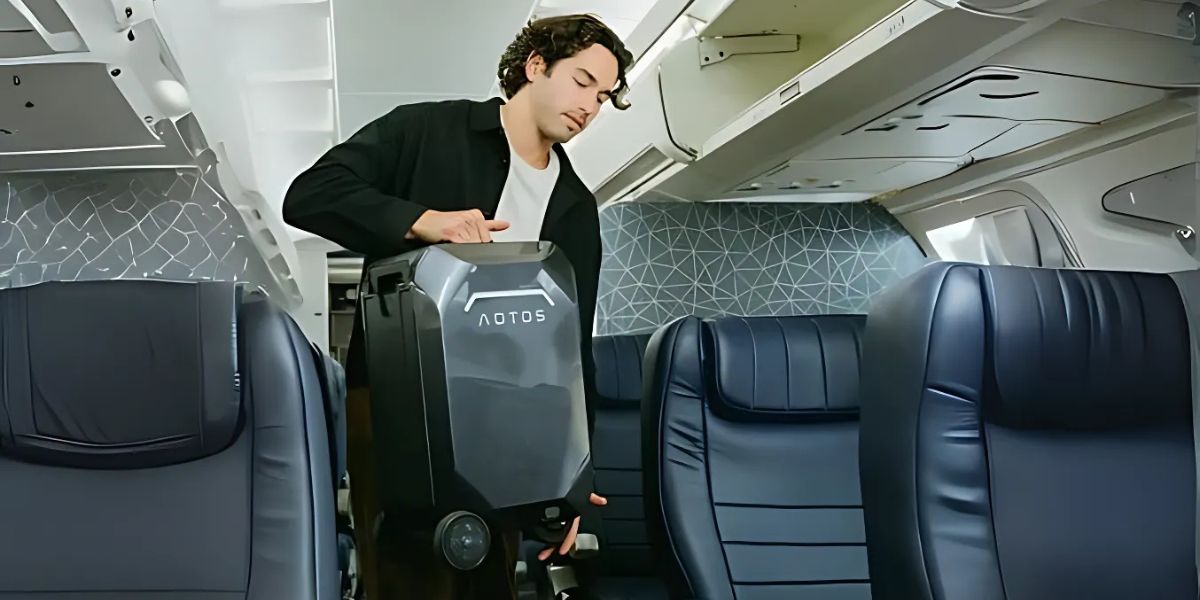
Why AOTOS Is Redefining the Future of Smart Travel with Electric Luggage

Introduction

Travel has drastically evolved over the years—from traditional trunks to sleek, smart, and highly functional luggage. In this modern era, travelers expect more than just storage; they seek innovation, comfort, mobility, and smart integration. This is where AOTOS comes into the picture. As a recognized innovator in electric luggage, AOTOS offers a unique combination of luxury, technology, and practicality.

Designed with the modern traveler in mind, the brand’s electric suitcases, especially the AOTOS L2 electric suitcase, provide an elevated experience for jet-setters, business professionals, and casual travelers alike. With impressive design and performance, AOTOS is becoming more than just a luggage brand—it’s a complete travel solution.

The Evolution of Smart Luggage: AOTOS Leads the Way

Gone are the days when a suitcase was merely a container for your belongings. Today, luggage is expected to complement a traveler’s lifestyle. From USB ports to GPS tracking, smart features are becoming an essential aspect of modern travel. Among the many brands striving to meet these expectations, AOTOS has made notable strides with its innovative products. One of its standout offerings is the AOTOS suitcase, which has redefined the concept of smart travel. This 20-inch suitcase is compact enough to meet carry-on size regulations yet offers a spacious 31L capacity—ideal for frequent flyers. It combines functionality and style, providing both utility and aesthetics.

AOTOS understands the challenges travelers face—whether it’s navigating crowded airports or keeping devices charged during long layovers—and its smart luggage is built to address these issues. Whether you’re on a quick business trip or an impromptu weekend getaway, the AOTOS suitcase is designed to accommodate your travel needs efficiently and stylishly.

Built to Endure: High-Quality Craftsmanship and Durability

Every piece of luggage should be designed to endure the test of time—and travel. With AOTOS, durability is a core feature. The AOTOS L2 suitcase features an integrated aluminum alloy frame that provides strength and stability. This frame supports up to 242 lbs, making it sturdy enough to be used as a mobile seat in airports or during transit. Whether it’s bouncing along conveyor belts or navigating uneven sidewalks, this luggage maintains its integrity.

What distinguishes AOTOS from other luggage brands is its attention to craftsmanship. Each unit is made with care and premium materials. This approach results in long-lasting durability and a polished appearance, ensuring the luggage reflects sophistication. AOTOS understands that travelers want both functionality and style, and they’ve managed to achieve both.

The wheels, zippers, and corners are reinforced for maximum durability. Even the handle is designed to withstand frequent use without losing its grip or control. With AOTOS, you’re selecting a brand that prioritizes longevity and quality.

Mobility Meets Innovation: Experience the AOTOS L2 Electric Suitcase

The real innovation of AOTOS comes to life with the AOTOS L2—a suitcase that moves with you. Gone are the days of dragging heavy luggage. The AOTOS L2 allows you to ride in style, thanks to its built-in electric motor. It can reach speeds of up to 6.2 mph and travel up to 6.2 miles on a single charge. This electric suitcase offers unparalleled convenience, especially for those navigating large airport terminals or rushing between connecting flights.

AOTOS designed this suitcase with the mobile traveler in mind. It includes a detachable power bank that not only powers the motor but also charges your phone, tablet, or other devices. This dual-purpose charging solution ensures you stay powered up, whether you’re commuting, checking in at the gate, or relaxing in the lounge.

Ideal for tech-savvy travelers who prefer to streamline their experience without sacrificing professional appearance, the AOTOS L2 delivers performance and elegance.

App-Controlled Lighting and a Foldable Handle: Intelligent Travel Features

In addition to its mechanical functionality, the AOTOS L2 boasts several high-tech features designed for discerning travelers. One of the most unique features is the LED lighting system on both sides, which is customizable via a smartphone app. Whether you prefer subtle glows or vibrant hues, you can adjust the lighting to suit your style or mood. These lights also add a layer of visibility and security when traveling at night or in low-light conditions.

The suitcase is also equipped with a foldable, ergonomic handle that enhances maneuverability while saving space. Unlike traditional handles that protrude and take up room, the AOTOS handle folds neatly into the frame, maintaining a compact profile. This makes storing the suitcase in overhead compartments or tight spaces much easier.

Every feature is carefully designed to maximize utility while maintaining an elegant, streamlined look. AOTOS demonstrates that smart luggage doesn’t need to be bulky or complicated—it just needs to be well designed.

Choose a Reliable Electric Luggage Brand That Understands Your Needs

In a market full of gimmicks and flashy features, it’s essential to choose a reliable electric luggage brand—one that offers innovative solutions backed by quality and performance. That’s where AOTOS stands apart. Unlike some other brands that may focus more on style than substance, AOTOS ensures a balance between cutting-edge technology, practicality, and durability.

Customer satisfaction is central to AOTOS’s mission. From design to after-sales support, every aspect of the brand’s operations is optimized to provide a positive experience. Whether you’re a business professional, student, or leisure traveler, AOTOS offers a dependable solution to streamline your journey.

Frequent travelers understand the frustration of dealing with malfunctioning wheels, broken zippers, or unreliable tech. With AOTOS, those concerns are minimized. The brand has built a reputation for being not only stylish and functional but also consistently dependable.

Safety, Compliance, and Traveler-Centric Design

One major concern with electric luggage is airline compliance, particularly with battery-powered components. AOTOS addresses this by offering a detachable battery, ensuring travelers can check in their luggage without violating airline regulations. This thoughtful feature demonstrates the brand’s awareness of travel policies and commitment to user safety.

Additionally, AOTOS luggage meets most carry-on size requirements, sparing you the hassle of checking in and reducing wait times. Its quiet motor and smooth ride ensure minimal disruption, allowing you to blend into your environment while enjoying maximum convenience.

Everything from the handle’s grip to the texture of the exterior has been designed to enhance the user experience. It’s not just about appearance—it’s about providing value where it matters most.

Summary

As global travel becomes increasingly fast-paced and technology-driven, having luggage that keeps up with your needs is more important than ever. AOTOS rises to the challenge with its intelligent design and practical features, creating a truly next-level travel experience.

With standout innovations like the AOTOS L2 electric suitcase, thoughtful craftsmanship, and traveler-centric details, AOTOS continues to set the standard for modern mobility. It’s more than just a travel accessory—it’s a smart companion designed for today’s lifestyle.

An Exclusive Interview with Alex Bazooka, Owner of SEO Bazooka, About How AI is Helping Change Local SEO

By: Muhammad Ansar

As AI continues to shape digital marketing, small businesses are exploring how these changes affect their online visibility. We spoke with Alex Bazooka, an experienced SEO expert and owner of the well-known SEO blog, seo-bazooka.com, who has been a leading figure in the transformation of local search optimization. Over the past decade, he has helped businesses navigate the intricate world of search engine optimization through his blog and consulting services. His insights have supported numerous local businesses in adapting to major algorithm changes and industry shifts.

Q: Thanks for being here today, Alex. Let’s dive straight into the topic: how is AI transforming the landscape of local SEO?

Alex Bazooka: AI is changing how search engines understand user intent and local contexts. Google’s AI has greatly improved in interpreting search queries like “premier pizza place near me that’s open late,” ensuring users get highly relevant local results. This means local businesses need to shift their focus away from just keyword stuffing and instead concentrate on providing natural language content and comprehensive business information.

Q: What specific AI-driven trends should local businesses be prepared for in 2025?

Alex Bazooka: There are three key trends businesses should be aware of. First, AI will continue to personalize local search results based on user preferences and behavior. Second, optimizing for voice search will become increasingly important as smart speakers evolve. Finally, Google will leverage AI to better understand the sentiment and context of customer reviews, making real customer feedback even more influential for rankings.

Q: Google’s AI Overviews have been getting significant attention. How do these affect search results in your area?

Alex Bazooka: AI Overviews present both challenges and opportunities for local businesses. While organic search results might see fewer clicks, local businesses can gain greater visibility if they offer accurate, comprehensive information. The key is to ensure your business details are well-organized, up-to-date, and respond to common customer queries both on your website and Google Business Profile.

Q: How can local businesses stay competitive without feeling overwhelmed by the rapid changes in AI?

Alex Bazooka: At the core, AI values foundational SEO elements: authentic customer reviews, consistent Name, Address, Phone (NAP) details across platforms, high-quality local content that answers real customer questions, and active engagement in both online and offline communities. Businesses that focus on truly assisting local customers will naturally benefit from AI’s direction.

Q: What advice would you give businesses struggling to adjust to these changes brought about by AI?

Alex Bazooka: Start by optimizing your Google Business Profile. Ensure all information is accurate and up-to-date, engage with reviews promptly, and include high-quality photos. Next, create content in everyday language that addresses the issues local customers face. Instead of trying to game the system, focus on providing real value to your local community.

Q: Which SEO experts should our readers follow to stay informed about these trends as we move toward 2025?

Alex Bazooka: For daily algorithm updates, Barry Schwartz from Search Engine Roundtable is invaluable. Joy Hawkins is a great resource for local SEO advice. Lily Ray provides thorough insights on Google updates, while Danny Sullivan’s emails from Google and Marie Haynes’ technical SEO advice are also highly recommended. I also wrote a comprehensive guide on this topic, and you can check my full list of the 20 SEO experts to follow in 2025. Since the SEO landscape evolves rapidly, it’s important to get advice from a variety of sources.

Q: Do you have any final advice for local business owners trying to navigate this AI-driven SEO world?

Alex Bazooka: Remember that AI is designed to offer users the most helpful and relevant results. Instead of trying to fight against AI, align your SEO strategy with its objectives: help people find the ideal local solutions to their problems. Focus on being authentic, helpful, and consistent. Local businesses that use AI tools to genuinely serve their customers, not just to improve rankings, will have a strong advantage in 2025.

For more insights from Alex Bazooka, visit his blog at seo-bazooka.com. Local businesses looking to enhance their search visibility can benefit from staying updated on these rapidly evolving AI-driven shifts in the SEO landscape.