Understanding the Process of High-Asset Divorce in Illinois

Divorce is often a challenging and complex process, especially when high-value assets are involved. When one or both parties have significant assets, including real estate, investments, and retirement accounts, the process can become more intricate and require careful consideration of financial matters.

In high-asset divorces, the division of property is one of the main concerns. It’s important to understand that certain types of assets, such as those acquired during the marriage, are typically treated as marital property, while assets owned before the marriage may be categorized as separate property. However, determining the exact nature of each asset can be complicated, and disagreements may arise during the division process.

Types of Property in a High-Asset Divorce

Marital property generally refers to assets acquired during the course of the marriage, including income earned, property purchased, and other financial investments. Separate property typically includes assets that were owned before the marriage or that were received as gifts or inheritances during the marriage. These distinctions can help guide the division of assets, though the situation may differ depending on various factors, including the nature of the property and the financial contributions of each party.

In Illinois, which follows an equitable distribution model, the goal is to divide assets fairly between both spouses, though this may not always mean an equal split. The court typically takes into account each party’s financial contributions to the marriage, their needs, and other relevant factors such as age, health, and the length of the marriage.

Understanding Prenuptial and Postnuptial Agreements

Prenuptial and postnuptial agreements are tools used to outline how assets will be divided in the event of a divorce. These agreements are designed to offer clarity and structure in the event of a separation and can be particularly useful in high-asset cases. However, there are situations where such agreements may not be enforced by the court, particularly if they are deemed unfair, signed under duress, or found to be otherwise invalid.

Retirement Assets and Division

Retirement accounts, including pensions and 401(k) plans, may be considered marital property if contributions were made during the marriage. These assets often represent a significant portion of the marital estate and need to be addressed during the divorce process. There are various methods for handling retirement assets, such as transferring funds through court orders to ensure the division is fair and in compliance with the law.

Addressing Dissipation of Assets

Dissipation refers to the act of one spouse wasting, concealing, or intentionally depleting marital assets during the divorce process. This could include behaviors such as spending marital funds on nonessential or personal expenses. If such actions are suspected, they may be considered when determining the final division of assets.

Protecting Family-Owned Businesses

Family-owned businesses, particularly those passed down through generations, may be a point of contention during a divorce. If a business was established during the marriage or if marital funds were used to support its operation, it could be subject to division. In such cases, the parties may need to address issues related to ownership rights, business valuations, and potential compensation for one party’s interests in the business.

Contact a Kane County, IL High-Asset Divorce Lawyer

Effectively navigating a high-asset divorce requires a deep knowledge of the law and financial matters. A St. Charles, IL family law attorney can provide you with a qualified outside perspective during your divorce while looking out for your best interests. Whether you anticipate a high-conflict or uncontested divorce, it always helps to have a skilled legal professional at your side.

Disclaimer: The information provided in this article is for general informational purposes only and should not be construed as legal advice. While efforts have been made to ensure the accuracy of the information, it is recommended that you consult with a qualified attorney or legal professional to address your specific circumstances. Laws and regulations vary by jurisdiction and can change over time. This article does not create an attorney-client relationship, and no action should be taken based on the content without professional advice tailored to your individual situation.

Eboost and Amazon Seller Loans: A Strategic Look at Financing for Online Sellers

Operating a business on Amazon comes with both opportunities and challenges. From managing fluctuating inventory demands to covering operational expenses, sellers often need external funding to ensure consistency. For many, accessing suitable financial support can help stabilize business operations and maintain day-to-day flow.

The Role of Funding in Managing an Amazon Business   

Selling on Amazon requires efficient inventory management, timely restocking, and attention to marketing. Many sellers turn to structured financial solutions to help handle these operational costs. One such option includes Amazon seller loans, which are designed specifically for merchants on e-commerce platforms.

These loans typically consider online sales history and account performance rather than relying solely on traditional credit evaluations. This approach may offer flexibility for sellers who face short-term financial gaps or unpredictable revenue cycles.

Comparing Traditional Lending with Seller-Specific Options   

Conventional business loans from banks and credit unions may not align with the fast-paced nature of online retail. These financial products often come with lengthy approval timelines, extensive paperwork, and rigid requirements. In comparison, seller-oriented financing alternatives are designed with online business structures in mind.

Options such as revenue-based advances and short-term capital solutions consider metrics like order frequency, customer reviews, and historical sales data. The aim is to provide manageable financial assistance while minimizing delays and complications. These tailored features can make such products more compatible with the dynamics of Amazon selling.

How to Apply for Amazon Business Line of Credit   

A business line of credit gives sellers access to revolving funds, which can be drawn as needed. This type of financial arrangement offers flexibility, as interest typically applies only to the amount used, rather than a full loan balance.

If you’re researching how to apply for amazon business line of credit, start by reviewing financial service providers that offer credit lines customized for e-commerce operations. Application processes usually involve submitting business history, marketplace data, and credit background. Once approved, the business can access a set credit limit without needing to reapply for each transaction. This structure may assist sellers in managing unexpected costs or addressing off-season slowdowns.

Understanding the Value of Industry-Specific Financing Support   

Online sellers benefit from financing solutions that adapt to their unique workflows and revenue patterns. Compared to fixed-term repayments, marketplace-focused options may offer adjustable schedules, especially when sales volume fluctuates.

Key advantages of these financing models often include:

  • Faster processing times than traditional loans
  • Adjustable repayment structures
  • Less emphasis on physical collateral
  • Terms based on store metrics like average order value and sales velocity

These features aim to support sellers during both growth phases and slower seasons without adding unnecessary financial stress.

How Eboost Partners Supports Amazon Sellers  

Among the platforms assisting e-commerce sellers, Eboost Partners provides financial support tailored to digital entrepreneurs. By specializing in marketplace funding, Eboost emphasizes accessibility and adaptability for online businesses. The services offered may include capital advances, credit lines, or working capital solutions—designed to align with Amazon’s performance-based business model.

Eboost also offers guidance to sellers exploring funding for the first time. Their approach focuses not only on access to financing but also on helping businesses assess their operational needs, plan inventory strategies, and navigate funding responsibly. This collaborative structure allows sellers to make informed decisions based on their business cycles.

Selecting a Suitable Financing Option   

When evaluating financial products, sellers should consider several factors:

  • The purpose of the funding: Is it for inventory, operations, or temporary cash flow?
  • Preferred repayment style: Fixed monthly vs. percentage-of-sales models
  • Seasonal variation in income
  • Experience level of the funding partner in e-commerce

By aligning financial solutions with operational needs, Amazon sellers can avoid unnecessary obligations and maintain smoother workflows. Whether you’re exploring Amazon seller loans or lines of credit, it’s essential to work with providers who understand the nuances of selling on online marketplaces.

Conclusion   

As e-commerce continues to evolve, Amazon sellers often rely on flexible funding tools to support operational consistency. Understanding available financial products—such as credit lines and seller-specific loans—can help sellers handle variable expenses without disrupting their daily routines.

Services from providers like Eboost Partners offer marketplace-aligned support and guidance, contributing to better-informed financial choices. By using resources designed with e-commerce in mind, sellers can remain focused on maintaining their business while responsibly managing funding access.

Disclaimer: This article is for informational purposes only and does not constitute legal, financial, or professional advice. Always consult with a financial or legal professional before making any financial decisions. The mention of Eboost Partners and other platforms is not an endorsement, and eligibility for loans or financing products may vary. 

Flower Traditions Across the United States: From State Flowers to Local Favorites

By: M. Awais

From the frost-kissed tundras of Alaska to the sun-drenched coasts of Southern California, the United States blooms with a botanical identity as diverse as its landscapes. Each state has chosen an official flower, not just as a symbol of beauty, but as a reflection of regional pride, history, and ecology. These floral emblems do more than decorate state seals — they shape local tastes, influence seasonal trends, and often guide the rhythm of the nation’s flower shops.

Take the Alaskan harebell, delicate and blue, thriving in rocky alpine zones, or the bold California poppy, a fiery orange carpet that blankets hillsides each spring. These aren’t just state symbols — they’re living parts of cultural identity, often reappearing in bouquets, public gardens, and even wedding themes.

In the South, the camellia reigns in North Carolina, where it has long been associated with grace and endurance. Its waxy petals and evergreen leaves make it a favorite in winter arrangements, especially during holiday seasons when floral life is otherwise scarce. In Louisiana, the magnolia blossom dominates both gardens and floral design, its large, fragrant white blooms symbolizing Southern hospitality. It’s not unusual for florists in New Orleans to receive increased requests for magnolia during spring — often hand-delivered to garden parties and debutante balls.

Meanwhile, in the Midwest, the violet — state flower of Illinois, Rhode Island, and several others — may seem unassuming, but its subtle charm translates into quiet demand. Florists in Chicago and Indianapolis often incorporate violets into bridal bouquets for their nostalgic appeal and soft hue, a nod to tradition in an otherwise modern arrangement.

These regional affinities don’t just reflect sentiment — they can influence commerce. A florist in Austin knows that bluebonnets, though protected by law from mass picking, still tend to inspire demand for blue-toned wildflower arrangements. In Hawaii, the yellow hibiscus (Pua Aloalo) appears in leis for graduations and celebrations, its presence often viewed as a cultural necessity rather than a decorative choice.

But no city embodies the fusion of floral tradition and contemporary demand quite like Los Angeles.

The Bloom of LA: Where Global Tastes Meet Local Flair

In Los Angeles, the floral scene pulses with the same energy as its film and fashion industries. The city has no official flower, but unofficially, two blooms dominate: the rose and the bird of paradise (Strelitzia reginae). The latter, with its striking orange and blue petals resembling a tropical bird in flight, has become widely recognized with Southern California’s bold, exotic aesthetic.

Drive through neighborhoods like Beverly Hills or Venice, and you’ll see bird of paradise growing in nearly every well-kept garden. Its resilience in dry climates and dramatic visual impact make it a popular choice among landscape designers — and by extension, florists who craft event arrangements.

Yet, LA’s floral identity is anything but monolithic. The city’s cultural diversity means that flower delivery requests span continents. A flower shop in Koreatown might receive an order for chrysanthemums arranged in a traditional Korean style, while one in East LA prepares marigolds for an ofrenda during Día de los Muertos. In Armenian enclaves, red carnations — a symbol of national pride — are frequently requested for memorial events.

This cultural mosaic shapes the local market. Unlike cities where one or two flowers dominate, Los Angeles florists must be fluent in a global floral language. They stock ranunculus from local farms in Carpinteria, peonies flown in from the Pacific Northwest, and orchids from Colombia — all in a single week.

Flower Traditions Across the United States From State Flowers to Local Favorites

Photo: Unsplash.com

The Business of Blooms: How Tradition Shapes Demand

In LA, the story is similar but amplified by celebrity culture and the entertainment industry. High-profile events — from red carpet premieres to influencer weddings — often feature custom floral installations that blend native species with exotic imports. A single wedding in Malibu might include bird of paradise, succulents, and imported anemones, all arranged to reflect a “California natural” aesthetic.

This demand has led to the rise of a new generation of florists who are part gardeners, part artists, and part entrepreneurs. Many operate direct-to-consumer flower delivery services, offering everything from inexpensive weekly bouquets to luxury event installations. Subscription models are gaining popularity, with customers opting for recurring deliveries of seasonal blooms.

Finding the Best in a Crowded Market

With hundreds of flower shops in the LA area, competition is fierce. Consumers don’t just want beauty — they want speed, sustainability, and personalization. The best florists differentiate themselves through quality, creativity, and reliability. Some focus on farm-to-vase models, sourcing from local growers in Oxnard or Santa Barbara. Others emphasize eco-friendly packaging or same-day delivery.

Price is also a factor. While luxury arrangements can be priced in the hundreds of dollars, there’s a notable market for inexpensive yet stylish options — especially among young professionals and students. Many flower delivery services now offer tiered pricing, allowing customers to choose based on budget without sacrificing aesthetic appeal.

Technology plays a key role. Apps and websites make it easy to send flowers across the city with just a few taps. Same-day flower delivery Los Angeles is becoming standard, with many shops making efforts to ensure delivery within hours.

A Living Tapestry of Petals and Identity

Flowers in America are more than decoration — they are storytellers. The camellia speaks of Southern refinement, the poppy of California’s wild spirit, and the bird of paradise of a city that thrives on boldness and reinvention. From state capitols to city sidewalks, these blooms shape how we celebrate, mourn, and connect.

In Los Angeles, where cultures converge and trends are born, the floral landscape is constantly evolving. Yet, at its heart, it remains rooted in place — in the dry soil that nurtures succulents, in the coastal air that carries the scent of jasmine, and in the hands of florists who turn petals into poetry. Whether it’s a simple bouquet or a grand installation, every order tells a story — of love, memory, and the enduring power of a single bloom.

And in a city that never stops moving, the quiet beauty of a delivered flower remains one of the most human gestures of all.

Frost NYC: The Gold Standard in NYC Jewelry

For over four decades, Frost NYC has been the name behind some of the most iconic pieces in the jewelry game. Originally launched as a wholesale operation, Frost NYC evolved into one of the leading online destinations for real gold chains, diamond pieces, and custom jewelry. Now with over 11 years in the direct-to-consumer space and a flagship showroom in New York City’s Diamond District, Frost NYC continues to set the standard in luxury jewelry for men.

From Wholesale Roots to New York’s Premier Online Jeweler

Born from the heart of New York, Frost NYC understands the rhythm of the city—bold, unapologetic, and always ahead of the curve. Recognizing the limited selection available in traditional jewelry stores, Frost NYC created a revolutionary platform featuring the largest online catalog of gold jewelry, with over 10,000 SKUs.

Frost NYC became a household name by doing what no one else would: offering a lifetime warranty and a lifetime upgrade program on all purchases. Whether you’re buying a sleek gold curb chain, a heavyweight gold rope chain, or an iced-out gold tennis chain, you’re investing in lasting value with zero risk.

What Makes Frost NYC Different?

In an industry filled with imitators, Frost NYC leads with innovation, craftsmanship, and customer protection:

Real Gold & Real Diamonds: No plating, no gimmicks, just authentic 10K and 14K gold and VS clarity diamonds.

Lifetime Warranty & Upgrade Program: Wear your jewelry worry-free, knowing you can upgrade or replace at any time.

Fully Customizable Pieces: From karat to chain length and width, you make it yours.

NYC Showroom Access: Although they dominate online, their Diamond District location allows local customers to shop in person.

Iconic Chains That Define NYC Style

When it comes to gold chains, Frost NYC is the destination. Their expansive catalog covers every classic and trending style:

Gold Cuban Link Chain: A timeless symbol of status, power, and street luxury.

Gold Tennis Chain: A shimmering choice for those who want brilliance with class.

Gold Curb Chain: A bold, flat link design that’s easy to layer or wear solo.

Gold Figaro Chain: A stylish blend of short and long links for a touch of flair.

Gold Rope Chain: Twisted elegance that adds volume and shine to any fit.

Whether you’re a Wall Street boss or Brooklyn creative, Frost NYC has the right chain to match your identity.

A New Yorker’s Choice

Frost NYC is more than just a brand—it’s a NYC original. They know what matters to their customers: quality, authenticity, and confidence. While competitors may cut corners or vanish after the sale, Frost NYC backs every piece with real value and real commitment.

And in a city that never settles, neither should your jewelry.

Choosing the Right Chain: A Quick Style Guide

With thousands of real gold chains to choose from, it helps to know what suits your lifestyle, budget, and personal aesthetic. Frost NYC’s team of style experts helps first-time buyers and seasoned collectors alike make the right choice. Below is a quick guide that breaks down some of the most popular chain types based on use and appeal:

Frost NYC The Gold Standard in NYC Jewelry

Whether you’re looking to turn heads, build a starter stack, or protect your investment with VS clarity diamonds, Frost NYC has the inventory and expertise to guide your selection. And remember—every Frost NYC chain is backed by real value, a lifetime warranty, and personalized guidance. You’re never shopping alone.

Join the Frost NYC Family

If you’re shopping for real gold chains, custom iced-out pieces, or simply want to upgrade your look with New York swagger, Frost NYC has your back.

Shop online or visit the showroom, and follow Frost NYC on:

Instagram @realfrostnyc

TikTok @realfrostnyc

“Color Breathes, Emotion Grows” — The Abstract Visual Language of Jiajing Wang

Jiajing Wang is a freelance artist, a member of the MT Women Artists Empowerment (Baihui) Program, the AAlPA Abstract Artists Alliance, the AAIPA Abstract Artists Alliance, and the International Contemporary Art Committee. She graduated from Dongbei University of Finance and Economics. She worked as an IT engineer at a US-funded company before teaching herself painting and furthering her studies in an art training program at Shanghai Jiao Tong University. In 2024, she held her first solo exhibition at Shanghai M50, and her works were selected for the Xiamen International Art Fair the same year. In 2025, she was chosen for Guangdong International Art Week, and her works were shown in the “Shibaomu” International Youth Contemporary Art Exhibition, where she won the Most Popularity Award. Her works also appeared in the 4th “Trendo-Gravity Field” Phantom Tree Trend Art Exhibition.

Working primarily in abstract expressionism, Wang favors small-format linen oil paintings, using bold red–green contrasts, rugged strokes, and free compositions to seize the instantaneous tension of “nature—vitality.” Her series often draws inspiration from flowers, still lifes, and animal imagery, radically simplifying and symbolizing form to emphasize the emotional temperature of color fields and the rhythmic energy of brushwork. She frequently lays down a single-color background and then stacks highly saturated color blocks and thick knife marks locally, creating a visual field that is simultaneously loose and cohesive. She regards this “non-realist freedom” as an emotional sketch of the everyday world—color as the catalyst of emotion, brushwork as the tempo of breath—allowing the work to oscillate between warmth and mystery through improvisational layering and repeated overpainting, inviting viewers to sense the pulse of nature and life with an open mind.

"Color Breathes, Emotion Grows" — The Abstract Visual Language of Jiajing Wang

Photo Courtesy: Jiajing Wang

Her paintings resemble an improvisational musical phrase caught between breaths: although the canvas often admits only one or two highly saturated blocks, the coarse knife scars, splashes, and repeated smears accumulate an almost drumbeat-like rhythm. She prefers to “sketch” nature on small formats such as 30×40 cm or 50×50 cm linen—petals, beasts, or branches are stripped down to symbols, leaving only chromatic pressure and stroke speed. In her still-life and floral series, she often grounds the image with a single background color, then lets red and green collide explosively, forming a color-field space that is both loose and condensed, as if compressing the flickering pulse of life into a few square inches. The blank spaces are not voids but pauses after a deep breath, allowing viewers to wander between warmth and mystery and to feel color as an emotional catalyst and the knife-edge as a metronome of breath.

"Color Breathes, Emotion Grows" — The Abstract Visual Language of Jiajing Wang

Photo Courtesy: Jiajing Wang

 She juxtaposes traditional Chinese xieyi (freehand) with Western abstract expressionism, fusing the perceptual experiences of painting, music, and dance—chromatic scales correspond to musical pitch, and the brush edge moves like choreographic steps. “What I want to capture is not the form of things, but the instant when nature roars within the body.” Hence the frequent revisions and coverings within the same format: vivid green suppressed by vermilion and then seeping out through cracks, forming a temporal record of “emotional layers.” Whether in the portrait series—half-length figures poised between image and flow—or in landscapes where just two or three lines hint at horizon and water, she insists on preserving rough edges and pigment drips, letting painting appear as an unvarnished trace of life. This “non-realist freedom” not only dissolves the object’s boundary but also pulls the viewer into an open narrative: each gaze may discover new petals, clouds, or beasts in the seams of color. 

Since her first solo exhibition at Shanghai M50 in 2024, Wang’s small-format works have successively entered platforms such as the Xiamen International Art Fair and Guangdong International Art Week, and have been collected by domestic and overseas collectors. Amid the rapidly shifting contemporary art scene, she adheres to a minimal yet pulsating visual logic with humble canvas and oil paint: color precedes form, emotion precedes narrative, and vitality completes its sonata between the knife-edge and the breath.

Bulk Concrete Orders in Pennsylvania: How Eagle Concrete Products Handles Large Jobs

 By: Eleanor Mathers

In Pennsylvania’s growing construction sector, large-scale commercial and industrial jobs are driving up demand for bulk concrete orders. From warehouse foundations and commercial slabs to industrial parks and large public facilities, high-volume concrete delivery requires specialized skills, and Eagle Concrete Products has built its reputation on meeting these demands.

Whether you need 300 yards in a single day or a recurring weekly schedule of bulk deliveries, Eagle Concrete Products is a widely trusted name among contractors who prioritize timeliness, scale, and reliability.

What Qualifies as a “Bulk Concrete Order”?

While a typical residential pour might involve 5 to 10 yards, bulk orders generally start at 50–100 yards and can scale to the thousands. Eagle’s infrastructure is designed to handle:

  • Multi-truck, continuous-pour logistics
  • High PSI, project-specific mix customization
  • Nighttime or phased delivery
  • High-slump or accelerated-set concrete as required
  • Long-duration pours over multiple job phases

Eagle serves clients in manufacturing, commercial development, logistics, transportation, and municipal infrastructure, all of whom rely on large concrete volumes with precise timing.

Pennsylvania’s Growing Demand for Bulk Concrete

Major projects are transforming the Commonwealth:

  • Distribution centers in the Lehigh Valley
  • Logistics parks near Harrisburg
  • Data centers outside Pittsburgh
  • Transit and airport expansions in Philadelphia
  • Energy infrastructure in Western PA

All of these projects require hundreds or thousands of yards of concrete, often delivered over tight timelines and multi-phase cycles. That’s where Eagle Concrete Products stands out.

Eagle’s Bulk Order Capabilities

Fleet Capacity

  • Over 30 mixer trucks in active rotation
  • GPS-tracked dispatching for improved timing
  • Trucks can be staged on-site or dispatched in sequence

Plant Infrastructure

  • Multiple batch plants across Pennsylvania
  • Simultaneous batching of different mixes
  • Backup power and reserve materials for uninterrupted batching

Logistics Team

  • Dedicated project coordinator for large-volume jobs
  • Pour planning with construction supervisors and engineers
  • Real-time communication on truck positions, delays, and sequencing

Quality Control

  • Pre-pour mix testing
  • Field slump and air checks per load
  • Post-pour compressive strength reports
  • On-site batch tickets for inspection

Mixes Designed for Volume and Performance

When it comes to bulk orders, uniformity is important. Eagle Concrete Products designs every mix to make sure consistency from the first to the final truck, including:

  • Mid-range plasticizers for pumpability
  • Low-shrinkage blends for slab integrity
  • Aggregate size adjustments for finishability
  • Fly ash or slag inclusions to reduce the heat of hydration in mass pours
  • Retarders or accelerants, depending on weather and phase timing

If you’re pouring 150+ yards over a 6-hour period, it’s critical to have a mix that finishes and cures uniformly across the entire slab, and that’s where Eagle’s batching expertise comes into play.

Case Studies: Bulk Orders Across Pennsylvania

350-Yard Distribution Center Slab – Lancaster County

  • Seven trucks rotated in 20-minute intervals
  • Night pour with temperature control admixtures
  • Seamless delivery with no cold joints or re-batching required

700-Yard Plant Expansion – Erie

  • Two-day continuous pour
  • Custom mix with high-load capacity and sulfate resistance
  • Certified testing technician on-site for all loads

1,200-Yard Highway Overpass – Bucks County

  • PennDOT-compliant air-entrained mix
  • Delivered over three consecutive shifts
  • 12 trucks deployed with onsite staging and refueling 

Scheduling Bulk Deliveries: What to Expect

For contractors planning a large-scale pour, Eagle offers pre-project coordination, which includes:

  • Job site visit to assess access, staging, and truck rotation zones
  • Mix design review based on engineering specs and reinforcement plans
  • Volume timeline planning to align batching and delivery
  • On-call support during the pour, including backup loads if necessary
  • Post-pour reporting for strength testing and quality assurance

Eagle also offers pumping coordination if the site requires hard-to-reach placement or multi-level access.

Bulk Concrete for Any Industry

Eagle Concrete Products provides high-volume concrete to:

  • General Contractors
  • Civil Engineering Firms
  • DOT and Municipal Contractors
  • Developers and REITs
  • Logistics and Warehouse Builders
  • Energy and Utility Firms
  • Precast and Modular Construction Teams 

Whether you’re pouring for an Amazon facility or a public transit hub, Eagle can batch, transport, and pour at scale.

Special Pricing for Bulk Orders

Eagle offers volume-based pricing for high-yardage clients. Discounts are typically applied for:

  • Single pours exceeding 100 yards
  • Recurring projects with weekly pour schedules
  • Multi-phase builds with fixed pour calendars
  • Annual concrete purchase agreements

Clients can lock in preferred rates and benefit from priority dispatch access during peak construction seasons.

Let’s Talk Yardage

If your next project requires more than just a few trucks, you need a partner who can handle large volumes. Eagle Concrete Products has the fleet, facilities, and expertise to manage any bulk order in Pennsylvania—on time, on spec, and within budget.

Visit www.eagleconcreteproducts.com to schedule your bulk order consultation.

Eagle Concrete Products is Pennsylvania’s concrete supplier for large jobs that require reliable performance.


Disclaimer: The information provided in this article is for general informational purposes only. Readers are advised to independently verify any information before relying on it.

What New Yorkers Need to Know About Auto Injury Claims

There’s a moment after a car accident—right after the jolt, the noise, the rush—when everything goes strangely quiet. It might’ve been a tap at the light on Houston or a rear-end shuffle on the BQE. No sirens. No screaming. Just confusion and the low hum of adrenaline.

What comes next, though, rarely feels calm.

If you’ve ever dealt with the aftermath of a car accident in New York, you already know—it’s not just about the damage. It’s phone calls, forms, doctors, maybe days off work. It’s figuring out what’s covered, what isn’t, and how the whole process actually works.

If you’re looking for professionals who understand how to handle car accident cases in New York, Tucker Lawyers, PC is a firm with experience in this space.

No-Fault Insurance: What It Is (and What It Isn’t)

Most people hear “no-fault” and assume it means hassle-free. In New York, no-fault coverage generally means your own insurance company covers basic medical expenses and lost income—regardless of who caused the accident.

But that coverage isn’t unlimited. There are rules around what it applies to, how much it pays, and whether additional claims are even possible. Some accidents fall neatly into this system. Others, not so much.

What the State Considers “Serious Injury”

New York law defines certain injury types that may allow someone to pursue more than just no-fault compensation. These are spelled out under New York Insurance Law § 5102(d) and can include:

  • Broken bones
  • Visible disfigurement
  • Long-term disability or organ damage
  • Medical conditions that significantly disrupt daily life for several months

In these cases, the ability to document the injury—not just feel it—is often what makes the difference. Things like MRIs, medical evaluations, and treatment records can end up playing a major role in how everything’s interpreted.

Steps People Often Take After a Crash

Not everyone knows what to do after a collision. And that’s understandable. Accidents are overwhelming. But certain actions tend to be pretty common in the hours and days that follow:

  • Calling the police and filing a report
  • Taking photos of the scene and vehicles
  • Collecting contact and insurance info from everyone involved
  • Visiting a doctor to assess for injuries—even minor ones
  • Filling out required forms, like the MV-104 (if damages exceed $1,000)

Each of these can help establish a clearer picture of what happened. And in a city as fast-paced as New York, having that clarity matters.

Deadlines You Might Not Realize Exist

Time limits aren’t just for parking meters. In New York, there are several legal timeframes that can affect what someone is allowed to file—and when. A few examples include:

  • 30 days to submit a no-fault claim
  • 3 years from the accident date for personal injury claims
  • 2 years from the date of death for wrongful death claims

These aren’t soft suggestions. Missing one can close doors quickly, and not all exceptions are ensured.

Car Insurance Premiums: What’s the Fallout?

This is the part people worry about—Will my rates go up if I file?

Under certain rules in New York, insurance companies are restricted from increasing premiums solely because a no-fault claim was filed. But if the incident leads to other types of claims, or involves more extensive damages, different calculations may apply.

As with most things in insurance, the answer can vary. It often depends on fault, prior history, and the kind of coverage you carry.

What Happens If the Other Driver Isn’t Insured?

Uninsured drivers aren’t as rare as you’d hope. That’s why many New Yorkers have what’s called uninsured motorist coverage (UM) or underinsured motorist coverage (UIM) built into their auto insurance policies.

These kick in when the other driver either lacks coverage entirely or doesn’t carry enough to cover the damages involved. New York requires a minimum level of UM coverage, but policyholders can usually increase their limits beyond that baseline.

Final Thought: It’s a Lot, But You’re Not Alone

Car accidents aren’t just disruptive—they’re confusing, emotional, and often more complicated than they first appear. And in a place like New York, where the rules move fast and the traffic moves faster, understanding how everything works can be the difference between chaos and clarity.

Even if things seem minor at first, it doesn’t hurt to understand your options. Whether you’re recovering from a more serious injury or just trying to figure out paperwork, getting the right information early can make a real difference.

And if the process starts to feel overwhelming, it’s okay to ask questions. There are professionals out there—including firms like Tucker Lawyers, PC—who focus on this exact kind of situation.


Disclaimer: The information provided in this article is for general informational purposes only and does not constitute legal advice. Laws and regulations regarding auto injury claims can vary by individual circumstances and may change over time. It is recommended that you consult with a qualified attorney or legal professional to discuss your specific situation and ensure that you understand your rights and obligations under New York law.

When Fiction Goes Full Throttle: The Rise of Gritty, Unapologetic Female-Led Stories

Photo Disclaimer: This image is for illustrative purposes only and does not endorse or promote smoking or tobacco use. Smoking is a known health risk and is strongly discouraged. The depiction of smoking in this image is not intended to encourage any harmful behaviors.


In recent years, the world of fiction has taken a noticeable turn. Stories once centered on polished heroines or predictable love arcs are now making space for fierce, flawed, and deeply human female characters—women who live loudly, bleed publicly, and burn quietly. 

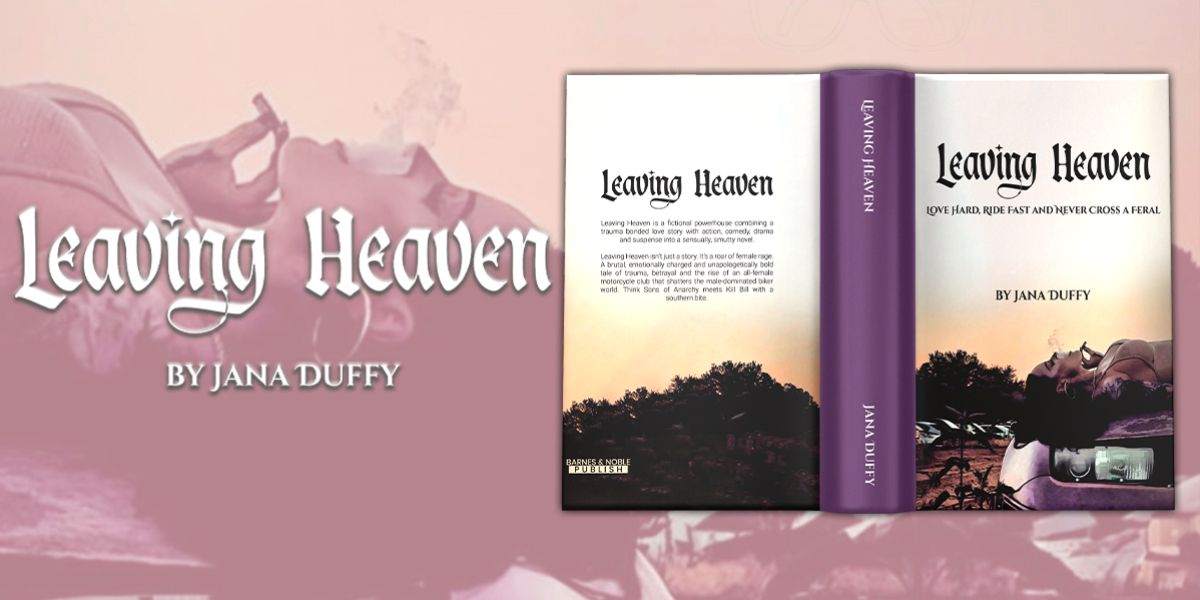
One such story is ‘Leaving Heaven’ by Jana Duffy, a novel that rides the edge between vulnerability and vengeance. However, this shift goes far beyond one book—it signals a broader transformation in how female power is portrayed in literature.

The Evolution of the ‘Strong Female Lead’

The phrase “strong female lead” has become a cliché, often reduced to a woman who can throw a punch or deliver a sarcastic line without ever breaking a sweat. However, real strength rarely looks so tidy. Today’s readers are leaning into characters who aren’t defined by their ability to be stoic, but by their emotional depth and psychological complexity.

There is a rise of women protagonists who are angry for good reason, messy in their healing, and unafraid to confront the systems that broke them. They are not aspirational figures in the traditional sense; they’re real, raw, and sometimes ruthless. It’s not about being likable—it’s about being human.

Trauma as a Catalyst, Not a Plot Device

There’s a growing awareness among writers and readers alike about the way trauma is handled in fiction. For too long, female characters have been assigned tragic backstories primarily as superficial justification for their actions to serve as catalysts for a male protagonist’s development.

The shift now is toward stories that give trauma weight, dignity, and complexity. Female-led narratives are reclaiming trauma as something more than just a scar: it’s a driving force, a crucible for growth, and sometimes, a path to rebellion. These stories explore what happens when pain doesn’t soften a woman, but sharpens her instead.

Women in Gritty Subcultures: Not Just the Sidekick Anymore

Motorcycle clubs. Organized crime rings. Underground fight scenes. These gritty, hyper-masculine settings have long been dominated by male protagonists and sidelined female characters. But we’re now witnessing a reversal—women are stepping into the center of these subcultures, not as accessories to the plot, but as the beating heart of the story.

These settings allow for a more intuitive exploration of loyalty, power, and violence. And when women lead in these worlds, the contrast is both jarring and electric. It challenges the reader’s assumptions, upends traditional gender roles, and makes for deeply compelling storytelling.

The Blurring of Genre Lines

The most impactful stories rarely stay in one lane. They borrow, blend, and reimagine genre tropes to create something fresh. These hybrid narratives defy categorization because they reflect real life—messy, contradictory, and layered.

When a love story unfolds between two damaged people against a backdrop of violence or betrayal, it’s not just romance, it’s survival. When comedy is used to cut through the weight of trauma, it’s not just humor, it’s catharsis. This genre-blending approach allows authors to create more nuanced and emotionally resonant worlds.

All of these themes come together in ‘Leaving Heaven’ by Jana Duffy. The story follows an all-female motorcycle club rising from the ashes of betrayal and trauma, pushing through the harsh roads of loyalty, rage, and redemption. It is more than a book. It’s a mirror of where female-led fiction is headed: unfiltered, fearless, and emotionally fierce. For readers ready to embrace a story that doesn’t flinch, this novel is a ride worth taking.