New Study Reveals the States with the Safest Hospitals

A new study conducted by Phillips Law Firm has uncovered which U.S. states have the safest hospitals, analyzing hospital safety grades awarded across the country in Fall 2024. The analysis ranks each state by the percentage of hospitals awarded an “A” grade — the highest possible — indicating outstanding performance on patient safety metrics like infection prevention, surgical practices, and responsiveness to medical errors.

Utah Tops the List for Hospital Safety

Utah ranks first in the nation, with 60.70% of its hospitals receiving an “A” grade. These facilities meet or exceed national benchmarks for preventing medical errors, protecting patients from injury, and ensuring proper procedures and safety checks are consistently followed.

Closely behind are Virginia, with 57.70% of hospitals graded “A,” and Connecticut, where 50% of hospitals earned the top mark. These states stand out for offering high-quality and consistent care to patients seeking treatment in their medical facilities.

10 Safest States for Hospital Care

  1. Utah – 60.70%
  2. Virginia – 57.70%
  3. Connecticut – 50.00%
  4. North Carolina – 46.70%
  5. New Jersey – 46.30%
  6. California – 44.90%
  7. Rhode Island – 44.40%
  8. Idaho – 42.90%
  9. Pennsylvania – 41.20%
  10. Colorado and South Carolina (tie) – 40.40%

These percentages reflect the share of hospitals in each state that earned an “A” grade from The Leapfrog Group, an independent nonprofit organization that evaluates hospital safety and performance.

Least Safe States Lag Behind

Conversely, Iowa, North Dakota, South Dakota, and Vermont rank at the bottom — 0% of hospitals in these four states earned an “A” grade in Fall 2024.

Other low-performing states include:

  • West Virginia – 4.50%
  • New Mexico – 5.60%
  • Alabama – 6.70%
  • Hawaii – 8.30%
  • Wyoming – 11.10%

These figures raise concerns about hospital safety and the urgent need for reforms or additional support in states where healthcare systems may be under-resourced or overstretched.

What Do Hospital Safety Grades Measure?

Leapfrog’s Hospital Safety Grades are based on more than 30 national performance measures from the Centers for Medicare & Medicaid Services (CMS), the Leapfrog Hospital Survey, and other publicly available data sources. Metrics include:

  • Preventable hospital-acquired infections
  • Surgical safety practices
  • Staff responsiveness
  • Medication error prevention
  • Communication about medicines and discharge

Hospitals are then assigned a letter grade — A, B, C, D, or F — with “A” representing the highest standard in patient safety.

Expert Commentary from Phillips Law Firm

A spokesperson for Phillips Law Firm commented:

“It’s alarming to see that so few states have a high percentage of hospitals earning an ‘A’ grade. With medical care often being expensive and emotionally taxing, patients deserve to know they are being treated in a facility that prioritizes safety and accountability.

This data gives families and individuals useful insight into where they may receive better care — and shines a light on states that need urgent intervention and funding.”

How Patients Can Use This Information

If you’re planning surgery or have chronic health needs, checking local hospital safety rankings can help guide decisions about where to seek care. While individual hospitals may differ within each state, this state-level snapshot provides a broader view of how healthcare systems compare when it comes to safeguarding patient lives.


Disclaimer: The information in this article is for general informational purposes only and should not be considered medical advice. Hospital safety grades are based on publicly available data and reflect the performance of hospitals on certain safety measures. For personalized healthcare decisions, individuals should consult with their healthcare providers and consider additional factors beyond safety grades. Results may vary by individual hospitals within each state.


The Digital Dine-In Dilemma: Why Fast Casual Restaurants Struggle with Mobile Ordering, Insights from Stable Kernel

By: Farzana Bashir

Despite significant growth in adoption, many fast-casual restaurants continue to face challenges when it comes to mobile ordering. Issues like long loading times, confusing menu itemizations, delayed orders, and disconnected integrations are often encountered, affecting the guest experience and potentially impacting revenue.

Why are these issues still so prevalent in such a critical channel? The answer often lies in a combination of UX missteps and backend limitations, and the effects are tangible.

Expectations vs. Reality

Brands quickly embraced mobile ordering, motivated by pandemic-driven shifts, changing consumer preferences, and pressure from delivery platforms. Early data painted an optimistic picture: mobile apps contributing to 25–35% of orders, with higher average revenue per user (ARPU) and shorter wait times, when functioning properly.

However, as adoption increased, so did the challenges:

  • Unpredictable experiences – issues like crashes at checkout, outdated menus, and unresolved paywalls
  • Complicated UX – confusing navigation, unclear modifiers, and discrepancies in menu items across platforms
  • Delayed order fulfillment – failure to sync orders accurately with kiosks or kitchen displays, leading to longer waits or order conflicts
  • Irregular promotions – loyalty rewards not being applied, promotions disappearing mid-order, or not working properly

According to Stable Kernel, a digital transformation agency, what starts as minor friction can escalate quickly: frustrated customers, abandoned carts, lost loyalty, and even negative social media posts that can harm a brand’s reputation.

UX Design: Where Guest Experience and Precision Meet

Many mobile ordering failures stem from issues in the app’s UX. Often, fast-casual brands treat their apps as digital menus, rather than mobile-first platforms designed to provide a seamless, user-friendly experience.

Common UX challenges include:

  • Menus based on combinatorial logic rather than intuitive organization (e.g., 200+ items with overlapping modifiers)

  • Lack of personalization, even though guest data is available

  • Cluttered checkout screens with hard-to-read loyalty and payment flows

“Mobile ordering apps should feel as fast, simple, and friendly as your best barista,” explains Emily Chen, UX Lead at Stable Kernel. “When every tap introduces confusion, brands risk disrupting the guest’s experience and turning a fast-casual experience into a frustrating one.”

Backend Limitations: The Invisible Roadblocks

Even with an optimized UX, an app is only as effective as the backend systems it integrates with. Many fast-casual chains still rely on outdated POS, KDS, or inventory systems designed for printing receipts, not for supporting real-time, multi-channel ordering.

This results in:

  • Out-of-date menu data, causing out-of-stock items to still appear

  • Syncing delays that result in duplicated or lost orders

  • Mismatches between POS IDs and updated menu items

  • Payment API errors are causing unpredictable delays

As a result, the time from order to fulfillment becomes unreliable, undermining guest trust.

The Consequences of Cutting Corners

Consider the following example: a chain processing 10,000 mobile orders per month at an average ticket of $12 and an abandoned cart rate of just 5%. That’s $60,000 in lost revenue each month, not factoring in loyalty erosion, discount misuse, or negative reviews.

VIP customers are especially sensitive to these issues. One problem, like a delay on part of an order paid through a digital wallet, can quickly lead to social media complaints.

What Successful Chains Do Differently

According to Stable Kernel, successful fast-casual brands take a holistic approach to mobile ordering:

  1. Streamlined, Mobile-Optimized UX

    • Modular menus with search functions, favorites, and personalized recommendations

    • Clear, easy-to-understand modifiers that don’t clutter the user interface

    • Seamless integration of loyalty and payment options

  2. Real-Time, Robust Backend Systems

    • API-driven menu syncing, ensuring data is updated across apps, POS, and kitchen systems

    • Event-based order routing, ensuring real-time updates on order status

    • Decoupled payment flows to resolve issues independently and retry smoothly

  3. Observability and Failure Recovery

    • Dashboards that track app failures, latency, and order discrepancies

    • Configurable retries, fallbacks, and instant promotional adjustments

    • Transparent communication in-store, such as “We’re currently using backup systems”

Summary: Avoid Letting Glitches Define Your Brand

In an era where customers expect speedy service—whether it’s a pizza in 30 minutes or fries in 60 seconds—fast-casual brands can’t afford digital setbacks. Mobile ordering should be a competitive edge, enhancing convenience, loyalty, and brand image. However, unchecked UX flaws and backend issues can turn this advantage into a significant drawback.

If you’re responsible for digital growth in the fast-casual space, here are a few questions to consider:

  • Can your app handle a 5,000-order spike tomorrow?

  • Can customers confidently place orders without needing intervention from staff or technology?

  • Is your system designed for scalability, or just for dealing with emergencies?

If you’re uncertain about any of these points, it might be time to reassess and strengthen your digital experience. In fast casual, even a minor glitch can disrupt everything—from growth and profit margins to your brand’s reputation.

Encodify: Why Marketing Campaigns Fail and How Better Planning Can Help Improve Results

Marketing campaigns are crucial for driving brand awareness, engagement, and revenue growth. However, many marketing professionals have encountered situations where campaigns don’t meet expectations. From missed deadlines to disappointing results, what seems like a creative success in the brainstorming room can, at times, fall short during execution. While there are various factors that can contribute to the less-than-ideal outcomes of a campaign, a significant number of these challenges stem from insufficient planning. By utilizing the right promotion planning solutions, marketing teams may be able to avoid common pitfalls that can disrupt campaigns before they ever reach their audience.

The Importance of Timing in Marketing Campaigns

A key factor that often affects the success of marketing campaigns is poor timing. A brilliant idea launched at the wrong time may not have the intended impact or visibility. Several factors influence the timing of a campaign, such as seasonality, consumer behavior, media cycles, and internal logistics. However, many campaigns are rushed out without fully considering these elements.

For instance, assets may be delivered later than planned, or stakeholders may not be aligned on the right timing. In some cases, campaigns are launched during public holidays or major industry events that divert attention away. Without a clear planning process that takes timing into account, these challenges can become difficult to avoid.

To reduce the risk of such timing issues, a centralized planning system can provide a clearer overview of all campaign dependencies and milestones. By keeping all key components organized in one place, teams can work toward ensuring campaigns are launched when they are most likely to be effective, not just when the assets are ready. With proper timing considerations, the campaign has a better chance of resonating with the target audience.

Defining Clear Goals Leads to Better Campaign Outcomes

Campaigns with unclear goals tend to have vague or unpredictable results. Whether it’s increasing traffic, boosting conversion rates, or enhancing brand awareness, unclear objectives can make it challenging for teams to gauge what success looks like. Without clearly defined KPIs, marketers may end up optimizing assets that do not align with the campaign’s core objectives. For example, significant time could be spent refining a landing page, only for it to not match the campaign’s creative direction.

Effective planning requires that all stakeholders—strategy, creative, and media buying—work toward the same measurable goal. When there is alignment on campaign objectives, teams can prioritize actions that directly contribute to achieving these goals, helping ensure that resources are used more effectively and efficiently.

The Role of Data in Shaping Marketing Campaigns

A lack of accurate data can contribute to decisions that hinder the effectiveness of a campaign. For instance, selecting the wrong demographic or choosing media channels based on assumptions rather than data can lead to disappointing results. Even major brands with substantial budgets have faced challenges when they relied on outdated or fragmented data.

When data is siloed across spreadsheets or disconnected tools, planning becomes reactive instead of proactive. To improve decision-making, it is important for marketing teams to adopt integrated planning tools that centralize historical performance data, audience insights, and up-to-date brand assets. This approach can ensure that campaigns are built on a solid foundation of current information, which may help to improve the likelihood of success from the very beginning.

The Need for Structure in Campaign Execution

Campaigns often involve many moving parts, including content calendars, asset approvals, localization, legal checks, media buying, and stakeholder sign-offs. Without a clear structure in the process, these components can quickly become disorganized, leading to delays and inefficiencies. An unstructured approach can result in missed emails, delayed approvals, and shifting deadlines, ultimately causing campaigns to launch either incomplete or behind schedule.

A well-designed promotion planning solution can assist marketing teams in mapping out dependencies and assigning responsibilities efficiently. By tracking progress in real-time, teams can reduce the chances of delays and ensure that key tasks are completed on time. This structure not only leads to a more efficient workflow but also supports the creation of stronger, more cohesive campaigns.

Ensuring Consistency Through Effective Collaboration

Effective collaboration is crucial for maintaining consistency throughout a campaign. When teams work across different tools, formats, and time zones, miscommunication can easily arise. Content may be created without reviewing previous assets, or brand guidelines may be interpreted inconsistently across regions. As the campaign progresses, its theme and tone may shift unintentionally.

Consistency in campaigns is typically the result of seamless collaboration, which is more likely when everyone is working from the same shared platform. A centralized system provides team members with full visibility and access to the same resources, helping to minimize the risk of inconsistencies and miscommunication. This collaborative approach can increase the likelihood of a cohesive and effective marketing campaign.

Improving Campaign Success Through Better Planning

Marketing campaigns are inherently complex, but by focusing on thorough planning and preparation, teams can help to avoid common challenges that often lead to failure. Effective planning involves considering timing, setting clear goals, using data-driven insights, creating structure in the execution process, and fostering consistent collaboration. By adopting the right promotion planning solutions, marketing teams can increase the possibility of achieving their goals more efficiently and with greater impact.

Whether launching a small campaign or a large-scale marketing initiative, thoughtful planning can help navigate the complexities of modern marketing. Focusing on strategic preparation may allow marketing teams to manage resources more effectively, stay on schedule, and work toward achieving their objectives in a more streamlined manner.

For more information on how promotion planning solutions could help improve campaign outcomes, contact Encodify today.

How a Tattoo Artist Can Develop Entrepreneurial Skills: Advice from Valerii Sirko

By: Valerii Sirko, Professional With Extraordinary Achievements in the Business Aspects of the Tattoo Industry

The article analyzes the strategies for developing entrepreneurial competencies among tattoo artists in the context of the transformation of the tattoo industry from a subcultural niche into a developed sector of the creative economy. The study is aimed at systematizing business processes adapted for tattoo specialists. The purpose of the work is to present a scientific and practical model that combines creative activity with effective entrepreneurial practices. The theoretical foundations of creative entrepreneurship, applied methods of business planning, marketing, financial management, and client relations are considered. The results of the study demonstrate that the success of a tattoo artist in a modern competitive environment is determined not only by artistic talent, but also by the level of development of his business skills. Practical application of the article’s findings will allow artists to optimize their activities, increase profitability and ensure sustainable professional growth.

The relevance of this research is driven by the rapid growth and commercialization of the global tattoo services market. According to analytical reports, the size of the global tattoo market was estimated at USD 2.22 billion in 2024, with a forecasted growth to USD 4.83 billion by 2032, reflecting a compound annual growth rate (CAGR) of 10.2% [3]. This process is accompanied by increased competition and changing consumer expectations.

How a Tattoo Artist Can Develop Entrepreneurial Skills Advice from Valerii Sirko

Photo Courtesy: Valerii Sirko

The transformation of tattooing from an underground art form to a sought-after service requires artists to shift from a craftsman model to an entrepreneurial model. A modern specialist must possess not only artistic skills but also competencies in management, marketing, and finance. The aim of this article is to develop and justify a comprehensive model for the development of entrepreneurial skills in tattoo artists based on an analysis of academic literature and successful case studies.

Theoretical Foundations of Entrepreneurship in Creative Industries

Entrepreneurship in creative industries represents a specific field where economic value is created at the intersection of culture, art, and commerce. Researchers note that creative entrepreneurs, including tattoo artists, typically exhibit dual motivation: the desire for self-expression and artistic realization combined with the need to generate income [2]. Unlike classical business, the product here is inseparable from the identity of its creator, making reputation and personal branding fundamental assets.

The process of professionalization in the tattoo industry, as sociological studies show, reflects a shift from a deviant status to a legitimate profession [5]. This transition is characterized by the formation of professional standards, ethical codes, and, importantly, recognition of the need for business education. A tattoo artist functioning as an independent economic agent faces challenges typical of small businesses: attracting clients, pricing, resource management, and growth planning. Therefore, the application of established business theories to their activities requires adaptation, taking into account the dominance of intangible assets such as style, artistic vision, and reputation.

Strategic Business Planning and Financial Literacy

The foundation of a sustainable practice is strategic planning. It begins with clear market positioning. The artist needs to define their niche: specialization in a particular style (for example, realism, old school, graphics), working with a specific audience, or offering a unique client experience. Formalizing the business through registration as an individual entrepreneur or self-employed person ensures legal protection and access to financial tools.

Financial literacy is the next essential component of a successful business model. It includes three main elements:

  • Pricing: The cost of services should be calculated considering direct costs (consumables, rent), indirect expenses (marketing, equipment depreciation), time invested, and the value of the created product. The common practice of undervaluing one’s work, widespread among novice artists, leads to economic depletion in the long run [6].
  • Budgeting: Regular accounting of income and expenses allows control over financial flows, identification of inefficient spending, and the creation of a reserve fund.
  • Financial planning: Setting long-term financial goals (such as acquiring new equipment, opening a studio) and developing a plan to achieve them helps transition from occasional earnings to stable income.

Marketing and Client Relationship Management

In the modern digital environment, marketing for tattoo artists focuses on building a personal brand and direct interaction with the audience. The primary tool is a professional portfolio presented on digital platforms. Visual social networks serve not only as a gallery of works but also as a communication channel showcasing not just the final results but the working process, the artist’s values, and expertise.

An effective marketing strategy includes:

  • Creating a professional website: The site acts as a central hub containing all information — portfolio, working conditions, appointment booking form, client reviews.
  • Content marketing: Publishing educational content (articles and videos about tattoo aftercare, styles, the sketch creation process) increases audience trust and positions the artist as an expert.
  • Reputation management: Active work with client reviews, both positive and negative, helps build an image of a reliable and responsible specialist.

Client Relationship Management (CRM) in the tattoo industry aims to build a loyal client base. Studies in service sectors show that retaining existing clients is significantly less costly than attracting new ones [4]. Key CRM practices for tattoo artists include personalized CRM practices for a tattoo artist include personalized communication, maintaining a client database with the history of their orders and preferences, as well as follow-up contact after the session to monitor healing.

How a Tattoo Artist Can Develop Entrepreneurial Skills Advice from Valerii Sirko

Photo Courtesy: Valerii Sirko

Scaling and Diversification of Activities

As a tattoo artist’s professional growth progresses, they inevitably face limitations in their time and resources. At this stage, business scaling becomes necessary. Possible directions for development include:

This approach not only increases profitability but also reduces dependence on a single revenue stream, thereby enhancing the overall sustainability of the business model [1].

Integrating entrepreneurial skills into the professional practice of a tattoo artist is essential for success in today’s market conditions. Analysis shows that a spontaneous approach based solely on artistic talent gives way to a systematic approach that includes strategic planning, financial discipline, active marketing, and building long-term client relationships.

The proposed model, consisting of four interconnected blocks — theoretical understanding, strategic planning, marketing, and scaling — represents a universal algorithm applicable both to novice tattoo artists and experienced professionals seeking growth. Recommendations based on scientific research in the creative industries and analysis of practical experience demonstrate that the synergy of creativity and entrepreneurship forms the foundation for building a sustainable and profitable personal brand in the competitive tattoo industry environment. Further research may focus on studying the impact of cultural differences on business models in the tattoo industry and developing specialized software for managing tattoo studios.

References 

  1. Dent M., Bourgeault I. L., Denis J.-L., Kuhlmann E. The Routledge Companion on Professions and Professionalism. – London: Routledge, 2016. Eikhof, D. R. Transorganisational work and production in the creative industries // Handbook of 
  2. Management and Creativity. – London: Edward Elgar, 2013. Tattoo Market Size, Growth | Industry Report [2024-2032] [Electronic resource] // Business  
  3. Research Insights. – 2024. – URL: https://www.businessresearchinsights.com/market-reports/tattoo-market-117613 Kotler, P. Marketing Management / P. Kotler, K. L. Keller. – 15th ed. – Upper Saddle River, NJ: Pearson Education, 2016. – 756 p. 
  4. DeLuca G., Rocha-de-Oliveira S. Inked Careers: Tattooing Professional Paths // BAR – Brazilian Administration Review. – 2016. 
  5. Rae, D. Opportunity-Centred Entrepreneurship / D. Rae. – London: Red Globe Press, 2014. – 304 p.

The Misdiagnosed Years: One Man’s Harrowing Journey to a Rare Disease Diagnosis

By: Elena Mart

Dean Gregorie was sixteen years old when his mother first noticed something was off, a small hump between his shoulders, just below his neck. It was subtle but unmistakable. When combined with weight gain and a rounded face, she feared the worst. The symptoms pointed toward a rare hormonal disorder she had read about in a textbook: Cushing’s disease. However, when they went to their family physician, he dismissed her fears.

“Teenagers gain weight,” he explained. 

What followed was a 20-year odyssey of misdiagnoses, suffering, and unspoken agony. Dean’s story is not just a story of medical malpractice; it’s a chilling tableau of what occurs when the patient falls through the cracks. And yet, it’s also a powerful testament to hope, family, and the struggle to be recognized.

The Disease No One Saw

Cushing’s disease strikes just 2 or 3 individuals per million annually. Triggered by a tiny tumor in the pituitary gland that causes excess cortisol production, it ravages almost every part of the body. The signs are unambiguous: truncal obesity, moon face, thinning skin, poor wound healing, hypertension, and purple striae. And yet, for decades, none of Dean’s physicians connected the dots.

They provided diet programs. They suggested exercise routines. They gave him physical therapy. Even as bright purple striations carved across Dean’s abdomen and his blood pressure soared, doctors continued to dismiss it as merely a result of poor lifestyle choices.

“The hump got bigger, fatigue worsened, and bruises became more frequent,” recalls Dean. “Each time, they told me to eat better and lose weight. I started feeling like it was my fault.”

The Family Who Wouldn’t Remain Silent

All along, his parents, Henry and Helen, would not give up. Helen read medical journals, textbooks, and online forums. Henry, a pharmacist by training, read endocrinology textbooks at the kitchen table.

“We were watching our son slowly disappear,” Helen said. “It felt like no one was listening.”

One evening, in a quiet yet emotional moment, Helen remembered the first time she confronted Dean’s primary care doctor and asked why he had refused to run basic cortisol tests. His response? “Cushing’s is rare. It’s probably just obesity.”

Their story echoes that of countless patients with rare diseases, where visibility often determines the quality of care. According to the NIH, it takes an average of 4.8 years and visits to five different doctors to get a diagnosis for a rare disease. For Dean, it took more than fifty doctors over the course of two decades.

A Crisis Years in the Making

By 2013, the physical and emotional toll had become unbearable. Dean collapsed at the hospital’s front doors from diabetic ketoacidosis—a life-threatening complication—and was rushed to the ICU, gasping for air. His parents got the call no family ever wants to receive.

“We’ll be there in the morning,” Helen told the nurse through tears. “Tell him to hold on.”

He did.

An endocrinologist was brought onto his care team, but only to address the immediate crisis. Despite a clear pattern of symptoms and signs his mother had long recognized, not a single test for Cushing’s disease was ordered. The deeper cause remained ignored.

What could have been a turning point became just another missed opportunity.

In 2017, Dean experienced an explosive worsening of symptoms. At work, a fall ripped through his paper-thin skin, leaving an avulsion as large as a man’s hand.

By 2018, the infections began—cellulitis, again and again, followed by a cascade of mysterious ailments. At that point, he was under the care of a second endocrinologist, as well as multiple primary care physicians. Still, no one ran the tests his mother had pleaded for all those years ago.

Then, in November 2019, a new primary care physician finally took a comprehensive look at the whole pattern, every symptom, every unexplained shift in Dean’s health. He ordered a series of tests. And finally, after more than two decades of silent suffering, the diagnosis came: Cushing’s disease.

The tumor was removed in 2020.

Reclaiming Life One Day at a Time

Recovery did not bring relief; it brought reckoning. Dean awoke from surgery, not renewed but ravaged. The tumor was gone, but so was the natural cortisol his body had long overproduced. Now, cortisol had to be replaced artificially. His strength vanished. His stamina collapsed. And his nights became battlegrounds of sleepless hours and aching uncertainty.

Days stretched into weeks. Weeks into months. The smallest movements—showering, walking, standing upright—required a level of grit he hadn’t known he possessed. And then came the back pain: unrelenting, relentless, the long-term result of vertebral damage left to fester for years without proper treatment.

“There wasn’t a morning I woke up feeling better,” Dean recalls. “There was just a morning I woke up and decided to try again.”

That choice to try again, to endure again, became its own kind of progress. The path wasn’t upward but forward. And even now, years later, he remains on constant medical watch. But for the first time, the question is no longer what’s wrong with me; it’s how I live with what I now know.

Beyond the Diagnosis

The Misdiagnosed Years One Man's Harrowing Journey to a Rare Disease Diagnosis

Photo Courtesy: Chuck Knueve

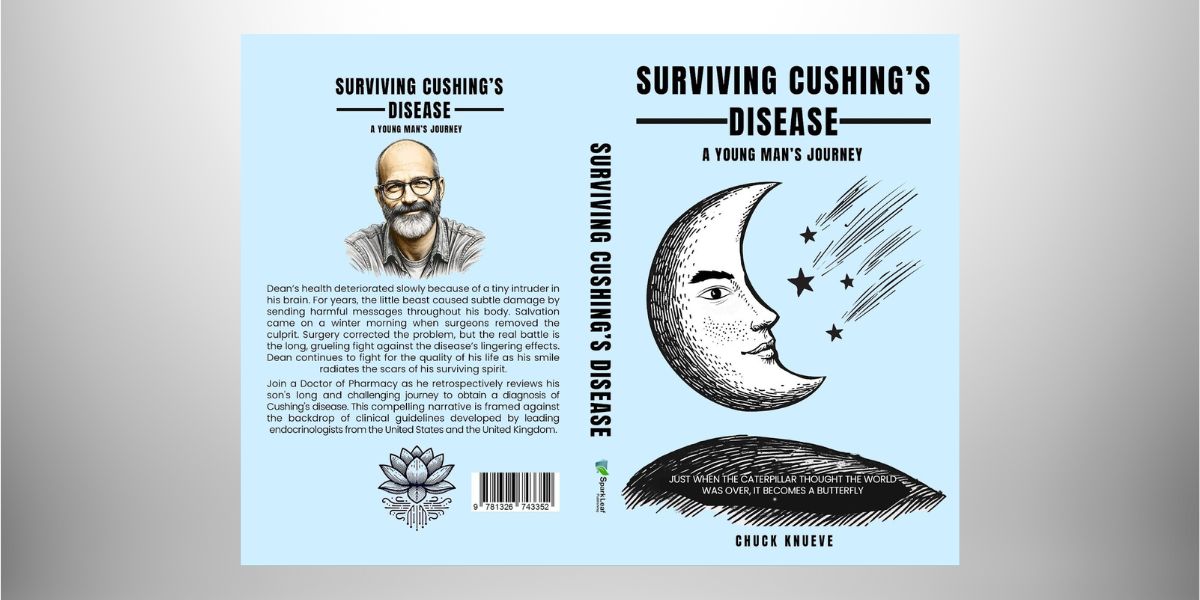
This book, Surviving Cushing’s Disease: A Young Man’s Journey, marks the author’s first step into advocacy for orphan and rare diseases. Dean’s story speaks not just to those still searching for answers but also to the medical professionals whose decisions hold the weight of human lives.


Disclaimer: This article is based on the personal experience of Dean Gregorie and does not constitute medical advice. The information presented is for informational purposes only and should not be used to diagnose or treat any medical condition. If you or someone you know is experiencing symptoms similar to those described, please consult a healthcare professional.

From Cop to Chippendales to True Crime Star: Steve Stanulis Launches “Bulletproof”

By: Jeremy Murphy

Before launching one of the most gripping new entries in the true crime podcast world, Steve Stanulis was already a man of many lives. A former NYPD officer turned celebrity bodyguard, Chippendales dancer, and film producer, Stanulis is now blending decades of frontline experience into his latest endeavor: “Bulletproof,” a weekly podcast that fuses raw true crime storytelling with Hollywood’s darkest secrets and the streetwise instincts of someone who’s lived it all.

“I’ve worn a badge, I’ve worn a bulletproof vest, and I’ve stood face-to-face with danger,” Stanulis says. “But the real threat has always been the truth people try to bury.”

“Bulletproof” Podcast

Launching this summer on Apple Podcasts and Spotify, “Bulletproof” is anything but your average armchair true crime show. Each episode features reenactments of real-life private investigation cases Stanulis has personally handled—some involving seduction, betrayal, or blackmail, and others spiraling into violence and murder. What sets the show apart is Stanulis himself: his résumé includes patrolling Brooklyn in the ’90s, protecting celebrities like Leonardo DiCaprio and Kanye West, and navigating Hollywood’s underbelly as a self-described “fixer.”

“I wasn’t just reading about crime or studying it,” he says. “I was in the middle of it. From the NYPD to Hollywood to Chippendales, everything I did somehow came back to human behavior, secrets, and danger. That’s what “Bulletproof” is really about.”

Celebrity Security

Stanulis first got his break in celebrity security in 1999 when he was introduced to Leonardo DiCaprio’s money manager—and, despite showing up late after working a bachelorette party, struck an unexpected connection with the actor over shared ACL injuries. “We had nothing in common—he just came off Titanic, and I was a stripper,” Stanulis recalls. “But I pulled down my pants to show him the scar, and I happened to be in a G-string. That broke the ice.”

Soon, Stanulis was running with DiCaprio’s infamous “Pussy Posse” and had a front-row seat to Hollywood nightlife. He eventually worked with stars across the spectrum, including a headline-grabbing stint with Kanye West that ended in a $30 million suit. (“He sued me for hitting on Kim,” Stanulis says, laughing. “It was ridiculous—but it went global.”)

But it wasn’t all glitz. When Stanulis lost access to high-profile gigs after a manager he worked with was indicted, he pivoted. “I got the bug for film and producing, but checks were few and far between. Someone said, ‘Why don’t you become a PI?’ and it just clicked.” Shows like Ray Donovan had made the term “fixer” mainstream—and Stanulis was already living it.

That unique mix of cop grit, performer charm, and Hollywood savvy gave him a foothold in private investigation. “I’ve dealt with cheating spouses, blackmail, everything,” he says. “And let’s be honest—who would know more about cheating spouses than someone who worked at Chippendales?”

Coming Full Circle

With “Bulletproof,” Stanulis brings those experiences full circle. The podcast’s first season features an array of jaw-dropping guests: Shere Hayes, one of the first to testify against Sean “Diddy” Combs; Michael Dowd, widely considered the most corrupt cop in NYPD history; and Kent McGowan, a former Texas Ranger who spent 20 years behind bars for a controversial shooting and is now seeking a pardon. There’s also Lou Essa, a towering ex-boxer and football player turned mob fixer whose life intersected with Muhammad Ali.

“Every time you think you’ve heard or seen it all, the next day something crazier happens,” says Stanulis. “That’s what makes this genre so addictive. People love the romanticism of true crime—especially when celebrities are involved. Cold cases, corruption, scandals—they all pull people in.”

He’s also unapologetic about calling out dirty cops. “I come from a family of cops—my dad, my brother, my uncles,” he says. “So when someone abuses that trust, they’re lower than a street thug in my book. You’re preying on people when they’re vulnerable. There’s no excuse for that.”

Joe Rogan of True Crime

The podcast doesn’t just rely on interviews and narrative—it also includes reenactments, filmed biopic-style, based on Stanulis’ wildest investigations. “We picked ten of our craziest fixer jobs and PI cases and walked the audience through how it all happened—how we got the job, what happened to the victim, and how we caught the perp,” he says. “The male escort case isn’t even the wildest one.”

With episodes dropping weekly and a growing tally of high-profile cases and guests, “Bulletproof” is already positioning itself as a standout in the crowded true crime market. Stanulis hopes it becomes “the Joe Rogan of true crime,” and believes his lived experience—still active as an investigator—gives it a level of credibility and intensity most shows can’t match.

“We’re not just giving opinions. We were there. We’re still there,” he says. “And we’re not afraid to go deep.” 

Bridging Science and Spirit: The Transformational Work of Maria Micha

By: Nia Bowers

From the heart of Athens to the fast-paced streets of Los Angeles, Maria Micha has carved a one-of-a-kind path that fuses rigorous clinical training with compassionate, human-centered insight. A spiritual psychotherapist and clinical mental health counselor, Maria’s journey has spanned continents and disciplines—uniting worlds that often stand apart.

With professional roots in both the UK and the U.S., Maria holds extensive credentials in psychotherapy, hypnotherapy, and counseling, as well as certifications in systemic therapy, Adlerian therapy, and psychodynamic theory. But what sets her apart isn’t just the depth of her training—it’s her ability to bring a deeply personal and holistic perspective to emotional healing and personal transformation.

Over the past two decades, Maria has helped thousands of individuals, couples, and families not only navigate their emotional and psychological challenges but also rediscover meaning and purpose in their lives. Whether addressing trauma, stress, or long-held behavioral patterns, her therapeutic model is comprehensive, practical, and rooted in both empathy and proven methodology.

At the heart of her approach is the Anagenesis Method™—a framework Maria developed that blends traditional psychotherapy, hypnotherapy, and personal development practices. More than a methodology, Anagenesis is designed to guide individuals toward greater self-awareness and lasting growth. It’s a model that appeals to those seeking more than just short-term solutions—those ready to explore deeper change and empowerment.

Her credentials reflect her multidisciplinary background. Maria is a certified PSYCH-K® Facilitator, a NeuroChangeSolutions Corporate Trainer, and a proud member of academic honor societies including Chi Sigma Iota and the Golden Key International Honour Society. She holds a certificate in health coaching from the Institute for Integrative Nutrition and began her professional journey with a Cambridge University certification in English back in 1989. This wide-ranging education laid the foundation for a career that integrates clinical psychology with broader human development principles.

Bridging Science and Spirit: The Transformational Work of Maria Micha

Photo Courtesy: Maria Micha

Maria has lived and worked in Eurfope, Asia, and now North America—a journey that’s not just geographical but deeply cultural. Each continent has shaped her understanding of healing, communication, and growth. Along the way, she’s guided professionals, creatives, and families alike through career transitions, emotional challenges, and mindset transformation.

In addition to her therapeutic work, Maria is also a published author. Her recently released book Why Am I Here? is a 170-page, fully illustrated collection of reflections on life’s biggest questions—covering topics such as relationships, empowerment, parenting, and aging. The book distills years of insights from her sessions, her own personal evolution, and her deep interest in human connection.

Maria is also stepping into new creative territory. She recently appeared as Madame Morrible in the 2025 iPOP Summer Showcase of Wicked, was a runner-up in the swimwear runway competition, and has been invited to present at the Junior Oscars. These opportunities aren’t just career highlights—they’re a sign of her expanding mission: to bring insight, presence, and meaningful dialogue to broader audiences.

With acting and modeling at the forefront of her next chapter, Maria is developing a new platform to reach people: a talk show that blends honest conversation with personal growth. She envisions a format where healing and humor can coexist, and where meaningful dialogue is accessible, relatable, and even entertaining.

Her long-standing mission remains clear: to help people reconnect with who they really are—and live accordingly. Whether in private practice, onstage, or on screen, Maria brings authenticity and heart to everything she does.

When asked about her unique position in the field, Maria puts it simply: “Not a lot of people are trained in both the clinical and humanistic sides of transformation. And even fewer are willing to integrate them.” It’s this rare perspective that continues to draw people from all walks of life to her work.

Though her work is distinct, she sees alignment with the likes of Gabor Maté and would one day love to collaborate with visionary voices such as Oprah, Jay Shetty, Mel Robbins, and Drew Barrymore—individuals who lead with heart and substance.

Maria Micha isn’t following a traditional path—and that’s exactly the point. She’s creating a life and a body of work that reflects both her training and her truth. With one foot in the healing space and the other stepping confidently into creative expression, she represents a powerful blend of purpose and presence.

Keep up with her journey on Instagram and explore her work and offerings at Linktree.

Disclaimer: The information provided in this article is for general informational purposes only and reflects the professional background, methodology, and personal journey of Maria Micha. It should not be construed as professional, medical, or therapeutic advice. Readers are encouraged to consult with qualified professionals before pursuing any therapeutic or personal development services.

Miggo’s VulnDB Signals a Shift from CVE Overload to Predictive Precision

By: Jake Smiths

In the past two years, vulnerability disclosures have risen significantly, with over 33,000 CVEs recorded in 2023 and a marked increase continuing into 2024. As a result, security teams are often overwhelmed, not only by the sheer volume but also by the absence of meaningful context.

The surge in alerts has outpaced the capacity of traditional systems like the National Vulnerability Database, leaving defenders with outdated data and unclear priorities. While the number of vulnerabilities continues to grow, teams frequently find themselves wondering: Which of these are most critical to address?

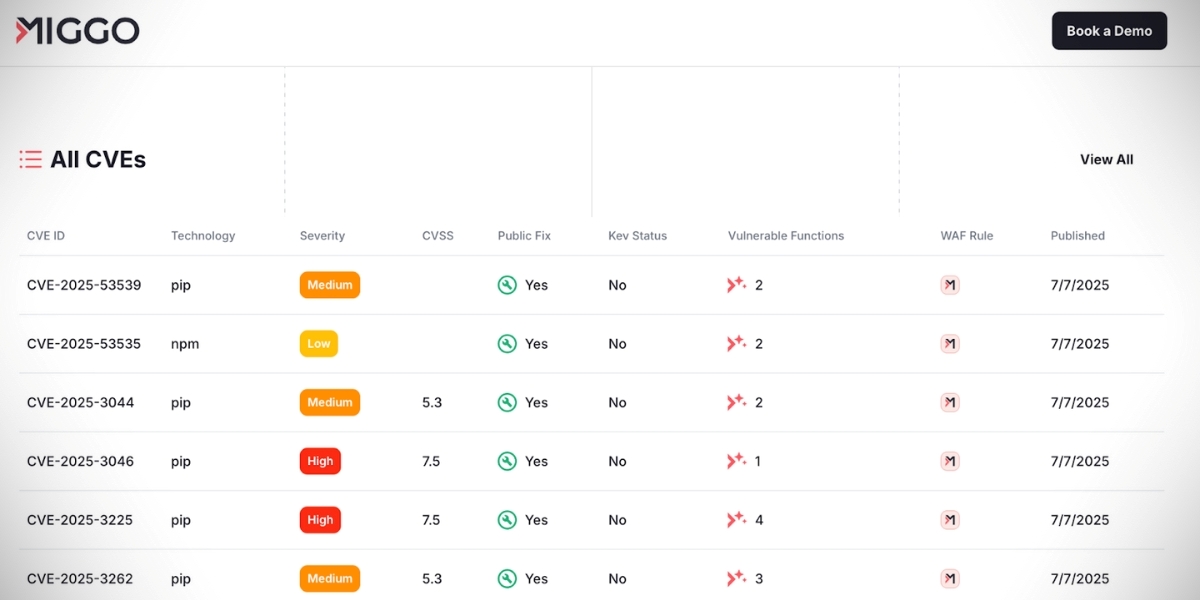
Miggo Security, the company behind a new generation of runtime-aware application protection, suggests that a different model is needed. This week, it introduced VulnDB, a predictive vulnerability database designed to surface relevant threats, explain their significance, and help teams take action before potential risks escalate.

“At Miggo, we don’t just track CVEs—we analyze them in depth,” said Itai Goldman, Co-Founder and CTO at Miggo. “Everyone is dealing with a flood of CVEs, but few systems are able to show you which ones might actually impact your application.”

The Real Risk Is in the Runtime

Most vulnerability databases stop at metadata. VulnDB goes further, tracing vulnerabilities to the specific function in the code that causes the issue.

This function-level precision is important because it directly relates to how applications behave in production. VulnDB examines whether the vulnerable code is likely to be executed during runtime, providing security teams with the context they need to prioritize genuine threats and disregard those that may not be exploitable in practice.

This approach is not theoretical—it is operational.

“VulnDB helps teams understand not only what is vulnerable, but also why it matters and whether it poses a significant risk,” said Goldman. “That clarity can streamline the decision-making process.”

Simulate, Understand, Protect

One of VulnDB’s standout features is Miggo’s use of autonomous exploit simulation. Every vulnerability that enters the system undergoes a series of real-world exploit simulations, generated by AI to replicate how attackers might attempt to exploit the flaw.

These simulations help inform the analysis and influence defensive strategies. Miggo uses them to develop dynamic WAF (Web Application Firewall) rules that evolve in response to emerging threats. These defenses are delivered in real-time, adapting automatically to new risks and ensuring organizations have up-to-date protection without requiring manual intervention.

The outcome is not just an analysis, but also actionable steps.

Making Intelligence Accessible

VulnDB also challenges a common industry assumption: that every vulnerability analyst is a security expert. Instead of relying on dense jargon or vague summaries, VulnDB provides clear, technically accurate root cause breakdowns, allowing both security professionals and developers to quickly understand a vulnerability’s nature, its potential impact, and whether they are at risk.

This transparency between teams—security, DevOps, and engineering—is vital in reducing response times and aligning around the most pressing priorities.

“Security isn’t about knowing everything. It’s about knowing what really matters,” said Liad Eliyahu, Head of Research at Miggo. “With our Predictive VulnDB, we’re providing actionable insights, not just raw data.”

A Free Resource with Advanced Capability

Miggo is offering VulnDB as a free public resource, allowing security teams worldwide to leverage its insights. Function-level tracing, exploit conditions, and real-time root cause analyses will be available to the wider community.

Organizations using Miggo’s platform receive an additional benefit: autonomous protections powered by VulnDB’s live intelligence. From preemptive WAF updates to continuous runtime enforcement, Miggo ensures that insights are translated into defense, rather than just sitting idle in a dashboard.

From Flooded Inboxes to Focused Action

VulnDB doesn’t simply rethink the vulnerability database; it challenges the conventional approach to vulnerability management. By focusing on context, precision, and preemptive response, teams can rise above the noise and focus on what matters, providing a greater sense of control over their security efforts.

In today’s rapidly evolving threat landscape, it’s not just about finding vulnerabilities—it’s about understanding which ones are worth addressing. With VulnDB, Miggo is giving teams the tools to make that distinction, empowering them to act swiftly and proactively to strengthen their security posture.

How a Shower Water Filter for Hard Water Can Help Improve Your Skin and Hair

Nothing beats the feeling of scrubbing off all the dirt and scum under the shower after a hard day’s work. But, before you get too comfortable, have you ever thought about whether your shower water is truly “clean”? For those who might not be familiar, hard water can sometimes have a negative impact on your skin and hair. To the naked eye, your running water may seem clear and clean, but it actually contains a variety of dissolved minerals that can lead to dry skin, flakiness, and hinder healthy hair growth. While this might sound concerning, there is a potential solution to alleviate these effects, and it comes in the form of shower water filters.

Understanding Hard Water: How Does It Affect Your Skin and Hair?

How a Shower Water Filter for Hard Water Can Help Improve Your Skin and Hair

Photo Courtesy: Fettle Effect

As mentioned earlier, hard water typically contains dissolved minerals, such as magnesium and calcium, that interact with soap and shampoo. Have you ever noticed that it can be difficult to create a lather when using these products? Or perhaps you’ve seen a sticky residue after using soap or shampoo? This is a result of hard water. This residue is often referred to as “soap scum,” and it can leave visible traces on your shower walls, skin, and hair.

Some of the potential effects on your skin from soap scum include:

Dryness and irritation: Soap scum can interfere with your skin’s natural oils, leading to moisture being stripped away. This can leave your skin feeling dry and may disrupt its protective barrier, which could trigger itchiness or flakiness after you step out of the shower.

Clogged pores: In addition to affecting your skin’s natural oils, soap scum can sometimes clog pores. This may lead to breakouts, blackheads, or whiteheads, even with regular cleansing.

Exacerbation of existing skin conditions: Individuals with sensitive skin or conditions like psoriasis or eczema may notice that soap scum can make their symptoms worse. It may contribute to flare-ups, resulting in added discomfort.

These are just some of the possible skin issues you might encounter, but there are also concerns for your hair, such as:

Dryness, dullness, and brittleness: Hard water can draw moisture out of your hair, leaving it looking lifeless, brittle, and dull. This can make your hair more prone to breakage and split ends, affecting its overall condition.

Prone to frizz and tangles: Soap scum, due to its sticky nature, can roughen the hair shaft because of mineral buildup. This may be one reason why some people experience frizzy hair, especially in humid conditions, making it more difficult to brush and detangle.

Scalp irritation: The same mineral buildup can affect your scalp, creating an environment that’s less than ideal for healthy hair growth.

The Potential of Shower Water Filters: How Do They Work?

How a Shower Water Filter for Hard Water Can Help Improve Your Skin and Hair

Photo Courtesy: Fettle Effect

You can potentially reduce many of these issues by using a shower water filter for hard water. This compact and convenient device is designed to help remove minerals that can affect your water quality, helping you achieve cleaner and clearer water for your bathing experience.

There are a variety of filter options available, depending on what specific issue you’d like to address. However, most filters work on similar principles:

Filtration media: Inside the filter, you’ll typically find a cartridge made up of media like KDF (kinetic degradation fluxion) and activated carbon. KDF is commonly used to remove chlorine and heavy metals like lead and mercury. Activated carbon, on the other hand, is effective at absorbing volatile organic compounds and other impurities that can contribute to odors and irritations on the skin and hair.

Sediment filters: For larger particles, some shower filters feature a mesh or fibrous layer that traps sediments, such as rust, often found in tap water.

Ion exchange: Some higher-end models include resins that use ion-exchange processes to “soften” the water. This involves replacing the harder minerals with softer ions, which could reduce some of the undesirable effects of hard water.

Experience the Change: See the Benefits of Showerhead Water Filters

Using a showerhead water filter can bring about several noticeable changes in a relatively short time, including:

  • Softer and more hydrated skin

  • Healthier and shinier hair

  • A more enjoyable shower experience

  • Reduced soap scum buildup

How Andrej Krchnavý Is Bridging Digital Innovation and Social Impact

By: David Smith

In today’s fast-paced digital world, success is often gauged by how well one can navigate technology, data, and human connection. Andrej Krchnavý, founder of the innovative agency Dataswans and director of the non-profit initiative Jobifinder, is actively working at this intersection — and beyond. With a presence in both the business and humanitarian sectors, Andrej is showing that entrepreneurship and social responsibility can coexist and complement each other.

Through Dataswans, a forward-thinking digital agency focused on data tools, automation, and accredited education, Andrej has gained recognition among corporates, startups, and individual entrepreneurs. His proprietary scraping tools assist companies in uncovering valuable insights and leads, while his accredited online academy — acknowledged by the Slovak Ministry of Education — provides individuals with practical digital skills in marketing, automation, and online business strategy.

But Andrej’s efforts extend beyond just innovation. As director of Jobifinder, a civic association supporting individuals from developing countries, he is making an impact on the ground. The initiative assists migrants and newcomers from less-developed nations in integrating into Slovak society by offering education, guidance, and pathways to meaningful employment opportunities. Through Jobifinder, many individuals have found not just jobs but a renewed sense of purpose and belonging.

From Digital Tools to Human Transformation

What distinguishes Andrej is not only his ability to create software or consult startups. It’s the purpose behind everything he undertakes. He believes that modern business should prioritize people. His work with Dataswans is closely connected with his mission at Jobifinder: both focus on creating access, whether that’s access to data, opportunities, or a brighter future.

His digital agency collaborates with clients across Europe and beyond, including several corporate partners who initially approached him for data tools but chose to stay due to the broader strategic perspective he offers. Startups come to him not only for growth strategies but also for a clearer vision. Through Dataswans’ internal academy, founders, marketers, and freelancers gain the tools to confidently navigate today’s digital landscape with clarity, structure, and resilience.

Andrej’s clients often describe him as a thoughtful strategist, a builder with integrity, and someone who isn’t afraid to challenge traditional methods. Many come seeking results and leave with an expanded perspective. His approach seamlessly integrates technology with a deep understanding of human needs, making him a unique blend of strategist, educator, and social entrepreneur.

A Journey Fueled by Purpose

Andrej’s own journey is one of alignment, not avoidance. He didn’t come from a background of wealth, nor did he follow a predetermined corporate path. Instead, he built everything from the ground up — coding, teaching, consulting, and launching projects that serve both business and society. While many in the digital world prioritize short-term profits, Andrej has consistently focused on sustainability and long-term value.

He takes particular pride in creating tools that help others thrive: scraping systems that generate leads for B2B companies, databases that support online business models, and digital courses that equip individuals with the skills needed to become self-employed or launch their own projects. But perhaps most meaningful to him is his work with Jobifinder — offering real education and meaningful employment opportunities to individuals who might otherwise be overlooked.

The Road Ahead for Dataswans and Jobifinder

Looking ahead, Andrej is focused on expanding the impact of both his agency and nonprofit. With an increasing number of partnerships and growing interest from international markets, Dataswans is gradually evolving into a comprehensive digital ecosystem, offering consulting, automation, education, and ready-made tools for entrepreneurs. Simultaneously, Jobifinder is expanding its reach, launching new community initiatives, and preparing to introduce a multilingual job-matching platform designed specifically for migrants in Europe.

Andrej’s vision for the long term? To bridge the gap between those who have access to tools and those who would benefit most from them. He envisions a future where impact and income align — where businesses thrive not just by increasing their sales, but by serving their communities in meaningful ways.

While Andrej is presently concentrating on his ongoing projects and is not taking on one-on-one clients, he continues to share valuable insights and behind-the-scenes lessons from his journey on social media. His message to aspiring entrepreneurs and changemakers is simple: Don’t just build to generate profit. Built to make a difference.

If you’re interested in the intersection of technology, social impact, and modern education, follow Andrej on Instagram for updates, resources, and inspiration: @andrejkrchnavy