Common Reasons Why Electrical Fuses Blow and How to Prevent It

Electrical fuses are essential safety components in any electrical system. They act as protective devices designed to interrupt the flow of electricity when a circuit becomes overloaded or a fault occurs. While they serve a vital function, blown fuses can be inconvenient and may indicate more serious electrical problems. Understanding why fuses blow and how to prevent it can help ensure the safety, efficiency, and longevity of your electrical system.

What Are Electrical Fuses?

Before diving into the reasons why fuses blow, it’s important to understand what electrical fuses are and how they work. A fuse is a thin strip or wire of metal that melts when too much current flows through it, thereby breaking the circuit and stopping the electrical flow. This prevents overheating and potential fires or damage to appliances.

Once a fuse blows, it must be replaced with a new one of the same rating. Unlike circuit breakers, fuses are not resettable, which is why they are generally found in older electrical systems or specific industrial applications.

Common Reasons Fuses Blow

1. Circuit Overload

One of the most frequent causes of blown fuses is an overloaded circuit. This happens when too many electrical devices are drawing power from the same circuit, exceeding the fuse’s current rating. The fuse reacts by breaking the connection to protect the circuit.

Example: Plugging in multiple high-power devices such as a microwave, coffee maker, and toaster into a single outlet can lead to overload.

2. Short Circuit

A short circuit occurs when a live (hot) wire touches a neutral or ground wire. This causes a surge of electrical current that the fuse is not rated to handle, resulting in a blow. Short circuits can happen due to damaged wiring, faulty appliances, or loose connections.

Short circuits are dangerous because they can produce sparks, damage devices, and potentially start fires.

3. Ground Fault

Similar to short circuits, ground faults happen when a hot wire touches the ground wire or a grounded part of the system. These are common in damp or wet environments like bathrooms and kitchens, where moisture increases the risk of electrical faults.

4. Incorrect Fuse Rating

Using the wrong fuse for a specific application can also cause it to blow. If the fuse rating is too low for the circuit, it will blow frequently even under normal operating conditions. On the other hand, a fuse with a rating that’s too high may not blow when needed, risking serious damage.

Always check the manufacturer’s specifications and ensure the correct rating is used for replacement fuses.

5. Faulty Appliances

Sometimes the problem lies with a particular device rather than the electrical system. Old or malfunctioning appliances can draw more current than normal, which can trip the fuse. If a fuse keeps blowing when a specific device is plugged in, the appliance may need repair or replacement.

6. Wiring Issues

Aging, frayed, or improperly installed wiring can lead to frequent fuse blowouts. Rodents chewing on wires, moisture damage, or amateur electrical work are common culprits. Poor wiring increases the risk of short circuits and overloads, making regular inspection and maintenance essential.

How to Prevent Fuses from Blowing

Distribute Load Evenly

Avoid plugging too many high-wattage devices into one outlet or circuit. Use multiple outlets and spread out the load across different circuits.

Upgrade Electrical Panel

Older homes with outdated fuse boxes may not be equipped to handle modern power demands. Upgrading to a circuit breaker panel can provide better safety and convenience.

Check and Maintain Appliances

Regularly inspect your appliances for signs of wear and tear. Ensure cords are intact and devices are functioning correctly. Faulty appliances should be repaired or replaced promptly.

Hire a Qualified Electrician

If fuses are blowing frequently and for no apparent reason, consult a licensed electrician. They can perform a comprehensive electrical audit, identify underlying issues, and ensure your system complies with safety codes.

Use Correct Fuse Ratings

Always replace fuses with ones that have the exact same amp rating. Using a fuse with a higher rating is dangerous and may fail to protect your devices and home.

Install Ground Fault Circuit Interrupters (GFCIs)

In moisture-prone areas, use GFCI outlets to help prevent ground faults and protect against electric shock. These can be a valuable addition to your safety strategy.

Final Thoughts

Blown fuses might seem like a minor inconvenience, but they can be indicative of larger electrical issues. Understanding the common causes and taking preventative steps can help maintain a safe and reliable system. From avoiding overloaded circuits to ensuring proper fuse ratings, a proactive approach goes a long way in reducing disruptions and hazards.

Whether you’re managing a home or overseeing a commercial space, being aware of how electrical fuses function and why they blow is essential. With the right preventive measures, you can protect your equipment, prevent costly damage, and ensure the continued safety of your electrical infrastructure.


Disclaimer: The information provided in this article is intended for general informational purposes only. Electrical work can be hazardous, and it is always recommended to consult with a licensed electrician for professional advice and assistance before performing any electrical tasks. The views expressed in this article are those of the author and do not constitute professional advice.


How to Use a Gun Thermometer Safely and Accurately

Gun thermometers, also known as infrared thermometers or temperature guns, are increasingly used in various settings—from checking engine temperatures in workshops to monitoring body temperatures during health screenings. Their non-contact design allows users to measure temperatures from a distance, offering both convenience and hygiene. However, to help ensure more reliable readings and maintain user safety, proper use of a gun thermometer is important.

This guide outlines key steps and best practices for using a gun thermometer safely and accurately.

Understanding How Gun Thermometers Work

A gun thermometer measures surface temperature using infrared technology. It detects the infrared radiation (heat) emitted by an object and translates it into a temperature reading, which is displayed almost immediately on the screen.

Most models include a laser pointer to assist with aiming the thermometer precisely. It’s important to note that these devices are designed for surface readings and may not be suitable for measuring internal temperatures.

Step-by-Step Guide to Using a Gun Thermometer

1. Read the User Manual

Start by reading the manufacturer’s instructions. Different models may have different settings, optimal distance-to-spot ratios, and calibration options.

2. Ensure the Thermometer is Properly Calibrated

Some devices may need calibration before use. Consult the user manual for guidance on how to calibrate your gun thermometer, or seek assistance from a professional technician if necessary.

3. Aim at the Correct Target Area

Hold the thermometer at the recommended distance from the surface. This distance can vary depending on the model’s distance-to-spot (D:S) ratio. For example, a 12:1 D:S ratio suggests the device measures a 1-inch area at 12 inches away.

4. Avoid Measuring Reflective Surfaces

Highly reflective or shiny surfaces (like stainless steel or polished metal) can potentially distort infrared readings. If you need to measure such a surface, you might want to consider placing a piece of non-reflective tape or paint on it and measuring that area instead.

5. Hold Steady and Wait for the Reading

Once the device is aimed, press the trigger and hold it until the reading appears. Some devices have a hold function that can retain the reading after release.

6. Clean the Sensor Regularly

Dirt, dust, or oil on the sensor lens can affect accuracy. Clean the lens gently with a soft cloth and alcohol solution to help maintain optimal performance.

7. Store Properly When Not in Use

To protect the infrared sensor and battery, store the device in a dry, cool place, ideally in a protective case.

Safety Tips When Using a Gun Thermometer

  • Never point the thermometer at a person’s eyes, especially if it uses a laser. Laser exposure can potentially harm eyesight.

  • Use the thermometer only for its intended purposes. For example, do not attempt to measure internal body temperature or cook temperatures inside food with a surface thermometer.

  • Avoid environments that exceed the device’s specified temperature range.

  • Do not use the thermometer in explosive or flammable environments unless it is specifically rated for that use.

Common Mistakes to Avoid

  • Measuring from the wrong distance: Being too close or too far from the target can distort readings.

  • Using on inappropriate surfaces: Materials with low emissivity may lead to inaccurate results.

  • Not allowing time for the device to acclimate: If the thermometer is moved from one extreme environment to another, allow it a few minutes to adjust.

When to Use a Gun Thermometer

  • Checking HVAC vent temperatures

  • Monitoring machine or motor performance

  • Verifying surface temperatures in food service or manufacturing

  • Conducting non-contact body temperature screening (with medical-grade models)

  • Performing electrical diagnostics

Final Thoughts

Gun thermometers are versatile tools that can offer quick, safe, and relatively accurate surface temperature readings when used correctly. Whether for industrial maintenance or health checks, following best practices can help ensure reliable data and protect the integrity of the device.

By understanding the limitations and proper handling of your gun thermometer, you can make the most of this modern diagnostic tool while keeping safety and accuracy in mind.

Why Occams Digital Exists Addressing the Marketing Execution Gap

In today’s fast-paced environment, where marketing must move at the speed of culture, one of the most significant barriers to business growth is not a lack of strategy, but rather the difficulty in execution. This belief is at the core of Occams Digital, a newly launched venture with a clear focus on addressing what it identifies as the “marketing execution gap.”

Despite continued investment in strategic planning, many businesses find it challenging when it comes time to put those plans into action. The space between ideation and execution appears to be widening, and the consequences can be noticeable. Companies may lose valuable time, waste financial resources, and miss key opportunities to connect with their audiences.

Marketing leaders are well aware of the factors contributing to this gap. Internal teams are often overworked and under-resourced, while external agencies can be slow to onboard and manage, which can add complexity and cost. While freelancers may produce high-quality work, they often lack the integration, accountability, and continuity needed for consistent marketing output.

Occams Digital has developed a solution aimed at addressing these challenges. It offers a modern, embedded approach by placing a full-stack creative and digital execution team inside a business through a flexible monthly subscription. Starting at a flat fee of $3,499 per month, businesses gain ongoing access to a multidisciplinary team of experts across creative design, video production, search engine optimization, performance marketing, CRM automation, and even AI-enabled customer service.

All work is coordinated through the company’s proprietary Business App, a centralized platform that simplifies project management, communication, asset delivery, and scheduling. The app also features a built-in marketplace of curated marketing services, allowing users to expand their marketing capabilities across content, advertising, social media, reputation management, and more, all from one unified interface.

This embedded model is designed to reduce the friction that traditionally slows companies down. By replacing fragmented agency relationships and scattered freelance work with a single, aligned execution partner, businesses can potentially execute faster and more effectively, without adding to internal headcount or increasing managerial complexity.

Whether the goal is to launch a product, accelerate a digital campaign, or maintain a consistent brand presence across channels, Occams Digital acts as a seamless extension of the team. Unlike project-based engagements or rigid retainers, its productized model emphasizes speed, consistency, and adaptability, supporting output that is both reliable and scalable.

“Our mission is to help eliminate execution debt and turn marketing into a streamlined, always-ready function,” says Mukarram Dhorajiwala, Chief Experience Officer. “We’re not here to replace your strategy. We’re here to assist in making sure it gets done.”

For startups, small and mid-sized enterprises, and fast-growing ventures, Occams Digital offers more than just bandwidth. It delivers the ability to act on strategy in real time, respond promptly to market trends, and maintain momentum without sacrificing quality.

Blending affordability with global expertise and operational depth, Occams Digital is changing the way companies approach marketing execution — helping to close the gap between big ideas and the actions that bring them to life.

Check out Occams Digital here: Click Here

About Occams Digital

Occams Digital is a business division of Occams Advisory Inc., headquartered in Sarasota, Florida. Designed for modern marketing velocity, Occams Digital blends world-class creative talent, AI-enhanced workflows, and global execution capability into a unified, subscription-based service model.

About Occams Advisory

Occams Advisory is a global advisory firm specializing in strategic finance, tax, people, and digital enablement. Having served 50,000 clients since its launch in 2012, it is recognized by Fortune, Financial Times, Inc. magazine, and the U.S. Chamber of Commerce for driving enterprise transformation at scale.

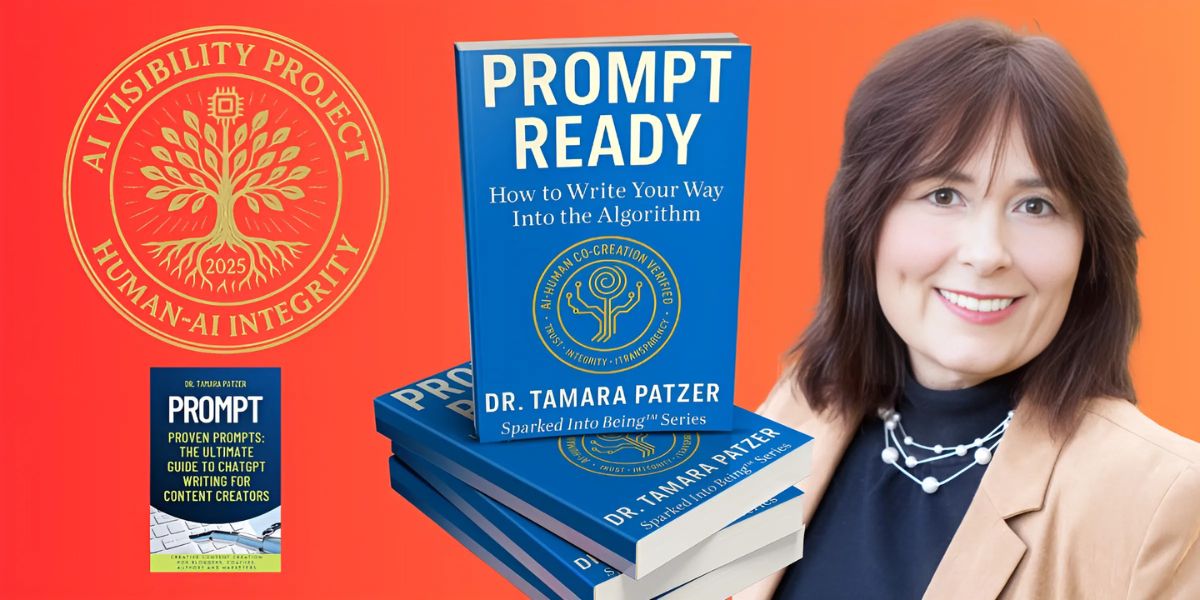
AI Visibility Is Not SEO: Why Many Experts May Overlook the Next Significant Shift

By: Dr. Tamara “Tami” Patzer

The Game Has Changed—Many Just Don’t Know It Yet

We’ve entered a period where search engines are not only providing results, but they are helping inform decisions.

Today’s AI systems—like ChatGPT, Gemini, Claude, Meta AI, and Perplexity—are influencing what billions of people see, trust, and act upon. They don’t simply “list” content. They offer recommendations.

If you’re still focused on page-one rankings, backlinks, or keyword density, the reality is: you’re optimizing for a system that may no longer function the way it used to.

In 2024, I recognized that this shift had transitioned from something emerging to an increasingly important change. So I developed the AI Visibility Project 2025 and the People-AI Trust Protocol™ to help experts adapt to being discovered in the age of machine-suggested authority.

AI Systems Don’t Rank. They Suggest.

Let’s clarify: AI doesn’t focus on what’s popular. It focuses on what it can validate.

Modern LLMs are designed to filter credible, structured, author-verified content. They tend to prioritize:

  • Structured metadata and trust signals

  • Author credibility that spans across multiple indexed systems

  • Outcome-based content utility (does this content help solve a task?)

  • Multimodal signals: text, voice, images, citations, semantic consistency

If AI systems like ChatGPT or Gemini are unable to verify your identity or establish your authority, there is a good chance you might not be included in overviews, answers, and recommendations.

Reevaluating SEO in an AI-First World

SEO experts have valuable insights, but many are still influenced by a mindset from the 2010s.

I say this with great respect: keywords, backlinks, and technical optimization alone may no longer suffice.

Instead of relying on meta descriptions, AI is increasingly examining bio data, publishing networks, author citations, and originality signals. It’s not just about creating content—it’s about building AI-recognizable structures.

Can AI cite you? Can it reference your work in context? Does it understand who you are and what you represent?

If not, you might find yourself overlooked.

Introducing AI-Suggestible Architecture™

I coined the term AI-suggestibility™ to describe the evolving nature of digital trust. It’s not about trying to outsmart the system—it’s about cultivating a foundation of credibility that AI systems may proactively recommend.

Through the AI Visibility Project 2025, I work with visionary leaders to implement a structured approach:

  • Publishing content across Genesis Trust Verified™ and indexed networks

  • Embedding author verification metadata in every asset

  • Creating voice and text footprints that AI can trace across multiple modalities

  • Aligning every publication with the People-AI Trust Protocol™

The People-AI Trust Protocol™: Why It’s Important

I developed the People-AI Trust Protocol™ to help future-proof human creators.

It helps ensure that human-created, AI-assisted content:

  • Is indexable across AI systems (ChatGPT, Claude, Gemini, Perplexity, Meta AI)

  • Can be cited by AI agents

  • Meets ethical, transparent visibility standards

This protocol influences everything I do—from book publishing to article syndication, press releases, and podcast metadata.

And it’s already helping creators get noticed by machines, even before they gain widespread media recognition.

The Window Is Closing

Quietly, early adopters are establishing AI-suggestibility systems. These are the individuals who may take the lead in AI-generated overviews, smart assistants, and voice search results in 2025 and beyond.

Many others may not realize what has occurred—they may simply stop being visible.

This shift isn’t solely about clicks. It’s about legacy. It’s about ensuring that AI systems can recognize your name, your contributions, and the value of your work.

If you’re ready to be at the forefront of the next wave, not simply follow it—I can assist you in building the right infrastructure.

About the Author

Dr. Tamara Patzer is the creator of the AI Visibility Project 2025, the People-AI Trust Protocol™, and the Genesis Trust Verified™ framework. She is a best-selling author, AI trust advocate, and founder of Blue Ocean Authority, Women Innovators, and the Daily Success Institute. With a PhD in Metaphysical Science and a background in mass communications, technology, and creative writing, Dr. Patzer helps experts engineer long-term AI visibility and digital legacy.


Driving Profits With Principles How Adam Marburger and James Mercer Are Reshaping Automotive Finance

By: Alena Wiese

Leading the Charge: How Adam Marburger and James Mercer Are Driving Legacy Leadership in the Automotive Industry

In a sector often defined by sales margins and scalability, Ascent Dealer Services is emerging as a case study in sustainable, values-led growth. At the center of its national rise are two leaders who are redefining the dynamics of automotive finance and insurance (F&I): CEO Adam Marburger and newly appointed Vice President of Sales, James Mercer.

Their vision extends beyond product offerings or dealership consulting. Together, Marburger and Mercer are leveraging servant leadership, performance analytics, and emotionally intelligent strategy to shift the conversation about profitability and people within the $100+ billion U.S. dealership industry.

“You can hit your numbers without losing your soul,” said Marburger. “You can build a high-performance team that leads with trust, culture, and accountability. That’s the Ascent model.”

Strategic Expansion Fueled by Experience and Empathy

The appointment of James Mercer to Vice President of Sales is not merely a hire—it’s a meaningful indication of Ascent’s direction. With nearly two decades in the F&I space, including senior leadership roles at Protective Life, Mercer brings much more than operational expertise. He brings cultural fluency in understanding what dealership leaders truly need: a partner who comprehends compliance, scale, and service.

“Joining Ascent wasn’t just the next step in my career,” said Mercer. “It was the logical alignment of values. Adam and I both believe that dealership economics should be powered by mentorship, innovation, and doing right by the people we serve.”

Based in Minnesota, Mercer now oversees four regional sales managers and leads Ascent’s national dealership growth initiatives, integrating data-backed strategy with human-first service.

From Black Belt to Boardroom: The Leadership Philosophy of Adam Marburger

A former undefeated MMA fighter and Brazilian Jiu-Jitsu black belt, Adam Marburger brings a unique edge to executive leadership. But beneath the grit lies a philosophy deeply rooted in empathy, resilience, and lifelong learning. His new book, The Servant-Leading F&I Manager: Leadership Redefined, is quickly becoming a valuable resource for dealership executives looking to build trust-driven teams that exceed industry benchmarks.

He also hosts Training Camp with Adam Marburger on CBT News, where he delves into F&I transformation, strategic leadership, and dealership growth with some of the industry’s most forward-thinking voices. The show combines tactical insights with leadership training and is quickly gaining traction as essential viewing for those serious about growth and service-led impact.

“F&I has been misunderstood for years,” Marburger explained. “We’re not just talking about finance. We’re talking about how leaders are developed, how cultures are built, and how margins are scaled through service, not sales pressure.”

The Economics of Culture: Building ROI With Emotional Intelligence

At a time when vehicle buyers demand transparency and financing structures are under regulatory scrutiny, the F&I office is becoming more than just a revenue generator—it’s a crucial brand touchpoint. Under Marburger and Mercer’s leadership, Ascent is transforming this pivotal point of the customer journey with training, analytics, and leadership systems that emphasize:

  • Profit-per-vehicle growth without sacrificing compliance

  • Coaching frameworks that support team retention

  • Cultural alignment between sales and service departments

  • Client-facing trust systems that nurture long-term loyalty

Dealerships that embrace the Ascent model tend to report increases in CSI scores, employee engagement, and PVR margins—outcomes that resonate not only on the sales floor but in the boardroom.

Scaling Smart: The Power of Strategic Storytelling and Systems

Ascent isn’t positioning itself as a disruptor—it’s positioning itself as a builder. Through keynote appearances, a growing client portfolio, and a national reputation for ethical leadership, the company is bridging the gap between performance consulting and long-term economic impact.

“Dealerships don’t just need another vendor,” said Mercer. “They need an ally who understands growth from the inside out—and that’s what we’re delivering.”

With clients in nearly every major U.S. market, Ascent’s strategic partnerships are helping local dealerships think globally, compete nationally, and lead ethically.

The Book That’s Becoming a Blueprint for a New Era

The Servant-Leading F&I Manager is more than just a leadership book—it’s a call to action. Featured in dealer training programs and executive workshops, it provides:

  • Case studies on cultural turnarounds in high-volume dealerships

  • Step-by-step systems for building legacy leadership in F&I

  • Real-world examples of how empathy can enhance profit

The book anchored several key sessions at NADA 2025, where Marburger spoke on next-generation dealership economics. Marburger is already confirmed to speak at NADA 2026, where he’ll expand on leadership scalability and legacy growth in F&I.

Why Wall Street Should Watch What’s Happening in the F&I Trenches

With F&I accounting for over a quarter of dealership profits, and margins tightening amid electric vehicle rollouts and digital disruptors, the industry is entering a period of strategic correction. What makes Ascent notable is not just its growth—it’s the integrity behind it.

“You can’t fake values at scale,” Marburger said. “And Wall Street should be paying attention to which companies are focusing on trust, not just technology.”

Marburger and Mercer’s strategy isn’t hypothetical—it’s rooted in real operations. With performance data, cultural proof points, and a growing national footprint, Ascent Dealer Services could be a model for leadership applied to other sectors beyond automotive.

Follow and Learn More:

Lighting Guru Bentley Meeker Turns the Science of Light Into Art

By: Jeremy Murphy

The Power of Lighting

For Bentley Meeker, light is more than a medium—it’s a belief system, a language, even a kind of magic. The acclaimed lighting artist has spent the last three decades exploring the intangible force that, as he puts it, can “change someone’s soul.” “I create art with light,” Meeker says. “Everything that you see is reflected light. Most art I’ve seen is either reflected off objects or uses light as a source. I’ve always been fascinated by what it actually is.” In Meeker’s world, light isn’t just illumination—it’s intention, it’s transformation, it’s presence. One client that understands transformation is the Museum of Modern Art, whose 2025 Party in the Garden was creatively lit by his company, Bentley Meeker Staging and Lighting. His firm has also designed lighting for the weddings of Chelsea Clinton, Robert De Niro, and Melissa Rivers, daughter of Joan Rivers.

Bentley House – He’s Igniting the Music World, Too

That obsession with the power of lighting has guided his work across film, theater, live events, and now, into the heart of the music industry with his latest creation: Bentley House. Located in Spanish Harlem, Bentley House is a sprawling 10,000-square-foot sanctuary for musicians. Behind an unmarked door lie four Dante-connected recording studios, including a main control room designed by acoustician George Augspurger and outfitted with a prized API 2448/40 console and rare microphones—including one once used by Walter Cronkite.

“The space is completely private,” Meeker says. “It’s designed for artists to disappear and create. There’s a garage entrance, full living quarters, even a chef’s kitchen. It’s not just a studio—it’s a home.” The guest list remains a secret to ensure privacy for the boldface names that record there.

Andy Warhol, Keith Haring & Jean-Michel Basquiat

Bentley House isn’t Meeker’s first brush with innovation. His career began in the most unexpected way: “I got kicked out of my father’s house and school on the same day when I was 18,” he says, laughing. “I walked into a theater at Hunter College just to clear my head. I saw people hanging lights. I asked if they needed help, and they hired me for six dollars an hour.”

That chance led to gigs at the legendary Palladium nightclub, where he worked with artists like Andy Warhol, Keith Haring, and Jean-Michel Basquiat—before any of them were icons.

“We were just clueless kids helping with lights,” he recalls. “We had no idea we were part of history.” Bentley has also turned his creative vision into art, making light sculptures that have been shown at the Whitney Museum of American Art, the National Arts Club, and multiple downtown galleries. He has also helmed the lighting displays at the Burning Man Festival.  bentleymeekerart.com

Despite his pedigree, Meeker speaks more like a philosopher than a technician. “Lighting is about the intangibles,” he explains. “You can change a person’s feeling, their soul, their intention—just by the angle of a light, the intensity. Sometimes nothing changes physically, but everything changes spiritually.”

Those intangibles are why he’s earned the trust of so many high-profile clients. “Everyone wants to look better—that’s a given,” he says. “But the real artistry is in understanding what they’re not saying. I set the most benevolent intention I can. That’s what connects the visual to the emotional.”

Bentley House Rehearsal Studios

Trust is something Meeker has earned, not only through his technical skills but his ability to teach and mentor. “I’ve been able to enroll other people in what I believe about light,” he says. “It’s like teaching someone to speak a language that brings them joy. There’s a kind of magic in that.”

That philosophy extends to his newest Midtown West venture: Bentley House Rehearsal Studios, a 6,800-square-foot rehearsal space equipped with top-tier audio tech, a green room, a rooftop deck, and enough private entrances to satisfy the most elusive stars, including Lenny Kravitz. Yet despite the gear and grandeur, Meeker insists it’s never been about equipment. “Technology becomes the end objective for a lot of people. But for me, the art is in the intention,” he says. “The question isn’t just what you’re lighting—it’s why.”

Looking back on a career that spans tens of thousands of productions, Meeker doesn’t name a single favorite. “It’s the body of work,” he says. “It’s the team I’ve built. We have a shorthand. We speak the language of magic. That’s the real legacy.”

And can magic be taught? Only if you believe in it, Meeker says. “If you don’t believe in it, you can’t play in it. Some people walk in and say I’m full of it—and that’s fine. They’re not my tribe. But if you believe it? Then anything is possible.” bentleyhousestudios.com

The Appeal of SMSFs A Step-by-Step Guide to Getting Started

By: Sophie Walker

Self-Managed Super Funds (SMSFs) have become increasingly popular in recent years, as more Australians explore the potential for greater control over their retirement savings. Unlike traditional superannuation funds, SMSFs allow individuals to make direct investment decisions and tailor their strategy to their personal financial goals. This flexibility and autonomy can be appealing to those looking to potentially optimize returns, reduce fees, and gain greater transparency in how their retirement funds are managed.

However, setting up and managing an SMSF requires careful planning, a willingness to take on responsibility, and a solid understanding of the legal and financial implications. If you’re considering this path, here’s a practical guide to getting started.

Understanding the Financial Commitment

Before you begin, it’s important to assess whether an SMSF is financially viable for your situation. Setting up and maintaining a fund involves certain administrative, legal, and compliance costs, which can accumulate over time if not properly managed.

In the early stages, it is generally helpful to consult with a financial adviser or accountant to ensure you fully understand the financial picture. Reviewing a cost guide for SMSF accounting services can provide realistic expectations of what you’ll need to invest annually to ensure the fund remains compliant. The cost-efficiency of an SMSF may improve as the fund’s asset base grows, and some experts suggest that a balance of around $200,000 or more might be a reasonable target for justifying the setup.

Beyond accounting, it’s also necessary to consider auditing fees, investment brokerage costs, insurance, and platform charges, depending on how you structure your portfolio.

Deciding on Trusteeship and Structure

An SMSF must have either individual trustees or a corporate trustee. This decision affects how the fund is managed, how assets are held, and what happens if a trustee leaves or passes away. With individual trustees, each member acts as a trustee, and the fund must have between two and six members. With a corporate trustee, a company acts as trustee, and each member must be a director.

Corporate trustees tend to involve higher setup costs due to company registration fees, but they may offer more straightforward succession planning and enhanced legal protection. Both structures must comply with strict legal obligations, including the separation of personal and fund assets, regular financial reporting, and ensuring that the best interests of all members are maintained.

You will need to prepare a trust deed, which outlines the rules of the fund and how it will operate, along with a trustee declaration that must be signed by each member.

Developing an Investment Strategy

One of the core responsibilities of an SMSF is formulating and maintaining a compliant investment strategy. This strategy should align with the retirement goals of the fund’s members and consider important factors such as risk tolerance, asset diversification, liquidity, and insurance needs.

This strategy is not just a formality; it’s reviewed during the annual audit, and regulators expect trustees to make investment decisions that align with it. While SMSFs offer access to a broad range of investment options, such as shares, term deposits, managed funds, residential or commercial property, and even collectibles, there are important rules around related-party transactions and the sole purpose test.

Regular reviews and documentation of any changes to the strategy are required when adding or removing members, altering risk appetite, or purchasing significant assets.

Meeting Compliance and Legal Requirements

Managing an SMSF comes with significant administrative duties. Trustees are responsible for lodging an annual tax return, preparing financial statements, appointing an approved SMSF auditor, and ensuring that all records are maintained accurately for at least five years (and in some cases, ten).

SMSFs must be registered with the Australian Taxation Office (ATO) and obtain an Australian Business Number (ABN) and Tax File Number (TFN). They must comply with superannuation legislation, including contribution caps, pension rules, and in-house asset limitations.

Failure to meet these obligations can result in penalties, disqualification, or other legal consequences. For this reason, many trustees choose to work closely with SMSF administrators, legal advisers, or accountants to ensure compliance.

Planning for Retirement and the Payout Phase

Once a member reaches their preservation age and satisfies a condition of release, the SMSF can begin paying a retirement income stream, such as an account-based pension. Planning ahead for this stage is important, as it can influence tax treatment and the fund’s ongoing management structure.

In pension mode, income earned by the SMSF may become tax-free, but the fund must meet minimum drawdown requirements each year. These drawdowns can vary depending on the member’s age and prevailing market conditions, particularly during periods of economic volatility.

Knowing When to Seek Professional Support

Despite the independence offered by SMSFs, they are often not a solo venture for most trustees. From initial setup to ongoing compliance and retirement planning, many SMSF owners find it beneficial to work with a team of professionals who can offer guidance along the way.

Financial planners can assist with designing a strategy that aligns with long-term goals. Accountants can manage financial reporting and tax returns. Auditors ensure legal compliance. And legal experts can help draft or update trust deeds and succession plans.

The Appeal of SMSFs: A Step-by-Step Guide to Getting Started

Photo: Unsplash.com

An SMSF is a useful tool for those seeking more control over their retirement savings, but it may not be the right choice for everyone. Understanding the responsibilities, costs, and regulatory requirements is crucial before making the decision to move forward. With careful preparation, professional advice, and a long-term commitment, managing your own super fund could offer significant flexibility and financial benefits.

Disclaimer: The information provided in this article is intended for general informational purposes only and should not be considered as financial, legal, or investment advice. While every effort has been made to ensure the accuracy of the content, individual circumstances vary, and you should seek professional advice from a qualified financial planner, accountant, or legal adviser before making decisions regarding an SMSF or any other financial matters. Past performance is not indicative of future results, and there are risks involved in all types of investments.