Managing Chronic Conditions with Wellth: Tools and Strategies

By: Bree Jameson

Living with a chronic condition can be overwhelming. Conditions such as diabetes, hypertension, asthma, or arthritis require continuous management, often demanding a balance of medication, lifestyle changes, and regular health monitoring. However, with the right strategies and tools, individuals with chronic conditions can take control of their health and improve their quality of life.

Managing chronic conditions isn’t easy, but it’s possible to live a fulfilling and healthy life with the right tools and consistent care. Let’s explore some of the most effective strategies for managing chronic conditions and how technology and tracking tools can help you stay on top of your health.

The Importance of Medication Adherence

One of the most important aspects of managing chronic conditions is ensuring consistent medication adherence. For individuals with conditions such as diabetes or hypertension, missing doses or inconsistent medication intake can lead to worsened symptoms and complications.

According to studies, approximately 50% of people with chronic conditions fail to take their medications as prescribed, often resulting in hospitalizations and other severe health outcomes. Medication adherence is key to preventing such situations, and technology can be a great aid in staying on track.

Tools for Medication Management

Technology has made it easier than ever to keep track of your medications and ensure you’re following your prescribed treatment plan. There are numerous apps and devices that can assist with medication management, offering features such as:

Reminder Notifications: Apps and digital tools can send notifications when it’s time to take your medication. These reminders help prevent missed doses and ensure consistent treatment.

Pill Dispensers: Automated pill dispensers can be programmed to release the correct dosage of medication at the appropriate times, making it easier to stick to your routine.

Tracking Medication Intake: Many health tracking apps allow you to log medication use, providing insights into how consistently you are taking your prescriptions and helping you track missed doses.

These tools ensure that you’re staying on top of your medications, which is crucial for managing chronic conditions effectively.

The Role of Health Tracking Tools

In addition to medication adherence, managing chronic conditions often involves regular monitoring of symptoms, vital statistics, and overall health. Health tracking tools, including apps like Wellth and wearable devices, allow individuals to monitor their condition daily and keep their healthcare providers informed.

1. Blood Pressure Monitoring

For those with hypertension, keeping track of blood pressure is essential. Wearable devices like smartwatches or dedicated blood pressure cuffs can automatically record your readings and store the data. This makes it easy to identify patterns and share the information with your doctor.

2. Blood Sugar Tracking

For individuals with diabetes, keeping track of blood glucose levels is crucial. Many glucose meters now sync with mobile apps, providing a convenient way to record and analyze blood sugar levels over time.

3. Weight and Activity Tracking

Weight management is often important in managing chronic conditions such as diabetes, heart disease, and arthritis. Wearable fitness trackers like Fitbit or Apple Watch can monitor your daily steps, activity levels, and calories burned. Many of these tools also allow you to track your weight and set fitness goals.

4. Mental Health Monitoring

Chronic conditions can take a toll on mental health, causing stress, anxiety, or depression. Many apps now include mood tracking features, helping you log your emotions and mental health status. This data can be invaluable in identifying triggers and making necessary adjustments to your treatment plan.

These health tracking tools offer the benefit of collecting data on your condition, allowing for better decision-making and a clearer picture of your health over time.

Building Healthy Habits for Long-Term Success

While managing medications and tracking health data are vital steps in managing chronic conditions, developing long-term habits and lifestyle changes is equally important. These changes can greatly improve your overall health and help you better manage your condition. Here are a few key strategies:

1. Exercise Regularly

Physical activity is critical for managing many chronic conditions, including heart disease, diabetes, and arthritis. Regular exercise helps regulate blood sugar, improve heart health, and manage weight. Start small with activities like walking, swimming, or yoga, and gradually increase intensity as you build strength and endurance.

2. Eat a Balanced Diet

Nutrition plays a major role in managing chronic conditions. A healthy diet can help regulate blood sugar, lower blood pressure, and reduce inflammation. Focus on a diet rich in fruits, vegetables, whole grains, lean proteins, and healthy fats. Reducing your intake of processed foods, sugar, and salt can make a significant difference in your health.

3. Get Enough Sleep

Chronic conditions can make it harder to get adequate rest, but sleep is essential for overall health. Poor sleep can worsen conditions like hypertension, diabetes, and depression. Aim for 7-9 hours of quality sleep per night, and try to establish a consistent sleep routine.

4. Manage Stress

Stress is a known contributor to chronic conditions, particularly heart disease and mental health issues. Regular relaxation techniques such as meditation, deep breathing exercises, or mindfulness can help lower stress levels and improve your overall well-being.

Communicating with Your Healthcare Provider

Regular communication with your healthcare provider is crucial for managing chronic conditions. Whether you’re using technology like Wellth to track your health or manage medication with reminders, sharing this information with your doctor is essential. They can help interpret your health data and make necessary adjustments to your treatment plan.

Tools that allow you to easily share your health information, such as apps that sync with your doctor’s office or online portals, can make these conversations more productive and efficient. By staying in constant communication, you and your healthcare provider can work together to optimize your treatment plan and improve your quality of life.

The Power of Support Systems

Living with a chronic condition can be isolating at times, but you don’t have to face it alone. Building a support system of family, friends, or even online communities can help you stay motivated and provide emotional support when you need it most.

Support groups, whether in-person or online, can offer a sense of community and provide valuable resources, tips, and advice from others who understand what you’re going through. Additionally, involving your family and friends in your health journey can help ensure you’re staying accountable and supported.

Conclusion

Managing chronic conditions requires a multi-faceted approach, combining medication adherence, health tracking, lifestyle changes, and regular communication with healthcare providers. The key to successful chronic disease management lies in consistency and empowerment. By using the right tools, building healthy habits, and leaning on support systems, individuals can take control of their health and improve their quality of life. While apps and wearable devices are invaluable in tracking and managing conditions, the most important factor is making the commitment to actively manage your health every day.


Disclaimer: The information provided in this article is intended for informational purposes only and should not be considered as medical advice. Always consult with a healthcare provider before making any changes to your treatment plan, medication, or lifestyle. The effectiveness of tools and strategies mentioned may vary depending on individual circumstances, and it is essential to work closely with your healthcare team to determine the best approach for managing your chronic condition.


WHAT 2 WATCH: The Weekly Streaming Rundown That Actually Saves You Time

In today’s streaming-obsessed world, watching TV is supposed to be relaxing. But somewhere between the endless menus, autoplay trailers, and never-ending “Top Picks,” the fun faded into frustration. For every minute spent watching, another ten go into deciding. Scrolling. Debating. Giving up.

That’s the problem WHAT 2 WATCH set out to solve—and it’s doing it in the simplest way possible: a short, sharp weekly email that tells viewers exactly what’s new, what’s popular, and what’s about to disappear across every major streaming service.

No downloads. No apps. No overthinking. Just a clear answer to the most common question in any household: What should we watch tonight?

The Overlooked Problem of Too Much Choice

The explosion of content means viewers are now juggling seven or more platforms at once. Netflix, Prime Video, Hulu, Max, Disney+, Paramount+, and Apple TV+ all push their own lineups, and none of them play nicely together. That leaves most people stuck in choice limbo—flipping between apps, revisiting old shows, or worse, turning the TV off entirely.

WHAT 2 WATCH bypasses that mess with a weekly email that does all the filtering, organizing, and surfacing for the viewer. Instead of drowning in recommendations, subscribers get one email that tells them everything they need to know to make a smart pick fast.

No-Nonsense, No Noise

Every Monday, subscribers get a breakdown of:

  • New releases on every major service
  • Titles that are trending across platforms
  • Content leaving soon, so viewers don’t miss their last chance

That’s it. No blog posts, no opinion pieces, no rabbit holes. Just the data viewers actually need, in a format they’ll actually read.

The tone is casual but tight. The layout is clean. The purpose is clear. Viewers get what they need to start watching without wasting time. For a growing number of streamers, it’s become the only entertainment email worth opening.

One Step, Then You’re In

Signing up takes less than half a minute. There are no hidden fees, no “premium content” locked behind a paywall, and no strings attached. Subscribers won’t get spammed, and they won’t suddenly find themselves on five other mailing lists.

The service is free, and it stays that way. What’s more, the email only comes once a week—no random midweek pushes, no reminder emails, no clickbait subject lines. It respects the inbox the same way it respects the viewer’s time.

Built for Viewers, Not View Counts

WHAT 2 WATCH doesn’t pitch itself as a tastemaker. It’s not here to tell viewers what to like or guilt them into watching the latest critical darling. It’s not trying to be trendy or hip. It simply gives subscribers the clearest picture of what’s available and what’s leaving, and lets them decide from there.

The result? Less pressure. Less fatigue. Fewer arguments over what to watch.

Subscribers have said the newsletter helped them skip the usual half-hour of indecision. Others noted how it finally put an end to the “I don’t care, you choose” stalemates. But the takeaway is the same across the board: it turns decision-making from a drag into a quick, satisfying win.

A Smart Touch of Trivia

Each email also tosses in a quick movie or TV trivia question or two—just enough to make the inbox feel a little more alive. There’s no scorecard or leaderboard. Sometimes the question even includes a deliberately wrong answer to keep things light.

It’s a subtle but thoughtful feature that adds personality without getting in the way. A reminder that this isn’t some soulless curation engine—it’s a service run by people who clearly enjoy the entertainment world and know how to keep things fun.

No App Required, No Platform Loyalty

Unlike other services that push their own recommendations or favor specific platforms, WHAT 2 WATCH remains completely neutral. Netflix gets the same level of attention as Hulu. Max is treated with the same weight as Paramount+. Apple TV+ isn’t overlooked, and Disney+ doesn’t dominate the list.

There’s no app to download. No algorithm to second-guess. Just a consistently helpful update that covers everything in one clean sweep.

The Big Idea: Time Back in Your Hands

More than anything, WHAT 2 WATCH is about time. It’s about reclaiming the 30–45 minutes most people waste each night trying to decide what to stream. That adds up fast—hours a week, days a year—spent not watching, but just searching.

With this email, those hours are handed back. No more second-guessing. No more endless flipping. Just open the email, make the call, hit play.

Conclusion: One Email to Rule Them All

WHAT 2 WATCH isn’t flashy. It’s not trying to be viral or edgy. It’s just trying to help viewers get back to what they love—watching good TV and movies—without the usual friction.

It’s free, fast, and built to make a real difference. In a streaming world that keeps getting louder, more complicated, and more fragmented, WHAT 2 WATCH offers something rare: clarity.

One click. One email. One less thing to stress about.

OBN Capital Expands into Luxury Real Estate & Tech with Saverin Partnership

KPS Capital, now known as OBN Capital, was a Wall Street smaller-cap Hedge Fund PE Firm. After Matteus Ribeiro led a major buyout and rebranding in 2021, the firm has more than tripled its AUM and is now restructuring. With Saverin joining the firm in another buyout, Confirmations of a New York City Office have been made. This restructuring marks a critical turning point for OBN Capital as it seeks to diversify its investment portfolio and strengthen its presence in various high-potential markets around the world. Ribeiro’s leadership has significantly shaped the firm’s growth strategy, positioning OBN Capital as a key player in the evolving global investment landscape.

In Asia: OBN Capital has promised a $19 Million dollar investment in Perimeter 81, a Cloud-Native cybersecurity unicorn based out of Israel, which was unusual for the firm, which, prior to the Saverin Partnership, only invested in European and Latin American Companies. Following the new Asia bid, OBN Capital plans to aggressively allocate over 150 Million Dollars into the Chinese and Singaporean stock Markets, which in their case means liquidating certain investments in the United States. This move represents a significant shift in the firm’s strategy, expanding its focus on emerging markets with high-growth potential in Asia. The decision to pull back from the U.S. market in favor of these new ventures is part of a broader effort to capture long-term value from the burgeoning Asian tech and finance sectors.

Apart from the Latin American bids in Biriti Empreendimentos and Brazilian-Argentine Resorts, OBN Capital is turning its sights toward high-end European real estate. In a strategic pivot from its earlier focus on Eastern European Corporate and industrial assets, the firm has confirmed a major allocation of capital toward a luxury development project in Sardinia, Italy. The investment aligns with the expansion of Fasano Group, which is set to launch a boutique hotel on the island by 2028.

The deal reflects the influence of Saverin, who acquired a 22% stake in OBN Capital last year and has since steered the firm toward prestige assets with long-term yield potential. Ribeiro, known for his aggressive positioning in emerging markets, is reportedly backing the move as part of a broader effort to elevate the firm’s presence in European hospitality and lifestyle sectors. While financial details remain undisclosed, insiders suggest the Sardinian project could become a flagship asset in OBN’s evolving portfolio.

Saverin personally backed over 20 Asian tech startups—such as Ninja Van, a Singapore–based logistics platform, and Indonesian fintech Orami and Payfazz—while his firm B Capital also deployed billions (including a $2.5 billion China-targeted fund) to support enterprise software, e‑commerce, and other tech ventures in the region. Surprisingly, e-commerce technologies were a big part of the firm’s new 2025-2028 agenda, including six buyouts of retail brand names, including Smith & CO, for e-commerce solutions rehauls in certain private equity deals. With the increased focus on the e-commerce sector, OBN Capital is positioning itself at the forefront of digital transformation and retail innovation. The firm’s strategies suggest a long-term commitment to embracing technological advancements while continuing to foster growth in both traditional and emerging markets.

Discover the Seamless Benefits of a Full-Service Digital Team

Many businesses try to manage their online presence by hiring separate companies for each task: one for social media, another for website management, and another for content.

At first glance, it may seem efficient. But over time, it often becomes disorganized and results in delays. Each provider focuses on their own area without a clear view of the bigger picture. This leads to communication gaps and inconsistent brand messaging.

When your online efforts are scattered across different teams, results tend to fall short—no matter how skilled the individual providers are. That’s where a more integrated solution makes sense.

A full service digital agency offers a streamlined, connected approach that ensures all parts of your online strategy work together. Here’s why this choice often leads to better outcomes than hiring multiple single-focus companies.

1. Unified Plan and Seamless Coordination

When different companies handle various aspects of your web strategy, misalignment is common. One team may focus on attracting visitors, while another designs visuals—with little understanding of each other’s efforts. This results in mixed messaging and wasted resources.

A full service digital agency eliminates this confusion by bringing all services under one team. From planning and design to content and performance tracking, everything is managed with one unified goal in mind.

The result? A stronger, more consistent brand presence across all channels. You won’t need to repeat your story to multiple teams—the agency already understands your tone and business goals and applies them across platforms like social media, websites, and emails.

2. Saves Time and Resources

Coordinating multiple service providers requires constant management. You juggle different meetings, timelines, and project updates while trying to keep everyone aligned.

A full service digital agency simplifies this by being your single point of contact. Communication becomes faster, decisions are made more efficiently, and progress is uninterrupted.

This allows you to step away from the stress of micro-managing and focus on big-picture decisions that drive business growth. Over time, the saved time and reduced friction pay off.

3. Consistent Brand Voice Across Platforms

When different providers handle different parts of your messaging, inconsistencies are bound to appear. One might use formal language, while another takes a casual tone. This lack of consistency can confuse your audience and hurt your brand image.

With a full service digital agency, your messaging remains aligned. The same team handles all channels, ensuring your brand sounds and looks the same everywhere—from your website and social media to newsletters.

This level of consistency builds trust and helps your audience clearly understand who you are and what you offer.

4. Faster Problem Solving and Flexibility

In the online world, issues can appear without warning—your website may lag, or a marketing push may underperform. When multiple vendors are involved, identifying and fixing the issue can take days, with teams pointing fingers.

A full service digital agency is different. Since they oversee everything, they can quickly identify problems and resolve them without delay. They understand how each element connects, so there’s no back-and-forth or blame shifting.

Fast responses keep your momentum going, reduce downtime, and help you stay ahead in a fast-moving environment.

5. Sustainable, Long-Term Growth

Many single-service providers focus on short-term results—traffic spikes or temporary boosts. But without a broader plan, those wins may not translate into real business progress.

A full service digital agency builds strategies with long-term success in mind. Their goal isn’t just a quick win—it’s sustainable improvement. By managing all your online efforts with your future goals in mind, they help build a strong foundation for growth.

This unified, future-focused approach ensures your brand is not only keeping up with trends but also building something that lasts.

Conclusion

Choosing a full service digital agency isn’t just about convenience—it’s a smart, strategic move. It brings clarity to your operations, consistency to your brand, and momentum to your growth.

With one reliable team managing your entire online presence, you gain peace of mind and a partner committed to your success. In a fast-changing digital space, this kind of partnership gives you the edge you need to thrive.

Elevating Business Decisions Through Smarter Data Tools

In today’s business landscape, data is increasingly recognized as more than just a supporting element—it plays a critical role in creating a competitive advantage. Every department, from operations to marketing to HR, is now increasingly reliant on some form of analytics to guide faster, better decision-making. But the real transformation isn’t just about accessing data. It’s about embedding that intelligence more seamlessly into the workflows people use every day. Companies are increasingly shifting from standalone dashboards to integrated, streamlined experiences that surface insights where they are most relevant. This move isn’t limited to data teams—it is also empowering product managers, executives, and frontline employees alike. With analytics now integrated into platforms and processes, decisions can become more aligned and proactive. To stay ahead, businesses must understand the range of analytical tools available and how they can work together to support performance. Keep reading to explore five key categories of analytics that are significantly influencing business strategy in real time.

Descriptive Analytics as the Starting Point

Descriptive analytics remains one of the most widely used forms of business intelligence. It focuses on explaining what has happened based on historical data. Whether examining sales trends, customer churn, or inventory turnover, this type of analysis turns raw data into organized, easy-to-read reports. These insights serve as the first layer of understanding for teams looking to assess performance.

For many organizations, descriptive tools are central to daily operations. Executives use them to track KPIs, finance teams monitor cash flow trends, and HR analyzes hiring and turnover metrics. Dashboards and static reports are the usual outputs, helping teams gain insights into past behavior and outcomes.

While valuable, descriptive analytics is primarily reactive. It tells you what happened—but not why or what to do next. This is where businesses often expand their approach, layering in diagnostic and predictive capabilities to gain a fuller picture.

Diagnostic Analytics for Root Cause Exploration

Understanding what happened is only part of the equation. Diagnostic analytics helps teams uncover the reasons behind outcomes. It investigates patterns, correlations, and anomalies to provide context. For example, if sales decline in a specific region, diagnostic tools might reveal that the drop aligns with delayed product shipments or reduced ad spend.

This form of analysis typically uses statistical methods such as regression, variance analysis, and cohort comparisons. It empowers teams to move from surface-level reporting to insights that can lead to more informed action. Customer service teams might analyze call resolution times by agent, while marketers compare campaign performance across channels and audiences.

Diagnostic analytics can help foster collaboration between departments. When stakeholders speak the same data language, silos begin to break down. Teams are better equipped to address performance issues quickly, rather than relying on assumptions or trial and error.

Predictive Analytics to Anticipate What’s Next

Where descriptive and diagnostic analytics look backward, predictive analytics looks forward. It uses machine learning and statistical models to forecast future outcomes based on historical data. Companies may use it to estimate demand, assess risk, and guide resource allocation.

In retail, predictive models can help forecast product demand to optimize supply chains. In finance, they might help anticipate payment defaults. In HR, they could identify employees at risk of turnover. These forecasts enable businesses to better prepare rather than react, streamlining operations, reducing cost, and seizing opportunities earlier.

Predictive analytics requires high-quality data and robust infrastructure. It is often built on top of cloud platforms that centralize data from multiple systems. The models evolve, learning from new inputs and improving accuracy. This is where data science and IT teams collaborate to build scalable, intelligent tools that support strategic decision-making across the enterprise.

Prescriptive Analytics for Actionable Recommendations

While predictive analytics tells you what might happen, prescriptive analytics goes a step further—it suggests specific actions to achieve a desired outcome. This is where data meets decision automation. By combining optimization algorithms with business rules, these systems offer recommendations based on likely scenarios.

In logistics, prescriptive tools may help optimize delivery routes in real time. In sales, they could suggest the best pricing models for each customer segment. In staffing, they might recommend optimal scheduling based on workload and employee availability. These use cases can help drive efficiency, consistency, and performance across departments.

What makes prescriptive analytics valuable is its ability to simulate trade-offs. For instance, a supply chain manager might weigh the cost of faster shipping against inventory holding expenses. The system provides data-driven choices, helping reduce guesswork and bias.

This capability is especially valuable in complex environments with high stakes and limited time. By integrating prescriptive analytics into decision-making processes, businesses may build agility and reduce costly delays or missteps.

Real-Time and Embedded Insights at the Point of Decision

One of the more impactful shifts in business intelligence is the move from separate dashboards to embedded experiences. Rather than opening a new window or switching platforms, users now access insights directly within the tools they use daily—CRMs, ERPs, eCommerce platforms, and more.

This integration enables more timely decision-making. A sales rep can see personalized upsell suggestions inside their CRM. A warehouse manager may receive alerts about supply delays within the logistics platform. A marketing team can review campaign performance without leaving their creative suite.

These embedded tools can help democratize access to insights. They make data usable not just by analysts, but by every team member. With the right permissions, non-technical users can explore, filter, and act on insights without needing SQL skills or IT support.

Businesses deploying this approach often see faster workflows, greater confidence in decision-making, and stronger alignment across departments. One solution that enables this seamless integration is an embedded analytics platform, designed to bring insights directly into the user’s environment.

Driving Growth Through a Unified Data Strategy

To make the most of analytics, businesses must move beyond isolated tools. A unified data strategy connects systems, removes bottlenecks, and ensures insights flow to the right people at the right time. It requires collaboration between IT, operations, finance, and business units to define shared goals and metrics.

This strategy often includes cloud-based data warehousing, centralized governance, and tools that can scale with growth. Automation is key—reducing manual data prep and enabling real-time updates. Equally important is fostering a culture of curiosity and experimentation, where teams feel empowered to use data in daily decision-making.

Organizations that adopt this approach are likely to become more efficient and resilient. They respond faster to change, spot opportunities sooner, and navigate uncertainty with greater confidence. Analytics is no longer a back-office function. It’s a strategic asset that touches every part of the business.

Disclaimer: The content of this article is intended for informational purposes only and does not constitute professional advice. While the article highlights various analytics tools and business strategies, results may vary depending on the specific context and implementation within different organizations. Readers are encouraged to conduct further research or consult with professionals before making any significant decisions based on the information provided.

Modern Conveyors Integrate Smart Features for Eco-Friendly Operations

Envision a world where conveyors are not only designed to perform but built to think, adapt, and evolve with your business. The next generation of conveyor systems is here—combining sustainability, smart automation, and forward-thinking design.

Imagine systems equipped with sensors that control flow, reduce energy waste, and predict maintenance needs before breakdowns occur. These advanced systems don’t just improve performance—they support environmental goals with sustainable materials and energy-conscious technologies.

As global industries prioritize sustainability, conveyors are transforming into intelligent partners—helping build smarter, cleaner, and more efficient production environments.

Here’s how future-ready conveyor systems are redefining operations across industries.

1. Modular and Flexible Designs for Easy Upgrades

Future conveyor systems are increasingly modular—allowing businesses to make upgrades or adjustments without replacing the entire system. Need to change workflows and product types or expand production? Simply swap or add components.

This modularity reduces material waste, lowers maintenance costs, and extends the system’s lifespan. It also saves time and resources, making your setup adaptable to evolving business needs.

With this approach, you gain a future-ready, eco-conscious system that evolves with your goals.

2. Energy-Efficient Motors and Regenerative Drives

Modern conveyor motors are more energy-efficient than ever—delivering high performance while using less power. Meanwhile, regenerative drives help recover and reuse energy generated during braking or slowing processes.

Instead of wasting energy as heat, it’s redirected back into the system, reducing energy consumption and lowering costs.

These innovations not only support environmental compliance but also contribute to long-term cost savings and operational efficiency.

3. Use of Eco-Friendly and Recyclable Materials

Sustainability starts with material choices. Conveyor manufacturers are increasingly adopting biodegradable plastics, recycled metals, and sustainable components.

These materials reduce your environmental impact from production to end-of-life disposal. When systems are retired, recyclable components allow for responsible recycling instead of landfill dumping.

Eco-friendly materials often provide added benefits such as durability and lighter weight, improving performance, and reducing energy usage.

4. Smart Automation and Adaptive Control Systems

Future conveyor systems feature intelligent control systems that adjust speed, load, and routing based on real-time production data.

This dynamic response minimizes energy usage and reduces mechanical strain. Adaptive automation ensures smoother operation, fewer errors, and enhanced productivity without constant human intervention.

By automating routine tasks and self-adjusting to demand, your systems stay efficient while freeing up your workforce for more strategic work.

5. Integration of IoT and AI for Predictive Maintenance

IoT-enabled conveyors continuously collect performance data through embedded sensors. AI then analyzes this data to predict maintenance needs, detect anomalies, and alert you before breakdowns occur.

This proactive approach keeps your operation running without unplanned downtime and ensures you only perform maintenance when necessary—saving time and reducing costs.

Over time, machine learning algorithms refine efficiency and reliability, helping you optimize production and maximize equipment lifespan.

Conclusion

The conveyor of tomorrow isn’t just about moving products—it’s about working smarter and cleaner.

By embracing smart technology, sustainable materials, modular designs, and energy-saving systems, you’ll stay competitive while protecting the environment.

These innovations offer more than efficiency—they’re a blueprint for resilience and long-term success. With every upgrade, you’ll be stepping toward a sustainable and future-proof operation that’s ready for whatever comes next.

What Kinds of Food Play Games Help Strengthen Oral Muscles?

By: Jacob Maslow

Many children may benefit from activities that make working their mouth muscles fun and engaging. Food play games such as blowing bubbles through a straw, exploring different textures with their tongues, and using playful oral motor exercises with edible items can help strengthen lips, cheeks, and tongue muscles. These games can turn mealtime and snack time into opportunities for skill-building while reducing pressure and making the process more enjoyable.

Simple ideas like building towers with soft foods, making playful faces with fruit slices, or practicing blowing air through various foods might encourage both exploration and muscle development. For those seeking more structured activities, expert-backed oral motor exercises may provide helpful routines to foster better coordination and control.

The content presented here is not intended to replace medical advice or treatment. Always consult with your healthcare provider before taking any action.

Key Takeaways

  • Food play games may boost oral muscle strength.
  • Simple mealtime activities can encourage oral motor skill growth.
  • Hands-on play supports feeding and speech development.

Types of Food Play Games That Strengthen Oral Muscles

Food play can target specific oral motor skills, helping children improve lip, cheek, and tongue strength. Certain playful activities are not only engaging but also support the development of essential feeding and speech abilities.

Blowing Bubbles Activities

Blowing bubbles is a classic activity that encourages controlled breath support and strengthens lip, cheek, and jaw muscles. Children use straws or bubble wands to make bubbles in water or soapy mixtures, practicing the coordination needed for strong oral muscles. Using thick liquids or viscous mixtures instead of water can increase resistance, promoting even more muscle work.

A simple bubble race—where kids blow bubbles across a table—might motivate perseverance and sustained blowing. These activities can be adapted by changing the size of the straws or using thicker liquids, which helps vary the level of difficulty. Such games are recommended for building the foundation for more advanced oral motor tasks and feeding skills.

Using Peanut Butter for Oral Muscle Challenges

Sticky foods like peanut butter can create engaging challenges that strengthen tongue and lip muscles. One simple activity is placing a small amount of peanut butter on different parts of the lips or inside the cheeks and having the child try to lick it off. This targets tongue lateralization and lip rounding, which are important for speech clarity and effective chewing.

Peanut butter can also be spread on spoons or crackers for children to lick or bite, encouraging jaw stability and oral awareness. For added variety, similar sticky foods like sunbutter or thick yogurt might be used for children with allergies. These hands-on games are often recommended by feeding therapists to support oral skill development, and food play games incorporating different textures can also help improve food acceptance.

Making Silly Faces with Food

Making silly faces with food encourages children to manipulate their lips, cheeks, and tongue in playful ways. Use foods like sliced fruits, cheese strips, or crackers to craft faces on a plate and challenge kids to mimic expressions or blow air to move smaller pieces. This not only builds oral strength but also promotes facial muscle coordination.

Kids can try “fish faces” by sucking in their cheeks, use a slice of banana to make a frown, or puff their cheeks with marshmallows. These playful exercises also help children become more comfortable with different food textures and might make mealtime less stressful for picky eaters. Incorporating food-based silly face challenges creates opportunities for both structured oral motor tasks and fun, relaxed eating experiences.

Key Benefits of Food Play in Oral Motor Development

Food play can help children build vital oral motor skills for eating different textures and improving muscle coordination. It supports progress in feeding abilities, enhances specific muscle movements, and makes difficult exercises more engaging for children.

How Food Play Supports Oral Motor Exercises

Incorporating food play into therapy sessions encourages children to use muscles of the jaw, lips, and cheeks actively. Activities like blowing through straws to move lightweight foods or biting into chewy snacks promote controlled jaw movements. Exploring different textures, such as sticky foods or crunchy items, provides opportunities for children to practice coordinated chewing and lip closure. These experiences make exercises more engaging and help motivate children to participate regularly. Regular practice with varied foods can help children better manage the oral movements needed for efficient eating.

Practitioners use food play to target muscle strength and flexibility without making the exercises feel like work. For example, playful tasks like making “food towers” or threading fruit onto skewers combine fun with essential movement patterns. Ensuring engagement leads to more consistent progress with oral motor exercises.

Role of Food Play in Feeding Abilities

Food play can ease the transition to new tastes and consistencies for children who struggle with sensory or feeding challenges. By interacting with foods in a low-pressure, exploratory setting, children become more comfortable with different smells, sights, and textures. This approach supports children experiencing aversions to certain foods by letting them touch, squish, or move pieces without the demand to eat. Over time, these experiences may gradually reduce anxiety and promote positive associations with food.

Therapists can tailor activities to each child’s sensitivities, using favorite foods to build confidence or adjusting textures for gradual desensitization. This strategy has been shown to support feeding abilities for children facing oral motor or sensory difficulties.

Summary

Food play games that target the lips, tongue, and cheeks can support the development of strong oral muscles. Activities like blowing bubbles, using straws, or exploring different textures through play have been shown to be helpful, and many therapists use these strategies to address feeding issues. Combining these engaging games with regular meals helps children gradually build strength and coordination in a fun, stress-free way.

Disclaimer: The content presented in this article is for informational purposes only and is not intended as medical advice. Always consult with a qualified healthcare provider before making any changes to your child’s therapy or oral motor activities. The effectiveness of food play and oral motor exercises may vary from individual to individual. The information provided should not be used as a substitute for professional medical diagnosis or treatment.

Creating Safe Spaces: The Importance of Culturally Competent Mental Health Care

Mental health care should provide more than just checklists and diagnoses—it should help individuals feel understood. For many Black Americans, that experience can sometimes be lacking. They may enter clinics or offices where their experiences are unfamiliar, and their challenges are not fully recognized. It’s not just about receiving help—it’s about being heard without the need to explain everything from scratch.

This disconnect can sometimes lead individuals to avoid seeking care. When treatment overlooks the stress of racism, the intergenerational pain, or the burden of daily injustices, it can make the process of seeking help feel less trusting and more intimidating.

True healing requires meaningful human connection, and this begins with care that acknowledges the real-life experiences of the people it serves.

Why Cultural Competence Matters

Cultural competence isn’t just a buzzword—it’s a crucial element of effective care. For Black Americans, it can significantly influence whether someone seeks help or chooses to stay silent.

Here are some common challenges:

  • Insufficient numbers of Black therapists

  • Fears of being judged or misunderstood

  • The stigma surrounding mental health

  • Barriers related to finances, transportation, and access

These barriers can contribute to poor health, academic struggles, and even legal difficulties.

This is why culturally competent care for Black individuals is so essential. When care feels relevant and respectful, people are more likely to seek it out and feel supported.

What Culturally Competent Care Looks Like

Culturally competent care goes beyond being polite. It involves:

  • Listening with genuine empathy

  • Understanding how racism impacts mental health

  • Using strategies and tools that resonate with the individual

  • Employing staff who reflect the communities they serve

When therapy feels personal and connected to lived experiences, it is often more effective.

Community Programs Making a Difference

Across various Black communities, people are creating their own spaces for healing. These are not one-size-fits-all solutions—they are carefully designed with culture and care in mind.

Examples include:

  • Black-led therapy groups

  • Churches offering mental health discussions

  • Peer support circles, both online and in person

Why Representation Helps

Seeing someone who understands your world can be incredibly impactful. Currently, only around 4% of psychologists in the U.S. are Black, which highlights a significant gap.

However, even if a therapist is not Black, they can still offer valuable support. What truly matters is their ability to respect and appreciate cultural differences and to remain open and empathetic.

How Local Change Can Start With You

You don’t need a professional degree to support mental wellness. Small daily actions can make a big difference. Here’s how:

  • Talk openly about mental health with your loved ones

  • Share resources that center on Black experiences

  • Support groups that amplify Black voices

  • Advocate for funding for local programs

Even one simple action can make someone feel seen and supported.

What to Ask When Seeking Care

When searching for a provider, it’s important to ask the right questions. Look for:

  • An interest in understanding your story and background

  • Comfort discussing race and identity

  • A willingness to adjust care to suit your specific needs

  • A respectful and welcoming approach

The right provider won’t just address symptoms—they’ll listen and help you feel heard.

Looking Ahead: What Needs to Change

This is not a fleeting trend—it’s a shift toward better care. A more equitable future involves:

  • Increasing the number of Black therapists

  • Providing improved training for all mental health providers

  • Allocating funds for community-based programs

  • Encouraging open conversations about mental health

This benefits everyone, not just Black communities. Tailored care leads to better outcomes for all.

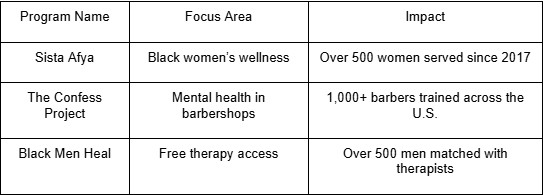
New: Real Results From Culturally Competent Programs

Here’s an overview of how culturally tailored care is helping communities thrive:

Creating Safe Spaces: The Importance of Culturally Competent Mental Health Care

These programs show that change is not only possible—it’s already happening.

Breaking the Stigma at Home

In many families, mental health wasn’t a topic of discussion. People kept their struggles to themselves and tried to manage on their own. However, silence doesn’t mean that no one is suffering. That kind of quiet can become burdensome. When someone finally reaches out with a simple “Are you okay?” it can mark the start of a positive change.

Building Trust Through Everyday Conversations

You don’t need advanced degrees to support someone’s mental well-being. Sometimes, asking “How have you been?” and truly listening can make all the difference. Simple moments like this can show someone that they matter. And when those small gestures become frequent, it creates an environment where difficult topics are easier to talk about.

Supporting Youth With Culturally Aware Care

Young Black kids and teens deal with a lot—academic pressure, social media, and racism, to name a few. It can all build up quickly. They need mental health care that resonates with their experiences. This means seeing their culture reflected in the care they receive, hearing their perspectives, and feeling understood. When support is delivered in ways that are familiar—whether through music, community spaces, or school programs—it doesn’t feel like therapy. It feels like someone finally understands.

Creating Safe Spaces: The Importance of Culturally Competent Mental Health Care

Photo: Unsplash.com

Listening to Community Voices

Those who experience challenges often have great insights into how to address them. They understand what’s missing and what solutions have been tried before. When local leaders genuinely listen to these voices, it shows respect, and that kind of respect is the foundation of stronger programs. Sometimes, great ideas come from casual conversations, not formal meetings.

Final Thoughts

Support should never feel distant or out of reach. Good care should honor you and your unique story.

Culturally competent care has the power to foster healing. It listens without judgment, builds trust, and creates space for meaningful change.

No one should have to face their struggles in silence. And with the right support, they don’t have to.

Frequently Asked Questions

What is culturally competent mental health care?

It’s care that takes your entire story into account—your background, culture, and values—not just your symptoms.

Why does this matter in Black communities?

Because the majority of mental health systems have not been designed with Black experiences in mind, this gap can have serious consequences.

Where can I find a therapist who understands?

Look for directories focusing on Black mental health or ask potential providers how they approach cultural sensitivity in their practice.

Do I need a Black therapist for good care?

Not necessarily. What matters is whether the therapist is willing to listen, learn, and treat you with respect.

How can I help promote this kind of care?

Start by being open to discussions about mental health. Share resources that center Black experiences and support local initiatives that uplift Black voices.


Disclaimer: The information provided in this article is intended for informational purposes only and should not be considered as professional medical or mental health advice. While efforts have been made to ensure accuracy and relevance, individual experiences with mental health care may vary. It is recommended to consult with a licensed mental health professional for personalized advice and support.