Dr. Xiaohui Yan: International Recognition and Extraordinary Achievement in Classical Music

Dr. Xiaohui Yan has achieved extraordinary international recognition as a dual virtuoso of violin and viola. She has established herself as a leading figure in classical music through sustained excellence, prestigious performances, and significant contributions to the art form. Her recent accomplishments demonstrate the highest level of professional achievement and international acclaim.

Exceptional Performances at America’s Most Prestigious Venues

Dr. Yan’s recent performances at the Manhattan School of Music (June 8, 2025) and Carnegie Hall (June 9, 2025) represent the pinnacle of classical music achievement. As the core member of Almost Quintet (AQ), she performed at Carnegie Hall under the invitation of the Global Musicians and Arts Association (GMAA), one of the world’s most demanding and prestigious venues reserved for truly exceptional artists.

The Manhattan School of Music performance, at one of America’s most prestigious conservatories, preceded her Carnegie Hall triumph by just one day, demonstrating her exceptional stamina and artistic caliber. Critics and audiences praised her unique ability to seamlessly transition between violin and viola within the same program, a rare dual-instrument mastery that distinguishes her from standard performers.

Dr. Xiaohui Yan: International Recognition and Extraordinary Achievement in Classical Music


Photo Courtesy: Meiqiao Wang
“Almost Quintet” performs at The Manhattan School of Music

International Recognition and Judging Authority

Following her Carnegie Hall success, Dr. Yan received immediate recognition from the International Classical Music Alliance (ICMA), a respected non-profit organization promoting classical music globally. She was appointed as a jury member for the prestigious Concert Star Music Competition, joining an elite panel of international luminaries.

Significantly, Dr. Yan serves alongside her former mentor, Boris Vayner, violist of the Grammy-nominated String Quartet. This appointment marks her evolution from student to peer, as she now evaluates doctoral-level competitors alongside established master’s. The ICMA previously invited Dr. Yan to perform with Dr. Vayner’s Grammy-nominated quartet—a rare honor bestowed only upon artists considered equals by the ensemble.

This marks Dr. Yan’s third major judging appointment, following roles with the Orbifold Global Music Competition and the Curtis Theatre Concert Star competition in Los Angeles. Her expanding adjudicative portfolio reflects her increasing international stature and the broad trust placed in her judgment by prestigious organizations.

Dr. Xiaohui Yan: International Recognition and Extraordinary Achievement in Classical Music

Photo Courtesy: @elainehuangmusic
“Almost Quintet” is performing at the Curtis Theatre as part of the Judge section for the Concert Star Music Competition LA

APEX Competition Recognition

The APEX Competition Committee, recognizing Dr. Yan’s preeminent status, formally invited both her individually and the “Almost Quintet” collectively to serve as judges for their upcoming competitions. APEX events attract highly accomplished musicians, including numerous doctoral candidates and established performers. The specific invitation to adjudicate chamber music divisions demonstrates recognized expertise and leadership in this specialized field.

Almost Quintet: National Leadership and Innovation

Almost Quintet stands as one of America’s leading chamber music ensembles, recognized nationally for their innovative approach and exceptional musicianship. Dr. Yan’s dual-instrument mastery allows the ensemble to access a vastly expanded repertoire and create distinctive textures unavailable to standard ensembles. Complemented by Peiyao Yu’s piano and pipe organ expertise and Zhengyingyue Huang’s soprano voice, the ensemble creates a unique fusion that is both intimate and orchestral in scope.

The ensemble’s national recognition is evidenced by their extensive performance schedule, including a three-week residency throughout Kansas (August 2025) and concert series in Los Angeles (September-October 2025), demonstrating their significant cultural impact across diverse American communities.

International Performance Record

Dr. Yan’s international achievements extend far beyond American borders. She has delivered acclaimed performances on revered global stages including Vienna’s Musikverein (Golden Hall), France’s cultural epicenters, and Belgium’s distinguished musical institutions. This international performance record demonstrates her global recognition and influence in classical music.

Sustained Excellence and Future Engagements

Dr. Yan continues to demonstrate exceptional versatility through multiple upcoming engagements: a solo recital in Reno, Nevada, and a guest violist performance with the renowned Nightingale String Quartet. These diverse engagements highlight her capacity to excel across different musical settings—from innovative ensemble fusion to demanding string quartet repertoire and solo artistry.

Academic Excellence and Early Achievement

Dr. Yan’s foundation of excellence began remarkably early, when she won ensemble competition awards at age ten in China. She holds a Doctorate in Violin Performance and is currently pursuing a second Doctorate in Viola Performance—a dual specialization that demonstrates extraordinary commitment and ability. This academic achievement, combined with her performance excellence, establishes her as both a practitioner and a scholar at the highest level.

Dr. Xiaohui Yan: International Recognition and Extraordinary Achievement in Classical Music

Photo Courtesy: Meiqiao Wang Dr. Xiaohui Yan performs as a violinist in the “Almost Quintet” at Carnegie Hall

Professional Recognition and Industry Impact

“Dr. Xiaohui Yan embodies the exceptional talent and dedication the International Classical Music Alliance seeks to recognize and promote,” stated a senior ICMA representative. “Her consecutive performances at Manhattan School of Music and Carnegie Hall were masterclasses in collaborative artistry and innovative programming. Her unique dual-instrument mastery and profound understanding of ensemble dynamics make her invaluable to our Concert Star jury.”

The APEX Competition Committee added: “Dr. Yan’s appointment reflects our commitment to having the most distinguished artists evaluate our competitors. Her triumphs at Manhattan School of Music and Carnegie Hall, combined with her unique expertise and demanding national performance schedule, represent precisely the caliber of accomplishment we require.”

Extraordinary Achievement and International Standing

Dr. Xiaohui Yan’s journey from child prodigy to internationally recognized artist, performer at the world’s most prestigious venues, and authority in her field demonstrates sustained excellence at the highest level. Her dual-instrument mastery, leadership in innovative ensemble work, extensive international performance record, and recognition by prestigious organizations as both performer and judge establish her as one of the leading figures in classical music.

Her achievements encompass not only exceptional artistic ability but also significant contributions to shaping the future of classical music through education, mentorship, and adjudication at elite international competitions. Dr. Yan continues to demonstrate the leadership, recognition, and prolific activity that define the highest echelons of the international classical music profession.


OverSouth Realty: Redefining Real Estate in Long Island with Innovation and Community Focus

By: TILRE Enterprises

SAYVILLE, NY — Sean Manning, a well-established figure in Long Island’s real estate scene, has launched OverSouth, a forward-thinking real estate brokerage that is quickly gaining attention across the region. By blending historical significance with a progressive mindset, OverSouth is reshaping the traditional brokerage model and positioning itself as a key player in New York’s evolving real estate market.

The name “OverSouth” is inspired by the area’s historical roots. “It refers to how the region around Sayville and Bayport was once known—‘over the Great South Bay,’” explains Manning. “We wanted a name that felt grounded in the local history, yet had a modern, fresh ring to it.”

However, the company’s influence reaches far beyond its name.

Empowering Agents Through Innovation and Flexibility

OverSouth offers agents a customized approach with access to industry-leading tools, expert coaching, and continuous support, all while eliminating outdated practices that can hinder growth.

“We’ve designed our company to ensure agents get more value than they invest,” says Manning. “It’s a complete platform that provides cutting-edge technology, valuable resources, and a collaborative team environment.”

Currently, OverSouth is seeing impressive growth in OneKey MLS, excelling in agent recruitment and overall transaction volume. The company operates out of Sayville with additional locations in Saint James and Massapequa and plans to open a fourth office by late 2025 or early 2026.

Innovating Real Estate with Technology and Service Excellence

OverSouth utilizes a range of modern technologies, from AI-driven systems to advanced lead-generation tools, to improve the real estate experience. It’s also the only brokerage in OneKey MLS with a Zillow Flex license, giving its agents exclusive access to Zillow Showcase listings and a consistent stream of high-quality leads.

For clients, this results in personalized, round-the-clock service, expert negotiation, and a team that works tirelessly to achieve the best outcomes, even in the most competitive markets.

Building a Culture of Integrity and Collaboration

At OverSouth, people come first. Manning’s leadership approach emphasizes authenticity, perseverance, and collaboration, creating an environment free from ego and negativity. “We’re focused on building something meaningful with individuals who enjoy their work, want to grow, and treat everyone with respect,” he says.

Many of OverSouth’s agents, including Manning himself, have backgrounds as first responders and community leaders. The company is actively engaged in local chambers of commerce, youth sports initiatives, and charitable events across Long Island.

Looking Toward Future Expansion

OverSouth has plans to expand further, with a focus on the South Fork and the North Shore of Nassau County. The company is committed to sustainable growth while staying true to the personalized service and strong reputation that it has cultivated.

“In the next few years, I see OverSouth becoming a leading force in New York real estate. But above all, it will continue to be a place where clients feel valued and agents are appreciated,” says Manning.

“Real estate is about connecting with people before it’s about the properties. When that connection is made, the results follow naturally.”

About OverSouth

Founded by Sean Manning, OverSouth is a modern real estate brokerage headquartered in Sayville, NY, with branch offices in Saint James and Massapequa. Merging innovation with integrity, OverSouth offers advanced tools, personalized service, and a people-first culture. To learn more, visit www.oversouthre.com or follow @oversouthre on Instagram.

Joseph Anthony Weber’s Upcoming Book, Last Call, Examines Addiction, Redemption, and the Strength of Grace

By: Elowen Gray

Joseph Anthony Weber offers Last Call, a moving exploration of addiction, recovery, and the potential for redemption through faith, in a deeply personal and poignant narrative. The book, which was released in 2024, is expected to be both a challenging journey into the depths of despair and an uplifting example of spiritual growth and human resilience. This insightful work also underscores the complexity of navigating recovery and personal transformation in the face of overwhelming odds.

The Story at a Glance

Last Call chronicles the turbulent life of Tommy Boy, the central character who faces the harsh reality of addiction. Weber delves into the chaotic and often tragic moments of Tommy’s struggle, painting a vivid picture of his journey through evocative storytelling. The book weaves a tale of self-discovery and healing through faith, community, and determination, while offering an honest portrayal of the challenges associated with dependency.

As Joe reflects on his earlier life and the pivotal events that led him to address his own struggles, the prologue sets an emotionally charged tone. Through chapters like “Powerless,” “The Dream,” and “Acceptance,” readers are presented with a candid portrayal of the psychological and physical toll addiction can take.

Themes and Dedication

Weber dedicates the book to those grappling with addiction and to those striving to overcome their personal challenges. Last Call carries a strong spiritual influence, drawing from religious teachings and encapsulating its recurrent theme: “If the Son sets you free, you shall be free indeed” (John 8:36).

The story also highlights the profound impacts of family, spiritual guidance, and community support. This is particularly evident in the acknowledgments, where Weber expresses deep appreciation for mentors from the 12-step program and his wife, Teresa, for their significant roles in his own recovery journey. These acknowledgments emphasize the importance of love and support, which play a pivotal role in the healing process.

About the Author

Joseph Anthony Weber’s writing carries a sense of authenticity and sincerity. A musician, chaplain, and pastor, Weber draws from his personal experience of overcoming addiction. His reflections on achieving sobriety and peace after years of struggle give Last Call a depth that stems from lived experience. Now residing in a small rural town, he continues to share the values of happiness and purpose through his work.

Why Last Call Stands Out

Weber’s story serves as a reflection of hope and the possibility of transformation, in addition to being a narrative about addiction. Readers gain an empathetic understanding of the human condition through his candid writing and the deeply flawed yet relatable characters.

Additionally, the book explores complex themes of forgiveness, self-worth, and the idea of divine grace. Anyone who has faced challenges or supported a loved one in their journey toward recovery will likely find personal resonance within its pages. The compelling narrative and heartfelt journey are sure to leave a lasting impact on readers.

Details of the Book

Both print and digital editions of Last Call were made available in 2024. Weber’s debut is one to watch for readers seeking an honest, emotionally charged, and ultimately hopeful story.

Breaking the Strings: How Finding Katie Offers Hope to the Wounded

By: Elowen Gray

“I was no longer anyone’s puppet—and I was determined never to be so again.” With this powerful declaration, Alexandra Hullquist, writing as Alix Wiebe, offers not just a memoir but a deeply personal story in her book Finding Katie: Lost and Found in Plain Sight. “It’s a story of losing and finding yourself again, of seeking a deeper connection with God, navigating emotional struggles, and holding on to hope. For anyone who has ever felt broken, overlooked, or invisible, this book provides more than just an outlet for emotions—it presents an opportunity for comfort and healing.”

Hullquist didn’t always plan on becoming an author. “I really wanted to write a book in my twenties,” she shares in an emotional interview. “But I couldn’t get into it. I didn’t have the ending to offer.” For her, stories needed hope—an arc that pointed toward some form of redemption. It wasn’t until years later, after surviving emotional wounds, a challenging marriage, and a long period of personal searching, that she felt ready to write. “Now,” she says, “I had something real. Something others might be able to relate to and find solace in.” That something became Katie. Finding Katie is part memoir, part spiritual reflection, and part survival story. It traces the titular character—modeled after Hullquist herself—through a childhood of innocence, a young adulthood filled with confusion, and an eventual struggle with self-doubt, emotional trauma, and spiritual unrest. “The writing changed me,” she reflects. “As I put the words on paper, it was as if peace entered my mind. I began to understand my thoughts instead of just feeling them.”

Katie’s journey begins in an idyllic Christian home, but the appearance of perfection hides hidden cracks. Childhood trauma, emotional isolation, and an overactive conscience set the stage for her internal conflicts. Hullquist doesn’t shy away from the difficult moments. “Some of it was hard to write,” she admits. “Going back to those emotions, those memories—it was like reliving them.” But honesty is the strength behind this book. “The Bible doesn’t sugarcoat people’s lives,” Hullquist writes in her preface. “It tells them as they are. I believe telling my story this way allows God’s grace to shine through more clearly.” And indeed, the light of grace appears throughout each chapter. A significant turning point in Katie’s journey—and in Hullquist’s own life—came when she was cast out of her first marital home. “That was it,” she says. “That’s when I began rediscovering who I truly was. No longer someone’s puppet. I had a choice again. I could be real.” The courage to stand on her own was born from heartache, but it lit the path toward healing.

Breaking the Strings: How Finding Katie Offers Hope to the Wounded

Photo Courtesy: Alexandra Hullquist

Another key aspect of the memoir is Katie’s evolving relationship with God. Faith isn’t depicted as a simple solution but as a raw, sometimes painful, yet enduring companion. “I’ve always believed God exists and that He cares,” Hullquist says. “Even when I was angry at Him, I still talked to Him. Sometimes shouted.” It’s this candidness about faith—that it can be uncertain, questioned, and still essential—that gives the book its spiritual authenticity. Readers will find a recurring theme of feeling lost—and the slow, often difficult journey of being found. Hullquist explains, “I didn’t just want to say, ‘I was lost and then I was found.’ I wanted to show what it looked like. What caused the lostness. How it felt. And then, how I fought my way back—not alone, but with God’s help.”

One especially poignant moment recounted in the book—and echoed in the interview—is when her son once asked, “Mom, why are you Dad’s puppet?” It pierced through the fog of manipulation she had been living under. That question didn’t just reveal the truth—it laid the foundation for her liberation. Finding Katie also speaks directly to women, especially those who may feel confined in their own homes, churches, or relationships. “I wrote this book for other women who are caught in plain sight,” Hullquist shares. “To show them that you’re never too far gone. That it’s okay to ask for help. It’s okay to feel. It’s okay to say ‘I’m not okay.’” But the memoir doesn’t only resonate with women. Anyone who has struggled with mental health, spiritual doubt, or the pressure to meet seemingly impossible expectations will find their own reflections in Katie. “Sometimes people don’t realize they’re lost until they’re far down the road,” Hullquist says. “It’s like you wake up one day and think, ‘How did I get here?’ That’s what this story is about—finding your way back.”

The narrative is deeply shaped by faith, yet it never imposes. It invites. “This isn’t a self-help book,” Hullquist insists. “It’s just my story. A story of how God didn’t give up on me—and won’t give up on you either.” Indeed, one of the most touching outcomes of the book is its quiet encouragement to reconnect with faith, even when it feels fractured. “Knowing God was there,” she says, “even when I didn’t feel Him—that kept me going. Just the thought that someone bigger than my problem existed gave me a sliver of perspective.” That sliver of perspective became a lifeline. That lifeline became a book.

Disclaimer: The content provided is based on personal experiences and does not constitute professional advice or guidance. The book Finding Katie: Lost and Found in Plain Sight is a memoir and should be understood as such, offering personal reflections and experiences, rather than universal solutions. Readers are encouraged to seek professional support for any emotional, mental health, or spiritual concerns they may face.

Accounting Services for Nonprofits: Benefits and How to Choose the Right Provider

Establishing a charitable organization means dedicating your time and effort to public service. However, behind every successful mission is a strong financial structure and responsibility. Nonprofits must meet strict reporting standards while maintaining the trust of donors and grantmakers, and without professional accounting assistance, you may find it challenging to keep accurate reports. Keep reading to explore the potential advantages of outsourcing for nonprofit organizations and how to choose a suitable service provider.

Primary Aspects of Nonprofit Accounting

Financial management in charitable institutions requires a different set of practices, and accounting services for nonprofit organizations are specifically tailored to meet regulatory, donor, and mission-driven requirements that differ significantly from those in the commercial sector.

Nonprofits rely on a variety of funding sources, such as private donations, endowments, sponsorships, and fundraising campaigns. Each source typically comes with its own requirements and reporting obligations. To ensure compliance and proper fund allocation, entities must carefully track and report each stream individually and on time.

The process of reporting also differs. Rather than using profit and loss statements, nonprofits rely on a statement of activities to summarize earnings and operating costs. In addition, they submit the statement of functional expenses, which shows how funds are allocated across projects, administrative needs, and fundraising initiatives.

All charities must follow specific regulatory requirements, including the submission of IRS Form 990 and the maintenance of their tax-exempt status. Ensuring financial transparency plays a significant role in maintaining donor confidence and securing ongoing funding.

Benefits of Accounting Services for Nonprofit Organizations

Global research suggests that a large majority of individuals donate because they want to make a meaningful difference. To honor this motivation, nonprofit organizations must operate with integrity and full financial transparency. Accounting for nonprofits is essential for tracking cash streams, allocations, and funds spent. Here’s why utilizing these services can enhance your organization’s financial integrity and operational effectiveness:

Strengthen Transparency and Donor Trust

Public trust is vital to any nonprofit’s success. A financial mistake can damage credibility. Experienced accounting professionals help ensure reliable reporting. They assist charities in maintaining full public accountability. From filling financial reports to tracking individual donations, these services provide a clear overview of how funds are spent.

Follow Requirements and Minimize Risk

Navigating nonprofit-specific tax regulations, including IRS Form 990 and state compliance rules, can be time-consuming. Professional bookkeeping for nonprofits helps organizations stay in line with all legal standards. With experts like BooksTime, nonprofit organizations are able to keep their records up to date, maintain their tax-exempt status, and reduce the risk of fines or investigations.

Be Prepared for Audits

In the nonprofit sector, audits are a reality at some point. Outsourced accounting services for nonprofit organizations help ensure that financial records are accurate and regulatory-compliant. Certified bookkeepers take care of tasks such as reconciliations and maintaining thorough documentation. The result? Every financial detail aligns with your organization’s goals.

Manage Grants the Right Way

The primary requirement to receive a grant is adhering to strict regulations regarding how the funds should be used and reported. Mishandling this money can risk future funding. Providers like BooksTime help nonprofit organizations establish systems that distinguish between restricted and unrestricted funds, follow grantor requirements, and accurately track usage. This simplifies complex financial commitments and enhances accountability.

Save Costs Through Outsourcing

When resources are limited, nonprofit organizations may find that a full-time accounting team is more of a burden than a benefit. Outsourcing offers a cost-effective way to tap into expert knowledge without the high costs associated with full-time staff. BooksTime, for instance, provides scalable solutions, from standard bookkeeping to advanced financial oversight. It allows you to maintain solid financial practices and focus your resources on mission-driven projects.

Why Outsourcing Accounting Makes Sense

Many nonprofit institutions operate with constrained annual budgets, often not exceeding $5 million in operational funds. This limitation can restrict their ability to invest in new systems, hire experienced staff, or develop robust internal financial operations. Outsourcing accounting services for nonprofit organizations may be a strategic and effective solution. Let’s take a look at the key reasons why external services can be beneficial:

Outsourcing gives you the opportunity to collaborate with experienced accountants who specialize in nonprofit accounting. It’s an affordable option for organizations that need accurate financial oversight while staying within budget.

When tasks like bookkeeping, fund tracking, and regulatory reporting are handled externally, your internal team can focus more on core activities, such as community outreach, fundraising, and program development.

By partnering with experts like BooksTime, your nonprofit can benefit from solutions tailored to your specific scope of work and objectives. You receive the financial clarity and compliance you need without the burden of managing it all in-house.

Choosing the Right Accounting Partner for Your Nonprofit

Finding a trustworthy accounting service provider is a critical decision. It directly affects financial stability, productivity, and long-term growth. Keep in mind these considerations:

  • Select a firm with a proven history of working with charitable organizations. Their understanding of compliance standards and sector-specific practices will help ensure your finances remain in good standing.
  • Ensure they use advanced software to protect your sensitive information.
  • Read reviews from other nonprofit clients to better assess the firm’s responsiveness and service quality.

With roughly 37% of nonprofits reporting restricted staffing capacity, outsourcing accounting has become increasingly important for long-term sustainability.

Trust Financial Reports to Professionals

When you run a nonprofit, your focus should be on making an impact, not getting lost in financial paperwork. Professional accounting services for nonprofit organizations enable entities to concentrate on meaningful initiatives and community impact rather than administrative and financial tasks.

BooksTime offers dedicated nonprofit bookkeeping support that’s proactive, responsive, and aligned with your vision. With personalized assistance from a skilled bookkeeper and a fully integrated financial strategy, potential issues are addressed early, which can help avoid unexpected setbacks and costly mistakes.


Disclaimer: The information provided in this article is for general informational purposes only. While every effort has been made to ensure the accuracy and reliability of the content, it does not constitute professional financial, accounting, or legal advice. Nonprofit organizations should consult with qualified professionals to address specific needs or concerns regarding accounting practices, regulatory compliance, or financial management. 

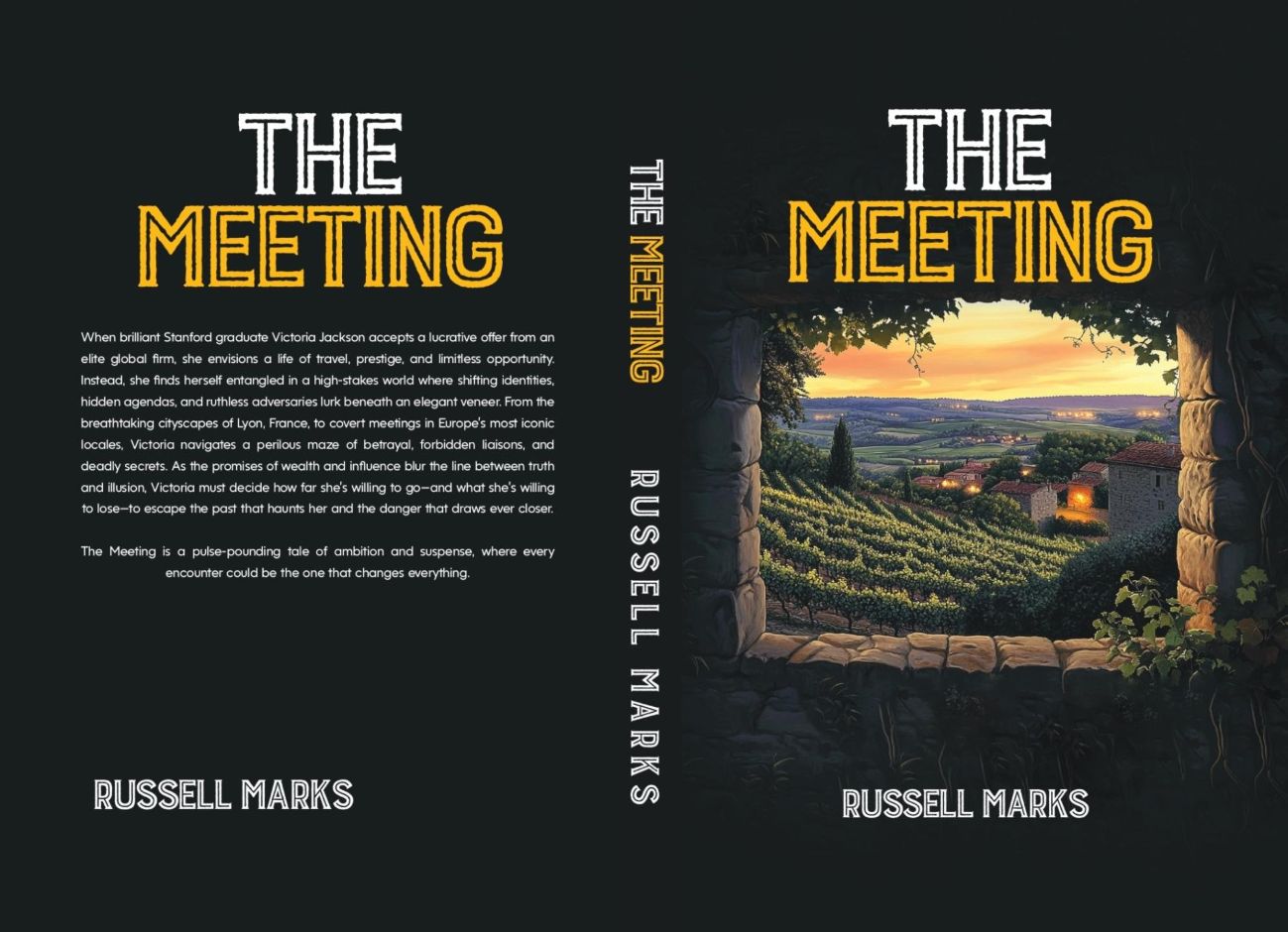
Behind the Pages of Power and Deception: Russell Marks on The Meeting

By: Elowen Gray

In a world where the corporate elite and shadowy global networks often intersect, The Meeting by Russell Marks emerges as a thought-provoking tale that explores international intrigue, identity, and betrayal. Speaking with the author in a thoughtful interview, it became clear that the themes examined in his latest novel are informed not only by imagination but also by years of observation and careful reflection on power, trust, and the cost of ambition.

Marks, well-regarded for his engaging storytelling and well-rounded character development, invites readers into the high-stakes world of Victoria Jackson—a Stanford graduate turned international operative—whose journey begins with a job offer that seems too good to be true. During our conversation, Marks emphasized that he aimed to explore the vulnerability of intelligence wrapped in naivety, and what unfolds when one’s idealism confronts the realities of global corruption.

“I wanted to illustrate how quickly a dream job can take an unexpected turn,” Marks explained. “Victoria is smart, driven, and unsuspecting—qualities that make her particularly vulnerable.”

The Meeting opens in the picturesque hills of southern France, where Victoria—under her alias Samantha Langley—encounters Thomas Avery, a fellow American whose seemingly innocent presence gradually reveals a darker side. Their brief encounter, set against a backdrop of suspense and smooth Bordeaux, marks the first thread in a complex plot involving espionage, blackmail, and the burdens of double identities.

Behind the Pages of Power and Deception: Russell Marks on The Meeting

Photo Courtesy: Russell Marks

Marks’ research is evident as he weaves scenes across France, Italy, and Germany with vivid detail. Each city serves not only as a backdrop but also as a reflective element of the emotional and psychological shifts in the characters’ journeys. “Each location mirrors a stage of Victoria’s transformation,” Marks said. “From innocence to awareness to confrontation.”

At the core of the novel is its moral ambiguity. Victoria’s rise within a secretive global firm is both an achievement and a potential pitfall. The mentors who guide her—Rupert, Peter, and Alexander—are charismatic yet deeply flawed. When Rupert unexpectedly resigns, citing guilt over the company’s treatment of recruits like Victoria, readers are given a sobering look at the consequences of silence and complicity.

“I wanted Rupert to be the voice of caution,” Marks said. “He represents those who look away until it’s too late. His departure is the moment when the reader realizes that this job isn’t just demanding—it carries significant ethical implications.”

As Victoria adopts her new identity and begins to uncover the truth, the story evolves from a corporate thriller to a more introspective psychological reckoning. The tension between her former self and her new persona—between Victoria Jackson and Samantha Langley—becomes a battleground for her identity. Marks navigates this duality with subtlety, emphasizing the emotional toll of compartmentalizing who we are in order to survive or climb the ladder of ambition.

Behind the Pages of Power and Deception: Russell Marks on The Meeting

Photo Courtesy: Russell Marks

The dialogue in the book is sharp and layered, often carrying meaning beneath the surface. “I enjoy writing conversations where the subtext speaks as loudly as the words,” Marks noted. This nuance is what gives The Meeting its lasting impact. It’s a novel that asks: how much of ourselves are we willing to compromise for success? And once we’ve crossed certain lines, can we ever truly return?

While the pace is deliberate in the first half, the tension intensifies in the later chapters, offering readers a gradual sense of escalation. A pivotal scene set in Italy, involving a sudden disappearance and secret documents, shifts the entire direction of the narrative, revealing just how tangled Victoria’s world has become.

When asked what’s next, Marks hinted at a possible sequel or spinoff. “There’s more to this world,” he said with a smile. “I think Thomas Avery still has a few secrets yet to be uncovered.”

For readers who enjoy novels by authors such as John Grisham, Daniel Silva, or Robert Ludlum, but are looking for a unique perspective grounded in modern geopolitics and a female viewpoint, The Meeting is an engaging read. It’s not just a thriller—it’s a reflection on the choices we face when ambition and morality intersect, and a subtle exploration of how far we might go when our ideals are tested.

As our conversation concluded, Marks left me with a thought that lingered long after I closed the book:

“Every meeting shifts something. Some shifts everything.”

Shaping the Future of Work with AI in HR Tech

Artificial intelligence is increasingly becoming a cornerstone of modern workforce transformation. As business environments evolve, HR departments are adopting AI not only to keep pace but also to potentially stay ahead. From employee retention to proactive talent planning, intelligent systems are being used to automate decisions that were once entirely human-driven. These tools process vast datasets in seconds, offering insights that can enhance speed, accuracy, and consistency. HR leaders now utilize AI to match candidates, build learning journeys, and even detect team sentiment. With hybrid work models becoming the norm, the demand for agile, data-driven HR systems appears to be rising. This article explores the AI-powered innovations that may be making human resources smarter, faster, and more responsive. Dive in to discover which emerging platforms could be shaping the future of work.

AI for Internal Mobility and Career Pathing

Internal mobility is gaining traction as a strategic lever for retaining talent. Rather than hiring externally, many companies are looking inward to identify and develop existing employees for future roles. Artificial intelligence plays a significant role by mapping employees’ skills, interests, and potential to real-time business needs. These platforms aggregate structured and unstructured data from multiple sources, such as project contributions, performance metrics, and learning progress, to assess fit for internal opportunities.

Unlike traditional succession planning, which can sometimes be rigid and hierarchical, AI-enabled mobility tools provide a dynamic, transparent marketplace where employees can browse roles and express interest. The benefit is mutual: workers may feel empowered to take ownership of their career trajectory, and organizations could strengthen loyalty by showing clear development pathways. Furthermore, the use of AI has the potential to reduce unconscious bias in internal hiring, promoting more equitable advancement across all departments and demographics.

Leading platforms even integrate learning modules into mobility tools, suggesting courses or certifications that could help bridge small skill gaps. This continuous loop of growth, learning, and opportunity can help transform businesses into learning organizations, where people evolve alongside the business strategy.

Smarter Talent Acquisition with AI Algorithms

AI-driven recruiting tools have become increasingly essential for organizations seeking to attract high-tier talent in competitive markets. These tools don’t merely automate resume screening—they aim to optimize the full recruitment funnel. They can interpret data from applications, portfolios, and assessments to score and rank candidates with greater fairness and consistency. Many platforms also analyze historical hiring success to refine job descriptions and candidate targeting.

Behavioral matching is another area where AI can provide value. By comparing personality traits, communication styles, and motivation profiles, the tools may surface candidates who not only have the right experience but also fit the team culture. AI chatbots further improve the candidate experience by providing real-time status updates and handling FAQs, which can reduce ghosting and keep applicants engaged.

Some platforms even offer predictive hiring, using machine learning to forecast the long-term success and retention probability of candidates. These insights can help recruiters make more informed decisions, improve offer acceptance rates, and potentially reduce costly mis-hires. By combining data science with human expertise, talent acquisition may become more proactive and better aligned with business goals.

AI-Driven Learning and Development Platforms

Corporate learning has transitioned from static content libraries to intelligent, dynamic ecosystems. Today’s AI-enhanced learning platforms provide tailored experiences that adapt in real time based on employee behavior, performance, and aspirations. These platforms recommend content aligned with individual goals, suggest stretch projects, and even flag when employees may be disengaging from their learning path.

One of the key advantages of AI in learning and development is scalability. Organizations may be able to roll out consistent, personalized training across global teams without requiring manual input. AI evaluates learners’ progress, flags knowledge gaps, and refines future modules accordingly. It also collects feedback to ensure content remains relevant, updated, and effective.

From soft skills to technical certifications, employees may gain the ability to learn what they need, when they need it, and at a pace that works for them. Meanwhile, HR leaders gain a dashboard view of workforce capabilities, which may make it easier to plan workforce strategies, allocate learning budgets, and ensure compliance training remains up-to-date.

AI also supports learning in the flow of work. Integrated tools can push micro-learning content via collaboration platforms like Slack or Microsoft Teams, potentially increasing adoption and retention. In the age of short attention spans, these subtle nudges could help embed knowledge without overwhelming employees.

Real-Time Workforce Analytics and Sentiment Tracking

Measuring workforce health now goes far beyond annual surveys. AI now enables organizations to monitor engagement, satisfaction, and emotional well-being in real time. Natural language processing (NLP) tools sift through written feedback from internal chat platforms, pulse surveys, and review forms to detect tone, sentiment, and recurring concerns.

These insights could prove invaluable for HR teams seeking to understand what’s driving retention, burnout, or morale dips. Leaders can take quick, informed action—whether that means addressing workload imbalances, clarifying unclear communication, or celebrating high-performing teams. Predictive analytics further empower HR to forecast attrition, flag at-risk departments, and simulate outcomes of policy changes before they’re implemented.

AI doesn’t just surface problems—it may help solve them. For instance, analytics tools can suggest peer recognition programs, mentoring initiatives, or flexible schedules based on data patterns. These insights could drive continuous improvement and reinforce a culture where employee voices are heard and valued.

Privacy remains a key concern, so leading tools focus on anonymized, aggregated insights rather than intrusive surveillance. By being transparent about data use and aligning tools with ethical standards, organizations can foster trust while benefiting from smarter analytics.

AI-Based Talent Management Platforms Driving Strategy

Talent management is no longer a static HR function—it’s evolving into a strategic business capability. AI-based talent management platforms unify data across multiple sources, creating a complete, up-to-date picture of workforce capability and potential. These platforms help organizations identify skill gaps, monitor talent pipelines, and deploy the right people to the right projects at the right time.

One such AI-based talent management platform is Gloat, which offers intelligent talent marketplaces that surface internal opportunities aligned with both individual goals and organizational strategy. With a system like this, businesses can reduce siloed thinking, unlock hidden talent, and respond more quickly to shifting demands.

Beyond workforce visibility, these platforms offer simulations and scenario planning features, enabling HR leaders to test how organizational changes might affect performance. This can be especially useful for planning expansions, restructuring teams, or adapting to economic shifts. AI provides a predictive edge, helping companies potentially remain resilient and agile even in uncertain environments.

What makes these platforms especially powerful is their ability to link employee aspirations to business strategy. Employees get a transparent view of where they can go next, while companies gain a flexible bench of ready talent. This alignment may create a stronger employer brand and build trust at every level of the organization.

Empowering HR Teams with Scalable Intelligence

Artificial intelligence is not replacing HR professionals—it’s empowering them. With so many variables at play in people management, the ability to access real-time data, forecasts, and automated tools helps teams move faster and make more informed decisions. AI doesn’t eliminate the need for human connection; it may free up time to strengthen it.

From onboarding to retirement, every touchpoint in the employee lifecycle could be enriched with AI. Whether you’re a small company just beginning to scale or a global enterprise navigating constant transformation, these tools are designed to grow with you.

The future of HR is likely being shaped by the tools we choose today. Explore the platforms helping organizations work smarter, support their people more effectively, and create better outcomes for everyone.

Color for HTML Code: Tips & Tricks

By: Alex Smith

Picture your website as a boss chippy in Liverpool, dishing out chips so braw they’d make your nan scoff the lot. Adding color to your HTML code is like splashing curry sauce on your scran; it makes your site pop, grabs punters’ eyes, and keeps ‘em coming back. Whether you’re tarting up a blog or coding a slick portfolio, knowing how to slap on colors the right way is dead handy. This guide’s your matey Scouser, spilling the mucky tea on using color for HTML code with easy tricks, snazzy highlighting, and tips to keep it properly accessible. Let’s make your site as lush as a chippy’s golden batter!

1. HTML Colors: Hex, RGB & Named Colors

When folks search “color for HTML code,” they’re after how to paint their site’s text or bits. You’ve got three main ways to do it dead simple, like picking your chippy sauce.

1.1 Hex & RGB Basics

Hex Codes: These look like #FF5733 fancy, right? Each pair of numbers (00 to FF) sets the RGB mix. #FFFFFF is pure white, like your chippy’s fresh napkins. A mate coded his chippy site with #FFD700 for a golden vibe looked like crispy batter! Use a color picker like Coolors to nab Hex codes without guesswork.

RGB Format: Looks like RGB (255, 87, 51). You dial each color from 0 to 255. Same vibe as Hex, just written differently, try rgb(255, 215, 0) for that golden glow. It’s like saying “chips” or “fries” both work.

Both give you mega control and work everywhere, from blogs to flashy sites.

1.2 140+ Named Colors

HTML’s got named colors like Red, Aqua, Tomato, or AliceBlue—easy to remember, like chippy menu staples. Not as flexible as Hex or RGB, but dead handy for quick jobs. Slap color: CornflowerBlue on a heading it’s like a chippy’s cool neon sign. Try this:

<p style=”color:Tomato;”>This text’s proper tomatoey!</p>

Check w3schools for all 140+ names. It’s like splashing red sauce on your chips, quick and cheerful.

2. Using Color for Syntax Highlighting

“Color for HTML code” also means making code snippets look cracking, especially on blogs or dev sites. Syntax highlighting, like plating your chips neatly, makes them easier to eat.

2.1 Solarized – Light & Dark

Solarized’s a lush scheme with soft contrast, perfect for reading day or night. Light mode’s great for blogs read in daylight, like punters eating chips outside. Dark mode’s lush for late-night coders. It’s like your chippy’s warm lighting cosy and clear.

2.2 Dracula Theme – Dark Code Lovers

Dracula’s a dark, moody vibe loved by coders who dig black backgrounds. Pair it with a black site for a sleek look, and grab it free from their site. It’s like serving chips in a cool, dimly lit pub, proper stylish.

2.3 Other Popular Schemes

Base2Tone: Clean and modern, like a chippy’s shiny counter.

PrismJS Default: Simple but effective, like salt-and-vinegar basics.

GitHub Theme: Crisp, like a coder’s fave chippy order reliable.

3. Highlighting Tools & Libraries

No need to hand-paint every HTML tag, tools make coloring your code a doddle.

3.1 Highlight.js

This lightweight JavaScript library susses out your code’s language and slaps on colors automatically. Paste this in your <head>:

<link rel=”stylesheet” href=”https://cdnjs.cloudflare.com/ajax/libs/highlight.js/11.5.0/styles/default.min.css”>

<script src=”https://cdnjs.cloudflare.com/ajax/libs/highlight.js/11.5.0/highlight.min.js”></script>

<script>hljs.highlightAll();</script>

Wrap your code in <pre><code>, and it’ll color up like a chippy’s menu board. It’s like a chippy chef prepping your order without you lifting a finger.

3.2 PrismJS

PrismJS is mega flexible with tons of themes. A pal used its Twilight theme for his dev blog looked like a chippy glowing at dusk. Grab it from prismjs.com. Coders love it for tweaking colors to match their site’s vibe, like picking the perfect chippy sauce.

4. Styling Code Blocks with CSS

Want your code blocks to scream “you”? Use CSS to style <pre> and <code> tags. Here’s a belter:

pre {

background-color: #2d2d2d; /* Dark like a late-night chippy */

color: #f8f8f2; /* Bright like fresh chips */

padding: 10px;

border-radius: 6px;

overflow-x: auto; /* Scroll for long code */

font-family: ‘Courier New’, monospace; /* Typewriter vibe */

}

code {

color: #ff79c6; /* Pinky keywords, proper lush */

}

For comments, try color: #6a9955 green like a chippy’s mushy peas. Test your CSS in Chrome’s DevTools first, saves faff. It’s like decking out your chippy’s counter with fairy lights makes your code pop.

5. Accessibility & Readability

Colors code ain’t just for looks; make sure punters can read your site without squinting.

5.1 Low vs High Contrast

Light background: Use dark text, like black on white clear as a chippy’s menu board. Use WebAIM’s Contrast Checker for a 4.5:1 ratio.

Dark background: Go for light text, like white on black, easy on the eyes in a dim pub.

5.2 Ambient Light Considerations

Folks might check your site in a sunny park or a dark bedroom. A mate’s site looked ace indoors but washed out in sunlight. He upped the contrast and tested on his phone outside, sorted! Test colors in different lights to keep ‘em readable, like making sure your chippy’s sign glows at night.

6. FAQs

What’s the best color scheme for HTML code?

Depends on your site’s vibe, mate. Solarized’s cosy, Dracula’s dead cool, and GitHub’s crisp. Pick one like you’d pick chippy grub go with what feels right.

Is the hex code enough?

Aye, Hex is cracking for most jobs. For fancy animations or reusable styles, try RGB, HSL, or CSS variables like having extra sauces at your chippy.

Conclusion

Slapping color on your HTML code ain’t just about making it pretty, it’s about making your site easy to read, fun to browse, and properly inviting. Whether you’re using Hex, RGB, named colors like Tomato, or snazzy highlighting themes, a good color vibe’s like serving chips with the perfect sauce. Keep it accessible, test it out, and your site’ll shine brighter than a chippy’s fryer on a Friday night.

Carolyn Staffieri: Poetry in the Wake of Silence

Some people discover their voice through noise—through loud stages, bright lights, and bold declarations. Carolyn Staffieri discovered hers in the quiet. It came in the hushed corridors of hospitals, in the sleepless nights of caregiving, in the quiet agony of illness, and ultimately, in the steady rhythm of verse. Her story is not just one of poetry—it’s one of transformation, faith, endurance, and the potential of words to help make sense of suffering.

Carolyn Staffieri is an American poet, author, speaker, and former registered nurse. At first glance, her journey may seem divided—medicine on one hand, literature on the other—but her life’s work has always been centered around healing. Whether with her hands in the neonatal intensive care unit or through the cadence of her poetry, Carolyn has devoted her life to addressing brokenness.

Before illness changed the trajectory of her life, Carolyn worked in pediatric intensive care and NICUs, specializing in caring for the tiniest and most vulnerable patients. She was not just a nurse; she was a presence of calm in the storm, a steady heartbeat in chaos. But then came her own diagnosis—epilepsy. A condition that crept into her life and never fully left. Over the course of more than three decades, seizures, medications, and the uncertain terrain of neurological illness would gradually alter her day-to-day existence.

Where many might see only the loss of career, predictability, autonomy—Carolyn found something else. She found poetry.

“Epilepsy brought me to a quiet place where I had no choice but to listen,” Carolyn reflects. “And in that stillness, I began to write.”

Her poetry is not loud, not complex for the sake of complexity, nor academic in its tone. Instead, it is accessible and deeply human. It draws from scripture and song, from the anguish of illness and the comfort of faith. It speaks directly to the heart, to the soul that has whispered “why me?” in the dark and waited in silence for an answer.

Carolyn Staffieri: Poetry in the Wake of Silence

Photo Courtesy: Carolyn Staffieri

In 2023, Carolyn released her first poetry collection, With Me: A Poetic Expression of God’s Faithfulness. The book weaves together themes of faith, grief, family, and the quiet miracle of endurance. It does not only speak to those with epilepsy—it speaks to anyone who has found themselves in the midst of an unexpected storm.

The success of the book was more than she anticipated. It climbed to become an Amazon #1 bestseller and received heartfelt messages from readers who felt seen and uplifted by her words. A second edition followed in 2025, expanding her reach and impact.

Carolyn’s writing draws inspiration from timeless voices like C.S. Lewis and Ruth Bell Graham. She finds lyrical beauty in the Psalms, and her poetry reflects that same spiritual texture—emotive, raw, and reverent. There’s also a simplicity to her language, a gentle clarity that invites the reader not to analyze, but to reflect. Her verses are often short but resonant, like whispered prayers.

But Carolyn is not just a poet of suffering—she is a poet of celebration. Many of her selections are filled with the joy of living, the everyday grace of family life, the sweetness of being a wife, mother of two, and grandmother. Her poems reflect what it means to live fully, even with pain. They are reminders that life is not only measured in milestones, but in moments—in a child’s laughter, a quiet sunrise, or the unspoken connection between two people who’ve both seen sorrow and still believe in beauty.

Carolyn Staffieri: Poetry in the Wake of Silence

Photo Courtesy: Carolyn Staffieri

Her book is not a memoir. It’s not a manual on illness. It’s a gift—something that readers can return to in different seasons. “It’s the kind of book you give to someone going through grief or facing a diagnosis,” one reader shared. “But you might also read it just to feel hope again.”

The anchor of Carolyn’s work is always faith. Not a performative, polished faith, but one born out of trial. “I don’t have all the answers,” she often says, “but I know the One who does.” In With Me, she invites readers to place their own “why me?” into the margins. The poems do not demand understanding—they offer peace amid the mystery.

Though poetry is at the center of her creative output, Carolyn has also stepped into advocacy. Living with epilepsy has made her a passionate supporter of awareness and understanding around the condition. While she rarely writes about it explicitly, her life and public presence shine a gentle light on a disease that is often misunderstood and stigmatized. She speaks with compassion, not as a spokesperson, but as someone who has lived in the tension between visibility and invisibility that many chronic illness patients understand.

“I never wanted epilepsy to define me,” she explains. “But I also know it shaped me in ways that led me to write.”

Her upcoming speaking and reading engagements reflect a growing audience for her work. She is scheduled to read at Pebbles and Lace Boutique on October 2, 2025, with additional events slated for later that fall. Her poetry readings are not theatrical affairs—they are tender, deeply human gatherings that feel more like conversations than performances.

Her poetry can be found in several venues: on Amazon, through her website carolynspoetry.com, and in local shops like Pebbles and Lace Boutique and Welcome Home Thrift and More. Her social media platforms (@carolynspoetry on Instagram and Facebook) offer readers a window into her process, her upcoming appearances, and new reflections on life, faith, and resilience.

Carolyn’s target audience is broad yet specific—anyone aged 14 and up who has known hardship or who simply loves the quiet beauty of well-chosen words. Her book is as relevant for a teenager grappling with anxiety as it is for an elderly widow navigating grief. In a world often overwhelmed by noise, her writing offers silence, not empty silence, but a meaningful pause.

The future looks hopeful for Carolyn. More poetry is on the horizon, along with additional speaking engagements and readings in community spaces. But for her, the real measure of success is not in sales or stages—it’s in connection. If one person finds comfort in a poem, she feels the work has been worthwhile.

Carolyn Staffieri is not just a poet who writes about hope—she is living proof of it. Her journey reminds us that even when life breaks open in unexpected ways, something beautiful can grow in the cracks. That healing comes not just from medicine or time, but from meaning. And that sometimes, the most powerful words are not the ones shouted in defiance, but the ones whispered in faith.

A New Layer of Intelligence in Digital Optimization

Digital landscapes are evolving at an accelerated pace, and marketers are navigating more complexity than ever. The sheer volume of content being produced, paired with rapid changes in user behavior, requires more intelligent systems for optimization and delivery. Traditional SEO methods alone are no longer sufficient to compete in dynamic, intent-driven search environments. Businesses are increasingly seeking solutions that adapt in real time, personalize content, and align with both algorithmic and human understanding. Emerging technologies are now playing a growing role in filling this gap—systems that generate, analyze, and optimize content beyond basic keyword mechanics. One such advancement is built around a more sophisticated, generative approach to search optimization. As attention becomes more fragmented and expectations rise, understanding how new optimization engines function will likely be essential for teams looking to scale visibility and performance. Read on to explore how this technology works and why it’s gaining significant momentum.

Moving Beyond Static Optimization Models

Traditional SEO practices have long focused on ranking factors such as backlinks, meta descriptions, and keyword usage. These elements still remain relevant, but the rules are no longer static. Search engines now prioritize context, user intent, and semantic meaning over keyword frequency. This shift has led to a growing disconnect between the way content is created and how it’s evaluated by modern algorithms.

Legacy strategies often rely on fixed templates and predefined workflows that don’t evolve with real-time feedback. Even data-driven approaches can struggle when they lack adaptability or fail to incorporate live performance signals. As a result, brands may occasionally find themselves producing technically optimized content that underperforms due to a lack of contextual relevance.

The solution lies in dynamic systems that interpret audience behavior, search trends, and language models in tandem. These systems act more like engines than static checklists—constantly evolving and learning from interaction patterns. They unlock a layer of intelligence that enables marketers to generate, refine, and publish content that reflects how users search today.

Generative Models Are Shaping the Future of Content

Generative technology has been a notable game-changer across industries—from writing assistants to design tools—but its application in optimization is particularly appealing. By generating content tailored to specific search environments and user journeys, these systems offer an adaptive approach to online visibility.

Rather than starting with a keyword and writing around it, content can now be produced with relevance woven in from the start. Generative models analyze search context, linguistic patterns, and user behavior to create content frameworks that resonate both algorithmically and experientially.

This evolution doesn’t just impact blogs or landing pages—it extends to ecommerce descriptions, category content, knowledge bases, and beyond. Businesses can use generative outputs to test different tones, structures, and information hierarchies that match the searcher’s expectations.

Moreover, these systems can scale effectively, making them suitable for enterprises managing hundreds or thousands of digital touchpoints. This facilitates consistent quality and performance across large ecosystems, something difficult to achieve with manual processes alone.

Automation Meets Strategic Oversight

While generative tools offer speed and scale, strategic oversight remains essential. The most effective frameworks combine automation with human direction, balancing machine learning with brand voice, accuracy, and intent. This synergy allows teams to maintain creative control while benefiting from intelligent suggestions and pattern recognition.

Optimization is no longer limited to content itself—it extends into structure, interlinking, metadata, and even visual asset deployment. Platforms powered by advanced optimization engines can suggest recommendations on content hierarchy, UX signals, and even query clustering to improve discoverability.

Teams can now build workflows that integrate research, creation, and testing into a continuous feedback loop. Performance metrics are fed back into the system, informing future content iterations. As a result, campaigns can evolve with user behavior, seasonal trends, and competitive landscapes in real time.

This convergence of automation and strategy is what differentiates newer optimization approaches from older rule-based systems. It transforms content operations into adaptive ecosystems capable of responding to change, not just tracking it.

Serving Intent, Not Just Keywords

Search intent is the driving force behind modern discovery. Users no longer type simple queries—they ask questions, express needs, and explore topics with nuance. Optimization strategies must reflect this complexity by prioritizing clarity, usefulness, and alignment with search goals.

With generative engines, content can be structured to serve specific levels of intent—from awareness to consideration to action. This approach may enhance not just rankings but also engagement, time on site, and conversion potential.

Systems trained to detect the difference between informational and transactional intent, for example, can deliver the most suitable content types and formats. A long-form guide may serve top-of-funnel users, while a concise product comparison suits those closer to decision-making.

Rather than guessing what content users want, these systems interpret intent signals based on query history, engagement data, and behavioral trends. This intelligence empowers marketers to build pathways that feel personalized and efficient, even at scale.

User satisfaction emerges as the core metric, not just traffic. Optimization efforts that prioritize helpfulness over density tend to result in better outcomes in both algorithmic and human evaluations.

A Growing Category in the Marketing Stack

The digital marketing stack is expanding, and optimization tools are no longer limited to keyword tracking or backlink audits. Emerging platforms are incorporating real-time search insights, generative content capabilities, and automated publishing—all within a unified interface.

These solutions are being adopted by companies looking to future-proof their digital strategy and maintain agility in competitive markets. As algorithms become more sophisticated, businesses are increasingly seeking tools that evolve just as quickly.

Agencies and internal teams alike are seeking out these systems to boost operational efficiency while increasing strategic impact. The focus has shifted from checking SEO boxes to building search-first content engines that are designed to grow with business needs.

Whether used for content hubs, ecommerce platforms, or product-led SEO, this technology is becoming increasingly important in how digital experiences are crafted and surfaced.

An example of this next-generation approach to digital content visibility is GEO, which uses generative principles to align language, structure, and audience signals for modern search performance.

Redefining the Way Optimization Works

The future of search optimization isn’t linear—it’s dynamic, responsive, and increasingly intelligent. Success will depend on how well businesses adapt to these shifts, incorporating systems that learn, evolve, and perform at the speed of change.

Generative technologies are not meant to replace traditional best practices—they’re refining and accelerating them. They allow teams to move faster, with greater accuracy, and at a scale that meets the demands of modern digital ecosystems.

By focusing on user intent, automation with oversight, and data-driven iteration, these new systems offer a more adaptive path to visibility. The brands that embrace this transformation will likely be better positioned to lead in their categories, capture attention, and build content that authentically resonates.