Why TRAILD Can Help End Your Constant Invoice Chasing

By: Simon Owen

If your workday often starts (and ends) with a hunt for missing invoices, email threads, or half-completed approval forms, you’re not alone. Many businesses, especially those growing fast, find themselves drowning in admin. The real problem isn’t just workload — it’s process. If you’re constantly chasing paperwork, chances are your systems haven’t kept pace with your business. The good news? You don’t need to overhaul everything at once. Tools like https://traildsoftware.com/ap-automation/ can help streamline your accounts payable process and give you back hours each week.

Paper-Based Systems Are Slowing You Down

We get it — if your business has always relied on paper invoices, email approvals, or spreadsheets to track payments, change can feel daunting. But the reality is, these outdated systems are more than just inefficient. They’re costing you in missed deadlines, duplicate entries, strained supplier relationships, and lost productivity.

When invoice approvals live in someone’s inbox, or documents need to be printed, signed, and scanned multiple times, delays are inevitable. Worse still, when things go missing, the finger-pointing begins — creating stress and extra admin for your team. Manual systems might feel familiar, but they’re built for yesterday’s pace, not today’s demands.

What AP Automation Actually Solves

Accounts payable automation isn’t just about going paperless. It’s about creating a workflow that works — one that reduces human error, increases transparency, and puts you in control.

With automation, invoices can be:

Captured and processed digitally (no more data entry)

Matched automatically to purchase orders

Routed to the right approvers in real time

Tracked and managed from one dashboard

This means no more chasing signatures, digging through folders, or wondering which invoices are still unpaid. The entire process becomes smoother — and faster — without sacrificing accuracy or compliance.

Spot the Signs Your Business Needs a Change

You might be so used to the chaos that it feels normal, but there are some telltale signs that your AP process is due for a rethink:

You’re relying on email to manage approvals

Invoices are often lost, delayed, or duplicated

You have limited visibility into what’s been paid — and what hasn’t

Staff are spending hours on tasks that should take minutes

Suppliers are chasing you for payments you thought were sorted

If any of these sound familiar, you’re likely overdue for a system upgrade.

You Don’t Have to Start From Scratch

One of the biggest hesitations businesses have about adopting automation is the fear that they’ll need to throw out their current accounting software or retrain their entire team. But modern AP automation tools are built to integrate with platforms you already use — like Xero, QuickBooks, MYOB, and others.

The best solutions are flexible and scalable. You can start small — automating just invoice capture and approvals, for example — and expand from there. Many businesses find that within weeks of switching, their processes become dramatically more efficient, freeing up valuable time and reducing errors across the board.

What the Shift Actually Looks Like

Imagine this: An invoice comes in. It’s automatically scanned and entered into your system, matched to an existing PO, and routed to the right manager for approval. That person gets a notification and approves it on their phone in under a minute. The payment is scheduled, and everyone — from the finance team to the supplier — can see the status instantly.

Compare that to the paper shuffle, back-and-forth emails, and double-handling you’re dealing with now. That’s the difference AP automation makes.

Let Technology Work For You

You don’t need to be a tech expert to benefit from automation — and you don’t have to go it alone. Look for a provider that offers onboarding, training, and ongoing support. A great system should feel intuitive and genuinely reduce your admin burden, not add to it.

Once you make the shift, you’ll wonder how you managed without it.

If you’re always chasing paperwork, you’re not inefficient — you’re under-equipped. With the right tools in place, you can reduce admin, speed up approvals, and finally put those lost invoices and late payments behind you. Smart businesses aren’t doing more manual work — they’re doing less, with better systems. And it starts with making the shift.


Tired of Local Ads Falling Flat? Here’s What Might Be Missing

By: Frank Cooper

You’ve paid for flyers, boosted posts, and local print ads. You’ve even tried running a few online campaigns. But despite the effort (and budget), the results feel… underwhelming. The truth is, many local businesses pour money into marketing without first solving the one problem that holds everything else back: visibility at the point of search. Before spending another cent on ads, it’s worth considering whether a Melbourne local SEO agency could help fix the disconnect between your business and the customers actively looking for it.

Local Ads Can’t Work If You’re Not Easy to Find

Here’s something most businesses overlook: even if your ad catches someone’s attention, the first thing they’ll do is Google your business. If your website is hard to find, your Google Business Profile is incomplete, or your reviews are outdated (or missing entirely), that initial interest vanishes almost instantly.

Local advertising only works when it’s backed by a strong foundation of search visibility. People want convenience and reassurance. They want to know where you are, when you’re open, and what others say about your service. If your online presence doesn’t deliver those answers quickly and clearly, they’ll likely move on to a competitor who does.

Understanding the Gap Between Ads and Action

Let’s say you’re running a campaign for a winter sale or a service special. A potential customer sees your ad on Facebook. They’re interested. They search your business name to learn more… and nothing helpful comes up. Or worse, they find outdated contact details, a map pin in the wrong place, or another business with a similar name ranking higher than yours.

This is where so many campaigns fall flat. You’re paying to generate attention — but the systems that convert that attention into action aren’t in place. Your digital presence has to be as local, relevant, and reliable as your ads promise it is. Otherwise, even good marketing becomes wasted spend.

What’s Usually Missing in the Local Strategy

Most local visibility issues boil down to the basics being overlooked. Your Google Business Profile may not be optimised. Your website might not clearly mention the suburbs or regions you serve. Online directories may have conflicting details about your business — and these inconsistencies confuse both search engines and potential customers.

Another common problem is poor use of local intent keywords. Many websites focus on generic terms that are too broad. You’ll have a better chance of connecting with nearby customers by using phrases tied to your area, services, and specific needs — think “emergency plumber Brunswick” or “vegan café Carlton” rather than just “plumber” or “café.”

How to Strengthen Your Search Readiness

Start by auditing your Google Business Profile. Is every field filled out accurately? Have you selected the correct business categories? Are you regularly uploading photos and responding to reviews? These things matter — not just for trust, but for ranking.

Then, take a look at your website. Make sure your suburb names, service areas, and relevant keywords appear naturally in your content — especially on your homepage and service pages. Also check your site speed, mobile usability, and contact form functionality. A good-looking site is useless if it’s slow, clunky, or unclear.

Finally, look at your listings on platforms like Apple Maps, Facebook, Bing, and industry-specific directories. Every detail — from your business name and phone number to your opening hours — needs to be consistent across the board.

Let Ads Work With Your Visibility, Not Against It

Local ads are a great way to drive awareness, but they can’t do all the heavy lifting on their own. Your online presence needs to meet the customer where their curiosity leads them — Google. That means making sure your digital infrastructure is solid before turning up the volume on your promotions.

When you combine a sharp local SEO setup with smart advertising, you stop losing warm leads at the search stage. Instead, you build a smooth pathway from discovery to decision. And that’s how local marketing becomes an investment — not just another expense.

So if your ads aren’t delivering, don’t just change the creative or bump up the budget. Step back and ask: when people are ready to act, can they actually find you? If not, that might be the one thing your campaigns are missing.

What Homeowners Are Prioritizing in the Post-Remote-Work Era: Key Trends for Modern Living

By: SEO Mavens

As we move into the post-remote-work era, many homeowners are rethinking their living spaces. The pandemic reshaped our priorities, prompting a closer look at how our homes function for both work and leisure. For many, creating environments that blend comfort with productivity has become a significant consideration.

There’s been a noticeable shift toward multifunctional spaces, outdoor areas, and smart home technology. It’s not only about aesthetics anymore; it’s about enhancing the overall quality of life. Understanding these trends can help homeowners navigate the evolving housing market and make informed decisions. For more insights on this topic, organizations like the National Association of Realtors offer valuable data and analysis on homebuyer preferences in today’s market.

Changes in Homeowner Priorities

Homeowners are adjusting their priorities to meet the demands of the post-remote-work era. Space optimization is one of the key areas of focus, with many seeking multifunctional rooms that serve various purposes. We’re seeing more people convert spare bedrooms into home offices or family game rooms, helping maximize space usage.

Outdoor areas have also gained more attention. Homeowners are focusing on patios, decks, and gardens for relaxation and entertainment. Creating an inviting outdoor space caters to the desire for fresh air and social interaction while maintaining safety. Adding accessories for grills, for example, can enhance outdoor cooking experiences.

Additionally, smart home technology is becoming increasingly common. Homeowners are adopting devices that offer convenience and security. Smart thermostats, security cameras, and automated lighting systems can lead to improved energy efficiency and greater peace of mind. The integration of technology is seen as a way to seamlessly improve everyday living.

Moreover, landscaping has become an area of focus. Decorative elements, such as native plants and drought-resistant gardens, contribute to both aesthetic appeal and sustainability. Homeowners often opt for granular pre emergent solutions to support weed management, helping ensure that outdoor spaces stay well-maintained.

In general, these evolving preferences indicate a growing interest in improving both the quality of life and the functionality of our homes. Embracing these changes could help create spaces that better meet our needs.

Home Office Design

Homeowners are placing a growing emphasis on home office design to balance productivity and comfort. This shift reflects the increasing desire for functional and aesthetically pleasing workspaces.

Functional Layouts

Homeowners often seek layouts that maximize space and efficiency. Many choose to convert spare bedrooms into dedicated offices, ensuring they have quiet spaces to work. Modular furniture is becoming a popular choice, offering flexibility to rearrange the space for different activities. Desk placement near windows can help harness natural light, improving mood, while ergonomic chairs contribute to comfort during long work hours.

Aesthetics and Comfort

Aesthetics play a significant role in home office design. Homeowners often incorporate personal touches, like decorative wall art or plants, to create inviting atmospheres. Color choices are typically geared toward enhancing productivity and inspiration, with calming hues being a popular option. Comfort is also an important factor, with accessories such as cushions and decorative storage helping streamline organization while maintaining a welcoming workspace.

Outdoor Spaces

There’s been an increasing focus on outdoor spaces, with homeowners prioritizing gardening, landscaping, and areas for relaxation and socializing.

Gardening and Landscaping

Interest in gardening and landscaping has surged. Many homeowners are investing in sustainable practices, such as using granular pre-emergent herbicides to maintain healthy lawns and gardens. The incorporation of native plants can enhance biodiversity while minimizing maintenance needs. Raised garden beds and vertical gardens are also being utilized to optimize space and provide fresh produce. Outdoor lighting installations are becoming more popular as they add aesthetic appeal and extend the usability of outdoor spaces into the evening.

Outdoor Living Areas

Outdoor living areas are becoming increasingly important. Patios and decks are being redesigned to accommodate various activities, including cooking and entertaining. Accessories for grills, like outdoor kitchens and integrated seating, elevate outdoor dining experiences. Shade structures, such as pergolas and umbrellas, provide comfort from the sun, allowing these spaces to be enjoyed for longer periods. Fire pits also create cozy atmospheres for family gatherings, enhancing outdoor experiences during cooler months. These additions transform backyards into multifunctional spaces that complement indoor living.

Technology Integration

Photo by Marvin Meyer on Unsplash

In the post-remote-work era, homeowners are placing more importance on technology integration. Smart home features and high-speed internet are becoming integral parts of modern living spaces.

Smart Home Features

Homeowners are increasingly adopting smart home technology to enhance convenience and security. Devices like smart thermostats, smart locks, and video doorbells offer remote control through smartphones. These features help improve energy efficiency and increase comfort. Automated lighting systems can be programmed to align with daily routines, adjusting ambiance throughout the day. Homeowners are also integrating security systems with mobile alerts, providing added peace of mind. With the growing trend of home automation, devices are becoming more connected, enabling a more cohesive and user-friendly smart home experience.

High-Speed Internet Needs

High-speed internet has become a crucial consideration for many homeowners. The rise in remote work and online learning demands reliable connectivity throughout the home. Homeowners are prioritizing robust Wi-Fi networks that can support multiple devices and high-bandwidth activities, such as video conferencing and streaming. Fiber-optic connections are often the preferred choice, as they provide faster and more consistent service. As technology continues to play a key role in daily life, ensuring access to adequate internet is a high priority for homeowners looking to maintain productivity and connectivity.

Sustainability Considerations

Sustainability continues to be a high priority for many homeowners in the post-remote-work era. There’s a noticeable shift toward energy efficiency and eco-friendly materials when designing living spaces.

Energy Efficiency

Homeowners are increasingly focused on energy-efficient appliances and systems. Energy Star-rated products, such as refrigerators and washing machines, help reduce energy consumption while lowering utility bills. Smart thermostats are also being utilized to optimize heating and cooling, adjusting automatically based on the homeowner’s schedule. Solar panels are gaining popularity as a renewable energy option, offering long-term savings. Other improvements, such as better insulation and energy-efficient windows, further enhance the sustainability of homes, making them more comfortable and environmentally friendly.

Eco-Friendly Materials

There’s growing interest in using eco-friendly materials for renovations and new builds. Reclaimed wood and recycled materials are becoming popular for their environmental benefits, while also adding character to living spaces. Non-toxic paints and finishes promote healthier indoor air quality. Homeowners are also prioritizing sustainable landscaping, choosing native plants that require less water and provide habitat for local wildlife. Granular pre-emergent solutions are increasingly used to maintain gardens without relying on harmful chemicals, aligning with homeowners’ focus on sustainability. These choices reflect a broader commitment to creating greener living spaces, balancing aesthetics with environmental responsibility.

The Future of Healthcare Marketing With Sage Zaree

By: SEO Mavens

Sage, you’ve been in healthcare marketing for over a decade. What are the biggest shifts you’ve seen in that time?

The evolution has been significant. Ten years ago, most healthcare marketing was still rooted in traditional media, TV, print, and even direct mail. Today, digital has become a dominant force, especially when it comes to ROI, but what’s more important is how we’re using it. Personalization through data-driven campaigns and transparency has become increasingly common. Due to this shift towards digital, compliance and privacy standards like HIPAA are more intricate than ever.

Speaking of HIPAA compliance, how does it shape the way marketers operate in this space?

HIPAA is much more than just a compliance box to check; it affects what data you collect, how you store it, and how you communicate with patients. Even something as simple as a patient testimonial or a retargeting ad requires careful consideration. There’s a fine line between personalizing an experience and violating privacy. You can start to automate this workflow so all healthcare marketing content can be prepped with legal checks by compliance teams from day one.

What KPIs matter most in healthcare marketing today?

Customer acquisition cost (CAC) and lifetime value (LTV) are considered the two most important KPIs for any healthcare marketing team. It’s essential to determine how much each patient will bring in based on specialized services and compare that with the average lifetime value, including insurance compensation and repeat visits. It’s important to note that not all insurance policies reimburse the same, so an average across all policies is valuable.

With so much attention on AI, where do you see it realistically impacting healthcare marketing?

AI is already useful in areas like chatbot support, sentiment analysis, and predictive scheduling. But the real potential lies in smarter segmentation and automation. That being said, we need to proceed with caution. You can’t let AI handle sensitive patient data without appropriate safeguards. Responsible integration is crucial, and if the necessary infrastructure is in place to ensure safety protocols, AI-augmented workflows can be effective.

What challenges do you think healthcare marketers will face in the next 5 – 10 years?

Three challenges stand out. First, regulatory tightening as data collection expands. As the rules evolve, marketers will need to be even more tech-savvy and compliance-aware. Second, audience skepticism. Consumers are becoming more discerning and less trusting, especially when it comes to health information. And third, platform shifts. We can’t rely too heavily on platforms we don’t own. If TikTok gets banned or Google changes its algorithm again, your entire funnel could be disrupted. Diversification will be essential.

Where do you see the greatest opportunities?

Patient education. Many healthcare systems still speak in medical jargon. Marketers who can simplify and humanize their messages will likely stand out. There’s also significant room for better local SEO, more effective reputation management, and more engaging video content. Healthcare is personal, and if you can build trust at the local level and make patients feel understood, you’re on the right track.

Final Thoughts

After speaking with Sage, one thing is clear: healthcare marketing is becoming more diversified and is being approached in a strategic, human-centered way. With over a decade of experience navigating compliance, tech shifts, and patient behavior trends, Sage has developed a strong ability to distill complex challenges into actionable insights. As healthcare continues to evolve, marketing strategies will play a key role in how we connect patients to the care they need, doing so in an ethical and effective manner.

Protect Your Mailbox with Go Mailboxes: Theft Prevention Tips

By: Pierre Zarokian

Mail stealing is now a top priority for the majority of homeowners, especially as more and more important documents and packages are mailed. Mail stealing can lead to identity theft, financial loss, and a string of annoying headaches. Protecting your mailbox is the top line of defense in protecting your personal information and precious packages. In this article, we will be talking about real methods of protecting your mailbox from stealing, focusing on the advantages of home lock mailboxes.

Why Stealing Mailboxes Is Such a Serious Offense

Mailbox theft is the phrase used when the mail is stolen directly from your mailbox, i.e., letters, bills, checks, and packages. They use this information to steal your identity, commit fraud, or even steal valuable items. This is prevalent in most areas where mailboxes are not locked and are open.

Unlocked mailboxes are not thief-proof. Therefore, homeowners are now opting for locking mailboxes to protect their mail and discourage thieves. Buying a secure mailbox is a move in the right direction to keep your mail safe until you collect it.

Benefits of Residential Locking Mailboxes

Residential locking mailboxes provide a physical deterrent to theft with secure locking mechanisms that can only be accessed by the owner of the mailbox. Some of the most significant advantages are:

  • Enhanced Security: The lock guards the mail against unauthorized access, safeguarding it from theft and tampering.
  • Peace of Mind: Your mail security lessens anxiety when you are not at home.
  • Protection from weather: Locking mailboxes are usually weatherproof, and mail is protected from rain, snow, and sunshine.
  • Postal Regulation Compliance: Locked mailboxes comply with USPS requirements, ensuring appropriate mail delivery.

Tips for Protecting Your Mailbox from Theft

Besides buying a high-quality locking mailbox, the following are some useful steps to lock a mailbox:

1. Choose a Quality Locking Mailbox

Not every locking mailbox is the same. Select models made of heavy-duty materials like steel or aluminum and tamper-proof locks. Go Mailboxes offers a wide selection of heavy-duty, USPS-approved residential locking mailboxes that are specifically designed to provide the highest level of security.

2. Position Your Mailbox Strategically

Place your mailbox in a well-lit, public area close to your home or drive. Mailboxes placed in well-visible locations or within the sight of security cameras are least vulnerable to theft.

3. Collect Mail Promptly

Don’t let mail pile up for days. Collect your mail daily, particularly if you’re expecting sensitive documents or packages. This reduces the risk for theft.

4. Use Packages Lockers or Alternate Delivery Options

For big orders, use secure parcel lockers or Amazon Locker points. Otherwise, request that deliveries be left at the post office or be sent to a trusted neighbor if you are not at home.

5. Install Security Cameras

Having a security camera installed on your mailbox will deter burglars and act as evidence in the event of theft. Visible cameras are a good deterrent and can signal you to suspicious behavior.

6. Report Suspicious Activity

If you notice mail theft or other unusual activity around your mailbox, report it to the police or postal inspector in your area. Reporting early makes your neighborhood safe.

What to Look for in Mailboxes

  • USPS Approved: All items are USPS-approved for mailing safely.
  • Variety: From traditional models to modern designs, their locking mailboxes accommodate diverse tastes and requirements.
  • Durability: Built with robust material to withstand weather and tampering.
  • Ease of Installation: They all come with simple-to-follow instructions or installation methods.
  • Customer Support: Trained personnel to assist in choosing the perfect mailbox.

Go Mailboxes provides quality residential locking mailboxes that are secure, long-lasting, and USPS-approved. They have multiple different styles and sizes available so that you can find a mailbox that fits your home and security needs.

Final Thoughts

Securing your mailbox against theft is a crucial step in securing your personal data and deliveries. Mail security is best achieved through the acquisition of a good residential locking mailbox. Coupled with good security measures such as proper placement, regular mail pickup, and surveillance, mail theft can be minimized. Homeowners looking for effective and secure mailbox protection have an excellent range of USPS-approved locking mailboxes at Go Mailboxes that will keep your mail secure all the time.

“Bobby Joe the Criminal”: A Gritty Tale of Loyalty, Corruption — and a Cop on the Run

Set in the rough streets of 1990s New York, Bobby Joe the Criminal tells the story of a man caught between the badge he wears and the rules he’s forced to break. Written by Hank Latimore IV, the screenplay is a tense, fast-moving crime drama rooted in real-world experience and the pressure that builds when institutions meant to protect start to collapse.

Bobby Joe Jones is a third-generation cop raised in a family where loyalty came first. But when a robbery in the Diamond District goes wrong, he ends up with stolen jewels in hand and his cover blown. The force turns its back. The media swarms. And Bobby Joe is left to clean up a mess he didn’t create, targeted by the very system he once swore to uphold.

This is a story about pressure that reshapes everything — identity, loyalty, and what it means to do the right thing. Bobby Joe’s world fractures under suspicion and betrayal. What starts as an undercover case spirals into a desperate search for truth in a city that no longer sees him as one of its own. As the lines between right and wrong blur, Bobby Joe must confront not only external enemies but also the inner demons threatening to consume him.

Bobby Joe the Criminal carries the intensity of a thriller, but its impact comes from the emotional weight behind each scene. The real tension isn’t just in shootouts or car chases, but in the quiet collapse of trust. Ahmad, the calculating antagonist, plays the system while city officials scramble to manage the fallout. Stripped of his badge and authority, Bobby is forced to move through the shadows to uncover what really happened.

He isn’t just trying to clear his name. He’s trying to hold on to what remains of his principles in a world where loyalty is disposable and silence is survival. Every move forward risks exposure, yet every step back feels like surrender.

Latimore doesn’t lean on spectacle. He builds drama through character, consequence, and sharp, believable tension. The action hits hard because it’s built on real stakes. The relationships are fractured but human. The weight of Bobby’s decisions lingers long after the flash and noise fade.

With roots in Buffalo and a clear understanding of law enforcement culture, Latimore brings grit and clarity to the narrative. His writing carries authority without preaching. It captures the language of the streets and the quiet desperation of people forced into impossible roles.

This crime drama works not just because of the plot, but because of its restraint. It’s a character study as much as a takedown of institutional rot. And at its heart is one man trying to stay whole while the world breaks around him.

Tough, lean, and honest, Bobby Joe the Criminal stays with you. It doesn’t just entertain. It challenges the idea of what justice looks like when the rules change mid-game. And it reminds us that sometimes the most dangerous fight is the one to stay true to yourself.

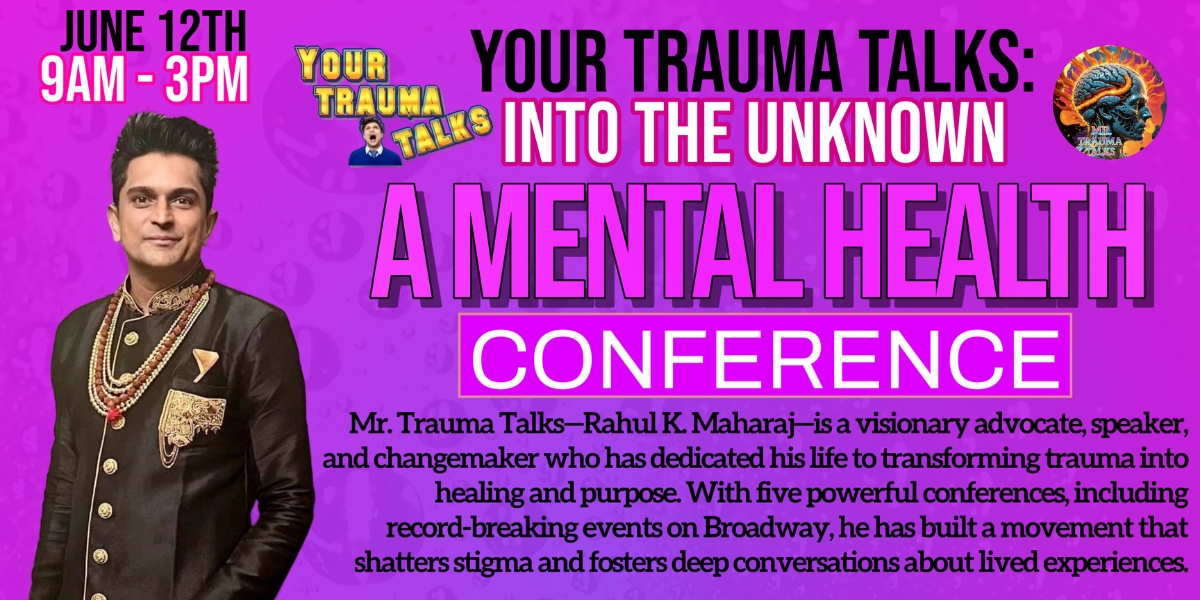
Your Trauma Talks: Into the Unknown – A Journey of Resilience on Broadway

By: Freddy Flores

Broadway Theater Center, Times Square, NYC | June 12–13, 2025

In the heart of Times Square, where Broadway lights shine brightest, a significant event is set to challenge and reshape the conversation around trauma and healing. Your Trauma Talks: Into the Unknown is not just another conference; it is an initiative that seeks to shift the narrative of personal struggle into one of resilience and transformation. Set within the iconic Broadway Theater Center, this event invites attendees to explore profound healing through personal stories and insights shared by an exceptional lineup of global speakers.

Rahul K. Maharaj: Leading Trauma Advocacy Through Art

Rahul K. Maharaj, known as Mr. Trauma Talks, has long been a passionate advocate for transforming trauma into a meaningful catalyst for healing. Through his work, he has created a platform that brings difficult, often stigmatized conversations about trauma into the open, while connecting with people through the arts. In a recent interview, Rahul shared his dedication to this cause, stating, “We bring our truths to a place of art—a stage that has always celebrated drama—and now it tells the story of our resilience.”

For the past seven years, Rahul has worked tirelessly to challenge the stigma surrounding trauma, speaking openly about issues such as suicide, abuse, and struggles faced by individuals on the streets of New York City. His Your Life Experiences with Rah platform has been pivotal in creating open spaces for these difficult conversations, bringing together influential voices such as Dominique T.A.R. Jackson, star of Netflix’s Pose, and Lovari, who is once again hosting the event this year. Rahul’s commitment to healing and advocacy continues to evolve, marked by the success of his previous conferences on Broadway, and Your Trauma Talks: Into the Unknown marks his fifth conference in this transformative series.

Although Gheefunny (Eric R. Lawton) is not part of the speaker lineup, his contribution to the event is still deeply valued, as his insights and experiences have played a crucial role in shaping the ongoing discussions around trauma and resilience.

Your Trauma Talks: Into the Unknown – A Journey of Resilience on Broadway

Photo Courtesy: Mr. Trauma Talks

A Diverse Lineup of Global Speakers

At Your Trauma Talks: Into the Unknown, attendees will hear from 16 speakers from around the world who will share their personal experiences of trauma and recovery. Each speaker offers unique insights that challenge common misconceptions about trauma and healing, providing valuable perspectives for anyone navigating their own path to recovery.

  • Sofia Nordgren suggests that healing is often not straightforward: “Healing isn’t linear—no single therapist or method can mend every wound. We must embrace the complex, layered nature of our journeys.”

  • Nina V. Garza addresses the emotional complexity of recovery, emphasizing the importance of creating spaces where people can express themselves freely: “Recovery can be messy and emotional. I create safe spaces where people express their truths naturally, without the pressure to appear perfect.”

  • Brettney Perr highlights the strength found in confronting pain directly: “True strength is facing pain head-on. I help people reclaim clarity and turn their deepest struggles into real power.”

  • Ellen Pellegrino shares her intuitive approach to healing: “Healing is a natural process. Through my intuitive, quantum-based work, I guide people to rediscover their inherent worth.”

  • Michael Jacobs emphasizes that trauma is not always visible: “Not all trauma is visible. Recognizing both external and internal wounds sparks the true path to recovery.”

  • Susan ‘SueZee’ Finley focuses on sound therapy to help individuals reconnect with their natural healing abilities: “Medication can mute the noise, but authentic healing comes from within. My sound therapy awakens the body’s natural capacity to heal.”

  • Tammy De Mirza speaks on the power of transformation: “Pain isn’t a flaw—it’s the beginning of a breakthrough. I help uncover the roots of suffering to reveal the potential for transformation.”

  • Vasa Mestha believes in a holistic approach: “We must move past the reliance on quick fixes. Holistic techniques like the Art of Living, Sudarshan Kriya, and Neuro-Linguistic Programming can truly lead to healing.”

  • Ranjanna Hvenegaard challenges the myth of perfection: “There’s a misconception that you have to appear ‘perfect’ to be successful. I create spaces where vulnerability is celebrated and authenticity reigns.”

  • Evelyn Taylor advocates for alternative methods to overcome isolation: “Too often, we think drugs are the only answer. My nonprofit, Advocates of Healthy Minds, shows there are alternative ways to overcome isolation and despair.”

  • Dr. Cecelia Hawkins emphasizes the need for understanding trauma’s roots: “We’re only beginning to understand how trauma shapes our lives. Recognizing its roots, whether innate or acquired, is the first step toward transformation.”

  • Steve Vaccaro advocates for personal empowerment: “Empowerment is about defining ourselves by our passions and skills, not by limiting labels. My work through Chapters Network provides that safe platform for individual excellence.”

  • Bhavna Srivastava offers a holistic healing approach: “My Golden Light Method dispels the myths around trauma, offering holistic support that nurtures resilience and hope.”

  • Donna McGrath speaks about transformation through natural remedies: “A diagnosis isn’t a life sentence. Through energetic transformation and natural remedies like flower essences, even the deepest wounds can heal.”

Each of these speakers offers invaluable insight into overcoming trauma and finding strength in adversity, ensuring that attendees walk away with a more comprehensive and enriched understanding of their healing journeys.

Your Trauma Talks: Into the Unknown – A Journey of Resilience on Broadway

Photo Courtesy: Mr. Trauma Talks / Rachel Barcellona

Healing Through Community and Connection

One of the most notable aspects of Your Trauma Talks: Into the Unknown is the sense of community that is cultivated during the event. Beyond the impactful stories shared on stage, attendees will have the opportunity to connect with others who have shared similar experiences. In this environment, healing is framed not just as an individual pursuit but as a collective journey. Participants will leave the event with actionable insights, tools for growth, and a deepened sense of connection to others on their healing journeys.

The event also partners with NAMI NYC to offer attendees free resources and personalized support. This collaboration ensures that attendees leave with practical tools and support, allowing them to continue their healing process well beyond the conference. Additionally, a special performance by a group of children who have overcome significant challenges will serve as a symbol of hope, demonstrating that healing is a journey that can continue to unfold in powerful ways.

Your Trauma Talks: Into the Unknown – A Journey of Resilience on Broadway

Photo Courtesy: Mr. Trauma Talks

A Call to Reclaim the Pieces of Ourselves

Rahul’s message resonates deeply: “What is meant for you shall never pass you by, and what passes you by was never meant for you.” This belief encapsulates the essence of Your Trauma Talks: Into the Unknown—that hardships are not necessarily barriers but opportunities for growth and change. Through this transformative event, participants will be encouraged to reclaim the lost pieces of themselves, turning pain into strength and suffering into empowerment.

The event is not intended to offer immediate solutions, but rather to provide a platform for shifting perspectives and redefining what it means to heal. With a focus on vulnerability, authenticity, and personal empowerment, Your Trauma Talks: Into the Unknown offers an opportunity for transformation.

An Experience to Remember

For those looking to explore their own healing journey, Your Trauma Talks: Into the Unknown provides a variety of ticket options, including General Admission (buy one, get one free) and VIP Award Gala Experience (buy one, get one half price). These options are designed to ensure an intimate and impactful experience for all attendees, allowing them to fully engage with the event’s offerings.

As Rahul Maharaj continues to lead the charge in trauma advocacy, Your Trauma Talks: Into the Unknown stands as a testament to the power of sharing stories, embracing vulnerability, and connecting through collective healing. For more information about the event and to secure your seat, please visit the official website at mrtraumatalks.com or purchase tickets directly through Eventbrite.

Contact Information

For additional inquiries or media requests, please contact:
Mr. Trauma Talks
Website: mrtraumatalks.com
Email: info@mrtraumatalks.com


Disclaimer: The information provided in this article is for general informational purposes only. The views expressed are those of the authors and do not constitute professional advice. The event details, opinions, and insights shared are not intended to replace or substitute for professional guidance. Readers should consult appropriate professionals for advice or guidance related to trauma, healing, or any other personal matters discussed.