Find Reliable Local Movers in Miami: Online Movers & Storage and Nearby Options

The process of moving can become easier for people who live in Miami when they find dependable local movers near me that provide local services. Onlinemovers Miami operates as a well-established company known for offering complete moving solutions throughout Miami’s local region. The company provides expert moving services designed to meet local relocation requirements while helping to ensure a smooth moving process.

Key Benefits of Hiring Local Movers Familiar With the Area

Local movers near me who know Miami’s layout can offer several benefits to customers. These moving companies typically understand Miami’s street designs, traffic conditions, and building codes, which may contribute to more accurate delivery schedules and timely service. The local presence of these companies often allows for adaptable services, including last-minute relocation and urgent moving requests.

The team at Onlinemovers Miami focuses on individualized service by working with staff who are familiar with both local conditions and customer needs. Their professional movers take care to protect possessions while helping to minimize the typical disruption that occurs during relocation. The company offers personalized packing services, along with loading, transportation, and unpacking services that can be tailored to the needs of each client.

Onlinemovers Miami Provides Comprehensive Moving Solutions

The company handles services that go beyond standard transportation. Onlinemovers Miami specializes in extensive moving services aimed at helping clients complete their local moves efficiently. Their offerings include professional packing services using high-quality materials, with specialized care for fragile and valuable items, as well as secure transportation via modern moving trucks designed for safety and reliability.

The storage solutions available through Onlinemovers Miami can assist customers who need space for either short-term or extended periods. Their secure storage facilities are well-suited for clients who need temporary storage while transitioning or handling renovations. Combining moving and storage services under one company can simplify logistics for clients while helping to reduce stress.

Why Choosing Local Movers Near You Matters

The process of local moving might seem simple at first, but it often involves multiple complex elements that require specialized skills. Local movers serving your area usually employ trained staff who understand both residential and commercial parts of Miami. Their specialized knowledge can help lower the chance of damage or delays when moving heavy or bulky items.

Local moving companies generally structure pricing plans based on distance, volume, and service details to provide clear estimates that aim to avoid unexpected fees. Customers of Onlinemovers Miami can proceed with confidence knowing that the company prioritizes clear communication and customer satisfaction.

Onlinemovers Miami’s Commitment to Quality Service

Onlinemovers Miami adheres to firm guidelines that support professional standards and safety protocols. The company trains its staff to follow best practices throughout packing, loading, and transporting client items. Additionally, the company uses tracking systems and communication platforms to keep customers updated in real time during the relocation process.

The company has received consistent praise for its reliable services, timely delivery, and careful handling of client belongings from satisfied customers. These qualities help explain why Onlinemovers Miami is often a top choice for moving services in Miami’s local area.

How to Find Local Movers in Your Area

To receive efficient relocation assistance as a Miami resident or business, it’s helpful to start with a consultation to evaluate your moving requirements. The service team at Onlinemovers Miami offers detailed consultations to help customers explore their moving options and receive accurate pricing.

Through their website, potential customers can review service packages and request personalized quotes based on their move size and schedule. This approach gives clear information to customers looking to select the most suitable service package for their needs.

Please visit Onlinemovers Miami’s Hire local movers near you page for further details and move initiation.


How Savvy New Yorkers Are Leveraging Ghostwriting to Strengthen Their Brands

New York doesn’t slow down for anyone. It’s a city of startups pitching over espresso shots, influencers filming edits between meetings, and professionals packing a week’s ambition into a single afternoon, in a place where reputation and visibility often drive opportunity, publishing your story—whether as a book, a manifesto, or a sleek digital profile—can be a powerful credibility move.

But time is scarce, and not everyone finds it easy to write. That’s why more New Yorkers are outsourcing the work while still owning the message. Behind many of the stories hitting the shelves, the feeds, and the speaker circuit bios are professionals skilled in crafting voices that aren’t theirs. And they’re doing it quietly, efficiently, and at the pace this city demands.

The Rise of Ghostwriting as a Strategic Tool

Publishing isn’t just for novelists or public figures anymore—it’s increasingly seen as a smart play for growth. Founders often write books to land speaking gigs. Creators frequently turn personal stories into branded content. And professionals across industries are realizing that a published voice can carry more weight than a polished résumé.

The challenge? Writing takes time. Often, a lot of it. And for New Yorkers balancing momentum with output, that’s a hurdle. So they hire help—discreetly, strategically, and often through platforms that connect them with vetted professionals who can write in their voice, not over it.

That’s why demand for expert ghostwriters in New York has surged, especially among people with a compelling story and no spare hours to tell it themselves. Whether it’s a memoir, a business book, or thought leadership content, ghostwriting has moved from backstage to boardroom—playing a key role in how stories get told.

Why New Yorkers Are Embracing the Shortcut

New York has always been a city that values speed, sharpness, and storytelling in a place where everyone’s building something—companies, reputations, audiences—the pressure to be seen as credible and compelling can feel constant. A book or a well-written narrative isn’t just nice to have; it’s often treated as currency. It can open doors, spark press, and build a sense of authority.

But telling your story the right way takes more than a good idea. It takes clarity, structure, and tone—elements most people don’t have time to refine between investor meetings or content deadlines. That’s where the collaborative approach comes in.

New Yorkers are using ghostwriters the way they use executive assistants or PR firms: as behind-the-scenes partners who help translate raw experience into refined storytelling. A tech founder might sketch out a few chapters during a cross-country flight, then send voice notes to a writer who turns them into a sharp, publishable draft. An influencer might record casual audio messages that become the foundation for a personal branding guide.

The hustle doesn’t stop. It just gets support.

What a Ghostwriting Collaboration Actually Looks Like

Working with a ghostwriter isn’t a handoff—it’s a partnership. The goal isn’t to have someone write for you, but to have someone write with you, in a voice that feels like your own. It starts with a conversation, or sometimes a dozen. The writer asks smart, often unexpected questions that pull out the essence of what you’re trying to say. From there, they begin building a structure—chapter outlines, tone samples, rough drafts—shaping the raw material into something coherent and compelling.

This kind of collaboration is structured but flexible. Some clients send over voice memos during commutes. Others block off time for interviews or drop entire Google Docs of half-finished thoughts. The ghostwriter adapts, translating fragments into something polished. Edits happen in waves, with the client approving and refining as the draft takes shape.

It’s not about sounding perfect—it’s about sounding real. And for those building a personal brand, that distinction matters. According to Forbes, a strong personal brand can make it easier to build trust, attract opportunities, and stand out in a crowded market. Ghostwriting isn’t a shortcut in the lazy sense—it’s a practical use of time for people who already know what they want to say but don’t have the bandwidth to shape it alone.

The Publishing Payoff: Books as Brand Builders

In a city that thrives on momentum, publishing is more than a milestone—it’s often a multiplier. A book has become a common calling card for experts, entrepreneurs, and creators looking to break through the noise. It can signal legitimacy. It may invite the press. It has the potential to spark conversations that don’t fade after a scroll.

And when it’s done well, it can work. A published piece—whether it’s a full-length memoir, a short-form manifesto, or a professionally written blog series—often serves as proof of perspective. It shows you’ve thought deeply about your work and can communicate that thinking clearly. For New Yorkers, especially, where competition is relentless and attention spans are short, a finished, tangible story tends to carry weight that tweets and reels can’t replicate.

The payoff isn’t always immediate, but it can be lasting. A book might open speaking invitations, consulting gigs, or collaborations that could have otherwise gone unnoticed. It lives longer than a feed post, and when it’s rooted in your own experiences—even if shaped by someone else’s pen—it often feels personal and permanent in all the right ways.

The New Rules of Storytelling Success in NYC

New Yorkers have always known how to hustle. But what’s shifted in recent years is how that hustle gets documented—and who’s helping shape the narrative. Publishing isn’t reserved for legacy authors or public figures anymore. It’s become a strategic move for anyone building something worth paying attention to.

A story doesn’t have to be perfect to make an impact. It just has to be clear, honest, and well-structured—something more professionals are realizing they don’t have to create on their own. With the right partner, their lived experience can become shareable, bookable, and investable.

That shift is part of a larger trend: modern storytelling techniques for brand growth are being used not just by corporations, but by individuals who understand the value of clarity and narrative consistency. From founders shaping public perception to creatives building trust through personal voice, publishing is increasingly seen as a core part of the playbook.

A deeper look at ghostwriting as a credibility strategy can provide insight into how professionals are leveraging expert partnerships to ensure their story is told with impact and authenticity. Read more about ghostwriting and its role in building credibility.

The Dough Whisperer: How Anthony Cardinale’s Culo Grosso Pizza is Shaping New York’s Slice Scene

By: Joselin Estevez

In a city where pizza joints are as ubiquitous as yellow cabs and strong opinions, Anthony Cardinale has managed to do the seemingly impossible: create genuine buzz in New York’s saturated pizza landscape. His operation, the audaciously named Culo Grosso Pizza (now known as CG Pizza), has transformed from a pandemic backyard birthday party into a mobile pizza empire with six different setups, a brick-and-mortar location, and an ever-growing loyal following. With lines regularly stretching around the block at events and a calendar booked months in advance, Cardinale has cultivated something rare in the food industry—authentic mystique backed by exceptional quality.

The Man Behind the Pies

Born in Staten Island but with deep roots in Brooklyn’s Bensonhurst neighborhood, Cardinale’s earliest memories revolve around food, family, and a distinctly New York work ethic. Every weekend, his family would visit his Nonna and Nonno in Bensonhurst, a formative experience that instilled pride in his Sicilian heritage and an appreciation for culinary excellence.

“Bensonhurst was a special place,” Cardinale reminisces. “The one thing I’ve always loved about New York as a whole is the work ethic it instills. My parents always taught me hard work pays off, and my grandparents were also hard-working Sicilian immigrants.”

His grandfather’s barbershop on New Utrecht Avenue (“Sal and Frank’s”) and his father’s popular wedding band “Sound of Infinity” were early exposures to entrepreneurship and entertainment—twin influences that would later shape his career path. But it was the food landscape of Bensonhurst that left the most indelible mark.

“I remember going to staples like Joe’s of Avenue U, L&B, J&V, DaVinci Pizza, Lenny’s… all of 18th Avenue was flooded by some of the best of the best,” he says. “Bensonhurst was a staple for our culture, and I think that’s where a lot of our drive stems from because you had so much greatness around you that was done to perfection.”

The Unexpected Birth of CG Pizza

Like many pandemic success stories, CG Pizza was born of necessity and chance. In August 2020, with his DJ career on pause and his entertainment company Koi Event Group at a standstill, Cardinale decided to host his annual pizza birthday party in his parents’ backyard—but with a professional twist.

“Pizza has always been a huge hobby of mine, and this time for my birthday I wanted to make it super special,” he explains. “I decided to make a full menu with small plates and pizza. I called my partner and best friend Joe Pisano over and started to design a menu.”

When deciding what to call their mock restaurant, Cardinale’s father suggested “Culo Grosso”—a cheeky Italian name that would give his grandfather a laugh. They later shortened it to CG Pizza “as the Google search wouldn’t be in our favor,” Cardinale says with a smile.

What started as a birthday celebration quickly turned into a business opportunity when a friend asked if they would make pizza for her sister’s bridal shower. “Joe and I looked at each other and said, ‘Sure, why not?’ We ended up taking the wood-fired oven at my parents’ house, putting it in our entertainment company’s van, and setting up shop at the bridal shower,” Cardinale recalls. “After that day, there was no turning back.”

The Secret Sauce: Quality and Experience

For Cardinale, pizza-making is both science and art, a passion honed through years of experimentation and research. His early exposure to food preparation came from working at a local Italian deli at age 16, where he would often get “yelled at to actually go work in the front and serve chicken cutlets instead of rolling dough.”

When CG Pizza became a legitimate business, Cardinale and his team obsessed over every ingredient. “We tried close to 20 different tomatoes and olive oils before we narrowed it down,” he says. “We wanted only the best ingredients for our customers.”

Today, CG Pizza sources tomatoes from Italy, uses locally made mozzarella, Sicilian extra virgin olive oil, and flour from Naples. Their dough undergoes a 48-hour fermentation process—a technique that contributes to the exceptional flavor and texture that has made their pies so coveted.

“What makes us stand out is our attention to detail and design on each trailer/truck setup, our ingredient level, and our staff,” Cardinale explains. “Each staff member is trained by one of us to give our customers the best live pizza experience possible.”

The Dough Whisperer: How Anthony Cardinale's Culo Grosso Pizza is Shaping New York's Slice Scene

Photo Courtesy: CG Pizza

From Mobile to Brick-and-Mortar

The rapid expansion of CG Pizza—from one setup to six in just a few years—speaks to both the quality of their product and the business acumen of Cardinale and his partners. Their latest venture, “The Bar by Culo Grosso” in Sayreville, NJ, marks their first permanent location, a partnership with the Rexinis brothers, Demetri and the late Kosta, who have been influential mentors in the hospitality industry.

The partnership with the Rexinis brothers holds special significance for Cardinale. “To know Kosta was to love Kosta,” he shares, paying tribute to Kosta Rexinis who passed away on May 5, 2025. “He treated Joe and me like his little brothers, took us under his wing, and really showed us how to give people a good time. We only know nightlife and hospitality at the standard we know because of the Rexinis brothers.”

A Family Affair

For Cardinale, perhaps the most rewarding aspect of the business is working alongside family. CG Pizza is a partnership between Cardinale, his best friend Joseph Pisano, and his cousin Joseph Mazzeo, with his culinary-trained sister serving as their “right hand.”

“I think the proudest moment so far for all of us is working with family,” he says. “This business is a partnership between my cousin, best friend, and myself. My sister is our right hand through it all, and seeing it all come together is really a beautiful thing.”

Harmonizing Food and Music

Cardinale’s background as a DJ and his involvement with Koi Event Group have proven surprisingly complementary to his pizza business. “I think they go hand in hand,” he observes. “As a DJ, you’re always there to give people an amazing experience, and hospitality is all about service and experience.”

This dual perspective has helped shape CG Pizza’s approach to events, where they aim to create not just great food but memorable moments. One such recurring moment brings Cardinale particular joy: “Our most memorable customer interaction is seeing every compliment and smile after someone tries our pizza. One in particular is when most women from the area eat our Fig Pie and they say ‘Oh My Gawd The Fig.’ It happens every time, and we now wait for it,” he laughs.

Indeed, the “How The Fig Ya Doin'” pizza—topped with fig jam, mozzarella, gorgonzola, arugula, and prosciutto—has become their signature dish, emblematic of their approach to pizza-making: traditional techniques paired with creative, high-quality ingredients.

Looking Ahead

With six mobile setups already in operation, a sponsorship from pizza oven company Gozney, and their first brick-and-mortar location underway, Cardinale’s ambitions for CG Pizza continue to grow. “I’d like to expand to 10 trucks and eventually expand past NJ, maybe even franchise,” he says. “The biggest aspiration is to grow as a group and build as a restaurant group.”

In an industry where expansion often comes at the cost of quality, Cardinale remains committed to the principles that have guided him from the beginning. “The better the technology, the more we’re able to push out more volume with quality,” he notes, keeping an eye on innovations in pizza-making equipment.

For aspiring entrepreneurs, particularly those from backgrounds similar to his own, Cardinale offers straightforward advice: “Keep going, don’t look around you, lead by example, learn from your mistakes, and never give up. You’re going to face a lot of obstacles, there’s going to be a lot of stress, but the end goal is always worth it. Stay the course. Good things happen to good people.”

As Cardinale looks toward the future of CG Pizza, he carries with him the lessons of his Bensonhurst upbringing, the mentorship of figures like the Rexinis brothers, and the unwavering support of his family. In a city that prides itself on having the world’s best pizza, Anthony Cardinale isn’t just making exceptional pies—he’s creating experiences that honor tradition while blazing new trails, one wood-fired oven at a time.

CG Pizza can be found online at www.cg.pizza and on Instagram @cg.pizza. The Bar by Culo Grosso is located in Sayreville, NJ, with more information available at thebarnj.com and @thebarnj on Instagram.

Coaching for Inner Clarity: Iryna Kutova’s Approach to Healing the Hidden Barriers to Action

By: Anna Melnychuk

We all know the feeling: a goal is clear, a path is visible, but something—something invisible—stops us from acting. Iryna Kutova, a Ukrainian-born coach, has made it her life’s work to help people name that “something.” It could be fear, unresolved shame, misaligned values, or a fractured inner dialogue. Whatever it is, it keeps us stuck—and Kutova’s approach helps people move again.

Her work doesn’t begin with productivity hacks or vision boards. It starts with the courage to look inward. “If you don’t have clarity with yourself,” she says, “every strategy will eventually collapse.”

Where Clarity Begins

Kutova’s journey into coaching began after years in corporate HR, including time at the global company Danone. She was trained to spot patterns, systems, skills. But she noticed something deeper: some hires thrived, while others—equally talented—burned out or floundered. The difference was not skillset. It was inner readiness.

That observation launched her into the world of coaching in 2014. She trained under Ukrainian master coaches, and later under the Mars Venus Coaching system in the U.S., combining classic executive coaching with methods from positive psychotherapy.

But what sets her apart is her focus on the psychological architecture beneath action. “Clarity isn’t just mental—it’s emotional, somatic, even spiritual,” she says. “We need to find the blocks where they actually live.”

The Hidden Barriers to Action

Kutova works with high-level leaders, couples, entrepreneurs, and creatives—many of whom have achieved outward success but still feel stuck. Her sessions explore self-permission, guilt cycles, suppressed needs, and forgotten desires.

“I see clients with thriving businesses who feel empty,” she says. “They built based on pressure, not purpose. And now they’re asking: who am I in all of this?”

Her coaching doesn’t seek to add more to-do lists. Instead, it unravels the emotional knots that keep people performing identities that no longer fit.

Transformational Tools for Inner Dialogue

In 2018, Iryna created the “Owner Balance” journal—a six-month planner designed not just to track goals, but to create conscious rituals of self-connection. The journal includes reflective prompts, values-based prioritization, and emotional check-ins. It encourages users to treat daily planning as a dialogue, not a drill.

Then came her book “Living for Later,” a meditation on the emotional cost of postponement. For many readers, it put into words the subtle pain of living in a constant state of “almost ready.” That same year, Kutova also developed a transformational game, “Family Knots,” to help couples uncover unconscious patterns that block emotional intimacy.

These tools became not only resources for her clients, but also educational instruments for other coaches and therapists. She regularly trained peers in their use across Ukraine and neighboring countries.

Coaching in a Time of Transition

After immigrating to the U.S. in 2022, Kutova brought her methods into new contexts. She now serves as a corporate coach at AD Mortgage, guiding leadership teams and individuals through emotional realignment. She is also developing a new transformational game for coaches that focuses on relationships and trust—key themes for any workplace culture.

Her sessions blend structured coaching with somatic awareness, emotional mapping, and guided reflection. Clients describe the experience as “soft but piercing.” The focus isn’t on fixing—but on seeing. You can follow her ongoing work and reflections on Instagram.

The Philosophy Behind the Practice

Iryna’s approach is rooted in one central belief: when we understand our internal experience, our actions naturally align. She challenges clients to stop outsourcing their intuition, to stop waiting for permission to live or lead differently.

Her coaching reminds us that confusion is not weakness—it’s information. And that clarity doesn’t always shout. Sometimes, it whispers. Her role is to help clients listen.

A Legacy of Depth and Gentleness

Though her tools are structured, her energy is gentle. Kutova’s clients often note her ability to hold complexity without rushing to solve it. “She sees behind the performance,” one client said. “And she helps you see, too.”

At a time when coaching is often hyper-branded and fast-tracked, Iryna’s work feels like a return to essence. Her influence continues to ripple through the community of coaches she’s trained, tools she’s created, and lives she’s helped realign.

Coaching, in her world, is not a service. It’s a sacred conversation.

And clarity? It’s not a lightbulb—it’s a path.

Inside Canine Protection International’s Protection Dog Team Trained to Guard Families

By: Seraphina Caldwell

On a sprawling three-acre property just north of Dallas, a German Shepherd named Argo sits calmly beside his handler on a sun-dappled patio. No leash connects them. No treats are visible. The dog’s attentive eyes occasionally scan the horizon before returning to rest on his owner’s face. It’s an ordinary scene of companionship—until a signal, a single quietly spoken command, transforms the placid animal. In less than a second, Argo explodes with an aggressive bark, almost a scream, before launching across the yard toward a man emerging from behind a distant shed, intercepting the potential threat with a level of precision often associated with elite human operatives.

This is no ordinary protection dog demonstration. It’s the culmination of thousands of hours of highly specialized, scenario-based training at Canine Protection International (CPI), where dogs become part of an exceptionally trained unit—the $300,000 protection dog team designed to guard families, not perform for show.

Beyond Sport Training: The Science of Functional Protection

The distinction between sport-trained protection dogs and CPI’s Elite Family & Estate Protection Dogs lies in a fundamental philosophical difference that influences every aspect of the training process.

“Many people think a protection dog is just an aggressive dog, but the reality is more complex,” says Alex Bois, owner of CPI. “These dogs must be completely stable, confident in every scenario we put them in, and neutral to the world moving around them. When called upon, they can go from calm and relaxed to displaying controlled aggression.”

While most training centers in North America and Europe rely on what CPI describes as “dog sport training,” the company has developed an approach focused on functional results in real-world scenarios. Industry research suggests that 87% of so-called “protection dogs” fail basic scenario testing, often because they’ve been conditioned to respond only to specific cues—a sleeve-wearing decoy making codified threatening gestures that real-world assailants would never replicate.

Instead, CPI’s methodology emphasizes what behavioral scientists call “context-independent response training,” which may help dogs respond to threats under the command of a handler across varied environments without the need for equipment or artificial signals from a decoy. This requires a significant shift from traditional protection training.

The Three-Phase Training Protocol

CPI’s training methodology unfolds across three carefully structured phases, beginning with foundational training that instills core capabilities regardless of a dog’s previous experience. Unlike sport training, which aims for precision in controlled environments, CPI’s approach prioritizes adaptability.

The second phase focuses on teaching specific skills in both obedience and protection. A training expert notes that this phase is where the divergence from sport training becomes most evident: “Sport dogs learn to perform for short durations in predictable environments. CPI dogs are trained to perform in unpredictable environments. It’s a noticeable difference in neural conditioning.”

Perhaps most distinctive is CPI’s third phase: functionality. During this period, dogs transition from performing in controlled “classroom” environments to demonstrating their capabilities in diverse real-world settings. Exercises include scenarios that could challenge conventionally trained animals, such as responding to passive threats without obvious aggression cues, navigating complex environments, and maintaining protective vigilance despite distractions.

“If you can teach two people a common language, you can accomplish anything,” the CPI training philosophy states, highlighting their approach to creating a communication system between dog and handler that goes beyond traditional command structures. CPI owners do not become dog trainers. They do not carry around treats and a ball on the delivery of their new dog. Instead, they learn how to handle through effective communication, praise, and a bond that strengthens every day, reflecting the thousands of hours spent training every dog and the unique program that separates CPI from the rest.

The $300K Investment: Science Over Sentiment

Investing in a CPI protection dog isn’t simply a matter of cost. It’s about precision. Prices range from $100,000 to $300,000, depending on the dog’s level of training, natural ability, and client-specific requirements. CPI’s strict selection process evaluates hundreds of European-bred candidates each year, accepting fewer than 2% into the program. It’s not uncommon for CPI to reject dogs later sold to brokers and then to competitors, a fact Bois acknowledges with concern.

“A lot of dogs we decline end up for sale elsewhere as ‘protection dogs,’” he says. “Buyer beware. There are no regulations in this industry.”

Rather than choosing dogs for looks or lineage alone, CPI uses a battery of temperament tests, nerve strength assessments, and early socialization screenings. Their aim? High behavioral reliability in high-stress environments.

“Temperament is everything,” Bois says. “A dog that hesitates under pressure may become a liability. We only train dogs that show exceptional composure and judgment.”

The Integration Process: Creating a Family Guardian

CPI’s state-of-the-art 2,400-square-foot facility, located next to the owners’ home, serves as both a training center and home environment, allowing dogs to learn to transition seamlessly between protection and companionship roles. This dual-context training is designed to help with what behavioral scientists term “contextual discrimination”—the ability to determine appropriate responses based on environmental and handler cues.

When clients purchase a dog—investments ranging from $100,000 to $300,000—the relationship is just beginning. CPI’s proprietary three-day integration process includes:

  • Instruction in public settings
  • Complete off-leash handling techniques
  • Car entry and exit protocols
  • Home and public protection exercises
  • Integration with family members and existing pets

“Our philosophy of ‘extreme ownership’ guides every facet of our operations,” CPI materials explain, highlighting their commitment to client satisfaction that extends far beyond the sale.

A Moral Framework for Canine Protection

Critics have raised ethical concerns around conditioning dogs for aggression. Bois is candid about the tension but insists CPI’s approach balances protection with animal welfare. These dogs are put through rigorous challenges and high levels of pressure. In the end, the dog always wins, tail wagging and ready for the next fight. “Just as humans training in self-defense must experience controlled resistance to learn effectively, these dogs undergo structured scenarios to build confidence. Traditional padded equipment alone doesn’t prepare them for real-world threats.”

“These dogs aren’t just brutes,” Bois explains. “They’re stable, loving family members with a job to do.”

It’s this balance, perhaps more than anything, that contributes to CPI’s loyal following. Clients often return for their second, third, or even fourth dog. Bois doesn’t push testimonials. He doesn’t have to.

The Final Return

As Argo circles back from his simulated threat interception, he slides quietly into a down position, resting his head between his paws. There’s no raised voice, no visible tension. Just a glance from his handler, and calm is restored.

For the families who own CPI dogs, that calm isn’t just emotional. It’s strategic. It’s worth every cent. And at up to $300,000 for a pair of dogs, it represents more than luxury—it’s a sophisticated, dynamic security solution.

In a crowded and often unregulated industry, Canine Protection International has carved a niche that’s as refined as it is rare. Their dogs don’t just bark on cue. They act with conviction. Their handlers aren’t taught to control their dogs with treats and toys. They’re taught to trust them with their lives.

And in the process, CPI hasn’t just trained a generation of elite protection dogs. They’ve helped redefine what it means to be safe.


Disclaimer: The content of this article is for informational purposes only. The training methods, costs, and effectiveness described may vary depending on the provider. Readers are encouraged to conduct independent research or consult with relevant experts before making any decisions regarding protection dogs or security services. This article does not endorse or guarantee the effectiveness of the products or services discussed. Always exercise caution and due diligence when considering any security-related investment or decision.

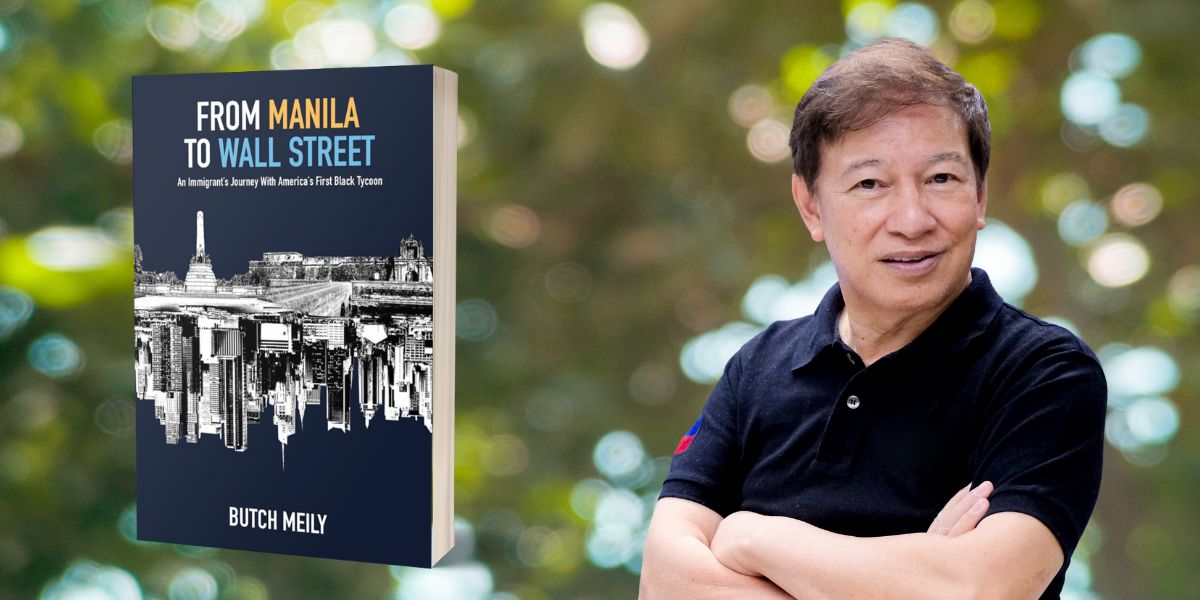
An Immigrant’s Journey with America’s First Black Tycoon, An Interview with Butch Meily

By: Elen Olson

For over three decades, Butch Meily carried a story within him—a story of ambition, transformation, and an encounter with one of America’s most enigmatic and pioneering business leaders, Reginald Lewis. It wasn’t just about personal success or financial triumphs; it was about witnessing firsthand the potential of relentless determination, the complexities of race in America, and the challenges immigrants face when stepping onto the high-stakes battlefield of Wall Street.

Raised in the cloistered world of Manila, Meily’s journey to the U.S. was far from ordinary. Sixteen years in Catholic school had instilled discipline, but also a deep longing for freedom. That freedom, he found, was not just about geography—it was about mindset. A cousin in California summed it up best: “You’re free to do anything you want, as long as you don’t impinge on someone else’s freedom.” For Meily, this was a revelation. America wasn’t just a place; it was a blank slate where dreams, no matter how bold, could find room to grow.

His entrance into the world of high finance was through TLC Beatrice International, the conglomerate built by Reginald Lewis, the first Black American to lead a billion-dollar company. Lewis was a force of nature—brilliant, fearless, and remarkably unrelenting in his pursuit of success. But beyond his boardroom dominance, Meily witnessed something even more profound: the reality of being Black in America. Before working with Lewis, Meily had only encountered the African American experience through books and films. Seeing the world through Lewis’s eyes challenged his assumptions. “Reg accused me of viewing the USA through the candy-colored lens of Hollywood,” Meily recalls. The truth was sharper, more complex, and laced with an undercurrent of isolation that even the most powerful sometimes could not escape.

Navigating Wall Street as an immigrant came with its own set of barriers. At his PR firm, Meily was told outright that certain elite institutions—investment banks and law firms—were part of the “white shoe” club, implying they were often difficult to access. But the potential of America, he discovered, was that excellence could sometimes break through even the toughest walls. “If you were good, you could go far,” he says, a lesson he carried with him throughout his career. The need to constantly prove himself, to work harder than everyone else, was a pressure he embraced rather than resented.

Despite the hurdles, Meily remained a strong believer in the American Dream. “I lived it,” he says. But he also acknowledges that success doesn’t always lead to happiness. The journey, no matter how thrilling, is not without its costs. The ideals of ambition and opportunity remain, but life is complicated. Yet for immigrants stepping onto American soil today, Meily’s story serves as a reminder that the dream is still alive. “Despite all the noise and questioning, the USA remains one of the most welcoming countries and offers significant opportunities.”

Bridging the cultural gap between Manila and America was no small feat. Meily embraced the confidence and drive that his new home encouraged, but he never let go of the values his father instilled in him. In a letter before he left the Philippines, his father offered wisdom that would guide him through his career: America is a great country, full of great people to learn from, but its people are human too, imperfect and fallible. Learning to discern both strengths and weaknesses was key to navigating his new world.

Among the greatest lessons he learned from Reginald Lewis was the value of persistence. “Keep going, no matter what,” Meily recalls. Lewis believed that waiting for the perfect moment was often impractical—sometimes, you had to take the leap, whether you were ready or not. “Ready, fire, aim” was one of Lewis’s mantras, emphasizing action over hesitation. Meily applied this lesson in his own career, whether it was taking bold PR risks or spearheading major disaster resilience initiatives in the Philippines. While not every gamble paid off—one particular venture in temporary housing for disaster victims ended in failure—the willingness to take calculated risks became a cornerstone of his professional philosophy.

For immigrants chasing success in America, Meily’s advice is both practical and blunt: work hard, get a good education, and hold on to your values. But more importantly, don’t dwell on slights or grudges. “They only slow you down and hamper your thinking.” He warns against insulating oneself in the comfort of one’s native culture. “You come to the U.S. to be an American,” he says. “Join in. Don’t cling to old habits or outmoded ways of thinking.” The key to truly thriving isn’t just about making it financially—it’s about immersing oneself fully in the American experience.

Butch Meily’s journey from Manila to Wall Street is more than a success story. It’s a testament to resilience, adaptability, and the transformative possibilities of opportunity. It’s about breaking barriers, embracing new perspectives, and proving that with the right mindset, the American Dream isn’t just a distant ideal—it’s a reality that many can pursue.

“Touch” at the Infinite Weave Exhibition, NYC X DESIGN WEEK — Explores the Power of Touch in a Digital Age

As part of the Infinite Weave Exhibition during NYCxDesign Week Festival, experiential designer Si (Sea) Chen presents “Touch,” an audiovisual installation that offers a personal reflection on connection in an era shaped by distance, data, and digital mediation. Si (Sea) Chen is a phygital storyteller crafting experiences that bridge physical, digital, and interactive environments. Rooted in environmental and experiential design, her work includes responsive installations, immersive environments, and audiovisual narratives. She has contributed to experiential design projects for clients such as NEOM, HardRock, and BK Fashion Week. By blending 3D modeling, parametric systems, and real-time audiovisual textures, Chen explores ways to blur the boundaries between physical and digital spaces. Her artistic practice often thrives on cross-disciplinary collaboration with designers, engineers, and broader creative communities.

Displayed from May 16th to 18th, 2025, “Touch” marks a meaningful moment in Chen’s evolving body of work. It is one of her first installations created using TouchDesigner, a visual programming language for real-time audiovisual environments. The installation invites viewers into a dark, cosmic void where a hand gently caresses the stars. Each movement appears to cut through the darkness, triggering streams of light that shift and scatter — a visual metaphor for moments when emotion or presence emerges into awareness.

The gesture of “touch,” subtle yet deliberate, represents an invitation to consider authentic, human interaction in a world shaped by abstraction and digital overload. “In recent years, with the rise of AI, the pandemic, and the overflowed information on social media, I’ve found myself reconsidering my relationship with the people, world and universe,” Chen explains. “ ‘Touch’ emerged from that thinking. It’s about the courage to initiate the connection even when it can bring uncertainty in your life. When screens replace skin, when data takes the place of presence, and when fleeting interactions—like hitting a ‘like’ button—substitute for deeper connections, the act of touch feels increasingly meaningful.”

“Touch” at the Infinite Weave Exhibition, NYC X DESIGN WEEK — Explores the Power of Touch in a Digital Age

Photo Courtesy: Xiaohan Chang

Though the visuals are digitally rendered, Chen emphasizes that the physicality of the gesture—the hand and its motion—is grounded in the tangible world. During the exhibition, she was asked whether the visuals in “Touch” represent the supernatural or the imagined. Her response was thoughtful: “The only thing real in this piece is the gesture of touch, the touch itself. Everything else is a projection—it can be something imagined, unknown, outer-spaced, dreamed, or hoped for. I wanted to honor that one real act, the touch. I believe that even initiating a small act of connection can invite new possibilities, and that concept shaped how I designed the visuals and motion clips.”

This project also marks the beginning of Chen’s deeper exploration of audiovisual design, integrating technical systems with emotional and sensorial storytelling. Her background in environmental and experiential design informs her process: “I’m always thinking about how cross-disciplinary media can generate unique experience,” she says.

Chen describes herself as a phygital storyteller, crafting meaningful experiences that exist between the physical and digital landscape. Her work often challenges conventional boundaries—between artistic disciplines, between viewer and installation, and between what is perceived and what is felt. Collaboration remains central to her practice, as does a belief in design’s capacity to facilitate connections across people, places, and sensory dimensions.

“In a time when so much is filtered, curated, and mediated, and so little is candid, organic, and direct,” Chen reflects, “what would it mean to simply offer a touch? That’s the question I’m asking—with sound, with light, with space, with movement—and maybe with just a single hand.”


Published by Joseph T.

October Saves: How a Mother’s Battle with Cancer Inspired a Goalie-Led Movement to Combat the Disease

By: Maha Khan

What began as a deeply personal fight against breast cancer has grown into a continent-wide movement inspired by one of the most unique roles in sports, the ice hockey goalie. October Saves, a grassroots fundraising initiative founded by a cancer survivor and her two closest friends, has transformed the simple act of making a save into a meaningful tool in the ongoing effort against cancer.

At just 37 years old, October Saves co-founder Lara Hopewell was diagnosed with breast cancer. During treatment, her close friends Kerry and Travis launched a fundraising team in her honor, a gesture that helped lay the groundwork for what would become a growing national nonprofit.

“We started with different fundraising events, but once I finished treatment, we realized we wanted to channel our energy into something more meaningful and sustainable,” Lara shared. “My young sons, then just four and seven, had fallen in love with hockey and were both learning to be goalies. The rink had become their happy place while I was sick. Our hockey community was incredible, and we felt that was where we could make the most difference.”

That insight gave rise to the October Saves Goalie Challenge, a distinctive campaign encouraging goalies to collect pledges for every save they make during the month of October. Beginning with 28 goalies from her sons’ team, the Ashburn Xtreme, the group raised $32,000 in its first year, which was quite encouraging. The following year, the team invited another club to join them. Soon after, the governing body for youth hockey in the Mid-Atlantic region became involved, and the movement grew rapidly. Today, October Saves includes thousands of goalies from across the U.S. and Canada, working together with the hope of making a meaningful impact on cancer.

Each participating goalie serves as a beacon of hope. They track their saves in both practices and games, asking friends and family to pledge donations for each one. “It’s a community event,” said Lara. “Everyone cheers on their goalie, and suddenly this usually isolated position becomes a symbol of collective strength. Goalies feel empowered as leaders on and off the ice.”

The initiative’s rallying cry—All Saves, One Goal—captures the spirit of the movement.

October Saves stands out not only for its unique focus on goaltenders but also for the powerful way it raises the profile of the position. “Goalies are often on their own island during a game,” she explained. “This gives them an opportunity to come together as a ‘Goalie Nation.’ It’s a rare chance to highlight their hard work, resilience, and leadership. Few initiatives focus specifically on this special group of athletes.”

The hockey community has welcomed the challenge warmly. NHL teams such as the Washington Capitals, New Jersey Devils, Philadelphia Flyers, and Boston Bruins have shown their support. Legendary NHL goalie coach Mitch Korn is one of the initiative’s most enthusiastic advocates, offering prizes and traveling annually to deliver a special “Fireside Chat” to the top fundraising club.

Goalies of all ages, from youth players to professionals, have joined the cause. “Somehow, it really resonated,” said Lara. “The Goalie Nation seemed to be waiting for something tailored just for them, and now they’re using it to help make a difference.”

October Saves is dedicated to supporting both pediatric and adult cancer causes. The leadership team takes a hands-on approach to distributing funds, personally visiting hospitals and research institutions to assess where their donations can have the most meaningful effect. They also aim to connect young participants with beneficiaries whenever possible, helping them appreciate the tangible impact of their efforts.

While many milestones have marked October Saves’ journey, it’s the people who make the deepest impression. “Meeting our goalies and hearing their stories—how cancer has touched their lives—that’s what motivates us. They’re not doing this for rewards. They’re doing it because they want to help reduce the impact of cancer.”

Looking ahead, the team’s vision remains focused: expand the program to every hockey organization across North America. “Every goalie can sign up, and even better, every club can sign up and contribute together,” Lara said. “Eventually, we hope to extend this model to other sports—soccer, lacrosse, field hockey—but right now, we’re focused on rallying Goalie Nation.”

From a small ice rink in Ashburn, Virginia, to arenas across the U.S. and Canada, October Saves has turned every blocked puck into a chance for hope. One save at a time, these goalies are defending more than just the net—they’re contributing to a broader effort to improve lives.

Kass Hart: The Impact of Music on Emotions and the Inner World

By: Natalie Brooks

Music holds incredible power—it can change moods, inspire, and even heal the soul. The same track can evoke completely different emotions in different people, and that is part of its magic. Kass Hart firmly believes that music is more than just a combination of sounds and words; it is a tool that can touch the deepest strings of the soul.

“Music has always been more than just sounds to me. It’s emotions, memories, and experiences. I want my songs not only to sound beautiful but to truly touch people’s hearts,” the artist shares.

Emotions as the Foundation of Music

Every song by Kass Hart reflects her personal experiences, thoughts, and feelings. She writes about what genuinely moves her—whether it’s joy, sadness, love, or disappointment.

“When I work on a new song, I always ask myself: what emotions should it convey? I want people to listen to it and recognize themselves in it, to feel something real,” says Kass.

She believes that sincerity is what makes music come alive. When an artist truly experiences what they sing about, the audience can feel it too.

“Sometimes I get messages from people saying that my song helped them through a difficult time, made them think, or, on the contrary, gave them hope. That’s the best confirmation that I’m on the right path,” the singer admits.

For her, music is not just about creativity—it’s a form of emotional communication. Through her songs, she shares her stories while leaving room for listeners to find their own meanings in them.

How Music Helps Cope with Challenges

Kass Hart admits that she has often found comfort in music herself.

“When I was struggling, I wrote. That was my way of expressing emotions. Sometimes words wouldn’t come, but the melody would appear on its own, and through it, I could convey everything I was feeling at that moment.”

She believes that music is a form of therapy, a way to deal with inner struggles. Many people find support and understanding in songs when they can’t express their feelings in words.

“Music allows you to live through emotions, to let them out. Sometimes you hear a song, and it feels like it’s speaking for you, reflecting your thoughts and feelings. In those moments, you realize you’re not alone.”

For Kass, the process of creating music is not just work but a way to understand herself. When she writes a new song, she relives its story, processes her emotions, and finds answers to questions that trouble her.

“I believe that any pain, any struggles or doubts, can be transformed into something beautiful—into music that can help not only me but others too.”

How Listeners Respond to Her Music

Many Kass Hart fans reach out to her on social media, sharing how her music has impacted their lives. Some heard her song during a difficult time and found solace in it. Others were inspired by her lyrics and took an important step forward. And some simply felt less alone in their emotions.

“I receive hundreds of messages from people telling me how my songs helped them overcome hardships, move on from a breakup, believe in themselves, or just feel happier. That is the greatest reward for me—knowing that my music has helped, inspired, or given someone the strength to keep going,” she says.

Kass admits that these stories deeply move her. Sometimes, she even responds personally, offering support and gratitude for their honesty.

“It’s important for me to know that my music makes the world a little better. If even one person feels lighter after listening to my song, then I know I’m doing the right thing.”

Music as a Way to Connect People

One of the main reasons Kass Hart makes music is her ability to bring people together. Regardless of nationality, age, or life experience, music creates a special connection between an artist and their listeners.

“Music is a universal language that everyone understands. At its core are emotions, and emotions have no boundaries,” says Kass.

She believes that her songs help people feel like part of something bigger—to connect with others who are experiencing similar emotions.

“Sometimes we feel like we’re alone in our struggles, but in reality, there are thousands of people in the world feeling the same way. And music helps us realize that.”

Kass especially feels this connection with her audience at concerts. When an entire venue sings her songs in unison, she knows that her music has truly resonated with people.

“It’s an incredible feeling—to see people experience my music the same way I do. That inspires me to keep going.”

Music is more than just sound—it’s emotions, memories, and experiences that have the power to change lives. Kass Hart sees her mission as an artist to create songs that move people, inspire them, and offer support.

“I want my listeners to feel like they’re not alone. I want my music to be a friend that understands them without words.”

And it is precisely this sincerity and emotional depth that make her music resonate with thousands of people around the world.

Exploring Hard Money Lending: A Practical Overview with Gauntlet Funding

In the fast-paced world of real estate, access to capital can significantly influence the success of a deal. Traditional loans often involve longer approval timelines, detailed documentation, and rigid qualification requirements—factors that can cause investors to miss time-sensitive opportunities. This is where hard money loans can offer an alternative.

This guide explains how hard money loans function, who may benefit from them, and scenarios where they might be a suitable financing option in today’s competitive property market.

What Is a Hard Money Loan?

A hard money loan is a short-term, asset-backed loan secured by real estate. Unlike conventional bank loans, which rely heavily on a borrower’s credit history, income, and debt-to-income ratio, hard money lenders primarily consider the value and potential of the property being financed—allowing for a streamlined approval process in many cases.

These loans are commonly used by real estate investors, house flippers, and developers who need funds quickly and plan to either refinance or sell the property within a short period.

Key Advantages of Hard Money Loans

Speed of Approval

Many hard money loans can be processed within 7 to 14 days, depending on the lender and deal structure. This relative speed may be advantageous in competitive markets where buyers must act quickly.

Flexible Qualification Criteria

Borrowers with limited credit or non-traditional income streams may still qualify. Since the property’s value is a central factor, approval doesn’t depend solely on personal financial profiles.

Customization and Terms

Loan terms are often negotiable, with short durations (typically 6 to 36 months) and interest-only payments. This flexibility may benefit investors focused on short-term strategies or cash flow planning.

Useful for “Non-Bankable” Deals

Hard money lenders may be more willing to finance deals that don’t fit traditional lending criteria, such as properties requiring extensive rehab or those with unique characteristics.

Typical Use Cases

Fix-and-Flip Projects

Investors purchase undervalued properties, renovate them, and sell them for a potential profit. Hard money loans can provide the upfront capital to acquire and improve the property.

Bridge Financing

When waiting on long-term financing or the sale of another asset, hard money can serve as a temporary funding tool to move a project forward.

Auction Purchases

Foreclosure or tax lien auctions often require quick payment. Having access to funds in advance can provide a competitive edge.

Distressed or Unique Properties

Traditional lenders may hesitate on properties with structural issues, zoning concerns, or non-standard features. Hard money lenders may consider such cases on an individual basis.

Terms and Cost Structure

Loan-to-Value (LTV)

Hard money lenders usually lend based on 60%–75% of the property’s current or after-repair value (ARV). Higher LTVs may be available in some cases, depending on property condition and borrower experience.

Interest Rates

Interest rates typically range from 8% to 15%, influenced by location, borrower background, and perceived deal risk. These rates reflect the short-term nature and increased risk profile of such loans.

Fees

Lenders often charge points (origination fees), which usually range from 1%–4% of the loan amount. Additional fees may include underwriting, appraisal, and processing charges.

Repayment

Hard money loans are often interest-only with a balloon payment due at maturity. A well-defined exit strategy—such as a resale or refinance—is essential for repayment planning.

Risks and Considerations

Higher Costs

Compared to traditional financing, hard money loans generally come with elevated interest rates and fees. These products are intended for short-term use and are less suited for buy-and-hold strategies.

Short Timelines

With loan durations commonly under 24 months, borrowers need a clear plan for repayment well in advance of the maturity date.

Default Consequences

Failure to repay the loan can lead to foreclosure, as the property itself is the collateral. Borrowers should conduct thorough due diligence before entering a hard money agreement.

When Does a Hard Money Loan Make Sense?

Hard money loans aren’t ideal for every investor. However, they can be appropriate tools when:

  • You need access to capital quickly in a competitive market.
  • The property requires major renovations and won’t qualify for bank financing.
  • You intend to resell or refinance the property within 12–24 months.
  • You’re investing in an unconventional asset or market not favored by traditional lenders.

If your primary objective is timely access to funding and flexible underwriting, hard money lending may be a practical option worth considering.

Final Thoughts

Hard money loans offer an alternative financing path for real estate investors who prioritize speed and adaptability. While they involve higher costs and more risk than conventional loans, they can help facilitate deals that may otherwise be out of reach.

Whether you’re preparing to flip a distressed property, close a bridge loan, or seize a time-sensitive opportunity, hard money financing can support your goals under the right circumstances.

For those seeking tailored lending solutions, Gauntlet Funding provides access to short-term real estate financing designed for both residential and commercial investors. Their team brings industry experience and guidance to help borrowers navigate loan structuring and underwriting requirements with greater clarity.


Disclaimer: This article is intended for informational purposes only and does not constitute investment, financial, or lending advice. All financial decisions should be made in consultation with licensed professionals. The mention of Gauntlet Funding is not an endorsement and should not be interpreted as a guarantee of services or loan terms.