Grownsy EaseClean Bottle Washer Pro: A Convenient Cleaning Solution for Parents

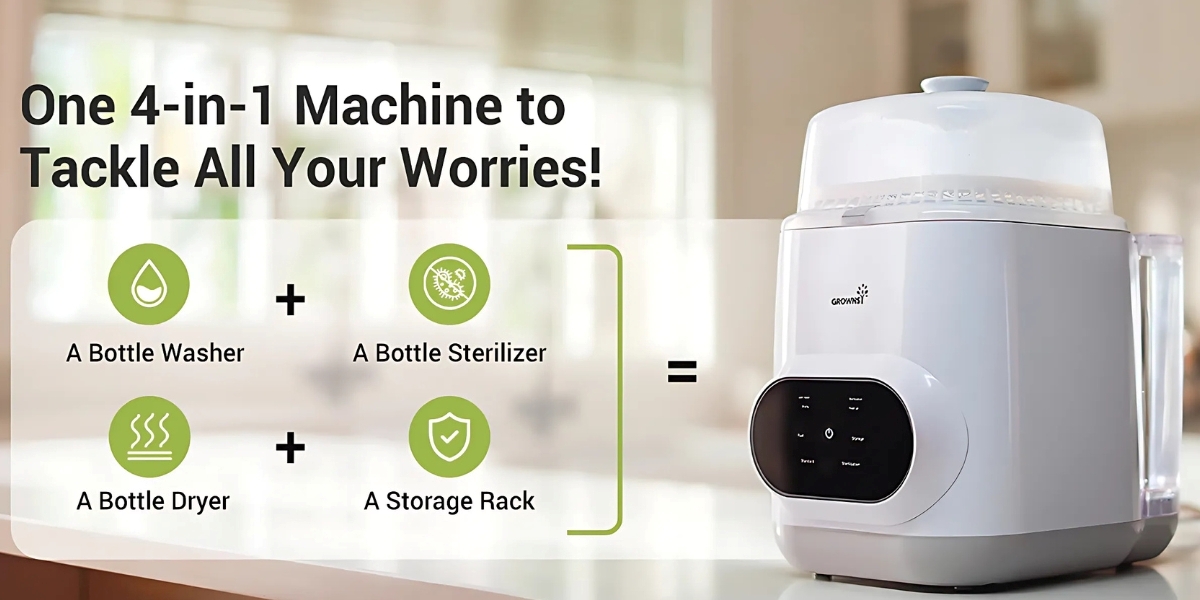
Parenting comes with countless responsibilities, and keeping baby essentials clean can be a daily challenge. The Grownsy EaseClean Bottle Washer Pro offers a potential solution, combining washing, sterilizing, drying, and storage in one compact device. Designed with efficiency and convenience in mind, this all-in-one baby bottle washer may help parents maintain hygiene while saving time and effort.

How the Grownsy EaseClean Bottle Washer Pro Can Help Simplify Cleaning

The Grownsy EaseClean Bottle Washer Pro aims to eliminate the need for manual scrubbing with its claimed 4-in-1 functionality. It is designed to wash, sterilize, dry, and store bottles, pump parts, pacifiers, and other baby accessories automatically. With 26 spray jets—12 for interior cleaning and 14 for 360° exterior cleaning—it may provide thorough sanitation while reportedly using 86% less water than traditional handwashing.

Parents have the option to choose from nine cleaning modes, including Quick Wash, Standard Wash, Sterilize, and Dry & Storage. The Quick Wash mode is said to clean small items like pacifiers and bottle nipples in approximately 19 minutes, which could be ideal for busy households. High-temperature steam at 212°F is intended to help eliminate germs, while hot air drying may leave bottles clean and ready for use.

Grownsy EaseClean Bottle Washer Pro: A Convenient Cleaning Solution for Parents

Photo Courtesy: Grownsy

Potential Benefits of Sterilization and Storage Features

One notable feature of the Grownsy EaseClean Bottle Washer Pro is its up to 72-hour sterile storage capability. The built-in HEPA filter is designed to purify the air, potentially removing many airborne particles to keep bottles and accessories hygienic for extended periods. This might be particularly useful for parents who need to prepare bottles in advance.

The double-layer design can accommodate up to four bottles, along with pump parts, sippy cups, and other essentials. Its broad compatibility suggests it works with major bottle brands, including Nanobebe, as well as wearable pump parts. This versatility could make the Grownsy EaseClean Bottle Washer Pro a practical addition to many households.

Grownsy EaseClean Bottle Washer Pro: A Convenient Cleaning Solution for Parents

Photo Courtesy: Grownsy

Considerations for Safety and Eco-Friendly Benefits

Safety appears to be a priority for Grownsy, and the EaseClean Bottle Washer Pro is designed to work with baby-safe detergent tablets. The package includes 60 tablets, which may provide parents with enough supply to start using the device immediately. Additionally, the 1-year warranty reflects the product’s expected durability.

By reducing water consumption and potentially eliminating the need for disposable sterilization bags, the Grownsy EaseClean Bottle Washer Pro could support eco-friendly parenting. Its energy-efficient operation may align with the values of families looking for sustainable solutions.

A Practical Gift Option for New Parents

With its sleek design and multifunctional capabilities, the Grownsy EaseClean Bottle Washer Pro could be a thoughtful baby shower gift. It addresses a common need for new parents, offering a potentially hygienic way to manage baby essentials.

For more information about the Grownsy EaseClean Bottle Washer Pro, visit Grownsy’s official website or contact their customer support team.

Grownsy EaseClean Bottle Washer Pro: A Convenient Cleaning Solution for Parents

Photo Courtesy: Grownsy

Summary

The Grownsy EaseClean Bottle Washer Pro could be a useful appliance for parents seeking convenience along with cleanliness. Its range of features, from high-pressure washing to extended sterile storage, may help simplify daily routines while supporting a hygienic environment for babies. By integrating various technologies with user-friendly design, Grownsy appears to cater to modern families in their parenting journey.


Published by Joseph T.

Goodiez: A Fresh Approach for Collectors to Buy, Sell, and Trade

The collectibles market appears to be booming, with estimates suggesting a value of around $200 billion and a dedicated global audience. Yet, for all its popularity, collecting can often feel like a fragmented experience. Many buyers, sellers, and traders find themselves spread across multiple platforms that each serve only part of the collector’s needs, potentially creating inefficiencies in time, transaction speed, and overall experience. Traditional online marketplaces have helped streamline transactions but may not fully address the collector experience—particularly the trade-in process, which remains largely overlooked. Goodiez Collectible, Inc. aims to change that by offering a unified platform that could make managing your collection more efficient.

A One-Stop Destination for Collectors

Founded by John Park, Goodiez seeks to simplify and enhance the way collectors manage their prized possessions. John’s background as a data scientist at a previously acquired company suggests he has the technical expertise to build an effective platform, while his passion for collecting—developed over years of buying, selling, and trading video games—has informed his understanding of the market’s needs.

He observed that collectors often struggled with using multiple apps to manage their collections and identified a gap in the trade-in process, which had long been a staple of offline collecting. This insight led him to create Goodiez, a solution designed to streamline the process and potentially offer a more seamless experience for collectors.

Instead of juggling multiple apps to buy, sell, trade, and verify items, collectors may now find it easier to do it all in one place. This approach could bring organization to the experience while making it more intuitive. Unlike traditional platforms that focus primarily on transactions, Goodiez attempts to fill a gap in the market by offering a trade-in system that could allow collectors to exchange items directly, similar to in-person trade-ins. However, Goodiez aspires to be more than just another pop culture marketplace—it aims to become a comprehensive ecosystem tailored to collectors who want efficiency while preserving the thrill of the hobby.

Why Trade-Ins Could Matter More Than Ever

Trade-ins have long been a key part of the collectibles world, whether at comic conventions, vintage toy stores, or video game retailers. Yet, despite their importance, online marketplaces have often overlooked this aspect of the collector’s journey. The current method of selling an item, waiting for a buyer, and then using those funds to purchase something else can sometimes be slow and cumbersome. Goodiez hopes to address this by creating a digital trade-in system that could replicate the ease of in-person exchanges, potentially allowing collectors to swap items directly. By reducing the typical back-and-forth of selling and buying, Goodiez may help speed up the process and improve the overall experience.

With the trade-in feature expected to launch in mid-April, Goodiez could bring a much-requested solution to the online space, aiming to help collectors move items in and out of their collections with less friction. This feature might provide collectors with greater flexibility and convenience, potentially changing how trade-ins are done online.

Unlocking the Potential of the Collectibles Market

The demand for collectibles seems to be growing, yet many collectors still encounter barriers that can limit their ability to fully engage in the market. Whether it’s vintage video games, rare action figures, or sought-after trading cards, enthusiasts often navigate multiple platforms that each offer only part of the solution. This fragmentation might waste time and detract from the enjoyment of collecting.

Goodiez strives to reduce these inefficiencies by combining key functions into a single marketplace. By simplifying buying, selling, trading, and verifying, Goodiez could help unlock the potential of the collectibles market, potentially making it easier for collectors to manage their collections. This shift may benefit collectors and could also present an opportunity for investors. As platforms like StockX and Poshmark have shown, specialized marketplaces can achieve success when catering to passionate communities. Goodiez hopes to follow this path, offering functionality and a dedicated audience seeking a better way to engage with pop culture collectibles.

A Vision for the Future

Beyond its upcoming trade-in launch, Goodiez has outlined plans for growth. The company intends to refine its platform, expand supported collectible categories, and introduce new features based on community feedback. With ongoing improvements and new features under development, Goodiez plans to evolve alongside collectors’ needs. By paying attention to market trends and listening to its community, Goodiez aspires to build more than just a marketplace—it wants to create a hub where collectors can engage with their passion.

For investors, Goodiez might represent an interesting opportunity. As a company built by a team with experience in the market’s challenges, Goodiez could be positioned to make an impact in the collectibles industry. For collectors looking to simplify their experience and investors interested in emerging marketplaces, Goodiez may be a name to watch. Visit their website or follow Goodiez.io on Instagram to stay updated on the latest developments.


Disclaimer: This article is for informational purposes only. Readers are encouraged to conduct their own research and exercise caution when engaging with any platform or service. The information provided does not reflect the official stance of any organization mentioned. Always consider your personal circumstances and potential risks before making decisions related to buying, selling, or trading collectibles.


Published by Joseph T.

Understanding the Link Between Head Trauma and Sensory Impairments

By: James Brown

Head trauma can have far-reaching effects that go well beyond what’s visible. While symptoms like headaches, confusion, or memory loss are often associated with brain injuries, damage to the sensory system is another critical—and sometimes overlooked—consequence. Traumatic brain injuries (TBIs) can potentially impact a person’s ability to see, hear, taste, smell, or feel, altering everyday life in significant ways.

Understanding how head trauma affects the senses helps both victims and caregivers recognize the need for appropriate treatment, long-term support, and legal protection. Sensory impairments can lead to permanent disability, disrupt careers, and introduce emotional challenges. Being aware of the risks and seeking early intervention are important steps toward recovery and justice.

How Head Injuries Disrupt the Brain’s Sensory Network

The brain is responsible for processing every sensory input—from the light we see to the sounds we hear and the textures we touch. When the brain suffers trauma, especially in areas like the occipital, temporal, or parietal lobes, these systems may be compromised. Damage may occur due to a fall, motor vehicle collision, sports injury, or workplace accident.

Sensory issues are not always immediate. Some may appear hours or even days after the injury, making them harder to detect without a comprehensive neurological exam. Tingling, numbness, blurred vision, or ringing in the ears are possible indicators of underlying brain trauma. Even a mild concussion can result in sensory disturbances that may persist for months.

Vision and Hearing Loss After a Head Injury

Among the more common sensory impairments associated with head trauma are vision and hearing issues. Trauma to the brain can interfere with how visual and auditory signals are processed, even if the eyes and ears themselves are not directly damaged. People may experience double vision, sensitivity to light, partial blindness, or hearing loss after an impact.

In some cases, damage to the optic nerve or auditory cortex can result in significant impairment. These losses affect everything from daily communication to mobility and independence. For a reputable injury lawyer at The Doan Law Firm in Houston, their commitment to client welfare is evident, particularly when assisting victims whose sensory loss results from preventable injuries. Legal representation plays an important role in helping secure medical care, necessary assistive devices, and compensation for the challenges these changes may bring.

Smell, Taste, and Touch: The Overlooked Senses Affected by TBI

While vision and hearing often take center stage, other senses can also be impacted by head trauma. The olfactory nerves, located near the base of the brain, are particularly vulnerable to head injuries. Damage here could result in anosmia—the complete loss of smell—or cause distorted olfactory signals, making familiar scents unrecognizable.

Taste is closely linked to smell, so victims may also experience altered or lost sense of taste. The sense of touch, regulated by the parietal lobe, may be affected by numbness, tingling, or hypersensitivity in the skin. These sensory losses may seem less visible but can have significant effects on nutrition, comfort, safety, and overall well-being.

Emotional and Psychological Impact of Sensory Loss

The emotional toll of sensory impairment is undeniably significant. Losing the ability to see clearly, hear conversations, or enjoy the taste of food can lead to isolation, depression, and anxiety. Many TBI survivors report frustration, grief, or even identity loss as they adjust to new limitations.

Sensory impairments also impact relationships, career opportunities, and self-confidence. In cases of long-term loss, mental health support becomes just as important as physical rehabilitation. Understanding the psychological component of sensory injuries helps ensure that victims receive the comprehensive care and support they need.

Everyday Challenges Faced by Individuals with Sensory Impairments

When someone experiences sensory loss due to head trauma, the challenges go beyond medical concerns. Daily routines often require significant adjustments, and even simple tasks can become sources of stress or frustration. Understanding these challenges helps illustrate why proper compensation and long-term support are vital for recovery.

Common day-to-day difficulties include:

  • Navigating environments – Vision loss can make walking, driving, or crossing streets potentially dangerous without assistance.
  • Communication barriers – Hearing loss may require the use of hearing aids or sign language and can create challenges in workplace interactions or social connections.
  • Difficulty eating and enjoying food – Loss of taste or smell can reduce appetite, affect nutrition, or even create safety risks (e.g., not smelling smoke or gas leaks).
  • Physical discomfort – Altered touch perception may lead to chronic tingling, numbness, or hypersensitivity that interferes with sleep and movement.
  • Increased dependence on others – Sensory impairments may lead to reliance on caregivers or adaptive devices for daily living.

These challenges emphasize the need for personalized rehabilitation plans and financial resources to adapt to life after sensory impairment.

Why Early Diagnosis and Ongoing Evaluation Are Essential

Early intervention is critical in minimizing long-term sensory damage. Anyone who experiences a head injury—no matter how minor it may appear—should seek medical evaluation as soon as possible. CT scans, MRIs, and neurological exams can help detect disruptions to the brain’s sensory processing centers.

Because symptoms may evolve over time, follow-up care is essential. Vision tests, audiology evaluations, and consultations with neurologists or occupational therapists can provide valuable insights into how the injury is progressing and what treatments may help. Early diagnosis can improve the chances of recovery and supports stronger legal claims if the injury was caused by negligence.

Legal Rights After Sensory Impairment from Head Trauma

When a head injury results in sensory loss, and that injury was caused by someone else’s negligence—such as in a car crash, unsafe workplace, or premises accident—victims may be entitled to pursue legal compensation. This can include coverage for medical expenses, lost income, assistive devices, and pain and suffering.

A skilled personal injury attorney can help gather the necessary documentation, consult with medical experts, and present a compelling case. Proving the link between trauma and sensory impairment requires thorough evidence and expert testimony, which makes experienced legal representation important.

Protecting Your Future After a Sensory Loss

Sensory impairments from head trauma may not be immediately visible, but their effects can significantly change every part of a person’s life. Whether it’s the inability to enjoy music, recognize faces, or feel the warmth of a loved one’s hand, the losses are deeply personal and can be profoundly impactful.

If you or a loved one is experiencing sensory changes after a head injury, seek medical care and legal guidance as early as possible. With the right support and advocacy, it is possible to navigate the road ahead and secure the resources needed to adapt, recover, and rebuild a meaningful life.


Disclaimer: This article is intended for informational purposes only and should not be considered as medical or legal advice. Individuals experiencing head trauma or sensory impairments are encouraged to seek professional medical evaluation and consult with a qualified attorney to understand their legal rights and options. The information provided does not substitute for personalized care and treatment from healthcare professionals or legal experts.


Published by Joseph T.

From Cityscapes to Lavender Fields: Melissa Mabe’s Tips for Reinventing a Career

A growing number of professionals are questioning the purpose of their careers. Pursuing success in high-pressure industries often leads to burnout, prompting a desire for something more fulfilling. Long hours, demanding schedules, and a disconnect from personal values make traditional career paths feel less rewarding over time. As a result, many choose to step away from corporate roles in search of work that aligns with their passions and well-being. 

As Melissa Mabe knows, transitioning to a purpose-driven career isn’t always easy, but those who leap often find a renewed sense of satisfaction. Whether embracing a slower lifestyle, rediscovering forgotten passions, or applying past skills in new ways, career reinvention is a journey of self-discovery.

Recognizing the Need for Change

A career shift often starts with an internal feeling that something isn’t right. Long hours, constant stress, or a lack of passion may make even successful jobs feel unfulfilling. Many professionals reach a point where stability is no longer enough, and they crave meaning in their work. Over time, the desire for purpose becomes more potent than the fear of change, pushing individuals to explore new possibilities.

Some leave corporate life after realizing their values no longer align with their industry. A marketing executive might feel disconnected from the products they promote, while a financial analyst may seek work that has a tangible impact on others. A shift in priorities often sparks this realization, making it clear that continuing on the same path no longer feels sustainable.

Leaving the Urban Life Behind

The constant rush of city life, with its long commutes, demanding schedules, and relentless deadlines, may leave little room for reflection. Over time, the excitement of an ambitious career can give way to exhaustion, making many question whether the trade-offs are genuinely worth it. The pressure to always be productive often leads to burnout, forcing individuals to reassess their priorities. Some realize that despite professional success, they feel disconnected from the life they truly want to live.

Some professionals step away from urban careers after realizing their well-being has suffered. A corporate lawyer accustomed to 80-hour workweeks might start yearning for time outdoors, while a tech executive may grow tired of the never-ending cycle of updates and meetings. When stress begins to outweigh satisfaction, the idea of a simpler, more connected existence becomes more enticing.

Distance from the noise of city life may offer clarity. Away from constant notifications and packed calendars, many rediscover passions they once set aside. Whether it’s a love for nature, craftsmanship, or community-driven work, stepping back often reveals what is missing. The newfound ability to focus on personal interests without external pressures allows individuals to redefine success on their terms.

Transitioning to a Purpose-Driven Career

The shift from corporate life to something more hands-on isn’t always immediate, but the pull toward meaningful work is undeniable. Many who leave urban careers find themselves drawn to fields that offer tangible results, whether farming, artisanal work, or small-scale entrepreneurship.

Skills developed in fast-paced industries often translate well into new careers. Even in unconventional settings, project management, problem-solving, and strategic thinking remain valuable. For instance, a business professional transitioning to agriculture can apply financial expertise to build a sustainable farm. At the same time, someone from the creative industry might use branding skills to market handmade products.

Such a transition often involves patience and a willingness to adapt outside of financial factors. Learning new skills, adjusting to a different pace, and navigating uncertainty can be challenging but are natural parts of the journey. Many people who leap find that shifting focus from a paycheck to a sense of purpose brings greater fulfillment and balance in life.

Navigating Challenges

Stepping away from a familiar career path can be an exciting yet uncertain experience. Financial stability is often a consideration, particularly for those who are used to a steady income. Some people choose to transition gradually, balancing part-time work with new pursuits, while others may take a more immediate leap, building financial cushions to help ease the shift. With careful planning, the process can feel more manageable.

Doubt is another hurdle. Friends, family, or colleagues may question the decision, adding pressure to stay in a conventional career. Overcoming these external voices requires confidence and a clear vision. Those who succeed in reinventing their careers often focus on long-term fulfillment rather than short-term challenges, knowing that growth comes from embracing the unknown.

Finding Fulfillment in a New Path

Leaving a structured corporate job can initially feel unsettling, but many discover a more profound sense of work satisfaction that aligns with their values. Whether it’s cultivating land, starting a small business, or working in a field that has personal meaning, the ability to create something tangible often brings a renewed sense of purpose.

A slower, more intentional lifestyle can offer a different kind of success—not solely measured by financial gain but also by personal well-being. Many people who transition to hands-on careers find a sense of fulfillment in the rhythm of their new work, where each day feels connected to their efforts. Having more control over one’s time and energy can bring a sense of satisfaction, which may be harder to find in fast-paced corporate environments.

Taking Action Toward Change

Deciding to reinvent a career is one thing; taking the first step is another. Researching new opportunities, exploring necessary skills, and connecting with those who have made similar transitions can provide valuable insight. Many who successfully shift careers start by immersing themselves in the field through volunteering, apprenticeships, or hands-on experience. Exposure to the new environment helps ease the transition and builds confidence in the decision.

Building a supportive network is vital. Finding mentors or like-minded individuals who have navigated a similar path can offer guidance and encouragement. Change may feel overwhelming, but breaking it into small, intentional steps makes the journey more manageable. Over time, what once seemed like a daunting shift becomes a natural and fulfilling way of life.


Published by Joseph T.

How Spynn Uses Magazine Features to Turn Store Closures into Smart Business Moves

By: Jennyfer Ann Valencia

In the wake of Macy’s and JCPenney’s recent store restructuring announcements, a clear pattern has emerged: retailers with regular magazine features weather these transitions far better than those without media visibility.

PR firm Spynn has identified strategic magazine placement as the critical differentiator, allowing retailers to reframe crises as strategic evolutions. Through relationships with journalists, the PR firm helps retailers get featured in Forbes and other top publications, enabling them to control the narrative and ensure stakeholder confidence during transformations.

Magazine Features as Reputation Insurance

Retailers announcing restructuring plans often receive dramatically different public and market reactions, creating a perception gap that directly impacts business outcomes. This disparity frequently traces back to their pre-crisis media presence. One retailer corporation, for instance, secured positive coverage of its 2024 store optimization strategy after years of consistent features highlighting its long-term initiatives. Companies with established media relationships benefit from contextual coverage, while those without them often receive damaging “store changes” headlines.

According to Spynn’s 2025 Retail Media Impact Report, retailers maintaining regular magazine features experience less negative sentiment following restructuring announcements. “Companies consistently featured before announcing restructuring see more favorable coverage than those that only engage media during crises,” explains Matteo Ferretti, Spynn’s CEO. “A proactive feature strategy functions as reputation insurance, paying dividends when businesses need it most.”

Crafting Retail Transformation Narratives

Spynn has codified a framework for compelling transformation storytelling. Instead of waiting until store changes are announced, retailers should begin media groundwork months in advance, positioning executives as thought leaders in trusted business publications.

Retailers aiming to maximize the impact of magazine features should share compelling insights well before announcing major changes. “Retailers with established media relationships can more easily position strategic changes as forward-thinking rather than reactionary,” notes Matteo Ferretti.

An American multinational consumer electronics retailer exemplified this approach, leveraging feature stories in Harvard Business Review and Fast Company throughout 2024. When the company announced store consolidations, coverage framed it as an evolution toward experience-driven retail rather than a retreat from the market. Successful magazine features blend compelling data visualization with human-centered storytelling, making these decisions appear strategic rather than desperate.

Spynn’s Relationship Framework

Effective transformation storytelling requires systematic media relationship-building rather than transactional pitching. Spynn defines “media capital” as goodwill, relationship depth, and reputational currency with key publications that can be leveraged during challenging periods. Their digital PR services help retailers build and sustain these relationships, ensuring their transformation stories reach the right audiences with the right messaging.

Their three-phase relationship framework includes the following:

  • Relationship Mapping: Identifying the most influential journalists and publications for a retailer’s stakeholders, focusing on the most impactful media channels.
  • Information Exchange: Regular background briefings to provide journalists with valuable industry insights before announcements, positioning retail executives as trusted sources.
  • Content Partnerships: Offering exclusive data, research findings, or trend analysis to selected publications.

The difference between being portrayed as a struggling retailer versus an innovative adapter often comes down to establishing relationships with journalists who understand your industry,” says Ferretti. “Our direct connections with publications like Forbes and Business Insider allow companies to tell their transformation stories with the nuance they deserve.”

Proactive Feature Strategies

As retail transformation accelerates, companies integrate magazine feature strategies into their business planning. Retailer giants like Macy’s treat media relationships as strategic assets rather than optional marketing tools. The most successful retailers establish quarterly magazine feature calendars aligned with business objectives, ensuring a consistent presence in publications that matter to their stakeholders.

Retailers are now treating magazine relationships as essential infrastructure,” notes Matteo Ferretti. “The companies that invest in these relationships before they need them inevitably navigate transformation more successfully.”

Practical implementation includes dedicated media asset development teams creating visuals and multimedia content that make transformation stories more compelling. REI’s recent store restructuring announcement included an interactive digital experience illustrating the evolution of the customer journey, which earned prominent business publication features. Companies with pre-developed visual assets, customer journey insights, and transformation timelines secure more coverage than those relying solely on executive statements.

For retailers without established media relationships, it’s not too late. Even late-stage media engagement can yield benefits when approached systematically. Strategic partners like Spynn can accelerate relationship-building through existing media networks. As retail continues to change, companies investing in magazine relationships today will be best positioned to control their transformation narratives tomorrow.


Published by Jeremy S.

Dastan Bolat on Adapting VIP Protection and Self-Defense for a Changing World

By: Dastan Bolat, Security Expert & Hand-to-Hand Combat Instructor

Introduction: A New Era of Security and Personal Safety

In an era of evolving security threats, digital surveillance risks, and growing personal safety concerns, the role of elite security professionals and self-defense experts continues to be highly relevant. Whether protecting high-profile individuals, securing valuable assets, or empowering individuals through self-defense training, security strategies must adapt to ongoing changes in the world.

As someone who has spent over a decade in high-level security operations, VIP protection, and combat training, I have observed firsthand the shifts in threat dynamics and the increasing demand for specialized security expertise. My experience in presidential security, hand-to-hand combat training, and security consulting has led me to develop a refined approach to protection and self-defense, one that combines psychological resilience, strategic adaptability, and advanced combat training.

In this article, I will outline key trends in security and self-defense, explore potential risks in VIP protection, and discuss how combat training can be adapted for real-world applications.

The Evolution of VIP Protection: Beyond Traditional Security Measures

VIP security is no longer about physical presence and weapons alone. Tactical intelligence, real-time threat assessment, and adaptive strategies play an increasingly central role in modern protection services.

Key Shifts in VIP Protection:

Psychological Operations & Threat Anticipation

It’s not enough to react to threats; proactive security measures are essential.

  • Understanding behavioral patterns, body language, and situational awareness enhances early threat detection.
  • My training methodology incorporates real-time scenario-based exercises that simulate high-stress environments.

Close Protection vs. Remote Surveillance

  • Traditional VIP security teams have typically relied on a physical presence, but modern strategies integrate AI-driven monitoring, cyber intelligence, and predictive analytics.
  • Personal security officers today combine traditional protection skills with cybersecurity awareness as digital threats increasingly translate to physical security risks.

Self-Defense Training for High-Profile Clients

  • VIPs often undergo their own self-defense training.
  • I developed a comprehensive self-defense system that incorporates combat sports, escape techniques, and weapon defense for executives, celebrities, and government officials.
Dastan Bolat on Adapting VIP Protection and Self-Defense for a Changing World

Photo Courtesy: Dastan Bolat

Self-Defense Training: A Critical Life Skill for Everyone

While VIP protection requires specialized training, self-defense can be beneficial for everyone. The misconception that only professionals need combat training may leave many people vulnerable in emergency situations.

Challenges in Traditional Self-Defense Training

  • Many self-defense programs may not fully align with real-life threats. They sometimes focus on basic techniques that could prove ineffective under pressure or outdated combat styles that may not address modern threats.

A Practical Approach to Self-Defense

Based on my experience in VIP protection, hand-to-hand combat, and combat sports coaching, I have developed a more applicable self-defense approach built on:

  • Decision-making drills under stress: Training the body and mind to respond instinctively.
  • Precision striking & defensive countermeasures: Incorporating techniques from boxing, sambo, and combat sambo to enhance real-world applicability.
  • Situational awareness & de-escalation tactics: Learning to identify danger proactively and avoid conflict when possible.

In my work with security professionals, law enforcement, and fitness clients, I emphasize that self-defense is not about fighting—it’s about preparedness and risk reduction.

Security in High-Risk Environments: Lessons from the Field

During my career in presidential security and private security consulting, I have been responsible for designing security protocols for logistics, high-profile events, and VIP protection teams.

One of the biggest challenges in high-risk security operations is the unpredictability of threats. Effective security requires a combination of the following:

  • Strategic planning: Mapping out escape routes, surveillance blind spots, and emergency response protocols.
  • Physical training: Ensuring security personnel maintain high-level endurance, combat efficiency, and weapons handling skills.
  • Psychological resilience: Maintaining focus under extreme pressure and making well-informed decisions.

In my role as Deputy General Director of Security for Wise Logistics LLP, I helped implement a high-value cargo security system that aimed to reduce transport-related theft and security breaches. This model, which integrated GPS tracking, live-stream security monitoring, and personnel risk assessment, demonstrates broad applications for corporate security and executive protection.

The Future of Security and Combat Training

Looking ahead, security and self-defense professionals must focus on continuous training and innovation. The future of security relies on adaptability, and those who train only for yesterday’s threats may find themselves unprepared for tomorrow’s risks.

Key Trends to Watch:

  • Cyber-Physical Security Integration: Merging cybersecurity and physical security into one cohesive protection model.
  • AI-Assisted Threat Detection: Using machine learning and predictive analytics to improve risk assessment.
  • Hybrid Combat Training: Combining traditional martial arts with modern tactical training to create more applicable self-defense systems.

As I expand my security consulting and self-defense training programs in the United States, I look forward to working with security professionals, law enforcement, and fitness experts to enhance safety strategies.

Final Thoughts: Why Security & Self-Defense Matter More Than Ever

In a world of increasing security risks, emerging threats, and evolving criminal tactics, staying proactive is essential. Whether in VIP protection, corporate security, or personal self-defense, staying informed and prepared is key.

Security is not just a profession; it is a mindset. And self-defense is not just about fighting—it’s about enhancing personal safety when it matters most.

About the Author

Dastan Bolat is an internationally recognized security expert, self-defense instructor, and former Presidential Security Officer of Kazakhstan. With over a decade of experience in high-risk security operations, VIP protection, and combat training, he has developed progressive methodologies for security personnel and civilians. As a highly accomplished boxer and a specialist in combat sambo and tactical self-defense, he has trained elite professionals in hand-to-hand combat, threat assessment, and risk management. Now based in the United States, Dastan is focused on advancing security training and self-defense education to contribute to a safer world.


Published by Joseph T.

Independence Brothers: Crafting Custom Leather Jackets to Reflect Personal Style

By: Independencebrothers.com

Custom leather jackets offer a unique way to express your style and personality. Whether you’re looking for something classic or want to make a bold statement, a custom jacket can be designed to fit your exact tastes and needs. The beauty of custom leather jackets is that they are tailored just for you, an ideal fit.

When you embark on designing your jacket, the choices are nearly endless. You can select from various materials, colors, and styles to create something that truly reflects who you are. Being able to craft a jacket that no one else owns makes custom leather jackets stand out as a personal statement.

What Are Custom Leather Jackets?

Custom leather jackets are unique pieces created based on individual preferences. You can select materials, colors, styles, and other features, creating a personal and stylish garment.

History and Evolution

Leather jackets have existed for decades, from military wear to fashion statements. In the early 1900s, they were popular among aviators and military personnel due to their durability and warmth. In the 1950s, thanks to icons like Marlon Brando, leather jackets symbolized rebellion and coolness. Over time, they gained popularity in various subcultures, from punk rock to high fashion. Today, custom options let you put your twist on this classic piece, blending timeless appeal with modern trends.

Types of Leather Used

Choosing the correct type of leather is key to making an excellent custom jacket. Standard options include cowhide, lambskin, and goatskin. Cowhide is known for its toughness and durability, which makes it ideal for sturdy jackets. Lambskin is softer and lighter, offering a smooth texture that many find comfortable. Goatskin is durable like cowhide but more pliable. Each type has its feel, weight, and strength, allowing you to pick one that matches your style and needs.

Customization Options

When customizing your leather jacket, the choices are nearly endless. You can select from various colors, such as classic black or daring red. Styles range from traditional bomber jackets to modern, fitted designs. You can add personalized touches like custom embroidery, unique linings, or special hardware. Some services even let you provide your measurements for an ideal fit. With all these options, you can create an exceptional jacket that reflects your personality.

How to Choose Your Jacket

Choosing a custom leather jacket involves picking a style that suits your personality, making a proper fit, and selecting details that reflect your preferences. By focusing on these aspects, you can find a jacket that looks great and feels comfortable.

Determining Your Style

Before discussing specifics, consider what style speaks to you. Leather jackets come in many designs, such as biker, bomber, and blazer.

Biker jackets offer an edgy, rugged look with asymmetrical zippers. Bomber jackets are more traditional, with a cleaner look and often elastic cuffs. Blazers give off a sleek, polished vibe, ideal for more formal settings.

You can mix and match styles, too. Consider colors, textures, and other style elements that reflect your taste. Think about your wardrobe to help your new jacket complement what you already wear.

Understanding Fit and Sizing

Fit is crucial in a leather jacket. It shouldn’t be too tight or loose but should feel comfortable. Your coat must allow you to move quickly, especially in the shoulder and chest areas.

Consider whether you prefer a snug or relaxed fit for a great fit. Measurements matter, so either get them done professionally or use a tape measure to check your chest, shoulders, and arms. Then, compare these measurements against any size charts provided.

Remember that some jackets may stretch over time, mainly if the leather is supple. Selecting the right fit helps you enjoy wearing your jacket without feeling restricted.

Selecting Features and Details

Details make all the difference in a custom jacket. Decide if you want features like pockets, zippers, and embellishments like patches or studs. Personalizing these aspects allows you to create a unique piece.

Think about the lining, too. Quality linings can add comfort and warmth. Different linings in sleeves and body areas can improve the jacket’s feel, something often found in high-end jackets.

Consider choosing bold or neutral colors that enhance your style. Pay attention to how features and details work together for a cohesive look.

Caring for Your Jacket

Taking care of your custom leather jacket is essential to keep it looking great and lasting longer. With the proper cleaning methods, innovative storage solutions, and timely repairs, you can maintain the quality and appearance of your jacket for years.

Cleaning Techniques

Wash your leather jacket with a soft, lint-free cloth to remove dirt and dust. You can use mild soap and warm water to clean the surface gently. Be sure to use a damp cloth rather than soaking it. For mildew spots, consider using a mix of vinegar and water, which is effective against mold.

Avoid harsh chemicals or soaking your leather, as these can damage the material. After cleaning, let your jacket air dry naturally and away from direct sunlight to prevent color fading. Regular conditioning is also essential to keep the leather soft and supple. Use a high-quality leather conditioner to nourish and protect your jacket, making it look new.

Storage Solutions

Proper storage plays a significant role in extending the lifespan of your leather jacket. Always store your jacket in a breathable cotton or woven fabric bag, which helps preserve leather by allowing air circulation. Avoid plastic or vinyl bags, which can trap moisture and cause damage.

Hide your jacket on a sturdy, wide-shouldered hanger to maintain its shape. Keep it in a cool, dry place, away from direct sunlight and heat sources that can cause leather to crack. If you plan to store it for a long time, consider placing cedar balls in the storage area to ward off pests and add a pleasant scent.

Repair and Maintenance Tips

Leather jackets can sometimes need repairs, especially with frequent wear. For minor scratches, use a leather repair kit, which usually includes a conditioning solution that can help minimize their appearance. Taking your jacket to a professional leather repair service is excellent if you have more serious damage, like tears.

Regular conditioning helps maintain your jacket. A leather protector can offer extra protection against water and stains, helping keep it in good condition. With proper care, your leather jacket can last through many seasons.


Published by Joseph T.

SMER: The Scent of Simplicity, Denim, and Effortless Luxury

SMER is more than just a fragrance brand; it embodies effortless sophistication. Established by Edward Hansen, an interior designer who deeply appreciates scent’s transformative power, SMER seamlessly blends design, memory, and emotion into every product. Rooted in the philosophy that scent is as defining as personal style, the brand crafts luxury candles and personal fragrances that echo the confidence of a well-worn pair of jeans and a crisp white tee—timeless, sensual, and effortlessly cool.

Denim and Fragrance: An Ideal Match

Denim is often seen as a symbol of timeless style, evolving with wear to become personal. SMER takes inspiration from this idea, translating the simplicity of denim into fragrance. Each scent in the collection reflects a different shade of denim, from the light-wash inspiration behind Bois du Matin to the deeper tones of upcoming releases. Like denim, SMER fragrances aim to be versatile, wearable, and open to individual interpretation.

From Country to Bondi Beach: A New Chapter

Hansen’s earliest scent memories are rooted in the natural world of his family estate—rain-soaked moss, aged timber, and the crispness of early mornings. These sensory impressions became the foundation of SMER’s signature scents, crafted with notes like Bergamot, Sandalwood, and Smoked Amber to evoke an intensely personal yet universally appealing experience.

Now, SMER is embarking on its next chapter: opening its first flagship store in Bondi Beach in April 2025. This space will be an immersive expression of SMER, allowing customers to experience the brand’s signature fragrances in a setting that reflects its philosophy—minimal, inviting, and undeniably stylish. The store will showcase SMER’s range, from its cult-favorite scented candles to its Eau de Parfum collection, alongside exclusive in-store experiences.

SMER: The Scent of Simplicity, Denim, and Effortless Luxury

Photo Courtesy: SMER

Introducing Two New SMER Scents

To celebrate the flagship launch, SMER will debut two highly anticipated scents: Crème Denim and Mid Blue Denim.

  • Crème Denim: Built around the essence of a sleepless night in Paris, this fragrance captures the city’s allure after dark—soft, sensual, and intimate. 
  • Mid-Blue Denim: Inspired by memories of traveling through Canada, this scent encapsulates crisp air, vast landscapes, and the quiet beauty of nature.

Crafted with Intention: Handmade Luxury Candles and Fragrances

Every SMER product is handcrafted in Sydney with meticulous attention to detail. From the carefully curated fragrance compositions to the hand-poured candles, SMER prioritizes quality and craftsmanship. The earliest candles were even hand-labeled by Hansen’s mother, Sara, and her best friend, Wendy—a testament to the personal touch that defines the brand.

SMER’s candles are made to fill a space with lasting, immersive scents crafted from high-quality ingredients. Rather than using overpowering blends, SMER focuses on balance, allowing each fragrance to enhance a room subtly. Signature scents like Bois du Matin reflect this approach, offering a refined yet approachable olfactory experience.

SMER: The Scent of Simplicity, Denim, and Effortless Luxury

Photo Courtesy: SMER

Luxury Fragrance Expertise Meets Australian Innovation

While proudly based in Sydney, SMER’s fragrance expertise extends globally. The brand’s in-house perfumer is trained in Grasse, France—the world’s perfume capital—and helps develop every scent with precision and artistry. SMER blends European fragrance traditions with Australian creativity, offering scents that stand out in the luxury market.

The Future of SMER: Expanding the Denim Fragrance Universe

With the Bondi Beach flagship opening in April 2025, SMER is poised to expand its reach globally. This flagship store will be the first of many, serving as a sensory-driven destination where customers can explore the full breadth of SMER’s collections.

Beyond Bondi, the brand has ambitious plans to introduce new scent experiences, including a range of body care products, gift sets, and exclusive collaborations. Each new launch will continue to reinforce SMER’s identity—rooted in timeless style, thoughtful craftsmanship, and the evocative power of scent.

Discover SMER: The Fragrance of Everyday Elegance

For those who seek luxury candles and fragrances that merge design with olfactory artistry, SMER offers a collection that is as sophisticated as it is effortless. Explore the full range of SMER’s scents and experience the undeniable allure of scent and simplicity.

SMER Bondi Beach Flagship Opening – April 2025. Stay tuned for more details.


Published by Jeremy S.

Luxury Meets Healing: Can You Combine Comfort and Addiction Recovery?

By: Jacob Maslow

Imagine this: soft morning light pouring into your private suite, a curated breakfast waiting just beyond your patio, and the ocean humming a quiet rhythm in the background. It feels like a vacation—but it’s not. This is where healing begins.

Welcome to the evolving world of recovery, where luxury isn’t necessarily a distraction—it may enhance the healing process. But is it really possible to combine high-end comfort with deep, transformative care? Can wellness be both beautiful and meaningful?

Healing Has a New Look

Gone are the days when recovery automatically meant sterile white walls, fluorescent lighting, and institutional vibes. The modern healing journey now wears a different face: thoughtfully designed spaces, eco-conscious amenities, and environments that help calm the senses even before the first therapy session begins.

It’s not just about being “comfortable”—it’s about creating a space that feels safe, inspiring, and restorative. Many luxury recovery centers today feel more like five-star resorts than clinical facilities. And that shift reflects a growing understanding of how important the environment is for emotional well-being.

We’ve learned that the environment plays a significant role in supporting better sleep, lowering stress, and even making the emotional work of recovery feel more manageable. But this evolution in aesthetics doesn’t mean substance is being sacrificed. In fact, many luxury treatment centers are showing that high-end design can complement, rather than replace, high-quality care.

Luxury Meets Healing: Can You Combine Comfort and Addiction Recovery?

Photo: Pexels.com

Can Comfort Help You Heal?

Let’s take a step back. Why does comfort matter in recovery?

The process of healing—whether from burnout, addiction, trauma, or emotional exhaustion—requires a lot of emotional work. It asks you to be vulnerable, to sit with discomfort, and to face challenges you might have been avoiding for years.

So, the idea of doing all that in a space that feels soothing, warm, and personalized? It starts to make a lot of sense.

Luxury isn’t about excess—it’s about intention. It’s about creating an environment that supports clarity, safety, and calm. For some, that means soaking in a private outdoor tub after a day of therapy. For others, it’s having access to a chef who understands both nourishment and comfort food. These details aren’t just “nice to have”—they can help make the entire experience feel more human and less clinical.

Because when you feel safe, seen, and respected… you’re more likely to do the difficult work of healing. That’s where recovery has a great chance of thriving.

The Rise of Intentional Indulgence

There’s a growing understanding in the wellness world: indulgence doesn’t always have to be about avoidance.

In fact, when done with care, indulgence can be a form of deep, intentional care. It’s why someone might choose a wellness retreat in the Swiss Alps over a local yoga studio, or why a person seeking recovery might choose a stay at a beachfront facility instead of a traditional rehab center.

This is where luxury treatment centers stand out. They’re not just offering granite countertops and plush robes—they’re crafting full sensory experiences designed to support healing from the inside out.

Take, for example, a center that offers equine therapy in the morning, acupuncture in the afternoon, and chef-prepared meals tailored to your body’s needs. Or a program that blends one-on-one therapy with nature-based breathwork under the stars.

This blend of science and serenity is gaining popularity—and for good reason. People want healing that respects their entire being: mind, body, and soul.

And the great part? These experiences are no longer limited to the ultra-wealthy. Some rehabs that accept Aetna insurance now offer luxury-level experiences with insurance-compatible options—making high-quality healing more accessible than ever.

Where Luxury and Accessibility Meet

Let’s talk logistics for a moment.

For a long time, a big barrier to luxury treatment wasn’t location or availability—it was cost. Private programs with all the amenities often came with six-figure price tags, making them out of reach for most.

But the landscape is changing.

Many forward-thinking treatment centers are beginning to bridge the gap between luxury and accessibility. They recognize that everyone deserves an environment that supports their healing journey—and that includes financial sustainability.

That’s where rehabs that accept insurance come into play. These programs are quietly reshaping the narrative, showing that it is possible to access high-quality, comfortable, and even indulgent care without going completely out-of-pocket.

It’s a move toward equity in wellness. And honestly? It’s been a long time coming.

What to Look for in a Luxury Rehab That Works

Not all luxury recovery centers are created equal. The line between “wellness aesthetic” and meaningful healing can sometimes blur, especially in a world filled with curated Instagram moments and buzzwords like “transformational” and “holistic.”

So, how do you know if a place offers more than just soft lighting and beautiful architecture?

Here’s what to look for:

  • Accreditation and Licensing: Make sure the facility is properly accredited and staffed by licensed professionals. While design is important, clinical care should always be the priority.
  • Integrated Treatment Options: Luxury should never come at the expense of evidence-based care. A well-rounded center will offer clinical therapy, medical oversight, group work, and alternative therapies such as yoga, meditation, or art therapy.
  • Personalized Care Plans: Healing is personal. Look for programs that offer tailored approaches to meet your specific emotional, physical, and cultural needs.
  • Aftercare Support: Real recovery doesn’t end when you leave. Strong programs will help you build a plan for continued support after you check out.
  • Insurance Compatibility: This is important. Some of the good programs are now offering luxury-level experiences through insurance coverage, potentially lowering your out-of-pocket costs without compromising on quality. Don’t hesitate to ask upfront about insurance options.

What Healing Could Feel Like

Here’s the reality: You don’t have to choose between real recovery and a beautiful experience. You don’t have to pick between clinical excellence and comfort.

You can have both.

You can spend your mornings in group therapy and your afternoons hiking scenic trails. You can process trauma in a therapist’s office and find comfort in a chef-prepared meal. You can be in a space that embraces both your pain and your joy—equally.

This is what modern recovery can look like: thoughtful, intentional, personalized. And yes, sometimes indulgent.

Because healing isn’t supposed to feel like punishment. It’s about coming home to yourself.

So… Can You Have Both?

The short answer? Yes, it is possible.

Luxury and recovery are no longer opposites. When done thoughtfully, luxury can actually enhance the healing process. It can soften the edges of a difficult journey and create space for deep, lasting change.

But the true success lies in finding the right balance—where elegance complements evidence-based care, where comfort nurtures courage.

So whether you’re exploring options for yourself or a loved one, keep this in mind: healing doesn’t have to feel harsh to be effective. And with options like rehabs accepting insurance, you might be closer to that ideal than you think.

Because maybe the most luxurious thing of all… is finally feeling whole.


Disclaimer: The content provided in this article is for informational purposes only and should not be construed as medical advice. While luxury treatment centers may offer enhanced environments that support recovery, it is important to consult with a licensed healthcare professional to determine the best course of action for your individual needs. The availability of services, insurance compatibility, and costs may vary by facility. Always verify the accreditation, licensing, and treatment options of any recovery center before making decisions related to addiction treatment or wellness programs.


Published by Joseph T.

Lemon Lavender Masks: A Touch of K-Beauty in Your Routine

By: Andi Stark

Skincare that feels luxurious and works wonders? Yes, please! Lemon Lavender’s new face and eye masks are here to elevate your routine with K-beauty goodness. Packed with high-quality ingredients and antioxidant-rich formulas, these masks are all about nourishing and refreshing your skin. These masks can be a nice addition to your self-care routine, whether you’re preparing for an event or just looking to relax.

Lemon Lavender Masks: A Touch of K-Beauty in Your Routine

Photo Courtesy: DM Merchandising

Lemon Lavender Sheet Dreams Face Masks

When it comes to skincare, Korean beauty is the gold standard—and Lemon Lavender’s Sheet Dreams Face Masks deliver exactly that. These masks contain ingredients like gotu kola, ginkgo extracts, and vitamin C, which are commonly found in products designed to hydrate and refresh the skin. These masks are commonly used for occasions like long flights or weekends away, offering a simple way to relax and unwind.

Why You’ll Appreciate Them:

  • Antioxidant-Rich Formulas: These masks contain ingredients that can help support your skin.
  • Easy Application: Simple to use—just apply and relax while the mask works.
  • Face-Fit Darting: The masks stay in place, allowing you to relax.
  • Made in Korea: As skincare experts, Korean beauty brings you the highest-quality formulas for glowing, healthy skin.

With three varieties to choose from—The Pore-fectionist for refining and plumping, Can Confirm for smoothing and firming, and Glow for It for calming and brightening—there’s a mask for every skin type and need.

Lemon Lavender Eye Candy Foil Under Eye Patches: A Refreshing Option for Tired Eyes

The delicate skin around your eyes deserves extra care, and Lemon Lavender’s Eye Candy Foil Under Eye Patches are here to give it just that. These under-eye patches contain antioxidant-rich ingredients and are designed to hydrate and refresh. Made with K-beauty ingredients, they offer a simple option for a quick skin pick-me-up.

Why You’ll Love Them:

  • Antioxidant-Rich Formulas: Ingredients like caviar extract and niacinamide nourish and hydrate the under-eye area, leaving your skin looking refreshed.
  • Easy, Single-Use Format: Just apply and relax—no need to worry about complicated routines.
  • Made in Korea: These patches feature K-beauty ingredients designed for the delicate skin around your eyes.

Choose between Af-firm-ative for firming and brightening or Dew You Love Me for smoothing and hydrating—either option provides a refreshing experience for your eyes.

Lemon Lavender Masks: A Touch of K-Beauty in Your Routine

Photo Courtesy: DM Merchandising

Why K-Beauty Is Popular

K-beauty products focus on maintaining healthy skin and addressing concerns as they come up. They’re all about deeply hydrating, nourishing, and protecting your skin to keep it looking youthful and radiant. These formulas are designed to help address fine lines, redness, and dryness, while aiming to keep skin moisturized and protected.

Affordable Luxury

K-beauty offers skincare options that are often affordable while focusing on quality. Lemon Lavender’s products provide accessible formulas for those looking for skincare options.

A Skincare Experience to Enjoy

Lemon Lavender’s new face masks and under-eye patches bring K-beauty to your skincare routine. With nourishing ingredients, these masks offer a simple way to care for your skin during moments of relaxation. Whether you’re looking to hydrate, refresh, or unwind, these masks are a gentle addition to your routine.

For wholesale inquiries, please reach out to DM Merchandising here!


Disclaimer: The information provided in this article is for informational purposes only and is not intended to diagnose, treat, cure, or prevent any disease. The products discussed, including Lemon Lavender’s face masks and under-eye patches, are cosmetic items and not medical treatments. Individual results may vary, and the effectiveness of these products has not been evaluated by the U.S. Food and Drug Administration (FDA). Always consult with a healthcare professional before beginning any new skincare regimen, especially if you have concerns about specific skin conditions or sensitivities.


Published by Joseph T.