How Alice Atalanta’s Resilient Messaging Elevates Women’s Empowerment

By: Chris Gallagher

The Foundation of Strength

Excelling as a woman on a male-dominated playing field has always been part of Alice Atalanta’s DNA. As a trauma survivor who has always embraced the opportunity to fight back and win against life’s daunting challenges, Dr. Atalanta’s early athletics experiences and collaborations with military and law enforcement professionals have shaped her understanding of resilience. Her exposure to high-performance environments reinforced the idea that empowerment is not just about confidence but also structure, preparation, and adaptability. Now, with Atalanta Leadership Forge, she has developed a branding framework that applies these principles to personal development across multiple demographics, particularly for women who navigate demanding roles in sports, leadership, and tactical professions.

Her approach is grounded in the belief that resilience is not an innate trait but an ecosystem that must be built intentionally. She integrates elite training techniques, strategic storytelling, and leadership coaching to help individuals and organizations strengthen their foundations and overcome perceived limitations.

Defining the Framework: Alice’s Core Principles and Methods

A central concept in the Atalanta Leadership Forge approach is the Humility Gap framework, which emphasizes the role of self-awareness in identifying obstacles and taking decisive action. This method encourages individuals to harness humility to assess their limitations honestly—focusing primarily on the areas where they feel least inclined to invest time and effort—while recognizing the potential for growth through structured training and mentorship.

“The Humility Gap framework didn’t originate as a theory–it was an observation I made after over a decade of working with high performers in multiple capacities. The common factor I saw to make or break success at elite levels was humility, or a lack thereof. When we shed light on this dynamic, we can harness it to empower ourselves in areas we feel stuck. It is immensely powerful, and this is just scratching the surface.” -Dr. Atalanta

A fusion of influences from Atalanta’s life experience with athletics, military Special Operations, Law Enforcement, and women’s issues play a significant role in Alice’s philosophy. She believes that the discipline, teamwork, and perseverance cultivated in sports are essential for leadership, especially for women and young girls. Her background working with military and law enforcement professionals further informs her strategies, as she draws from real-world lessons in adaptability, stress management, and decisive action.

Alice’s framework also incorporates storytelling and media. She highlights how narratives can influence public perception, inspire action, and contribute to change. By sharing stories of resilience and perseverance, she creates a space for individuals to see themselves in new possibilities.

Who Benefits from Alice’s Framework?

Alice’s work resonates with a diverse audience, each bringing unique challenges and aspirations:

  • The Passionate Leader: Women in executive or entrepreneurial roles often face challenges in male-dominated industries and can benefit from empowerment practices, which enable them to require structured support to step confidently into positions of influence.
  • The Athletic Team: Solid training in mindset and resilience, delivered in Atalanta’s trustworthy and accessible way, has proven to be the tipping point towards success for her teams.
  • The Young Woman: Early exposure to resilience and mindset training from strong female role models helps young girls build confidence and overcome societal limitations.
  • The Resilient Parent: Many mothers seek strategies to balance self-protection, leadership, and family responsibilities while maintaining their sense of identity.
  • The Tactical Professional: Individuals in law enforcement and military fields benefit from Alice’s high-performance coaching, which refines their leadership, decision-making skills and “left of bang” resilience practices.

The Core of Alice’s Messaging

Alice focuses on delivering practical strategies rather than motivational rhetoric. She translates the principles of elite teams—learned through her time working hand in hand with Special Operations professionals including Green Berets, Army Rangers, and Navy SEALs—into actionable lessons that apply to everyday leadership. Her coaching extends beyond theory, offering real-world applications that help individuals navigate high-pressure situations with clarity and composure.

Her strength lies in bridging personal development and tactical training. She provides individuals with tools beyond traditional self-help, grounding her insights in methodologies supporting resilience and adaptability.

The Future of Alice’s Impact

Alice’s branding framework focuses on creating lasting influence. She plans to expand her outreach by bringing her coaching portfolio together under the Atalanta Leadership Forge banner, refining her messaging, and increasing visibility to reach a wider audience. With a growing online presence and ongoing collaborations, she continues to engage in conversations around empowerment and resilience.

Her approach redefines how women, young athletes, and high-performance professionals engage with personal growth. By fostering a structured resilience ecosystem, Alice Atalanta paves the way for stronger, more prepared leaders ready to meet challenges head-on.


Published by Jeremy S.

From Nothing to Something: Tips from Entertainment Guru Travis Stancil

By: Chris Gallagher

We celebrate the inspiring journeys of individuals who turn their dreams into reality. Today, we are excited to introduce Travis Stancil, a dynamic entertainment mogul and business guru who has built a nationally recognized production company from the ground up.

Once a small-town ballroom dance teacher, Travis has transformed his passion into a successful empire that spans luxury cruise lines, Las Vegas residencies, Broadway shows, and national tours. His story is a testament to resilience and ambition, and he shares three pivotal tips for success that can empower anyone in the performing arts and beyond.


Take Action


Travis’s journey began at the young age of 20 when he produced his first show, an opportunity that would set the stage for his future successes. The director of a local theater reached out to him, offering to suspend his upfront deposit and cover all expenses from ticket sales, agreeing to settle those costs out of the show’s profits. With no prior experience in directing or producing, Travis took a leap of faith. He successfully sold hundreds of tickets for a large theater in a short period, generating a significant profit.


This experience taught him the importance of seizing opportunities, regardless of the fear of failure. Travis emphasizes that many aspiring performers and producers wait for the ideal moment or conditions. Instead, he advocates for taking action. He often conducts simple exercises during his master classes with young dancers: holding up a $100 bill and challenging them to come forward and take it. He explains that while he may have to repeat this several times before someone steps up, the lesson is clear—successful individuals do not wait for opportunities; they stand up and take action.

Travis encourages aspiring artists to be proactive. “The difference between people who succeed and those who don’t is action. Don’t sit and wait for something to come to you; go out and grab it,” he advises.


Listen and Fail Fast


Travis’s journey was not without its challenges. From ages 18 to 24, he faced hundreds, if not thousands, of failures, with only a few successes to show for his efforts. However, he believes that failure is the teacher. Each setback provided valuable lessons that shaped his understanding of the industry and refined his approach to business.


He reflects on his early years, stating, “Most people from 18 to 24 are just taking life day by day, but I was actively trying to build something greater.” This proactive mindset allowed him to learn from his failures, ultimately leading to the start of a successful business at the age of 25.


Travis emphasizes the importance of embracing failure and using it as a stepping stone to growth. “Never be afraid of failing; it’s life’s teacher. Millionaire and billionaire entrepreneurs will tell you that the fastest path to success involves failing and learning faster than others,” he explains. By accepting failure as part of the journey, Travis has developed a successful production company that continues to thrive.


Understand Money and Scale


As a dance teacher, Travis realized early on that financial freedom requires understanding how money works and the importance of scaling one’s efforts. He refers to the “lid method,” which involves removing limitations on one’s potential.


At 18, Travis charged $25 per dance lesson, capping his potential income. He quickly recognized that he could do better. By analyzing the earnings of high-level instructors, he understood that financial freedom comes from creating income streams that do not depend solely on trading time for money. He encourages aspiring artists to seek ways to generate income through events, products, or services that allow them to scale their earnings.


“The key to financial freedom is finding ways to make money without having to trade time,” Travis explains. He asserts that individuals can achieve unimaginable success by taking the lid off one’s life and recognizing the growth potential.


The Stance Productions Empire


Travis’s journey from a modest start to building his production company reflects the influence of his guiding principles: taking action, learning from failure, and understanding how to scale. Stance Productions has become synonymous with excellence in the entertainment industry, producing high-profile events such as gala weddings and fundraisers and touring shows that showcase incredible talent.


Through his company, Travis has achieved personal success and provided opportunities for others in the performing arts. He has built a network of performers and professionals who contribute to the success of his productions, allowing them to thrive and fulfill their dreams.


His story is an inspiring example of how dedication and perseverance can lead to meaningful success. Travis graduated in the bottom 4% of his class and faced financial struggles growing up. Still, his drive, dreams, and relentless pursuit of success propelled him forward into the thriving entrepreneur he is today.

A Final Thought


As Travis reflects on his journey, he emphasizes a critical lesson: “A winner is just a loser who tried one more time. Never give up.” He encourages aspiring artists and entrepreneurs to apply his three tips to their craft, business, and future endeavors. With determination and resilience, they too can carve their paths to success.


In conclusion, Travis Stancil’s story is one of inspiration, perseverance, and the unwavering belief that anyone can create their own success story. By taking action, embracing failure, and understanding money mechanics, individuals can unlock their potential and build thriving careers in the entertainment industry and beyond. As Travis continues to embark on bold new productions and entertainment endeavors for the future, including Las Vegas residencies, Broadway shows, and national tours (all upcoming projects in the works), he serves as a shining example of what is possible when one dares to dream big and take action.


Published by Joseph T.

The Science of CFD Heat Transfer Analysis

By: James Brown

Modern engineering faces increasingly complex thermal challenges. Understanding thermal behavior is often considered fundamental for successful engineering design, from compact microprocessors that generate significant amounts of heat in tiny spaces to large-scale industrial systems requiring precise temperature control. CFD Heat Transfer has emerged as a widely adopted methodology for addressing these challenges during the design phase, often before manufacturing begins.

Understanding Heat Transfer Fundamentals through CFD

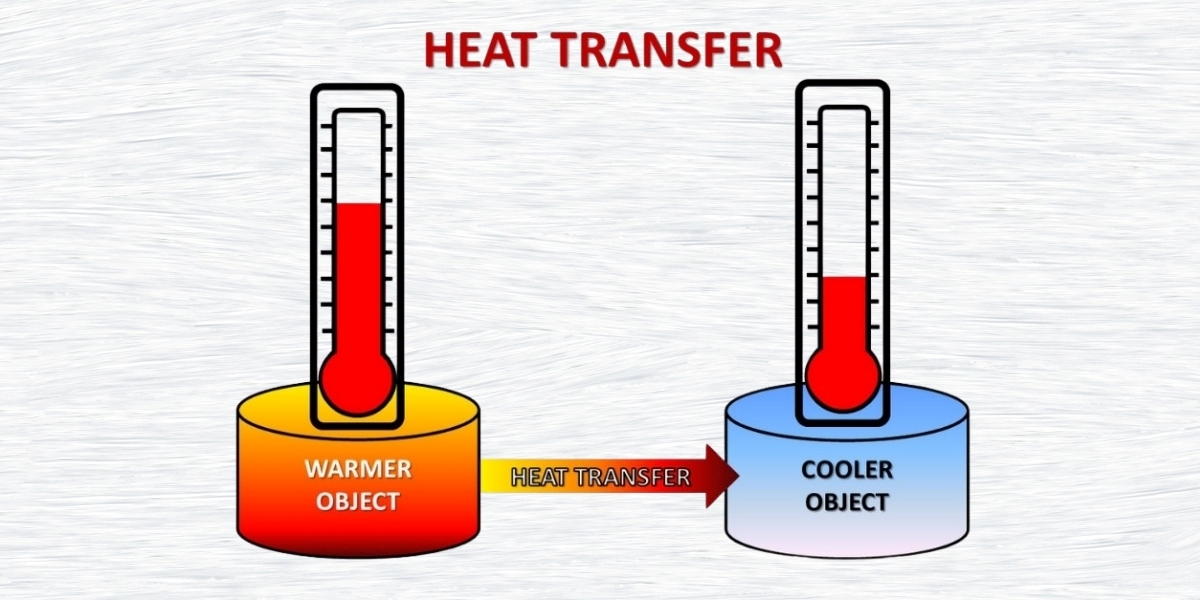
Heat transfer refers to the movement of thermal energy from warmer to cooler areas. This physical process follows thermodynamic principles, where energy flows naturally until thermal equilibrium is achieved. Traditional analytical methods can sometimes struggle with complex geometries and associated physics, which modern Computational Fluid Dynamics (CFD) Heat Transfer modeling aims to address effectively. The fundamental heat transfer equation is linked to the Energy Conservation Equation, which CFD solves numerically over thousands or millions of discrete cells. This computational approach can reveal temperature distributions and heat flux patterns that may be difficult to visualize using conventional techniques.

Heat Transfer Mechanisms

Conduction: Heat Transfer Through Materials

Conduction Heat Transfer Simulation analyzes thermal energy transfer through materials without mass movement. In other words, heat travels within a material, such as a solid. This form of heat transfer can also occur in fluids. Thermal energy is transferred from one particle to another through vibration and particle interaction. CFD Thermal Modeling is particularly effective at simulating conduction in complex geometries with varying material properties.

Convection: Fluid-Driven Heat Movement

Convection is the transfer of heat within a medium, particularly fluids. It involves two main mechanisms: conduction and advection, which is heat transfer by the movement of fluid mass. These mechanisms work together to produce fluid convection. The physics becomes particularly interesting in Natural Convection scenarios, where fluid movement is driven by density differences caused by temperature variations. The Boussinesq Approximation offers a practical modeling approach for many natural convection problems, simplifying calculations while maintaining accuracy for moderate temperature changes. Forced convection, on the other hand, is characterized by externally driven fluid flow via fans, pumps, or other factors. Advanced CFD software incorporates extensive turbulence models to represent the complex fluid dynamics affecting convective heat transfer rates in various applications.

Radiation: Electromagnetic Heat Transfer

Radiative Heat Transfer Modeling captures thermal energy movement via electromagnetic waves without the need for intervening materials. At the atomic level, protons and electrons vibrate and emit electromagnetic waves. When these waves interact with particles from another material, they generate vibrations and raise the material’s temperature. This process plays a significant role in high-temperature applications, space thermal analysis, and solar engineering. Advanced radiation models account for surface properties, geometric view factors, and participating media effects, all of which are often necessary for realistic high-temperature process simulation.

Advanced Thermal Modeling Approaches

Conjugate Heat Transfer

Conjugate Heat Transfer (CHT) is widely regarded as one of the most important advancements in thermal simulation methods. Rather than handling solids and fluids separately, CHT models heat movement across multiple domains simultaneously, capturing interactions at material interfaces. This method is particularly useful for studying heat exchangers, electronics cooling solutions, and engine thermal management systems.

The Science of CFD Heat Transfer Analysis

Photo Courtesy: CFDLAND.com (CFD Heat Transfer inside a shell and tube heat exchanger considering baffles and conjugate heat transfer)

Phase Change and Multiphysics Considerations

Complex thermal scenarios often involve phase changes that absorb or release significant amounts of energy. Boiling Heat Transfer is one such phenomenon that typically requires advanced Multiphase Heat Transfer CFD models to accurately simulate bubble formation, growth, and departure, as well as associated heat transfer enhancements. Similarly, condensation processes often demand sophisticated modeling techniques, which CFDLAND experts have successfully applied in various industrial applications.

Many thermal systems operate under changing conditions over time, making Transient Thermal Analysis essential for understanding temperature progression during startup, operational changes, or shutdown procedures. These simulations can reveal critical temporal aspects of thermal behavior that steady-state analysis might overlook, particularly for systems operating periodically or under cyclic loading.

Applications Transformed by CFD Thermal Analysis

Thermal challenges in modern engineering are complex and span multiple industries. CFD Heat Transfer simulation has demonstrated significant value in various applications, including:

  • Electronics Cooling CFD for addressing device miniaturization challenges.
  • Heat Sink Optimization CFD to enhance cooling efficiency in confined spaces.
  • HVAC CFD Simulation and Building Thermal Simulation for improving climate control efficiency.
  • Heat Exchanger Design CFD for optimizing industrial processes.
  • Data Center Thermal Analysis and Data Center Cooling Systems planning.
  • Battery Thermal Management CFD for ensuring electric vehicle safety and performance.
The Science of CFD Heat Transfer Analysis

Photo Courtesy: CFDLAND.com (CFD Heat transfer analysis of Active Cooling in Photovoltaic System using ANSYS Fluent)

ANSYS Fluent: Industry-Leading Thermal Analysis Capabilities

ANSYS Fluent’s Heat Transfer capabilities are widely recognized for their performance in thermal simulation. The software’s architecture offers several advantages for tackling complex thermal challenges, including accurate estimation of critical parameters such as the Heat Transfer Coefficient across complex geometries and flow regimes. Fluent’s comprehensive modeling environment provides:

  • Multi-physics integration enabling seamless coupling between fluid flow and heat transfer.
  • Advanced turbulence models capturing subtle flow features affecting thermal performance.
  • Robust mesh adaptation focusing computational resources where thermal gradients demand resolution.
  • Validated material models accounting for temperature-dependent properties
  • Specialized solvers optimized for transient thermal phenomena and conjugate heat transfer.
  • Industry-specific modeling capabilities addressing specialized thermal challenges.

CFDLAND engineers possess extensive expertise in ANSYS Fluent simulations, from problem formulation to post-processing and interpretation. This specialized knowledge helps ensure that simulation methodologies are tailored to both the underlying physical processes and specific project objectives.

The Science of CFD Heat Transfer Analysis

Photo Courtesy: CFDLAND.com (Some CFD Heat Transfer Analysis done by CFDLAND using ANSYS Fluent)

The CFDLAND Difference: Precision Engineering in Thermal Analysis

High-quality thermal simulation requires not only software expertise but also a rigorous methodological approach and validation knowledge. CFDLAND’s scientific methodology emphasizes:

  • Deep physical understanding before computational processing.
  • Strategic simplification that preserves fundamental physics while reducing computational costs.
  • Thorough mesh development focused on critical thermal gradient regions.
  • Systematic validation against known benchmark cases.

Structured CFD courses on CFDLAND.com cover all aspects of Heat Transfer Simulation, helping organizations build their own simulation expertise. These comprehensive lessons range from basic conduction analysis to advanced multiphase thermal modeling, using carefully selected examples to build skills in a structured manner.

Companies facing complex CFD Heat Transfer projects or urgent thermal engineering challenges can benefit from CFDLAND’s expertise. Our engineering team has successfully completed hundreds of thermal simulations for a wide range of objectives, providing accurate results that have supported critical decision-making from initial concept development to final design stages.

For specialized guidance on your thermal engineering challenges, visit www.CFDLAND.com to explore our complete range of simulation services and educational resources.


Published by Joseph T.

Advancing Your Teaching Career: Opportunities for Growth and Impact

There is a stereotype that has been formed around the teaching profession that it does not offer satisfactory pay, and perhaps the time has come to prove it wrong. Teaching is a profession that offers stability and fulfillment, and it offers numerous opportunities to increase earning potential. This goes if you are just now entering the field or are already active and looking to advance your career. No matter the case, Moreland University provides the tools and resources to help educators maximize their income while making a meaningful impact in the classroom, and in this article, we’re going to show you how.

The Benefits of a Teaching Career

Something often overlooked when talking about rewarding career options are the benefits, which often lift a great financial load from workers. This is especially true for a career in education, which comes with significant financial and personal benefits, including:

  • Job Security: With a growing demand for educators, teaching offers long-term stability and employment opportunities nationwide.
  • Competitive Pay: Salaries for teachers continue to improve, with many districts offering incentives and bonuses to retain qualified educators.
  • Comprehensive Benefits: Teachers enjoy health insurance, paid time off, retirement plans, and additional perks that enhance financial well-being.
  • Work-Life Balance: Enjoy summers off, holidays, weekends free, and paid time off, providing flexibility and personal time to recharge.
  • Opportunities for Growth: By pursuing further education and certification, teachers can increase their salary and advance into leadership roles.

Transitioning into Teaching with TEACH-NOW

For individuals considering a transition into teaching, Moreland University’s TEACH-NOW Teacher Preparation Certificate Program provides a seamless, flexible, and accessible pathway. In just nine months, aspiring educators can earn their teaching certification entirely online. The 12-week clinical practice component ensures hands-on experience, preparing candidates for success in the classroom from day one.

Moreland’s TEACH-NOW program is designed to fast-track passionate individuals into the education sector, addressing the national teacher shortage while providing career-changing opportunities.

Advance Your Career and Earnings with Moreland’s Master’s Degree Programs

One of the most effective ways for teachers to increase their earning potential is by pursuing an advanced degree. Moreland University offers master’s degree programs tailored to educators seeking career progression, salary increases, and specialized expertise. These programs include:

  • Master’s in Education (M.Ed.) — Specializations in areas such as Early Childhood Education, Special Education, Teaching Multilingual Learners, Educational Technology, and more.
  • Master’s in Educational Leadership — For educators looking to step into administrative or leadership roles with higher pay potential.
  • Master’s in Globalization & Education Research — Ideal for those interested in shaping education policies and innovative teaching methods.

Many school districts offer step raises for teachers who earn advanced degrees, making a master’s from Moreland University a strategic investment in financial and professional growth.

What Sets Moreland Apart?

Moreland University is committed to empowering educators with the knowledge and skills they need to succeed financially and professionally. Our programs stand out due to:

  • Dedicated Program Advisors: Candidates receive one-on-one support throughout their certification and degree programs, ensuring a smooth journey toward completion and career advancement.
  • Principal-Driven Curriculum: We regularly survey school principals to refine our programs, ensuring graduates meet the evolving needs of schools and districts.
  • 100% Online & Flexible: Our programs are designed to be completed from anywhere, allowing educators to balance work, life, and education.
  • Immediate Real-World Application: Course material is designed to be applied in real-time so educators can immediately use what they learn in their current or future classrooms.

Take Control of Your Financial Future as an Educator

Teaching offers more financial opportunities than many realize, and Moreland University is here to help educators maximize their earning potential. Whether you are starting your teaching career, transitioning from another field, or looking to advance in your current role, our programs provide the education and support needed for success.

Discover how Moreland University can help you achieve your career and financial goals in education today.


Published by Joseph T.