What to Look for in a Custom Software Development Partner: Key Red Flags to Watch Out For

Hiring a custom software development company is a big decision for any business, whether developing a new product, improving an existing system, or building a unique solution to meet specific needs. But choosing the wrong partner can lead to frustrating delays, budget overruns, and a product that doesn’t meet your expectations. To help you avoid these common pitfalls, we’ve compiled a list of red flags you should watch out for when hiring a custom software development partner.

Lack of Clear Communication

Red Flag: The company has unclear or inconsistent communication.

Effective communication is the foundation of any successful software development project. If the company you’re considering can’t provide clear answers to your questions or doesn’t offer regular updates, it’s a warning sign. Without clear communication, misunderstandings can arise, leading to project delays or unexpected issues.

What to Look for: A great development partner should be transparent. They should take the time to understand your needs, answer your questions thoroughly, and keep you updated on progress throughout the development process. Pay attention to how quickly they respond to your emails and how clear and detailed their responses are. If they communicate quickly, you’re more likely to have a smooth partnership. For instance, contact Pixelfield’s software development company in London to see what working with experts is like.

Unclear or Unrealistic Timelines

Red Flag: The company promises fast results with vague or unrealistic timelines.

We all want to get things done quickly, but shortcuts often lead to poor-quality products when it comes to custom software development. If a company promises an unreasonably fast turnaround without a clear plan, it could mean they’re over-promising to win your business but won’t be able to deliver the results you’re expecting.

What to Look for: A reliable development partner will provide realistic timelines with buffer periods for testing and adjustments. Ensure the company can explain its proposed timeline in detail, breaking it down into phases and milestones. They should be open about potential challenges and be willing to make adjustments if things don’t go as planned.

No Portfolio or Case Studies

Red Flag: The company doesn’t provide any portfolio or case studies of previous work.

If a company hesitates to show examples of their previous work or doesn’t have a portfolio, it’s a major red flag. Without tangible evidence of their capabilities, how can you trust that they’ll be able to handle your project successfully?

What to Look for: A solid development partner should proudly showcase their past projects. Ask for case studies, client testimonials, or demo versions of their previous work. This will give you an insight into their experience and the quality of their solutions. Don’t hesitate to contact previous clients for an honest review of the company’s work and collaboration style.

Over-Promising and Under-Delivering

Red Flag: The company makes bold claims without substantial proof or guarantees.

It’s easy to be tempted by companies that promise extraordinary results or quick fixes. However, over-promising often leads to under-delivering. A company that promises the world without the evidence to back it up will likely fall short when it comes to execution.

What to Look for: Look for companies that are realistic about what they can deliver. They should be able to explain their process, the expected outcomes clearly, and how they will measure success. A professional developer will focus on providing achievable goals and avoid making lofty promises they can’t keep.

Reviews You Want to See About Custom Software Developers

Are you struggling to choose between different custom software developers? Selecting the team you work with is very important, dramatically impacting the process and final result. You want to find an experienced team that takes the time to understand your needs and goals and has the expertise to achieve what you’re looking for. Somewhere you can go to evaluate custom software developers is the reviews. Other clients can help you make this crucial decision. Let’s look at what you want to see in these reviews.

Helpful Team

While you want to outsource and benefit from custom software developers, you don’t want to be left out of the loop. Instead, you want to have the assistance of an experienced and helpful team that lets you know how they’re getting on and are happy to answer questions. To help ensure this is the case, you want to see positive client comments in the reviews. They should comment on how they liked the team and how accommodating they were to their needs.

Reasonable Prices

Many business owners worry about when they will hire custom software developers. They want to achieve the best results and get suitable software for their needs. But they also have a budget they need to stick to. Look at the reviews to ensure that this company offers reasonable prices. While clients might not state what they paid, you can tell from their responses.

Amazing Software

Of course, the main thing you want to see from reviews on custom software developers is that clients are happy with the results. So, make sure you see positive comments on the software and how it’s transformed their business.

Conclusion

Choosing the right custom software development company is critical for your business. By watching for these red flags, you can avoid the headaches of poor partnerships. Take the time to thoroughly research potential partners, ask the right questions, and ensure that they meet your technical and professional needs. With the right team by your side, you can be confident that your project will be a success from start to finish.

Disclaimer: This article is intended for informational purposes only and does not constitute legal, financial, or professional advice. Readers should conduct thorough research and consult with relevant professionals before engaging with any custom software development company.

Published by Tom W.

Brazil’s Heart Beats in the Stars: Inside the Making of Zarki

By: Elowen Gray

You know those rare shows that make you feel like you’ve discovered something special? That’s Zarki for you. From award-winning director Meire Fernandes, whose impressive career spans from founding the Los Angeles Brazilian Film Festival to overseeing digital platforms across Latin America, this fresh take on sci-fi storytelling invites viewers into a charming Brazilian town called Zumatan, where siblings Lucas and Mable uncover something much bigger than their quiet community could have anticipated.

“It’s not your typical sci-fi series,” says Samuel Sanches, Zarki’s Assistant Director. As a Brazilian himself, this project is deeply meaningful to him. “Growing up with these traditions and stories, I felt right away that Zarki had a unique kind of magic.”

At the center of all the mystery is Room 404. But instead of a dead end, this 404 opens up to something extraordinary. It’s where the ordinary world collides with something far greater – think family drama intertwined with cosmic mystery, enhanced by a rich layer of Brazilian folklore.

What’s particularly intriguing about Zarki is how it handles its sibling duo. Lucas is the thinker, while his sister Mable dives headfirst into every adventure. “They drive each other crazy sometimes, but when things get weird – and they absolutely do – they’ve got each other’s backs,” Sanches explains. Add their grandfather Joaquim, who exudes wisdom and intrigue, and you’ve got a family dynamic that feels authentic, even when reality starts bending.

The town of Zumatan itself feels like a character worth exploring. Picture waterfalls tucked into lush forests, streets alive with festival lights, and communities where everyone seems to know everyone – until they realize they don’t know as much as they thought. It’s Brazil in all its vibrant glory, with an extra layer of the unexpected lurking around every corner.

“One of our biggest challenges was balancing the supernatural elements with Brazilian culture,” Sanches explains. “It works because it doesn’t feel forced. The show draws from Brazil’s deep history of magical realism, where the extraordinary has always been a natural part of storytelling.”

Brazil's Heart Beats in the Stars: Inside the Making of Zarki

Photo Courtesy: @labrff / samssanchess

What makes Zarki so engaging is how seamless it all feels. Sure, there are mind-bending mysteries and intergalactic elements to delight sci-fi fans. But at its core, it’s about people – characters who feel relatable, navigating family dynamics and town secrets that just became far more complicated.

The series takes special care to represent Brazilian traditions with authenticity. From the vibrant São João festival that unites the community to the inclusion of local folklore and spiritual practices, every element reflects the richness of Brazilian culture. These cultural details aren’t just decorative – they’re integral to the story, grounding the supernatural elements in a way that feels natural.

The series achieves what Sanches describes as “a vibrant blend of Brazil’s natural beauty and imaginative intergalactic designs.” Zumatan’s scenic charm, with its cascading waterfalls and dense forests, forms a foundation for the show’s more otherworldly aspects. When the narrative ventures into its ethereal and intergalactic moments, it maintains a careful balance between the earthly and the extraordinary.

“My hope is that people watching will feel that same sense of wonder I experienced growing up with Brazilian stories, but with an entirely new twist,” Sanches shares. From what’s been revealed so far, Zarki seems poised to evoke that wonder – a reminder that universal stories can emerge from deeply specific places, and that family connections can transcend worlds.

Whether you’re drawn by the sci-fi intrigue, the emotional depth of family drama, or the chance to immerse yourself in a culture teeming with life and mystery, Zarki appears ready to offer something genuinely fresh. And in a time of endless reboots and recycled ideas, that’s a promising prospect.

Published by Stephanie M.

5 Signs Your Child Could Benefit from Private English Tutoring

Every parent wants to see their child succeed, but how do you know when it’s time to seek extra support? According to Samantha Bachmann, Chiang Mai’s top private English tutor, early intervention is critical for addressing academic challenges and setting your child up for long-term success.

Here Are 5 Signs Your Child Needs Private Tutoring:

  1. Phonics and Reading Feel Like a Struggle
    Reading is at the heart of every subject, so if your child is having trouble with phonics or decoding words, it can ripple into other areas of learning. Struggling to keep up can feel overwhelming, but Samantha’s phonics-focused approach—using proven tools like Oxford Phonics World—breaks things down step by step, helping your child build both skills and confidence.
  2. Homework Turns Into a Daily Battle
    Is homework time filled with sighs, frustration, or even tears? If getting through assignments feels like climbing a mountain, it could be a sign that your child needs extra support. Samantha works to ease this burden by providing targeted help, turning homework into a manageable—and less stressful—experience for both kids and parents.
  3. Confidence Has Taken a Hit
    Children who doubt their abilities are often hesitant to speak up in class, which only sets them further back. Samantha’s one-on-one sessions create a safe and supportive space where kids can take risks, celebrate wins, and slowly rebuild their self-esteem, finding joy in the process of learning again.
  4. They’re Falling Behind Their Peers
    Noticing that other kids are moving ahead while your child is struggling can be tough for any parent. Whether it’s due to gaps in understanding or a mismatch with traditional teaching methods, Samantha’s personalized plans address these issues head-on, helping your child close the gap and gain the skills they need to thrive.
  5. School Feels Like a Chore, Not an Adventure
    When a child seems uninterested in learning, it’s often a sign of deeper frustration—or boredom. Samantha knows how to reignite their curiosity with engaging lessons that include games, hands-on activities, and storytelling. These methods don’t just teach; they inspire kids to see learning as something exciting and enjoyable.

Why Samantha?

Parents consistently choose Samantha because of her:

  • Proven Track Record: Over 50 students have thrived under Samantha’s guidance.
  • Innovative Techniques: Samantha blends traditional methods with creative activities that engage young learners.
  • Cultural Understanding: As someone who is half Swiss and half Thai, Samantha connects with children from diverse backgrounds.

Take Action Today

Don’t wait until challenges become overwhelming. When it comes to your child’s development, it’s important to address obstacles early to ensure long-term success. With Samantha’s expert guidance and personalized support, your child can develop the essential skills, confidence, and resilience needed to not only overcome difficulties but thrive in their academic, social, and personal life. Whether it’s improving study habits, enhancing social skills, or building self-esteem, Samantha offers tailored strategies to meet your child’s unique needs.

Ready to take the next step? Give your child the foundation for success and growth. Book a consultation today to start their journey toward becoming the best version of themselves.


Published by Drake M.

Financial Planning Tips for MBA Degree Holders

Graduating with an MBA marks completing years of effort, commitment, and financial investment. This degree can open doors to new career opportunities, increased earning potential, and valuable professional connections. However, transitioning from graduate school to the professional world also comes with new responsibilities—especially financial ones. Managing your money wisely at this stage is critical to maximizing the return on your MBA investment and aiming for long-term financial stability. Whether you’re just starting a new job, repaying student loans, or planning for the future, these financial strategies may guide you toward success.

Here are 10 smart financial moves every MBA graduate should consider to secure their financial future:

1. Create a Comprehensive Budget

A helpful first step in managing your finances is clearly understanding where your money is going. Creating a detailed budget can be helpful with changes like a potential salary increase and new expenses such as rent, commuting, and work-related costs. Consider categorizing your expenses into fixed costs (e.g., rent, utilities), variable costs (e.g., groceries, transportation), discretionary spending (e.g., entertainment), and savings. Budgeting tools like Mint or YNAB can simplify this process and offer insights into your spending patterns. Following a budget can help you manage your finances effectively.

2. Build an Emergency Fund

An emergency fund acts as a financial cushion, providing peace of mind in case of unexpected events like medical emergencies, job loss, or sudden travel needs. Ideally, save three to six months’ worth of living expenses. Start small by setting aside a fixed portion of your monthly income until you reach your target. You might explore keeping this fund in a high-yield savings account, which may provide easy access while potentially allowing it to earn some interest.

3. Refinance Your MBA Loans

MBA programs are often expensive, and many graduates leave school with substantial student debt. Refinancing MBA loans with a private lender can help you secure a lower interest rate, reduce your monthly payments, or shorten your repayment term. For example, if you’re earning a stable income and have good credit, you may qualify for better terms than your original federal or private loans offered. However, when refinancing, be cautious about losing federal loan benefits, such as income-driven repayment plans or loan forgiveness options.

4. Maximize Employer Benefits

Your employer may provide various benefits that can support your financial goals. These could include 401(k) matching options, health savings accounts (HSAs), tuition reimbursement, or student loan repayment programs. Reviewing these offerings and considering how they fit into your financial plan can be helpful. For example, contributing enough to your 401(k) to qualify for the employer match can be a practical way to maximize what’s available.

5. Invest in Your Retirement Early

Retirement may seem far away, but starting early gives your investments time to grow through compound interest. If your employer offers a 401(k), contribute enough to get the maximum match. Consider opening an IRA (Traditional or Roth) to diversify your retirement savings further. Even small contributions early in your career can accumulate into a significant nest egg. Regularly increasing your contributions as your income grows will help you stay on track to meet your retirement goals.

6. Prioritize High-Interest Debt

While paying off all debt is essential, high-interest obligations like credit card balances should be your priority. These debts can quickly spiral out of control if not managed effectively. Use strategies like the avalanche method (paying off the highest-interest debt first) or the snowball method (paying off the smallest debt first for momentum). Eliminating high-interest debt frees up resources to focus on long-term financial goals, such as saving or investing.

7. Start Investing Strategically

Investing can be a way to build wealth over time. Consider creating a diversified portfolio that reflects your risk tolerance and financial goals. Low-cost index funds or ETFs can serve as a starting point for your investments. If you’re uncertain about how to begin, consulting a financial advisor or using a robo-advisor platform could provide helpful guidance. Regular contributions, even small ones, may help your investments grow gradually.

8. Negotiate Your Salary and Benefits

Your MBA has equipped you with the skills and credentials to negotiate confidently. Don’t settle for the first offer; research market rates for your role and industry to make an informed case. Beyond salary, discuss benefits like bonuses, stock options, and professional development opportunities. Successful negotiation may boost your earnings and set a precedent for future raises and promotions.

9. Develop Multiple Income Streams

Relying solely on your primary job may limit your financial flexibility. Explore opportunities to generate additional income through side hustles, freelance work, or passive income streams like rental properties or dividend-paying stocks. Diversifying your income reduces financial risk and accelerates wealth accumulation, giving you more freedom to pursue your goals.

10. Seek Professional Financial Advice

As your income and assets increase, managing your finances may become more involved. Consulting with a certified financial planner (CFP) or advisor can help you create a strategy for saving, investing, and aligning with your financial goals. They can also provide guidance on areas like tax planning, estate planning, and risk management to support your financial decision-making.

Conclusion

Earning an MBA is a significant milestone that may lead to new opportunities. Managing your finances thoughtfully is an integral part of this journey. These 10 financial tips help you handle your income effectively and build a stable foundation for the future. Your choices now can influence your financial path, so consider approaching them carefully and focus on your goals.

Disclaimer: The information provided in this article is for general informational purposes only and does not constitute financial advice. While we aim to offer helpful suggestions, every individual’s financial situation is unique. Please consult with a certified financial planner or advisor to tailor these strategies to your specific needs. Readers are encouraged to do their own research or seek professional guidance before making any financial decisions.

Published by Tom W.

Margot Amzallag: Revolutionizing Catering with Creativity and Vision

By: Molly Peck 

Margot Amzallag is redefining catering into an art form that merges storytelling, innovation, and sustainability. Through her catering company, Kismet Paris, and with over a decade of experience, she has crafted a brand beyond traditional catering, offering clients immersive dining experiences that leave lasting impressions.

A New Perspective on Catering

Margot’s approach is deeply rooted in personalization and storytelling. “Catering isn’t just about the food; it’s about the narrative behind it,” she explains. For an art gallery showcase by Jean Kenta Gauthier, Margot crafted a menu inspired by the featured artwork, seamlessly integrating food into the creative experience. She played with colors and textures to echo the exhibition’s themes, creating dishes that revealed hidden details over time, much like the art itself. One standout creation was a dark chocolate and nut “rocher” with a creamy matcha center—a delightful surprise guests only discovered after taking their first bite, mirroring the layered revelations of the artwork.

Historically, big companies turned to large, established catering firms for their events. But today, a shift is underway—brands are choosing caterers like Margot, who bring bold ideas and personal stories to the table. These younger, risk-taking innovators offer an emotional connection through their menus, creating food experiences that resonate deeply with their audience.

At a fashion brand launch at the iconic Chateau Marmont in January 2024, Margot designed a whimsical menu and table setting inspired by her childhood memories. She brought a sense of wonder to the event, serving playful yet sophisticated dishes that evoked nostalgia while maintaining the elegance expected at such a prestigious venue. Her creations included flowered butter, housemade quince paste paired with blue cheese crackers resembling mini pillows with secret fillings, and radish bouquets coated in honey and anise butter. Margot’s meticulous attention to detail transformed the event into an enchanting experience that perfectly reflected the brand’s vision.

Photo Courtesy: Karla Vinter-Koch for Kismet Paris / Margot Amzallag

Sustainability Meets Creativity

Margot’s dedication to sustainability shines through in her thoughtful use of seasonal, locally sourced ingredients. For an outdoor wedding, she designed a farm-to-table menu that celebrated regional produce, featuring dishes like heirloom tomato gazpacho and grilled peaches, all while minimizing environmental impact. “Food should honor its origins,” she explains. A perfect example is her mini cheesecake, which evolves with the seasons—topped with fresh berries in summer and transformed in autumn and winter with a luscious persimmon and thyme purée.

Blending Wellness and Indulgence

As an in-training health coach, Margot effortlessly weaves wellness into her catering. At a recent retreat in Marrakech, she crafted a menu of wholesome yet indulgent dishes, including adaptogenic smoothies and gluten-free grain bowls. Additionally, she hosted culinary workshops to teach guests how to pair flavors creatively. “Health and flavor don’t have to be mutually exclusive,” she emphasizes.
This approach resonates with clients looking for mindful dining options, setting a new standard in the industry.

Photo Courtesy: Karla Vinter-Koch for Kismet Paris / Margot Amzallag

The Future of Catering

Margot’s vision for the future focuses on expanding her reach into wellness and corporate sectors, partnering with brands to create events that align with their values. She is also currently training as a health coach at the Institute for Integrative Nutrition (IIN), deepening her understanding of nutrition at a more responsible level—for both human health and the planet. Her mission is to create menus that respect those values without compromising taste.

With her ability to transform food into a sensory and emotional experience, Margot Amzallag is revolutionizing catering, proving it’s not just about feeding guests but inspiring them.

Published by Drake M.

Why Choose Delaware Statutory Trusts for 1031 Exchanges

By: Crystal Morrison

No doubt many real estate investors have heard of the 1031 exchange derived from the 1921 approved Section 1031 of the Internal Revenue Code.  After all, for more than 100 years, investors have been able to defer taxes on capital gains and depreciation recapture at the time a real property investment is sold if the net equity from the sale is reinvested into a similar property of the same or greater value within a specified time frame. This term “like-kind” real estate may be broadly defined to include most investment assets such as multifamily apartment communities, self-storage, multi-tenant retail buildings, and essential net lease distribution facilities.

Many real estate investors are familiar with 1031 exchanges but may not be as aware of Delaware Statutory Trusts as an option to consider.

A Historical Look at the Delaware Statutory Trust

  1. As early as the 16th century, property being held in trust by one person for the benefit of another was an integral part of the English Common Law. Lawyers have used the concept of the “common law” trust for centuries to help wealthy people pass ownership of assets from one generation to another with the least amount of taxation and a significant amount of security. However, common law trusts are often outdated and can create several legal disputes within the trust. So, in 1988, the State of Delaware wanted to create a new statutory trust entity designed to improve the functionality of trusts in structured financial transactions. While several states had adopted statutes recognizing trusts for business purposes, the Delaware Business Trust Act of 1988 was the first to completely rewrite outdated common law trust principles and introduce new provisions that greatly expanded how investors could use a trust entity in modern structured financial transactions. In 2002, the State of Delaware officially changed the name to the Delaware Statutory Trust Act, and two years later, the Internal Revenue Service’s Revenue Ruling 2004-86 was passed, allowing DSTs to be used as like-kind real estate for 1031 exchange replacement property purposes.

Delaware Statutory Trust properties have gained attention in 1031 exchanges, with billions of dollars in equity expected to be invested into DSTs in the coming year, reflecting steady growth from the previous year.

But just what is it about the DST investment structure that appeals to investors? For many professional and retail real estate investors, DSTs offer at least four appealing advantages for 1031 exchange investors, including the following.  

Tax Advantages of the Delaware Statutory Trust

DSTs provide an option for investors looking to defer taxes that can arise when selling investment real estate that has appreciated over many years. This can be particularly appealing for those who have owned rental or commercial properties for a long time, want to sell, but face challenges finding a suitable property to exchange into or are concerned about the potential tax implications. Since DSTs qualify for 1031 exchanges, they can help defer taxes such as federal capital gains tax, state capital gains tax, depreciation recapture, and the Medicare surtax, which can collectively represent a significant portion of the sale proceeds.

DST 1031 Properties Passive Real Estate Investments

One of the most attractive aspects of DST 1031 exchange investments to many investors is that they eliminate the challenges associated with active ownership and management. This may appeal to investors near or at retirement who are tired of the hassles that real estate ownership and active management often bring. They are tired of tenants, toilets, and trash and want to avoid actively managing their real estate.

In DST investments, a DST sponsor creates the DST and is responsible for managing the entire business and assets of the trust. These responsibilities can include the following:

  • Underwriting the real estate
  • Conducting all the research and review on the property(s)
  • Arranging the necessary financing – although some DST 1031 investments are debt-free with no loans on them
  • Creating a business plan for the property(s)
  • Finding a property management team.
  • Coordinating investor relations and potential monthly distribution checks to investors.

In this way, the Delaware Statutory Trust syndication provides investors with a passive ownership structure, allowing them to enjoy retirement, grandkids, travel and leisure.

According to Dwight Kay, Founder and CEO of Kay Properties, investors in DSTs also receive the potential for monthly distributions.

“Investors can potentially receive monthly income and 100% of the pro-rata portion of any potential principal pay-down from the loan on the property, thereby potentially building equity. In addition, DST 1031 properties are structured so that the investors in the DST receive 100% of their pro-rata portion of the potential net rental income generated by the property’s tenants,” said Kay.

Access to Larger, Institutional Grade Assets

Delaware Statutory Trust properties for 1031 exchanges allow investors to access larger, high-quality real estate assets that might otherwise be out of reach. With relatively low minimum investment requirements, investors can purchase fractional ownership in properties such as industrial distribution centers, multifamily apartment complexes, or multi-tenant retail spaces. This structure allows investors to participate in real estate opportunities that may not have been accessible individually.

The Potential to Reduce Risk Through Greater Diversification

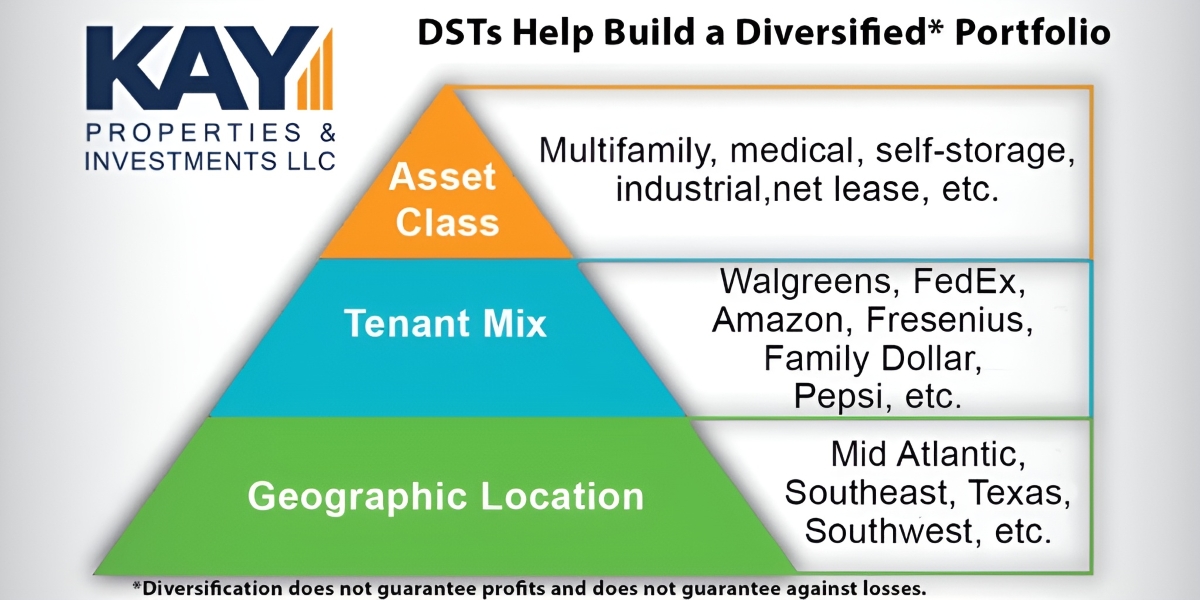
Another advantage of the Delaware Statutory Trust structure for 1031 exchange investors is that it increases the ability of investors to invest in multiple properties, thus potentially reducing individual risk. Beyond allowing investors to participate in various investment properties, DST syndications also enable investors to invest in multiple asset classes (multi-family, commercial buildings, self-storage, medical facilities, industrial distribution centers, etc.) and numerous geographic locations.

Portfolio optimization and diversification was first recognized by Nobel-Prize winning economist Harry Markowitz and continues to be one of the most proven economic theories for success today, including its application in Delaware Statutory Trust 1031 exchanges. * It is important to note, however, that diversification does not guarantee profits or protection against losses. Investors should read each DST offering’s Private Placement Memorandum (PPM), paying attention to the risk factors before considering a DST investment.

Obviously, as with all forms of real estate investments, investors should be aware of an underlying level of risk, including things like economic downturns, vacancies, tenant bankruptcies, etc.  Investors should not invest in DST investments or real estate syndications if they cannot sustain the loss of their invested principal.

About Kay Properties and www.kpi1031.com: 

Kay Properties helps investors choose 1031 exchange investments that help them focus on what they truly love in life, whether their children, grandkids, travel, hobbies, or other endeavours (NO MORE 3 T’s – Tenants, Toilets and Trash!). We have helped 1031 exchange investors for nearly two decades exchange into over 9,100 – 1031 exchange investments. Please visit www.kpi1031.com to access our team’s experience educational library and complete the 1031 exchange investment menu.

Disclaimer: This material is not tax or legal advice. Please consult your CPA/attorney for guidance. Past performance does not guarantee or indicate the likelihood of future results. Diversification does not guarantee returns and does not protect against loss. Potential cash flow, potential returns and potential appreciation are not guaranteed. There is a risk of loss of the entire investment principal. Please read the Private Placement Memorandum (PPM) for the offering business plan and risk factors before investing—securities offered through FNEX Capital LLC member FINRA, SIPC.


Published by Mark V.

When DIY Legal Work Just Isn’t Enough: Why You Need a Solicitor in the UK

In a world of online templates and YouTube tutorials, tackling legal matters on your own is a great way to save time and money. After all, how hard can it be to fill out a few forms or draft a basic agreement? While DIY legal work is becoming more popular, it’s not always the best—or safest—choice.

The reality is that legal issues often involve complex details, high stakes, and unforeseen complications. Even a tiny mistake could lead to big problems without the right expertise. That’s where a solicitor comes in. Let’s explore why professional legal help is often worth the investment.

Common Scenarios Where DIY Falls Short

  1. Complex Legal Language
Legal documents are notorious for their dense language and jargon. Terms like “force majeure” or “usufruct” might not mean much to the average person, but they could have huge implications in a contract. Misinterpreting these terms could land you in hot water. A solicitor is trained to navigate this language, ensuring you understand exactly what you agree.
  2. High-Stakes Legal Situations
Some legal matters aren’t worth DIY risk. Whether it’s a custody battle, property dispute, or business contract, the stakes may be too high to leave anything to chance. A poorly worded agreement or missed deadline could cost you financially, emotionally, or legally. Solicitors bring precision and expertise that DIY solutions simply can’t match. Speak to a professional today at skylarkhill.co.uk/.
  3. Legal Updates and Technicalities
UK law is constantly evolving. That free online template you rely on might be outdated, leaving you vulnerable to legal challenges. Solicitors stay up-to-date on all the latest changes, ensuring your case is handled according to current laws and regulations.

The Value a Solicitor Brings

  1. Expert Guidance and Tailored Advice
Every legal issue is unique, and no template or online guide may provide advice specific to your circumstances. Solicitors take the time to understand your situation and offer tailored solutions that work for you. They may also identify potential issues you might not have considered, saving you trouble later.
  2. Minimising Risk
Legal mistakes may be costly, whether it’s an error in a contract or a missed procedural step in a court case. Solicitors are trained to spot and avoid these pitfalls, protecting you from unnecessary risks. By working with a professional, you’re safeguarding yourself against costly errors.
  3. Representation and Advocacy: If your legal matter requires going to court or negotiating with another party, having a solicitor by your side may make all the difference. They act as your advocate, presenting your case in the best possible light and ensuring your voice is heard. Representing yourself might seem empowering, but it may be overwhelming without the proper knowledge and experience.
  4. Time-Saving and Stress Reduction
Legal processes often involve paperwork, tight deadlines, and constant communication with various parties. Solicitors take on this workload for you, giving you the peace of mind to focus on other priorities. The time and stress you save may be invaluable.

Spotting Experienced Solicitors

Years of Experience

While new solicitors are enthusiastic and fresh out of law school, they lack the experience to make a difference in cases. Generally, it’s recommended that you look for professionals who have years of experience under their belt. This means they know what they’re doing and have dealt with similar situations. They’ll know the rules and case law, which will work in your favor.

Have Specialisms

Yes, some solicitors do a little bit of everything. But, you may feel more secure when choosing a professional with specialisms. This means that they understand the law more in-depth, and they’re used to dealing frequently with these types of cases. This could provide you with more help, especially if the matter is complicated.

Excellent Client Reviews

It doesn’t matter what type of service you want to use; looking at the reviews is beneficial. If you see a solicitor with hundreds of five-star reviews and positive feedback from clients, this will fill you with confidence. You know that other people have been satisfied with the service they’ve received, and experts have helped them achieve their goals. So, professionals who have been in the industry for a long time and now know how to help clients have a lot of great reviews you can read.

Easy to Contact

Nobody wants to feel like they’re chasing solicitors when they want to pay for this type of service. Thankfully, this isn’t something you have to do with experts. They make sure that there are different avenues for you to contact them. This may include having an online form you may complete and a phone number, email address, and office you may visit. They’ll be open to answering your questions and assisting you straight away.

Conclusion

While DIY legal work might seem appealing, it’s often not worth the risks. From navigating complex legal language to representing you in high-stakes situations, a solicitor brings invaluable expertise. They minimize risks, save you time, and provide peace of mind when needed.

Before diving into a legal matter solo, take a step back and assess the potential consequences. In many cases, investing in a solicitor isn’t just a wise choice—it’s the only choice. If you face a legal challenge, consider contacting a trusted solicitor today.


Disclaimer: The information provided in this article is for general informational purposes only and does not constitute legal advice. Readers should seek the assistance of a qualified solicitor or legal professional for advice specific to their situation. While every effort has been made to ensure the accuracy of the content, legal matters may vary based on individual circumstances, and laws may change over time. The author and publisher are not responsible for any errors or omissions or for actions taken based on the information provided in this article.

Published by Drake M.

How Earwax Affects Your Ear Health and What You Can Do About It

Earwax – or cerumen, if we’re getting technical – is a natural substance produced by the ear to keep things running smoothly. While it often gets a bad reputation, earwax protects your ears. But when it becomes excessive or builds up, it can cause various issues. Let’s dive into how earwax affects your ear health and what you can do to manage it.

The Role of Earwax in Ear Health

Earwax is much more than just a nuisance; it’s essential for keeping your ears healthy. First and foremost, earwax helps protect your ear canal from dust, dirt, and bacteria. It acts like a barrier, stopping these particles from reaching the delicate eardrum. In addition to its protective qualities, earwax lubricates the ear canal, preventing dryness and itching. This natural lubrication is essential because it allows the ear canal to maintain a healthy balance.

The ear has a built-in self-cleaning mechanism. As new earwax is produced, it gradually moves towards the outer ear, where it’s naturally wiped away or falls out. This process works well most of the time, so digging in there with cotton swabs or other objects is usually unnecessary.

What Happens When Earwax Builds Up?

While earwax is beneficial, it can cause problems when it builds up and becomes impacted. This happens when the earwax produces too much or gets pushed deep into the ear canal. Impacted earwax can lead to a number of issues. The most common problem is hearing loss. A clogged ear canal means sound can’t travel properly, making things sound muffled or causing a complete hearing blockage. This is when you need professional earwax removal.

In addition to hearing issues, excess earwax can lead to discomfort and pain. You may experience itching or feeling fullness in the ear, which can sometimes escalate into a sharp earache. If earwax stays in the ear for too long, it can also increase your risk of ear infections, such as otitis externa, an outer ear canal infection.

For some people, tinnitus (ringing in the ears) can also become a problem due to earwax buildup. Earwax is one of the leading causes of temporary tinnitus. It can even affect your balance. A blocked ear canal interferes with the inner ear’s balance system, potentially leading to dizziness or vertigo.

How to Safely Manage Earwax

Managing earwax is all about striking the right balance. While it’s important not to overclean your ears, you don’t want to let earwax build up too much. Here are a few tips for safe earwax management:

  • Avoid inserting objects into your ear. Cotton swabs, hairpins, and other tools can quickly push wax deeper, leading to impaction and injury. Instead, simply clean the outer part of your ear with a soft cloth.
  • Use ear drops. Over-the-counter ear drops can help soften the wax, making it easier for the ear to expel it naturally. Just follow the instructions carefully to avoid irritation.
  • Consult a professional. If you feel like earwax is getting out of control, visiting an ENT specialist is best. They can safely remove any excess wax without causing damage to the ear.
  • Ear irrigation. For some, rinsing the ear with warm water can help loosen the wax. But doing this correctly is essential, as improper technique can damage the ear canal.

When Should You Seek Medical Help?

While a small amount of earwax buildup is normal, there are times when you should seek medical advice. If you experience any of the following, it’s best to consult a healthcare professional:

  • Persistent hearing loss or muffled sounds that don’t go away after cleaning.
  • Pain or discomfort in the ear, significantly if it worsens over time.
  • Signs of infection, such as redness, swelling, or drainage from the ear.
  • Tinnitus that doesn’t stop after attempting earwax removal.
  • Balance issues or dizziness that seem related to earwax buildup.

Conclusion

Earwax is an integral part of ear health, but too much of it can lead to problems like many things. By understanding how earwax affects your hearing and overall ear health, and by using safe methods to manage it, you can prevent discomfort, infections, and other complications. Remember, if in doubt, it’s always ideal to consult with a healthcare professional for safe removal and advice.


Disclaimer: This article is for informational purposes only and does not constitute medical advice. If you experience persistent ear discomfort, hearing loss, or any other concerning symptoms, consult a qualified healthcare professional or an ENT specialist for an accurate diagnosis and appropriate treatment. Avoid attempting to remove earwax with objects or methods that may cause harm to your ear canal or eardrum. Always follow medical advice tailored to your specific situation.

Published by Drake M.

Embracing Recovery: A Journey Through the Perspective of OCD

By: Elowen Gray

Erin Margaret Northey never planned to become a writer. Publishing a book wasn’t part of her initial goals, but life often has a way of leading us down unexpected paths. Her journey began with a compelling urge—an inner awareness that she felt deeply in her intuition and spirit. In March 2024, she started writing, pouring her emotions onto the page, and continued until September. Drawing from her journals, which documented her most difficult times and deepest reflections, Erin crafted a story that is authentic, sincere, and profoundly personal.

Her book, How I Thought I Might Kill My Husband, Through The Lens of OCD, explores the complexities of living with obsessive-compulsive disorder. It combines personal narrative, insights into self-improvement, and a deeper understanding of mental health, aiming to shed light on the often-misunderstood aspects of mental illness. The book addresses topics such as medication withdrawal, receiving an OCD diagnosis later in life, and navigating the challenges of hospitalization—all framed through a lens of healing and optimism.

Writing this book was transformative for Erin. What began as an emotional outlet evolved into a deeply restorative process. Through Cognitive Behavioral Therapy (CBT), particularly Exposure and Response Prevention (ERP), she experienced significant personal growth. This process not only supported her recovery but also ignited a creative passion she hadn’t previously explored. Along this journey, she transitioned from a corporate career to pursuing makeup artistry, embracing a new path that continues to inspire her.

The Strength of Storytelling

Advocating for mental health has become central to Erin’s mission. She hopes to inspire others with similar experiences to believe in the possibility of recovery. Through her story, she aims to contribute to a broader conversation about mental health, emphasizing the importance of advocacy and sharing personal experiences.

One challenge Erin discusses in her book is managing medications. She highlights how medications can have both beneficial and complex effects, and understanding these dynamics is crucial. Erin’s experience underscores the idea that, despite challenges, healing and hope are possible.

Tips for Budding Authors

For anyone thinking about telling their story, Erin’s guidance is straightforward: simply begin.

Start with a draft, jot down your ideas, and avoid overanalyzing the approach. Allow the words to flow. Share your story or create a new one. Document everything—your experiences are significant, and your narrative deserves to be shared.

Having a journal close by or taking notes on a phone can be extremely helpful. Writing helps structure thoughts and clarifies experiences. For Erin, it turned into a way to express herself and a method of healing.

A Path of Tenacity

Erin’s book stands as a tribute to resilience and the transformative power of healing. She continues to channel her passion for creativity, advocacy, and human connection through her work in the human services sector, her artistic endeavors as a makeup artist, and her new path as a writer and poet. Her mission remains the same: to instill hope and foster understanding.

For anyone on a mental health journey, Erin offers this reminder: you are not alone. Healing is achievable, and your story has the power to inspire—not only others but also yourself.

For questions, partnerships, or discussions, Erin welcomes inquiries at: (780)-991-7346 and through email: erinmnorthey@gmail.com

Connect with her on Instagram at: @erin._.margaret. She would be very interested to receive your response.

Disclaimer: This content is for informational purposes only and is not intended as medical advice, nor does it replace professional medical expertise or treatment. If you have any concerns or questions about your health, always consult with a physician or other healthcare professional.

Published by Stephanie M.